

Support us by contributing to StratNewsGlobal on the following UPI ID
ultramodern@hdfcbank

Strategic affairs is our game, South Asia and beyond our playground. Put together by an experienced team led by Nitin A. Gokhale. Our focus is on strategic affairs, foreign policy and international relations, with higher quality reportage, analysis and commentary with new tie-ups across the South Asian region.
You can support our endeavours. Visit us at www.stratnewsglobal.com and follow us on YouTube, Twitter, Facebook and Instagram.
र 500 per month
र 1000 per month
र 5000 per year
र 10000 per year
Donate an amount of your choice
र 500 per month
Donate र 500 per month

र 1000 per month
Donate र 1000 per month
र 5000 per year
Donate र 5,000 per year
र 10000 per year
Donate र 10,000 per year
Donate an amount of your choice
Donate an amount of your choice






Xi in Lhasa Lauds Mega-Dam Amid Lockdown for Tibet Anniversary
Chinese President Xi Jinping arrived in the sealed-off Tibetan capital of Lhasa on Wednesday to preside over what Beijing calls the 60th anniversary of the Tibet Autonomous Region (TAR).
State media hailed the visit as a celebration of prosperity and progress. Exile groups and foreign outlets described a militarised lockdown, where “an occupied land doesn’t celebrate – it endures.”
This was Xi’s second visit to Tibet as president, following his 2021 trip. According to Xinhua, he was welcomed at Lhasa Konggar International Airport by “people in festive traditional clothing” carrying red flags and flowers. He later attended a gala entitled “Joyful Songs of the Snowy Plateau Region” with top Communist Party leaders Wang Huning and Cai Qi.
On Thursday morning, he is scheduled to headline a grand gathering in the city to commemorate the TAR’s founding, broadcast live by state media.
Accounts from exile groups painted a starkly different picture of Xi’s arrival. Voice of Tibet reported sweeping restrictions: a heavy People’s Liberation Army presence, checkpoints across the city, and bans on flights, sports events, balloons and even kites. Bhuchung Tsering, a Tibetan exile leader, said on X that Xi had come “to tell Tibetans how splendid their lives have become under the CCP,” but the military clampdown told another story.
Xi Jinping Meets with Representatives of Various Ethnic Groups and Sectors in Tibet.Which include senior military officers above the rank of colonel from the Lhasa garrison, as well as representatives of outstanding grassroots models and civilian personnel, at the Tibet Hotel. pic.twitter.com/cEaRtrETqk
— China Watcher (@PRCWatcher) August 20, 2025
Foreign media noted that Tibet remains virtually closed to foreign journalists and outsiders. Restrictions on movement, surveillance, and tight control of public expression underscore why critics see the “anniversary” not as a celebration of autonomy, but as a performance of control.
Xinhua cited Xi as declaring that Tibet must “maintain political stability, social order, ethnic solidarity and religious harmony.” He urged the region to build a “modern socialist Tibet that is united, prosperous, civilised, harmonious and beautiful”, while advancing agriculture, tourism, clean energy, and cultural integration.
Central to Xi’s message was development through mega-projects. Bloomberg reported that he singled out the RMB 1.2 trillion Yarlung Tsangpo hydropower dam and the Sichuan-Tibet railway, instructing officials to push them forward with “strength, order and efficiency.”
The hydropower project, now under construction, is being touted as one of the largest infrastructure undertakings in history. Bloomberg noted it will require 60 times the cement of the Hoover Dam and more steel than 116 Empire State Buildings, with construction expected to last at least a decade. Beijing frames it as part of China’s carbon reduction goals and as a way to harness Asia’s “water tower.”
China calls its 1951 takeover of Tibet a “peaceful liberation.” Fourteen years later, in 1965, the TAR was formally established as China’s fifth and final autonomous region. Xinhua commentary hailed the last six decades as “miraculous human development,” pointing to GDP growth 155 times higher than in 1965, the eradication of absolute poverty, and life expectancy rising from 35.5 years in the 1950s to 72.5.
But foreign media recalled that Tibet’s modern history tells another story. Reuters noted the 14th Dalai Lama fled into exile in India in 1959 after a failed uprising. Since then, exiles and rights groups have described Beijing’s rule as “oppressive.”
Foreign media accounts also stressed that repression has become more systematic since protests rocked the region in 2008, when monks and nuns led demonstrations that were crushed by Chinese forces. The years that followed saw a wave of self-immolations, further tightening of restrictions, and Tibet’s near-total closure to outside scrutiny.
Religious life in Tibet also remains firmly under Party oversight. Xi reiterated that Tibetan Buddhism must “adapt to China’s socialist system,” foreign outlets reported. Beijing insists it holds the right to appoint the reincarnation of the Dalai Lama, Tibetan Buddhism’s highest authority, who lives in exile in India at age 90. Critics say this exemplifies the state’s determination to subordinate religion to politics.
Meanwhile, reports from rights groups and foreign media describe Tibetan children being removed from their families and sent to Mandarin-language boarding schools, eroding cultural and linguistic identity.
Xinhua reported that Xi met in Lhasa with cadres, judicial officers, police, and military officers of colonel rank and above. He also extended greetings “on behalf of the Communist Party Central Committee and the Central Military Commission” to troops stationed across Tibet. For foreign analysts, the inclusion of military officers in the ceremonial meetings underscored that stability in Tibet is maintained first and foremost by force.
Tibet is also strategically critical. Foreign outlets noted its long border with India, where Chinese and Indian troops have clashed in recent years, most notably in a deadly skirmish in 2020. Xi’s arrival in Lhasa coincided with a visit by China’s foreign minister Wang Yi to New Delhi this week, where both sides pledged to stabilise ties.
The Yarlung Tsangpo dam adds another layer of tension: India, located downstream, has voiced unease over China’s control of Himalayan river systems. Foreign coverage described the project as not only a development initiative, but also a geopolitical gamble, with implications that stretch far beyond Tibet.
In Beijing’s telling, Tibet’s 60 years as an autonomous region are a story of poverty alleviation, infrastructure, and ethnic unity. In Lhasa, state media presented a gala of music, dance, and “joyful rhythms.”
But for Tibetans in exile, the pageantry is overshadowed by the sight of soldiers on every street. “An occupied land doesn’t celebrate—it endures,” Voice of Tibet wrote.
The contrast could not be sharper: for Xi Jinping, Tibet is a showcase of Communist Party achievement and loyalty. For many Tibetans, it remains a land under military occupation, where celebrations are staged under the watchful eyes of troops, and where even balloons and kites are forbidden in the name of stability.
Russia Expects Continued Oil Sales To India, Proposes China-India-Russia Dialogue
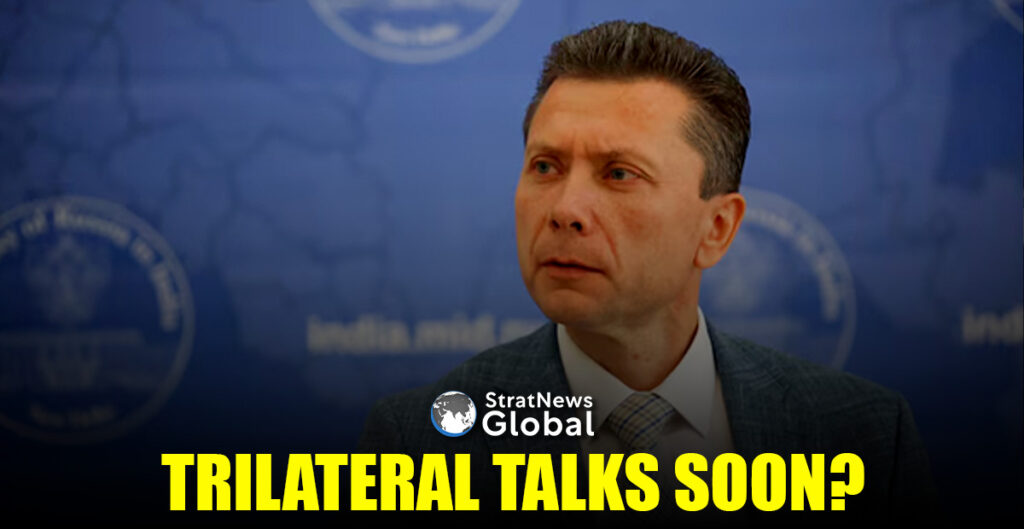
Russia expects to maintain its oil exports to India despite U.S. warnings, Russian embassy officials in New Delhi said on Wednesday, noting that Moscow hopes trilateral talks with India and China will take place soon.
U.S. President Donald Trump has announced an additional tariff of 25% on Indian goods exported to the U.S. from August 27, as a punishment for buying Russian oil, which constitutes 35% of India’s total imports compared with a negligible 0.2% before the Ukraine war.
“I want to highlight that despite the political situation, we can predict that the same level of oil import (by India),” Roman Babushkin, the charge d’affaires at the Russian embassy in India, told a press briefing.
Overcoming US Tariffs
He predicted India and Russia would find ways to overcome Trump’s latest tariffs in their “national interests”.
Russian First Deputy Prime Minister Denis Manturov said separately that Russia saw scope for supplies of liquefied natural gas to India.
“We continue to ship fuel, including crude oil and oil products, thermal and coking coal. We see potential for the export of Russian LNG,” Manturov was quoted as saying by Interfax news agency.
He also said, according to the RIA news agency, that Russia was counting on expanding nuclear energy cooperation with India.
Trade talks between India and the U.S. broke down over the opening up of India’s vast farm and dairy sectors, as well as its purchases of Russian oil. The total tariff announced on Indian goods entering the U.S. is 50%.
The Indian foreign ministry did not immediately reply to an emailed request for comment.
It has previously been said that the U.S. decision to single out India for Russian purchases was “extremely unfortunate”.
Russia’s Deputy Trade Commissioner Evgeny Griva on Wednesday said buying oil from Russia is “very profitable” for India, which will not want to change its supplier.
On average, Russia gives a 5%-7% discount to Indian buyers, he said, adding that Russia has a “very, very special mechanism” to continue oil supplies to India.
In addition, he said Russia had started accepting Indian rupee payments for its goods after the resolution of issues that had trapped billions of dollars worth of funds in Indian banks.
‘Greater Eurasian Partnership’
As tensions between Washington and New Delhi rise, high-profile visits from New Delhi and Beijing in recent weeks have raised hopes on the part of the Asian neighbours that ties damaged by a 2020 border clash can be repaired.
Indian Prime Minister Narendra Modi plans to visit China for the first time in over seven years later this month.
The planned visit was reported by Reuters last week, even as other high-profile exchanges, including Chinese Foreign Minister Wang Yi’s two-day visit to New Delhi, concluded.
At the same time, Russia is trying to revive long-standing plans for a trilateral meeting with India and China to help them forge a “greater Eurasian partnership”.
“As far as the trilateral is concerned, we are quite hopeful that this format will be resumed sooner rather than later because its importance is not questioned,” Babushkin said.
“This is closely linked to the Russian initiative of the establishment of the greater Eurasian partnership,” Babushkin said.
Russian President Vladimir Putin will meet Modi in New Delhi by the end of the year, he said. Putin, Modi and Chinese President Xi Jinping are also expected to all attend the Shanghai Cooperation Organisation starting August 31.
(With inputs from Reuters)
Torrential Rains, Flooding Batter Pakistan’s Financial Hub Karachi
Pakistan ordered the closure of businesses, schools, and public offices in Karachi on Wednesday after torrential monsoon rains killed at least 10 people in the densely populated port city, with forecasts predicting further heavy rainfall.
The monsoon has brought havoc across Pakistan in recent days, with the death toll from flash floods that hit the mountainous northwest on Friday rising to 385. Authorities said an unspecified number of people remained missing.
The rains began in Karachi on Tuesday, causing widespread flooding as rainfall reached levels not seen in years in some parts of the southern city, which is Pakistan’s financial capital and biggest city – home to more than 20 million people.
The deaths were caused by drowning, road accidents, building collapse and electrocution, said Abdul Wahid Halepoto, a provincial government spokesperson.
City Services Disrupted
The rain disrupted power, mobile phone services and flights, officials said. Television footage showed cars and other vehicles floating down streets and houses submerged in water.
“I have never experienced rain like this in my life,” said Anosha, 30, a creative designer, who did not want to give her full name. “Our car got stuck in the flooded road, water seeped in, and I panicked.”
Anjum Nazir, a spokesperson for the provincial meteorological department, said the area around the airport received 163.5 mm (6.4 inches) of rain, the highest recorded there since 1979.
Some 178 mm of rain was recorded in the northeast of Karachi, the highest since the weather station there was set up five years ago.
“We are expecting more intense rains,” Nazir said.
Since the season began in late June, there have been more than 750 monsoon-related deaths, according to the National Disaster Management Authority.
Power Supplies Disrupted
The sudden downpour caused disruption to Karachi’s electricity supply, said a spokesperson for K-Electric, which distributes power to the city.
Efforts to restore supplies were hampered by waterlogging and traffic congestion, which made access difficult, but electricity was back to most users, he said.
Rescue workers, police, volunteers and government agencies were helping relief efforts, the city’s Mayor Murtaza Wahab told a press conference.
“We are using all our resources to clear roads and restore utilities,” he said.
Wahab said the rain had overwhelmed the city’s infrastructure. The city’s drainage system has the capacity to manage 40 mm of rain, and anything above that would spill over into flooding, he said.
Massive Rains In Mumbai
There have also been heavy monsoon rains in Mumbai, India’s financial capital, with some parts of the city drenched with as much as 875.1 mm of rain in the five days to August 20, the local weather department said.
Many schools in the city were closed for a second straight day on Wednesday, while train services were disrupted.
Authorities in both countries requested residents avoid venturing out as more rain was expected.
(With inputs from Reuters)
Israel Reports Initial Progress In Gaza City Military Operation
Israel’s military has commenced the initial phase of a planned operation aimed at seizing control of Gaza City, Israeli military spokesman Brigadier General Effie Defrin stated on Wednesday.
Following a clash with Hamas south of Khan Younis in the strip on Wednesday, he said: “We will deepen the attack on Hamas in Gaza City, a stronghold of governmental and military terror for the terrorist organisation.”
Defrin said troops had already begun circling the outskirts of Gaza City and Hamas was now a “battered and bruised” guerrilla force.
“We have begun the preliminary operations and the first stages of the attack on Gaza City, and already now IDF forces are holding the outskirts of Gaza City,” he said.
Reservists’ Mobilisation Underway
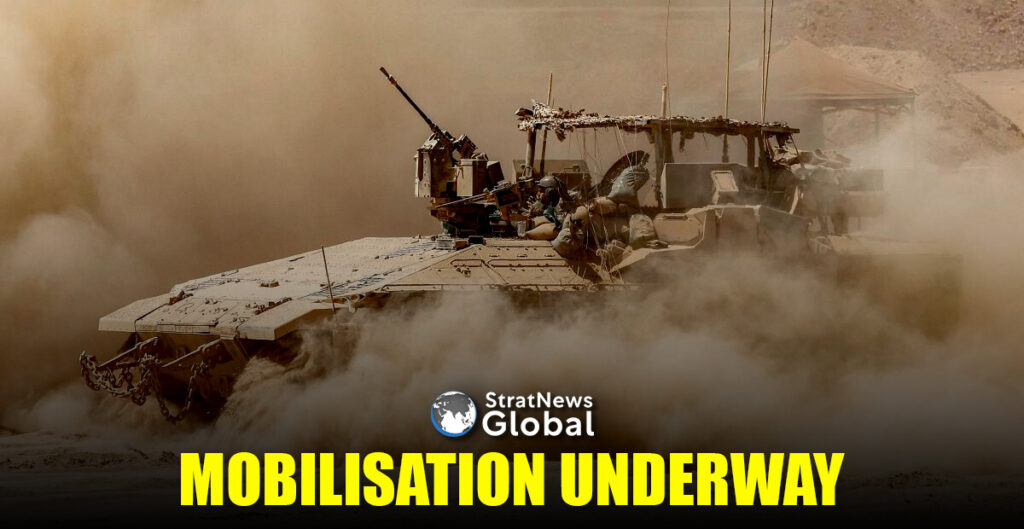
Israel’s military called up tens of thousands of reservists on Wednesday in preparation for the expected assault on Gaza City, as the Israeli government considered a new proposal for a ceasefire after nearly two years of war.
The call-up signals Israel is pressing ahead with its plan to seize Gaza’s biggest urban centre despite international criticism of an operation likely to force the displacement of many more Palestinians.
But a military official briefing reporters said reserve soldiers would not report for duty until September, an interval that gives mediators some time to bridge gaps between Palestinian militant group Hamas and Israel over truce terms.
Israeli troops clashed on Wednesday with more than 15 Hamas militants who emerged from tunnel shafts and attacked with gunfire and anti-tank missiles near Khan Younis, south of Gaza City, severely wounding one soldier and lightly wounding two others, an Israeli military official said.
In a statement, Hamas’ Al-Qassam Brigades confirmed carrying out a raid on Israeli troops southeast of Khan Younis and engaging Israeli troops at point-blank range. It said one fighter blew himself up among the soldiers, causing casualties, during an attack that lasted several hours.
(With inputs from Reuters)
Brazilian Supreme Court Justice Confident US Sanctions Will Be Reversed
The judge at the centre of growing tensions between Brazil and the United States said he is relying on President Donald Trump to reconsider and lift the sanctions imposed on him, arguing they lack full consensus within the U.S. government.
Brazilian Supreme Court Justice Alexandre de Moraes has ratcheted up restraining orders against former President Jair Bolsonaro during his trial for an alleged 2022 coup plot. Trump demanded an end to the case that he calls a “witch hunt” as he slapped a 50% tariff on Brazilian goods and hit Moraes with financial sanctions that are putting Brazil’s banks on edge.
‘Confident’ Judge To Wait
Despite fears of a spiralling crisis for bilateral relations, the judge expressed confidence in a late Tuesday interview at his Brasilia office that sanctions would be unwound against him via diplomatic channels or an eventual challenge in U.S. courts.
“A judicial challenge is possible, and I have not yet found a U.S. or Brazilian lawyer or scholar who doubts the courts would overturn. But at this moment, I’ve chosen to wait. That’s my choice. It’s a diplomatic matter for the country,” said Moraes.
The standoff with Trump is the highest-profile test yet for the 56-year-old jurist, whose bald visage and muscular frame have come to define the Brazilian high court he joined eight years ago. He has taken the lead on many of the court’s most prominent cases, cowing Elon Musk in a showdown over his social media platform, sending hundreds of right-wing rioters in the capital to prison and barring Bolsonaro from running for office.
Sanctions Fail To Deter
Navigating the U.S. crackdown on his personal finances and bilateral trade with Brazil has done little to change his routine, he said, which includes boxing, martial arts and a new favourite book: Henry Kissinger’s “Leadership,” the late U.S. diplomat’s final volume on 20th-century statecraft.
Moraes said he trusts diplomacy will restore his standing in Washington. He said prosecutors blamed the current fallout on a campaign by allies of Bolsonaro, including the former president’s lawmaker son Eduardo, who is in the U.S. and under investigation in Brazil for courting Trump’s intervention in his father’s case.
“Once the correct information has been passed along, as is being done now, and the documented information reaches the U.S. authorities, I believe it won’t even require any legal action to reverse (the sanctions). I believe that the U.S. executive branch itself, the president, will reverse them,” Moraes said.
Internal Divisions
Pressed on the reason for that confidence, Moraes said he was aware of internal divisions in the U.S. government that had slowed the sanctions and could still undermine them.
“There was reluctance in the State Department and great reluctance in the Treasury Department,” he said, without elaborating or explaining how he received that information.
A State Department official with knowledge of the matter told Reuters separately that the sanctions against Moraes had faced substantial pushback from career officials.
‘Legally Inappropriate’
The actions against Moraes were “completely, legally inappropriate,” said the source on condition of anonymity, adding that officials from the Treasury’s Office of Foreign Assets Control had initially said no but were overruled.
A Treasury spokesperson said: “The Treasury Department and Office of Foreign Assets Control, along with the entire Trump administration, are in lockstep that Alexandre de Moraes has engaged in serious human rights abuse. Rather than concocting a fantasy fiction, de Moraes should stop carrying out arbitrary detentions and politicised prosecutions.”
The U.S. State Department did not immediately respond to a request for comment.
Brazilian courts could punish Brazilian financial institutions for seizing or blocking domestic assets in response to U.S. orders, Moraes also said in the interview.
(With inputs from Reuters)
Ukraine Security Talks Without Moscow Are A ‘Road To Nowhere’: Russia
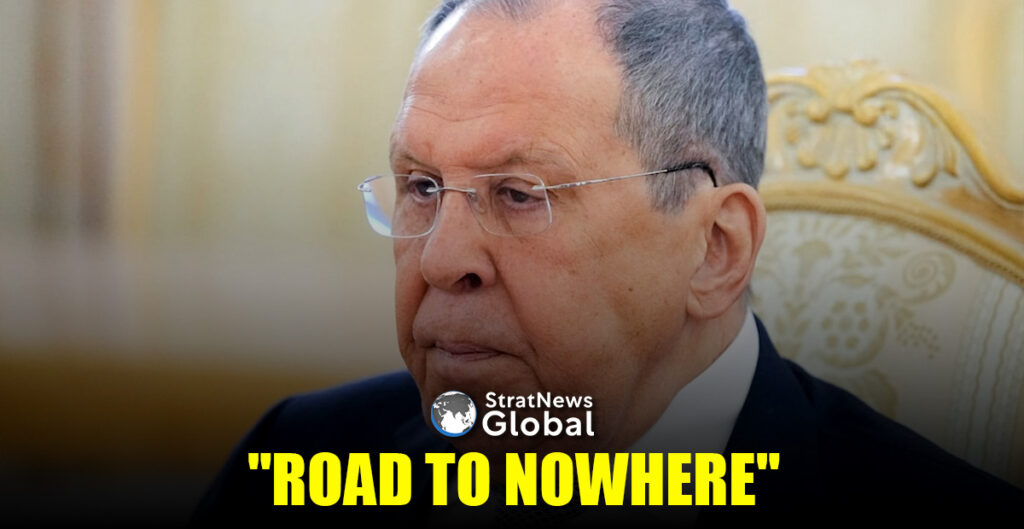
Russia said on Wednesday that efforts to address Ukraine’s security concerns without its involvement amounted to a “road to nowhere,” issuing a warning to the West as it rushed to devise guarantees for Kyiv’s future protection.
Foreign Minister Sergei Lavrov particularly criticised the role of European leaders who met U.S. President Donald Trump and Ukrainian President Volodymyr Zelenskyy at the White House on Monday to discuss security guarantees for Ukraine that could help to end the three-and-a-half-year-old war.
“We cannot agree with the fact that now it is proposed to resolve questions of security, collective security, without the Russian Federation. This will not work,” Lavrov told a joint news conference after meeting the foreign minister of Jordan.
U.S. and European military planners have begun exploring post-conflict security guarantees for Ukraine, U.S. officials and sources told Reuters on Tuesday. Lavrov said such discussions without Russia were pointless.
“I am sure that in the West and above all in the United States they understand perfectly well that seriously discussing security issues without the Russian Federation is a utopia, it’s a road to nowhere.”
After Polish officials said that an object that crashed in a cornfield in eastern Poland overnight was likely a Russian drone, Poland accused Russia of provoking NATO countries just as efforts to find an end to the war were intensifying.
“Once again, we are dealing with a provocation by the Russian Federation, with a Russian drone. We are dealing in a crucial moment, when discussions about peace (in Ukraine) are underway,” Defence Minister Wladyslaw Kosiniak-Kamysz said.
Lavrov’s comments highlighted Moscow’s demand for Western governments to directly engage with it on questions of security concerning Ukraine and Europe, something it says they have so far refused to do.
Moscow this week also restated its categorical rejection of “any scenarios involving the deployment of NATO troops in Ukraine”.
‘Clumsy’ Europeans
Lavrov accused the European leaders who met Trump and Zelenskyy of carrying out “a fairly aggressive escalation of the situation, rather clumsy and, in general, unethical attempts to change the position of the Trump administration and the president of the United States personally… We did not hear any constructive ideas from the Europeans there”.
Trump said on Monday the United States would help guarantee Ukraine’s security in any deal to end Russia’s war there. He subsequently said he had ruled out putting U.S. troops on the ground in Ukraine, but the U.S. might provide air support as part of a deal to end the hostilities.
NATO military leaders holding a video conference on Wednesday had a “great, candid discussion” on the results of recent talks on Ukraine, the chair of the alliance’s military committee said.
“Priority continues to be a just, credible and durable peace,” Admiral Giuseppe Cavo Dragone wrote in a post on X.
Lavrov said Russia was in favour of “truly reliable” guarantees for Ukraine and suggested these could be modelled on a draft accord that was discussed between the warring parties in Istanbul in 2022, in the early weeks of the war.
Under the draft discussed then, Ukraine would have received security guarantees from a group of countries including the five permanent members of the U.N. Security Council – China, Russia, the United States, Britain and France.
At the time, Kyiv rejected that proposal on the grounds that Moscow would have held effective veto power over any military response to come to its aid.
(With inputs from Reuters)
US Navy’s Drone Fleet To Counter China Faces Major Setbacks
During a U.S. naval test off California last month, a software glitch caused one autonomous drone boat to stall before another collided with it, highlighting setbacks in the Pentagon’s push to develop a fleet of unmanned vessels, according to sources and videos obtained by Reuters.
Weeks earlier, during a separate Navy test, the captain of a support boat was thrown into the water after another autonomous BlackSea vessel it was towing suddenly accelerated, capsizing the support boat, according to four people familiar with the matter. The captain was rescued and declined medical attention. The incident was first reported by Defence Scoop.
Both incidents stemmed from a combination of software failures and human error, including breakdowns in communication between onboard systems and external autonomous software, according to a person with direct knowledge of the matter, who requested anonymity to share sensitive information.
The Navy, Saronic and BlackSea declined to comment on the incidents.
Drones ‘Crucial’ For Deterrence
U.S. military leaders, seeing the outsized impact of maritime drones in the Ukraine war, have repeatedly said they need autonomous swarms of aerial and maritime drones to hinder a potential advance by China across the Taiwan Strait. Taiwan itself has begun acquiring its own maritime drones.
The drones being developed in Ukraine, which often look like speedboats without seats, and are capable of carrying weapons, explosives and surveillance equipment, are primarily remote-controlled and cost close to $250,000 – making them optimal for kamikaze missions that have effectively neutralised Russia’s Black Sea Fleet.
The U.S., meanwhile, is aiming to build an autonomous naval fleet that can move in swarms and without human command – a more ambitious task at a higher price point; as much as a few million dollars per speedboat.
The recent test failures highlight the challenges facing the Navy’s effort to deploy the nascent technologies, said Bryan Clark, an autonomous warfare expert at the Hudson Institute. It will need to adapt its “tactics as it better understands what the systems can do and what they can’t do.”
But the Navy’s problems go beyond getting the boats to work: its autonomous maritime drone acquisition unit has also been rocked by the firing of its top admiral, and a top Pentagon official voiced concerns about the program in a candid meeting with Navy brass last month, Reuters found.
L3Harris Contract
Since the most recent incident, the Pentagon’s Defence Innovation Unit (DIU), which had acquired technology for the tests, has indefinitely paused a contract – valued close to $20 million – with L3Harris, one of the companies providing autonomous software used to control some of the vessels, according to two people familiar with the matter.
The Pentagon did not respond to questions about the cause of the accidents or the L3Harris contract being paused, which has not been previously reported.
A Pentagon spokesperson said it conducted drone tests as part of a “competitive and iterative approach, between operators and industry.”
L3Harris declined to comment on the contract and directed questions to the DIU. The DIU declined to comment.
“L3Harris stands behind the safety, integrity and capability of our autonomy command-and-control product,” said Toby Magsig, who oversees L3Harris’ autonomous software products.
To accelerate its drone effort, the Pentagon in 2023 launched the $1 billion Replicator program, through which branches like the U.S. Navy and the DIU planned to acquire thousands of aerial and maritime drones, along with the software to control them. The first systems from this program are due to be announced this month.
The Navy has committed at least $160 million to BlackSea, which is producing dozens of its Global Autonomous Reconnaissance Craft boats a month, according to procurement records.
Saronic, which was recently valued at $4 billion in a funding round backed by Andreessen Horowitz and 8VC, makes the competitive sea drone Corsair, but is yet to announce a major contract. Federal procurement records show the company has generated at least $20 million from prototype agreements.
“These systems will play a critical role in the future of naval warfare by extending fleet reach, improving situational awareness, and increasing combat effectiveness,” acting chief of naval operations Jim Kilby said during a visit to BlackSea’s facility in June.
Navy Turmoil
Since returning to the office, President Donald Trump has made fielding swarms of drones a top military priority. Trump’s “Big Beautiful Bill” passed last month included almost $5 billion for maritime autonomous systems.
But, so far, the Navy’s approach has faced scepticism under the new administration.
In April, the Navy’s key drone boat procurement unit – known as Program Executive Office Unmanned and Small Combatants (PEO USC) – touted a successful demonstration of the software used to control BlackSea’s vessels in a post on LinkedIn, hailing it as “a major step forward in advancing #maritime autonomy.”
In response, Colin Carrol, then-chief of staff to Deputy Secretary of Defence Steven Feinberg, suggested the program was duplicating other efforts within the Pentagon. “I have a feeling that there are changes in this program’s future,” he replied to the LinkedIn post. Carrol, who is no longer with the Pentagon, declined to comment further.
The PEO USC was recently placed under review, according to four people familiar with the matter, due to a series of setbacks, and could be restructured or shut down.
This comes two months after the Navy said it had sacked the unit’s leader, Rear Admiral Kevin Smith, due to a loss of confidence in his leadership after the Naval Inspector General substantiated a complaint against him. Reuters was unable to contact Smith.
Navy Officials Questioned
During a meeting last month, Feinberg grilled Navy officials about their autonomous vessel capabilities, including those being fielded by the PEO USC, according to three people briefed on the meeting. Feinberg was unimpressed by some of the capabilities being acquired by the Navy and questioned whether they were cost-effective, the people said.
A Pentagon spokesperson said, “We’re not going to comment on private internal meetings” and directed questions about PEO USC to the Navy.
The Navy declined to comment on the meeting or the acquisition unit being put under review. Spokesperson Timothy Hawkins said the PEO USC stands by its mission, including its role as acquisition authority for the maintenance and modernisation of unmanned maritime systems.
The turmoil comes as shipbuilders and software providers are angling to secure even larger autonomous maritime projects, such as unmanned submarines and cargo-carrying ships.
Last week, the PEO USC started accepting proposals for the Modular Attack Surface Craft to acquire medium and large vessels capable of carrying containers, surveillance equipment, and conducting strikes.
T.X. Hammes, an autonomous weapons expert and Atlantic Council fellow, said the Navy is in uncharted waters, trying to overhaul decades of tradition at high speed.
“You’ve got a system that’s used to building big things, taking years to make a decision, and now suddenly you’re asking them to move fast,” he said.
(With inputs from Reuters)
Israel Mobilises Tens Of Thousands Of Reservists Ahead Of Planned Gaza Assault
Israel’s military on Wednesday mobilised tens of thousands of reservists in anticipation of a planned assault on Gaza City, while the government weighed a new ceasefire proposal amid nearly two years of ongoing conflict.
The call-up signals Israel is pressing ahead with its plan to seize Gaza’s biggest urban centre despite international criticism of an operation likely to force the displacement of many more Palestinians.
But a military official briefing reporters said reserve soldiers would not report for duty until September, an interval that gives mediators some time to bridge gaps between Palestinian militant group Hamas and Israel over truce terms.
The official said that as part of planning for a new offensive in the Gaza Strip, there would be five divisions operating in the enclave, but most reservists were not expected to serve in combat in Gaza City.
“We will be moving into a new phase of combat, a gradual, precise and targeted operation in and around Gaza City, which currently serves as Hamas’ main military and governing stronghold,” the official said.
Israel’s Offensive Expansion Plan
Israel’s security cabinet, chaired by Prime Minister Benjamin Netanyahu, approved a plan this month to expand the campaign in Gaza with the aim of taking Gaza City, where Israeli forces waged fierce urban warfare with Hamas in the early stages of the war. Israel currently holds about 75% of the Gaza Strip.
Many of Israel’s closest allies have urged the government to reconsider, but Netanyahu is under pressure from some far-right members of his coalition to reject a temporary ceasefire, continue the war and pursue the annexation of the territory.
One far-right member, Finance Minister Bezalel Smotrich, announced final approval on Wednesday of a widely condemned Israeli plan for a settlement project in the occupied West Bank that he said would erase any prospect of a Palestinian state.
Deadly War
The war in Gaza began on October 7, 2023, when gunmen led by Hamas attacked southern Israeli communities near the border, killing some 1,200 people, mainly civilians, and taking 251 hostages, including children, into Gaza.
Over 62,000 Palestinians have been killed in Israel’s air and ground war in Gaza since then, according to Gaza health officials, who do not say how many were militants but have said most of those killed have been women and children.
Hamas has accepted a proposal put forward by Arab mediators for a 60-day ceasefire that would involve releasing some of the remaining hostages and freeing Palestinian prisoners in Israel.
The Israeli government, which has said all the 50 remaining hostages must be released at once, is studying the proposal. Israeli authorities believe that 20 hostages are still alive.
Many Gazans and foreign leaders fear a storming of Gaza City would cause significant casualties. Israel says it will help civilians leave battle zones before any assault begins.
Israeli Troops, Hamas Fighters Clash
Israeli troops clashed on Wednesday with more than 15 Hamas militants who emerged from tunnel shafts and attacked with gunfire and anti-tank missiles near Khan Younis, south of Gaza City, severely wounding one soldier and lightly wounding two others, an Israeli military official said.
In a statement, Hamas’ Al-Qassam Brigades confirmed carrying out a raid on Israeli troops southeast of Khan Younis and engaging Israeli troops at point-blank range. It said one fighter blew himself up among the soldiers, causing casualties, during an attack that lasted several hours.
Israel’s military campaign has caused widespread devastation across the Gaza Strip, which, before the war, was home to about 2.3 million Palestinians. Many buildings, including homes, schools and mosques, have been destroyed, while the military has accused Hamas of operating from within civilian infrastructure.
Most Gazans have been displaced multiple times and forced into densely packed areas along the Mediterranean coast, including in Gaza City in the enclave’s north.
Israeli officials have said evacuation orders would be issued to Gaza City residents before any force moves in.
The Latin Patriarchate of Jerusalem, which oversees Gaza’s only Catholic Church, located in Gaza City, said it had received reports that neighbourhoods near the small parish had started to receive evacuation notices.
Hamas ‘Severely Weakened’
Hamas, an Islamist movement that has ruled Gaza for almost two decades, has been severely weakened by the war. The Israeli military says Hamas has been reduced to a guerrilla force.
The Israeli military official who briefed reporters on Wednesday said Hamas had been trying to regroup and re-form in Gaza City in a more organised manner, but gave no evidence to support the assertion.
Hamas has said it would release all remaining hostages in exchange for an end to the war. Israel says it will not end the war before Hamas disarms.
Opinion polls show strong Israeli public support for ending the war if it ensures the release of the hostages, and a rally in Tel Aviv urging the government to pursue such a deal drew a huge crowd on Saturday.
A new Reuters/Ipsos poll of Americans showed a 58% majority believe that every country in the United Nations should recognise Palestine as a nation.
(With inputs from Reuters)
Trump Administration Slaps New Sanctions On Four ICC Judges, Prosecutors
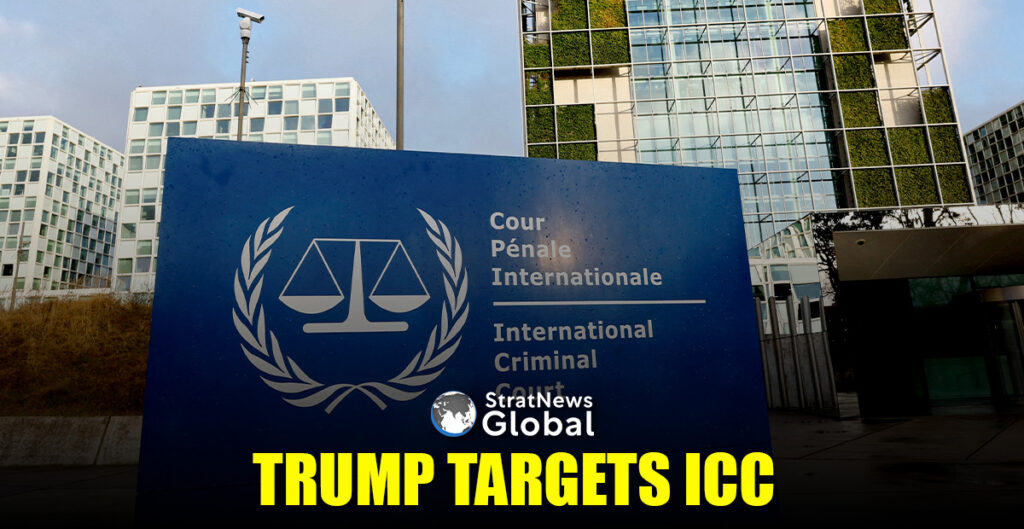
U.S. President Donald Trump’s administration on Wednesday announced sanctions against two judges and two prosecutors of the International Criminal Court (ICC), escalating Washington’s campaign against the tribunal over its pursuit of Israeli leaders and its earlier decision to probe U.S. officials.
In a statement, U.S. Secretary of State Marco Rubio called the court “a national security threat that has been an instrument for lawfare” against the United States and Israel.
Washington designated Nicolas Yann Guillou of France, Nazhat Shameem Khan of Fiji, Mame Mandiaye Niang of Senegal, and Kimberly Prost of Canada, according to the U.S. Treasury and State Department. All officials have been involved in cases linked to Israel and the United States.
“The United States has been clear and steadfast in our opposition to the ICC’s politicisation, abuse of power, disregard for our national sovereignty, and illegitimate judicial overreach,” Rubio said.
The second round of sanctions comes less than three months after the administration took the unprecedented step of slapping sanctions on four separate ICC judges. It represents a serious escalation that will likely impede the functioning of the court and the prosecutor’s office as they deal with major cases, including war crime allegations against Russia over its invasion of Ukraine.
ICC, which had slammed the move in June as an attempt to undermine the independence of the judicial institution and the office of the prosecutor, did not have immediate comment.
ICC judges issued arrest warrants for Israeli Prime Minister Benjamin Netanyahu, former Israeli defence chief Yoav Gallant, and Hamas leader Ibrahim al-Masri last November for alleged war crimes and crimes against humanity during the Gaza conflict.
In March 2020, prosecutors opened an investigation in Afghanistan that included looking into possible crimes by U.S. troops, but since 2021, it has deprioritised the role of the U.S. and focused on alleged crimes committed by the Afghan government and the Taliban forces.
ICC’s Jurisdiction
The ICC, which was established in 2002, has international jurisdiction to prosecute genocide, crimes against humanity, and war crimes in member states or if a situation is referred by the U.N. Security Council.
Although the ICC has jurisdiction over war crimes, crimes against humanity, and genocide in its 125 member countries, some nations, including the U.S., China, Russia, and Israel, do not recognise its authority.
It has high-profile war crimes investigations underway into the Israel-Hamas conflict and Russia’s war in Ukraine, as well as in Sudan, Myanmar, the Philippines, and Venezuela.
The sanctions freeze any U.S. assets the individuals may have and essentially cut them off from the U.S. financial system.
Guillou is an ICC judge who presided over a pre-trial panel that issued the arrest warrant for Netanyahu. Khan and Niang are the court’s two deputy prosecutors.
Netanyahu’s office issued a statement welcoming the U.S. sanctions.
Canadian Judge Kimberly Prost served on an ICC appeals chamber that, in March 2020, unanimously authorised the ICC prosecutor to investigate alleged war crimes and crimes against humanity committed in Afghanistan since 2003, including examining the role of U.S. service members.
Global Affairs Canada and the office of Canadian Foreign Affairs Minister Anita Anand did not immediately respond to requests for comment on the ICC sanctions, including against Prost.
The Trump administration’s dislike of the court goes back to his first term. In 2020, Washington imposed sanctions on then-prosecutor Fatou Bensouda and one of her top aides over the court’s work on Afghanistan.
(With inputs from Reuters)
Warsaw Reports Russian Drone Crash Near Eastern Poland, Calls It Provocation
The crash of a Russian drone in a field in eastern Poland has been confirmed by initial findings, Polish officials reported on Wednesday. The country’s defence minister condemned the incident, calling it a deliberate provocation.
The drone hit and scorched a cornfield in the village of Osiny in the eastern Lublin province overnight, just over 100 km (62 miles) from the Ukrainian border and around 90 km from Belarus.
Poland has been on high alert for objects entering its airspace since a stray Ukrainian missile struck a southern Polish village in 2022, killing two people.
Foreign Ministry Spokesperson Pawel Wronski said that the findings so far and some experts have suggested a Russian version of the Shahed drone developed by Iran was involved in the latest incident.
General Dariusz Malinowski said the drone appeared to be a decoy which was designed to self-destruct. He said it had a Chinese engine.
Deputy Prime Minister Wladyslaw Kosiniak-Kamysz, who also serves as defence minister, said the incident bore similarities to cases in which Russian drones flew into Lithuania and Romania, and could be linked to efforts to end the war in Ukraine.
Airspace Violation
“Once again, we are dealing with a provocation by the Russian Federation, with a Russian drone. We are dealing with it in a crucial moment, when discussions about peace (in Ukraine) are underway,” he told journalists.
Foreign Minister Radoslaw Sikorski said on X his ministry would issue a protest against the airspace violation but did not name the perpetrator.
“Another violation of our airspace from the East confirms that Poland’s most important mission towards NATO is the defence of our own territory.”
The Russian embassy in Warsaw did not immediately respond to an emailed request for comment.
U.S. President Donald Trump met Ukrainian President Volodymyr Zelenskyy and a group of European allies in the White House on Monday, following his meeting on Friday in Alaska with Russian President Vladimir Putin.
The blast shattered windows in several homes, but nobody was injured, national news agency PAP reported.
Police said they found burnt metal and plastic debris at the site and that corn had been burnt in an area of 8-10 m (26-33 ft) diameter around the spot where the object fell.
“I was sitting in my room at night, around midnight, maybe, and I heard something just bang,” local resident Pawel Sudowski told local news website Lukow.tv. “It exploded so loudly that the whole house simply shook.”
Air raid sirens rang out for about an hour over the border in Ukraine’s Volyn and Lviv regions from around midnight local time (2100 GMT), according to messages from its military posted on Telegram.
There were no reports of air attacks in those regions, their governors said.
(With inputs from Reuters)