

Support us by contributing to StratNewsGlobal on the following UPI ID
ultramodern@hdfcbank

Strategic affairs is our game, South Asia and beyond our playground. Put together by an experienced team led by Nitin A. Gokhale. Our focus is on strategic affairs, foreign policy and international relations, with higher quality reportage, analysis and commentary with new tie-ups across the South Asian region.
You can support our endeavours. Visit us at www.stratnewsglobal.com and follow us on YouTube, Twitter, Facebook and Instagram.
र 500 per month
र 1000 per month
र 5000 per year
र 10000 per year
Donate an amount of your choice
र 500 per month
Donate र 500 per month

र 1000 per month
Donate र 1000 per month
र 5000 per year
Donate र 5,000 per year
र 10000 per year
Donate र 10,000 per year
Donate an amount of your choice
Donate an amount of your choice


One Killed, 18 Injured As Russian Strike Hits US Firm In Western Ukraine
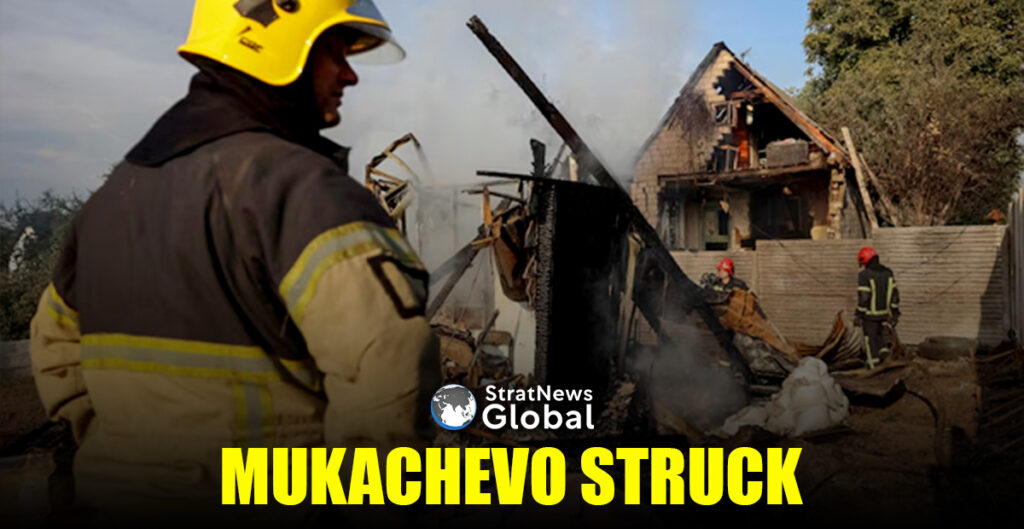
A Russian overnight strike in western Ukraine hit a U.S. electronics manufacturer, killing one person and injuring at least 18 others, Ukrainian officials said on Thursday.
A missile attack injured 15 people and destroyed storage facilities at the manufacturer in the town of Mukachevo, emergency services and local authorities in the western Zakarpattia region said.
National television showed the region’s governor, Myroslav Biletskyi, standing near the building engulfed in smoke, who said the plant was producing consumer electronics, while Foreign Minister Andrii Sybiha condemned the strike in a post on X.
“A fully civilian facility that has nothing to do with defence or the military,” he said.
“This is not the first Russian attack on American businesses in Ukraine, after strikes on Boeing offices in Kyiv earlier this year and other attacks.”
In the western city of Lviv, the attack killed one person, injured three more, and damaged 26 homes, according to Governor Maksym Kozytskyi.
Ukrainian Air Force said that Russia used 574 drones and 40 missiles in the overnight attack on the country, which was the biggest one so far in August.
“This is why efforts to force Russia to end the war are so critical,” Sybiha said.
The strike took place at a time of intense efforts by U.S. President Donald Trump to bring an end to the Russian war in Ukraine.
Sumy Strike
Earlier on Wednesday, at least 14 individuals, among them a family with three children, sustained injuries during an overnight Russian strike on Ukraine’s northern Sumy region, the country’s prime minister said.
Russia launched 15 drones in an assault on the Okhtyrka area in the early hours of Wednesday, local prosecutors said on the Telegram messaging app.
The children injured in the attack, which struck a residential neighbourhood in the town, were aged 5 months, 4 years and 6 years, Prime Minister Yulia Svyrydenko wrote on X.
“Russia continues to manifest its fears through acts of pure terrorism across Ukraine, once again targeting the homes of families and their sleeping children,” she said.
Russia, which denies targeting civilians, has used missiles and drones to strike Ukrainian towns and cities far from the front lines of the war.
Thousands of civilians, the vast majority of them Ukrainian, have been killed since Moscow invaded in 2022.
(With inputs from Reuters)
Russia Mandates Pre-Installation Of State-Backed Messaging App MAX
Starting next month, all mobile phones and tablets sold in Russia must come pre-installed with MAX, a government-backed messaging app seen as a WhatsApp rival, amid concerns over surveillance, the Russian government announced on Thursday.
The decision to promote the popularity of MAX, the new state-controlled messaging app, comes after Russia restricted some calls on WhatsApp, owned by Meta Platforms, and on Telegram, accusing the foreign-owned platforms of failing to share information with law enforcement in fraud and terrorism cases.
Control Over Internet Space
The government, which is seeking greater control over the internet space, said in a statement on Thursday that MAX, which will be integrated with government services, would be on the list of mandatory pre-installed apps on all “gadgets”, including mobile phones and tablets, sold in Russia from September 1.
Pre-Installed Apps
It will also be mandatory from the same date for Russia’s domestic app store, RuStore, currently pre-installed on all Android devices, to be pre-installed on all Apple devices, the government said.
An online Russian-language TV app called LIME HD TV, which allows people to watch Russian state TV channels for free, will be pre-installed on all smart TVs sold in Russia from January 1 next year, the government added.
Dispute With Tech Providers
A simmering dispute with foreign tech providers intensified after Moscow’s February 2022 invasion of Ukraine, with Russia blocking Meta’s Facebook and Instagram, slowing the speed of Alphabet’s YouTube and issuing hundreds of fines to platforms that failed to comply with Russian rules on online content and data storage.
Steady Degradation
Human Rights Watch said in a report last month that Russia has been “meticulously expanding [its] legal and technological tools to carve out Russia’s section of the internet into a tightly controlled and isolated forum”.
Lawmakers have approved a new law that tightens censorship and could have sweeping ramifications for digital privacy, with Russians facing fines if they search online for content Moscow considers “extremist”, including via virtual private networks that millions use to bypass internet blocks.
(With inputs from Reuters)
Israel Intensifies Military Pressure On Gaza City Before Planned Offensive
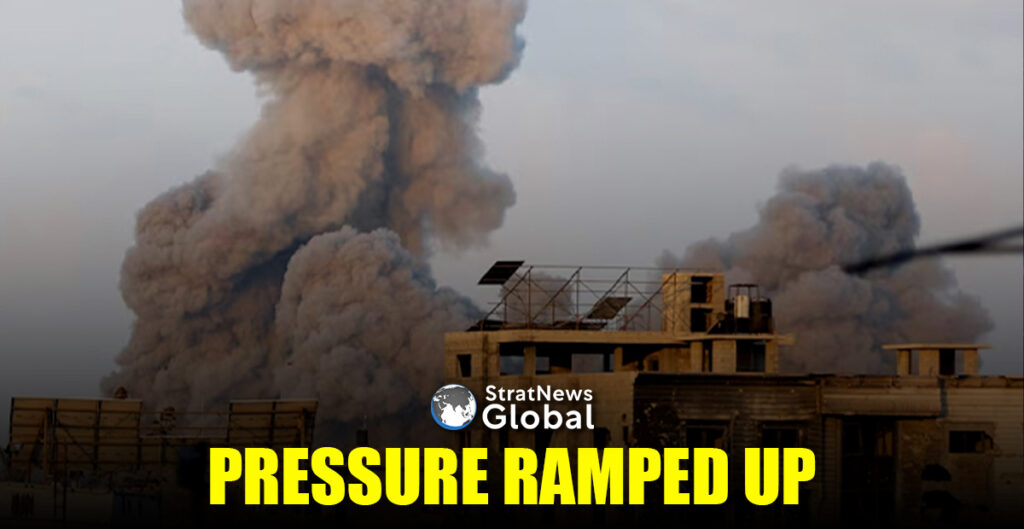
The Israeli military carried out heavy overnight bombardments on Gaza City, residents said, maintaining pressure ahead of Prime Minister Benjamin Netanyahu’s Thursday meeting with ministers to discuss plans for seizing the enclave’s largest city.
The military, a day earlier, called up 60,000 reservists in a sign that the government was pressing ahead with the plan, despite international condemnation. Although one military official said that most reservists would not serve in combat and that the strategy to take Gaza City had not yet been finalised.
Calling up tens of thousands of reservists is also likely to take weeks, giving time for mediators to attempt to bridge gaps over a new temporary ceasefire proposal that Hamas has accepted, but the Israeli government has yet to officially respond to.
The proposal calls for a 60-day ceasefire and the release of 10 living hostages being held in Gaza by Hamas militants and of 18 bodies. In turn, Israel would release about 200 long-serving Palestinian prisoners held by Israel.
The Israeli government has restated that all of the remaining 50 hostages held by militants in Gaza must be released at once. Israeli officials believe that around 20 of them are still alive.
Gaza City Seizure
Netanyahu is scheduled to meet with some cabinet ministers on Thursday to discuss his plan to seize Gaza City, according to Haaretz and other Israeli media, without giving more details.
The plan was approved this month by the security cabinet, which he chairs, even though many of Israel’s closest allies have urged the government to reconsider.
Netanyahu is under pressure from some far-right members of his coalition to reject a temporary ceasefire and instead continue the war and pursue the annexation of the territory.
In Gaza City, thousands of Palestinians have left their homes as Israeli forces have escalated shelling on the Sabra and Tuffah neighbourhoods. Some families have left for shelters along the coast, while others have moved to central and southern parts of the enclave, according to residents there.
“We are facing a bitter-bitter situation, to die at home or leave and die somewhere else, as long as this war continues, survival is uncertain,” said Rabah Abu Elias, 67, a father of seven.
“In the news, they speak about a possible truce, but on the ground, we only hear explosions and see deaths. To leave Gaza City or not isn’t an easy decision to make,” he told Reuters by phone.
Israeli tanks have been edging closer to densely populated Gaza City over the past ten days. Israeli officials have said evacuation notices would be issued to Palestinians there before the military moves in.
Two more people have died of starvation and malnutrition in Gaza in the past 24 hours, the territory’s health ministry said on Thursday.
The new deaths raised the number of Palestinians who have died from such causes to 271, including 112 children, since the war began.
Israel disputes the malnutrition and starvation figures posted by the Gaza health ministry.
(With inputs from Reuters)
Seoul Mulls Women Soldiers Amid Birth Crisis
Many countries in Southeast Asia are facing the problem of an aging population, but for South Korea, it has become a matter of national security now.
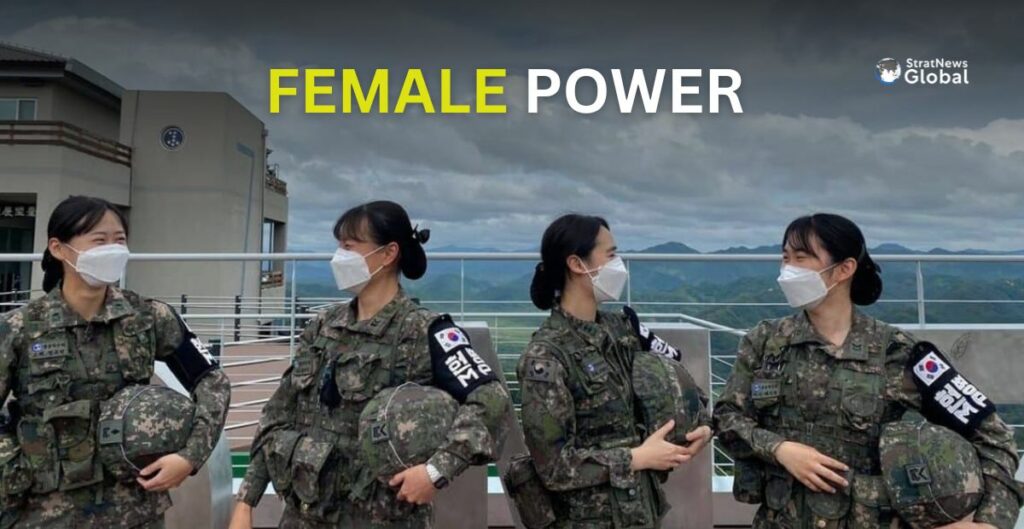
A persistently low birth rate has caused a rapid decline in the number of available conscripts, threatening the sustainability of its current military system. A new bill currently under discussion seeks to accept women as rank-and-file soldiers, a move that could mark a significant shift in the traditionally male-dominated conscript system.
The bill, submitted by Rep. Kim Mi-ae of the ruling People Power Party, proposes that military authorities open barracks to women and accept voluntary female applicants for enlisted service.
Currently, women can only serve as officers or non-commissioned officers. Kim emphasized that “a drastic measure is needed to ensure national security,” citing demographic projections that the number of eligible male conscripts could fall to just 100,000 per year within two decades. The bill would also mandate annual reports to parliament on the experiences of female soldiers to ensure accountability and transparency.
South Korea’s conscription system, which mandates nearly all able-bodied men to serve in the military, has long been a central part of national identity. However, with the birth rate declining and the pool of eligible conscripts shrinking rapidly, the sustainability of this model is in question.
South Korea’s active-duty military has gotten much smaller, shrinking from 560,000 soldiers in 2019 to 450,000 by July 2025. This is below the 500,000 troops many experts say are needed to maintain security under the current agreement with North Korea, which still has about 1 million soldiers. The army has been hit the hardest, losing 100,000 enlisted soldiers in just six years.
In a rapidly evolving security environment, especially amid tensions with North Korea and growing competition in military technology, South Korea can no longer rely solely on manpower. To stay prepared, it needs to invest in advanced technologies like autonomous drones, hypersonic missiles, and long-range ballistic weapons.
As South Korea stands at a crossroads, embracing both military modernization and social reform is not just strategic, it’s essential for the nation’s future.
New Zealand Confronts Most Challenging Security Environment In Years: Report
New Zealand is confronting its most severe national security challenges in recent times, with rising threats of foreign interference and espionage, particularly from China, according to an intelligence report released on Thursday.
The New Zealand Security Intelligence Service (SIS) report said there was almost certainly undetected espionage activity harming the country’s interests and that foreign states continue to target critical organisations, infrastructure and technology to steal sensitive information.
“Some states, including China, Russia and Iran, are willing to engage in covert or deceptive activity in order to influence discussions and decisions, or gain access to technology and information that can help them meet these goals … New Zealand has been targeted by some of these activities,” the report said.
China’s Expanding Intelligence Reach
China was a particularly “assertive and powerful” actor in the region and had demonstrated both a willingness and capability to undertake intelligence activity that targets New Zealand’s national interests, it added.
A spokesperson for the Chinese Embassy in New Zealand said in an email that the content of the report was entirely “unsubstantiated and groundless, saturated with ideological bias and a Cold War mentality.”
They added that China is willing to continue to regard New Zealand as a friend and partner, but in the face of “groundless attacks”, it would, when necessary, “take firm measures to safeguard our legitimate interests”.
At a regular news briefing, Mao Ning, a Chinese foreign ministry spokesperson, accused New Zealand’s intelligence and security agencies of “repeatedly spreading rumours” in recent years.
“China strongly opposes this,” she said, urging New Zealand to focus on actions in favour of the healthy and stable development of bilateral relations.
The report, titled New Zealand’s Security Threat Environment, is released annually as part of a government shift to better inform New Zealanders about risks the country is facing.
New Zealand Boosts Defence
The country, part of the Five Eyes intelligence and security alliance, has increasingly amped up its rhetoric over the growing influence of China in the region and a rise in geopolitical tensions, and on Thursday said it would spend NZ$2.7 billion ($1.6 billion) to beef up its defence force.
Director-General of Security Andrew Hampton said the threats need to be taken much more seriously than they are currently.
“Our threat environment is deteriorating and that has a direct impact on our safety and security,” he said in a statement released alongside the report.
The report also pointed to the growing threat of violent extremism and said the most plausible attack scenario remains a lone actor who has been radicalised online.
“Grievances and polarising issues in the online information space are almost certainly driving support for a range of violent extremist ideologies within New Zealand,” the report noted.
($1 = 1.7170 New Zealand dollars)
(With inputs from Reuters)
Uganda, US Sign Deal On Hosting Third-Country Nationals
Uganda has inked a deal with the United States to shelter third-country nationals denied US asylum but reluctant to return home, the Foreign Ministry said Thursday.
President Donald Trump aims to deport millions of immigrants who entered the US illegally and his administration has sought to increase removals to third countries, including by sending convicted criminals to South Sudan and Eswatini.
Preference For African Nationals
“This is a temporary arrangement with conditions including that individuals with criminal records and unaccompanied minors will not be accepted,” Vincent Bagiire Waiswa, the ministry’s permanent secretary, said in a statement.
Waiswa added that Uganda would prefer to receive people from African nationalities under the agreement.
“The two parties are working out the detailed modalities on how the agreement shall be implemented,” he said.
Initial Denial Of Agreement
On Wednesday, another Ugandan foreign affairs official had denied a US media report that the East African country had agreed to take in people deported from the United States, saying it lacked the facilities to accommodate them.
Okello Oryem, state minister for foreign affairs, told Reuters by text message: “To the best of my knowledge we have not reached such an agreement.”
“We do not have the facilities and infrastructure to accommodate such illegal immigrants in Uganda.”
Uganda, a US ally in East Africa, also hosts nearly two million refugees and asylum-seekers, who mostly hail from countries in the region such as Democratic Republic of Congo, South Sudan and Sudan.
Looking For Accommodation
Since the second Trump administration took office, at least a dozen countries have already accepted — or agreed to accept — deportees from other nations. US officials have been actively engaging with foreign governments in this regard.
Internal government documents reveal that the Trump administration has also approached countries such as Ecuador and Spain, requesting them to accept these so-called third-country deportees from the United States.
(With inputs from Reuters)
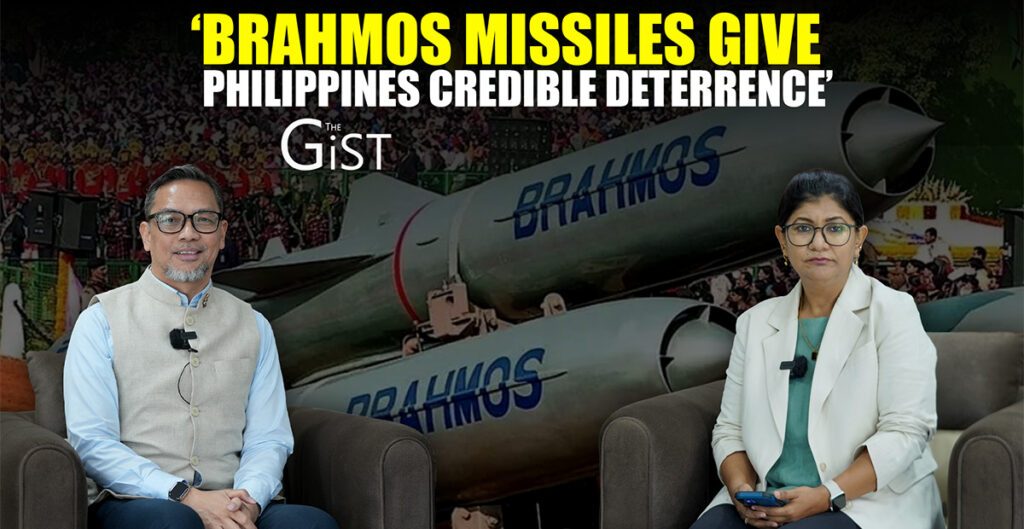
‘India’s Brahmos Is In Sync With Philippines Archipelagic Defence Concept’
India is among the “pantheon of countries” with which Manila has a robust defence and security partnership even as it confronts a rising and belligerent China, said Josel F. Ignacio, Ambassador of the Philippines to India.
Speaking exclusively to StratNews Global, the Philippine envoy said, the purchase of BrahMos cruise missiles from India by Manila was a step in the right direction.
“We were the first country to which India has sold the BrahMos missiles. The deliveries have been going smoothly. BrahMos technology affords the Philippines, credible deterrence, credible defense and it is completely in sync with our comprehensive archipelagic defense concept,” he said.
During his recent visit to New Delhi and Bengaluru from 4-8 August, Philippine President Ferdinand Marcos Jr., mentioned that his country is in the process of acquiring more BrahMos missiles from India as part of their defence modernisation plan.
In April 2024, the Philippines received the first batch of BrahMos missiles from India under a $375 million deal that was signed in 2022. This included three batteries of the missiles, operators and logistical support.
“As regards our future procurements or purchases of the BrahMos, as the president has said, everything’s on the table. Ultimately, the decision will be based with our Defence Department. But I think overall what it shows is the kind of mutual trust that has been developing between the Philippines and India in the area of defence,” Ignacio said.
The move also reflects the Philippines “recognition of India as a credible provider of quality defence (products) that are indigenously produced.
“We feel that for our current needs and the current realities, these are, you know, in sync with our objectives. Future orders we see us beefing up, you know, what we are, acquiring and the kind of capabilities we are acquiring now.
The Comprehensive Archipelagic Defense Concept (CADC) of the Philippines was launched in 2024. It is focused on securing the country’s vast archipelago and its exclusive economic zone, thereby deterring incursions, specifically by the Chinese Navy, and enhancing their maritime security. This is being referred to as the Philippines’ Horizon 3 military modernization.
China As Pain Point
President Marcos India visit coincided with a joint drill by the navies of the two countries in the South China Sea for the first time. India deployed its guided-missile destroyer INS Delhi, tanker INS Shakti and corvette INS Kirpan which joined two frigates of the Philippines – BRP Miguel Malvar and BRP Jose Rizal.
China criticised the drills, accusing the Philippines of involving a “third country” in exercises and disrupting regional peace.
“We conduct (these activities) with our partners, including India, for broader objectives. Both India and the Philippines, we are maritime nations with centuries-old traditions. And now we are two countries that espouse having free, inclusive and open waterways in the Indo-Pacific,” he said.
The envoy added, “So, there are larger ends to what we’re doing, undertaking joint, maritime cooperative activities (MCA) which in plain speak would be naval drills. It assists in the development of interoperability between our naval forces, understanding and sharing of best practices.”
“For our respective relationships with China, there are pain points… There are differences,” he said.
However, referring to the recent meeting between External Affairs Minister S. Jaishankar with Chinese Foreign Minister Wang Yi, Ignacio said, “These differences (with China) should not erupt into conflict and dispute. So, both of us (India and the Philippines), we have our own problems, our own difficulties with China.”
But, he said, this should not be the “sole driver” in the enhancement of bilateral ties between New Delhi and Manila.
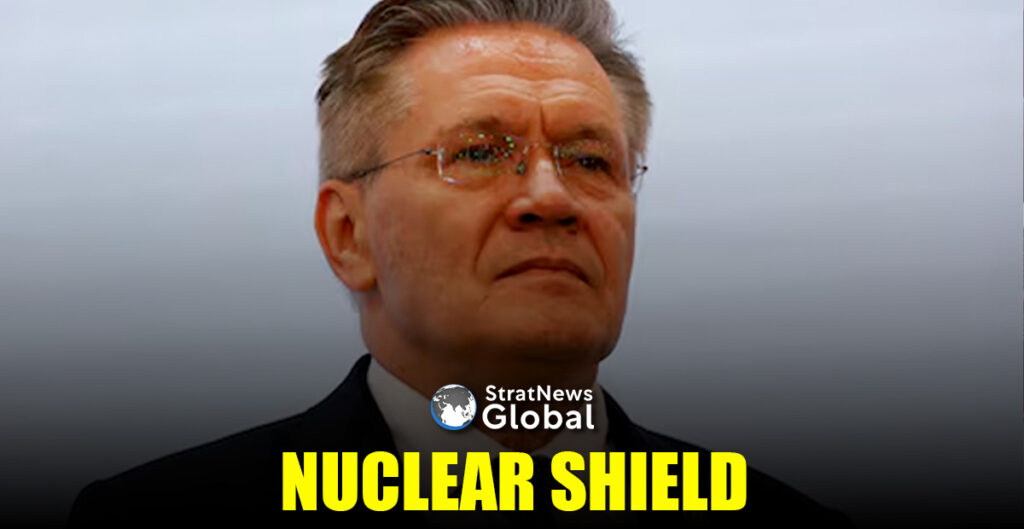
Russia Requires Nuclear Shield Upgrade Amid ‘Colossal Threats’: Nuclear Chief
The head of Russia’s state nuclear corporation said on Thursday that the country must upgrade its nuclear shield in the coming years to counter “colossal threats” facing the world’s largest nuclear power.
Russia and the United States are upgrading their nuclear arsenals – including the systems used to detect and intercept incoming nuclear-armed missiles – just as China ramps up its own nuclear capability far beyond those of Britain and France.
“Now, in the current geopolitical situation, is a time of colossal threats to the existence of our country. Therefore, the nuclear shield, which is also a sword, is a guarantee of our sovereignty,” Russian state news agency RIA cited Alexei Likhachev as saying.
“We understand today that the nuclear shield must only be improved in the coming years.”
Trump’s Golden Dome
U.S. President Donald Trump, in May, unveiled plans for a so-called “Golden Dome” missile defence shield, inspired by Israel’s land-based Iron Dome defence shield, that would cost at least $175 billion.
The U.S. dome would aim to intercept a range of missiles – including ballistic, hypersonic and cruise – and is aimed at blocking threats from Russia and China. However, military experts agree that no such shield can intercept all missiles, especially in the quantity that either Moscow or Washington could launch.
Russia has about 4,300 stockpiled and deployed nuclear warheads, and the United States has about 3,700, a total of about 87% of the world’s total inventory, according to research by the Federation of American Scientists.
China is the world’s third largest nuclear power with about 600 warheads, followed by France with 290, Britain with 225, India with 180, Pakistan with 170, Israel with 90 and North Korea with 50, according to the research.
(With inputs from Reuters)
International Law: Strong on Paper, Weak in Action
International law is often cited as one of the strictest and most unambiguous sets of rules in the world. In practice, however, these provisions collapse the moment they become inconvenient, a privilege enjoyed most by powerful nations.
China offers the clearest example. Despite the 2016 Arbitral Award by the United Nations Convention on the Law of the Sea (UNCLOS) declaring its activities in the South China Sea unlawful, Beijing dismissed the ruling as “nothing but a piece of waste paper.” Since then, China has repeatedly interfered in Vietnam’s oil and gas exploration, claimed jurisdiction over Vietnamese areas, and sent coast guards into Vietnamese waters without permission. These actions have drawn condemnation but no concrete consequences.
China’s influence also keeps smaller states in check. While the U.S., Japan, Canada, and the Philippines marked the 2016 ruling, South Asian nations directly affected by the disputes remained silent—balancing with China rather than confronting it.
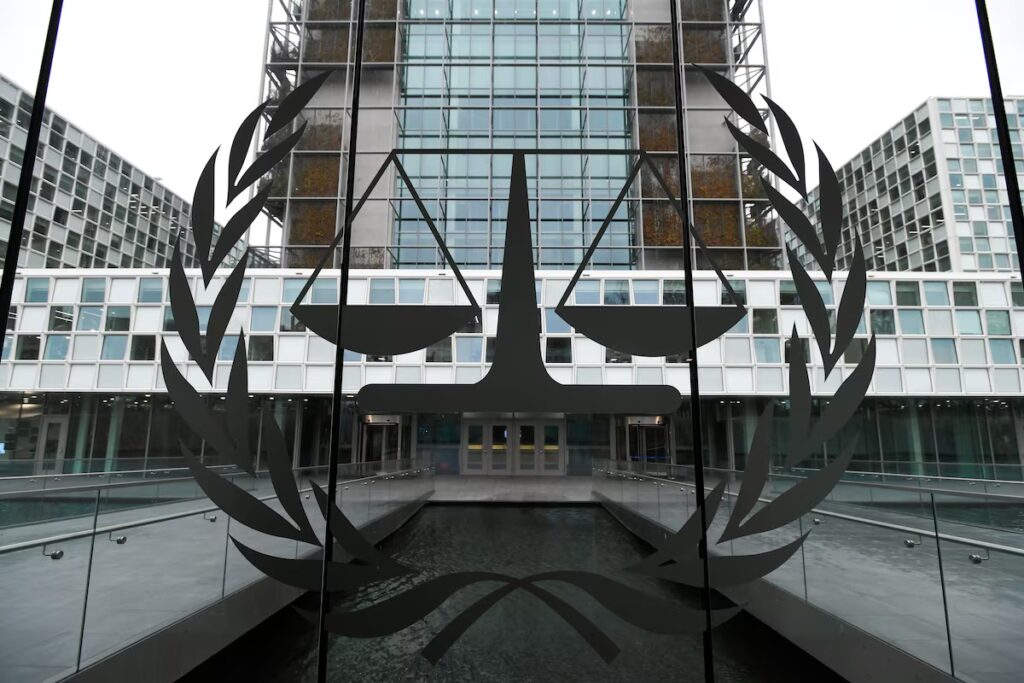
Other rulings have fared no better. On March 17, 2023, the International Criminal Court (ICC) issued an arrest warrant against Russian President Vladimir Putin for war crimes in Ukraine. Yet Putin traveled freely to ICC member states like China and Mongolia, receiving red-carpet welcomes instead of arrests. In November 2024, the ICC issued a warrant for Israeli Prime Minister Benjamin Netanyahu, but five months later he made an official visit to Hungary. Not only did Hungarian authorities refuse to act, they threatened to quit the ICC—though they never followed through.
The pattern is clear: international legal rulings are rarely enforced. Implementation depends on political will, and member states consistently place national interests above legal obligations. Sanctions are selective—while the U.S. and EU sanction Russia over Ukraine, they continue to buy Russian energy.
In the end, condemnations are issued, trade continues, official visits take place, and compliance with international law remains voluntary. Without real enforcement, institutions like the ICC remain toothless, leaving international law strong only on paper.
(This article was written by Tisya Sharma, she is an intern at StratNewsGlobal)
Proposed European Peacekeeping In Ukraine Sparks Backlash In Germany
Discussions among allies about deploying European peacekeeping forces to safeguard Ukraine under a potential peace deal with Russia have triggered backlash in Germany, a nation still sensitive to its militaristic Nazi history, despite the plan remaining unlikely.
Chancellor Friedrich Merz has signalled openness to German participation in a possible peacekeeping mission in Ukraine while emphasising that such a decision would require coordination with European partners and his own coalition.
He also noted that any troop deployment would likely require a Bundestag mandate, a challenge for a chancellor whose own appointment was only voted through on the second attempt. Russia is fiercely opposed to any troops from the NATO alliance being deployed, and it is far from clear how such a force could work.
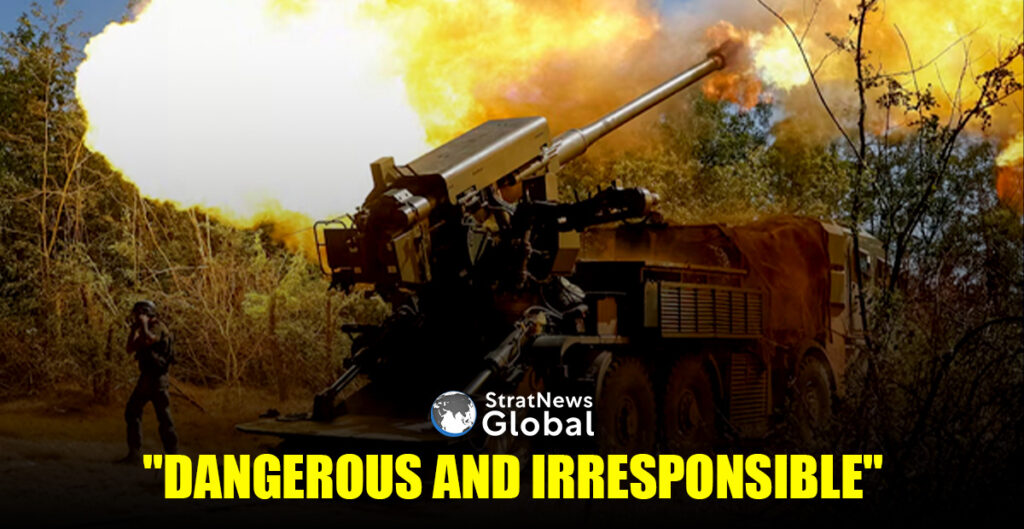
‘Dangerous And Irresponsible’
Alice Weidel, the head of the surging far-right Alternative for Germany (AfD), accused Merz’s conservatives of war-mongering for even considering the idea of ground troops, slamming it as “dangerous and irresponsible”.
Even Merz’s Foreign Minister, Johann Wadephul, warned that sending troops to Ukraine “would probably overwhelm us”.
There is unease in Germany over troop deployments, given its Nazi past and more recent deployments to Afghanistan and Mali that were widely seen as failures. There is also a backlash against spending billions of euros on military aid for Ukraine when Germany’s own economy is struggling.
Policymakers, meanwhile, are nervous about overstretching Germany’s long-neglected army and being sucked into a direct confrontation with a nuclear power.
“Something like this is obviously extremely controversial in Germany,” said Marcel Dirsus, Non-Resident Fellow at the Institute for Security Policy at Kiel University, adding that the government would tread very carefully.
“There is no point expending political capital on something that might not actually come to pass,” he said.
It is tricky waters to navigate for Merz, who, after winning elections this year, has pledged to make Germany’s conventional armed forces the most powerful in Europe, backed by hundreds of billions of euros in new borrowing.
Jens Spahn, the parliamentary leader of Merz’s Christian Democratic Union party (CDU), wrote to lawmakers urging them to refrain from publicly speculating about the issue, according to a letter leaked to German media.
Merz’s popularity has sagged since winning office, and the AfD, which has taken Russia-friendly positions and opposes weapons aid to Ukraine, is leading national opinion polls ahead of local elections next year. The AfD posted a mocked-up image on X of Merz grinning above five young Germans with the words: “Merz wants to send YOU to Ukraine? We don’t!”
Divided Germany
French President Emmanuel Macron and British Prime Minister Keir Starmer have both spoken in favour of troop deployments in a post-war settlement, but Germans are more wary of the idea.
According to a Forsa survey commissioned by RTL/ntv, 49% of Germans would support Germany sending its own soldiers to a European peacekeeping force, but 45% oppose it – compared to much stronger majorities in favour in Britain and France.
Scepticism is particularly strong in East Germany, where three states hold elections next year.
Sven Schulze, state leader of Merz’s CDU in one of those states, Saxony-Anhalt, told Stern magazine the Bundeswehr was barely in a position to deploy troops.
It was much more important to build “a strong European security architecture,” he said. “Anything else would overwhelm us as a country and also the Bundeswehr.”
Scepticism is even greater within Merz’s junior coalition partner, the Social Democrats, who have traditionally argued more in favour of engagement with Russia.
“Germany should stay out of this matter,” Ralf Stegner, a lawmaker from the leftist, more pacifist faction of the SPD, told Der Spiegel. “The deployment of German soldiers in the region is also extremely difficult for historical reasons.
For some, including Thomas Roewekamp, the CDU head of the parliamentary defence committee, German troops would be needed in the event of a permanent ceasefire between Russia and Ukraine.
“And to make deterrence credible, we must have military capabilities,” he told broadcaster WDR 5’s Morgenecho.
Asked about the deployment, Merz on Monday said “it is too early today to give a definitive answer”.
(With inputs from Reuters)