

Support us by contributing to StratNewsGlobal on the following UPI ID
ultramodern@hdfcbank

Strategic affairs is our game, South Asia and beyond our playground. Put together by an experienced team led by Nitin A. Gokhale. Our focus is on strategic affairs, foreign policy and international relations, with higher quality reportage, analysis and commentary with new tie-ups across the South Asian region.
You can support our endeavours. Visit us at www.stratnewsglobal.com and follow us on YouTube, Twitter, Facebook and Instagram.
र 500 per month
र 1000 per month
र 5000 per year
र 10000 per year
Donate an amount of your choice
र 500 per month
Donate र 500 per month

र 1000 per month
Donate र 1000 per month
र 5000 per year
Donate र 5,000 per year
र 10000 per year
Donate र 10,000 per year
Donate an amount of your choice
Donate an amount of your choice
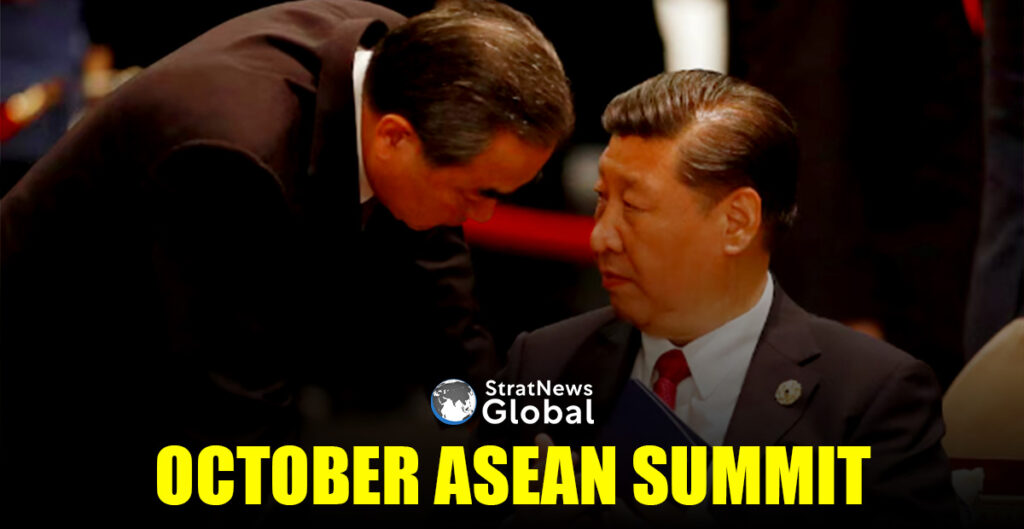


Chinese President Xi Unlikely To Join ASEAN Leaders’ Summit In October
China’s President Xi Jinping is likely to skip a key summit of Asian leaders in October, two sources familiar with the matter said, dimming hopes for a potential meeting with U.S. President Donald Trump at the gathering.
Malaysian Prime Minister Anwar Ibrahim this month had said both Xi and Trump were expected to attend the Association of Southeast Asian Nations (ASEAN) October 26-28 leaders’ summit in Kuala Lumpur. That led analysts to speculate that Trump and Xi, locked in an uneasy trade truce, may have their first in-person encounter of Trump’s second term.
China’s PM To Represent Xi
Chinese Premier Li Qiang, who attended another ASEAN summit with Gulf leaders in May, is expected to represent China at the October meeting, two regional sources said, declining to be identified due to the sensitivity of the matter.
The office of Anwar, the current chair of the 10-member bloc, directed queries to Malaysia’s foreign ministry, which did not immediately respond to a request for comment on Xi’s attendance.
“China has always attached importance to China-ASEAN relations and East Asian cooperation. We do not have any information to provide on your specific question,” China’s Ministry of Foreign Affairs said.
Trump Confirms Attendance
Anwar told Malaysia’s parliament last month that Trump had confirmed his attendance at the event during a phone call with the U.S. leader.
Trump said earlier this month he will meet Xi before the end of the year if a trade agreement is struck, adding that “we’re getting very close to a deal”.
Aides for both presidents have discussed a possible autumn meeting in Asia around the time of the Asia-Pacific Economic Cooperation (APEC) summit in South Korea on October 30-November 1, Reuters previously reported.
The annual ASEAN summit would mark Trump’s first trip to Southeast Asia since his 2019 meeting with North Korean supreme leader Kim Jong Un in the Vietnamese capital of Hanoi. He is also expected to attend the APEC summit.
It is rare for Chinese presidents to attend ASEAN summits, with Xi only having joined a 2021 special summit virtually since he gained power in 2012. Attendance by U.S. presidents is also uncommon – Trump attended in 2017, while President Joe Biden joined Xi remotely in 2021. Biden also attended the summit in person in Cambodia the following year.
‘Largest, Most High-Profile’ ASEAN Gathering
Anwar said this year’s annual summit would aim to deliver “ASEAN’s largest and most high-profile gathering of world leaders to date”, with Brazilian President Luiz Inacio Lula da Silva and South Africa’s Cyril Ramaphosa also expected to attend.
Washington and Beijing last week extended a tariff truce for another 90 days, staving off triple-digit duties on each other’s goods while negotiations continue to address the trade imbalance, market access and rare earths among other issues.
Trump’s global tariffs offensive has shaken Southeast Asia, a region heavily reliant on exports and manufacturing and in many areas boosted by supply chain shifts from China.
Washington announced tariffs of about 19% across major Southeast Asian economies’ exports earlier this month, far lower than previously threatened, after the White House had explicitly warned regional countries against so-called transhipment of Chinese goods to the U.S.
(With inputs from Reuters)
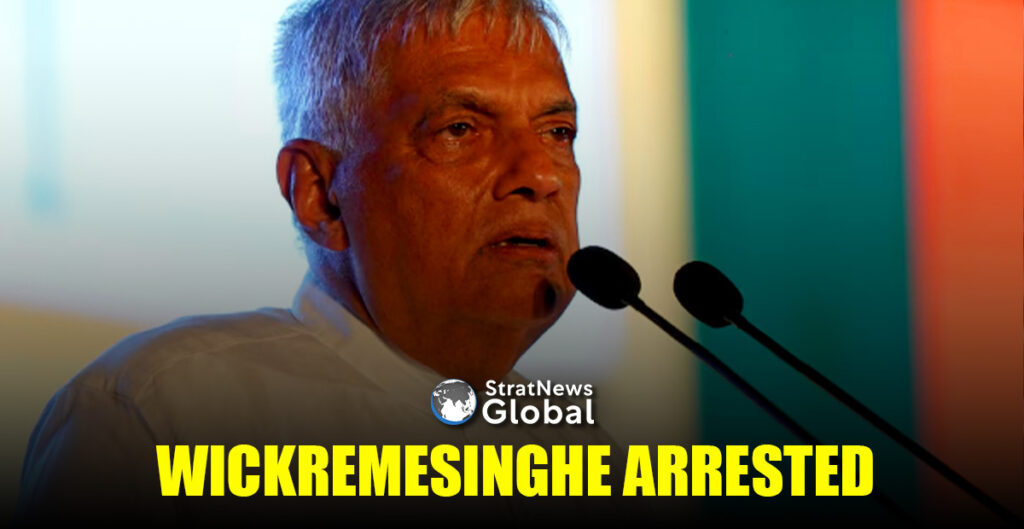
Ex-Sri Lankan President Wickremesinghe Arrested Over Alleged Misuse Of State Funds
Former Sri Lankan President Ranil Wickremesinghe was taken into custody by the Criminal Investigation Department (CID) on Friday over allegations of misusing state funds, according to local television channel Ada Derana.
Wickremesinghe, 76, was arrested after arriving at the CID office in the capital Colombo to record a statement in an investigation into his visit to London to attend his wife’s graduation ceremony, the report said.
A Sri Lanka Police spokesperson did not immediately confirm the arrest. Wickremesinghe’s office did not respond to a request for comment from Reuters.
A lawyer who served as Sri Lanka’s prime minister a record six times, Wickremesinghe was made president in 2022 during the island nation’s debilitating financial crisis.
Wickremesinghe, who is the leader of the United National Party (UNP), took over after widespread protests caused by an economic meltdown forced his predecessor, Gotabaya Rajapaksa, to flee Sri Lanka and later resign.
Born into a prominent family of politicians and businessmen with large interests in the media, a 29-year-old Wickremesinghe was made the country’s youngest cabinet minister by his uncle, President Junius Jayewardene, in 1978.
In 1994, following assassinations that wiped out several of his senior colleagues, Wickremesinghe became leader of the UNP.
Case Against Wickremesinghe
In 2023, Ranil Wickremesinghe made a stopover in London while returning from Havana, where he had taken part in the G77 summit. During his stay in the British capital, he, along with his wife, attended a ceremonial event hosted by the University of Wolverhampton.
Wickremesinghe has consistently maintained that the travel expenses of his wife were borne by her personally and that there was no use of public funds for her trip.
The Criminal Investigation Department, however, has alleged that Wickremesinghe misused state money to cover his own travel costs during what was described as a private visit. Furthermore, the CID claims that his security personnel accompanying him were also financed with government funds.
(With inputs from Reuters and IBNS)
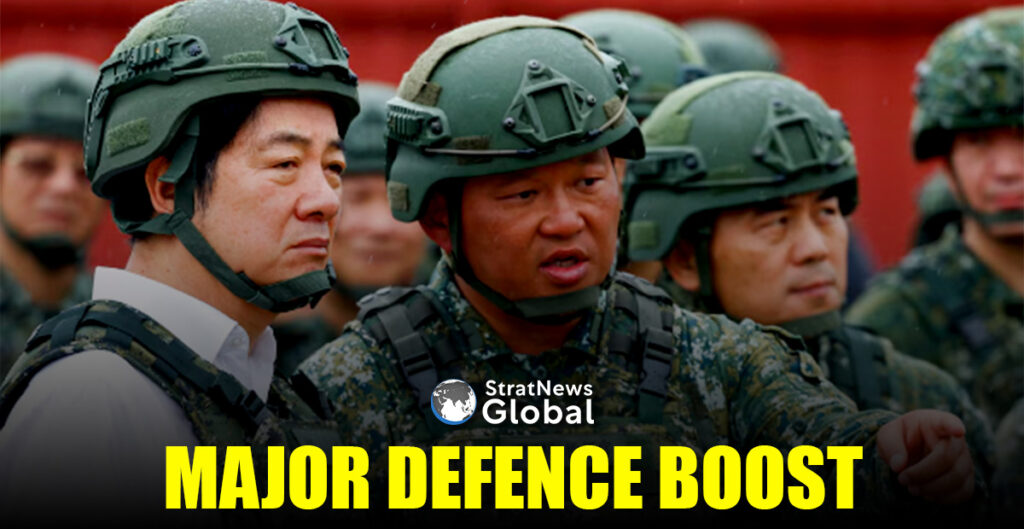
Taiwan President Ramps Up Defence Spending Goal To 5% Of GDP
Taiwan President Lai Ching-te said on Friday that he aims for defence spending to reach 5% of the island’s gross domestic product (GDP) before 2030, increasing a target for strengthening the military budget that Washington has long advocated.
The previous day, the government said next year’s defence budget would reach 3.32% of GDP, including for the first time spending on the coast guard, among other areas, to align with what Premier Cho Jung-tai said was the “NATO model”.
NATO Model
Taiwan was following the “NATO model” to include spending on the coast guard and veterans in total defence expenditure, he added.
Taiwan was including spending for the coast guard in its total defence budget for the first time, two senior officials briefed on the matter separately told Reuters, speaking on condition of anonymity.
“They are standing on the frontline,” said one, referring to the coast guard, which figures in regular stand-offs with China’s coast guard and would, in time of war, be pressed into the navy’s effort to defend Taiwan.
China Threats
The move comes as China, which views democratically governed Taiwan as its own territory, has ramped up military and political pressure over the past five years to assert its claims, which Taipei strongly rejects.
But Taiwan also faces calls from Washington to spend more on its own defence, mirroring pressure from the United States on Europe.
Visiting a navy base on Taiwan’s northeast coast, Lai said China’s threats had increased in recent years, and that he hoped defence spending by NATO standards could reach 5% of GDP before 2030.
“This not only demonstrates our country’s determination to safeguard national security and protect democracy, freedom, and human rights,” he said, in video images provided by his office.
Joint Regional Deterrence
“It also shows our willingness to stand shoulder to shoulder with the international community to jointly exert deterrent power and maintain peace and stability in the Indo-Pacific region.”
Lai added that the government would push for cooperation with “international allies” on weapons research and development as well as for production, though he did not give details.
The United States is Taiwan’s most important international arms supplier, despite a lack of formal diplomatic ties, but Taiwan’s own domestic weapons industry has built everything from fighter jets to cruise missiles.
(With inputs from Reuters)
UK Jury Convicts Head Of ‘Cult-Like’ Christian Group For Sexual Abuse Of Women
The leader of a “cult-like” Christian organization, previously supported by the Church of England, has been found guilty of sexually abusing nine women from his congregation, following the jury’s final verdicts on Thursday.
Chris Brain, 68, led the Nine O’Clock Service, an evangelical church movement based in Sheffield, northern England, in the 1980s and 1990s.
The group’s nightclub-style services, which were held at 9 p.m. on Sundays, were aimed at young people, featured a live band and attracted hundreds of people at its peak.
But, prosecutors said, Brain controlled members of the congregation, cutting them off from family and friends, and abused his position to sexually assault “a staggering number of women”.
Brain also had a “homebase team” of young women who looked after him, his wife and daughter at their house in Sheffield, who were dubbed “the lycra nuns”, prosecutor Tim Clark said.
He was charged with 36 counts of indecent assault and one count of rape relating to 13 women between 1981 and 1995. He denied the charges and said any sexual contact was consensual.
After a trial at the Inner London Crown Court, Brain was convicted on Wednesday of 17 charges of indecent assault relating to nine women. He was acquitted of a further 15 counts.
The jury was unable to reach a verdict on the remaining four counts of indecent assault and the alleged rape, Britain’s Crown Prosecution Service said on Thursday, adding it would “carefully consider” a retrial.
‘Failing Of The Church’
The Nine O’Clock Service had the blessing of the Church of England. Prosecutors said in 1990 that the Archbishop of Canterbury-elect, George Carey, had met Brain to discuss his methods.
Brain’s ordination was fast-tracked and the Nine O’Clock Service spent “large sums of money” to obtain the outfit worn by actor Robert De Niro for the 1986 film ‘The Mission’ for the ceremony, prosecutors said.
But Brain resigned and left the church days before the broadcast of a 1995 BBC documentary, which accused him of sexually inappropriate behaviour. Carey said he was “crushed and let down” when the allegations were made public.
In his evidence, Brain said he received massages from members of the Nine O’Clock Service, which he said occasionally moved towards sexual activity. He also denied controlling or manipulating members of the congregation.
“What happened was an appalling abuse of power and leadership that should never have occurred,” Bishop of Sheffield Pete Wilcox said in a statement.
“Where concerns were raised in the past and were not acted upon properly, that was a failing of the Church. For those institutional failures I offer an unreserved apology.”
(With inputs from Reuters)
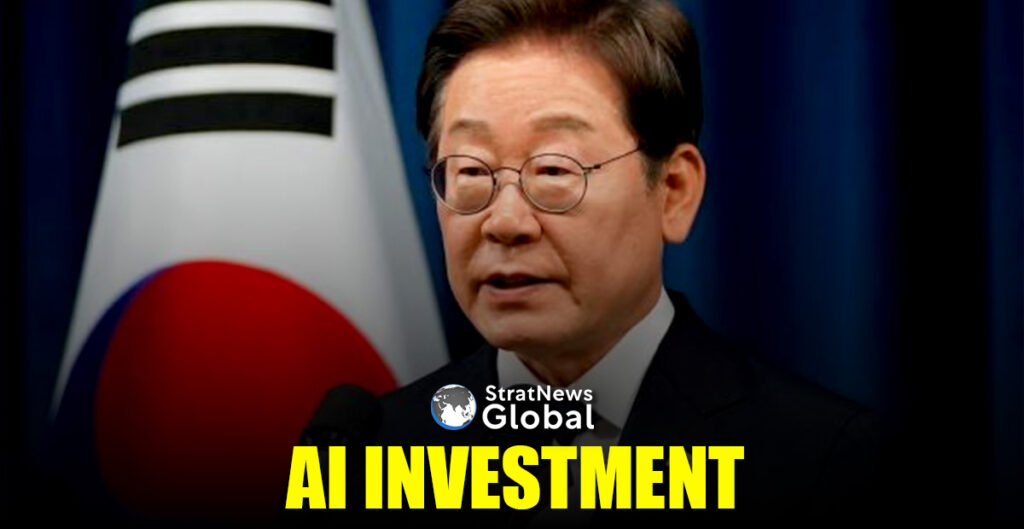
South Korea Elevates AI Investment As Key Policy To Counter Slowing Growth
The South Korean government on Friday pledged to place artificial intelligence (AI) investment at the center of its policy agenda, after cutting this year’s economic growth forecast amid trade pressures linked to U.S. tariffs.
In the first bi-annual economic policy plan under President Lee Jae Myung‘s new administration, the finance ministry said it would introduce from the second half of 2025 policy packages for 30 major AI and innovation projects.
These include AI technologies for robots, cars, ships, home appliances, drones, factories and chips, as well as advanced materials and cultural products such as “K-beauty” and “K-food”.
“A grand transformation into AI is the only way out of growth declines resulting from a population shock,” the ministry said in a statement, referring to South Korea’s record low birthrate.
While the government plans to include measures such as financial investments, tax incentives and regulatory improvements in the packages, it said it would also create a 100 trillion won ($71.56 billion) fund, jointly with the private sector, to invest in strategic sectors.
World’s Top AI Powers
The policy plans aim to make the country one of the world’s top three AI powers and boost potential economic growth rates in a country with the world’s lowest birth rate, the ministry said.
South Korea’s potential growth rate is estimated at around 2% and expected to fall below 1% by the late 2040s, though the government hopes the new policies can lift the rate to 3%.
Asia’s fourth-largest economy grew in the second quarter at the fastest pace in more than a year, as consumer demand rebounded and technology exports remained robust, but still faces trade uncertainties due to higher U.S. tariffs.
Last month, South Korea agreed to a U.S. trade deal that reduces tariffs on the Asian ally to 15% from a threatened 25%, but still higher than the baseline 10% that had been in place.
The finance ministry expects the export-reliant economy to grow 0.9% this year, down sharply from the 2.0% expansion last year and its previous projection of 1.8% in January. The economy is expected to grow 1.8% in 2026, the ministry said.
Exports are forecast to grow 0.2% in 2025, but fall 0.5% in 2026, according to the ministry. In 2024, exports jumped 8.1%.
Lee’s liberal administration said it would increase government budget spending for next year at a higher rate than this year, emphasising its proactive fiscal policy stance.
Other major policy plans announced on Friday include support measures for childcare and work-life balance, stronger sanctions to prevent industrial accidents, regulatory frameworks for digital assets and capital market reforms to win a developed-market designation from a global stock index provider.
($1 = 1,397.5000 won)
(With inputs from Reuters)
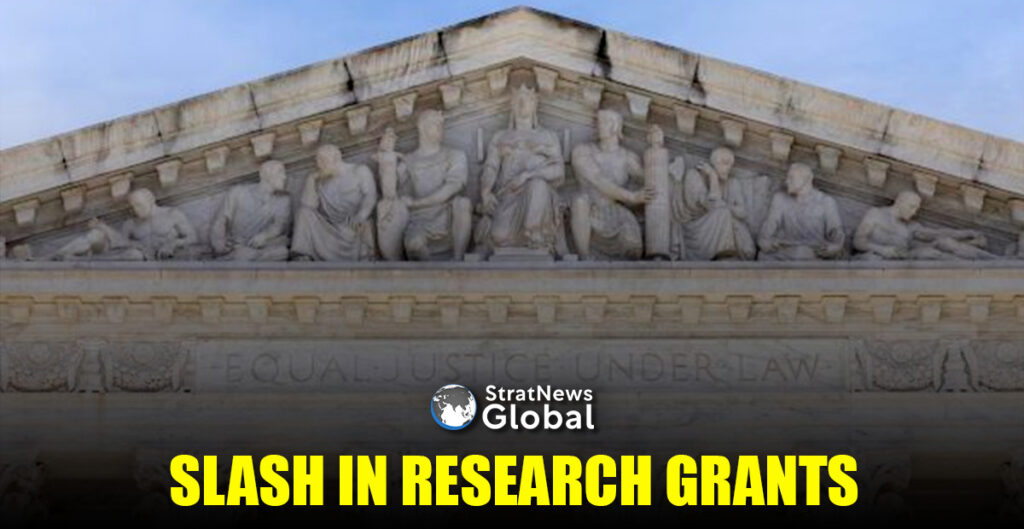
U.S. Supreme Court Allows Trump To Slash Diversity-Focused NIH Research Grants
On Thursday, the U.S. Supreme Court permitted President Donald Trump’s administration to move forward with large cuts to National Institutes of Health (NIH) grants that support research involving racial minorities and LGBT communities.
The decision is part of Trump’s wider effort to roll back diversity, equity, and inclusion programs, as well as initiatives related to transgender identity.
The justices, in a 5-4 decision, granted the Justice Department’s request to lift Boston-based U.S. District Judge William Young’s decision in June that the grant terminations violated federal law, while a legal challenge brought by researchers and 16 U.S. states plays out in a lower court.
In a brief order, the majority suggested the challenge to the terminations should have been brought in a different judicial body, the Washington-based Court of Federal Claims, which specializes in money damages claims against the U.S. government. Conservative Chief Justice John Roberts joined the court’s three liberal justices dissenting from the decision.
The justices, however, also by a 5-4 majority, declined the administration’s request to immediately pause Young’s broader ruling that declared the agency’s internal guidance explaining the rejection of funding for DEI and gender identity research as unlawful.
Trump Government’s Priorities
The NIH is the world’s largest funder of biomedical research. The cuts are part of Trump’s wide-ranging actions to reshape the U.S. government, slash federal spending and end government support for programs aimed at promoting diversity or “gender ideology” that the administration opposes.
The administration said Young’s ruling required the NIH to continue paying $783 million in grants that run counter to its priorities.
The administration repeatedly has sought the Supreme Court’s intervention to allow implementation of Trump policies impeded by lower courts. The Supreme Court, which has a 6-3 conservative majority, has sided with the administration in almost every case that it has been called upon to review since Trump returned to the presidency in January.
After Trump signed executive orders in January targeting DEI and gender ideology, NIH instructed staff to terminate grant funding for “low-value and off-mission” studies deemed related to these concepts, as well as COVID-19 and ways to curb vaccine hesitancy.
Young’s ruling came in two lawsuits challenging the cuts. One was filed by the American Public Health Association, individual researchers and other plaintiffs who called the cuts an “ongoing ideological purge” targeting projects based on “vague, now-forbidden language.” The other was filed by the states, most of them Democratic-led.
The plaintiffs said the terminated grants included projects on breast cancer, Alzheimer’s disease, HIV prevention, suicide, depression and other conditions that often disproportionately burden minority communities, as well as grants mandated by Congress to train and support a diverse group of scientists in biomedical research.
Young, an appointee of Republican former President Ronald Reagan, invalidated the grant terminations in June. In a written ruling, the judge said they were “breathtakingly arbitrary and capricious,” violating a federal law governing the actions of agencies.
‘Darker Aspect’
During a June hearing in the case, Young rebuked the administration for what he called a “darker aspect” to the case that the cuts represent “racial discrimination and discrimination against America’s LGBTQ community.”
“I’ve never seen a record where racial discrimination was so palpable,” the judge said.
Young also said the cuts were designed to stop research that bears on the health of the LGBT community. “That’s appalling,” the judge said.
The Boston-based 1st U.S. Circuit Court of Appeals on July 18 denied the administration’s request to put Young’s decision on hold.
At a July 28 hearing, Young said that if the Supreme Court pauses his previous order he may convene an immediate hearing to impose a new injunction that would require NIH to restore a subset of the $783 million in grants to the extent they were terminated due to racial and gender discrimination.
(With inputs from Reuters)
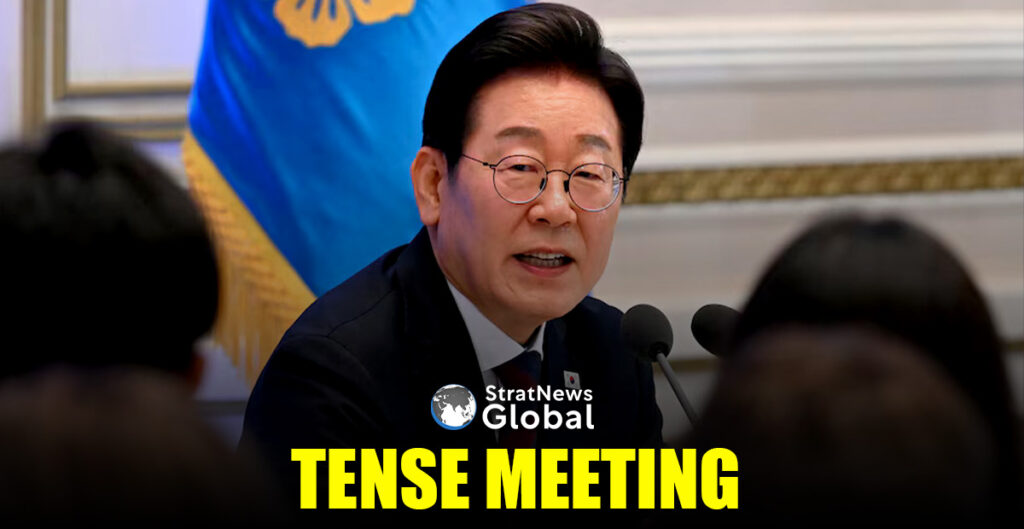
North Korea, Troop Costs To Dominate Lee-Trump Talks
As South Korean President Lee Jae Myung prepares for his first summit with US President Donald Trump next week, he is likely to face renewed pressure to increase Seoul’s financial contribution towards the upkeep of American troops stationed on the Korean peninsula, with security expected to dominate the agenda.
Left largely out of the frantic trade talks that culminated in an unwritten deal last month, questions over the future of the South Korea-US alliance and the approach to nuclear-armed North Korea will be a key part of the White House discussions, officials and analysts said.
‘Trump Clearly Wants More’
A thorny issue for Lee may be Trump’s push for Seoul to pay significantly more for the 28,500 American troops stationed in South Korea as a legacy of the 1950-1953 Korean War.
A US official, speaking on the condition of anonymity, said a key area of focus would be so-called burden sharing, and Trump is expected to push the South Koreans for more.
Victor Cha, of Washington’s Center for Strategic and International Studies, said Seoul is providing over $1 billion a year to support the US troop presence and also paid to build the largest US base overseas, Camp Humphreys.
“But President Trump clearly wants more,” Cha said, noting his past calls for Seoul to pay $5 billion or even $10 billion. “He wants defence spending closer to 5% of GDP for all allies, South Korea is currently at 3.5%.”
Removing Troops From South Korea
While no decisions have been made, there are discussions within the Pentagon about removing some US troops from South Korea, the US official said.
To head that off, some at the Pentagon are trying to re-focus the alliance towards the threat posed by China.
While a lot will depend on Seoul’s willingness, the US official said the desire was to discuss in broad terms how the alliance, and US forces in South Korea, could be used to counter China.
That could bring more headaches for Lee, who has expressed full support for the US alliance but vowed to take a balanced approach between Washington and Beijing.
General Xavier Brunson, commander of US Forces Korea (USFK), said this month it was not a foregone conclusion that South Korea would be involved with any conflict over Taiwan, which China claims as its own.
Solving ‘Bigger Problems’
However, he said there should be a recognition that nothing happens in the region in isolation and US troops in South Korea could be needed to “solve bigger problems.”
Asked about more such “strategic flexibility” South Korea’s foreign ministry said it was difficult to predict USFK operations in a hypothetical situation.
“However, the operation of the USFK is carried out under close consultation and communication between South Korea and the United States,” a spokesperson said in a statement to Reuters.
Declaring that US forces in South Korea have multiple missions could degrade their primary focus of deterring and defeating a North Korean attack, said Bruce Klingner, a former US intelligence analyst now with the Mansfield Foundation.
“The more blatant the depiction of USFK as having an anti-China mission increases the likelihood that China will apply coercive pressure or retaliate economically against South Korea, as it did after Seoul deployed the US THAAD missile defence system (in 2017).”
North Korea Issues
Lee and Trump are likely to see eye to eye on North Korea, with both open to engaging its leader Kim Jong Un, and the US president frequently casting himself as a global peacemaker.
However, Pyongyang has rebuffed attempts to revive the unprecedented diplomatic engagement seen in Trump first term and doubled down on its deepening military, economic, and political ties to Russia.
“I doubt much substance will be said on North Korea beyond committing to diplomacy and reiterating a goal of denuclearization,” said Jenny Town, of the Washington-based 38 North programme, which monitors North Korea.
Lee told Japan’s Yomiuri Shimbun newspaper on Thursday his administration would lay the groundwork to ultimately dismantle North Korea’s nuclear weapons programme, through talks with Pyongyang and close cooperation with Washington.
North Korea has repeatedly said its nuclear weapons are not open for negotiation.
Nuclear Aspirations
South Korean Foreign Minister Cho Hyun told parliament this week South Korea could also try to use the summit to win approval to reprocess or enrich its own nuclear materials.
Despite talk from some South Korean officials about the need to attain “nuclear latency”, or the means to quickly build an atomic arsenal, Cho insisted reprocessing would be only for industrial or environmental purposes.
“Talking about our own nuclear armament or growing potential nuclear capabilities … is not helping at all with negotiations really,” he said, against a backdrop of growing domestic support for South Korea to develop its own nuclear arsenal.
Daryl Kimball, executive director of the US-based Arms Control Association, said there was no practical “industrial or environmental” need for South Korea to start reprocessing, nor for a domestic uranium enrichment capability for its energy programme.
Both activities are prohibited under the current US-South Korea Agreement for Nuclear Cooperation because they could be used to produce nuclear bombs, he said.
“The foreign minister’s claims about the purpose of his government’s interest are hardly reassuring,” he said, adding: “Too many South Korean politicians are flirting with the idea of their country acquiring the nuclear weapons option.”
(With inputs from Reuters)
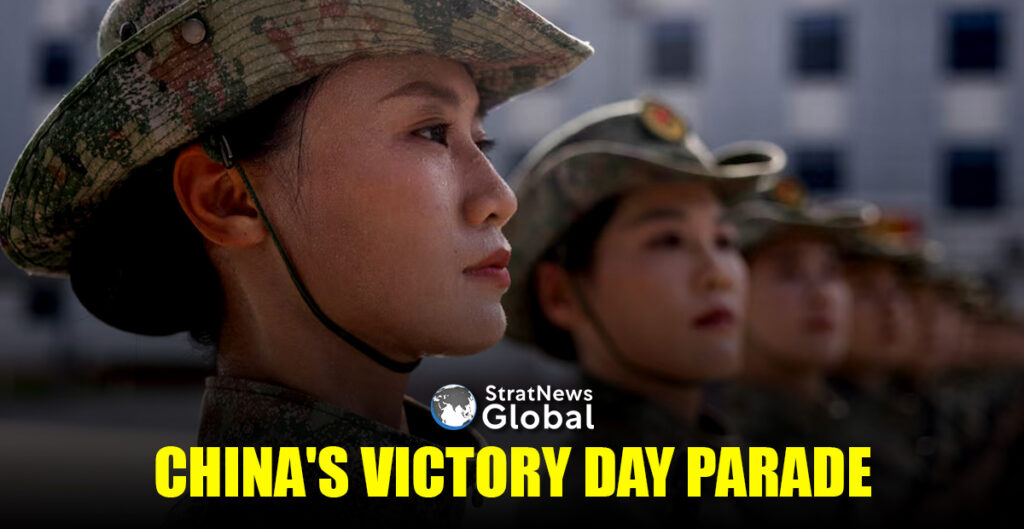
China: Victory Day Parade Set To Disrupt Beijing
Beijing has brought its city centre to a virtual standstill ahead of a 70-minute military parade on 3 September, with airport-style scanners at office entrances, midnight rehearsal road closures, 24/7 security on overpasses, and a ban on drones.
The “Victory Day” parade, marking the end of World War Two following Japan’s formal surrender, will be a projection of China’s growing military might amid deep-seated mistrust in the West, geopolitical uncertainty with the United States and territorial rows with neighbouring countries.
The highly choreographed parade, one of China’s largest in years, will unveil cutting-edge equipment like fighter jets, missile defence systems and hypersonic weapons – the results of a long-running modernisation drive of the People’s Liberation Army which has lately been beset by corruption scandals and personnel purges.
‘Corrective View’
On the day, President Xi Jinping will survey tens of thousands of troops at Tiananmen Square alongside several foreign dignitaries including guest of honour Russian President Vladimir Putin.
Most Western leaders are expected to shun the parade, making it a major show of diplomatic solidarity between China, Russia and the Global South.
Ahead of the parade, Beijing has also mounted a campaign to emphasise the “correct view” of World War Two history, which emphasises that China and Soviet Russia played a pivotal role in fighting fascist forces in the Asian and European theatres.
‘Civilisational Agendas’
“Putin and Xi take commemoration of the war so seriously because it shows that … Russia and China can take pride in their history and that Western attempts to tarnish their past… will fail,” said Joseph Torigian, associate professor at American University and an expert in Sino-Soviet history.
“World War Two is a foundational moment in the civilisational agendas that Putin and Xi are pursuing… Both men believe they are driving changes unseen in a century.”
‘Deliberately Belittled And Vilified’
A People’s Daily commentary this week claimed China’s contribution to fighting Japan was “selectively ignored and underestimated by some”, adding the Communist Party’s wartime efforts were “deliberately belittled and vilified”.
“Ignoring the ironclad facts of history, disregarding the tens of millions of innocent lives lost in the war, and … repeatedly denying or even glorifying the history of aggression constitutes a shameless betrayal,” it read.
Chinese academics have renewed efforts to rewrite what they believe are mainstream, Western-centric narratives of World War Two and advocate that the war actually started in 1931 with Japan’s invasion of China.
“China and Russia are the biggest victors and suffered the greatest losses during the war,” said Wang Wen, dean of the Chongyang Institute for Financial Studies at Renmin University of China.
“Chinese resistance played an indispensable role in draining Japanese military resources, which laid the groundwork for the defeat of the Axis powers.”
Propaganda Efforts
Chinese casualties during the War of Resistance Against Japanese Aggression, as it is known domestically, are estimated at between 20 million and 35 million. China says over 35 million people died, including 300,000 killed by Japanese troops during the 1937 Nanjing Massacre.
A post-war Allied tribunal put the death toll in Nanjing at about half that number. Some historians estimate the death toll was over 200,000.
Graphic scenes from the massacre are heavily featured in the recent Chinese blockbuster movie Dead to Rights, whose domestic box office takings have surpassed 2.6 billion yuan ($362 million) since late July. The film is loosely adapted from the real-life story of a Chinese photography apprentice in Nanjing who secretly compiled photographic evidence of Japanese war crimes.
Another contentious point is the extent of the Communist Party’s contributions towards fighting the Japanese. Historians commonly agree that China’s republican government engaged in most direct combat with Japan, while Communist guerrilla forces carried out raids on Japanese supply lines.
At a museum in Beijing’s outskirts dedicated to the war in China, displays say Communist troops “annihilated substantial Japanese forces” while airbrushing all mentions of the republican forces for the “Chinese army”.
West To Shun Event
Some governments face a difficult decision between appropriately recognising China’s immense war sacrifices and legitimising the presence of Putin, diplomats say, whose invasion of Ukraine continues.
Most European Union ambassadors will not attend the parade and Western countries’ requests for working-level diplomatic representation have so far been rejected, two diplomats told Reuters. A state reception and an evening cultural performance are planned for the same day.
A Public Holiday?
Many ordinary Beijing residents who have experienced weeks of widespread disruption to their daily lives are hoping for a brief respite. The last time the parade was held, in 2015, China implemented a nationwide three-day public holiday and Beijing schools delayed the start of term.
“I just want to meekly ask … can we have a public holiday so we can concentrate on watching the parade?” one user on the microblogging platform Weibo wrote on Wednesday.
($1 = 7.1730 Chinese yuan renminbi)
(With inputs from Reuters)
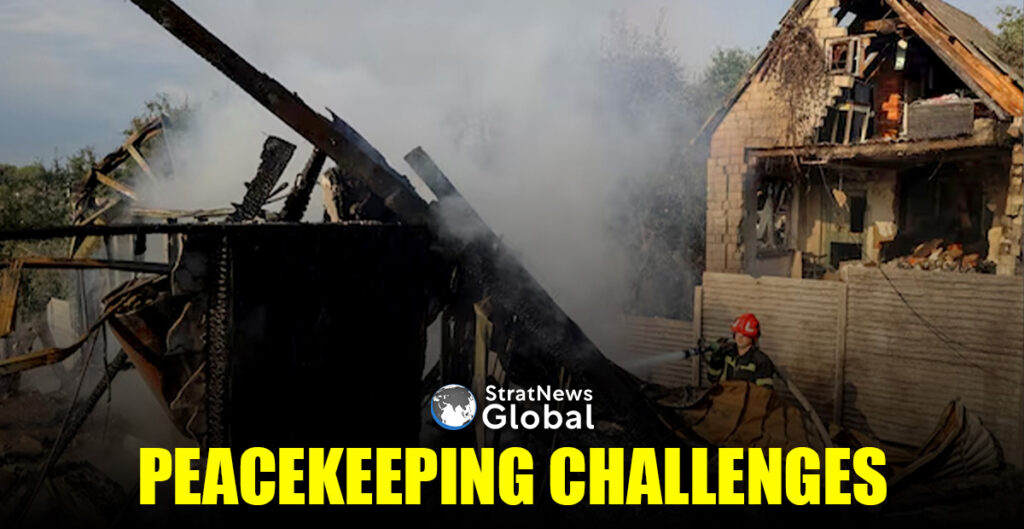
Ukraine Peace Force Needs Massive Troop Deployment: German Union Warns NATO
The head of Germany’s soldiers’ union warned that European NATO leaders should avoid naivety when debating a peacekeeping force for Ukraine, stressing that such a mission would demand the long-term deployment of tens of thousands of troops to the country.
U.S. President Donald Trump is seeking to broker peace between Moscow and Kyiv but has ruled out sending U.S. troops to Ukraine.
French President Emmanuel Macron and British Prime Minister Keir Starmer have both spoken in favour of troop deployments in a post-war settlement as part of a coalition of the willing, with German Chancellor Friedrich Merz also signalling openness to German participation.
Colonel Andre Wuestner, head of the German Armed Forces Association, on Thursday called on European leaders not to play down the military task but be honest about the challenges, even though any quick ceasefire seemed unlikely.
“It won’t be enough to have a handful of generals and smaller military units man a command post in Ukraine,” Wuestner, whose organisation represents more than 200,000 active and retired soldiers, told Reuters.
Security Guarantees
“From the very beginning, it must be made clear to Putin — and backed by international forces — that we are totally serious about security guarantees”, he said.
“Serious about supporting Ukraine, serious about securing a ceasefire, and serious about our response should Putin attempt another attack on Ukraine.”
A “bluff-and-pray” approach would be downright negligent and increase the risk of an escalation, the colonel warned.
He estimated that each of the big countries in the coalition of the willing, such as Britain, France and Germany, would need to deploy at least 10,000 troops to Ukraine for the long run, posing a huge challenge to their already stretched and under-equipped forces.
“The Europeans remain military dwarfs and are already struggling to meet the new NATO commitments they made at the last summit,” Wuestner said. “Europe is still a long way from being able to defend itself independently.”
Therefore, there was an urgent need to finally speed up armament and strengthen the European pillar of NATO.
(With inputs from Reuters)
Bolivia’s Rightward Shift Raises Concerns Among Latin American Leftists
The weekend defeat of Bolivia’s long-dominant socialists underscores a wider pushback against incumbent leftist governments, potentially foreshadowing similar outcomes in upcoming regional elections.
Driven by voter anger at soaring inflation and fuel shortages, as well as the desire for a change after almost two decades of domination by one party, support for Bolivia’s socialists cratered in Sunday’s vote, with two right-leaning candidates securing places in October’s run-off.
Incumbent leftist governments have fared poorly in elections across the region since the pandemic, with concern about rising crime and cartel or gang activity, as well as a lack of economic opportunity, often cited by voters as a primary worry.
While some regional leftist parties succeeded in lifting many of their supporters into the middle class, those voters are now focusing on other issues, said Will Freeman, fellow for Latin American Studies at the Council on Foreign Relations.
“Now some of their former voters, even having entered the middle class, having gained a bit more stability, are saying, you’re not well-equipped to provide me the next set of answers, the next set of solutions to the problems we see today,” he said.
Rightward Momentum Grows
Right-wing candidates have momentum ahead of elections in Chile, Colombia, Peru and Brazil over the next 18 months. Ecuador and Argentina already have right-leaning leaders.
In Colombia, the left’s prospects for the 2026 presidential race look dim. President Gustavo Petro, the country’s first leftist leader, has struggled to advance his signature promise of peace deals with armed groups. Negotiations have faltered, and crime and rebel groups have added thousands of members even as the government has pledged to hit back at violence.
Petro’s government has also roiled markets by pausing fiscal rules and proposing tax hikes.
The assassination of young right-wing candidate Miguel Uribe has put security at the top of many voters’ minds, although clear presidential frontrunners have yet to emerge.
Ahead of Chile’s November election, the presidential field is dominated by right-wing candidates, a reversal from the leftward shift that followed 2019’s inequality protests.
Chilean political analyst Kenneth Bunker said the race is defined by rising crime and the economy — concerns that tend to favour conservatives, including far-right frontrunner Jose Antonio Kast.
“There’s a wave of preference towards the right. Moderate voters are more worried about these pragmatic issues,” Bunker said.
In April, Peruvians will choose a president to replace incumbent Dina Boluarte, who ascended to the presidency after the 2022 impeachment of her leftist predecessor, Pedro Castillo. Her approval ratings have fallen to the low single digits.
Voter Discontent Evident
Signs of voter disaffection are manifest, with an August 18 poll from Ipsos showing that four in ten respondents planned to vote blank or spoil their ballots.
But two right-wing candidates led the poll: Lima Mayor Rafael Lopez Aliaga and three-time candidate Keiko Fujimori, the daughter and political heir of former Peruvian president Alberto Fujimori.
As elsewhere in the region, Peru has been battling a crime surge, with a spike in murders tied to criminal groups targeting businesses.
Angry workers have gone on strike, and the government has sent soldiers into the streets.
And in what is likely to be the region’s most closely-watched contest, voters in Brazil will go to the polls later next year, with incumbent veteran leftist President Luiz Inacio Lula da Silva seeking yet another term.
His approval ratings have looked shaky, although Lula has gotten a recent boost from a backlash against harsh U.S. tariffs.
“This kind of security issue is a vulnerability – security, corruption and then Lula’s age are all vulnerabilities for him,” said Risa Grais-Targow, Latin America director at Eurasia Group.
(With inputs from Reuters)