

Support us by contributing to StratNewsGlobal on the following UPI ID
ultramodern@hdfcbank

Strategic affairs is our game, South Asia and beyond our playground. Put together by an experienced team led by Nitin A. Gokhale. Our focus is on strategic affairs, foreign policy and international relations, with higher quality reportage, analysis and commentary with new tie-ups across the South Asian region.
You can support our endeavours. Visit us at www.stratnewsglobal.com and follow us on YouTube, Twitter, Facebook and Instagram.
र 500 per month
र 1000 per month
र 5000 per year
र 10000 per year
Donate an amount of your choice
र 500 per month
Donate र 500 per month

र 1000 per month
Donate र 1000 per month
र 5000 per year
Donate र 5,000 per year
र 10000 per year
Donate र 10,000 per year
Donate an amount of your choice
Donate an amount of your choice


Trump Nominates Sergio Gor As Next US Envoy To India
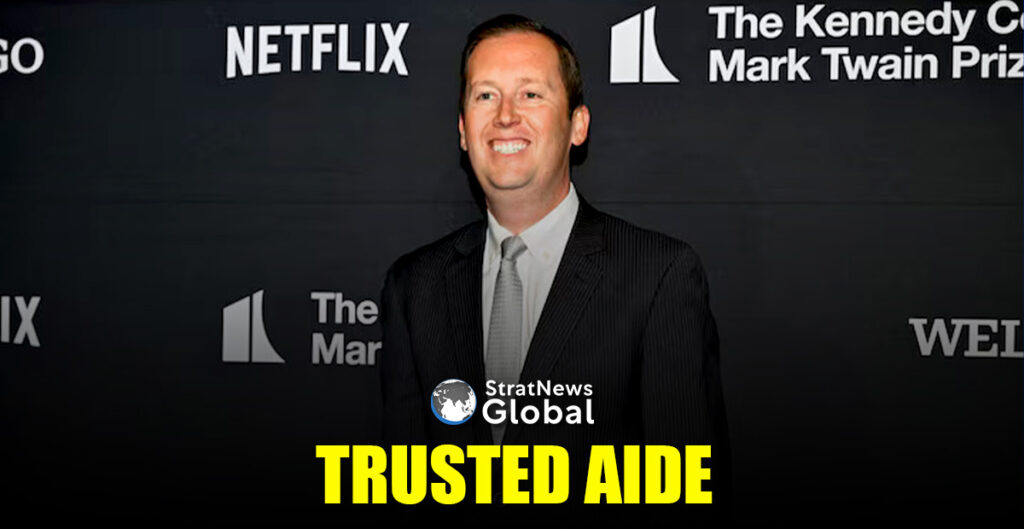
US President Donald Trump on Friday announced his intent to nominate longtime aide Sergio Gor as the next ambassador to India, amid strained bilateral ties and an impending hike in US tariffs on Indian goods set to take effect next week.
Gor, who is currently the director of the White House Presidential Personnel Office, would also serve as a special envoy for South and Central Asian affairs, Trump said.
Trusted Aide
Trump said in a post on his Truth Social account that Gor would remain in his current position until he is confirmed for the India post by the US Senate.
“Sergio is a great friend, who has been at my side for many years. He worked on my Historic Presidential Campaigns, published my Best Selling Books, and ran one of the biggest Super PACs, which supported our Movement,” Trump said, lauding Gor’s work in hiring staff for his second term.
“For the most populous Region in the World, it is important that I have someone I can fully trust to deliver on my Agenda and help us, MAKE AMERICA GREAT AGAIN,” Trump wrote.
Congratulations to @SergioGor on his appointment as U.S. Ambassador to India.
Throughout the campaign and administration, Sergio has been a fearless advocate for President Trump and the American people. We all wish him amazing success and India is in great hands. pic.twitter.com/uNy6uUu7CE
— Howard Lutnick (@howardlutnick) August 23, 2025
‘Honor Of My Life’
US-India ties have been strained by Trump’s trade war, with talks on lower tariff rates collapsing after India resisted opening its vast agricultural and dairy sectors. Bilateral trade between the two countries is worth more than $190 billion each year.
Gor, in a posting on X, thanked Trump for the nomination and said it would be “the honor of my life” to represent the United States in the new role.
Trump first imposed additional tariffs of 25% on imports from India, then said they would double to 50% from August 27 as punishment for New Delhi’s increased purchases of Russian oil. Trump has not imposed similar tariffs on goods from China, the biggest purchaser of Russian oil.
‘Profiteering’
US Treasury Secretary Scott Bessent on Tuesday accused India of “profiteering” in its sharply increased purchases of Russian oil during the war in Ukraine and said Washington viewed the situation as unacceptable.
Bessent told CNBC in an interview that Russian oil now accounted for 42% of India’s total oil purchases, up from under 1% before the war, while China, the largest purchaser of Russian oil, had increased its share to 16% from 13%.
India is addressing its future trade relationship with the United States with a “very open mind”, Trade Minister Piyush Goyal said on Friday, while underscoring the consequential and important nature of the relationship to both countries.
Trump’s announcement about Gor’s nomination came shortly after the abrupt cancellation of a planned visit by US trade negotiators to New Delhi from August 25-29.
(With inputs from Reuters)
Australia’s Recognition Of Palestinian State Highlights Strained Ties With Israel Amid Gaza Mood Shift
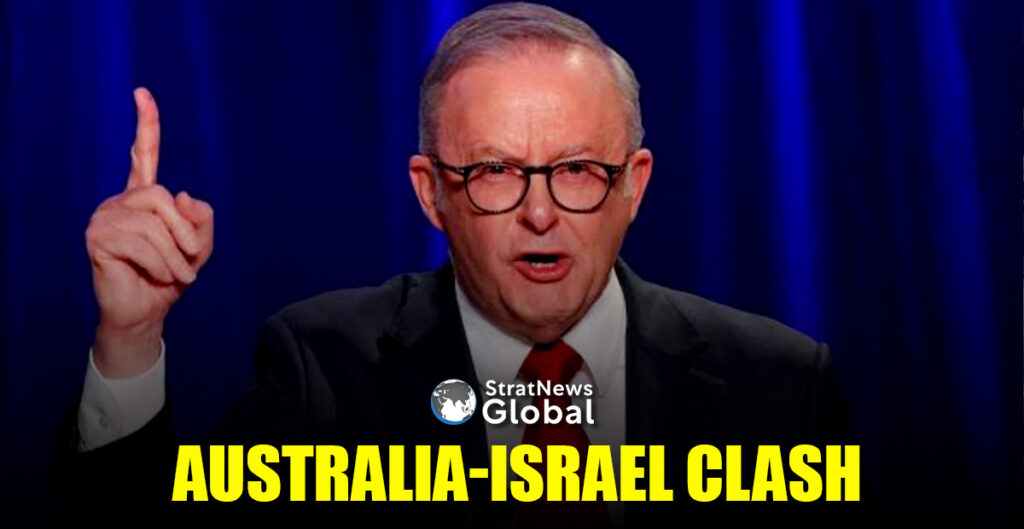
Australia’s move to officially recognise a Palestinian state followed a sharp change in domestic sentiment over the conflict in Gaza and signaled Canberra’s willingness to risk friction with Israel, a country long regarded as one of its closest allies.
The August 11 announcement came days after tens of thousands of people marched across Sydney’s iconic Harbour Bridge, calling for peace and aid deliveries to Gaza, where Israel began an offensive nearly two years ago after the Hamas terrorist group launched a deadly cross-border attack.
Health authorities in Gaza say at least 60,000 Palestinians have been killed while the U.N. has warned of starvation.
“It just became politically unpalatable to be continuing to defend Israel and lay all the blame at the feet of Hamas,” said Martin Kear, an academic at Sydney University specialising in the Israeli-Palestinian conflict.
Strained Relations
The decision has strained relations between Israel and Australia to a degree not seen in decades.
Senior politicians in both countries have traded barbs – with Israeli Prime Minister Benjamin Netanyahu launching personal attacks on Albanese – the visas of Australian diplomats working in the West Bank have been revoked and an Israeli lawmaker was barred from entering Australia.
A leading Jewish group in Australia has called for calm, while offering a rare rebuke of Netanyahu. Some Jews in Australia say the tension makes them feel unsafe, after a spate of antisemitic attacks in the country over the last year.
Opinion polling in Australia about the Gaza conflict – a divisive issue in a country with large Muslim and Jewish minorities – now indicates increasing sympathy towards the Palestinian cause.
August polling by DemosAU showed 45% supported Australia recognising a Palestinian state before a negotiated peace deal, with 23% opposed. Support was up from 35% a year previously.
Public sympathy for Israel in Australia began to “rapidly erode once the apocalyptic spectre of famine rode into Gaza”, the Sydney Morning Herald, one of the country’s leading newspapers, said in an editorial this month.
The images from Gaza have also hardened the resolve of lawmakers, said Charles Miller, a lecturer in international relations at the Australian National University.
“I think they have changed an awful lot of minds amongst policymakers in Australia, as they have in other countries,” he said.
Jewish Unease
The political fallout has alarmed the Executive Council of Australian Jewry, an umbrella group organisation for more than 200 Jewish organisations, that sent letters to Albanese and Netanyahu on Wednesday, urging them to deescalate tensions.
“If things need to be said publicly, they should be said using measured and seemly language befitting national leaders,” the letters read.
Australia has been grappling with antisemitic attacks on synagogues, buildings and cars since the beginning of the Israel-Gaza war, and some Jews worry heightened tensions between Australia and Israel could fuel more attacks.
“When the temperature of the political discourse in the media is so focused on criticising Israel, there will be ramifications for the local Jewish community, and that’s something that we need to reflect on,” said Eli Feldman, the rabbi at Newtown Synagogue in Sydney, which was defaced with antisemitic graffiti in January.
Historic Ally
Australia was an early supporter of the creation of a Jewish state, and has long advocated for Israel in international disputes, though both main political parties back a two-state solution in principle.
While Albanese had personally long supported a Palestinian state until now his political pragmatism had made him wary of backing official recognition.
That changed with the shift in the public mood while his landslide victory in May’s general election reduced the risk of domestic pushback, said Jessica Genauer, an academic at Flinders University specialising in international conflict.
Key allies, the United Kingdom, France and Canada, all said they would recognise a Palestinian state in the weeks before Australia, which also made Albanese’s job easier, analysts said.
“They don’t want to lead on carving new pathways in terms of their policies on this, but on the other hand, they don’t want to be left behind by key allies around the world,” Genauer said.
“Albanese is still a pragmatic and cautious person by nature.”
Netanyahu has repeatedly attacked Albanese in a series of interviews and social media posts since August 11, calling the Australia leader “weak” and accusing him of “betraying” Israel.
While Albanese has played down the feud, Netanyahu shows no sign of backing down. He kept up the rhetoric with an interview with Sky News Australia that aired late on Thursday.
“I’m sure he has a reputable record as a public servant, but I think his record is forever tarnished by the weakness that he showed in the face of these Hamas terrorist monsters,” he said.
(With inputs from Reuters)
Iran, European Powers To Resume Nuclear, Sanctions Negotiations Next Week
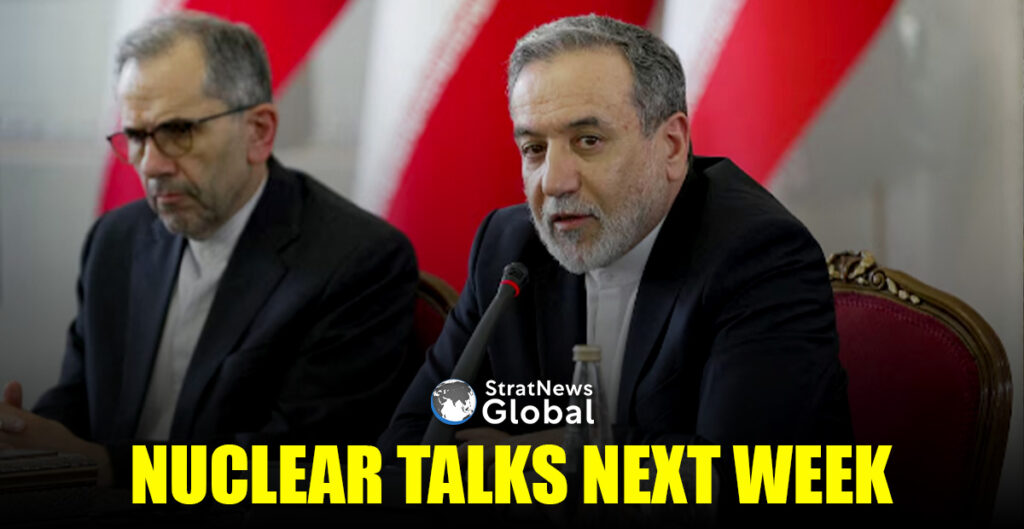
Iran‘s Foreign Minister Abbas Araqchi and his French, British, and German counterparts agreed on Friday to resume nuclear negotiations next week, Iranian state media reported, amid looming European threats to reimpose sanctions.
The three countries have said they could re-activate United Nations sanctions on Iran under a “snapback” mechanism if Tehran does not return to negotiations on a deal to curb its disputed uranium enrichment programme.
German Foreign Minister Johann Wadephul confirmed talks next week and warned Iran that sanctions would snap back into effect unless it reached a verifiable and durable deal to defuse concerns about its nuclear ambitions. He reiterated that time was very short and Iran needed to engage substantively.
Iranian state media said Araqchi and the British, French and German foreign ministers agreed during a phone call for deputy foreign ministers to continue the talks on Tuesday.
During the call, Araqchi “emphasised the legal and moral incompetence of these countries to resort to the (snapback) mechanism, and warned of the consequences of such an action”, Iranian media reported.
‘Nuclear Misuse’
The European trio, along with the U.S., contend that Iran is using the nuclear energy programme to potentially develop weapons capability in violation of the Non-Proliferation Treaty. Iran says it seeks only civilian nuclear power.
The International Atomic Energy Agency, the U.N. nuclear watchdog, has stated that Iran is nowhere near developing a nuclear bomb, and U.S. national intelligence director Tulsi Gabbard testified in March that intelligence officials had not found evidence of Iran moving toward a nuclear weapon.
The Islamic Republic suspended nuclear negotiations with the United States, which were aimed at curbing its accelerating enrichment programme, after the U.S. and Israel bombed its nuclear sites during a 12-day war in June.
Since then, IAEA inspectors have been unable to access Iran’s nuclear installations, despite IAEA chief Rafael Grossi stating that inspections remain essential.
Iran and the three European powers last convened in Geneva on June 20, while the war was still raging, and there were few signs of progress.
Separately, Iran’s envoy to the IAEA said an Iranian delegation and IAEA officials had agreed in talks in Vienna on Friday to discuss ways to interact within the framework of a law passed by Iran’s parliament that curbs Tehran’s cooperation with the nuclear watchdog, the official news agency IRNA reported.
(With inputs from Reuters)
US Lawmakers Press ICAO To Reject China’s Extension Of Flight Path Near Taiwan
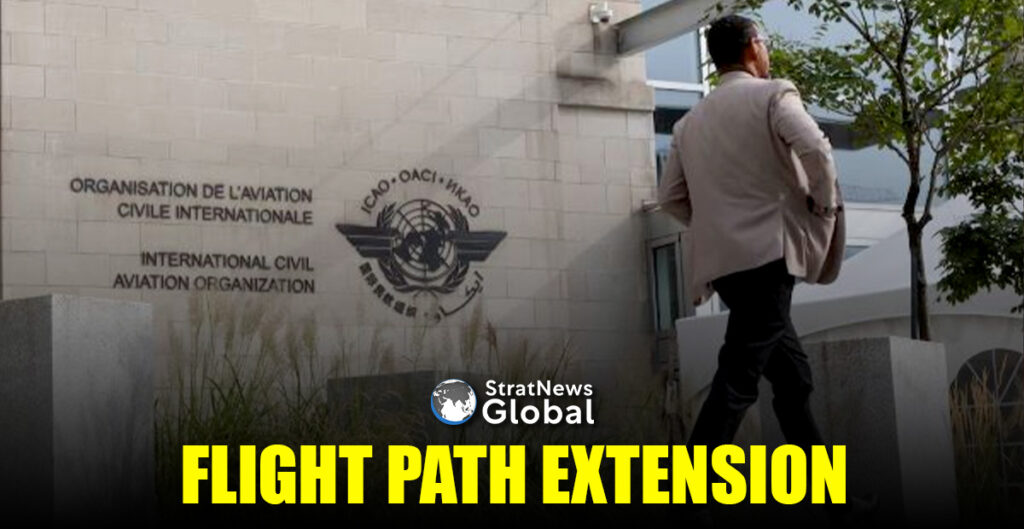
A bipartisan group of U.S. legislators called on the UN’s International Civil Aviation Organization on Friday to oppose China’s unilateral move to extend a flight route through the Taiwan Strait.
“This action places civilian aircraft dangerously close to Taiwan-administered airspace,” said the letter signed by Senators Gary Peters and Marsha Blackburn and Representative John Moolenaar, a Republican who chairs a House select committee on China and the panel’s ranking Democrat Representative, Raja Krishnamoorthi.
They added that the “unilateral changes disregard international aviation procedures and ICAO’s own standards, which emphasize the importance of coordination and risk mitigation in shared airspace.”
ICAO and the Chinese Embassy in Washington did not immediately comment. The call comes weeks before the start of the assembly of the UN body overseeing civilian aviation that occurs every three years.
The lawmakers also urged ICAO to allow Taiwan to meaningfully participate as a guest in the assembly.
‘Unilateral Move’
Last month, China said it opened a third extension of the M503 flight route, which is just west of an unofficial dividing line in the Taiwan Strait, with Taipei protesting this was a “unilateral” move aimed at changing the strait’s status quo.
China last year moved the M503 route closer to the median line, drawing a similarly angry response from Taipei, which says any changes to the flight route and its extensions must be communicated in advance and agreed to by both sides.
In 2022, then U.S. Transportation Secretary Pete Buttigieg called on ICAO to allow Taiwan to participate in the ICAO meetings.
China sees democratically ruled Taiwan as one of its provinces. Beijing has long vowed to bring Taiwan under its control and has not ruled out the use of force to do so.
Taiwan considers the separately governed island as its own and says only the island’s 23 million people can decide its future.
(With inputs from Reuters)
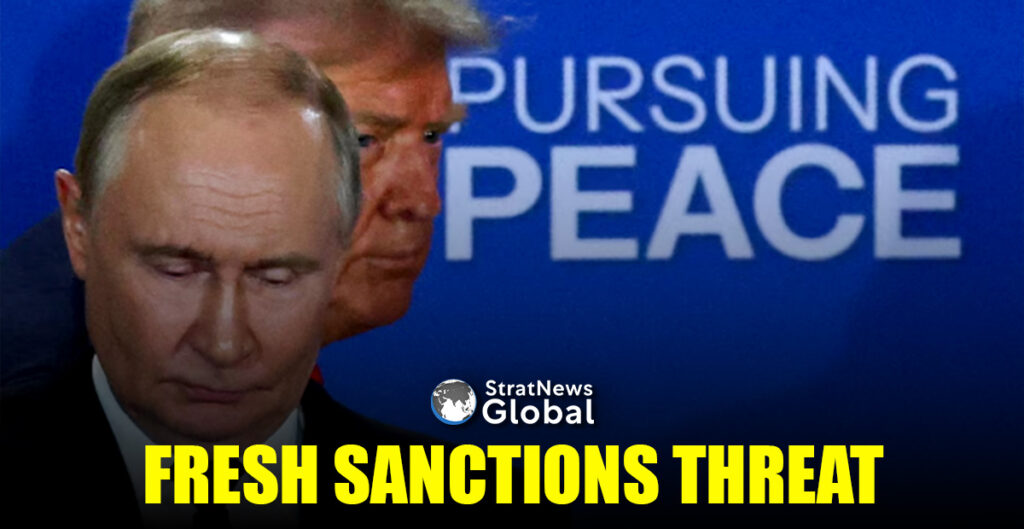
Trump Again Warns Of Russia Sanctions If Ukraine Peace Progress Lags
U.S. President Donald Trump on Friday reiterated his threat to impose sanctions on Russia if there is no progress toward a peaceful resolution in Ukraine within two weeks, expressing frustration with Moscow just a week after meeting Russian President Vladimir Putin in Alaska.
“I’m going to make a decision as to what we do and it’s going to be, it’s going to be a very important decision, and that’s whether or not it’s massive sanctions or massive tariffs or both, or we do nothing and say it’s your fight,” Trump said.
He was unhappy about Russia’s deadly strike on a factory in Ukraine this week, he said.
“I’m not happy about it, and I’m not happy about anything having to do with that war,” Trump told reporters at the White House.
‘No Agenda Set Yet’
Ukrainian President Volodymyr Zelenskyy, meanwhile, said on Friday that Russia was doing everything it could to prevent a meeting between him and Putin, while Russia’s foreign minister said the agenda for such a meeting was not ready.
Zelenskyy has repeatedly called for Putin to meet him, saying it is the only way to negotiate an end to the war.
Trump had said he had begun the arrangements for a Putin-Zelenskyy meeting after a call with the Russian leader on Monday that followed their Alaska meeting on August 15.
Zelenskyy accused Russia of stalling.
“The Russians are doing everything they can to prevent the meeting from taking place,” he said on Friday at a press conference in Kyiv with NATO Secretary General Mark Rutte.
“The meeting is one of the components of how to end the war. And since they don’t want to end it, they will look for space to (avoid it),” he added.
Russian Foreign Minister Sergei Lavrov told NBC there was no agenda for such a summit.
“Putin is ready to meet with Zelenskyy when the agenda would be ready for a summit. And this agenda is not ready at all,” he said.
The statement echoed Moscow’s established rhetoric about a leaders’ meeting being impossible unless certain conditions were met.
Asked for his response to Lavrov’s comments and what the next steps are, Trump told reporters earlier on Friday: “Well, we’ll see. We’re going to see if Putin and Zelenskyy will be working together. It’s like oil and vinegar a little bit.”
‘He May Be Coming’
Trump had taken sanctions off the table in preparation for his summit in Anchorage with Putin. But at the same White House event where he mentioned possible sanctions, he reached into a drawer to pull out a photograph of his meeting with Putin on the red carpet in Alaska, saying Putin wanted to attend the World Cup 2026 soccer tournament in the United States.
“I’m going to sign this for him. But I was sent one, and I thought you would like to see it, it’s a man named Vladimir Putin, who I believe will be coming, depending on what happens. He may be coming, and he may not, depending on what happens,” Trump said.
Putin, at a visit to a nuclear research centre on Friday, said Trump’s leadership qualities would help restore U.S.-Russia relations.
“With the arrival of President Trump, I think that a light at the end of the tunnel has finally loomed. And now we had a very good, meaningful and frank meeting in Alaska,” Putin said.
Thousands of Ukrainian civilians have been killed in the full-scale invasion of Ukraine that Russia launched in 2022. Analysts estimate that more than a million soldiers on both sides have been killed or wounded, and fighting is continuing unabated, with both sides also attacking energy facilities.
Russia has maintained its longstanding demand for Ukraine to give up land it still holds in two eastern regions, while proposing to freeze the front line in two more southerly regions Moscow claims fully as its own, and possibly hand back small pieces of other Ukrainian territory it controls.
Zelenskyy Drops Lengthy Truce Demand
Zelenskyy, meanwhile, has dropped his demand for a lengthy ceasefire as a prerequisite for a leaders’ meeting, although he has previously said Ukraine cannot negotiate under the barrel of a gun.
On Friday, he called on his country’s allies to pressure Russia into “at least a minimally productive position,” including by applying fresh sanctions if Russia showed no interest in moving towards peace.
At the press conference with Rutte, Zelenskyy said they had discussed security guarantees for Ukraine. He said the guarantees ought to be similar to NATO’s Article 5, which considers an attack on one member of the alliance as an attack against all.
“This is the beginning of a big undertaking, and it is not easy, because guarantees consist of what our partners can give Ukraine, as well as what the Ukrainian army should be like, and where we can find opportunities for the army to maintain its strength,” Zelenskyy said.
Rutte said NATO allies and Ukraine are working together to ensure security guarantees are at such a robust level that Russia will never try to attack again.
“Robust security guarantees will be essential, and this is what we are now working on to define”, he said.
(With inputs from Reuters)
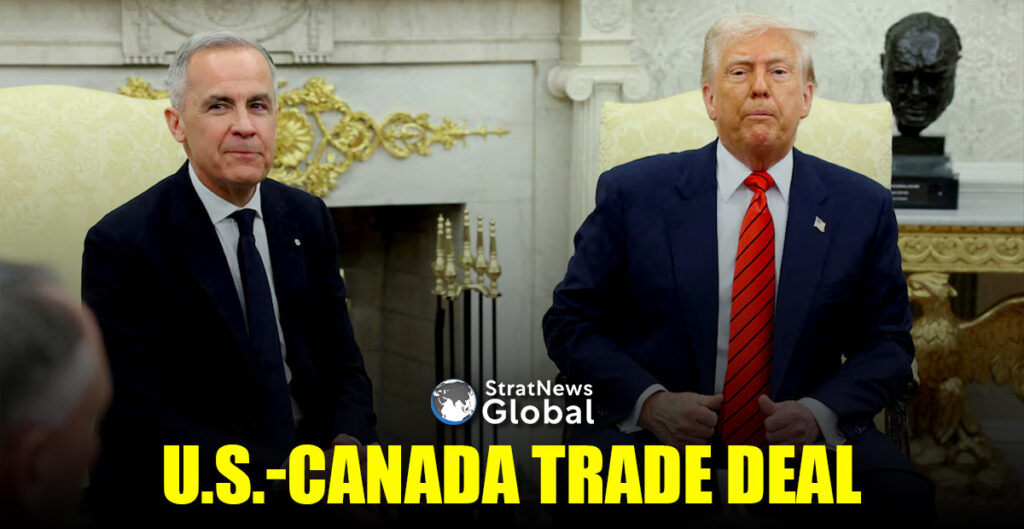
Canada: Carney Announces Tariff Cuts To Boost US Relations
In a move to reset ties with Washington, Canadian PM Mark Carney on Friday announced plans to drop several retaliatory tariffs on US goods and boost engagement for a new trade and security partnership.
Tariffs On Autos, Steel, Aluminum Remain
Canadian tariffs on US autos, steel and aluminum will remain for now, he told a press conference in Ottawa.
Carney noted that the United States had recently made clear that it would not impose tariffs on Canadian goods that were compliant with the three-nation US-Mexico-Canada free trade agreement, something he called a positive development.
USMCA-Compliant Goods Get Tariff-Free Status
“In this context and consistent with Canada’s commitment to USMCA, I am announcing today that the Canadian government will now match the United States by removing all of Canada’s tariffs on US goods specifically covered under USMCA,” he said.
“Canada and the US have now re-established free trade for the vast majority of our goods,” he added, reiterating that compared with its trading partners, Canadian exports were still subject overall to a low level of US tariffs.
Talks On Canada-US Trade Deal Ongoing
The news helped the Canadian dollar extend its gains and by 12:40 pm. it was up 0.5% at C$1.3837 to the US dollar, or 72.27 US cents.
Canada has been holding talks with the United States on a new economic and security relationship for months, but the two sides are not close to a deal.
Canada and China are the only nations to strike back at the United States with counter tariffs, much to the irritation of the US administration.
“We welcome this move by Canada, which is long overdue. We look forward to continuing our discussions with Canada on the Administration’s trade and national security concerns,” a White House official said.
White House Welcomes Move
Carney spoke to Donald Trump on Thursday. Asked whether the US president had told him that lifting the tariffs would kick start the talks, Carney responded “Yes.”
Carney won an April election on the back of a promise to stand up to Trump’s tariffs but since then has gradually taken a softer tone.
In late June, Carney scrapped a proposed digital services tax that U.S. companies strongly disliked and in July dropped talk of further sanctions if the two sides could not reach a deal by August 1.
From Tough Talk To Diplomacy
Carney, using an ice hockey analogy, said the time had come for a more moderate approach rather than continuing to take an aggressive stance.
“Let’s be clear, we have the best deal of anyone in the world right now,” he said. “Nobody has a deal with the United States that they used to have.”
Domestic Pushback Likely Over Softer Approach
The news could be a political challenge for Carney, whose ruling Liberals only have a minority of seats in the House of Commons elected chamber and rely on opposition parties to survive votes of confidence.
The leader of the Conservatives, the largest opposition party, this week accused Carney of taking too soft an approach with the United States.
Trudeau’s Hardline Tariff Legacy Reversed
Carney’s predecessor as prime minister, Justin Trudeau, imposed 25% tariffs on C$30 billion ($21 billion) in goods imported annually from the US on March 6 in response to Trump’s initial duties.
The C$30 billion was part of an overall retaliation plan to target C$155 billion worth of imported goods from the US though the remaining C$125 billion has been delayed.
(With inputs from Reuters)
Gaza’s Starving Children Face Worsening Crisis As Emergency Aid Runs Out
Gaza’s hunger crisis has reached a critical tipping point, with dwindling stocks of fortified milk and therapeutic food pastes worsening shortages and driving more children into starvation, according to aid agencies, nutrition specialists, and the United Nations.
Almost two years since Israel‘s invasion, famine was formally confirmed for the first time in parts of Gaza on Friday, with almost a quarter of the population facing starvation, according to the Integrated Food Security Phase Classification (IPC), the main global hunger monitor working with the U.N. and other aid agencies.
After a global outcry at Israel’s severe restrictions on aid from March, its military began allowing more food into Gaza in late July.
But volumes are too small and distribution too chaotic to stop greater numbers of the enclave’s over 2 million people from becoming malnourished, while those who are already starving or vulnerable are not getting life-saving supplements, three hunger experts and aid workers from six agencies told Reuters.
Starvation Deaths Rising Sharply
According to figures from Gaza’s Health Ministry, verified by the World Health Organisation, deaths from malnutrition and starvation are spiking.
In the 22 months following the October 7, 2023, attacks by Hamas, 89 fatalities were attributed to malnutrition or starvation, mostly children and teens. Just in August, there have been 133 deaths, including 25 minors, the ministry said on Wednesday.
Many more could follow, the IPC said. Without a ceasefire and immediate large-scale and unimpeded aid, at least 132,000 children under the age of five were at risk of death from acute malnutrition through June next year, the monitor said, doubling estimates made in its last report in May.
“We are seeing the worst possible humanitarian catastrophe that we can even measure,” said Jeanette Bailey, a child nutrition lead at the International Rescue Committee, a New York-based aid organisation.
There are “going to be a lot more children dying, a lot more pregnant and lactating women suffering from malnutrition.”
Israel Disputes Figures
Israel does not accept that there is widespread malnutrition among Palestinians in Gaza and disputes the hunger fatality figures given by the health ministry of Gaza’s Hamas-run government, arguing that the deaths were due to other medical causes.
Reuters could not independently confirm the figures in this story, including those relating to malnutrition or famine-related mortality and supplies of different food products. Reuters has previously reported the IPC’s struggle to get access to data required to assess the crisis.
Some of the most malnourished children are in the few hospitals still operating in Gaza, where doctors are scrambling for supplies of special therapeutic milks.
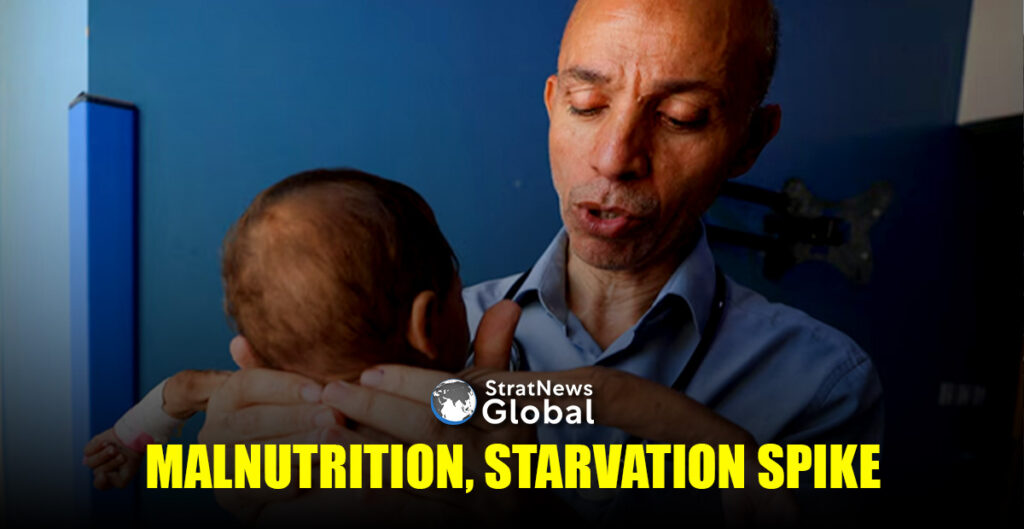
At Rantisi Hospital in Gaza City, doctor Ahmed Basal held up an infant, arms stick thin and wizened from wasting. He said the normal formula, even when available, costs up to $58 per carton, while mothers were themselves too malnourished to breastfeed.
Gaunt-looking Aisha Wahdan gave her eight-month-old son Hatem fortified milk from a bottle, saying that before coming to the hospital, she tried to wean him on wild plants such as carob, chamomile and thyme because she could not breastfeed.
“There was no milk. I used natural herbs and tried everything because there was no milk substitute,” she said.
Malnutrition in childhood can cause lifelong physical and cognitive damage, Doctors Without Borders said on Friday.
Some ordinary baby formula, needed for those whose mothers are dead or unable to breastfeed, or when the child is unwell, has entered Gaza since the aid blockade was loosened, UNICEF said on Tuesday.
Severe Formula Shortage
However, the agency said it only has stocks for 2,500 babies for a month and estimates that at least 10,000 babies need formula.
“Without consistent entry and distribution of items like specialised supplementary feeding items – high energy biscuits and fortified foods – we are watching a preventable crisis turn into a widespread nutrition emergency,” said Antoine Renard, Palestine country director of the World Food Programme.
“At first it affects the most vulnerable groups, but of course that will broaden,” he said.
COGAT, the Israeli military agency responsible for aid, said in an August 12 media statement that most deaths attributed to malnutrition by Palestinian health authorities were caused by other medical conditions.
Malnutrition experts say deaths among people with existing health problems are typical in the early stages of a hunger crisis.
Israel has recognised shortages of food, but blames the United Nations for failing to effectively distribute supplies and Hamas for stealing them, which the groups deny. An official Israeli review found “no signs of a widespread malnutrition phenomenon among the population in Gaza”, COGAT said.
In response to a request for comment about Israel’s response to the shortage of supplements, COGAT said Israel’s military was acting to “allow and facilitate the continued entry of humanitarian aid into the Gaza Strip in accordance with international law.”
Ismail Al-Thawabta, the director of the Hamas-run Gaza media office, said the government believed famine conditions were “more grave” than reported. “Hamas is keen more than anyone else for aid to flow into Gaza and to reach our people,” he said.
The United Nations human rights office in June accused Israel of “weaponising” food for civilians, calling it a war crime, after documenting hundreds of people killed by the Israeli military as they tried to reach aid distribution sites by run Israel- and U.S.-backed organisation the Gaza Humanitarian Foundation (GHF).
The Israeli military has acknowledged that its forces have killed some Palestinians seeking aid and says it has given its troops new orders to improve their response.
(With inputs from Reuters)
Russian FM Lavrov Says Agenda ‘Not Ready At All’ For Putin-Zelenskyy Summit
Russian Foreign Minister Sergei Lavrov said that there was still no agenda for a possible summit between President Vladimir Putin and Ukraine’s President Volodymyr Zelenskyy, accusing the Ukrainian leader of rejecting “everything.”
Speaking to NBC’s “Meet the Press with Kristen Welker”, Lavrov said Putin had made clear he was ready to meet Zelenskyy to discuss a possible deal to end the war in Ukraine, provided there was a proper agenda for such a session, something he said was lacking for now.
Both Russia and Ukraine are trying to show Donald Trump that they are ready to try to strike a peace deal, something the U.S. leader has said he wants to broker, while accusing the other of not being sincere or ready to negotiate in good faith.
“Putin is ready to meet with Zelenskyy when the agenda would be ready for a summit. And this agenda is not ready at all,” Lavrov told NBC, saying no meeting was therefore planned for now.
‘Inflexible’ Ukraine
Lavrov said Russia had agreed to show flexibility on a number of issues raised by Trump at a U.S.-Russia summit last week, but accused Ukraine of not showing the same flexibility in talks with Trump and European allies that followed in Washington.
“He (Trump) clearly indicated – it was very clear to everybody that there are several principles which Washington believes must be accepted, including no NATO membership (for Ukraine), including the discussion of territorial issues, and Zelenskyy said no to everything,” said Lavrov.
“He even said no to, as I said, to cancelling legislation banning the Russian language. How can we meet with a person who is pretending to be a leader?”
Trump had imposed an August 8 deadline for Putin to agree to an end to the war or face new sanctions against Russia and countries that buy its oil, but instead agreed to meet the Kremlin leader at a summit in Alaska last Friday.
Since then, Russia has shown little movement, maintaining most of its longstanding demands while proposing to freeze the front line in two Ukrainian regions it claims as its own, and expressing a readiness to potentially hand back relatively small pieces of Ukrainian territory it controls.
Putin wants Ukraine to give up all of the eastern Donbas region, renounce ambitions to join NATO, remain neutral and keep Western troops out of the country, three sources familiar with top-level Kremlin thinking have told Reuters.
Zelenskyy, who has said he does not want to “gift” Russia any territory, said on Friday the Kremlin was doing everything it could to make sure that a meeting between him and Putin did not take place. He called on Ukraine’s allies to apply fresh sanctions on Moscow if it showed no desire to end the war.
(With inputs from Reuters)
School Shutdowns Force Rohingya Refugee Children Into Marriage And Labour
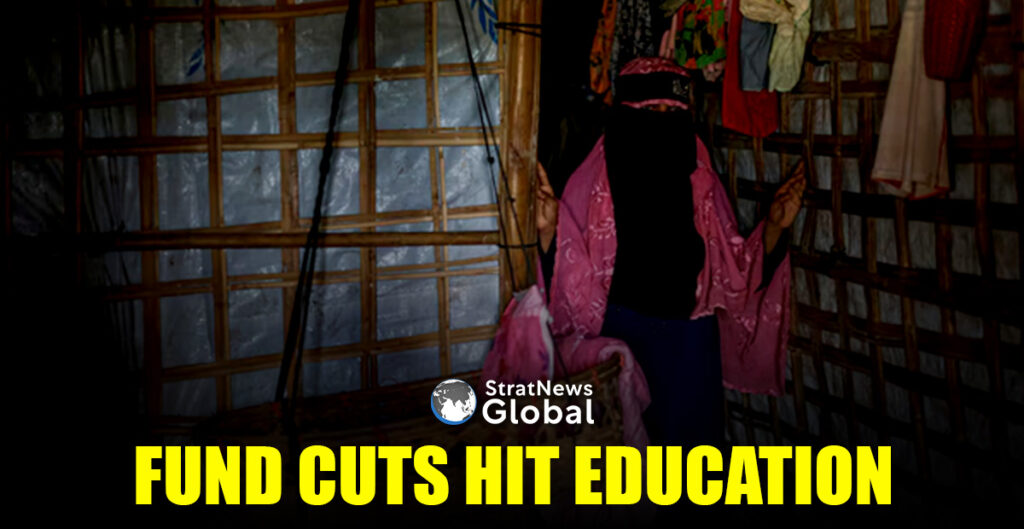
Begum, a Rohingya refugee, expressed relief that she married off one of her seven daughters before funding cuts shut down her school and thousands more across Bangladesh’s overcrowded refugee camps, disrupting education for nearly half a million children.
The daughter, Begum’s secondborn, was 16.
“Without school, girls sit idle. People start talking,” said Begum, 35, as her youngest, a toddler, tugged at her headscarf and four other daughters huddled nearby in their bamboo shelter in one of the camps in Cox’s Bazar. “I was afraid. Marriage was the only option. I just pray her husband lets her study.”
Begum, whose husband is struggling with his mental health, declined to give her full name, fearing repercussions for marrying off her daughter at such a young age.
Bangladesh has around 1.2 million Rohingya Muslim refugees, half of them children, most of whom fled a brutal military crackdown in Buddhist-majority Myanmar that U.N. investigators have described as a “textbook example of ethnic cleansing”.
Monday marks the eighth anniversary of that displacement, when more than 700,000 Rohingya crossed into Bangladesh in a matter of days, turning the area into the world’s largest refugee settlement.
Trump’s Foreign Aid Cut
But now, as the United States under President Donald Trump slashes nearly all international aid, and despite a sharp rise in arrivals over the past 18 months, funding for the camps has been cut.
The U.N. refugee agency UNHCR says it needs about $256 million to support the displaced Rohingya this year. The amount is the lowest in six years, but it has only received commitments for about 38% of the total.
Globally, the UNHCR expects to receive just a third of the $10.6 billion it needs this year to assist a growing number of displaced people.
“This community have already lost everything and is now facing a severe funding shortfall that threatens their survival,” said Juliette Murekeyisoni, interim UNHCR Representative in Bangladesh.
“Essential services and lifesaving assistance for the whole Rohingya refugee population are at risk of collapsing: critical food assistance, health services, essential cooking fuel (LPG), soap, and education will either stop or be severely disrupted without urgent additional support.”
UNICEF, which runs many of the Rohingya learning centres, said it suspended operations at more than 4,500 of its schools in June, leaving more than 227,500 Rohingya children without education and nearly 1,200 Bangladeshi teachers without work. Many Rohingya teachers are also without a job.
Classes resumed in July for older students, but many bamboo-and-plastic classrooms remain deserted, doors locked and murals fading in the humidity.
“Now the kids just play in the mud or rain. They’re forgetting everything they once learned,” said Naser Khan, a Rohingya teacher. “Without education, they become blind. A lost generation,” he said.
‘Snatched Away’
In one of the refugee camp’s sweltering lanes, Mohammed Faruq trudges beneath the midday sun, calling out the names of his two young daughters. Once, the girls ran to school with tattered notebooks in hand. Today, they wander aimlessly between the camp’s bamboo shacks.
“Only a little bit of education our children could learn was snatched away,” said Faruq, a father of six who fled Myanmar in 2017. “We survived genocide in Myanmar, we survived floods and fire here — but now our children’s future is being killed silently.”
For Faruq, the crisis feels unbearably personal.
“If our children cannot study, they will have no future … There is no way back to our homeland anytime soon, and here they have nothing,” he said.
Currently, no Rohingya child under the age of 12 in Cox’s Bazar has access to education, according to the International Rescue Committee (IRC), which estimates that as many as 500,000 children are now missing out on learning.
The IRC says the reduction in humanitarian services is already having serious consequences: reported cases of child marriage have risen by 3% this year and child labour by 7% — figures that are probably an underestimate due to limited monitoring and stigma.
“Each day, more families will continue to turn to extreme methods of survival: gambling, selling children into marriage and forced labour, as well as sexual abuse will all rise,” said Hasina Rahman, IRC’s Bangladesh director.
‘Burning Children’s Dreams’
UNICEF says “shifting global priorities” have led to a decrease in contributions.
“To stretch every dollar, we have reduced UNICEF staff, streamlined programmes, and cut costs wherever possible — but the needs far outweigh the resources available,” Rana Flowers, UNICEF Representative to Bangladesh, told Reuters.
The UNHCR warns that the funding crisis threatens to undo years of fragile progress. As violence in Myanmar continues, up to 150,000 Rohingya have arrived in Cox’s Bazar over the past 18 months, adding pressure to already strained services.
“I dreamed my students would become doctors or engineers. Now, with no classes, they will become nothing,” said Kafayat Ullah, a 45-year-old maths teacher. “They burned our homes in Myanmar. Here, they are burning our children’s dreams.”
One of those dreams belongs to nine-year-old Nahima Bibi, who now spends her days playing in the camp’s muddy lanes with the other children. “If I don’t go to school, how will I ever become a doctor?” she said, softly. “My heart feels sad.”
(With inputs from Reuters)
Musk Discussed OpenAI Deal With Zuckerberg, Meta Declined
Elon Musk reportedly approached Meta’s Mark Zuckerberg to back the $97.4 billion bid his consortium made for OpenAI earlier this year, but Zuckerberg declined, according to a court filing by OpenAI on Thursday.
OpenAI, the owner of ChatGPT, said Musk had communicated with Zuckerberg about potential financing arrangements or investments in connection with his OpenAI bid, according to the court filing.
OpenAI Seeks Meta Documents
OpenAI said Musk had disclosed his communications with Zuckerberg about the company during sworn interrogations.
Musk, whose xAI competes with OpenAI, could not immediately be reached for comment. xAI did not respond to a request for comment outside regular business hours.
OpenAI requested a federal judge to order Meta to produce documents and communications related to any bid for OpenAI, and those “concerning any actual or potential restructuring or recapitalization of OpenAI.”
Meta’s Rejection
“Meta’s communications with other bidders, or internal communications, including those reflecting discussions with Musk or other bidders, would also shed light on the motivations for the bid,” OpenAI said, calling Musk and Meta two of its most significant competitors.
Meta, in the same court filing, said OpenAI should seek any relevant documents directly from Musk and his AI startup, and asked the judge to deny OpenAI’s motion.
“Meta’s own communications concerning OpenAI’s restructuring or recapitalization (even as narrowed) are not relevant to this action,” Meta added in the court filing.
Ongoing Legal Battle
Earlier in August, US District Judge Yvonne Gonzalez Rogers ruled that Musk must face OpenAI’s claims that the billionaire, through press statements, social media posts, legal claims and “a sham bid for OpenAI’s assets,” attempted to harm the AI startup.
Tesla boss Musk sued OpenAI and its CEO Sam Altman last year over the company’s transition to a for-profit model, after which OpenAI counter-sued Musk in April this year.
A jury trial has been scheduled for spring 2026.
(With inputs from Reuters)