

Support us by contributing to StratNewsGlobal on the following UPI ID
ultramodern@hdfcbank

Strategic affairs is our game, South Asia and beyond our playground. Put together by an experienced team led by Nitin A. Gokhale. Our focus is on strategic affairs, foreign policy and international relations, with higher quality reportage, analysis and commentary with new tie-ups across the South Asian region.
You can support our endeavours. Visit us at www.stratnewsglobal.com and follow us on YouTube, Twitter, Facebook and Instagram.
र 500 per month
र 1000 per month
र 5000 per year
र 10000 per year
Donate an amount of your choice
र 500 per month
Donate र 500 per month

र 1000 per month
Donate र 1000 per month
र 5000 per year
Donate र 5,000 per year
र 10000 per year
Donate र 10,000 per year
Donate an amount of your choice
Donate an amount of your choice
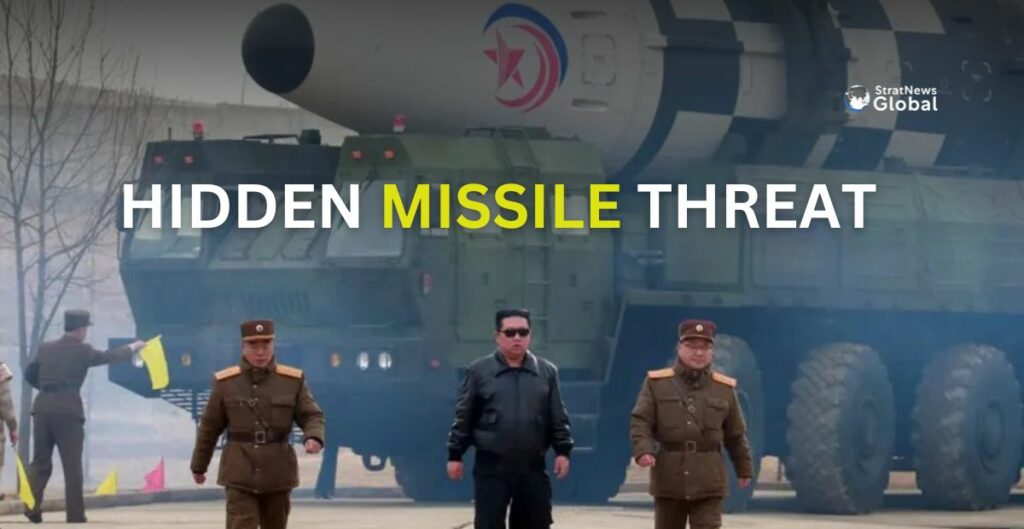





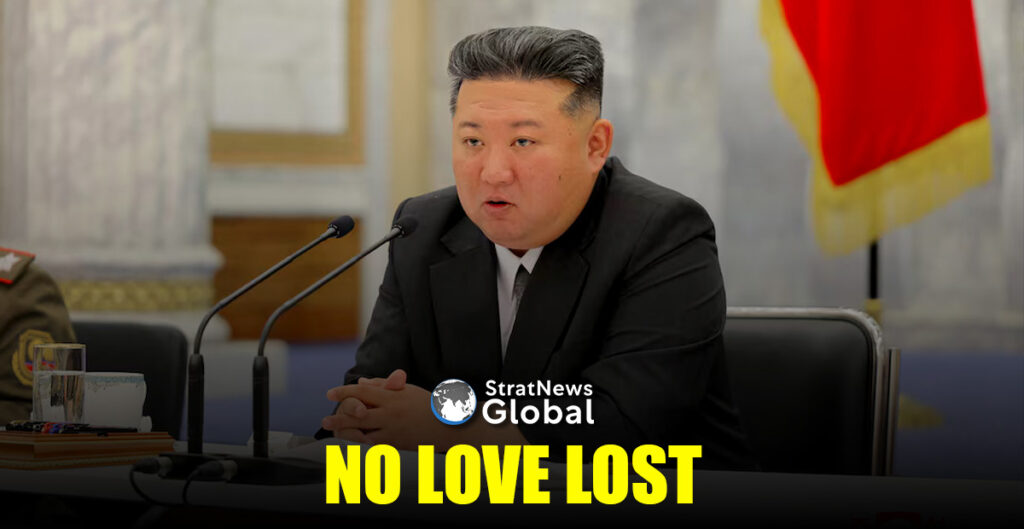
Secret N Korean Missile Base Targets Mainland U.S.
North Korea has built a secret military base near its northern border with China, likely housing intercontinental ballistic missiles (ICBMs) capable of striking the U.S. mainland, according to a new report by the Center for Strategic and International Studies (CSIS).
Located in Sinpung-dong, just 27 km from the Chinese frontier, the “undeclared” facility is believed to contain six to nine nuclear-capable ICBMs and their launchers. The CSIS study, released Wednesday, warns that these weapons “pose a potential nuclear threat to East Asia and the continental United States.”
The site is part of a wider network of up to 20 undisclosed ballistic missile bases across North Korea that have never been included in denuclearization talks. “The base, along with others, represent the primary components of what is presumed to be North Korea’s evolving ballistic missile strategy,” the report said, highlighting Pyongyang’s efforts to build a credible nuclear deterrent.
The revelation has heightened concerns among regional powers and global security analysts that Pyongyang is expanding its arsenal covertly. According to CSIS, these bases are designed for strategic deception, allowing mobile launchers to leave the base in a crisis and fire from remote locations, making detection and preemption far more difficult.
This is not the first time undeclared missile sites have been exposed. In 2018, satellite imagery revealed a similar base in Sakkanmol, even as then-U.S. President Donald Trump and North Korean leader Kim Jong-un pursued high-level diplomatic engagement.
Since the collapse of the 2019 Hanoi summit—derailed by disputes over sequencing denuclearization and sanctions relief—North Korea has steadily ramped up weapons development. Earlier this year, Kim called for the “rapid expansion” of the country’s nuclear program, framing it as essential to counter what he described as growing threats from the U.S. and its allies.
With tensions already high on the Korean Peninsula, and trilateral security cooperation deepening between the U.S., South Korea, and Japan, the discovery of this new missile base is likely to complicate future diplomacy and reinforce perceptions that Pyongyang is preparing for long-term nuclear confrontation rather than reconciliation.
Ukraine Warns Minsk Over Provocations During Belarus-Russia ‘Zapad’ Drills
Ukraine’s foreign ministry on Friday issued a warning to Minsk against staging provocations during the upcoming Belarus-Russia “Zapad” military drills in September, urging European partners to stay vigilant.
“The build-up of Russian troops on the borders of Ukraine in 2021-2022 took place under the cover of the joint military exercises of Russia and Belarus ‘Zapad-2021’. We warn Minsk against reckless provocations,” the ministry said on X.
It urged Belarusian authorities “to remain prudent, not to approach the borders and not to provoke” Ukrainian armed forces.
Belarus President Alexander Lukashenko has dismissed the idea that Minsk would utilise the exercises to attack its neighbours as “complete nonsense”.
In an interview with Time Magazine earlier this month, Lukashenko said he had decided to move the location of the joint military drills away from Belarus’ western borders with European Union countries, citing security concerns raised in Poland and the Baltic nations.
Zapad-2025
The scheduled drills, called “Zapad-2025” (West-2025), have raised security concerns in neighbouring Poland, Lithuania and Latvia.
“The cooperation between the regimes in Moscow and Minsk poses an immediate threat not only to Ukraine, but also to Poland, the Baltic states and all of Europe, and also hinders peaceful efforts of the United States President Donald Trump to end the war,” Ukraine’s ministry said.
The military exercise will include drills on the planned use of nuclear weapons and the Russian-made, intermediate-range hypersonic Oreshnik missile, according to Belarus’ defence minister.
Earlier this month, the Belarusian Defence Ministry stated that Russia and Belarus will conduct joint strategic military exercises in Belarus from September 12 to 16.
The aim of the drills is to test the capabilities of Russia and Belarus and “ensure the military security of the Union State and their readiness to repel possible aggression,” the ministry cited Major General Valery Revenko as saying.
Revenko, the Major General, said the Belarusian-Russian drills were “being used as a pretext for ongoing militarisation” in neighbouring NATO countries, citing upcoming joint NATO drills in Poland involving at least 34,000 troops.
The Union State is a borderless union and alliance between the two former Soviet republics and neighbours.
Ukrainian President Volodymyr Zelenskyy warned earlier this year, without giving details or citing evidence, that Russia was “preparing something” in Belarus this summer under the guise of routine military exercises.
Belarus, Russia’s closest ally, has seen its relations with Western neighbours and Ukraine deteriorate over the last few years after Moscow used Belarusian territory as a staging ground for an assault on Kyiv that it launched in February 2022.
(With inputs from Reuters)
Chicago ‘Will Be Next’: Trump Signals Troop Expansion In Democract-Led Cities
U.S. President Donald Trump on Friday said he may extend his crime crackdown to Chicago, a Democratic-led city, and warned he could assume full control of Washington, D.C., beyond just law enforcement.
Saying without evidence that violent crime was out of control in the nation’s capital, Trump deployed D.C. National Guard soldiers and federal agents on the streets last week with a mandate to reduce crime.
“It was horrible, and Mayor Bowser better get her act straight or she won’t be mayor very long, because we’ll take it over with the federal government, run it like it’s supposed to be run,” Trump told reporters, referring to Washington Mayor Muriel Bowser.
Recent statistics, which Trump dismissed, show crime has declined in the U.S. capital since a 2023 peak.
Washington is a unique federal enclave, established in the U.S. Constitution and falling under the jurisdiction of Congress, not belonging to any state.
In 1973, Congress passed the District of Columbia Home Rule Act, allowing residents to elect a mayor and council members.
Continuing his off-the-cuff remarks at the White House, Trump mused about extending his efforts to other cities. He has declined to explain how the federal government could intervene in local law enforcement in cities outside of the federal enclave of D.C.
“Chicago is a mess,” Trump said, deriding its mayor. “And we’ll straighten that one out probably next.”
Trump said some of his supporters in Chicago have been “screaming for us to come.”
“I did great with the Black vote, as you know, and they want something to happen,” he said. “So I think Chicago will be our next, and then we’ll help with New York.”
As in Washington, crime, including murders, has declined in Chicago in the last year.
‘Uncoordinated’ Approach
Chicago Mayor Brandon Johnson said he took Trump’s comments seriously but has not received formal communication from the administration about federal law enforcement or military deployments.
The mayor said Trump’s approach has been “uncoordinated, uncalled for and unsound.” He added: “There are many things the federal government could do to help us reduce crime and violence in Chicago, but sending in the military is not one of them.”
New York City, also criticised by Trump, has reported a steady decline in violent crime in recent decades, and now has a relatively low murder rate among big American cities. Trump also threatened federal government intervention in San Francisco, another city governed by Democrats.
While the Republican president has cast his efforts as an urgent move to help residents feel safe again, Democrats and other critics say he aims to expand the powers of the president beyond the bounds of the Constitution and assert federal control over cities run by Democratic officials.
The U.S. Constitution’s Tenth Amendment generally prevents the federal government from commandeering state or municipal officials and from intervening in states’ legal and criminal justice systems unless citizens’ constitutional rights are being violated.
(With inputs from Reuters)
Vietnam’s Island-Building Project In Spratly Islands On Track To Overtake China: Reports
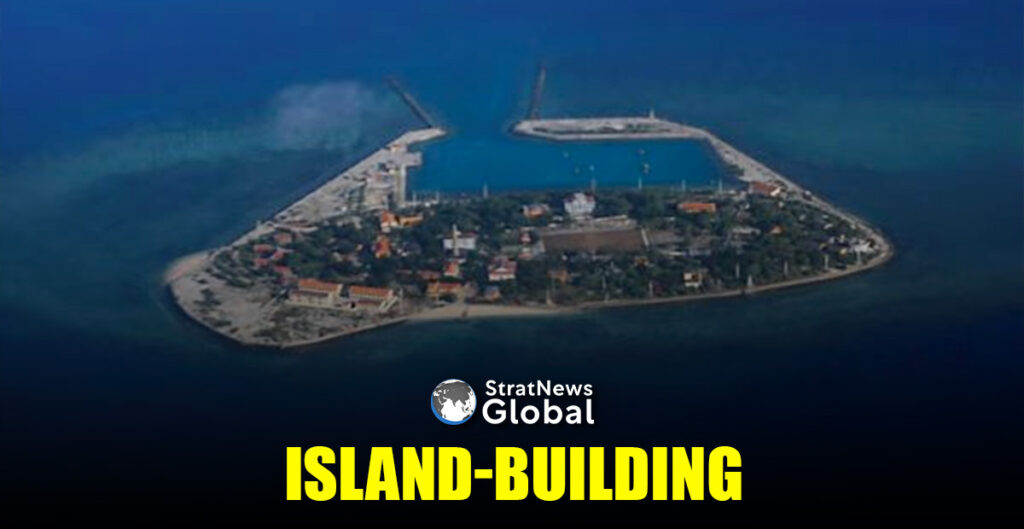
Vietnam has sharply increased land reclamation and construction in parts of the Spratly Islands it claims in the disputed South China Sea, and the scale of activity is expected to soon equal, and likely surpass, that of China, according to a U.S. think tank report released on Friday.
Recent satellite imagery showed that since the start of this year, Vietnam has expanded island-building to eight features previously untouched by a round of reclamation that began in 2021, the report from Washington’s Center for Strategic and International Studies said.
The report from CSIS’s Asia Maritime Transparency Initiative, said the imagery showed Vietnam has undertaken dredging and landfill work at Alison Reef, Collins Reef, East Reef, Landsdowne Reef and Petley Reefs.
The work meant that all 21 Vietnamese-occupied rocks and low-tide elevations in the Spratly Islands chain have now been expanded to include artificial land, when four years ago a majority hosted only isolated pillbox structures.
Creation Of Artificial Land
The report said new expansion had also begun at three features that already hosted medium-sized artificial islands created in earlier rounds of dredging: Amboyna Cay, Grierson Reef, and West Reef.
“As of March 2025, Vietnam had created about 70% as much artificial land in the Spratlys as China had,” it said. “Reclamation at these eight new features all but ensures that Vietnam will match – and likely surpass – the scale of Beijing’s island-building.”
China claims almost the entire South China Sea, despite overlapping claims by Brunei, Malaysia, the Philippines and Vietnam. Beijing has conducted extensive island-building work there opposed by the United States and its allies and partners.
The CSIS report said the images showed infrastructure, including munitions storage containers, was beginning to appear on Vietnamese claimed reefs where dredging work was approaching completion, such as Barque Canada Reef, Discovery Great Reef, Ladd Reef, Namyit Island, Pearson Reef, Sand Cay, and Tennent Reef.
It said the location of new structures and munitions depots seemed to preclude the possibility of full-length runways on some of the longer features and said a runway at Barque Canada was likely the only one being constructed to join Vietnam’s sole existing airstrip at Spratly Island.
China and Vietnam’s Washington embassies did not immediately respond to requests for comment on the CSIS report.
In February, China said it opposes Vietnam’s construction activities on Barque Canada Reef, saying it was Chinese territory.
In 2016, the Permanent Court of Arbitration in the Hague ruled that China’s South China Sea claims were not supported by international law, a decision Beijing rejects.
(With inputs from Reuters)
UK Postpones Decision On Chinese Embassy Project Over Beijing’s Lack Of Detail
The British government announced on Friday that it has extended until October its decision on approving China’s plans for what would be Europe’s largest embassy in London, after Beijing declined to fully clarify the blacked-out sections of its proposal.
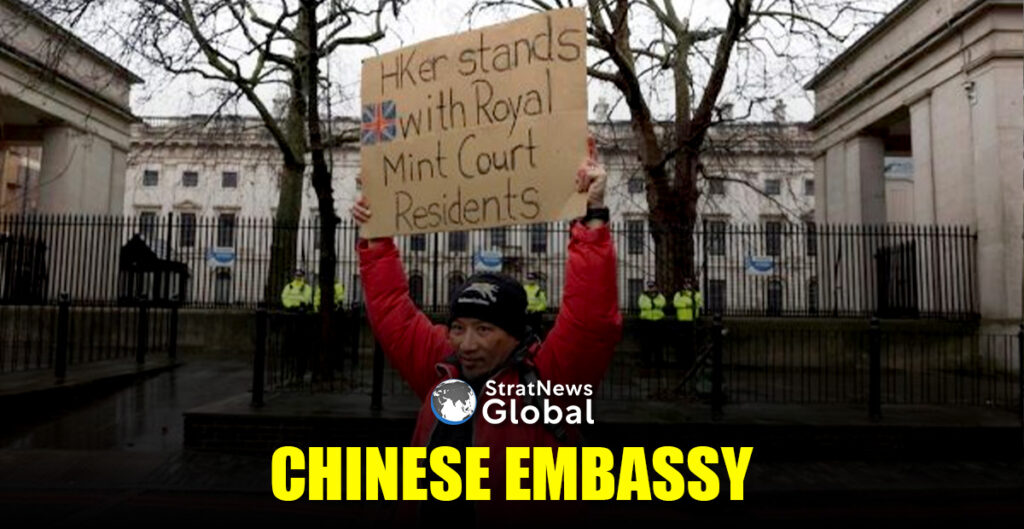
China’s plans to build a new embassy on the site of a two-century-old building near the Tower of London have stalled for the past three years because of opposition from local residents, lawmakers, and Hong Kong pro-democracy campaigners in Britain.
Politicians in Britain and the U.S. have warned the government against allowing China to build the embassy on the site over concerns that it could be used as a base for spying.
DP9, the planning consultancy working for the Chinese government, said its client felt it would be inappropriate to provide full internal layout plans, saying additional drawings provided an acceptable level of detail, after the government asked why several areas were blacked out in drawings.
“The Applicant considers the level of detail shown on the unredacted plans is sufficient to identify the main uses,” DP9 said in a letter to the government.
“In these circumstances, we consider it is neither necessary nor appropriate to provide additional more detailed internal layout plans or details.”
Final Decision By October
The British government’s department of housing said in reply it would now rule on whether the project can go ahead by October 21 rather than by September 9 because it needed more time to consider the responses.
Luke de Pulford, executive director of the Inter-Parliamentary Alliance on China, a group with ties to an international network of politicians critical of China which revealed the letter, said: “These explanations are far from satisfactory.”
De Pulford, a long-standing critic of plans for the embassy, said the “assurances amount to ‘trust me bro'”.
The Chinese embassy in London did not immediately respond to a request for comment.
The embassy earlier this month said claims that the building could have “secret facilities” used to harm Britain’s national security were “despicable slandering”.
The Chinese government purchased Royal Mint Court in 2018 but its requests for planning permission to build the new embassy there were rejected by the local council in 2022. Chinese President Xi Jinping asked Prime Minister Keir Starmer last year to intervene.
Starmer’s central government took control of the planning decision last year.
(With inputs from Reuters)
Brazil Rejects UN Proposal For Hotel Subsidies Amid Strained COP30 Discussions
Brazilian officials said on Friday that the government has dismissed a UN request to cover hotel costs for all delegates at the climate summit it will host in November, following what they described as a tense meeting with UN representatives.
They stressed that while Brazil is committed to hosting a successful summit in Belém, covering hotel costs for thousands of international participants would place an unsustainable financial burden on the state.
Brazil is working to nearly double available hotel beds and entrepreneurs have gotten creative, converting love motels and ferryboats to receive delegations.
But supply has still fallen short of demand, sending prices soaring and stoking calls to relocate the conference, known as COP30, which Brazilian officials have rejected.
During Friday’s meeting, officials linked to the Brazilian presidency said the U.N. climate secretariat, known as UNFCCC, had called for a hotel subsidy of $100 per day for delegates from developing nations and $50 for delegates from rich nations.
Significant Costs
Miriam Belchior, executive secretary to the President Luiz Inacio Lula da Silva’s chief of staff, dismissed the idea.
“The Brazilian government is already bearing significant costs for hosting the COP, so there is no way to subsidize delegations from other countries, including delegations from countries that are far richer than Brazil,” she told journalists after the meeting.
The UNFCCC did not respond immediately to a request for comment.
Belchior reiterated that changing the host city was out of the question. Instead, Brazil suggested that the U.N. should increase its $144 daily allowance for delegates from the poorest nations. But hotel rates in Belem have ranged from twice to twenty times that much.
The U.N. has resisted calls to adjust its allowances, citing the time usually required to approve such changes.
So far, 39 countries have made accommodation reservations through the official COP30 platform, while eight others have negotiated directly or through other platforms.
(With inputs from Reuters)
Seoul-Tokyo Ties In Focus As Lee Meets Ishiba, Trump Awaits
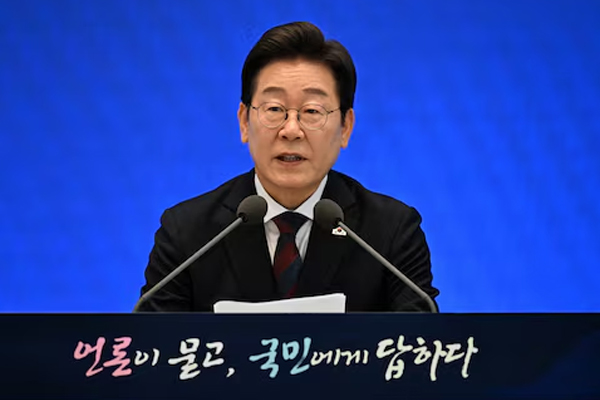
South Korean President Lee Jae Myung landed in Japan on Saturday for a key summit aimed at strengthening security ties between the two East Asian neighbours, ahead of his scheduled meeting with US President Donald Trump in Washington on Monday.
On his first official visit to Japan since taking office in June, Lee will meet Prime Minister Shigeru Ishiba at the premier’s residence in Tokyo to discuss bilateral ties, including closer security cooperation with the United States under a trilateral pact signed by their predecessors.
‘Disappointment And Regret’
The snap election victory of the liberal Lee – following the impeachment of conservative President Yoon Suk Yeol for declaring martial law – raised concerns in Tokyo that relations with Seoul could sour.
Lee has criticised past efforts to improve ties strained by lingering resentment over Japan’s 1910–45 colonial rule of the Korean Peninsula.
The South Korean government last week expressed “deep disappointment and regret” after Japanese officials visited a shrine in Tokyo to Japan’s war dead that many Koreans see as a symbol of Japan’s wartime aggression.
Backing Ties With Japan
So far, however, Lee has said he backs closer relations with Japan, including in his first meeting with Ishiba on the sidelines of a Group of Seven summit in Canada in June.
Despite their differences, the two US allies rely heavily on Washington to counter China’s growing regional influence. Together, they host around 80,000 US troops, dozens of American warships and hundreds of military aircraft.
Lee-Trump Meeting
In Washington, Lee and Trump are expected to discuss security concerns including China, North Korea, and Seoul’s financial contribution for US forces stationed in South Korea – something the US leader has repeatedly pressed it to increase.
Japan and South Korea also share common ground on trade, with both agreeing to 15% tariffs on US imports of their goods after Trump had threatened steeper duties.
Rubio Meets Cho
Meanwhile, US Secretary of State Marco Rubio met with South Korea’s foreign minister, Cho Hyun, on Friday in Washington, and they discussed burden sharing and fair trade ahead of a planned summit between the two countries, the US Department of State said on Friday.
Rubio and Cho discussed ways to advance the alliance between the two countries “centered on a forward-looking agenda that enhances deterrence in the Indo-Pacific, increases our collective burden sharing, helps to revitalize American manufacturing, and restores fairness and reciprocity in our trade relationship,” according to the State Department’s principal deputy spokesperson, Tommy Pigott.
(With inputs from Reuters)
Trump Announces $8.9 Billion Deal For 10% Intel Stake
US President Donald Trump on Friday announced that the government will acquire a 10% stake in Intel under a deal converting federal grants into equity, marking yet another bold intervention by the White House in corporate affairs.
The deal puts Trump on better terms with Intel CEO Lip-Bu Tan, after the president recently said the CEO should step down due to conflicts of interest. It will ensure that the chipmaker will receive about $10 billion in funds for building or expanding factories in the US.
Funding Tied To CHIPS Act
Under the agreement, the US will purchase a 9.9% stake in Intel for $8.9 billion, or $20.47 per share, which represents a discount of about $4 from Intel’s closing share price of $24.80 on Friday.
The purchase of the 433.3 million Intel shares will be made with funding from the $5.7 billion in unpaid grants from the Biden-era CHIPS Act and $3.2 billion awarded to Intel for the Secure Enclave program, also awarded under Trump’s predecessor, Democratic President Joe Biden.
Intel stock rose roughly 1% in the extended session on Friday after closing up 5.5% during regular trading.
Victory in $10 Billion Deal
Trump met with Tan on Friday, a White House official said. That followed Trump’s August 11 meeting with the Intel CEO after Trump demanded that Tan resign over his ties to Chinese firms.
“He walked in wanting to keep his job and he ended up giving us $10 billion for the United States. So, we picked up $10 billion,” Trump said on Friday. Commerce Secretary Howard Lutnick said on X that Tan had struck a deal “that’s fair to Intel and fair to the American People.”
Growing Corporate Risk
The Intel investment marks the latest unusual deal with US companies, including a US government agreement allowing AI chip giant Nvidia to sell its H20 chips to China in exchange for receiving 15% of those sales.
Other recent deals include an agreement for the Pentagon to become the largest shareholder in a small mining company, MP Materials, to boost output of rare earth magnets and the US government’s winning a “golden share” with certain veto rights as part of a deal to allow Japan’s Nippon Steel to buy US Steel.
The federal government’s broad intervention in corporate matters has worried critics, who say Trump’s actions create new categories of corporate risk.
SoftBank Investment
Ahead of the US deal with Intel, Japan’s SoftBank agreed to take a $2 billion stake in the chip maker on Monday.
Some industry observers still question Intel’s ability to surmount its problems.
Daniel Morgan, senior portfolio manager at Synovus Trust, said Intel’s problems are beyond a cash infusion from SoftBank or equity interest from the government, singling out Intel’s contract chip manufacturing business, known as its foundry unit.
Reasonable Rate, Limited Exceptions
“Without government support or another financially stronger partner, it will be difficult for the Intel foundry unit to raise enough capital to continue to build out more Fabs at a reasonable rate,” he said. Intel “needs to catch up with TSMC from a technological perspective to attract business,” he added.
The government’s stake is to be passive ownership and does not include a board seat, Intel said. The government will be required to vote with Intel’s board when shareholder approval is necessary, with “limited exceptions.” Intel did not specify the exceptions.
Option For Extra 5% Stake
The equity stake also includes a five-year warrant at $20 a share for an additional 5% of Intel stock, which the US can use if Intel loses control of the foundry business.
Federal backing could give Intel more breathing room to revive its loss-making foundry business, analysts said, but it ceded the AI market to Nvidia and has lost market share to Advanced Micro Devices in its central processor business for several years. It has also faced challenges in attracting customers to its new factories.
Tan, who became CEO in March, has been tasked to turn around the American chipmaking icon, which recorded an annual loss of $18.8 billion in 2024 – its first such loss since 1986. The company’s last fiscal year of positive adjusted free cash flow was 2021.
(With Inputs from Reuters)
US: Kilmar Abrego Released, Faces Uncertain Future
Kilmar Abrego, a migrant who became a symbol of US President Donald Trump’s hardline immigration policies after being wrongfully deported to El Salvador, was released from criminal custody in Tennessee on Friday, as witnessed by reporters.
Video posted hours later on X by WJLA television showed him arriving at a family home in Maryland where relatives greeted him with hugs and chants of “Yes we could!” in Spanish.
Abrego, 30, was deported to his native El Salvador in March despite a 2019 immigration court ruling that he is not to be sent there due to a risk of persecution by gangs.
‘Administrative Error’
He was flown back to the US in June to face criminal charges of transporting migrants living illegally in the country.
His case drew attention as the Trump administration for months took no apparent steps to bring him back despite an official’s acknowledgement that his deportation had been an “administrative error” and a federal judge’s order to facilitate his return.
Fresh Deportation Threat Looms
Abrego may not be free for long. Once in Maryland, immigration officials could take him into custody and initiate deportation proceedings.
He has pleaded not guilty. His lawyers have urged Nashville-based US District Judge Waverly Crenshaw to dismiss the charges, arguing prosecutors improperly targeted him in retaliation for filing a lawsuit challenging his deportation.
Fear Of Deportation To A Third Country
Crenshaw last month affirmed US Magistrate Judge Barbara Holmes’ order for Abrego to be released from pre-trial custody, finding he was neither a danger to the community nor a risk of flight.
But Holmes delayed Abrego’s release for a month at Abrego’s lawyers’ requests. The defence lawyers were concerned that Abrego, once released from criminal custody, could be detained by immigration officials and swiftly deported to a country other than El Salvador.
US District Judge Paula Xinis in Greenbelt, Maryland, who is overseeing Abrego’s civil lawsuit challenging the legality of his deportation, has since ordered that officials give his lawyers three days’ notice before sending him to a third country, to give them the chance to challenge his removal.
Under Home Detention
Abrego had been living in Maryland with his wife, their child and two of her children before his deportation. His lawyers have said they hired private security to take him to Maryland, where he is due to report to a pre-trial supervision officer and be subject to home detention with electronic monitoring.
The US government notified Abrego’s lawyers that he would be deported to Uganda within days and he was asked to appear at a federal building in Baltimore on Monday, Fox News reported, citing US Immigration and Customs Enforcement documents.
Abrego A ‘Monster’
Neither ICE nor Abrego’s attorneys responded to Reuters requests to authenticate the documents.
Homeland Security Secretary Kristi Noem said he was still considered a criminal and an immigration violator, calling him a “monster” who was released by “activist liberal judges.”
“We will not stop fighting till this Salvadoran man faces justice and is OUT of our country,” Noem said on X.
(With inputs from Reuters)
North Korea Slams South Korea Over Warning Shots
North Korea has claimed that the South Korean military fired warning shots in the border area on Tuesday, calling it a deliberate provocation, as reported by state media outlet KCNA on Saturday.
North Korea also said that warning broadcasts from the South Korean military in the border region were increasing.
‘Corresponding Countermeasure’
Since last year, North Korea has been building barriers in the heavily fortified border between the two Koreas, while blowing up inter-Korean roads and railways.
North Korea will “take corresponding countermeasure” for any obstruction to the barrier building project, and “take no responsibility for the grave consequences” if advanced warning in the border area is ignored in the future, KCNA said, citing a statement by Army Lieutenant General Ko Jong Chol, vice chief of the General Staff of the North Korean army.
Seoul Confirms
South Korea’s Joint Chiefs of Staff said in a statement that at around 3 p.m. Seoul time (0600 GMT) on Tuesday, some North Korean soldiers working in the border region crossed the military demarcation line between the two Koreas and the South Korean military fired warning shots, with North Korean troops later moving back north of the line.
The JCS did not elaborate further.
North Korea’s message is at odds with South Korean President Lee Jae Myung saying last week that it will end some military activities along its border with North Korea, in his government’s latest in a string of efforts to improve ties between the Neighbours still technically at war.
US-South Korea Joint Drills
North Korea also criticised again ongoing joint military drills by the US and South Korea as “an extremely provocative … drill for an actual war” in a separate KCNA piece on Saturday.
Pyongyang regularly criticises such drills as rehearsals for invasion and sometimes responds with weapons tests, but Seoul and Washington say they are purely defensive.
(With inputs from Reuters)