

Support us by contributing to StratNewsGlobal on the following UPI ID
ultramodern@hdfcbank

Strategic affairs is our game, South Asia and beyond our playground. Put together by an experienced team led by Nitin A. Gokhale. Our focus is on strategic affairs, foreign policy and international relations, with higher quality reportage, analysis and commentary with new tie-ups across the South Asian region.
You can support our endeavours. Visit us at www.stratnewsglobal.com and follow us on YouTube, Twitter, Facebook and Instagram.
र 500 per month
र 1000 per month
र 5000 per year
र 10000 per year
Donate an amount of your choice
र 500 per month
Donate र 500 per month

र 1000 per month
Donate र 1000 per month
र 5000 per year
Donate र 5,000 per year
र 10000 per year
Donate र 10,000 per year
Donate an amount of your choice
Donate an amount of your choice
As India, China Prepare For LAC De-escalation Talks, Several Questions Remain
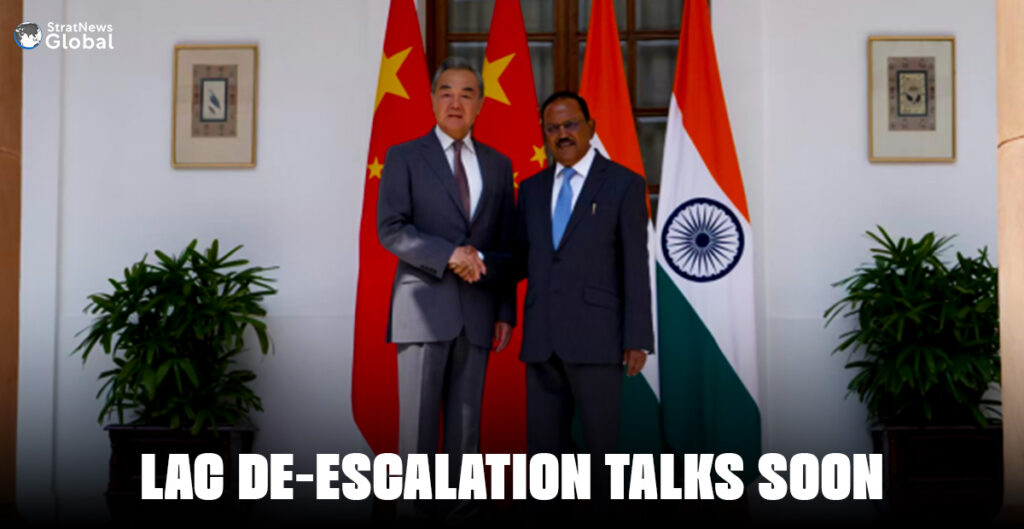
Indian and Chinese military leaders will begin talks soon to start the process of pulling back their forces along the Line of Actual Control (LAC) in Eastern Ladakh following last week’s high-level discussions in New Delhi, sources have told Bharat Shakti. The troop withdrawal or de-escalation is seen as the second step in the 3D formula (disengage, de-escalate and de-induct) envisaged in the discussions at the highest levels between the two sides.
Disengagement Completed Last Year
The first step of disengagement of formations from eyeball-to-eyeball positions at several friction points along the LAC in Eastern Ladakh was carried out gradually. The last of the disengagement took place in October 2024, when troops facing each other at Depsang and Demchok stepped back and both sides resorted to the pre-2020 patrolling patterns in the two areas.
However, de-escalation was still pending as India’s External Affairs Minister (EAM) Dr S. Jaishankar said in his opening statement in talks with his Chinese counterpart Wang Yi on August 18: “…The basis for any positive momentum in our ties is the ability to jointly maintain peace and tranquillity in the border areas. It is also essential that the de-escalation process move forward.”
Large Troops Unsustainable
Since the summer of 2020, both sides have amassed troops in excess of 60,000 after Chinese aggression along different locations in Eastern Ladakh. Several offensive formations, armour and artillery guns were moved close to the LAC by both sides along with massive infrastructure upgrade in their respective areas. Sustaining such a large body of troops in high-altitude areas has been taking a toll on both the armies, besides creating uncertainty and tension on the border, given their offensive postures.
Three New Arrangements
However, now the two armies are beginning to plan for withdrawal of their troops from locations close to the LAC to areas deemed as peacetime bases. This move comes in the wake of the detailed negotiations between the two Special Representatives, India’s National Security Advisor (NSA) Ajit Doval and China’s Foreign Minister Wang Yi.
Following the talks, three new arrangements have been agreed upon, as detailed in a press note by India’s Ministry of External Affairs (MEA). It said, in parts that both sides agreed to:
- Setting up an Expert Group, under the Working Mechanism for Consultation and Coordination on India-China Border Affairs (WMCC), to explore Early Harvest in boundary delimitation in the India-China border areas;
- Setting up a Working Group, under the WMCC, to advance effective border management in order to maintain peace and tranquillity in India-China border areas;
- Creation of General Level Mechanisms in eastern and middle sectors, in addition to the existing General Level Mechanism in western sector, and holding an early meeting of the General Level Mechanism in the western sector.
Finally, the press note says, “Use the (above) border management mechanisms at diplomatic and military levels to carry forward the process of border management and discuss de-escalation, beginning with the principles and modalities thereof.”
Time-consuming Affair
Sources say so far both sides were finding it difficult to arrive at a common definition on what de-escalation meant. China was insisting on an equidistant withdrawal of troops. However, India was not in agreement given the difference in terrain and asymmetry in infrastructure facilities on either side of the LAC. India pointed out, for instance, a 300-km withdrawal of forces on either side is not equidistant in reality since the level of infrastructure on either side differs substantially besides stark difference in the topography. Much like the disengagement process that took over 40-months of intense negotiations, talks to achieve mutually satisfactory de-escalation are expected to take substantial time and effort, sources pointed out. Once de-escalation is achieved, both sides will look at de-induction of forces to their permanent locations, sources added.
Early Harvest: Low Hanging Fruit First?
Other questions are also being asked in the wake of the detailed press note. One, what kind of early harvest both sides are looking at on the boundary issue? Could it be an exchange of maps of the less controversial middle sector eventually leading to delineation and demarcation of all parts of the boundary?
After one feeble attempt to exchange maps for the middle sector of the Line of Actual Control (LAC) way back in 2002, the two countries have never gone down that path again. Two, what kind of new border management protocols are likely to emerge from the two new working groups under the WMCC decided last week? For five years, China watchers have pointed out, most protocols under previous agreements were violated by China.
Corps Commander Talks For All Sectors
One significant point of agreement in last week’s negotiations is to extend the Corps Commanders (or one step lower) talks mechanism to the other two (middle and eastern) sectors too. It is also not yet clear which of the three Corps Commanders (commanding 3, 4 or 33 Corps) or their subordinates in the eastern sector will be entrusted with that responsibility from the Indian side. Also, in the middle sector, will the Uttar Bharat (UB) Area Commander, a Lt General, be tasked to lead the talks since there is, so far, no Corps Commander looking after that part of the boundary?
Many such queries remain but India and China, aware of the changing geopolitical equations, have begun talking again leading to frequent interactions at the highest level. That itself is a good start.
Australia Mulls Taxing Unused Bedrooms In Private Homes
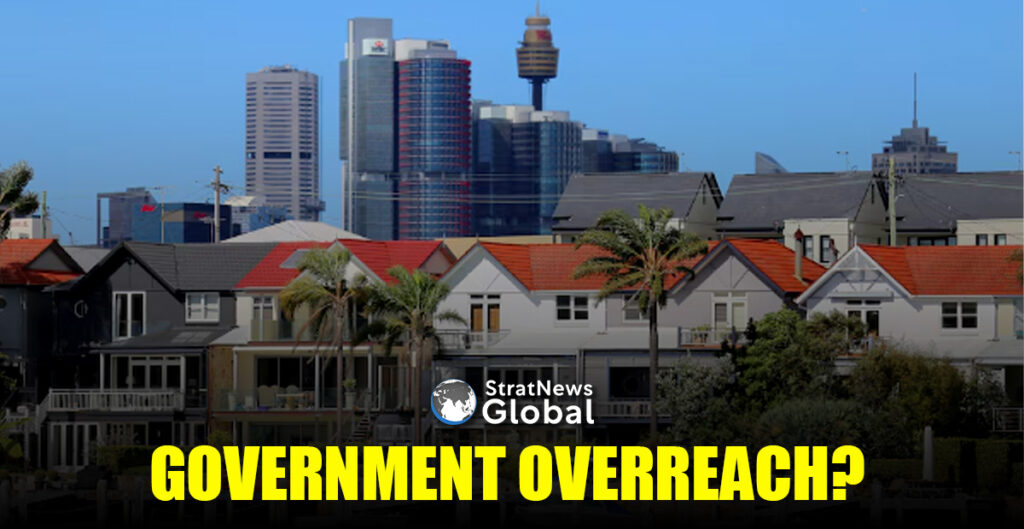
In a move that has sparked both bewilderment and outrage, Australia is reportedly considering a controversial policy to tax unused bedrooms in private homes — a proposal aimed at “freeing up housing supply” in the midst of a worsening affordability crisis.
The idea, which surfaced in policy discussions this week, would see homeowners penalised for keeping spare rooms empty, with officials arguing that such a measure could nudge older Australians and property-rich families to either downsize or rent out underutilised space. In theory, this would increase the number of homes available in a market where prices and rents continue to soar.
Mounting Criticism
But the suggestion has drawn sharp criticism from across the political spectrum, with commentators describing it as an absurd overreach of government authority.
“What’s next — taxing people for not eating enough at dinner?” one opposition MP quipped, noting that such a policy would invade the most private corners of household life.
Housing experts are also sceptical. While the intention to tackle supply shortages is clear, critics argue that the proposal distracts from deeper structural problems, including a lack of new construction, planning bottlenecks, and rising construction costs.
“Empty bedrooms are not the root cause of the crisis,” said one urban economist. “Blaming families for having a guest room won’t magically fix affordability.”
Public Mocks Proposal
The public response has been swift and cutting. Social media platforms erupted with mockery, with Australians posting photos of their spare rooms alongside sarcastic captions such as, “For lease: one cat’s bedroom.” Memes comparing the policy to Orwellian overreach quickly went viral, with some warning that it sets a dangerous precedent of micromanagement in private life.
Underlying the humour, however, is genuine concern. For many, the bedroom tax debate reflects a growing frustration with a government seemingly more focused on tinkering with citizens’ lifestyles than addressing systemic policy failures.
“It’s a distraction tactic,” one Sydney resident said. “They can’t fix housing, so now they’re peering into our bedrooms.”
Nothing ‘Finalised’ Yet
The Anthony Albanese-led Labour government, for its part, insists the idea is still in early consultation stages and has not been finalised. Yet even the mere prospect has touched a nerve, underscoring the fine line between housing policy and intrusion into personal liberty.
If pursued, the tax would represent one of the most radical — and contentious — attempts yet by a Western government to reshape housing markets through direct intervention inside private homes.
(With inputs from IBNS)
Canadian PM Carney Does Not Rule Out Peacekeeper Deployment In Ukraine
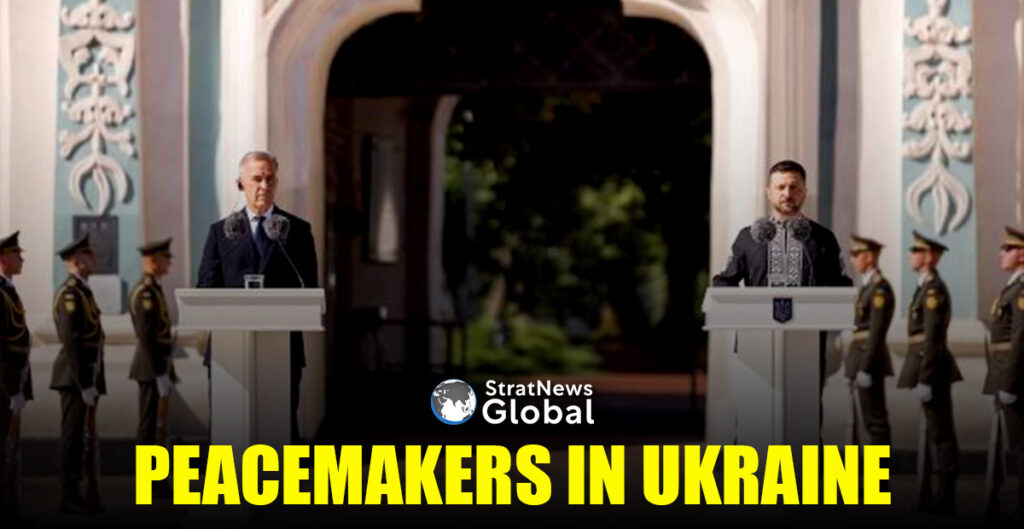
During a meeting with Ukrainian President Volodymyr Zelenskyy on Sunday, Canadian Prime Minister Mark Carney expressed support for Ukraine’s demand for strong security guarantees in any peace settlement, adding that Canada would not exclude the possibility of sending troops under such an arrangement.
Three and a half years since Russia’s full-scale invasion of Ukraine, U.S. President Donald Trump is leading peace efforts and Ukraine is working with its European allies to draft potential frameworks for post-war security guarantees for Kyiv, which Trump has also expressed openness towards.
Carney, making his first visit to Ukraine since taking office in March, joined Zelenskyy for a ceremony in central Kyiv to mark Ukrainian Independence Day, which was also attended by Trump’s special envoy for Ukraine, Keith Kellogg.
“We are all working to ensure that the end of this war would mean the guarantee of peace for Ukraine, so that neither war nor the threat of war are left for our children to inherit,” Zelenskyy told a crowd of dignitaries in Kyiv’s Sophia Square, against the backdrop of an 11th century cathedral.
Zelenskyy has said he wants future security guarantees as part of a potential peace deal to be as close as possible to NATO’s Article 5, which considers an attack on one member state as an attack against all.
Carney backed Ukraine’s calls for potential international participation.
“In Canada’s judgment, it is not realistic that the only security guarantee could be the strength of the Ukrainian Armed Forces … that needs to be buttressed and reinforced,” Carney told a joint press conference.
The two leaders also signed an agreement on drone co-production, and Carney said Ukraine would receive more than C$1 billion ($723 million) in military aid from a previously announced package next month.
‘We Need Peace’
Zelenskyy presented Kellogg with a state honour during Sunday’s ceremony, telling him “we need peace” as he gave him a medal in a leather case.
Later in the day, Kellogg met Ukrainian Prime Minister Yuliia Svyrydenko, who said they had discussed the Ukraine-U.S. minerals agreement as well as the security guarantees issue.
During the press conference with Carney, Zelenskyy was asked about a story in the Wall Street Journal which said the Pentagon had for months been quietly blocking Ukraine’s use of the U.S.-supplied ATACMS missile to hit targets in Russia.
A source familiar with the matter said while there was never a formal suspension in long-range attacks, the Pentagon had created a review process that has so far not authorized a strike with the ATACMS deep inside Russia.
In response, Zelenskyy said Kyiv has of late been using its own domestically produced long-range weapons to hit targets inside Russia, which are not cleared with Washington.
“Lately we have not been discussing this issue with the United States,” he said.
Ukraine has said it conducted overnight strikes on an oil refinery in Russia’s Samara region, as well as a gas fractionation facility at Ust-Luga, a Russian port which is a key energy export node.
($1 = 1.3826 Canadian dollars)
(With inputs from Reuters)
German Finance Minister Visits Kyiv, Assures Ukraine Of Continued Support
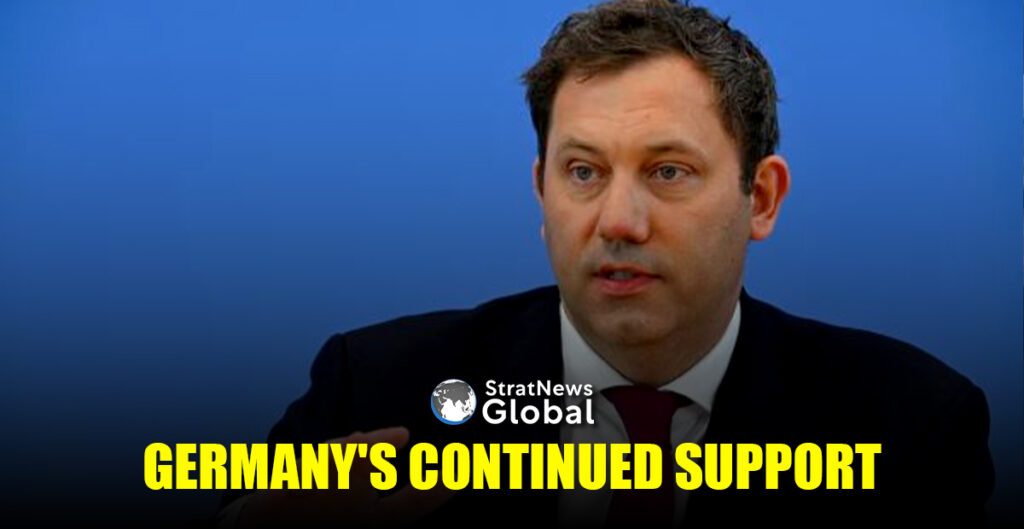
Arriving in Ukraine’s capital Kyiv on an unannounced trip on Monday, German Finance Minister and Vice Chancellor Lars Klingbeil said President Vladimir Putin should recognize that Germany’s backing for Ukraine remains steadfast.
“Putin should have no illusions that Germany’s support for Ukraine could crumble,” said Klingbeil, leader of the Social Democratic Party that is the junior partner in Chancellor Friedrich Merz’ conservative-led coalition government.
Klingbeil emphasized that Germany remains the second-largest backer of Ukraine globally and the largest in Europe, having provided €50.5 billion in aid since the onset of Russia’s February 2022 invasion.
“On the contrary: We remain Ukraine’s second-largest supporter worldwide and the largest in Europe,” said Klingbeil. “Ukraine can continue to rely on Germany.”
Peace Negotiations
Klingbeil urged Putin to demonstrate an interest in a peace process in Europe’s deadliest war in 80 years that broke out in February 2022.
U.S. President Donald Trump has pressed for a quick end to the war, but Kyiv and its allies are concerned he could seek to force an agreement on Russia’s terms.
The German Finance Minister said Ukraine needed to be involved in any peace negotiations and called for a ceasefire and robust security guarantees for a lasting peace.
“To this end, we are coordinating closely internationally,” Klingbeil said.
Among options presented this week for security for Ukraine after a possible peace deal, both French President Emmanuel Macron and British Prime Minister Keir Starmer supported troop deployments as part of a coalition of the willing.
Merz has also signalled openness to Germany’s participation but would face a backlash both from within and outside his political spectrum on the matter.
According to Klingbeil’s ministry, the German government has supported Ukraine with 50.5 billion euros ($59.18 billion) since the war started.
This package includes funding for refugees, military aid, civil reconstruction, and budget support. Looking ahead, Berlin plans an additional 8.3 billion euros in military assistance this year and earmarked 8.5 billion euros annually for 2026 and 2027.
($1 = 0.8534 euros)
(With inputs from Reuters)
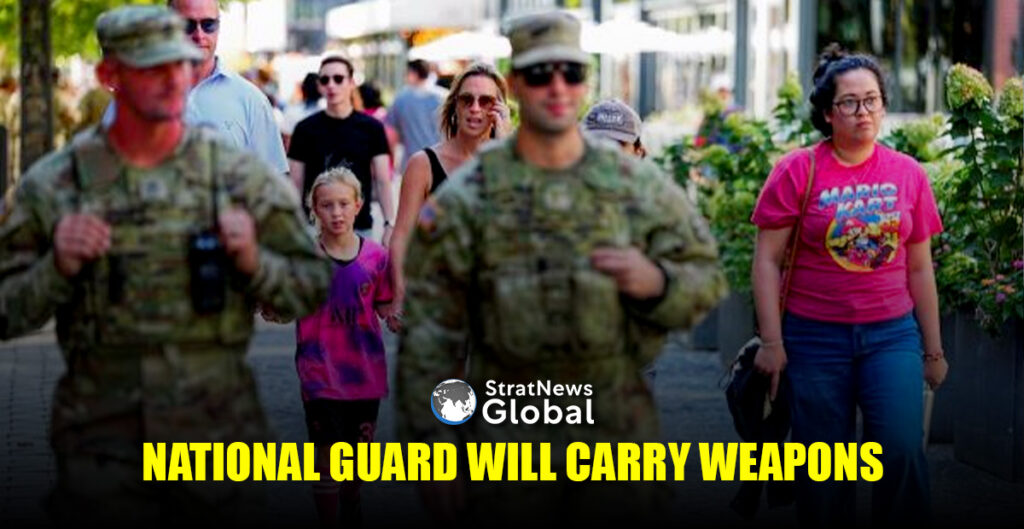
National Guard In Washington Set To Carry Weapons Beginning Sunday
National Guard troops patrolling the streets of Washington, D.C., as part of U.S. President Donald Trump’s declared crackdown on crime, will begin carrying weapons on Sunday night, according to two officials.
The exact number of troops who would carry their weapons was fluid, but they will either carry their M17 pistols or M4 rifles, according to the officials who spoke on condition of anonymity as they were not authorized to discuss the matter.
Hundreds of unarmed National Guard troops have been in Washington’s streets for the past two weeks after Trump declared a crime emergency in the district. Defence Secretary Pete Hegseth last week authorized the troops to carry weapons.
The Guard’s Joint Task Force-DC said in a written statement on Sunday that its personnel would only use force “as a last resort and solely in response to an imminent threat of death or serious bodily harm.”
Meanwhile, Trump, a Republican, has said he would probably expand his crime crackdown to Chicago, intervening in another city governed by Democrats. And on Sunday he suggested the possibility of deploying troops to Democratic-run Baltimore in Maryland.
Trump’s Deployment Plan Not Aligned With Pentagon
Democratic House of Representatives Minority leader Hakeem Jeffries said on Sunday that Trump did not have the authority to deploy troops to Chicago as the Pentagon carried out initial planning for a possible deployment.
U.S. officials, speaking on the condition of anonymity, said there had been initial planning at the Pentagon about what a deployment of National Guard troops to Chicago would look like.
One official said the plans were part of the military’s efforts to anticipate any requests by Trump and noted senior Pentagon officials have not yet been briefed on them. It is not uncommon for the Pentagon to plan for potential deployments before formal orders are given.
Jeffries said any move to deploy troops to Chicago was an attempt by Trump to manufacture a crisis. Crime, including murders, has declined in Chicago in the last year.
“There’s no basis, no authority for Donald Trump to potentially try to drop federal troops into the city of Chicago,” Jeffries told CNN’s “State of the Union” on Sunday.
Jeffries cited comments made by JB Pritzker, the Democratic governor of Illinois, which includes Chicago, who said there was no emergency warranting the deployment of the National Guard or other military.
Leveling criticism at Democratic Governor Wes Moore over crime levels in Baltimore, Trump said he was prepared to deploy troops there, too.
In July, the Baltimore police department said there had been a double-digit reduction in gun violence compared to the previous year. The city has had 84 homicides so far this year – the fewest in over 50 years, according to the mayor.
“If Wes Moore needs help… I will send in the “troops,” which is being done in nearby DC, and quickly clean up the Crime,” Trump said on Truth Social on Sunday.
Less Power Over Chicago
Some Republican governors have sent hundreds of National Guard troops to Washington, D.C., at Trump’s request. The president has depicted the capital as being in the grip of a crime wave, although official data shows crime is down in the city.
On Sunday, Trump asserted without evidence that there was now no crime in the city and credited it to his deployment of troops and hundreds of federal law enforcement personnel.
Trump has much less power over Chicago and Baltimore than he does over the District of Columbia, where as president he holds more sway.
Title 10 of the U.S. Code, a federal law that outlines the role of the U.S. Armed Forces, includes a provision allowing the president to deploy National Guard units to repel an invasion, to suppress a rebellion or to allow the president to execute the law.
Trump cited this provision, known as Section 12406, when he sent National Guard units to California earlier this year to counter protests, over the objections of Governor Gavin Newsom.
In the case of Chicago, which is a so-called sanctuary city, Trump may argue local laws that bar city officials from cooperating with federal immigration agents prevent the president from executing the law, justifying the military presence.
Trump is almost certain to face legal challenges if he uses Section 12406 to send National Guard troops from Republican-led states into Democratic strongholds.
(With inputs from Reuters)
Russia, Ukraine Swap 146 POWs Each With UAE Mediation
In a development facilitated by the United Arab Emirates, Russia and Ukraine exchanged 146 prisoners of war (POW) each on Sunday, as confirmed by the Russian Defence Ministry and the Ukrainian President.
The Russian ministry said all of the freed Russians were in Belarus receiving psychological and medical assistance.
Ukraine also returned to Moscow eight Russian citizens, residents of the Kursk region, the ministry said.
Zelenskyy Thanks UAE
Ukrainian President Volodymyr Zelenskyy, writing on the Telegram messaging app, announced that the exchange had taken place, but gave no figures.
The president posted pictures of smiling returnees, saying most of them had been in captivity since 2022, when Russia invaded its smaller neighbour. He said a journalist taken prisoner a month after the invasion was among them.
Zelenskyy thanked the United Arab Emirates for its role in overseeing the swap.
“The exchanges are continuing. Perhaps that is possible because of our soldiers, who are increasing the exchange fund for Ukraine,” the president wrote, referring to the capture of Russian servicemen.
The Ukrainian military issued a statement confirming that a total of 146 prisoners from each side had been swapped.
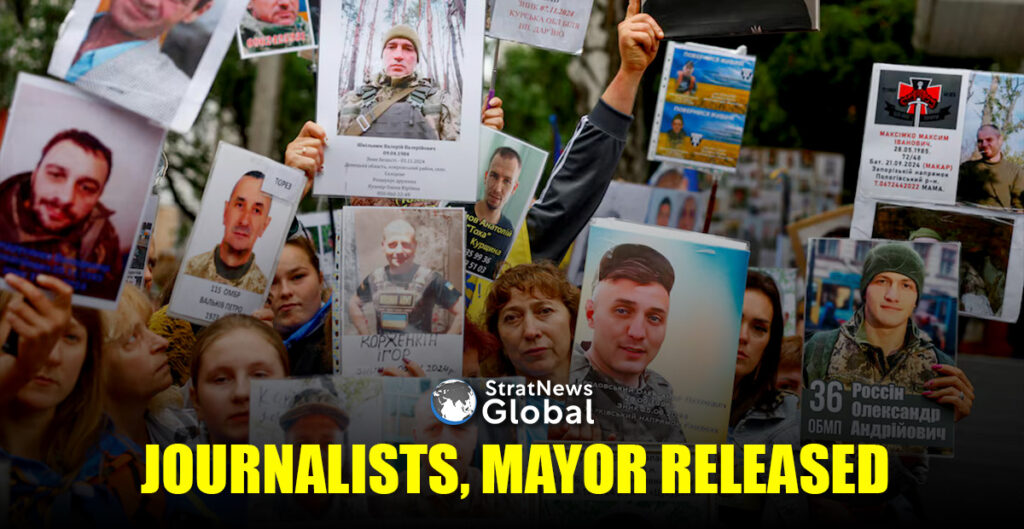
Journalists, Mayor Released
According to AFP, two Ukrainian journalists, Dmytro Khyliuk and Mark Kaliush, were released during the swap. The development was confirmed by Ukraine’s Coordination Headquarters for the Treatment of Prisoners of War in a statement on Telegram.
“They were illegally detained by the occupiers in 2022 and 2023,” the statement added.
Also freed was former Kherson mayor Volodymyr Mykolayenko, reports said.
Medinsky Blames Ukraine
Vladimir Medinsky, who has led the Russian side in three rounds of talks on a settlement in Turkey since May, said Ukraine was being slow in returning civilians to Kursk, a Russian region where Kyiv’s forces staged a mass incursion a year ago.
He said more than 20 residents were waiting to go home.
“Three months have passed and residents of Kursk region are not being returned but are being exchanged in small groups for some people needed by Ukraine,” he wrote on Telegram. “Russia is engaged in painful bargaining to get civilians returned.”
(With Inputs from Reuters)
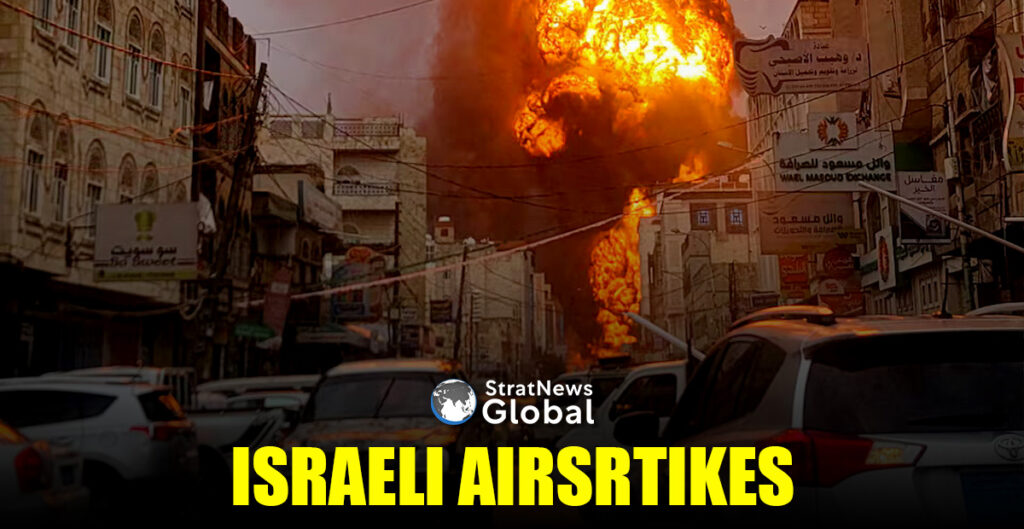
6 Dead, Over 80 Injured As Israeli Airstrikes Target Sanaa
Israeli airstrikes targeted Yemen’s capital, Sanaa, on Sunday in response to Houthi missile attacks, leaving six dead and 86 injured, according to a Houthi health official.
The strikes are the latest in over a year of direct attacks and counterstrikes between Israel and Houthi militants in Yemen, part of a spillover from the war in Gaza.
Key Targets
The Israeli military said the targets included a military compound housing the presidential palace, two power plants and a fuel storage site. The strikes killed six people and injured 86 in a final toll, a Houthi Health Ministry spokesperson said on X.
“The strikes were conducted in response to repeated attacks by the Houthi terrorist regime against the State of Israel and its civilians, including the launching of surface-to-surface missiles and UAVs toward Israeli territory in recent days,” the Israeli military said in a statement.
First Use
On Friday, the Houthis said they had fired a ballistic missile towards Israel in their latest attack, which they said was in support of Palestinians in Gaza. An Israeli Air Force official said on Sunday the missile most likely carried several sub-munitions “intended to be detonated upon impact.”
“This is the first time that this kind of missile has been launched from Yemen,” the official said.
Gaza Conflict Spurs Regional Escalation
Since Israel’s war in Gaza against the Palestinian militant group Hamas began in October 2023, the Iran-aligned Houthis have attacked vessels in the Red Sea in what they describe as acts of solidarity with the Palestinians.
They have also frequently fired missiles towards Israel, most of which have been intercepted. Israel has responded with strikes on Houthi-controlled areas of Yemen, including the vital Hodeidah port.
Abdul Qader al-Murtada, a senior Houthi official, said on Sunday the Houthis, who control much of Yemen’s population, would continue to act in solidarity with Palestinians in Gaza.
“(Israel) must know that we will not abandon our brothers in Gaza, whatever the sacrifices,” he said on X.
(With Inputs from Reuters)
Airports Shut, Thousands Evacuated As Vietnam Braces For Typhoon Kajiki
Vietnam has swung into emergency mode, shutting airports, closing schools, and evacuating thousands ahead of this year’s strongest storm: Typhoon Kajiki.
The typhoon was packing winds of up to 166 kph (103 mph) as it approached Vietnam’s central coast and was forecast to grow stronger before making landfall on Monday afternoon, the country’s weather agency said.
‘Extremely Dangerous’
“This is an extremely dangerous fast-moving storm,” the government said in a statement Sunday night, warning that Kajiki would bring heavy rains, flooding and landslides.
As of 0000 GMT, the storm was located 150 km off Vietnam’s central coast, according to the weather agency. The eye of the storm is expected to make landfall between Thanh Hoa and Nghe An provinces around 0900 GMT.
As powerful As Typhoon Yagi
With a long coastline facing the South China Sea, Vietnam is prone to storms that are often deadly and trigger dangerous flooding and mudslides.
The Vietnamese government said Kajiki was expected to be as powerful as Typhoon Yagi, which battered the country less than a year ago, killing about 300 people and causing $3.3 billion of property damage.
Authorities said on Sunday that more than half a million people would be evacuated and ordered boats to stay ashore.
Cancellations Of Flights
Two airports in Thanh Hoa and Quang Binh provinces have been shut down, according to the Civil Aviation Authority of Vietnam. Vietnam Airlines and Vietjet have cancelled dozens of flights to and from the area.
Kajiki skirted the southern coast of China’s Hainan Island on Sunday as it moved toward Vietnam, forcing Sanya City on the island to close businesses and public transport.
China On Alert
China’s Sanya, renowned for seafront resorts and sandy beaches, closed tourist attractions, shuttered businesses and suspended public transport.
China’s weather agency forecast heavy rainfall and strong winds in Hainan and nearby Guangdong province and Guangxi region, with areas in Hainan set to receive as much as 320 mm (12.6 inches) of rain from Sunday to Monday.
Sanya issued a red typhoon alert on Sunday morning – the highest in China’s colour-coded warning system – and raised its emergency response to the most severe level, according to posts on the local government’s WeChat account.
(With inputs from Reuters)
South Korea Seeks To Mend Ties With China, Sends Envoy
South Korea is looking to reset its ties with China, which have been under strain in recent years. During a meeting with Chinese Foreign Minister Wang Yi on Sunday, a special envoy from Seoul conveyed this intent and agreed to enhance economic cooperation, according to South Korea’s foreign ministry.
South Korean President Lee Jae Myung sent a special delegation led by former parliament speaker Park Byeong-seug to his country’s main trading partner as he travels to Washington to meet US President Donald Trump.
Lee arrived in Washington early on Monday.
‘Mature Development’
Park told Wang he hoped the countries would work together to “open the door to normalising South Korea-China relations, which have been strained in recent years,” according to his comments relayed by South Korean TV.
Park handed Wang a letter from Lee to Chinese President Xi Jinping and invited Xi to the summit of the Asia-Pacific Economic Cooperation (APEC) grouping in October, South Korea’s foreign ministry said in a statement on Monday.
Wang welcomed the delegation’s visit and appreciated the message of developing ties between the countries, the ministry said.
“(South Korea’s) new government will pursue a mature development of South Korea-China strategic cooperation partnership based on national interest while continuing to develop the South Korea-US alliance,” Park said.
The two sides agreed to work towards substantive progress on economic and supply chain cooperation, the ministry said.
‘Right Choices’
In a readout from the Chinese foreign ministry, Wang said that development of both countries’ ties has shown that good neighbourliness, seeking common ground while reserving differences and expanding cooperation are the “right choices”.
Wang added that China’s policy is to maintain stability and continuity with South Korea and he urged both sides to “improve national sentiment and manage sensitivities properly” to move bilateral relations forward steadily.
Diplomatic ties between the countries have improved since a 2017 dispute over South Korea’s deployment of a US missile defence system, which Beijing opposed.
But they exchanged harsh words in 2023 about critical comments on Beijing by South Korea’s last president, Yoon Suk Yeol.
(With inputs from Reuters)
Trump’s TRIPP In The Caucasus: Peace Corridor Or Circus Tent?
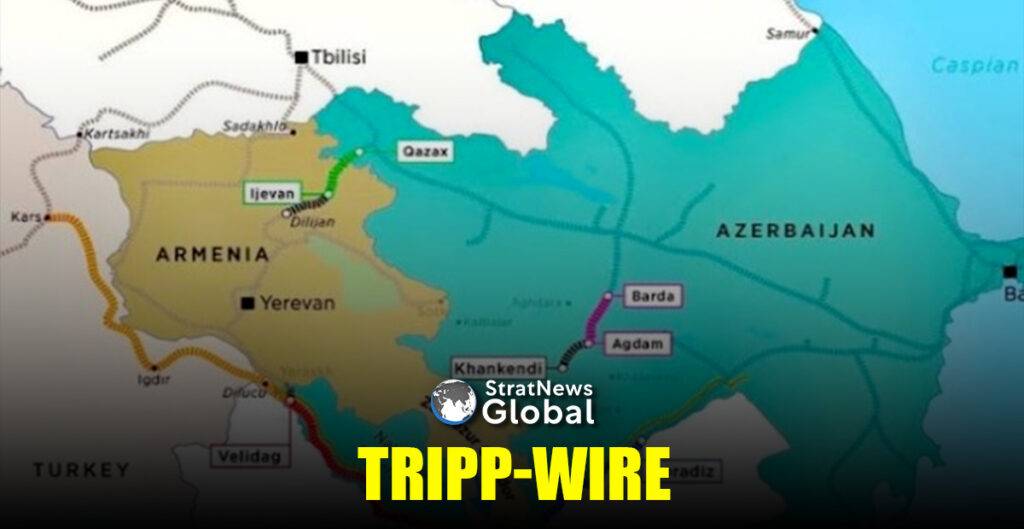
Donald Trump has found a new stage—the Caucasus—and a new trick: a so-called “peace corridor” linking Armenia, Azerbaijan, and Turkey.
The Trump Regional Infrastructure Peace Project, or TRIPP, is being sold as a game-changing bridge between East and West, a pipeline to prosperity, and even the first step toward reconciliation between bitter foes. But peel back the branding, and it looks less like diplomacy and more like a century-long land lease dressed up as peace.
As analyst Stephen Blank wrote in the Central Asia-Caucasus Analyst, Trump is marketing TRIPP as his crowning foreign policy coup—the corridor that finally buries Russia’s influence and blocks Iran’s reach. Now The National reveals the kicker: Washington, through Trump’s old associate Tom Barrack, will lease the key 32-kilometre stretch of Armenian territory for up to a hundred years. Call it what you like—a corridor, a bridge, a peace project—but it smells suspiciously like a land grab.
The deal also hands control of the corridor’s rail, energy, and digital lifelines to a consortium of U.S. private companies. Armenia insists TRIPP will operate under Armenian law, and Prime Minister Nikol Pashinyan hails it as a security guarantee wrapped in an economic lifeline. But in practice it amounts to ceding the spine of the South Caucasus to American corporate landlords for the next century. “Peace through pipelines” is one thing; “peace through privatisation” is another.
For Azerbaijan, TRIPP is a masterstroke. Ambassador Vaqif Sadiqov is already calling it the route that will turn Baku into the indispensable hub between China and Europe. Oil and gas pipelines are just the start. This is about making Azerbaijan what Russia once was: the gatekeeper of Europe’s trade and energy.
Armenia, meanwhile, is gambling that giving away a century-long corridor will bring back something it has lacked since the Nagorno-Karabakh debacle: a security umbrella and a shot at economic relevance.
The timing is no accident. With the Red Sea disrupted by Houthi attacks, Russia sanctioned and distracted in Ukraine, and Iran isolated, the Caucasus suddenly matters to global supply chains. TRIPP is being spun as a lifeline for a world desperately seeking alternatives. But the corridor is less a triumph of peace than a by-product of war elsewhere.
Turkey is the other quiet winner. TRIPP could pave the way for reopening the Turkish-Armenian border — a step toward normalisation once unthinkable. If that happens, Ankara gets trade, influence, and credit for another “peace dividend”, while Trump plays impresario on the world stage.
Iran, predictably, is seething. TRIPP locks it out of a region where it once dreamed of being a transit hub. Also for Tehran, private U.S. companies running pipelines and data cables is just the CIA, with better branding.
Russia, meanwhile, has been shown the door. The deal initialled in Washington forbids any third-country troops on Armenian or Azerbaijani soil — a clause designed to eject Russian peacekeepers after 2025. The irony? It also bars U.S. soldiers, meaning Trump’s “greatest deal ever” leaves America’s own Pentagon outside the tent. Trump may crow about sidelining Moscow, but his own contract keeps his military out too.
None of this, of course, resolves the deeper fault lines.
Azerbaijan still demands Armenia rewrite its constitution to erase any lingering claim to Nagorno-Karabakh. Until that happens, the peace that Trump is selling remains hostage to constitutional amendments in Yerevan. Armenia is caught between survival today and sovereignty tomorrow. Pashinyan may talk of turning a “region of confrontation into a region of cooperation”, but that line rings hollow when cooperation is leased out for a century.
What TRIPP really represents is Trump at his purest: monetising geopolitics. It’s not diplomacy; it’s deal-making with billable miles. A corridor becomes a brand, peace becomes a franchise, and sovereignty is reduced to a 99-year lease. Washington calls it peace; Tehran calls it espionage; Moscow calls it betrayal.
For the people of Armenia and Azerbaijan, it is another reminder that their future is being traded not in parliaments, but in boardrooms.
A corridor, then, yes. A peace plan? Only if one mistakes a circus tent for a cathedral.