

Support us by contributing to StratNewsGlobal on the following UPI ID
ultramodern@hdfcbank

Strategic affairs is our game, South Asia and beyond our playground. Put together by an experienced team led by Nitin A. Gokhale. Our focus is on strategic affairs, foreign policy and international relations, with higher quality reportage, analysis and commentary with new tie-ups across the South Asian region.
You can support our endeavours. Visit us at www.stratnewsglobal.com and follow us on YouTube, Twitter, Facebook and Instagram.
र 500 per month
र 1000 per month
र 5000 per year
र 10000 per year
Donate an amount of your choice
र 500 per month
Donate र 500 per month

र 1000 per month
Donate र 1000 per month
र 5000 per year
Donate र 5,000 per year
र 10000 per year
Donate र 10,000 per year
Donate an amount of your choice
Donate an amount of your choice



Typhoon Kajiki Batters Vietnam, Topples Trees, Floods Homes
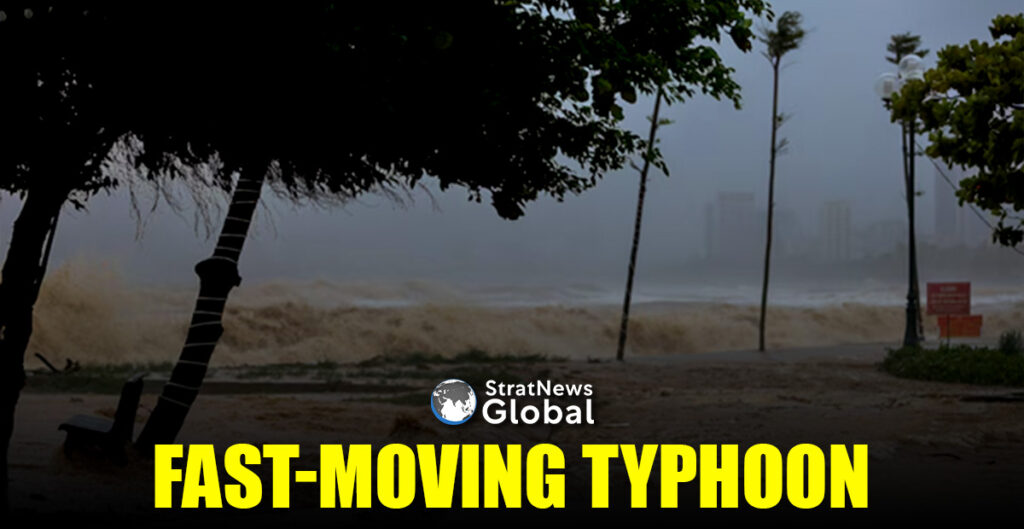
Typhoon Kajiki unleashed torrential rains across the north central coast of Vietnam on Monday, toppling trees and inundating homes, even as wind speeds gradually decreased from earlier in the day.
As of 0900 GMT, Kajiki was on the coast of Nghe An and Ha Tinh provinces, with wind speed easing to 118-133 kph from as strong as 166 kph, according to the country’s weather agency.
“It’s terrifying,” said Dang Xuan Phuong, a 48-year-old resident of Cua Lo, a tourism town in Nghe An province directly hit by the storm.
“When I look down from the higher floors, I could see waves as tall as 2 metres, and the water has flooded the roads around us,” Phuong told Reuters.
State media reports said power in several areas in Ha Tinh province had been cut off, roofs were blown out and floating fishing farms were washed away.
Vietnam had earlier shut airports, closed schools, and begun mass evacuations as it prepared for the most powerful storm so far this year.
‘Extremely Dangerous’ Storm
The government warned earlier of “an extremely dangerous fast-moving storm,” adding that Kajiki would bring heavy rains, flooding and landslides.
With a long coastline facing the South China Sea, Vietnam is prone to storms that are often deadly and trigger dangerous flooding and mudslides.
The weather agency said rainfall could reach 500 millimetres from Monday afternoon until the end of Tuesday in several parts of northern Vietnam.
The Vietnamese government said earlier on Monday that about 30,000 people had been evacuated from coastal areas. More than 16,500 soldiers and 107,000 paramilitary personnel had been mobilised to help with the evacuation and stand by for search and rescue.
Two airports in Thanh Hoa and Quang Binh provinces were closed, according to the Civil Aviation Authority of Vietnam. Vietnam Airlines and Vietjet cancelled dozens of flights to and from the area on Sunday and Monday.
Kajiki skirted the southern coast of China’s Hainan Island on Sunday as it moved toward Vietnam, forcing Sanya City on the island to close businesses and public transport on Sunday.
China Downgrades Typhoon Warnings
China’s southernmost province downgraded its typhoon and emergency response alerts on Monday morning but warned of heavy rain and isolated storms in cities in the southern part of Hainan.
Local media reported that many residents in Sanya, a popular holiday resort, had taken shelter from the storm in underground garages on Sunday evening. Some large trees were brought down, leaving roads strewn with broken branches by Monday morning, the reports said.
On Monday, China’s transport ministry urged local authorities in various provinces and regions to remain vigilant to risks and secondary disasters after the national forecaster’s warnings of typhoon impacts on a large part of the country until early Tuesday.
The areas include the southwest part of China, including Sichuan, Yunnan and Guangxi, and the comprehensive warning also extended to as far as the country’s northeastern provinces such as Heilongjiang and Jilin, which are close to the Koreas.
The Chinese embassy in Hanoi on Monday reminded Chinese citizens in Vietnam to enhance their awareness of prevention and be well-prepared for strong winds and heavy rainfall.
(With inputs from Reuters)
Journalists Among 15 Dead In Israeli Airstrikes On Gaza Hospital
Israeli airstrikes targeting Nasser hospital in Gaza on Monday resulted in the deaths of at least 15 individuals, including four journalists—one affiliated with Reuters—according to Palestinian health officials.
Cameraman Hussam al-Masri, a Reuters contractor, was killed in the first strike, according to the officials. Photographer Hatem Khaled, who was also a Reuters contractor, was wounded in a second strike on the hospital, they said.
Witnesses said the second strike took place after rescue workers, journalists and other people had rushed to the site of the initial attack. The Reuters live video feed from the hospital, which was operated by Masri, suddenly shut down at the moment of the initial strike, Reuters footage showed.
Reuters Contractor Killed
“We are devastated to learn of the death of Reuters contractor Hussam al-Masri and injuries to another of our contractors, Hatem Khaled, in Israeli strikes on the Nasser hospital in Gaza today,” a Reuters spokesperson said in a statement.
“We are urgently seeking more information and have asked authorities in Gaza and Israel to help us get urgent medical assistance for Hatem,” the spokesperson added.
The Israeli military and the Prime Minister’s Office both had no immediate comment regarding the strikes.
Health officials in Gaza named the three other journalists as Mariam Abu Dagga, who the Associated Press said freelanced for the AP and other outlets since the start of the Gaza conflict, Mohammed Salama, who Qatar-based Al Jazeera said worked for the broadcaster, and Moaz Abu Taha. A rescue worker was also among those killed, the health officials added.
The Palestinian Journalists Syndicate condemned Israel for the strikes, saying it represented “an open war against free media, with the aim of terrorising journalists and preventing them from fulfilling their professional duty of exposing its crimes to the world.”
More than 240 Palestinian journalists have been killed by Israeli fire in Gaza since the war started on October 7, 2023, according to the Palestinian Journalists Syndicate.
(With inputs from Reuters)
Beyond The ‘Bling,’ China Seeks Deterrence In Military Display
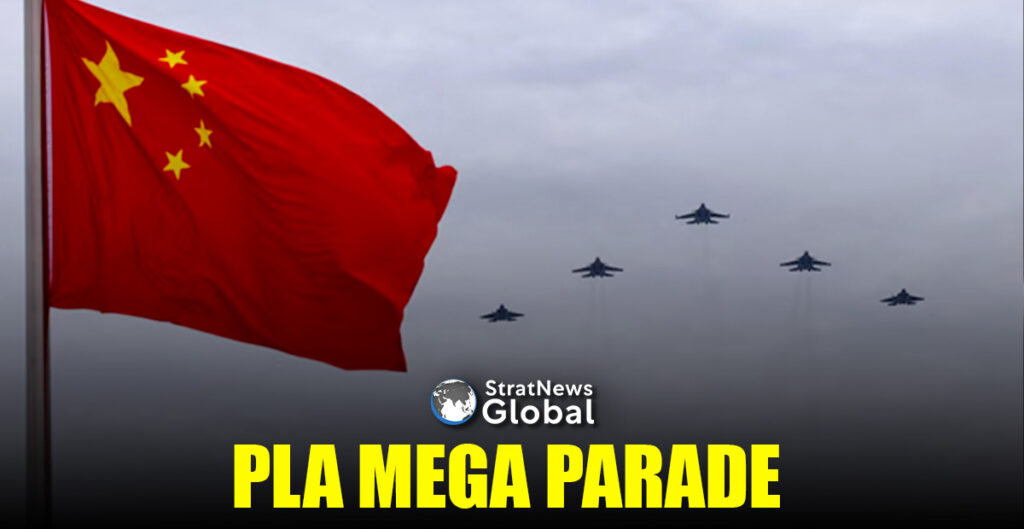
As China prepares to stage its largest-ever military parade in Beijing next week, the event will spotlight not only advancements in weaponry but also the critical technologies needed to protect, manage, and command the arsenal it could deploy in any future conflict.
Among the more eye-catching aircraft, hypersonic missiles and undersea drones, will be equipment such as battlefield sensors on tanks, advanced early warning and targeting radars and air defence lasers – all part of an effort that some analysts describe as transparency designed to intimidate and deter potential rivals.
But beyond the unprecedented scale and choreographed display of military might, question marks remain about how effectively China’s armed forces – untested since a bloody border conflict with Vietnam in 1979 – could knit it all together in a future conflict.
‘Performative’ Parade
Singapore-based security scholar Drew Thompson said while the People’s Liberation Army may unveil advanced weapons and systems to protect and command them, China’s key potential adversaries may not be deterred by the “bling” of a parade.
“It is performative, but it doesn’t speak to capability, and we still don’t know how effectively China could tie it all together and operate in a conflict scenario,” said Thompson, a senior fellow at Singapore’s S. Rajaratnam School of International Studies (RSIS).
The parade comes amid protracted military tensions across East Asia as China increases deployments around Taiwan and the disputed South China Sea, and the U.S. and its allies prepare to respond to a potential regional conflict.
China claims Taiwan as its territory and has never renounced the use of force to seize it. Taiwan’s President Lai Ching-te and his government strongly object to China’s sovereignty claims, saying it is up to the island’s people to decide their future.
While the military leaderships of the U.S. and its allies, like Japan as well as Taiwan, may not be deterred, others might be intimidated, Thompson said.
To that end, China might be signalling to India, Russia and smaller regional nations as well as “American libertarian isolationists”.
“As you’re watching the parade, it is easy to get distracted….it is not about the bling, but the effect the bling has on the view of the observer – that is, China is too big to fight and U.S. interests aren’t worth the risk or the consequences of a fight with China.”
The Chinese defence ministry did not immediately respond to a request for comment.
Victory Day Parade
Regional military attaches and security analysts have already been scrutinising on-line footage of the rehearsals of what Beijing has called a “Victory Day” parade, marking the end of World War Two after Japan’s formal surrender.
The war is also often described by Chinese officials and in state media as the “War of Resistance Against Japanese Aggression” and the “World Anti-Fascist War”.
“(The weapons and equipment) will fully demonstrate our military’s robust ability to adapt to technological advancements, evolving warfare patterns, and win future wars,” parade deputy director Wu Zeke told a press conference last week.
If Beijing is to win those wars, it will have to fully integrate a network of military satellites and cyber and electronic warfare capabilities, now considered second only to the United States, and use them to effectively dominate its near seas.
To that end, an early warning plane capable of operating from China’s aircraft carriers, the KJ-600, has been displayed – a vital piece in finishing the complex jigsaw of carrier operations.
Chinese Fighter Jets
China’s jet fighters will also be closely watched, particularly following Pakistan’s use of Chinese-built J-10C fighters against Indian aircraft during clashes in May.
Pakistan has claimed that it shot down six Indian aircraft during the clashes, including a French-made Rafale fighter. India has acknowledged some losses but denied losing six aircraft and, earlier this month, said it had shot down six Pakistani planes.
A suite of new YJ-17, YJ-19 and YJ-20 cruise missiles will also be shown. They could be deployed from bombers and ships, some with hypersonic warheads – potentially complicating operations by U.S. and allied ships across East Asia.
And a new medium-sized tank, the ZTZ-201, has appeared in rehearsals bristling with what analysts believe are advanced sensors and battle management systems.
An entirely new weapon on show is also vexing analysts with its sudden appearance – a torpedo-shaped sea drone too large to be fired from ordinary submarines.
Ben Lewis, founder of open source data platform PLATracker, said its emergence suggested China had been closely tracking the U.S.’s own underwater drone programme.
While it is unclear how close it is to operational, “if they can produce a lot of these kinds of weapons cheaply, things could get very ugly, very fast in a Taiwan scenario,” Lewis said.
Collin Koh, a senior fellow at the RSIS’ Institute of Defence and Strategic Studies in Singapore, said while the sea drone effort had been underway for some time, he was surprised that it had reached the point where the PLA was ready to show it off.
“(It) seems to be imply that the system is either already in service or soon to do so,” he said.
(With inputs from Reuters)
India, Fiji To Expand Defence And Maritime Security Cooperation
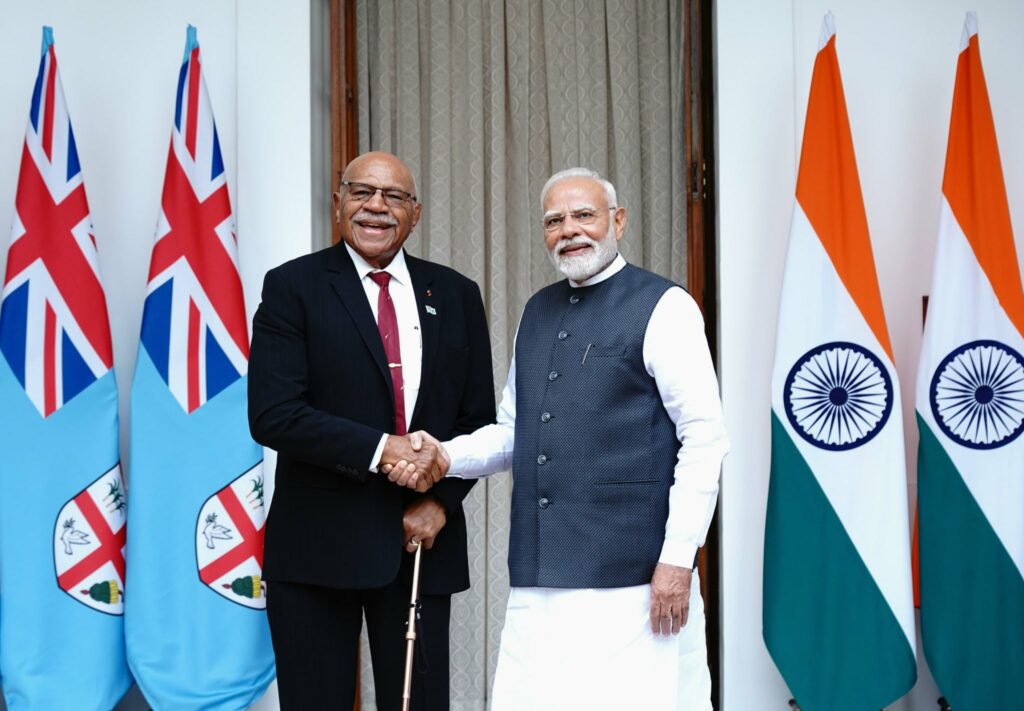
Reflecting the geopolitical churn in the world and intensifying great power competition, India and Fiji have agreed to expand defence and maritime security cooperation under the MoU signed in 2017.
“We have decided to strengthen mutual cooperation in the defence and security sector,” Modi said at the end of his talks with Fiji’s Prime Minister Sitiveni Rabuka. “An action plan has been prepared for this, including training, equipment support, and maritime capacity building.”
Prime Minister Rabuka welcomed India’s support for enhancing Fiji’s maritime security, particularly for protecting its Exclusive Economic Zone (EEZ). “The protection of our EEZ is critical to our national interests,” he said.
Later, at a special briefing, Neena Malhotra, Secretary South in the Ministry of External Affairs, confirmed that an Indian naval ship will visit Suva later this year and a defence wing will start functioning from the Indian high commission. Two ambulances are also being gifted for use by the Fijian military.
A major new initiative, the Cyber Security Training Cell (CSTC), will be established in Fiji to support both nations’ growing digital and cyber defence capabilities.
The joint statement issued following the talks, highlighted shared priorities, including countering radicalization, curbing the financing of terrorism, and preventing the misuse of emerging technologies by extremist groups.
Both sides agreed to collaborate at multilateral platforms, including the United Nations, to advance global counter-terrorism efforts.
The two prime ministers condemned the April 22 Pahalgam terrorist attack and reiterated their commitment to a zero-tolerance policy toward terrorism. Both leaders opposed any form of justification or double standards in dealing with terrorism.
In a move to diversify Fiji’s economy, traditionally reliant on tourism, both sides identified agriculture as a high-potential sector for bilateral cooperation.
“India will provide 12 agricultural drones and two mobile soil testing labs to improve farming efficiency and sustainability in Fiji,” Dr Malhotra said.
“There is enormous potential in agriculture,” noted another official involved in the discussions. “Fiji has fertile land and consistent rainfall, but current agricultural output is limited. Contract farming, joint ventures, and natural farming offer major opportunities.”
India and Fiji have also agreed to explore cooperation in agro-processing, sustainable fisheries, and natural farming techniques to enhance food security and rural livelihoods.
The signing of an MoU for the Tubalevu Village GroundWater Supply Project marked a milestone as Fiji’s first Quick Impact Project (QIP), aiming to provide safe drinking water to rural communities. Originally announced at the 2024 Pacific Islands Forum in Tonga, the initiative reflects India’s broader development partnership in the Pacific.
India further committed to enhancing skill development through the Indian Technical and Economic Cooperation (ITEC) programme, offering training to Fijian government professionals in diverse sectors.
Both leaders stressed their shared vision for a free, open, inclusive, and rules-based Indo-Pacific. Future collaboration will also cover humanitarian assistance, disaster relief and technology collaboration.
“India is a co-traveller in the development of the Global South,” Modi said. “We are partners in building a world order where the independence, ideas, and identity of the Global South are respected.”
Fiji reaffirmed support for India’s bid for permanent membership in a reformed United Nations Security Council and for its 2028–29 candidature as a non-permanent member.
Israel Strikes Gaza City Suburbs, Vows Continuation Of Offensive
Israeli planes and tanks heavily bombarded the eastern and northern outskirts of Gaza City from Saturday night into Sunday, demolishing homes and buildings, residents reported, while Israeli leaders reiterated their determination to proceed with a planned offensive targeting the city.
Witnesses reported the sound of explosions non-stop overnight in the areas of Zeitoun and Shejaia, while tanks shelled houses and roads in the nearby Sabra neighbourhood, and several buildings were blown up in the northern town of Jabalia.
Fire lit the skies from the direction of the explosions, causing panic, prompting some families to stream out of the city. Others said they would prefer to die and not leave.
The Israeli military said on Sunday that its forces have returned to combat in the Jabalia area in recent days to dismantle militant tunnels and strengthen control of the area.
It added that the operation there “enables the expansion of combat into additional areas and prevents Hamas terrorists from returning to operate in these areas.”
Gaza Seizure Plan
Israel approved a plan this month to seize control of Gaza City, describing it as the last bastion of Hamas militants. It is not expected to begin for a few weeks, leaving room for mediators Egypt and Qatar to try and resume ceasefire talks.
Israel’s Defence Minister, Israel Katz, on Sunday vowed to press on with the offensive on the city where famine has been declared, which has raised alarm abroad and objections at home. Katz has said that Gaza City will be razed unless Hamas agrees to end the war on Israel’s terms and release all hostages.
Hamas said in a statement on Sunday that Israel’s plan to take over Gaza City showed it wasn’t serious about a ceasefire.
It said a ceasefire agreement was “the only way to return the hostages”, holding Israeli Prime Minister Benjamin Netanyahu responsible for their lives.
The proposal on the table calls for a 60-day ceasefire and the release of 10 living hostages held in Gaza and of 18 bodies. In turn, Israel would release about 200 long-serving Palestinian prisoners held by Israel.
Once a temporary ceasefire begins, the proposal is for Hamas and Israel to begin negotiations on a permanent ceasefire that would include the return of the remaining hostages.
On Thursday, Netanyahu said that Israel would immediately resume negotiations for the release of all 50 hostages – of whom Israel believes around 20 are still living – and an end to the nearly two-year-old war, but on terms acceptable to Israel.
‘Hungry And Afraid’
Around half of the enclave’s two million people currently live in Gaza City. A few thousand have already left, carrying their belongings on vehicles and rickshaws.
“I stopped counting the times I had to take my wife and three daughters and leave my home in Gaza City,” said Mohammad, 40, via a chat app. “No place is safe, but I can’t take the risk. If they suddenly begin the invasion, they will use heavy fire.”
Others said they will not leave, no matter what.
“We are not leaving, let them bomb us at home,” said Aya, 31, who has a family of eight, adding that they couldn’t afford to buy a tent or pay for the transportation, even if they did try to leave. “We are hungry, afraid and don’t have money.”
A global hunger monitor said on Friday that Gaza City and the surrounding areas are officially suffering from famine that will likely spread. Israel has rejected the assessment and says it ignores steps it has taken since late July to increase aid.
On Sunday, the Gaza health ministry said eight more people died of malnutrition and starvation in the enclave, raising deaths from such causes to 289 people, including 115 children, since the war started.
Israel disputes fatality figures by the health ministry in the Hamas-run strip.
The war began on October 7, 2023, when Hamas-led gunmen burst into southern Israel, killing some 1,200 people, mainly civilians, and taking 251 hostages.
Israel’s military offensive against Hamas has since killed at least 62,000 Palestinians, mostly civilians, according to the Gaza health ministry, left much of the territory in ruins and internally displaced nearly its entire population.
(With inputs from Reuters)
South Korean President Lee Set For Crucial Test In Debut Summit With Trump
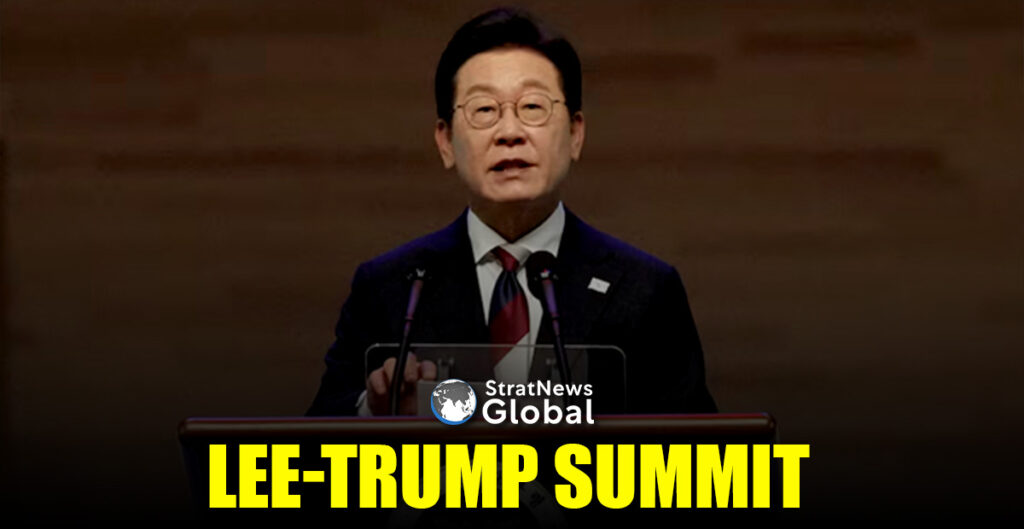
South Korea’s newly elected president, Lee Jae Myung, will encounter a pivotal moment on Monday when he meets United States President Donald Trump in Washington for their first summit, as the nations’ decades-old alliance grapples with fast-evolving geopolitical shifts.
Much is riding on the meeting for Lee, who took office in June after a snap election called after his conservative predecessor – feted in Washington for his hard line on North Korea – was removed for attempting to impose martial law.
South Korea’s economy relies heavily on the U.S., with Washington underwriting its security with troops and nuclear deterrence. Lee hopes to chart a balanced path of cooperation with the U.S., while not antagonising top trade partner China.
As he headed to the U.S., Lee sent a special delegation to Beijing, which delivered a message calling for normalised relations with China that have been strained in recent years.
‘Money Machine’
South Korea has long come under targeted criticism from Trump, who has called it a “money machine” that takes advantage of American military protection.
Lee will seek to make a good impression, connect personally with Trump, and above all, avoid any unpleasant surprises, analysts said.
“For Lee, a no-news summit I think would be good,” said Victor Cha of the Centre for Strategic and International Studies.
As part of his preparations for the summit, Lee told reporters during his flight to Washington that he had read “Trump: The Art of the Deal”.
Under heavy pressure from Trump’s administration, South Korean negotiators secured a last-minute deal last month to avoid the harshest of new U.S. tariffs, but they must still hammer out details of billions of dollars in promised investments in the United States.
South Korean officials say they hope such working-level trade negotiations will largely be left for other meetings.
“There are many major topics in the security field,” Lee’s top policy aide, Kim Yong-beom, said last week. “Our position is that trade was already finalised last time. We hope that specific implementation plans for trade won’t be included in the summit at all, or at least should be kept simple if discussed.”
Several top officials, including the foreign minister, rushed to Washington over the weekend to try to iron out final details.
Lee, who arrived in Washington on Sunday, will highlight some of South Korea’s expected investments when he visits a shipyard in Philadelphia owned by the country’s Hanwha Group after the summit. Cooperation to help the ailing U.S. shipbuilding sector is part of the broad tariff agreement reached between the countries.
Engaging North Korea
Trump is expected to pressure Lee to commit to more spending on defence, including potentially billions of dollars more toward the upkeep of 28,500 American troops stationed in South Korea.
Wi Sung-lac, Lee’s top security adviser, said South Korea was in talks with Washington over defence spending, taking as a reference NATO’s agreement on a big new defence spending target. Wi added that the government was also looking into a plan for the purchase of
American weapons.
While focusing on increasing military spending, Lee will likely seek to avoid conversations about a potential reduction of U.S. troops or using them for a wider range of operations, or details on modernising the alliance, said Duyeon Kim, from the Centre for a New American Security.
Lee told reporters it would be difficult for Seoul to accept the demand by the U.S. to adopt “flexibility” in operating the U.S. military stationed in South Korea.
“They should leave those topics for working-level officials to hash out,” Kim said. “Ambition could backfire.”
Trump and Lee may also discuss efforts to persuade North Korea to freeze and eventually abandon its nuclear weapons programme. Both leaders support engaging Pyongyang, and Lee has called for a phased approach to denuclearisation.
North Korean leader Kim Jong Un says South Korea and the U.S. remain hostile to his country, and he will never give up his nuclear arsenal. Over the weekend, Kim supervised the test firing of new air defence systems.
Lee’s Japan Tour
Before Lee meets Trump, the South Korean leader travelled to Tokyo to meet Japanese Prime Minister Shigeru Ishiba on Saturday to underscore the importance of cooperation between South Korea, Japan and the U.S.
A commentary carried by North Korea’s state media on Monday criticised Lee’s “despicable” trip to Tokyo as a “begging message towards the master of the White House” by highlighting trilateral military cooperation.
Lee and Ishiba discussed relations with Washington and U.S. tariff issues, and the Japanese leader shared his experience with Trump, which for Seoul was useful information before Lee’s first meeting with Trump, said Wi, the South Korean security adviser.
(With inputs from Reuters)
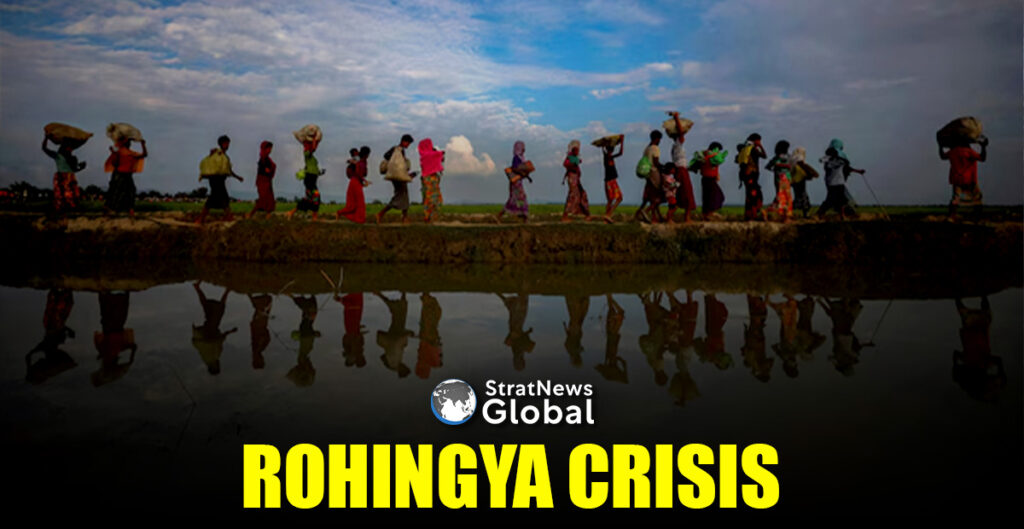
Bangladesh Running Out Of Resources For Rohingya Refugees, Yunus Warns
Bangladesh has no capacity to allocate any additional resources for its 1.3 million Rohingya refugees, Chief Adviser Muhammad Yunus said on Monday, calling on the international community to work toward establishing a sustainable resolution to the crisis.
Children make up half the 1.3 million Rohingya refugees now living in Bangladesh, most of whom fled a brutal 2017 military crackdown in Buddhist-majority Myanmar that U.N. investigators called a “textbook example of ethnic cleansing”.
Hosting the refugees has put a huge strain on Bangladesh, in areas from its economy and environment to governance, said Nobel peace laureate Yunus, the South Asian nation’s de facto prime minister.
“We don’t foresee any scope whatsoever for further mobilisation of resources from domestic sources, given our numerous challenges,” Yunus said in a speech.
He called for the international community to draft a practical roadmap for their return home.
“The Rohingya issue and its sustainable resolution must be kept alive on the global agenda, as they need our support until they return home.”
Rohingya Crisis
Yunus’ comments marked the eighth anniversary since more than 700,000 Rohingya arrived within a matter of days, turning the area around the southeastern coastal town of Cox’s Bazar into the world’s largest refugee settlement.
Tens of thousands of them held rallies on Monday in camps there, carrying banners and posters that proclaimed, “No more refugee life”, “Stop Genocide” and “Repatriation the ultimate solution”.
In Bangladesh, the refugees live in crammed bamboo shelters amid dwindling aid, closed schools and little hope of return.
Over the past year, another 150,000 have arrived from Myanmar’s western Rakhine state, where fighting has escalated between junta troops and the Arakan Army, an ethnic militia drawn largely from the Buddhist majority.
The Myanmar military calls the operation against the Rohingya a legitimate counter-terrorism campaign in response to attacks by Muslim militants, not a planned programme of ethnic cleansing.
Attempts to begin their return home in 2018 and 2019 failed as the refugees, fearing prosecution, refused to go back.
(With inputs from Reuters)
Australia Rushes To Ratify Nauru Security Pact Before Chinese Investment Grows
Australia intends to move forward with the ratification of a landmark security and economic treaty with its small neighbour, Nauru, by next month, Australian officials confirmed on Monday, amid rising concerns that a proposed A$1 billion (US$648.85 million) Chinese investment project could potentially violate its provisions.
Nauru, with a population of 12,000, announced an investment deal with the little-known China Rural Revitalisation and Development Corp earlier this month.
The leaders of Nauru and Australia announced a treaty in December in which Australia pledged A$100 million in budget support and A$40 million for security, and gained a veto over Chinese involvement in critical areas, including Nauru’s security, banking, and telecommunications.
The treaty has been ratified by Nauru, but not Australia, because its parliament was dissolved for months for a national election.
“It’s important that we move forward and ratify as quickly as possible,” Mark Tattersall, an official with the Department of Foreign Affairs and Trade, told an Australian parliament committee examining the treaty on Monday.
Chinese Investment Plans
An earlier press release from Nauru’s government said the Chinese company would develop the renewable energy, phosphate industry, fisheries, water, agriculture, transportation and health sectors.
Australian diplomats had asked China and Nauru about the deal because of concern it could trigger provisions in Australia’s security treaty, Tattersall said.
Nauru replied, saying the Chinese investment had not yet been considered by Nauru’s cabinet, he said.
“We have heard the details of the arrangement – it does appear as though actual implementation of any further investment in Nauru is potentially some time off,” he added.
Australia has said it wants to announce the ratification of the Nauru treaty at a meeting of Pacific Island leaders next month, which China will not attend.
Australian concern about Beijing’s ambitions in the Pacific Islands grew after the Solomon Islands signed a security deal with China in 2022, and China test-fired an intercontinental ballistic missile with a dummy warhead into the Pacific last year.
China has said its presence in the Pacific is focused on building infrastructure to improve people’s lives.
(With inputs from Reuters)
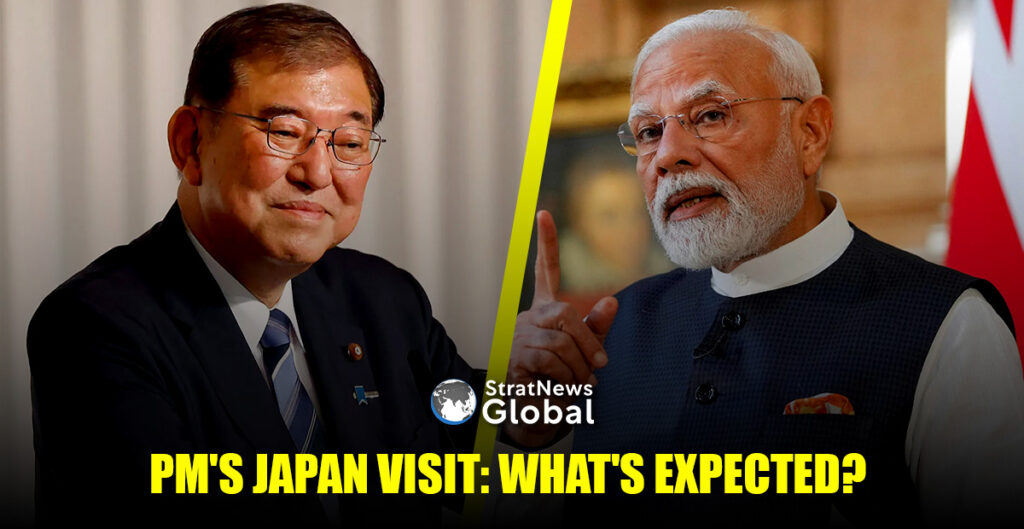
Japan to Announce Major Investment Push During PM Modi’s Visit
Economic and strategic upgrade is on the cards as Prime Minister Narendra Modi heads to Japan later this week for the 15th India-Japan annual summit. The visit, set for August 29–30, will see the two countries unveil a broad-based agenda, with Tokyo expected to commit to a new investment target of 10 trillion yen (around $68 billion) for India over the next 10 years.
The announcement, expected during PM Modi’s first summit meeting with Japanese Prime Minister Shigeru Ishiba, would double the pledge made in 2022. This is being seen as a clear signal of Japan’s growing confidence in India’s long-term growth potential. The funds are expected to support major infrastructure, digital innovation and industrial projects across India.
While economic cooperation remains a cornerstone, the summit comes at a critical juncture geopolitically, as regional security concerns in the Indo-Pacific push both countries to strengthen their strategic and defence partnership.
High Stakes, Broad Agenda
The summit will cover a wide spectrum— from trade policy and technology partnerships to defence collaboration and regional diplomacy, say sources. India and Japan are expected to reaffirm their commitment to a “Special Strategic and Global Partnership”, with fresh emphasis on interoperability, defence technology co-development and supply chain resilience.
One milestone to be highlighted is the upcoming induction of advanced Unicorn Mast systems by the Indian Navy, a naval surveillance technology developed jointly by Japan and Bharat Electronics, representing growing defence R&D collaboration.
Trade, Market Access Under Review
A detailed review of the Comprehensive Economic Partnership Agreement (CEPA) is also on the cards, with both sides looking to iron out long-standing trade bottlenecks. India is likely to push for easier market access for pharmaceuticals and textiles. Japan may seek more robust investment safeguards and smoother regulatory pathways for its firms operating in India.
Also, the two countries will assess progress under the Japan-India Industrial Competitiveness Partnership (IJICP), launched in 2021 to support India’s industrial corridors and workforce skilling programmes.
Eye On Technology, Talent And Climate
Cooperation in advanced manufacturing, clean energy and semiconductors is expected to gain further momentum. Sources indicate that the leaders may announce new joint platforms in areas such as green hydrogen, AI and climate-resilient infrastructure — part of a shared commitment to sustainable growth.
Demographic complementarities are also coming into sharper focus. Japan’s aging workforce and India’s expanding talent pool offer opportunities for mobility agreements, student exchanges and collaboration in nursing, elderly care and technical fields.
Shifting Regional Landscape
The visit also serves a strategic purpose, taking place at a time of shifting power balances in the Indo-Pacific. Both India and Japan are likely to focus on the importance of freedom of navigation, peaceful resolution of disputes and adherence to international maritime law — especially in light of increasing tensions in the South and East China Seas.
The two leaders are also expected to discuss regional issues, as well as the upcoming QUAD Leaders’ Summit to be hosted in New Delhi later this year.
Broader Diplomatic Tour
Following his Japan visit, PM Modi is scheduled to travel to Tianjin, China to attend the Shanghai Cooperation Organisation (SCO) Summit. On the sidelines, bilateral talks with other attending leaders are expected, as India continues to strengthen its presence in multilateral regional forums.
US VP Vance Claims Russia Offered Major Concessions In Ukraine Peace Talks
U.S. Vice President JD Vance stated that Russia has made “significant concessions” toward a negotiated settlement in its war with Ukraine, expressing confidence in ongoing progress despite little indication that the conflict is close to ending.
Speaking on NBC’s “Meet the Press with Kristen Welker”, Vance said Russian President Vladimir Putin has made several concessions, including that Ukraine will receive security guarantees protecting against future Russian aggression.
“I think the Russians have made significant concessions to President Trump for the first time in three and a half years of this conflict,” Vance said in comments aired on Sunday.
“They’ve recognised that they’re not going to be able to install a puppet regime in Kyiv. That was, of course, a major demand at the beginning. And importantly, they’ve acknowledged that there is going to be some security guarantee to the territorial integrity of Ukraine.”
Russia’s invasion of Ukraine, launched in February 2022, started a conflict that has killed tens of thousands of people. In return for ending Russia’s attacks, Putin is demanding that Ukraine give up all of the eastern Donbas region, renounce ambitions to join NATO, remain neutral and keep Western troops out of the country, sources told Reuters last week.
Security Guarantors
Russian Foreign Minister Sergei Lavrov said in an interview broadcast on Sunday that a group of nations, including United Nations Security Council members, should be the guarantors of Ukraine’s security.
On Friday, President Donald Trump renewed a threat to impose sanctions on Russia if there was no progress toward a peaceful settlement in Ukraine in two weeks, showing frustration at Moscow a week after his meeting with Putin in Alaska.
Vance said sanctions would be considered on a case-by-case basis, acknowledging that new penalties were unlikely to prompt Russia to agree to a ceasefire with Ukraine.
Vance pointed to Trump’s announcement this month of an additional 25% tariff on Indian goods as a punishment for New Delhi’s purchases of Russian oil as the kind of economic leverage that would be used in pursuit of peace.
“He’s tried to make it clear that Russia can be re-invited into the world economy if they stop the killing, but they’re going to continue to be isolated if they don’t stop the killing,” Vance said.
(With inputs from Reuters)