

Support us by contributing to StratNewsGlobal on the following UPI ID
ultramodern@hdfcbank

Strategic affairs is our game, South Asia and beyond our playground. Put together by an experienced team led by Nitin A. Gokhale. Our focus is on strategic affairs, foreign policy and international relations, with higher quality reportage, analysis and commentary with new tie-ups across the South Asian region.
You can support our endeavours. Visit us at www.stratnewsglobal.com and follow us on YouTube, Twitter, Facebook and Instagram.
र 500 per month
र 1000 per month
र 5000 per year
र 10000 per year
Donate an amount of your choice
र 500 per month
Donate र 500 per month

र 1000 per month
Donate र 1000 per month
र 5000 per year
Donate र 5,000 per year
र 10000 per year
Donate र 10,000 per year
Donate an amount of your choice
Donate an amount of your choice
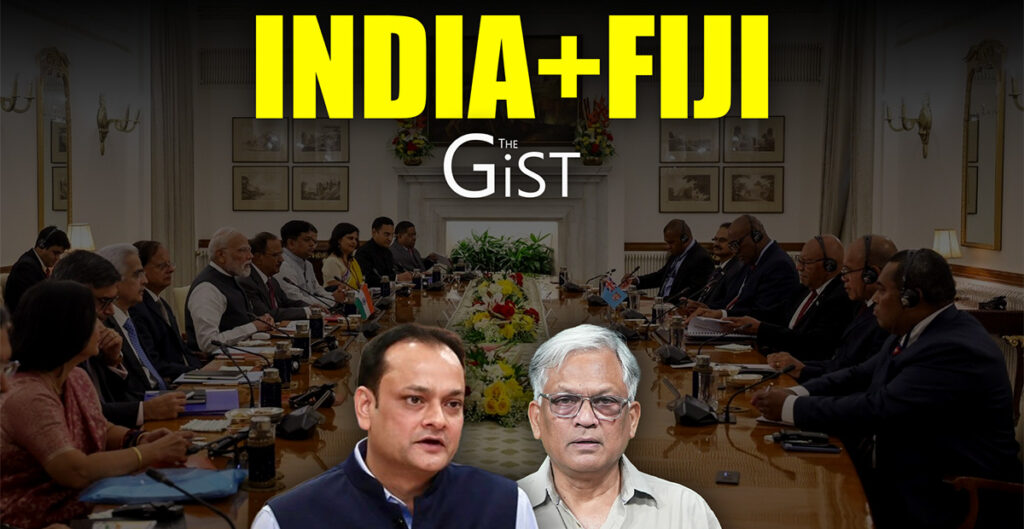
China Factor, Access To Rare Earths Underscore India’s Outreach To Fiji
“Politics is the art of the possible. So whatever is happening in Fiji, is just a reminder that domestic politics changes very quickly. And politicians who start off as radicals, as hard liners end up being more pragmatic and more inclusive in their approaches. Rabuka’s cabinet also tells us about it. I mean, there is more inclusivity now.”
Rahul Mishra, associate professor at the School of Indo-Pacific Studies, Jawaharlal Nehru University, was a guest on The Gist, answering questions on the visit of Fiji’s Prime Minister Sitiveni Rabuka.
Rabuka began as an army officer, in which capacity he led two coups in 1987 against incumbent duly elected governments, all on the claim of preserving the rights of ethnic Fijians, sons of the soil, from ethnic Indians.
His actions then saw attacks on the ethnic Indian community which had lived in Fiji for generations, resulting in the mass exodus of many.
But as Rabuka graduated into politics, his ideas and thinking began to change, first driven by the need to broaden his electoral base, and then by the realisation that the Indians had useful skills.
“You cannot marginalize roughly 40% of the people in the country who also happen to be big businessmen and (they are in) medicine and engineering, higher education, sectors, where they have been playing a prominent role,” Mishra noted.
It helped that Rabuka is staunchly opposed to Chinese military activities in the region. More interesting, Fiji is not very pro-America and prefers to keep the West at arms length, maintaining a more neutral position. This fits in well with India’s strategy.
“Of the nine documents signed (during Rabuka’s visit) I think the one that is of really far reaching strategic consequence is India trying to help Fiji in building its capabilities and securing its exclusive economic zones,” Mishra said, pointing out that “China has been fishing illegally (in Fijian waters).”
Add to that, the Fiji and the region is known to have substantial quantities of rare earths and minerals, that are in demand the world over no less India.
Tune in for more in this conversation with Rahul Mishra of the School of Indo-Pacific Studies, Jawaharlal Nehru University.
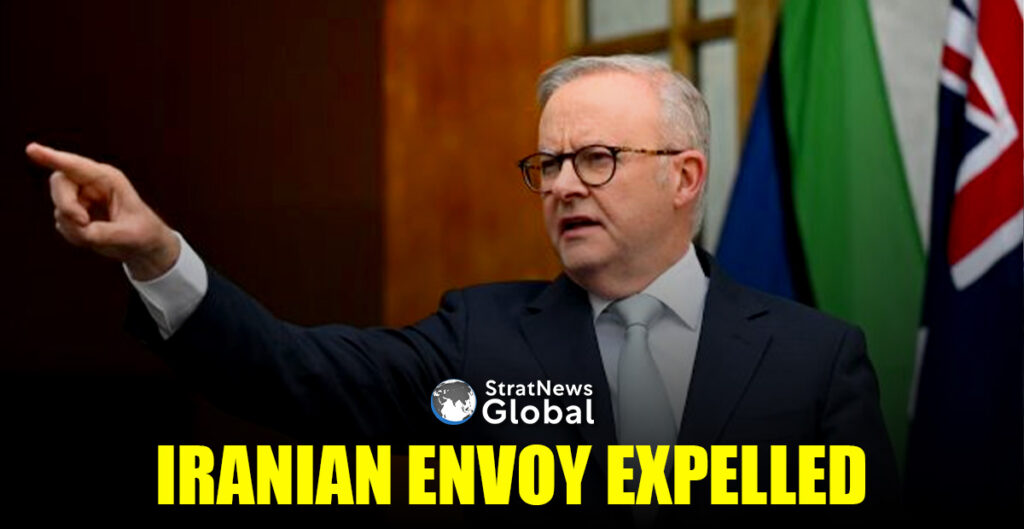
Australia Expels Iranian Envoy After Accusing Tehran Of Antisemitic Arson Attacks
Australia on Tuesday has ordered Iran’s ambassador to leave within seven days after blaming Tehran for carrying out two antisemitic arson attacks in Sydney and Melbourne. The decision, described as the first expulsion of an Iranian envoy by Canberra since World War Two, reflects a sharp escalation in diplomatic tensions.
Since the Israel-Gaza war began in October 2023, Australian homes, schools, synagogues and vehicles have been targeted in antisemitic vandalism and arson.
Prime Minister Anthony Albanese said the Australian Security Intelligence Organisation had gathered credible intelligence that Iran had directed at least two attacks.
“These were extraordinary and dangerous acts of aggression orchestrated by a foreign nation on Australian soil,” Albanese told a press briefing. “They were attempts to undermine social cohesion and sow discord in our community.”
Iran had “sought to disguise its involvement” in last year’s attacks on a kosher restaurant in Sydney and the Adass Israel Synagogue in Melbourne, Albanese said.
Australia’s security agency said it was likely that Iran had directed further attacks, he added.
Embassy Operations Curbed
Australia has suspended operations at its Tehran embassy and all its diplomats were safe in a third country, Albanese said, adding that his government would designate Tehran’s Islamic Revolutionary Guard Corps as a terrorist organisation.
Foreign Minister Penny Wong said Ambassador Ahmad Sadeghi and three Iranian officials had seven days to leave, in Australia’s first expulsion of an envoy since World War Two.
Israel’s embassy in Australia welcomed the action against its major rival Iran.
“Iran’s regime is not only a threat to Jews or Israel, it endangers the entire free world, including Australia,” it said in a statement on X.
The two countries fought a 12-day air war in June, after Israel launched attacks on Iran’s nuclear facilities.
About 90,000 Iranian-born people live in Australia.
Two men have been charged over the December attack that set ablaze the synagogue, built in the 1960s by Holocaust survivors in the suburb of Ripponlea.
Last week, police in the southeastern state of Victoria said they were examining electronic devices seized in a search of the home of one of the men, who is set to appear in court on Wednesday.
Police say three people broke into the synagogue and set the fire.
Fire gutted the kosher restaurant in Bondi, Lewis Continental Kitchen. Media said the man arrested in January over that attack had links to a well-known Australian motorcycle gang. He denied the charges in court and was freed on bail.
(With inputs from Reuters)
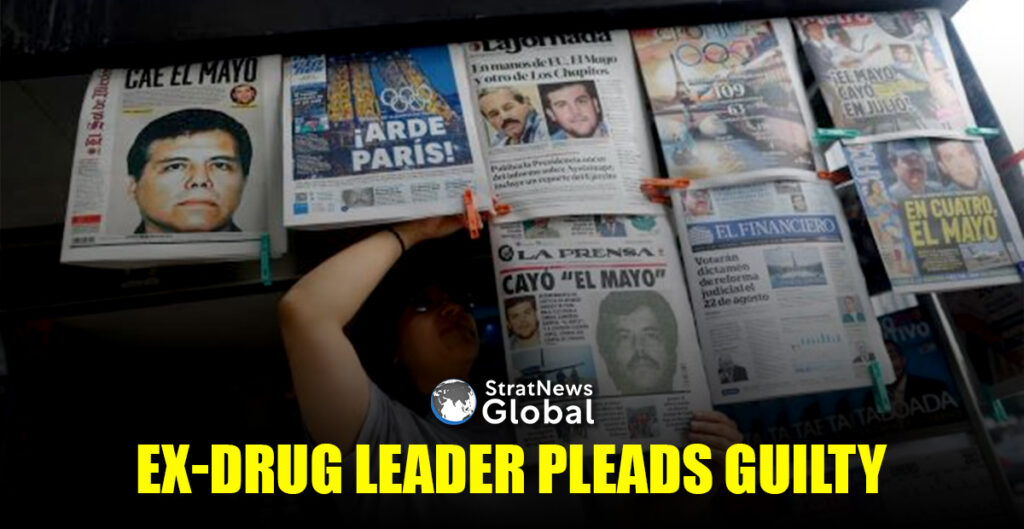
Mexico’s Sinaloa Cartel Leader ‘El Mayo’ Zambada Pleads Guilty In U.S. Court
In a U.S. court on Monday, former Mexican drug lord Ismael “El Mayo” Zambada admitted to overseeing murders and trafficking massive quantities of cocaine during his long reign at the helm of the violent Sinaloa cartel.
Zambada, 75, faces a mandatory sentence of life imprisonment after pleading guilty in federal court in Brooklyn to charges that he engaged in a racketeering conspiracy and ran a continuing criminal enterprise that prosecutors said was responsible for flooding the U.S. with cocaine, heroin and fentanyl.
Those charges stemmed from his decades-long role leading the Sinaloa cartel alongside imprisoned drug lord Joaquin “El Chapo” Guzman, who is serving a life sentence in a maximum security prison in Colorado.
“They brutally murdered multiple people and flooded our country with drugs,” Attorney General Pam Bondi told reporters. “Their reign of terror is over. He will never walk free again.”
Life Of Crime
Zambada agreed to plead guilty after the Justice Department this month said it would not seek the death penalty for Zambada or Rafael Caro Quintero, another septuagenarian alleged Mexican drug lord facing U.S. charges.
Zambada wore a blue prison-issued T-shirt over an orange long-sleeved shirt and walked with a slight limp as he entered U.S. District Judge Brian Cogan’s courtroom, which was packed with members of the Drug Enforcement Administration and other U.S. law enforcement agencies.
Sporting gray hair and a full beard, he smiled at his defence lawyers before entering his guilty plea.
Speaking softly through a Spanish interpreter, Zambada recounted a life of crime that he said began when he planted a marijuana plant in 1969 at the age of 19.
He said the Sinaloa cartel under his leadership shipped more than 1.5 million kilograms (3.3 million pounds) of cocaine, raking in hundreds of millions of dollars a year. Zambada said the cartel bribed Mexican politicians and police to protect its drugs, and said he ordered armed men under his command to murder rivals.
“Many innocent people also died,” Zambada said, reading from a prepared statement in Spanish at a quick pace. “I apologize to everyone who has suffered or has been affected by my actions.”
Life Imprisonment
‘El Mayo’ Zambada was arrested in July 2024 alongside Joaquin Guzman Lopez, one of Guzman’s sons, after the plane in which they were traveling landed at a small airstrip in New Mexico.
Zambada’s lawyer has said Guzman Lopez kidnapped Zambada, which the Guzman family lawyer has denied.
Guzman Lopez has pleaded not guilty to U.S. drug trafficking charges. U.S. prosecutors have said they would not seek the death penalty for him if convicted.
Mexico this month sent more than two dozen suspected cartel members to the U.S., as President Donald Trumphas ratcheted up pressure on Mexico to dismantle the country’s powerful drug organizations. Mexico has said it received assurances from the Justice Department that it would not seek the death penalty for them.
In a statement, Zambada’s lawyer Frank Perez said his client was not cooperating with U.S. authorities.
Cogan set Zambada’s sentencing for January 13, 2026.
(With inputs from Reuters)
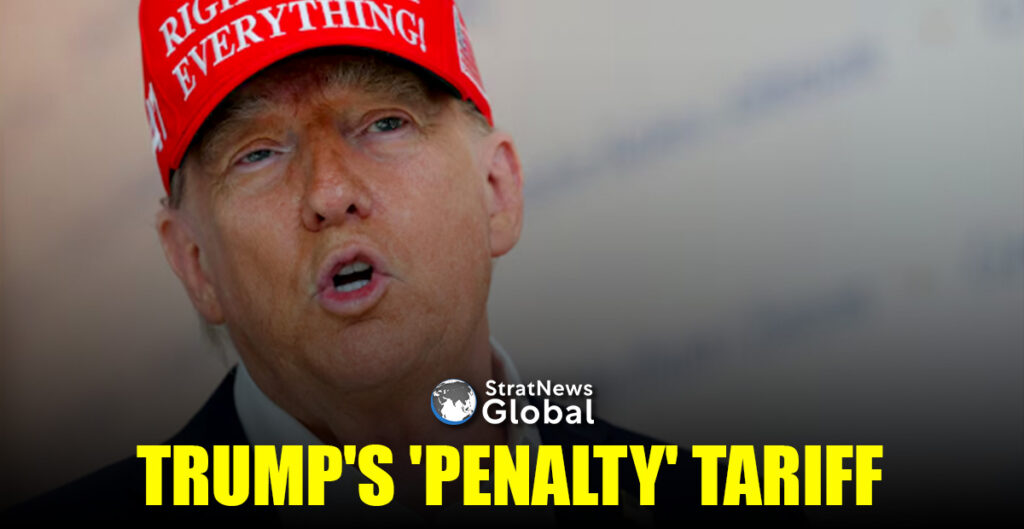
US Issues Notice To India As Trump’s 50% Tariff Kicks In Tomorrow
The United States on Monday laid out detailed plans to enforce a 50% tariff on Indian products, a measure earlier declared by Donald Trump, through a draft notification released by the Department of Homeland Security.
This draft marks the latest indication that the White House is determined to press forward with its escalated trade duties, even as attempts to secure a negotiated settlement between Russia and Ukraine appear to be faltering.
According to the notice, the heightened duties will apply to Indian goods “that are entered for consumption, or withdrawn from warehouse for consumption, on or after 12:01 AM eastern daylight time (ETD) on August 27, 2025.”
President Trump had earlier this month unveiled plans to raise tariffs on Indian imports linked to Russian oil, doubling them from 25% to 50%, with an August 27 enforcement deadline firmly in place.
Washington’s strategy is aimed at pushing Russian President Vladimir Putin towards negotiations to end the conflict in Ukraine by squeezing Moscow’s energy trade.
New Delhi, however, has denounced the so-called secondary sanctions as unjust and has forcefully reiterated its commitment to protecting national interests.
Modi’s Response To Trump Tariffs
Prime Minister Narendra Modi declared on Monday that India would not sacrifice the interests of farmers and small enterprises in the face of U.S. tariff pressure.
His comments came as the looming 50% import duties cast a long shadow over bilateral trade ties.
“For me, the priorities of our farmers, cattle rearers, and small-scale industries are non-negotiable. The external pressure may mount further, but India will endure and stand firm,” Modi stated during a public address in Ahmedabad, where he inaugurated a series of civic initiatives.
The prime minister also invoked India’s resilience, drawing inspiration from ‘Chakradhaari’ Lord Krishna and ‘Charkhadhari’ Mahatma Gandhi, symbols of both divine protection and self-reliant struggle.
Meanwhile, External Affairs Minister S. Jaishankar on Saturday mounted a strong defence of India’s energy policy, emphasising that New Delhi would continue to take decisions rooted in national interest and the principle of strategic autonomy.
He contended that the U.S. tariff controversy was being misleadingly portrayed as an “oil dispute,” stressing that India had been unfairly singled out.
Jaishankar pointed out that the same criticism regarding Russian energy purchases had not been directed at larger importers such as China or several European countries.
(With inputs from IBNS)
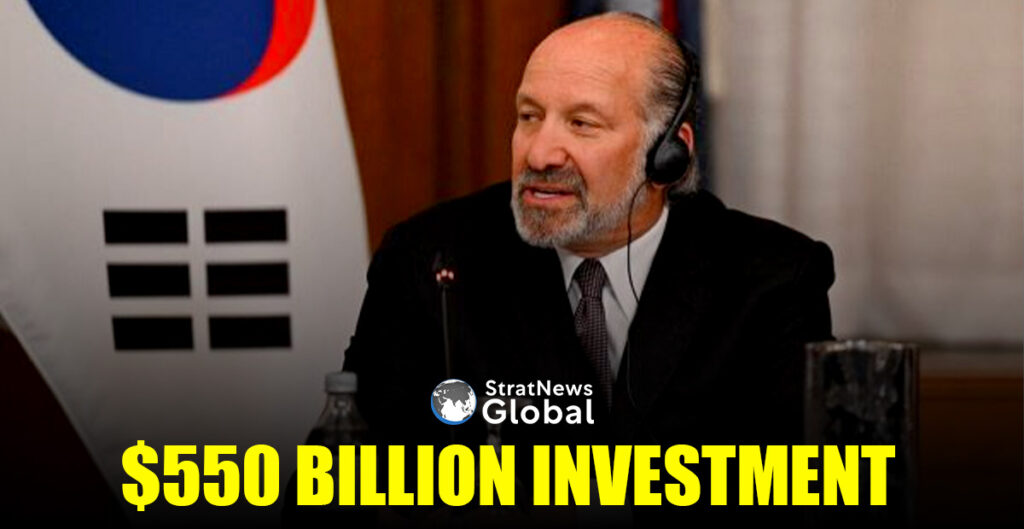
U.S. To Announce Japan’s $550 Billion Investment This Week: Lutnick
U.S. Commerce Secretary Howard Lutnick said on Monday that Washington will announce details this week regarding Japan’s $550 billion investment in the United States. The disclosure is expected to coincide with the arrival of a senior Japanese trade envoy in Washington to finalize the agreement.
“The Japanese agreement, which we’re going to announce later this week, that’s $550 billion at the hand of Donald Trump,” Lutnick told the Ingraham Angle show on Fox News on Monday night.
The Japanese funds could be used for the manufacturing of products such as semiconductors, antibiotics or rare earths in the U.S., Lutnick added.
Tokyo’s top trade negotiator Ryosei Akazawa plans to visit the U.S. this week to craft a written confirmation on the financial details of the package, such as the split of investment returns between the U.S. and Japan, a government source close to the negotiations said.
Washington and Tokyo agreed in July to set a reduced 15% tariff on imports from Japan in exchange for a $550 billion package of U.S.-bound investment through government-backed loans and guarantees, but details of its contents remain obscure.
While Trump has touted the package as “our money to invest” and said the U.S. would retain 90% of the profits earned, Japanese officials have stressed that the investments will be determined based on whether they will also benefit Japan.
SoftBank Group’s $2 billion investment in Intel announced last week was not part of the package at the moment, a Japanese government source has said.
Akazawa, speaking at a regular Tuesday briefing, said his next U.S. trip was not decided and declined to comment on Lutnick’s remarks. Tokyo will keep pressing Washington to implement the deal to cut U.S. tariffs on Japanese goods soon, he added.
Written Agreement
The U.S. has urged Japan to have a written agreement on the investment plans, but Japan would prefer to keep the deal less legally-binding, the Nikkei business daily reported earlier on Tuesday.
The lack of a clear document on the trade agreement had created confusion in Tokyo about tariff rates until Lutnick and U.S. Treasury Secretary Scott Bessent clarified earlier this month that Japanese goods were exempt from overlapping levies and an earlier presidential order would be amended.
Lutnick and Bessent also promised, during Akazawa’s previous visit on August 7, that Trump would issue another order to lower tariffs on Japanese cars to 15% from 27.5%, but did not specify when.
Japanese Prime Minister Shigeru Ishiba has said Tokyo did not seek a written trade agreement with Washington because it wanted a swift resolution and to ensure Trump’s tariffs on key Japanese exports such as autos were lowered quickly.
Ishiba’s support rate has surged in recent polls thanks in part to the trade deal, even after his ruling coalition lost its majority in an upper house election last month.
(With inputs from Reuters)
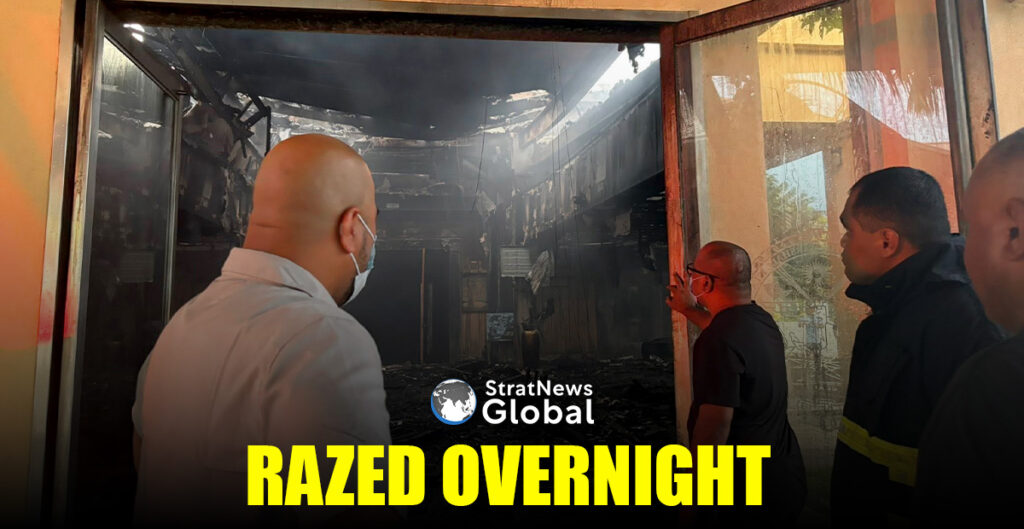
Fire Destroys Marshall Islands Parliament Building
A massive fire has gutted the national parliament building of the Marshall Islands, officials confirmed on Tuesday, adding that the blaze has now been brought under control.
The Marshall Islands Fire Department said in a telephone interview that half of the parliament building, known as the Nitijela, had been burnt down in a fire that broke out overnight.
The remaining structure cannot be used, a police official told Reuters by telephone, confirming the parliament had been destroyed.
A fire truck had responded to the blaze, he added.
Nation Of 42K People
The Pacific archipelago, midway between Hawaii and Australia, has a population of around 42,000, with half living in the capital Majuro.
Its major diplomatic relationships are a compact of free association with the United States, which provides economic assistance in return for military access, and diplomatic recognition of Taiwan.
President Hilda Heine’s spokesperson did not immediately respond to a request for comment.
Major International Debut
Earlier this month, the Marshall Islands finally got off the mark in international football on August 14 and promptly lost 4-0 to the US Virgin Islands on a high school pitch in Arkansas, but not before making history as the world’s newest national team.
The remote Pacific nation played their first-ever international at the 3,000-capacity Jarrell Williams Bulldog Stadium in Springdale, better known as home to the local high school’s American football team.
Northwest Arkansas was chosen as the venue because it hosts the largest Marshallese community in the United States and offers a convenient mid-point for Caribbean opponents.
Future Plans
The Marshall Islands Soccer Federation, established in 2021 with the support of British volunteers and self-funded, harbours ambitions that extend beyond Thursday’s outing.
FIFA membership would unlock up to $8 million in funding over four years, but confederation membership is required first.
Despite writing to Oceania, the Marshall Islands claim to have received no response, with the confederation citing a ‘lack of direct air links’ as the barrier.
They are, however, considering applying to CONCACAF (the North American confederation) and the AFC (Asian confederation).
(With inputs from Reuters)
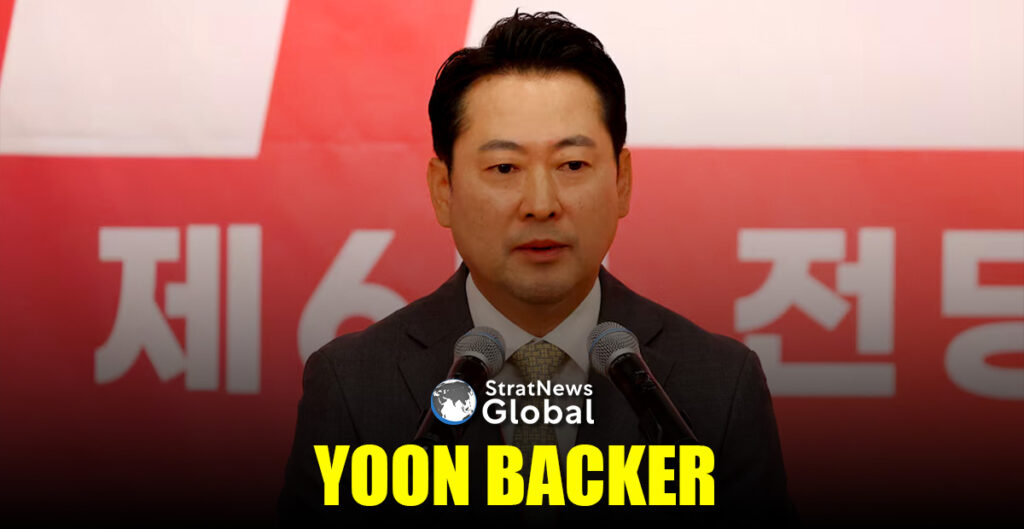
Yoon Ally Takes Charge Of South Korea’s Opposition
South Korea’s opposition conservative party on Tuesday elected Jang Dong-hyeok, a lawmaker known for openly backing former President Yoon Suk Yeol, even after his removal over a failed attempt to impose martial law.
The People’s Power Party (PPP) picked Jang, a two-time lawmaker who joined right-wing rallies organised by Christian churches and spoke out in defence of Yoon this year, even after calls for PPP to distance itself from the impeached Yoon who is on trial for alleged insurrection.
In June, the party suffered a big defeat in a snap presidential election that left it with little power to challenge new centre-left President Lee Jae Myung and his Democratic Party.
Far-Right Allegations
“Together with right-wing citizens, I will sacrifice my everything to take down the Lee Jae Myung regime,” Jang said after his election as party leader.
Critics have labelled Jang as “far-right” due to his association with staunch Yoon supporters, including some who have made unsubstantiated claims about the conservatives being victims of election fraud.
Jang rejected such labels and called for the party to unite in order to take on the Lee administration.
International Angle
During a meeting with South Korea’s president on Monday, US President Donald Trump raised questions about investigations by authorities in Seoul that he said targeted churches and a military base used by US forces.
“Police probably shouldn’t have done that, but I heard bad things. I don’t know if it’s true or not,” Trump told reporters just before he was due to meet South Korean President Lee Jae Myung at the White House. “I’ll be finding out.”
Trump said he had heard “there were raids on churches over the last few days. Very vicious raids on churches by the new government in South Korea,” and added that “they even went into our military base and got information.”
Trump was apparently referring to ongoing wide-ranging investigations by South Korean authorities into then-President Yoon’s martial law declaration and its fallout.
A section of South Korea’s far-right movement, which includes evangelical Christians and Yoon supporters, view the ousted president as being a victim of communist persecution.
(With Inputs from Reuters)
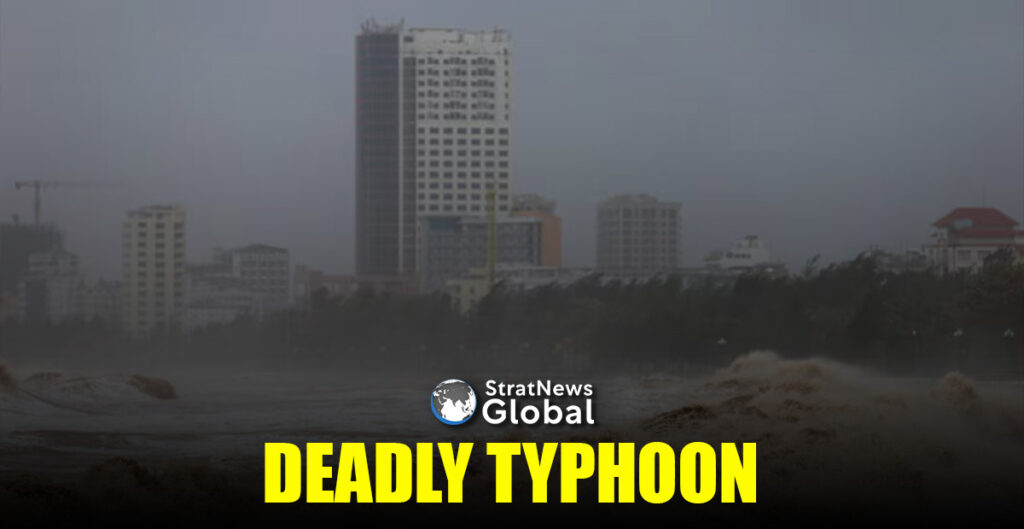
Vietnam: Typhoon Kajiki Leaves 3 Dead, 10 Injured
At least three people lost their lives, and 10 others sustained injuries in Vietnam due to Typhoon Kajiki, authorities said on Tuesday. Officials have cautioned that heavy rainfall may lead to flooding and landslides in the affected areas.
Typhoon Kajiki unleashed torrential rains across the north central coast of Vietnam on Monday, toppling trees and inundating homes with wind speed easing to 118-133 kph from as strong as 166 kph, according to the country’s weather agency.
Thousands Of Homes Damaged
The storm damaged nearly 7,000 homes, inundated 28,800 hectares of rice plantings and felled 18,000 trees, the government said in a statement. It also brought down 331 electricity poles, causing widespread blackouts in Thanh Hoa, Nghe An, Ha Tinh, Thai Nguyen and Phu Tho provinces.
Photos on state media showed streets in the capital Hanoi were severely flooded as heavy rains fell on Tuesday morning.
Weakens After Deadly Landfall
State media reported that power outages, damaged roofs, and destroyed floating fishing farms were seen in several parts of Ha Tinh province, as Vietnam had earlier shut airports, closed schools, and carried out mass evacuations in preparation for the year’s most powerful storm.
After making landfall on Vietnam’s north central coast on Monday afternoon, Kajiki has since weakened to a tropical depression as it moved across to Laos on Tuesday morning, the national weather agency said.
Flash Flood Alert
The agency warned that heavy rains — up to 150 millimetres in six hours — would persist across northern Vietnam, potentially triggering flash floods and landslides, as the government had earlier described Kajiki as “an extremely dangerous fast-moving storm” expected to bring severe weather conditions.
Before making landfall in Vietnam, Kajiki skirted the southern coast of China’s Hainan Island on Sunday, forcing Sanya City on the island to close businesses and public transport.
(With Inputs from Reuters)
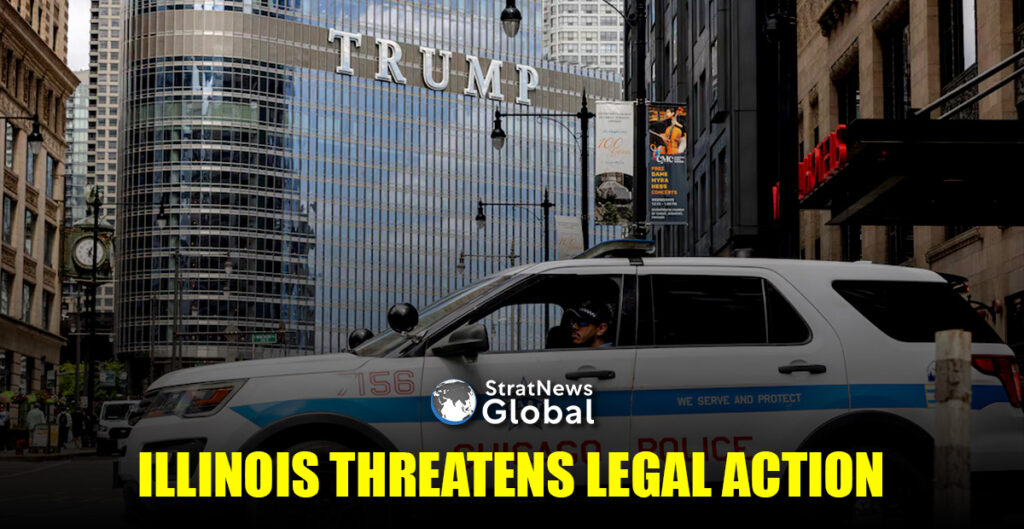
Trump Mulls Military Deployment To Chicago, Illinois Pushes Back
US President Donald Trump on Monday warned that the military could be sent to Chicago and elsewhere at short notice to tackle rising crime.
Citing a purported wave of lawlessness, Trump seized control this month of the police force in Washington, DC, and is allowing National Guard troops to carry weapons while on patrol in the city. He has threatened to expand the US military presence to Democrat-controlled cities like Baltimore and Chicago.
‘Can Go Anywhere’
“We can go anywhere on less than 24 hours’ notice,” Trump said when asked on Monday whether the Pentagon was preparing for deployment to Chicago.
“They need help. We may wait. We may or may not, we may just go in and do it, which is probably what we should do,” Trump told reporters who were in the Oval Office as he signed executive orders aimed at stopping criminal suspects from being released on cashless bail.
Illinois Threatens Legal Action
Illinois Governor J.B. Pritzker said his state had made no request for federal intervention and the Illinois attorney general said legal action would be taken to prevent a federal deployment in Chicago.
“This is about Donald Trump searching for any justification to deploy the military in a blue city, in a blue state, to try to intimidate his political rivals,” said Pritzker, a billionaire Democrat who has been discussed as a possible presidential candidate in 2028.
Keeping National Guard Troops On Standby
Trump on Monday also ordered the Department of Defence to ensure that every state has some National Guard troops who are ready to rapidly mobilize to help quell civil disturbances and assist in public safety. The order also said there should be a standing quick reaction force that can be deployed around the country.
The National Guard already has a quick reaction force that can respond to emergency events that require security support. This force, known as the NGRF, can deploy with 75-125 personnel in eight hours and then a follow-on force of up to 375 personnel within 24 hours.
US officials have told Reuters that there has been initial planning at the Pentagon about what a deployment of National Guard troops to Chicago would look like.
One official said the plans were part of the military’s efforts to anticipate any requests by Trump and noted senior Pentagon officials have not yet been briefed on them. It is not uncommon for the Pentagon to plan for potential deployments before formal orders are given.
Declining Crime Rate
Chicago has long had high levels of gun violence but crime, including homicide, has declined in the last year.
The city’s mayor, Brandon Johnson, told reporters on Monday that federal money in recent years had helped the city cut its homicide rate by more than 30% year over year.
Johnson, a Democrat, demanded that Trump reinstate millions of dollars in public safety funding for the city that were cut in April as part of the administration’s government downsizing effort.
(With inputs from Reuters)
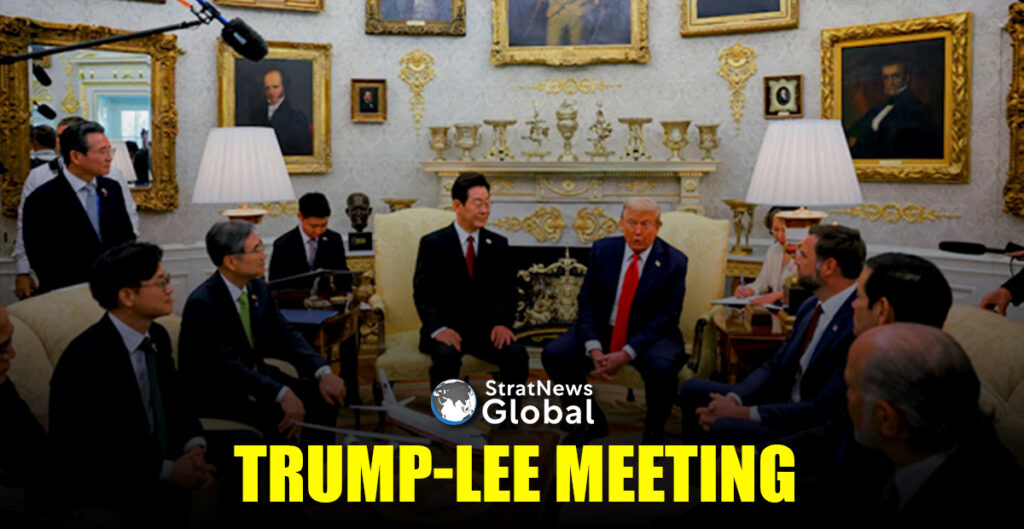
Trump Seeks Meeting With Kim Jong Un As He Hosts Lee At White House
U.S. President Donald Trump said on Monday that he wanted a meeting with North Korean leader Kim Jong Un and emphasised that he remained open to pursuing additional trade talks with South Korea, even as he directed fresh criticisms toward the visiting Asian ally.
“I’d like to meet him this year,” Trump told reporters in the Oval Office as he welcomed South Korea’s new president, Lee Jae Myung, to the White House for the first time. “I look forward to meeting with Kim Jong Un in the appropriate future.”
Despite clinching a trade deal in July that spared South Korean exports harsher U.S. tariffs, the two sides continue to wrangle over nuclear energy, military spending, and details of a deal that included $350 billion in promised South Korean investments in the United States.
After meeting with Trump, Lee attended a business forum with senior U.S. officials and CEOs of South Korean and U.S. companies.
To coincide with the visit, South Korea’s flag carrier, Korean Air, announced an order for 103 Boeing aircraft, the largest order in the airline’s history.
Kim Ignores Trump Calls
North Korea did not immediately respond to a request for comment on Trump’s remarks. Its state media said later that U.S.-South Korea joint military drills proved Washington’s intention to “occupy” the Korean peninsula and target countries in the region.
Since Trump’s January inauguration, Kim has ignored Trump’s repeated calls to revive the direct diplomacy he pursued during his 2017-2021 term in office, which produced no deal to halt North Korea’s nuclear program.
In the Oval Office, Lee avoided the theatrical confrontations that dominated a February visit by Ukrainian President Volodymyr Zelenskyy and a May visit from South African President Cyril Ramaphosa.
Lee talked golf and lavished praise on the Republican president’s interior decorating and peacemaking, telling reporters earlier he had read the president’s 1987 memoir, “Trump: The Art of the Deal,” to prepare.
“I hope you can bring peace to the Korean Peninsula, the only divided nation in the world, so that you can meet with Kim Jong Un, build a Trump World (real-estate complex) in North Korea so that I can play golf there, and so that you can truly play a role as a world-historical peacemaker,” Lee told Trump, speaking in Korean.
Lee’s office said he and Trump discussed shipbuilding and the assassination attempts against both men. Lee also invited Trump to attend the summit of the Asia-Pacific Economic Cooperation (APEC) grouping in October, and suggested the American president try to meet with Kim during the trip, Lee’s office added.
“Despite the massive sanctions imposed to deter North Korea, the result has been the continuous development of nuclear weapons and missiles,” Lee said during an event at the Centre for Strategic and International Studies in Washington after the summit.
He said North Korea now has the capacity to build 10 to 20 nuclear warheads per year, and only needs to perfect a reentry vehicle to carry those warheads on its largest ballistic missiles that can reach the U.S.
Difficult Issues
South Korea’s economy relies heavily on the U.S., with Washington underwriting its security with troops and nuclear deterrence. Trump has called Seoul a “money machine” that takes advantage of American military protection.
“I think we have a deal done” on trade, Trump told reporters. “They had some problems with it, but we stuck to our guns.” He did not elaborate, and the White House did not immediately respond to a request for comment.
Trump said while sitting with Lee, he would raise “intel” he had received about South Korean investigations, which he said targeted churches and a military base. The White House did not respond to a request for more information.
This month, Seoul police raided Sarang Jeil Church, headed by an evangelical preacher who led protests backing Lee’s ousted predecessor, Yoon Suk Yeol.
In July, prosecutors investigating Yoon’s declaration of martial law served a search warrant on the Korean part of a military base jointly operated with the U.S. Officials have said U.S. troops and materials were not subject to the search.
South Korea’s far-right movement, especially evangelical Christians and Yoon supporters, sees him as a victim of communist persecution.
Trump was expected to pressure Lee to commit to more defence spending, including toward upkeep of the 28,500 U.S. troops in South Korea.
Asked if he would reduce those numbers to give the U.S. more regional flexibility, Trump said: “I don’t want to say that now,” but that maybe Seoul should give the U.S. ownership of the “land where we have the big fort,” an apparent reference to Camp Humphreys, a U.S. Army garrison in South Korea.
Before the meeting, Lee told reporters it would be difficult for Seoul to accept U.S. demands to adopt such “flexibility” – a reference to using U.S. forces for a wider range of operations, including China-related threats.
(With inputs from Reuters)