

Support us by contributing to StratNewsGlobal on the following UPI ID
ultramodern@hdfcbank

Strategic affairs is our game, South Asia and beyond our playground. Put together by an experienced team led by Nitin A. Gokhale. Our focus is on strategic affairs, foreign policy and international relations, with higher quality reportage, analysis and commentary with new tie-ups across the South Asian region.
You can support our endeavours. Visit us at www.stratnewsglobal.com and follow us on YouTube, Twitter, Facebook and Instagram.
र 500 per month
र 1000 per month
र 5000 per year
र 10000 per year
Donate an amount of your choice
र 500 per month
Donate र 500 per month

र 1000 per month
Donate र 1000 per month
र 5000 per year
Donate र 5,000 per year
र 10000 per year
Donate र 10,000 per year
Donate an amount of your choice
Donate an amount of your choice


Chinese President Xi To Host Putin, Modi In Powerful Show Of Solidarity
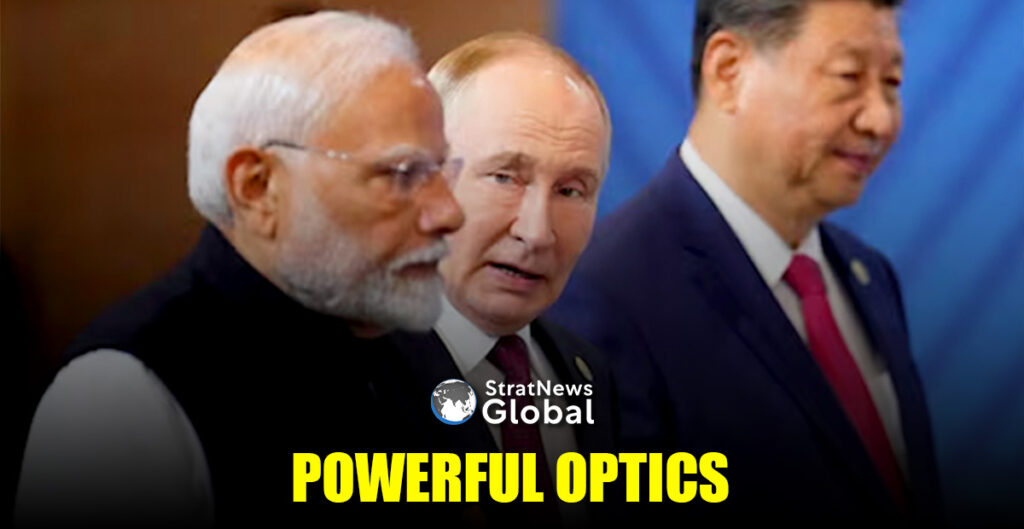
Chinese President Xi Jinping is set to convene over 20 world leaders at a regional security forum in China next week, in what will serve as a striking demonstration of Global South solidarity in the Trump era, while simultaneously offering sanctions-stricken Russia another diplomatic boost.
Aside from Russian President Vladimir Putin, leaders from Central Asia, the Middle East, South Asia and Southeast Asia have been invited to the Shanghai Cooperation Organisation (SCO) summit, to be held in the northern port city of Tianjin from August 31 to September 1.
Modi’s China Visit
The summit will feature Prime Minister Narendra Modi’s first visit to China in more than seven years as the two neighbours work on further defusing tensions roiled by deadly border clashes in 2020.
Modi last shared the same stage with Xi and Putin at last year’s BRICS summit in Kazan, Russia, even as Western leaders turned their backs on the Russian leader amid the war in Ukraine. Russian embassy officials in New Delhi last week said Moscow hopes trilateral talks with China and India will take place soon.
“Xi will want to use the summit as an opportunity to showcase what a post-American-led international order begins to look like and that all White House efforts since January to counter China, Iran, Russia, and now India have not had the intended effect,” said Eric Olander, editor-in-chief of The China-Global South Project, a research agency.
“Just look at how much BRICS has rattled (U.S. President) Donald Trump, which is precisely what these groups are designed to do.”
This year’s summit will be the largest since the SCO was founded in 2001, a Chinese foreign ministry official said last week, calling the bloc an “important force in building a new type of international relations”.
The security-focused bloc, which began as a group of six Eurasian nations, has expanded to 10 permanent members and 16 dialogue and observer countries in recent years. Its remit has also enlarged from security and counter-terrorism to economic and military cooperation.
‘Fuzzy’ Implementation
Analysts say expansion is high on the agenda for many countries attending, but agree the bloc has not delivered substantial cooperation outcomes over the years and that China values the optics of Global South solidarity against the United States at a time of erratic policymaking and geopolitical flux.
“What is the precise vision that the SCO represents, and its practical implementation is rather fuzzy. It is a platform that has increasing convening power, which helps in narrative projection,” said Manoj Kewalramani, chairperson of the Indo-Pacific Research Programme at the Takshashila Institution thinktank in Bangalore.
“But the SCO’s effectiveness in addressing substantial security issues remains very limited.”
Frictions remain between the core members, India and Pakistan. The June SCO defence ministers’ meeting was unable to adopt a joint statement after India raised objections, saying it omitted a reference to the deadly April 22 terrorist attack on tourists in Jammu and Kashmir’s Pahalgam, which led to the worst fighting in decades between India and Pakistan.
New Delhi also refused to join the SCO’s condemnation of Israeli attacks on Iran, a member state, earlier in June.
Recent Detente
But the recent detente between India and China after five years of heightened border frictions, as well as renewed tariff pressure on New Delhi from the Trump administration, is driving expectations for a positive meeting between Xi and Modi on the sidelines of the summit.
“It’s likely (New Delhi) will swallow their pride and put this year’s SCO problems behind them in a bid to maintain momentum in the détente with China, which is a key Modi priority right now,” said Olander.
Analysts expect both sides to announce further incremental border measures such as troop withdrawals, the easing of trade and visa restrictions, cooperation in new fields including climate, and broader government and people-to-people engagement.
Despite the lack of substantive policy announcements expected at the summit, experts warn that the bloc’s appeal to Global South countries should not be underestimated.
“This summit is about optics, really powerful optics,” added Olander.
Modi is expected to depart from China after the summit, while Putin will stay on for a World War Two military parade in Beijing later in the week for an unusually long spell outside of Russia.
(With inputs from Reuters)
Quad Crucial For India-Japan Critical Minerals Cooperation: MEA
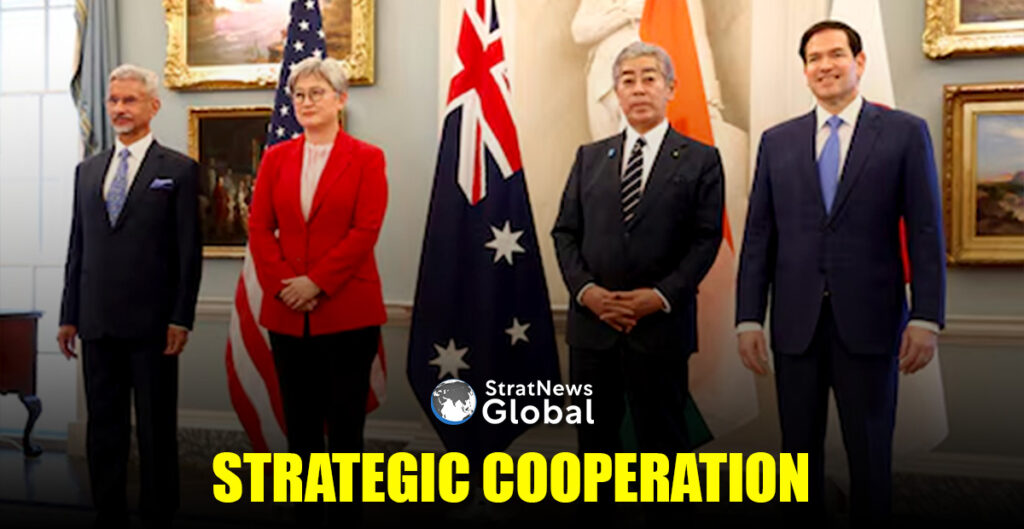
India’s Ministry of External Affairs (MEA) on Tuesday said the Quad grouping holds significant importance for both India and Japan, particularly on matters such as critical minerals, adding that the prime ministers of the two nations are set to discuss the alliance later this week.
Prime Minister Narendra Modi is due to visit Japan on August 29-30 for the 15th India-Japan Annual Summit, during which he will hold talks with his Japanese counterpart Shigeru Ishiba.
Modi will then fly to the Chinese port city of Tianjin for the summit of the Shanghai Cooperation Organisation (SCO) on August 31-September 1.
The so-called Quad grouping includes India, Japan, Australia and the U.S. and New Delhi is expected to host the summit of its leaders this year amid a souring of its ties with Washington over tariffs imposed on Indian goods by President Donald Trump.
China Concerns
The Quad countries share concerns about China’s growing power and dominance over critical minerals, and had announced a critical minerals initiative last month in an effort to counter Beijing.
“Quad is indeed an important platform for working on and promoting peace, stability, prosperity and development in the Indo-Pacific region,” Indian Foreign Secretary Vikram Misri told reporters on Tuesday.
“In more recent years, its agenda has expanded to take on issues of practical cooperation,” he said, adding that India expects to launch several new initiatives with Japan, including in defence, ship maintenance and space.
Modi’s China Visit
Modi’s visit to China will be his first to the country in more than seven years and comes as the neighbours look to rebuild ties, which deteriorated sharply after a deadly military clash on their disputed Himalayan border in 2020.
Modi is also expected to hold some bilateral meetings during his visit, the foreign ministry said, but did not give details.
More than 20 world leaders, including Russian President Vladimir Putin, will attend the SCO summit.
The Security-focused SCO began as a group of six Eurasian nations but has expanded to 10 permanent members and 16 dialogue and observer countries in recent years.
Its remit has also enlarged from security and counter-terrorism to economic and military cooperation.
(With inputs from Reuters)
Germany Bars Apple From Advertising Watch As ‘CO2-Neutral’ Product
Apple has been barred from promoting its Apple Watch as a “CO2-neutral product” in Germany, after a German court ruled in favour of environmentalists who argued the claim was misleading to consumers.
Apple had promoted the device online as “our first CO2-neutral product,” a claim found by a panel of judges to be unfounded and in violation of German competition law, according to a statement from a regional court in Frankfurt.
Apple’s Climate Strategy
An Apple spokesperson said the court ruling “broadly upheld our rigorous approach to carbon neutrality” and declined to comment on whether the company would appeal Tuesday’s ruling.
In June, Apple had said the German lawsuit threatens “to discourage the kind of credible corporate climate action the world needs.”
Still, a spokesperson referred on Tuesday to a report that Apple will phase out the ‘carbon neutral’ label it uses for Apple Watches in order to comply with EU legislation coming into force in September 2026 restricting the use of such terms.
Apple based its claim of carbon neutrality on a project it operates in Paraguay to offset emissions by planting eucalyptus trees on leased land.
Project Under Scrutiny
The eucalyptus plantations have been criticised, by ecologists, who claim that such monocultures harm biodiversity and require high water usage, earning them the nickname ‘green deserts.’
However, the Frankfurt court said that leases for 75% of the project area were not secured beyond 2029 and that the company could not guarantee these contracts would be extended.
“There is no secure future for the continuation of the forest project,” the statement said.
Alongside Apple, Meta and Microsoft have also invested in similar projects in Latin America in return for carbon credits.
Environmentalists React
Environmentalist group Deutsche Umwelthilfe (DUH), which brought the case against Apple, hailed the ruling as a success against “greenwashing.”
“The supposed storage of CO2 in commercial eucalyptus plantations is limited to just a few years, the contractual guarantees for the future are not sufficient and the ecological integrity of monoculture areas is not guaranteed,” DUH head Juergen Resch said in a statement.
(With Inputs from Reuters)
US, Russian Officials Hold Energy Talks Alongside Ukraine Peace Negotiations
U.S. and Russian government officials engaged in discussions over several potential energy deals on the sidelines of negotiations held this month that were intended to achieve peace in Ukraine, according to five sources with direct knowledge of the talks.
These deals were put forward as incentives to encourage the Kremlin to agree to peace in Ukraine and for Washington to ease sanctions on Russia, they said.
Russia has been cut off from most international investment in its energy sector and from striking major deals due to sanctions following the Ukraine invasion that began in February 2022.
The officials discussed the possibility of Exxon Mobil re-entering Russia’s Sakhalin-1 oil and gas project, three of the sources said.
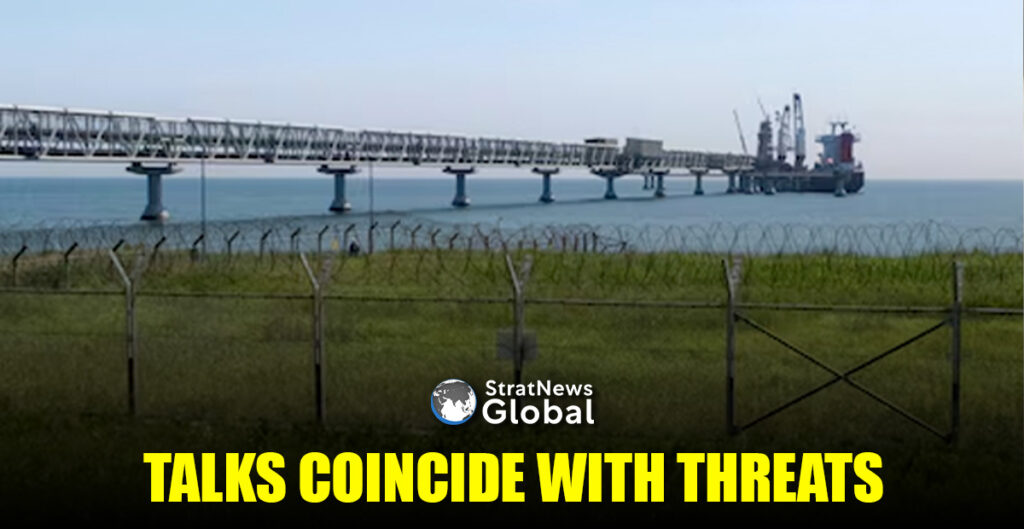
They also raised the prospect of Russia purchasing U.S. equipment for its LNG projects, such as Arctic LNG 2, which is under western sanctions, four sources said.
None of the sources could be named because they were not authorised to speak publicly on the negotiations.
Another idea was for the U.S. to purchase nuclear-powered icebreaker vessels from Russia, Reuters reported on August 15.
Talks During Witkoff’s Moscow Trip
The talks were held during U.S. envoy Steve Witkoff’s trip to Moscow earlier this month when he met with Russian President Vladimir Putin and his investment envoy Kirill Dmitriev, three of the sources said. They were also discussed within the White House with U.S. President Donald Trump, two of the sources said.
These deals were also briefly discussed at the Alaska summit on August 15, one source said.
“The White House really wanted to put out a headline after the Alaska summit, announcing a big investment deal,” said one of the sources. “This is how Trump feels like he’s achieved something.”
Trump and his national security team continue to engage with Russian and Ukrainian officials towards a bilateral meeting to stop the killing and end the war, a White House official said in response to questions about the deals. It is not in the national interest to further negotiate these issues publicly, the official said.
A spokesperson for Dmitriev declined to comment.
Exxon Mobil declined to comment. Rosneft and Novatek did not respond to requests for comment.
Talks Coincide With Threats
Trump has threatened to impose more sanctions on Russia unless peace talks make progress and to place harsh tariffs on India, a major buyer of Russian oil. Those measures would make it difficult for Russia to maintain the same level of oil exports.
Trump’s dealmaking style of politics has been on display before in the Ukraine talks, when earlier this year the same officials explored ways for the U.S. to revive Russian gas flows to Europe. These plans have been stalled by Brussels, which put forward proposals to fully phase out Russian gas imports by 2027.
The latest discussions have shifted to bilateral deals between the U.S. and Russia, pivoting away from the European Union, which, as a bloc, has been steadfast in its support for Ukraine.
On the same day as the Alaska summit, Putin signed a decree that could allow foreign investors, including Exxon Mobil, to regain shares in the Sakhalin-1 project. It is conditional on the foreign shareholders taking action to support the lifting of Western sanctions on Russia.
Exxon exited its Russian business in 2022 after the Ukraine invasion, taking a $4.6 billion impairment charge. Its 30% operator share in the Sakhalin-1 project in Russia’s far east was seized by the Kremlin that year.
The U.S. has placed several waves of sanctions on Russia’s Arctic LNG 2 project, starting in 2022 and cutting off access to ice-class ships that are needed to operate in that region for most of the year.
The project is majority-owned by Novatek, which started working with lobbyists in Washington last year to try to rebuild relations and lift the sanctions.
Arctic LNG 2 Resumes Production
The Arctic LNG 2 plant resumed natural gas processing in April, albeit at a low rate, Reuters reported. Five cargoes have been loaded from the project this year onto tankers under sanctions. A production train was previously shut down due to the difficulties in exporting, given the sanctions.
This project was intended to have three LNG processing trains. The third is in planning stages, with technology expected to be supplied by China.
Washington is seeking to prompt Russia to buy U.S. technology rather than Chinese as part of a broader strategy to alienate China and weaken relations between Beijing and Moscow, one of the sources said.
China and Russia declared a “no limits” strategic partnership days before Putin sent troops into Ukraine. Xi has met Putin over 40 times in the last decade, and Putin, in recent months, described China as an ally.
(With inputs from Reuters)
Sri Lanka Bets On Casinos For Tourism Boost
Sri Lanka, known for its scenic beaches, wildlife and ancient Buddhist heritage, is now eyeing casinos to draw high-spending tourists from India and China, with the country’s first Marxist president backing the move to boost foreign earnings.
The success of the casino strategy is crucial for President Anura Kumara Dissanayake, who completes one year in office next month and has vowed to improve the lives of ordinary Sri Lankans after the devastating economic collapse of 2022 and 2023.
Casino Development
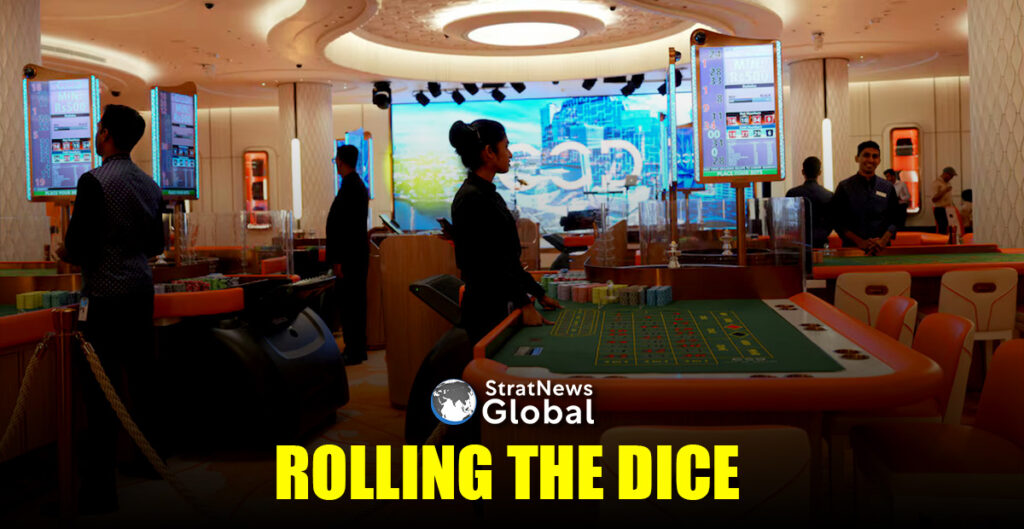
Sri Lanka had a handful of small casinos but earlier this month, Dissanayake inaugurated a $1.2 billion City of Dreams casino complex in Colombo, a joint venture between John Keells Holdings and Macau-based Melco Resorts & Entertainment.
The launch of South Asia’s first integrated resort was headlined by Bollywood heartthrob Hrithik Roshan, who danced to hit Hindi songs in front of a packed house.
Dissanayake has also got legislation passed in parliament to regulate gambling, including in casinos, reflecting the importance he is placing on the industry.
Economic Importance And Recovery
The push is part of Sri Lanka’s aim to raise tourist arrivals by 50% to 3 million this year, potentially lifting revenues from the industry to $5 billion from $3.7 billion last year, the deputy tourism minister, Ruwan Ranasinghe, told Reuters.
“Tourism plays a very significant role for us to get out of these economic issues that we have,” he said.
“So these couple of years we are working more on short-term targets and getting traffic, but in the long run, our plan is to go for quality, more sustainable, and high-end tourism and casinos and gambling will be a segment of that.”
Tourism accounted for about 4% of GDP last year and the government hopes it will eventually hit 10%, backed partly by high-end gaming, he said. Tourism is the third biggest dollar earner after remittances and apparel exports.
The central bank this month forecast full-year economic growth of about 4.5%, partly on the back of strong tourism numbers, sharply higher than the World Bank’s April projection of 3.5%.
The $99 billion economy returned to growth only last year after two years of big contractions that forced the country to seek a $2.9 billion bailout from the International Monetary Fund.
Sri Lanka must resume repaying its creditors from 2028 after defaulting on its foreign debt in 2022.
City Of Dreams Features
City of Dreams, located on Colombo’s beachfront, features 800 rooms, a luxury mall, and conference facilities that investors anticipate will attract affluent visitors.
“It is a total greenfield market. It is similar to how we developed other markets in the past – in Manila, Macau and also in Cyprus,” Melco Chairman and CEO Lawrence Ho told Reuters.
“I think we are barely scratching the surface in terms of the tourism potential and also the integrated resort gaming potential of this country.”
Focus On Indian, Chinese Tourists
Minister Ranasinghe expects Indians to be the main arrivals for the next decade. India, the world’s most populous country, permits casinos only in a few designated locations, while China restricts all legal casino operations to Macau.
Indians made up nearly a quarter of the 2 million tourist arrivals in Sri Lanka last year, while Chinese visitors accounted for 7%. Sri Lanka maintains close economic ties with both New Delhi and Beijing, and citizens of both countries benefit from visa-free entry.
Policy And Regulation
To boost revenue collection and encourage responsible gambling, Sri Lanka’s parliament last week approved legislation to create a Gambling Regulatory Authority.
The legislation, however, has drawn criticism from experts for granting extensive powers to the finance minister, excluding state-run lotteries from oversight, omitting tourism industry representation in the authority and imposing low penalties for violations.
The government defends the legislation as vital to reduce social harm and raise employment, while it works to promote the industry.
“There has been gambling in Sri Lanka and in Colombo but not that significant,” Ranasinghe said. “With the arrival of City of Dreams – clientele from all over the world, I’m sure they will also come to Sri Lanka.”
(With Inputs from Reuters)
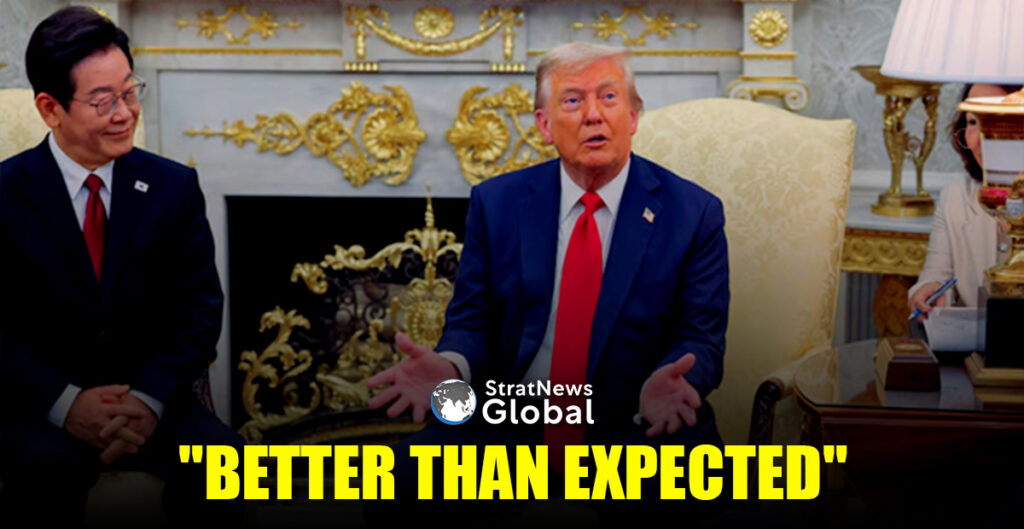
South Korean President Lee Averts ‘Zelenskyy Moment’ During Pivotal Trump Talks
South Korean President Lee Jae Myung said he narrowly escaped what he described as a “Zelenskyy moment” after United States President Donald Trump greeted him in Washington with right-wing conspiracy theories, though the two ultimately concluded a high-stakes summit without unexpected turmoil.
Monday’s summit, the first between the two leaders, was largely what South Korea had hoped for, despite its inauspicious start, officials and analysts said.
Most importantly, the South Koreans dodged their biggest fear: an Oval Office ambush similar to the testy exchange in February when Trump berated Ukraine’s Volodymyr Zelenskyy over U.S. aid and the war with Russia.
‘Better Than Expected’
“President Lee’s Oval Office press availability appeared to go better than expected,” said Leif-Eric Easley, professor of international studies at Ewha Womans University in Seoul, noting Trump expressing support for Lee’s approach toward North Korea and enthusiasm for engaging Kim Jong Un.
Major questions remain over how much exactly South Korea will agree to pay toward the basing of 28,500 American troops, and many details are still being worked out in the hastily negotiated tariff agreement, which has yet to be put in writing.
But Lee avoided any explosive clash that some observers feared could publicly fracture the long-term alliance at a time when North Korea is leaping forward with nuclear weapons and ballistic missile development, and deepening ties with Russia.
Lee and Trump displayed a chummy and mutually flattering vibe while glossing over the prickly trade and defence issues and defusing a potential conflict related to South Korea’s political crisis in December.
Trump Slammed Seoul Before Summit
Just a few hours before the pair was due to meet at the White House on Monday, Trump penned a social media post saying, “WHAT IS GOING ON IN SOUTH KOREA? Seems like a Purge or Revolution,” and saying he would raise the issue with Lee.
“Before I met with President Trump today, he posted on Truth Social a very threatening post,” Lee said with a laugh at an event at the Centre for Strategic and International Studies after the summit.
“My staff was worried that we might face a Zelenskiy moment,” Lee said. “But I already knew that I would not face that kind of situation. That’s because I had read President Trump’s book, ‘The Art of the Deal.'”
Trump eased his tone and described his earlier comments as a potential “misunderstanding” and “rumour” after Lee explained that investigators conducted a raid confined to the Korean side of a base operated jointly with the U.S. in connection with the political crisis. Lee’s office said he didn’t really raise it again in their private discussions.
Ended Without Drama
Instead of a dramatic clash, flattery and warm words dominated the conversation in the Oval Office, where the two sat down and talked about Trump’s “good relationship” with North Korean leader Kim Jong Un.
“The summit ended without drama,” said Cheong Seong-chang, vice president at Seoul-based Sejong Institute.
But keeping things vague means South Korea had policy goals of its own that went unaddressed, including requests for U.S. approval for nuclear fuel reprocessing and revising American laws on shipbuilding, Cheong noted.
“Trump didn’t embarrass Lee, and both sides seemed to try to avoid sensitive issues, such as South Korea’s political position in the tensions between China and Taiwan,” said Jun Kwang-woo, chairman at the Institute for Global Economics. “Trump is probably not in a situation now to create tensions with Lee while he’s already under pressure with frictions with other countries.”
Yang Uk, of Seoul’s Asan Institute for Policy Studies, said Trump’s pressure on South Korea was a sign that he understands how much he can potentially gain from the country.
“(Trump’s) basic formula of first shaking the other person as much as possible, then getting what you want, was applied,” Yang said.
Lee said he had observed in negotiations with other countries that Trump would often present difficult conditions, but at the final stage would come to a reasonable conclusion.
“And because of the importance of the Korea-U.S. alliance, I was confident that he would not inflict a wound to our alliance,” Lee said. “Everybody gave me the advice to have patience.”
(With inputs from Reuters)
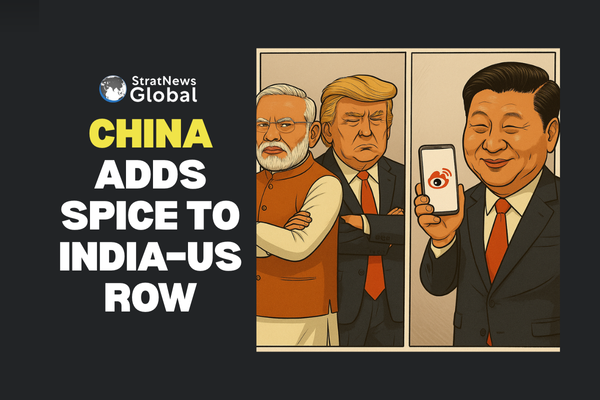
China’s Social Media Is Going To Town About India-US Rift
Among the many derogatory references to India and Indians in the Chinese language, there is “Ah San”, a term dating back to colonial times when Indian policemen and soldiers enforced Britain’s writ. Why is it trending now on Weibo?
Chinese web users are relishing the rift between the US and India, seeing in it a reduction in the possibility of the two countries ganging up against China. But doubts remain about how long lasting this rift could be.
“Ah San is still very cunning!” warned a Chinese netizen, while another pointed to a video going viral on Weibo featuring a pro-China academic from Taiwan. The programme carried the provocative title: “Did India and the US really fall out, or are they just pretending?”
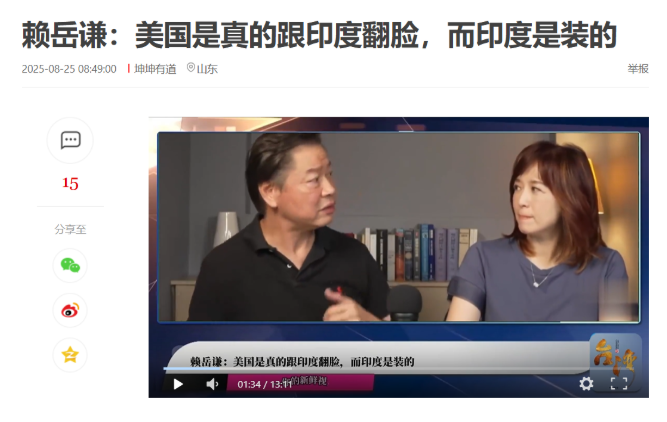
In the academic’s view, “I think the falling out between the US and India is real on the American side, but on India’s side it is just for show.”
Washington, he argues, is genuinely frustrated with India’s “front residence, back palace” policy. It’s a Chinese idiom describing how one partner in a relationship quietly maintains other relationships. In other words, India seeks deeper ties with the US while refusing to cut links with long standing partners such as Russia.
In the same context, an article circulating on China’s social media makes the point that the Make in India initiative has failed to achieve its goal of replacing China as a global manufacturing hub. Despite early support from Western investors, the piece claimed, poor infrastructure, weak labour quality and unpredictable government policies drove much foreign investment away.
While acknowledging India’s progress in electronics, locomotives and exports, the article claims these advances have only deepened India’s reliance on Chinese supply chains. India’s manufacturing drive continues to operate under China’s shadow.
Trump’s 50% tariff is also a matter of debate with videos speculating whether Apple’s September iPhone product launch will be hit, and the question: “How long can India withstand this?”
It reflects the broader unhappiness in China when Apple began shifting manufacturing and assembly operations from China to India. With tariffs now looming large, India is portrayed as overextended and vulnerable. India’s gains in electronics manufacturing are fragile, while China remains the dominant player.
These narratives form part of the larger China government strategy that portrays the United States as genuinely angry, India as inconsistent and calculating, and China as the calm observer. It is intended to reassure domestic audiences of China’s strength, that the India-US relationship is not robust and that India’s ambitions cannot be realised without China.
Police Launch Manhunt After Gunman Fatally Shot Two Officers In Rural Australia
Australian police have launched a manhunt for a gunman who fatally shot two officers and injured another on Tuesday, during an attempt to serve a warrant related to historical sex abuse allegations at a rural property in Victoria, according to local media reports.
In a statement on social media, Victoria police said they were attending an active incident in the alpine town of Porepunkah, about 300 km (186 miles) north-east of the city of Melbourne, and asked people to avoid the area.
Police have not released details of the incident.
Local media outlet The Age reported that police visited the property to serve a warrant for historical sex abuse allegations when two officers were shot dead and another wounded in an ambush attack.
The Age said heavily armed officers from the Special Operations Group were deployed to the scene, and the gunman was now on the run with several family members, including children.
The Australian Broadcasting Corporation said police believe the shooter is a “sovereign citizen”. Sovereign citizens believe the government is illegitimate.
‘Grave Concerns’
Australian Federal Police Commissioner Reece Kershaw said there were “grave concerns” for the police officers involved.
“Just from the police blue family, the wider family across Australia and overseas, our thoughts and prayers are with Victoria police right now,” Kershaw said at a news conference.
The town of Porepunkah is home to 1,000 residents and is located at the base of Australia’s alpine ranges.
“Today has been a day of deep sorrow and shock for our community. We extend our heartfelt condolences to the families, friends, and colleagues of the two police officers tragically killed in Porepunkah,” Mayor Sarah Nicholas said in a statement.
Local council’s facilities across the town, including libraries, information centres and depots, would remain closed until further notice, Nicholas added.
Porepunkah Primary School principal Jill Gillies told ABC Radio Melbourne that the school was forced to lockdown, with around 90 students sheltering indoors from 11:30 a.m. (0130 GMT). ABC has since reported that the lockdown has been lifted.
The local airfield also closed due to the ongoing emergency response.
(With inputs from Reuters)
Afghan “Secret Schools” Mostly Serve Elites, Not Rural Poor
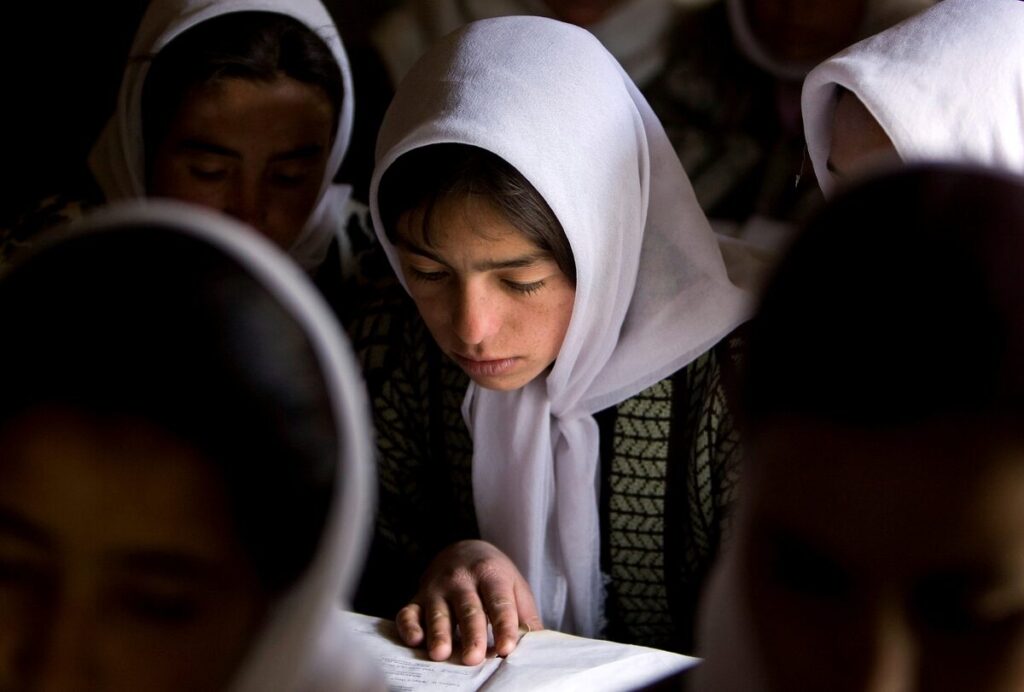
Flashy “secret schools and organisations” in Afghanistan are being promoted as avenues of hope, but many of them exist only on paper or cater exclusively to the privileged, according to Jill Suzanne Kornetsky, an American social entrepreneur who has lived in Afghanistan since 2015.
“The same old elites are up to their same old tricks and it’s siphoning money out of the country the same way it always did,” Kornetsky told StratNewsGlobal. She said many of these elites act as each other’s recommenders and references to validate their initiatives.
Several of the so-called “secret schools” are in fact “one of the most expensive private schools in town,” Kornetsky said, noting that they are inaccessible to Afghanistan’s poor and rural population, which makes up the majority of the country. She added that such ventures divert attention and resources from initiatives that genuinely help rural communities.
In rural Afghanistan, Kornetsky said, secrecy is a myth. “If one person knows something, the entire village knows, the most indiscreet culture I have ever lived in, and they know what is going on.”
She explained that many home schools exist in rural areas, often organised in all-girl groups in private homes. “They are not some covert operation,” she said, adding that these schools avoid Taliban interference by keeping a low profile.
Kornetsky cited organisations such as the Lamia Afghan Foundation and a network of volunteer-run home schools, including those taught by foreign volunteers, as examples of initiatives that genuinely provide education to rural children. These efforts, she said, have successfully advanced girls’ education.
“They quietly but not secretly operated,” Kornetsky said, stressing that in addition to the Taliban, “many conservative elements in Afghan society do not appreciate it when such things are made a public spectacle.”
Criticising initiatives she described as performative, she said: “Much back patting, many conferences, and the rest is just a game.”
(This article was written by Tisya Sharma, she is an intern at StratNewsGlobal)
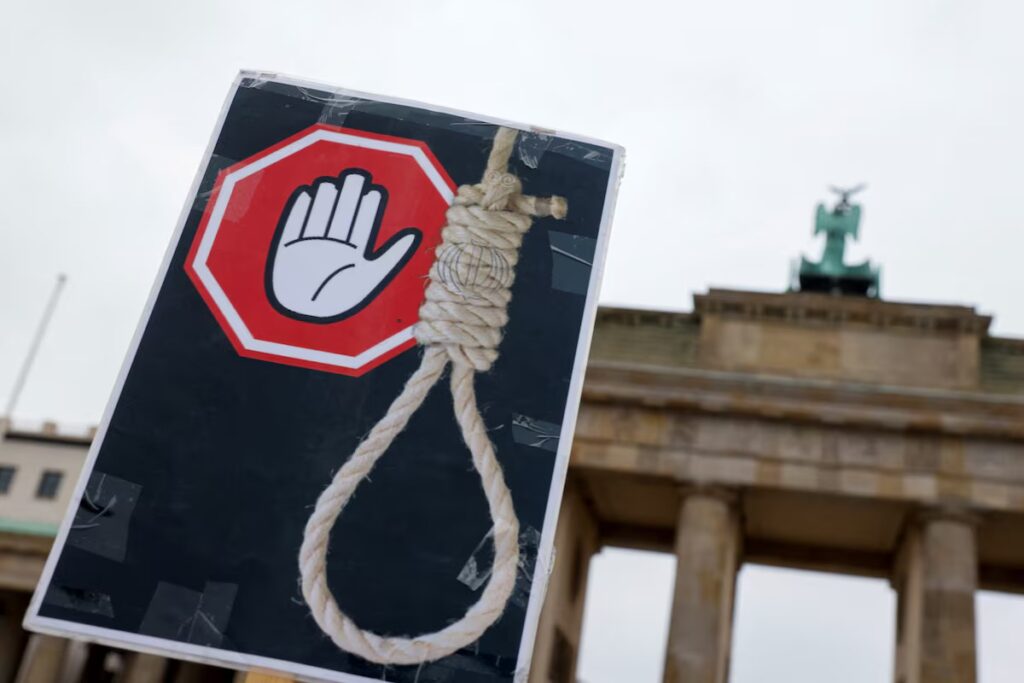
Iran’s Potent Political Weapon: The Death Penalty
The Center for Human Rights in Iran (CHRI) on 21 August reported that at least ten prisoners in Iran face imminent risk of execution, with nearly 70 others at high risk. Among them are women and at least 66 political prisoners who have received death sentences in political and security cases.
According to CHRI, this development follows the execution of more than 800 people by Iranian authorities in 2025.
The group noted that prisoners including Behrouz Ehsani and Mehdi Hassani were “secretly executed” in previous cases without prior notification to their families or lawyers. The same method, CHRI warned, could be applied to prisoners currently facing the death penalty. The executions have reportedly taken place without due process, including denial of counsel and instances of torture.
“These executions in Iran are nothing less than state-sanctioned murders based on fabricated charges, coerced confessions, and secret proceedings. They constitute grave and irreversible human rights violations, and the absence of sustained international pressure has allowed the Islamic Republic to continue these killings with impunity,” said Hadi Ghaemi, CHRI’s executive director.
CHRI highlighted that Iranian courts impose death sentences using vague political charges such as “spreading corruption on earth,” a charge frequently used in political cases despite its incompatibility with international law.
International organisations including the United Nations High Commissioner for Human Rights and Amnesty International have issued warnings in response to the executions.
“The Islamic Republic has learned it can hand out death sentences at will, and hang its alleged critics without so much as a whisper of protest amongst the community of nations, let alone any real consequences for these unlawful killings,” said Ghaemi. He called for a stronger international response to what he described as “due process by a judiciary that has been weaponized to silence dissent.”
(This article was written by Tisya Sharma, she is an intern at StratNewsGlobal)