

Support us by contributing to StratNewsGlobal on the following UPI ID
ultramodern@hdfcbank

Strategic affairs is our game, South Asia and beyond our playground. Put together by an experienced team led by Nitin A. Gokhale. Our focus is on strategic affairs, foreign policy and international relations, with higher quality reportage, analysis and commentary with new tie-ups across the South Asian region.
You can support our endeavours. Visit us at www.stratnewsglobal.com and follow us on YouTube, Twitter, Facebook and Instagram.
र 500 per month
र 1000 per month
र 5000 per year
र 10000 per year
Donate an amount of your choice
र 500 per month
Donate र 500 per month

र 1000 per month
Donate र 1000 per month
र 5000 per year
Donate र 5,000 per year
र 10000 per year
Donate र 10,000 per year
Donate an amount of your choice
Donate an amount of your choice



The United Nations At 80: Hostage To The Veto
Eighty years after its creation, the United Nations finds itself constrained by the very arrangements designed to preserve it.
In three essays published by the Indian Council of World Affairs in a paper titled The United Nations@80 Way To Larger Freedom, Ambassador Asoke Mukerji demonstrates how the UN has been held hostage by the veto power of the five permanent members of the Security Council, while its most representative organ, the General Assembly, has been systematically weakened.
The UN Charter itself anticipated the need for reform, notes Mukherji, who served as the Permanent Representative of India to UN in New York from 2013 to 2015. Article 109 provided for a review conference, to be convened within ten years of 1945. By 1955, the General Assembly even adopted Resolution 992, affirming that the review would take place at an “appropriate time.” That time has never come. Not once in 80 years has the review mechanism been activated.
The reasons are clear. Articles 24, 25 and 27 gave the Security Council “primary responsibility” for international peace and security, made its decisions binding, and required the “concurring votes” of the P5. This gave the five permanent members a veto, and with it, the ability to block Charter reform. The General Assembly, by contrast, was limited to recommendations, explicitly barred under Article 12 from intervening in issues on the Council’s agenda unless invited to do so.
The result has been a paralysis that has crippled the UN’s central mission. The Council has failed to prevent or resolve crises from Ukraine to West Asia to Afghanistan, even when it has adopted unanimous resolutions. Its inability to enforce its own decisions has opened the way for unilateral sanctions and military actions outside the UN framework, undermining the interests of developing countries that depend on multilateralism.
Mukerji recalls that despite restrictions, the General Assembly has been the driver of much of the UN’s progress. It was in the Assembly that the Genocide Convention, the outlawing of racial discrimination, and gender equality in the Universal Declaration of Human Rights were advanced—often with decisive contributions from India. The Assembly also created the UN Development Programme, negotiated the 1986 Declaration on the Right to Development, and adopted Agenda 2030 with its 17 Sustainable Development Goals.
Yet the Assembly’s authority remains non-binding. Its democratic one-country-one-vote structure has delivered results, but without enforcement power. The great powers, through the Council, have reserved that for themselves. This deliberate imbalance is the “anomaly within the Charter” that Mukerji identifies as the central flaw in the UN system.
Mukerji’s account of the Charter’s negotiating history shows that the veto was contested from the very beginning. Australia, backed by New Zealand, argued forcefully that the veto would block conciliation diplomacy and even prevent amendments to the Charter. India supported that logic but noted the “unanimous position of the great powers” at Yalta to impose safeguards in their own interest. Smaller states were told that rejecting the veto meant rejecting the UN itself.
The consequence is that the veto, inserted at the insistence of the P5, continues to obstruct reform. Despite amendments that expanded the elected membership of the Security Council and ECOSOC in the 1960s and 1970s, no P5 power has ever allowed discussion on removing or diluting its privileged position. Even in the run-up to the 2024 UN Summit of the Future, the P5 blocked any reference to Charter review, fearing a challenge to the veto.
The essays also highlight the practical cost of this structural imbalance. The Security Council has been unable to prevent a growing number of crises worldwide, affecting billions of people. Political settlements once supported by UN peacekeeping have dwindled. Missions in Africa have been wound up under pressure from host governments, often amid rising instability and terrorism.
Meanwhile, the General Assembly’s role in championing development is undermined by the lack of resources and by geopolitical rivalry. The 2024 Pact for the Future, instead of strengthening the Charter framework, avoided reform of the Security Council altogether, strayed into non-UN treaty frameworks like the IMF and WTO, and was later disavowed by major powers.
This stands in stark contrast to the Charter’s broader vision of “larger freedom”. As Mukerji notes, the UN’s social and developmental work—decolonisation, gender equality, the right to development, sustainable development—has been as important as peace and security. Yet without institutional balance, those gains remain fragile.
Mukerji’s prescription is unambiguous. The UN must activate Article 109 and convene a Charter Review Conference. The process is complex—requiring two-thirds support in the General Assembly, nine votes in the Security Council without a veto, and subsequent ratification including by the P5—but it is written into the Charter. To ignore it is to let the institution wither.
He dismisses proposals for “non-amendment” reform through evolving interpretations as inadequate. Without harmonising the decision-making of the Council and the Assembly through a formal review, the UN will remain fractured, to the detriment of most of its members—particularly the Global South, which has consistently pressed for reformed multilateralism.
At 80, the United Nations is trapped by the very safeguard its great-power founders imposed in 1945. The veto, designed to preserve P5 unity, has instead paralysed collective security and blocked reform. The General Assembly, despite its achievements, remains sidelined. The Charter’s review clause, the only built-in path to reform, lies unused.
Ambassador Asoke Mukerji’s essays– The Case for Reviewing the UN Charter, Empowering the UN General Assembly, and The United Nations and “The Unity of Mankind”—strip away illusions: the UN’s crisis is not accidental but structural, rooted in choices made at its birth and never revisited.
The remedy is also in the Charter itself. To ignore it further would be to consign the UN to irrelevance, just when the world most needs a functioning, equitable multilateral system.
Trump’s Migrant Crackdown Boosts ICE Funding, Stretches Agency Resources
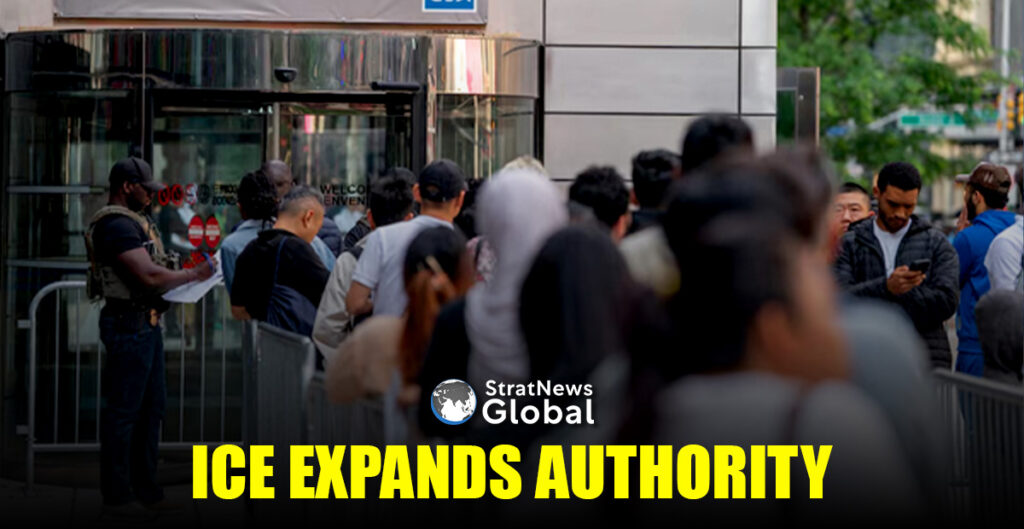
Under President Donald Trump, Immigration and Customs Enforcement (ICE) has emerged as the central engine of his expansive migrant crackdown, strengthened by unprecedented funding and broader authority for raids, while staff face extended hours and mounting public criticism over the arrests.
Those internal pressures are taking a toll. Two current and nine former ICE officials told Reuters the agency is grappling with burnout and frustration among personnel as agents struggle to keep pace with the administration’s aggressive enforcement agenda.
The agency has launched a recruitment drive to relieve the stress by hiring thousands of new officers as quickly as possible, but that process will likely take months or years to play out.
All of those interviewed by Reuters backed immigration enforcement in principle. But they criticised the Trump administration’s push for high daily arrest quotas that have led to the detention of thousands of individuals with no criminal record, as well as long-term green card holders, others with legal visas, and even some U.S. citizens.
Most of the current and former ICE officials requested anonymity due to concerns about retaliation against themselves or former colleagues.
Americans have been inundated with images on social media of often masked agents in tactical gear handcuffing people on neighbourhood streets, at worksites, outside schools, churches, and courthouses, and in their driveways. Videos of some arrests have gone viral, fueling public anger over the tactics.
Under Trump, average daily arrests by the 21,000-strong agency have soared, up over 250% in June compared to a year earlier, although daily arrest rates dropped in July.
Trump has said he wants to deport “the worst of the worst,” but ICE figures show a rise in non-criminals being picked up.
ICE arrests of people with no other charges or convictions beyond immigration violations during Trump’s first six months in office rose to 221 people per day, from 80 people per day during the same period under former President Joe Biden last year, according to agency data obtained by the Deportation Data Project at the University of California, Berkeley, School of Law.
Some 69% of immigration arrests under Trump were of people with a criminal conviction or pending charge, the figures show.
Some ICE investigators are frustrated that hundreds of specialised ICE investigative agents, who normally focus on serious crimes such as human trafficking and transnational gangs, have been reassigned to routine immigration enforcement, two current and two former officials said.
In an interview with Reuters, Trump’s border czar, Tom Homan, acknowledged that the long hours and reassignment of specialist agents had frustrated some ICE personnel but said Trump’s January 20 declaration of a national emergency around illegal immigration warranted it.
“There’s some staff that would rather be doing other types of investigations, I get that, but the president declared a national emergency,” Homan said.
Homan, who spent three decades in immigration enforcement and joined ICE at its inception in 2003, said the long hours should lessen as hiring of new ICE staff speeds up.
“I think morale is good. I think morale will get even better as we bring more resources on,” he said.
Another stress factor for more senior officials is the perpetual threat of being removed for failure to produce arrests, underscored by multiple changes of leadership at ICE since Trump took office in January, five of the ICE officials said.
In response to a request for comment, a senior official with the U.S. Department of Homeland Security, ICE’s parent agency, downplayed concerns about morale, saying officers were most bothered by being targeted in assaults, as well as criticism from Democrats.
The senior official said ICE personnel “are excited to be able to do their jobs again” after being subjected to limits under Biden.
Intense Pressure
At the centre of the complaints, the current and former ICE officials said, was the demand by the White House for ICE to sharply increase immigration arrest numbers to about 3,000 a day, 10 times the daily arrest rate last year under Trump’s Democratic predecessor, former President Joe Biden.
In some cases, officers on raids have gone to wrong addresses following leads that relied on artificial intelligence, increasing the chances of picking up the wrong person or putting an officer in danger, according to one current and two former officials.
“The demands they placed on us were unrealistic. It was not done in a safe manner or in the manner to make us most successful,” the current official said.
During recent raids in several U.S. cities, masked ICE agents have been confronted by angry residents demanding they identify themselves and chasing them out of neighbourhoods.
“In a lot of communities, they’re not looked upon favorably for the work they do. So I’m sure that’s stressful for them and their families,” said Kerry Doyle, a former top legal adviser at ICE.
ICE also faced backlash during Trump’s 2017-2021 presidency, when activists and some Democrats made “Abolish ICE” a rallying cry, but the agency’s more aggressive enforcement in recent months has further thrust it into the spotlight.
Trump’s public approval rating on immigration fell to 43% in a Reuters/Ipsos poll in August from a high of 50% in March as Americans took an increasingly dim view of his heavy-handed tactics against migrants.
That view has been shaped in part by news reports of students being arrested on campuses or on their way to sports practice, parents being detained while dropping children at school, ICE officers breaking windows and pulling people from cars, and men surrounded and shackled while waiting at bus stops or at Home Depots to travel to work.
One former ICE official said at the beginning of the administration, several former colleagues told him they were happy the “cuffs are off.”
But several months later, he said, they are “overwhelmed” by the arrest numbers the administration is demanding.
“They would prefer to go back to focused targeting,” he said. “They used to be able to say: ‘We are arresting criminals.'”
Hiring Spree
A Republican-backed spending package passed by the U.S. Congress in July gave ICE more money than nearly all other federal law enforcement agencies combined – $75 billion over a little more than four years – including funds to detain at least 100,000 migrants at any given time.
The Trump administration has launched a vigorous recruitment drive on the back of the new funding to meet its goal of hiring 10,000 ICE officers over the next four years.
Using wartime-style posters and slogans such as “America needs you,” ICE has launched a media blitz highly unusual for a government agency, running ads on social media platforms like Instagram and YouTube.
Homeland Security said more than 115,000 “patriotic Americans” had applied for jobs with ICE, although it did not say over what time period.
The ICE hiring spree resembles a similar surge to onboard Border Patrol agents in the mid-2000s, which critics say increased corruption and misconduct in its ranks.
Asked about the risk of bringing in less qualified people in the rush to staff up, Homan said ICE should choose “quality over quantity.”
“Officers still need to go through background investigations, they still need to be vetted, they still need to make sure they go to the academy,” Homan said.
(With inputs from Reuters)
UN Probe Into Israeli Violence Stalled By Lack Of Funds, Document Reveals
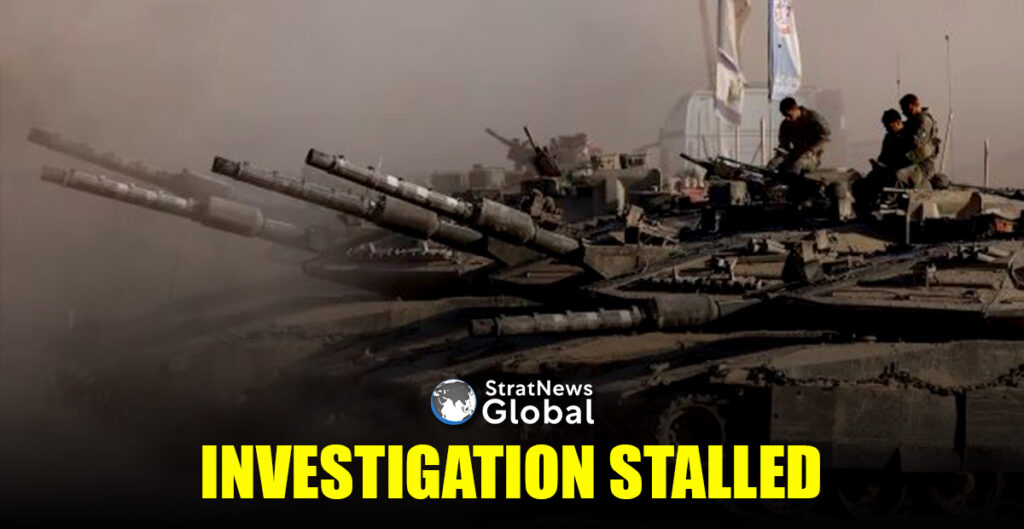
A United Nations team investigating attacks by Israeli settlers and the flow of weapons to Israel for the Gaza conflict has been unable to finish its work due to budget shortages, according to a document.
The incident shows how dire funding shortages in the U.N. system, caused by donor fatigue and belt-tightening, are harming global accountability efforts for abuses after a Congo probe was stalled earlier this year.
The Independent International Commission of Inquiry on the Occupied Palestinian Territory – established in May 2021 by the Geneva-based Human Rights Council – can provide evidence of international crimes used in pre-trial investigations by tribunals like the International Criminal Court.
Last year the council approved a request from Pakistan to research additional evidence on arms transfers to Israel in the context of the Gaza war and Israeli settler violence.
Lack Of Funds
But Navi Pillay who heads the inquiry told the council’s president in an August 6 letter that a lack of funds meant it was unable to hire staff.
“The Commission has started informing the sponsors of the two resolutions that it will be unable to produce these mandated reports and present them to the Council in March 2026,” said Pillay, who has served as a judge at the ICC and is a former U.N. High Commissioner for Human Rights.
Israel has regularly criticised the commission, which has condemned violence by the Israeli military since it launched its Gaza offensive after the deadly Hamas attacks of October 7, 2023.
A backlog of U.N. mandatory fees, including from top donor the United States which owes around $1.5 billion, has worsened a long-running U.N. liquidity crisis. In response, the global body plans to cut its budget by 20%.
Overall, 12 of the current 47 voting members on the council – set to meet in September to discuss crises in Sudan and Afghanistan – have outstanding fees, according to a tally by the International Service for Human Rights.
Nada Al Nashif, Deputy High Commissioner for Human Rights, said investigations were now running at around 50% staffing levels.
“Without the timely availability of funds, implementation has become and will continue to be increasingly constrained and in some cases it will simply not be possible,” she said.
(With inputs from Reuters)
UK’s Farage Proposes Repealing Rights Laws, Deporting Asylum Seekers
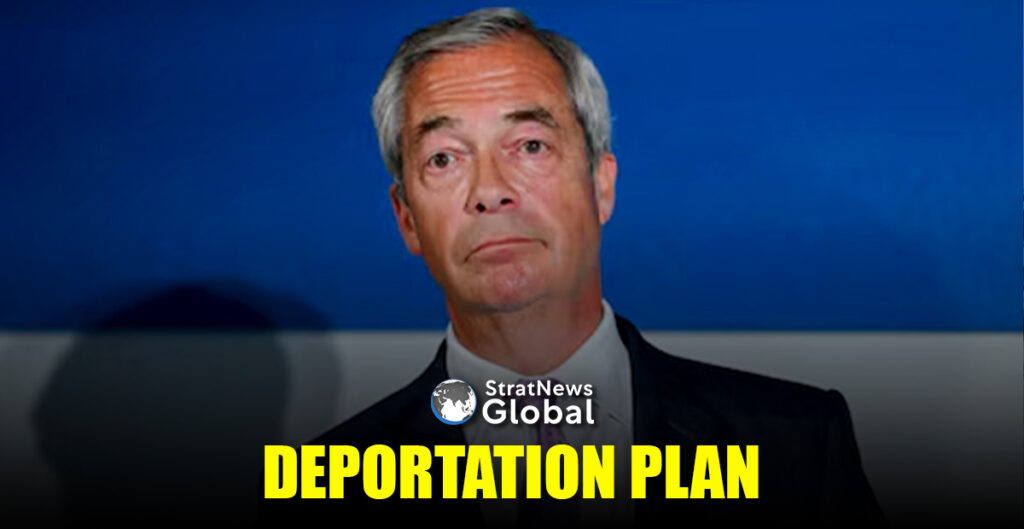
Nigel Farage, leader of Britain’s anti-migration Reform UK party, unveiled a plan on Tuesday to repeal human rights laws, enabling mass deportations of asylum seekers and reversing what he described as an “invasion” threatening national security.
Farage said his party, which is leading in national opinion polls, would remove Britain from the European Convention on Human Rights, repeal the Human Rights Act and disapply other international treaties that have been used to block the forced deportation of asylum seekers.
“The mood in the country around this issue is a mix between total despair and rising anger,” Farage said at a press conference. “It is an invasion, as these young men illegally break into our country.”
The announcement comes against the backdrop of sustained, small-scale protests in recent weeks outside hotels housing asylum seekers, in response to concerns about public safety after some individuals were charged with sexual assault.
Immigration Tops Voter Concerns
Opinion polls show that immigration has overtaken the economy as British voters’ biggest concern. Reform UK – which has just four members of parliament but is ahead in every survey of voting intentions – is putting Labour Prime Minister Keir Starmer under growing pressure to tackle the issue.
In 2024, Britain received a record 108,100 asylum applicants, almost 20% more than a year earlier. Individuals from Pakistan, Afghanistan, Iran and Bangladesh made up the largest number of applicants for asylum last year.
Much of the focus has been on those who arrive on small boats across the Channel, with record numbers arriving this year.
Starmer’s government and its predecessors have been wrestling for years with how to deal with undocumented migrants entering the country.
The plans by Reform are the most radical yet and would involve signing deals with Afghanistan, Eritrea and other countries to repatriate their nationals who arrived in Britain illegally.
Without action, Farage said, “anger will grow, in fact I think there is now, as a result of this, a genuine threat to public order, and that is the very last thing we want”.
Starmer’s government has a plan to “smash” the gangs which smuggle people to Britain by reforming the asylum appeals process and hiring more enforcement officials.
The previous Conservative government planned to deport asylum seekers to Rwanda, but the policy was ruled unlawful by Britain’s top court.
(With inputs from Reuters)
Chinese Trade Envoy To Visit Washington For Talks With US Officials
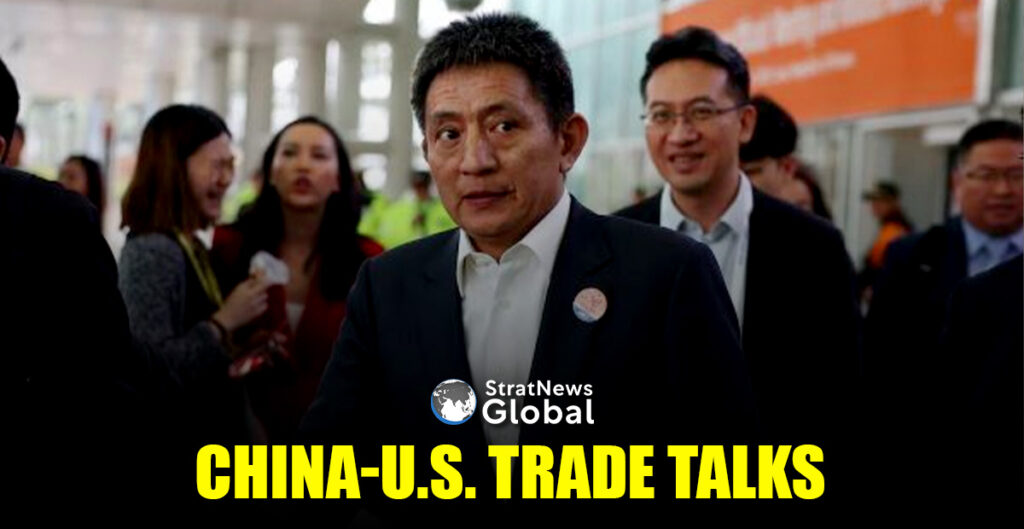
China’s top trade negotiator Li Chenggang will travel to Washington this week for discussions with American counterparts, a U.S. official confirmed, as both countries explore ways to move past their fragile tariff truce.
Li, China’s international trade representative who has participated in recent U.S. trade talks alongside Chinese Vice Premier He Lifeng, may meet deputy-level U.S. government officials, the spokesperson said late on Monday, adding that the visit was not part of a formal negotiating session.
A U.S.-based source familiar with the negotiations said there was no meeting planned between Li and U.S. Trade Representative Jamieson Greer and he was not coming at the request of the U.S. side.
Trade Negotiations
The source, who spoke on condition of anonymity due to not being authorized to speak publicly on the matter, said that Washington does not consider Li the primary interlocutor for planning future trade negotiations under the channel established by U.S. President Donald Trump and Chinese President Xi Jinping.
That role would fall to Vice Premier He, who is China’s economy czar, and U.S. Treasury Secretary Scott Bessent.
The Wall Street Journal first reported on Monday that Li would travel to Washington.
Traders on both sides of the Pacific are watching to see whether this month’s latest tariff extension will become permanent or if Trump will once again upend global supply chains with a fresh wave of prohibitively high duties on Chinese imports.
U.S. retailers are stocking up ahead of the critical end-of-year holiday season, while Chinese producers – locked out of the world’s top consumer economy – say they are in “survival mode,” scrambling to secure market share elsewhere to stay afloat.
The world’s two largest economies on August 11 agreed to extend their tariff truce for another 90 days, locking in place levies of 30% on Chinese imports and 10% Chinese duties on U.S. goods. That extension was largely negotiated in late July in Stockholm, a meeting led by He and Bessent, with Li and U.S. Trade Representative Jamieson Greer in attendance.
Once Trump’s tariffs top 35%, they become prohibitively high for Chinese exporters, economists warn.
The Chinese Commerce Ministry did not immediately respond to a request for comment.
Agriculture Discord
The timing of the visit is particularly awkward given the recent highly critical comments by the Chinese ambassador to the United States regarding Trump’s trade policy, the source said.
“(U.S.) protectionism is rampant, casting a shadow over China-U.S. agricultural cooperation,” Ambassador Xie Feng said in a speech to a soybean industry event in Washington on Friday, calling the Trump administration’s plans to curb farmland purchases by “foreign adversaries,” including China, “political manipulation.”
Agriculture has become a major point of contention, as Chinese buyers shun U.S. agricultural products such as soybeans – now subject to a 23% tariff – leaving American farmers in the lurch.
China stepping up its agricultural purchases would make a big dent in its trade surplus with the U.S., analysts say, and was how Beijing sought to meet its commitment to purchase more U.S. exports under the ‘Phase 1’ deal struck during Trump’s first term in 2020.
These purchase pledges were never met after the COVID-19 pandemic hit, and China has since largely shifted soybean purchases to Brazil.
China Hopeful Of A Better Deal
But Beijing thinks it can cut a better deal this time out.
“China’s requests will include lower tariffs and potentially access to the U.S.’ cutting-edge technologies,” said Xu Tianchen, a Beijing-based senior economist at the Economist Intelligence Unit.
“It’s quite unclear if the White House is going to accept these, and what it’s going to ask for in exchange.”
The U.S.-based source added that it would make sense for China to increase farm goods purchases to reduce the U.S. trade deficit, while noting Beijing has taken steps to cut purchases of American farm goods.
Li’s trip would follow three previous rounds of trade negotiations between the two nations since May – in Geneva, London and, earlier this month, in Stockholm.
The last time a senior Chinese trade negotiator visited the U.S. was in November 2023, when He Lifeng met then-U.S. Treasury Secretary Janet Yellen in San Francisco, ahead of the 2023 Asia-Pacific Economic Cooperation leaders’ summit in the city.
Then vice-Premier Liu He, He Lifeng’s predecessor, was the last top Chinese trade official to travel to Washington for bilateral talks, signing the ‘Phase 1’ trade deal with the Trump administration in January 2020, committing Beijing to boost purchases of U.S. exports by $200 billion over a two-year period.
(With inputs from Reuters)
France Faces New Turmoil After PM Bayrou Loses Confidence Vote
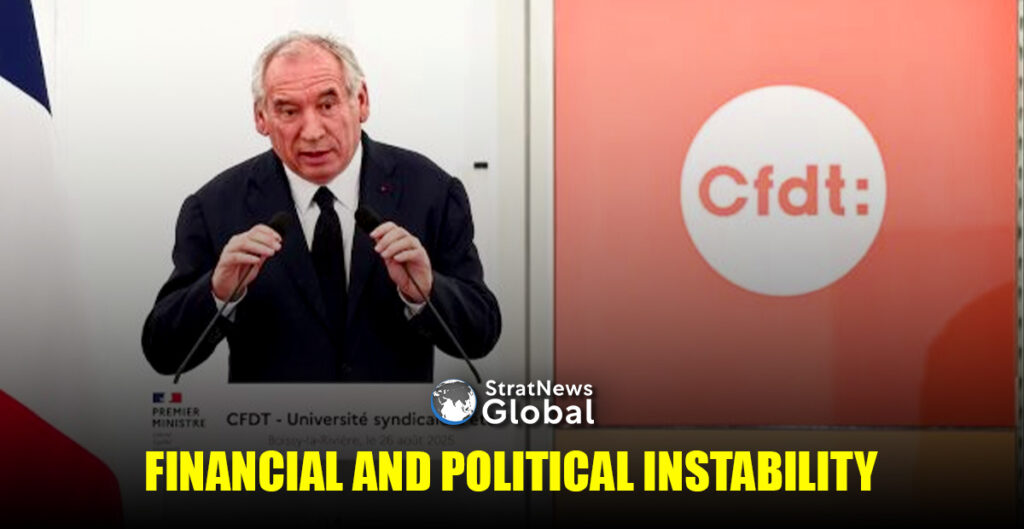
France was thrown into fresh turmoil on Tuesday after Prime Minister Francois Bayrou failed to secure support for his unpopular debt-reduction plan. The rejected confidence vote left both his government and the country’s fragile finances under greater strain, adding to the political uncertainty.
French markets tumbled after Bayrou jolted the political establishment out of its summer slumber on Monday with his unexpected move to seek a September 8 confidence vote on his debt-cutting plan.
His proposal was roundly rejected by opposition parties, who said they would relish the opportunity to cut short his minority government’s time in office.
In a symbolic moment that underlined his predicament, Bayrou tripped and nearly went flying as he took to the stage on Tuesday to deliver his first comments since the previous night’s announcement. He said lawmakers must now choose between “chaos” and “responsibility,” and urged the French to pressure their representatives to make a prudent choice ahead of September 8.
“I am not asking anyone to change his mind but one can think it over,” Bayrou later told journalists.
If Bayrou falls, French President Emmanuel Macron could dissolve parliament and hold fresh legislative elections – a move he has previously rejected – or install a new government. However, neither course of action is likely to solve France’s budget issues or political gridlock.
A source in a key ministry said they expected Macron to opt for a new prime minister.
Financial Instability
“The French prime minister’s decision to call an early vote of confidence is most likely to trigger his replacement with yet another prime minister or (less likely) fresh legislative elections,” Capital Economics analysts wrote.
“Either way, France’s budget deficit will remain well above the level needed to stabilize the debt ratio.”
Interior Minister Bruno Retailleau, who leads the conservative Republicans, said it would be “irresponsible” and “against France’s interests” to vote for the government to fall.
Others disagreed.
The far-right National Rally, led by Marine Le Pen, said it wants Macron to call a snap parliamentary election.
“I don’t see what new prime minister wouldn’t be immediately censured,” a source close to Le Pen said.
The Socialists, whose vote will be crucial, also said they would vote against Bayrou.
“We need a different prime minister and, above all, a different policy,” lead Socialist lawmaker Boris Vallaud wrote on X.
The confidence vote will be held two days before protests called by various groups on social media and backed by leftist parties and some unions, recalling the Yellow Vest unrest that erupted in 2018 over fuel price hikes and the cost of living.
“Unless Francois Bayrou is confirmed in office – which is a hypothesis today that appears unlikely – we will enter a new phase which will be a phase of destabilisation,” said pollster Jean-Daniel Levy, predicting negative consequences for the economy and France’s image abroad.
What Next?
A source close to Bayrou said his government was open to negotiation on the details of his budget proposals, though they were adamant that a budget squeeze is necessary.
Bayrou said on Tuesday he would ask high-income taxpayers to make a special effort to help curb the deficit.
Bayrou knew a no-confidence vote would eventually be tabled over the budget and decided to get ahead of the opposition, the source said.
France’s blue chip CAC40 index was down 1.5% on Tuesday, having fallen 1.6% late on Monday. Banking giants BNP Paribas and Societe Generale slid more than 6% each.
Meanwhile, 10-year French government bond yields briefly rose to 3.53%, the highest since March , before steadying at 3.50%. When a bond’s yield rises, its price falls.
(With inputs from Reuters)
Lebanon Seeks Hezbollah Disarmament, Israel Signals Pullback
Lebanon will unveil a proposal on Sunday to encourage Hezbollah to lay down arms, while Israel is likely to present its own roadmap for military withdrawal, according to senior US envoy Thomas Barrack.
Speaking after talks with President Joseph Aoun in Beirut, Barrack said the Lebanese proposal would not involve military coercion but would focus on efforts to encourage Hezbollah to surrender its weapons – including addressing the economic impact on fighters funded by Iran.
“The Lebanese army and government are not talking about going to war. They are talking about how to convince Hezbollah to give up those arms,” Barrack said.
Israel’s Conditional Withdrawal
The move this month by the Lebanese cabinet to task the army with drawing up the plan to establish a state monopoly on arms has outraged heavily armed Hezbollah, which says such calls only serve Israel.
Israel signaled on Monday it would scale back its military presence in southern Lebanon if Lebanon’s armed forces took action to disarm the Iran-backed Shi’ite militant group.
Barrack, who met Israeli Prime Minister Benjamin Netanyahu on Sunday, described that development as “historic”.
“What Israel has now said is: we don’t want to occupy Lebanon. We’re happy to withdraw from Lebanon, and we will meet those withdrawal expectations with our plan as soon as we see what the plan is to actually disarm Hezbollah,” he said.
While no formal proposals have been exchanged, Barrack said verbal commitments from both sides suggested a narrowing path toward implementation.
Hezbollah’s Response
Hezbollah was significantly weakened in last year’s war with Israel, which killed many of its top commanders and fighters. A US-brokered ceasefire ending the conflict obliges the Lebanese state to disarm all non-state armed groups.
Hezbollah chief Naim Qassem, in a recorded speech aired on Monday, rejected a step-by-step framework under which an Israeli withdrawal and Hezbollah disarmament would proceed in parallel.
Qassem said Hezbollah would not discuss a national defence strategy until Israel fully implemented the ceasefire agreement signed on November 27.
“Let them implement the (ceasefire) agreement … then after that we will discuss the defence strategy,” Qassem said.
The Israeli military continues to carry out periodic air strikes in Lebanon that it says target Hezbollah militants and facilities used by the group to store weapons.
Economic Factors, Diplomatic Momentum
Barrack stressed that any disarmament initiative must address the economic impact on tens of thousands of Hezbollah fighters and their families, many of whom rely on Iranian funding.
“If we’re asking a portion of the Lebanese community to give up their livelihood, because when we say disarm Hezbollah, we’re talking about 40,000 people being paid by Iran, you can’t just take their weapons and say, ‘Good luck, go plant olive trees’. We have to help them.”
He said Gulf states, including Qatar and Saudi Arabia, were prepared to support Lebanon’s economy – particularly in the south, which is Hezbollah’s stronghold – as part of an initiative to provide alternatives to Hezbollah’s payroll system.
Barrack said discussions were under way to build an “economic forum” backed by the Gulf, the US, and Lebanese authorities that would offer sustainable livelihoods “not determined by whether Iran wants it or not”.
(With Inputs from Reuters)
French Minister Hints At Snap Polls Amid PM Bayrou’s Confidence Vote Gamble
France may be on course for another snap parliamentary election, a government minister indicated on Tuesday, after opposition parties vowed to unseat Prime Minister Francois Bayrou and French markets plunged.
Bayrou jolted the political establishment out of its summer slumber on Monday with his unexpected move to seek a September 8 confidence vote on his debt-cutting plan.
The country’s main opposition parties were quick to make it clear that they would be voting against him and his minority government.
“We need a different Prime Minister and, above all, a different policy,” lead Socialist lawmaker Boris Vallaud wrote on X.
The confidence vote will take place two days before protests called by various groups on social media and backed by leftist parties and some unions, drawing comparisons with the Yellow Vest protests that erupted in 2018 over fuel price hikes and the cost of living.
Those “gilets jaunes” protests spiralled into a broader movement against Macron and his efforts at economic reform.
What Next?
If the government falls, President Emmanuel Macron could name a new prime minister immediately or ask Bayrou to stay on as head of a caretaker government, or he could call another snap election.
Justice Minister Gerald Darmanin told France 2 TV that while the government was still working on trying to find a compromise agreement, he “could not rule out” the scenario of another costly dissolution of parliament.
Macron, who is the only person who can dissolve parliament and launch fresh legislative elections, has yet to comment on Bayrou’s move, although Bayrou’s entourage said on Monday that Macron had signed off on the plan.
Macron lost his last prime minister, Michel Barnier, to a no-confidence vote over the budget in late 2024, after just three months in office following a snap election in July that year.
Finance Minister Eric Lombard said the government was still hoping to reach a last-minute deal with the opposition to avoid a government collapse, but from the far-right to the hard left, party leaders made clear that was unlikely to happen.
Jean-Luc Melenchon of the hard left France Unbowed went even further, saying Macron himself should step down.
“Emmanuel Macron must go. He is responsible for the crisis,” Melenchon wrote on X.
When he called a snap election in June last year, Macron said it would bring “clarity” – the very same words used by Bayrou on Monday to explain why he was holding a confidence vote. But the 2024 snap election only resulted in a more fragmented parliament, bringing no clarity at all.
“If Bayrou loses the confidence vote, the political ball will fall into President Emmanuel Macron’s court,” Berenberg analyst Salomon Fiedler said.
In case of a snap election, opinion polls show that “most likely, the new parliament would remain divided without an outright majority for one of the three political camps,” he said.
France’s blue-chip CAC40 index was down nearly 2% in early trade on Tuesday, having fallen 1.6% late on Monday. France’s 10-year bond yield rose around 3 basis points in early trade to around 3.52%, its highest since March. When a bond’s yield rises, its price falls.
(With inputs from Reuters)
More Palestinian Families Flee Gaza As Israelis Protest For Hostage Release, War’s End
More Palestinian families departed Gaza City on Tuesday following a night of Israeli shelling on its outskirts, while Israelis staged nationwide protests demanding the release of hostages and an end to the Gaza war.
Residents said Israeli aerial and tank shelling continued throughout the night and early on Tuesday in the eastern Gaza City suburbs of Sabra, Shejaia, and Tuffah, as well as in Jabalia town to the north, destroying roads and houses.
“Earthquakes, we call it, they want to scare people to leave their homes,” said Ismail, 40, a Gaza City resident.
The Israeli military has said its forces are operating in the area to locate weapons and destroy tunnels used by militants. Despite widespread protests at home and international condemnation, Israel is preparing to launch a new offensive in Gaza City, in what it describes as Hamas’ last bastion.
Israeli strikes at Nasser Hospital in the southern Gaza Strip on Monday killed at least 20 people, including journalists working for Reuters, the Associated Press, Al Jazeera and others.
At least 34 people were killed in Israeli strikes in the enclave overnight and on Tuesday, local health authorities said, including 18 people around Gaza City.
Around half of the enclave’s two million people currently live in Gaza City, with several thousand already moved westward, pouring into the heart of the city and along the coast.
Others have ventured further south to central Gaza and the coastal area of Al-Muwasi near Khan Younis.
Monday’s attack on Nasser hospital in Khan Younis killed cameraman Hussam al-Masri, a Reuters contractor, near a live broadcasting position operated by Reuters.
Prime Minister Benjamin Netanyahu said Israel deeply regretted what he called a “tragic mishap,” but the Israeli military has yet to provide details of the incident.
Israeli ‘Day Of Disruption’
Israeli protesters blocked roads in Tel Aviv and elsewhere in the country, holding up pictures of hostages still held in Gaza and calling for the war to end. A rally planned outside Israel’s defence headquarters later on Tuesday is expected to draw thousands of people.
“For 690 days, the government has been waging a war without a clear objective,” said Einav Zangauker, mother of Israeli hostage Matan Zangauker, in a statement with other hostage families who launched the so-called Day of Disruption.
“How will the hostages, the living and the fallen, be returned? Who will govern Gaza the day after? How do we rebuild our country?” she said.
The war began on October 7, 2023, when Hamas-led gunmen burst into southern Israel, killing some 1,200 people, mainly civilians, and taking 251 hostages.
Israel’s military offensive against Hamas has since killed at least 62,000 Palestinians, mostly civilians, according to the Gaza health ministry, plunged the enclave into a humanitarian crisis, and internally displaced nearly its entire population.
(With inputs from Reuters)
Sri Lanka Ex-President Ranil Wickremesinghe Granted Bail
A court in Sri Lanka on Tuesday granted bail to former President Ranil Wickremesinghe, who had been arrested last week on allegations of misusing state funds during his time in office.
Wickremesinghe, 76, joined the court hearing via Zoom from a state-run hospital. His United National Party (UNP) said he was admitted over the weekend on his doctor’s advice to monitor his health.
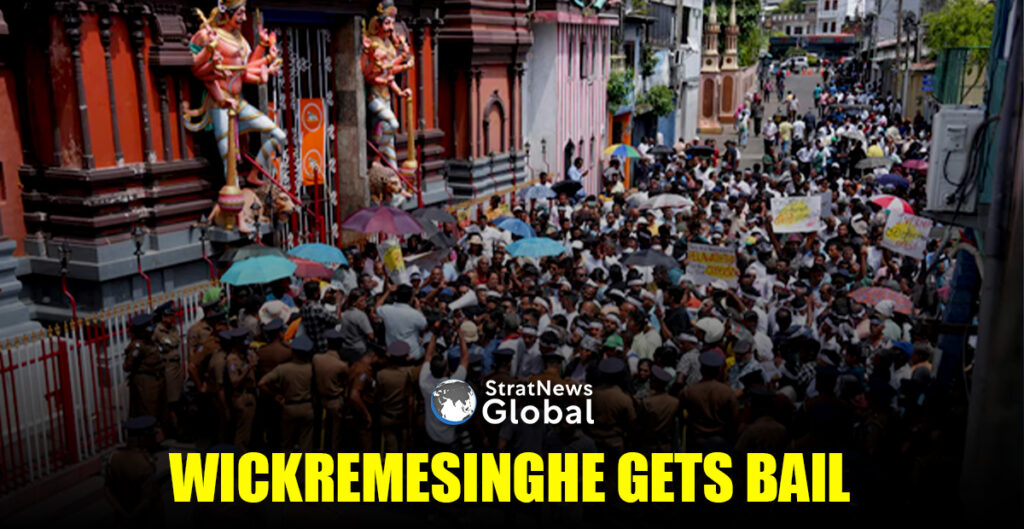
Hundreds of supporters, including opposition politicians, gathered outside the court in central Colombo ahead of the hearing. Police cordoned off the complex by placing yellow barricades to keep the crowd in check.
“This is a sign of the independence of our judiciary,” Akila Viraj Kariyawasam, the UNP’s deputy secretary, told reporters outside the courthouse.
“We came out in support of democracy and due process. The government should continue measures to fight against corruption. We have no objection to that.”
The UNP has said Wickremesinghe, who lost power in a 2024 presidential election, is innocent and suggested that the case against him is politically motivated, which Sri Lanka’s ruling party, headed by President Anura Kumara Dissanayake, denies.
The case against him is based on an investigation made into a visit he made to Britain in 2023 to attend a special graduation lunch as part of celebrations of his wife’s honorary professorship at a university there.
A lawyer by profession, Wickremesinghe also served as Sri Lanka’s prime minister a record six times, before becoming president in 2022 at the height of the island nation’s debilitating financial crisis.
Case Against Wickremesinghe
In 2023, Ranil Wickremesinghe made a stopover in London while returning from Havana, where he had taken part in the G77 summit. During his stay in the British capital, he, along with his wife, attended a ceremonial event hosted by the University of Wolverhampton.
Wickremesinghe has consistently maintained that the travel expenses of his wife were borne by her personally and that there was no use of public funds for her trip.
The Criminal Investigation Department, however, has alleged that Wickremesinghe misused state money to cover his own travel costs during what was described as a private visit. Furthermore, the CID claims that his security personnel accompanying him were also financed with government funds.
(With inputs from Reuters)