

Support us by contributing to StratNewsGlobal on the following UPI ID
ultramodern@hdfcbank

Strategic affairs is our game, South Asia and beyond our playground. Put together by an experienced team led by Nitin A. Gokhale. Our focus is on strategic affairs, foreign policy and international relations, with higher quality reportage, analysis and commentary with new tie-ups across the South Asian region.
You can support our endeavours. Visit us at www.stratnewsglobal.com and follow us on YouTube, Twitter, Facebook and Instagram.
र 500 per month
र 1000 per month
र 5000 per year
र 10000 per year
Donate an amount of your choice
र 500 per month
Donate र 500 per month

र 1000 per month
Donate र 1000 per month
र 5000 per year
Donate र 5,000 per year
र 10000 per year
Donate र 10,000 per year
Donate an amount of your choice
Donate an amount of your choice
Ten Killed, 38 Wounded In Russia’s Overnight Strike On Kyiv, Ukraine Says
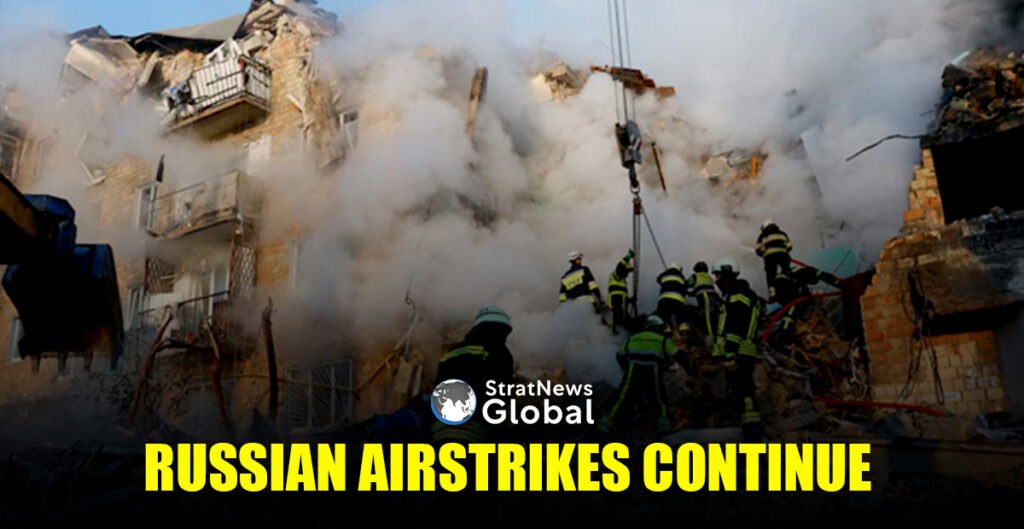
Russian forces carried out a massive overnight drone and missile strike on Kyiv, killing 10, wounding 38, and damaging homes and buildings in seven districts, Ukrainian officials said on Thursday.
President Volodymyr Zelenskyy said the attack, which also killed a child, showed the world Russia’s answer to diplomacy amid efforts by U.S. President Donald Trump to end the war.
“Russia chooses ballistics instead of the negotiating table,” Zelenskyy said on X, calling for new sanctions on Russia. “It chooses to continue killing instead of ending the war.”
Kyiv city authorities reported at least 38 injuries as the search and rescue operations were underway, with emergency services putting out the fires and sifting through the rubble of destroyed buildings.
Explosions lit up the night sky in the capital during the air alert, which lasted for over nine hours, with clouds of smoke covering the sky as drones buzzed overhead.
Combined Strikes
Ukrainian air force said it downed 563 of 598 drones and 26 of 31 missiles launched by Russia in a country-wide attack.
The Air Force recorded hits at 13 locations and debris falling at 26 locations.
“Unfortunately, the Russians’ style is typical in their attacks,” Tymur Tkachenko, head of Kyiv’s military administration, wrote on Telegram.
“Combined strikes, from different directions. And systematic, targeting ordinary residential buildings.”
Russia, which denies targeting civilians, has stepped up air strikes in recent months on Ukrainian towns and cities far from the front lines of the war.
Ukrainian officials listed numerous buildings that had suffered damage, including several high-rise apartment blocks.
In Darnytskyi district, an eastern suburb, a five-storey building had been partly destroyed, Tkachenko said, and rescue teams were searching the rubble for trapped residents.
Emergency crews are tackling the aftermath of the attacks at more than 20 sites in the capital, he said.
Separately, Moscow’s Defence Ministry said that Russian air defence systems intercepted and destroyed 102 Ukrainian drones overnight, which had targeted at least seven regions.
In the overnight attack, Ukraine’s forces attacked Afipsky and Kuybyshevskyi oil refineries, according to the Ukrainian drone forces commander.
(With inputs from Reuters)
Modi Pursues Stronger Asian Ties Amid US Tariff Strain
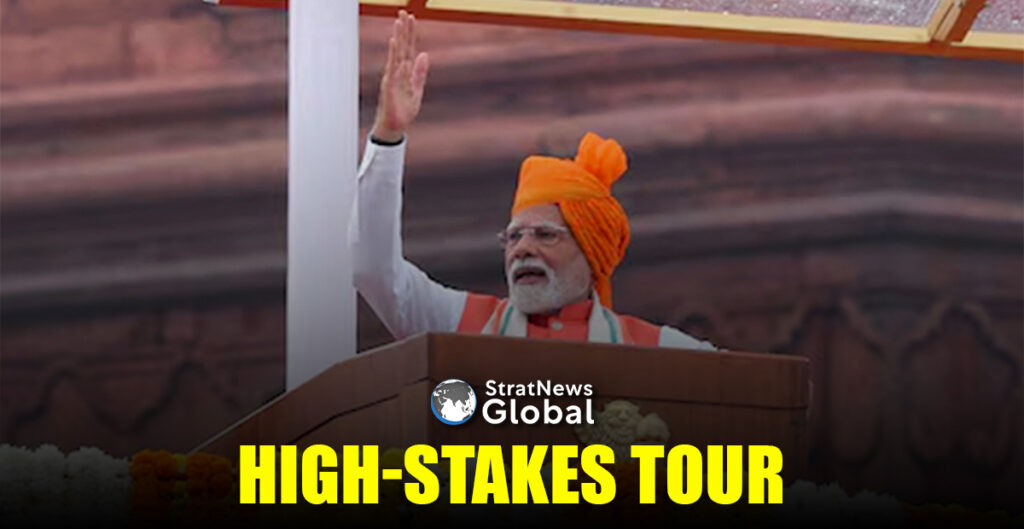
Prime Minister Narendra Modi is embarking on a high-stakes Asia tour on Thursday to meet leaders of China, Japan, and Russia, aiming to strengthen ties as New Delhi grapples with Trump’s escalating tariff offensive
By drawing nearer to some of the world’s largest economies, including his first visit to China in seven years, Modi hopes to boost support for his flagship “Make in India” initiative, mainly from Japan, as Trump’s measures spur new partnerships.
“This will be an opportunity to launch several new initiatives to build greater resilience in the relationship, and to respond to emerging opportunities and challenges,” Foreign Secretary Vikram Misri said of the Japan visit.
While New Delhi says it is relying on talks to resolve Trump’s additional tariffs of up to 50% on Indian exports, Japan’s top trade negotiator cancelled a U.S. visit over a snag in the two nations’ tariff deal.
Modi’s Japan Tour
Modi’s visit to Japan on Friday and Saturday gains significance as both belong to the Quad grouping, along with Australia and the United States, which seeks to counter China’s growing influence in the Indo-Pacific region.
Despite strained ties with Washington, India said Modi and Japanese Prime Minister Shigeru Ishiba would discuss expanding cooperation within the framework of the regional security grouping.
Japanese companies are set to invest up to 10 trillion yen ($68 billion) in India in the next decade, public broadcaster NHK said, as Suzuki Motor pledged to pump in about $8 billion over the next five to six years.
The two nations were partners “made for each other”, Modi said this week, after visiting a Suzuki plant in India.
Their leaders are expected to discuss tie-ups on critical minerals and Japanese investments in high-value manufacturing in India, officials said.
India is believed to hold substantial deposits of rare earths, used in everything from smartphones to solar panels, but lacks the technology to mine and process them extensively.
India-China Rapprochement
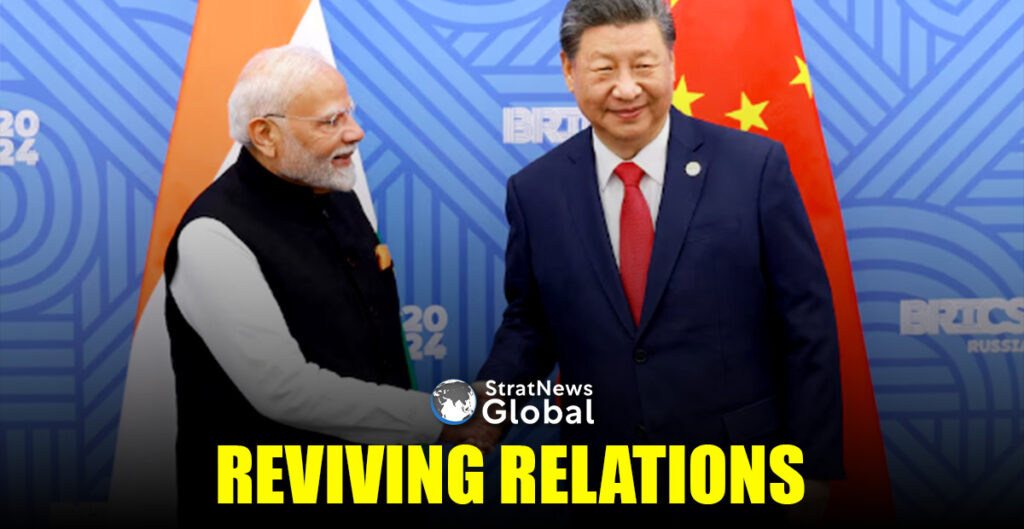
Modi next travels to China for a two-day summit of the regional security bloc Shanghai Cooperation Organisation from Sunday. His visit comes as the neighbours strive to defuse tension following deadly border clashes in 2020.
He is expected to meet both Chinese President Xi Jinping and Russian President Vladimir Putin for two-way talks.
China and India seek to resume direct flights after a gap of five years and are discussing easing trade barriers, including reopening border trade at three Himalayan crossings.
India is also considering easing investment rules that put greater scrutiny on Chinese companies, while Beijing recently agreed to lift curbs on exports of fertilisers, rare earth minerals and tunnel boring machines to India.
The meeting comes against the backdrop of Washington’s long-held desire for the world’s largest democracy to act as a counterweight to China, which analysts say could offer New Delhi leverage in the effort to secure lower tariffs.
Otherwise, India could get pushed towards China and possibly join a Beijing-led free-trade pact, the Regional Comprehensive Economic Partnership, said Devashish Mitra, an economics professor at New York’s Syracuse University.
“In the situation and climate President Trump has created, it won’t be surprising if both India and China find this a mutually beneficial transaction,” he said.
But there is limited scope to improve relations with China, said William Yang, senior Northeast Asia analyst for the International Crisis Group.
“For now, China will be happy to reciprocate India’s desire to mend some areas of the strained ties by holding high-level diplomatic talks, but is unlikely to pursue a broader diplomatic breakthrough while existing differences remain,” he warned.
($1=147.3300 yen)
(With inputs from Reuters)
Secret Letter From Xi Mended India-China Ties After Trump Tariff Salvo, Bloomberg Reports
As U.S. President Donald Trump escalated his trade war with China in March, Chinese President Xi Jinping discreetly reached out to India with a letter to his Indian counterpart, Droupadi Murmu, testing New Delhi’s openness to reset relations with Beijing, Bloomberg reported on Thursday.
According to the report, Xi’s message, which was eventually conveyed to Prime Minister Narendra Modi, voiced concern about any U.S. agreements that might undermine China’s interests and designated a provincial leader to spearhead Beijing’s outreach.
It wasn’t until June that Modi’s administration began showing genuine interest in warming ties with Beijing, an official told Bloomberg, requesting anonymity.
At the time, New Delhi was frustrated with Trump’s increasingly fraught trade negotiations and particularly irked by his public claims of mediating a ceasefire between India and Pakistan after several days of clashes in May.
By August, the thaw was unmistakable. Both India and China, bruised by Trump’s tariff salvos, agreed to intensify talks on their long-festering border disputes, dating back to colonial times, in an effort to move past the deadly 2020 clash. Modi is now preparing for his first visit to China in seven years.
The rapprochement carries profound consequences for Washington, which had long cultivated India as a strategic counterweight to China. Trump’s decision to impose 50% tariffs on Indian exports due to its Russian oil purchases jolted New Delhi and scrambled the U.S.-India dynamic.
Neither Modi’s office, India’s Ministry of External Affairs, nor China’s Foreign Ministry offered any comment on this development.
Border Frictions And Diplomacy
Even before Xi’s outreach, Modi had quietly explored ways to dial down tensions.
With elections looming and the cost of maintaining tens of thousands of troops along the 3,488-kilometre (2,167-mile) disputed frontier mounting, his government saw value in easing hostility.
By mid-2023, talks on pulling back forces had nearly succeeded, though they collapsed over technicalities. A proposed Xi-Modi meeting on the sidelines of the 2023 BRICS summit in Johannesburg was also shelved.
After Xi’s March letter, China began publicly signalling warmer intentions.
Xi described ties as a “dragon-elephant tango,” a phrase echoed by senior officials such as Vice President Han Zheng.
National Security Adviser Ajit Doval, who maintains trusted backchannels with Beijing, has since taken the lead as India’s special envoy for border talks, travelling to China twice in recent months.
Momentum picked up in July when Indian Foreign Minister S. Jaishankar visited Beijing — the first such trip in five years — for talks with his Chinese counterpart Wang Yi.
Jaishankar pressed China to refrain from trade restrictions, while Beijing assured India of continued access to fertilisers and rare earths. Direct flights are set to resume soon, and Beijing has relaxed curbs on urea exports. New Delhi, in turn, has reopened tourist visas for Chinese nationals.
Indian Firms Eye China
India’s corporate sector is also sensing an opportunity. The Adani Group is in discussions with Chinese EV giant BYD to produce batteries in India, while Reliance Industries and JSW Group are quietly pursuing deals with Chinese companies.
Modi himself welcomed the shift after meeting Wang in New Delhi earlier this month.
He is scheduled to sit down with Xi on September 1 during the Shanghai Cooperation Organisation summit in Tianjin, though significant breakthroughs remain unlikely given Pakistan’s presence in the grouping.
This would not be the first time Modi has engaged Xi directly to defuse tensions.
In 2017, during the G20 summit in Hamburg, Modi privately approached Xi to resolve the Doklam standoff, which had dragged on for over two months.
Their unscripted exchange led to a swift de-escalation. Modi and Xi have met nearly 20 times, making him one of Xi’s most frequent interlocutors after Russia’s Vladimir Putin.
Economic Drivers
The push for détente is underpinned by hard economic logic. China’s economy is sputtering, burdened by deflation and industrial overcapacity, while India, with its youthful 1.4 billion population, presents a vast potential market.
Facing rising protectionism in the West, Beijing is eyeing India as an outlet for its goods and investments.
Meanwhile, Modi’s ambition to raise manufacturing’s share of GDP to 25% requires foreign capital — much of it likely to come from China’s advanced industrial base.
If Trump’s tariffs endure, analysts warn that up to 60% of India’s U.S. exports could disappear, shaving nearly a percentage point off GDP.
Challenges Remain
Yet obstacles remain. Beijing’s close security ties with Pakistan continue to irritate New Delhi, and China reportedly aided Islamabad with military support during recent skirmishes.
India’s growing informal links with Taiwan, its participation in the Quad alliance with the U.S., Australia, and Japan, and the looming question of the Dalai Lama’s succession all present flashpoints.
Despite these risks, incremental progress continues.
For now, both sides seem content with cautious, step-by-step normalisation — a process accelerated less by goodwill than by Trump’s tariffs, which jolted two wary neighbours into talking once again.
(With inputs from IBNS)
Kenya: Rights Activist Boniface Mwangi To Run For Presidency In 2027
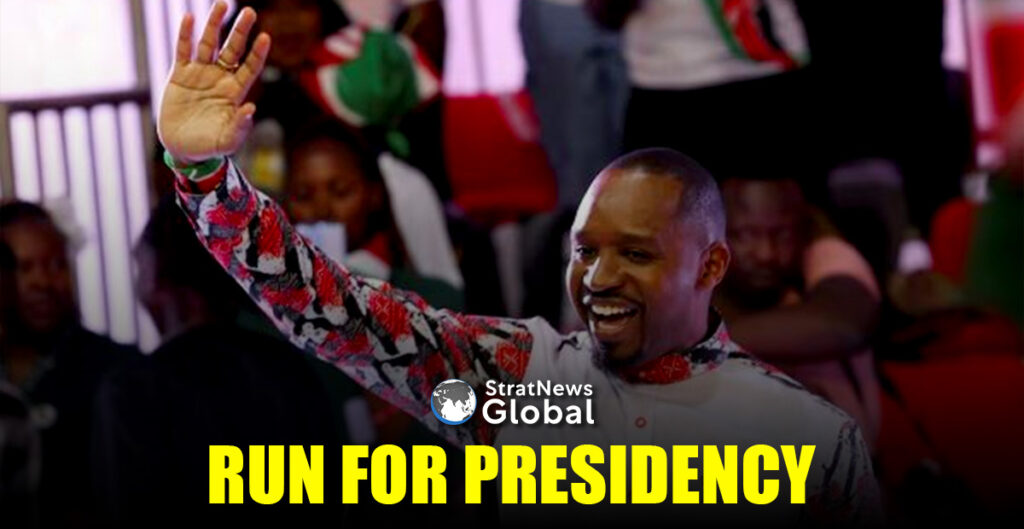
Boniface Mwangi, a prominent Kenyan human rights activist and vocal critic of the government, announced on Wednesday that he will run for presidency in the 2027 election.
His candidacy will test whether the popular support for protests, led by young Kenyans over the last two years, can be translated into an electoral movement.
Mwangi previously ran unsuccessfully for parliament in 2017 on an anti-corruption platform. He has over the course of years earned a reputation for speaking out against human rights violations in Kenya and abroad.
“Our leadership has failed us in numerous ways. You pay taxes expecting service, or you’re supposed to pay bribes to get that same service,” he said during an event to announce his presidential bid.
“So as we stand here, our country must be taken back into our hands.”
‘A Big Shame’
Mwangi was expelled from neighbouring Tanzania in May after travelling there to observe a hearing in a treason case against opposition leader Tundu Lissu.
In July, a Kenyan court charged Mwangi with possession of teargas canisters and a single rifle round found in his home.
He pleaded not guilty, saying the authorities had no evidence and called the prosecution “a big shame”.
Mwangi rose to prominence as a fearless photojournalist who captured the violence of Kenya’s 2007–2008 post-election unrest, using his images to spark public discussion and healing. He later founded civic platforms like Team Courage and Pawa254 to empower youth and advance human rights.
Elections in Kenya are due in August 2027. Mwangi’s candidacy will have to be cleared by the Independent Electoral Boundaries Commission that qualifies all candidates.
Others who have announced presidential bids include Senator Okiya Omtatah and former Chief Justice David Maraga. Incumbent President William Ruto also intends to seek re-election.
A coalition of opposition leaders, led by two former deputy presidents and other former government officials, also intends to field a presidential candidate.
(With inputs from Reuters)
Iran Site Clean-Up Seen As Erasing Possible Nuclear Evidence, Says Research Group
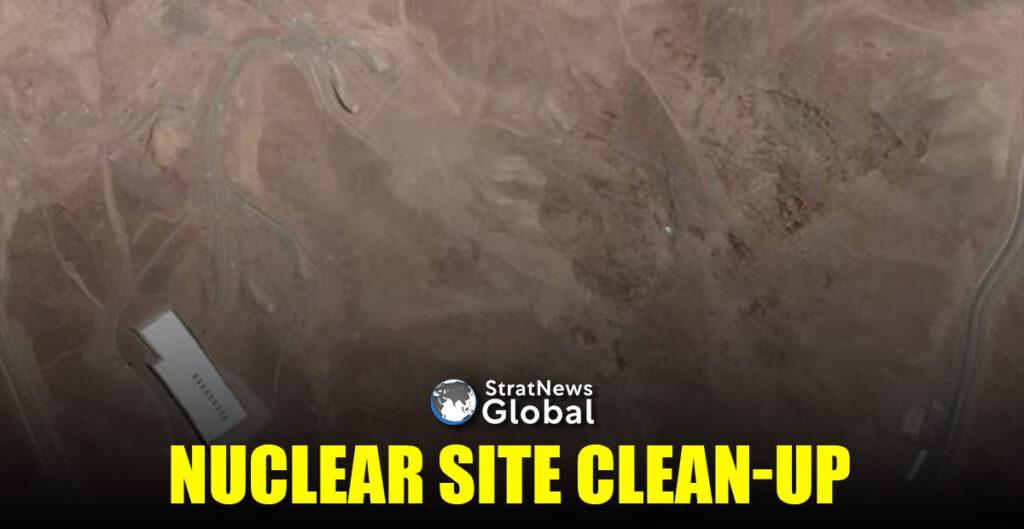
Iran has begun a rapid clean-up at a nuclear site in northern Tehran struck by Israeli air attacks, a research group reported on Wednesday, warning that the effort will likely wipe away traces of any past weapons-related activity.
Satellite imagery “shows a significant effort by Iran to rapidly demolish damaged or destroyed buildings, likely to sanitize any incriminating nuclear weapons research and development activities,” the Institute for Science and International Security said.
The institute is an independent research group that focuses on stopping the spread of nuclear weapons and is headed by David Albright, a former U.N. nuclear inspector.
Iran’s embassy to the United Nations did not immediately respond to a request for comment. Tehran denies seeking nuclear weapons and repeatedly has said its programme is for peaceful purposes.
The report on the Mojdeh site comes as the U.N. nuclear watchdog holds ongoing talks in Tehran on restarting inspections disrupted by the June 13-24 war between Israel and Iran and the June 22 U.S. strikes on the country’s three main nuclear facilities.
Britain, France and Germany are likely to begin on Thursday the process of re-imposing U.N. sanctions on Iran for violating a 2015 nuclear deal designed to prevent it from developing nuclear weapons, according to four diplomats.
Rafael Grossi, the head of the International Atomic Energy Agency (IAEA), told reporters on Wednesday at the end of a two-day visit to Washington that Iran is legally obligated to allow inspections to resume and that they should begin “as soon as possible.”
The agency, he said, wants to visit “all of the sites that are relevant,” including the main nuclear facilities – Fordow, Natanz and Isfahan – hit by the U.S. and to account for Iran’s stock of more than 400 kg (882 pounds) of uranium enriched to near weapons-grade purity.
Mojdeh Strikes
Israel twice bombed the Mojdeh site, also known as Lavisan II, adjacent to Malek Ashtar University on June 18, the institute’s report said, during the operation that hit hundreds of targets across Iran.
It noted that the IAEA had established a direct link between Mojdeh and the AMAD Plan, a nuclear weapons development programme that the agency and U.S. intelligence separately concluded ended in 2003.
The first Israeli strike on Mojdeh hit several buildings, the report said. One was associated with the Institute of Applied Physics and another had a suspected link to the Shahid Karimi Group, which the U.S. has sanctioned for work on missiles and explosive-related projects.
The group belongs to the Organization of Defensive Innovation and Research, which the U.S. and the IAEA say is the direct successor to the AMAD Plan.
The second Israeli strike destroyed the Institute of Applied Physics building, damaged a security building and destroyed a workshop, according to a June 20 satellite image from Maxar Technologies, the report said.
A July 3 image depicted the beginning of the clean-up and removal of debris, the report said. August 19 imagery showed that the Applied Physics building and workshop had been razed and the debris completely cleared, as was the building suspected of housing the Shahid Karimi group.
“The rapid work by Iran to quickly demolish and clear the rubble of these important buildings appears to be an effort to sanitize the site and limit the availability of any possible future inspection from obtaining” evidence of nuclear weapons-related work, the report said.
(With inputs from Reuters)
North Korea: Kim Jong Un To Join China’s World War II Victory Parade
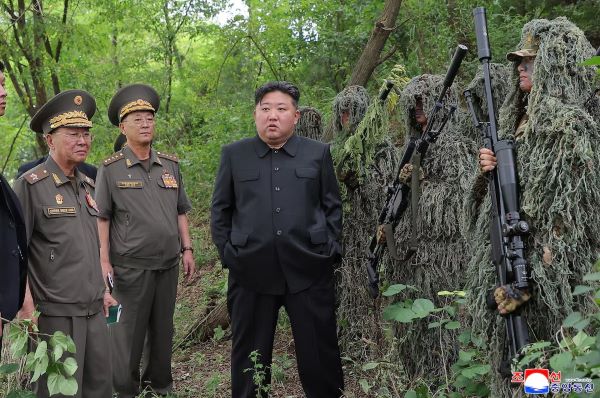
North Korean leader Kim Jong Un will travel to China next week to take part in a military parade marking Japan’s surrender in World War II, state media reported, in what could be his most significant international appearance to date.
Kim is visiting at the invitation of China’s President Xi Jinping, North Korea‘s state media KCNA said.
Russian President Vladimir Putin, who faces an outstanding arrest warrant by the International Criminal Court (ICC) on allegations of war crimes in Ukraine, will also be at the parade.
No major Western and European Union leaders are among the 26 foreign heads of state and government attending apart from Slovakia’s Prime Minister Robert Fico, China’s foreign ministry said.
“It is quite unusual for Kim to attend a Victory Day ceremony, and it may be the first time Kim is attending a gathering of many heads of state, where he can meet Putin, Xi and Vietnam’s Communist Party chief at once,” said Yang Moo-jin, president of the University of North Korean Studies in Seoul.
“Kim will seek to broaden his global status as a leader, and North Korea, China and Russia may seek to jointly respond to cooperation between South Korea, Japan and the U.S,” said Yang.
International Sanctions
North Korea is under heavy international sanctions imposed over its nuclear weapons and ballistic missile programmes that were developed in violation of U.N. Security Council resolutions.
Experts and international officials say the sanctions have lost much of their bite amid growing economic, military, and political support from Russia and China.
Beijing has been one of North Korea’s traditional allies and a major economic lifeline for the isolated state, though China joined other countries like the U.S. in applying international sanctions in 2017 on Pyongyang.
Xi and Kim met several times in 2018 and 2019 but relations between North Korea and China have cooled since 2020 over what experts say are issues such as Beijing pushing for the repatriation of North Korean labourers.
During this period North Korea and Russia have become closer militarily and Pyongyang has sent an unprecedented number of armaments and troops to support Russia in its war against Ukraine.
South Korea’s parliament speaker Woo Won-shik is expected to attend the parade.
Asked whether Woo would meet Kim or any other North Korean officials in China, Woo’s spokesperson said on Thursday there was no planned schedule so far.
(With inputs from Reuters)
Jimmy Lai’s National Security Trial Concludes In Hong Kong
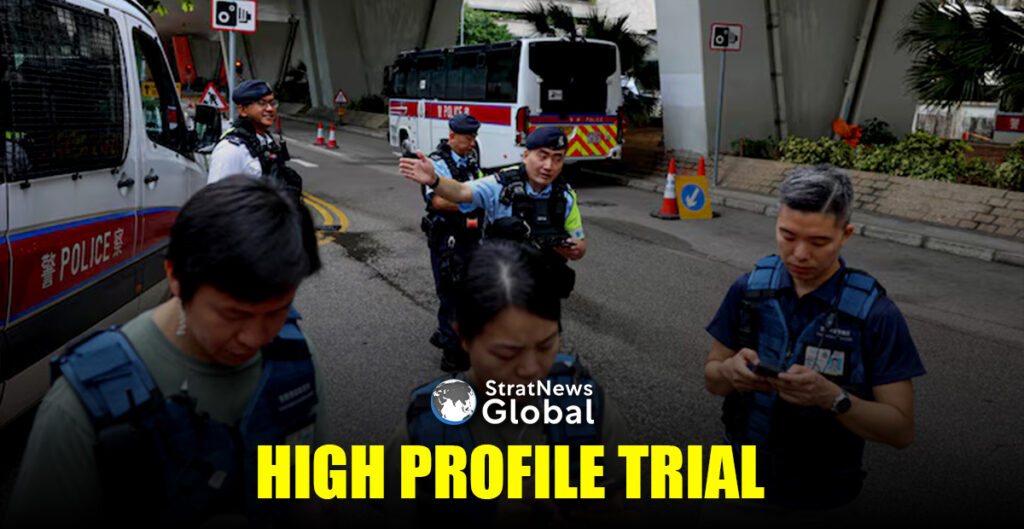
Closing arguments ended Thursday in the high-profile national security trial of Hong Kong media tycoon Jimmy Lai, a case widely seen as a key test of rule of law in the China-ruled city.
A verdict is yet to be given in the 156-day trial that began in December 2023.
The case has become the most high-profile example of China’s crackdown on rights and freedoms in the Asian financial hub under a sweeping national security law that was imposed after mass pro-democracy protests in 2019.
Not Guilty
When asked to give an indication of the verdict date, one of the judges Esther Toh said this would be announced “in good time”.
The 77-year-old Lai, who is the founder of the now-shuttered pro-democracy Apple Daily newspaper, has pleaded not guilty to two charges of conspiracy to collude with foreign forces, and a charge of conspiracy to publish seditious material.
Trump’s Help
Some countries such as the US say the trial is politically motivated and have demanded Lai’s immediate release. The Chinese and Hong Kong governments say he is being given a fair trial.
US President Donald Trump said earlier in August that he would look into what he could do to help “save” Lai.
“I’m going to do everything I can to save him,” Trump told Fox News Radio’s “The Brian Kilmeade Show” in an interview. “We’ll see what we can do … we’re going to do everything we can.”
Charges
Lai, who faces possible life imprisonment, stands accused of using the Apple Daily as a platform to conspire with six former executives and others to produce seditious publications between April 2019 and June 2021, and to collude with foreign forces, including the US, between July 2020 and June 2021.
He was accused of conspiring with activist Andy Li, paralegal Chan Tsz-wah and others to invite foreign countries to impose sanctions, blockades and other hostile activities against Hong Kong and China.
He was also accused of financing advocacy group Stand with Hong Kong.
(With inputs from Reuters)
US: CDC Director Fired Amid Vaccine Policy Dispute
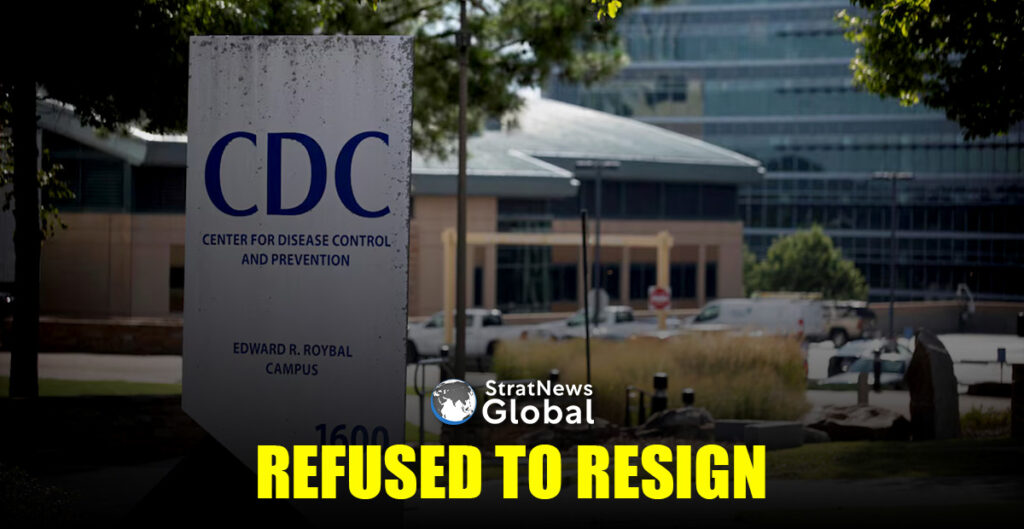
In a sudden shake-up, US CDC Director Susan Monarez has been sacked less than a month after taking charge, the White House said on Wednesday, as four senior officials also stepped down amid mounting tensions over vaccine rules and public health directives.
Secretary of Health and Human Services Robert F. Kennedy Jr. has made sweeping changes to vaccine policies, including withdrawing federal recommendations for COVID shots for pregnant women and healthy children in May, and firing all members of the CDC’s expert vaccine advisory panel in June whom he replaced with hand-picked advisers including fellow anti-vaccine activists.
One of the officials that quit said the CDC’s vaccination recommendations were putting young Americans and pregnant women at risk.
‘Refused To Resign’
White House spokesman Kush Desai late on Wednesday said Monarez was not “aligned with the President’s agenda of Making America Healthy Again”.
Since she had “refused to resign despite informing HHS leadership of her intent to do so, the White House has terminated Monarez from her position with the CDC,” Desai said.
Monarez’s attorneys, Mark S. Zaid and Abbe David Lowell, denied she had resigned or had been fired, adding in a statement that “as a person of integrity and devoted to science, she will not resign”.
Monarez’s attorneys accused Kennedy of targeting her for refusing to support “unscientific directives” and dismiss health experts.
Rise In Misinformation
CDC Chief Medical Officer Debra Houry and National Center for Immunization and Respiratory Diseases Director Demetre Daskalakis have resigned, Houry told Reuters. They cited a rise in health misinformation especially on vaccines, attacks on science, the weaponization of public health, and attempts to cut the agency’s budget and influence in their resignation letters, reviewed by Reuters.
National Center for Emerging and Zoonotic Infectious Diseases Director Daniel Jernigan also stepped down, days after the agency reported the first US human case of screwworm linked to an ongoing outbreak in Central America. Jen Layden, Director of the CDC Office of Public Health Data, Surveillance and Technology, has also resigned, NBC News reported.
“Recently, the overstating of risks and the rise of misinformation have cost lives, as demonstrated by the highest number of US measles cases in 30 years and the violent attack on our agency,” Houry wrote in her resignation.
Budget cuts proposed by President Donald Trump’s administration and plans by Kennedy to reorganize the agency would harm its ability to address these challenges.
‘Ongoing Weaponization’
The White House sought to cut the CDC’s budget by almost $3.6 billion, leaving it with a $4 billion 2026 budget, and Kennedy announced a layoff plan earlier this year that cut 2,400 CDC employees, though some 700 were rehired.
“I am not able to serve in this role any longer because of the ongoing weaponizing of public health,” Daskalakis wrote. He declined to comment for this story.
HHS did not provide a reason for Monarez’s departure from the agency and did not address the resignations.
“Susan Monarez is no longer director of the Centers for Disease Control and Prevention. We thank her for her dedicated service to the American people,” a posting on the department’s official X account said.
Mounting Challenges
The CDC has faced mounting challenges under Kennedy’s leadership, including a shooting at its Atlanta headquarters earlier this month. The union representing CDC workers said the incident “compounds months of mistreatment, neglect, and vilification that CDC staff have endured.”
Fiona Havers, a former CDC official who resigned in June over vaccine policy, described the recent resignations as “devastating for the CDC,” adding that the departing leaders acted as a “buffer between career CDC scientists and RFK Jr. and this administration’s attacks on public health.”
Sweeping Changes
In a pointed resignation letter addressed to Houry and posted by Daskalakis on X Wednesday evening, Daskalakis said the CDC’s vaccination recommendations were putting young Americans and pregnant women at risk and disparaged Kennedy’s decision to fire the panel.
He said the health agency’s policies would return America to a pre-vaccine era where only the strong survive, risking the well-being and security of the country.
Kennedy announced further changes to COVID vaccine eligibility on Wednesday.
Monarez, a federal government scientist, was confirmed by the US Senate on July 29 after Trump nominated her earlier in the year and was sworn in by Kennedy on July 31.
She was Trump’s second nominee for the role after he withdrew his nomination in March of former Republican congressman and vaccine critic Dave Weldon, a Kennedy ally, just hours before his scheduled confirmation hearing.
Monarez’s comments during her confirmation hearing, in which she said she has not seen evidence linking vaccines and autism, contrasted her with Kennedy, who has promoted the discredited claim of such a link.
Kennedy has launched a department-wide effort to investigate the causes of the condition and said on Wednesday there would be news soon on that front.
“We have announcements that are coming out in September on autism of changes that we are going to make that will dramatically impact the effects,” he said during an event with Texas Governor Gregg Abbott.
(With inputs from Reuters)
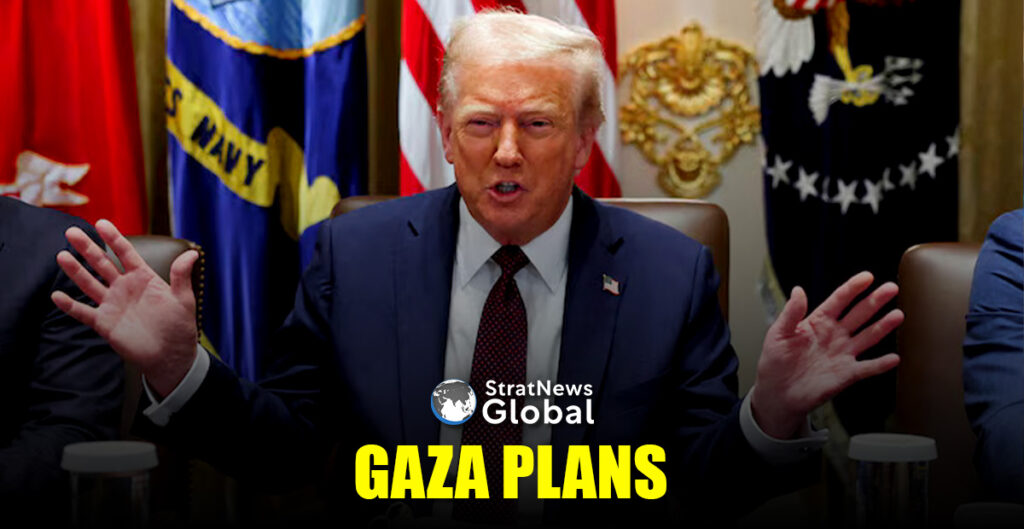
Trump Reviews Gaza Strategy With Blair, Kushner
President Donald Trump on Wednesday chaired a high-level policy meeting on the Israel-Gaza conflict and post-war strategy for Palestine, with former UK Prime Minister Tony Blair and ex-Middle East envoy Jared Kushner offering key inputs, a senior White House official confirmed.
Trump, top White House officials, Blair and Kushner discussed the hostage crisis, plans to escalate food aid deliveries, post-war plans and more, the official told Reuters.
The official described the session as “simply a policy meeting,” the type frequently held by Trump and his team.
Middle East Connections
Kushner, who is married to Trump’s daughter Ivanka, was a key White House adviser on Middle East in Trump’s first term. Blair was prime minister during the 2003 Iraq war over which he has faced widespread criticism.
Trump had promised a quick end to the war in Gaza during his presidential campaign but a resolution has been elusive seven months into his second term.
Ethnic Cleansing
Trump’s term began with a ceasefire which lasted two months, until Israeli strikes killed around 400 Palestinians on March 18. More recently, images of starving Palestinians in Gaza, including children, have shocked the world and fed criticism of US ally Israel over the deteriorating conditions.
In February, Trump proposed a US takeover of Gaza and a permanent displacement of Palestinians from the coastal territory. The plan was globally condemned and labeled as an “ethnic cleansing” proposal by rights experts and the United Nations. Forcible displacement is illegal under international law.
Trump cast the plan, which he has not publicly mentioned in recent weeks, as a re-development idea to turn Gaza into the “Riviera of the Middle East”.
The plan echoed an idea that Kushner floated a year earlier to clear Gaza of its Palestinian inhabitants and turn it into a waterfront property.
The Financial Times reported in July that the Tony Blair Institute participated in a project to develop a post-war Gaza plan. The think-tank had said it “has had many calls with different groups on post-war reconstruction of Gaza but none have included the idea of forcible relocation of people from Gaza.”
Rubio-Saar Meeting
Separately, the US State Department said Secretary of State Marco Rubio met Israeli Foreign Minister Gideon Saar in Washington and discussed Gaza and regional issues.
Saar, asked after the meeting what the plan was for a Palestinian state, said there would not be any. Some US allies have in recent weeks announced plans to recognize a Palestinian state.
Israel’s devastating assault on Gaza since October 2023 has killed over 62,000 Palestinians, according to Gaza health authorities. It has also caused a hunger crisis, internally displaced Gaza’s entire population and prompted accusations of genocide and war crimes at international courts that Israel denies.
The latest bloodshed in the decades-old Israeli-Palestinian conflict was triggered in October 2023 when Hamas militants attacked Israel, killing 1,200 and taking about 250 hostages, Israeli tallies show.
(With inputs from Reuters)
China Firms Accused Of Major Hacking By 12 Nations
In a rare joint move, the United States, its English-speaking allies, along with countries like Germany, Italy, and Japan, have accused three Chinese firms of involvement in hacking activities.
In a 37-page advisory, published on Wednesday, the countries accused the firms, Sichuan Juxinhe Network Technology, Beijing Huanyu Tianqiong Information Technology, and Sichuan Zhixin Ruijie Network Technology, of providing “cyber-related products and services to China’s intelligence services, including multiple units in the People’s Liberation Army and Ministry of State Security.”
Salt Typhoon Espionage
Sichuan Juxinhe has already been sanctioned by the US Treasury over its alleged ties to the hacking group nicknamed “Salt Typhoon,” which has been accused of gobbling up vast amounts of Americans’ call records, including communications from senior leadership in Washington. Beijing Huanyu Tianqiong and Sichuan Zhixin Ruijie were both allegedly hit by recent and so far, unexplained data leaks.
Previous attempts to reach Sichuan Juxinhe have been unsuccessful. Reuters could not immediately locate contact information for the other two firms. Beijing typically denies sanctioning cyber-espionage activity.
Cyber Breach ‘Mind-Boggling’
Although US officials have been complaining of China-linked hacking activity for decades, the breaches attributed to Salt Typhoon have stood out as particularly sweeping. One senator last year described its scope as “mind-boggling.” Another said it likely represented “the largest telecommunications hack in our nation’s history.”
In an interview with The Wall Street Journal, published on Wednesday, the FBI’s top cyber official, Brett Leatherman, said that Salt Typhoon was responsible for “one of the more consequential cyber espionages breaches we have seen here in the United States.” The Journal said the hackers targeted more than 80 countries and had shown varying levels of interest in more than 600 companies.
Five Eyes, Rare Cyber Advisory
The United States regularly calls out specific Chinese and other foreign entities over their alleged involvement in cyber espionage, and it has occasionally done so in conjunction with other members of the “Five Eyes” intelligence alliance: Australia, Britain, Canada, and New Zealand. Wednesday’s statement was cosigned by the latter, as well as by Czech Republic, Finland, Germany, Italy, Japan, the Netherlands, Poland and Spain.
(With Inputs from Reuters)