

Support us by contributing to StratNewsGlobal on the following UPI ID
ultramodern@hdfcbank

Strategic affairs is our game, South Asia and beyond our playground. Put together by an experienced team led by Nitin A. Gokhale. Our focus is on strategic affairs, foreign policy and international relations, with higher quality reportage, analysis and commentary with new tie-ups across the South Asian region.
You can support our endeavours. Visit us at www.stratnewsglobal.com and follow us on YouTube, Twitter, Facebook and Instagram.
र 500 per month
र 1000 per month
र 5000 per year
र 10000 per year
Donate an amount of your choice
र 500 per month
Donate र 500 per month

र 1000 per month
Donate र 1000 per month
र 5000 per year
Donate र 5,000 per year
र 10000 per year
Donate र 10,000 per year
Donate an amount of your choice
Donate an amount of your choice
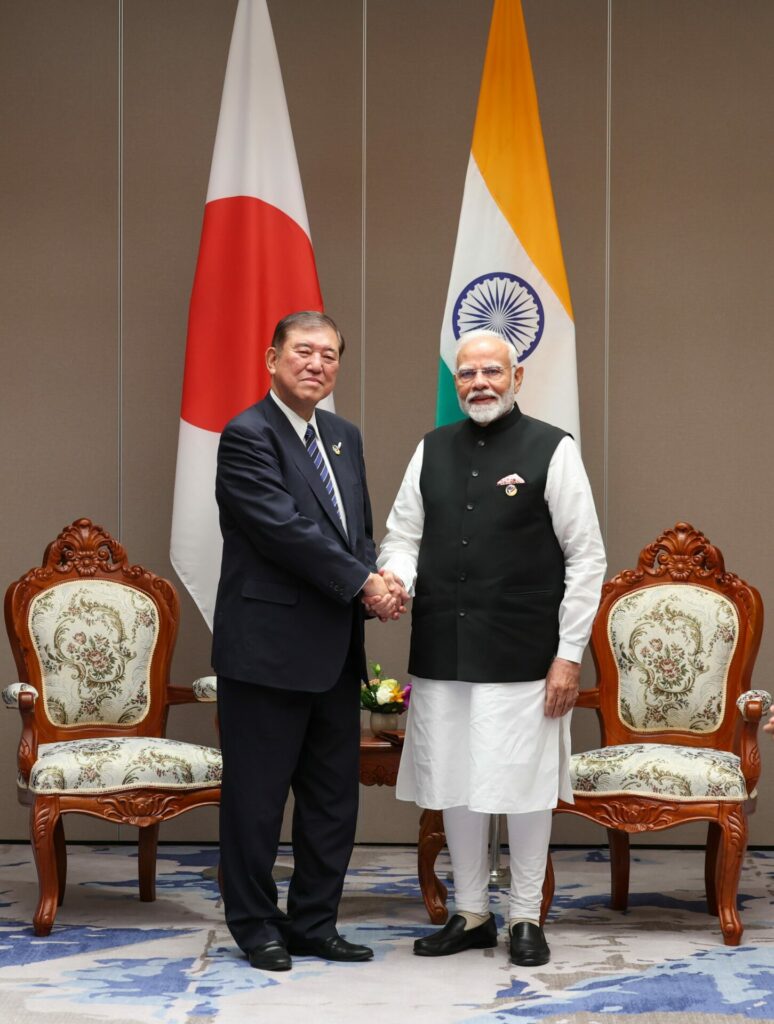

Modi And Japan PM Ishiba To Chart Way Ahead Even As Trump Shadow Darkens
Narendra Modi’s visit to Japan beginning Friday may seem like a stop over, given expectations of sound, spectacle and more from the SCO Summit in Tianjin, China, that takes place immediately thereafter.
“But that is not to say the Japan visit is not planned,” says Debendra Sahu,” associate professor and Japan scholar at Jindal Global University. “It’s an opportunity to brief Prime Minister Shigeru Ishiba on recent developments involving not only Donald Trump but perhaps more important, India’s outreach to China.”
That outreach is of recent vintage. President Xi Jinping’s letter to his Indian counterpart Droupadi Murmu urged that relations should be strategic and long term underpinned by mutual trust and mutual benefit. South Block has confirmed moves to militarily de-escalate, also plans to resolve less contentious areas of the disputed boundary.
Tokyo would have also noted the exchange of high level visits including, most recently, that of China’s Foreign Minister Wang Yi to Delhi.
Indian and Chinese carriers are to resume direct flights soon, FDI restrictions on Chinese companies in the wake of the Galwan clash in June 2020, are being relaxed, and Beijing has given assurances about supplying rare earth magnets and fertiliser.
“Maybe Modi wants to reassure Prime Minister Ishiba that India’s rapprochement with China and the need to move closer to Beijing are driven by necessity,” says Prof Sahu, “but the India Japan relationship stands on its own, and remains rock solid.”
Of course, Ishiba is not Shinzo Abe, the late Japanese prime minister credited with transforming relations with India. His address at a joint session of India’s Parliament in 2007 is remembered even today, when he articulated his vision of a shared maritime identity and strategic space of the Indian and Pacific oceans.
Ishiba seems a less charismatic figure who is also internally distracted: his party lost its parliamentary majority in last month’s election and he is politically weakened although determined to see things through.
Modi and Ishiba are expected to review bilateral relations with hints of Tokyo doubling its private sector investment in India to $68 billion over the next decade. There’s speculation Japan’s legacy semiconductor, LCD and battery production will move to India.
Cooperation in defence and security is likely to be ramped up with the joint declaration on security cooperation, signed 17 years ago, being revised. There are hints of Japan placing orders with Indian shipyards.
“Obviously, Modi and Ishiba will talk about the Quad summit if it happens in two months time,” Prof Sahu said, underscoring that a big question is whether Trump will come given the downturn in relations with India.
“Japan and India hold the Quad in huge importance but one cannot claim strategic partnership while threatening with a big stick,” he said, alluding to Trump’s blandishments and insults directed at India.
How that story ends is not clear, and there’s really nothing Japan can do about it. But the Quad is all about shared values, with or without Trump.
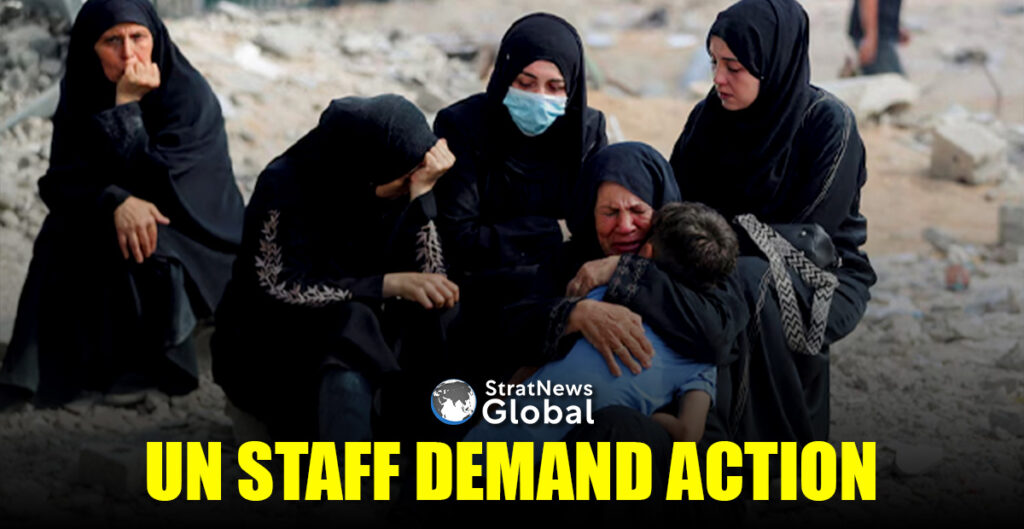
UN Staff Urge Rights Chief To Label Gaza Situation Genocide, Letter Reveals
Hundreds of UN staff members at the Office of the High Commissioner for Human Rights (OHCHR) have formally requested Volker Turk to explicitly characterise the ongoing Gaza conflict as an unfolding genocide, according to a letter obtained by Reuters.
The letter sent on Wednesday said the staff consider that the legal criteria for genocide in the nearly two-year Israel-Hamas war in Gaza have been met, citing the scale, scope and nature of violations documented there.
UN ‘Must Act’
“OHCHR has a strong legal and moral responsibility to denounce acts of genocide,” said the letter signed by the Staff Committee on behalf of over 500 employees. “Failing to denounce an unfolding genocide undermines the credibility of the U.N. and the human rights system itself,” it added.
It cited the international body’s perceived moral failure for not doing more to stop the 1994 Rwanda genocide that killed more than 1 million people.
There was no immediate response from the Israeli Foreign Ministry. Israel has previously rejected accusations of genocide in Gaza, citing its right to self-defence following the deadly October 7, 2023, Hamas attack that killed 1,200 people and resulted in 251 hostages, according to Israeli figures.
The subsequent war in Gaza has killed almost 63,000 people, according to the Gaza Health Ministry, while a global hunger monitor says that part of it is suffering from famine.
Some rights groups like Amnesty International have already accused Israel of committing genocide, and an independent U.N. expert, Francesca Albanese, has also used the term, but not the United Nations itself.
U.N. officials have in the past said that it is up to international courts to determine genocide.
In 2023, South Africa brought a genocide case against Israel’s actions in Gaza to the International Court of Justice, but the case has not yet been heard on its merits yet – a process that can take years.
‘Shaken To The Core’
“The situation in Gaza has shaken us all to our core,” said OHCHR spokesperson Ravina Shamdasani, citing difficult circumstances faced by the office as it tries to document facts and raise the alarm.
“There have been and will continue to be discussions internally on how to move forward,” she said in reference to the letter.
Turk, who has repeatedly condemned Israel’s actions in Gaza and warned of the increasing risk of atrocity crimes, said the letter raised important concerns.
“I know we all share a feeling of moral indignation at the horrors we are witnessing, as well as frustration in the face of the international community’s inability to bring this situation to an end,” he said in a copy of his response seen by Reuters, calling for employees to “remain united as an Office in the face of such adversity”.
(With inputs from Reuters)
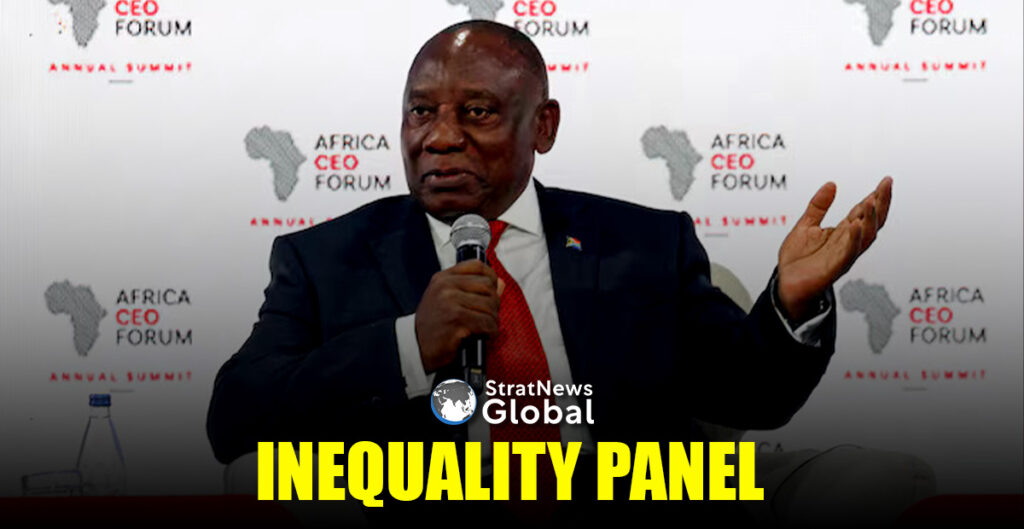
South Africa Unveils First-Ever G20 Panel To Tackle Inequality
South African President Cyril Ramaphosa on Thursday unveiled a first-of-its-kind G20 expert taskforce to study global wealth inequality and its effects on economic growth, poverty, and multilateral cooperation.
The six-member taskforce, chaired by Nobel Economics Prize laureate Joseph Stiglitz, is expected to present its findings to G20 leaders due to convene in Johannesburg in November.
South Africa has sought to use its Group of 20 presidency this year to highlight issues affecting poorer nations, including rising inequality and sovereign debt burdens.
‘A Practical Way Forward’
“South Africa’s G20 presidency today is proud to launch an initiative that will target this issue of global wealth inequality – a first for the G20 – and offer a practical way forward,” Ramaphosa said in a statement.
He said people globally were aware of how inequality undermines dignity and the chance for a better future, citing unfair vaccine distribution during the COVID-19 pandemic as an example.
“They see the impacts of rising food and energy prices, of debt, of trade wars, all driving this growing gap between the rich and the rest of the world, undermining progress and economic dynamism,” Ramaphosa added. “A new oligarchy in our global economy is becoming apparent.”
Inequality, Always A Choice
Stiglitz said the taskforce’s goal is to turn public frustration over inequality into actionable policy proposals for G20 leaders.
“Inequality was always a choice – and G20 nations have the power to choose a different path on a range of economic and social policies,” Stiglitz said.
According to the World Inequality Report, the poorest half of the world’s population owned just 2% of global wealth in 2021 while the richest 10% controlled 76% of it.
The taskforce includes other prominent figures such as UNAIDS Executive Director Winnie Byanyima and Jayati Ghosh, a development economist and professor at the University of Massachusetts Amherst.
US To Lead
The United States is set to take over the rotating G20 presidency at the end of this year.
The G20 was founded to coordinate financial policy after the Asian financial crisis of the late 1990s, before expanding to state leaders during the 2008 global financial crisis.
(With inputs from Reuters)
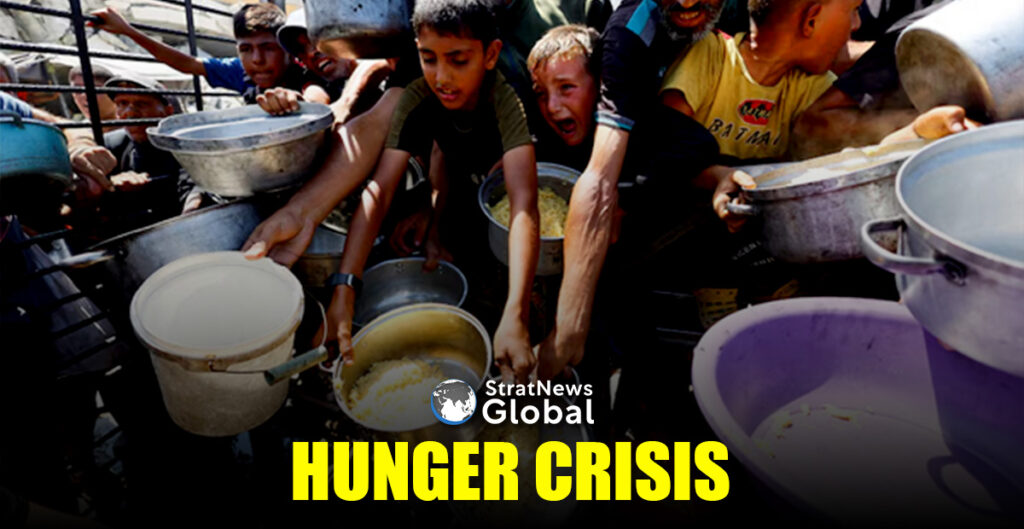
WFP Chief Warns Modest Food Aid Boost Fails To Prevent Starvation In Gaza
The chief of the World Food Programme (WFP) said on Thursday that while more aid is reaching Gaza, it remains insufficient to avert widespread starvation.
“We’re getting a little bit more food in. We’re moving in the right direction … but it’s not nearly enough to do what we need to do to make sure that people are not malnourished and not starving,” WFP Executive Director Cindy McCain told Reuters in an interview via video link from Jerusalem.
McCain said the WFP is now able to deliver about 100 aid trucks per day into Gaza, but this figure still falls far short of the 600 trucks that were entering daily during the ceasefire.
COGAT, the arm of the Israeli military that oversees aid flows into the enclave, was not immediately available for comment on McCain’s remarks.
A report released on Friday by the global hunger monitor, Integrated Food Security Phase Classification (IPC), said that approximately 514,000 people – nearly a quarter of Gaza’s population – are currently facing famine conditions in Gaza City and surrounding areas.
Israel has repeatedly dismissed such findings as false and biased in favour of the Palestinian militant group Hamas, against which it has been fighting in its almost two-year war.
‘Utter Devastation’
McCain, who visited Deir al Balah and Khan Younis this week – including a clinic supporting children and pregnant and lactating women – highlighted ongoing difficulties in delivering aid to vulnerable populations deep inside Gaza.
“What we saw was utter devastation. It’s basically flattened, and we saw people who are very seriously hungry and malnourished,” McCain said.
“It proved my point that we need to be able to get deep into it (Gaza) so we can make sure that they can consistently have what they need,” she said.
She said that a modest improvement in getting commercial food and supplies into Gaza had helped prices fall, but said that most people still cannot afford food.
McCain said she is hopeful that the WFP will have better access to Gaza after meeting on Wednesday with the Israeli military’s chief of staff, Lieutenant General Eyal Zamir, during which she pressed for unfettered access, safer routes and guarantees that trucks would not face long delays after clearance is granted.
A military statement said Zamir emphasised Israel’s commitment to preventing famine and enabling humanitarian aid to reach Gazans.
The IPC report also warned that famine could spread to the central and southern districts of Deir al-Balah and Khan Younis by the end of September.
McCain described the IPC report as the “gold standard” for measuring food insecurity and urged a scale-up of aid into the enclave.
Israel dismissed the report as “deeply flawed” and asked the IPC to retract it on Wednesday. The IPC had no immediate comment.
(With inputs from Reuters)
Intel Gets $5.7 Billion In Trump-Led Government Deal
Intel got a $5.7 billion cash infusion on Wednesday night under a deal brokered by US President Donald Trump, securing the government a 10% stake in the struggling chipmaker, Finance Chief David Zinsner told an investor conference on Thursday.
The stake in Intel announced by the US government last week is an incentive for Intel to retain control of its contract manufacturing business, or foundry, Zinsner said.
Additional Warrant
As part of the deal, the government negotiated an additional 5% warrant, should Intel cease to own more than 51% of its foundry operation.
“I don’t think there’s a high likelihood that we would take our stake below 50%,” Zinsner said. “So ultimately, I would expect (the warrant) to expire worthless.”
Separate Management Board
Intel has taken steps to separate its contract chip manufacturing arm, or foundry, from its design business. The company has previously said it could take outside investment in the foundry unit, and it has created a separate management board to govern it.
Should Intel take outside investors for the foundry business, Zinsner said the company was leaning toward taking a strategic investor versus a financial one. But Intel is “years away from that”.
In July, Intel disclosed that the future of its foundry business depended on securing a big customer for its next-generation manufacturing process known as 14A. Failing that, it could get out of the foundry business altogether.
On Thursday, Zinsner downplayed the potential risk to its foundry. “The lawyers are always looking for areas where we should be elaborating in terms of our risks,” he said.
Intel Shares Down
Intel is focused on landing a big customer next year but is committed to maintaining “financial discipline” while developing the next-generation manufacturing technology and technique, Zinsner said. The investment in 14A for only Intel’s internal use is too great to provide an “appropriate” return on investment for shareholders, he said.
Intel shares were down 0.6% at $24.69 on Thursday afternoon.
(With inputs from Reuters)
Germany, France And Spain To Hold Talks On Fighter Jet Project In October: Berlin
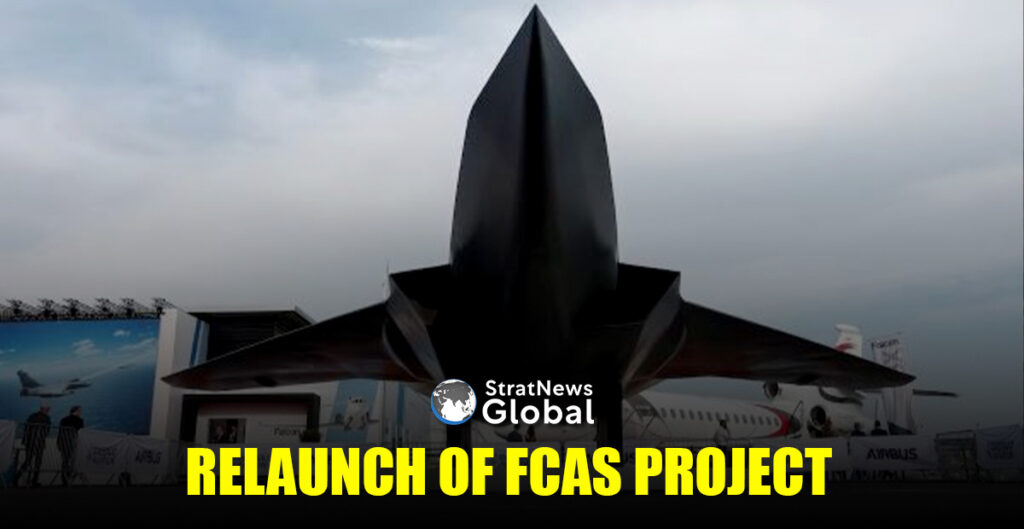
German Defence Minister Boris Pistorius said on Thursday that he and his French and Spanish counterparts will meet in October to explore ways of restarting the stalled FCAS joint fighter jet programme.
Acknowledging that the project had kept facing setbacks, Pistorius said the ministers would identify stumbling blocks and solutions before presenting leaders with options for a final decision later in the year.
“We will all pull together, and national interests will need to be put aside by one or the other or all of us. It is clear we are damned to succeed, we need this project,” Pistorius told reporters on the sidelines of a meeting with his Spanish counterpart Margarita Robles in Berlin.
Berlin blames French industry for blocking the next phase in the development of the FCAS programme, estimated to cost more than 100 billion euros ($117 billion), by demanding sole leadership of the project, according to reports.
France’s Dassault Aviation which is responsible for the core crewed fighter part of the project, declined to comment.
France-Germany Differences Could Hinder The Launch
Airbus and Indra are also involved in the scheme to start replacing French Rafale and German and Spanish Eurofighters with a sixth-generation fighter jet from 2040.
But Berlin and Paris are at odds over the composition of the consortium. France has told Germany it wants a work-share of some 80% in FCAS, a defence industry source said in July.
The differences could jeopardize the launch of the second phase, namely developing airworthy demonstrators, that had originally been scheduled for the end of this year, according to defence sources.
Pistorius said a decision on whether or not to launch the second phase of the project would be taken in the fourth quarter.
Asked about what options are available to get the project back on track by the end of the year, he said: “The answer is rather simple: Contracts are struck to be adhered to… If there is a wish for changes, then these are only possible after fresh negotiations between the partners.”
“One thing is clear: This process must not carry on for ages… We need to gain speed now because the project does not allow for any further delays.”
Robles said Spain was committed to the FCAS project.
“This is an essential and fundamental project that we must invigorate, and we must invigorate it as much as possible,” she said. “Spain’s commitment is total and this programme must continue.”
Spain earlier this month said it was no longer considering the option of buying U.S.-made F-35 fighter jets and would choose between Eurofighter and FCAS as it refocuses its defence spending on buying European-made equipment.
German Chancellor Friedrich Merz said on Wednesday he had agreed with French President Emmanuel Macron to make a decision on the future of FCAS by the end of the year.
(With inputs from Reuters)
Chabahar and Kabul: India’s Strategic Reset
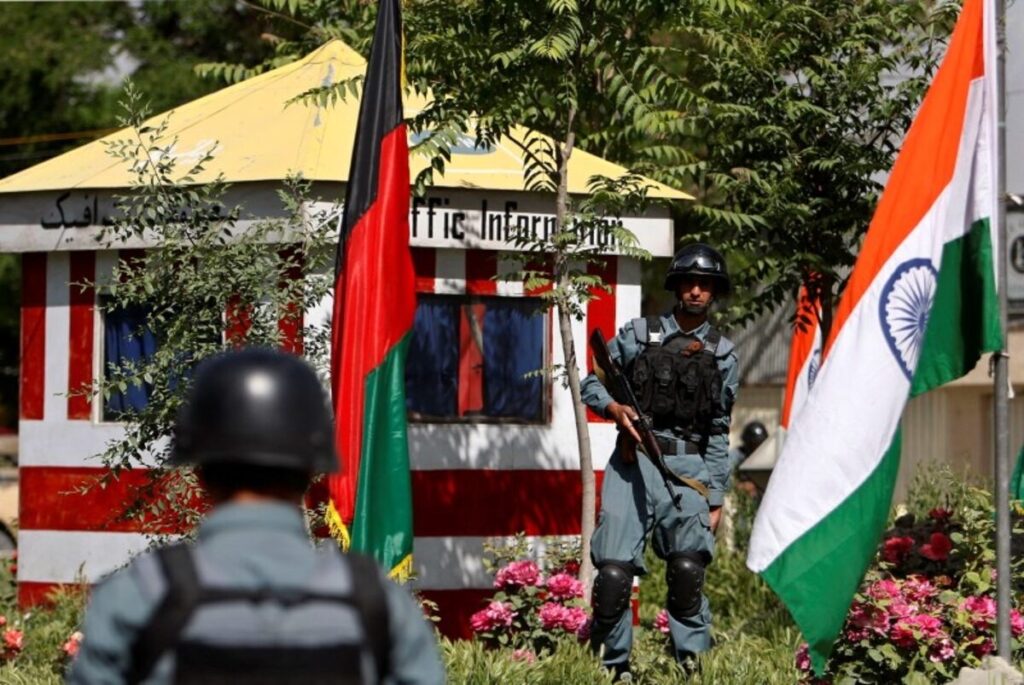
India’s decision to engage with the Taliban in 2025 reflects the shifting balance of regional and global power. The widening rift between the Taliban and Pakistan has created a strategic opening for New Delhi to reassert influence in Kabul without direct confrontation with Islamabad.
This recalibration also stems from the broader realignment that followed the collapse of U.S. authority in Afghanistan. With China, Russia, and Iran already engaging with the Taliban, India cannot afford to remain absent from the equation.
At the centre of this renewed approach is the Chabahar Port in southeastern Iran, a project India has invested in for years. Chabahar provides direct access to Afghanistan and Central Asia, bypassing Pakistan, and offers a stable route for trade and humanitarian assistance. For India, it is not merely an infrastructure project but a counterweight to China’s Belt and Road Initiative, which threatens to expand Beijing’s influence in Afghanistan and beyond.
The Taliban’s growing tensions with Pakistan, once its key patron, have given India further room to manoeuvre. But New Delhi’s focus is not only strategic. Afghanistan faces a severe humanitarian crisis, worsened by the forced repatriation of refugees. India has pledged material aid for reintegration efforts, with particular emphasis on health care. This builds on past assistance, including wheat, medicines, COVID-19 vaccines, and winter supplies, underlining India’s longstanding record as a trusted partner of the Afghan people.
Experts point to India’s principal tools of engagement: trade through Chabahar; cultural diplomacy via language programs, scholarships, and people-to-people ties; support in education and health; non-military security cooperation; and multilateral coordination through groupings such as the SCO and BRICS.
Yet challenges remain. Afghanistan’s political fabric is deeply fragmented, shaped by tribal and ideological divides that India must navigate without taking sides. Human rights concerns also cast a shadow on any engagement, particularly for a democratic country like India. Moreover, while Washington has withdrawn its military, American strategic interests persist. Any shift in U.S. policy could alter India’s calculations significantly.
For New Delhi, the path ahead requires cautious optimism. The Taliban cannot be granted unconditional recognition, yet it cannot be ignored as the de facto authority in Kabul. Balancing values with interests will define India’s Afghanistan policy in the coming decade.
To safeguard its strategic space, India must coordinate with Eurasian powers while remaining engaged on the ground. Active, patient, and pragmatic diplomacy could open new opportunities as Afghanistan enters its latest phase.
(This article was written by Tisya Sharma, she is an intern at StratNews Global)
Rwanda Confirms Receiving 7 Migrants From US Under New Pact
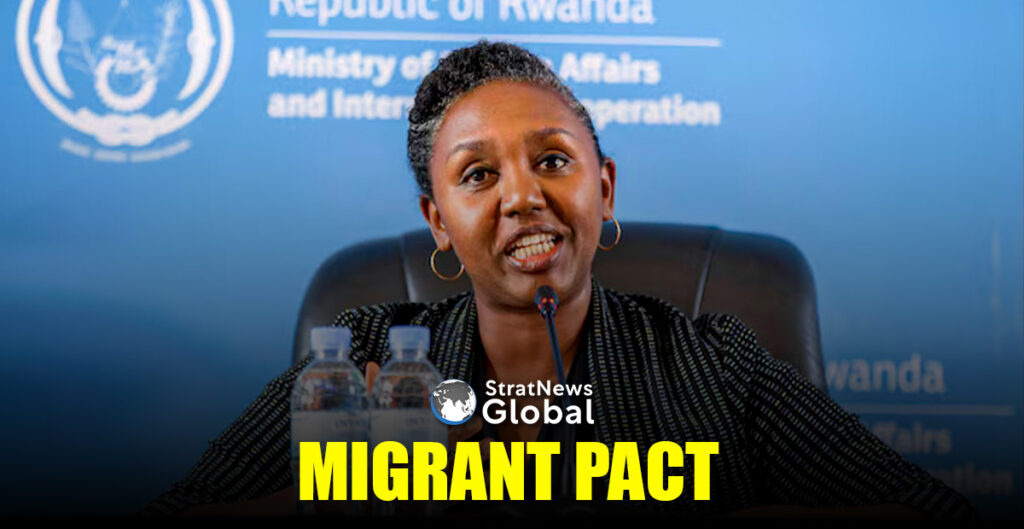
Rwanda has received seven migrants deported from the United States earlier this month, its government said on Thursday — marking the first arrivals under a new bilateral deal that allows transfer of up to 250 people.
“The first group of seven vetted migrants arrived in Rwanda in mid-August,” Rwandan government spokesperson Yolande Makolo said in a statement.
“Three of the individuals have expressed a desire to return to their home countries, while four wish to stay and build lives in Rwanda. Regardless of their specific needs, all of these individuals will receive appropriate support and protection from the Rwandan government.”
The US Department of Homeland Security and State Department did not immediately respond to requests for comment.
Trump’s Hardline Approach
US President Donald Trump has taken a hardline approach toward immigration, aiming to deport millions of immigrants in the US illegally and seeking to ramp up removals to third countries.
In early August, Rwanda and the United States entered an agreement for Rwanda to take in up to 250 migrants, with Washington sending to Rwanda an initial list of 10 people to be vetted.
Rwanda has in recent years positioned itself as a destination country for migrants that Western nations would like to remove, despite concerns by rights groups that Kigali does not respect basic human rights.
Third-Country Deportations
The Trump administration says that third-country deportations help quickly remove some migrants, including those with criminal convictions. Immigration hardliners see third-country removals as a way to deal with offenders who cannot easily be deported and could pose a threat to the public.
Opponents have criticized the deportations as dangerous and cruel, since people could be sent to countries where they could face violence, have no ties and do not speak the language.
US-Rwanda Agreement
Makolo said earlier this month that under the agreement reached with Washington, migrants deported to Rwanda would be provided with workforce training, healthcare, and accommodation.
On Thursday, Makolo said that those deported to Rwanda were accompanied by an international organisation and receiving visits by the International Organization for Migration and Rwandan social services.
(With inputs from Reuters)
Kurdish Lawmakers Press Turkiye For Quicker PKK Peace Efforts
Leading Kurdish politicians in Turkiye said progress toward peace with the Kurdistan Workers’ Party (PKK) will depend on several key steps. They called for legal guarantees for fighters who lay down arms, direct talks with the group’s jailed leader, and a relaxation of restrictions on the opposition.
Turkiye’s parliament launched a commission earlier this month to oversee the disarmament of the outlawed PKK terrorist group after its jailed leader Abdullah Ocalan in February called for an end to its insurgency.
The two sides are trying to resolve a four-decades conflict that has also spilled over into neighbouring Syria and Iraq.
In an interviews, the two MPs – Meral Danis Bestas and Gulistan Kilic Kocyigit – said the commission must quickly move on from procedural debates to enacting reforms to maintain momentum after the group in May said it would disarm.
Demand For Rights And Reforms
Designated a terrorist group by Turkiye and its Western allies, the PKK had originally fought for an independent Kurdish state in the southeast but later demanded only greater Kurdish rights and democratic reforms.
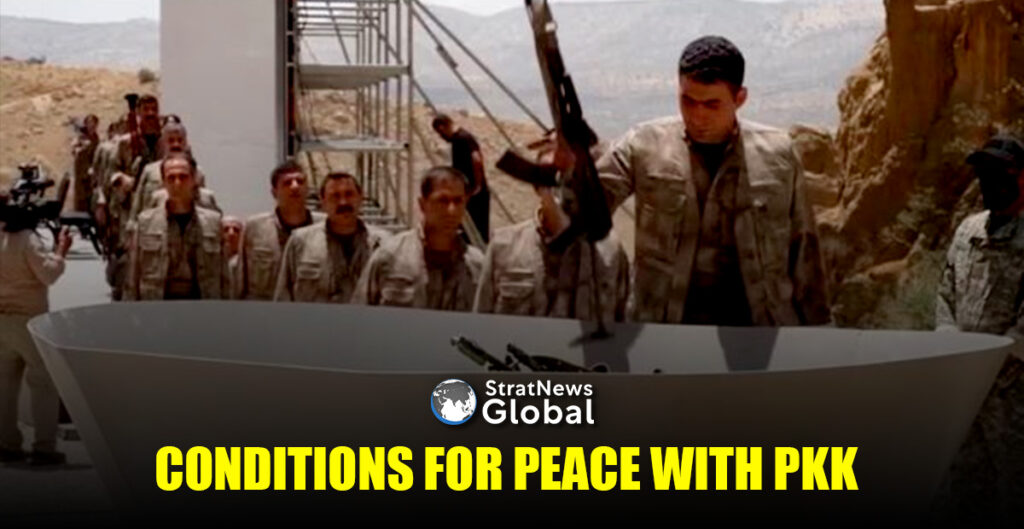
About 30 of its fighters burned their weapons in July in a symbolic ceremony in northern Iraq, where they are now based, after years of bombardment by the Turkish military.
“These people do not leave their weapons to go to prison… They say, ‘we want to do democratic politics, we want to struggle with words, not arms’,” said Bestas, a lawmaker of the pro-Kurdish DEM Party, the third-largest in Turkiye’s parliament.
Kocyigit, a DEM leader representing the party on the commission, said it must discuss a “Return Home” law protecting those who lay down arms and want to participate in social and political life in Turkiye.
DEM, long a fierce critic of Turkish President Tayyip Erdogan’s policies, has played a critical role alongside the government in pushing for peace, including facilitating Ocalan’s call for disarmament in February.
The DEM lawmakers said that the 51-member commission should send a delegation to hear directly from Ocalan at his island prison near Istanbul, where he has been held since 1999.
“The commission must meet with Mr. Ocalan. This is, for us, a very clear, straightforward, and indisputable demand,” Kocyigit said, given his initial call for peace.
There was no immediate comment from Turkish President Erdogan’s office on the lawmakers’ remarks.
Crackdown On Opposition
The DEM lawmakers praised steps taken so far by the commission, which held its sixth meeting this week, but urged members to move more quickly on reforms and to tackle bigger questions of democracy and rights.
This includes a separate legal crackdown on the main opposition Republican People’s Party (CHP), which has seen hundreds of its elected mayors and members jailed this year. The clampdown is undermining the commission’s work, the lawmakers said.
Among those detained is Ekrem Imamoglu, the CHP mayor of Istanbul who is seen as Erdogan’s main rival, who has been jailed pending trial since March in a corruption case that drew big protests.
“Despite all the operations carried out against CHP by the government, especially through the judiciary, the party’s decision to join the commission and to be present there is truly valuable,” Kocyigit said.
Success also hinges on Erdogan offering stronger backing to the commission and easing social tensions by avoiding polarising rhetoric, the DEM MPs said.
“Our expectation is that the President adopts an approach that strengthens the commission’s work and helps ease today’s tense political atmosphere,” Kocyigit said.
(With inputs from Reuters)
French PM Bayrou Blames Holidays For Talk Delay, Faces Criticism
French Prime Minister Francois Bayrou faced criticism on Thursday for claiming he avoided August crisis talks as others were on holiday.
Bayrou announced on Monday he would hold a confidence vote in parliament on September 8 to try and break a stalemate over the 2026 budget.
Trying To Change Outcome
The centrist prime minister, who is very likely to lose that vote and be out of office as the main opposition parties say they will vote against him, said he would meet with opposition leaders next week to try and convince them to change their minds and back him.
Asked by TF1 TV on Wednesday why he had not invited them for talks earlier, Bayrou said: “Because they were on holiday.”
“In August, they were all on holiday,” he added.
That immediately triggered angry comments.
‘I Don’t Like Lies’
“Mr. Prime Minister, you say you don’t like trickery… Personally, I don’t like lies,” far-right leader Marine Le Pen said on X in French.
“Contrary to what you stated in front of millions of French people on the 8 p.m. news on TF1, the National Rally was not ‘on vacation’,” Le Pen added.
“Everyone can verify that I did indeed write you a precise and detailed letter on your budget proposals, a letter that went unanswered.”
“The government also engaged in discussions with the National Rally to prevent the publication of the decree on energy policy,” she added.
On TV news channel LCI, Greens leader Marine Tondelier said she was “extremely shocked” by Bayrou’s comments. Her party held a days-long annual convention last week and was not on holiday.
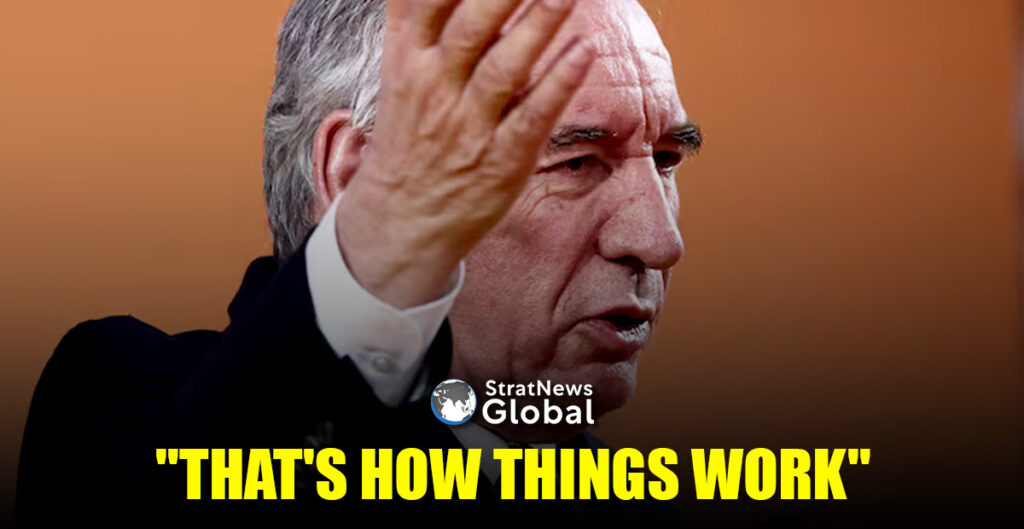
‘That’s How Things Work’
Asked about the backlash, Bayrou stood by his remarks on Thursday.
“How is that a criticism? All French people know it’s normal and that that’s how things work,” he told reporters, speaking of August holidays.
Referring to the confidence vote, Manuel Bompard, from the hard left France Unbowed party, quipped on X that Bayrou himself would soon be on holiday.
(With inputs from Reuters)