

Support us by contributing to StratNewsGlobal on the following UPI ID
ultramodern@hdfcbank

Strategic affairs is our game, South Asia and beyond our playground. Put together by an experienced team led by Nitin A. Gokhale. Our focus is on strategic affairs, foreign policy and international relations, with higher quality reportage, analysis and commentary with new tie-ups across the South Asian region.
You can support our endeavours. Visit us at www.stratnewsglobal.com and follow us on YouTube, Twitter, Facebook and Instagram.
र 500 per month
र 1000 per month
र 5000 per year
र 10000 per year
Donate an amount of your choice
र 500 per month
Donate र 500 per month

र 1000 per month
Donate र 1000 per month
र 5000 per year
Donate र 5,000 per year
र 10000 per year
Donate र 10,000 per year
Donate an amount of your choice
Donate an amount of your choice
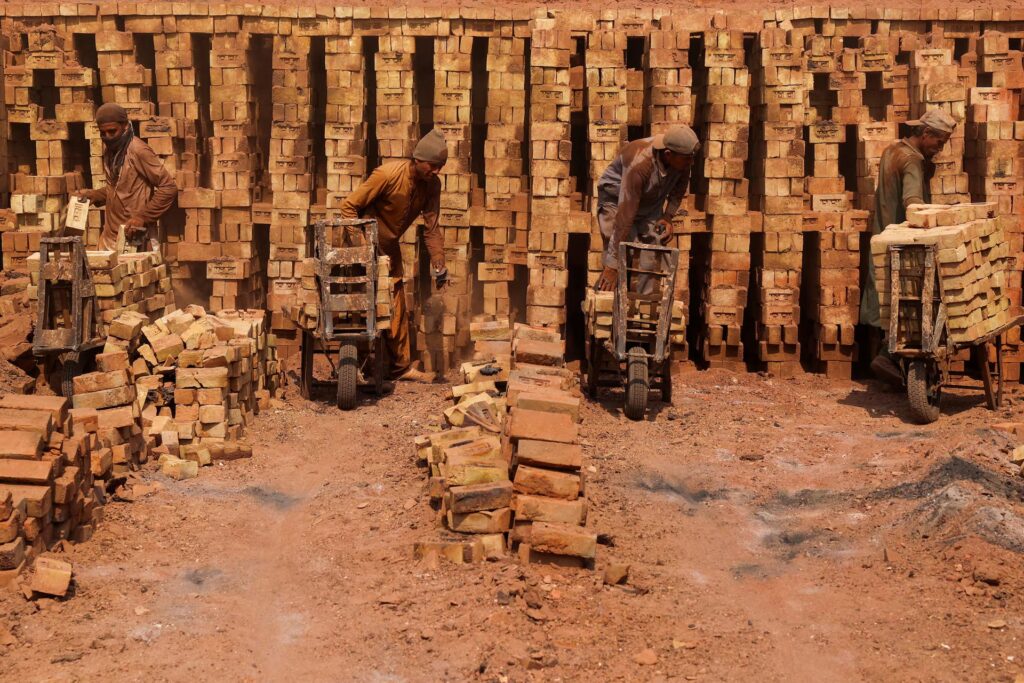

Exposed: Brutality And Violence in Pakistan’s Brick Kilns
Pakistan’s brick kiln industry continues to perpetuate bonded labour, systemic abuse, and gender-based violence, according to a report released by the National Commission for Human Rights (NCHR). The findings highlight a cycle of exploitation that affects entire families, drawing international concern over persistent human rights violations.
The report, focused on Punjab’s kilns, reveals that denial of fair wages, absence of contracts, unsafe living conditions, and lack of social security keep workers trapped in perpetual debt. Families are forced to live in hazardous environments, with unhygienic sanitation and no access to healthcare, resulting in chronic illnesses, reproductive health complications, and psychological trauma.
“Violence is not an exception but rather the dominant norm within the brick kiln sector,” the NCHR said, citing routine physical abuse, abduction, and torture as methods of intimidation used by kiln owners to maintain control.
The report highlights extensive gender-based violence, with women—particularly those from religious minorities and poor households—facing harassment, rape, and forced marriages. Kiln managers and owners exercise unchecked authority, while stigma and fear silence victims. “A culture of shame and absence of legal safeguards allow conditions of exploitation to persist,” it notes.
Children are also drawn into the cycle, deprived of education and forced to contribute to family labour from an early age. This ensures that poverty and bondage pass from one generation to the next.
The NCHR warned that Pakistan’s bonded labour system strips workers of their most basic rights and freedoms. By ensuring that debts are never truly cleared, kiln owners retain control over entire households, reducing them to units of labour in what the report describes as “inescapable” conditions.
Human rights groups have long flagged the plight of bonded labourers in South Asia as a regional crisis. Pakistan is a signatory to several international conventions banning forced labour, but weak enforcement and impunity for kiln owners continue to undermine reforms.
The NCHR findings add to growing international scrutiny of bonded labour practices. Rights organisations and UN bodies have repeatedly urged Islamabad to strengthen protections, enforce existing laws, and provide rehabilitation for victims, warning that failure to act will perpetuate intergenerational cycles of poverty and exploitation.
(This article was written by Tisya Sharma, she is an intern at StratNews Global)
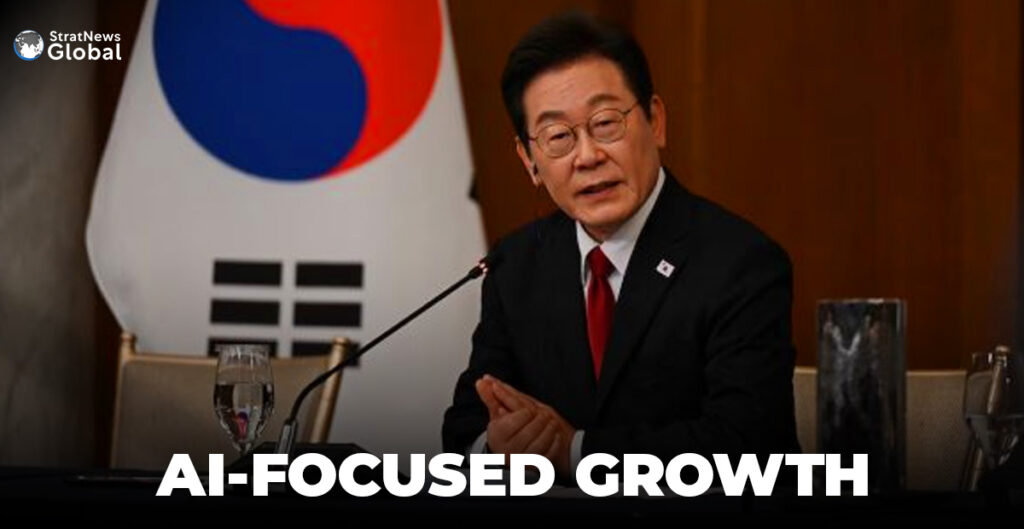
South Korea Plans Major Spending Boost To Drive AI-Focused Economic Growth
South Korea’s government is preparing the sharpest rise in budget expenditure in four years for the coming fiscal year. The move reflects the new president Lee Jae Myung’s strategy to stimulate the economy by channeling more investment into artificial intelligence.
In its annual spending plan released on Friday, the finance ministry set total government expenditure for 2026 at 728.0 trillion won ($524.44 billion). That is up 8.1% from 2025, outstripping the 2.5% increase this year and marking the biggest jump since 2022, excluding the two supplementary budgets introduced so far this year.
President Myung, who took office on June 4, has vowed expansionary fiscal policy to boost growth, in contrast to the three years of the administration of his conservative predecessor Yoon Suk Yeol who prioritised fiscal sustainability.
Last week, the government unveiled economic policy plans with a top priority on AI investment, as it slashed growth projections amid downward pressure from U.S. tariffs and a long-term population shock.
“Fiscal policy needs to prime the pump to grow the spark of recovery,” Finance Minister Koo Yun-cheol said.
South Korea grew in the second quarter at the fastest pace in more than a year, on robust technology exports and a rebound in consumer spending, but faces headwinds from higher U.S. tariffs introduced this month.
The country’s central bank held interest rates steady for a second straight review on Thursday but flagged further easing to counter the hit to growth from U.S. tariffs.
South Korea’s fiscal deficit will widen to 4.0% of gross domestic product in 2026, sharply up from 2.8% in 2025, as tax revenue is projected to only rise 3.5% to 674.2 trillion won, the ministry said. The debt-to-GDP ratio is estimated to rise to 51.6% from 48.1%.
Spending Across Different Sectors
After next year, the government plans to slow expenditure growth to maintain it at an annual average rate of 5.5% for 2025-2029. It sees the debt-to-GDP ratio rising to 58.0% by 2029.
South Korea’s spending on social welfare will be raised by 8.2% to 269.1 trillion won in 2026, with more government projects to try to boost the country’s flagging birthrate – the lowest in the world.
Spending on research will be raised by a record 19.3% to 35.3 trillion won for AI investments and industrial policies by 14.7% to 32.3 trillion won to support tariff-hit exporters. Spending on the cultural industry will also rise 8.8% to 9.6 trillion won to further grow a sector riding a global boom.
Amid growing U.S. pressure to lift defence spending, it will be raised by 8.2% to 66.3 trillion won – equivalent to around 2.4% of GDP.
The government will issue 232 trillion won of treasury bonds in 2026, with the net increase in bonds projected at 115.7 trillion won and planned issuance to finance the fiscal deficit seen at 110 trillion won.
The issuance ceiling of dollar-denominated and won-denominated foreign exchange stabilisation bonds will be set at $1.4 billion and 13.7 trillion won, respectively.
The budget plan will be submitted to the National Assembly, currently controlled by the ruling Democratic Party, for approval.
($1 = 1,388.1500 won)
(With inputs from Reuters)
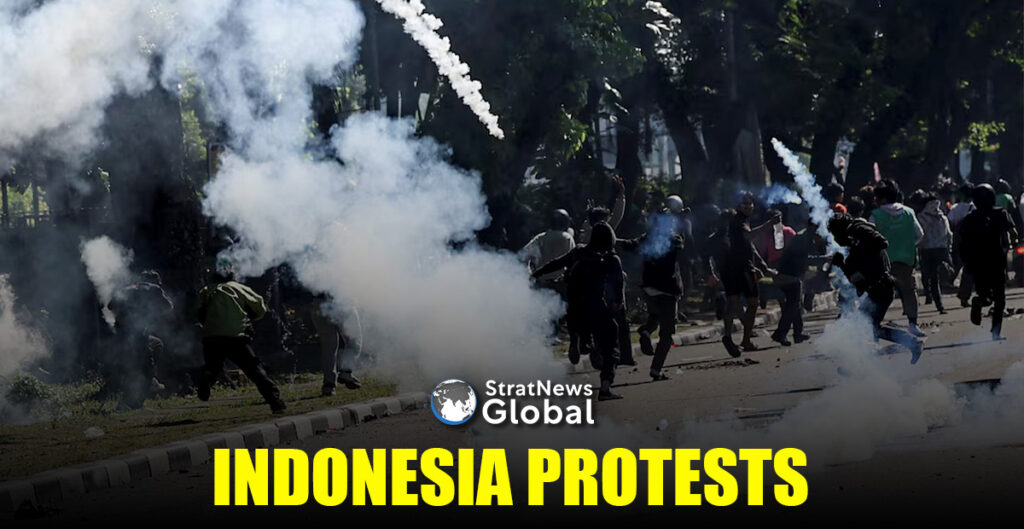
Indonesia: Jakarta Protests Erupt Over Driver’s Death
Tensions have escalated in Jakarta, Indonesia’s capital city, as students protested at the police headquarters over the death of a motorcycle ride-share driver hit by a police vehicle.
The driver was hit at the site of violent clashes on Thursday near the parliament as police were trying to disperse demonstrators protesting against a number of issues including lawmakers’ pay and education funding.
Against Police Violence
The protest call for Friday afternoon in the capital of Southeast Asia’s largest economy prompted a number of schools to allow students to leave early and banks and businesses asking employees to work from home. The military has been deployed in some areas, visuals broadcast by local media showed.
Muzammil Ihsan, head of Indonesia’s largest student union, told Reuters that students will protest against police violence on Friday afternoon, and he expected other student groups to attend.
Full Investigation
President Prabowo Subianto, in a specially recorded video message, called for calm, expressed condolences for the death of the driver, Affan Kurniawan, and ordered a thorough probe of the incident.
“I am shocked and disappointed by the excessive actions of the officers,” Prabowo said, adding, “I have ordered a thorough and transparent investigation…and officers involved must be held accountable.”
The protest call remains in place despite the assurance of the probe by the president. The site of the gathering is located in Jakarta’s business district, which is home to a number of major banks and businesses.
Deepest Apologies
As Thursday’s protest persisted into the night, local media reported that riot police fired tear gas and used water cannon to try to disperse people.
The capital’s police chief, Asep Edi Suheri, said that during the clashes an armoured police vehicle hit and killed Kurniawan, who worked for ride sharing services Gojek and Grab.
A motorcycle drivers’ association said Kurniawan was not involved in the protests.
“As police chief and on behalf of the entire unit, I would like to express my deepest apologies and condolences,” he said in a press conference late on Thursday.
The seven crew of the armoured vehicle have been arrested and an investigation is underway, Abdul Karim, head of the professional and security division of the Indonesian police, told the news conference.
Kurniawan’s Funeral
Following the death, a group led by motorcycle drivers protested in front of the riot police’s headquarters on Thursday night, local media reported. Kompas TV reported on Friday that military officers were sent to the building to calm dozens of protesting drivers.
Kurniawan’s funeral was attended by hundreds of fellow ride-sharing motorcycle drivers, who escorted his body to the burial site in a convoy of two-wheelers through the centre of Jakarta.
“We are deeply disappointed, especially with the security officials and national police chief,” Ari Potret, a motorcycle driver who attended Kurniawan’s funeral told Reuters. “This is barbaric,” he added.
Jakarta Legal Aid, in a post on Instagram, urged the government and police to release 600 people who had been arrested during the demonstrations.
Unrest Triggers Market
Following the unrest, the rupiah dropped nearly 1% on Friday to its weakest level since August 1 before regaining some of the losses. The stock index fell as much as 2% to reach its lowest point since August 12. Trading has been halted for a scheduled midday break.
“Last night there was an incident where police rammed into an online motorcycle taxi driver…this caused the rupiah and the stock price index to heat up,” Ibrahim Assuaibi, an analyst from futures brokerage firm PT Traze Andalan, said.
(With Inputs from Reuters)
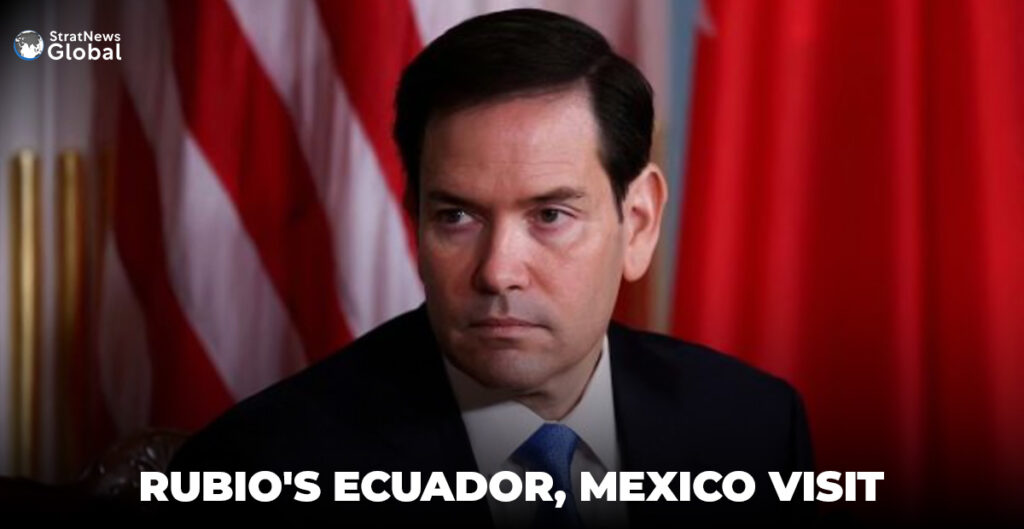
Rubio To Visit Mexico And Ecuador As U.S. Seeks Stronger Diplomatic Strategy
U.S. Secretary of State Marco Rubio is scheduled to visit Mexico and Ecuador next week, the State Department announced on Thursday. The trip comes as President Donald Trump’s administration seeks to tighten controls on illegal immigration to the United States, step up efforts against drug cartels, and counter China’s growing influence in Latin America.
Rubio, the first Latino U.S. secretary of state, visited Central America and the Caribbean in his first overseas trip as Washington’s top diplomat earlier this year.
Trump has imposed hardline immigration policies, sought to tackle cartels and launched a global trade war with tariffs that target individual products and countries.
Mexican President Claudia Sheinbaum has said the U.S. and Mexico are nearing a security agreement to expand cooperation against cartels. But she has rejected suggestions by the Trump administration that it could carry out unilateral military operations in Mexico.
President Daniel Noboa has sought to combat an upsurge in gang violence in Ecuador and has been a partner for the Trump administration in seeking to reduce illegal immigration.
Deal With Ecuador
A senior State Department official told reporters that while Ecuador had made progress in certain aspects on immigration, there were issues to discuss, including how to handle people from third countries who cannot return to their home country.
“We’re talking to lots of countries about those kinds of issues, and Ecuador will be one,” the official said, but added Washington was “not necessarily” seeking a third country national deal with Ecuador.
The official said countering China’s influence in the region was also a priority, including ensuring that China does not use Mexico as a trade backdoor to the United States.
Rubio will meet both presidents and his counterparts on the trip, the official said.
While not strictly Rubio’s portfolio, Trump’s tariff policies are also likely to come up in his talks.
Mexico in July was able to avoid 30% tariffs on its shipments to the U.S., securing a 90-day pause to work on a trade deal.
But it is still subject to 25% fentanyl tariffs, though goods sent under the U.S.-Mexico-Canada free trade agreement – which are most of them – are exempt.
Ecuador has also been hit with 15% tariffs.
(With inputs from Reuters)
US Pulls Out Of UN Human Rights Review, Faces Backlash From Advocates
The United States has decided not to take part in a United Nations assessment of its human rights record, officials confirmed. Rights groups criticized the decision, warning it signals a troubling step back from Washington’s commitment to global justice and accountability.
The Universal Periodic Review (UPR) expects all 193 U.N. member states to submit reports on their human rights records every 4.5 to 5 years. The reports are reviewed by other member states, which provide non-binding recommendations.
A U.S. State Department official said the U.S. will not participate in the UPR mechanism or submit its report in November, when it and 13 other countries are due to be reviewed.
This followed an executive order by President Donald Trump on 4 February to disengage from the U.N. Human Rights Council, the official said.
“Engagement in UPRs implies endorsement of the (Human Rights) Council’s mandate and activities and ignores its persistent failure to condemn the most egregious human rights violators,” the official said.
Spokespeople for the intergovernmental U.N. Human Rights Council and U.N. human rights office said the U.S. Mission in Geneva had notified them of the decision.
According to an analysis of the council’s public records, the U.S. is now on course to be the first country to not deliver a report to the UPR, unless it submits a report within the timeframe of the current review period, which ends in July 2027.
Ravina Shamdasani, chief spokesperson for the Office of the United Nations High Commissioner for Human Rights (OHCHR), said that it regretted the U.S. decision.
“Constructive engagement with the Council, by the U.S. and all States, has contributed to the promotion and protection of human rights worldwide over the years,” she added.
Decision Gives Other Countries ‘An Excuse’
Although there are no direct consequences of not submitting a UPR report, Michael Posner, director of the Center for Business and Human Rights at N.Y.U. Stern School of Business, said the U.S. was undermining global efforts on human rights.
“By withdrawing from the UPR, the U.S gives gross human rights abusers like Iran, Russia and Sudan an excuse to follow suit,” said Posner, a former senior State Department official who helped direct the UPR process under President Barack Obama.
Phil Lynch, Executive Director of Geneva-based NGO International Service for Human Rights, said that under Trump the “U.S. is rapidly becoming a human rights pariah state”. Washington’s refusal to take part signalled disdain for people facing discrimination, he added.
The State Department official said in response to the criticism that the U.S. is proud of its human rights record and leadership in advancing human rights around the world.
In Trump’s first term in office, in 2017-2021, the U.S. submitted its UPR in April-May 2020, despite withdrawing from the Human Rights Council.
The UPR process consists of a national report submitted by the country under review and a compilation of information from U.N. human rights reports and NGOs.
(With inputs from Reuters)
Musk Moves To Dismiss SEC Case Over Twitter Share Delay
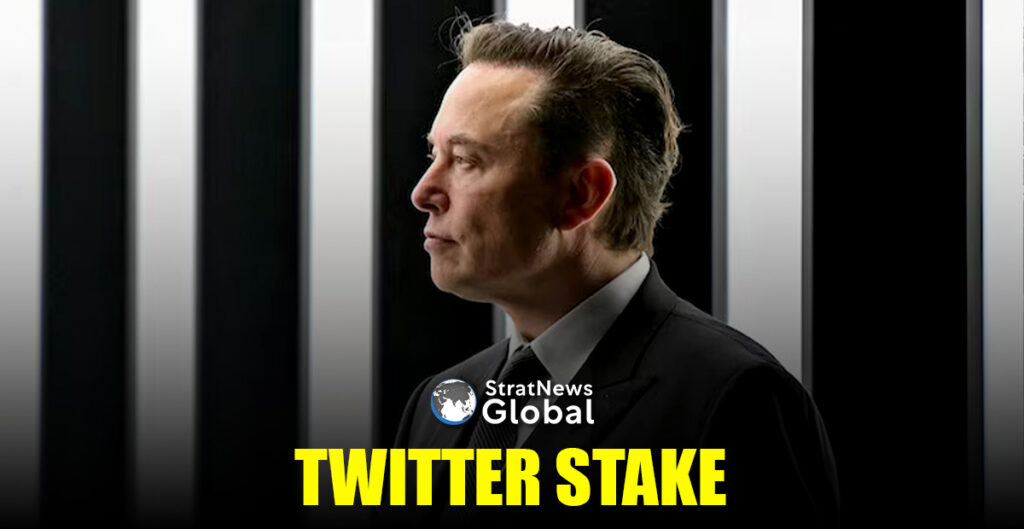
Billionaire Elon Musk has moved a US court seeking dismissal of a civil case filed by the Securities and Exchange Commission (SEC), which accuses him of delaying disclosure of his substantial stake in Twitter (now X) back in 2022.
In a complaint filed in Washington, D.C. federal court in January, the SEC said Musk violated federal securities law by waiting 11 days too long to disclose his initial purchase of 5% of Twitter’s common shares. It sought to force Musk to pay a civil fine and give up profits that the SEC said were a result of the violations.
Lawyers for Musk said on Thursday the billionaire stopped purchasing additional shares of then-publicly listed Twitter and filed his disclosure one business day after his wealth manager consulted securities disclosure counsel about potential filing requirements.
Violation Of 10-Day Rule
An SEC rule requires investors to disclose within 10 calendar days when they cross a 5% ownership threshold, which would have been by March 24, 2022 in Musk’s case.
The SEC said that at the expense of unsuspecting investors, Musk instead bought more than $500 million of Twitter shares at artificially low prices before finally revealing his purchases on April 4, 2022, by which time he owned a 9.2% stake.
The SEC sued Musk on January 14, six days before Republican President Donald Trump took office and made Musk a special adviser to slash the federal workforce and spending.
Musk faced a deadline to respond to the court by Friday.
Musk’s Legal Defence
Musk’s lawyers said the case should have not been brought and the billionaire did not mean any harm. They said the SEC’s action against Musk “reveals an agency targeting an individual for his protected criticism of government overreach.”
“The SEC does not allege that Mr. Musk acted intentionally, deliberately, willfully, or even recklessly… Rather, the SEC alleges that Mr. Musk late-filed a single beneficial ownership form three years ago and fully corrected any alleged error immediately upon its discovery. There is no ongoing violation,” the Tesla and SpaceX CEO’s lawyers said.
The SEC did not respond to a request for comment outside regular business hours.
Musk has long feuded with the SEC, including after it sued him in 2018 over his Twitter posts about possibly taking Tesla private and having secured funding to do so.
(With Inputs from Reuters)
Venezuela Slams US Military Moves In Southern Caribbean
Tensions are building between the United States and Venezuela as Washington ramps up its naval presence in the Southern Caribbean, with officials claiming the move targets drug cartel activity in the region.
US President Donald Trump has made cracking down on drug cartels a central goal of his administration, part of a wider effort to limit migration and secure the US southern border.
Significantly Larger Buildup
While US Coast Guard and Navy ships regularly operate in the Southern Caribbean, this buildup is significantly larger than usual deployments in the region.
A US official, speaking on the condition of anonymity, said on Thursday that seven US warships, along with one nuclear-powered fast attack submarine, were either in the region or were expected to be there in the coming week.
Venezuelan President Nicolas Maduro has denounced the moves.
The Pentagon has not indicated publicly what exactly the US mission will be, but the Trump administration has said it can now use the military to go after drug cartels and criminal groups and has directed the Pentagon to prepare options.
‘Massive Propaganda’
Venezuela on Thursday complained to UN Secretary-General Antonio Guterres about the US naval buildup, accusing Washington of violating the founding UN Charter.
“It’s a massive propaganda operation to justify what the experts call kinetic action – meaning military intervention in a country which is a sovereign and independent country and is no threat to anyone,” Venezuela’s UN Ambassador Samuel Moncada told reporters after meeting with Guterres.
US Stands Firm
On Thursday, the White House said Trump was ready to use “every element of American power to stop drugs from flooding into our country.”
“Many Caribbean nations and many nations in the region have applauded the administration’s counter drug operations and efforts,” White House press secretary Karoline Leavitt told reporters.
The Trump administration designated Mexico’s Sinaloa Cartel and other drug gangs, as well as the Venezuelan criminal group Tren de Aragua, as global terrorist organizations in February.
Thousands Of Service Members Deployed
Part of the buildup is the USS San Antonio, USS Iwo Jima, and USS Fort Lauderdale. The ships are carrying 4,500 service members, including 2,200 Marines, sources have told Reuters.
The US military has also been flying P-8 spy planes in the region to gather intelligence, officials have said, though they have operated in international waters.
Maduro’s Take
“Our diplomacy isn’t the diplomacy of cannons, of threats, because the world cannot be the world of 100 years ago,” said Maduro, whose government said last week it would send 15,000 troops to states along its western border with Colombia to combat drug trafficking groups.
Maduro has also called for civil defence groups to train each Friday and Saturday.
Maduro’s government regularly accuses the opposition and foreigners of conspiring with US entities such as the CIA to harm Venezuela, accusations the opposition and the US have always denied. It characterizes sanctions as “economic war”.
(With inputs from Reuters)
US Senator Wicker Lands In Taiwan For Security Talks
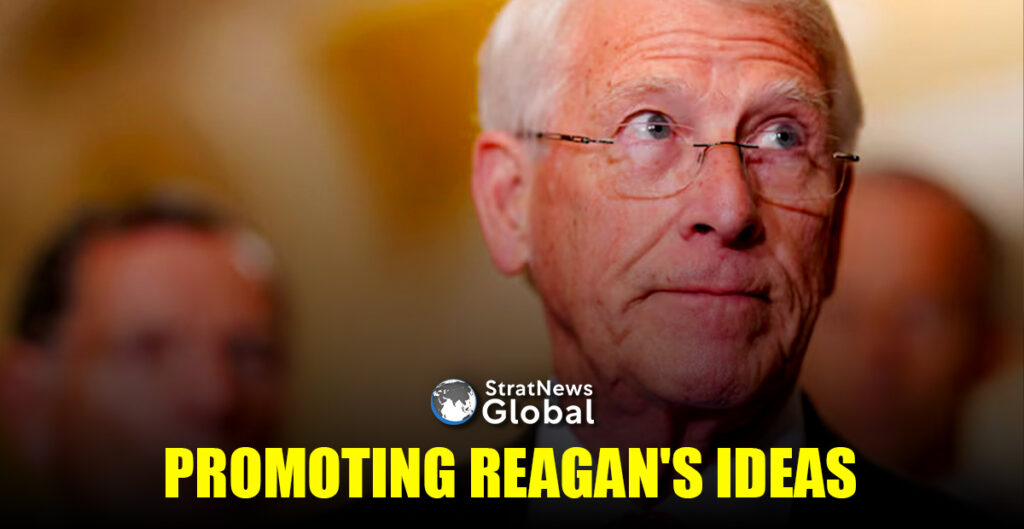
US Senator Roger Wicker, who heads the influential Senate Armed Services Committee and is known for his strong support for Taiwan, landed in Taipei on Friday for security talks amid growing tensions with China.
Wicker, a Republican, said he and Senator Deb Fischer were visiting to reinforce and emphasise the “great partnership” the United States and Taiwan had and would have in the future. Fischer is also a Republican and a member of the armed services committee.
Promoting Reagan’s Ideas
“We’re here to talk to our friends and allies in Taiwan about what we’re doing to enhance worldwide peace, the kind of peace through strength that Ronald Reagan talked about,” he told reporters at Taipei’s downtown Songshan airport, referring to the late US president.
“We stand here to re-emphasise the partnership and the security friendship agreement that the United States has had with Taiwan for some decades.”
NDAA
The US Senate is due to consider next week the National Defense Authorization act, or NDAA, a nearly $1 trillion bill that sets policy for the Pentagon.
Wicker said that this year’s NDAA would “add to the provisions again” when it came to Taiwan, though he gave no details.
China’s Ask
The Chinese embassy last month urged Wicker and other lawmakers to cancel plans to go to Taiwan. Beijing, which views the island as its own territory, regularly denounces any shows of support for Taipei from Washington.
China has increased its military activities around Taiwan over the past five years or so, including staging war games. Beijing has never renounced the use of force to bring Taiwan under its control.
Is Trump Changing Priorities?
Wicker’s trip takes place as some members of Congress – both President Donald Trump’s fellow Republicans and Democrats – have expressed concern that Trump is de-emphasising security issues as he works on negotiating a trade deal with China.
Administration officials have said Trump remains fully committed to Asia-Pacific security matters as he pursues his trade agenda and a good personal relationship with Chinese President Xi Jinping.
The United States is Taiwan’s most important international backer and arms supplier despite the lack of formal diplomatic ties.
(With inputs from Reuters)
South Korea’s Former First Lady Indicted For Bribery
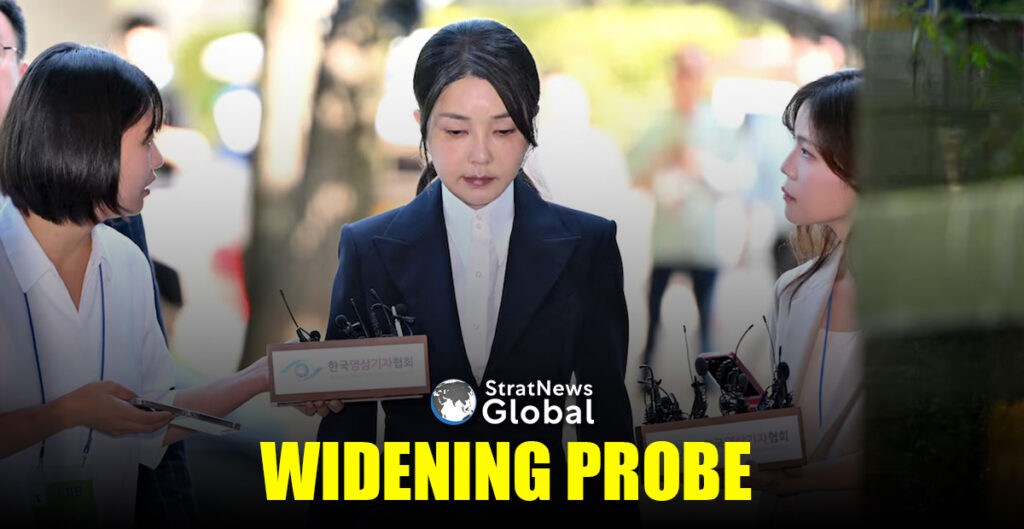
Amid an expanding probe into South Korea’s martial law crisis, Kim Keon Hee — wife of ousted ex-President Yoon Suk Yeol — has been formally charged with bribery and other offences, a special investigation team said on Friday, adding to the growing list of controversies tied to the once-powerful couple.
Both Yoon and Kim have been arrested and are in jail, with Yoon already undergoing trial on charges that include insurrection following his ouster in April over a botched bid to impose martial law in December.
The couple are under separate investigations by special prosecutors appointed after Yoon’s removal from office and President Lee Jae Myung took office.
Multiple Charges
It is the first time that a former first lady has been indicted in South Korea.
The charges against Kim, which are punishable by years in prison if she is found guilty, range from stock fraud to bribery that have implicated business owners, religious figures and a political power broker.
The charges against her include whether she broke the law by wearing a luxury Van Cleef pendant reportedly priced more than 60 million won ($43,200) on the first couple’s trip to the NATO summit in 2022. The item was not listed in the Yoons’ financial disclosure as required by law, according to the charge.
She is also accused of receiving two Chanel bags together valued at 20 million won and a diamond necklace from a religious group as a bribe in return for influence favourable to business interests it was pursuing.
An artwork valued at several million dollars and tens of thousands of dollars in cash seized by the special prosecutor’s team are also linked to her, according to media reports that have extensively covered her travails.
Earlier in August, Kim apologised for causing concern but did not answer questions from reporters about the allegations against her.
“I am truly sorry that a nobody like myself has caused concern for everyone in the country,” Kim said.
Numerous High-Profile Scandals
The former first lady has been the subject of numerous high-profile scandals, some dating back more than 15 years, which overshadowed Yoon’s turbulent presidency and inflicted political damage on him and his conservative party.
Kim’s lawyers have denied the allegations against her and said news reports about some of the gifts she allegedly received were groundless speculation.
Special prosecutors investigating the country’s martial law crisis also indicted on Friday former Prime Minister Han Duck-soo who was appointed by Yoon on charges of abetting insurrection and committing perjury, a prosecution spokesperson said.
(With inputs from Reuters)
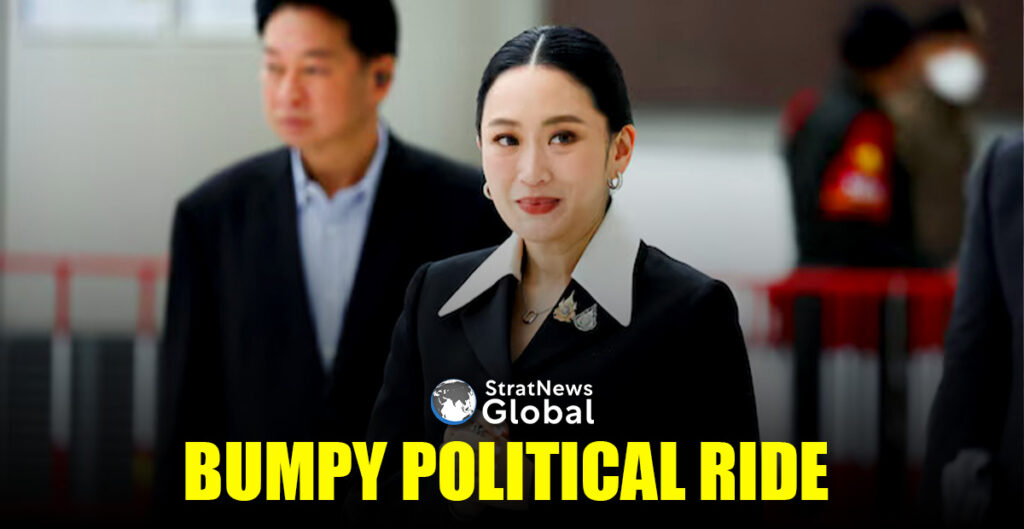
Thailand Court To Rule On PM Paetongtarn Amid Political Crisis
Thailand’s Constitutional Court will decide on Friday whether Prime Minister Paetongtarn Shinawatra can stay in office or not — a decision that could remove her from power after just one year and lead to fresh political trouble, no matter what the outcome is.
Paetongtarn, the daughter of influential billionaire Thaksin Shinawatra, is accused of violating ethics in a leaked June telephone call with Cambodia’s former leader Hun Sen when both countries were at the brink of an armed border conflict.
The 39-year-old appeared to kowtow to Hun Sen, prompting outrage and protests that have left her coalition government hanging by a thread. She has apologised and said she wanted to defuse tensions and save lives.
Fighting on the border erupted a few weeks after the call but a ceasefire is now in place.
Long Running Power Struggle
Paetongtarn could become the fifth premier in 17 years to be removed by the Constitutional Court, underlining its central role in a long-running power struggle during which the Shinawatra political dynasty has endured two military coups and the fall of three of its governments.
The verdict is due from 3 p.m. (0800 GMT) and if she is dismissed, a flurry of horse-trading is expected before parliament chooses the next prime minister, who could come from her ruling Pheu Thai party, her fragile coalition, or even the opposition.
No Bargaining Power
“Appointing a new prime minister…will be difficult and may take considerable time,” said Stithorn Thananithichot, a political scientist at Chulalongkorn University.
“It’s not easy for all parties to align their interests,” he said. “Pheu Thai will be at a disadvantage … bargaining power will belong to all parties except Pheu Thai.”
Candidates
There are five people eligible to become prime minister from candidates submitted prior to the 2023 election.
Only one is from Pheu Thai, 77-year-old Chaikasem Nitisiri, a former attorney general with limited cabinet experience.
Others include former premier Prayuth Chan-ocha, who has retired from politics and led a coup against the last Pheu Thai government in 2014, and Anutin Charnvirakul, a deputy premier before he withdrew his party from Paetongtarn’s coalition over the leaked phone call.
‘Lost Credibility’
If Paetongtarn survives, it may not be for long. Her coalition has a razor-thin majority and could face protests from nationalists and parliamentary challenges that would hamstring efforts to implement its agenda and revive a flagging economy.
“The government would be unstable,” said analyst Stithorn. “Paetongtarn lost credibility from the day the phone conversation was leaked.”
(With inputs from Reuters)