

Support us by contributing to StratNewsGlobal on the following UPI ID
ultramodern@hdfcbank

Strategic affairs is our game, South Asia and beyond our playground. Put together by an experienced team led by Nitin A. Gokhale. Our focus is on strategic affairs, foreign policy and international relations, with higher quality reportage, analysis and commentary with new tie-ups across the South Asian region.
You can support our endeavours. Visit us at www.stratnewsglobal.com and follow us on YouTube, Twitter, Facebook and Instagram.
र 500 per month
र 1000 per month
र 5000 per year
र 10000 per year
Donate an amount of your choice
र 500 per month
Donate र 500 per month

र 1000 per month
Donate र 1000 per month
र 5000 per year
Donate र 5,000 per year
र 10000 per year
Donate र 10,000 per year
Donate an amount of your choice
Donate an amount of your choice
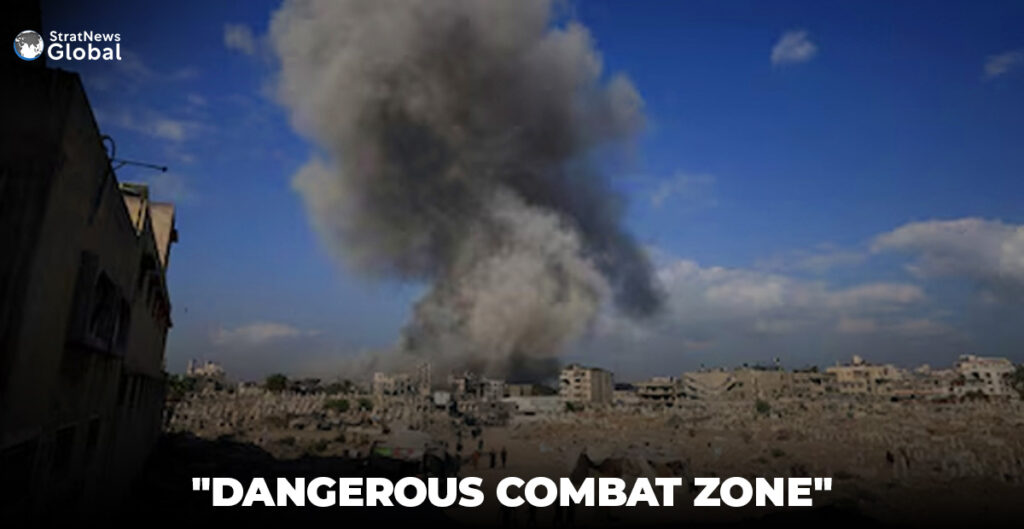
Israeli Military Says Gaza City Excluded From Local Tactical Pause
Israel‘s military announced that beginning from Friday, a local humanitarian pause in military operations will not extend to Gaza City, describing the area as “a dangerous combat zone.”
Israel’s security cabinet had approved a plan to take control of Gaza City, a move expanding military operations in the shattered Palestinian territory that drew strong criticism at home and abroad over its pursuit of the almost two-year-old war.
Last month, Israel announced a halt in military operations for 10 hours a day in parts of Gaza and new aid corridors as Jordan and the United Arab Emirates airdropped supplies into the enclave.
The Israeli military said on Friday that it “will continue to support humanitarian efforts alongside ongoing manoeuvring and offensive operations against terrorist organisations in the Gaza Strip in order to protect the state of Israel”.
Mounting Criticism
Israel has been facing growing international criticism, which the government rejects, over the humanitarian crisis in Gaza, and indirect ceasefire talks in Doha between Israel and the Palestinian militant group Hamas have broken off with no deal in sight.
Israeli Prime Minister Benjamin Netanyahu has said there will be no end to the war until Hamas is disarmed.
The war began on October 7, 2023, when Hamas-led fighters stormed southern Israel, killing 1,200 people, mostly civilians, and taking 251 hostages back to Gaza, according to Israeli tallies.
Since then, Israel’s offensive has killed over 62,000 people in Gaza, mostly civilians, according to Gaza health officials, reduced much of the enclave to ruins and displaced nearly the entire population.
(With inputs from Reuters)
The Abrupt End Of Second Indo-U.S. ‘Honeymoon’
The Shanghai Cooperation Organisation (SCO) Summit 2025 in Tianjin, China, marks a pivotal moment in global geopolitics. With Indian Prime Minister Narendra Modi, Chinese President Xi Jinping, Russian President Vladimir Putin, and leaders from Central Asia, West Asia, South Asia and Southeast Asia in attendance, the summit underscores the SCO’s growing influence as a platform for Eurasian cooperation.
For India, this event is particularly significant, as it marks PM Modi’s first visit to China in seven years, signalling a thaw in Sino-Indian relations strained since the deadly Galwan Valley clashes of 2020 that plunged India-China relations into a deep freeze. Recent developments, such as Chinese Foreign Minister Wang Yi’s visit to New Delhi and the two countries’ acceptance of incremental border de-escalation measures indicate a pragmatic approach to rebuilding ties.
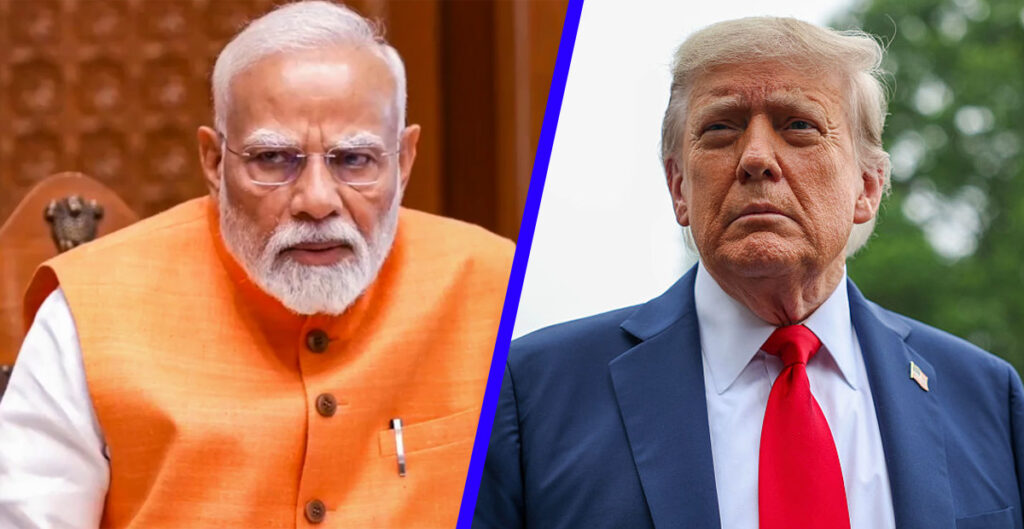
However, the thaw is not entirely organic. It occurs against the backdrop of strained Indo-U.S. relations, particularly following the Trump administration’s decision to impose 50% tariffs on Indian exports. This move, described by India’s Foreign Minister S. Jaishankar as “unjustified,” reflects a selective geopolitical strategy by Washington, which has spared China and Europe from similar penalties. The U.S.’ apparent pivot toward Pakistan, especially after referring to India as a “dead economy,” has further eroded trust in the Indo-U.S. partnership, reminiscent of historical betrayals that shaped India’s foreign policy. Therefore, it is hard to deny that India’s strategic move eastward is not shaped by a shifting global order, accelerated by President Donald Trump’s drive to “Make America Great Again” by weaponising America’s financial and economic heft.
The current strain in Indo-U.S. relations evokes memories of the mid-20th century, when Washington briefly courted New Delhi before abruptly disengaging. In the late 1950s, post-Suez crisis, India and the U.S. collaborated to highlight China’s occupation of Tibet marking the beginning of a golden period in Indo-U.S. relations. To bolster India’s economic development and strategic position, the U.S. formed a consortium of Western nations to fund India’s Third Five-Year Plan (1961-66), aimed at industrial growth. This initiative, spearheaded by the Kennedy-Cooper Resolution passed by the U.S. Congress provided critical financial aid, including loans and technical assistance. On January 4,1961, the U.S. gave $50 million loan to India at 5.75% interest for the purchase of capital equipment from United States to meet the development goals envisaged in the Third Five Year Plan.
A cornerstone of this golden era was the burgeoning Indo-U.S. nuclear cooperation, spearheaded by the US Technical Cooperation Administration mission (US Technical Cooperation Administration mission (TCM was later renamed US Agency for International Development (USAID).
As has been reported, on July 11, 1959, this partnership was already well-established, involving the purchase of heavy water, the sharing of research and the training of Indian scientists in the US.
This report served as a prelude to a landmark announcement the very next day, July 12, 1959. The United States agreed to lease 15 tons of heavy water to India for its research reactor at Trombay, which was designed for peaceful atomic energy research. This agreement was historic; it marked the first time the American Atomic Energy Commission had leased—not sold—heavy water to a foreign government, signifying a new level of trust and cooperation that moved beyond mere commercial transactions.
However, this happy story was nearly spoiled by a diplomatic faux pas. The two governments had carefully coordinated to announce the deal simultaneously with a press release scheduled for July 13 at 9.00 am Washington time. In an awkward misstep, the United States Information Service (USIS) in New Delhi jumped the gun and released the news a day early. The breach of the agreement left the Indian Ministry of External Affairs (MEA) displeased, leading them to register a mild protest with their American counterparts.
During this period, the United States overlooked Jawaharlal Nehru’s launch of the Non-Aligned Movement (NAM) in 1961, alongside other non-communist nations, as India boldly confronted China. Defying Mao Zedong’s regime, India granted asylum to the Dalai Lama and thousands of Tibetans fleeing Chinese oppression, a move that heightened tensions and contributed to China’s invasion of India in 1962. However, the Indo-U.S. partnership soon faltered. The U.S., having leveraged the 1962 Sino-Indian War to widen the Sino-Soviet rift, appeared to have achieved its strategic objective. Consequently, Washington disengaged, effectively nudging India toward the Soviet Union. As U.S. priorities shifted to pursue closer ties with China, India found itself sidelined, no longer central to America’s geopolitical calculus.
Following President Kennedy’s assassination, the Johnson administration’s indifference toward New Delhi created a diplomatic chill. In 1966, new Prime Minister Indira Gandhi visited Washington and, under pressure, agreed to devalue India’s currency. The devaluation on June 6, 1966, was meant to unlock a World Bank loan, but the Bank withdrew its promise, leaving India in the lurch. The resulting financial crisis plunged the nation into political turmoil.
The U.S.’ support for Pakistan during the 1971 Bangladesh liberation war further signalled that India was no longer central to American geopolitical calculus. The current U.S. tilt toward Pakistan, coupled with tariffs and dismissive rhetoric, suggests a similar pattern.
Historical precedent shows that the United States, through its indifference in the 1960s, effectively pushed India toward a strategic partnership with the Soviet Union. Today, the modern Indo-U.S. “honeymoon,” which began at the turn of the century, appears to be nearing a similar end. Last time, the U.S. withdrawal coincided with its pivot to China. The critical question we must ask now is: what is the catalyst this time?
This raises critical questions: Why has the U.S. suddenly deprioritized India? Is it abandoning its “Pivot to Asia” policy, which aimed to counter China in the Indo-Pacific? Or is it shifting focus to Central Asia and Eurasia, potentially seeking a G2 arrangement with China to divide global spheres of influence?
India must recognise that engaging with the United States cannot be on equal terms. The established American empire is in decline, desperately clinging to its primacy, which makes it an unpredictable and self-interested partner. In contrast, China is still ascending and has not yet solidified its imperial dominance. This fluidity offers India a critical window of opportunity to shape a more balanced relationship with Beijing. India must act strategically to define these terms on a more equal footing before this window closes and the power disparity becomes permanent.
(Atul Bhardwaj is the author of ‘India-America Relations (1942-62): Rooted in the Liberal International Order’. Views expressed in this article are personal)
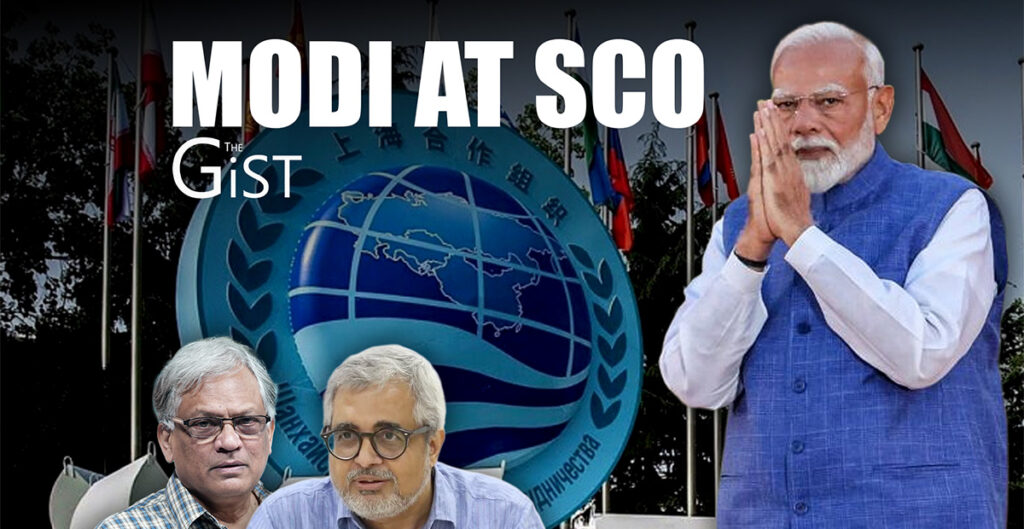
Modi Skipped Two SCO Summits, Why Is He Attending Now?
Is India serious about the Shanghai Cooperation Organisation (SCO)? Prime Minister Modi is attending the current summit in Tianjin, China, but skipped two summits earlier and attended one virtually.
“There is a perception that has gone around, particularly in the Central Asian states, which is not very helpful for us because the original idea of joining SCO was to help India improve its footprint in Central Asia,” said Nandan Unnikrishnan, head of the Russia studies programme at the Observer Research Foundation.
“So after two misses and one virtual we have some ground to cover. It’s equally an opportunity for the Central Asian leaders to discuss with Modi, issues linked to connectivity, investments and so on.”
More important is that this summit will mark Modi’s return to China after a gap of seven years. That’s hugely symbolic for the SCO as a platform, it means it is playing a role in the Eurasian landmass. And if one adds Modi’s meeting with Vladimir Putin, that’s another huge plus.
Terrorism is expected to be a major point of discussion and this is not only because India wants it with Pakistan in mind. The Central Asian states, too see terrorism as a challenge but in the context of Afghanistan.
“When we talk of terrorism we are essentially talking of Pakistan as the mothership from where all this emanates, but the other members of Asia … see Afghanistan as the training ground … the drugs trafficking, smuggling of arms, smuggling of terrorists, takes place primarily from Afghanistan,” Unnikrishnan said.
Have the Trump tariffs pushed India into a corner, forcing it to move towards Russia and China to gain some leverage?
“If you look at it chronologically, you will see that with China it started in October last year, before the Trump presidency,” he said. “I don’t think you can link it to the tariff wars … as far as Russia is concerned I think we started after the Ukraine war.”
Tune in for more in this conversation with Nandan Unnikrishnan of the Observer Research Foundation
U.S. Shreds UN Rights Review, Weakens Global Oversight
The United States is poised to become the first country to walk away from the United Nations’ Universal Periodic Review (UPR), a move that strikes at the very credibility of the world’s human rights system.
The peer-review mechanism, created in 2008, was meant to embody equality — every country, big or small, facing the same scrutiny. Washington’s refusal now makes that principle look like a farce.
The UPR is hardly a draconian process: it runs on voluntary compliance and produces non-binding recommendations. Yet the symbolism matters. When the world’s most powerful state rejects even this mild form of oversight, it signals that accountability is for the weak, not the strong.
This is not the first U.S. snub. The Trump administration had already pulled out of the UN Human Rights Council, denouncing it as biased. Skipping the UPR extends that logic — that America can monitor others while exempting itself. Critics argue this is less about sovereignty than about double standards, eroding the system’s universality and narrowing the space for activists and NGOs to challenge abuses at home.
The U.S. government continues to release its own annual rights report, a document increasingly viewed as a political weapon. This year’s edition blasted Brazil and South Africa while going easy on allies such as El Salvador, Hungary, and Israel — countries frequently condemned by the UN. Entire crises, like the humanitarian disaster and soaring death toll in Gaza, were omitted altogether.
At the same time, Washington faces its own troubling record. Human Rights Watch and other groups have accused the Trump administration of militarising civic spaces in Washington, dismantling refugee protections, stripping LGBTQ provisions, and abusing undocumented migrants. These issues would likely have surfaced in a UPR review, a fact that may help explain the administration’s executive order formalising its withdrawal earlier this year.
The optics are stark: the U.S. casts itself as global watchdog while ducking the most basic form of scrutiny. Experts warn that this precedent gives cover to regimes such as Russia, Iran, or South Sudan, which may now feel emboldened to dismiss the UPR altogether. The message is corrosive — rights reviews are mandatory for the powerless, but optional for the powerful.
The problem is structural as well. Soft-law frameworks like the UPR depend on free will. With no penalties for defection, strong states can simply walk away, leaving smaller states bound by rules that their larger counterparts treat with contempt. It is a demonstration of “shadow sovereignty”: loudly condemning others while insulating oneself from oversight.
In walking out, Washington not only weakens its own credibility but also destabilises the fragile architecture of international accountability. What was designed to promote universality and solidarity now risks being reduced to selective enforcement — a hierarchy of scrutiny that serves political interests, not justice.
(This article was written by Tisya Sharma, she is an intern at StratNews Global)
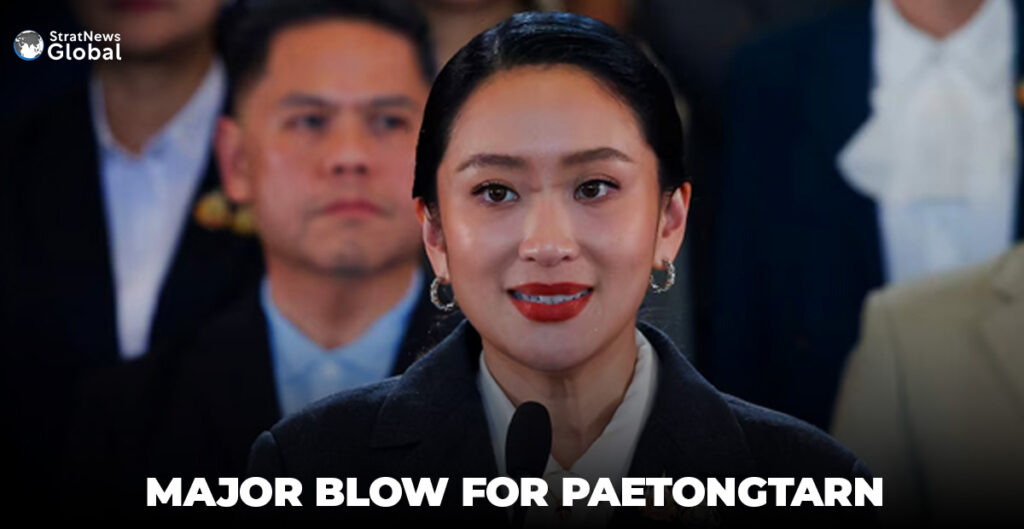
Thailand Court Sacks PM Paetongtarn Shinawatra For Ethics Violation
Thailand’s Constitutional Court on Friday sacked Prime Minister Paetongtarn Shinawatra from office for an ethics violation after just a year in power, marking another severe setback for the Shinawatra dynasty and potentially opening a new chapter of political turmoil.
Paetongtarn, who was Thailand’s youngest prime minister, becomes the sixth premier from or backed by the billionaire Shinawatra family to be removed by the military or judiciary in a tumultuous two-decade battle for power between the country’s warring elites.
Ethics Violation
In its verdict, the court said Paetongtarn violated ethics in a leaked June telephone call, during which she appeared to kowtow to Cambodia’s powerful former leader Hun Sen – until recently a close ally of the Shinawatra family – when both countries were on the brink of an armed border conflict.
Fighting erupted weeks later and lasted five days.
The ruling paves the way for the election by parliament of a new prime minister, a process that could be drawn out, with Paetongtarn’s ruling Pheu Thai party losing bargaining power and facing a challenge to shore up a fragile alliance with a razor-thin majority.
In a 6-3 decision, the court said Paetongtarn had put her private interests before those of the nation and had damaged the country’s reputation, causing a loss of public confidence.
“Due to a personal relationship that appeared aligned with Cambodia, the respondent was consistently willing to comply with or act in accordance with the wishes of the Cambodian side,” the court said.
The ruling brings a premature end to the premiership of the daughter and protégé of influential tycoon Thaksin Shinawatra. Paetongtarn, 39, was a political neophyte when she was thrust abruptly into the spotlight after the surprise dismissal of predecessor Srettha Thavisin by the same court a year ago.
Paetongtarn called for unity among all parties to bring political stability to Thailand.
“All I wanted was to safeguard the lives of people, whether soldiers or civilians. I was determined to do all I could to protect their lives before the violent clashes,” she told reporters.
Dealmaking Begins
She is the fifth premier in 17 years to be removed by the Constitutional Court, underlining its central role in an intractable power struggle between the elected governments of the Shinawatra clan and a nexus of powerful conservatives and royalist generals with far-reaching influence.
The focus will next shift to who will replace Paetongtarn, with Thaksin expected to be at the heart of a flurry of horse-trading between parties and other power-brokers to try to keep Pheu Thai in charge of the coalition.
Deputy Premier Phumtham Wechayachai will be in charge as caretaker until a new prime minister is elected by the house, with no time limit on when that must take place.
Five people are eligible to become prime minister, with only one from Pheu Thai, 77-year-old Chaikasem Nitisiri, a former attorney general with limited cabinet experience, who has maintained a low profile.
Pheu Thai confirmed on Friday that it would nominate Chaikasem.
Others include former premier Prayuth Chan-ocha, who has retired from politics and led a military coup against the last Pheu Thai government in 2014, and Anutin Charnvirakul, a deputy premier before he withdrew his party from Paetongtarn’s coalition over the leaked phone call.
Anutin’s Bhumjaithai Party said on Friday it would meet with the opposition People’s Party, the largest force in parliament. The People’s Party said it would not join a government but would give its backing to any party under certain conditions.
Political Uncertainty
The ruling thrusts Thailand into more political uncertainty at a time of simmering public unease over stalled reforms and a stuttering economy expected by the central bank to grow just 2.3% this year.
Any Pheu Thai-led administration would likely have only a slender majority and could face frequent parliamentary challenges from an opposition with huge public support that is pushing for an early election.
“Appointing a new prime minister…will be difficult and may take considerable time,” said Chulalongkorn University political scientist Stithorn Thananithichot.
“It’s not easy for all parties to align their interests,” he said. “Pheu Thai will be at a disadvantage.”
(With inputs from Reuters)
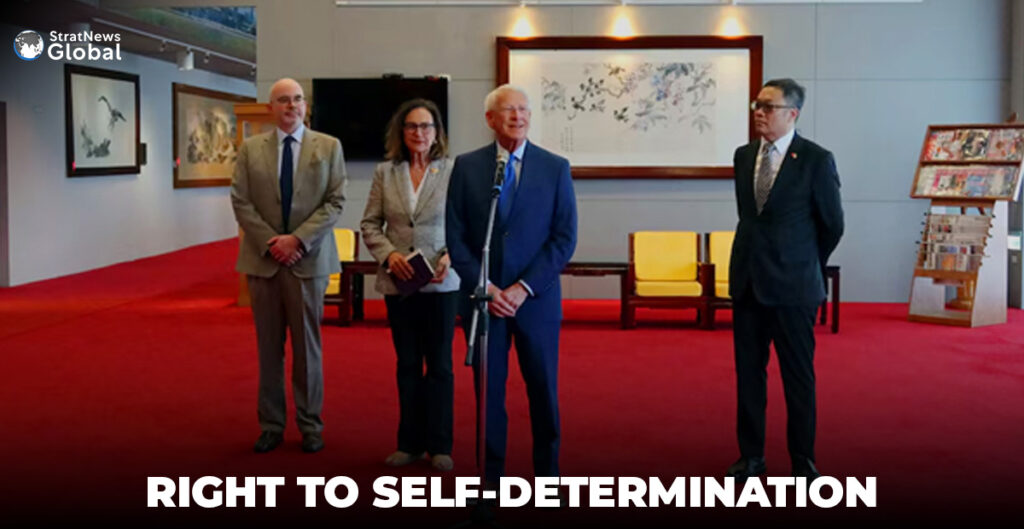
Senior US Senator Says Taiwan Has Right To Freedom And Self-Determination
U.S. Senator Roger Wicker, chairman of the Armed Services Committee and a leading Taiwan advocate in Congress, told the island’s president on Friday that Taiwan has the right to freedom and to preserve self-determination.
Wicker, a Republican, told Taiwan President Lai Ching-te during a meeting at the presidential office in Taipei that he and his colleague, Senator Deb Fischer, were visiting to get a better understanding of Taiwan’s needs and concerns.
“We come here from the United States bringing a message from the Congress of commitment, of long-term friendship and a determination that a free country like Taiwan absolutely has the right to remain free and preserve self-determination,” Wicker said.
Beijing, which regularly denounces any shows of support for Taipei from Washington, repeated its opposition to Wicker’s trip. China firmly opposes any official exchanges between the United States and Taiwan, the country’s foreign ministry said.
Wicker is visiting democratically governed Taiwan, which China views as its own territory, as Beijing ratchets up its military pressure on the island.
Military Activities Ramped Up
China has increased its military activities around Taiwan over the past five years or so, including staging war games. Beijing has never renounced the potential use of force to bring Taiwan under its control.
Lai reiterated to Wicker his offer to talk to China – which Beijing has repeatedly rejected – but said that Taiwan’s future can only be decided by its people.
Taiwan hopes to strengthen its security cooperation with the United States, including on designing and manufacturing weapons, Lai added.
The U.S. Senate is due to consider next week the National Defence Authorisation Act, or NDAA, a nearly $1 trillion bill that sets policy for the Pentagon.
Wicker, speaking earlier on Friday as he arrived at Taipei’s downtown airport on a U.S. Air Force 737, said that this year’s NDAA would “add to the provisions again” when it came to Taiwan, though he gave no details.
Wicker is visiting just a few days before Beijing holds a mass military parade to mark the 80th anniversary of the end of World War Two, where guests include Russian President Vladimir Putin and North Korean leader Kim Jong Un.
His trip also takes place as some members of Congress – both President Donald Trump’s fellow Republicans and Democrats – have expressed concern that Trump is de-emphasising security issues as he works on negotiating a trade deal with China.
Administration officials have said Trump remains fully committed to Asia-Pacific security matters as he pursues his trade agenda and a good personal relationship with Chinese President Xi Jinping.
The United States is Taiwan’s most important international backer and arms supplier despite the lack of formal diplomatic ties.
(With inputs from Reuters)
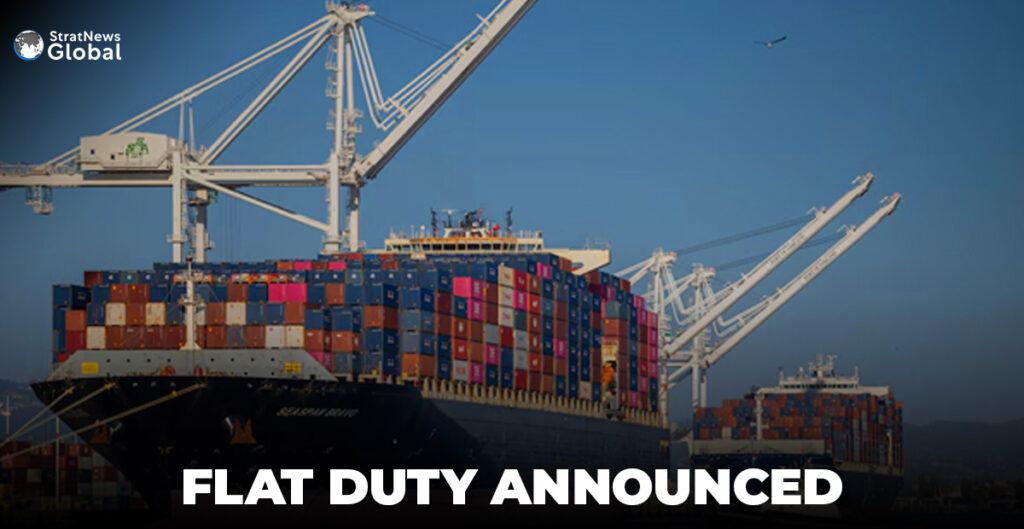
Trump Officials Confirm Permanent End To US Low-Value Package Tariff Exemption
The U.S. will permanently end its tariff exemption for package shipments under $800 on Friday, with a six-month transition allowing postal shippers to pay a flat $80–$200 duty per package based on origin, Trump administration officials announced.
The U.S. Customs and Border Protection (CBP) agency will begin collecting normal duty rates on all global parcel imports, regardless of value, after 12:01 a.m. EDT (0401 GMT) on Friday. The move broadens the Trump administration’s cancellation of the de minimis exemption for shipments from China and Hong Kong earlier this year.
“President Trump’s ending of the deadly de minimis loophole will save thousands of American lives by restricting the flow of narcotics and other dangerous prohibited items, and add up to $10 billion a year in tariff revenues to our Treasury,” White House trade adviser Peter Navarro told reporters.
“This is a permanent change,” said a senior administration official, adding that any push to restore the exemptions for trusted trading partner countries was “dead on arrival.”
The de minimis exemption has been in place since 1938 and was raised from $200 to $800 in 2015 as a means to foster small business growth on e-commerce marketplaces.
But direct shipments from China exploded after President Donald Trump raised tariffs on Chinese goods during his first term, creating a new direct-to-consumer business model for e-commerce firms Shein and Temu.
Many of these packages entered without screening, and the Trump administration has also blamed the exemption for allowing fentanyl and its precursors to flow into the U.S.
CBP Collections
CBP has estimated that the number of packages claiming the de minimis exemption jumped nearly 10-fold from 139 million in fiscal 2015 to 1.36 billion in fiscal 2024.
A second senior Trump administration official said that CBP has collected more than $492 million in additional duties on packages shipped from China and Hong Kong since their exemptions were eliminated on May 2.
The official said that full tariff rates will apply to all packages shipped by express carriers such as FedEx, United Parcel Service and DHL, with the firms collecting the duties and processing the paperwork.
Foreign postal agencies can opt to collect and process the duties based on the value of the package contents, or opt for the flat rate method by collecting a flat tax based on Trump’s “reciprocal” tariff rates currently in place on goods from the country of origin.
Based on CBP guidance issued on Thursday, parcels would be charged $80 from countries with Trump-imposed duty rates below 16%, such as Britain and the European Union, $160 from countries between 16% and 25%, such as Indonesia and Vietnam, and $200 from countries above 25%, including China, Brazil, India and Canada.
But postal services must shift to full “ad valorem” duty collection based on the value of the shipments by February 28, 2026, the second official said.
This official acknowledged that some foreign postal services have suspended mail to the U.S. but said the administration was working with foreign partners and the U.S. Postal Service to minimise disruptions. The official said that Britain, Canada and Ukraine have confirmed that their shipments are continuing.
(With inputs from Reuters)
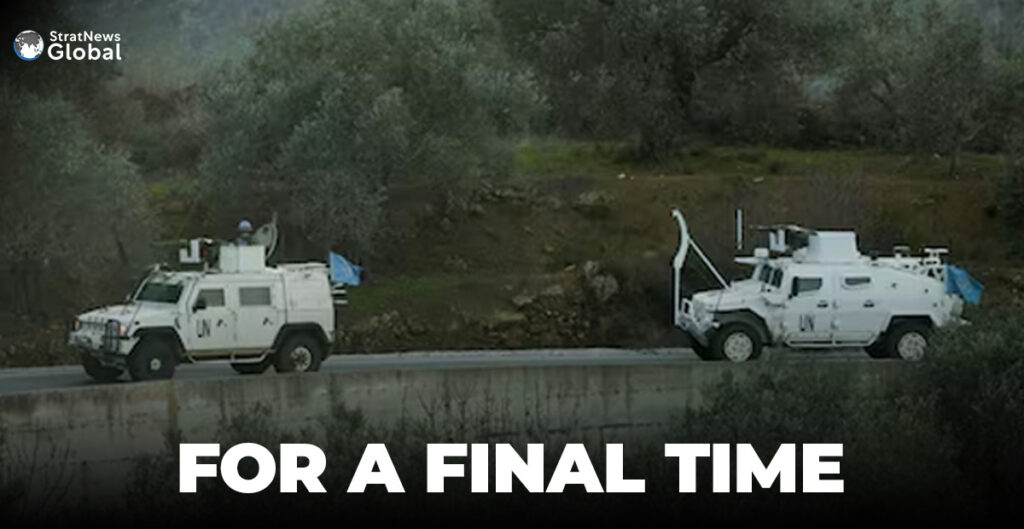
UN Security Council Extends Lebanon Peacekeeping Mission ‘For A Final Time’
The United Nations Security Council (UNSC) on Thursday unanimously agreed to extend Lebanon’s long-running peacekeeping mission “for a final time” until the end of 2026, after which a year-long “orderly and safe drawdown and withdrawal” will begin.
The U.N. Interim Force in Lebanon (UNIFIL), established in 1978, patrols Lebanon’s southern border with Israel.
The 15-member council unanimously adopted a French-drafted resolution after a compromise was reached with the United States, a veto-wielding council member.
The Security Council decided “to extend for a final time the mandate of UNIFIL.”
The resolution “requests UNIFIL to cease its operations on 31 December 2026 and to start from this date and within one year its orderly and safe drawdown and withdrawal of its personnel, in close consultation with the Government of Lebanon with the aim of making the Lebanese Government the sole provider of security in southern Lebanon.”
‘For A Final Time’
This will be the last time the United States will support an extension of UNIFIL, said acting U.S. Ambassador to the U.N. Dorothy Shea.”The security environment in Lebanon is radically different from just one year ago, creating the space for Lebanon to assume greater responsibility,” she told the council.
UNIFIL’s mandate was expanded in 2006, following a month-long war between Israel and Hezbollah, to allow peacekeepers to help the Lebanese army keep parts of the south free of weapons or armed personnel other than those of the Lebanese state.
That has sparked friction with Hezbollah, which effectively controls southern Lebanon despite the presence of the Lebanese army. Hezbollah is a heavily armed party that is Lebanon’s most powerful political force.
“Decades since UNIFIL’s mandate was extended, it is time to dispel the illusion. UNIFIL has failed in its mission and allowed Hezbollah to become a dangerous regional threat,” Israel’s U.N. Ambassador Danny Danon said after the vote.
The United States brokered a truce in November between Lebanon and Israel following more than a year of conflict sparked by the war in Gaza.
The U.S. is now seeking to promote a plan for Hezbollah’s disarmament. Washington is linking the plan to a phased Israeli withdrawal from southern Lebanon, while also promoting a U.S.- and Gulf-backed economic development zone in Lebanon’s south aimed at reducing Hezbollah’s reliance on Iranian funding.
Lebanon’s Prime Minister Nawaf Salam welcomed the extension, noting that it “reiterates the call for Israel to withdraw its forces from the five sites it continues to occupy, and affirms the necessity of extending state authority over all its territory.”
(With inputs from Reuters)
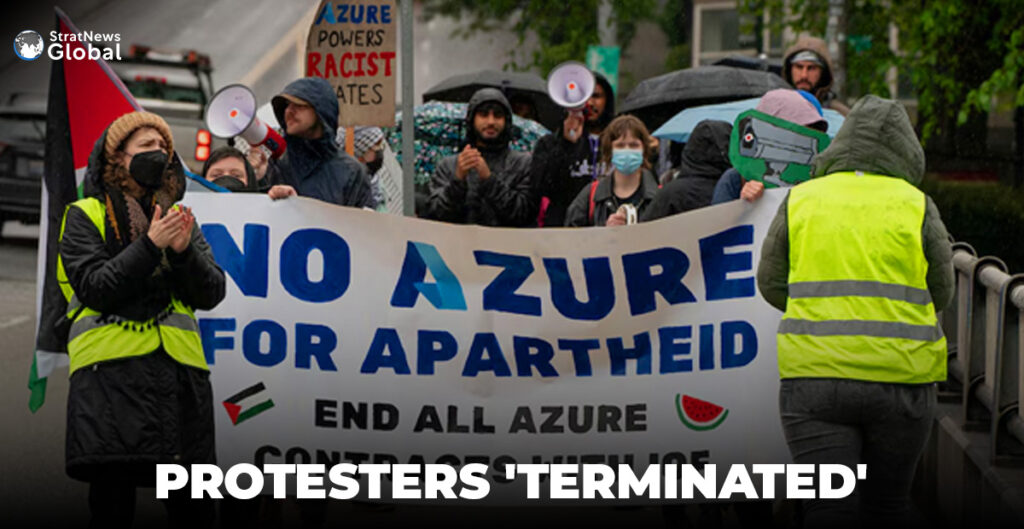
Microsoft Terminates Four Employees Over On-Site Protests Against Israel Ties
Microsoft has terminated four of its employees for staging protests on company premises against the tech giant’s ties to Israel during the Gaza war, including two involved in a sit-in this week at the president’s office.
Anna Hattle and Riki Fameli received voicemails informing them that they were fired, the protest group No Azure for Apartheid said in a statement on Wednesday.
It added on Thursday that two more workers, Nisreen Jaradat and Julius Shan, were fired. They were among protesters who had recently set up encampments at Microsoft headquarters.
Microsoft said the terminations followed serious breaches of company policies. In its Thursday statement, it said recent on-site demonstrations had “created significant safety concerns.”
No Azure for Apartheid, whose name references Microsoft’s Azure software, has demanded that the company cut its ties to Israel and pay reparations to Palestinians.
“We are here because Microsoft continues to provide Israel with the tools it needs to commit genocide while gaslighting and misdirecting its own workers about this reality,” Hattle said in a statement.
Hattle and Fameli were among seven protesters who were arrested on Tuesday after occupying the office of company President Brad Smith. The other five were former Microsoft workers and people outside the company.
Smith has said Microsoft respected “freedom of expression that everyone in this country enjoys as long as they do it lawfully.”
Microsoft’s Azure ‘Powers Surveillance’
A joint media investigation published this month found that an Israeli military surveillance agency was making use of Microsoft’s Azure software to store countless recordings of mobile phone calls made by Palestinians living in the Israeli-occupied West Bank and Gaza.
The investigation, conducted by the Guardian, Israeli-Palestinian publication +972 Magazine and Hebrew-language outlet Local Call, said Israel relied on Microsoft cloud for expansive surveillance of Palestinians.
In response, Microsoft said it was turning to law firm Covington & Burling LLP to conduct a review.
Other Microsoft workers have also protested the company’s ties to Israel.
In April, Microsoft AI CEO Mustafa Suleyman’s remarks were interrupted by a pro-Palestinian protesting employee during the technology company’s 50th anniversary celebration over the firm’s ties with Israel. That employee and another protesting employee were also subsequently fired.
Firms and educational institutions have faced protests over ties with Israel as the humanitarian crisis in Gaza from Israel’s military assault has mounted, and images of starving Palestinians, including children, have sparked global outrage.
The latest bloodshed in the decades-old Israeli-Palestinian conflict was triggered in October 2023 when Hamas militants attacked Israel, killing 1,200 people and taking about 250 hostages, Israeli tallies show.
Israel’s subsequent assault on Gaza has killed tens of thousands of Palestinians, caused a hunger crisis, internally displaced Gaza’s entire population and prompted accusations of genocide and war crimes at international courts that Israel denies.
(With inputs from Reuters)
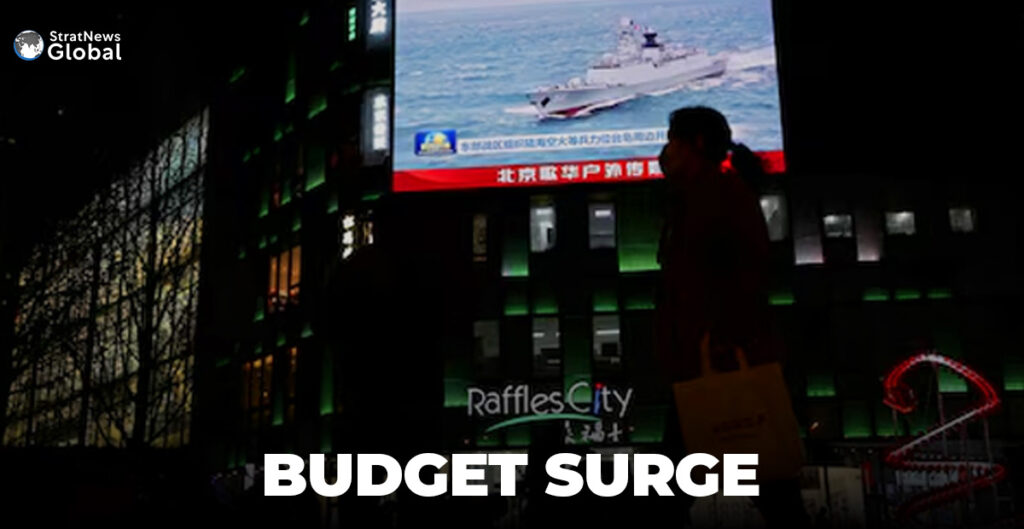
Taiwan Estimates China Spent $21B On 2024 Pacific Drills, 40% Surge From 2023
China spent about $21 billion on military drills across the Taiwan Strait, the East and South China Seas, and the Western Pacific last year — a nearly 40% increase from 2023, according to Taiwan government estimates, calculated through its monitoring of aircraft, ships, fuel, and other expenses.
The internal research by Taiwan’s armed forces, reviewed by Reuters and corroborated by four Taiwan officials, offers rare detail of where China’s defence spending is probably going as Beijing expands its military footprint and scope of its drills, alarming regional capitals and Washington.
‘Under-Reported’ Defence Budget
China budgeted 1.67 trillion yuan ($233.47 billion) in defence spending for last year, but diplomats widely believe that number is under-reported. China does not give any breakdown on how the money is spent.
The officials, who were briefed on the research, declined to be identified because of the sensitivity of the matter.
Neither China’s defence ministry nor its Taiwan Affairs Office responded to requests for comment. China, which views Taiwan as its own territory over the objections of Taipei’s government, has repeatedly said its military spending is transparent and presents no threat.
Reuters could not independently confirm the accuracy of the Taiwanese estimate. Experts said the report’s methodology was feasible and could provide valuable information, although they cautioned that it necessarily included some guesswork.
Taiwan’s military compiled its estimates in a report this month based on Taiwanese surveillance and intelligence on Chinese military activity in the Bohai Sea off northeast China, the East China Sea, the Taiwan Strait, the South China Sea, and the Western Pacific.
$21.25 Billion Spent
The reports tallied China’s naval and air missions there in 2024, then estimated how much fuel and other consumables would cost for each hour of activity. The total was around 152 billion yuan ($21.25 billion), including maintenance, repairs and salaries, the report and the officials briefed on the research said.
That estimated spending represented about 9% of China’s reported 2024 military spending, up from 7% in 2023 based on the same estimates, according to Reuters calculations based on the research.
“China’s ongoing military expansion and grey-zone provocations are severely undermining peace and stability in the Indo-Pacific region,” Taiwan’s defence ministry said in a statement to Reuters, which did not address the report’s spending and other estimates.
In 2024, Chinese aircraft, including J-10 fighter jets, H-6 bombers, and drones, made nearly 12,000 flights in the region, amounting to about 37,000 hours in the air, the report shows. Those both represent roughly a 30% increase from the year before, the officials said.
The Chinese navy made more than 86,000 sailings, including those of aircraft carriers and destroyers, amounting to a total time at sea of more than 2 million hours, about a 20% increase from a year ago for both metrics, the report said.
Expanding Naval Presence
Roughly 34% of the Chinese naval journeys were made in the highly contested South China Sea, about 28% were in the East China Sea bordering Japan and South Korea, and nearly 14% were in the sensitive Taiwan Strait, the report shows.
“They are trying to normalise their military power projection and intimidation around the first island chain,” said one of the officials briefed on the research.
The First Island Chain is an area that runs from Japan through Taiwan, the Philippines and on to Borneo, enclosing China’s coastal seas as well as the disputed South China Sea.
China’s navy has also been operating even further from the country’s shores, including participating in anti-piracy patrols off Somalia, while the United States has reported an uptick in Chinese naval movements around Alaska and the northern Pacific.
The research is designed to help Taiwanese policymakers understand how China allocates military resources across regions, as well as to gauge Beijing’s pace of military expansion, the officials briefed on the reports said.
The 152 billion yuan figure amounts to about a quarter of Taiwan’s 2024 defence budget.
($1 = 7.1529 Chinese yuan renminbi)
($1 = 7.1529 Chinese yuan renminbi)
(With inputs from Reuters)