

Support us by contributing to StratNewsGlobal on the following UPI ID
ultramodern@hdfcbank

Strategic affairs is our game, South Asia and beyond our playground. Put together by an experienced team led by Nitin A. Gokhale. Our focus is on strategic affairs, foreign policy and international relations, with higher quality reportage, analysis and commentary with new tie-ups across the South Asian region.
You can support our endeavours. Visit us at www.stratnewsglobal.com and follow us on YouTube, Twitter, Facebook and Instagram.
र 500 per month
र 1000 per month
र 5000 per year
र 10000 per year
Donate an amount of your choice
र 500 per month
Donate र 500 per month

र 1000 per month
Donate र 1000 per month
र 5000 per year
Donate र 5,000 per year
र 10000 per year
Donate र 10,000 per year
Donate an amount of your choice
Donate an amount of your choice
UN Weighs Expanding Security Mission As Gang Violence Escalates In Haiti
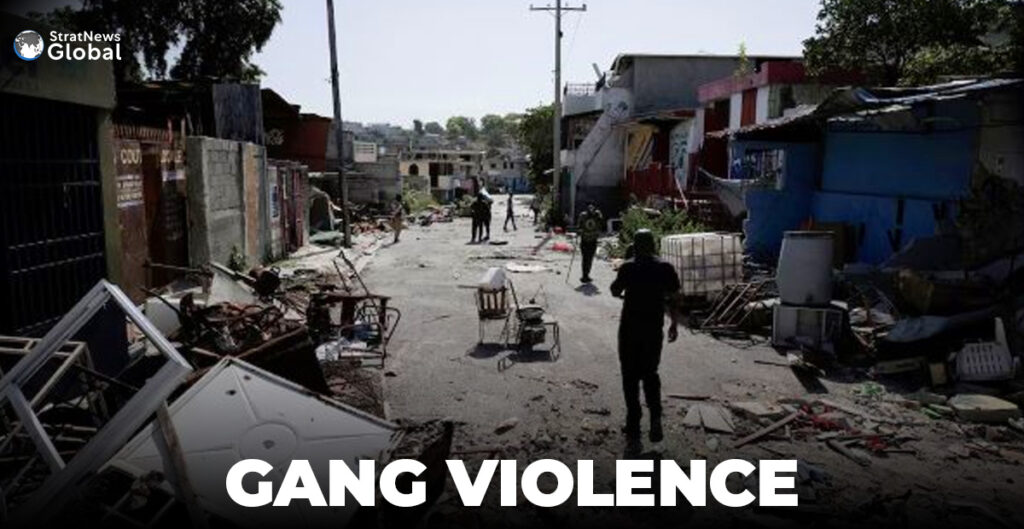
The United Nations Security Council on Friday opened discussions on a draft resolution that would strengthen and enhance the international force deployed to counter armed gangs in Haiti. However, some Haitian security analysts cautioned that the proposals remain vague and leave key questions unanswered.
Armed gangs have taken control of almost all Haiti’s capital Port-au-Prince in an extended conflict that has forced some 1.3 million people from their homes, killed thousands and fueled famine-level hunger.
The draft resolution, put forward by the United States and Panama, aims to transition the existing Multinational Security Support mission, which is both underfunded and undermanned, into a new force called the Gang Suppression Force.
Like the current mission, which is led by Kenyan police, the anti-gang force would be funded through voluntary international contributions.
However, the leadership structure would be different. The new mission would be led by a Standing Group of representatives from countries that have so far contributed personnel, plus the United States and Canada, and be supported by a new U.N. field office to be set up in Port-au-Prince. A new force commander would be appointed by the Standing Group.
No Clear Source Of Funding
The proposal calls on the Americas regional diplomatic body, the Organization of American States, to follow up on its pledges of support with targeted assistance, including rations, communications and defence equipment.
Some Haitian analysts criticized the lack of a clear source of funding, however, and said the new plan duplicates existing structures and fails to address root problems.
Ricardo Germain, an independent security expert, said that besides funding he was particularly concerned by how the leadership would be replaced, adding that Kenya’s challenging experience would likely discourage potential successors.
Jack Ombaka, spokesman for the Multinational Security Support mission, said the mission was still assessing the planned new model, but what was important was that it addressed the threats and benefited the Haitian people.
James Boyard, a security expert at the State University of Haiti, said the new model was too vague on coordination with local forces and that Haiti’s exclusion from the Standing Group threatened the country’s sovereignty.
“We would go from a democratic regime to an international tyranny,” he said, adding that any potential crimes committed by security personnel would need a pre-determined oversight body.
The topic of foreign intervention in Haiti is a sensitive one. Past U.N. missions in Haiti resulted in civilian killings, a sexual abuse scandal and poor wastewater management that caused a cholera epidemic that killed more than 9,000 people.
Haiti’s presidential office said it would comment once the official resolution was made public. The U.S. mission to the United Nations did not immediately respond to a request for comment.
Returning To Ravage Neighbourhoods
Just under 1,000 personnel, mostly Kenyan police, are currently deployed in Haiti – fewer than half the 2,500 troops the mission had hoped for.
The new force would authorize a deployment of up to 5,500 personnel. The draft resolution did not say how it would secure this number.
The existing mission was first authorized by the UN Security Council in October 2023, and the first Kenyan police arrived in June 2024. Its 12-month mandate was renewed and is set to expire on October 2.
As the death toll climbed, Haiti’s government in March began working with a private military company run by Erik Prince to use explosive-packed drones to target gang strongholds, and the company is planning to expand its operations.
Earlier this week, prominent gang leader Jimmy “Barbeque” Cherizier withdrew his soldiers from several neighbourhoods in north-eastern Port-au-Prince and urged former residents to return to their homes in a video message circulated on social media.
Boyard said this was likely intended to revive the economy in neighbourhoods his gang had destroyed so he can again extort money from residents, and use them as human shields to dissuade drone-backed security advances.
Residents began to return to the ravaged neighbourhoods this week, carrying canvas bags past piles of rubble and the husks of burned-out cars. Some said they had lost everything and found their former homes destroyed.
(With inputs from Reuters)
India, Russia, Trump and Oil: The Facts
Amidst the hypocritical bilge being promoted by U.S. President Donald Trump and his lackeys as reasons for the additional 25 per cent tariff on India for buying Russian oil and thus “bankrolling” Moscow’s war in Ukraine, here is a brief explainer of the actual facts on the ground.
Q1. Has India given a financial lifeline to Putin?
No. India helped prevent a global crisis. Russia supplies nearly 10% of the world’s oil. If India had stopped buying, crude prices could have surged to $200 a barrel. By keeping oil flowing, India stabilised markets and helped global consumers. US Treasury Secretary Janet Yellen and others have praised India’s role.
Q2. Is India using US dollars from trade to buy Russian oil?
False. Indian refiners do not use US dollars for Russian oil. Purchases are routed through traders in third countries and settled in currencies such as the AED. At no point did the US government ask India to stop buying. India’s trade is fully legitimate and within the G7 and EU price-cap rules.
Q3. Is India dealing in black-market oil?
No. There is no black market. Russian oil is not sanctioned like Iranian or Venezuelan oil. It is sold under a price-cap system created by the West to prevent profiteering. If the US wanted to ban Russian oil, it would have sanctioned it. It did not—because Russian oil is needed in global markets.
Q4. Did India suddenly ramp up Russian imports to profiteer?
No. India actually cut fuel prices for its citizens even as global oil spiked to $137 a barrel. State-run oil firms absorbed losses of ₹21,000 crore, while the government taxed exports to prevent profiteering. India’s imports prevented a global price spiral and cushioned inflation worldwide.
Q5. Has India become a laundering hub for Russian oil?
No. India has long been the world’s fourth-largest refiner. Refining crude and exporting fuels is a standard part of the global system. After banning Russian crude, Europe itself relied on Indian diesel and jet fuel. That is stabilisation, not laundering.
Q6. Are India’s refiners sending Putin’s profits abroad?
Wrong. About 70% of refined fuels remain in India to meet domestic demand. One Reliance refinery has been export-focused since 2006, long before this war. Exports of refined fuels have actually declined as domestic use has risen. Oil is fungible and follows market flows.
Q7. Is India punishing US exporters with tariffs while funding Russia?
No. The trade deficit argument is weak. The US runs far larger deficits with China, the EU and Mexico. India’s $50-billion deficit is small by comparison. At the same time, India buys billions worth of US aircraft, LNG, defence equipment and technology.
Q8. Is India freeloading on US defence?
No. India is co-producing jet engines with GE, buying MQ-9 drones, and deepening QUAD and Indo-Pacific defence ties. India is the only major power actively countering China militarily in Asia—a direct strategic gain for the US.
Q9. Should the road to peace in Ukraine run through New Delhi?
Peace cannot come from scapegoating. India has consistently called for diplomacy at the UN. Meanwhile, Europe still buys Russian gas and the US continues to import Russian uranium. India acted responsibly, followed global frameworks, and prevented prices from spiralling.
Q10. What is the truth?
India did not bankroll Russia. It kept markets stable, fuel affordable, and inflation under control—both at home and globally. Scapegoating India may serve politics, but it does not serve facts.
Zelenskyy Pushes For Leaders’ Summit On Ukraine Security Guarantees
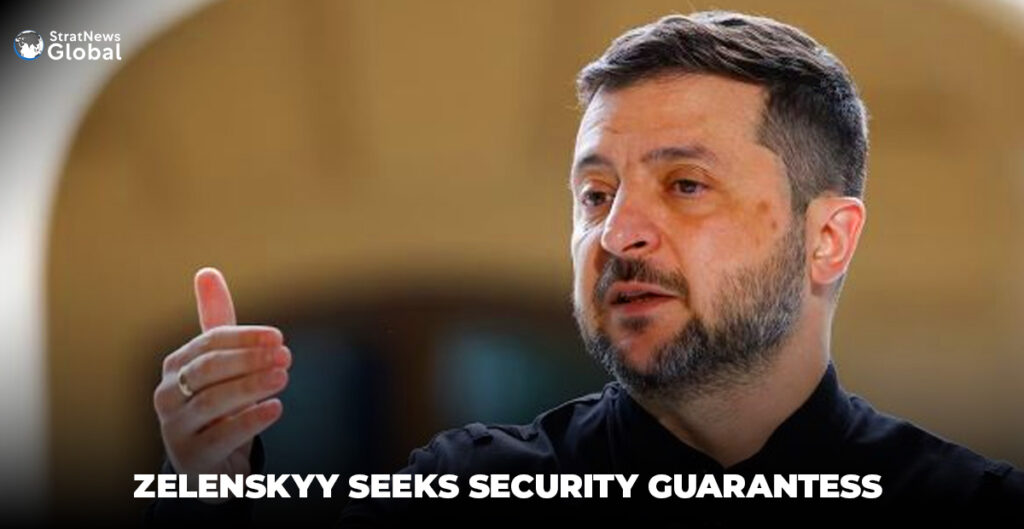
President Volodymyr Zelenskyy on Friday called on Ukraine’s allies to quickly move discussions on security guarantees to direct talks between national leaders. His appeal came as European Union defence ministers said they would be ready to train Ukrainian forces inside the country if a truce is reached.
Kyiv is engaged in a diplomatic push to try and bring to an end Russia’s war, now in its fourth year, and to secure critical commitments from its partners to fend off any future invasion.
The Ukrainian president said he expected to continue talks with European leaders next week on “NATO-like” commitments to protect Ukraine, adding that U.S. President Donald Trump should also be involved.
“We need the architecture to be clear to everyone,” he said, adding that he wanted to tell Trump “how we see it”.
Zelenskyy spoke shortly before his chief of staff, Andriy Yermak, met U.S. special envoy Steve Witkoff in New York to discuss the need to increase pressure on Moscow.
‘War Must End’
A senior U.S. official said the Ukrainians invited Witkoff to visit Ukraine. The official said the meeting gave Witkoff the opportunity to stress that Ukraine and Russia should meet to reach an end to the war.
In comments posted online later, Yermak said he described to Witkoff the aftermath of the mass Russian attack on Kyiv on Thursday that killed 25 people. The strike, he said, showed that Russia “is not even showing any willingness to end the war”.
“This means we must continue to apply pressure and discuss what the next steps are,” Yermak said.
“We also talked about working with American and European partners on security guarantees. This is very important. Without them, it is impossible to look forward.”
Ukrainian officials say Russia, which has continued attacking cities with missiles and drones and is pressing a battlefield offensive, has no interest in seeking peace.
Diplomatic efforts to end Russia’s full-scale invasion have so far yielded little, even after Trump met separately with the Russian and Ukrainian leaders earlier this month.
Zelenskyy also raised Trump’s self-imposed deadline for deciding on new measures against Russia if President Vladimir Putin fails to commit to a one-on-one meeting with the Ukrainian leader.
“Two weeks will be on Monday. And we will remind everybody,” he said.
Russia has said there is no agenda for a potential summit between Putin and Zelenskyy.
Ukrainian Prime Minister Yulia Svyrydenko, also visiting New York, was expected to meet U.S. business representatives to discuss investments in Ukraine, Zelenskyy added.
Officials in Kyiv see U.S. funding, particularly as part of a critical minerals deal struck earlier this year, as central to securing a durable peace settlement.
EU Support
European Union defence ministers meeting in Copenhagen on Friday expressed “broad support” for expanding the bloc’s military training mission to operate inside Ukraine, the EU’s top diplomat, Kaja Kallas, said.
Trump, who has in recent weeks appeared more willing to support Kyiv’s defence against Russia, has said Europe must provide the lion’s share of any effort to bolster Ukraine’s security.
“The EU has already trained over 80,000 Ukrainian soldiers,” Kallas wrote on X. “We must be ready to do more.”
Russia has consistently opposed the presence of any NATO troops in Ukraine.
Zelenskyy said he wanted allies to ratify any security guarantees through their parliaments, invoking a 1994 deal in which Kyiv gave up its nuclear arsenal in exchange for security assurances that proved insufficient to deter Russia.
“We want legally binding security guarantees. We don’t want (another) Budapest Memorandum.”
Germany and France on Friday outlined plans to cooperate more deeply on security, including a missile early-warning system, following a meeting between Chancellor Friedrich Merz and President Emmanuel Macron.
(With inputs from Reuters)
Texas Approves Redistricting Law As Missouri Follows With Similar Effort
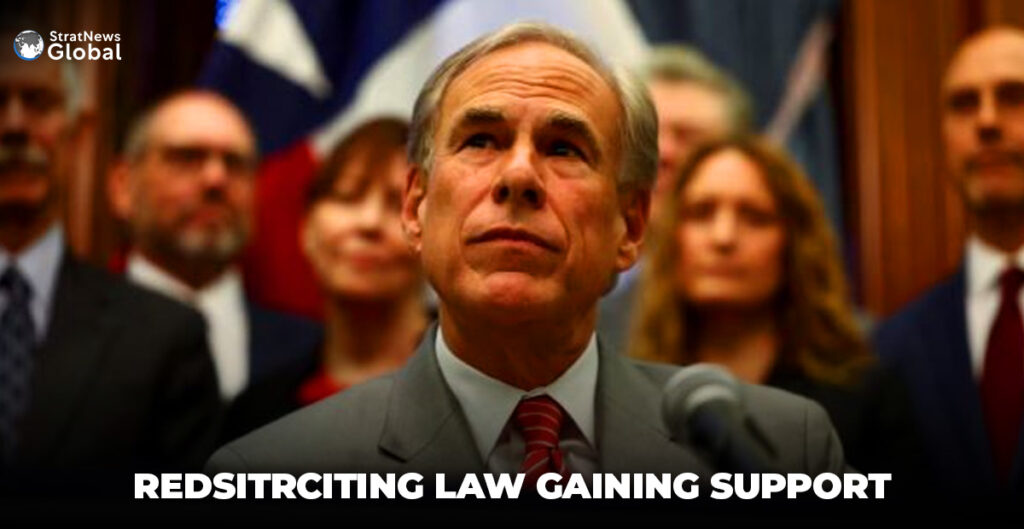
Texas Governor Greg Abbott on Friday signed legislation to redraw the state’s congressional districts, acting on President Donald Trump’s push to shift five U.S. House seats from Democrats to Republicans. Soon after, Missouri’s governor announced plans for a comparable redistricting initiative.
The Texas ratification came after the state’s legislature passed the measure last week amid a nationwide redistricting battle.
“Texas is now more red in the United States Congress,” Abbott said in a video post on social media, after signing the bill with a marker.
Republicans have said winning more congressional seats in Texas will help the party maintain its slim majority in the U.S. House of Representatives in next year’s midterm elections. More states controlled by Republicans are considering similar action.
Missouri’s Republican Governor Mike Kehoe on Friday called for a special session of the state’s legislature on September 3 to act on congressional redistricting and ensure state districts “truly reflect Missouri values.”
Trump praised Kehoe’s move, writing on his Truth Social platform that his redistricting plan was a chance to elect “an additional MAGA Republican in the 2026 Midterm Elections.”
California Vows To Counter
Democratic National Committee Chair Ken Martin said in a statement Kehoe had “caved to the demands of Donald Trump at the expense of Missouri families and American Democracy.”
California and other states where Democrats hold power vow to counter such moves. The California legislature approved a redistricting plan last week aimed at giving Democrats five more congressional seats.
The California plan must be approved by voters in November. The Texas plan does not need voter approval, but it has been challenged in court.
The Texas bill was delayed for two weeks after more than 50 Democratic state House members staged a walkout that denied Republicans the legislative quorum needed.
Democrats argued that the new Texas map violates federal law by diluting Hispanic and Black voting power and discriminating on the basis of race.
Texas Republicans who sponsored the bill said they redrew maps based on voting history, not race.
Most Americans believe redrawing congressional lines for the sake of maximizing political gain, known as gerrymandering, is bad for democracy, according to poll reports found this week.
(With inputs from Reuters)
Putin Slams Western Trade Sanctions Ahead Of China Visit
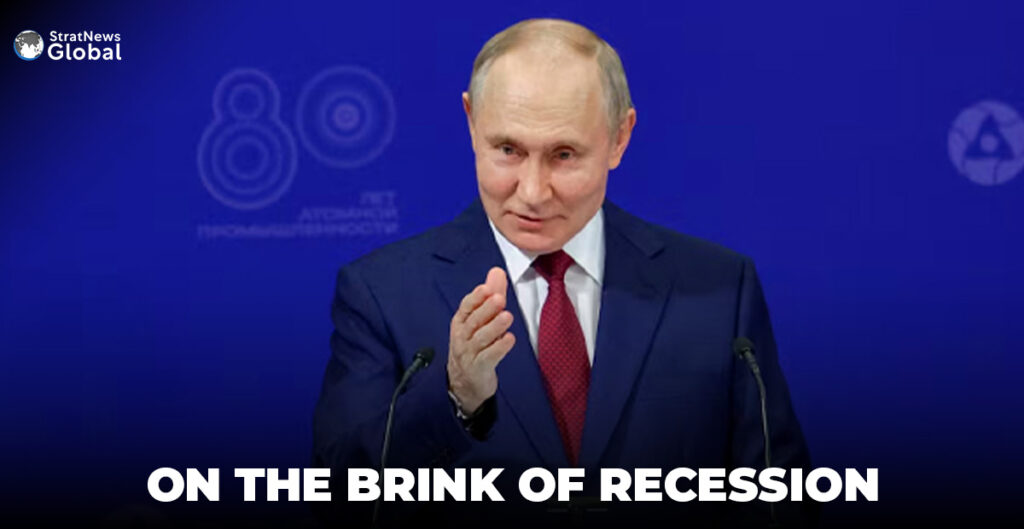
Ahead of his scheduled visit to China, Russian President Vladimir Putin slammed Western sanctions, even as his country’s economy struggles under the weight of trade restrictions and the ongoing cost of the Ukraine war, pushing it dangerously close to recession.
Russia and China jointly opposed “discriminatory” sanctions in global trade, Putin said in a written interview with China’s official Xinhua news agency published on Saturday.
Putin will be in China, Russia’s biggest trading partner, from Sunday to Wednesday in a four-day visit that the Kremlin has called “unprecedented”.
SCO Summit
The Russian leader will first attend the two-day summit of the Shanghai Cooperation Organisation (SCO) in the northern Chinese port city of Tianjin. The security-focused SCO, founded by a group of Eurasian nations in 2001, has expanded to 10 permanent members that now include Iran and India.
Putin will then travel to Beijing to hold talks with Chinese President Xi Jinping and attend a massive military parade in the Chinese capital commemorating the end of World War Two after Japan’s formal surrender.
Earlier in May, Xi attended a military parade on Moscow’s Red Square marking the 80th anniversary of the victory of the Soviet Union and its allies over Nazi Germany. It was Xi’s 11th visit to China’s giant neighbour since he became president more than a decade ago.
Russia has been hammered by multiple rounds of Western sanctions after its invasion of Ukraine in 2022. US President Donald Trump said he might impose “massive” sanctions on Russia depending on whether progress was possible in his bid to secure a peace deal.
Putin To Intensify China Cooperation
“To sum up, economic cooperation, trade and industrial collaboration between our countries are advancing across multiple areas,” Putin said of China, which the West accuses of backing Russia’s so-called special military operation in Ukraine.
“During my upcoming visit, we will certainly discuss further prospects for mutually beneficial cooperation and new steps to intensify it for the benefit of the peoples of Russia and China.”
Saviour
When Western nations severed ties with Russia after Moscow’s launched its full-scale invasion of Ukraine in February 2022, China came to the rescue, buying Russian oil and selling goods from cars to electronics that pushed bilateral trade to a record $245 billion in 2024.
China was by far Russia’s leading trading partner by volume and transactions between the countries were almost completely carried out in rubles and yuan, Putin said.
Russia was a leading exporter of oil and gas to China and the two sides continued joint efforts to reduce bilateral trade barriers, he added.
“In recent years, the export of pork and beef to China has been launched. Overall, agricultural and food products occupy a prominent place in Russia’s exports to China,” he said.
Regular Meetings
He made no mention of EU accusations of Chinese support for Russia’s war in Ukraine, which the bloc describes as a serious threat to European security. China denies the allegations.
Putin and Xi declared a “no limits” strategic partnership in 2022. The two have met over 40 times in the past decade.
Wanted by the International Criminal Court over accusations of the war crime of illegally deporting hundreds of children from Ukraine, Putin last travelled in China in 2024.
(With inputs from Reuters)
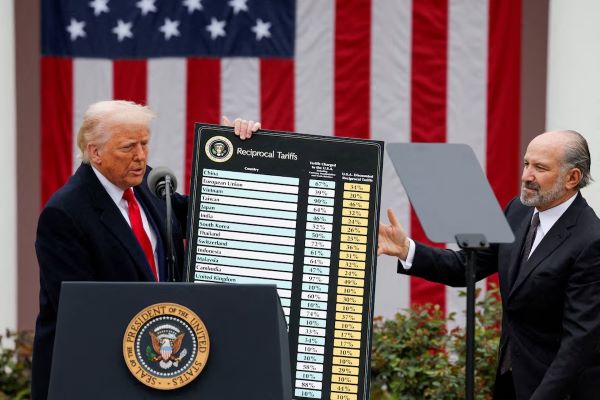
Most Trump-Era Tariffs Ruled Unlawful In Major Judicial Setback
In a major setback for US President Donald Trump, a divided appeals court on Friday ruled that most of his administration’s tariffs are illegal, dealing a blow to one of his key economic policy tools used to assert pressure in international trade negotiations.
The court allowed the tariffs to remain in place through October 14 to give the Trump administration a chance to file an appeal with the US Supreme Court.
Unprecedented Legal Showdown
The decision comes as a legal fight over the independence of the Federal Reserve also seems bound for the Supreme Court, setting up an unprecedented legal showdown this year over Trump’s entire economic policy.
Trump has made tariffs a pillar of US foreign policy in his second term, using them to exert political pressure and renegotiate trade deals with countries that export goods to the United States.
The tariffs have given the Trump administration leverage to extract economic concessions from trading partners but have also increased volatility in financial markets.
‘Highly Partisan’ Court
Trump lamented the decision by what he called a “highly partisan” court, posting on Truth Social: “If these Tariffs ever went away, it would be a total disaster for the Country.”
He nonetheless predicted a reversal, saying he expected tariffs to benefit the country “with the help of the Supreme Court.”
The 7-4 decision from the US Court of Appeals for the Federal Circuit in Washington, D.C., addressed the legality of what Trump calls “reciprocal” tariffs imposed as part of his trade war in April, as well as a separate set of tariffs imposed in February against China, Canada and Mexico.
Democratic presidents appointed six judges in the majority and two judges who dissented, while Republican presidents appointed one judge in the majority and two dissenters.
The court’s decision does not impact tariffs issued under other legal authority, such as Trump’s tariffs on steel and aluminum imports.
‘Unusual And Extraordinary’
Trump justified both sets of tariffs – as well as more recent levies – under the International Emergency Economic Powers Act. IEEPA gives the president the power to address “unusual and extraordinary” threats during national emergencies.
“The statute bestows significant authority on the President to undertake a number of actions in response to a declared national emergency, but none of these actions explicitly include the power to impose tariffs, duties, or the like, or the power to tax,” the court said.
“It seems unlikely that Congress intended, in enacting IEEPA, to depart from its past practice and grant the President unlimited authority to impose tariffs.”
Trump Admin’s Defence
The 1977 law had historically been used for imposing sanctions on enemies or freezing their assets. Trump, the first president to use IEEPA to impose tariffs, says the measures were justified given trade imbalances, declining US manufacturing power and the cross-border flow of drugs.
Trump’s Department of Justice has argued that the law allows tariffs under emergency provisions that authorize a president to “regulate” imports or block them completely.
Trump declared a national emergency in April over the fact that the US imports more than it exports, as the nation has done for decades. Trump said the persistent trade deficit was undermining US manufacturing capability and military readiness.
Trump said the February tariffs against China, Canada and Mexico were appropriate because those countries were not doing enough to stop illegal fentanyl from crossing US borders, an assertion the countries have denied.
More Uncertainty
William Reinsch, a former senior Commerce Department official now with the Center on Strategic and International Studies, said the Trump administration had been bracing for this ruling. “It’s common knowledge the administration has been anticipating this outcome and is preparing a Plan B, presumably to keep the tariffs in place via other statutes.”
There was little reaction to the ruling in after-hours stock trading.
“The last thing the market or corporate America needs is more uncertainty on trade,” said Art Hogan, chief market strategist at B. Riley Wealth.
Trump is also locked in a legal battle to remove Federal Reserve Governor Lisa Cook, potentially ending the central bank’s independence.
“I think it puts Trump’s entire economic agenda on a potential collision course with the Supreme Court. It’s unlike anything we’ve seen ever,” said Josh Lipsky, chair of international economics at the Atlantic Council.
Mixed Outcomes
The 6-3 conservative majority Supreme Court has issued a series of rulings favouring Trump’s second term agenda but has also in recent years been hostile to expansive interpretations of old statutes to provide presidents newly-found powers.
The appeals court ruling stems from two cases, one brought by five small US businesses and the other by 12 Democratic-led US states, which argued that IEEPA does not authorize tariffs.
The Constitution grants Congress, not the president, the authority to issue taxes and tariffs, and any delegation of that authority must be both explicit and limited, according to the lawsuits.
The New York-based US Court of International Trade ruled against Trump’s tariff policies on May 28, saying the president had exceeded his authority when he imposed both sets of challenged tariffs. The three-judge panel included a judge who was appointed by Trump in his first term.
Another court in Washington ruled that IEEPA does not authorize Trump’s tariffs, and the government has appealed that decision as well. At least eight lawsuits have challenged Trump’s tariff policies, including one filed by the state of California.
(With inputs from Reuters)
Records Reveal Military Feared LA Deployment Could Have ‘Far-Reaching’ Consequences
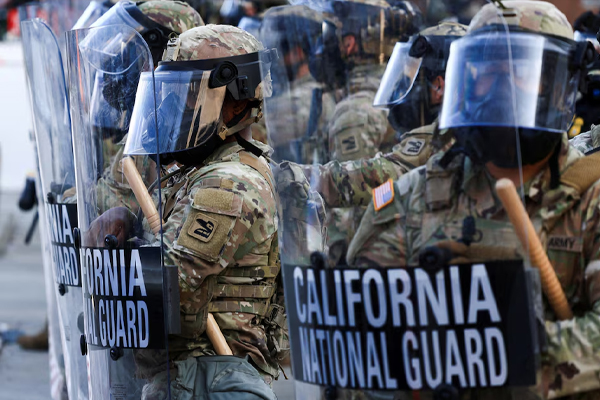
As President Donald Trump pressed the National Guard and Marines’ deployment to U.S. cities, military leaders privately questioned the troops’ training and cautioned about the “far-reaching social, political and operational” risks of supporting law enforcement, according to military records reviewed by Reuters and disclosed in court.
U.S. Army officials planning an operation in MacArthur Park during the June deployment in Los Angeles determined that using troops to protect agents carrying out Trump’s immigration crackdown posed an “extremely high” risk to civilians, troops and the military’s reputation, according to an internal document.
Officials warned that the operation could attract protests and spiral into a riot with potential for “miscommunication and fratricide” as well as accidental harm to civilians, including children, the operation planning document said.
The trove of internal military reports and messages, disclosed during a trial to resolve a lawsuit by California Governor Gavin Newsom, offers a rare inside look at concerns from commanders after Trump broke a long-standing tradition against using the military in support of domestic law enforcement over the objections of local officials.
Since deploying 4,000 National Guard and 700 U.S. Marines to Los Angeles to quell protests against immigration arrests, Republican Trump has sent National Guard troops to Washington and is considering expanding the military presence in other Democratic-run cities.
To mitigate the risks of the Los Angeles deployment, military lawyers drafted rules for using force and de-escalation that troops could access on their phones and that warned of the high stakes of the deployment.
“The very nature of domestic operations — American military forces operating in U.S. communities — has such significant implications that the mistakes of a few soldiers can have far-reaching social, political, and operational effects,” according to an undated document titled “Los Angeles Civil Unrest SRUF.” The acronym means Standing Rules for the Use of Force.
Louis Caldera, Army Secretary to Democratic former President Bill Clinton, said in an interview that deploying the military domestically threatens to put soldiers and civilians at risk, undermines recruitment and erodes public support.
“Trump has broken a lot of norms,” said Caldera. “His predecessors would not use the military in this way.”
The Department of Defence declined to comment on a subject of ongoing litigation.
‘Not A Loaded Question’
While state governors often deploy National Guard troops under their command to help during disasters such as hurricanes, in Los Angeles, they were called into federal service by the president.
Newsom has alleged that they have been engaged in law enforcement, in violation of an 1878 law known as the Posse Comitatus Act. The Trump administration argued the troops are not enforcing the law, but have been used solely to protect federal buildings and personnel, including immigration agents.
A ruling in the case could come any day from U.S. District Judge Charles Breyer in San Francisco.
A spokesperson for Newsom said the evidence in the trial showed the deployment was “pure political theatre” and a “display of power meant to intimidate our communities.” Only a few hundred troops remain.
After ordering troops to Los Angeles, Trump said his administration would “liberate” the city. Meanwhile, Army leaders were questioning whether three hours of “civil disturbance training” was sufficient, according to internal messages.
“In your experience, does this training provide a suitable level of risk mitigation for the current conditions in Los Angeles? This is not a loaded question,” a U.S. Army officer wrote to fellow officers, whose identities were redacted, one day after Trump ordered the National Guard to Los Angeles. No response messages were disclosed in the court filings.
A week later, the Department of Homeland Security requested military assistance with an operation in MacArthur Park, a gathering spot for immigrants where federal agents believed there was an open-air market for fake identification.
At the trial, Army Major General Scott Sherman testified that he rejected the request because he believed there was little need for military protection. Sherman said he was overruled by Secretary of Defence Pete Hegseth, and the park operation eventually took place on July 7.
The operation was “extremely high” risk with the addition of troops, according to a July 1 Army planning document that was disclosed in the court record. It created the potential for violent protests with the possibility for “miscommunication and fratricide” as well as accidental harm to civilians, including children. A planning map marked the locations of several nearby schools.
Laura Dickinson, a professor who specialises in national security at The George Washington University Law School, said the deployment came loaded with risk for troops.
“Placing them in these highly risky situations puts them on a knife’s edge — and potentially damages the U.S. military’s reputation and broad support across the U.S. population,” she said.
Military planners aimed to mitigate these risks with dress rehearsals at a base in Los Alamitos, California, and training on rules of force, according to the July 1 planning document.
In the end, the MacArthur Park operation lasted around an hour and appeared to take place without incident, according to a report by the Associated Press. Reuters could not independently verify the account. The city’s mayor, Democrat Karen Bass, called the operation a “political stunt.”
The Department of Homeland Security did not respond directly to questions about the operation in MacArthur Park or whether it had resulted in arrests, but said its Immigration and Customs Enforcement and Border Patrol agents had arrested more than 5,000 people in Los Angeles since June.
Sharing Lessons
While planners were preparing for the park mission, military leaders were already sharing lessons learned in Los Angeles with officers in other regions in anticipation of deployments elsewhere.
One July 1 email chain described military members in uniform in Los Angeles being harassed, protests at hotels where immigration agents were housed, and attempts by protesters to dox, or publicly identify, members of the National Guard.
“This is an evolving situation, but coming soon to a region near (hopefully not as contentious)!” said one message. The identity of the defence coordinating officer who sent it, and the recipients, were redacted.
The documents often refer to rules on the use of force, which every soldier in Los Angeles was expected to know, as a way to mitigate risk.
The rules of force document ends with a “cautionary tale” of Marine Corporal Clemente Banuelos that highlights the stakes. Banuelos was on a joint mission with Border Patrol agents in 1997 in Texas when he killed a teenager who was armed with a rifle. Banuelos was never prosecuted, but the shooting was investigated by three grand juries, according to the document.
The “incident remains a powerful reminder that when military personnel employ force, their actions and decisions and the rules that they follow may be subject to outside scrutiny from many levels,” the document said.
(With inputs from Reuters)
Trump Wields Firings To Expand Presidential Authority For More Power
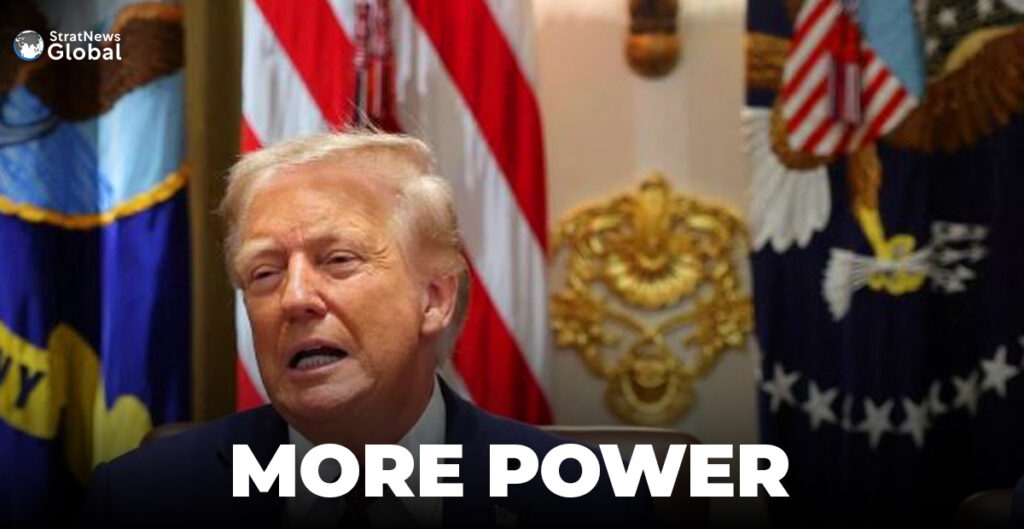
U.S. President Donald Trump is seeking greater control over federal agencies and their operations, and a series of dismissals will serve as a test of how far he can push the boundaries of his presidential power.
Over three days this week, the Republican president moved to terminate Federal Reserve Governor Lisa Cook, Centers for Disease Control and Prevention director Susan Monarez and railroad regulator Robert Primus.
The actions underscored Trump’s desire for influence in sectors normally seen as independent from overt political control and could have major implications for financial markets, health policy and public trust in institutions.
The firings could undermine confidence in agencies that are meant to inform the private sector and provide expertise for the president while operating above any one party’s politics, according to experts in presidential authority. If allowed to stand, the independence of other institutions may also be at risk.
“It is something that is novel, in a bad way, and represents a significant power grab by the president,” said Max Stier, president of the Partnership for Public Service, an advocacy group. “The president has a lot of power, but there are limits… You have a president today that does not recognize any of those limits.”
Trump’s Agenda
White House officials said the president was acting within his legal authority to deliver on the agenda he was elected to enact. The administration has said Monarez and Primus were dismissed because they did not align with Trump’s agenda, and it wanted to focus the CDC on its core mission.
Monarez, sworn into her job less than a month ago, had resisted changes to vaccine policy that she believed contradicted scientific evidence, a close associate said. Primus’ social media included posts that could be read as critical of Trump administration policies unrelated to railways.
The administration has accused Cook of mortgage fraud, which she denies. But Trump made clear another motivation for her removal, telling a Cabinet meeting on Tuesday that he would soon have a majority of loyalists on the Fed’s board of governors, which helps set the interest rates that Trump wants lowered.
Cook has sued Trump and the Fed, saying an unsubstantiated claim of mortgage fraud does not provide legal authority for her removal. Monarez had refused to resign. Primus said his termination was legally invalid.
Most U.S. presidents steer clear of commenting about the Federal Reserve, let alone influencing monetary policy or knocking members off the board of governors. Independent central banks around the world are seen as key to maintaining a stable global economy, but Trump has often challenged norms.
“If this … removal at the Federal Reserve is allowed to stand, then all of the rest of the dominoes are going to fall,” said Jane Manners, associate professor at the Fordham School of Law and an expert on presidential powers. “We will no longer have an administrative state in which you have decision makers who are insulated from naked political pressure.”
Extending Power
During his seven months in office, Trump has been aggressive in his effort to dominate not only the federal government but the public life of the nation.
On Tuesday, he joined angry customers in publicly appealing for the chain restaurant Cracker Barrel to drop a planned logo redesign, which it did later that day. He bypassed longtime Republican orthodoxy in negotiating deals for the U.S. government to take a 10% stake in the computer chip maker Intel and capture some revenue from its rival Nvidia’s sales. He is seeking new authority over private universities, using their public funding as leverage.
The White House maintains Trump’s overall approach is appropriate and defended the firings.
“If you’re doing your job well, and if you are executing on the vision and the promises that the president made to the public who elected him back to this office, then you should have no fear about your job,” White House spokeswoman Karoline Leavitt told reporters on Thursday.
‘Right To Do Anything’
Musing this week about the possibility of deploying troops to patrol Democratic-controlled Chicago, Trump claimed he had “the right to do anything I want to do.”
Unlike ambitious U.S. presidents who preceded him, from Abraham Lincoln to Franklin D. Roosevelt, the current commander-in-chief has so far faced little opposition from the co-equal branches of Congress and the Supreme Court.
He has removed officials perceived to be at odds with his agenda, installed White House aides to oversee their work, exerted legal authority to overrule them and elevated officials such as Federal Communications Commission Chair Brendan Carr and Federal Housing Finance Agency Director William Pulte, who have pursued his opponents.
“Past presidents have respected the need for non-political, expert judgment from agencies. ‘Non-political, expert judgments’ have no place in Trump’s view of government. He more or less regards the federal government as part of the Trump Organization and wants to run it the same way,” said Daniel Farber, professor of law at the University of California, Berkeley.
The conservative-dominated Supreme Court has approved of some of Trump’s assertions of executive authority, including his ability to fire members of nominally independent regulatory agencies.
The court hinted at some limits in a recent ruling, suggesting such authority might not fully extend to the Fed. Trump appears ready to put that question to the test.
(With inputs from Reuters)
UK Secures Court Ruling To Keep Asylum Seekers In Hotel Despite Risk Of Backlash
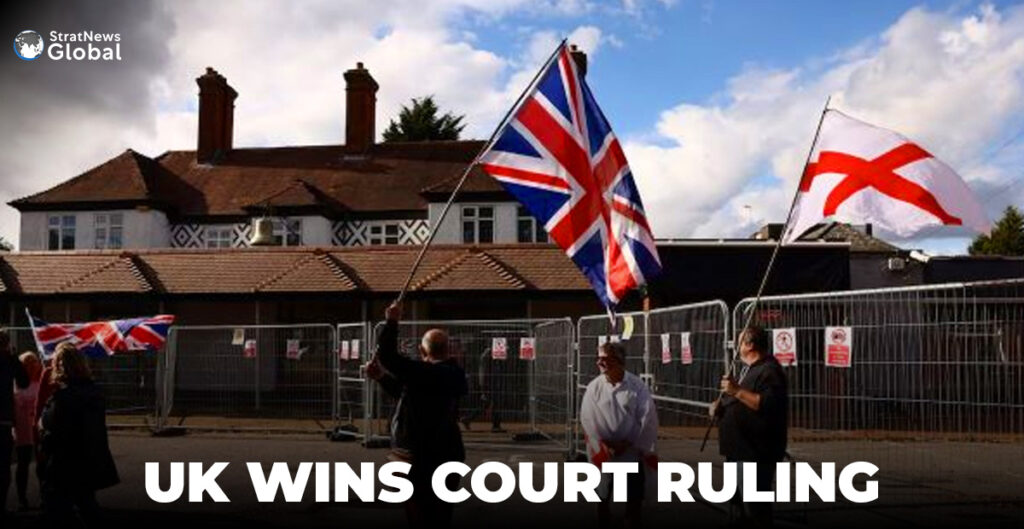
The British government secured a court decision on Friday allowing asylum seekers to remain in a hotel where one resident was charged with sexual assault. The ruling is expected to trigger renewed protests and sharp criticism from opponents.
Immigration has now become the dominant political issue in Britain, eclipsing concerns over a faltering economy, as the country faces a record number of asylum claims and arrivals by migrants in small boats across the Channel, including more than 28,000 this year.
Last week, London’s High Court granted an injunction to stop asylum seekers being housed in the Bell Hotel in Epping, Essex, about 20 miles (30 km) northeast of the capital, which had become a focal point of sometimes violent demonstrations after an Ethiopian asylum seeker living there was charged with sexual offences.
But on Friday, the Court of Appeal upheld the government’s appeal against that ruling, which had been made on planning grounds, and lifted the temporary injunction which would have led to the asylum seekers being evicted.
Accusations From Opponents
While the court victory will ease the headache of immediate, widespread hotel closures, it opens up the Prime Minister Keir Starmer and his ministers to accusations from his main political opponents that he is siding with asylum seekers over the fears of local people.
“Keir Starmer has shown that he puts the rights of illegal immigrants above the rights of British people who just want to feel safe in their towns and communities,” Kemi Badenoch, the leader of the main opposition Conservative Party, said in a statement.
The government had argued the injunction would lead to further protests across the country seeking to force the immediate closure of hotels, and putting pressure on the system to house asylum seekers waiting to have their cases determined.
David Bean, one of the three appeal court judges, said if protests, even unlawful ones, were used to obtain injunctions, it could incentivise others to follow suit, creating “a risk of encouraging further lawlessness”.
“We inherited a chaotic asylum accommodation system costing billions,” Angela Eagle, the minister for asylum, said: “We appealed this judgment so hotels like the Bell can be exited in a controlled and orderly way that avoids the chaos of recent years that saw 400 hotels open at a cost of 9 million pounds a day.”
Farage Plan
Currently there are just over 32,000 migrants in more than 200 hotels across the country, according to government figures up to the end of June.
While the government plans to close all these by the next election, due in 2029, in the meantime its lawyers said it had a legal duty to provide accommodation to asylum seekers facing destitution, under its obligations under the European Convention on Human Rights.
This week Nigel Farage, leader of Britain’s populist Reform UK party which is leading in opinion polls, announced a plan to repeal human rights laws to permit mass deportations of asylum seekers.
While his proposals were criticised as unworkable by lawyers and his party has just four lawmakers in the 650-seat parliament, it gained extensive media coverage.
“The government has used ECHR against the people of Epping,” Farage said on X. “Illegal migrants have more rights than the British people under Starmer.”
Pro-migrant groups say opportunistic politicians and far-right groups are deliberately seeking to exploit and inflame tensions for their own ends. Epping Council, which had sought the injunction, is controlled by the Conservatives.
Critics of housing asylum seekers in hotels say the costly policy can put the local community at risk and point to incidents where individual migrants have been accused of serious crimes, including serious sexual offences against young girls.
This week, the Ethiopian asylum seeker went on trial accused of sexually assaulting a teenage girl and another woman in Epping, accusations he denied, while in a separate case in central England, two Afghan migrants denied involvement in the rape of a 12-year-old girl.
Protests in Epping have continued with further demonstrations planned for this weekend.
(With inputs from Reuters)
Chinese Influence Evident In Moscow Ahead Of Putin’s Beijing Visit
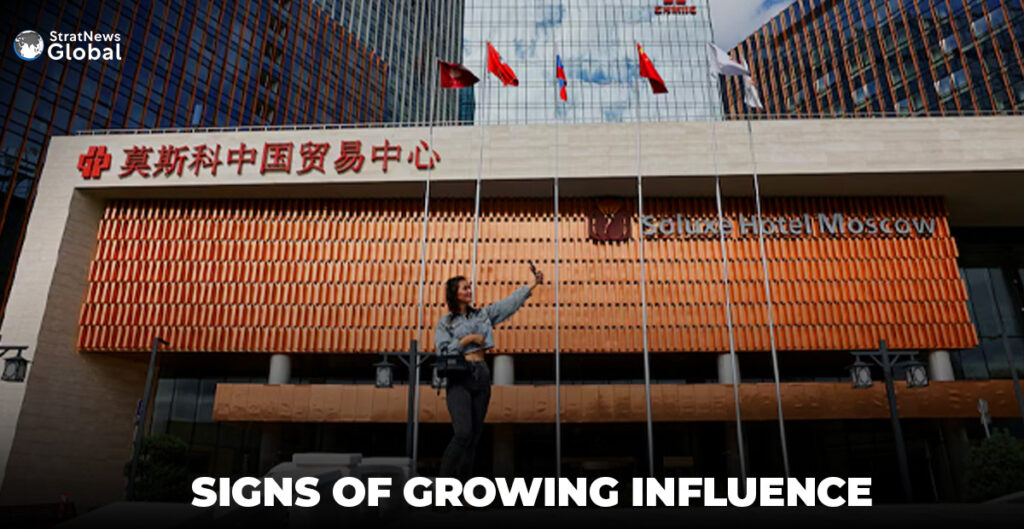
As President Vladimir Putin prepares for a visit to China next week, Beijing’s influence is unmistakable in Moscow’s culture, cuisine, education, and commerce.
A Chinese business centre near a park features traditional Chinese pavilions, Russian adults learning Mandarin and practising Kung fu, sizzling dishes being served in Chinese restaurants, and car showrooms displaying Chinese vehicles.
“It seems that the contacts with China are intensifying. A mutual interest is growing,” said Natalia Gerasimova, a manager at a Russian company and a visitor to Moscow’s Chinese landscape park who said she had visited Beijing in April.
“They are open to us, they treat us well. So in Russia I do not see any resistance to these relations either. Yes, we have different mentalities, but we are alike in some ways”.
When Western countries cut ties with Russia after it sent tens of thousands of troops into Ukraine in 2022, China helped Moscow by buying Russian oil and selling goods – from cars to electronics – that pushed bilateral trade to a record $245 billion in 2024.
Putin and Chinese President Xi Jinping signed a “no limits” partnership in 2022.
But although China remains Russia’s biggest trading partner, trade turnover with China has fallen this year, a trend that Putin will seek to reverse at his summit with Xi, three Russian sources told Reuters.
Evidence of Chinese influence in Moscow is hard to miss.
The Chinese flag flies at a Chinese business centre in northeastern Moscow, and people stroll through the nearby landscape park beneath ornate Chinese pavilions.
‘Pragmatism’
Some Russians say the close ties are pragmatic, with China acting primarily in its own interests.
“China is about industry, about the labour market, but it is not about technologies. Technologies always come from the West – from the U.S., from Europe,” said Roman Dmitriev, a businessman and visitor to the landscape park.
“So, as soon as the West reopens to us, we will switch back. And it will be a logical step. (But) For now, China is our booster. We can compare it with an athletic friend in school who can defend and fight for you.”
At Moscow’s “Chinese First” language school, Natalia Wang, the director, said demand from children and adults to learn Chinese had grown suddenly.
“It was like a switch was flicked. One day, the applications (to study Chinese) started pouring in,” she said.
Chinese-made cars are now a common sight in Moscow.
Valery Bondarenko, a pensioner visiting the showroom of Moscow’s Peleton car dealership, said Chinese cars had come on “in leaps and bounds” but some Russians remained sceptical.
“They face our consumer conservatism,” he said. “We still believe German or Japanese cars guarantee 100% quality and safety.”
(With inputs from Reuters)