

Support us by contributing to StratNewsGlobal on the following UPI ID
ultramodern@hdfcbank

Strategic affairs is our game, South Asia and beyond our playground. Put together by an experienced team led by Nitin A. Gokhale. Our focus is on strategic affairs, foreign policy and international relations, with higher quality reportage, analysis and commentary with new tie-ups across the South Asian region.
You can support our endeavours. Visit us at www.stratnewsglobal.com and follow us on YouTube, Twitter, Facebook and Instagram.
र 500 per month
र 1000 per month
र 5000 per year
र 10000 per year
Donate an amount of your choice
र 500 per month
Donate र 500 per month

र 1000 per month
Donate र 1000 per month
र 5000 per year
Donate र 5,000 per year
र 10000 per year
Donate र 10,000 per year
Donate an amount of your choice
Donate an amount of your choice








New $250 Visa Fee Adds Strain To Struggling US Travel Industry
The introduction of a new $250 “visa integrity fee” for travellers to the United States threatens to further burden the struggling travel industry, as overseas arrivals decline amid President Donald Trump’s immigration crackdown and strained relations with several foreign nations.
Overseas travel to the U.S. fell 3.1% year-on-year in July to 19.2 million visitors, according to U.S. government data. It was the fifth month of decline this year, defying expectations that 2025 would see annual inbound visitors finally surpass the pre-pandemic level of 79.4 million.
The new visa fee, set to go into effect on October 1, adds an additional hurdle for travellers from non-visa waiver countries like Mexico, Argentina, India, Brazil and China. The extra charge raises the total visa cost to $442, one of the highest visitor fees in the world, according to the U.S. Travel Association, a membership organisation.
“Any friction we add to the traveller experience is going to cut travel volumes by some amount,” said Gabe Rizzi, President of Altour, a global travel management company. “As the summer ends, this will become a more pressing issue, and we’ll have to factor the fees into travel budgets and documentation.”
Visitor Declines Slip
International visitor spending in the U.S. is projected to fall below $169 billion this year, down from $181 billion in 2024, according to the World Travel & Tourism Council.
The visa fee reinforces a bleak perception of the U.S. under Trump, whose immigration policies, cuts to foreign aid and sweeping tariffs have eroded America’s appeal as a destination – even with major events like the 2026 FIFA World Cup and Los Angeles 2028 Olympics on the horizon.
The Trump administration on Wednesday proposed government regulation that aims to tighten the duration of visas for students, cultural exchange visitors and members of the media.
In early August, the administration said the U.S. could require bonds of up to $15,000 for some tourist and business visas under a pilot program effective August 20 that will last for approximately a year, in an effort to crack down on visitors overstaying their visas.
Tourism Economics, an Oxford Economics consultancy, forecast in December 2024 that overseas travel to the U.S. in 2025 would increase more than 10% year-over-year. Instead, it is on track to fall 3%, said Aran Ryan, director of industry studies at Tourism Economics.
“We see it as a sustained setback, and we anticipate much of it is in place throughout the administration,” Ryan said.
Hardest Hit
The newest visa fee is likely to hit hardest in Central and South American countries that have been a rare bright spot for U.S. travel this year.
As of May, travel from Mexico to the U.S. was up nearly 14% in 2025, according to the National Travel and Tourism Office.
Arrivals from Argentina rose 20% and from Brazil 4.6% year-to-date. Overall, travel from Central America grew 3% and from South America 0.7%, compared with a decline of 2.3% from Western Europe.
In China, arrivals have remained muted since the pandemic, with July numbers still 53% below 2019 levels. The visa fee also threatens travel from India, where visits are down 2.4% so far this year, driven by a near 18% drop in students.
For some, the rise in fees will be absorbed as just another cost in an already expensive trip to the U.S.
“The U.S. has always been selective about its visitors. If your financial standing isn’t up to par, getting a visa is tough anyway,” said Su Shu, founder of Chinese firm Moment Travel in Chengdu.
As foreign visitors face higher entry fees, U.S. travellers worry about stricter requirements being imposed abroad, said James Kitchen, travel agent and owner of Seas 2 Day & Travel.
“Travellers have expressed concern around reciprocal fees that may be imposed in the coming months,” Kitchen said.
(With inputs from Reuters)
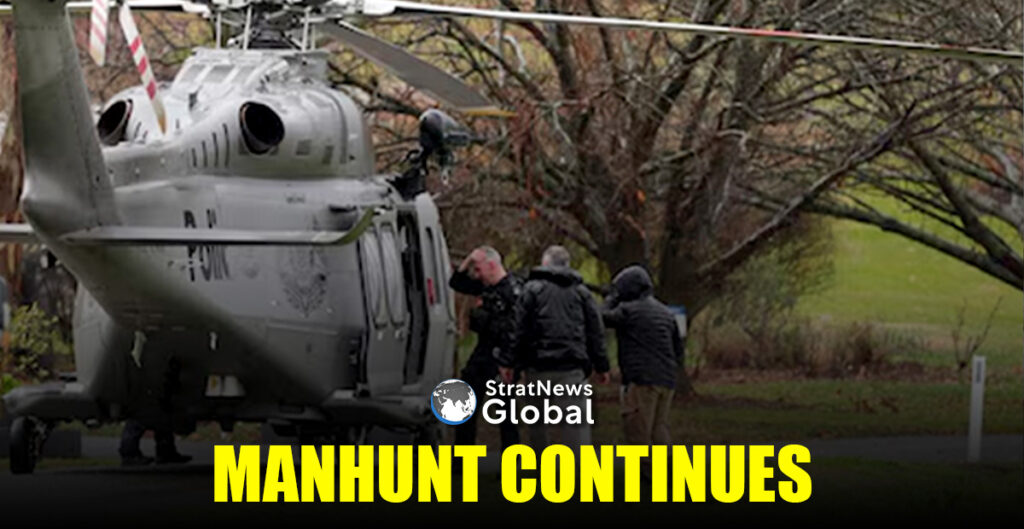
Manhunt For Australia Gunman Reaches Fifth Day Amid Worsening Weather
Australian police on Saturday braved harsh alpine weather during the fifth day of their search for a gunman who fled into dense bushland after allegedly killing two officers and wounding another at a rural property in Victoria state
Hundreds of officers were in the field searching for 56-year-old Dezi Freeman, previously known as Desmond Filby, who is believed to have expert bushcraft skills and multiple powerful firearms, a police spokesperson said.
The search area includes the town of Porepunkah, about 300 km (186 miles) northeast of Melbourne, where Freeman is alleged to have fired on police on Tuesday, before fleeing on foot into the bush.
Severe Weather Warning
Bureau of Meteorology senior forecaster Jonathan How said a severe weather warning was current for the region, which was experiencing challenging conditions of cold, wind and snow.
A very cold night was on the way for the area, including possible black ice on roads, How said. A minimum temperature of 0 degrees Celsius (32 degrees Fahrenheit) was forecast on Sunday for Porepunkah, according to the weather bureau.
Victorian Premier Jacinta Allan visited nearby Wangaratta police station on Friday to pay tribute to the two slain officers, Detective Leading Senior Constable Neal Thompson, 59, and Senior Constable Vadim De Waart, 35, amid what she said was the “huge operation” by authorities to catch Freeman.
“Their loss won’t be forgotten. With honour they served,” Allan said of the officers on social media platform X.
Freeman is alleged to have fired on a team of 10 police officers, including members of the sexual offences and child investigation team, when they arrived at his Porepunkah property to execute a search warrant.
Australian media have reported that police believe Freeman is a “sovereign citizen” who regards the government as illegitimate.
(With inputs from Reuters)
First China Visit In Seven Years: Has Modi SCOped Things?
Prime Minister Modi goes into the SCO summit on Sunday on the back of a successful Japan visit, buoyed by expressions of strong political support, $69 billion of investment committed over the next decade and a clutch of agreements covering semiconductors, scientific cooperation including in clean energy, critical minerals and so on.
But the SCO is a different kettle of fish: recall Modi has missed for whatever reason, no less than two summits. Defence Minister Rajnath Singh refused to sign the SCO declaration in Qingdao, China just two months ago, because it did not address concerns about Pakistan-sponsored terrorism.
There’s also the fact that Pakistan-sponsored terrorism is less of an issue with some of the other SCO members, such as the Central Asian states and even Russia. Their concerns focus on Afghanistan where the Taliban, a terrorist entity rules and which provides sanctuary to a host of other terror outfits that threaten them.
China Factor
Then there’s China, arguably the dominant country in the SCO. Ties with Beijing are beginning to improve after a long period of freeze following the Galwan clash, but as Gautam Bambawale, former ambassador to China notes in an editorial in The Times of India:
“The situation on the India China border has quietened with disengagement of troops from front line positions, but there has not been any de-escalation of troops and return to their peacetime locations.”
The Chinese are well aware that India is under pressure on multiple fronts: the tariff war unleashed by Trump has cast a shadow over the India-US relationship. The US-Pakistan relationship appears to be on the upswing. Operation Sindoor brought home China’s tactical support for Pakistani attacks on India.
Add to that the ballooning trade deficit and China blocking the export of rare earth magnets and even fertiliser to India. It remains to be seen how these and other issues are addressed during Modi’s talks with Xi Jinping.
Russian Comfort?
Even the hallowed relationship with Russia is no longer what it is. The sense is India thinks of Russia only when it is in trouble and needs comfort.
“I think over the past several decades we have developed a certain level of trust and comfort with first the Soviet Union and its successor Russia,” says Nandan Unnikrishnan, head of the Russia studies programme at the ORF. “And therefore it is only natural that in times of trouble, we share our concerns and hear what they say.”
But Russia is no longer the Soviet Union, the Ukraine war has made it perhaps more dependent on China, and therefore it is going to be more neutral than in the past. Unnikrishnan believes that if Russia thinks India sees a need for it, the push for deeper ties with China may be that much less.
But Russia’s elites are divided. There is a strong lobby of politicians, businessmen and bureaucracy that see China as the future. Another lobby sees Russia’s future with the West and were it not for the Ukraine war, that is the direction it would have headed.
There is a third lobby to which President Putin belongs, that sees Russia as a great power which can contribute to the global order and is happy to engage with India and China.
This is the backdrop to the SCO summit, so don’t be fooled by the smiles and public displays of bonhomie on Sunday. There are competing national interests at stake, trust deficits to be overcome and hard negotiations ahead.
Red Cross Chief Says Gaza City Evacuation Unsafe And Unfeasible
The Red Cross chief cautioned on Saturday that a mass evacuation of Gaza City would be impossible to conduct safely amid Israel’s escalating assault.
Israel is pushing ahead with its plan to take full control of the whole Gaza Strip, starting with Gaza City, with the goal of destroying Hamas after nearly 23 months of war, while facing a global outcry over starvation in the besieged enclave.
Mass Evacuation ‘Impossible’
“It is impossible that a mass evacuation of Gaza City could ever be done in a way that is safe and dignified under the current conditions,” Red Cross President Mirjana Spoljaric said in a statement.
An evacuation would provoke a massive population displacement that no other area in the Gaza Strip is equipped to absorb, amid severe shortages of food, shelter, and medical supplies, Spoljaric said.
The Israeli military said on Friday that it “will continue to support humanitarian efforts alongside ongoing manoeuvring and offensive operations against terrorist organisations in the Gaza Strip in order to protect the state of Israel”.
Israel has urged civilians to leave for the south of the Palestinian enclave.
Unsafe Evacuation Conditions
Many people in Gaza City would not be able to follow evacuation orders because they are starving, sick or injured, Spoljaric said.
International humanitarian law requires Israel to ensure that civilians have access to shelter, safety and nutrition when evacuation orders are issued.
“These conditions cannot currently be met in Gaza. This makes any evacuation not only unfeasible but incomprehensible under the present circumstances,” Spoljaric added.
The conflict began with a Hamas-led attack on Israeli communities on October 7, 2023, killing around 1,200 people according to Israeli tallies and seizing about 250 hostages.
Israel’s military campaign in Gaza has killed more than 63,000 people in Gaza, mostly civilians, according to Gaza health officials.
(With inputs from Reuters)
Thailand’s Rival Factions Compete To Fill Power Vacuum After PM’s Removal
Thailand’s political factions on Saturday vied for power after a court dismissed the prime minister, with two factions claiming readiness to form the next government, though no timeline was given.
The Constitutional Court’s dismissal of Paetongtarn Shinawatra on Friday for an ethics violation triggered a burst of dealmaking. Her ruling alliance put on a united front, while a party that quit her coalition sought to rally support to fill the vacuum.
Paetongtarn, 39, was the sixth premier from or backed by the billionaire Shinawatra family to be ousted by the military or judiciary in a tumultuous two-decade battle for power and patronage among Thailand’s rival elites.
Shifting Alliances Deepen Deadlock
With an array of competing interests, histories of betrayal and big war chests among the political groups, more shifts in allegiance could create deadlock at a time of public unease and prolonged malaise in Southeast Asia’s second-biggest economy.
The once-dominant Pheu Thai party, founded by Paetongtarn’s father Thaksin Shinawatra, has a mountain to climb to shore up a coalition that has haemorrhaged public support, opening the door to its former alliance partner Bhumjaithai to woo other parties and seek defections.
Bhumjaithai’s leader, Anutin Charnvirakul, stole the spotlight from Paetongtarn on Friday, as a phalanx of media livestreamed his every move as he shuttled between parties offering pledges that included calling an election within four months.
The process to elect a prime minister could be protracted, as the constitution provides no deadline. There was no indication on Saturday of when parliament would hold a vote.
Flanked by several factions that once backed the coalition, Anutin told a press conference late on Friday he already had the votes in the bag.
“We are here to work for the people; we have enough votes of support,” he said.
Prospect Of Deadlock
Emerging as a kingmaker is the opposition People’s Party, the largest force in parliament and a reincarnation of the party that won the 2023 election on an anti-establishment platform but was blocked from power by lawmakers allied with the royalist military.
The party, which holds nearly a third of House seats, has said it will not join a government but would support any party promising an early election and a referendum on amending the constitution.
Acting premier Phumtham Wechayachai expressed confidence on Saturday that his Pheu Thai would prevail, stressing there was no fixed timeframe on electing a prime minister.
“I believe the People’s Party will use reason to make its decision. I don’t think they will be in a hurry,” he said. “Pheu Thai can bring in more people.”
Thitinan Pongsudhirak, a political scientist at Chulalongkorn University, said that with the Shinawatra family’s populist juggernaut Pheu Thai in decline and unable to deliver on its agenda, Anutin had the upper hand for now.
“Anutin, he’s manoeuvring, clearly manoeuvring,” Thitinan said. “He has a better chance because he’s a more known quantity. He knows how the system works, and he has a very strong base.”
“It now comes down to the numbers game.”
(With inputs from Reuters)
US Judge Blocks Trump’s Move To Broaden Fast-Track Deportations
A U.S. federal judge on Friday blocked Trump administration policies seeking to expand fast-track deportations, ruling they infringe on migrants’ constitutional due process rights nationwide.
U.S. District Judge Jia Cobb in Washington, D.C., sided with an immigrant rights group to put on hold two policies President Donald Trump’s administration adopted in January that exposed millions of additional migrants to the risk of rapid expulsion.
That expedited removal process has, for nearly three decades, been used to quickly return migrants apprehended at the border. But in January, the administration expanded its scope to cover non-citizens apprehended anywhere in the United States who could not show they had been in the country for two years.
The policy mirrored one that the Trump administration adopted in 2019 that Democratic President Joe Biden’s administration later rescinded, and immigration authorities have made “aggressive” use of the new removal power in recent months, Cobb said.
But she said that, unlike the population of migrants traditionally subject to expedited removal who were detained shortly after crossing the border, the group now being targeted had long since entered the country.
“That means that they have a weighty liberty interest in remaining here and therefore must be afforded due process under the Fifth Amendment,” she said. “When it exponentially expanded the population subject to expedited removal, the Government did not, however, in any way adapt its procedures to this new group of people.”
Due Process ‘Violated’
Cobb, a Biden appointee, said that “prioritising speed over all else will inevitably lead the Government to erroneously remove people via this truncated process.” She called it a “skimpy” process that violates affected migrants’ due process rights under the U.S. Constitution’s Fifth Amendment.
The administration had asked Cobb to pause her eventual ruling so it could prepare an appeal, but she declined to do so.
A U.S. Department of Homeland Security official said in a statement that the ruling ignored Trump’s legal authority, adding he “has a mandate to arrest and deport the worst of the worst.”
The American Civil Liberties Union, representing the plaintiff, Make the Road New York, did not respond to a request for comment.
Earlier this month, Cobb also blocked the Trump administration from fast-tracking the deportation of potentially hundreds of thousands of immigrants who were paroled into the U.S. under Biden’s humanitarian programs.
(With inputs from Reuters)
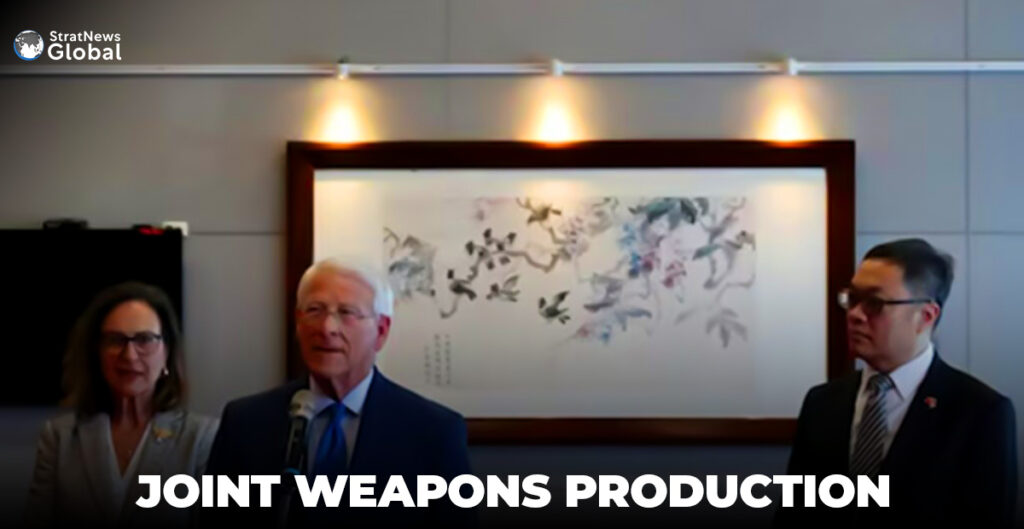
US Senator Wicker Expects Joint Weapons Production With Taiwan
U.S. Senator Roger Wicker, chairman of the influential Senate Armed Services Committee and a staunch supporter of Taiwan, on Saturday said he expects future joint U.S.-Taiwan weapons production—an initiative long sought by Taipei.
The United States is Taiwan’s most important international backer and weapons supplier despite the lack of formal diplomatic ties, though, since President Donald Trump took office earlier this year, no new arms sales have been announced.
Asked at a news conference in Taipei about the prospect for joint production of weapons, including drones, Wicker, a Republican, was upbeat.
“I think there’s going to be joint production and joint efforts and that will depend on the skills present both on this side of the Pacific Ocean and ours, and actually, we’re open to suggestion and innovation in that regard,” he said, at the end of a two-day visit where he met Taiwan President Lai Ching-te.
A Taiwan official, speaking on condition of anonymity, told reporters that co-production of weapons was “very important”.
China Criticises Wicker’s Taiwan Visit
Wicker is one of the fiercest supporters in the U.S. Congress for Taiwan. Beijing, which regularly denounces any shows of support for Taipei from Washington, has criticised his visit, saying it opposes official interactions between Taiwan and the United States.
He is in Taiwan at a time the island is facing a 20% tariff on exports to the United States, as part of Trump’s sweeping new trade policy on many other parts of the world.
Wicker noted there were talks on trade going on around the world.
“That in no way affects the defence alliance and friendship and determination that the United States has to be a friend to the sovereign rights of the Taiwanese people to enjoy their democracy,” he said.
His trip also takes place as some members of Congress – both Trump’s fellow Republicans and Democrats – have expressed concern that Trump is de-emphasising security issues as he works on negotiating a trade deal with China.
Administration officials have said that Trump remains fully committed to Asia-Pacific security matters as he pursues his trade agenda and a good personal relationship with Chinese President Xi Jinping.
China claims the democratically governed island as its own and has never renounced the use of force to bring Taiwan under its control. Beijing has stepped up military and political pressure against the island in recent years.
(With inputs from Reuters)
Russian Strike On Ukraine’s Zaporizhzhia Leaves One Dead, 24 Injured: Governor
Russia carried out a sweeping assault on Ukraine‘s Zaporizhzhia that killed one person, left at least 24 others injured, and caused damage to both infrastructure and residential buildings, authorities reported on Saturday.
Three children were among the 24 wounded in the southeastern city of Zaporizhzhia, its Regional Governor, Ivan Fedorov, said.
Ukrainian President Volodymyr Zelenskyy reported impacts on 14 regions by the attack, which used over 500 drones and 45 missiles.
Diplomatic efforts to end Russia’s full-scale invasion have so far yielded little, even after U.S. President Donald Trump met separately with Russian and Ukrainian leaders earlier this month.
On Friday, Zelenskyy brought up Trump’s self-imposed deadline for deciding on new measures against Russia if President Vladimir Putin fails to commit to a one-on-one meeting with the Ukrainian leader.
“Two weeks will be on Monday. And we will remind everybody,” he said.
Russia has said there is no agenda for a potential summit between Putin and Zelenskyy.
“It is absolutely clear that Moscow used the time meant for preparing a leaders-level meeting to organise new massive attacks,” Zelenskyy said on Saturday, calling for sanctions on Russian banking and energy sectors.
The air force recorded five missiles and 24 drone hits at 7 locations with debris falling on 21 sites, according to the statement on the Telegram messaging app.
The attack on Zaporizhzhia cut power to 25,000 residents, Fedorov said. The local energy facility said the attack damaged its equipment and that repairs were underway.
As of early Saturday, Ukrainian state-owned railway Ukrzaliznytsia said it had repaired the damage to its infrastructure in the Kyiv region.
Zelenskyy’s Security Guarantee Push
Zelenskyy on Friday called on Ukraine’s allies to quickly move discussions on security guarantees to direct talks between national leaders. His appeal came as European Union defence ministers said they would be ready to train Ukrainian forces inside the country if a truce is reached.
Kyiv is engaged in a diplomatic push to try and bring to an end Russia’s war, now in its fourth year, and to secure critical commitments from its partners to fend off any future invasion.
The Ukrainian president said he expected to continue talks with European leaders next week on “NATO-like” commitments to protect Ukraine, adding that U.S. President Donald Trump should also be involved.
“We need the architecture to be clear to everyone,” he said, adding that he wanted to tell Trump “how we see it”.
Zelenskyy spoke shortly before his chief of staff, Andriy Yermak, met U.S. special envoy Steve Witkoff in New York to discuss the need to increase pressure on Moscow.
(With inputs from Reuters)
Four Killed As Protesters Torch Indonesian Regional Parliament
Four people have died and five others were injured in Indonesia after protesters set fire to a regional parliament building, marking the first significant challenge to President Prabowo Subianto’s government amid ongoing demonstrations, authorities said on Saturday.
The four deceased were identified as municipal official Syaiful Anwar, DPRD photographer Ubay, legislative staff member Sarina, and a Municipal Police officer named Budi, according to the Antara news agency.
The Southeast Asian nation’s disaster management agency, in a statement, did not give the causes of the deaths in the Friday evening fire in Makassar, the capital of South Sulawesi province.
The Antara news agency said the dead victims allegedly had been trapped in the burning building. The disaster agency said two of the injuries resulted from people jumping out of the building.
Escalating Protests
Protests began in Indonesia’s capital Jakarta this week over lawmakers’ pay, escalating on Friday after a police armoured vehicle hit and killed the driver of a ride-hailing motorbike.
Prabowo, who took office in October last year, visited the home of the driver late on Friday, offering condolences to his parents and vowing to oversee the investigation into his death.
Local media reported isolated looting in Jakarta and damage to several transportation facilities in Jakarta on Friday, as well as demonstrations in the major cities of Bandung and Yogyakarta.
Jakarta’s mass rapid transit railway said trains were not stopping at one station on Saturday near Friday’s protest site, while the Jakarta province-owned Transjakarta bus service said it was unable to serve customers.
There were no immediate signs of protests on Saturday.
Governor Urges Calm
South Sulawesi Governor Andi Sudirman Sulaiman urged calm on Saturday after protests in Makassar turned violent, resulting in four deaths and the burning of the local parliament building.
“There have been fatalities. I appeal to everyone to stay calm. Let us work together to ensure a safe and peaceful South Sulawesi,” Sulaiman said in Makassar.
On Friday evening (Aug 29), the governor met with hundreds of protesters to listen to their concerns, expressing hope that dialogue would help reduce tensions.
“We all care deeply about this region. Let us uphold peace, respect one another, and preserve our unity for a stronger South Sulawesi,” he added.
(With inputs from Reuters and IBNS)
First Two Tejas Mark 1A Jets Expected By September-End: Defence Secretary
Defence Secretary RK Singh on Saturday said that two indigenous Tejas Mark 1A fighter jets are expected to be delivered by the end of September, underscoring India’s push for self-reliance in the defence sector.
Speaking at NDTV’s Defence Summit, he said the Tejas is set to replace the ageing MiG-21 fleet and emerge as a primary workhorse for the Indian Air Force (IAF).
Singh said, “The goal is to give HAL sufficient visibility to refine this platform. Currently, around 38 jets are operational, with another 80 under production. Ten of these are ready, and two engines have already been delivered. We anticipate that the first two jets, complete with weapons integration, will be delivered this September, with contract signing scheduled for next month.”
He added that this level of production provides HAL with a clear order pipeline for four to five years, enabling the company to perfect the platform, integrate radar and indigenous weapons, and ensure that the Tejas complements the Sukhoi fleet as a mainstay for the IAF.
Make-In-India Defence Push
On the ‘Make in India’ drive in the defence sector, Singh emphasised that self-reliance is essential to safeguarding strategic autonomy.
“Maintaining strategic autonomy now demands that we meet the majority of our defence requirements domestically. Since Prime Minister Narendra Modi’s government took office in 2014, there has been a relentless focus on self-reliance,” he said.
He also noted that India has set a benchmark of sourcing 75% of its capital expenditure locally, requiring foreign manufacturers to invest and produce in India to qualify for most defence contracts.
Modern Warfare
Regarding drones and their evolving role in modern warfare, particularly in the context of Operation Sindoor, Singh described the recent anti-terror operation as a reality check. He praised India’s air defence systems, including legacy platforms, for performing effectively but acknowledged room for growth.
“Significant improvements are needed in drones. Our civilian drone industry has expanded considerably, but achieving military-grade capability requires more effort, and our manufacturers are aware of the challenge,” he said.
Singh reiterated the importance of research and development while advocating a pragmatic approach.
“Critical technology is either restricted or shared sparingly. We must focus on Indian design and development. Our approach has to be practical—we cannot afford capability gaps vis-à-vis other countries while waiting for research outcomes,” he noted.
On his personal experience during Operation Sindoor, Singh admitted to feeling “a little tense on the first day” but added that his routine, including morning tennis, helped manage stress.
“I received regular updates on the operation, including any losses. Thankfully, we incurred minimal casualties while inflicting significant damage. We were confident in our ability to escalate if necessary, dominate, and compel the adversary to yield,” he added.
(With inputs from IBNS)