

Support us by contributing to StratNewsGlobal on the following UPI ID
ultramodern@hdfcbank

Strategic affairs is our game, South Asia and beyond our playground. Put together by an experienced team led by Nitin A. Gokhale. Our focus is on strategic affairs, foreign policy and international relations, with higher quality reportage, analysis and commentary with new tie-ups across the South Asian region.
You can support our endeavours. Visit us at www.stratnewsglobal.com and follow us on YouTube, Twitter, Facebook and Instagram.
र 500 per month
र 1000 per month
र 5000 per year
र 10000 per year
Donate an amount of your choice
र 500 per month
Donate र 500 per month

र 1000 per month
Donate र 1000 per month
र 5000 per year
Donate र 5,000 per year
र 10000 per year
Donate र 10,000 per year
Donate an amount of your choice
Donate an amount of your choice





Could Deportations Help The Taliban Get Legitimacy?
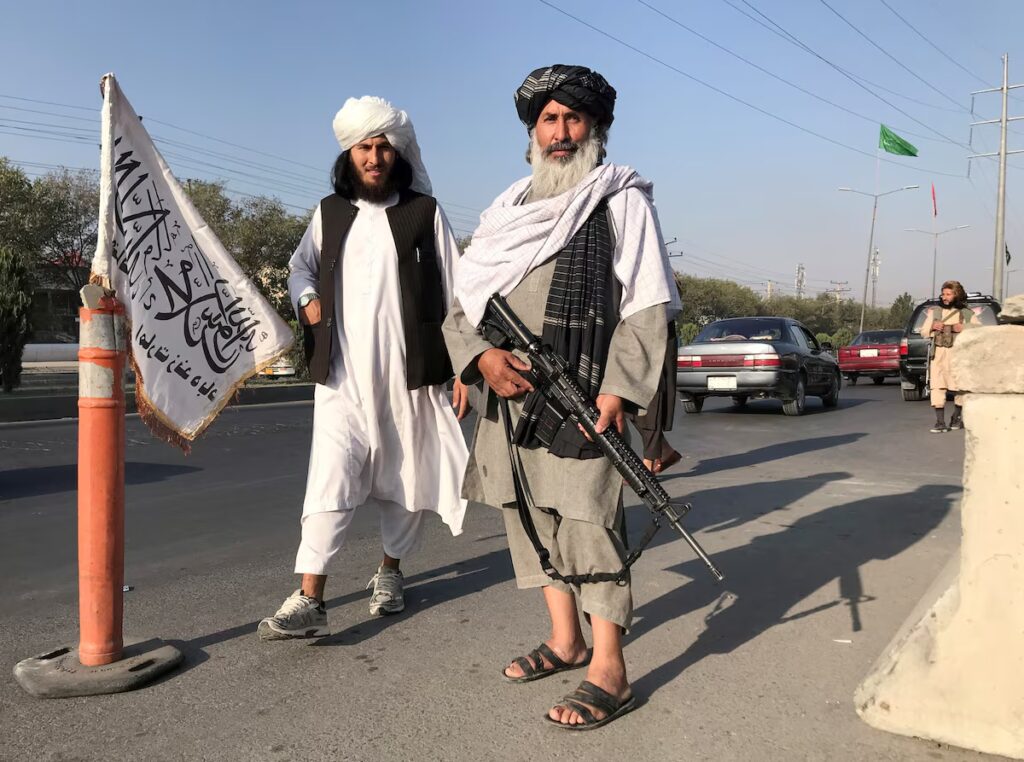
For years, the Taliban has faced isolation from the global community, labelled as a pariah state with no legitimacy. Yet, in 2025, this narrative is rapidly changing.
With Russia’s historic recognition of the Taliban government in July, a shift in diplomatic engagement is underway. Countries once reluctant to engage are now finding themselves navigating a complex web of interaction with the Taliban, and it is not just in South Asia. Norway, Germany, and Switzerland have all initiated diplomatic missions in Afghanistan, ostensibly for humanitarian reasons, yet the implications run much deeper.
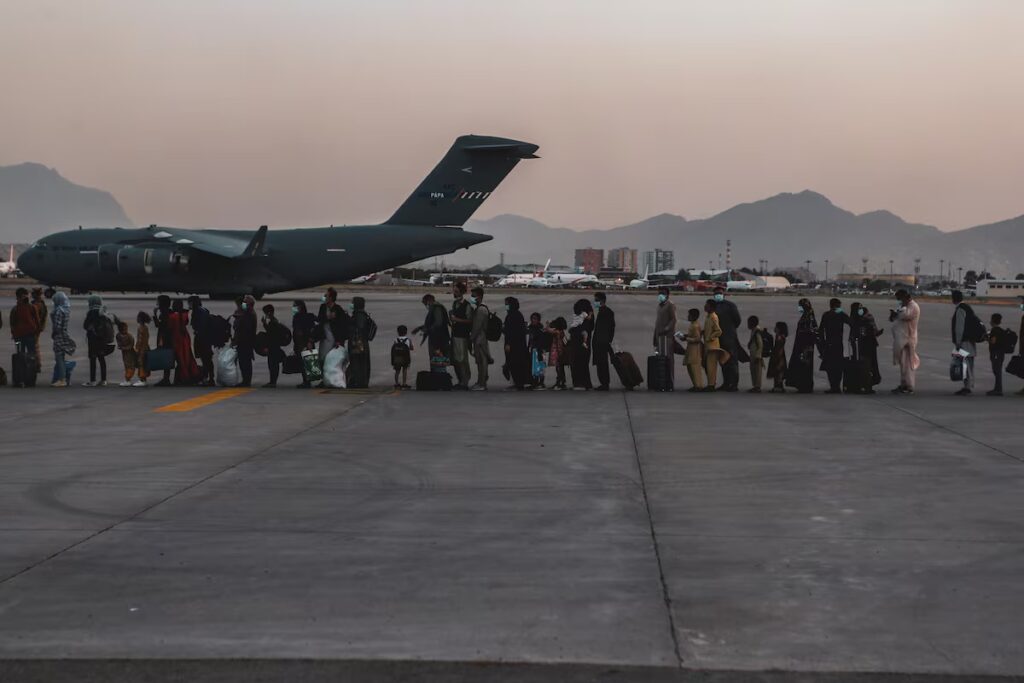
The broader picture of engagement includes critical logistical coordination for deportations—a process that effectively recognises the Taliban as the de facto authority of Afghanistan. For Europe, grappling with the crisis of illegal immigration, this cooperation serves an immediate political purpose: to curb the inflow of Afghan asylum seekers. However, this seemingly pragmatic approach carries risks far beyond the immediate issue of immigration.
The logistics of deportation require direct engagement with the Taliban—something that cannot be brushed off as mere “technical coordination.” From arranging flight clearances to issuing travel documents, every detail indirectly cements the Taliban’s control over the nation. Germany’s 2024 arrangement to allow Taliban envoys to assist in deportation logistics is a striking example. It is, in essence, the kind of diplomatic recognition that even the most cautious governments would avoid in public discourse.
The economic implications of such coordination are equally significant. Deportations come with financial benefits for the Taliban, particularly through the issuance of passports and IDs. In a short time, the regime has garnered over $26 million from these fees, funds that directly contribute to the Taliban’s economic sustenance. This is particularly important in a country where international sanctions and frozen reserves have crippled the economy. The Taliban’s revenue generation through such “technical” engagements is a lifeline for a regime that remains under harsh economic isolation.
While the world may hesitate to recognise the Taliban, the very act of engaging with them for logistical or humanitarian purposes serves as a form of indirect recognition. The International Human Rights Convention prohibits deporting individuals to places where they may face torture or persecution, placing European nations in a precarious position. They must carefully navigate their obligations to ensure they are not complicit in the Taliban’s abuses. Yet, every deportation arrangement, every document issued, and every diplomatic gesture adds a layer of legitimacy to a regime known for its repressive practices.
Moreover, the humanitarian cost is not confined to Europe. Countries like Pakistan and Iran have also been involved in the forced expulsion of Afghans, contributing to a rising refugee crisis that overburdens an already fragile Afghanistan. The Taliban, in turn, frames this as evidence of its ability to govern effectively, presenting itself as a responsible authority managing its borders and citizens.
In the end, what was intended as a way to curb migration flows may inadvertently become a tool for the Taliban to cement its global position. Each deportation flight, every diplomatic discussion, and the millions raised through passport fees serve as quiet yet potent symbols of the Taliban’s growing influence. In this geopolitical game, what was meant to weaken migration flows could, ironically, strengthen one of the most repressive regimes in the world.
(This article was written by Tisya Sharma, she is an intern at StratNews Global)
Airstrikes Intensify Strained Pakistan-Afghan Relations
In a fresh blow to Taliban-Pakistan relations, the Taliban has blamed Pakistan for airstrikes on Wednesday that killed three people, injured several others, and damaged infrastructure in eastern Afghanistan.
The Pakistani government has yet to comment, while Afghanistan’s foreign ministry condemned the attack as “provocative” and summoned the Pakistani ambassador in Kabul.
This comes just days after diplomatic talks between Pakistan, China, and Afghanistan aimed at enhancing counter-terrorism cooperation, and months after efforts to improve bilateral ties.
Conventional wisdom once held that the Taliban’s return to power would boost Pakistan’s influence in Afghanistan. However, since 2021, relations have soured, marked by cross-border clashes and retaliatory strikes.
In December 2022, Pakistan conducted airstrikes on Tehreek-e-Taliban Pakistan (TTP) hideouts in Afghanistan’s Paktika province. Islamabad claimed it targeted militants, but the Taliban countered that 46 civilians, including women and children, were killed, further straining ties.
Pakistan’s initial engagement with the Taliban was driven by the pursuit of strategic depth and advancing anti-India objectives. But with Indo-Afghan relations improving, Pakistan’s role in the region is increasingly unclear.
These events underscore the broader instability in South Asia, where competition and mistrust are rising over collaborative efforts. Pakistan’s failure to take a firm position only adds to the uncertainty about its real objectives.
Additionally, Pakistan has accused Afghanistan of harbouring the Tehrik-e-Taliban Pakistan (TTP), a militant group that opposes the Pakistani state. Kabul, however, continues to deny these claims, asserting that it does not allow its soil to be used against other countries.
(This article was written by Tisya Sharma, she is an intern at StratNews Global)
US Revokes Chip Equipment Access For Samsung, SK Hynix
The United States has tightened curbs on South Korean chipmakers Samsung and SK Hynix by revoking earlier approvals that allowed them to access American semiconductor manufacturing equipment for their operations in China, as per a notice in the Federal Register.
The US Commerce Department had given the companies exemptions to sweeping restrictions created in 2022 on the sale of US semiconductor equipment to China.
6-Month Deadline
The companies will now need to obtain licenses to buy the equipment for China. The federal filing also included Intel among the companies that lost their authorization for China, although Intel sold its Dalian China unit in a deal that was finalized this year.
The revocations will take effect in 120 days, according to the posting.
The Commerce Department said in a statement that the United States plans to grant license applications to allow the companies to operate their existing facilities in China, but does not intend to grant licenses to expand capacity or upgrade technology.
SK Hynix said in a statement that it “will maintain close communication with both Korean and the US governments and take necessary measures to minimise the impact on our business.”
Samsung did not respond to a request for comment.
Seoul-Washington Discussion
South Korea’s government has explained to the Commerce Department “the importance of a stable operation of our semiconductor companies in China for the stability of the global semiconductor supply chain,” the industry ministry said.
Seoul will continue discussions with Washington to minimise the impact on South Korean companies, the ministry said.
The licensing change will likely reduce sales to China by US equipment makers KLA Corp, Lam Research and Applied Materials. The companies did not immediately respond to requests for comment.
Shares of Lam fell 4.4%, Applied Materials dropped 2.9% and KLA shares were down 2.8%.
Chinese Makers, Micron May Benefit
In June, when the Commerce Department raised the possibility of revoking the authorisations, a White House official said the United States was “just laying the groundwork” in case the truce in trade talks between the two countries fell apart.
In July, the two allies and major trading partners announced a deal on tariffs, but South Korean President Lee Jae Myung came away from a summit with US President Donald Trump this week without finalising the agreement in writing.
The United States and China are operating under a tariff truce, with levies of 30% on Chinese imports to the US and 10% Chinese duties on US goods locked in until November. The trade war between the world’s two largest economies has affected everything from rare earths needed by US industry to China’s purchase of US soybeans.
The White House did not have an immediate comment.
“This move will make it harder for Korean chipmakers with facilities in China to continue producing more advanced chips,” said Chris Miller, author of “Chip War.”
The move may help domestic Chinese equipment makers, whose tools can fill gaps. It also may help Micron, a major US competitor to South Korea’s Samsung and SK Hynix in the memory chip sector.
“If this isn’t accompanied by further steps against (Chinese chipmakers like) YMTC and CXMT, it risks opening market space for Chinese firms at the expense of the Korean firms,” Miller said.
In Limbo
Thousands of license applications by US companies to export goods and technology to China also have been in limbo in recent months, creating a massive backlog, as Reuters reported this month, including for billions of dollars’ worth of semiconductor manufacturing equipment.
Foreign chipmakers like Samsung and Hynix now have what is known as Validated End User status, which allows US suppliers to ship goods to them “more easily, quickly and reliably,” as the Commerce Department says on its website, than they would if export licenses were required. That VEU status will be removed.
(With inputs from Reuters)
Sudan Nears Partition As RSF Forms Parallel Government
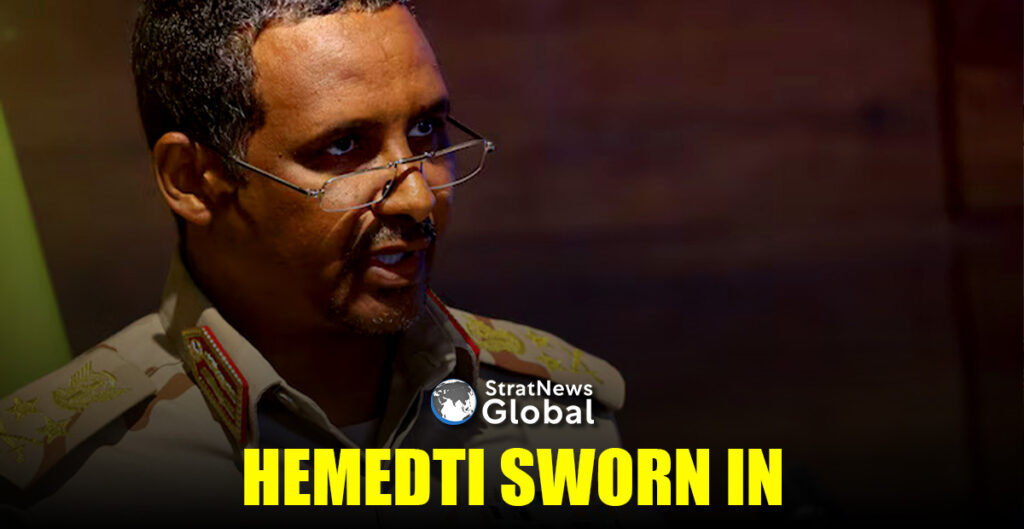
Mohamed Hamdan Dagalo, leader of the paramilitary Rapid Support Forces, was sworn in as the head of a rival Sudanese government, the government announced in a statement, bringing the country a step closer to de facto partition.
Dagalo, known as Hemedti, has rarely been seen in Sudan since the start of a 28-month-long war with the country’s national army, but was sworn in in the Sudanese city of Nyala, the statement said. Reuters could not independently confirm his location.
RSF’s De Facto Capital
One of Sudan’s largest cities, situated in the Darfur region, Nyala has served as the de facto capital for the RSF, which has appointed a prime minister and a presidential council, led by Dagalo.
The city was targeted with drone attacks on Saturday.
Although the RSF controls most of Darfur, it has been fighting the army and its allies fiercely for the city of al-Fashir, the region’s historic capital.
It has besieged hundreds of thousands of civilians there for more than 500 days, forcing them to consume animal feed to survive.
Over 1,000 Minors Killed
UNICEF said earlier this week that more than 1,000 children had been killed or maimed by air, artillery, and ground attacks.
The RSF says it has given civilians ample opportunity to leave.
Yale Humanitarian Lab said on Friday that satellite imagery showed the force had constructed physical barriers, preventing people from leaving. Those who have managed to escape report violent attacks and robberies by RSF soldiers.
The Sudanese army has retaken control of central and eastern regions of Sudan, and has been setting up its first government since the start of the war, which held its first cabinet meeting earlier this week.
Cost Of War
The vast Kordofan region that lies between the two forces’ strongholds remains the site of fighting and attacks on small villages.
The war between the forces has plunged half of Sudan’s population into hunger, devastated its economy, and created the world’s worst humanitarian crisis.
The Trump administration has said it aims to end the conflict, but there has so far been little progress.
(With inputs from Reuters)
Kim Jong Un Honors North Korean Soldiers Killed In Russia
North Korean leader Kim Jong Un has vowed to ensure “a beautiful life” for the families of “martyrs” who lost their lives fighting for Russia in the ongoing war in Ukraine, according to state media reports on Saturday. He lauded the heroism of the fallen soldiers, offering praise to their grieving families.
Kim on Friday hosted the families of soldiers and expressed “grief at having failed to save the precious lives” of the fallen men who sacrificed their lives to defend the country’s honour, KCNA state news agency reported.
Most Tenacious, Patriotic And Just People
The heroic feats of the soldiers and officers were possible because of the strength and courage given to them by families who are “the most tenacious, patriotic and just people in the world”, Kim told the parents, wives and children, KCNA said.
“They did not write even a short letter to me, but I think they must have entrusted their families, including those beloved children, to me,” Kim was quoted as saying.
The country will “provide you with a beautiful life in the country defended at the cost of the lives of the martyrs,” he said.
North Korea’s state television showed Kim bowing deeply to family members who appeared overcome with emotion at the event.
Russia-Ukraine War
The meeting was the latest honouring of troops who suffered heavy casualties in Russia’s Kursk region that borders Ukraine, after Kim and Russian President Vladimir Putin acknowledged the deployment in April after months of silence.
State television on Saturday aired a 25-minute documentary that included footage of soldiers purportedly taking part in “Operation Kursk Liberation” to drive Ukrainian troops from the Russian region bordering Ukraine.
Reuters could not independently verify the authenticity of the footage showing North Korean troops engaged in battles.
Pact With Russia
The film said Kim made the decision to deploy troops to Russia last August, revealing for the first time that the move was made two months after he and Putin signed a security treaty that included a mutual defence pact.
Kim is due to join Putin in China at a military parade next week marking the surrender of Japan in World War Two. It will be their third meeting in two years as they dramatically elevated a military alliance.
The two countries have not publicly disclosed the scale of the deployment or casualties suffered by North Korean troops. About 600 have been killed out of a total deployment of 15,000, according to South Korea’s intelligence agency.
There have been estimates by Western intelligence of more than 6,000 casualties.
(With inputs from Reuters)
Ukraine: Former Parliament Speaker Andriy Parubiy Gunned Down In Lviv
Andriy Parubiy, the former speaker of Ukraine’s parliament, was shot dead in the western city of Lviv on Saturday, authorities confirmed. Security forces have launched a manhunt for the killer as investigators work to determine the motive behind the killing.
The Prosecutor General’s office said a gunman had fired several shots at Parubiy, killing him on the spot. The attacker fled and a manhunt was launched, it said.
Parubiy, 54, was a member of parliament, had been parliamentary speaker from April 2016 to August 2019, and was one of the leaders of protests in 2013-14 calling for closer ties with the European Union.
He was also secretary of Ukraine’s National Security and Defence Council from February to August 2014, a period when fighting began in eastern Ukraine and Russia annexed the Crimea peninsula.
Officials gave no immediate indication whether the murder had any direct link to Russia’s war in Ukraine.
“Minister of Internal Affairs Ihor Klymenko and Prosecutor General Ruslan Kravchenko have just reported on the first known circumstances of a horrific murder in Lviv. Andriy Parubiy has been killed,” President Volodymyr Zelenskyy wrote on X.
He sent his condolence to Parubiy’s family and loved ones, and added: “All necessary forces and means are engaged in the investigation and search for the killer.”
National police said the shooting in Lviv was reported at around noon (0900 GMT). Lviv Mayor Andriy Sadovyi said finding the killer and establishing the circumstances of the attack was of outmost importance.
“This is a matter of security in a country at war, where, as we can see, there are no completely safe places,” he wrote on Telegram.
Tributes Pour In
Tributes poured in from colleagues in parliament and the government, praising Parubiy’s contribution to Ukraine’s fight for sovereignty and independence as one of the leaders of what became known as the Euromaidan protests in 2013-14.
Former President Petro Poroshenko said on Telegram that the killing of Parubiy, who was a member of the parliamentary committee on national security, defence and intelligence, was “a shot fired at the heart of Ukraine.”
“Andriy was a great man and a true friend. That is why they take revenge, that is what they are afraid of,” he said, lauding Parubiy’s contribution to building out the Ukrainian army.
In a statement on Telegram, Foreign Minister Andrii Sybiha described Parubiy as “a patriot and statesman who made an enormous contribution to the defence of Ukraine’s freedom, independence and sovereignty. He was a man who rightfully belongs in the history books.”
Ukrainian law enforcement provided no information on the killer’s identity or motives.
Ukrainian Prime Minister Yulia Svyrydenko called for a prompt investigation of the murder, calling it “a profound loss” for the country.
“You always remained a patriot of Ukraine and made a great contribution to the formation of our state,” she wrote on X.
(With inputs from Reuters)
Prabowo Cancels China Trip Amid Growing Protests In Indonesia
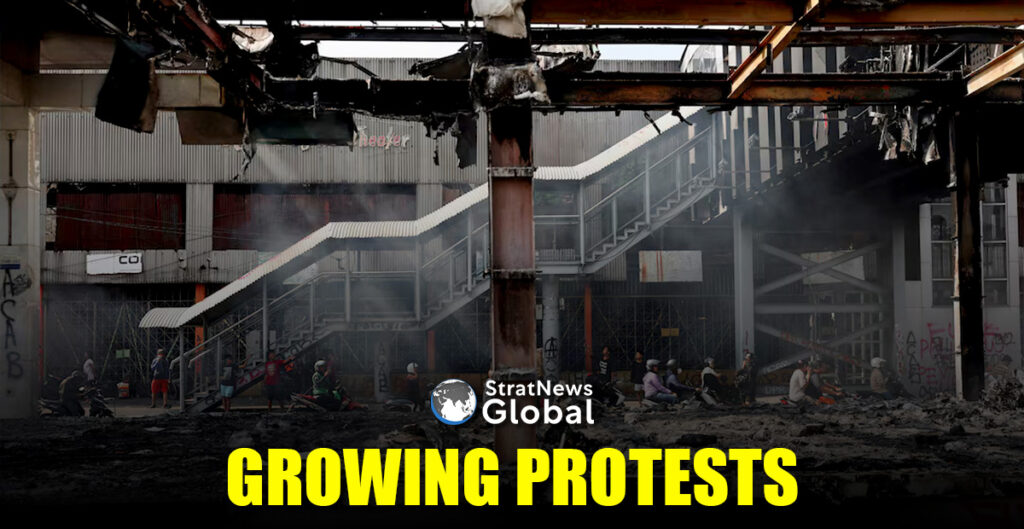
Amid escalating protests across Indonesia, President Prabowo Subianto cancelled his planned trip to China on Saturday, as unrest spread beyond Jakarta, with several regional parliament buildings set on fire.
Prabowo had been due to attend a “Victory Day” parade in China on September 3 to mark the 80th anniversary of the end of World War Two following Japan’s formal surrender.
Growing Protests
The protests, the first major test for Prabowo’s nearly year-old government, began in Jakarta this week over lawmakers’ pay and worsened after a police vehicle hit and killed a motorcycle rider.
“The president wants to continue monitoring (the situation in Indonesia) directly…and seek the best solutions,” presidential spokesperson Prasetyo Hadi said in a video statement on Saturday.
“Therefore, the president apologises to the Chinese government that he could not attend the invitation.”
Another consideration in cancelling the trip was a United Nations General Assembly session in September, Prasetyo said.
TikTik Suspends Live Feature
In the light of the protest, short-video app TikTok, which is owned by China’s ByteDance, said on Saturday it had suspended its live feature in Indonesia for a few days.
Jakarta had this week summoned representatives of social media platforms, including as Meta Platforms Inc and TikTok, and told them to boost content moderation because disinformation had spread online. The government says that such disinformation has spurred protests against it.
Fires
Earlier on Saturday, protesters caused fires at regional parliament buildings in three provinces – West Nusa Tenggara, Pekalongan city in Central Java and Cirebon city in West Java, local media reported.
Local media Detik.com said protesters had looted parliamentary office equipment in Cirebon and police fired teargas to disperse protesters in Pekalongan and West Nusa Tenggara.
3 Killed
Three people were killed on Friday in an arson attack on a parliament building in Makassar, the capital of South Sulawesi province, Indonesia’s disaster management agency said.
State news agency Antara said the victims had been trapped in the burning building, and the disaster management agency said two people were injured after jumping out of the building to escape the fire.
Local media outlet metrotvnews.com reported one further death from a fire at the Makassar parliamentary building. This could not be independently confirmed.
Bali Hit By Protests
Protests also occurred on the holiday island of Bali, where teargas was used against protesters.
Local media also reported that a crowd had looted the Jakarta home of Ahmad Sahroni, a lawmaker from the political party NasDem, and taken items including household furniture.
Sahroni has faced accusations of responding insensitively to people calling for parliament to be dissolved amid anger over lawmakers’ allowances. Sahroni has labelled such critics “the stupidest people in the world”.
($1 = 16,250.0000 rupiah)
(With inputs from Reuters)
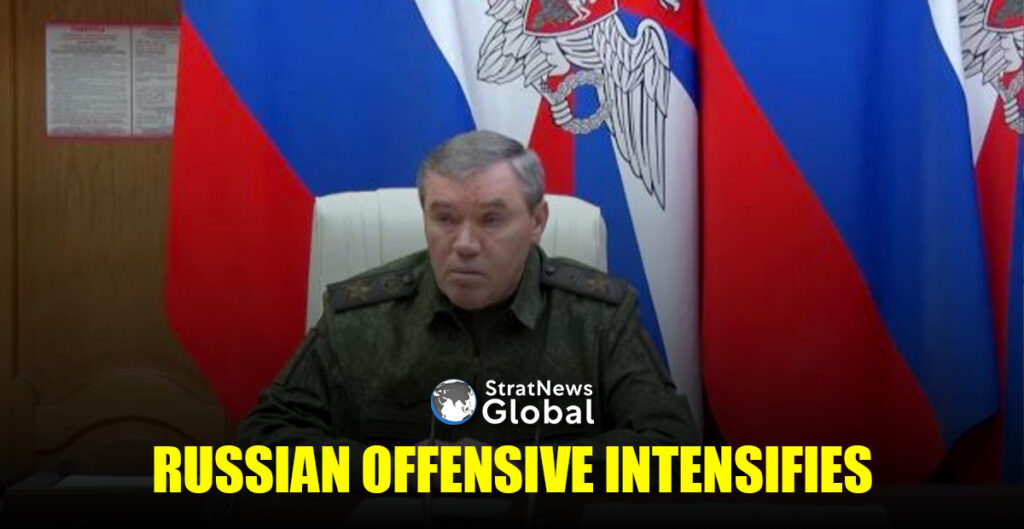
Russia Intensifies Relentless Offensive Across Ukraine Front, Military Chief Says
Russian troops are pressing a continuous assault across nearly the whole front line in Ukraine, with Moscow now holding the “strategic initiative,” Russia’s top military commander said on Saturday.
He added that the push reflects Russia’s bid to maintain pressure and dictate the terms of the conflict.
“The combined group of troops continue a non-stop offensive along almost the entire front line,” General Valery Gerasimov told his deputies in an address published by the Defence Ministry. “At present, the strategic initiative lies entirely with Russian forces.”
Russia has stepped up airstrikes on Ukrainian towns and cities far behind the front lines this summer and has continued a grinding offensive across much of the east, trying to gain more territory in its 3-1/2-year-old war in Ukraine.
Russian attacks on Ukraine’s capital, Kyiv, on Thursday killed at least 23 people and wounded 38, Ukrainian officials said.
The strikes took place less than two weeks after U.S. President Donald Trump hosted Russian President Vladimir Putin at a summit in Alaska, a meeting that Washington had hoped would advance his efforts to end the conflict.
Russia’s Targeted Strikes
Moscow denies targeting civilians. Ukrainian officials say scores of civilians have been killed in Russian strikes on densely populated areas in recent months, and thousands since the start of the war.
Gerasimov said Russia had carried out 76 targeted strikes on Ukrainian military-industrial facilities this spring and summer, with a focus on destroying sites where long-range missile systems and drones are produced.
Gerasimov said Moscow was now in control of 99.7% of Ukraine’s eastern Luhansk region, 79% of the eastern Donetsk region, 74% of the Zaporizhzhia region and 76% of the Kherson region.
Since March, Russia has captured more than 3,500 square km (1,351 square miles) of Ukrainian territory and taken control of 149 villages, he said.
Russian forces this month have begun pressing into Ukraine’s southeastern Dnipropetrovsk region, open-source maps show. Gerasimov said seven villages in the region were now under Russian control.
(With inputs from Reuters)
Israeli Strike Kills Houthi Prime Minister, Senior Officials
In a deadly strike on Yemen’s capital Sana, the Prime Minister of the Houthi government, along with several other ministers, were killed, according to reports from the Houthi-run news agency on Saturday. The attack, attributed to Israeli forces, was confirmed by Mahdi al-Mashat, head of the Houthi Supreme Political Council.
A number of others were wounded in Thursday’s strike, it said, without providing details.
Israel Verifying Outcome
Israel said on Friday that the airstrike had targeted the Iran-aligned group’s chief of staff, defence minister and other senior officials and that it was verifying the outcome.
Mashat’s statement did not make clear whether the Houthi defence minister was among the casualties.
Figurehead
Ahmad Ghaleb al-Rahwi became prime minister nearly a year ago but the de facto leader of the government was his deputy, Mohamed Moftah, who was assigned on Saturday to carry out the prime minister’s duties of Prime Minister.
Rahwi was seen largely as a figurehead who was not part of the inner circle of the Houthi leadership.
‘Complex Operation’
The Israeli military said its fighter jets had struck a compound in the Sanaa area where senior Houthi figures had gathered, describing the attack as a “complex operation” made possible by intelligence-gathering and air superiority.
On Thursday, Israeli security sources said the targets had been various locations where a large number of senior Houthi officials had gathered to watch a televised speech recorded by leader Abdul Malik al-Houthi.
The Iran-aligned Houthis have targeted vessels in the Red Sea, calling it a show of solidarity with the Palestinians in Gaza amid ongoing violence. This move is being framed as part of their broader support for Palestinian resistance against Israeli actions.
They have also fired missiles towards Israel, most of which have been intercepted. Israel has responded with strikes on Houthi-controlled areas of Yemen, including the vital Hodeidah port.
(With inputs from Reuters)
U.S. Expands Caribbean Military Presence, Raising Questions Over Motives
A significant buildup of American naval forces in the Southern Caribbean has drawn attention from officials in Caracas and analysts in the United States. While the Trump administration maintains the deployment is meant to target drug cartels, experts are questioning whether the operation signals broader intentions.
Seven U.S. warships, along with one nuclear-powered fast attack submarine, are either in the region or are expected to be there soon, bringing along more than 4,500 sailors and marines.
U.S. President Donald Trump has said combating drug cartels is a central goal for his administration and U.S. officials have said that the military efforts aim to address threats from those cartels.
Stephen Miller, deputy White House chief of staff, said on Friday the military buildup was aimed to “combat and dismantle drug trafficking organizations, criminal cartels and these foreign terrorist organizations in our hemisphere.”
Doubts Over Trump’s Motives
But it is unclear exactly how the U.S. military presence would disrupt the drug trade.
Among other things, most of the seaborne drug trade travels to the United States via the Pacific, not the Atlantic, where the U.S. forces are, and much of what arrives via the Caribbean comes on clandestine flights.
Venezuelan officials believe their government might be the real target.
In early August, the United States doubled its reward for information leading to the arrest of Venezuelan President Nicolas Maduro to $50 million over allegations of drug trafficking and links to criminal groups.
Maduro, Interior Minister Diosdado Cabello and the country’s ambassador to the United Nations Samuel Moncada have said the U.S. is threatening the country with the naval deployments, in violation of international treaties.
They have also scoffed at U.S. assertions that the country and its leadership are key to major international drug trafficking.
“Venezuelans know who is behind these military threats by the United States against our country,” Venezuela’s Defence Minister General Vladimir Padrino said at a civil defence event on Friday, without offering further details. “We are not drug traffickers, we are noble and hard-working people.”
‘Gunboat Diplomacy’
While U.S. Coast Guard and Navy ships regularly operate in the Southern Caribbean, the current buildup exceeds the usual deployments in the region.
In the naval force are warships, including USS San Antonio, USS Iwo Jima, and USS Fort Lauderdale. Some can carry aerial assets like helicopters while others can also deploy Tomahawk cruise missiles.
The U.S. military has also been flying P-8 spy planes in the region to gather intelligence, U.S. officials have said. They have been flying over international waters.
The Trump administration has said it can use the military to go after drug cartels and criminal groups and has directed the Pentagon to prepare options.
U.S. Secretary of State Marco Rubio travelled to Doral, Florida, on Friday to visit the headquarters of the U.S. military’s Southern Command, which oversees operations in the region.
David Smilde, a Venezuela expert at Tulane University, said the military moves appeared to be an effort to pressure the Maduro government.
“I think what they are trying to do is put maximum pressure, real military pressure, on the regime to see if they can get it to break,” Smilde said.
“It’s gunboat diplomacy. It’s old-fashioned tactics,” he added.
While the naval forces are in the Caribbean and the Atlantic, the Pacific Ocean is the bigger route for maritime trafficking of cocaine, the United Nations Office on Drugs and Crime said in its 2023 Global Report on Cocaine, citing figures from the U.S. DEA that show 74% of cocaine flowing north out of South America is trafficked over the Pacific.
Traffickers use airplanes to send cocaine northward through the Caribbean, the report said, naming Venezuela as a major hub for such departures. Mexico is the main source of fentanyl into the United States, with drug cartels smuggling it over the border.
Intervention Against Maduro?
Moncada said the U.S. buildup was meant to justify “an intervention against a legitimate president.”
Asked if the White House was ruling out regime change, a senior administration official said, “Right now they’re there to ensure that drug smuggling does not happen.”
“The Maduro regime is not the legitimate government of Venezuela. It is a narco-terror cartel. Maduro is not a legitimate president. He is a fugitive head of this drug cartel,” White House Press Secretary Karoline Leavitt told reporters on Thursday.
Even so, U.S. officials say that while significant, the forces in the region are still far too small to be able to carry out the type of sustained operation that Caracas has warned against.
In 1989, the United States deployed nearly 28,000 U.S. troops to invade Panama and capture dictator Manuel Noriega.
Christopher Hernandez-Roy, with the Center for Strategic and International Studies in Washington, said it was possible the buildup could be used for some sort of strike in Venezuela, but could be simply a show of force.
“It’s too big to be just about drugs. It’s too small to be about an invasion. But it’s significant enough that it’s there to do something,” Hernandez-Roy said.
(With inputs from Reuters)