

Support us by contributing to StratNewsGlobal on the following UPI ID
ultramodern@hdfcbank

Strategic affairs is our game, South Asia and beyond our playground. Put together by an experienced team led by Nitin A. Gokhale. Our focus is on strategic affairs, foreign policy and international relations, with higher quality reportage, analysis and commentary with new tie-ups across the South Asian region.
You can support our endeavours. Visit us at www.stratnewsglobal.com and follow us on YouTube, Twitter, Facebook and Instagram.
र 500 per month
र 1000 per month
र 5000 per year
र 10000 per year
Donate an amount of your choice
र 500 per month
Donate र 500 per month

र 1000 per month
Donate र 1000 per month
र 5000 per year
Donate र 5,000 per year
र 10000 per year
Donate र 10,000 per year
Donate an amount of your choice
Donate an amount of your choice

Jaguar Land Rover Global Operations ‘Severely Disrupted’ By Cyber Attack
A cyber attack has “severely disrupted” production at Jaguar Land Rover (JLR), including its two major plants in the United Kingdom.
The company, a subsidiary of India’s Tata Motors, confirmed that it immediately moved to contain the breach and is urgently working to bring operations back online.
JLR’s retail division has also been badly affected during what is usually a busy period for car deliveries, though the automaker stressed there is currently no evidence of any customer data being compromised.
The attack, which began on Sunday, coincided with the rollout of the latest set of new registration plates on Monday, September 1. The intrusion was detected while still underway, prompting JLR to shut down its IT systems to minimise the potential damage.
At JLR’s Halewood plant in Merseyside, employees were informed by email on Monday morning not to report to work, while some staff already on-site were sent home, according to the Liverpool Echo. A similar situation unfolded at the company’s Solihull factory, with workers also told to leave.
‘Took Immediate Action’
The company said in a statement: “We took immediate action to mitigate the impact by proactively shutting down our systems. We are now working at speed to restart our global applications in a controlled manner.” It added that production and retail operations were heavily affected but insisted that no evidence pointed to stolen customer data.
Although JLR itself did not explicitly use the phrase “cyber-attack,” its parent company, Tata Motors, disclosed in a filing to the Bombay Stock Exchange that the incident involved an “IT security issue” causing problems on a global scale.
The UK’s National Crime Agency confirmed awareness of the disruption, saying: “We are aware of an incident impacting Jaguar Land Rover and are working with partners to better understand its impact.”
In 2023, JLR signed a five-year, £800 million contract with Tata Consultancy Services to accelerate its digital transformation and bolster cybersecurity measures across its operations.
The shutdown in production now represents another setback for the automaker, which recently reported profit losses linked to rising costs from US tariffs.
M&S Hackers Claim Responsibility
A group of English-speaking hackers calling themselves the “Scattered Lapsus$ Hunters” has claimed responsibility for the breach. The group, active on Telegram, has posted screenshots allegedly taken from within JLR’s IT networks and boasted about disrupting the automaker’s global production lines.
The same collective has previously been linked to cyber attacks on UK retailers, including Marks & Spencer, earlier this year. In a mocking post, the hackers taunted JLR by writing: “Where is my new car, Land Rover.”
Speaking privately via text, a member of the gang who claimed to be a spokesperson described how the attackers allegedly accessed JLR’s systems. They are reportedly attempting to extort the company for money, though they declined to say whether they had stolen private data or deployed malware inside the network.
The group has so far provided little concrete proof, and security experts caution that such gangs often exaggerate their access to boost attention.
However, images shared by the hackers include what appear to be internal troubleshooting documents and IT system logs.
The Information Commissioner’s Office has confirmed that JLR reported the incident, and the regulator is now reviewing the details.
Widespread Disruption
Production at both the Halewood and Solihull sites remains heavily impacted, with employees sent home as JLR works to restore systems.
The company has not disclosed the exact nature of the attack but reiterated that proactive shutdowns were initiated to contain the fallout.
The hackers’ name, Scattered Lapsus$ Hunters, reflects a blend of young cybercriminals tied to an underground network known as “The Com.”
Earlier this year, the UK’s National Crime Agency warned of increasing threats from The Com, which is believed to serve as a breeding ground for loosely organised hacking groups.
This particular gang appears to have splintered from notorious groups such as Shiny Hunters, Lapsus$, and Scattered Spider—all of which have made headlines for recent high-profile cyber attacks.
The Telegram channel used by the hackers currently has around 52,000 subscribers, where the group continues to brag about intrusions and trade inside jokes.
It is their fourth such channel after earlier ones were shut down.
Scattered Spider, another offshoot, has previously carried out cyber attacks on UK retailers, including M&S, Co-op, and Harrods, earlier this year.
In July, the National Crime Agency arrested four individuals—three young men aged 17 to 19 from London and the West Midlands, and a 20-year-old woman in Staffordshire—in connection with those attacks. All have since been released on bail.
(With inputs from IBNS)
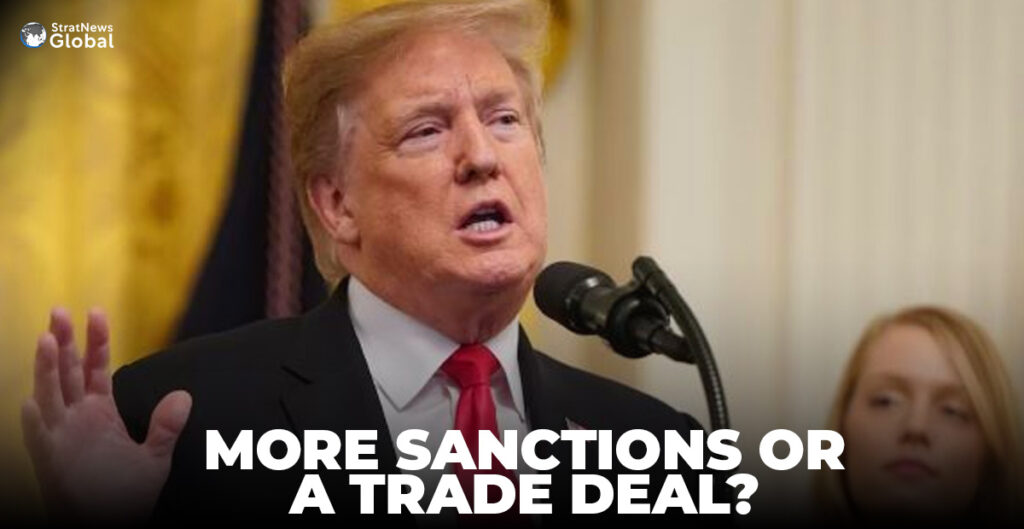
Trump Cites ‘Secondary Sanctions’ On India As Proof Of Action Against Russia
U.S. President Donald Trump on Wednesday warned that Washington has yet to impose its “Phase-2” and “Phase-3” tariffs, stressing that secondary sanctions on India already serve as direct punitive measures against Russia, costing Moscow “hundreds of billions of dollars.”
Trump made this statement when questioned about his apparent lack of direct action against Russia since assuming the presidency in January this year.
He further identified India as the second-largest purchaser of Russian oil after China, suggesting that New Delhi could encounter more penalties if it persists in importing energy from Moscow.
Although Washington has temporarily postponed additional tariffs on China until November, India has not been spared. A 25% duty was applied earlier this month, followed by an additional 25% secondary sanction on August 27, effectively raising the levy to 50% on Indian exports to the United States.
‘Action’ Against Russia
Trump insisted these measures represented significant action against Russia, as they targeted its oil revenues through its largest foreign buyers.
“Would you really say that placing secondary sanctions on India, the biggest purchaser outside of China—virtually on par with them—amounts to no action? This has cost Russia hundreds of billions of dollars. You call that nothing? I still haven’t rolled out Phase-2 or Phase-3,” Trump remarked during a joint press appearance with the Polish President at the White House.
The U.S. president recalled his prior warning that India would face “serious consequences” if it persisted with Russian oil acquisitions. “Just two weeks ago, I said if India keeps buying, India will have big problems—and that is exactly what happened,” he added.
In an earlier interview, Trump also claimed that New Delhi had offered him a “no-tariff” arrangement in response to Washington’s move to sharply raise duties on Indian goods.
Trump’s Zero-Tariff Claim
Speaking on The Scott Jennings Radio Show, he stated, “India was once the most highly tariffed country in the world, and you know what—they’ve now offered me zero tariffs in India. Without tariffs, they would have never made that offer.”
Reiterating his long-held position on trade, Trump argued that tariffs were crucial to correcting global imbalances. “China kills us with tariffs, India kills us with tariffs, Brazil kills us with tariffs. Nobody understands tariffs better than I do,” he declared.
On Monday, Trump once again criticised the state of bilateral trade with India, describing it as a “completely one-sided disaster.” He asserted that India had long benefited disproportionately from trade with the United States, while American businesses had struggled to access the Indian market because of steep import duties.
“India has now offered to eliminate tariffs entirely, but it’s coming too late. For decades, it was a completely lopsided relationship,” Trump said.
(With inputs from IBNS)
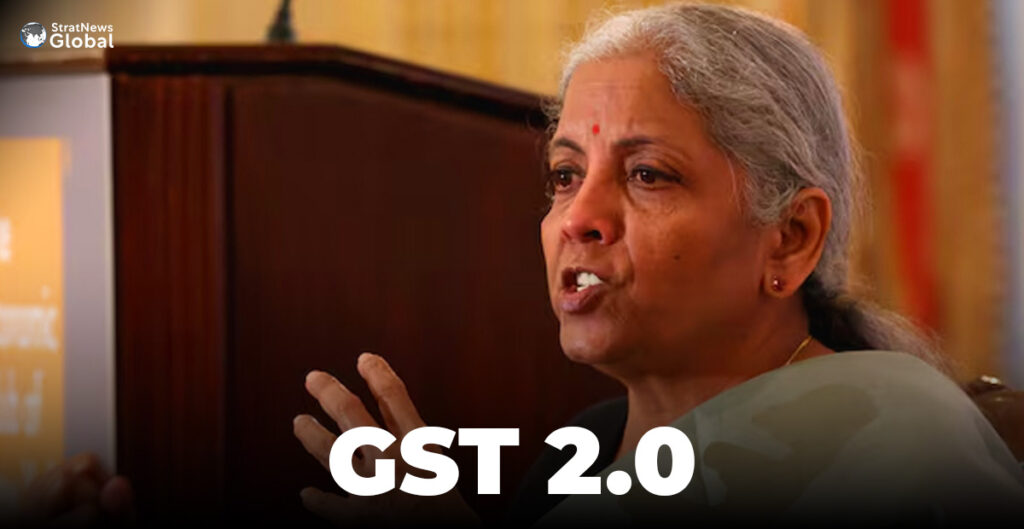
India Cuts GST Rates On Hundreds Of Consumer Goods To Boost Demand Amid US Tariffs
India has slashed Goods and Services Tax (GST) rates across a wide spectrum of consumer goods—from soaps to compact cars—in an effort to stimulate demand in the world’s fourth-largest economy as it grapples with mounting pressure from U.S. tariffs.
The GST Council, chaired by Union Finance Minister Nirmala Sitharaman, overhauled the indirect tax structure by trimming it down from four tiers—5%, 12%, 18% and 28%—to a simplified two-tier system of 5% and 18%. Alongside this change, a special 40% slab has been introduced for sin products and high-end luxury items.
The revised rates will take effect on September 22, coinciding with the start of the Navratri festival season.
‘Major Reform’
“This reform is not confined to just rate rationalisation. It is also about structural improvement, about the ease of living, and about simplifying how businesses engage with GST,” Sitharaman declared at a press briefing late Wednesday.
She emphasised that, “slabs have been reduced to only two, and we are reviewing issues related to the compensation cess.”
Sitharaman added that the changes were made with ordinary citizens in mind, noting that most daily-use items have seen substantial reductions in GST.
The finance minister further highlighted that labour-heavy sectors, along with agriculture and healthcare, would gain from the reforms.
She said that distortions in the duty structure had been corrected, classification disputes resolved, and stability brought into the GST regime.
Modi Hails GST Cut
Prime Minister Narendra Modi had first flagged the plan to reduce GST in his Independence Day address on August 15.
After Wednesday’s announcement, he hailed the Council’s decisions, saying the reforms would “enhance the lives of citizens and ensure ease of business, particularly for small traders and enterprises.”
Among the biggest beneficiaries are small cars, a segment vital to India’s automotive market.
Cars under four metres in length with petrol engines up to 1,200 cc and diesel engines up to 1,500 cc will now be taxed at 18%, down from the previous 28%. Anything larger or more powerful will attract the new 40% slab.
Motorcycles also see a significant shift. Two-wheelers with engines up to 350 cc will now be taxed at 18%, compared with the earlier 28%, while heavier bikes move into the 40% bracket.
The steep 40% GST slab has been reserved primarily for sin goods and a limited set of luxury products, according to a Council statement.
It applies to tobacco, luxury automobiles, high-end motorcycles, aerated drinks with added sugar or flavouring, caffeinated beverages, and other non-alcoholic drinks.
However, its application to tobacco will be delayed due to unresolved technicalities linked to outstanding loans.
Compensation Cess-GST Merger
The merging of the compensation cess with GST was also clarified in Council FAQs: “Since the compensation cess is being discontinued, the levy has been integrated into GST to preserve the tax incidence on most items. For goods that were already under the highest 28% slab, a special rate is now being imposed.”
Insurance has also been addressed under the reforms. All individual health insurance policies—including senior citizen and family floater plans—will now be exempt, as will individual life insurance.
Additionally, 33 critical drugs, including those for cancer and rare diseases, have been freed from GST.
Affordable Homes
Construction materials such as cement have also seen their rates cut to 18% from 28%, a change expected to provide immediate relief to the real estate sector.
Experts note that affordable housing stands to gain the most, since lower input costs could translate into more accessible prices for homebuyers and further the government’s Housing for All initiative.
The overall fiscal cost of the GST rationalisation is projected at ₹48,000 crore annually, Revenue Secretary Arvind Shrivastava stated.
However, he argued that this burden may be offset by stronger consumer demand and higher compliance.
“The rationalisation will likely have a buoyancy effect, improving consumer sentiment and encouraging spending. We also expect better compliance as the system becomes more predictable,” Shrivastava explained.
(With inputs from IBNS)
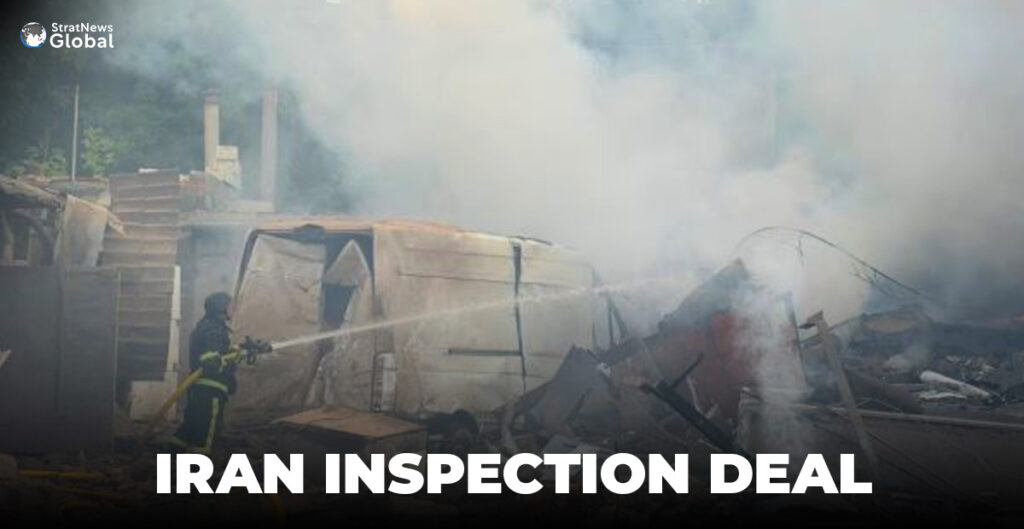
UN Nuclear Agency Chief Urges Iran To Reach Inspection Deal Without Delay
The head of the United Nations nuclear agency said on Wednesday that discussions with Iran on resuming inspections at sites targeted by Israeli and U.S. strikes cannot be allowed to drag on indefinitely. He stressed that an agreement should be reached quickly, ideally within the week.
The International Atomic Energy Agency has had no information from Iran on the status or whereabouts of its stock of highly enriched uranium since Israel launched the first attacks on its enrichment sites on June 13, IAEA chief Rafael Grossi confirmed in an interview.
Tehran has now passed a law suspending cooperation with the IAEA and stipulating any future inspections will need a green light from Iran’s Supreme National Security Council. Tehran and the IAEA are now in talks on how inspections can go ahead.
“It’s not something that can go on for months on end,” Grossi said in an interview at IAEA headquarters in Vienna.
“I certainly hope that we can conclude this process soon. We are trying to have another meeting, perhaps within a few days now, here in Vienna, to conclude this and to start the inspections,” he said. “It would be really good if we could have this agreed before next week.”
Technically, inspections in Iran have resumed since IAEA inspectors recently carried out a mission at Bushehr, Iran’s only operating nuclear power plant, but it is of so little concern from a proliferation perspective that it does not generally feature in quarterly IAEA reports on Iran.
‘By And Large, Nuclear Material Still There’
While Iran’s three enrichment sites were badly damaged or destroyed in the Israeli and U.S. bombing campaigns, it is less clear what has happened to Iran’s stock of highly enriched uranium – the most sensitive material having been enriched to up to 60%, a short step from the roughly 90% of weapons grade.
Iran had enough material enriched to that level, if enriched further, for six nuclear weapons before the attacks, according to an IAEA yardstick.
“I believe there is a general understanding that by and large, the material is still there. But, of course, it needs to be verified. Some could have been lost,” Grossi said when asked about the status of Iran’s highly enriched uranium stock.
“We don’t have indications that would lead us to believe that there has been major movement of material,” he said.
Iran has not updated the IAEA on the status of the stockpile. In the event of an agreement with the IAEA, it would send it a report accounting for it.
How the new system under Iran’s law requiring special approval by the Supreme National Security Council would work is unclear, and Iran has brought up the importance of keeping the location of its enriched uranium secret, Grossi said.
At the same time, Iran’s obligations to the agency are unchanged, with Iran being told “domestic law creates obligations for Iran, not for the agency.”
Room For Diplomacy, Up To A Point
The IAEA notified Iran in late July of its intention to inspect, diplomats said, and Grossi confirmed that normally it cannot let over a month pass without verifying the status of highly enriched uranium, which is enriched to 20% or higher. Rather than precipitate a crisis by calling Iran out, talks continue.
“We are trying, as I’ve always tried … to give way to diplomacy, to allow for a process to be put back in place. Of course, this has to be done within a certain reasonable time frame,” Grossi said.
He made clear the U.S. and Israeli strikes had not eliminated Iran’s ability to make more uranium-enriching machines.
With the IAEA’s 35-nation Board of Governors due to meet next week, Grossi is due to send two quarterly reports on Iran to member states. He made clear there was no breakthrough to inform them of but added: “I don’t lose all hope that before the board meets, we could maybe conclude.”
Grossi has long said he was considering running as United Nations Secretary-General next year. Asked if he was definitely going to run, he said: “Yes, I am going to do that, yes.”
(With inputs from Reuters)
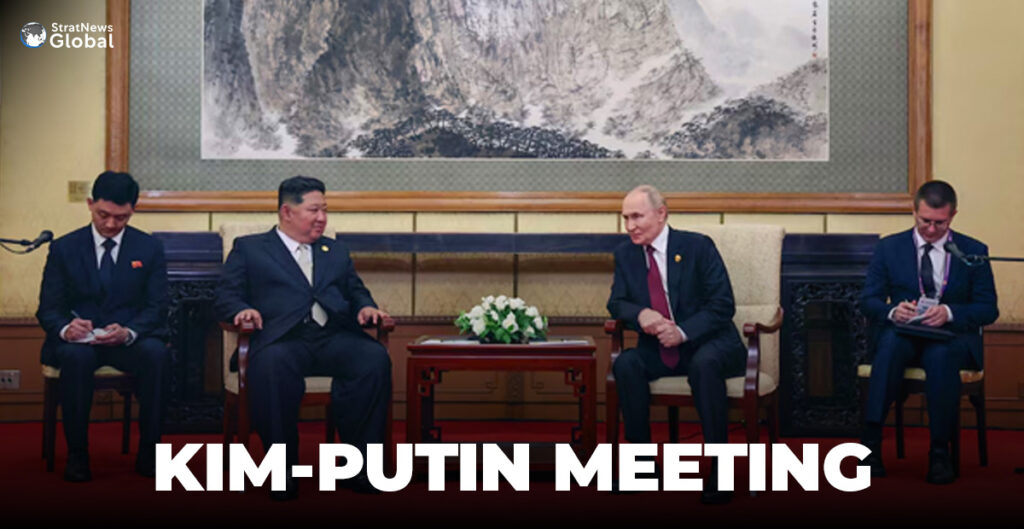
Kim Vows Full Support For Russia As Putin Thanks North Korea For War Aid
North Korean leader Kim Jong Un on Wednesday offered his full support to Vladimir Putin, vowing to do “everything I can to assist” Moscow, while the Russian president expressed gratitude to Pyongyang for dispatching troops to fight in the war against Ukraine.
The meeting took place on the sidelines of celebrations in Beijing to mark the anniversary of Japan’s formal surrender in World War Two.
Hours earlier, the pair flanked Chinese President Xi Jinping at a massive military parade for the first such gathering of the three countries’ leaders since the early days of the Cold War.
After the parade, Kim and Putin travelled in the same car to a state guesthouse for private bilateral discussions.
“If there is anything I can or must do for you and the Russian people, I consider it my duty as a fraternal obligation,” Kim told Putin.
‘Dear Chairman Of State Affairs’
Putin addressed Kim as “Dear Chairman of State Affairs” in Russian and extended his warmest greetings. The two countries are bound by a 2024 mutual defence treaty, and both face heavy international sanctions – Russia for its war in Ukraine and North Korea for its nuclear weapons programme.
“Recently, relations between our countries have assumed a special, trusting and friendly character, and an allied character,” Putin said, and praised North Korean special forces that were deployed to help Russian troops. “Your soldiers fought courageously and heroically.”
North Korean troops helped Moscow earlier this year to eject Ukrainian forces from Russia’s western region of Kursk.
“I would like to note that we will never forget the sacrifices that your armed forces and the families of your servicemen have suffered,” Putin said.
The Beijing visit, Kim’s first known trip to China since the pandemic, offered the reclusive North Korean leader his first-ever chance to meet Putin and Xi together, as well as mingle with the more than two dozen other national leaders who attended the events.
According to Pul Pervogo, a social media account that reports widely on Alexander Lukashenko’s activities, Kim spoke to the Belarusian president before the parade and invited him to visit Pyongyang.
Park Won-gon, a North Korea expert at Ewha Womans University in Seoul, called the visit a major propaganda win for Kim.
“Just standing and walking side by side with Xi Jinping and Putin. How could there be any better way for him to show his status to the world and to his people?”
(With inputs from Reuters)
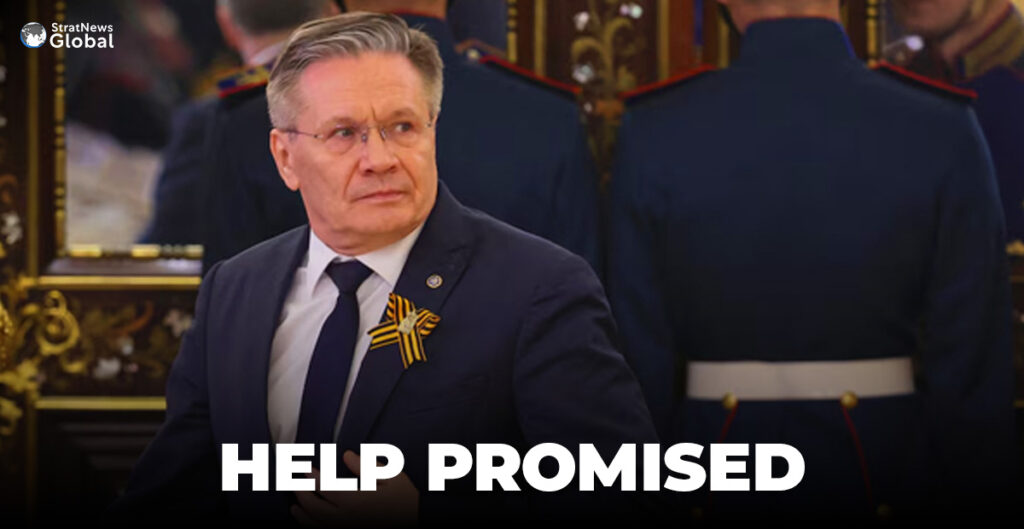
Russia To Aid China In Surpassing US As Top Nuclear Power Producer: Rosatom Chief
The chief of Russia’s Rosatom state nuclear corporation said on Wednesday, in remarks aired on state television following talks in Beijing, that Russia would assist China in surpassing the United States to become the world’s largest producer of nuclear power.
The United States operates the world’s largest network of nuclear reactors, with nearly 97 gigawatts (GW) of installed capacity.
China is racing to build dozens of reactors, though and had 53.2 GW of operating nuclear power reactor capacity as of April 2024, according to the U.S. Energy Information Administration.
“China has ambitious plans for the development of atomic energy. The task has been set to catch up and surpass the United States in installed capacity, which means reaching a capacity of more than 100 gigawatts,” Alexei Likhachev, the Rosatom chief, told Russian state television.
Asked by state television if Russia would help China in that target, Likhachev said: “Of course. We will help. We are already helping.”
Russia has already helped build four nuclear reactors in China and is building four more, and China needs a large amount of uranium and nuclear fuel for its ambitious plans, Likhachev said.
As a result, China will need to develop a new generation of closed nuclear fuel cycle reactors based on Russian technology, he said.
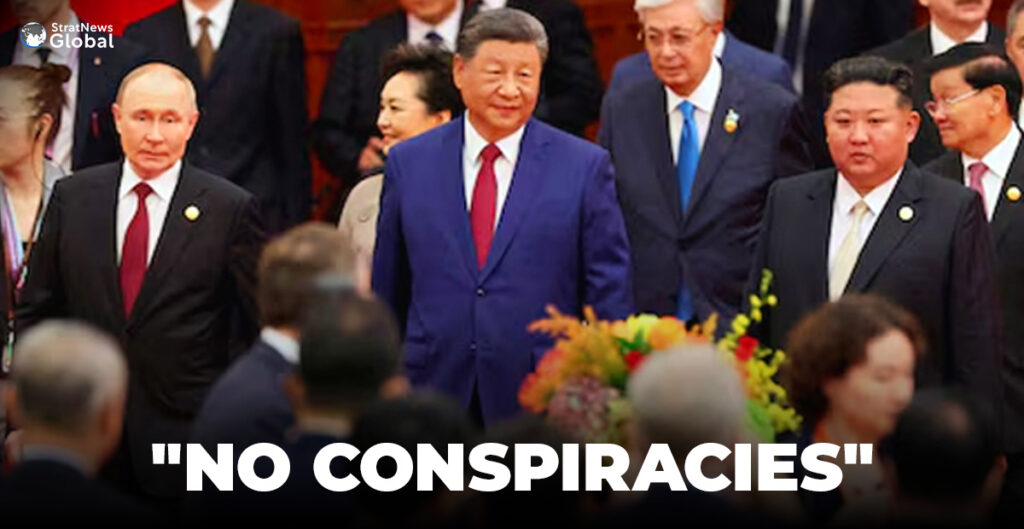
Russia Rejects Trump’s ‘Conspiracy’ Claim
The Kremlin stated on Wednesday that Vladimir Putin was not colluding with China’s Xi Jinping and North Korea’s Kim Jong Un against the United States, further suggesting that President Donald Trump might have been speaking with irony in his criticism.
Trump said on Tuesday he was “very disappointed” with Putin, and suggested in a post on Truth Social that Xi, Putin and Kim were conspiring against the United States.
Asked about the Trump remarks by Russian state television, Kremlin foreign policy aide Yuri Ushakov said that Trump may have been being ironic.
“I would like to say that no one has been conspiring, no one has been plotting anything, no conspiracies,” Ushakov said. “No one even had such a thought – none of these three leaders had such a thought.”
“I can say that everyone understands the role played by the United States, the current administration of President Trump and President Trump personally in the current international situation.”
Xi warned the world was facing a choice between peace or war at a massive military parade in Beijing on Wednesday, flanked by Putin and Kim in an unprecedented show of force.
(With inputs from Reuters)
Putin Is Not ‘Plotting’ With Kim, Xi: Kremlin Rejects Trump’s ‘Conspiracy’ Claim
The Kremlin stated on Wednesday that Vladimir Putin was not colluding with China’s Xi Jinping and North Korea’s Kim Jong Un against the United States, further suggesting that President Donald Trump might have been speaking with irony in his criticism.
Trump said on Tuesday he was “very disappointed” with Putin, and suggested in a post on Truth Social that Xi, Putin and Kim were conspiring against the United States.
Asked about the Trump remarks by Russian state television, Kremlin foreign policy aide Yuri Ushakov said that Trump may have been being ironic.
“I would like to say that no one has been conspiring, no one has been plotting anything, no conspiracies,” Ushakov said. “No one even had such a thought – none of these three leaders had such a thought.”
“I can say that everyone understands the role played by the United States, the current administration of President Trump and President Trump personally in the current international situation.”
Xi warned the world was facing a choice between peace or war at a massive military parade in Beijing on Wednesday, flanked by Putin and Kim in an unprecedented show of force.
Asked if he was concerned about an axis of Russia and China forming against the United States, Trump said: “I am not concerned at all … We have the strongest military in the world, by far. They would never use their military on us. Believe me.”
Russia’s Nuclear Aid
Meanwhile, the chief of Russia’s Rosatom state nuclear corporation said on Wednesday, in remarks aired on state television following talks in Beijing, that Russia would assist China in surpassing the United States to become the world’s largest producer of nuclear power.
The United States operates the world’s largest network of nuclear reactors, with nearly 97 gigawatts (GW) of installed capacity.
China is racing to build dozens of reactors, though and had 53.2 GW of operating nuclear power reactor capacity as of April 2024, according to the U.S. Energy Information Administration.
“China has ambitious plans for the development of atomic energy. The task has been set to catch up and surpass the United States in installed capacity, which means reaching a capacity of more than 100 gigawatts,” Alexei Likhachev, the Rosatom chief, told Russian state television.
Asked by state television if Russia would help China in that target, Likhachev said: “Of course. We will help. We are already helping.”
(With inputs from Reuters)
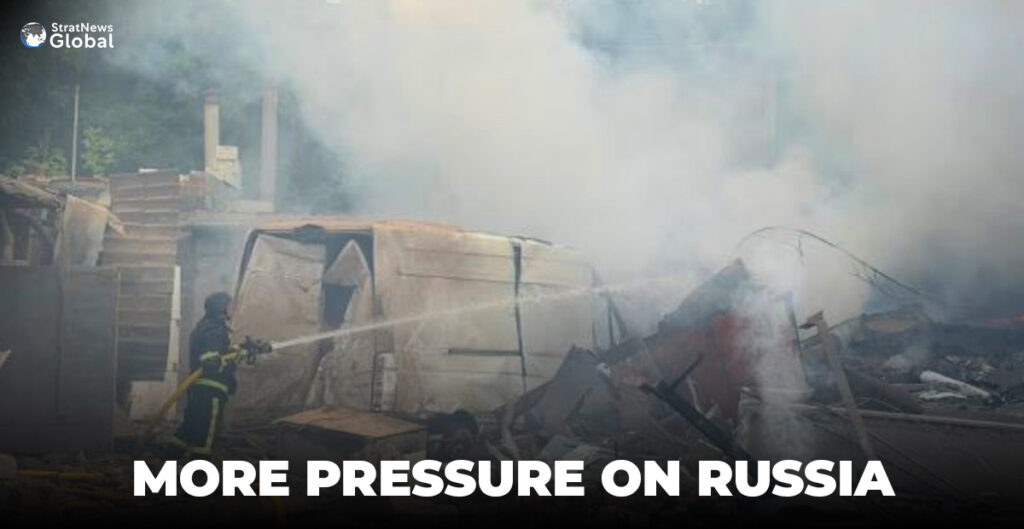
Ukraine: Zelenskyy Urges Allies To Step Up Pressure On Russia After Fresh Airstrikes
Ukrainian President Volodymyr Zelenskyy is set to press European partners for tougher action against Moscow during visits to Denmark and France on Wednesday. His push comes in the wake of a massive Russian air assault that struck Ukraine’s energy grid and transport network.
Russia launched more than 500 drones and dozens of missiles, hitting infrastructure at 14 sites across the country and injuring four railway workers, Ukrainian regional and military officials said.
“These are clearly demonstrative Russian strikes. It is only due to the lack of sufficient pressure, primarily on Russia’s war economy, that this aggression continues,” Zelenskyy said on the Telegram app.
“We will be discussing the need for strong pressure measures with our partners in the coming days.”
Summit With EU And U.S. Allies
Zelenskyy said he would participate in a summit with Nordic and Baltic states on Wednesday and then planned to travel to France where he would meet EU and U.S. allies to discuss next steps in “the coalition of the willing” grouping countries that have promised to help Ukraine.
Amid an international push to broker an end to Russia’s three-and-a-half-year-old war, Kyiv wants security guarantees to deter any future Russian attacks.
NATO chief Mark Rutte said he expected clarity at Friday’s Paris meeting or soon afterward on what the coalition can deliver in terms of guarantees for Kyiv.
U.S. President Donald Trump has indicated the United States could back up any European peacekeeping plan, but would not deploy U.S. soldiers to Ukraine.
Russia has pushed back against any future Western peacekeeping troops in Ukraine.
Russian President Vladimir Putin attended a military parade in Beijing to mark the end of World War Two, at which Chinese President Xi Jinping warned that the world faced a choice between peace and war.
Air raid alerts sounded for hours across Ukraine, with explosions heard in nine of its 24 regions, from Kyiv to Lviv and Volyn in the west, Ukrainian officials and media said.
Ukraine’s air force said it downed 430 of 502 drones and 21 of 24 missiles launched by Russia overnight, adding that three missiles and 69 drones struck 14 locations.
‘Significant Disruptions’
Four railway workers in Ukraine’s central Kirovohrad region were in hospital after the Russian attack, the state-owned railway said on messaging app Telegram, flagging delays of up to 7 hours to scores of services following damaged facilities.
The railway workers were among five injured in the major rail hub of Znamianka, where 28 houses were also damaged, Ukraine’s emergency services said on Telegram.
In northern Chernihiv, the attack cut power to 30,000 consumers and damaged critical civilian infrastructure, Governor Viacheslav Chaus said.
Public transport in the western city of Khmelnytskyi faced “significant schedule disruptions” after the attack, its administration said on Telegram, with the regional governor flagging fires and damage to residential buildings among others.
Firefighters in the Ivano-Frankivsk region were battling flames that engulfed 9,000 sq m (10,800 sq yards) of storage facilities, emergency services said.
There was no immediate comment from Russia. Russia says it is justified attacking civil infrastructure in Ukraine to hinder Kyiv’s war effort, and denies intentionally harming civilians although it has killed thousands of them. Ukraine also strikes Russian infrastructure, though on a far smaller scale.
(With inputs from Reuters)
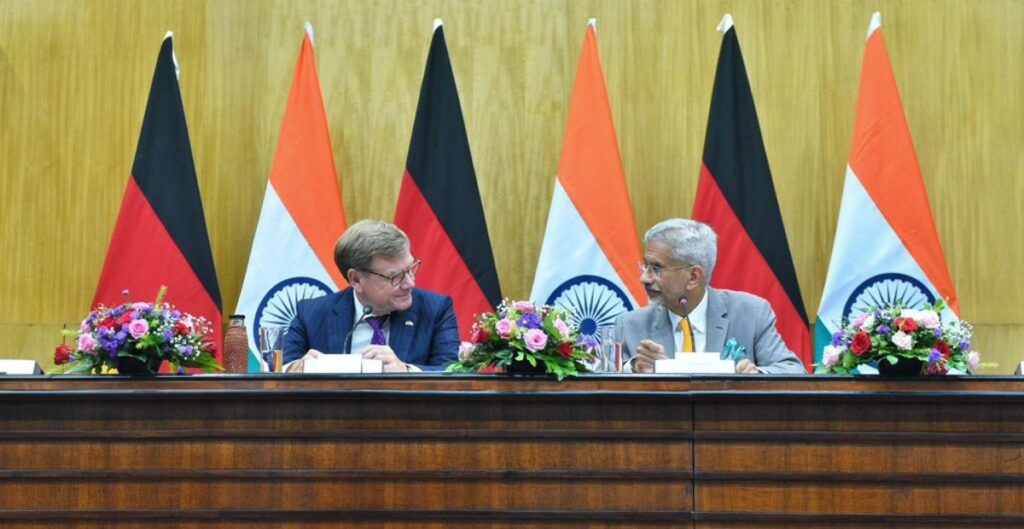
Amid Trump Tariffs, Germany Assures Push For Early India-EU Trade Deal
With Trump tariffs hitting exports, India is keen on an early trade deal with the European Union (EU). And it’s been assured of full help from Germany, Europe’s biggest economy. “We believe it is time for the India-EU FTA negotiations to move to a decisive conclusion,” Jaishankar stated, after holding talks with his German counterpart Johann Wadephul. “We appreciate Minister Wadephul’s assurance that Germany will bring its full weight behind the process.”
The next round of negotiations is expected soon. Both sides are reportedly working to resolve differences in market access, intellectual property and regulatory standards, particularly in agriculture, dairy and digital trade.
Jaishankar pointed to contemporary global challenges of economic volatility and political uncertainty. “We believe that a multipolar world with strategic autonomy can best respond through more intensive consultations and cooperation,” he told journalists in New Delhi.
Haling India-German relationship as very steady, Jaishankar called it a need in times of uncertainty. “It is a relationship where largely what we promise to each other and policies that we have remain constant and predictable. So predictability today has a huge premium in global politics.”
Technology And Trade
With about €50 billion of bilateral trade last year, India and Germany are keen on diversifying their economic partnership. Germany’s push to reduce dependence on China has opened doors for enhanced cooperation with India in critical technologies.
A major highlight from the talks was Germany’s growing interest in India’s semiconductor ecosystem. “Semiconductors are a future-critical sector, and we welcome Germany’s willingness to engage with India in this space,” Jaishankar said.
Wadephul, who visited Bengaluru ahead of the talks, praised India as a “technology powerhouse” and pointed to upcoming partnerships between German firms like Siemens and Indian research institutions. New academic and industrial collaborations, including prospective linkages with IIT Madras, are expected to form part of this new tech alliance.
Green Hydrogen
The two sides also discussed joint efforts on climate action, with focus on green hydrogen. “Germany’s expertise in clean energy and India’s renewable capacity create a natural synergy,” Jaishankar noted. “Green hydrogen cooperation is an area with real potential, and we look forward to developing concrete projects together.”
Security And Counter-Terrorism
Security cooperation also featured prominently in the talks, particularly in the context of Operation Sindoor, India’s strikes on terror targets in Pakistan. Germany’s open support for India’s right to defend itself against terrorism was acknowledged.
Germany had earlier condemned the April 2025 Pahalgam terror attack, which claimed 26 lives, and reaffirmed its commitment to global counter-terrorism frameworks.
“Germany’s strong and clear stance on terrorism aligns with our own zero-tolerance approach,” Jaishankar said.
Both leaders agreed that global terrorism remains a pressing threat and called for greater intelligence sharing, law enforcement cooperation, and multilateral action against state-sponsored extremism.
From Bilateral to Multilateral
The visit marks the first official trip to India by Johann Wadephul as German Foreign Minister, following Jaishankar’s visit to Berlin in May. The timing, coinciding with 25 years of Indo-German strategic partnership, was underscored by both ministers.
Wadephul brought along a high-level business delegation and members of the German Bundestag, reflecting Berlin’s political and commercial commitment to India as a strategic partner in the Indo-Pacific.
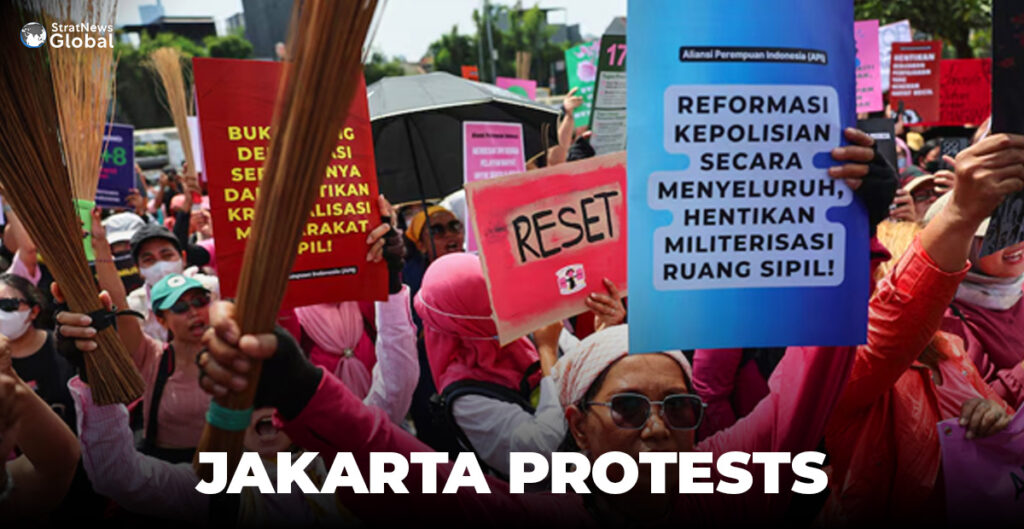
Hundreds Of Indonesian Women Join Jakarta Protests For Reform
Hundreds of women wearing pink gathered in Indonesia’s capital, Jakarta, on Wednesday to protest lawmakers’ perks and police brutality, waving brooms as symbols of reform, even as the president departed for China to attend a military parade.
The women carried signs with slogans such as “reform the police” and “your sweet promises cause diabetes,” as well as the brooms, which protest organiser The Alliance of Indonesian Women said symbolised a need to “sweep the state’s dirt … and the repressiveness of security forces.”
The protests that began in Jakarta last week have rocked the world’s third-largest democracy, with the demonstrations escalating nationwide after a police vehicle hit and killed a motorcycle taxi driver on Thursday night.
Rights groups say 10 people have died in the protests, which have also sparked some looting and rioting.
The Alliance, a coalition of women-led civil society groups, had called off a planned protest on Monday, citing the risk of a violent response by authorities.
“We want to show that protests are mostly peaceful,” said 30-year-old Rizky Ananda, who was demonstrating against violence against people, and women in particular, as well as wasteful government spending.
“If the government said protests were treasonous, it should be questionable.”
President’s China Trip
President Prabowo Subianto has said the military and police would stand firm against violence, and said on Sunday that some of the unrest bore the signs of terrorism and treason.
Prabowo was making a trip to China to attend a lavish military parade on Wednesday after initially cancelling due to the unrest, with his office saying that signs of normalcy returning in Indonesia were a factor in his decision to travel.
The National Commission on Human Rights was conducting an investigation into security forces’ handling of the protests, commissioner Anis Hidayah told journalists on Tuesday.
The United Nations’ rights office called on Monday for investigations into “all alleged violations of international human rights law, including with respect to use of force”.
(With inputs from Reuters)