

Support us by contributing to StratNewsGlobal on the following UPI ID
ultramodern@hdfcbank

Strategic affairs is our game, South Asia and beyond our playground. Put together by an experienced team led by Nitin A. Gokhale. Our focus is on strategic affairs, foreign policy and international relations, with higher quality reportage, analysis and commentary with new tie-ups across the South Asian region.
You can support our endeavours. Visit us at www.stratnewsglobal.com and follow us on YouTube, Twitter, Facebook and Instagram.
र 500 per month
र 1000 per month
र 5000 per year
र 10000 per year
Donate an amount of your choice
र 500 per month
Donate र 500 per month

र 1000 per month
Donate र 1000 per month
र 5000 per year
Donate र 5,000 per year
र 10000 per year
Donate र 10,000 per year
Donate an amount of your choice
Donate an amount of your choice
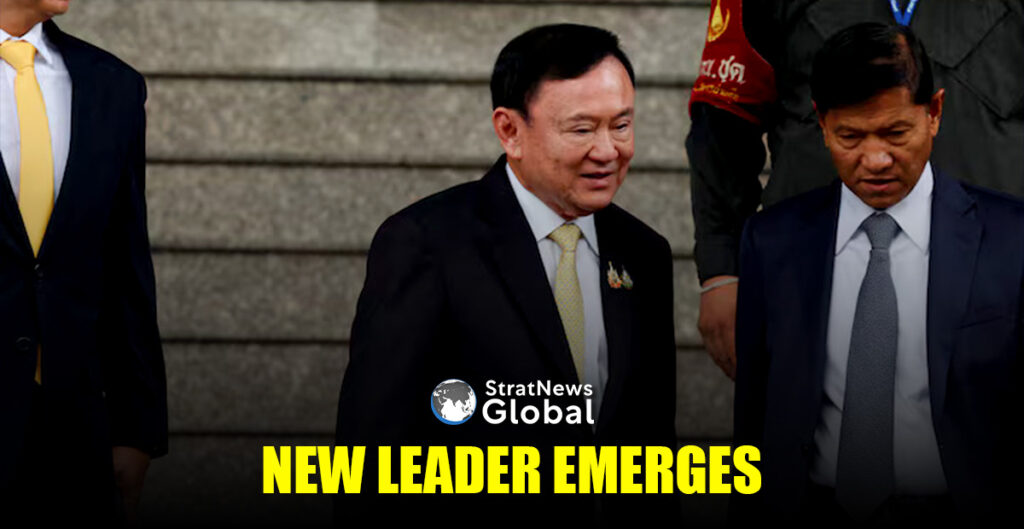




Thailand Set To Elect New PM As Thaksin Abruptly Leaves For Dubai
Thailand’s parliament was preparing to elect a new prime minister on Friday, following days of political turmoil, even as the sudden and dramatic exit of influential figure Thaksin Shinawatra threatened to overshadow the vote.
Polarising billionaire Thaksin, the central figure in a tumultuous two-decade battle for power in Thailand, left on his private jet for Dubai late on Thursday, with his family’s ruling party Pheu Thai in disarray.
Thaksin’s flight out of Thailand came only days ahead of a court ruling next week that could see him jailed.
A New Leader Emerges
The departure of Thaksin, the driving force behind Pheu Thai, came six days after a court sacked his daughter, Paetongtarn Shinawatra, as prime minister for an ethics violation, triggering a scramble for power and a bold offensive by a renegade party to form its own government.
Pheu Thai, the populist political juggernaut that won five of the past six elections, has fought desperately to thwart the challenge of former alliance partner Bhumjaithai, which has won the backing of the biggest force in parliament with a pledge to call a new election within four months.
The turmoil has put Bhumjaithai leader Anutin Charnvirakul in pole position ahead of Friday’s vote, where he needs the support of more than half of the lower house to become prime minister.
His coalition has 146 lawmakers and with the People’s Party opting to stay in the opposition but guaranteeing him its 143 votes, Anutin could comfortably pass the required threshold of 247 votes.
‘The Final Show’
After a failed attempt to dissolve the house to stymie Anutin, Pheu Thai made another last-ditch attempt to undermine his alliance on Thursday, announcing it would nominate 77-year-old former attorney-general Chaikasem Nitisiri to contest the prime ministerial vote, with a promise to call a snap election immediately if elected.
But with the sudden departure of 76-year-old power-broker Thaksin amid a crisis in his once-dominant party, the chances of political unknown Chaikasem succeeding look increasingly slim.
In an overnight post on X, Thaksin said he had arrived for a medical checkup in Dubai, where he spent most of his 15 years in self-imposed exile to avoid a jail term for abuse of power and conflicts of interest while he was prime minister from 2001-2006.
He said he would return by Monday.
Thaksin made a vaunted homecoming before cheering crowds in 2023 to serve his eight-year sentence, but on his first night in prison, he was transferred to the VIP wing of a hospital on medical grounds.
The tycoon had his sentence commuted to a year by the king and was released on parole after six months in detention. The Supreme Court will decide on Tuesday if his hospital stint counts as time served, if not, it could send him back to jail.
Wanwichit Boonprong, a political science lecturer at Rangsit University, said Anutin had outmanoeuvred Thaksin’s Pheu Thai by making a pact with the opposition.
“I’m quite confident that Anutin will be elected as the next prime minister,” he said.
“Pheu Thai’s tactics are like the final show,” he said. “Pheu Thai has completely closed the curtain.”
(With inputs from Reuters)
British-Born Italian Teen Set to Become First Millennial Catholic Saint On Sunday
A British-born Italian boy who passed away from leukaemia in 2006 will be canonised as the first millennial Catholic saint on Sunday, in a ceremony led by Pope Leo at St. Peter’s Square, drawing tens of thousands of worshippers.
Carlo Acutis, who died aged 15, learned computer code to build websites to spread his faith. His story has drawn wide attention from Catholic youth, and he will now be elevated to the same level as Mother Teresa and Francis of Assisi.
Sunday’s ceremony was originally set for April but was postponed after the death of Pope Francis. Leo, elected in May to replace Francis, will now preside at such an event for the first time.
Leo will also canonise Pier Giorgio Frassati, a young Italian man who was known for helping those in need and died of polio in the 1920s.
Acutis’ mother, Antonia Salzano, told Reuters earlier this year that the heart of her son’s appeal to Catholic youth was that he lived the same life as others who were teenagers in the 2000s.
“Carlo was an ordinary child like (others). He used to play, have friends, and go to school. But his extraordinary quality was the fact that he opened the door of his heart to Jesus and put Jesus in the first place in his life.”
“He used this skill to spread the good news, the Gospel,” she added. “He wanted to help people to have more faith, to understand that there is an afterlife, that we are (pilgrims) in this world.”
Sainthood
Being made a saint means the Church believes a person lived a holy life and is now in Heaven with God.
Other saints who died at a young age include Therese of Lisieux, who died at 24 in 1897 and was known for promoting a “Little Way” of charity; and Aloysius Gonzaga, who died at 23 in 1591 after caring for victims of an epidemic in Rome.
As Acutis progressed along the Church’s official path to sainthood, his body was moved to a church in the hill town of Assisi in central Italy, where St. Francis was from, in line with Acutis’ last wishes.
The new saint’s final resting place, where Acutis is entombed with a wax mould of his likeness placed over his body, wearing his track top, jeans and trainers, has become a popular devotional site, attracting thousands of worshippers every day.
(With inputs from Reuters)
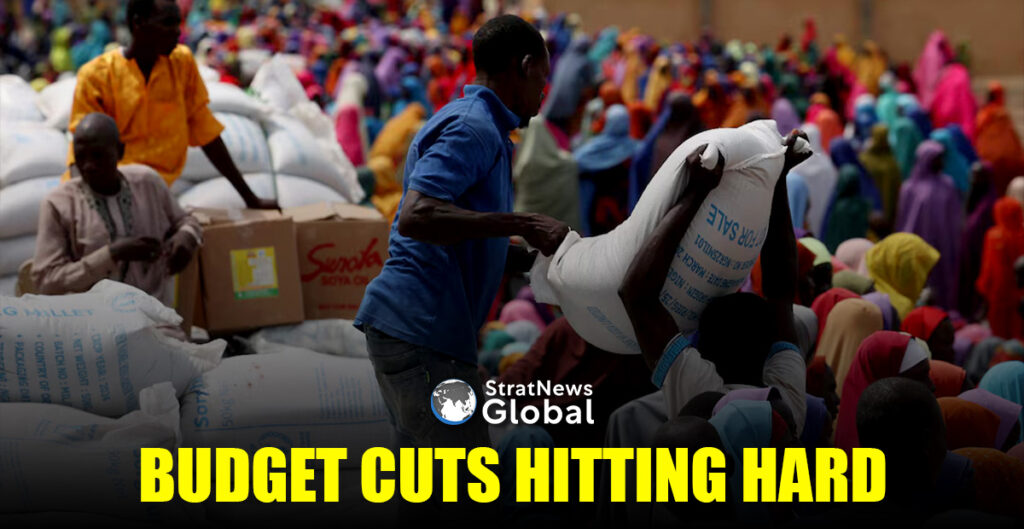
Nigeria Faces Hunger Spike After Funding Drops
In northeastern Nigeria, families displaced by conflict are struggling as nutrition centres shut down or face food shortages due to a sharp drop in aid funding from the United States and other Western nations.
Africa’s most populous nation has 31 million people facing food shortages, more than any other country, according to the UN. The worst crisis is in the northeast, where 2.3 million people have been forced from their homes and farmlands during 15 years of war between Islamist insurgents and the army.
No Guarantee
Hadiza Ibrahim has been displaced for 10 years. She and her husband and their eight children are sheltering at a camp in Dikwa, in Borno State, the centre of the conflict. They rely on a local nutrition centre where supplies are dwindling.
“I may not be able to eat tomorrow,” said Ibrahim as she lined up at the site to receive meagre rations.
Ali Abani, who oversees security at the site, said many beneficiaries who had received food for over a decade came this month and found there was nothing left for them.
Aid Budget Cuts
Until this year, the United States was providing 60% of funding for humanitarian operations in Nigeria. That came to an abrupt halt when President Donald Trump froze aid in January, saying other countries should step up.
But Britain, France and Germany, also important donors, have instead cut their own aid budgets and others have also announced cuts.
The results on the ground in Nigeria have been devastating. The UN World Food Programme (WFP) has closed 150 nutrition centres in the northeast during the lean season between harvests, which runs from June to November, while other aid agencies have shut altogether.
“It meant that hundreds of thousands of children stopped receiving essential treatment, and the number of children who needed hospitalisation skyrocketed,” said Chi Lael, the WFP spokesperson in Nigeria.
Turning Away Malnourished Children
At the Dikwa site, run by multiple agencies, Reuters reporters saw mothers and emaciated children lying on mats on the floor of a health centre because its 15 beds were occupied.
A health worker was feeding one of the children a packet of Ready-to-Use Therapeutic Food (RUTF), a highly nutritious paste typically made from peanuts, sugar, milk powder, oil, vitamins and minerals. But stocks were too low to treat all the children being brought to the centre.
“We’re turning away patients,” said Bukar Tijjani, a doctor with humanitarian group InterSOS.
The aid group Save the Children last week estimated that 3.5 million children across Nigeria required treatment for severe acute malnutrition, but said only 64% of the 629,000 cartons of RUTF needed to get through the lean season had been secured.
Unprecedented Severity
The WFP said the severity of the crisis facing children was unprecedented. Acutely malnourished children are far more likely to die from common infections than well-nourished children.
“We know that 600,000 children are at risk of mortality — a figure we’ve never experienced before,” said Lael.
The US embassy in Nigeria said on Wednesday the US government would contribute $32.5 million to the WFP to provide food assistance and nutrition support to internally displaced people in conflict-affected areas.
It did not say what had prompted the decision to provide the funds, a fraction of US contributions in previous years and of the overall amounts required.
The WFP did not immediately respond to a request for comment.
Revised Budget
The UN had initially budgeted $910 million to cover Nigeria’s humanitarian needs this year but, following the suspension of US aid, the figure was revised down to around $300 million as there was no realistic prospect of other donors making up for the shortfall.
Only about half of the lower figure had been raised by August, according to the UN Office for the Coordination of Humanitarian Affairs.
(With inputs from Reuters)
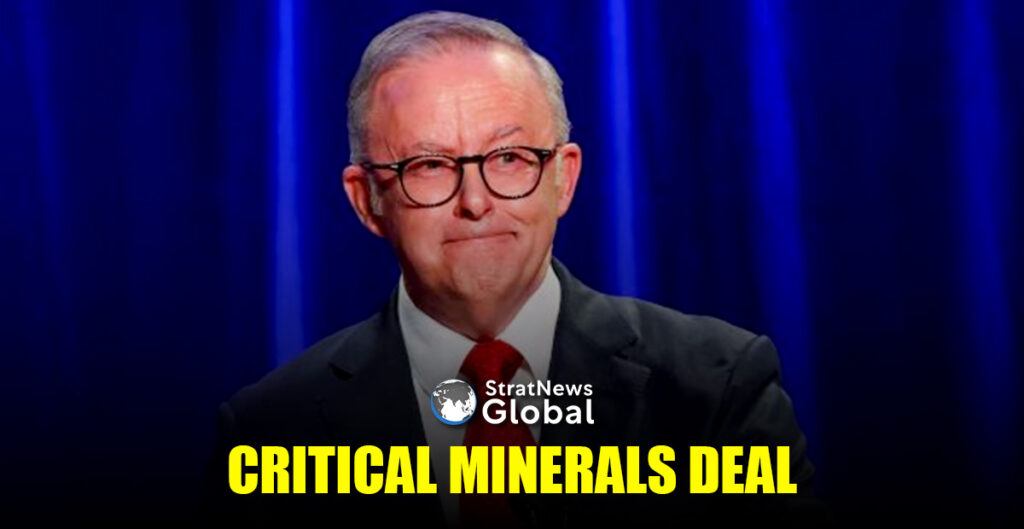
Albanese And Trump Discuss Cooperation On Critical Minerals And Security
Australian Prime Minister Anthony Albanese spoke with U.S. President Donald Trump on Thursday evening, his office said. The two leaders discussed opportunities for collaboration on critical minerals along with wider security cooperation.
The two leaders spoke about opportunities to work together on trade and critical minerals “in the interests of both nations,” a statement from Albanese’s office said.
They also discussed the importance of shared security interests, it added.
Albanese wrote on social media that it was a “warm and constructive conversation.”
Albanese, reelected as leader of the centre-left Labor government in a May national election, is yet to meet Trump, after a meeting scheduled on the sidelines of the G7 summit in Canada in June was cancelled when Trump left early.
Albanese is expected to travel to the United States in September to attend the United Nations General Assembly.
Australian officials had been seeking to schedule a meeting with Trump while Albanese is in the United States, although this was not mentioned in the readout of the call.
Key Ally
Deputy Prime Minister Richard Marles travelled to Washington last week and met with Vice President JD Vance, saying on Monday he expected a leaders meeting “in the not too distant future.”
The United States is Australia’s key security ally, while China is its largest trading partner.
The Trump administration has pressed Australia to lift defence spending from 2% to 3.5% of gross domestic product, as the Pentagon also conducts a review of the trilateral AUKUS nuclear submarine partnership.
In 2023, the United States, Australia, and Britain unveiled details of the plan to sell Australia U.S. nuclear-powered attack submarines from the early 2030s, and later build submarines, to counter China’s ambitions in the Indo-Pacific.
Albanese said in April that Australia, which has some of the world’s largest critical mineral deposits, would set up a strategic reserve as it looks to create a separate supply chain in a market dominated by China.
(With inputs from Reuters)
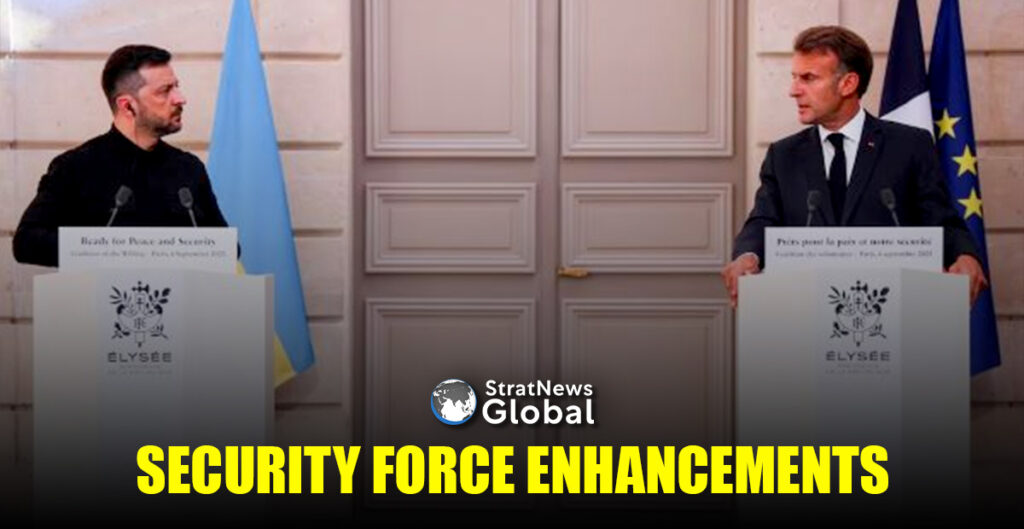
26 Nations Prepared To Join Security Force For Postwar Ukraine: Macron
French President Emmanuel Macron said on Thursday that twenty-six countries are prepared to contribute to an international force that would provide security guarantees for Ukraine once a peace agreement with Russia is reached. He made the remarks following a summit of Kyiv’s allies.
Macron said he, fellow European leaders and Ukrainian President Volodymyr Zelenskyy held a call with U.S. President Donald Trump after their summit and U.S. contributions to the guarantees would be finalised in the coming days.
The meeting of 35 leaders from the “coalition of the willing” – of mainly European countries – was intended to finalise security guarantees and ask Trump for the backing that Europeans say would be vital to make such guarantees viable.
Commitment From 26 Countries
“As a form of reassurance, 26 countries have committed to deploying troops to Ukraine, where they will be present on land, on sea or in the air,” Macron told reporters, standing alongside Zelenskyy at the Elysee Palace in Paris.
Macron said security guarantees would involve above all commitments to rebuild and bolster Ukraine’s armed forces.
Germany and other countries pledged they would be involved in that effort. But Berlin said it would only decide on a military commitment once conditions were clear, including the extent of U.S. involvement in security guarantees.
Macron did not say which countries had agreed to provide troops but France and Britain are among those that have indicated a willingness to take part in a force to reassure Kyiv and deter Russia from attacking Ukraine again.
On his call with the coalition leaders, Trump said Europe must stop purchasing Russian oil that he said is helping Moscow fund its war against Ukraine, a White House official said.
“The president also emphasized that European leaders must place economic pressure on China for funding Russia’s war efforts,” the official said.
Macron said the coalition and the United States had agreed to work more closely on future sanctions, notably on Russia’s oil and gas sector, and on China.
Months Of Talks
Members of the coalition have talked for months at various levels to define their prospective military support for Ukraine if and when there is a final truce – still a remote prospect.
But coalition governments have said any European military role would need its own U.S. security guarantees as a “backstop”. Trump has made no explicit commitment to go that far.
His special envoy Steve Witkoff met French, British, German, Italian and Ukrainian senior diplomats ahead of the summit, before briefly attending the opening session.
Two European officials said the coalition also wanted to highlight a lack of progress toward direct peace talks between Russian President Vladimir Putin and Zelenskyy since Trump hosted Putin in August, and prod Trump to raise pressure on Moscow now.
Having rolled out the red carpet in Alaska, Trump on Wednesday accused Putin of conspiring with China and North Korea after the three countries’ leaders staged a show of unity in Beijing at a lavish commemoration of the end of World War Two.
Putin told Kyiv on Wednesday there was a chance to end the war in Ukraine via negotiations “if common sense prevails”, an option he said he preferred, although he was ready to end it by force if that was the only way.
Putin also ruled out the deployment of troops from NATO nations to Ukraine as part of a peace settlement. But NATO Secretary General Mark Rutte dismissed his objections.
“Why are we interested in what Russia thinks about troops in Ukraine? It’s a sovereign country,” he said at a conference in Prague before joining the Paris summit by video link.
“Russia has nothing to do with this,” he said. “I think we really have to stop making Putin too powerful.”
(With inputs from Reuters)
Trump Admin Faces Lawsuit On National Guard Deployment In Washington DC
On Thursday, Washington, DC, filed a lawsuit against US President Donald Trump’s administration over the deployment of National Guard troops in the capital, further straining ties between the Republican president and the city’s Democratic leadership.
The lawsuit, filed in federal court by DC Attorney General Brian Schwalb, seeks a court order blocking the deployment of troops on the grounds it is unconstitutional and violates multiple federal laws.
The litigation could also lead to another judicial rebuke of Trump’s attempt to broaden the role of the military on US soil, following a ruling this week that his use of troops to fight crime in California was unlawful.
‘It Must End’
“Armed soldiers should not be policing American citizens on American soil,” Schwalb said in an X post.
“The forced military occupation of the District of Columbia violates our local autonomy and basic freedoms. It must end.”
White House Slams Lawsuit
Trump last month deployed National Guard troops to Washington, saying they would “re-establish law, order, and public safety.” Trump also placed the capital district’s Metropolitan Police Department under direct federal control.
White House spokeswoman Abigail Jackson said the president was within his lawful authority to deploy troops to protect federal assets and assist law enforcement.
“This lawsuit is nothing more than another attempt – at the detriment of DC residents and visitors – to undermine the President’s highly successful operations to stop violent crime in DC,” Jackson said in a statement.
Setback In California
In June, Trump put California’s National Guard under federal control and deployed them to Los Angeles over the objections of the state’s governor, Gavin Newsom.
A California federal judge ruled on September 2 that using troops to protect federal agents on immigration and drug operations was illegal.
Expanding Powers And Criticisms
Trump has been threatening to expand his federal crackdown on Democratic-led cities to Chicago, casting the use of presidential power as an urgent effort to tackle crime even as city officials cite declines in homicides, gun violence and burglaries.
The president’s critics say his actions are a dangerous expansion of executive authority that could spark tensions between the military and ordinary citizens.
Thursday’s lawsuit alleged that deployment of National Guard units to police Washington’s streets without Mayor Muriel Bowser’s consent violates the Home Rule Act, a federal law that established local self-governance for the capital district.
The lawsuit also alleged that National Guard troops deployed to Washington are subject to the Posse Comitatus Act, a federal law that sharply limits the use of the military for domestic enforcement.
(With inputs from Reuters)
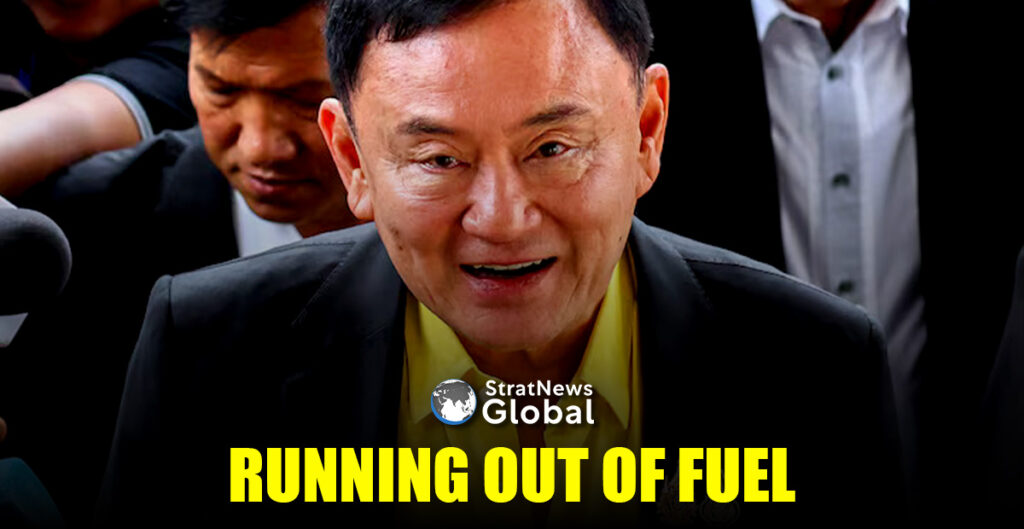
Thailand: Populist Playbook Fails Thaksin As Legal Troubles, Party Infighting Mount
When Sakda Vicheansil, a lawmaker from western Thailand, announced his resignation from the ruling Pheu Thai party in early September, his words reflected the extraordinary decline of the country’s most dominant politician, Thaksin Shinawatra.
“Thai people across the country, and especially in my constituency – Kanchanaburi, Constituency 4 – are suffering,” he said on Facebook. “The government has completely failed to resolve their problems.”
Running Out Of Fuel
Former premier Thaksin, 76, has run a populist vote-winning machine in Southeast Asia’s second-largest economy for a quarter century but his grip on electoral politics has finally slipped, analysts said.
Outmanoeuvred by a smaller former coalition partner, and with a daughter sacked as prime minister and his once dominant party desperately asking the king to endorse a snap election that it would struggle to win, the billionaire Thaksin is on the ropes.
Late on Thursday, a day before a parliamentary vote to pick the next premier, Thaksin – who has previously fled into exile – flew out of Thailand on a private jet, without making any public comment and fueling speculation about his intentions.
A Pheu Thai spokesperson declined to comment on his movements.
‘Politically Spent’
“For all intents and purposes, the Shinawatra family is politically spent,” said Thitinan Pongsudhirak, a political scientist at Bangkok’s Chulalongkorn University.
Six premiers, either from the family or backed by it, have been pushed out of power by court decisions or military coups – the latest being Thaksin’s daughter Paetongtarn Shinawatra who was dismissed by the Constitutional Court on Friday.
Paetongtarn’s exit, stemming from a betrayal by long-time family ally and former Cambodian leader Hun Sen who leaked a call with her in the run-up to a deadly border conflict between the neighbours, has triggered a flurry of deal-making.
New Alliance
Bhumjaithai, a coalition partner that walked out after the leak, said it would form the next government with the support of the parliament’s largest grouping, the opposition People’s Party.
To counter, Pheu Thai on Thursday announced it would dissolve parliament if its prime ministerial candidate wins a vote scheduled for Friday, leading to a general election.
In either scenario, Thaksin faces a struggle to retain his once-outsized influence, which has won parties backed by him every election since 2001 – until the last one in 2023 when a coalition deal eventually landed his daughter in the prime minister’s office.
Legal Threat
Paetongtarn’s popularity – a proxy for Pheu Thai’s standing – has plummeted, from 31.35% of respondents backing her last September to just 9.2% by June, nationwide surveys show.
Thaksin himself faces another legal threat. On Tuesday, the Supreme Court will rule on the legitimacy of his prolonged hospital stay in lieu of prison, following his return to Thailand in 2023, which could potentially result in jail time.
“Pheu Thai is actually losing everything at the moment,” said Titipol Phakdeewanich, a political analyst from Ubon Ratchathani University.
“And if next week the court rules against Thaksin, it would be a big disaster for the Shinawatras.”
Populist Juggernaut
A former policeman with roots in Thailand’s north who made billions in the telecoms sector, Thaksin pivoted to politics in the mid-1990s, initially serving as foreign minister and then deputy prime minister.
The Thai Rak Thai party, founded by him, brought Thaksin to power in 2001, when he unleashed big spending on healthcare, rural development and farming subsidies, laying the foundations of his enduring popularity in the agrarian heartland.
His rise also brought him into conflict with the conservative-royalist elite, who saw him as a crony capitalist plundering the economy, creating conditions for a military coup that ousted him in 2006.
Thaksin-backed parties continue to win elections after the coup, while a segment of his supporters formed the “Red Shirt” populist movement that celebrated the former premier, challenging the conservative establishment for almost a decade through street protests and other activism.
From self-exile, Thaksin fronted his sister, Yingluck Shinawatra, who swept the general elections in 2011 and sought to replicate his populist policies. Conservatives closed ranks again to push her out three years later.
It was Thaksin’s daughter who took over the mantle in 2023, leading a campaign laden with nostalgia of previous Shinawatra administrations, as her father manoeuvred an unexpected homecoming that analysts posited was made possible with a deal with his conservative rivals.
“This led to many former supporters seeing Thaksin now as a member of the elite,” said Suranand Vejjajiva, former secretary-general to the prime minister during Yingluck’s term.
“Therefore, his base has become smaller.”
‘Not Working Anymore’
Once in power, even as Thaksin won a royal amnesty and appeared to exercise backroom influence, Pheu Thai struggled to deliver on its poll promises, including its flagship cash handout programme, which has drawn criticism from its own lawmakers.
“They just rely on a populist platform that is not working anymore in Thai politics,” said Titipol.
At least three lawmakers who have broken rank with Pheu Thai in recent weeks underlined its handling of the economy as a key reason.
“The people who elected me had placed their hopes in the government I belonged to,” Sakda wrote, listing out lower rice, corn, cassava and beef prices.
(With inputs from Reuters)
US Pledges Continued Military Action Against Latin American Cartels
Senior U.S. national security officials announced on Wednesday that military operations against cartels will continue, signalling a sustained campaign in Latin America despite unanswered questions about a deadly strike on a Venezuelan vessel.
The U.S. military killed 11 people on Tuesday in a strike on a vessel from Venezuela allegedly carrying illegal narcotics, in the first known operation since President Donald Trump’s recent deployment of warships to the southern Caribbean.
Little is known about the strike, including what legal justification was used or what drugs were on board, but U.S. Defence Secretary Pete Hegseth said operations would continue.
“We’ve got assets in the air, assets in the water, assets on ships, because this is a deadly serious mission for us, and it won’t stop with just this strike,” Hegseth said on FOX & Friends.
“Anyone else trafficking in those waters who we know is a designated narco terrorist will face the same fate,” Hegseth said.
He declined to provide details on how the operation was carried out, saying they were classified. It is unknown whether the vessel was destroyed using a drone, torpedo, or by some other means.
Secretary of State Marco Rubio, speaking in Mexico City, said similar strikes will happen again.
“Maybe it’s happening right now, I don’t know, but the point is the president of the United States is going to wage war on narco terrorist organisations,” Rubio said.
Trump said on Tuesday, without providing evidence, that the U.S. military had identified the crew of the vessel as members of the Venezuelan gang Tren de Aragua, which Washington designated a terrorist group in February.
On Wednesday, he told reporters in the Oval Office that “massive amounts of drugs” were found on the boat.
“We have tapes of them speaking,” said Trump. “It was massive amounts of drugs coming into our country to kill a lot of people. And everybody fully understands that. In fact, you see it, you see the bags of drugs all over the boat,” Trump said.
The Pentagon has not released specifics about the crew nor why it chose to kill those on board.
Presidents of both major U.S. parties have in the past asserted the authority to use the military for limited strikes when there is a threat to the United States, as Trump did in June when he ordered an attack on Iran.
Rubio said that “a boat full of cocaine or fentanyl” was an immediate threat to the United States, adding that Trump had the right to “eliminate (it) under exigent circumstances.”
Mary Ellen O’Connell, an expert on international law and the use of force at the University of Notre Dame, said Tuesday’s operation “violated fundamental principles of international law.”
“The alleged fact that the attack was on the high seas is irrelevant. What is relevant is that the U.S. had no right to intentionally kill these suspects,” she said.
Maduro ‘Should Be Worried’
The decision to blow up a suspected drug vessel passing through the Caribbean, instead of seizing the vessel and apprehending its crew, is highly unusual and evokes memories of the U.S. fight against militant groups such as al Qaeda.
The United States has deployed warships in the southern Caribbean in recent weeks, with the aim of following through on a pledge by Trump to crack down on drug cartels.
Seven U.S. warships and one nuclear-powered fast attack submarine are either in the region or expected to be there soon, carrying more than 4,500 sailors and Marines. U.S. Marines and sailors from the 22nd Marine Expeditionary Unit have been carrying out amphibious training and flight operations in southern Puerto Rico.
Asked about Venezuela’s close relationship with China, Hegseth took aim at Venezuelan President Nicolas Maduro.
“The only person that should be worried is Nicolas Maduro, who is … effectively a kingpin of a drug narco state,” Hegseth said.
The Trump administration last month doubled the reward for information leading to the arrest of Maduro to $50 million, accusing him of links to drug trafficking and criminal groups.
Venezuelan officials have said the Caribbean buildup is meant to justify an intervention against them, with Maduro accusing Trump of seeking “regime change.”
In an interview with Fox Noticias on Wednesday, Venezuelan opposition leader Maria Corina Machado supported the U.S. strike, saying the operation was “aimed at saving lives” in Venezuela and the United States.
“We have to be grateful that the president of the United States, Donald Trump, and his administration recognise and act toward Maduro as what he is: the head of a narco-terrorist regime that has been responsible for destroying our country, destabilising the region, and becoming a real threat to the security of the United States,” Machado said. She was barred from running in the 2024 presidential election but is the country’s most popular opposition figure.
Authorities in the South American country, who say Tren de Aragua is no longer active there after being dismantled during a prison raid in 2023, suggested on Tuesday that footage shared by Trump of a speedboat at sea exploding and then burning was created with artificial intelligence.
Reuters conducted initial checks on the video, including a review of its visual elements using a manipulation detection tool that did not show evidence of manipulation. However, thorough verification is an ongoing process, and Reuters will continue to review the footage as more information becomes available.
The strike drew scepticism from some within the Venezuelan opposition.
“How did they know there were 11 people? Did they count them? How did they know they were Venezuelan? Were their ID cards floating on the sea afterwards?” former opposition presidential candidate Henrique Capriles said to Reuters.
(With inputs from Reuters)
Coalition Politics, Policy Delays Cloud Merz’s Growth Agenda In Germany
Riding on a massive 500-billion euro spending push and a set of key reforms, German Chancellor Friedrich Merz assumed office in May with a bold promise — to succeed where his predecessors fell short: reigniting growth in Europe’s largest economy.
But while it was clear that the spending would take time to benefit the economy, there is a growing sense among economists, investors and business groups that the promised reforms are slower and less far-reaching than initially expected.
Voters Unhappy
“If the government wants to increase the underlying potential growth rate durably and notably, it needs to implement much more ambitious structural reforms,” said Salomon Fiedler, economist at Berenberg, citing the need to address issues such as an inefficient energy sector, high taxes and regulation.
Ordinary voters are unhappy too: A Forsa poll showed last week that 61% of Germans expect economic conditions in Germany to deteriorate in the coming years, up from 50% in May.
Failure to deliver on economic pledges could deepen public frustration and feed perceptions of ineffectiveness — creating fertile ground for the far-right AfD party, which has begun to top some national polls.
The reform urgency was underlined in August as German unemployment hit three million for the first time in a decade.
Coalition A Hurdle?
One reason for the limited progress may be the reality of coalition. While arch-conservative Merz has long-championed a pro-business agenda, his partners the centre-left Social Democrats (SPD) are more hesitant about reforms that could weaken workers’ rights.
Critics say SPD Labour Minister Baerbel Bas’ launch of a commission to propose changes to jobless benefits and work incentives by year-end – to be followed by months of parliament debates – is just too slow.
“The government must not hide behind commissions and keep postponing, dragging out and watering down necessary decisions,” said Rainer Dulger, head of the BDA employers’ association.
Alongside the headline-grabbing ‘fiscal bazooka’ to fund infrastructure spending, Merz’s coalition government promised lower energy prices, tax cuts for businesses and middle- and lower-income households, and scrapping a disputed law requiring businesses to do due diligence on their entire supply chain.
But delivery is falling short, fuelling impatience.
On Wednesday, the cabinet approved changes to the supply chain law – criticised as costly and bureaucratic – instead of scrapping it as pledged.
Similarly, budget constraints mean power-grid fees will be cut by less than promised, and the electricity tax will be lowered for specific sectors but not all consumers.
“By breaking its promise to cut electricity taxes for everyone, the German government is squandering the trust of retailers and consumers,” the HDE trade association said.
Hopes Up
Ironically, since the new government took office, one measure of German business sentiment has trended up, reaching a 15-month high in August although still well below its historical average.
Yet analysts point out it is being buoyed by the component of the index built around hopes for the future, while the reading on current conditions actually worsened.
“This fits with the view that it will take some more time for the economic rebound to get under way,” said Berenberg’s Fiedler, noting that new government spending will not get going before the end of this year and then ramp up from 2026.
Overwhelming Negative Review
Economists welcome the 500-billion-euro infrastructure fund and an “investment booster” approved in June – a package of measures such as better depreciation options for companies – plus extra defence spending and a planned cut in corporation tax.
But overall, only a quarter of 170 economists surveyed by Ifo gave the government’s economic measures a positive rating, with 42% of them outright negative, criticising the lack of a plan to address deep-rooted issues like rising pension costs.
A summer run of weak data has given a sobering view of the government’s progress. The economy contracted in the second quarter, further dimming expectations of a sustained recovery, and exporters must now face the impact of new US tariffs.
Industrial output fell in June to its lowest since 2020 amid weak foreign demand and rising Chinese competition. An EY study shows Germany has lost 245,500 industrial jobs since 2019.
German investor morale also fell more than expected in August, amid widespread disappointment with the European Union-US trade deal.
Not All Doomed
The fact that Merz’s coalition has at least been able to pass budgets for this year and next is a sign that his conservatives can work with the Social Democrats to get policies over the line, said Franziska Palmas, senior Europe economist at Capital Economics.
“But it still remains to be seen whether quick reform will be a priority in practice,” she said.
A string of rows on other issues ranging from tax and welfare reform to reinstating mandatory military service has convinced some that Merz, like his predecessor Olaf Scholz, will struggle to produce substantial reforms.
“While Chancellor Friedrich Merz has announced ‘an autumn of reform’, I suspect that ideological differences will continue to limit coalition cohesion and meaningful reform,” said Mujtaba Rahman, managing director for Europe at Eurasia Group.
(With inputs from Reuters)
Israeli Bombardments Force More Palestinians To Flee Gaza City
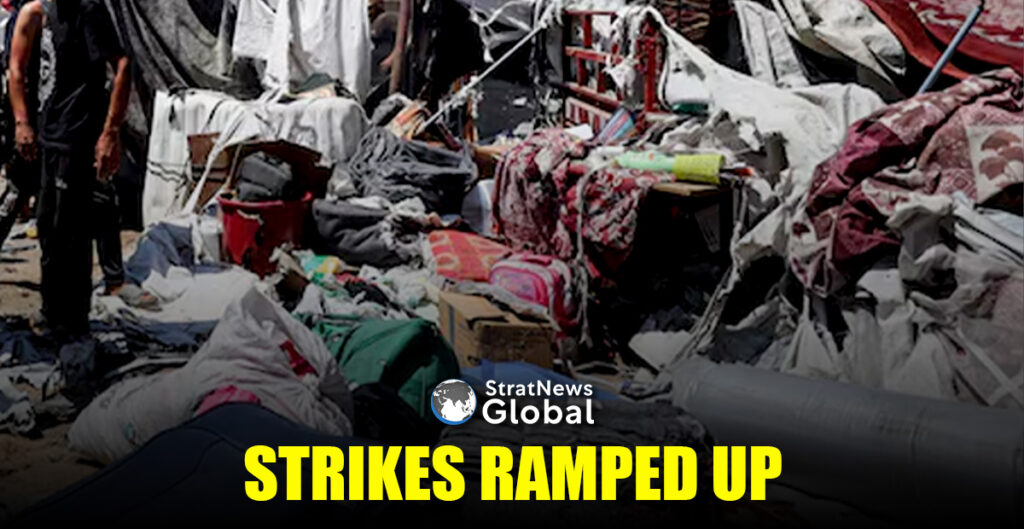
Israeli bombardment forced more Palestinians to flee their homes in Gaza City on Thursday, while thousands defied evacuation orders, staying amid the ruins in the path of Israel’s latest offensive.
Gaza health authorities said Israeli fire across the enclave had killed at least 28 people on Thursday, most of them in Gaza City, where Israeli forces have advanced through the outer suburbs and are now a few km (miles) from the city centre.
Gaza City Offensive
Israel launched the offensive in Gaza City on August 10, in what Prime Minister Benjamin Netanyahu says is a plan to defeat Hamas militants once and for all in the part of Gaza where Israeli troops fought most heavily in the war’s initial phase.
The campaign has prompted international criticism because of the dire humanitarian crisis in the area, and has provoked unusual expressions of concern within Israel, including accounts of tension over strategy between some military commanders and political leaders.
“This time, I am not leaving my house. I want to die here. It doesn’t matter if we move out or stay. Tens of thousands of those who left their homes were killed by Israel, too, so why bother?” Um Nader, a mother of five from Gaza City, told Reuters via text message.
Residents said Israel bombarded Gaza City’s Zeitoun, Sabra and Shejaia districts from ground and air. Tanks pushed into the eastern part of the Sheikh Radwan district northwest of the city centre, destroying houses and causing fires in tent encampments.
There was no immediate Israeli comment on those reports. The Israeli military has said it is operating on the outskirts of the city to dismantle militants’ tunnels and locate weapons.
Much of Gaza City was laid to waste in the war’s initial weeks in October-November 2023. About a million people lived there before the war, and hundreds of thousands are believed to have returned to live among the ruins, especially since Israel ordered people out of other areas and launched offensives elsewhere.
Israel, which has now told civilians to leave Gaza City again for their safety, says 70,000 have done so, heading south. Palestinian officials say less than half that number have left, and many thousands are still in the path of Israel’s advance.
‘Most Dangerous Displacement’
Displacement could further endanger those most vulnerable, including many children who are suffering from malnutrition, said Amjad al-Shawa, the head of the Palestinian NGOs Network, an umbrella group of Palestinian NGOs that coordinates with the UN and international humanitarian agencies.
“This is going to be the most dangerous displacement since the war started,” said Shawa. “People’s refusal to leave despite the bombardment and the killing is a sign that they have lost faith.”
Palestinian and UN officials say there is no safe place in Gaza, including areas Israel designates as humanitarian zones.
The war has caused a humanitarian crisis across the territory. Health officials in Gaza say 370 people, including 131 children, have so far died of malnutrition and starvation caused by acute food shortages, most in recent weeks. Israel says it is taking measures to improve the humanitarian conditions in Gaza, including increasing aid into the enclave.
The war began on October 7, 2023, when gunmen led by Hamas attacked southern Israel, killing some 1,200 people, most of them civilians, and taking 251 hostages into Gaza.
Israel’s offensive has since killed more than 63,000 Palestinians, most of them civilians, according to local health officials, and left much of the territory in ruins.
Prospects for a ceasefire and a deal to release the remaining 48 hostages, 20 of whom are thought to still be alive, appear dim.
Protests in Israel calling to end the war and reach a deal to release the hostages have intensified in the past few weeks.
(With inputs from Reuters)