

Support us by contributing to StratNewsGlobal on the following UPI ID
ultramodern@hdfcbank

Strategic affairs is our game, South Asia and beyond our playground. Put together by an experienced team led by Nitin A. Gokhale. Our focus is on strategic affairs, foreign policy and international relations, with higher quality reportage, analysis and commentary with new tie-ups across the South Asian region.
You can support our endeavours. Visit us at www.stratnewsglobal.com and follow us on YouTube, Twitter, Facebook and Instagram.
र 500 per month
र 1000 per month
र 5000 per year
र 10000 per year
Donate an amount of your choice
र 500 per month
Donate र 500 per month

र 1000 per month
Donate र 1000 per month
र 5000 per year
Donate र 5,000 per year
र 10000 per year
Donate र 10,000 per year
Donate an amount of your choice
Donate an amount of your choice


Theatre Commands For India Need Different Approach: Former NSCS Director
Prime Minister Narendra Modi had stated in Parliament last year that plans to create theatre commands in the Indian armed forces were ‘progressing’ well. A year before that Parliament had passed the Inter-Services Organization (Command, Control and Discipline Act 2023, which gives commanders of tri-service units the legal framework, to exercise disciplinary authority over all personnel working under them. However, more recently, Air Chief A.P. Singh cautioned against rushing the implementation of theatre commands and advocated the way ahead with creation of a joint planning and coordination centre in Delhi as the first step towards establishing synergy amongst the services. His suggestion is to test the waters before putting in place the theatre commands.
Technically, the suggestion made was not incorrect as is obvious. However, it also reflects the deep insecurities that are inherent to accepting change of this magnitude and order and therefore, it is argued that India must have in place theatre commands in place sooner than later. The core message that needs to go out from the government of India is evolution time has taken long enough, it is time to put things in place.
The significance of Chief of Air Staff A.P. Singh’s remarks becomes apparent because of the occasion and venue. They were made at the first tri-services seminar “Ran Samvad” organised by IDS HQ and the Centre for Joint Warfare Studies, and conducted at Army War College (August 26-27). The Chief of Air Staff cautioned against implementing models existing in other countries and proposed a gradual process to be followed in actual implementation. Navy Chief Admiral D.K. Tripathi chose the occasion to state that Navy was ready to meet the goals of theaterisation within the given framework. Gen. Anil Chauhan, the Chief of Defence Staff (CDS) in his concluding remarks observed: “So, if you have sensed some kind of dissonance, let me assure you that we will resolve it in the best interest of the nation.” Coming from the man appointed to implement the theatre commands in the armed forces, it speaks volumes of the difficulties and challenges. It is, therefore, useful to recap some of the steps already taken by the government and armed forces in the direction of setting up theatre commands.
The appointment of the Chief of Defence Staff was by itself a step in that direction; actually IDS HQ creation in 2001 was the first shot. With Kargil War and recommendations of the Group of Ministers, the obvious conclusion was for greater integration and jointness. At this time, the Andaman & Nicobar Command was also created as an integrated tri-services command to safeguard India’s interests in Southeast Asia and most importantly, the Strait of Malacca. Two years later, the Strategic Forces Command came into being. Since then there was a hiatus till the creation of the post of CDS in 2019.
The experience of joint commands operating in a particular geography, like the Andaman & Nicobar Command or focused on a specific mission, like the Strategic Forces Command, are already in existence and provide Indian examples of joint command and control. There are many global models existing whose best practices are easy to adopt and implement. That, however, is not the issue. While the Andaman Command is only a tri-services integrated command, earlier under the Chief of Integrated Staff at the IDS HQ and now under the CDS, the SFC operates under the Nuclear Command Authority. The CDS is the Military Adviser to the NCA. The commander-in-chief of SFC reports to the CDS. Meanwhile, the armed forces have established under CDS, the Defence Cyber Agency and Space Agency. Thus, more functional agencies and organisations are being put into place, with a view to enhancing cohesion among the three services.
The next and more recent change introduced this year has been to create joint doctrines for cyberspace, amphibious, special forces and airborne operations. In July last year, the defence ministry even identified the HQ for the three proposed commands. Pakistan would be dealt with from Jaipur by the Western Theatre Command. China would be dealt with by the Northern Theatre Command HQ in Lucknow and the Maritime Theatre Command operating from Thiruvananthapuram would look at maritime security across the region. This broad delineation of responsibility is only the tip of the iceberg. After all, the devil lies in the detail. Each theatre will require assets, logistics and the HQ to be co-located, otherwise operations would be difficult.
The CDS clarified in May 2025 that the proposed theatre commands would focus only on operational aspects, while the service chiefs would focus on “raise, train and sustain”. Empowering the CDS to issue orders to the three services (June 2025) was an essential step in giving effect to the actual process of theatres. However, the issue of single service identity and role of the service chiefs still remain an issue of contention. Theatre commands will operate directly under the CDS. Thus, the service chiefs remain as administrative heads of the individual services?
Theatre commands in India will require a different mindset and approach. Perhaps as a test case, a single theatre command for China could be created, with two sub-theatres, one in J&K and responsible for the area up to the western border with Nepal. The other part would be responsible for the eastern border with Nepal to Myanmar. This is a rough sketch. As done with the order giving CDS control and authority over the personnel for all services through Parliament, it may be prudent to create a pilot command via the same parliamentary route. This is suggested that in military terms, the real and larger threat to India is China today. This is also likely to be the case in the foreseeable future, notwithstanding the recent bonhomie witnessed between India and China at the SCO Summit in Tianjin.
The important question is where does the Maritime Theatre Command fit into this? The logic of theatre commands is to have integrated assets available on call by the CDS when required. A separate Maritime Theatre Command effectively means that the Indian Navy will be left on its own. Surely, Army units would be attached to this command for out of area operations but questions remain. For example, if the Maritime Theatre Command is to operate against China in conjunction with Northern Command, what happens? Ideally, the A&N Command should be merged with Northern Theatre Command to deal with China and not be part of the Maritime Theatre Command. This is a radical proposal, likely to be questioned. The Maritime Theatre Command should be renamed as Southern Theatre Command to deal with all situations including maritime crisis, out of area contingencies and coastal security. This is the forte of the amphibious forces that India has and more that could be formed for future conflicts and crisis situations.
It is easy to argue that military assets will be allotted as and when required to confront the adversary, and in any theatre. That, fortunately, is already happening. That is why Operation Sindoor was executed so successfully.
From the remarks of the Air Chief A.P. Singh it appears that the Army and Air Force continue to operate on their own, but with central direction on the goal to be achieved towards Pakistan. Additionally, the import of A.P. Singh’s remarks appears to highlight the uniqueness of air power in battle. While this is true to an extent, modern warfare, given the heavy weight of technology, has to be fought in an integrated manner. As an illustration, the success of the air defence systems with the air force and army during Operation Sindoor were driven by technology. Therefore, doesn’t it make sense to operate jointly?
Note that rapid response requires joint training and awareness of the operating systems of the other services. Without that knowledge, joint operations would be futile. Joint command and control and joint operations are the main things to be implemented. Doctrines are fine but they deal with theory; the actual issue is acting together.
The available information on theatre commands suggests a gradual step-by-step approach to the issue, rather than forcing the matter. This approach gives the services time to think through the process of integration while maintaining their individual identity. It is important to first understand the concept and then perform the integration. That is why CDS Gen. Anil Chauhan has chosen to take the road of achieving gradual jointness. Taking off from the ground work done by Gen. Bipin Rawat, the incumbent CDS has worked towards getting the three services to agree on the basic principles. However, differences still persist but that should not forestall progress towards the ultimate goal. India may not be able to achieve theatre commands like China has done in the recent past, but recognition of the fact that it is imperative is sufficient at this stage.
The government could have taken the American route to get Parliament to pass something like the Goldwater-Nichols Act, 1986 to achieve jointness as was done in the US. While this option still remains open, the bottom line appears to be to gain consensus prior to achieving jointness. The question of course, does arise as to how long does the government want to wait? Is full consensus the answer? It is unlikely that India will ever manage to attain such a consensus. The action taken so far suggests forward movement irrespective of consensus, and given time, it is hoped that all stakeholders will come on board. The long-view is that of the imperative need for integrated command and control and operations. Achievement of that goal in the shortest time is possible only with the setting up of theatre commands. The process is certainly underway in India; the question is when will it be actually achieved?
(The author is former Director, National Security Council Secretariat. Views expressed in this article are personal)
Norway Votes In Close Parliamentary Race Amid Geopolitical Tensions
Voters in Norway will cast their ballots on Sunday and Monday in a tightly contested parliamentary election. The race pits a left-wing alliance led by the ruling Labour Party against a right-wing bloc dominated by the Conservatives and the anti-immigration Progress Party.
Centre-left parties – Labour, the Socialist Left, the Communists, the Centre Party and the Greens – are currently seen winning 87 seats, just two more than needed to secure a majority, according to an average of polls conducted this month by pollofpolls.no.
Key issues in the election campaign have included the cost of living, taxation and public services, and the outcome could have an impact on energy and power supplies to Europe and the management of Norway’s $2 trillion sovereign wealth fund.
Geopolitics Loom Large
But geopolitics has also loomed unusually large with voters this time round, and analysts said this could benefit Labour and its leader, Prime Minister Jonas Gahr Stoere, a former foreign minister who presents himself as a safe pair of hands.
“The Labour Party is really benefiting from a rally-around-the-government effect, given the sort of unstable international situation, and also has a good reputation for taking care of Norway’s economy,” Johannes Bergh, head of the national election studies programme at the Oslo-based Institute for Social Research, told Reuters.
The return to power of U.S. President Donald Trump and Russia’s war in Ukraine have been particular sources of anxiety in Norway, a nation of 5.6 million people with an export-oriented economy and a shared border with Russia in the Arctic.
Some 59% of Norwegians believe a new armed conflict in Europe is likely within the next decade, up from 55% last year, according to a survey by the Peace Research Institute Oslo.
Labour has also been boosted by Stoere’s decision to bring back former NATO chief Jens Stoltenberg as finance minister in February – a move dubbed “Stoltenback” in Norwegian media. Stoltenberg, a friend and ally of Stoere, is arguably Norway’s most popular politician and a three-term prime minister.
Labour is seen winning some 26.5% of the vote, this month’s pollofpolls.no average showed, which would make it the biggest party.
Divided Right
In the right-wing camp, former prime minister Erna Solberg’s Conservatives have campaigned for public sector reform and scrapping Norway’s wealth tax, which they say unfairly targets business ownership.
But as in other Western countries, some voters are increasingly turning to more populist right-wing options. Sylvi Listhaug’s Progress Party is currently polling around 22% of the vote, comfortably ahead of the Conservatives on 14.5%.
“(Listhaug) has managed to identify what you may call the zeitgeist around public over-spending, and returned to more libertarian roots in the Progress Party, which has always been critical of public spending and in favour of lower taxes,” said Jonas Stein, an associate professor in political science at the University of Tromsoe.
Given how tight the electoral race is, the final outcome could well hinge on the performance of the five smaller parties – the Greens, the Socialist Left and the Communists on the left, and the Liberals and Christian Democrats on the right.
That could also mean greater influence for voters with specific concerns such as the war in Gaza or climate change.
In August, the Israeli investments of Norway’s sovereign wealth fund dominated campaigning, while one poll suggests the Greens have seen a recent surge in support to 7.1%.
“Just minor changes from now until election day can really determine the outcome of the election,” said Bergh.
(With inputs from Reuters)
Trump’s Personal Rapport With Modi ‘Gone Now’: Ex-US NSA Bolton
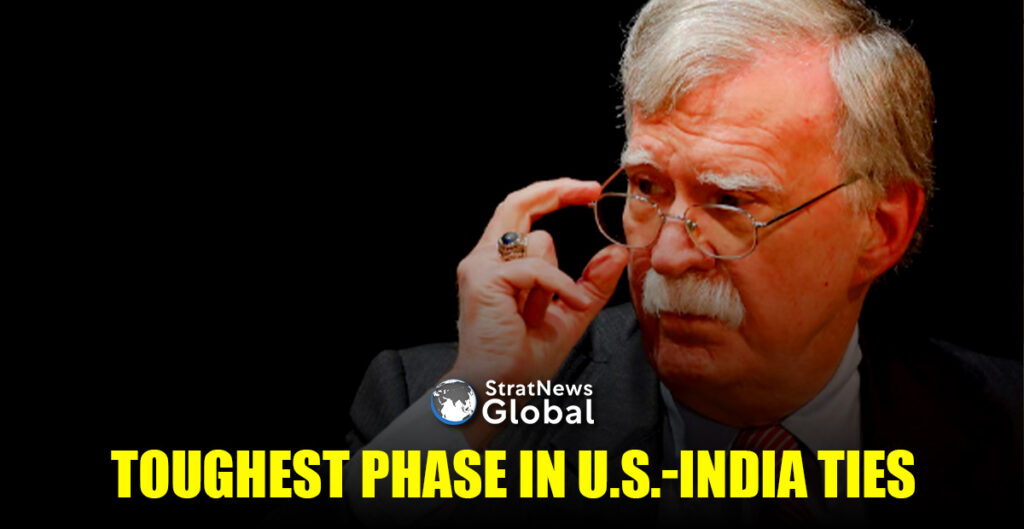
Former U.S. National Security Adviser John Bolton has claimed that while President Donald Trump once shared a very warm personal rapport with Prime Minister Narendra Modi, “that’s no longer the case,” adding that closeness with Trump never guarantees immunity from the “worst.”
Bolton’s assessment comes at a time many observers describe as the most difficult period in India-U.S. ties in more than twenty years, a downturn aggravated by Trump’s tariff-driven economic approach and the administration’s frequent criticism of New Delhi.
Speaking in an interview with the British media outlet LBC, Bolton argued that Trump tends to interpret global diplomacy primarily through the lens of his personal dealings with world leaders.
“If he believes he enjoys a positive relationship with Vladimir Putin, then he assumes Washington has a strong relationship with Moscow. That, of course, is simply not true,” Bolton said.
Bolton, who served as National Security Adviser during Trump’s first term and has since become one of his harshest critics, reiterated his scepticism about the former president’s style of diplomacy.
“Trump had an exceptionally good personal connection with Modi. I think that’s over now. And it should serve as a cautionary example, for instance, to British Prime Minister Keir Starmer, that cordial personal relations may be useful at times, but they cannot shield leaders from the gravest outcomes,” he remarked.
Trump is expected to travel to the United Kingdom between September 17 and 19.
Personal Rapport ‘Gone Now’
In a social media post accompanying the interview, Bolton charged that Trump’s policies have “rolled back U.S.-India relations by decades, pushing Modi closer to Russia and China, with Beijing eagerly positioning itself as an alternative partner to the United States and Donald Trump.”
Bolton further contended that the manner in which Trump has treated New Delhi in recent months has damaged the long-standing bipartisan American strategy to gradually draw India away from its historic dependence on Russia, while simultaneously strengthening its recognition of China as the foremost strategic threat.
“That progress has been undone. I think it can be repaired again, but right now the situation is very troubling,” Bolton added.
He has previously asserted that the tariffs imposed by the Trump administration in response to India’s purchase of Russian oil may have inadvertently nudged New Delhi closer toward the Beijing-Moscow bloc—an outcome he has characterised as a major “self-inflicted error.”
Meanwhile, Bolton himself is facing scrutiny at home, as his residence in Maryland and his office in Washington were recently searched by FBI investigators in connection with a criminal inquiry into the alleged mishandling of classified documents.
(With inputs from IBNS)
US Sanctions Palestinian Groups Over Push For Israel War Crimes Inquiry
The United States on Thursday announced sanctions against three Palestinian human rights organizations that had urged the International Criminal Court to investigate Israel for alleged genocide in Gaza, according to a notice published on the Treasury Department’s website.
The three groups – Gaza-based Palestinian Centre for Human Rights and Al Mezan Center for Human Rights, and the Ramallah-based Al-Haq – were listed under what the Treasury Department said were International Criminal Court-related designations.
The groups asked the ICC in November 2023 to investigate Israeli air strikes on densely populated civilian areas of Gaza, the siege of the territory and displacement of the population.
A year later, the ICC issued arrest warrants for Israeli Prime Minister Benjamin Netanyahu and his former defence chief, Yoav Gallant, as well as a Hamas leader, Ibrahim al-Masri, for alleged war crimes and crimes against humanity.
U.S. President Donald Trump’s administration has imposed sanctions on ICC judges as well as its chief prosecutor over the Israeli arrest warrants and a past decision to open a case into alleged war crimes by U.S. troops in Afghanistan.
U.S. Sanctions
The ICC, which was established in 2002, has jurisdiction over war crimes, crimes against humanity, and genocide in its 125 member countries. Some nations, including the U.S., China, Russia and Israel, do not recognise its authority.
The U.S. sanctions against the Palestinian groups come days after the world’s biggest academic association of genocide scholars passed a resolution saying the legal criteria have been met to establish Israel is committing genocide in Gaza.
Israel called the announcement disgraceful and “entirely based on Hamas’ campaign of lies”.
Israel launched its assault on the Gaza Strip in October 2023, after fighters from Hamas, the Palestinian terrorist group in control of the territory, attacked southern Israel, killing 1,200 people and taking 250 hostages back into Gaza.
Since then, Israel’s military action has killed 63,000 people, forced nearly all Gaza’s residents to flee their homes at least once, and set off a starvation crisis in parts of the enclave that a global hunger monitor describes as a famine.
(With inputs from Reuters)
Senior EU Official Labels Israel’s Gaza Offensive As Genocide
A senior European Union (EU) official on Thursday called Israel’s operations in Gaza genocide, marking the first such accusation from a commission member of the bloc.
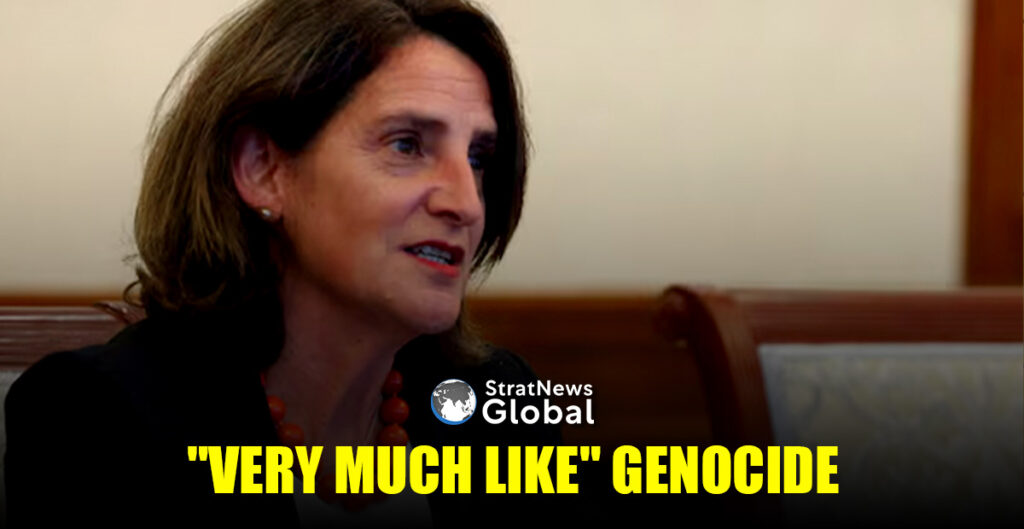
“The genocide in Gaza exposes Europe’s failure to act and speak with one voice, even as protests spread across European cities and 14 U.N. Security Council members call for an immediate ceasefire,” Teresa Ribera said at the opening ceremony of the academic year at the Sciences Po university in Paris.
Israel has repeatedly rejected accusations of carrying out genocide in its war in Gaza. Israel’s mission to the EU did not immediately respond to a request for comment.
Ribera is the European Commission’s Executive Vice President, second only in seniority to President Ursula von der Leyen. The Spanish socialist, whose portfolio includes climate and anti-trust issues, is not responsible for EU foreign policy.
‘Very Much Like’ Genocide
The comments were stronger than a statement she gave last month when she said the displacement and killing in Gaza looked “very much like” genocide.
The European Commission has accused Israel of violating human rights in Gaza, but stopped short of accusing it of genocide.
South Africa has brought a case at the International Court of Justice in The Hague, accusing Israel of genocide. Israeli Prime Minister Benjamin Netanyahu has condemned that as “outrageous”.
On Monday, the president of the world’s largest academic association of genocide scholars announced that the association had passed a resolution affirming that the legal criteria had been met to determine that Israel is committing genocide in Gaza.
Israel’s Foreign Ministry called that statement disgraceful.
Deadly War
The current war began on October 7, 2023, when gunmen led by Hamas attacked southern Israeli communities near the border, killing some 1,200 people, mainly civilians, and taking 251 hostages, including children, into Gaza, according to Israeli figures.
More than 62,000 Palestinians have been killed in Israel’s air and ground war in Gaza since then, according to Gaza health officials, who do not say how many were militants but have said most of those killed have been women and children.
(With inputs from Reuters)
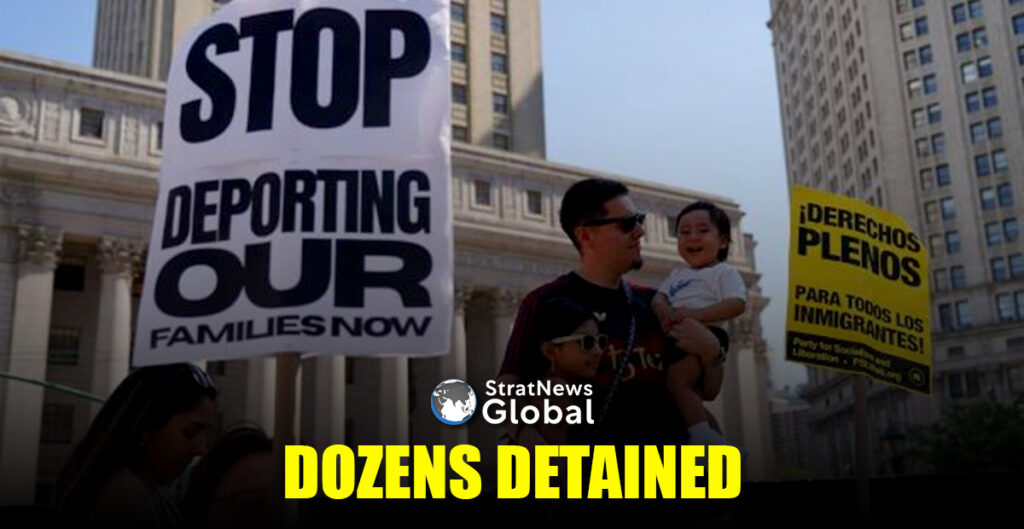
New York Immigration Raids Lead To Dozens Of Arrests, Governor Reports
Governor Kathy Hochul said on Thursday that federal agents from U.S. Immigration and Customs Enforcement carried out raids in the New York towns of Cato and Fulton, detaining dozens of people. Migrant advocacy groups also confirmed the arrests.
“I am outraged by this morning’s ICE raids in Cato and Fulton, where more than 40 adults were seized — including parents of at least a dozen children at risk of returning from school to an empty house,” Hochul said in a statement released by her office.
Under President Donald Trump, the Immigration and Customs Enforcement agency has become the driving force of his sweeping crackdown on migrants, bolstered by record funding and new latitude to conduct raids.
Trump has said he wants to deport “the worst of the worst” criminals but ICE figures have shown a rise in non-criminals being picked up.
Migrant advocacy group Rural & Migrant Ministry said on Facebook that over 70 workers were arrested after an ICE raid at a nutrition bar factory, Nutrition Bar Confectioners, in the village of Cato.
The New York Times also put the figure of those who were detained at more than 70, citing witnesses. The newspaper said the raid at the nutrition bar factory appeared to be one of the biggest workplace raids in New York since Trump’s crackdown began after he took office.
‘Upholding U.S. Laws’
“I’ve made it clear: New York will work with the federal government to secure our borders and deport violent criminals, but we will never stand for masked ICE agents separating families and abandoning children,” Hochul added.
Mark Schmidt, 70, the principal owner of Nutrition Bar Confectioners, was quoted as saying by the New York Times that all his workers had legal documentation to work in the United States and that the operation was “overkill.”
An ICE Homeland Security Investigations spokesperson was quoted as saying by media that the step was part of “court-authorized enforcement actions.”
“While we cannot comment further about this specific ongoing criminal investigation at this time, ICE HSI remains committed to protecting the rights of workers and upholding U.S. laws,” the spokesperson’s statement cited in Spectrum News 1.
Details about the raid in Fulton that Hocul mentioned were not immediately available, but the governor said such actions will not make New York safer.
“What they did was shatter hard-working families who are simply trying to build a life here,” the New York governor added.
(With inputs from Reuters)
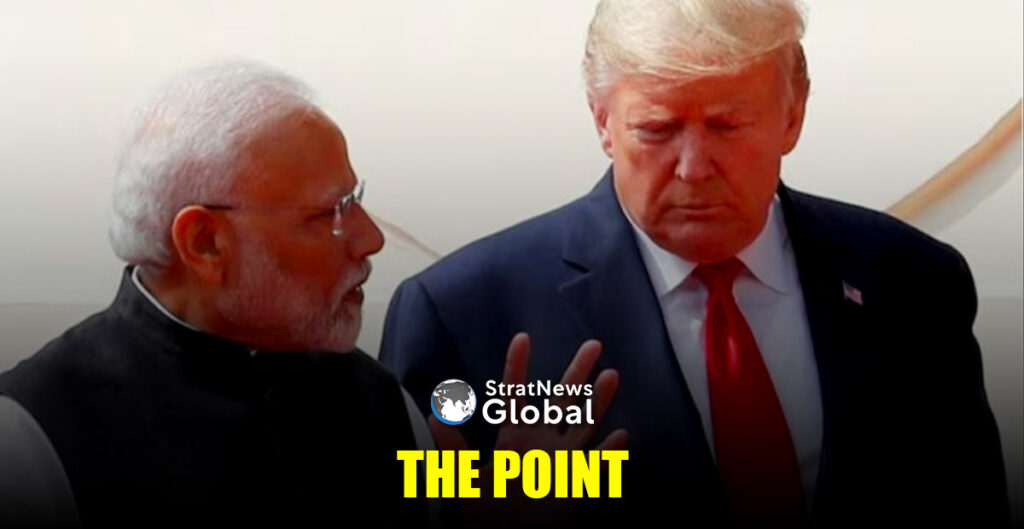
India Won’t Be America’s Ally—And That’s The Point
Washington’s relationship with New Delhi has always been one of high hopes and harsh realities.
Every decade or so, the United States rediscovers India, dazzled by its scale, seduced by its democratic credentials, and desperate for a counterweight to China. Yet time and again, the relationship stumbles on the rocks of mistrust, mismatched expectations, and India’s fiercely guarded autonomy. Today, with trade disputes, India’s oil deals with Moscow, and public spats over Pakistan souring ties, the pattern looks set to repeat itself.
Into this fraught context step Kurt M. Campbell and Jake Sullivan, writing in Foreign Affairs. Their essay, The Case for a U.S. Alliance With India, makes the case that the United States must move beyond episodic partnership and formalise a new strategic alliance.
Both men bring weighty credentials to the table—Campbell as a veteran of Indo-Pacific strategy, Sullivan as a former National Security Adviser. Their proposal is ambitious: an alliance built not on the old Article 5–style security guarantee but on five pillars—technology, economics, defence, intelligence, and global problem-solving.
On paper, it looks like a master plan. Build a shared tech ecosystem spanning AI, quantum computing, and biotech. Strike supply chain agreements to reduce dependence on China. Co-develop defence systems rather than just transfer American hardware. Expand intelligence-sharing across the Indian Ocean. Launch joint projects on climate, food security, and global health. The blueprint is sweeping, the aspirations noble. If only geopolitics worked like a PowerPoint presentation.
The central flaw in the Campbell-Sullivan argument is not their vision but their optimism. India is not waiting for Washington to offer a grand alliance. It wants technology transfers, market access, and global stature—but without surrendering its cherished “strategic autonomy”. That is not a tactical posture but a deeply embedded worldview, born of colonial humiliation and hardened by decades of Non-Aligned Movement rhetoric. No treaty, however carefully designed, will persuade New Delhi to align itself fully with the United States.
The authors acknowledge some of these roadblocks—India’s democratic backsliding, its reliance on Russian defence and energy, its allergy to alliances—but they seem to believe that pragmatic leadership can overcome them. This borders on wishful thinking. Narendra Modi’s government has shown again and again that it will hedge ruthlessly between Washington, Moscow, and Beijing, extracting concessions from all sides while aligning with none. His smiling photo-op with Xi Jinping and Vladimir Putin over the weekend should serve as a blunt reminder that India is not about to pick sides.
Then there is the American side of the equation. The authors glide past the elephant in the room: the United States itself is an unreliable ally. Under Donald Trump, U.S. diplomacy is often erratic, swinging from theatrical threats to transactional dealmaking. Even under previous administrations, bipartisan goodwill toward India has been undermined by bureaucratic inertia and domestic politics.
If NATO, the U.S.-Japan alliance, and even South Korea’s security pact have been destabilised by American political cycles, what chance does a still-fragile “alliance” with India have of weathering future storms?
Strip away the rhetoric, and what Campbell and Sullivan are proposing is less an alliance than an illusion. India will not abandon its defence ties with Russia overnight, nor will it serve as Washington’s frontline bulwark against China. For New Delhi, alignment with the U.S. is a means to an end: access to cutting-edge technologies, investments, and a louder voice on the world stage. For Washington, India is useful so long as it helps contain Beijing’s rise. These are convergences of convenience, not commitments of trust.
None of this is to say the relationship lacks value. Quite the opposite: transactional cooperation on defence technology, intelligence, and supply chain resilience is both possible and desirable. But the danger lies in overselling it. By dressing up pragmatic coordination as a “strategic alliance”, Washington risks inflating expectations and setting the stage for disappointment. That is precisely the cycle the relationship has endured for decades: bold promises, unmet expectations, and bitter recriminations.
The sober truth is this: the U.S.-India partnership will remain what it has always been—turbulent, tactical, and transactional. It will lurch forward when interests align, stall when they diverge, and survive not because of mutual trust but because both sides need each other just enough to keep talking. To imagine it as a 21st-century NATO is to mistake fantasy for reality.
Campbell and Sullivan are right about one thing: the only thing harder than building a U.S.-India alliance is not having one. But the harder truth is that the relationship will never be an alliance in the way Washington imagines it. It will be a balancing act—messy, uneven, but still indispensable.
Recognising that may be less glamorous than drafting grand treaties. But it is also more honest.
South Korea Says Trump’s Japan Trade Deal Could Hurt Its Auto Sector
South Korea said on Friday that U.S. President Donald Trump has signed an executive order to implement a trade deal with Japan that lowers tariffs on Japanese car imports to 15%. Officials warned the move is expected to have an impact on South Korea’s auto industry.
South Korea is assessing the details of the trade deal, signed by Trump on Thursday, a Seoul trade official said.
The lower tariffs on Japanese autos are set to take effect seven days after publication of the order.
The move would put South Korean automakers at a competitive disadvantage to their Japanese rivals, as U.S. tariffs on South Korean auto imports remain at 25%. The 15% charge applies retroactively to most products shipped starting Aug. 7.
“We are assessing the details of the executive order and consulting with the U.S. in depth,” the official said by phone, adding that it was difficult to say when South Korea would be granted the same auto tariff cut.
Hyundai Motor shares were down 0.2%, while Kia Corp fell 0.7%.
U.S. Tariffs
On July 30, Trump said the U.S. will charge a 15% tariff on imports from South Korea, down from a threatened 25%, and reduce duties on automobile imports to 15% from the current 25%, in return for Seoul investing $350 billion in the United States.
But the tariff cut on automobiles has not been implemented, as South Korea and the United States remain at odds over the details of the $350 billion investments in strategic U.S. industries pledged by Seoul, despite a summit between South Korean President Lee Jae Myung and Trump.
Presidential policy adviser Kim Yong-beom said last week that the two sides were still trying to hammer out major differences about the details, as they work toward signing a non-binding memorandum of understanding on the investments.
Kim said he acknowledged “frustration” from Korean automakers, but “we have to come up with a proposal that is acceptable to the public,” adding that South Korea also needs to discuss the potential U.S. deal with parliament.
“There is an implicit consensus among the government and public in Japan that there should be no confrontation with the United States. But Korea is different. Korea is a very tough country,” he said.
South Korea has said direct investment would account for a small portion of the investments, which it said would largely consist of loans and guarantees.
(With inputs from Reuters)
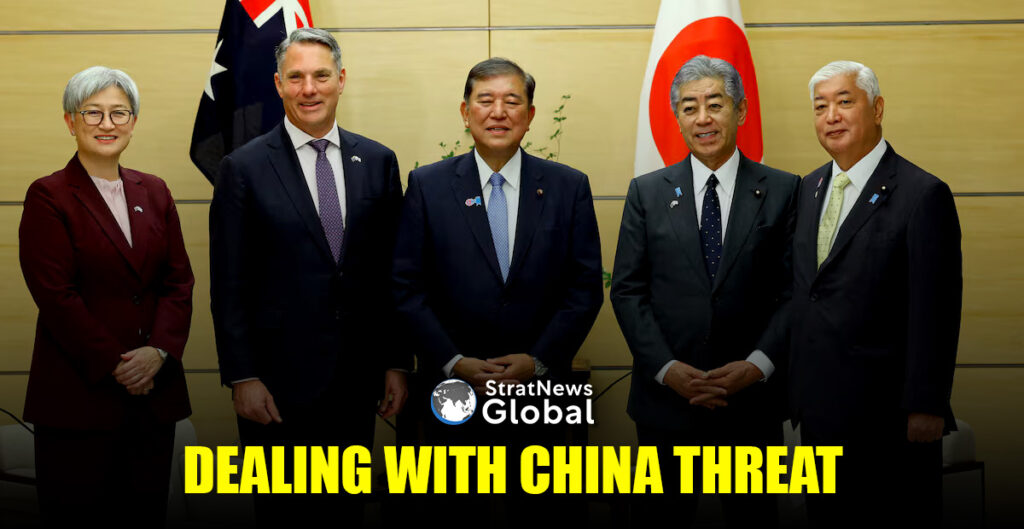
Australia, Japan Vow Closer Security Ties Amid Indo-Pacific Challenges
On Monday, Australia and Japan announced plans to strengthen cooperation in tackling growing security challenges in the Indo-Pacific region, including joint efforts to evacuate citizens in overseas emergencies.
“We agreed to further strengthen our collective deterrence capabilities and to activate discussions on potential contingencies that could affect the security of both countries and the region,” Japan’s Foreign Minister Takeshi Iwaya said.
His comments came after a meeting in Tokyo that also included Japanese Defence Minister Gen Nakatani and their Australian counterparts, Penny Wong and Richard Marles.
Countering China’s Growing Influence
Japan and Australia, both close allies of the United States, are forging closer ties as China’s regional influence expands. Their cooperation includes joint military training and a reciprocal access agreement signed in 2023 that allows their forces to operate on each other’s territory.
Japan and Australia are also members of the Quad grouping alongside the United States and India.
Defence Industry Collaboration
Last month, Japan clinched a landmark A$10 billion ($6.5 billion) deal to build warships for Australia, marking Tokyo’s most consequential defence sale since it ended a ban on military exports in 2014.
Japan is seeking more defence industry collaboration in areas such as advanced unmanned systems, Nakatani said.
Australia’s Wong said Canberra aimed to expand economic cooperation with Tokyo beyond its role as a major supplier of energy, including liquefied natural gas.
“We want the next stage of this to be economic security in the area of critical minerals. And we see that as of great importance,” she said.
Phone Call With Trump
Meanwhile, Albanese discussed opportunities for Australia and the United States to cooperate on critical minerals in a phone call with President Donald Trump on Thursday evening, his office said.
The two leaders spoke about opportunities to work together on trade and critical minerals “in the interests of both nations,” a statement from Albanese’s office said.
(With inputs from Reuters)
US Warns Venezuela After Jets Approach Navy Ship In International Waters
Late on Thursday, the US Department of Defence reported that two Venezuelan military aircraft flew close to a US Navy ship in international waters.
The US military killed 11 people aboard a vessel from Venezuela in the Caribbean on Tuesday that President Donald Trump said was carrying illegal narcotics and that belonged to a drug cartel he designated a “terrorist organisation”. Legal experts had raised questions about the attack.
US’ Warning
The Defence Department statement said on Thursday Venezuela is “strongly advised not to pursue any further effort to obstruct, deter or interfere with counter-narcotics and counter-terror operations carried out by the US military. The statement did not provide further details.
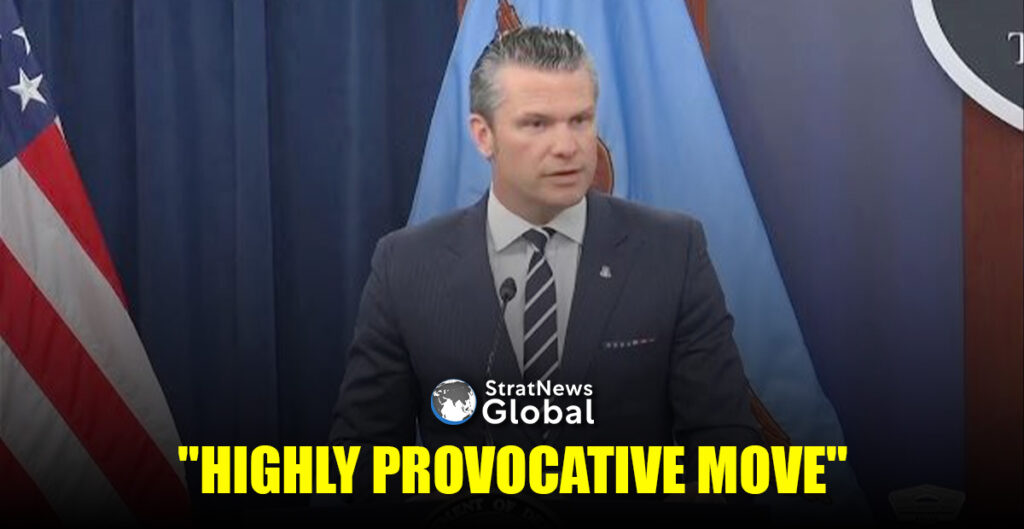
The Pentagon called the action a “highly provocative move” that it says “was designed to interfere with our counter narco-terror operations”.
Different Tactics
The New York Times reported, citing a US defence official, that two Venezuelan F-16 fighter jets flew over the US Navy guided-missile destroyer Jason Dunham in the southern Caribbean Sea. The US warship did not engage, the US official was cited as saying by the newspaper.
Tuesday’s attack marked a departure in the use of the military. Trump said in a social media post that the boat was transporting illegal narcotics, which would normally be the responsibility of the US Coast Guard to intercept. If the Coast Guard had been fired upon when trying to stop the boat, the Coast Guard members would be justified in defending themselves, legal experts said.
However, Trump posted a video to social media that appeared to show a speeding boat being destroyed by an air strike.
No Evidence
The administration did not provide any evidence that the United States was under imminent threat of attack, that the vessel was armed and did not identify targets on the boat who were critical to an extremist attack, as past presidents have done in similar attacks.
In the eyes of many people around the world, those on the boat were civilians and the attack will be seen as an extrajudicial killing, said legal experts.
(With inputs from Reuters)