

Support us by contributing to StratNewsGlobal on the following UPI ID
ultramodern@hdfcbank

Strategic affairs is our game, South Asia and beyond our playground. Put together by an experienced team led by Nitin A. Gokhale. Our focus is on strategic affairs, foreign policy and international relations, with higher quality reportage, analysis and commentary with new tie-ups across the South Asian region.
You can support our endeavours. Visit us at www.stratnewsglobal.com and follow us on YouTube, Twitter, Facebook and Instagram.
र 500 per month
र 1000 per month
र 5000 per year
र 10000 per year
Donate an amount of your choice
र 500 per month
Donate र 500 per month

र 1000 per month
Donate र 1000 per month
र 5000 per year
Donate र 5,000 per year
र 10000 per year
Donate र 10,000 per year
Donate an amount of your choice
Donate an amount of your choice





Myanmar: Suu Kyi Requires Urgent Care Amid Detention, Son Says
Myanmar’s jailed former leader Aung San Suu Kyi is facing worsening heart issues and urgently needs medical care, her son said on Friday, calling for her immediate release from what he described as “cruel and life-threatening” detention.
Kim Aris told Reuters that his 80-year-old mother, in military custody since a 2021 coup that deposed her government, had asked to see a cardiologist about a month ago, but he had been unable to determine whether her request had been granted.
‘Extremely Worried’
“Without proper medical examinations … it is impossible to know what state her heart is in,” he said by phone from London. “I am extremely worried. There is no way of verifying if she is even alive.”
The Nobel Peace Prize laureate has also suffered from bone and gum issues, Aris said, adding that it was likely she had been injured in an earthquake in March that killed more than 3,700 people. In a Facebook video, he appealed for Suu Kyi and all political prisoners in Myanmar to be released.
A spokesman for Myanmar’s military-backed interim government did not pick up calls from Reuters seeking comment, and its information ministry did not immediately respond to questions sent via email.
No Public Appearance In 4 Years
Myanmar has been gripped by violence since the military takeover in February 2021, which prompted mass rallies that were crushed by brutal force, sparking a widespread armed uprising.
Suu Kyi, a long-standing symbol of Myanmar’s pro-democracy movement, is serving a 27-year sentence for offences, including incitement, corruption and election fraud, all of which she denies.
One of her last public appearances was in court in May 2021, a few months after the coup, when pictures aired by state television showed her sitting upright in the dock, with her hands in her lap and wearing a surgical mask.
Arbitrary Takeover
The military justified its takeover on the basis of what it said was widespread fraud in an election that Suu Kyi’s party won by a landslide, although election monitors found no evidence of cheating.
Foreign governments and rights groups have consistently called for her release.
Starting in late December, the military-backed interim government plans to hold new elections in multiple phases, the first polls since the one that triggered the coup.
Anti-junta groups, including Suu Kyi’s party, are either boycotting or are barred from running, with only military-backed and approved parties participating. Western governments have criticised the vote as a move to entrench the generals’ power.
Decades In Detention
Born in 1945 to Myanmar’s independence hero, General Aung San, who was assassinated when she was an infant, Suu Kyi has spent nearly two decades in detention, including some 15 years under house arrest at her colonial-style family home on Yangon’s Inya Lake, as ordered by a previous junta.
Educated at Oxford University, she married British scholar Michael Aris in 1972 and had two sons with him, before returning to Myanmar in 1988 to care for her ailing mother.
That is also when she joined nationwide protests against military rule, forming the National League for Democracy party and rising to become Myanmar’s most prominent pro-democracy leader.
(With inputs from Reuters)
Putin Says Russia Would Treat Foreign Soldiers In Ukraine As Enemy Targets
President Volodymyr Zelenskyy said on Friday that post-war security guarantees for Ukraine could involve the deployment of thousands of foreign troops. But Russian President Vladimir Putin countered that any outside forces entering Ukraine would be viewed by Moscow as legitimate targets for attack.
Their comments underlined the gulf between Kyiv and Moscow as Western pessimism mounts over prospects for ending Russia’s war in Ukraine quickly, with U.S. President Donald Trump expressing growing frustration with Moscow by saying Russia appeared “lost” to “deepest, darkest China.”
French President Emmanuel Macron said on Thursday that 26 countries had pledged to provide post-war security guarantees to Ukraine, including an international force on land and sea and in the air.
Macron initially said those countries would deploy troops to Ukraine, but later said some of them would provide guarantees while remaining outside Ukraine, for example by helping to train and equip Kyiv’s forces.
“It is important that we are discussing all this (security guarantees) … it will definitely be in the thousands (of troops), not just a few,” Zelenskyy said after meeting Antonio Costa, a senior European Union official, in western Ukraine.
Russia has long said one of its reasons for going to war in Ukraine was to prevent NATO from admitting Kyiv as a member and placing its forces in Ukraine.
“Therefore, if some troops appear there, especially now, during military operations, we proceed from the fact that these will be legitimate targets for destruction,” Putin told an economic forum in Russia’s far eastern city of Vladivostok.
“And if decisions are reached that lead to peace, to long-term peace, then I simply do not see any sense in their presence on the territory of Ukraine, full stop,” the Russian president added.
Trump’s Disappointment With Putin
Trump’s efforts to end the conflict in Ukraine have included holding talks with Putin, but he has been frustrated at his inability to resolve the bloodiest conflict in Europe since World War Two.
He said this week he was “very disappointed” in Putin, and made clear on Friday that he was also upset by moves by Russia and India to improve ties with China as Beijing pushes a new world order. Putin and Indian Prime Minister Narendra Modi both met Chinese President Xi Jinping this week.
“Looks like we’ve lost India and Russia to deepest, darkest, China. May they have a long and prosperous future together!” Trump wrote in a social media post accompanying a photo of the three leaders together at Xi’s summit in China.
Trump said on Thursday he would speak to Putin again in the near future. Kremlin spokesman Dmitry Peskov said in an interview published on Friday that he had no doubt that a meeting could be organised very quickly.
As Western pessimism mounts over peace prospects for Ukraine, the United States and Europe are discussing imposing more sanctions on Russia over the war.
“We are ready to do more, we are working with the U.S. and other like-minded partners to increase our pressure, through further sanctions, direct and secondary sanctions. More economic measures to push Russia to stop this war,” Costa said after meeting Zelenskyy.
Costa, who is President of the European Council, said without giving details that “the work is starting in Brussels on the new sanctions package and a European team is travelling to Washington D.C. to work with our American friends.”
In Vladivostok on Friday, Putin denied that Russia’s economy was stagnating, despite a report from the central bank that suggests it is technically in recession.
(With inputs from Reuters)
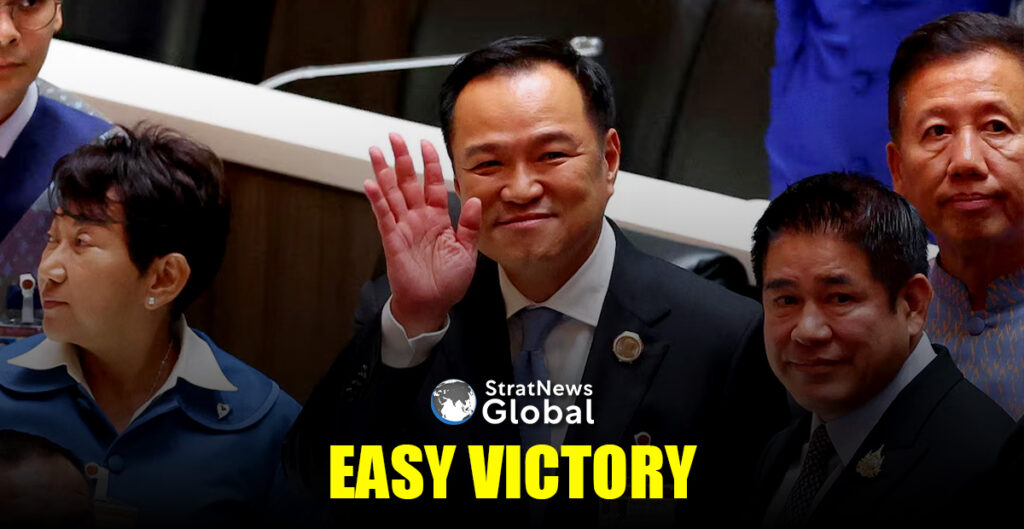
Anutin Charnvirakul Elected Thai PM After Political Shake-Up
Thailand’s Anutin Charnvirakul was elected prime minister on Friday, securing a decisive parliamentary victory over the Shinawatra-backed candidate, bringing an end to a week of political chaos and uncertainty.
With decisive opposition backing, Anutin easily passed the threshold of more than half of the lower house votes required to become premier, capping off days of drama and a scramble for power during which he outmanoeuvred the most successful political party in Thailand’s history.
Political Mainstay
Shrewd dealmaker Anutin has been a mainstay in Thai politics throughout years of turmoil, positioning his Bhumjaithai party strategically between warring elites embroiled in an intractable power struggle and guaranteeing its place in a succession of coalition governments.
His rout of rival contender Chaikasem Nitisiri was a humiliation for the ruling Pheu Thai party, the once unstoppable populist juggernaut of influential billionaire Thaksin Shinawatra, who left Thailand late on Thursday for Dubai, where he spent the bulk of his 15 years in self-imposed exile.
Anutin led from the start and won 63% of the votes, with double the tally of Chaikasem.
He was mobbed by a phalanx of media as he left the chamber, his aides fending off a scrum of journalists who jostled and shouted as he edged slowly towards a waiting car.
‘Have To Ease Problems Quickly’
“I will work my hardest, every day, no holidays, because there is not a lot of time,” Anutin said, his face lit up by bursts of camera flashes.
“We have to ease problems quickly.”
Pheu Thai’s crisis was triggered in June by Anutin’s withdrawal from its alliance, which left the coalition government clinging to power with a razor-thin majority amid protests and plummeting popularity.
The hammer blow was last week’s dismissal by a court of Thaksin’s daughter and protege Paetongtarn Shinawatra, the sixth prime minister from or backed by the Shinawatra family to be removed by the military or judiciary.
Anutin’s victory came as a result of a pact with the progressive opposition People’s Party, the largest force in parliament, which he seduced with promises to hold a referendum on amending the constitution and call an election within four months.
Difficult Road Ahead
A political veteran and son of a former cabinet minister who once ran his family’s construction firm, 58-year-old Anutin is a former deputy premier, interior minister and health minister who served as Thailand’s COVID-19 tsar.
As a staunch royalist, Anutin is considered a conservative, although he made a name for himself by leading a successful campaign to decriminalise cannabis in Thailand, which led to an explosion of thousands of marijuana retailers.
Anutin will lead a minority government, which the People’s Party will not join, and take the helm of a country with an economy struggling from weak consumption, tight lending and soaring levels of household debt.
His expedited rise to the premiership was tied to the political reckoning of powerbroker Thaksin and decline of Pheu Thai, which won five of the past six elections but has haemorrhaged support among the working classes once wooed by its raft of populist giveaways.
‘We Will Return’
Despite the heavy defeat, Pheu Thai vowed to come back to power and deliver on its agenda.
“We will return to finish the job for all the Thai people,” it said.
Thaksin’s unannounced departure from Thailand on his private jet came after his party failed in desperate bids to dissolve the house and undermine Anutin’s bloc. A court ruling that could see Thaksin jailed is set for next week.
The tycoon made a vaunted homecoming from Dubai in 2023 to serve an eight-year sentence for abuse of power and conflicts of interest, but on his first night in prison he was transferred to the VIP wing of a hospital on medical grounds.
His sentence was commuted to a year by the king and he was released on parole after six months in detention. The Supreme Court will decide on Tuesday if Thaksin’s hospital stint counts as time served. If not, it could send him back to jail.
Thaksin To Return Back
In a post on X, Thaksin said he was in Dubai for a medical checkup and to see old friends.
“I will be back in Thailand by September 8 to personally attend court,” he said.
(With inputs from Reuters)
Xi Pushing Harder State System To Realise Superpower Ambitions
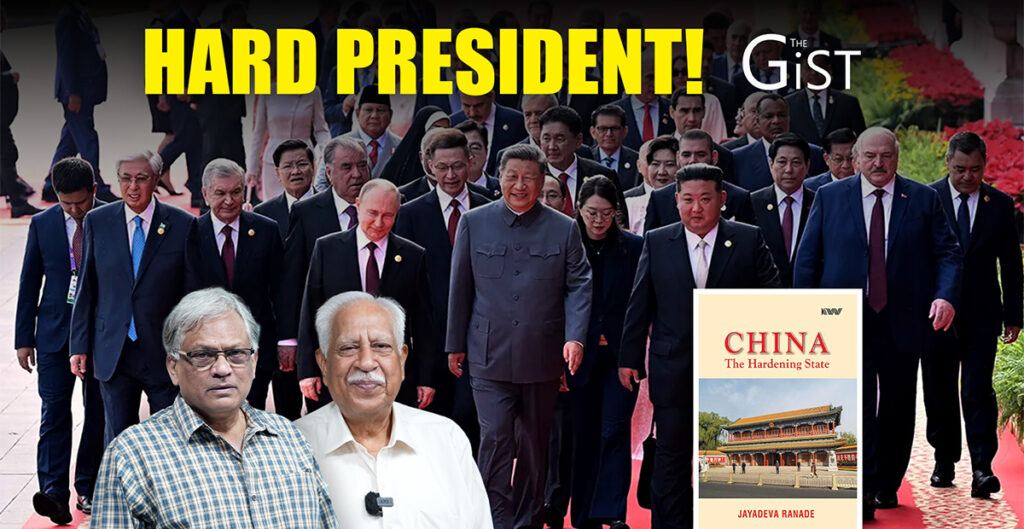
Is China a hardening state? That is the title of a new scholarly book on China by Jayadeva Ranade, president of the Centre for China Analysis & Strategy.
The book was written before the current thaw in the relations between Beijing and Delhi, but it defines the road map laid out by President Xi Jinping for emerging as the world’s super power, displacing the US.
That would require a significant hardening of the Chinese state, both internally and externally, says Ranade, during a conversation on the book on the Gist show.
“Its attitude in foreign policy towards its neighbors, towards other countries and domestically, XI Jinping will tighten controls even further in order to ensure that there is no factionalism and nothing which threatens his supremacy domestically.
“His own acolytes have been saying … that after Mao Zedong and Deng Xiao Ping, Xi is the leader who will set the pace … he’s discarded people and things that don’t work .. he’s being more assertive.”
That assertion includes purging the Chinese Communist Party of thousands of cadres, apparently for corruption. Using that as a cloak, he has got rid of his real and potential rivals and even purged the armed forces of scores of senior generals, many of them regarded as his acolytes till the other day.
“There is no organised move against him,” Ranade argues, “none that is discernible and and I think it will be very difficult for such a movement to really happen. I’m not saying it will not happen, but it’s very difficult because even members of the Politburo Standing Committee, seven people who rule China … they’re under surveillance now.”
He sees his main threat as internal, a point which has resulted in the internal security budget being more than the defence budget. Xi has set the target of 2049 as the date when China will become the world No. 1.
No opposition to him is anticipated given the systems Xi has put in place, but as in all authoritarian governments, it usually takes a small trigger to bring down the entire deck of cards.
Tune in for more in this conversation with Jayadeva Ranade, author of China The Hardening State.
North Korea Scrubs Signs Of Kim’s Beijing Meeting With Putin
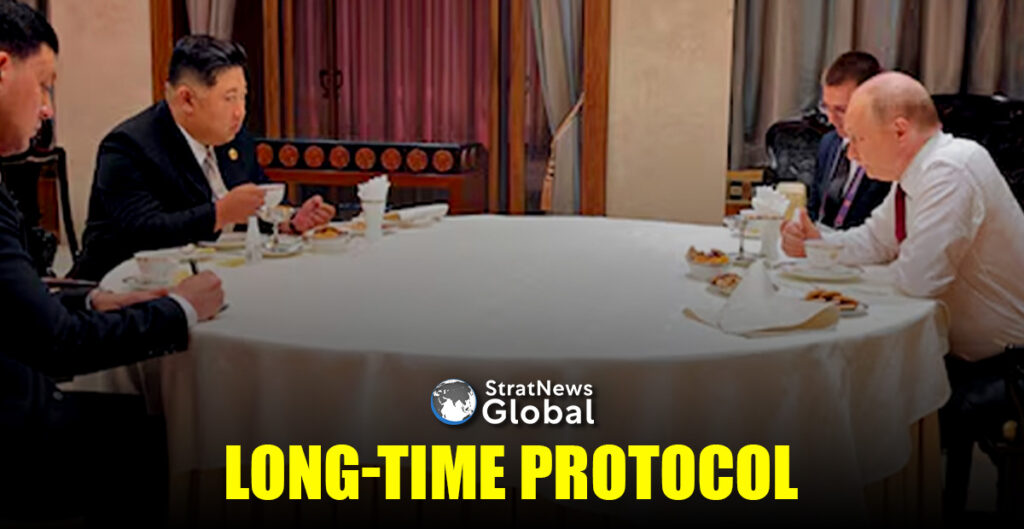
Following Kim Jong Un’s meeting with Russian President Vladimir Putin in Beijing, North Korea’s staff meticulously removed objects handled by the leader—steps analysts view as part of broader security protocols aimed at thwarting foreign espionage.
Even with the appearance of a budding friendship between Kim and Putin, footage on Wednesday showed the reclusive state’s extraordinary measures to conceal any clues about Kim’s health.
In a post on Telegram, Kremlin reporter Alexander Yunashev shared a video of Kim’s two staff members meticulously cleaning the room in the Chinese capital where Kim and Putin met for more than two hours.
The chair’s backrest and armrests were scrubbed, and a coffee table next to Kim’s chair was also cleaned. Kim’s drinking glass was also removed.
“After the negotiations were over, the staff accompanying the head of the DPRK carefully destroyed all traces of Kim’s presence,” the reporter said, referring to North Korea.
After talks in the room, Kim and Putin left for a tea meeting and bid a warm farewell to each other.
As during previous foreign trips, Kim packed his own toilet on a signature green train that took him to Beijing to hide health clues, Japan’s Nikkei newspaper reported, citing South Korean and Japanese intelligence agencies.
Long-Time Protocol
Such measures are standard protocol since the era of Kim’s predecessor, his father Kim Jong Il, said Michael Madden, a North Korea leadership expert with the U.S.-based Stimson Centre.
“The special toilet and the requisite garbage bags of detritus, waste and cigarette butts are so that a foreign intelligence agency, even a friendly one, does not acquire a sample and test it,” Madden said.
“It would provide insight into any medical conditions affecting Kim Jong Un. This can include hair and skin tags,” he said.
In 2019, after a Hanoi summit with U.S. President Donald Trump, Kim’s guards were spotted blocking the floor of his hotel room to clean the room for hours, and taking out items, including a bed mattress.
Kim’s team has been spotted meticulously cleaning items before he uses them as well.
During his 2018 meeting with then South Korean President Moon Jae-in, North Korean security guards sprayed a chair and a desk with sanitiser and wiped them down before Kim came to sit.
Before he sat at another summit with Putin in 2023, his security team wiped his chair down with disinfectant and vigorously checked to make sure the chair was safe, with one of the guards using a metal detector to scan the seat, video footage showed.
(With inputs from Reuters)
Lisbon Funicular Crash Highlights Safety Gaps In City’s Vintage Charm
The derailment of a historic Lisbon cable car that killed at least 16 people has shattered the city’s “old charm” image, exposing the strain of the Portuguese capital’s ageing infrastructure beneath its tourist-packed streets.
In Wednesday’s crash, the railcar left the track at a turn and hit a building just metres from its twin at the bottom of the steep 265-metre slope, leaving a mangled wreckage with bodies trapped inside. The traction cable linking them had snapped.
Jorge Silva, vice-president of the Portuguese association of civil protection technical experts, said a car made of a more modern material, such as carbon fibre, rather than metal and wood – the same design used since 1914 when the line was electrified – would have made the crash less violent and deadly.
“The pieces are rigid enough to withstand oscillation and normal service, but they’re not designed to withstand the impact in the event of a derailment, become twisted, leaving the passengers more exposed,” he said.
Lisbon’s trams running up and down its steep hills also date back to the mid-20th century and have a similar structure, he said.
“Investment should be made in renovating the carriages, using more modern materials, even if preserving their historic shape,” he said.
Investigation Underway
Silva said an investigation would show to what extent the pendulum cable system played a role in the crash.
The time-tested technology has had to cope with a tripling in the number of passengers on the “Gloria” funicular line in the past decade to more than 3 million people annually, as tourism booms.
The two cars, each capable of carrying around 40 people, alternately climb the slope and descend as electric motors pull the cable linking them.
Manuel Leal, leader of the Fectrans union, told local TV that workers had complained that problems with the tension of the cable had made braking difficult, but that it was too early to say if that was the cause of the crash.
The municipal transport company Carris said all maintenance protocols have been carried out. Silva said more rigorous and frequent maintenance and inspection were likely to be needed to prevent future accidents with the current heavier use.
But modernisation attempts in the earthquake-prone city have also concerned engineers and architects, fearing a reoccurrence of the Great Lisbon Earthquake of 1755.
Many houses in downtown Lisbon built not long after 1755 with then-pioneering interconnected internal structures and pillars to withstand quakes have lately been adapted in a way that could compromise their original anti-seismic structures, several engineering experts told Reuters.
While newer houses built after 1958 must have seismic-resistant structures by law, no anti-seismic reinforcement is required for old buildings being renovated.
(With inputs from Reuters)
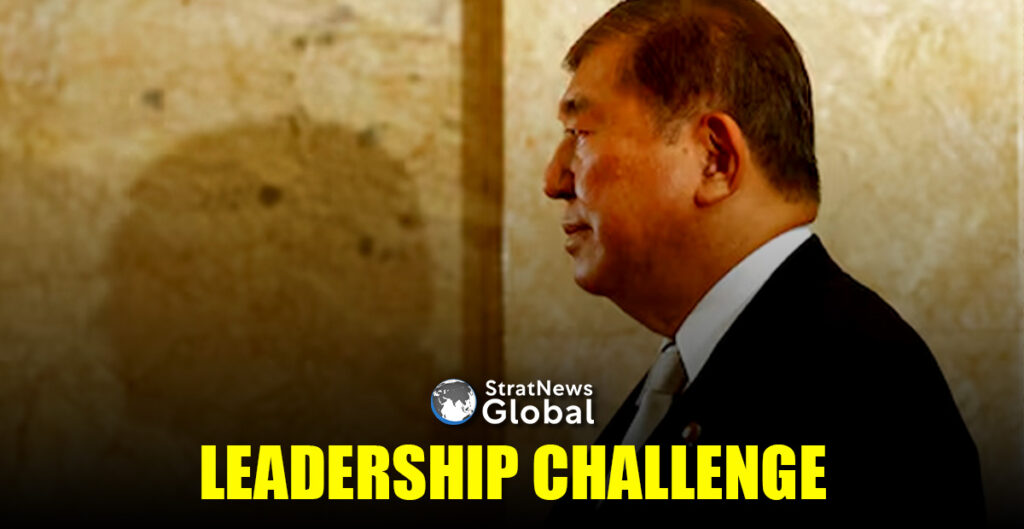
Japan’s PM Ishiba Braces For Possible Leadership Test On Monday
Lawmakers from Japan’s ruling party will decide on Monday whether to call an extraordinary leadership election that could unseat embattled Prime Minister Shigeru Ishiba and reshape the world’s fourth-largest economy.
Concern over political uncertainty has led to a sell-off in the yen and Japanese government bonds (JGB) this week, with the yield on 30-year bonds hitting a record high on Wednesday.
While the policy paralysis around such a vote could add pain for an economy hit by U.S. tariffs, markets are focusing more on the chance of Ishiba’s replacement by an advocate of looser fiscal and monetary policy, such as Sanae Takaichi, who has criticised the Bank of Japan’s interest rate hikes.
“The dominant market bet is for the LDP to hold a leadership race and for Ishiba, known as a fiscal hawk, to lose his job,” said Katsutoshi Inadome, senior strategist at Sumitomo Mitsui Trust Asset Management.
“We’ll likely see further selling in Japanese government bonds, as whoever succeeds Ishiba probably will be more open to loosening fiscal policy than him.”
Ishiba has refused calls from within his Liberal Democratic Party (LDP) to step down and take responsibility for its July loss in an upper house election.
Staying in power, however, has become increasingly hard for him. Having lost a majority in both houses of parliament, his ruling coalition needs opposition support to pass legislation.
Wary of being attached to the unpopular premier, opposition parties have refused to cooperate. Even some of Ishiba’s cabinet members are now calling for the choice of a new party leader.
Party rules require at least half the LDP members to request holding the race, which could follow this month or in October.
Such a contest could delay parliament’s passage of an expected supplementary budget aimed at cushioning the blow to households from rising living costs.
Economic Support Package
Ishiba told reporters on Friday he plans to compile this autumn a package of measures to support the economy. Asked whether he would step down, he said: “All I can say is that my government will fulfil its responsibility to the public.”
Eurasia Group gave odds of 60% that Ishiba would not survive.
“Ishiba’s poor performance as party leader in lower and upper house elections and events in recent days, including former prime minister Aso Taro announcing his support for the special election, has turned the tide against Ishiba,” said David Boling, director of Japan and Asian Trade at Eurasia.
That puts the focus on his potential successor.
While the LDP lacks a majority in parliament, its leader would still be the favourite to become the next prime minister, due to a fragmented opposition.
The choice could affect not just the scale of fiscal stimulus, but the timing of the BOJ’s next interest rate hike, analysts say.
Election Front-Runners
Front-runners include 44-year-old Shinjiro Koizumi, a charismatic agriculture minister popular with the public, but whose views on economic policy are unknown.
Takaichi, who represents the LDP’s right wing, is also seen by some analysts as a strong candidate to become Japan’s first female prime minister. She lost the September leadership race to Ishiba in a run-off vote.
While several other candidates are expected to be in the fray, Takaichi stands out for her vocal opposition to BOJ rate hikes and calls to ramp up spending to underpin the fragile economy.
After ending a decade-long, massive stimulus programme last year, the BOJ raised interest rates to 0.5% in January on the view that Japan was on the cusp of sustainably meeting its inflation target of 2%.
Most economists polled by Reuters expect the central bank to raise rates again this year, with some betting on a hike in October.
“Under Takaichi, fiscal discipline will be out the window,” Inadome said. “Markets still remember the time she made it to the run-up in September, and triggered huge selling in JGBs.”
(With inputs from Reuters)
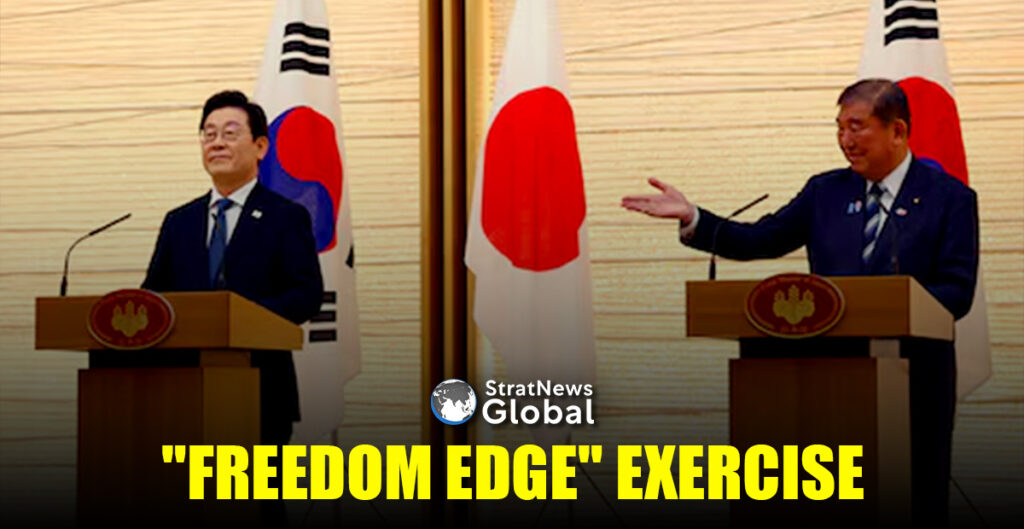
US, South Korea, Japan To Hold Defence Drills After North Korea Joins China Parade
South Korea’s military announced on Friday that the U.S., Japan, and South Korea will begin annual defence drills on September 15 to strengthen air, naval, and cyber capabilities against North Korea’s nuclear and missile threats.
The “Freedom Edge” exercise is an annual drill designed to implement regional peace and stability, South Korea’s Joint Chiefs of Staff said in a statement, adding that the drill will be conducted in compliance with international law.
The military did not provide more details on the exercise, including the number of troops or types of equipment involved.
The exercise follows large-scale 10-day troop mobilisation drills by the South Korean and U.S. militaries last month to assess their defence readiness against North Korean threats, which Pyongyang criticised as proof of the allies’ hostile intent against it.
The announcement comes after a dramatic appearance by the leaders of North Korea, Russia and China in Beijing this week at a major military parade that showcased China’s military might in a show of solidarity against the West.
Kim’s Summit With Xi, Putin
North Korean leader Kim Jong Un concluded his visit by holding a summit with Chinese President Xi Jinping on Thursday, reaffirming his support for China’s interests as he seeks to restore close ties with his country’s main economic benefactor.
Kim also held talks with Russian President Vladimir Putin.
Kim offered his full support to Vladimir Putin, vowing to do “everything I can to assist” Moscow, while the Russian president expressed gratitude to Pyongyang for dispatching troops to fight in the war against Ukraine.
“If there is anything I can or must do for you and the Russian people, I consider it my duty as a fraternal obligation,” Kim told Putin.
Putin addressed Kim as “Dear Chairman of State Affairs” in Russian and extended his warmest greetings. The two countries are bound by a 2024 mutual defence treaty, and both face heavy international sanctions – Russia for its war in Ukraine and North Korea for its nuclear weapons programme.
“Recently, relations between our countries have assumed a special, trusting and friendly character, and an allied character,” Putin said, and praised North Korean special forces that were deployed to help Russian troops. “Your soldiers fought courageously and heroically.”
Separately, South Korea’s defence ministry said on Friday that Japan’s defence minister and the chair of the NATO Military Committee will attend the Seoul Defence Dialogue of senior military officials from around the world starting on Monday.
(With inputs from Reuters)
Two Strong Aftershocks Strike Afghanistan After Earthquakes Kill 2,200
Two strong aftershocks hit eastern Afghanistan 12 hours apart on Friday, stoking fears of further casualties and devastation in a region already reeling from earthquakes that killed around 2,200, as rescuers struggled against rugged terrain and severe weather.
Survivors in the earthquake-prone region are scrambling for basic amenities as the United Nations and other agencies warn of a critical need for funds, food, medical supplies and shelter, with the World Health Organisation seeking funds of $4 million.
The latest aftershocks follow two earthquakes that ravaged a nation already crushed by war, poverty and shrinking aid. The Taliban administration estimated 2,205 deaths and 3,640 injuries by Thursday.
Ambulances ferried to the hospital 13 people injured after Thursday night’s tremor of magnitude 6.2 in Nangarhar province, with its epicentre in the district of Shiwa near the Pakistan border, said regional health spokesman Naqibullah Rahimi.
Ten were discharged after treatment, and three were in stable condition, he added.
A Reuters witness said details of the damage were still being collected after continuous aftershocks in Nangarhar, with its capital, Jalalabad, about 150 km (95 miles) from Kabul.
Powerful Aftershocks
Friday’s earthquake of magnitude 5.4 struck the southeast at a depth of 10 km (6.2 miles), the German Research Centre for Geosciences (GFZ) said, just hours after Thursday’s event.
With houses built mostly of dry masonry, stone, and timber, some families preferred to stay in the open to guard against shocks, rather than return home.
Residents of the Nurgal district of Kunar have left their homes to live in tents, on the surrounding highland near a river, or in the open, for fear of more tremors.
Fallen rocks and earth blocked access to some badly affected villages, holding up rescue and relief efforts, they said.
The week’s first earthquake of magnitude 6, just before midnight on Sunday, was one of Afghanistan’s deadliest, unleashing damage and destruction in Nangarhar and Kunar provinces when it struck at a shallow depth of 10 km (6 miles).
A second quake of magnitude 5.5 on Tuesday caused panic and interrupted rescue efforts as it sent rocks sliding down mountains and cut off roads to villages in remote areas.
The two initial quakes flattened villages in both provinces, destroying more than 6,700 homes, and rescue workers pulled bodies from the rubble on Thursday.
Afghanistan’s earthquakes mainly happen in the Hindu Kush mountain range, where the Indian and Eurasian tectonic plates meet.
Funding Crisis
Landslides and debris on key roads hampered relief work, the WHO said, as it called for more funds to provide healthcare and disease surveillance.
“A funding gap of at least $4 million threatens to delay critical activities, underscoring the urgent need for international support,” it added in a statement.
It warned of the risk of disease, stemming from overcrowded shelters, unsafe water and inappropriate waste management, while an influx of Afghans recently deported from Pakistan strains the fragile healthcare system.
Afghanistan’s Taliban government made an urgent appeal for international aid soon after Sunday’s disaster.
But relief has been scant in a country largely ignored by the world since the Taliban takeover in 2021, which is struggling to accommodate millions of Afghans expelled from neighbouring Iran and Pakistan, as well as drought victims in its north.
The United Nations, which has said money to help quake victims will run out soon, plans to launch an emergency appeal for funds, a senior official in the country said.
It has released $10 million, more than the trickle of cash announced by rich nations, though some have sent assistance such as tents.
“We have some seed funding, but we are looking to make a flash appeal,” Kate Carey, deputy head of the UN’s humanitarian affairs coordination office for Afghanistan, told Reuters.
(With inputs from Reuters)
Western Soldiers In Ukraine Would Be Legitimate Targets, Putin Says
Russian President Vladimir Putin on Friday warned that any Western troops stationed in Ukraine would be deemed legitimate targets for Moscow, cautioning Kyiv’s allies as they weigh future security guarantees.
Putin was speaking a day after French President Emmanuel Macron said 26 countries had pledged to provide postwar security guarantees to Ukraine, including an international force on land, sea and in the air.
Russia has long argued that one of its reasons for going to war in Ukraine was to prevent NATO from admitting Kyiv as a member and placing its forces in Ukraine.
“Therefore, if some troops appear there, especially now, during military operations, we proceed from the fact that these will be legitimate targets for destruction,” Putin told an economic forum in Vladivostok.
“And if decisions are reached that lead to peace, to long-term peace, then I simply do not see any sense in their presence on the territory of Ukraine, full stop.”
Ukraine Security Guarantee
Putin’s comments highlighted the gulf between Moscow’s position and that of Kyiv and its Western allies on the shape of future security guarantees for Ukraine under any agreement to end the three-and-a-half-year war.
Ukraine seeks robust backing from the West to protect it against any future attack. France and Britain, which co-chair a “coalition of the willing” in support of Ukraine, have signalled they are open to deploying troops to Ukraine after the war ends.
U.S. President Donald Trump has said that Washington will not put troops on the ground but may provide other support, such as air power.
Putin said security guarantees must be set in place for both Russia and Ukraine.
“I repeat once again, of course, Russia will implement these agreements. But, in any case, no one has discussed this with us at a serious level yet,” he said.
Trump, who took office in January with a pledge to end the war quickly, hosted Putin for a summit in Alaska last month that failed to achieve any breakthrough.
Uncertainty Looms
Ukrainian President Volodymyr Zelenskyy has long been pushing for a direct meeting with Putin in order to make progress towards ending Europe’s deadliest war for 80 years.
Putin said on Friday that he did not see much point in such a meeting because “it will be practically impossible to reach an agreement with the Ukrainian side on key issues”.
However, he reiterated an offer he made earlier this week to host Zelenskyy for talks in Moscow.
“I said: I’m ready, please, come, we will definitely provide working conditions and security, a 100% guarantee.
“But if they tell us: ‘we want to meet with you, but you have to go somewhere else for this meeting’, it seems to me that these are simply excessive requests on us.”
Zelenskyy, without directly addressing the possibility of Moscow as a venue, said on Friday: “We are ready for any kind of meetings. But we don’t feel that Putin is ready to end this war. He can speak, but it’s just words, and nobody trusts his words.”
(With inputs from Reuters)