

Support us by contributing to StratNewsGlobal on the following UPI ID
ultramodern@hdfcbank

Strategic affairs is our game, South Asia and beyond our playground. Put together by an experienced team led by Nitin A. Gokhale. Our focus is on strategic affairs, foreign policy and international relations, with higher quality reportage, analysis and commentary with new tie-ups across the South Asian region.
You can support our endeavours. Visit us at www.stratnewsglobal.com and follow us on YouTube, Twitter, Facebook and Instagram.
र 500 per month
र 1000 per month
र 5000 per year
र 10000 per year
Donate an amount of your choice
र 500 per month
Donate र 500 per month

र 1000 per month
Donate र 1000 per month
र 5000 per year
Donate र 5,000 per year
र 10000 per year
Donate र 10,000 per year
Donate an amount of your choice
Donate an amount of your choice


Can U.S. Ties Be Restored In Months? Not Wildly Enthusiastic: Vijay Gokhale
Trump Sings Different Tune
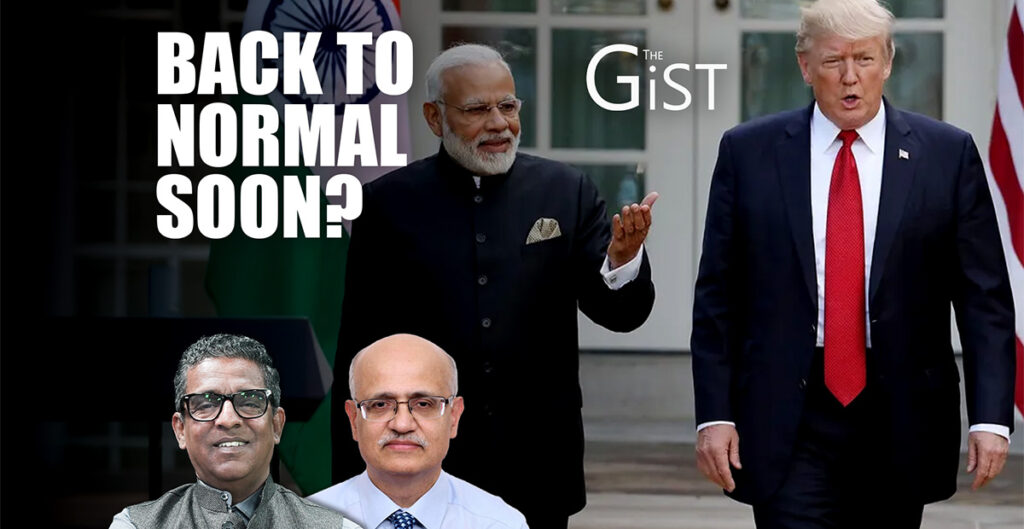
“India and the U.S. have a special relationship. There’s nothing to worry about.” That was U.S. President Trump when asked who he blamed for losing India to China. Sounds jarring? Hours ago, Trump had put up a social media post saying “looks like we’ve lost India and Russia to darkest China”. Modi appreciated Trump’s latest remarks on the “positive assessment of ties”. So after India-U.S. ties soured in the wake of 50% tariffs, how long will it take for a repair?
Former Foreign Secretary Vijay Gokhale does not think anytime soon. “I am not wildly enthusiastic at this stage that the strategic partnership could be restored in a matter of months,” he told StratNews Global before Trump’s “nothing to worry about” remarks.
Trump’s India Strategy
Gokhale isn’t sure if President Trump has an India strategy. He’s equally unsure whether India is just one of the pawns on a chessboard to be sacrificed when the U.S. has a larger game to play.
He cites two examples from the past when India-U.S. ties were ruptured. One took long to mend, almost 20 years. That was the rift in 1971, courtesy the India-Pakistan war and the run-up to the U.S. cosying up to China. The second rupture in ties came in 1998 after the Pokharan nuclear tests. The Americans piled on the sanctions but in two years the strain eased.
The difference in the two cases was the attitude of the United States towards India. Gokhale explains why the damage was repaired quickly after 1998. “The U.S. accepted that India was never going to be an ally in the classic sense but understood that India was important enough to invest in so that it was aligned with them.”
In the Cold War era, that was not possible as the U.S. needed allies against the Soviet Union. After the Cold War, the U.S. did not need an ally but understood India’s worth as a nuclear power and aligned with us, says Gokhale.
So which of these two instances correspond to the current state of India-U.S. ties? Given Trump’s mercurial style and transactional approach rather than treading the traditional diplomatic path, it’s tough to say.
“I cannot say with certainty whether President Trump views India as a subordinate nation to be brought into an alliance with the United States or as an equal nation with which it is to be aligned,” says Gokhale.
The former foreign secretary also shares his thoughts on the current state of India-China relations and more.
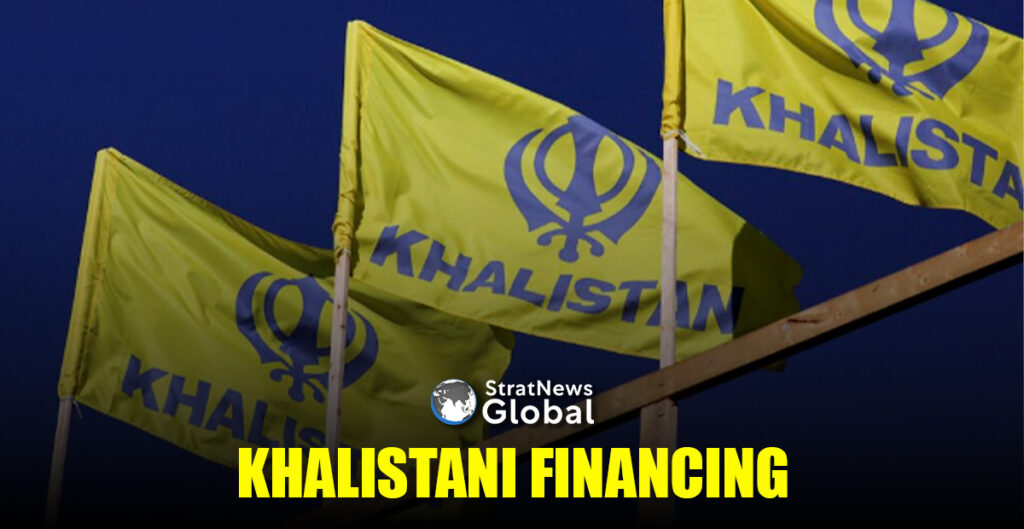
Ottawa Officially Admits Khalistani Extremist Funding On Canadian Soil
A recent Canadian government report has sounded alarm bells over terror financing activities linked to Khalistani extremists within the country.
Although it has long been an open secret that Canada offers a safe refuge to Khalistani outfits such as Babbar Khalsa, the International Sikh Youth Federation, and Sikhs for Justice, Ottawa has, for the first time, formally acknowledged that these organisations are active on Canadian soil and benefiting from financial support.
This admission appears in an assessment prepared by Canada’s Finance Department on the risks of money laundering and terrorist financing.
The report specifically states that Khalistani organisations “are suspected of raising funds in a number of countries, including Canada.”
Beyond Khalistani extremists, the assessment also highlighted connections to other terror organisations, noting financial flows linked to groups like Hamas and Hezbollah under the Politically Motivated Violent Extremism (PMVE) category.
According to the report, “Several terrorist entities listed under the Criminal Code in Canada that fall under the PMVE category, such as Hamas, Hezbollah, and the Khalistani violent extremist groups Babbar Khalsa International and the International Sikh Youth Federation, have been observed by law enforcement and intelligence agencies to receive financial support originating from Canada.”
Funding Exploitation
The report further underscores how extremist groups exploit both legitimate and illegitimate channels to sustain their operations.
It points to the use of charitable funds, proceeds from drug trafficking, and auto theft networks, adding that Canada has become a hub for terror financing.
It particularly highlights the misuse of the non-profit and charitable sectors by Khalistani extremists, bolstered by donations flowing in from expatriate communities.
While earlier these groups operated through an extensive fundraising apparatus within Canada, the new report notes that they now appear to rely on smaller, fragmented circles of individuals who remain loyal to the separatist cause but may not be directly affiliated with any one formal organisation.
The assessment also flagged a variety of funding techniques used by these groups, ranging from crowdfunding and cryptocurrency transactions to more traditional methods of financial manipulation.
It warned that these groups employ “diverse funding methods to sustain their operations, including the abuse of the MSB and banking sectors; use of cryptocurrencies; state financing; abuse of the charitable and NPO sector; and criminal activity.”
The visible presence of Khalistani extremists in Canada has been repeatedly documented in videos, witness accounts, and media investigations, yet authorities have consistently failed to take meaningful action.
Former Canadian Prime Minister Justin Trudeau has faced accusations of turning a blind eye to extremist activities directed against India, allowing them to flourish unchecked.
With Trudeau now out of power, attention is squarely on his successor, Mark Carney, and whether he will attempt to reverse this long-standing policy of neglect and indifference.
(With inputs from IBNS)
Egypt’s Foreign Minister Rejects Claim Palestinian Displacement Is Voluntary
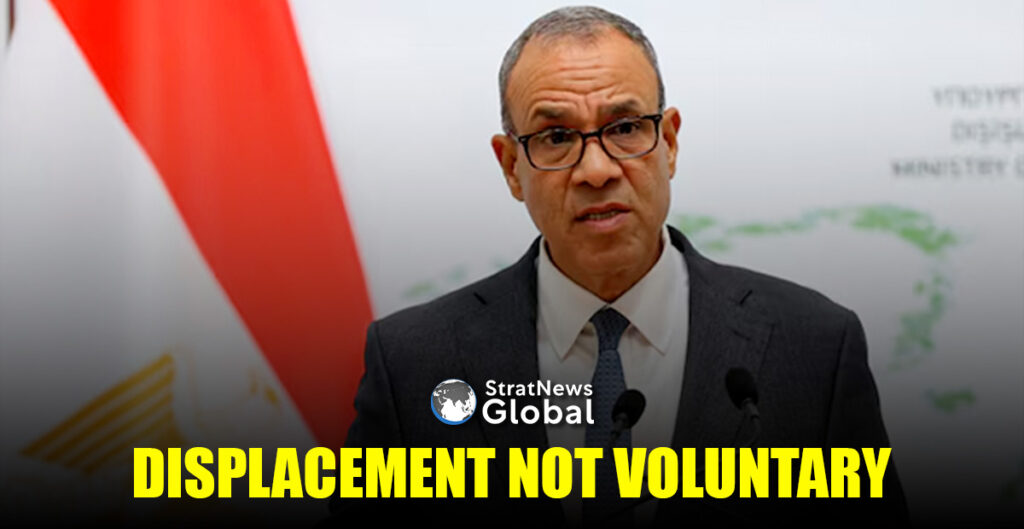
Egypt’s Foreign Minister Badr Abdelatty, whose nation plays a central role in mediating efforts to end the Gaza war, on Saturday stated that calling the displacement of Palestinians voluntary was “nonsense.”
Israel earlier called on Gaza City residents to leave for the south, as its forces advance deeper into the enclave’s largest urban area.
“If there is a manmade famine (in Gaza), it is to push residents out of their land. It is nonsense to say that this is voluntary displacement,” Abdelatty said in a joint press conference with the commissioner-general of the U.N. agency for Palestinian refugees, Philippe Lazzarini.
Israeli Prime Minister Benjamin Netanyahu has supported the idea that Palestinians in Gaza should be allowed to voluntarily leave and suggested that other countries should accept them.
Netanyahu’s office said on Friday that he had spoken about the basic human right of every individual to choose where they live, particularly during times of war.
Focus On Ceasefire
The Egyptian minister also said he spoke with U.S. special envoy Steve Witkoff on Friday and discussed intensifying efforts to implement the latest ceasefire proposal.
He blamed Israel for what he described as its intransigence over the delay in reaching a ceasefire.
Hamas agreed in August to a proposal for a 60-day ceasefire with Israel that included the return of half the hostages held in Gaza and Israel’s release of some Palestinian prisoners.
An Egyptian official source said the proposal accepted by Hamas included a suspension of Israeli military operations for 60 days and outlined a framework for a comprehensive deal to end the nearly two-year-old conflict.
Netanyahu said days later that Israel would immediately resume negotiations for the release of all hostages held in Gaza and an end to the war, but on terms acceptable to Israel.
(With inputs from Reuters)
Nigeria: Boko Haram Kills Over 60 In Night Raid
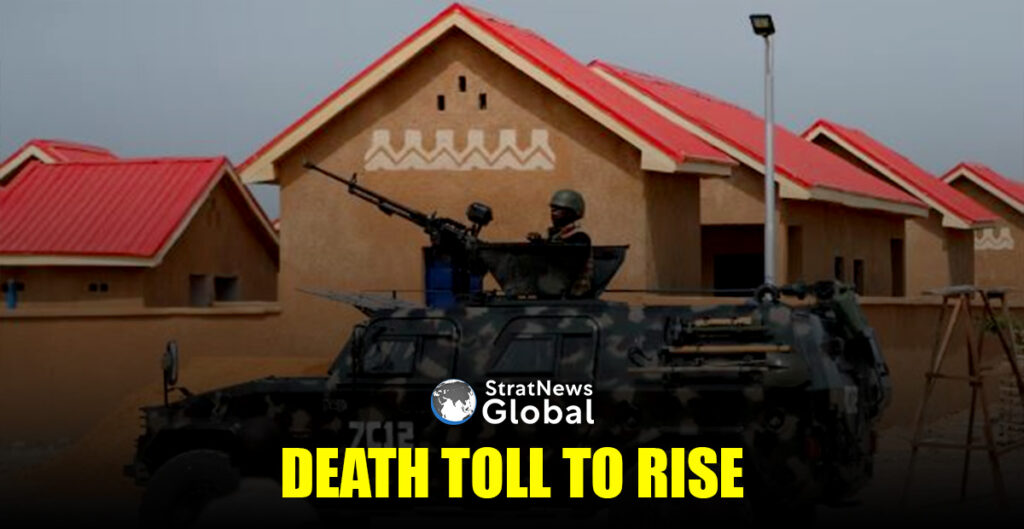
In a brutal overnight attack, Boko Haram militants killed over 60 people — including seven soldiers — in a village in Nigeria’s Borno State, where residents had only recently returned after years of displacement, locals told Reuters.
Nigeria’s military says it has stepped up counterinsurgency operations in recent months in Borno state to try to contain militias as well as militants from Boko Haram and its splinter group, Islamic State West Africa Province (ISWAP).
Analysts and residents say the operations have failed to stem attacks. Northwest Nigeria has also been plagued by violence.
‘No Action Was Taken’
The attack on Darul Jamal, near Banki in the Bama local government area, occurred around 8:30 p.m. on Friday, when armed fighters stormed the community, shooting indiscriminately and setting homes ablaze.
Babagana Mala, a resident who fled with soldiers to Bama town, about 46 km (29 miles) away, said Darul Jamal had been resettled last month after years of displacement.
“We had been warning the military for three days about Boko Haram gathering near our town, but no action was taken,” he said. “They overwhelmed the soldiers, who fled with us to Bama.”
Mala said 63 people were killed, including seven soldiers and several people who had returned from a camp for internally displaced persons in Bama.
Death Toll To Rise
The traditional head of Darul Jamal, who requested anonymity, said 70 bodies had been recovered by Saturday morning, with more residents still missing in the surrounding bush. “They went house to house, killing men and leaving women behind. Almost every household is affected,” he said, sobbing.
Governor Babagana Zulum visited the area on Saturday to assess the damage and console survivors, a security source confirmed to Reuters.
Police spokesperson Nahum Kenneth Daso declined to comment on the attack. Reuters was unable to reach Lieutenant Colonel Sani Uba, spokesperson for Nigeria’s military counterinsurgency campaign.
The head of Darul Jamal added that more than 20 houses and 10 buses were destroyed. Among the dead were seven drivers and six labourers from Bama and the city of Maiduguri, who had been working on reconstruction efforts in the town, he said.
(With inputs from Reuters)
China Slams Passage Of Canadian, Australian Warships Through Taiwan Strait
China’s military on Saturday announced that its forces had tracked and issued warnings to Canadian and Australian warships transiting the sensitive Taiwan Strait, denouncing the passage as a “provocation.”
The People’s Liberation Army’s Eastern Theatre Command said the ships, the Canadian frigate Ville de Quebec and the Australian guided-missile destroyer Brisbane, were engaged in “trouble-making and provocation”.
Chinese air and naval forces followed and warned the two ships and “effectively responded”, the command said in a statement.
“The actions of the Canadians and Australians send the wrong signals and increase security risks,” it added.
There was no immediate response to requests for comment from either the Canadian or Australian armed forces.
China’s state-backed newspaper, the Global Times, earlier on Saturday reported on the mission.
Taiwan’s defence ministry said in a statement that it keeps a close watch on activity in the strait and “dispatches appropriate air and naval forces to ensure the security and stability” of the waterway, which separates Communist China from the democratic island of Taiwan.
The U.S. Navy and occasionally ships from allied countries like Canada, Britain and France transit the strait, which they consider an international waterway, around once a month.
Taiwan also considers it an international waterway. China, which views Taiwan as its own, says the strategic waterway is part of its territorial waters.
Taiwan’s government rejects Beijing’s territorial claims.
China has, over the past five years, increased its military pressure against the island, including staging war games near Taiwan.
(With inputs from Reuters)
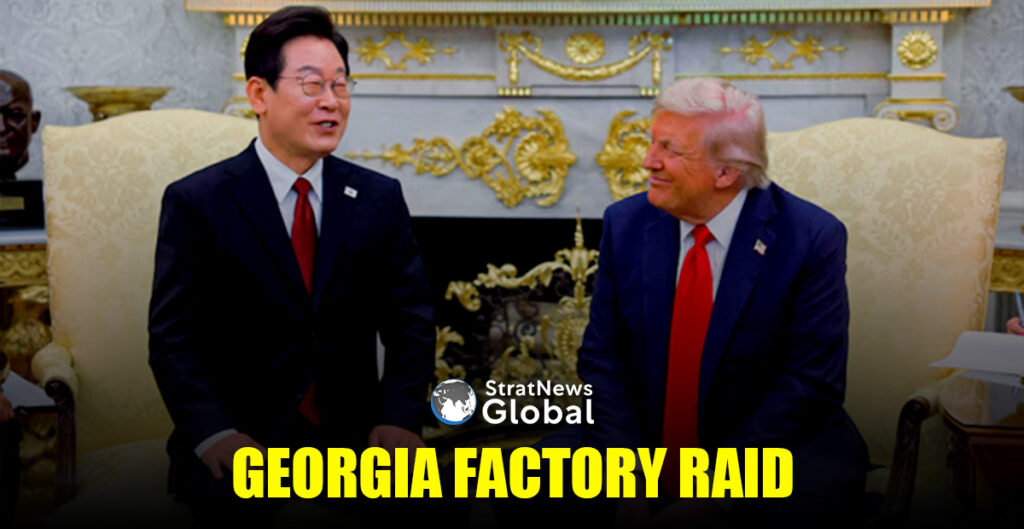
South Korean President Pledges Support For Nationals Detained In US Immigration Raid
South Korean President Lee Jae Myung on Saturday directed full-scale efforts to promptly address the arrests of hundreds of South Korean nationals during a U.S. immigration raid at a Hyundai Motor car battery factory.
Foreign Minister Cho Hyun said the government has set up a team to respond to Thursday’s arrest of over 300 Koreans at the facility in the southern state of Georgia, and that he may go to Washington to meet with officials if needed.
“I am deeply concerned. I feel heavy responsibility for the arrests of our citizens,” Cho told an emergency government meeting.
The incident could exacerbate tensions between the Trump administration and Seoul, a key Asian ally and investor. They have been at odds over the details of a trade deal that includes $350 billion of South Korean investment in the United States.
Workers Shackled
A video released by U.S. Immigration and Customs Enforcement showed Asian workers shackled at the wrists, waist, and ankles getting on a bus after the raid, which involved a helicopter and armoured vehicles.
The arrest of some 475 workers, including over 300 Koreans, at the plant near Savannah, part of President Donald Trump’s escalating crackdown on immigrants, was the largest single-site enforcement operation in the U.S. Department of Homeland Security’s history.
In the video, hundreds of workers were standing up in front of a building, with some wearing yellow vests with names such as “Hyundai” and “LG CNS.” Two of the workers hid in a pond before being arrested.
“We welcome all companies that want to invest in the U.S., and if they need to bring workers in for building or other projects, that’s fine — but they need to do it the legal way,” Special Agent in Charge of Homeland Security Investigations in Georgia and Alabama Steven N. Schrank said in a statement on Saturday.
“This operation sends a clear message that those who exploit the system and undermine our workforce will be held accountable.”
Hyundai said it would investigate its suppliers and their subcontractors to ensure they meet regulations.
LG Energy Solution, which is working with Hyundai to build the factory, said it had asked employees to return from U.S. business trips while suspending travel to the United States except for customer meetings.
LG Energy Solution said 47 of its employees and about 250 workers for contractors at the joint venture factory were detained.
(With inputs from Reuters)
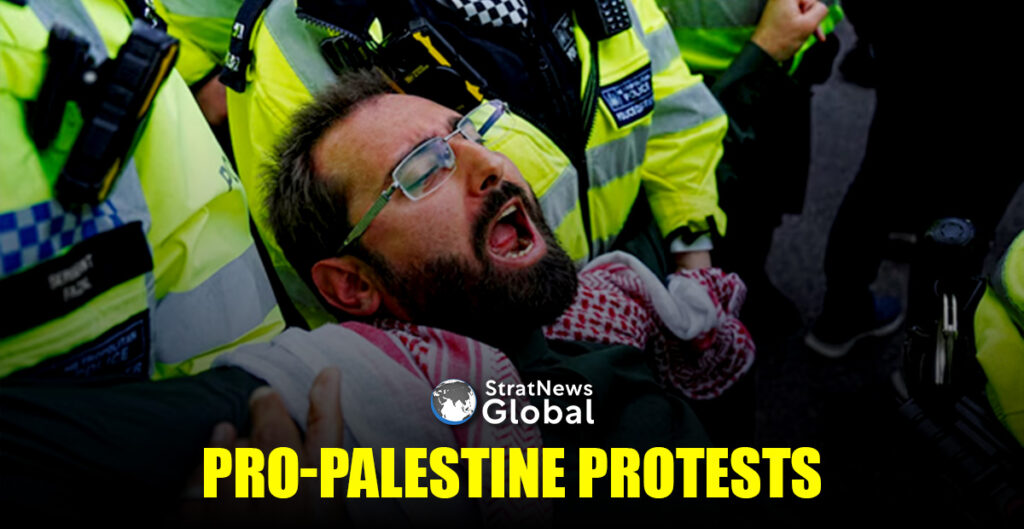
Dozens Arrested In UK Under Anti-Terror Laws At Pro-Palestine Action Protest
The UK police on Saturday detained dozens of additional individuals under anti-terrorism laws for participating in a protest supporting Palestine Action, a pro-Palestinian organisation outlawed by the government as a terrorist group.
Britain banned Palestine Action under anti-terrorism legislation in July after some of its members broke into a Royal Air Force base and damaged military planes. The group accuses Britain’s government of complicity in what it says are Israeli war crimes in Gaza.
Police have arrested hundreds of Palestine Action supporters in recent weeks under anti-terrorism legislation, including over 500 in just one day last month, many of them over the age of 60.
On Saturday, hundreds of demonstrators gathered near parliament in central London to protest against the ban on Saturday, with many holding up signs that said: “I oppose genocide. I support Palestine Action.”
London’s Metropolitan Police said officers had begun arresting those expressing support for Palestine Action. Police did not say how many arrests were made, but a Reuters witness said dozens of people were detained.
Proscription Criminalises Group Support
Palestine Action’s ban, or proscription, puts the group alongside al-Qaeda and ISIS and makes it a crime to support or belong to the organisation, punishable by up to 14 years in prison.
“I can be unequivocal, if you show support for Palestine Action – an offence under the Terrorism Act – you will be arrested,” Met Deputy Assistant Commissioner Ade Adelekan said on Friday. “We have the officer numbers, custody capacity and all other resources to process as many people as is required.”
Human rights groups have criticised Britain’s decision to ban the group as disproportionate and say it limits the freedom of expression of peaceful protesters.
The government has accused Palestine Action of causing millions of pounds worth of criminal damage and says the ban does not prevent other pro-Palestinian protests.
(With inputs from Reuters)
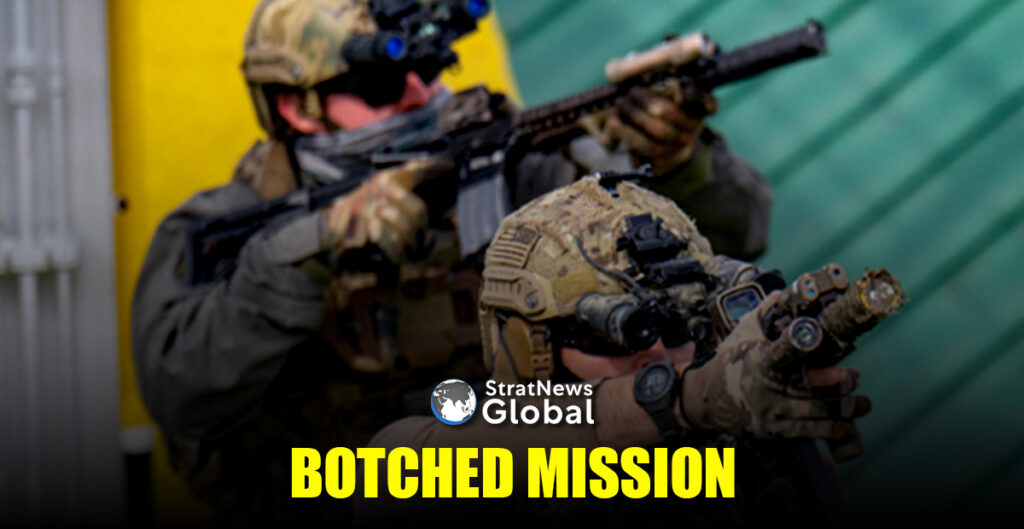
US Navy SEALs Killed North Korean Civilians During 2019 Botched Mission: Report
During a failed mission in 2019, United States Navy SEALs reportedly shot and killed multiple North Korean civilians while attempting to plant a listening device in the nuclear-armed nation, a top U.S. news outlet has reported.
The operation was said to have received approval from President Donald Trump during his first term.
According to The New York Times, the classified mission was executed by SEAL Team 6, the elite U.S. Navy unit renowned for high-risk operations, including the 2011 killing of al-Qaeda leader Osama bin Laden in Pakistan’s Abbottabad.
The mission took place amid sensitive diplomatic negotiations between Washington and Pyongyang in early 2019.
The SEALs were tasked with covertly infiltrating North Korean territory under the cover of darkness and installing a listening device designed to monitor the country’s leadership.
Operating with blackout communications, however, the mission quickly went awry.
Several North Korean civilians, reportedly foraging for shellfish near the shore, accidentally encountered the U.S. operatives as they came ashore.
Fishermen Shot Dead
The SEALs opened fire, killing all occupants of a small fishing vessel, the Times reported. The news outlet did not provide precise figures regarding the number of casualties.
Officials familiar with the operation told the Times that U.S. forces attempted to conceal the incident from North Korean authorities by disposing of the bodies in the water. One source described how SEAL members allegedly “punctured the boat crew’s lungs with knives to ensure their bodies would sink.”
The report said that it obtained details about the failed mission through interviews with dozens of individuals, including civilian government officials, members of the Trump administration, and current and former military personnel with knowledge of the operation.
All sources spoke on condition of anonymity due to the mission’s classified nature. Several of the interviewees said they came forward because they were concerned that failures by U.S. special operations forces are “often hidden by government secrecy.”
Sources indicated that the mission received final authorisation from President Trump during his first term in office. When asked about the report on Friday, Trump denied having any knowledge of the operation.
“I could look, but I know nothing about [it],” Trump told reporters. “I’m hearing it now for the first time,” he added.
U.S. officials told the Times that it remains “unclear” whether North Korea ever fully understood what occurred during the 2019 operation.
North Korea did not publicly comment at the time about the civilian deaths, and has yet to respond to the Times’ recent reporting on the incident.
(With inputs from IBNS)
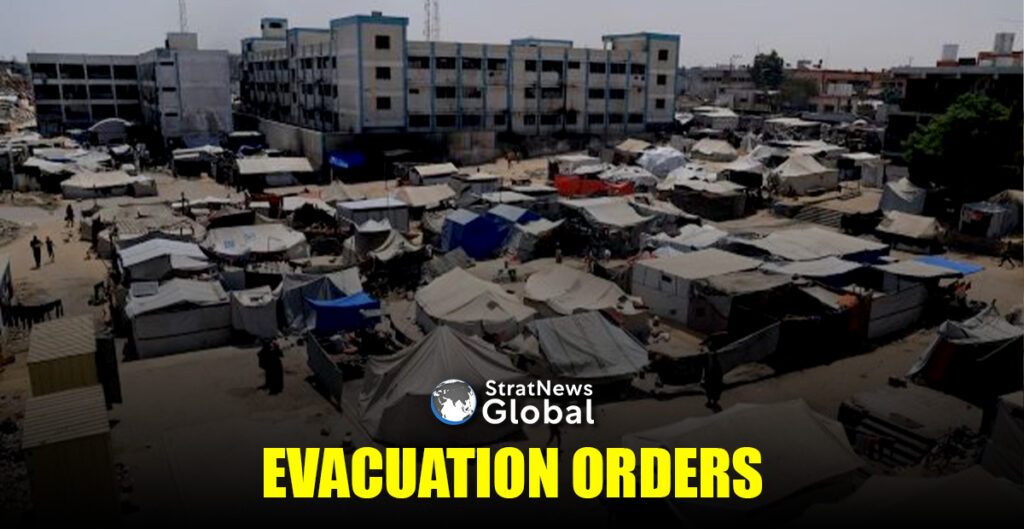
Israeli Army Orders Gaza City Evacuation, Strikes High-Rise Tower
On Saturday, Israeli military asked the residents of Gaza City to move south, followed by an airstrike on a high-rise building as its troops pushed further into the enclave’s largest urban center.
Israeli forces have been carrying out an offensive on the suburbs of the northern city for weeks after Israeli Prime Minister Benjamin Netanyahu ordered the military to capture it.
Netanyahu says Gaza City is a Hamas stronghold and capturing it is necessary to defeat the Palestinian Islamist terrorists, whose October 2023 attack on Israel sparked the war.
The assault threatens to displace hundreds of thousands of Palestinians sheltering there from nearly two years of fighting. Before the war, around a million people, nearly half of Gaza’s population, lived in the city.
‘Humanitarian Zone’
Israeli military spokesperson Avichay Adraee wrote on X that residents should leave the city for a designated coastal area of Khan Younis in southern Gaza, assuring those fleeing that they would be able to receive food, medical care and shelter there.
The designated area was a “humanitarian zone”, Adraee said.
The military also issued so-called “evacuation warnings” to civilians in certain areas of the city, warning it was about to carry out attacks.
The military later bombed a high-rise Gaza City tower that it said was being used by Hamas, without providing evidence to support the assertion. It said civilians were warned in advance.
Israel’s Defence Minister Israel Katz shared a video on X of what appeared to be the multi-storey building collapsing after the strike, sending a cloud of dust and debris into the air.
It was not immediately clear if there were any casualties.
The Israeli military said Hamas used the building to gather intelligence and that explosive devices had been planted nearby. Hamas denied using the building for military purposes, and Palestinians said it had been used to shelter the displaced.
Before the strike, Gazan health authorities reported at least 23 Palestinians had been killed on Saturday, including at least 13 in the Gaza City area.
Heavy Strikes
The Israeli military bombed another high-rise tower on Friday that it had also said was being used by Hamas.
On Thursday, the military said it had control over almost half of Gaza City. It says it controls about 75% of all of Gaza.
Many of those in Gaza City were displaced earlier in the war only to later return. Some residents have said that they refuse to be displaced again.
The military has been carrying out heavy strikes on the city for weeks, advancing through outer suburbs, and this week forces were within a few kilometres of the city centre.
Netanyahu, backed by right-wing coalition allies, ordered the capture of Gaza City against the advice of Israel’s military leadership, according to Israeli officials. Despite its hesitation, the military has called up tens of thousands of reservists to support the operation.
The war in Gaza has increasingly left Israel diplomatically isolated, with some of its closest allies condemning the campaign that has devastated the small territory.
Amnesty International on Friday urged Israel to halt its offensive on Gaza City and the mass displacement of hundreds of thousands of Palestinians, warning that the military had destroyed homes and killed “scores of civilians” in recent days.
All-Or-Nothing Deal
Palestinian terrorists took 251 hostages into the enclave after a Hamas-led cross-border attack on southern Israeli communities on October 7, 2023 that killed about 1,200 people.
More than 64,000 Palestinians have since been killed in Gaza, local health authorities say, with much of the enclave reduced to ruins and its residents facing a humanitarian crisis.
There are also growing calls within Israel, led by families of hostages and their supporters, to end the war in a diplomatic deal that would secure the release of the remaining 48 captives.
Israeli officials believe 20 of the hostages are alive.
Netanyahu is pushing for an all-or-nothing deal that would see all of the hostages released at once and Hamas surrendering.
A video released by Hamas on Friday showed two captives, one of whom said they were being held in Gaza City and that they feared being killed in Israel’s assault on the urban centre.
Israeli military officials say they have killed many of Hamas’ key leaders and thousands of its fighters.
Hamas has offered to release some hostages for a temporary ceasefire, similar to terms that were discussed in July before negotiations mediated by the U.S. and Arab states collapsed.
U.S. President Donald Trump said on Friday that Washington was in “very deep” negotiations with the Palestinian militants.
U.S. President Donald Trump said on Friday that Washington was in “very deep” negotiations with the Palestinian militants.
Hamas, which has ruled Gaza for nearly two decades but today controls only parts of the enclave, has long said it would release all hostages if Israel agreed to end the war and to withdraw all its forces from Gaza.
(With inputs from Reuters)
Hezbollah Calls Lebanese Army Proposal A Chance For Stability, Presses Israel On Ceasefire
On Saturday, Hezbollah official Mahmoud Qmati said they viewed Friday’s cabinet decision over a plan to give the state exclusive control of weapons as a chance to restore calm and rationality, and to avert the country from drifting into instability.
Lebanon‘s cabinet on Friday welcomed a plan by the army that would disarm Hezbollah and said the military would begin executing it, without setting a timeframe for implementation and cautioning that the army had limited capabilities.
But it said continued Israeli military operations in Lebanon would hamper the army’s progress. Speaking to reporters after the meeting, Lebanese information minister Paul Morcos stopped short of saying the cabinet had formally approved the plan.
Qmati said that Hezbollah had reached its assessment based on the government’s declaration on Friday that further implementation of a U.S. roadmap on the matter was dependent on Israel’s commitment.
Qmati Urges Israel To Withdraw Troops
He added that without Israel halting strikes and withdrawing its troops from southern Lebanon, Lebanon’s implementation of the plan should remain “suspended until further notice.”
Lebanon’s cabinet last month tasked the army with coming up with a plan that would establish a state monopoly on arms and approved a U.S. roadmap aimed at disarming Hezbollah in exchange for a halt to Israeli military operations in Lebanon.
Qmati said that Hezbollah “unequivocally rejected” those two decisions and expected the Lebanese government to draw up a national defence strategy.
Israel last week signaled it would scale back its military presence in southern Lebanon if the army took action to disarm Hezbollah. Meanwhile, it has continued its strikes, killing four people on Wednesday.
A national divide over Hezbollah’s disarmament has taken centre stage in Lebanon since last year’s devastating war with Israel, which upended a power balance long dominated by the Iran-backed Shi’ite Muslim group.
Lebanon is under pressure from the U.S., Saudi Arabia and Hezbollah’s domestic rivals to disarm the group. But Hezbollah has pushed back, saying it would be a serious misstep to even discuss disarmament while Israel continues its air strikes on Lebanon and occupies swathes of territory in the south.
Hezbollah Secretary General Naim Qassem last month raised the spectre of civil war, warning the government against trying to confront the group and saying street protests were possible.
(With inputs from Reuters)