

Support us by contributing to StratNewsGlobal on the following UPI ID
ultramodern@hdfcbank

Strategic affairs is our game, South Asia and beyond our playground. Put together by an experienced team led by Nitin A. Gokhale. Our focus is on strategic affairs, foreign policy and international relations, with higher quality reportage, analysis and commentary with new tie-ups across the South Asian region.
You can support our endeavours. Visit us at www.stratnewsglobal.com and follow us on YouTube, Twitter, Facebook and Instagram.
र 500 per month
र 1000 per month
र 5000 per year
र 10000 per year
Donate an amount of your choice
र 500 per month
Donate र 500 per month

र 1000 per month
Donate र 1000 per month
र 5000 per year
Donate र 5,000 per year
र 10000 per year
Donate र 10,000 per year
Donate an amount of your choice
Donate an amount of your choice
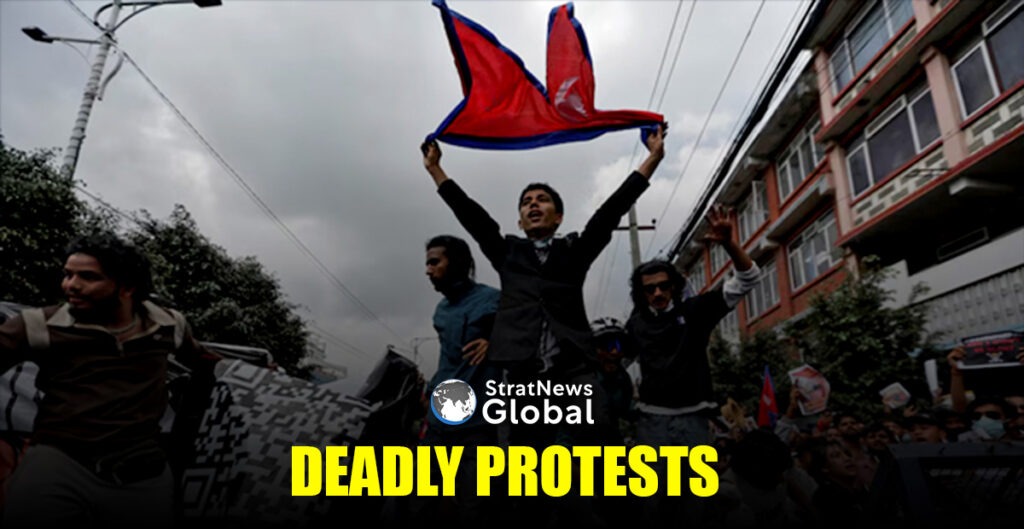
At Least 16 Killed In Nepal Protests Over Social Media Ban
At least 16 people were killed as Nepal‘s police used tear gas and rubber bullets to disperse youths attempting to storm parliament on Monday during protests against a social media shutdown and alleged government corruption, reports said.
Nepal blocked access to several social media platforms, including Facebook, last week after they failed to register with authorities in a crackdown on misuse.
The government said social media users with fake IDs have been spreading hate speech and fake news, and committing fraud and other crimes via some platforms.
Authorities imposed a curfew around the parliament building after thousands of protesters tried to enter the legislature by breaking a police barricade.
‘Unconfirmed’ Death Toll
At least 16 people were killed and hundreds of others were injured in the clash.
However, according to state-run Nepal Television, one person died and more than 50 were injured in the trouble, while other local broadcasters reported that at least six people had died.
There was no official confirmation of the deaths and injuries, and neither Reuters nor IBNS could independently verify the figures.
Several protesters were injured and taken to a nearby hospital, a Reuters witness said. A group of protesters stopped a security vehicle heading towards parliament, and an ambulance was set on fire, they added.
Ekram Giri, a spokesperson for Nepal’s parliament, said some protesters entered the parliament premises but did not reach the main building. They had been driven out by police and had assembled on the road outside, he said.
“We have imposed a curfew which will remain in force until 10 p.m. local time (1615 GMT) to bring the situation under control after protesters began to turn violent,” Muktiram Rijal, a spokesperson for the Kathmandu district office, told Reuters.
Police had orders to use water cannons, batons and rubber bullets to control the crowd, Rijal said.
The curfew had been extended to Kathmandu’s Singha Durbar area, which includes the prime minister’s office as well as other ministries, the residence of the prime minister and the president’s house, Rijal said.
Protests In Other Cities
Police said similar protests were also organised in Biratnagar and Bharatpur in the southern plains and in Pokhara, gateway to the world’s 10th highest mountain, Mount Annapurna, in western Nepal.
Earlier on Monday, thousands of youths, including students, many in their school or college uniforms, were stopped by police from marching towards the parliament building, where demonstrations are not allowed.
Protesters carried the national flag and placards with slogans such as “Shut down corruption and not social media”, “Unban social media”, and “Youths against corruption”, as they marched through Kathmandu.
Television visuals showed some protesters throwing projectiles at police personnel who were dressed in riot gear and huddled in one place as smoke from tear gas shells filled the street. Protesters also pushed against police barricades and brought them down.
Corruption And Social Media Crackdown
Many people in the Himalayan nation think corruption is rampant, and the government of Prime Minister K.P. Sharma Oli has been criticised by opponents for failing to deliver on its promises.
Nepal’s social media shutdown comes as governments worldwide, including the U.S., EU, Brazil, India, China and Australia, take steps to tighten oversight of social media and Big Tech due to growing concern about issues such as misinformation, data privacy, online harm and national security.
Critics say many of these measures risk stifling free expression, but regulators say stricter controls are needed to protect users and preserve social order.
About 90% of Nepal’s 30 million people use the internet.
(With inputs from Reuters and IBNS)
Security, Climate Change Top Agenda At Pacific Islands Leaders’ Summit
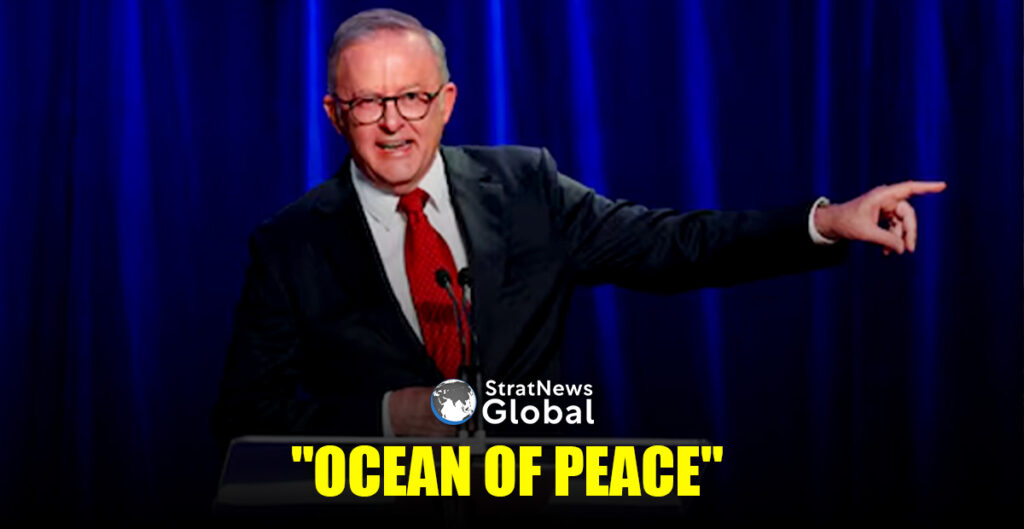
Pacific Islands leaders opened a week-long summit on Monday in the Solomon Islands, where they are anticipated to back an “Ocean of Peace” declaration amid growing worries about escalating tensions between the United States and China.
The leaders are also expected to back Australia’s bid to host the COP31 United Nations climate summit, after Canberra pledged to work closely with its island neighbours to raise awareness of the challenges they face from rising sea levels and worsening storms.
Pressure from China to block Taiwan’s participation at the forum, being held in Honiara, led to the Solomon Islands cancelling the attendance of two dozen donor partners, including China, Taiwan and the United States.
Among 18 forum members, three have diplomatic ties with Taiwan, three have defence compacts with the United States, and several are French territories. Thirteen of the members have ties with China.
‘Regional Priorities’
Divavesi Waqa, secretary-general of the Pacific Islands Forum, said the agenda would focus on “regional priorities” such as climate change, ocean governance, security, and economic resilience. “These are not abstract policy issues,” Waqa told reporters on Sunday. “They are everyday realities for our communities.”
Solomon Islands Prime Minister Jeremiah Manele, who welcomed leaders to Honiara, said the meeting’s theme — Lumi Tugeda: Act Now for an Integrated Blue Pacific Continent — underscored the urgency of solidarity and collective action. “If ever there was a moment demanding stronger Pacific regionalism and united efforts, it is now,” Manele declared in a statement.
Manele, who has worked to improve ties with Australia following Western unease over his predecessor’s alignment with Beijing, has also defended the controversial decision to exclude foreign observers from this year’s talks.
The largest forum member, Australia, is the region’s biggest aid donor and has stepped up efforts to block China from expanding its security presence in the region, after Beijing and the Solomon Islands struck a pact in 2022.
Australia’s Prime Minister Anthony Albanese is expected to arrive in Honiara on Wednesday, after visiting Vanuatu, where he is expected to sign a landmark A$500 million ($326.50 million) deal to strengthen economic and security ties.
New Zealand’s Prime Minister Christopher Luxon said his country had advocated strongly for the donor partners to attend to discuss development opportunities, but added the forum was united nonetheless.
(With inputs from Reuters)
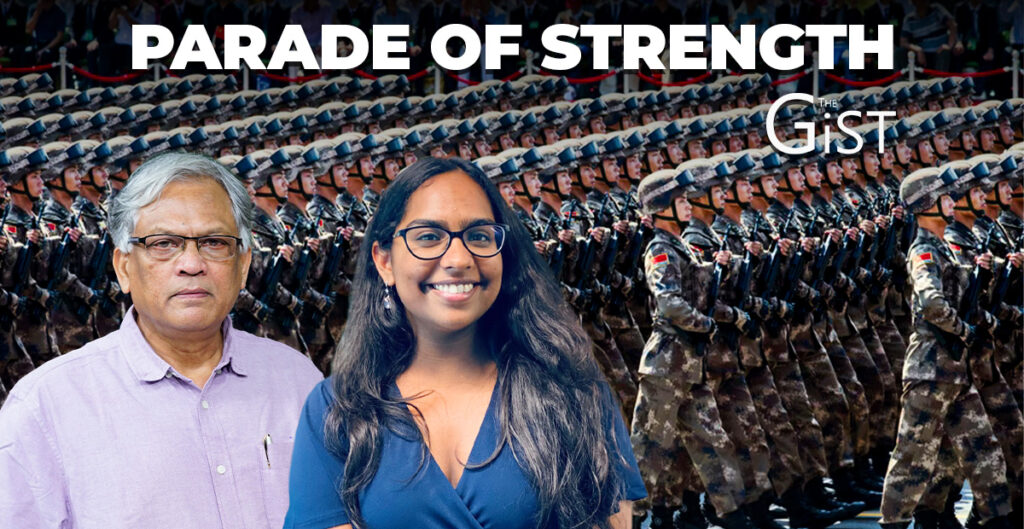
China’s Parade Demonstrated Military Strength And Willingness To Use It
What was special about the military parade China held on Sept 3 to mark the 80th anniversary of the victory over Japan in World War II?
“If you look at the world from Beijing’s perspective today, there is increasing, military and economic hostility, especially from the West, led by the U.S.,” said Anushka Saxena, China scholar at the Takshashila Institution in Bengaluru.
“And in such a scenario, it becomes very important for something like the parade to come off as a message from China, that look, we are pulling out the big guns. We have them, we can use them, and most importantly, the Chinese people have the spirit and the resilience to be able to deal with whatever’s to come.”
Saxena was answering questions on The Gist, analysing the big takeaways from the parade attended by no less than 26 heads of state. Of course India’s Modi was not present, given the need to respect Japan’s sentiments, and most Western leaders stayed away.
But Saxena believes China is also telling its friends and allies that in case of need, the People’s Liberation Army and all its air and sea branches can be deployed to aid and assist. This is something sections of China’s academic community have articulated as well.
“They’re communicating to countries like the US that you can never achieve this level of mission, honor and discipline. And these are big guns, and you know, you should be afraid of them. And that’s exactly what the weapon system on parade achieved.”
But China has not fought a war in more than 40 years (1979 against Vietnam) and doubts remain about the fighting ability of the average Chinese soldier.
Saxena’s view is that China would prefer staying out of direct involvement … something like what the world saw in the case of Pakistan during Operation Sindoor.
“In fact, Chinese commentators during the skirmishes between India and Pakistan … were calling Pakistan’s arsenal made in China and to a great degree, rightfully so. You saw ground based air defenses, and HQ9 (missiles) specifically made for Pakistan.”
Tune in for more in this conversation with Anushka Saxena of the Takshashila Institution.
Suu Kyi’s Health Deteriorating In Myanmar’s Military Custody, Says Son
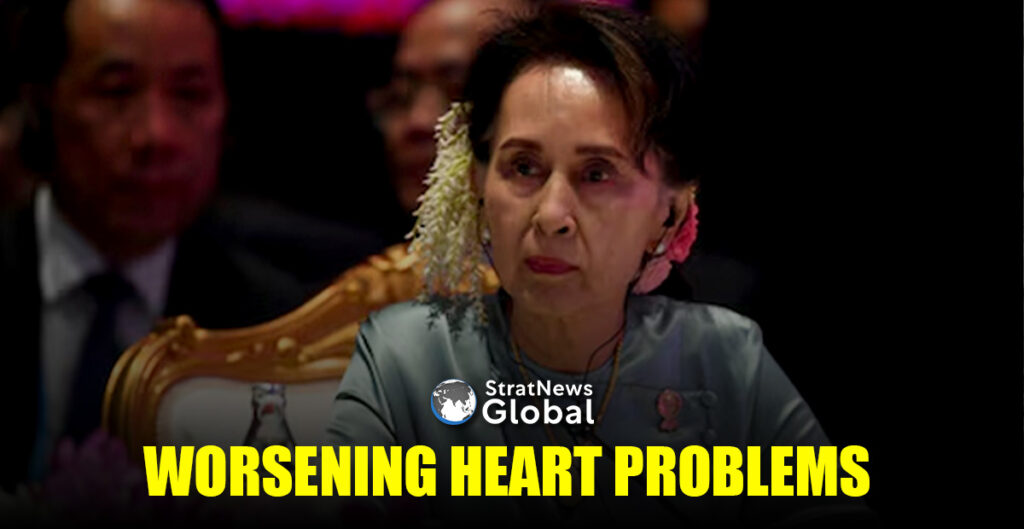
Myanmar’s jailed former leader Aung San Suu Kyi is experiencing worsening heart problems and urgently requires medical care, her son said Friday, appealing for her immediate release from what he called “cruel and life-threatening” detention.
Kim Aris told Reuters that his 80-year-old mother, in military custody since a 2021 coup that deposed her government, had asked to see a cardiologist about a month ago, but he had been unable to determine whether her request had been granted.
“Without proper medical examinations … it is impossible to know what state her heart is in,” he said by phone from London. “I am extremely worried. There is no way of verifying if she is even alive.”
Multiple Health Issues
The Nobel Peace Prize laureate has also suffered from bone and gum issues, Aris said, adding that it was likely she had been injured in an earthquake in March that killed more than 3,700 people. In a Facebook video, he appealed for Suu Kyi and all political prisoners in Myanmar to be released.
Military spokesman Zaw Min Tun told state media on Saturday evening that reports about her health were intended to distract from military chief Min Aung Hlaing’s visit to China, where he met with President Xi Jinping and attended a military parade.
“Daw Aung San Suu Kyi’s health is good. They are fabricating this information because we are in China and our Myanmar leader is doing so many activities, and they want to hide this news,” he said on MRTV.
Myanmar has been gripped by violence since the military takeover in February 2021, which prompted mass rallies that were crushed by brutal force, sparking a widespread armed uprising.
Suu Kyi, a long-standing symbol of Myanmar’s pro-democracy movement, is serving a 27-year sentence for offences including incitement, corruption and election fraud, all of which she denies.
One of her last public appearances was in court in May 2021, a few months after the coup, when pictures aired by state television showed her sitting upright in the dock, with her hands in her lap and wearing a surgical mask.
Decades In Detention
The military justified its takeover on the basis of what it said was widespread fraud in an election that Suu Kyi’s party won by a landslide, although election monitors found no evidence of cheating.
Foreign governments and rights groups have consistently called for her release.
Starting in late December, the military-backed interim government plans to hold new elections in multiple phases, the first polls since the one that triggered the coup.
Anti-junta groups, including Suu Kyi’s party, are either boycotting or are barred from running, with only military-backed and approved parties participating. Western governments have criticised the vote as a move to entrench the generals’ power.
Born in 1945 to Myanmar’s independence hero, General Aung San, who was assassinated when she was an infant, Suu Kyi has spent nearly two decades in detention, including some 15 years under house arrest at her colonial-style family home on Yangon’s Inya Lake, as ordered by a previous junta.
Educated at Oxford University, she married British scholar Michael Aris in 1972 and had two sons with him, before returning to Myanmar in 1988 to care for her ailing mother.
That is also when she joined nationwide protests against military rule, forming the National League for Democracy party and rising to become Myanmar’s most prominent pro-democracy leader.
(With inputs from Reuters)
Afghanistan Quakes: WHO Urges Taliban To Lift Restrictions On Women Aid Staff
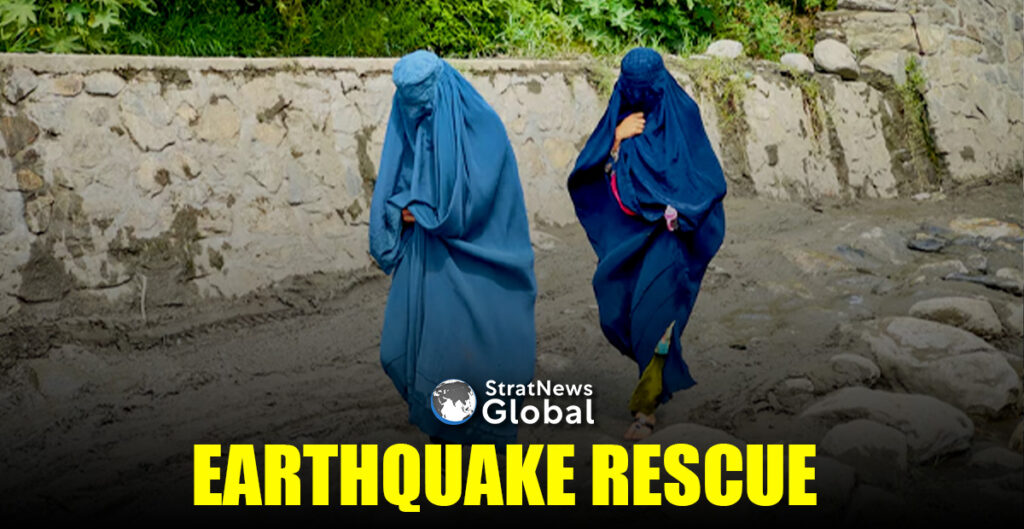
The World Health Organisation (WHO) has urged Taliban authorities to remove restrictions on Afghan female aid workers, calling for freedom of travel without male guardians so they can assist women in need of care after a devastating earthquake killed 2,200 people in eastern Afghanistan.
“A very big issue now is the increasing paucity of female staff in these places,” Mukta Sharma, the deputy representative of WHO’s Afghanistan office, told Reuters.
She estimated around 90% of medical staff in the area were male, and the remaining 10% were often midwives and nurses, rather than doctors, who could treat severe wounds. This was hampering care as women were uncomfortable or afraid to interact with male staff and travel alone to receive care.
The September 1 magnitude 6 quake and its aftershocks injured more than 3,600 people and left thousands homeless in a country already dealing with severe aid cuts and a slew of humanitarian crises since the Taliban took over in 2021 as foreign forces left.
The Afghan health ministry and a spokesperson for the Taliban administration did not immediately respond to a request for comment.
Taliban’s Conditional Rights Stance
The Taliban says it respects women’s rights in line with its interpretation of Islamic law and has previously said it would ensure women could receive aid.
The Taliban administration in 2022 ordered Afghan female NGO staff to stop working outside the home. Humanitarian officials say there have been exemptions, particularly in the health and education sectors, but many said these were patchwork and not sufficient to allow a surge of female staff, particularly in an emergency situation that required travel.
That meant aid organisations and female staff faced uncertainty, Sharma said, and in some cases were not able to take the risk.
“The restrictions are huge, the mahram (male guardian requirements) issue continues, and no formal exemption has been provided by the de facto authorities,” she said, adding her team had raised the issue with authorities last week.
“That’s why we felt we had to advocate with (authorities) to say, this is the time you really need to have more female health workers present, let us bring them in, and let us search from other places where they’re available.”
Sharma said she was extremely concerned about women in the future being able to access mental health care to deal with trauma, as well as for those whose male family members had been killed, leaving them to navigate restrictions on women without a male guardian.
Peer Gul from Somai district in Kunar province, which was severely hit by the quakes, said many women from his village had experienced trauma and high blood pressure after the earthquake and were struggling to reach medical care.
“There is no female doctor for examinations; only one male doctor is available,” he said.
Sharma noted the growing shortage of Afghan female doctors as the Taliban has barred female students from high school and university, meaning a pipeline of women doctors was not being replenished.
Pregnant Women Impacted By Quakes
The U.N. estimates around 11,600 pregnant women were also impacted by the quakes in a country with some of the highest maternal mortality rates in Asia.
Funding cuts, including those by the U.S. administration this year, had already left the health system reeling. Around 80 health facilities had already closed in the affected areas this year due to U.S. aid cuts, and another 16 health posts had to be shuttered due to damage from the earthquake, Sharma said.
(With inputs from Reuters)
Trump Eyes Imminent Gaza Deal After Issuing ‘Last Warning’ To Hamas
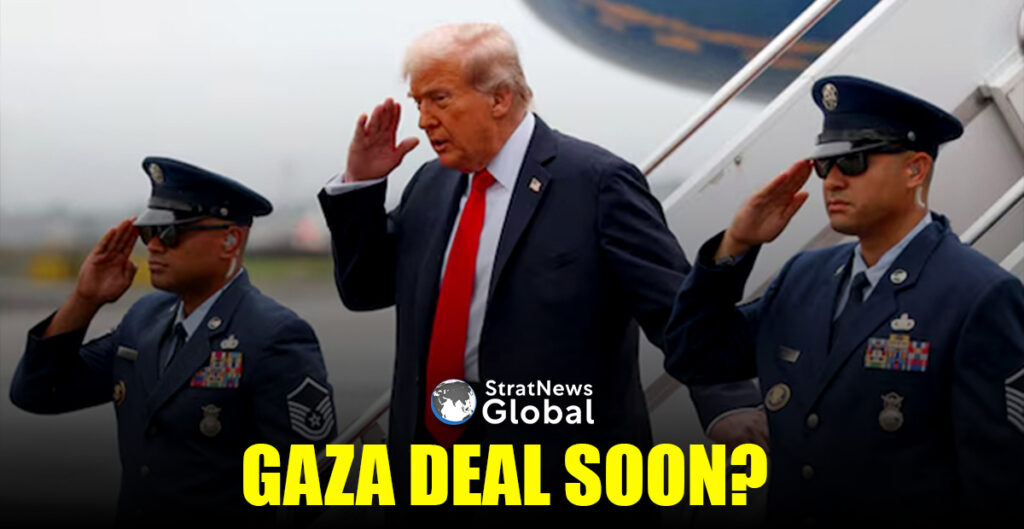
U.S. President Donald Trump on Sunday indicated that a Gaza deal to secure the release of all hostages held by Hamas could be reached soon, following what he described as his “last warning” to the Palestinian militant group.
Trump, speaking to reporters after landing in the Washington area on Sunday evening following a brief trip to New York, said he had been discussing the issue on the plane.
“We’re working on a solution that may be very good,” he said. He declined to give further details. “You’ll be hearing about it pretty soon. We’re trying to get it ended, get the hostages back.”
Earlier on Sunday, he warned Hamas to accept his terms of an agreement, without giving any specifics.
“The Israelis have accepted my Terms. It is time for Hamas to accept as well,” Trump wrote on his Truth Social platform. “I have warned Hamas about the consequences of not accepting. This is my last warning, there will not be another one!”
Hamas later said that it received some ideas from the United States’ side through mediators to reach a ceasefire deal in Gaza and was discussing ways to develop those ideas. It also gave no details of the possible agreement.
Hamas ‘Ready’ For Negotiations
Hamas, in its statement, also reiterated its readiness for negotiations to release all hostages in exchange for a “clear announcement of an end to the war” and the complete withdrawal of Israeli forces from the enclave.
Trump told reporters that he thought all the hostages would be returned: “I think we’re going to get them all.”
He noted that some may already have died, but the aim would be to have their bodies returned.
On Saturday, Israel’s N12 News reported that Trump has put forth a new ceasefire proposal to Hamas.
Under the deal, Hamas would free all the remaining 48 hostages on the first day of the truce in exchange for thousands of Palestinian prisoners jailed in Israel and negotiate an end to the war during a ceasefire in the enclave, according to N12.
An Israeli official said Israel was “seriously considering” Trump’s proposal but did not elaborate.
(With inputs from Reuters)
Israel: Five Dead In Shooting At Jerusalem Bus Stop
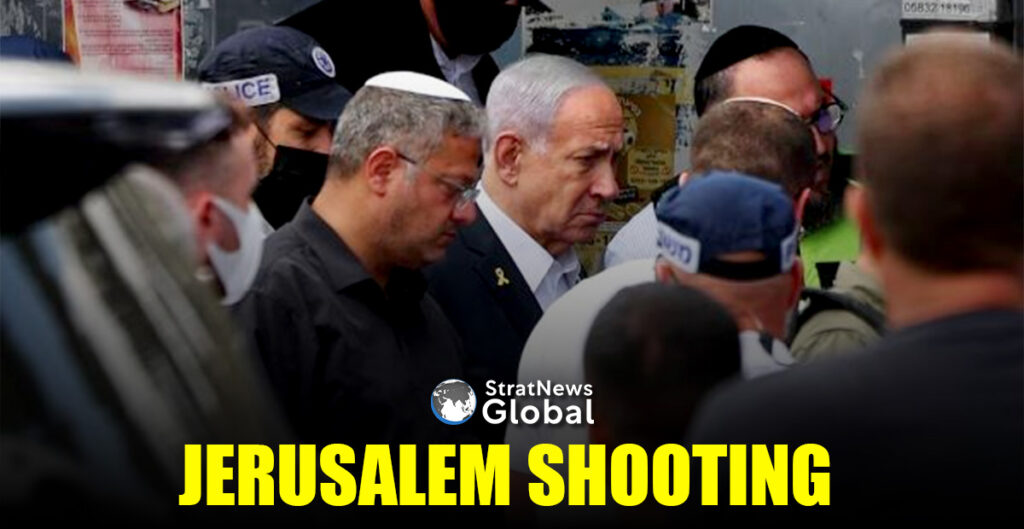
Five people lost their lives on Monday when gunmen opened fire at a bus stop on the outskirts of Jerusalem. Police said the attackers were shot and killed, while Israel’s ambulance service confirmed the fatalities.
It was not immediately clear who carried out the shooting or what was the motive. Palestinian terrorist group Hamas praised two Palestinian “resistance fighters” who it said had carried out the attack but it stopped short of claiming responsibility.
The ambulance service identified the five victims as a 50-year-old man, a woman in her fifties and three men in their thirties. It said 11 other people had suffered injuries, including six who were in a serious condition with gunshot wounds.
Israeli police said two attackers arrived by car and opened fire at a bus stop at Ramot Junction. They said a security officer and a civilian shot and killed the assailants. Several weapons, ammunition and a knife used by the attackers, who police only identified as “terrorists”, were recovered at the scene, police said.
Islamic Jihad, another Palestinian terrorist group, also praised the shooting but did not claim responsibility for it.
The junction is located in a part of Jerusalem that Israel captured in the 1967 war and later annexed in a move that the United Nations and most countries do not recognise.
‘A Very Severe Scene’
The prime minister’s office said Benjamin Netanyahu was holding a “situation assessment” with security officials.
Media footage showed a heavy police presence in the Ramot area following the shooting. The ambulance service said a paramedic arriving at the scene reported that several victims were lying on the road and the sidewalk, some unconscious.
“This was a very severe scene,” the ambulance service cited paramedic Fadi Dekaidek as saying.
The Israeli military said it had deployed soldiers to the area and were aiding police in the search for suspects. Soldiers were also operating in areas of Ramallah in the Israeli-occupied West Bank to conduct interrogations and “thwart terrorism”, it said.
In October 2024, two Palestinians, one armed with a gun and the other armed with a knife, killed seven people in Tel Aviv. In November 2023, two Palestinian gunmen killed three people at a Jerusalem bus stop. Israeli security services said that the attackers in the 2023 Jerusalem shooting were linked to Hamas.
(With inputs from Reuters)
South Korean Minister To Travel To US To Address Immigration Raid Fallout
South Korean Foreign Minister Cho Hyun will travel to the United States on Monday to address tensions sparked by the detention of hundreds of Korean workers in an immigration raid, a development unfolding as Seoul pursues major investment commitments in America.
Seoul said on Sunday that negotiations to arrange the release of about 300 Korean workers arrested at a Georgia battery plant being built by Hyundai Motor and LG Energy Solution had concluded, and a plan is in the works to fly them home this week.
Detention Amid Trade Talks
The detention of the workers by the Department of Homeland Security agents sent shockwaves through South Korea, a major U.S. ally, which has been trying to finalise a U.S. trade deal agreed in late July. It came just 10 days after South Korea’s new president, Lee Jae Myung, met with U.S. President Donald Trump in Washington and the two pledged closer business ties.
Cho’s talks will centre on bringing the Korean workers, who were mostly employed by subcontractors, home via a chartered plane in what would be called a “voluntary departure”, according to a South Korean foreign ministry official who declined to give further details.
Immigration Crackdown
Trump, who has ramped up deportations nationwide as his administration cracks down on illegal immigrants, said last week he had not been aware of the raid. He called those detained “illegal aliens”.
On Sunday, he called on foreign companies investing in the U.S. to “respect our Nation’s immigration laws” but sounded more conciliatory.
“Your Investments are welcome, and we encourage you to LEGALLY bring your very smart people, with great technical talent, to build world-class products, and we will make it quickly and legally possible for you to do so,” he said on Truth Social.
The 300 South Koreans were among 475 arrested on Thursday at the site of a $4.3 billion project by Hyundai and battery maker LGES to build batteries for electric cars. It was the largest single-site enforcement operation in the history of the Department of Homeland Security’s investigative operations.
‘Shocking’ For Seoul
Seoul has expressed its unhappiness about the arrests and the public release of the footage showing the operation, which involved armoured vehicles and the shackling of workers.
Hyundai Motor is one of the biggest foreign investors in the United States and is among South Korean companies participating in the country’s pledge of a $350 billion fund for the U.S. market.
A Hyundai Motor spokesperson said some staff had been asked to suspend non-essential trips to the United States.
LGES has also suspended staff business trips to the U.S., other than certain exceptional cases, and will be recalling South Korea-based employees now in the country.
(With inputs from Reuters)
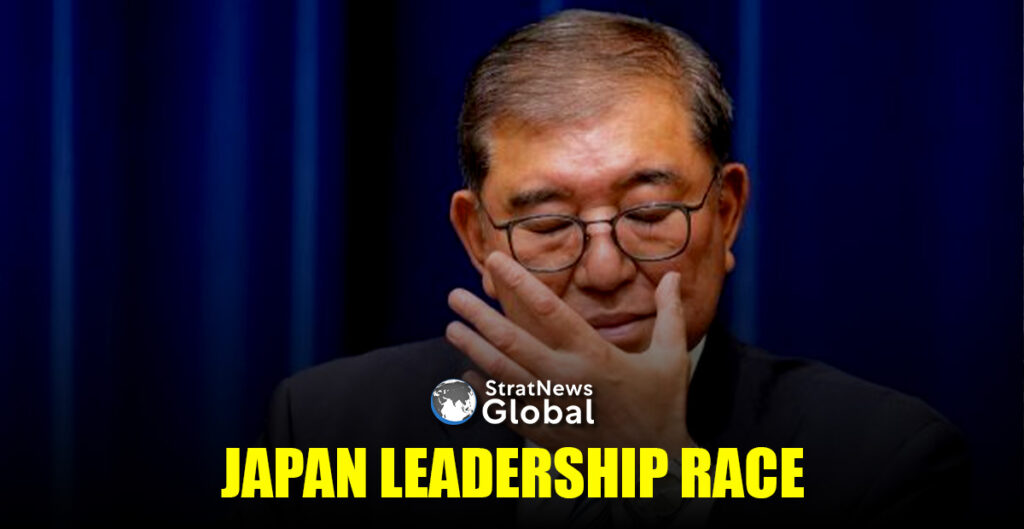
Leadership Contest Kicks Off In Japan Following PM’s Resignation
On Monday, former Foreign Minister Toshimitsu Motegi of Japan became the first member of the ruling party to announce his candidacy to replace outgoing Prime Minister Shigeru Ishiba, as financial markets swung sharply amid the political uncertainty.
Ishiba called time on his brief tenure on Sunday, saying he was taking responsibility for bruising elections that saw his ruling coalition lose its majority in both houses of parliament amid voter anger over rising living costs.
He instructed his Liberal Democratic Party (LDP) – which has governed Japan for most of its post-war history – to hold an emergency leadership election. The party plans to hold the vote on October 4, broadcaster TBS reported, citing an unnamed senior party official.
Japan’s yen sank and stocks surged on Monday after Ishiba’s resignation stoked speculation that his potential successors – such as fiscal dove Sanae Takaichi – may ramp up spending in the world’s most indebted advanced economy.
“The LDP is facing its worst crisis since its founding,” Motegi, 69, told reporters on Monday as he announced his plan to stand for leadership.
“We must unite quickly to tackle our serious challenges at home and abroad and move the country forward.”
Chief Cabinet Secretary Yoshimasa Hayashi also intends to run in the election, a source close to the government’s top spokesperson said.
The frontrunners, however, are LDP veteran Takaichi and Shinjiro Koizumi, a political scion and son of former Prime Minister Junichiro Koizumi, who gained prominence as Ishiba’s farm minister tasked with trying to rein in soaring rice prices.
Both would mark milestones for Japan: Takaichi, 64, becoming its first female leader and Koizumi, 44, its youngest in the modern era.
Neither has formally announced their candidacy but they finished second and third respectively in the last leadership contest in September 2024.
“All indications are that it will come down to them facing off against each other,” said Jeffrey Hall, a lecturer in Japanese studies at Kanda University of International Studies.
Conservative Contender
Of most consequence for investors and Japan’s diplomatic relations would be Takaichi, who has held a number of posts including as economic security and internal affairs ministers.
She stands out for her opposition to the Bank of Japan’s interest rate hikes and her calls to ramp up spending to boost the fragile economy.
Investors are betting the political hiatus alone will delay the BOJ’s monetary policy tightening plans.
Money markets are now pricing in a roughly 20% chance of the BOJ hiking rates by the end of October, down from 46% a week ago.
The expected leadership bid of the nationalistic Takaichi will also be closely watched by Japan’s powerful neighbour China.
Known for conservative positions such as revising the pacifist constitution, Takaichi is a regular visitor to the Yasukuni shrine to honour Japan’s war dead, viewed by Beijing and others as a symbol of past militarism.
Takaichi earlier this year also visited Taiwan, the democratic island claimed by China, where she suggested Taiwan, Japan and other partners could form a “quasi-security alliance”.
“China might take a more hostile stance towards Japan, because she depicts herself as very much a hawk regarding China,” said Hall of Kanda University.
(With inputs from Reuters)
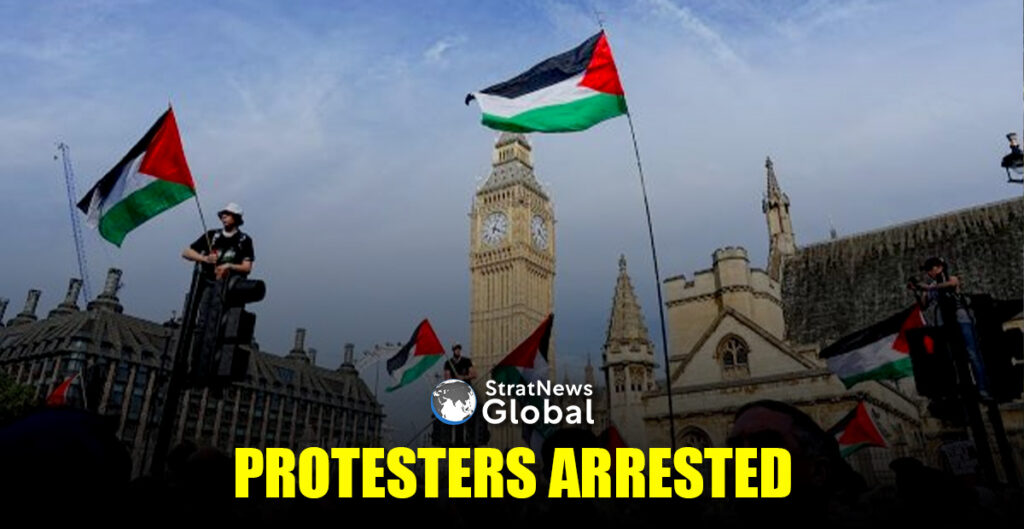
Nearly 900 Arrested At London Demonstration Backing Palestine Action: UK Police
British police reported on Sunday that they detained close to 900 individuals during a protest held the previous day in London in support of Palestine Action, while the government urged the public to refrain from demonstrating for the outlawed campaign group.
Britain proscribed Palestine Action under anti-terrorism legislation in July after some of its members broke into a Royal Air Force base and damaged military planes.
That followed vandalism and incidents targeting defence firms in Britain with links to Israel. The group accuses Prime Minister Keir Starmer‘s government of complicity in what it says are Israeli war crimes in Gaza.
Hundreds of Palestine Action supporters have since been arrested at demonstrations, many of them over the age of 60. London police said 890 had been held following a protest near parliament in central London on Saturday, the highest number of detentions from a single such protest to date.
Of those, 857 were detained for showing support for a banned group, while 17 were arrested for assaults on officers after police said the protest turned violent.
“The violence we encountered during the operation was coordinated and carried out by a group of people … intent on creating as much disorder as possible,” said Deputy Assistant Commissioner Claire Smart.
‘Mass Acts Of Defiance Will Continue’
The protest organisers, a group called Defend Our Juries, said that among those arrested were priests, war veterans and healthcare workers, and that they included many elderly and some disabled.
“These mass acts of defiance will continue until the ban is lifted,” a spokesperson said.
Palestine Action’s proscription puts the group alongside al Qaeda and Islamic State, making it a crime to support or belong to the organisation, punishable by up to 14 years in prison.
Human rights groups have criticised the ban as disproportionate and say it limits the freedom of expression of peaceful protesters.
Defence minister John Healey said the firm action was needed to counter accusations by right-wing critics of “a two-tier policing and justice system”.
“Almost everyone shares the agony when we see the images from Gaza … and for people who want to voice their concern and protest, I applaud them,” he told Sky News. “But that does not require them to link it to support for Palestine Action, a proscribed group.”
Many of those arrested in recent weeks are released on police bail, and it was unclear how many were still in detention.
(With inputs from Reuters)