

Support us by contributing to StratNewsGlobal on the following UPI ID
ultramodern@hdfcbank

Strategic affairs is our game, South Asia and beyond our playground. Put together by an experienced team led by Nitin A. Gokhale. Our focus is on strategic affairs, foreign policy and international relations, with higher quality reportage, analysis and commentary with new tie-ups across the South Asian region.
You can support our endeavours. Visit us at www.stratnewsglobal.com and follow us on YouTube, Twitter, Facebook and Instagram.
र 500 per month
र 1000 per month
र 5000 per year
र 10000 per year
Donate an amount of your choice
र 500 per month
Donate र 500 per month

र 1000 per month
Donate र 1000 per month
र 5000 per year
Donate र 5,000 per year
र 10000 per year
Donate र 10,000 per year
Donate an amount of your choice
Donate an amount of your choice



Freight Train Slams Into Bus In Mexico, Kills 10
A tragic accident in central Mexico saw a freight train collide with a double-decker passenger bus, killing ten and injuring at least 61, as per the train operator who said the bus tried to cross in front of the moving train.
Canadian Pacific Kansas City de Mexico, the railway, expressed its condolences to the victims’ families and called on drivers to respect road signs and stop orders at railroad crossings.
Bus operator Herradura de Plata did not immediately respond to a request for comment.
7 Women Amongst Deceased
Images from the scene showed the front part of the top deck of the bus smashed in and its metal frame badly dented, as first responders cordoned off the area.
The collision happened in an industrial zone on the highway between Atlacomulco, a town some 115 km (71 miles) northwest of the capital Mexico City, and Maravatio, in nearby Michoacan state, local authorities said.
The State of Mexico’s attorney general’s office said seven women and three men were killed. Some of those injured were in severe condition, while others were quickly released from the hospital, it added, without giving numbers.
Common Incident In Latin America
Deadly bus crashes are frequent in Latin America. The Mexican government’s latest report of collisions on federal highways showed a total of 12,099 crashes in 2023, resulting in over $100 million in damage, 6,400 injuries, and nearly 1,900 deaths.
In February, more than 40 people were killed in southern Mexico when a bus traveling to Tabasco from the tourist city of Cancun hit a trailer truck and caught fire.
Buses are a major mode of transport in Mexico, where, although freight trains are common, passenger rail routes remain limited.
The government of President Claudia Sheinbaum is looking to dramatically expand the nation’s passenger rail network to connect many parts of northern and central Mexico.
(With inputs from Reuters)
US Supreme Court Backs Trump’s Racial Immigration Raids
Backing President Donald Trump’s hardline immigration policy, the US Supreme Court on Monday allowed federal agents to carry out raids in Southern California targeting individuals for deportation based on race or language — a move criticised by liberal justices who warned it effectively makes Latinos “fair game to be seized at any time”.
The court granted a Justice Department request to put on hold a judge’s order that had barred agents from stopping or detaining people without “reasonable suspicion” that they are in the country illegally, by relying on race or ethnicity, or if they speak Spanish or English with an accent, among other factors.
Newsom’s Criticism
California Governor Gavin Newsom, a Democrat, denounced the court’s decision in harsh terms.
“Trump’s hand-picked Supreme Court majority just became the grand marshal for a parade of racial terror in Los Angeles,” Newsom said in a statement, alluding to the fact that Trump appointed three of the six conservative justices serving on the nine-member court.
The court’s brief and unsigned order, issued without any explanation, lifts the judge’s restrictions while a legal challenge brought by a group of Latino people caught up in the raids plays out.
‘Roving Patrols’
Trump’s administration quickly vowed to continue “roving patrols”. The Republican president returned to office in January promising to escalate deportations, and immigration raids by masked and armed federal agents triggered street protests in Los Angeles that led him to send military troops in June into the largest city in the most-populous US state.
The administration “has all but declared that all Latinos, US citizens or not, who work low-wage jobs are fair game to be seized at any time, taken away from work, and held until they provide proof of their legal status to the agents’ satisfaction,” Justice Sonia Sotomayor, who in 2009 became the court’s first Hispanic member, wrote in a dissent joined by the court’s other two liberals.
“Rather than stand idly by while our constitutional freedoms are lost, I dissent,” Sotomayor added.
Los Angeles-based US District Judge Maame Frimpong found on July 11 that the Trump administration’s actions likely violated the US Constitution’s Fourth Amendment protection against unreasonable searches and seizures. The judge’s order applied in an area covering much of Southern California.
‘Every Person Is Now A Target’
“This isn’t about enforcing immigration laws – it’s about targeting Latinos and anyone who doesn’t look or sound like Stephen Miller’s idea of an American, including US citizens and children, to deliberately harm California’s families and small businesses,” Newsom said, referring to Trump’s senior aide.
“Trump’s private police force now has a green light to come after your family – and every person is now a target – but we will continue fighting these abhorrent attacks on Californians,” Newsom added.
Miller, the architect of Trump’s immigration crackdown, in May demanded that the leaders of the Immigration and Customs Enforcement agency ramp up deportations, setting a goal of 3,000 daily arrests.
‘Judicial Micromanagement’
Trump-appointed US Attorney General Pam Bondi called Monday’s decision a “massive victory,” writing on social media that immigration enforcement officers now can “continue carrying out roving patrols in California without judicial micromanagement”.
The plaintiffs, including some who are US citizens, filed the proposed class action lawsuit in Los Angeles federal court in July.
“Individuals with brown skin are approached or pulled aside by unidentified federal agents, suddenly and with a show of force, and made to answer questions about who they are and where they are from,” the lawsuit stated.
‘Racist Deportation Scheme’
Mohammad Tajsar, an attorney at the American Civil Liberties Union of Southern California who helps represent the plaintiffs, vowed to continue to fight the administration’s “racist deportation scheme”.
“This decision is a devastating setback for our plaintiffs and communities who, for months, have been subjected to immigration stops because of the color of their skin, occupation, or the language they speak,” Tajsar said.
Concurring with Monday’s decision, conservative Justice Brett Kavanaugh said that “apparent ethnicity alone cannot furnish reasonable suspicion” but it can be a “‘relevant factor’ when considered along with other salient factors”.
Kavanaugh added: “If the officers learn that the individual they stopped is a US citizen or otherwise lawfully in the United States, they promptly let the individual go.”
Trump’s administration has repeatedly asked the Supreme Court this year to allow it to proceed with policies that lower courts have impeded after casting doubt on their legality.
Favouring Trump
The court has backed Trump in most of these cases. For instance, it has allowed Trump to deport migrants to countries other than their own without offering a chance to show harms they may face and to revoke temporary legal status previously granted by the government on humanitarian grounds to hundreds of thousands of migrants.
Trump’s immigration raids in Los Angeles and elsewhere have prompted panic in immigrant communities as well as protests, and have drawn lawsuits over aggressive tactics.
Trump’s decision to send National Guard troops and US Marines into Los Angeles in response to the protests represented an extraordinary use of military force within the United States to support civilian police operations. Newsom and local officials contested the deployment as unlawful and unnecessary.
Frimpong issued the temporary restraining order halting stops or arrests based on race, language, presence at a particular location such as a car wash or tow yard, or type of work to establish “reasonable suspicion” of illegality. The San Francisco-based 9th US Circuit Court of Appeals on August 1 declined to lift Frimpong’s order.
(With inputs from Reuters)
Uganda: Opposition Leader Detained As Crackdown Intensifies
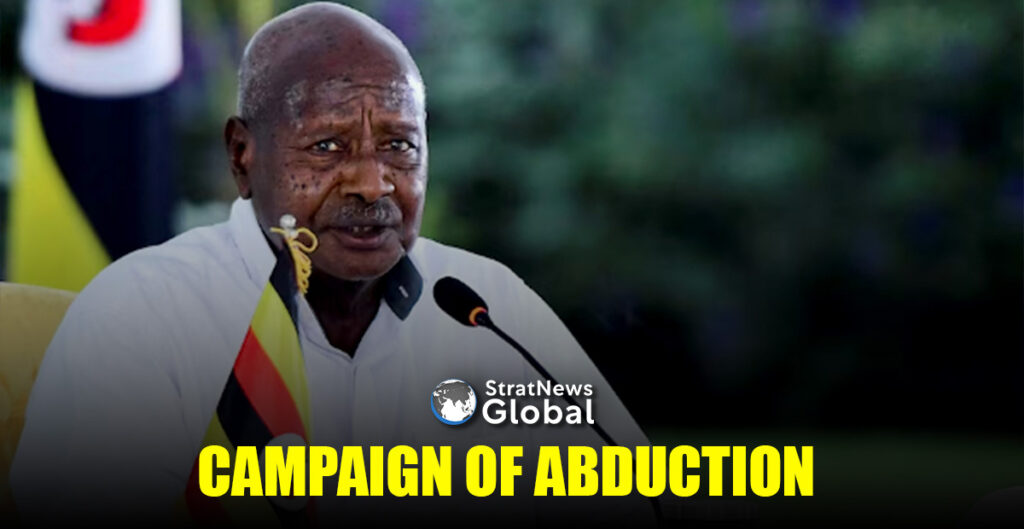
In a fresh flashpoint between authorities and the opposition, Ugandan police on Monday detained a senior official of the country’s largest opposition party, the National Unity Platform (NUP), while he was attending a court hearing for fellow party members, according to a lawmaker and police spokesperson.
Alex Waiswa Mufumbiro, who is NUP’s deputy spokesperson, was forced into a vehicle just outside a magistrate’s court in the capital Kampala, Joel Ssenyonyi, the leader of the opposition in parliament said.
Police spokesperson Kituuma Rusoke told Reuters that officers had detained Mufumbiro, but declined to give reasons for the action or say when he would be produced in court.
Campaign Of Abduction
In recent months, NUP, headed by pop star-turned-politician Bobi Wine, and other opposition parties have decried what they say is a campaign of abductions and torture of opposition officials by security forces ahead of elections that are due early next year.
Both police and the military have in the past denied targeting the opposition and say that only suspects in criminal cases are detained. They have also rejected accusations of mistreatment of opposition figures.
Ssenyonyi said that Mufumbiro had gone to court on Monday to attend a bail hearing for NUP members who have been in detention for months over what the party has called politically motivated charges.
He was “violently grabbed and pushed” into a minivan, Ssenyonyi said in a post on X, accusing President Yoweri Museveni’s government of “cowardice and criminality”.
Mutwe’s Bail Hearing
One of those whose bail hearing was being held on Monday was opposition activist Eddie Mutwe.
In May, Muhoozi Kainerugaba, the head of the military who is also Museveni’s son, said on X that he was holding Mutwe in his basement, after the activist had been missing for days.
Mutwe was later produced in court and charged with robbery among other charges. The justice minister, Norbert Mao, said at the time that Mutwe showed signs of having been tortured. Mao did not say who was responsible but called on the courts to deal swiftly with Mutwe’s case.
(With inputs from Reuters)
Over 10,000 Protest In Romania Against School Restructuring
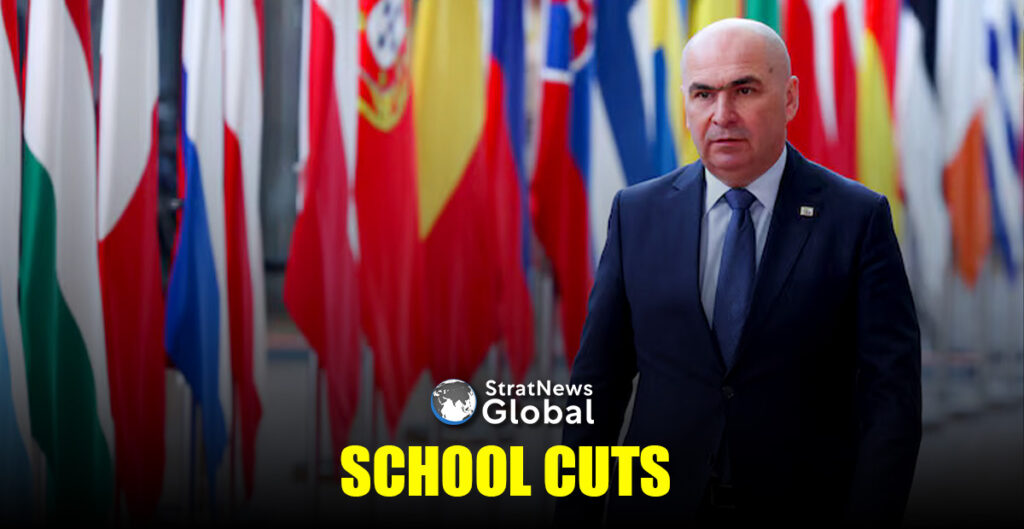
Marking the start of the new academic year with unrest, thousands of Romanian teachers marched in Bucharest, the national capital, on Monday, while schools across the country suspended classes in protest against proposed school restructuring and increased teaching hours.
Romania’s broad coalition government is facing a public sector backlash and strong opposition to spending cuts as it tries to lower the European Union’s highest budget deficit and unlock billions of euros worth of recovery funds from Brussels.
Since taking power in late June it has hiked taxes and cut spending, including in education, where it has increased average weekly teaching hours to 20 from 18 without raising pay.
The cabinet has also increased the maximum number of pupils per classroom, merged small schools and cut scholarships.
Minister’s Resignation Demanded
On Monday, crowds of teachers and students, whom police in the street estimated to number more than 10,000, marched in Bucharest, demanding the resignation of the education minister and the cancellation of the measures.
Some held banners saying “Higher teaching quota hurts the school” and “Education is investment”.
“All these measures save very little money,” said Mihai, a Bucharest high school history teacher who declined to give his family name. “Maybe cuts in the education system are not bad, but only when they come with actual reform.”
Education Minister Daniel David told local TV it was unrealistic to expect the measures would be cancelled.
Massive Cuts
Prime Minister Ilie Bolojan’s government is also making cuts in healthcare, state-owned firms, regulators, and public administration, arguing that the burden of slashing the budget deficit cannot depend solely on tax hikes and the private sector.
Romania, which ran a deficit of 9.3% of gross domestic product last year, when it held four rounds of elections, aims to lower the shortfall to a little over 6% by 2026.
(With inputs from Reuters)
French Lawmakers Vote Out Prime Minister, Escalating Political Turmoil
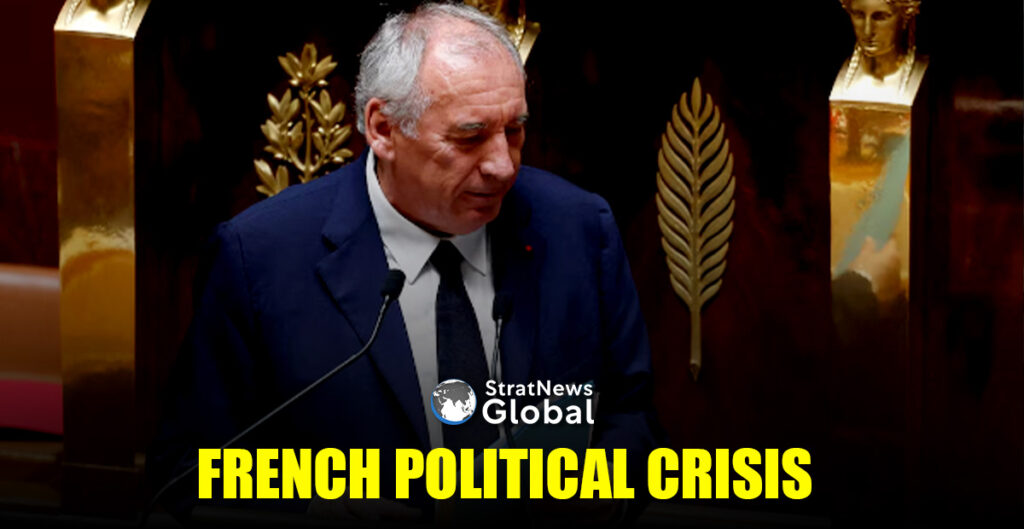
France’s parliament toppled the government on Monday over its proposals to rein in the soaring national debt, intensifying a political crisis that is undermining the euro zone’s second-largest economy.
Lawmakers voted to oust Prime Minister Francois Bayrou and his minority government with 364 votes against the veteran centrist politician and 194 in his favour.
President Emmanuel Macron, who is facing calls from the opposition to dissolve parliament and resign, will instead hunt for his fifth prime minister in less than two years. His office said he would appoint one in the next few days.
The next government’s most pressing task will be to pass a budget, the same challenge Francois Bayrou faced when he took office nine months ago. Securing the backing of a very divided parliament will be equally hard.
“You have the power to bring down the government, but you do not have the power to erase reality,” Bayrou told lawmakers before losing the confidence vote.
“Reality will remain relentless: expenses will continue to rise, and the burden of debt, already unbearable, will grow heavier and more costly,” he said.
Bayrou will tender his resignation on Tuesday, his office said.
He had called the confidence vote to try to win parliamentary support for his strategy to lower a deficit that stands at nearly double the European Union’s 3% ceiling, and to start tackling a debt pile equivalent to 114% of GDP.
But opposition parties were in little mood to rally behind his planned savings of 44 billion euros ($51.51 billion) in next year’s budget, with an election for Macron’s successor looming in 2027.
“This moment marks the end of the agony of a phantom government,” far-right leader Marine Le Pen said, pushing for a snap parliamentary election, which Macron has so far ruled out.
“Macron is now on the front line facing the people. He too must go,” Jean-Luc Melenchon, leader of the hard-left France Unbowed, said on X.
Who’s Next?
A lengthy period of political and fiscal uncertainty risks undermining Macron’s influence in Europe at a time when the United States is talking tough on trade and security, and war is raging in Ukraine on Europe’s eastern flank.
The French president could now nominate a politician from his own centrist minority ruling group or from the ranks of conservatives as the next premier, but that would mean doubling down on a strategy that has failed to yield a stable alliance.
He could also tack to the left and nominate a moderate socialist, or choose a technocrat.
No scenario would be likely to hand the next government a parliamentary majority. It was inevitable that the need to form a new government would result in a dilution of the deficit reduction plan, Finance Minister Eric Lombard said before the vote.
Macron may eventually decide the only path out of the crisis lies in calling a snap election, but he has so far resisted calls from Le Pen’s National Rally and from France Unbowed to dissolve parliament a second time.
Fiscal Mess
Financial markets had anticipated the confidence vote would fail, and there was little immediate reaction on Monday. French markets face another test on Friday, when Fitch Ratings reviews its sovereign rating for France. Moody’s and S&P Global follow with their own rating reviews in October and November.
“Over the near-term, I’m sure everyone in markets expects paralysis and downward pressure on ratings,” said Chris Scicluna, head of economic research for Daiwa Capital Markets. As for now, “the outcome was as expected, so markets should react in a modest way.”
France’s EU peers will be watching closely.
France holds the highest deficit as a percentage of GDP in the euro zone – the bloc using the EU’s single currency. It pays more to service its debt than Spain, and spreads against benchmark German 10-year bonds are at their highest level in four months.
A rating downgrade would hamper France’s ability to raise money at low interest rates from investors, potentially deepening its debt problems.
The Socialists have offered a counter-budget that would impose a tax of at least 2% on personal wealth greater than 100 million euros ($117.5 million) and generate savings of 22 billion euros – a proposal that would be tough to marry with the pro-business reform agenda of Macron’s presidency.
Discontent may also start brewing on the streets. A grassroots protest movement called “Bloquons Tout” (“Let’s Block Everything”) is calling for nationwide disruption on Wednesday. Trade unions are plotting walkouts the week after.
Like many in France, Mohamed, 80, who sells produce at the Aligre market in Paris, doesn’t think the politicians will find a way out.
“Come back in 10 days and you’ll see nothing will have changed. There won’t be a majority, there will be no budget.”
(With inputs from Reuters)
African Leaders Push Green Investment Model Following US Withdrawal From Paris Accord
African leaders declared on Monday that they aim to set a global model in combating climate change by prioritizing green investments, following the United States’ withdrawal from the Paris climate agreement, which dealt a blow to international climate efforts.
The continent, which has been buffeted by landslides, floods and droughts this year, is holding its second climate summit in Ethiopia, seeking a common voice ahead of global climate talks in Brazil, COP30.
“We are not here to negotiate our survival. We are here to design the world’s next climate economy,” Ethiopian Prime Minister Abiy Ahmed told the opening ceremony.
Leaders have been positioning the 54-nation continent as ripe for investments in carbon capture, renewable energy, critical minerals for green technology and food production to keep development on track amid the climate crisis.
“If we make the right choices now, Africa can be the first continent to industrialise without destroying its ecosystems,” said Abiy, who wants his country to host COP32 in 2027.
He called for a new Africa climate innovation initiative, funded by the continent, bringing together African universities, research institutions, startups, rural communities and inventors to deliver 1,000 solutions to tackle climate challenges by 2030.
Leaders sought more financing at the inaugural summit in Nairobi two years ago to help governments to tackle climate challenges amid fiscal constraints and heavy debt burdens, but the continent is still badly short of funding, receiving just 1% of the annual global climate financing, officials say.
Climate Finance
African countries, which are among the most vulnerable to the adverse effects of manmade global warming despite being among those least responsible for it, have long demanded that COP meetings yield more funds to help them adapt and launch clean energy projects.
“Climate finance must be fair, significant and predictable,” said Mahamoud Ali Youssouf, chair of the African Union Commission.
“The vulnerability of our member countries, caused by climate change, debt burden and the structural inequalities of the international financial architecture, must be redressed through climate justice.”
Leaders also expressed concerns about the potential damage from a fraying of the multilateral approach to tackling climate change.
U.S. President Donald Trump’s administration pulled out of the landmark Paris agreement on climate change for the second time earlier this year and has also withdrawn from clean energy partnerships with countries such as South Africa.
“Too often, commitments are broken and international solidarity is dismissed as weakness precisely when the scale of the climate crisis demands enhanced cooperation, not less,” said Kenyan President William Ruto.
(With inputs from Reuters)
At Least 19 Dead In Nepal After ‘Gen Z’ Protests Against Social Media Ban Turn Violent
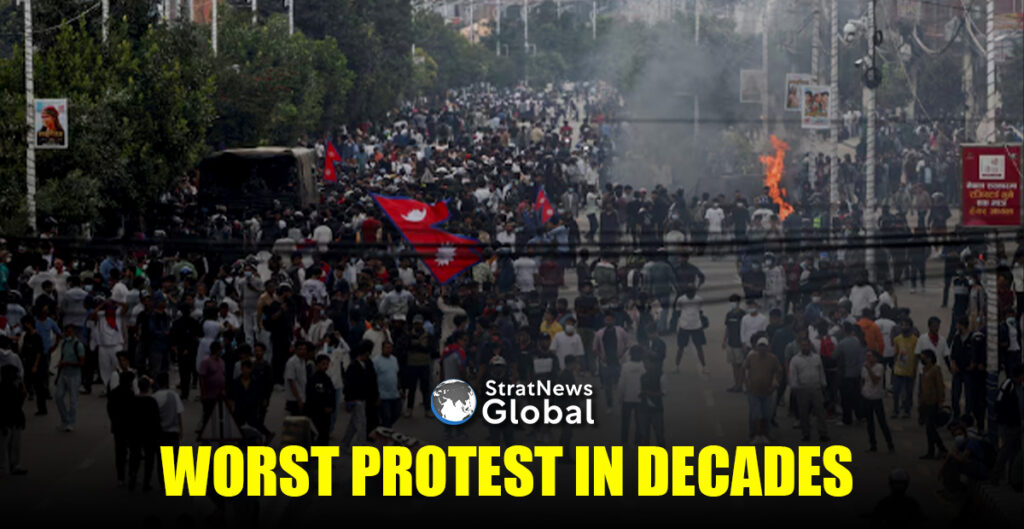
At least 19 people were killed in two cities of Nepal on Monday during the country’s worst unrest in decades, authorities said, as police in Kathmandu, the Nepalese capital, used tear gas and rubber bullets against protesters attempting to storm parliament in fury over a social media shutdown and corruption.
Some of the protesters, most of them young, forced their way into the parliament complex in Kathmandu by breaking through a barricade, a local official said, setting fire to an ambulance and hurling objects at lines of riot police guarding the legislature.
“The police have been firing indiscriminately,” one protester told the ANI news agency. “(They) fired bullets which missed me but hit a friend who was standing behind me. He was hit in the hand.”
Over 100 Injured
More than 100 people, including 28 police personnel, were receiving medical treatment for their injuries, police officer Shekhar Khanal told Reuters. Protesters were ferrying the injured to the hospital on motorcycles.
A government decision last week to block access to several social media platforms, including Meta Platforms’ Facebook, has fuelled anger among the young. About 90% of Nepal’s 30 million people use the internet.
Officials said they imposed the ban because platforms had failed to register with authorities in a crackdown on misuse, including false social media accounts used to spread hate speech and fake news, and commit fraud.
Two of the 19 people were killed when protests in the eastern city of Itahari turned violent, police said.
Home (interior) Minister Ramesh Lekhak resigned from the government after taking “moral responsibility” for the violence, another government minister, who requested anonymity because he was not authorised to speak with the media, told Reuters.
PM Calls Emergency Meeting
Prime Minister K.P. Sharma Oli called an emergency cabinet meeting to discuss the unrest, which erupted after thousands of young people, including many wearing their school or college uniforms, took to the streets earlier on Monday.
Many carried flags and placards with slogans such as “Shut down corruption and not social media,” “Unban social media,” and “Youths against corruption” as they marched through Kathmandu.
Organisers of the protests, which spread to other cities in the Himalayan country, have called them “demonstrations by Gen Z.” They say the protests reflect young people’s widespread frustration with the government’s perceived lack of action to tackle corruption and boost economic opportunities.
“This is the protest by the new generation in Nepal,” another protester told ANI.
International nonprofit organisation Human Rights Watch said the government of Nepal should avoid perceiving these protests primarily through a law enforcement perspective and recognise that demonstrators’ mass outpourings of criticism reflect deep frustrations throughout Nepal with entrenched corruption, nepotism, and poor governance.
“Nonviolent means should be utilised before resorting to force,” it said in a statement. “The use of force is only appropriate if other measures to address a genuine threat have proved ineffective.”
Batons And Rubber Bullets
Police had orders to use water cannons, batons and rubber bullets to control the crowd, and the army was deployed in the parliament area to bolster law enforcement officers, Muktiram Rijal, a spokesperson for the Kathmandu district office, told Reuters.
Violence abated later in the evening, although protesters remained in the area outside parliament.
Police said similar protests were also held in Biratnagar and Bharatpur in the southern plains and in Pokhara in western Nepal.
Many people in Nepal think corruption is rampant, and the Oli government has been criticised by opponents for failing to deliver on its promises to tackle graft or make progress to address longstanding economic issues.
The Oli government has said the economy was recovering because of the corrective measures it had taken.
Thousands of young Nepalis go abroad every year for work and education.
Nepal has been politically unstable since it abolished a 239-year-old monarchy in 2008. There have been 14 governments since 2008, not one of which has completed a full five-year term. Oli, 73, was sworn in to his fourth term last year.
Rameshwore Khanal, a former finance secretary, said that although job creation is not up to expectations, popular anger appears to stem more from unhappiness with government appointments and its inability to stamp out corruption.
Nepal’s social media shutdown comes as governments worldwide take steps to tighten oversight of social media and Big Tech due to growing concern about issues such as misinformation, data privacy, online harm and national security.
Critics say many of these measures risk stifling free expression, but regulators say stricter controls are needed to protect users and preserve social order.
(With inputs from Reuters)
Britain May Reduce Visas For Countries Refusing Migrant Returns
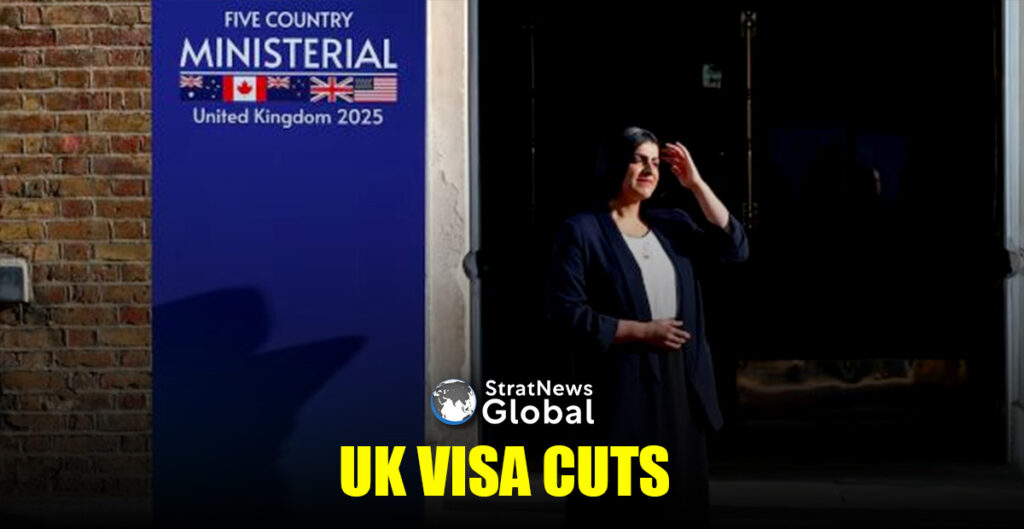
The UK government said on Monday it could limit the number of visas issued to countries that decline to take back migrants with no legal right to stay, following discussions with allies, including the United States, on strengthening border control.
Britain’s new interior minister Shabana Mahmood said counterparts from the United States, Australia, Canada and New Zealand – a decades-old intelligence-sharing partnership collectively known as Five Eyes – agreed to the principles at a meeting in London.
Prime Minister Keir Starmer appointed Mahmood to the role on Friday in a shake-up of his government as he faces mounting public criticism over immigration and the arrival of migrants via illegal small boat crossings.
“This announcement sends a clear message to anyone seeking to undermine our border security. If you have no legal right to remain in the UK, we will deport you. If countries refuse to take their citizens back, we will take action,” Mahmood said in a statement.
U.S. Secretary of Homeland Security Kristi Noem, who has been a leading figure in the Trump administration’s crack-down on illegal immigration, said that the countries agreed to share background information on any criminal history of migrants, and work against cartels “utilising social media and technology companies to push their message”.
“We need to be just as aggressive in partnering together to push back on those kinds of new developments,” she told reporters on the sidelines of the meeting.
Noem defended the detention of hundreds of mainly South Korean workers on a Hyundai Motor car battery facility under construction in Georgia last Thursday, saying the administration was following the law, and adding the tough U.S. measures might be an inspiration for other countries to do the same.
Starmer is a former human rights lawyer who took office in July last year after his Labour Party won an election landslide. His new-look government is prioritising a harder line on immigration – an issue that leads opinion polling as the public’s top concern and that has fuelled a poll lead for Nigel Farage’s populist Reform UK.
Mahmood said she would take a strong approach.
“That does mean saying to countries who do not take their citizens back, that we’re not simply going to allow our laws to remain unenforced, that they do have to play ball,” she told broadcasters in an interview.
“And if cutting visas is one of the ways to do that, then I’ll do whatever it takes.”
(With inputs from Reuters)
Turkiye: Opposition Blocks Police In CHP Office Standoff
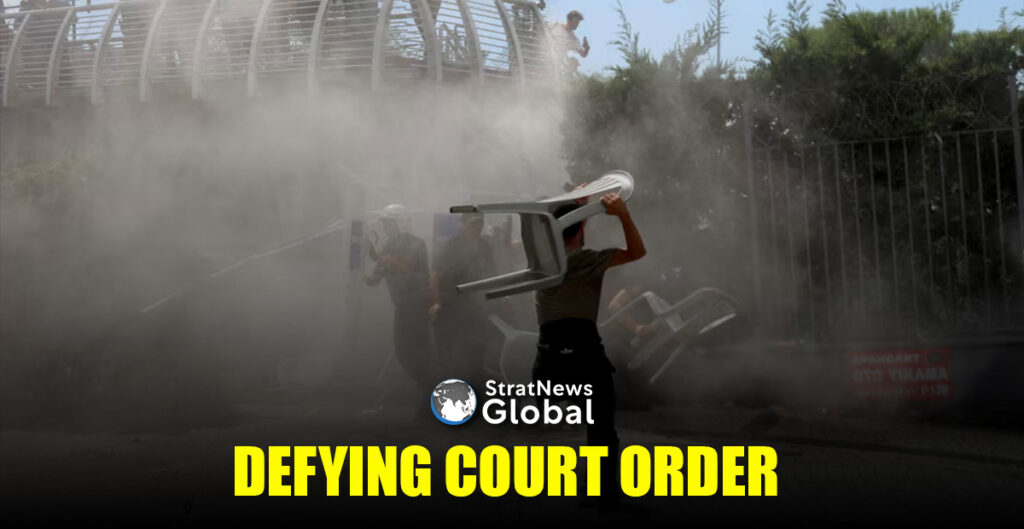
In a dramatic show of resistance, Turkish opposition lawmakers on Monday barricaded an office at their party’s Istanbul headquarters with tables and chairs to block police from enforcing a court order removing a senior official.
The dramatic footage of the barricade standoff marked the latest chapter in a nearly year-long crackdown on the main opposition Republican People’s Party (CHP), during which hundreds of party members have been arrested and jailed.
Outside the building, hundreds of riot police detained protesters, used pepper spray and scuffled with leaders of the CHP, which is the main rival of President Tayyip Erdogan.
‘Null And Void’
Last week, an Istanbul court ruled to oust the CHP’s Istanbul provincial head, Ozgur Celik, over alleged irregularities. It ordered that Gursel Tekin, a former CHP deputy chair, should replace Celik on an interim basis.
The CHP rejected the ruling as “null and void”, said Tekin had been expelled from the party and vowed not to relinquish Celik’s post to anyone.
Nonetheless, Tekin arrived at the CHP headquarters amid the protests on Monday to take up the post. He entered the building with police support after a standoff with party members inside, and told reporters he was not working for the state and pledged to help solve the CHP’s problems.
Dismantling Democracy
A few floors above, CHP lawmakers piled the furniture nearly to the top of the door to prevent the entry of the police and Tekin. In a stairwell outside the office, police officers evacuated CHP supporters, after having used some pepper spray to force them out, witnesses said.
“Today, they are not only trying to evacuate the building from CHP (supporters) here, but they are actually attempting to dismantle democracy,” Gokhan Gunaydin, a CHP MP standing behind the barricade, said on a live X broadcast from inside the room.
More than 50 CHP MPs were in the CHP headquarters to dissuade police. Istanbul’s main stock index fell 3% on Monday, partly over rising political risk, analysts said.
Crackdown
The crackdown on the CHP is centred mainly on corruption allegations the party denies. It says the legal steps aim to eliminate electoral threats to Erdogan and weaken the opposition – charges the government denies, saying courts are independent.
Istanbul’s CHP Mayor Ekrem Imamoglu was arrested in March as part of the sprawling investigation, setting off Turkiye’s largest street protests in a decade and hitting Turkish assets.
Share and bond markets fell again last week after the latest court ruling in Istanbul, which could have implications for a separate ruling expected next week on whether CHP Chairman Ozgur Ozel will be stripped of his title.
On Sunday, police barricaded the CHP offices, prompting the party to call on supporters to gather there to oppose the “siege”, after which authorities announced a ban on protests.
Social Media Access Restricted
Access to major social media websites was restricted in Turkiye on Monday, a step taken in the past by the authorities at times of political volatility. Netblocks, a global internet monitor, said access to platforms, including X, YouTube, Instagram, Facebook, TikTok and WhatsApp had been curbed.
Interior Minister Ali Yerlikaya said disregarding the court ruling amounted to obstruction of justice and that “the state will do what is necessary against any illegal initiative”.
(With inputs from Reuters)
Russian Forces Strike Power Station In Kyiv Region, Ukraine Says
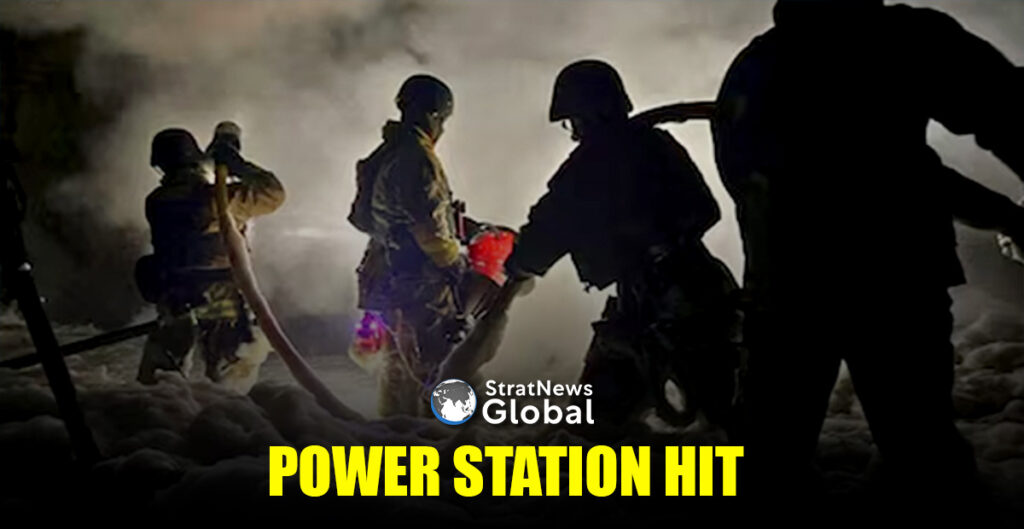
Russian forces carried out an overnight attack on a thermal power plant in the Kyiv region, Ukraine’s energy ministry said on Monday, causing localised blackouts and gas outages.
The strikes followed a day after Moscow’s largest air attack of its three-and-a-half-year war on Ukraine.
“The goal is obvious: to cause even more hardship to the peaceful population of Ukraine, to leave Ukrainian homes, hospitals, kindergartens and schools without light and heat,” the ministry wrote on the Telegram messaging app.
It added that rescuers and technicians were working on the site on Monday.
Russia’s defence ministry confirmed that it had hit Ukrainian energy infrastructure.
Regular Strikes
Moscow has regularly bombarded Ukraine’s energy facilities since it launched its full-scale invasion in 2022, causing massive blackouts in previous years.
Ukraine’s electricity grid operator Ukrenergo said on Monday that Russia had attacked power infrastructure in several regions of Ukraine, which had caused localised blackouts.
“Emergency repair work is ongoing, and most consumers had their power restored by Monday morning,” it said.
Mykola Kalashnyk, the governor of Kyiv region, said the attack had damaged the local gas grid and that over 8,000 properties in eight settlements would be disconnected from their gas supply over the next two days as repairs were carried out.
“For several weeks now, the enemy has been striking energy system facilities in various regions,” Serhiy Kovalenko, CEO of energy company Yasno, wrote on X.
“Of course, no one knows what will happen this autumn, but given the recent strikes, there is no particular cause for optimism,” he added in a subsequent post.
Largest Air Attack On Kyiv
Russia launched its largest overnight air assault of the war, igniting a fire at Ukraine’s main government building in Kyiv and killing three people, including an infant whose body was recovered from the rubble, officials said on Sunday.
“For the first time, the government building was damaged by an enemy strike — its roof and upper floors,” Ukraine’s Prime Minister Yulia Svyrydenko said on the Telegram messaging app.
“Rescuers are extinguishing the fire.”
Ukraine’s Air Force said on Telegram that Russia launched 805 drones into Ukraine overnight and 13 missiles, with Ukrainian defence units downing 751 drones and four missiles.
That was the highest number of drones Russia has used to attack the country since Moscow launched its full-scale invasion of Ukraine in February 2022.
(With inputs from Reuters)