

Support us by contributing to StratNewsGlobal on the following UPI ID
ultramodern@hdfcbank

Strategic affairs is our game, South Asia and beyond our playground. Put together by an experienced team led by Nitin A. Gokhale. Our focus is on strategic affairs, foreign policy and international relations, with higher quality reportage, analysis and commentary with new tie-ups across the South Asian region.
You can support our endeavours. Visit us at www.stratnewsglobal.com and follow us on YouTube, Twitter, Facebook and Instagram.
र 500 per month
र 1000 per month
र 5000 per year
र 10000 per year
Donate an amount of your choice
र 500 per month
Donate र 500 per month

र 1000 per month
Donate र 1000 per month
र 5000 per year
Donate र 5,000 per year
र 10000 per year
Donate र 10,000 per year
Donate an amount of your choice
Donate an amount of your choice
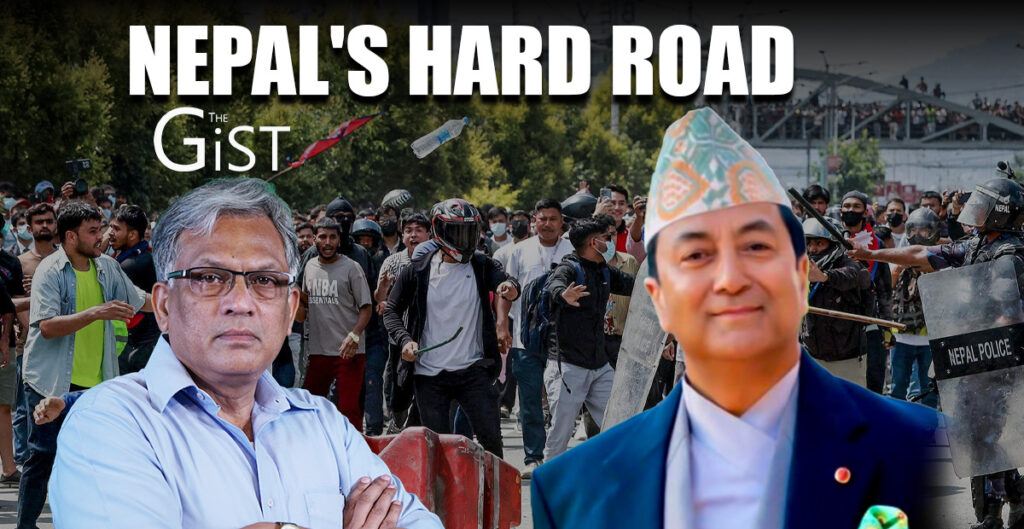


Nepal’s Politicians Have Zero Credibility, Implies Hard Road Ahead
The ban on social media is seen as the trigger for the violent overthrow of the government of Prime Minister KP Sharma Oli.
“I think the ban was more targeted at controlling the system so that the political parties have favorable things said about them,” said Maj Gen Binoj Basnyat, formerly of the Nepal Army and currently a well known strategic thinker and commentator.
In a short interview on The Gist, he said that the politicians were looking ahead at elections and well aware of their many shortcomings, saw the ban on social media as a convenient way to ensure the public only heard what they wanted to be conveyed.
But that was not to be.
“The peaceful protests have degraded their legitimacy,” he said alluding to ousted prime minister Oli, Nepali Congress leader Sher Bahadur Deuba and even Prachanda, head of the Maoist party.
“I think we can compare it somehow or the other with what’s happening in Bangladesh, to the political parties and their governance history, legitimacy has degraded, but not entirely gone.”
In his view, the protests in the streets are an entirely homegrown phenomenon. There were three mass protests, he noted, from March to May this year, their demands were unmet and in fact, the movements were forcibly put down.
The protests centred around the return of the monarchy and restoration of Nepal’s Hindu status, but these frittered out.
The current agitation, he says, “is more to do with the rights of the people, freedoms and the legitimacy of human rights, and the behavior of the security forces. It is aimed at the amendments in the Constitution and the governance system which is corrupt.”
He says in this volatile situation, no political party will want to take the reins of power, fearing a backlash from the angry young people in the streets.
Vanuatu Delays Security Pact With Australia Over Fears Of Funding Limits
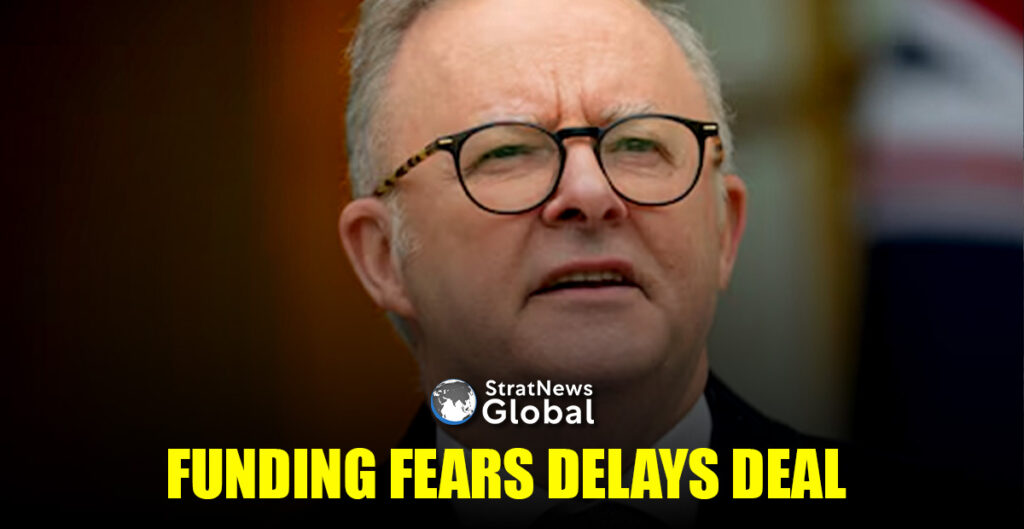
Vanuatu has held back on finalising a landmark security and development pact with Australia, with Prime Minister Jotham Napat citing concerns it could limit the Pacific island nation’s ability to secure infrastructure funding from other partners.
The Vanuatu deal is one of two major security agreements Australia had expected to sign with Pacific island neighbours this month, as Canberra seeks to block China from expanding its security presence in the region.
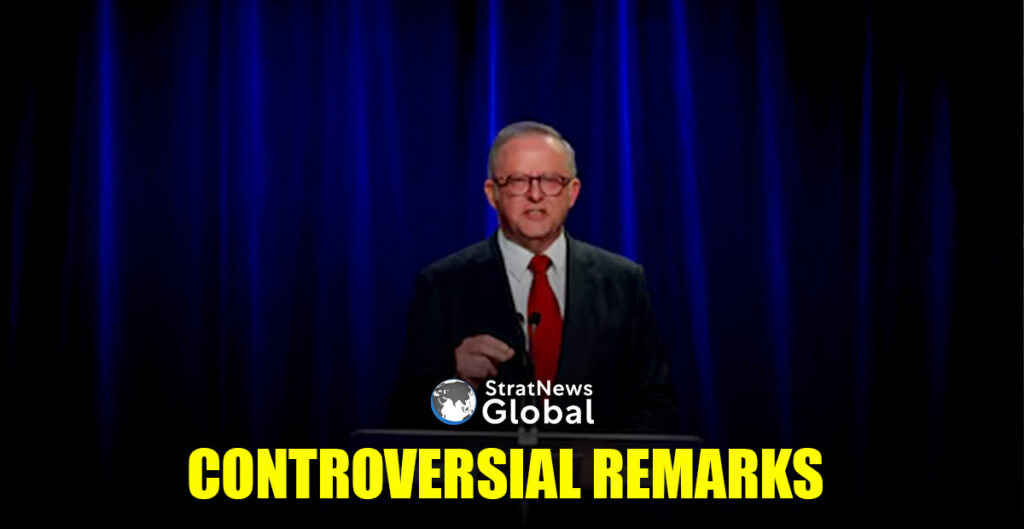
Napat met with Australian Prime Minister Anthony Albanese in Port Vila on Tuesday, where the two leaders had been expected to sign the Nakamal Agreement, after it was initialled by ministers in a ceremony on the side of a volcano last month.
Australia had agreed to commit A$500 million ($326.5 million) to strengthen economic and security ties with its Pacific neighbour.
Funding Concerns Delays Deal
Napat said at a press briefing that the delay was due to his government’s coalition partner being concerned that the deal would limit Vanuatu’s access to infrastructure funding from other countries.
Beijing is Vanuatu’s largest external creditor, after Chinese banks extended loans to Vanuatu to pay Chinese companies to build infrastructure, including a presidential office complex, the nation’s parliament and roads.
Albanese told reporters he was confident the deal would be signed soon.
“This is an agreement that will importantly respect the sovereignty of Vanuatu, but one as well that will respect the sovereignty of Australia,” he said.
Australia wanted to see economic development, an upskilling of the workforce, and more infrastructure in Vanuatu, he added.
A 2022 security deal signed by Australia and Vanuatu, months after China signed a pact with the Solomon Islands, was later blocked by Vanuatu after failing to win domestic political support.
Albanese will travel with Napat to the Pacific Islands Forum regional leaders summit in Solomon Islands on Wednesday.
He is expected to travel to Papua New Guinea next week for the 50th anniversary of independence celebrations, where a new defence treaty between Australia and PNG is due to be signed.
Albanese said he would tell the forum leaders that Pacific security needed to be “undertaken within the Pacific family”.
(With inputs from Reuters)
Forex Dispute Stalls South Korea-US Trade Talks, Seoul Says
South Korea’s efforts to finalise a trade deal with the United States are stalled over foreign exchange (forex) concerns, with Seoul urging Washington to help limit potential market fallout from a $350 billion investment package, a senior presidential official said on Tuesday.
The delay in striking a final deal comes after U.S. President Donald Trump last week signed an executive order to implement Japan’s trade deal, which includes a $550 billion investment package.
South Korea is yet to reach a written agreement on its deal, which was struck in July and includes a $350 billion package to be invested in the United States.
Presidential Policy Secretary Kim Yong-beom said that Japan and South Korea were in a different situation, echoing earlier comments by the industry minister and the foreign minister on Monday that Seoul could not agree to similar terms outlined in Japan’s agreement on the investment package.
“While there is not much difference in trade surpluses, the size of the economy, more importantly, foreign exchange market conditions are very different,” Kim told a live discussion forum.
Kim said the most important matter that needed to be addressed in order for South Korea to sign any agreement on the investment package was the impact it would have on the domestic dollar-won exchange market.
South Korea was in a different position to Japan because the yen is an international currency, while Japan also has a currency swap programme and foreign exchange reserves that are three times larger than South Korea’s, which would help cap the impact of its $550 billion investment in the U.S., he said.
Growing Market Expectations
Since the deal was announced in late July, there have been growing expectations among market participants that the $350 billion investment will add to downward pressure on the won in the long term.
The $350 billion compares with the maximum amount of $20-30 billion state-run policy banks can procure in a year, Kim said.
It also compares with the national pension fund’s overseas investments of $2-3 billion a month – a factor already cited by market participants as a big force weighing on the won.
The won, which is currently trading at around 1,390 per dollar, has strengthened 6% so far this year, after weakening for four consecutive years to hit 15-year lows in 2024 below the psychological threshold of 1,400 mark.
South Korea agreed with the U.S. at their opening round of trade talks in late April to put currency policy on the agenda and has since been in working-level consultations.
The matter will be included when the two countries announce a final agreement after trade negotiations conclude, Finance Minister Koo Yun-cheol said on Monday.
(With inputs from Reuters)
Leaderless Mobs Have Ousted Nepal’s Govt In A Replay Of Bangladesh
The turmoil in Nepal bears an uncanny resemblance to the anti-government protests that toppled the government of Sheikh Hasina in August last year. She had to flee to India which is her current residence in exile.
But there is nothing to suggest KP Sharma Oli, the ousted prime minister of Nepal, will follow suit. It would be quite ironical if he did so. Oli’s ties with India have been strained by territorial claims and his links with China.
There were reports that Oli was due in Bodhgaya for a meeting with his Indian counterpart Narendra Modi, but his resignation has put paid to that.
What happens now? The protests have been largely leaderless and spontaneous. A key group, Hami Nepal, led by Sudhan Gurung, organized the initial mobilizations. Importantly, they asked all political parties and youth wings to stay away, underscoring the movement’s non-partisan, anti-establishment character.
Even popular young politicians, like Kathmandu Mayor Balendra Shah and Rabi Lamichhane of the Rastriya Swatantra Party, were seen more as allies, not leaders of the movement.
Maj Gen Binoj Basnayat, a retired officer from the Nepal Army and a strategic thinker and writer, told StratNewsGlobal over the phone from Kathmandu, that an interim government is likely to take over although there is no provision for that in the constitution.
Any decision by President Ram Chandra Poudel carries enormous risks given that he himself has been targeted by the mobs. In fact, none of the big names associated with Nepal’s major political parties have been spared.
Nepali Congress leader Sher Bahadur Deuba, who would have succeeded Oli as prime minister next year, has been a target of mob fury with his home reportedly set on fire. His whereabouts are currently unknown although many politicians are believed to fled Kathmandu for the countryside.
Kathmandu International Airport is shut and curfew is in force although defied by tens of thousands.
India is closely watching the situation. Nepal sits at a strategically important location between India and China. Instability in Nepal, especially one that shuts down the only international airport, is a direct concern for India’s border states like Uttarakhand, Sikkim, and Bihar.
In a statement India’s External Affairs Ministry said the Indian government “is deeply saddened by the loss of many young lives. Our thoughts and prayers are with the families of the deceased.
“As a close friend and neighbour, we hope that all concerned will exercise restraint and address any issues through peaceful means and dialogue.”
The statement with no reference to the ousted political class, was clearly addressed to the young people in the streets. At all costs, India does not want to be linked with the ousted politicians regarded as corrupt, incompetent and living off a dysfunctional political system.
Since becoming a republic in 2008, Nepal has seen the same set of ageing political elites, all over 70, repeatedly rotate power among each other with no real reform. Their children enjoyed lavish lifestyles while most young Nepalis struggled to find jobs or afford education.
A World Bank report notes that 82% of Nepal’s workforce is in informal employment, and the majority of young people are forced to migrate abroad for work.
Ironically, even as the ban was the catalyst, social media was also the engine that mobilized thousands: Protestors used VPNs and alternative apps like TikTok and Viber (which were not banned) to organize.
The use of hashtags like #NepoBabies and #FreeNepalInternet reflected a digital-native protest language. Many activists live-streamed clashes, attracting global attention before the government attempted to black out coverage.
India should take note. A rising, politically conscious digital-native generation across South Asia is showing that it’s willing to mobilize around transparency, digital rights, and anti-corruption — issues that are gaining traction in India as well.
With Nepal in political flux, China may attempt to increase its influence. India, which has close cultural and economic ties with Nepal, may need to re-engage more actively to support democratic processes and regional cooperation.
If the crisis worsens, it could lead to increased cross-border migration into India, a pattern historically observed during Nepal’s internal upheavals.
Nepal’s Gen Z protests are more than a domestic issue as they represent a broader generational rift playing out across many South Asian democracies.
India and other neighbouring nations, would do well to view Nepal’s youth uprising not just as a local disturbance, but as a preview of political currents that could reshape the region in the years ahead.
Nepal PM Oli Resigns Amid Deadly Protests Over Social Media Ban
Nepal’s Prime Minister KP Sharma Oli resigned on Tuesday, according to his aide, as anti-corruption protesters defied a nationwide curfew and clashed with police, just a day after 19 people were killed in unrest sparked by a social media ban.
Oli’s government lifted the social media ban after protests turned violent, killing 19 and injuring more than 100 after police fired tear gas and rubber bullets at protesters trying to storm parliament on Monday.
The unrest is the worst in decades in the poor Himalayan country that is wedged between India and China and has struggled with political instability and economic uncertainty since protests led to the abolition of its monarchy in 2008.
‘PM Has Quit’
“The PM has quit,” Oli’s aide Prakash Silwal told Reuters, a move that plunges the country into fresh political uncertainty.
Earlier on Tuesday, Oli had called a meeting of all political parties, saying violence is not in the interest of the nation and “we have to resort to peaceful dialogue to find solutions to any problem”.
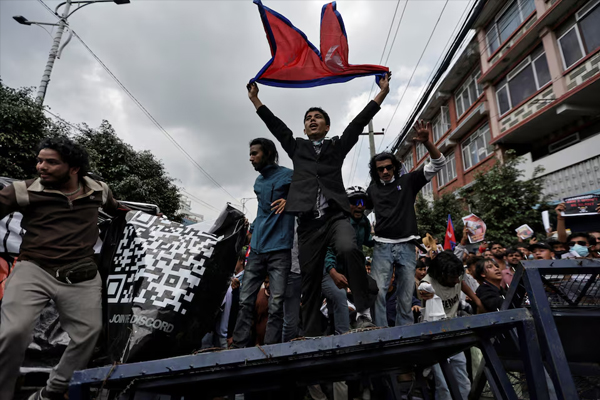
But anger against the government showed no signs of abating, as protesters gathered in front of parliament and other places in the capital Kathmandu, in defiance of an indefinite curfew imposed by authorities.
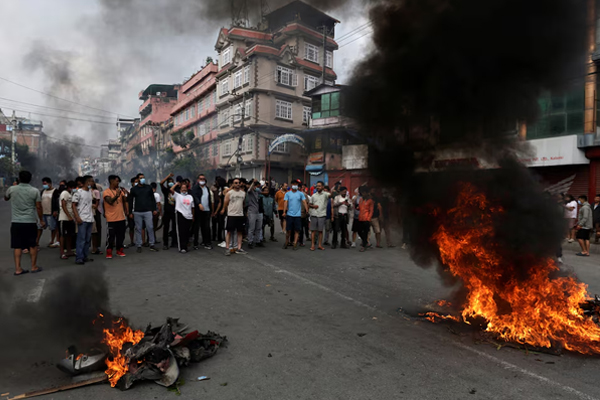
The protesters set fire to tyres on some roads, threw stones at police personnel in riot gear and chased them through narrow streets, while some looked on and shot videos of the clashes on their mobile phones as thick black smoke rose to the sky.
Hundreds of people from some towns located near the India-Nepal border had started marching towards Kathmandu to support the protesters, one of the protesters told Reuters by phone.
Politicians’ Houses Torched
Witnesses also said that protesters were setting fire to the homes of some politicians in Kathmandu, and local media reported that some ministers were plucked to safety by military helicopters.
Reuters could not immediately verify the information.
“We are still standing here for our future … We want this country corruption-free so that everyone can easily access education, hospitals, medical (facilities) … and for a bright future,” protester Robin Sreshtha told Reuters TV.
Arrival of planes from the southern side at Kathmandu airport, Nepal’s main international gateway, was closed because of poor visibility due to the smoke from fires set by protesters in areas nearby, aviation authority official Gyanendra Bhul said.
Organisers of the protests, which spread to other cities in the Himalayan country, have called them “demonstrations by Gen Z”, driven by young people’s widespread frustration with the government’s perceived lack of action to tackle corruption and boost economic opportunities.
(With inputs from Reuters)
Albanese Asks Right-Wing MP To Apologise Over Anti-India Remarks
Australian Prime Minister Anthony Albanese on Tuesday urged a right-wing opposition MP to apologise for remarks claiming that Indian migration to the country was unsustainable.
Jacinta Nampijinpa Price, a senator in the centre-right Liberal Party, made the comments about one of Australia’s largest minority groups following nationwide anti-immigrant protests that in part blamed Indians for cost-of-living pressures in the country.
Price used a radio interview last week to suggest that large numbers of Indians had been allowed to migrate to Australia to vote for Albanese’s centre-left Labour Party.
“There is a concern with the Indian community – and only because there have been large numbers. And we can see that reflected in the way that the community votes for Labour at the same time,” Price said.
Her comments have caused anger amongst the Australian-Indian community, leading to calls for an apology, including from within her own party.
“People in the Indian community are hurting,” Albanese said in an interview with state broadcast ABC on Tuesday.
“The comments are not true that the senator made, and, of course, she should apologise for the hurt that has been caused, and her own colleagues are saying that.”
Rapidly Expanding Indian Diaspora
Government statistics show 845,800 Indian-born people were living in Australia in 2023, more than doubling over the previous decade. Hundreds of thousands more born in Australia claim some form of Indian ancestry.
The state government of New South Wales on Tuesday held a meeting of community groups to discuss what it said was rising anti-Australian-Indian sentiment.
“Today we stand together with the Australian-Indian community to say unambiguously that the sort of racist rhetoric and divisive false claims we have seen over the last couple of weeks have no place in our state or country,” NSW Premier Chris Minns said.
India’s foreign ministry said last week it was engaging with Canberra over the rise in anti-Indian sentiment following the protests.
(With inputs from Reuters)
Norway’s Prime Minister Secures Second Term Amid Political Turmoil
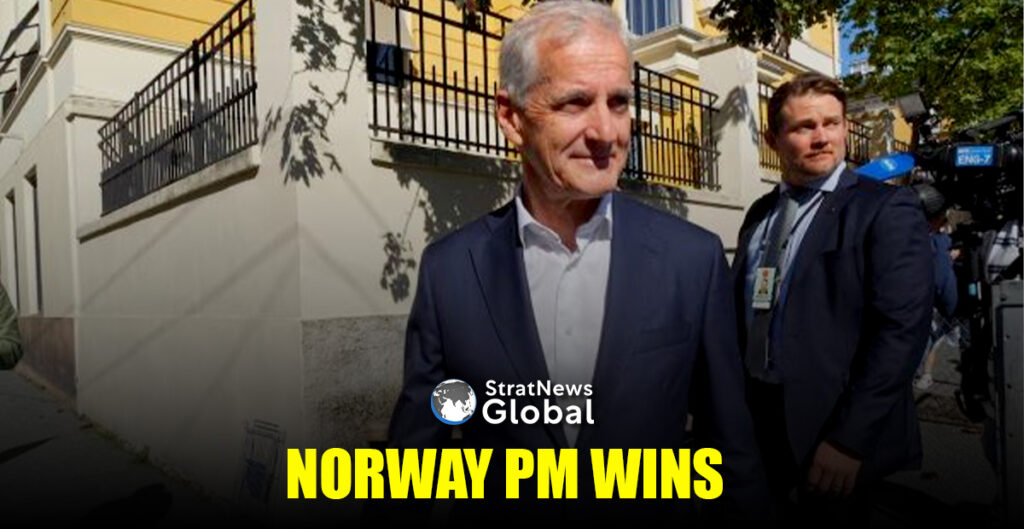
Norwegian Prime Minister Jonas Gahr Stoere has won re-election in a tightly contested parliamentary vote, holding on to power despite years of cabinet unrest and internal revolt within his ruling Labour Party.
Struggling with high inflation and rising interest rates that drove up the cost of living, Stoere’s first term was also marked by several ministerial resignations over scandals such as tax evasion, undisclosed share trading and ethics breaches.
As Labour plunged in the polls, Stoere, 65, survived a leadership challenge in early 2025 by reshuffling the cabinet, naming as finance minister his close friend and ally Jens Stoltenberg, a popular former NATO chief and ex-prime minister.
Support For Stoere
The reshuffle, which included purging the rural-based Centre Party from the government, coincided with the start of U.S. President Donald Trump’s second term, shifting many voters’ attention towards foreign policy and security.
“I think it really is incredible how the support for Stoere has changed,” Johannes Bergh, head of the national election studies programme at the Oslo-based Institute for Social Research, told foreign correspondents last week.
“I think Stoere hasn’t changed, but the circumstances have changed, and people are valuing his experience and competence in dealing with international issues,” Bergh said.
Born into a wealthy family and earning his university degree at Sciences Po, one of France’s top universities, Stoere in 2014 became an unlikely leader of Norway’s left-wing Labour, the traditional home of the working class.
After he first considered joining the Conservative Party, Stoere in his late-20s took a job with Labour, having skipped the traditionally formative period of youth-wing membership that has moulded other senior members of the party.
Russia Deal
Stoere worked closely with Norway’s first female prime minister, Gro Harlem Brundtland, and was later her chief of staff at the World Health Organization.
In 2010, as foreign minister in Stoltenberg’s government, he secured an end to a four-decade-long offshore Arctic border dispute with Russia, and was later named health minister, a key domestic policy job.
In its latest election campaign Labour emphasised Stoere’s foreign policy skills, presenting him as a safe pair of hands in meetings with Trump and in handling relations with the European Union, of which Norway is not a member.
As party leader Stoere overcame a 2017 election defeat, and four years later unseated a Conservative-run coalition, leading a centre-left landslide with a promise of tax relief for low and middle income families and cutting the cost of public services.
But as Norway’s annual rate of inflation hit 7.5% in late 2022, the highest in decades, while the central bank’s policy interest rate soared to 4.5% the following year, a level last seen in 2008, the government’s support quickly eroded.
Inflation has since eased, however, to an annual rate of 3.3% in July this year, while the central bank in June cut interest rates for the first time in five years, boosting consumer confidence.
The election result still leaves Stoere dependent on four smaller left-leaning parties in parliament, up from two currently, making it harder to govern.
(With inputs from Reuters)
Ex-Credit Suisse Chief Officially Ruled Out Of Ivory Coast Presidential Contest
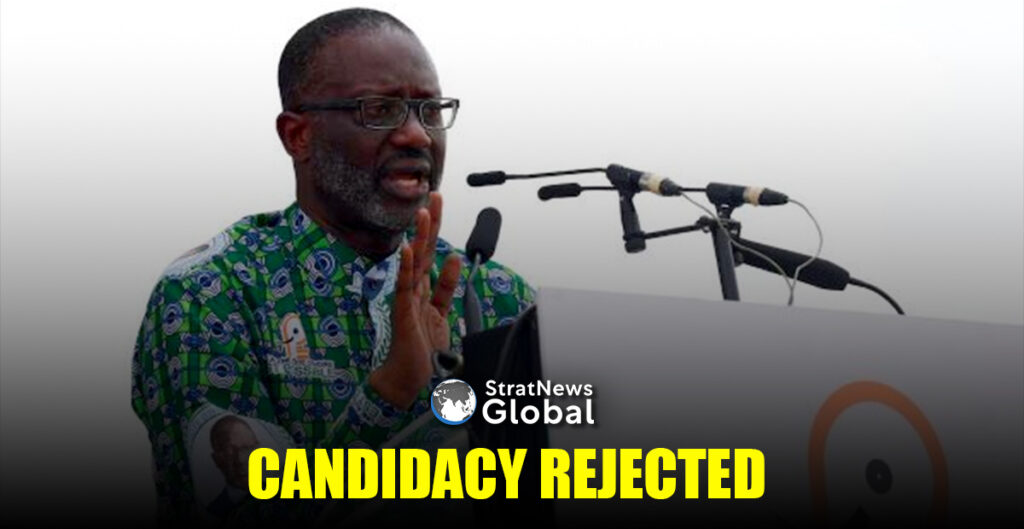
Ivory Coast authorities announced on Monday that former Credit Suisse chief Tidjane Thiam and ex-president Laurent Gbagbo will not be allowed to contest next month’s presidential election, though Simone Gbagbo, the former first lady, has been cleared to stand as a candidate.
President Alassane Ouattara, 83, announced in July he would seek a fourth term in the world’s top cocoa-producing nation, and analysts expect him to win, given the weak field of challengers.
But tensions over candidates’ eligibility risk fuelling unrest in Francophone West Africa’s largest economy, which has a long history of election-related violence. Ouattara’s government has promised a peaceful vote.
Thiam, the designated candidate of the main opposition party PDCI, was widely expected to be excluded after a court ruled in April that he should be removed from the electoral roll because he was a French national when he registered.
Only Ivorian Citizens
Ivory Coast law states that candidates must be Ivorian citizens and cannot hold another nationality.
Monday’s decision, announced by Constitutional Council President Chantal Nanaba Camara, validated five candidacies out of 60, including Ouattara’s. It came just over a month before the official campaign period begins on October 10.
Laurent Gbagbo’s refusal to accept defeat in the 2010 election triggered a brief civil war that killed more than 3,000 people and only ended with his arrest alongside Simone Gbagbo at their Abidjan residence.
Laurent Gbagbo was tried and acquitted of crimes against humanity at the International Criminal Court.
Simone Gbagbo was convicted in an Ivorian court of offences against the state during the 2011 civil war, but Ouattara granted her amnesty in 2018.
Tidjane Thiam said in a statement on Monday the election next month risked becoming a “coronation” for Ouattara.
The former CEO of Credit Suisse also said a fourth term for Ouattara would be unconstitutional, though Ouattara has argued that a new constitution approved in 2016 reset his two-term limit.
(With inputs from Reuters)
Gaza Flotilla Reports Drone Strike On Boat In Tunisian Waters, Officials Deny
The Global Sumud Flotilla for Gaza on Tuesday reported that one of its primary vessels was hit by a drone while sailing in Tunisian waters, though all six passengers and crew members escaped unharmed. Authorities, however, rejected the claim.
Tunisian authorities said the explosion originated inside the vessel, and Tunisia’s National Guard spokesperson told Mosaique FM radio that reports of a drone attack on the flotilla “have no basis in truth”.
The Portuguese-flagged boat, carrying the flotilla’s steering committee, sustained fire damage to its main deck and below-deck storage, the GSF said in a statement.
The flotilla is an international initiative seeking to deliver humanitarian aid to war-torn Gaza via civilian boats supported by delegations from 44 countries including Swedish activist Greta Thunberg and Portuguese left-wing politician Mariana Mortagua.
After the strike, dozens of people gathered outside Tunisia’s Sidi Bou Said port, where the flotilla’s boats were docked, waving Palestinian flags and chanting “Free Palestine,” according to a witness.
Israel’s Naval Blockade
Israel has imposed a naval blockade on the coastal enclave since Hamas took control of Gaza in 2007, saying it aims to stop weapons from reaching the terrorist group.
The blockade has remained in place through conflicts including the current war, which began when Hamas attacked south Israel in October 2023, killing 1,200 and taking about 250 hostages, Israeli tallies showed.
Israel’s subsequent military assault against Hamas has killed over 64,000 Palestinians, Gaza’s health ministry said, while a global hunger monitor said part of the enclave is suffering from famine.
Israel sealed off Gaza by land in early March, letting in no supplies for three months, arguing that Hamas was diverting aid.
In June, Israeli naval forces boarded and seized a British-flagged yacht carrying Thunberg, among others. Israel dismissed the aid ship as a propaganda stunt in support of Hamas.
The GSF also said an investigation into the drone attack was underway and its results would be released once available.
“Acts of aggression aimed at intimidating and derailing our mission will not deter us. Our peaceful mission to break the siege on Gaza and stand in solidarity with its people continues with determination and resolve,” the GSF said.
(With inputs from Reuters)
Hospital Stay Or Evasion? Thai Court To Rule On Thaksin’s Jail Term
Thailand’s Supreme Court is set to deliver a key verdict on Tuesday on whether former Prime Minister Thaksin Shinawatra must serve prison time he previously avoided while being held in hospital detention — a ruling that could finally land the influential tycoon behind bars.
On return from 15 years of self-imposed exile in 2023, he spent only a few hours in prison before being transferred to hospital complaining of heart trouble and chest pains, prompting widespread scepticism and public outrage.
His eight-year sentence for conflicts of interest and abuse of power was commuted to one year by the king and Thaksin was released on parole after just six months, the entirety of which he had spent in the VIP wing of a hospital.
Political Turmoil
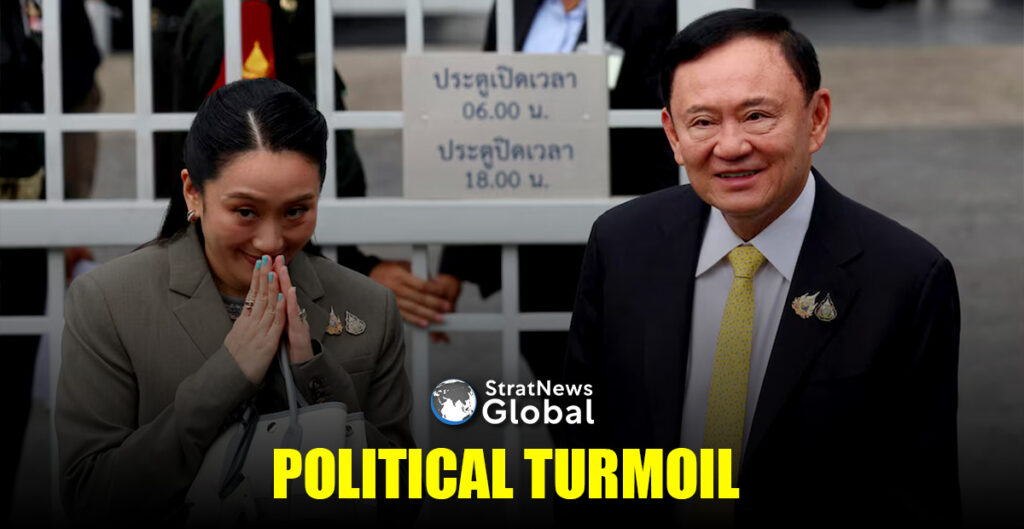
Power-broker Thaksin is experiencing a period of political reckoning after his daughter and protégé Paetongtarn Shinawatra was sacked as prime minister by a court 11 days ago – the sixth premier from or backed by the Shinawatra family to be removed by the judiciary or military.
Days of chaos ensued before Paetongtarn’s government fell on Friday, outmanoeuvred by challenger Anutin Charnvirakul, who was elected premier by parliament in a humiliating defeat for Thaksin’s once unstoppable Pheu Thai party.
Highly Anticipated Ruling
Wearing a suit and yellow tie, the colour associated with Thailand’s monarchy, Thaksin arrived at the court with his family and greeted hundreds of media workers outside, with about a dozen of his red-shirted supporters nearby carrying his picture and hand-written placards.
The court will decide whether the hospital stay was lawful and if it should count as time served – and could order the polarising billionaire to complete the sentence in prison.
It sequestered his medical records and summoned 20 witnesses, including a former head of the corrections department and physicians who treated him.
Thailand’s medical council has suspended two doctors for issuing documents that contained false medical information. A prison doctor was cautioned for failing to meet medical standards in referring Thaksin for hospital treatment.
The 76-year-old appeared in good health as he returned from exile to cheering crowds in 2023 and in the months following his release, when he became active again in politics, though officially retired.
His lawyer in June insisted he had been sick during his hospital stay, adding “he has completely served his sentence”.
Amid turmoil in his party, Thaksin quietly flew on Thursday to Dubai, where he had spent most of his exile, prompting speculation that he had fled justice again. But he returned on Monday, having promised to attend the verdict.
(With inputs from Reuters)