

Support us by contributing to StratNewsGlobal on the following UPI ID
ultramodern@hdfcbank

Strategic affairs is our game, South Asia and beyond our playground. Put together by an experienced team led by Nitin A. Gokhale. Our focus is on strategic affairs, foreign policy and international relations, with higher quality reportage, analysis and commentary with new tie-ups across the South Asian region.
You can support our endeavours. Visit us at www.stratnewsglobal.com and follow us on YouTube, Twitter, Facebook and Instagram.
र 500 per month
र 1000 per month
र 5000 per year
र 10000 per year
Donate an amount of your choice
र 500 per month
Donate र 500 per month

र 1000 per month
Donate र 1000 per month
र 5000 per year
Donate र 5,000 per year
र 10000 per year
Donate र 10,000 per year
Donate an amount of your choice
Donate an amount of your choice

Trade Row Looms As Von der Leyen Prepares Annual EU Address
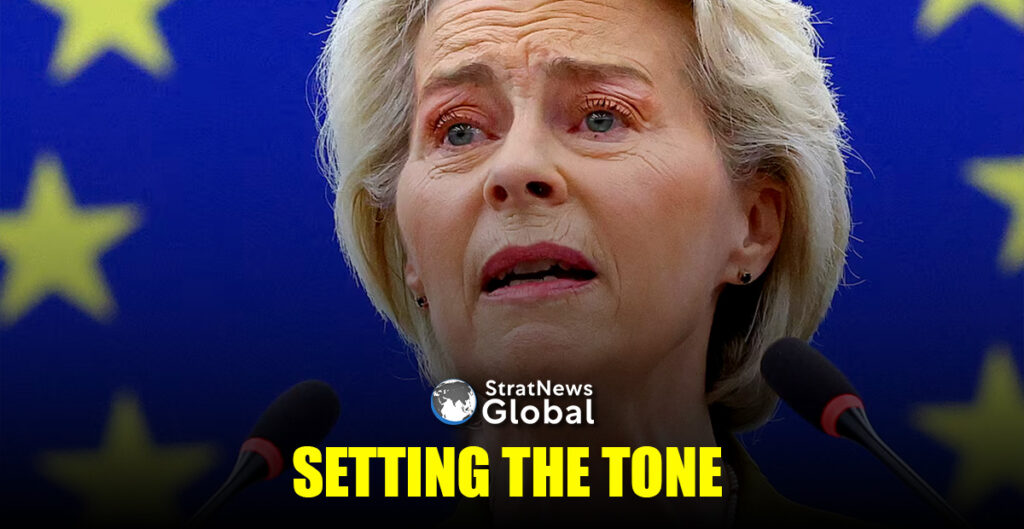
After a turbulent summer marked by controversy over a trade deal with US President Donald Trump, European Commission President Ursula von der Leyen will outline her priorities for the coming year on Wednesday.
Von der Leyen, the president of the European Commission, will address the European Parliament in Strasbourg with her State of the Union speech – an annual opportunity to set the political agenda of the 27-nation bloc. It is scheduled for 9 a.m. CEST (0700 GMT).
The German former defence minister secured a second five-year term last year and pledged to focus on building up Europe’s defences in the face of growing fears about Russia and on boosting the continent’s economic competitiveness.
She has also championed strong support for Ukraine through continued financial aid and more EU sanctions on Moscow.
But she faced considerable criticism over the trade deal she agreed with Trump at his Turnberry Scottish golf resort in July.
Severe Criticism
Under that deal, the EU agreed to remove tariffs on US industrial goods, ease access for US farm products, and accept a 15% US tariff on most of its exports, compared to mostly low single-digit or no duties before Trump began his second term.
Many European politicians and commentators blasted the deal as unbalanced in favour of the US, and France’s then-Prime Minister Francois Bayrou branded it an act of submission.
EU Defends Deal
EU officials said it was the best deal they could get, avoided a trade war, and provided vital certainty for European businesses. It also reflected an unwillingness among leaders of EU countries to escalate tensions with Trump, particularly given Washington’s key role in Europe’s security.
Alberto Alemanno, a professor of EU law at the HEC Paris business school, said other EU leaders were “scapegoating” von der Leyen for their own shortcomings.
“True: von der Leyen embodies EU weaknesses, yet those aren’t of her making. Alone she can’t retaliate against the US, act decisively on Gaza, or broker Ukraine talks,” he said on X.
Bureaucracy Battle
Von der Leyen’s Commission has proposed a raft of policies this year to cut bureaucracy for struggling industries and help European firms compete with rivals in China and the US.
Some industries have welcomed those moves, but others say the Commission has done too little to implement a competitiveness blueprint drawn up by former European Central Bank President Mario Draghi to improve productivity and investment in Europe.
“I don’t think we have yet seen the step change in this space that Draghi called for, and I’m not sure that is only the fault of the Commission,” said Simone Tagliapietra, senior fellow at think tank Bruegel, adding that national governments also bear responsibility.
But her efforts to simplify EU bureaucracy have been criticised by left-wing EU lawmakers and campaigners as weakening environmental laws and corporate accountability.
A group of 470 non-governmental organisations issued a statement ahead of her speech denouncing her Commission’s “deregulation campaign.”
(With inputs from Reuters)
France: Mass Protests Disrupt Highways, Trigger Heavy Security Response
Protesters from a new movement in France blocked highways and disrupted traffic early Wednesday, prompting nationwide security deployment and dozens of arrests, officials said.
Information about Wednesday’s “Block Everything” demonstrations surfaced on social media over the summer, drawing comparisons to the 2018 “Yellow Vest” protests that initially sprang up over fuel hikes but morphed into a broader movement against French President Emmanuel Macron and his plans for economic reform.
Members of the “Block Everything” movement, which analysts and officials say started among right-wing groups before being taken over by the left and far-left, said they considered the political system was no longer fit for purpose.
Political Turmoil
The demonstrations could add to France’s political turmoil two days after parliament ousted Prime Minister Francois Bayrou in a confidence vote. On Tuesday, Macron appointed his fifth prime minister in less than two years, Sebastien Lecornu.
The far-left France Unbowed party has already said it would introduce a no-confidence motion against Lecornu, though the far-right National Rally has signalled it would be willing to work with him for now.
Interior Minister Bruno Retailleau told reporters early on Wednesday that about 50 hooded people had tried to start a blockade in Bordeaux, while in Toulouse, a cable fire that had been stopped quickly had still managed to disrupt traffic between Toulouse and Auch in southwestern France.
Retailleau said some actions had also taken place in Paris overnight, though he did not provide details. Paris police said that 75 people had been arrested in the demonstrations so far, but did not give details on where they took place or the reason for the arrests.
Country-Wide Disruptions
Elsewhere, Vinci, a highway operator, reported protests and traffic disruptions on highways throughout France, including Marseille, Montpellier, Nantes and Lyon.
Retailleau, the interior minister, said 80,000 security forces had been deployed throughout the country, including 6,000 in Paris. French media had reported that 100,000 people were expected to participate in the demonstrations.
“We risk having a mobilisation that will lead to actions all over the country,” Retailleau said.
(With inputs from Reuters)
Iran And U.N. Watchdog Reach Deal To Resume Inspections At Nuclear Sites
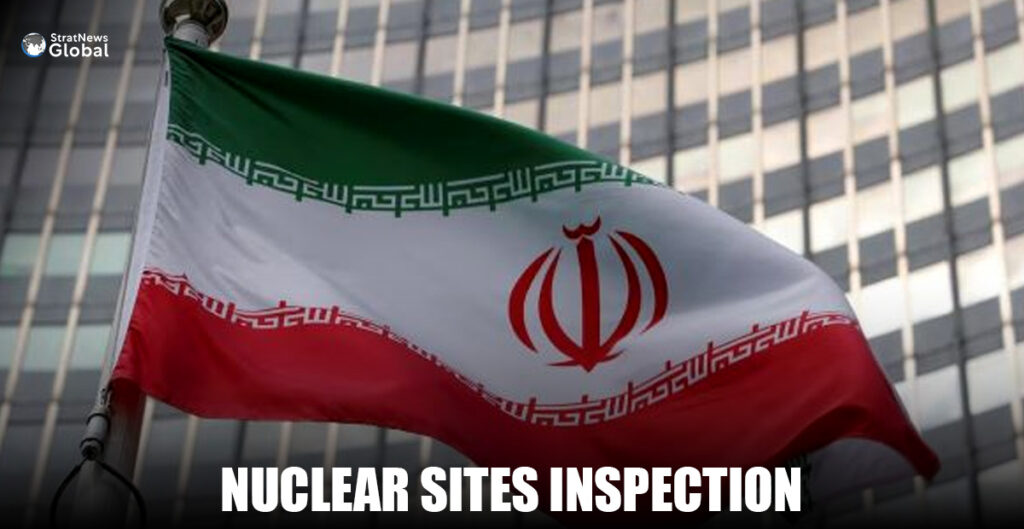
Iran and the International Atomic Energy Agency (IAEA) announced on Tuesday that they had agreed to restart inspections at sites, including those hit by U.S. and Israeli strikes, though no details were provided. Tehran also warned Western powers that the agreement would collapse if sanctions were reinstated.
The agreement, struck between the IAEA chief Rafael Grossi and Iranian Foreign Minister Abbas Araqchi at a meeting in Cairo, should in principle pave the way for a full resumption of inspections interrupted by the military strikes on Iran’s nuclear facilities in June.
Diplomats warned, however, that the devil was in the detail and neither Grossi not Araqchi provided any at a joint press conference on their agreement covering what the IAEA has been calling “modalities” on how inspections can resume.
“In Cairo today, (I) agreed with Iran’s Foreign Minister … on practical modalities to resume inspection activities in Iran,” Grossi said on X at the same time at the press conference. “This is an important step in the right direction.”
The agreement comes against the backdrop of an ongoing threat by European powers to re-impose wide-ranging sanctions against Iran that were lifted under a 2015 nuclear deal between Iran and major powers.
Europe’s ‘Snapback’
Those European powers – France, Britain and Germany, known as the E3 – have initiated the so-called “snapback” process that is due to run until late this month. They have said they will only hold off on completing it if Iran allows inspections to resume, accounts for its highly enriched uranium stockpile and holds nuclear talks with the United States.
Tuesday’s framework deal is aimed at moving towards addressing those first two conditions, but it is unclear whether enough can or will be achieved by this month’s deadline to satisfy the Europeans and fend off snapback for the time being.
“Let me emphasize: in the event of any hostile action against Iran — including the reinstatement of cancelled U.N. Security Council resolutions — Iran will consider these practical steps null and void,” Araqchi said in a statement, referring to sanctions resolutions.
While Iran’s enrichment sites have been badly damaged or destroyed, it is less clear what has happened to the stockpile, which includes uranium enriched to up to 60% purity, a short step from the roughly 90% of weapons grade.
Iran had enough material enriched to that level before the attacks, if enriched further, for 10 nuclear weapons, according to an IAEA yardstick and data from a quarterly IAEA report sent to member states last week.
Soon after the U.S. and Israeli attacks, Iran’s parliament passed a law suspending cooperation with the IAEA and stipulating that any inspections must be approved by Iran’s Supreme National Security Council.
Grossi said in an interview last week that the talks were aimed at reconciling the new obligations that the new Iranian legislation placed on Tehran with Iran’s long-standing obligations as a party to the nuclear Non-Proliferation Treaty policed by the IAEA, which Grossi said remained unchanged.
(With inputs from Reuters)
Nepal Parliament Under Army Watch As Anti-Graft Protests Topple PM
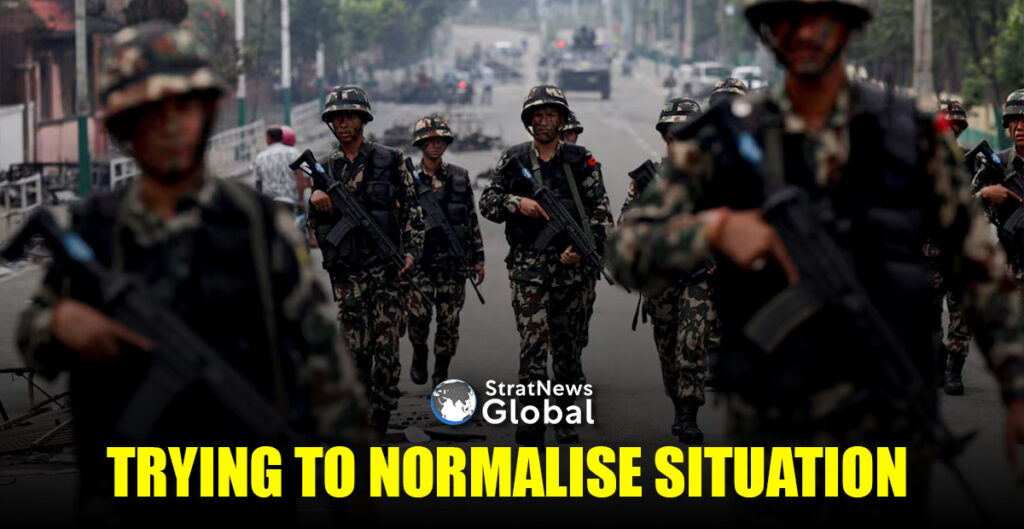
Armed troops stood guard outside Nepal’s parliament on Wednesday, as Kathmandu remained under indefinite curfew after two days of deadly anti-corruption protests that led to Prime Minister K.P. Sharma Oli’s resignation.
The worst upheaval in decades in the Himalayan nation was unleashed by a social media ban announced last week but rolled back after 19 people died on Monday as police fired tear gas and rubber bullets to control crowds.
Burnt vehicles and twisted metal heaps littered the area around parliament, where army firefighters battled to douse a blaze in the main hall, while the exterior was charred after angry protesters set it ablaze on Tuesday.
Trying To Normalise Situation
“We are trying to normalise the situation first,” army spokesman Raja Ram Basnet said. “We are committed to protect the life and property of people.”
Armoured vehicles kept vigil in streets deserted except for a few strollers, with shops and markets shut.
Several other government buildings, from the supreme court to ministers’ homes, including Oli’s private residence, were also set ablaze in Tuesday’s protests, with the unrest subsiding only after the resignation.
Flights were disrupted, with the main airport in Kathmandu shut until 6 p.m. (1215 GMT), an airport spokesperson said.
Taks To Defuse Crisis
In an appeal on X, the army said prohibitory orders would stay until Thursday morning, adding that relevant parties were coordinating to tackle the situation after the protest and resolve the issue.
Media also said preparations were being made for authorities and protesters to hold talks, without giving details. Reuters could not independently confirm the information.
Former Supreme Court judge Balaram K.C. urged the protesters to set up a negotiation team, with the army helping to maintain law and order, and called for fresh elections.
“Parliament should be dissolved and fresh elections held,” the constitutional expert told Reuters. “They should discuss forming the next caretaker government.”
Jobs, Corruption Key Issues
Most of the protesters were young people voicing frustration at the government’s perceived failure to fight corruption and boost economic opportunities.
For years a lack of jobs has driven millions to seek work in countries such as Malaysia, the Middle East and South Korea, mainly on construction sites, so as to send money home.
Wedged between India and China, Nepal has struggled with political and economic instability since protests led to the abolition of its monarchy in 2008.
India Concerned
India’s security cabinet also met late on Tuesday to discuss the situation in its neighbour.
“Nepal’s stability, peace, and prosperity are of utmost importance,” Prime Minister Narendra Modi said in a post on X later. “I humbly appeal to all my brothers and sisters in Nepal to maintain peace and order.”
(With inputs from Reuters)
Trump Hints At Active India-US Trade Talks As Modi Shows Readiness For Dialogue
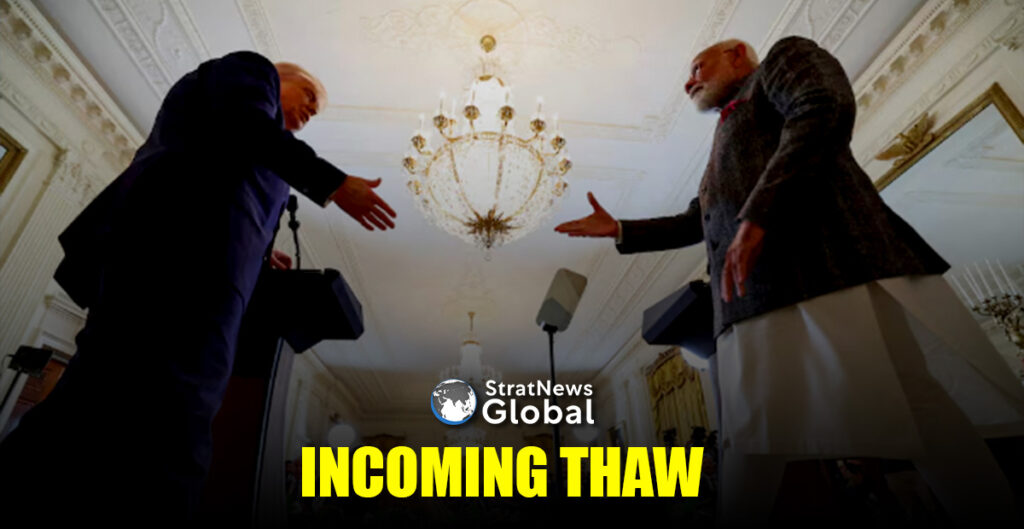
Indicating a potential easing of the frosty phase in bilateral relations between India and the United States, President Donald Trump declared that he was “certain” there would be “no difficulty” for the two nations to reach a “successful conclusion” in their ongoing trade discussions, while also noting his anticipation of an upcoming conversation with his “very good friend,” Prime Minister Narendra Modi, in the weeks ahead.
Prime Minister Modi responded warmly to Trump’s upbeat remarks on the state of trade talks, voicing confidence that the current negotiations would help unlock the vast, untapped possibilities of cooperation between the two countries.
‘Very Good Friend’
In a post on Truth Social on Tuesday (September 9), President Trump announced he was “pleased to share that India and the U.S. are continuing their discussions to address existing Trade Barriers between our two great Nations.”
“I look forward to speaking with my very good friend, Prime Minister Modi, in the coming weeks. I feel certain there will be no difficulty in reaching a successful conclusion for both of our Great Countries,” Trump asserted.
Modi, replying on X, echoed Trump’s optimism, describing India and the United States as close friends and natural allies, and emphasising that both governments were working to wrap up the trade talks at the earliest possible stage.
He stated, “I am also eagerly looking forward to my conversation with President Trump. Together, we will strive to secure a brighter and more prosperous future for both our peoples.”
This marks the second occasion in recent days that President Trump has praised America’s ties with India while coupling those remarks with personal admiration for Prime Minister Modi, who in turn has responded positively to such gestures.
Thaw In Strained Relations
Trump’s latest words point to a noteworthy softening in bilateral tensions, coming after relations had plunged into arguably their worst period in over two decades, largely due to disputes over tariffs and India’s oil imports from Russia.
The Trump administration had imposed doubled tariffs on Indian products, raising duties to a steep 50%, with an additional 25% levy directly tied to New Delhi’s continued purchase of Russian crude.
India strongly condemned Washington’s move, calling it “unfair, unjustified and unreasonable.”
Following months of sharp rhetoric directed at New Delhi, President Trump last week struck a more conciliatory tone, stating that India and the U.S. enjoy a “special relationship” and that occasional frictions should not be a cause for alarm.
“I always will. I’ll always be friends with Modi. He’s a great Prime Minister, truly great. I’ll always remain friends, but I just don’t like what he’s doing at this particular moment,” Trump remarked from the Oval Office on Friday.
“But India and the United States have a special relationship. There’s nothing to worry about. We just have moments from time to time,” he added with a smile.
‘Deep Appreciation’
Prime Minister Modi, responding on Saturday, expressed gratitude for Trump’s words, noting his “deep appreciation” of the U.S. president’s positive reassessment of bilateral relations.
“Deeply appreciate and fully reciprocate President Trump’s sentiments and positive assessment of our ties,” Modi declared.
“India and the United States share a highly positive, forward-looking Comprehensive and Global Strategic Partnership,” he added.
Still, Trump also reiterated his disappointment with India’s continued purchases of discounted Russian oil supplies.
“…I’ve been very disappointed that India continues buying so much oil from Russia, and I made that clear. We imposed a very big tariff on India, 50%, a very high tariff. I get along extremely well with Modi—he’s great. He was here just a couple of months ago,” Trump noted, responding to a question about his earlier post suggesting that the U.S. had lost India and Russia to China.
India, however, has firmly defended its energy choices, insisting that its procurement of Russian oil is dictated by market realities and the national interest.
New Delhi ramped up purchases of Russian crude at discounted prices after Western powers sanctioned Moscow and cut themselves off from Russian supplies following its invasion of Ukraine in February 2022.
(With inputs from IBNS)
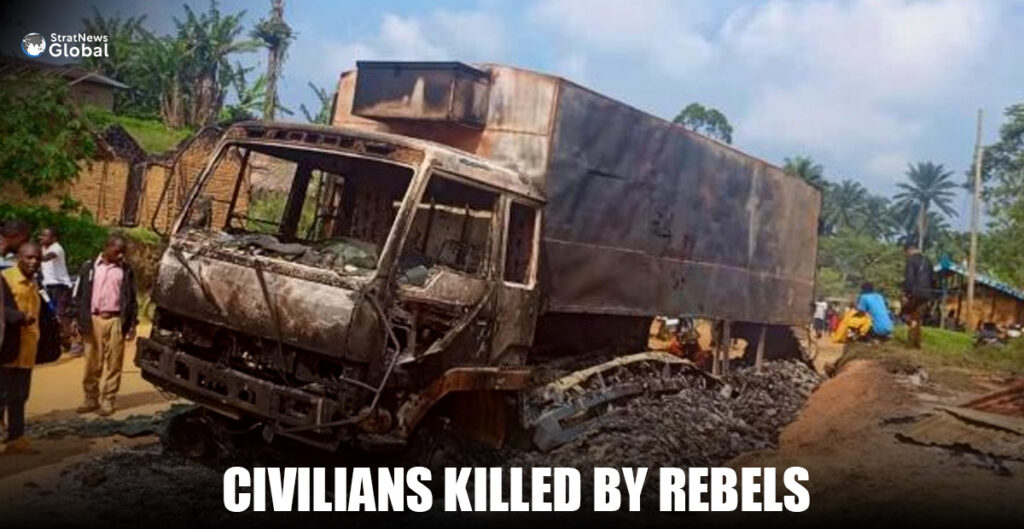
Islamic State-Backed Rebels Kill Over 60 Civilians At Funeral In Eastern Congo
Rebels from the Allied Democratic Forces, armed with machetes and guns, attacked a funeral in eastern Congo, leaving at least 61 civilians dead in one of the Islamic State-linked group’s deadliest assaults in recent months, officials reported on Tuesday.
The terrorists, also known as Islamic State Central Africa Province (ISCAP), claimed responsibility for Monday’s attack and said they had killed nearly 100 Christians, according to the U.S.-based SITE Intelligence Group, which monitors terrorist activities.
The SITE report also said some 30 houses had been set on fire in the attack targeting the funeral ceremony in Ntoyo village in the Lubero territory of Congo’s North Kivu.
Macaire Sivikunula, a local administrator, said 61 bodies had been counted so far.
“The victims were caught off guard at a mourning ceremony in the village of Ntoyo at around 9 p.m., and most of them were killed with machetes,” he said.
Authorities reported later on Tuesday that 18 people had been killed in a separate suspected ADF attack on another village.
The ADF started as a rebel force in Uganda but has been based in the forests of neighbouring Congo since the late 1990s, and is recognised by Islamic State as an affiliate.
A recent flurry of attacks claimed by the ADF has exacerbated insecurity in east Congo, a mineral-rich region where Rwandan-backed M23 rebels staged a major advance this year, prompting U.S. President Donald Trump’s administration to try to broker peace.
Last month the ADF killed more than 50 civilians in multiple attacks, while an ADF attack in July on a church left 38 dead.
People Still Missing
Colonel Alain Kiwewa, the military administrator for Lubero, said Monday night’s death toll could rise as there were still people missing.
As well as using machetes, the assailants also shot dead some victims and set fire to vehicles, said Samuel Kagheni, a local civil society leader.
Alain Kahindo Kinama, a resident, said Congolese soldiers had arrived at the scene on Tuesday morning and that many people were trying to leave the area.
Congolese army spokesperson Lieutenant Marc Elongo said ADF terrorists had “already committed the massacre” by the time soldiers intervened.
Congo’s army and its ally Uganda say they have intensified operations against the ADF in recent weeks.
(With inputs from Reuters)
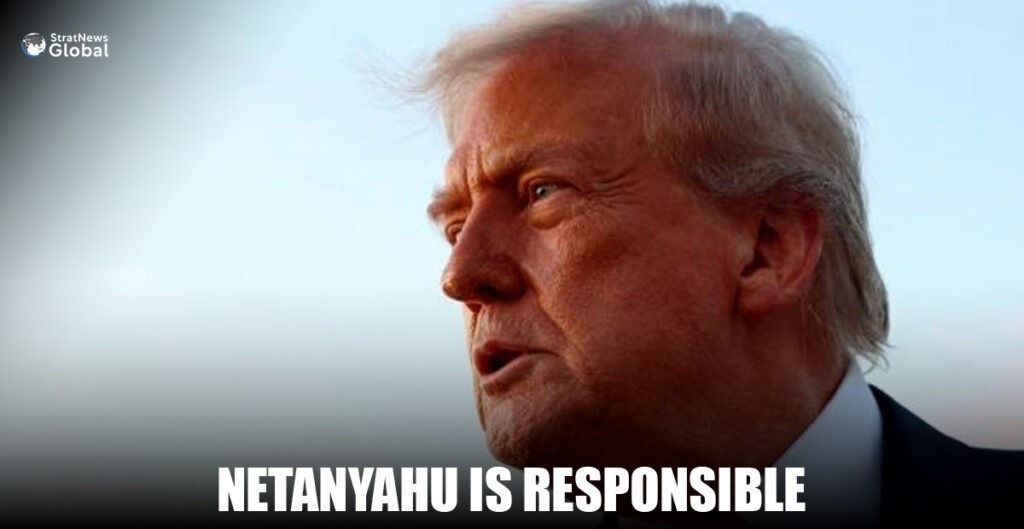
Trump: Netanyahu Responsible For Qatar Strike, Not U.S. President
U.S. President Donald Trump said on Tuesday that it was Israeli Prime Minister Benjamin Netanyahu, and not the Republican leader himself, who decided to strike Qatar. Trump also added that such a unilateral action does not advance the interests of either the United States or Israel.
Israel attempted to kill the political leaders of Hamas with an airstrike in Qatar on Tuesday, escalating its military action in the Middle East. The strike was widely condemned in the Middle East and beyond as an act that could further escalate tensions in a region already on edge.
Trump said he directed U.S. envoy Steve Witkoff to warn Qatar the attack was coming but that it was too late to stop the strike. However, Qatar contradicted such claims from the White House, saying reports it got a heads-up before the attack were false and a phone call from a U.S. official came when blasts were already being heard in the Qatari capital, Doha.
“Unilaterally bombing inside Qatar, a Sovereign Nation and close Ally of the United States, that is working very hard and bravely taking risks with us to broker Peace, does not advance Israel or America’s goals,” Trump wrote on Truth Social.
“However, eliminating Hamas, who have profited off the misery of those living in Gaza, is a worthy goal.”
Hamas said five of its members were killed in the Israeli attack in Doha, including the son of Hamas’s exiled Gaza chief Khalil al-Hayya.
Washington counts Qatar as a strong Gulf ally. Qatar has been a mediator in trying to arrange a deal for a ceasefire between Israel and the Palestinian terrorist group in Gaza, for the release of Israeli hostages held by Hamas and for a plan on a post-conflict Gaza.
Trump Is ‘Not Thrilled’
After the strike, Trump spoke to both Netanyahu and the emir of Qatar, Sheikh Tamim bin Hamad Al-Thani.
He assured Qatar’s leader that “such a thing will not happen again on their soil,” Trump said, adding he felt “very badly” about the location of the attack.
Trump later told reporters in Washington he was “not thrilled” about the Israeli strike in Qatar.
“I’m not thrilled about it,” Trump said. “It’s not a good situation but I will say this: We want the hostages back, but we’re not thrilled about the way it went down today.”
As Trump made the comments, pro-Palestinian protesters who had gathered nearby chanted “Free free Palestine” and “stop arming genocide.”
U.S. ally Israel’s assault on Gaza since October 2023 has killed tens of thousands of people, internally displaced Gaza’s entire population, and set off a starvation crisis. Multiple rights experts and scholars say Israel’s military assault on Gaza amounts to genocide.
Israel says its actions amount to self-defence after an October 2023 attack by Palestinian Hamas terrorists in which 1,200 people were killed and over 250 taken hostage, according to Israeli tallies. Israel has also bombed Lebanon, Syria, Iran and Yemen in the course of the Gaza conflict.
(With inputs from Reuters)
Poland Shoots Down Russian Drones Amid First Direct Involvement In Ukraine War
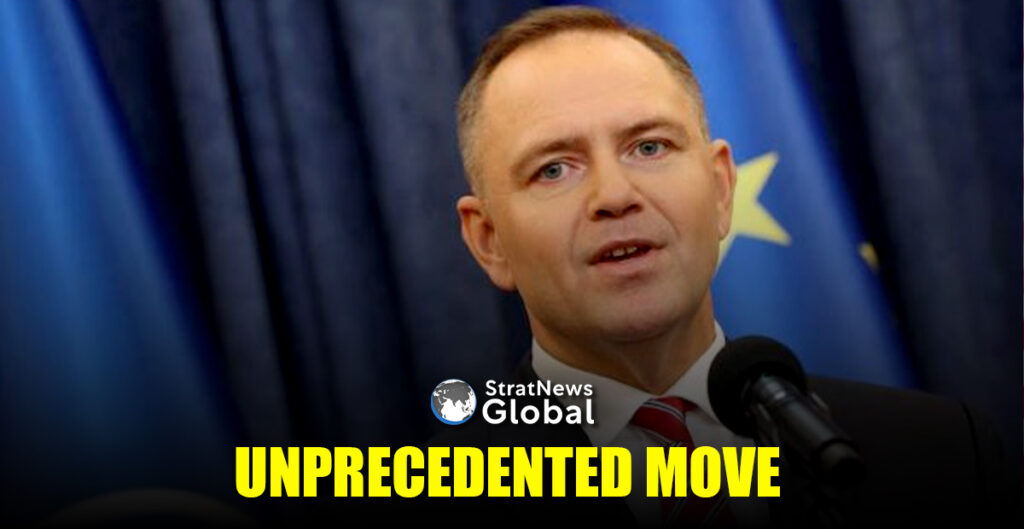
In a first since the Ukraine war began, Poland on Wednesday activated its own and NATO air defences to shoot down drones following a Russian airstrike on western Ukraine, marking a significant escalation involving Polish airspace.
Poland’s military command said drones repeatedly violated Polish airspace during the Russian attack across the border in Ukraine, and the defence minister said NATO command had been briefed.
Radars tracked more than 10 objects and those that could pose a threat were “neutralised,” the command said.
Stay At Home Order
“Some of the drones that entered our airspace were shot down. Searches and efforts to locate the potential crash sites of these objects are ongoing,” it said in a statement.
It said the military operation was ongoing and urged people to stay at home, naming the regions of Podlaskie, Mazowieckie, and Lublin as most at risk.
‘Act Of Aggression’
Poland’s army called the violation of the nation’s airspace an “act of aggression”, while Defence Minister Wladyslaw Kosiniak-Kamysz said Polish aircraft had “used weapons against hostile objects”.
“We are in constant contact with NATO command,” he added on X.
Airports Closed
Chopin Airport in Warsaw, the country’s largest, announced that its airspace was closed due to military actions.
The US Federal Aviation Administration earlier said Chopin was one of four Polish airports to be temporarily closed, including Rzeszow–Jasionka Airport in the southeast, a hub for passenger and arms transfers to Ukraine.
Russia’s defence ministry did not immediately respond to Reuters’ request for comment.
US Secretary of State Marco Rubio had been briefed, CNN reporter Kaitlan Collins said on Tuesday. The State Department did not immediately respond to a request for comment.
As of 0400 GMT, all of Ukraine, including western regions of Volyn and Lviv which border Poland, had been under air raid alerts for several hours, according to Ukraine’s air force.
Earlier, Ukraine’s air force reported that Russian drones had entered NATO-member Poland’s airspace, posing a threat to the city of Zamosc, but it subsequently removed that statement from the Telegram messaging app.
‘Act Of War’
In the United States, Democratic Senator Dick Durbin said repeated violations of NATO airspace by Russian drones were a sign that Russian President “Vladimir Putin is testing our resolve to protect Poland and the Baltic nations”.
“After the carnage Putin continues to visit on Ukraine, these incursions cannot be ignored,” he said on X.
Republican representative Joe Wilson, a senior member of the Foreign Affairs Committee, said in a post on X that Russia was “attacking NATO ally Poland” with drones, calling it an “act of war”.
Wilson urged US President Donald Trump to respond with sanctions “that will bankrupt the Russian war machine”.
“Putin is no longer content just losing in Ukraine while bombing mothers and babies, he is now directly testing our resolve in NATO territory,” he said.
More Sanctions?
Trump, who warmly welcomed Putin to the United States for a summit in August, said over the weekend he was ready to move to a second phase of sanctioning Russia after months of fruitless talks about a peace deal.
It was his strongest indication yet that he may escalate pressure on Moscow or its oil buyers in response to the war in Ukraine.
The European Union’s top sanctions official was in Washington on Monday to discuss what would be the first coordinated transatlantic measures against Russia since Trump returned to office in January promising to end the war in 24 hours.
Border Issues
Poland has been on high alert for objects entering its airspace since a stray Ukrainian missile struck a southern Polish village in 2022, killing two people, a few months into Russia’s full-scale invasion of Ukraine. But there have been no reports of Polish or allied defence systems destroying drones.
Poland earlier said it would close its border with Belarus on Thursday at midnight local time as a result of Russia-led military exercises taking place in Belarus.
Russia and Belarus’ large-scale military exercises, known as the “Zapad” drills, have raised security concerns in neighbouring NATO member states Poland, Lithuania and Latvia.
Lithuania said defences along its border with Belarus and Russia would be strengthened due to the exercises.
Ben Hodges, former commander of US Army forces in Europe, said the number of incursions by Russian drones into NATO airspace “make it clear that these are intentional tests of NATO and national air defences and early warning systems”.
“We need to be able to respond effectively, each time,” Hodges told Reuters, adding: “We certainly could be doing more”.
(With inputs from Reuters)
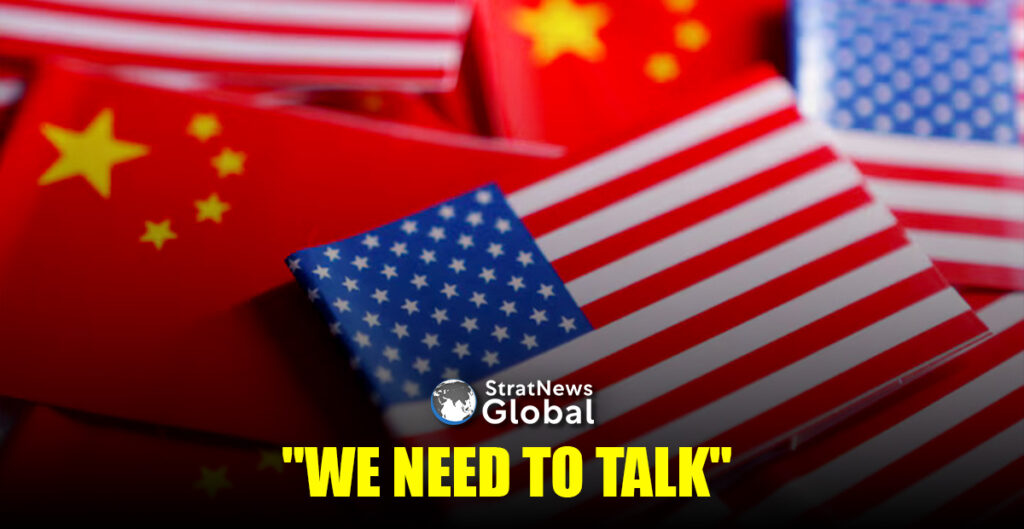
US Lawmakers Plan Bipartisan Visit To China Amid Strained Ties
A bipartisan delegation from the US House of Representatives, led by Democrat Adam Smith, is set to visit China later this month, marking an important official outreach amid strained bilateral ties.
Smith, a US representative from the Washington state, is the former chair of the House Armed Services Committee and the current top Democrat on the panel. A committee staffer confirmed Smith’s plan to lead the delegation to China but could not provide other details.
NBC News first reported the planned trip, citing an interview with Smith. The exact timing of the trip was not immediately clear.
Smith told NBC News that both Democratic and Republican members of the House Armed Services Committee would participate in the trip, but its chair, Republican US Representative Mike Rogers, would not be a part of the delegation.
Strained Ties
The trip will take place during strained ties between Washington and Beijing over issues like trade tariffs, technology, cybersecurity, the ownership of TikTok, the origins of the COVID-19 pandemic and policies related to Hong Kong and Taiwan.
Beijing and Washington agreed on August 11 to extend their tariff truce for another 90 days, locking in place US levies of 30% on Chinese imports and 10% Chinese duties on US goods, but appear to be struggling to chart a path beyond the current pause.
‘We Need To Talk’
“It’s part of wanting to try to open up a dialogue between the US and China. And I personally think it’s important that you do that,” Smith told NBC News in an interview.
“Merely talking with China is not endorsing everything that they do. It’s like China is a big, powerful country. We are a big, powerful country. I think we need to talk about that,” he said.
Asked if the lawmakers would meet with Chinese President Xi Jinping, Smith told the media outlet: “We’re asking. We don’t know yet.”
Last week, Xi warned that the world was facing a choice between peace or war at a massive military parade in Beijing, flanked by Russian President Vladimir Putin and North Korean leader Kim Jong Un in a show of force.
(With inputs from Reuters)
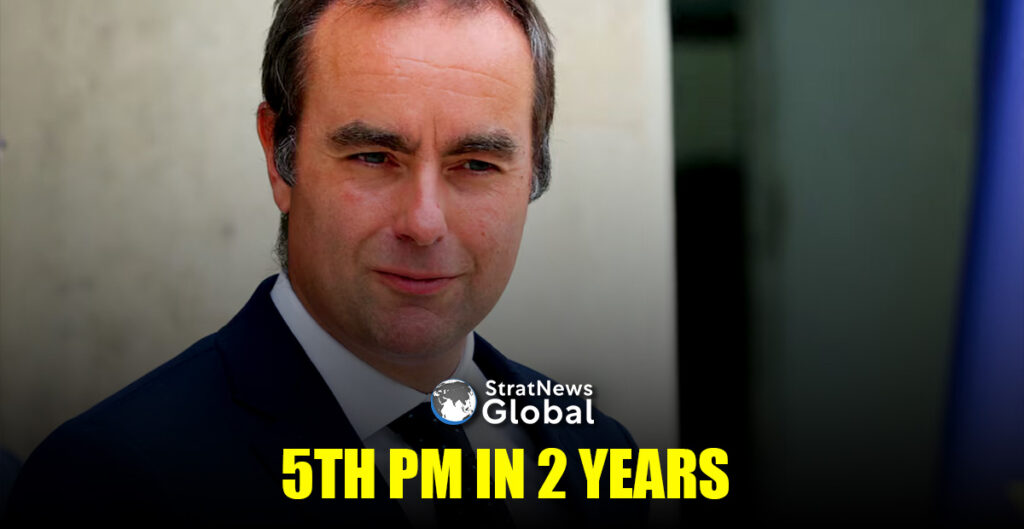
France: Macron Taps Loyalist Lecornu As New Prime Minister
Breaking from expectations of a leftward shift, French President Emmanuel Macron on Tuesday appointed loyalist Sebastien Lecornu as Prime Minister — a former conservative protege who had backed Macron’s 2017 presidential bid.
The choice of Lecornu, 39, indicates Macron’s determination to press on with a minority government that stands firmly behind his pro-business economic reform agenda, under which taxes on business and the wealthy have been cut and the retirement age raised.
Finding Compromises
However, Macron’s office said in a statement the president had asked Lecornu to hold talks with all political forces in parliament in view of finding compromises on the budget and other policies before naming his cabinet, in an unusual move in French politics.
Macron was forced to appoint a fifth prime minister in less than two years after parliament ousted Francois Bayrou nine months into the role over his plans for taming the country’s ballooning debt.
In handing the job to Lecornu, Macron risks alienating the centre-left Socialist Party and leaves the president and his government depending on Marine Le Pen’s far-right National Rally for support in parliament.
‘Slap In The Face Of Parliament’
The Socialists’ immediate reaction was scathing.
“Regardless of Sebastien Lecornu’s personal qualities, his nomination is a slap in the face of parliament,” said Philippe Brun, the Socialist lawmaker who has been in charge of budget negotiations, told Reuters.
“Macron naming one of his followers has the whiff of an end-of-reign.”
Nationalist leader Marine Le Pen said on X the “president (was) firing the last shot of Macronism, holed up with his small circle of loyalists.”
However, her protege Jordan Bardella appeared to extend a lifeline to Lecornu, in a sign their National Rally party could seek to influence the new cabinet’s fortunes.
“We will judge – without illusion – the new prime minister on his merits,” he said, while warning the party still kept strict “red lines”.
Lecornu’s immediate priority will be to forge consensus on a budget for 2026, a task that proved the undoing of Bayrou who had pushed for aggressive spending cuts to rein in a deficit standing at nearly double the EU ceiling of 3% of GDP.
Debt Quagmire
The political upheaval this week lays bare deepening turmoil in France that is weakening the euro zone’s second-biggest economy as it sinks deeper into a debt quagmire.
Lecornu’s nomination is not without peril for Macron. He risks appearing tone-deaf at a time of simmering popular discontent and with polls showing voters want change. Nationwide “Block Everything” protests threaten widespread disruption on Wednesday.
Who Is Sebastien Lecornu?
Lecornu most recently served as Macron’s defence minister, overseeing an increase in defence spending and helping shape European thinking on security guarantees for Ukraine in the event a peace deal with Russia is brokered.
Lecornu entered politics canvassing for former President Nicolas Sarkozy when he was 16. He became mayor of a small town in Normandy when he turned 18 and then former President Nicolas Sarkozy’s youngest government adviser at the age of 22.
He left the conservative Les Republicains party to join Macron’s centrist political movement when the president was first elected in 2017. Five years later, he ran Macron’s re-election campaign.
By naming a minister from his own camp with a conservative background, Macron appears to have decided to preserve his economic legacy at all cost.
Socialists had pledged to reverse some of his flagship pro-business policies, including the scrapping of a wealth tax and a raised retirement age, planks the president considers essential to making France attractive to investors.
Lecornu has at times had the ear of Marine Le Pen and her party chief Jordan Bardella, with whom Lecornu had a secret dinner last year. RN officials have told Reuters they could maintain some kind of tacit support to Lecornu if he was named premier.
The RN has said it will not tolerate tax increases on hard-working people.
(With inputs from Reuters)