

Support us by contributing to StratNewsGlobal on the following UPI ID
ultramodern@hdfcbank

Strategic affairs is our game, South Asia and beyond our playground. Put together by an experienced team led by Nitin A. Gokhale. Our focus is on strategic affairs, foreign policy and international relations, with higher quality reportage, analysis and commentary with new tie-ups across the South Asian region.
You can support our endeavours. Visit us at www.stratnewsglobal.com and follow us on YouTube, Twitter, Facebook and Instagram.
र 500 per month
र 1000 per month
र 5000 per year
र 10000 per year
Donate an amount of your choice
र 500 per month
Donate र 500 per month

र 1000 per month
Donate र 1000 per month
र 5000 per year
Donate र 5,000 per year
र 10000 per year
Donate र 10,000 per year
Donate an amount of your choice
Donate an amount of your choice




China Expands Electronic Warfare Grip in SCS
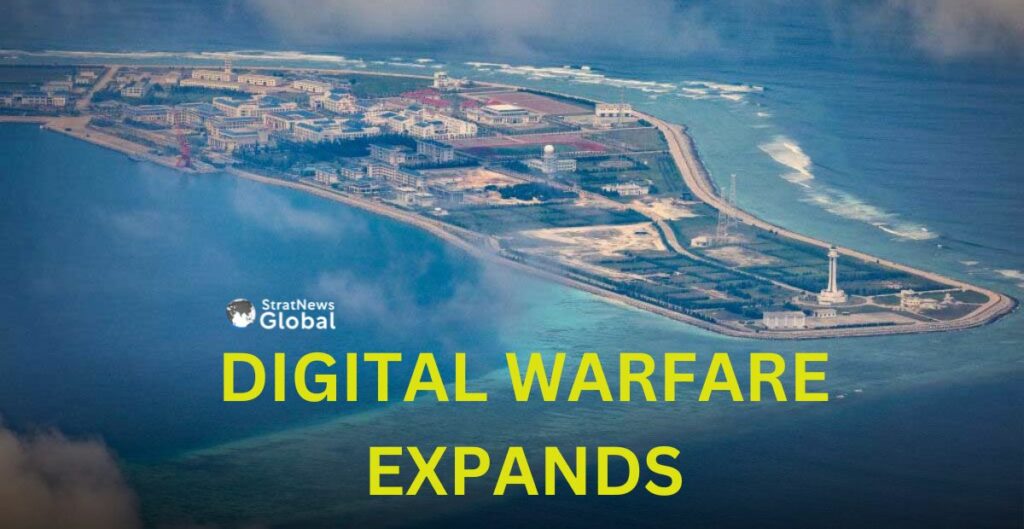
China has significantly expanded its electronic warfare (EW) and surveillance network across its artificial islands in the Spratly chain, with new assessments indicating a rapid build-out that is reshaping the South China Sea into what analysts describe as an increasingly contested “electronic battlespace.”
The findings were highlighted this month by the Asia Maritime Transparency Initiative (AMTI). According to AMTI, Beijing undertook major upgrades between 2023 and 2025 on Fiery Cross, Mischief, and Subi Reefs, installing new antenna fields and deploying mobile EW vehicles capable of monitoring, jamming, and targeting foreign military activity. Satellite imagery cited in the report shows at least six new paved antenna sites, mobile jamming platforms, and expanded intelligence, surveillance and reconnaissance infrastructure across the outposts.
Subi Reef now includes a roofed shelter constructed in 2025 for vehicle-mounted EW units, while Mischief Reef hosts five EW vehicles linked directly to fixed antenna arrays. AMTI also identifies new radomes at Subi and a circular launch-pad-type structure at Mischief designed for rapid antenna deployment. Reinforced coastal positions at Mischief suggest preparations for artillery or mobile weapons systems.
The developments align with broader trends outlined by the US-China Economic and Security Review Commission (USCC). In its November 2025 report, the commission states that the People’s Liberation Army has improved its ability to disrupt or paralyze U.S. military communications, reconnaissance links, and targeting systems—capabilities it describes as striking at the “nervous system” of modern U.S. operations. The USCC concludes that EW assets now sit at the core of China’s counter-intervention strategy aimed at constraining U.S. forces in the South China Sea and Taiwan Strait.
Earlier work by J. Michael Dahm in a 2020 Johns Hopkins Applied Physics Laboratory report anticipated the trend, describing how China’s Spratly outposts could act as regional EW hubs. Dahm detailed mobile jammers, direction-finding arrays, and ELINT facilities at Fiery Cross, Mischief, and Subi, enabling the triangulation and tracking of foreign forces and the degradation of their sensors.
Further reporting by the South China Morning Post adds context to China’s evolving doctrine. In December 2024, the newspaper noted that Chinese EW strategy prioritizes blinding U.S. carrier strike groups by targeting Aegis radars, E-2C Hawkeye coordination networks, and the Cooperative Engagement Capability. In July 2024, it reported that the Type 055 cruiser Nanchang employed AI-enabled radars to withstand jamming by U.S. EA-18G Growlers.
Questions about the operational impact of these systems surfaced in October 2025, when Real Clear Defense analyst Paul Crespo suggested that two U.S. aircraft lost near the USS Nimitz might have been affected by Chinese EW interference, though no official confirmation has been issued.
A 2020 China Maritime Studies Institute report by Chi Guocang argues that China’s fortified Spratly network also supports a secure submarine “bastion” for its nuclear-armed ballistic-missile submarines. Meanwhile, U.S. Lieutenant General John Caine told the Senate Armed Services Committee in April 2025 that the United States has “lost some muscle memory” in EW, warning that training and simulation capabilities have not kept pace with the threat environment.
(Inputs from Agencies/Wires)
Trump Steps In Again to Broker Peace in Thailand-Cambodia Border Conflict
Thailand’s caretaker Prime Minister, Anutin Charnvirakul, announced on Friday that he was set to speak with U.S. President Donald Trump later in the day, amid ongoing border clashes between Thailand and Cambodia. The fighting has entered its fifth consecutive day, raising concerns over regional stability.
Anutin told reporters that the conversation with Trump was scheduled for around 9:20 p.m. local time (1420 GMT). The planned call follows escalating violence along the two nations’ 817-kilometre border, where intense fighting has caused significant casualties and widespread displacement.
Trump Seeks to Restore Ceasefire Efforts
President Trump has shown renewed interest in intervening to halt the clashes and restore the fragile ceasefire he helped broker earlier this year. Speaking for the third consecutive day on the matter, he pledged to personally reach out to both leaders in hopes of preventing further bloodshed.
At the Congressional Ball on Thursday evening, Trump highlighted his record as a global mediator and expressed confidence that peace could be restored. “We’ve solved eight wars. Think of it. Eight wars have been solved,” he told attendees. “Although Thailand and Cambodia—I think we are going to have to make a couple of phone calls—but we’ll get that one back on track.”
Heavy Fighting and Rising Casualties
The latest confrontation marks one of the most severe flare-ups since July, when a similar five-day conflict was halted following direct intervention from Trump. According to local authorities, at least 20 people have been killed and more than 200 others injured in recent days.
Hundreds of thousands of civilians have fled their homes as both sides exchanged heavy artillery and rocket fire across multiple locations. The prolonged hostilities have strained humanitarian efforts, with displaced families seeking safety in temporary shelters along the border.
Observers say the international community is watching closely as efforts intensify to de-escalate tensions and resume dialogue. Trump’s upcoming call with Anutin may prove pivotal in re-establishing the ceasefire and preventing further loss of life.
(with inputs from Reuters)
Pakistan Wary As India-Oman Inch Closer To Trade Deal
Pakistan is watching closely as Oman takes a major step toward deepening its economic ties with India after the Shura Council formally approved the draft Comprehensive Economic Partnership Agreement (CEPA).
The endorsement allows the agreement to move forward in Oman’s legislative process, bringing the two countries closer to signing a wide-ranging trade and investment pact that will reshape regional commercial linkages.
The approval arrives ahead of Prime Minister Narendra Modi’s visit next week. Diplomats on both sides have described the upcoming visit as an important opportunity to conclude new economic arrangements, including the CEPA framework.
Trade pacts such as CEPA typically involve wide tariff reductions, streamlined customs procedures, and clearer rules for services and investment, changes that can redefine economic engagement for years to come.
For Oman, the agreement aligns with its national goal of broadening the economic base beyond oil and gas. CEPA is expected to reduce or remove tariffs on a large share of traded goods, improve export potential for Omani products, boost competitiveness for manufacturers and downstream industries operating in hubs such as Sohar, Duqm and Salalah, attract new investors seeking access to both the Gulf and Indian markets, and support diversification efforts under Oman Vision 2040.
Oman’s industrial clusters in petrochemicals, metals, logistics, and food processing stand to benefit from more predictable market access and lower entry costs. India also gains from the agreement, as Oman is a strategically located gateway to the Gulf region and a steady supplier of key commodities.
Once CEPA takes effect, India can expect lower import costs for petroleum products, urea, polymers, and other industrial inputs; improved access for Indian goods such as machinery, engineering products, textiles, processed foods and electronics; more opportunities for Indian firms operating in Oman’s free zones and industrial estates; and a stronger foothold in West Asia supporting connectivity initiatives like the India–Middle East–Europe Economic Corridor (IMEEC).
India is already one of Oman’s top trading partners, and more than 6,000 joint ventures operate in the Sultanate. In 2024–25, bilateral trade reached $10.61 billion.
Oman’s ambassador to India, Issa Al Shibani, has said that Modi’s upcoming visit reflects the “friendship” between the two nations and is expected to strengthen investor confidence. With CEPA negotiations already concluded at the technical level, both sides are preparing for the final political steps required for the agreement to be signed.
Both countries view the CEPA not just as a trade document, but as a platform for wider cooperation in logistics, renewable energy, chemicals, mining, technology and shipbuilding. Oman’s industrial zones, especially Sohar with its integrated port–free zone model, have become increasingly attractive to Indian companies looking to expand in the Gulf.
For Pakistan, which relies heavily on Gulf partners for trade, labour routes and investment, the accelerating Oman–India economic corridor underscores a regional shift it will monitor with unease.
Chinese Economy To Rely On Fiscal Stimulus To Maintain Deficit In 2026
China signalled on Thursday it will rely on fiscal stimulus to manage the economy in 2026, pledging to maintain a “necessary” budget deficit and debt levels to shore up growth while tackling local government financial strains.
The commitment, outlined after a key agenda-setting meeting, underscores Beijing’s intent to keep spending high and deploy flexible monetary tools as it faces pressure to boost domestic demand and offset global trade tensions.
Cross-Cyclical adjustments
China will increase counter-cyclical and cross-cyclical adjustments next year, the official Xinhua news agency reported, citing the annual Central Economic Work Conference held December 10–11.
“We will continue to implement a more proactive fiscal policy: maintain necessary fiscal deficit, total debt scale, and total expenditure, strengthen scientific fiscal management, optimise fiscal expenditure structure,” it said.
China is widely expected to roll out stronger fiscal stimulus next year, keeping its budget deficit target near current levels – or raising it slightly – alongside increased debt issuance, analysts said.
China set a record budget deficit target of around 4% of GDP this year to support its growth goal.
Policymakers will flexibly deploy tools, including cuts to banks’ reserve requirement ratios and interest rates, the Xinhua report said.
Boosting Consumption
China will also take steps to boost household consumption while adhering to an innovation-driven strategy and accelerating the cultivation and expansion of new growth drivers, it said.
China’s economy has shown remarkable resilience this year in the face of higher trade tariffs imposed by Washington, having diversified its export markets away from the United States, even though it ultimately benefits from the U.S. role as the main source of demand in the global economy.
Its trillion-dollar-a-year trade surplus, however, is stirring tensions with Europe and other trade partners, and drawing criticism from the International Monetary Fund and other observers who say its production-focused economic growth model is unsustainable.
Pressure is rising on Beijing to take bigger steps to increase domestic consumption and contribute more to global demand for goods and services.
(with inputs from Reuters)
Hamas Attack, Gaza Hostage Treatment Are Crimes Against Humanity: Amnesty
A new report by Amnesty International has found that Palestinian militant group Hamas committed crimes against humanity during its attack on southern Israel on October 7, 2023 and against hostages it took to Gaza.
The London-based human rights group said that its report, published on Wednesday, analysed patterns of the attack, communications between fighters during the assault and statements by Hamas and the leaders of other armed groups.
Inhumane Acts
Amnesty interviewed 70 people, including survivors and victims’ families, forensic experts and medical professionals, visited some attack sites and reviewed more than 350 videos and photographs of attack scenes and of hostages during their captivity.
Its investigation found that the crimes against humanity included murder, extermination, imprisonment, torture, rape and other forms of sexual abuse and inhumane acts.
“These crimes were committed as part of a widespread and systematic attack against a civilian population. The report found that fighters were instructed to carry out attacks targeting civilians,” it said in a statement.
A spokesperson for Hamas did not immediately respond to a request for comment. The group has previously denied mistreatment of hostages and allegations of crimes against humanity.
Israeli officials did not immediately comment on the report.
Israel-Gaza War
Around 1,200 people, mostly civilians, were killed in the Hamas attack, and 251 people were taken hostage, including children, according to Israeli tallies and Amnesty. All but one have since been released, most of them as part of ceasefire deals and some in Israeli military operations.
The attack precipitated Israel’s war in Gaza, which has killed more than 70,000 Palestinians, most of them civilians, according to Gaza health authorities, left swathes of the enclave in ruins and much of its population homeless.
A December 2024 report by Amnesty determined that Israel had committed genocide against the Palestinians in Gaza. Israel has rejected genocide accusations and says that its war has been against Hamas, not the Palestinians.
(with inputs from Reuters)
China’s Anti-Japan Sentiment Climbs Again
Anti-Japanese sentiment in China has risen sharply in recent weeks, though analysts note the surge aligns with a broader upward trend that began in 2023. The latest spike followed remarks by Japanese Prime Minister Sanae Takaichi, who said a Chinese attack on Taiwan could be considered a “survival-threatening situation” for Japan, potentially triggering Japanese military involvement. Chinese authorities issued a series of countermeasures, including travel and study-abroad warnings, flight cancellations, a halt on Japanese seafood imports, and the withdrawal of permissions for Japanese artists’ performances.
Japan’s recent tightening of laws affecting foreign visitors and residents has also drawn scrutiny in China. Both Takaichi and Kimi Onoda, the minister responsible for policies on coexistence with foreign nationals, have repeatedly highlighted crimes committed by foreigners—messaging that has been closely watched by Chinese audiences.
Long-term patterns in official rhetoric were underscored in a study published in October by the Society for the Psychological Study of Social Issues (SPSSI). The analysis of People’s Daily content from 1950 to 2019 found that negativity toward Japan peaked in 2013, coinciding with heightened tensions over the Senkaku Islands, known in China as the Diaoyu Islands.
Public opinion trends show even sharper swings. Annual surveys by Japan’s Genron NPO identify three major spikes in negative Chinese sentiment since 2005: in 2009, in 2013—when negative views reached a record 92.8 per cent—and again between 2023 and 2024, when negative perceptions climbed from 62.6 to 87.7 per cent.
These shifts also appear in cultural expressions. The slang term “little Japanese,” while not universal, has circulated on Chinese social media during periods of heightened nationalism, reflecting the emotional dimensions of public attitudes.
Historically, China–Japan relations have moved between cooperation and confrontation. Although ties improved after the 1972 normalisation, the 2000s saw widening differences over national identity and historical memory. Former Japanese Prime Minister Junichiro Koizumi’s visits to the Yasukuni Shrine, China’s patriotic education campaigns, and recurring territorial disputes deepened mistrust on both sides.
The current rise in negative sentiment fits this longer trajectory. While reactions to Takaichi’s comments are significant, they remain less intense than the public outbursts recorded in 2013. Analysts say the outlook for China–Japan relations now hinges on whether Beijing pursues further punitive steps and how Tokyo advances Takaichi’s national security agenda, increased defence spending, and tightened immigration policies under the ruling coalition.
Financial Inclusion Revisited: Counting Lives Changed
In the last decade India completed the task of providing a bank account to almost every household. In fact, the world sees this as one of the biggest stories of financial inclusion.
But here is the surprising fact—millions still don’t use these accounts regularly. Worse, they still borrow from moneylenders, fear digital payments, and remain uninsured.
A new report released recently by RBI, National Strategy for Financial Inclusion 2025–30, calls out this glaring gap and sets out a new path. One in which finance, combined with skills creates an ecosystem for empowerment, especially for women.
Such that financial inclusion evolves into financial wellbeing for all.
To walk us through this fundamental pivot, StratNewsGlobal.Tech spoke to Shinjini Kumar, ex-RBI and a veteran in financial services.
Mexico Slaps 50% Tariffs On India, Automobile Sector Hit Hardest
Mexico’s Senate on Wednesday approved tariff hikes of up to 50% next year on imports from India, China and other Asian countries, aiming to bolster local industry despite opposition from business groups.
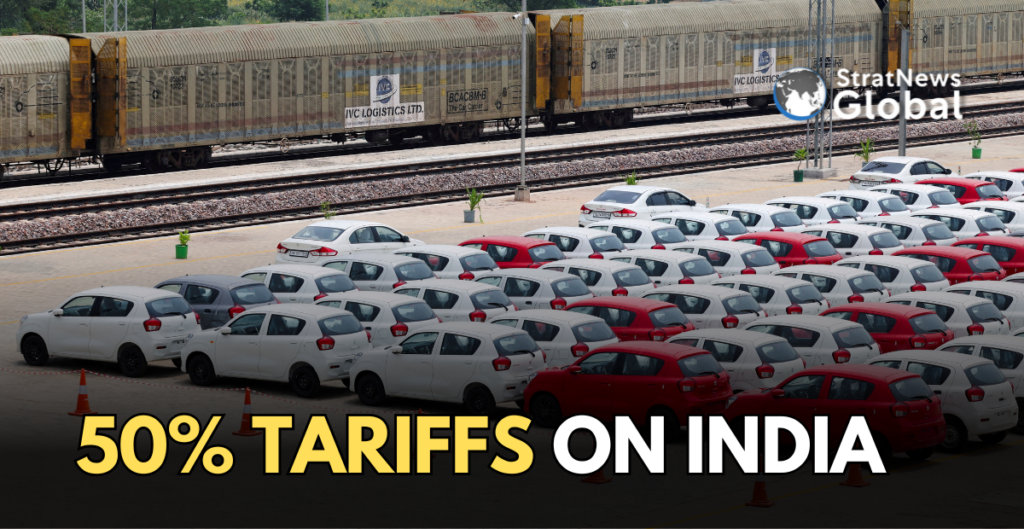
The proposal, passed earlier by the lower house, will raise or impose new duties of up to 50% from 2026 on certain goods such as autos, auto parts, textiles, clothing, plastics and steel from countries without trade deals with Mexico, including China, India, South Korea, Thailand and Indonesia. The majority of products will see tariffs of up to 35%.
The Senate passed the bill with 76 votes in favour, 5 against and 35 abstentions. The approved bill is softer than one that stalled in the lower house this autumn, with tariffs on about 1,400 different product lines – mostly textiles, apparel, steel, auto parts, plastics and footwear – and reduced duties on roughly two-thirds of them compared with the original proposal.
Impact On India
A NDTV article reports that Mexican tariffs will affect $1 billion worth of shipments from major Indian car exporters, such as Volkswagen, Hyundai, Nissan and Maruti Suzuki, per a report by Reuters.
It suggests that the import duty on cars will rise to 50% from 20%, dealing a significant blow to India’s largest vehicle exporters.
The Society of Indian Automobile Manufacturers, an industry group that counts VW, Hyundai and Suzuki among its members, had urged India’s commerce ministry in November to press Mexico to “maintain status quo” on tariffs for vehicles shipped from India
The tariff hike could force Indian automakers to reevaluate strategies reliant on Mexico, which is India’s third-largest car export market after South Africa and Saudi Arabia.
Car manufacturers in India have relied on exports to ensure production is maximised and there are economies of scale. Some also rely on exports to cushion slower domestic sales or improve margins – a business strategy that may need to be redrawn.
U.S. Push
Emmanuel Reyes, a senator from the ruling Morena party, defended the measure.
“These adjustments will boost Mexican products in global supply chains and protect jobs in key sectors,” said Reyes, who is chairman of the Senate Economy Committee.
“This is not merely a revenue-raising tool, but rather a means of guiding economic and trade policy in the interest of general welfare,” he said.
Mexico had said in September that it would raise its tariff on automobiles and other goods from countries like India and China. The United States has been pushing countries in Latin America to limit their economic ties with China, with which it competes for influence in the region.
(with inputs from Reuters)
Gold Card Visa Reshapes U.S. Immigration
just as the United States prepares to implement expanded social media screening for all H-1B and H-4 applicants, President Donald Trump has unveiled a fast-track residency program—the “Trump Gold Card”—offering permanent residency in exchange for a $1 million contribution.
The timing is triggering widespread concern among Indian skilled workers, who dominate the H-1B category and now face a more restrictive and costlier pathway.
The programme’s official website, launched Wednesday, advertises “U.S. residency in record time” for applicants who pay a $15,000 Department of Homeland Security processing fee and, after background clearance, a $1 million contribution.
A parallel corporate route allows U.S. employers to sponsor high-skilled workers for $2 million per employee. Successful applicants will fall under EB-1 or EB-2 categories, traditionally reserved for those with “extraordinary” or “exceptional ability.”
“This is very exciting for me and for the country,” Trump said during a White House roundtable, calling the Gold Card a tool to retain high-end talent and generate “tremendous amounts of money” for the U.S.
The announcement lands just ahead of new rules confirmed by U.S. consular officials: from December 15, officers will begin reviewing the online activity of all H-1B and H-4 applicants. This digital-vetting expansion mirrors procedures already used for F, M and J visa categories and is expected to slow processing, especially in high-demand countries like India.
For many Indian workers, the pairing of increased scrutiny with a pay-to-accelerate residency pathway signals a fundamental shift in U.S. immigration dynamics: the traditional H-1B route is becoming slower and more tightly filtered, while wealthy individuals and corporates gain access to a fast lane.
According to the government site, Gold Card processing timelines are projected to be measured in “weeks”, pending interviews and document submission. Approved applicants will have direct green-card eligibility under EB-1 or EB-2. Corporates opting for the $2 million sponsorship track can transfer sponsorship between employees for an added fee. A $5 million “Trump Platinum Card” is also planned, offering holders the ability to spend up to 270 days a year in the U.S. without exposure to U.S. taxes on non-U.S. income.
Commerce Secretary Howard Lutnick said the scheme will involve “the best vetting the government has ever done” and argued that companies serious about global talent will absorb the costs. He added that beneficiaries could naturalise in five years, enabling firms to sponsor new workers reliably.
Indians received 71% of all H-1B approvals in 2024, and both Indian IT majors—TCS, Infosys, Wipro, HCL Tech—and U.S. tech companies like Amazon, Microsoft, Google and Meta rely heavily on Indian engineers. Any disruption to the H-1B system therefore carries immediate operational consequences.
Lutnick has characterised the existing H-1B pool as allowing in “the bottom quartile”, signalling the administration’s intent to drive up skill thresholds, tighten eligibility and reduce visa volumes. While mid-level professionals contend with stricter screening, higher fees and lengthy queues, the Gold Card introduces a parallel track that those with substantial resources can directly purchase—a move critics say turns U.S. residency into a commodity.
Consular officers expect the December 15 digital-vetting requirement to extend interview timelines further, particularly in India, where appointment availability is already strained.
For applicants who can afford it, the Gold Card offers accelerated residency within weeks, a direct EB-1/EB-2 path, independence from employer sponsorship, flexibility for corporates willing to pay and, with the upcoming Platinum tier, potential tax advantages.
Immigration experts warn that the system is drifting toward a two-tier structure: one for the wealthy who can buy expedited residency, and another for skilled professionals—largely Indian—who now face more obstacles, unpredictability and delays in getting their H1-B visas.
Indian IT firms are assessing whether the $2 million corporate sponsorship model is sustainable or whether they must reduce U.S. deployments, even as affluent individuals and multinational firms evaluate the programme despite the possibility of legal challenges ahead.
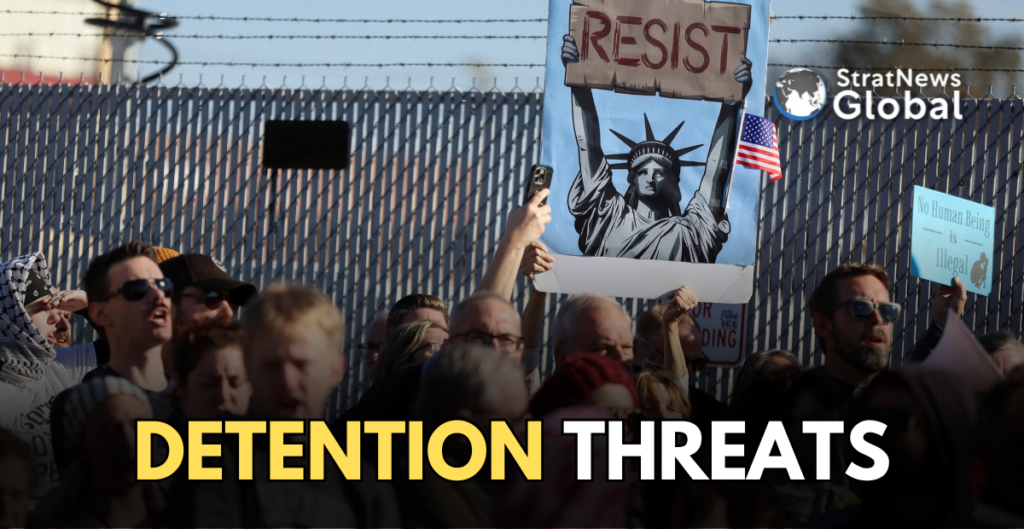
Due To Trump’s Pressure, ICE Threatens Family Separation, Indefinite Detention
The email from U.S. President Trump’s immigration office presented Kelly and Yerson Vargas with a stark choice: accept deportation to their native Colombia or risk being charged with a crime and separated from their 6-year-old daughter, Maria Paola.
The Vargases, held at a Texas detention centre, had already received a deportation order and been pressured to board flights to Colombia. They had resisted because they had submitted visa applications as victims of human trafficking, saying they faced forced labour and death threats from cartel members in Mexico as they transited to the U.S.
In the October 31 email, the immigration officer threatened to prosecute them for failure to comply with the deportation order, a rarely used statute that could lead to 10 years in prison.
Their case illustrates how U.S. President Donald Trump’s vast immigration crackdown is increasingly relying on threats to separate families and other aggressive tactics to pressure people into accepting deportation – even if they have submitted legal claims that in previous administrations would have allowed them to stay in the country, according to immigrants, attorneys, current and former officials and court records reviewed by Reuters.
Trump’s Tactics
These tactics include threats of jail sentences for resisting a deportation order or crossing the border illegally – crimes that previously were rarely prosecuted and would lead to separation from children – as well as prolonged detention with no opportunity to seek release and deportation to far-flung third countries, Reuters found.
Reuters spoke to 16 immigration attorneys, who collectively have hundreds of clients, and others with broad visibility into the Trump administration’s rising use of harsh tactics to force immigrants to accept deportations.
White House border czar Tom Homan defended the Trump administration’s approach.
“We’re using every tool in the toolbox,” Homan told Reuters in an interview. “Everything we’re doing is legal.”
Pressured To Deport
The Vargases chose to abandon their visa applications and board a deportation flight in November rather than risk being split up, with Maria Paola placed in a federal shelter system for unaccompanied migrant children.
“I was afraid that they would put me in jail and carry out all the threats they made,” Kelly Vargas said.
U.S. Department of Homeland Security spokesperson Tricia McLaughlin said the family had been issued a deportation order in 2024, had been denied on appeal, and had received full due process. She did not comment on the visa application for victims of human trafficking.
When asked about the Vargas case and another family threatened with federal charges and separation, McLaughlin said U.S. Immigration and Customs Enforcement officers don’t “threaten” people and appropriately informed them they could face federal charges.
“These illegal aliens broke the law and were warned they would face the consequences for their crimes,” she said.
Immigration advocates and other critics say the Vargases and others with potentially legitimate claims to stay in the United States are caught in what amounts to a numbers game. The Trump administration has said it aims to deport 1 million people per year, but is likely to fall short of that goal, given current trends.
DHS said on Wednesday that the Trump administration had deported more than 605,000 people since Trump took office, putting it on pace for fewer than 700,000 deportations by the year’s end.
Elora Mukherjee, director of the Immigrants’ Rights Clinic at Columbia Law School, which represented the Vargas family, said the Trump administration’s “calculated cruelty” was forcing people to choose deportation.
“My detained clients from New Jersey to Texas report crowded, inhumane, and degrading detention conditions, some of which are so unbearable that they are giving up on their immigration cases,” she said.
Voluntary Departures
As the Trump administration has pushed for more deportations, it has tried to detain more immigrants while their cases play out.
The number of people in ICE detention has increased by around 70% since Trump took office in January to almost 66,000 in November 2025, government data show.
Previously, those without criminal records had good chances of being released pending decisions on their asylum and other claims.
ICE changed its stance in July to argue that essentially all immigrants it arrested were ineligible for bond, a refundable payment made to the government to secure someone’s release.
A federal judge in California blocked ICE’s new interpretation of the law in November. However, some immigrants, told they could face months or years of detention as their case moved through the backlogged immigration courts, already had agreed to leave the country, deported immigrants and lawyers told Reuters.
Among those who gave up their cases: a Guatemalan farmworker who left behind her husband and son in Florida after being picked up in a workplace raid, a Venezuelan landscaper who had been living in Texas, an Ecuadorean construction worker in New York, a Mexican social worker in Alabama and a Honduran nursing student in North Carolina.
The Trump administration has also sent hundreds of people to third countries to which they have no ties, a tactic the government rarely used in the past. The threat of deportation to a third country, including to countries where they might be imprisoned, prompted some to abandon their cases, immigrants, family members and lawyers told Reuters.
(with inputs from Reuters)