

Support us by contributing to StratNewsGlobal on the following UPI ID
ultramodern@hdfcbank

Strategic affairs is our game, South Asia and beyond our playground. Put together by an experienced team led by Nitin A. Gokhale. Our focus is on strategic affairs, foreign policy and international relations, with higher quality reportage, analysis and commentary with new tie-ups across the South Asian region.
You can support our endeavours. Visit us at www.stratnewsglobal.com and follow us on YouTube, Twitter, Facebook and Instagram.
र 500 per month
र 1000 per month
र 5000 per year
र 10000 per year
Donate an amount of your choice
र 500 per month
Donate र 500 per month

र 1000 per month
Donate र 1000 per month
र 5000 per year
Donate र 5,000 per year
र 10000 per year
Donate र 10,000 per year
Donate an amount of your choice
Donate an amount of your choice

Pakistan – China Friendship Runs Out of Road
“Pakistan and China are iron brothers.” It’s a line repeated so often in speeches and state media that it has become a cliché.
But at Sost, the last Pakistani settlement before the Karakoram Highway crosses into Xinjiang, the so-called “iron” looks brittle, if not corroded.
For weeks now, Chinese nationals have been stuck in this remote Gilgit–Baltistan town, stranded by Pakistani traders staging a blockade. Trade has stopped, tempers have flared, and for many Chinese, patience has snapped.
What’s striking is the silence in Beijing. A Baidu search for “Sost” brings up nothing from Chinese state media. Outside China, however, the story is hard to miss: Pakistani outlets like Dawn and several global platforms have covered the protests extensively.
The vacuum in official coverage has pushed the anger online. On Weibo and nationalist forums, Chinese users are not mincing words. They’ve revived the insult lü tou zang san (绿头脏三) literally “green head dirty third.” “Green head” riffs on Pakistan’s flag and on a Chinese slang for humiliation. “Dirty third” twists xiao san, a term for a mistress, mocking Pakistan as the needy “other woman” in this supposed all-weather romance.
🚨Just In 🇵🇰 :
Clashes between Chinese nationals and PaK Police reported in Sost border of Pakistan occupied Gilgit-Baltistan
Initial reports suggest Chinese national lashed on to Police over immigration issue
More details awaited pic.twitter.com/nDvdDpKzx5
— OsintTV 📺 (@OsintTV) September 10, 2025
Rocks on the Highway
On July 31, frustration boiled over. A video from Sost showed Chinese nationals themselves blocking the Karakoram Highway placing rocks on the road to stop Pakistani traders’ convoys. Immigration activities had already been suspended by the sit-in; the stranded travellers simply decided to return the favour. The footage went viral on Facebook, Instagram and YouTube. On Weibo? A trickle of discussion, and little more.

A week later, on August 6, a Weibo post bluntly accused Pakistan’s “iron brothers” of preventing Chinese citizens from going home. The comment section turned into a free-for-all of anti-Pakistan sentiment. “I don’t like Pakistani.” “For this Pakistani, one should use a wimp.” Others declared outright “hate.”

Fourth Week, Still Shut
By August 11, Dawn was reporting that the blockade had entered its fourth week. The Sost Dry Port was closed. Trade frozen. Travellers stranded. Chinese nationals remained stuck in limbo, caught between the protesters’ sit-in and stalled immigration procedures.
Then came September. On the 10th, Dawn again carried the story: hundreds of Chinese citizens, students and foreign tourists unable to cross at Khunjerab Pass for a second consecutive day. Many confronted local police, demanding action. Reports described shouting matches, angry complaints, and open confrontation with officials.
Brotherhood, Rewritten
What began as a traders’ protest has now spawned something deeper: a change in vocabulary. New slang, derogatory nicknames and sharp words that no official slogan can paper over. The border crisis has reminded many Chinese netizens that “all-weather friendship” is just rhetoric.
In Sost, the iron brotherhood looks less like steel and more like rusting scrap.

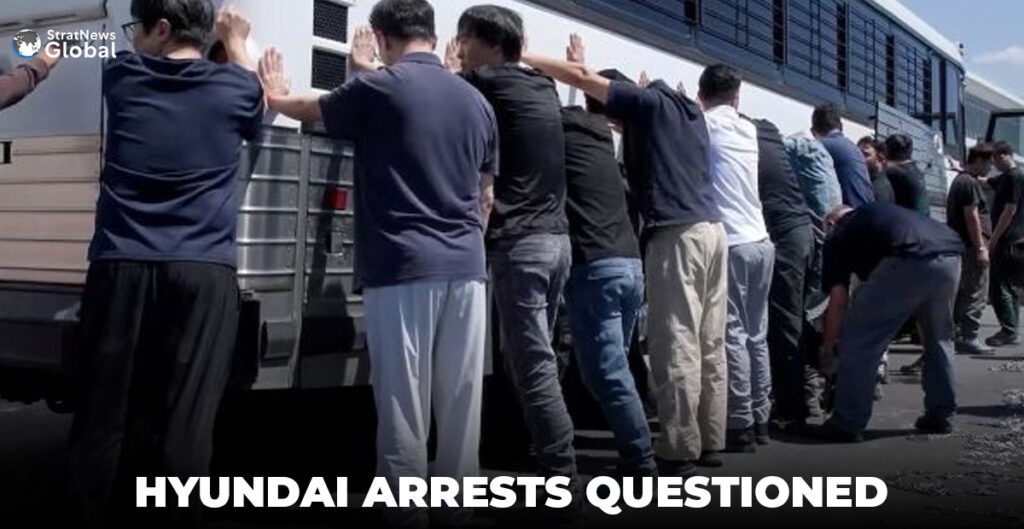
Immigration Lawyer Questions Arrests Of Workers At Hyundai’s Georgia Facility
An immigration attorney in the United States said on Wednesday that many of the nearly 500 immigrants detained at a Hyundai facility in Georgia last week appeared to have legal authorization to work. He is representing over a dozen of those arrested and challenged the accusations from authorities.
The attorney, Atlanta-based Charles Kuck, said his clients included seven South Koreans who entered via the ESTA program, for countries with visa-free travel to the U.S., or with B-1 visas for temporary business travel.
He said they were legally allowed to engage in specific work that was outlined in letters attached to their applications, including installing and calibrating battery equipment.
U.S. immigration authorities arrested 475 people at a Hyundai car battery plant near Savannah, Georgia, a large-scale operation that included the arrest of some 300 South Korean nationals.
Trump’s Immigration Crackdown
The action, part of President Donald Trump’s sweeping immigration crackdown, came as U.S. and South Korea are trying to reach a trade agreement. On Wednesday, South Korea’s government said it was trying to fly the workers home.
Foreigners entering the U.S. through ESTA or with a B-1 visa generally cannot work, but can perform limited work activities under limited circumstances.
State Department guidance says that the temporary business visitors can be used to “install, service, or repair commercial or industrial equipment or machinery purchased from a company outside the United States or to train U.S. workers to perform such services.”
Kuck said letters included with visa applications that he reviewed spelled out the scope of the work and appeared to meet requirements.
“It was more detailed than some of the letters that I’ve written for clients in similar situations,” he said. “The vast majority of folks, including the ones I represent, should never have been detained.”
The U.S. Department of Homeland Security did not immediately respond to a request for comment.
Kuck also said he was representing two Mexicans with valid work permits through the Deferred Action for Childhood Arrivals (DACA) program and a Colombian asylum seeker with a valid work permit.
“They just arrested everyone who wasn’t a citizen or a resident and figured they would sort it out later,” he said.
(With inputs from Reuters)
Tunisia Calls Gaza Aid Ship Assault At Sidi Bou Said Port ‘Orchestrated’
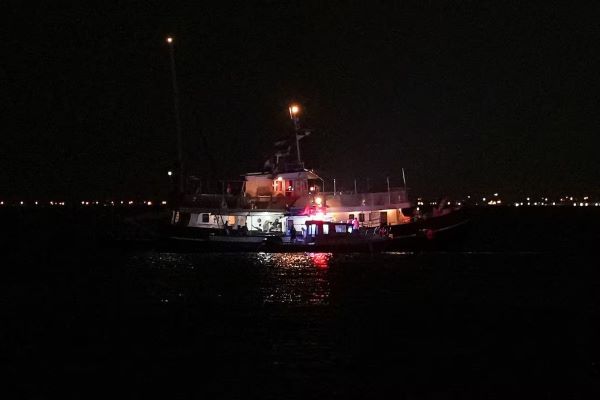
On Wednesday, Tunisia described the “assault” on a vessel docked at Sidi Bou Said port as “orchestrated,” following claims by the Global Sumud Flotilla that one of its boats, intended to deliver aid to Gaza, had been struck by a drone, the second such attack in last two days.
GSF is set to sail for Gaza in an effort to break Israel’s naval blockade, following two nights of drone attacks on key vessels in the convoy which organisers described as deliberate attempts by Israel to disrupt the mission.
The Israeli military did not respond to a request for comment.
There were no injuries, and civil protection authorities brought a fire on the boat under control on Wednesday night.
The Tunisian interior Ministry, which did not accuse any party or country, said in a statement that it was conducting investigations into the drone attack.
The United Nations’ Special Rapporteur on the occupied Palestinian territories, Francesca Albanese, said on Tuesday “it is an attack against Tunisian sovereignty.”
Support For The Flotilla
Earlier on Wednesday, thousands of Tunisians gathered on the picturesque beach of Sidi Bou Said to support pro-Palestinian activists on the boats, one of the biggest flotillas yet to set sail for Gaza.
The flotilla, which includes hundreds of activists and dozens of boats, is supported by delegations from 44 countries, including Swedish activist Greta Thunberg and Portuguese left-wing politician Mariana Mortagua.
Israel has maintained a blockade on the coastal enclave since Hamas seized control of Gaza in 2007, saying it is needed to prevent weapons smuggling.
The blockade has remained in place through the current war, which began when Hamas attacked southern Israel in October 2023, killing 1,200 and taking about 250 hostages, Israeli tallies showed.
Israel’s subsequent military assault against Hamas has killed over 64,000 Palestinians, Gaza’s health ministry has said, while a global hunger monitor said part of the enclave is suffering from famine.
Israel sealed off Gaza by land in early March, letting in no supplies for three months, leading to the widespread shortage of food. Israel has said Hamas was diverting the aid.
(With inputs from Reuters)
U.S. Watchdog Led By Treasury Shuts Down Climate Risk Advisory Panels
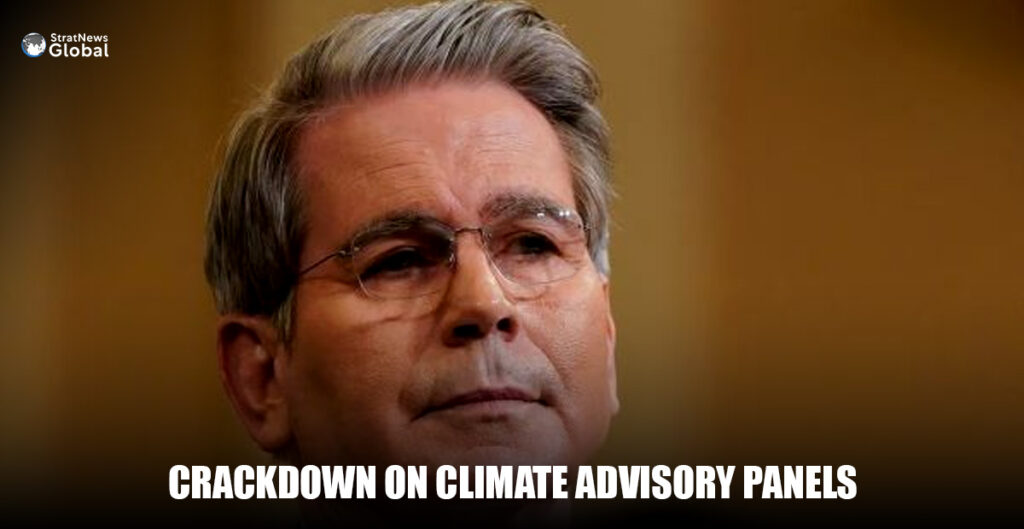
On Wednesday, U.S. financial regulators voted to dissolve two committees tasked with assessing the financial risks posed by climate change, bringing an end to a years-long Biden administration initiative to integrate climate concerns into financial oversight.
The Financial Stability Oversight Council, a multi-regulator risk watchdog body chaired by Treasury Secretary Scott Bessent, rescinded the charters of its Climate-Related Financial Risk Committee and its Climate-Related Financial Risk Advisory Committee by voice vote without dissent or abstentions during a public session.
The committees were set up by Bessent’s Biden administration predecessor, Janet Yellen, who warned repeatedly that increasingly severe storms, wildfires and other climate events were causing large economic and financial impacts on the U.S. economy and could trigger destabilizing asset losses.
Bessent’s ‘Back To Basics’ Approach
Bessent said the dismantling was part of his “back to basics” approach to financial regulation, meant to remove burdensome rules and ease capital requirements for banks and other lenders to unlock more economic growth.
“By rescinding these charters, the council can better focus its attention and resources on core financial stability issues and our efforts to promote economic growth and security while maintaining safety and soundness and protecting consumers,” Bessent told the meeting.
The move is another step in the dismantling of Biden’s climate and energy policies, including unwinding federal support for clean energy projects, while slashing regulations to boost fossil fuel production.
“The Trump administration is set to destroy key protections against the risks climate change poses to our economy,” said Tracey Lewis, senior policy counsel at the Public Citizen non-profit group. “The committee’s work on the financial impacts of climate disasters on housing, homeowners’ insurance, and financial regulation play an important role in protecting the safety and soundness of the American financial system.”
A Treasury presentation also included FSOC’s intention to review past guidance on designating non-bank institutions as systemically important financial institutions, a step that would subject them to greater oversight.
(With inputs from Reuters)
Mexico To Hike Tariffs On Chinese Cars To 50% In Import Levy Overhaul
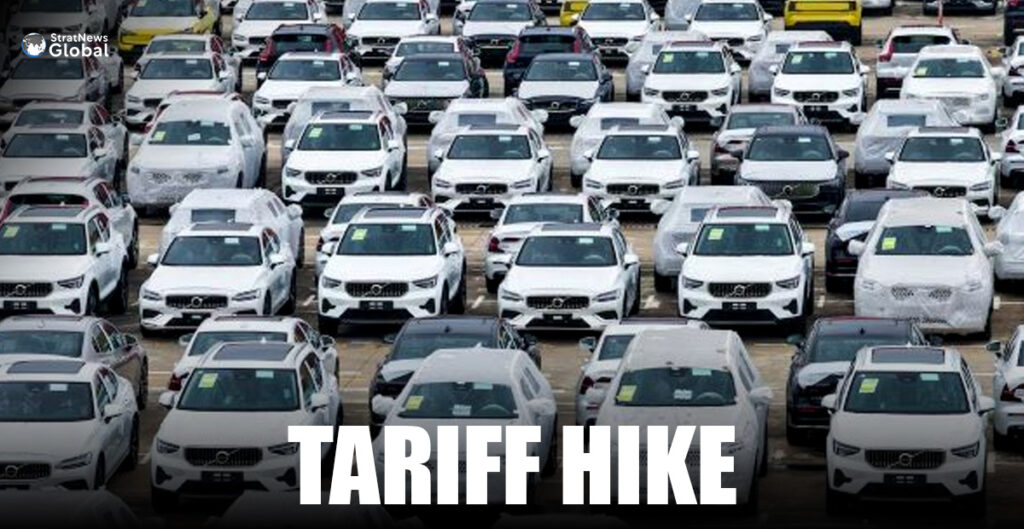
Mexico has announced that it will increase tariffs on cars from China and other Asian nations to 50%, as part of a major revision of import duties. The government said the move is intended to safeguard jobs, while analysts noted it also seeks to ease tensions with the United States.
The Economy Ministry said the moves, which will increase tariffs to varying degrees on goods across multiple sectors including textiles, steel and automotive, would impact $52 billion of imports.
“They already have tariffs,” Economy Minister Marcelo Ebrard told reporters when asked about the import levies on Chinese cars, which are currently 20%. “What we will do is raise them to the maximum level allowed.
“Without a certain level of protection, you almost can’t compete,” he added.
Impact Of New Tariffs
Ebrard said the measures, which come just within limits imposed by the World Trade Organization, were intended to protect jobs in Mexico as Chinese cars were entering the local market “below what we call reference prices.”
The plan still needs to be approved by Congress, where the government holds a significant majority.
The tariffs will impact countries that do not have trade deals with Mexico, especially China, South Korea, India, Indonesia, Russia, Thailand and Turkey, the Economy Ministry said in a document.
The plan will impact 8.6% of all imports, the document said, and will protect 325,000 industrial and manufacturing jobs that were at risk.
The measures also include a 35% tariff on steel, toys and motorcycles. Textiles will see levies between 10% and 50%.
The move comes as the United States pushes countries in Latin America to limit their economic ties with China, with which it competes for influence in the region.
“The U.S. is not going to allow China to use Mexico as a backdoor,” said Mariana Campero of the CSIS Americas Programme, adding that Mexico has doubled its trade deficit with China in the last decade, hitting $120 billion last year.
Ebrard had earlier this year spoken against tariff measures, saying they were at odds with economic growth and keeping inflation down.
Responding To U.S. Pressure
Banco BASE analyst Gabriela Siller said the tariffs would likely boost demand for Chinese vehicles in the very short-term.
“Tariffs on countries with which Mexico does not have trade agreements have two objectives,” she said on social media. “First, more revenue and second, to look good to Trump.”
John Price, managing director at Americas Market Intelligence, said that Mexico, which exports many of its own vehicles to the United States, is responding to U.S. pressure while trying to protect its economy.
“The Mexicans are trying to placate the Americans, but protect their industrial policy that’s worked so well for them over the last 30 years,” he said after the government announced it was looking to raise an additional $3.76 billion in tariff measures next year.
The United States and Mexico, which share a free trade agreement along with Canada, are each other’s top trade partners. The agreement, which has spared Mexico the brunt of much of the tariffs from U.S. President Donald Trump’s administration, is set for review next year.
(With inputs from Reuters)
Nepal: Army In Talks With Protesters To Appoint Interim Leader
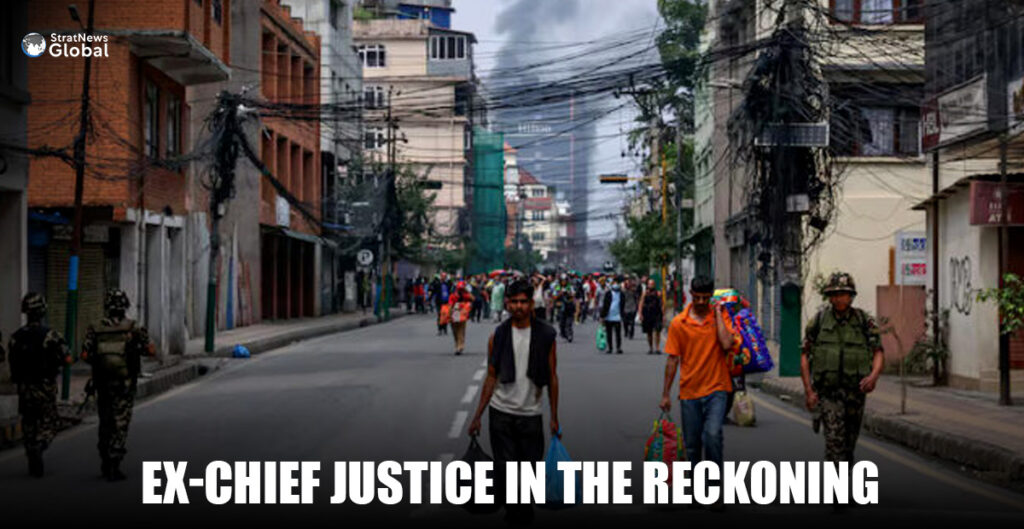
Nepal’s army is set to resume talks on Thursday with “Gen Z” protesters to decide on a new interim leader, an army spokesperson said, following violent demonstrations that left 30 dead and led to prime minister KP Sharma Oli’s resignation.
Soldiers patrolled the quiet streets of Kathmandu, the capital, after its worst protests in years triggered by a social media ban that authorities rolled back after 19 deaths as police fired tear gas and rubber bullets to control crowds.
Initial Talks Ongoing
“Initial talks are on and would continue today,” Raja Ram Basnet, the spokesperson, told Reuters, referring to the discussions on a new interim leader. “We are trying to normalise the situation slowly.”
The death toll from the protests had risen to 30 by Thursday, Nepal’s health ministry said, with 1,033 injured.
Prohibitory Orders In Place
Prohibitory orders will stay in Kathmandu and surrounding areas for most of the day, the army said in a statement, while an airport spokesman said international flights were operating.
The demonstrations are popularly referred to as the “Gen Z” protests since most participants were young people voicing frustration at the government’s perceived failure to fight corruption and boost economic opportunities.
Ex-Chief Justice In The Reckoning
The protesters have called for former Chief Justice Sushila Karki as interim prime minister, said Raman Kumar Karna, the secretary of the Supreme Court Bar Association, whom they consulted.
“When they requested me, I accepted,” Karki told Indian television news channel CNN-News18.
The protests, in which government buildings, from the supreme court to ministers’ homes, including Oli’s private residence, were also set ablaze, only subsided after the prime minister resigned.
Business establishments set on fire included several hotels in the tourist town of Pokhara and the Hilton in Kathmandu.
Jobs, Corruption Key Issues
For years a lack of jobs has driven millions to seek work in countries such as Malaysia, the Middle East and South Korea, mainly on construction sites, so as to send money home.
Wedged between India and China, Nepal has struggled with political and economic instability since protests led to the abolition of its monarchy in 2008.
(With inputs from Reuters)
Trump Ally Charlie Kirk Shot Dead At Campus Event
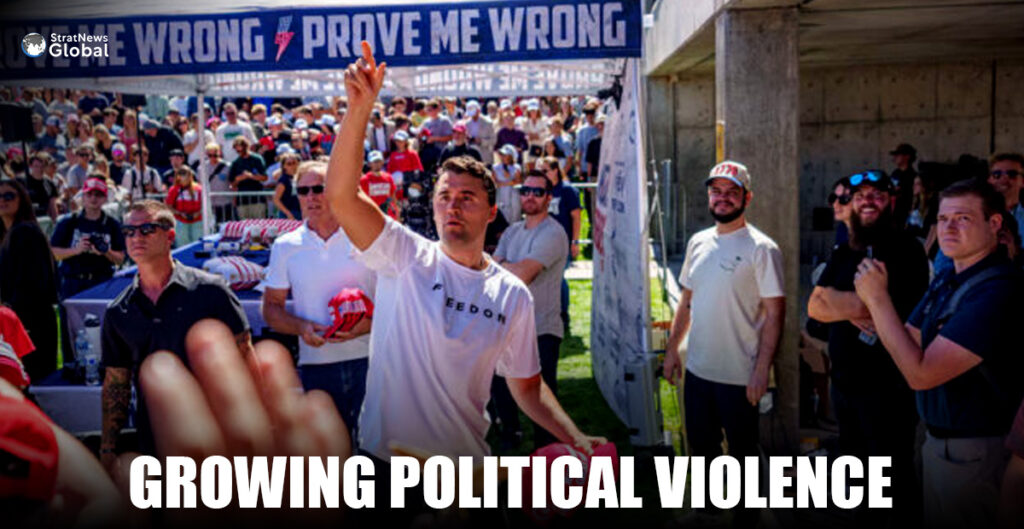
US right-wing activist and Donald Trump ally Charlie Kirk was shot dead in the neck on Wednesday during a university event in Utah, which the governor called a political assassination.
Authorities had yet to publicly identify a suspect some six hours after the shooting. No suspect was in custody, US media reported, citing law enforcement sources.
FBI Director Kash Patel said an unnamed person had been detained for questioning, then released.
“Our investigation continues,” he wrote on social media.
Governor Spencer Cox had said at an earlier press conference that police were interviewing a “person of interest” but gave no details about the person’s identity or how the individual was believed to be connected with the shooting. At the same press conference, Beau Mason, the Utah Department of Public Safety commissioner, said the perpetrator suspected of firing the single shot that killed Kirk, 31, remained “at large”.
Trump Vows To Find Suspect
In a video message taped in the Oval Office and posted to his Truth Social online platform, Trump vowed that his administration would locate the suspect.
“My administration will find each and every one of those who contributed to this atrocity and to other political violence, including the organizations that fund it and support it,” Trump said.
Cellphone video clips of the killing posted online showed Kirk addressing a large outdoor crowd at Utah Valley University in Orem, Utah, around 12:20 p.m. MT (1620 GMT), when a gunshot rang out. Kirk moved his hand toward his neck as he fell off his chair, sending the attendees running.
In another clip, blood could be seen gushing from Kirk’s neck immediately after the shot.
The suspect likely fired from a rooftop at a significant distance, authorities said, adding that there were about 3,000 people attending the event. Jeff Long, chief of the university police department, said that he had six officers working the event, and that he coordinated with the head of Kirk’s private security team, which was also on site.
Trump ordered all government US flags flown at half-staff until Sunday in Kirk’s honour.
‘Dark Day’
“This is a dark day for our state, it’s a tragic day for our nation,” Cox said at the press conference. “I want to be very clear that this is a political assassination.”
Trump, who routinely describes political rivals, judges and others who stand in his way as “radical left lunatics” and warns that they pose an existential threat to the nation, decried violent political rhetoric.
“For years, those on the radical left have compared wonderful Americans like Charlie to Nazis and the world’s worst mass murderers and criminals,” Trump said in the video. “This kind of rhetoric is directly responsible for the terrorism that we’re seeing in our country today, and it must stop right now.”
An attempt at a moment of silence for Kirk in the US House of Representatives degenerated into shouting and finger-pointing.
Kirk’s appearance on Wednesday was the first in a planned 15-event “American Comeback Tour” at universities around the country. He often used such events, which typically drew large crowds of students, to invite attendees to debate him live.
Asked About Shootings, Then Shot
Seconds before he was shot, Kirk was being questioned by an audience member about gun violence, according to multiple videos of the event posted online.
“Do you know how many mass shooters there have been in America in the last 10 years?” Kirk was asked.
He responded, “Counting or not counting gang violence?” He was shot moments later.
Kirk and the group he co-founded, Turning Point USA, the largest conservative youth organisation in the country, played a key role in driving young voter support for Trump in November.
After winning his second presidential term, Trump credited Kirk for mobilising younger voters and voters of color in support of his campaign.
“You had Turning Point’s grassroots armies,” Trump said at a rally in Phoenix in December. “It’s not my victory, it’s your victory.”
At the White House, staff members, many of them young and admirers of Kirk, were ashen-faced as news of the shooting spread. Kirk was married and had two young children.
Political Violence On The Rise
While the motive for the shooting is unknown, the United States is undergoing its most sustained period of political violence since the 1970s. Reuters has documented more than 300 cases of politically motivated violent acts since supporters of Trump attacked the US Capitol on January 6, 2021.
In July 2024, Republican Trump was grazed by a gunman’s bullet during a campaign event in Butler, Pennsylvania. A second assassination attempt two months later was foiled by federal agents.
In April, an arsonist broke into Democratic Pennsylvania Governor Josh Shapiro’s residence and set it on fire while the family was inside.
Earlier this year, a gunman posing as a police officer in Minnesota murdered Democratic state lawmaker Melissa Hortman and her husband and shot Democratic Senator John Hoffman and his wife. And in Boulder, Colorado, a man used a makeshift flamethrower and Molotov cocktails to attack a solidarity event for Israeli hostages, killing one woman and injuring at least six more.
In 2022, a man broke into Democratic then-House Speaker Nancy Pelosi’s home and bludgeoned her husband with a hammer, leaving him with skull fractures and other injuries. In 2020, a group of right-wing militia members plotted unsuccessfully to kidnap Michigan Governor Gretchen Whitmer, a Democrat.
Republican and Democratic politicians alike expressed dismay over the shooting.
“Eternal rest grant unto him, O Lord,” Vice President JD Vance, who was close to Kirk, wrote on X.
“I am shocked by the murder of Charlie Kirk at Utah Valley University,” Democratic House Minority Leader Hakeem Jeffries said in a statement. “Political violence of any kind and against any individual is unacceptable and completely incompatible with American values. We pray for his family during this tragedy.”
(With inputs from Reuters)
Fox In The Henhouse: Pentagon Research Strengthens The PLA
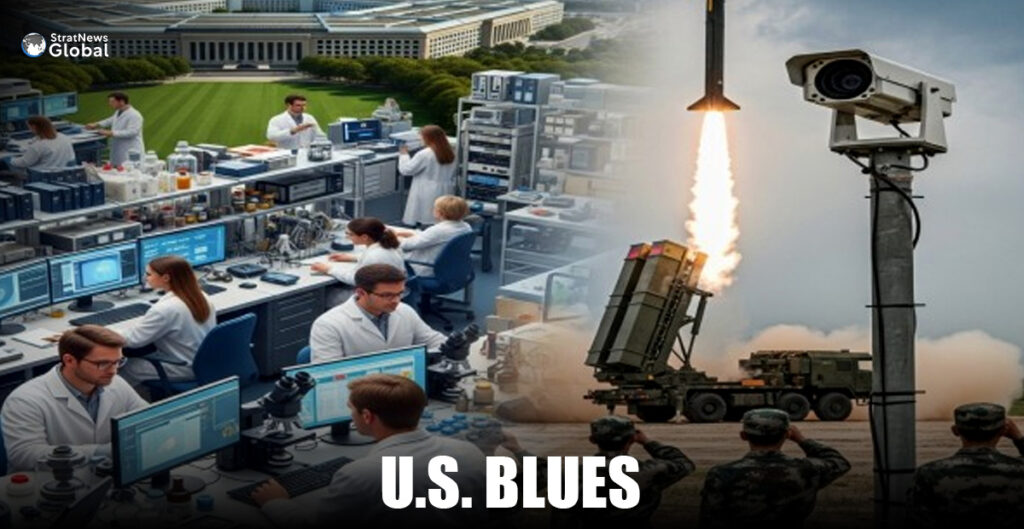
The Pentagon has been funding American universities to conduct research that, in hundreds of cases, has strengthened the Chinese military.
A recent report by the House Select Committee on the Chinese Communist Party and the Committee on Education and the Workforce titled Fox in the Henhouse: The U.S. Department of Defense Research and Engineering’s Failures to Protect Taxpayer-Funded Defense Research, lays it out.
Between mid-2023 and mid-2025, the committees found roughly 1,400 academic papers funded by the Department of Defence that also listed Chinese collaborators. More than half involved institutions directly tied to the People’s Liberation Army.
The United States spends more than 800 billion dollars a year on defence. Yet some of that money is indirectly helping Beijing narrow the technological gap in fields that will shape the next generation of warfare.
The examples are striking. American researchers, with Pentagon support, co-authored studies with Beihang University, Harbin Institute of Technology, and the National University of Defense Technology. All three are at the core of China’s defence research and appear on U.S. blacklists. The subjects were not trivial. They included hypersonics, quantum sensing, artificial intelligence, swarm robotics, semiconductors, and advanced alloys.
Some cases listed in the report look almost like parody. An Army-funded project used Chinese supercomputers that also support nuclear weapons design. A Navy grant backed research with BGI, the genomics company accused of helping build China’s DNA surveillance program against Uyghurs. Another Pentagon-funded paper listed Alibaba’s research academy, a pillar of Beijing’s military-civil fusion strategy.
Brown University worked on quantum research with a scientist supported by Shanghai’s Pujiang Talent Program, which exists to funnel foreign knowledge back to China. Washington University in St. Louis co-authored neuroscience studies with Peng Cheng Laboratory, a state-run hub that trains cyber operators. MIT and Cornell published with Xidian University, a designated defence university specialising in radar and semiconductors. The University of Texas and Arizona State partnered with Beihang and Shanghai Jiao Tong University on algorithms that power drone swarms. Even the Navy’s own research arm collaborated with CALT, China’s missile and launch vehicle giant.
This is not innocent academic exchange. It is a pipeline of know-how flowing into Beijing’s arsenal. Every paper shows China where the Pentagon is investing, what breakthroughs are coming, and how they might be adapted for military use. Spies are not necessary when cooperation provides the same results, wrapped in the credibility of joint scholarship.
The ethical problem is just as stark. Some of the Chinese partners are directly involved in repression. BGI’s genomics work is central to monitoring Uyghurs. Alibaba’s platforms help build China’s surveillance state. Pentagon dollars are not only boosting a rival military. They are underwriting authoritarian control.
Supporters of this openness say the work is “fundamental research” and therefore harmless. That excuse belongs to another era. Modern science is dual-use by default. An alloy for cars can also make lighter missile casings. An algorithm for consumer logistics can also direct drone swarms. There is no neutral space. Pretending otherwise is negligence.
Some collaborations may also have violated U.S. law. The Wolf Amendment has barred NASA from bilateral cooperation with China since 2011. Yet a Pentagon-funded project still partnered with Beihang and Shanghai Jiao Tong University.
Warnings have been clear for years. The FBI has testified about universities being used as “non-traditional collectors” of sensitive technology. The 1999 Cox Report documented China’s strategy of exploiting academic channels. Australia even built a public tracker of Chinese defence-linked universities. But the Pentagon chose not to act.
Part of the problem is structural. The Pentagon lacks a centralised system to vet grants, and post-award monitoring is minimal. In some cases, officials did not even have access to the records of what they had funded.
But the larger problem is cultural. Universities resist restrictions because they want foreign students and international prestige. Professors defend partnerships in the name of academic freedom. Pentagon officials, reluctant to upset academia, hide behind the language of openness. That posture is not noble. It is self-defeating.
The strategic consequences are already visible. Beijing has credited partnerships with American researchers for helping close gaps in materials science and manufacturing. China’s hypersonic breakthroughs did not emerge in isolation. They were built on years of joint work with U.S. labs, some funded by the Pentagon itself.
Congress is pushing the SAFE Research Act to cut off funding for researchers tied to adversary institutions and to tighten disclosure rules. On paper it looks tough. But laws mean little if they are ignored. Unless grants are revoked, administrators held accountable, and officials dismissed, the pattern will continue.
The United States is in a technology race with a rival that mobilises all parts of its system for strategic power. China does not separate academic research from military gain. Washington continues to act as if it does. That assumption has already cost America its edge.
If this pipeline stays open, the United States will keep outspending China on defence while falling behind in critical technologies. The weapons that threaten American forces will be partly designed with American money. In other words, the Pentagon will be paying for its own defeat.
Israeli Strikes In Doha Threaten Qatar’s Image As Stable Business Hub
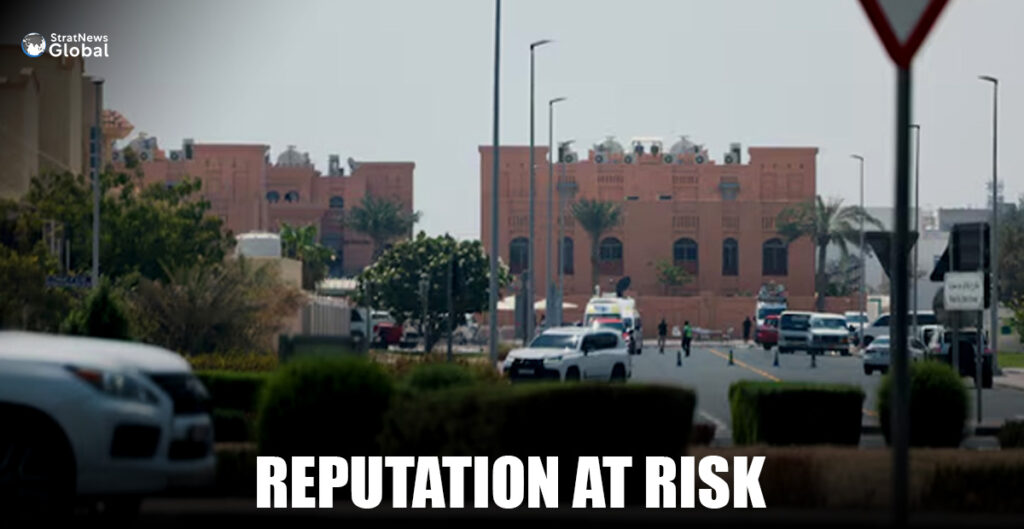
Israel’s strikes on Hamas in Doha, months after Iran’s attack on a U.S. base there in June, risk undermining Qatar’s image as a reliable business hub while it attempts to juggle commercial ambitions with wider diplomatic aspirations.
Qatar’s determination to carve out a diplomatic role as a mediator in the Gaza war has already pulled it into a wider Middle East conflict. In June, Iran hit the al-Udeid military base in retaliation for U.S. strikes on Iranian nuclear sites, with most of the missiles intercepted in the skies above Doha.
On Tuesday, Israeli strikes on Palestinian militant group Hamas’ political leadership put Qatar in the firing line again.
“Qatar is in the unique position of having suffered both Iranian and Israeli attacks within a few months,” said Justin Alexander, director at Khalij Economics and Gulf analyst at GlobalSource Partners.
“There was little discernible impact from the Iranian strikes, but if this begins to look like a pattern, then risk perceptions may shift.”
A Doha-based executive at a large Western firm, who declined to be named, told Reuters his company was still evaluating the situation, but business had resumed as normal a day after the strikes, as if nothing had happened.
Another finance professional in Qatar said scaling back business would be a reward to Israel for what he saw as a violation of international law. “Hopefully, this will renew the vigour to do business (in Qatar),” he said.
Tehran’s attack in June was telegraphed in advance, giving ample time for Qatari defences to prepare. No one was harmed.
Israel’s attack, however, caught Doha by surprise and killed at least seven people, including a member of Qatar’s internal security forces, five Hamas members and another individual.
The majority of nearly 3 million people who live in the Gulf state are expatriates drawn from all corners of the world, mostly by business opportunities in one of the world’s wealthiest countries.
The host of the 2022 soccer World Cup, Qatar, boasts gleaming high rises, a new 10-lane expressway, and a futuristic metro. But it is among the most hydrocarbon-reliant of the Gulf states, lagging behind neighbours the United Arab Emirates and Saudi Arabia in diversifying its economy, something its government seeks to change by refocusing economic priorities.
Doha has long had key business interests in the U.S., its ally and longtime security guarantor.
State-owned QatarEnergy (QE) is building an ambitious expansion to its LNG output in the massive North Field, which it shares with Iran. Major U.S. energy companies ExxonMobil and ConocoPhillips are key partners in the expansion project, which will almost double Qatar’s LNG output.
Golden Pass, which QE owns with ExxonMobil, is building a major LNG export facility in Sabine Pass, Texas, and plans to start exporting LNG later this year.
U.S. President Donald Trump, who visited Doha in May and stayed in a hotel not far from the scene of Tuesday’s strike, sought to reassure Qataris after the attack, saying nothing like this would happen on their soil again.
During his May visit, Trump had assured Doha that the U.S. would protect it if it ever came under attack.
The state’s Qatar Investment Authority pledged to invest $500 billion in the U.S. over the next decade during Trump’s Gulf tour, and Trump said defence purchases signed during the trip amounted to $42 billion.
Qatar Airways also signed an order for 160 Boeing jetliners with GE Aerospace engines worth $96 billion, Boeing’s biggest deal for wide-body airplanes.
Those economic ties will be closely watched, and further instability could throw new investment into doubt, analysts said.
“If there were further attacks, then it would force Qatari-U.S. businesses to re-evaluate the risk and put in place appropriate mitigation measures,” said Neil Quilliam, associate fellow at Chatham House.
Boycott Lessons
Qatar’s vast oil and gas wealth helped it navigate a rift with its Gulf neighbours that began in 2017 and endured for over three years. Saudi Arabia, UAE, Bahrain, Oman and Egypt choked off Qatar’s economy with a boycott, accusing it of backing terrorists, a charge Doha denied.
Qatar spared no penny fighting off the trade embargo at the time, including flying cows in on airplanes to start a local dairy industry.
For now, no such drastic measures seem to be needed.
Markets appeared to shrug off the strikes, with no negative reactions in Qatari bonds or credit default swaps, instruments that ensure against the risk of a debt default.
In other signs that the region’s markets have not flinched, Saudi Aramco pushed ahead with the sale of dollar-denominated Islamic bonds on Wednesday, which Reuters has reported could raise $3 billion to $4 billion.
On Tuesday, Qatar’s Doha Bank raised $500 million from a bond sale, pricing the deal not long after the Israeli attacks. It managed to tighten pricing due to high demand.
(With inputs from Reuters)
Belarus Opposition Calls On Trump To Press For More Prisoner Releases
Prominent Belarus dissident Siarhei Tsikhanouski met with officials at the White House this week to thank the Trump administration for securing his release from prison and to urge continued efforts for the freedom of hundreds more detainees, a representative of the exiled Belarus opposition said.
The opposition has been buoyed by President Donald Trump’s repeated calls in the past month for Belarus to free large numbers of political prisoners. Last Friday, Trump referred to them as “hostages” and said he believed “a lot” of them were going to be released.
Trump first raised the issue by phone last month with veteran Belarusian leader Alexander Lukashenko, a close ally of Russian President Vladimir Putin. At different times, Trump has put the number of prisoners at 1,300 or 1,400.
He has spoken flatteringly of Lukashenko, describing him last week as “a very respected man, strong person, strong leader”.
Franak Viacorka, a senior opposition official, said Tsikhanouski’s visit to Washington was part of an effort to shape the emerging U.S.-Belarus dialogue and maintain pressure on Lukashenko.
“Siarhei Tsikhanouski’s position is clear – dictators cannot be re-educated. They will not change their policy. Only if they feel pressure, only then they make concessions. This applies not only to Lukashenko, but the same to Putin,” Viacorka said in a voice message.
“Trump has the power and leverage to make a difference, and if Trump succeeds in releasing 1,300 people, that will be a big victory for him and for Free Belarus.”
Trump’s sudden and unexpected interest in Belarus has energised the exiled opposition, which for years has struggled to publicise its cause as news about the country has frequently been eclipsed by the Russia-Ukraine war.
Nobel Prize
The U.S. leader’s call to Lukashenko last month came hours after a Belarusian activist emailed him to request his intervention and promised to nominate Trump for the Nobel Peace Prize if he managed to secure the release of Belarusian political prisoners.
Many of those in jail were arrested when Lukashenko crushed mass street protests after a disputed election in 2020. Several hundred have been released since mid-2024, but the biggest names – including Nobel Peace Prize winner Ales Bialiatski and protest leader Maria Kalesnikava – remain behind bars.
Tsikhanouski, who was arrested in 2020 while planning to run for president against Lukashenko, was freed in June and reunited with his wife, Sviatlana Tsikhanouskaya, the leader of the exiled opposition.
Viacorka said the number of political prisoners had grown by 25 since Trump spoke to Lukashenko on August 15.
“We have to stop this vicious circle and stop the regime from taking new hostages,” he said.
(With inputs from Reuters)