

Support us by contributing to StratNewsGlobal on the following UPI ID
ultramodern@hdfcbank

Strategic affairs is our game, South Asia and beyond our playground. Put together by an experienced team led by Nitin A. Gokhale. Our focus is on strategic affairs, foreign policy and international relations, with higher quality reportage, analysis and commentary with new tie-ups across the South Asian region.
You can support our endeavours. Visit us at www.stratnewsglobal.com and follow us on YouTube, Twitter, Facebook and Instagram.
र 500 per month
र 1000 per month
र 5000 per year
र 10000 per year
Donate an amount of your choice
र 500 per month
Donate र 500 per month

र 1000 per month
Donate र 1000 per month
र 5000 per year
Donate र 5,000 per year
र 10000 per year
Donate र 10,000 per year
Donate an amount of your choice
Donate an amount of your choice

South Sudan VP Riek Machar Faces Murder, Treason Charges
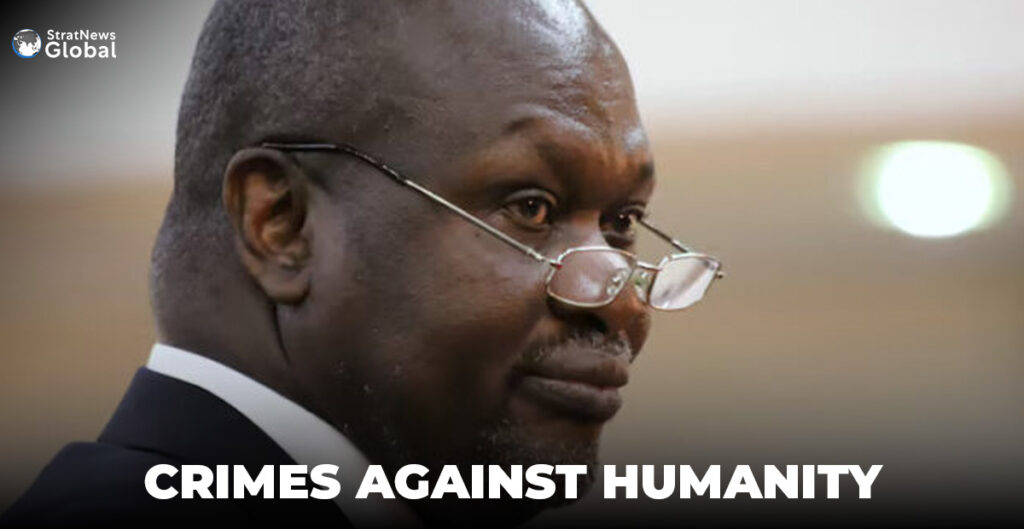
South Sudan has charged First Vice President Riek Machar with murder, treason, and crimes against humanity over his alleged role in ethnic militia attacks on federal troops in March, the justice minister announced on Thursday.
Hours after the minister’s announcement, President Salva Kiir suspended Machar from his post, a decree read on state radio said, without giving more details.
The charges against Machar and his suspension escalate a feud between the country’s two main political camps – the other led by Kiir – which faced off in a 2013-2018 civil war in which an estimated 400,000 people died.
Petroleum Minister Suspended
Kiir also suspended Petroleum Minister Puot Kang Chol, who was charged alongside Machar, the decree said.
Machar has been under house arrest since March in connection with attacks by the White Army militia in the northeastern town of Nasir.
International powers have repeatedly called for Machar’s release, warning his detention could tip the country back into civil war.
‘Matter Is Now Sub Judice’
“Evidence further reveals that the White Army operated under the command and influence of certain leaders of the Sudan People’s Liberation Movement/Army-in Opposition (SPLM/A-iO), including Dr. Riek Machar Teny,” Justice Minister Joseph Geng told reporters.
“While the government of the Republic of South Sudan appreciates the engagement of international partners, public and media on the Nasir incident, this matter is now sub judice,” he said.
Kiir and Machar had served in a unity government as part of a peace deal that ended the civil war, but their partnership remained tenuous and sporadic violence has continued between the two sides.
Besides Machar, 20 other people were indicted in the case. Thirteen of those are at large, Geng said.
Edmund Yakani, executive director of Community Empowerment for Progress Organization, a South Sudan activist group, said in statement that he hoped the court trying Machar and the seven others would be fair and “a competent court of law, not a kangaroo court of law”.
(With inputs from Reuters)
Hamas Claims Israeli Strike In Doha Targeted Leaders To Undermine Truce Efforts
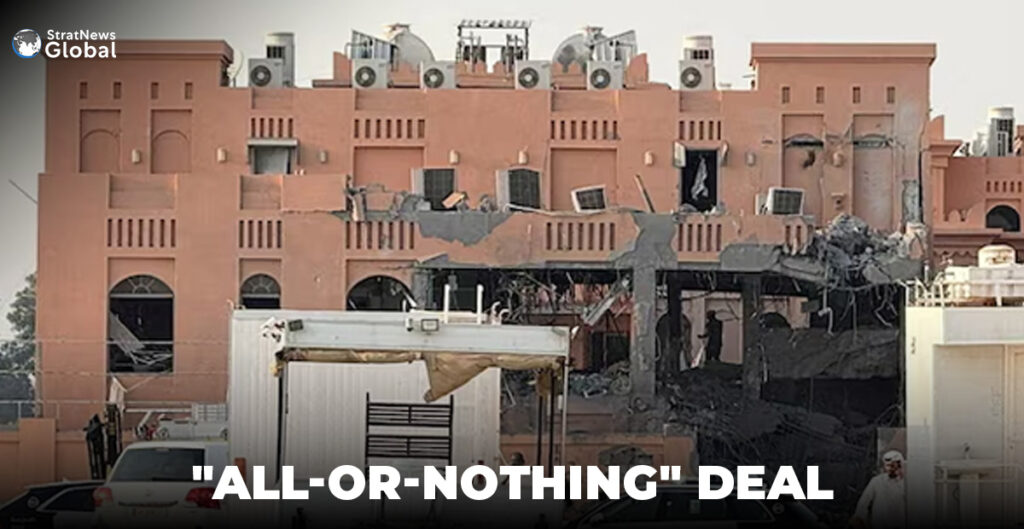
A Hamas official said on Thursday that Israel’s recent strike targeting the group’s leaders in Qatar aimed to disrupt ceasefire talks but would not alter their conditions for ending the Gaza conflict.
Israel attempted to kill the political leaders of Hamas with an airstrike on Doha on Tuesday, in what U.S. officials described as a unilateral escalation that did not serve American or Israeli interests.
In a televised address, Hamas official Fawzi Barhoum said the strike was not only an attempt to assassinate the negotiating delegation, but a deliberate blow to the entire process and a clear message rejecting any ceasefire deal.
He also accused Israel of targeting the mediation efforts of Qatar and Egypt.
“This attack was a blatant confirmation by Netanyahu and his criminal gang of their refusal to reach any agreement and their insistence on derailing all regional and international efforts aimed at halting the genocide”, Barhoum said.
However, the group has not officially announced it would close the door on future talks.
Barhoum said the strike targeted the group’s negotiating delegation while they were discussing a new ceasefire proposal delivered by the Qatari prime minister just a day earlier.
“At the moment of the terrorist attack, the negotiating delegation was in the process of discussing its response to the proposal”, he said.
Barhoum reaffirmed Hamas’s key demands: a full ceasefire, the withdrawal of Israeli forces from Gaza, a real prisoner-for-hostage exchange, humanitarian relief and reconstruction of the enclave.
All-Or-Nothing Deal
Israeli Prime Minister Benjamin Netanyahu is pushing for an all-or-nothing deal that would see all of the hostages released at once and Hamas surrendering.
Hamas said five of its members had been killed in the attack, including the son of Hamas’s exiled Gaza chief and top negotiator Khalil al-Hayya.
It was unclear whether al-Hayya or other top officials attended the funeral of those killed in the strike. However, images distributed by Hamas showed at least two political leaders – Osama Hamdan and Izzat al-Rishq – present at the ceremony.
The funeral, held in the Qatari capital, was attended by Qatar’s Emir Sheikh Tamim bin Hamad Al Thani, according to Qatari state media.
Footage from the funeral showed the bodies of five Hamas members wrapped in Palestinian flags, and one security officer draped in a Qatari flag, laid out inside a mosque as dozens of men in traditional white Qatari thobes stood in prayer.
The attack on Doha drew condemnation from regional powers, including Saudi Arabia and the United Arab Emirates, as well as the European Union, and risks derailing U.S.-backed efforts to broker a truce and end the nearly two-year-old conflict.
United Arab Emirates President Sheikh Mohammed bin Zayed Al Nahyan visited Qatar a day after the strike, before travelling to Bahrain and Oman in what his diplomatic adviser described as a tour to coordinate Gulf positions and reinforce the concept of a “common destiny”.
(With inputs from Reuters)
Britain’s Mandelson Dismissed As US Ambassador Over Epstein Ties
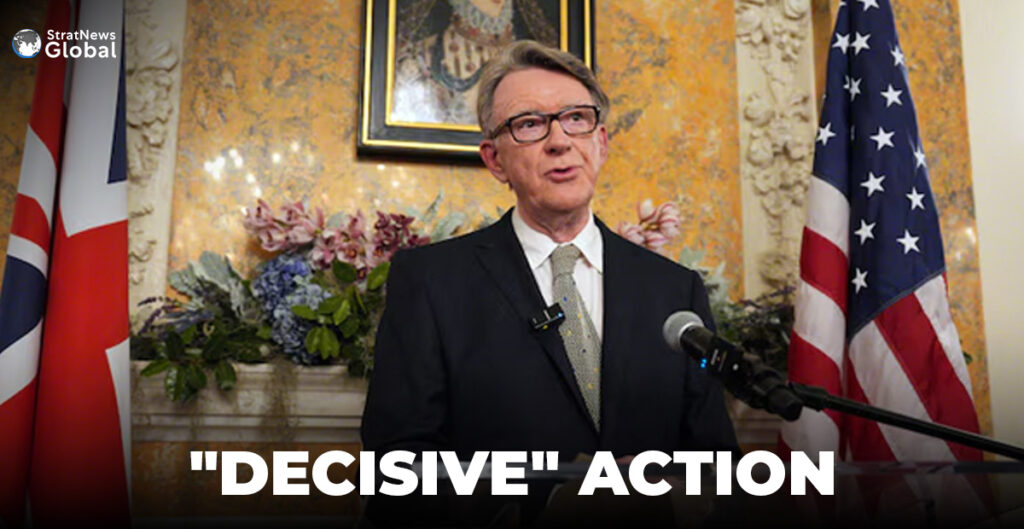
Peter Mandelson, Britain’s sophisticated ambassador to the U.S., was dismissed by Prime Minister Keir Starmer on Thursday after a cache of emails exposed the extent of his connections with the late convicted American sex offender Jeffrey Epstein.
Known for his behind-the-scenes manoeuvring during a career lasting over three decades, Mandelson was forced from Britain’s most desirable diplomatic post after some of his letters and emails to Epstein were revealed this week.
Starmer, struggling in opinion polls after numerous setbacks, had strongly backed his ambassador on Wednesday as a state visit by U.S. President Donald Trump, with whom Mandelson had developed strong ties, looms next week.
Trump has also faced questions about his links with Epstein, with the White House denying that an alleged birthday letter from him to the late financier is authentic.
Mandelson Called Epstein ‘My Best Pal’
Mandelson, who was key to the Labour Party’s success when Tony Blair was prime minister, had come under scrutiny after U.S. lawmakers released documents including a letter calling Epstein “my best pal”.
Emails were then published in the media showing that Mandelson had advised Epstein to fight for early release in 2008 when he was about to be sentenced to 18 months in jail for soliciting a minor.
“The emails show that the depth and extent of Peter Mandelson’s relationship with Jeffrey Epstein is materially different from that known at the time of his appointment,” Britain’s foreign ministry said.
The reporting of Mandelson’s suggestion that Epstein’s first conviction was wrongful and should be challenged was “new information”, it said, adding that Starmer had asked for his removal.
On Wednesday, Mandelson had said he deeply regretted ever meeting Epstein, and that he had carried on the association “for far longer than I should have done”, suggesting he had believed the lies of a “charismatic criminal liar”.
Epstein, who died in prison in 2019, had counted princes and the political elite among his friends, many of whom have since been tarred by the association. Britain’s Prince Andrew, a younger brother of King Charles, was removed from official royal duties over his ties to Epstein. He denies any wrongdoing.
Mandelson’s statement initially seemed to satisfy the prime minister. Starmer had heaped praise on Mandelson, the first political appointee to the position in almost half a century, for his efforts in securing a trade deal with the United States.
But after twice being forced out of the cabinet under Blair, Mandelson was no stranger to controversy.
Starmer Acted ‘Decisively’
He was photographed on holiday with Epstein, one of several of Mandelson’s friends or former friends, which raised questions about the ex-ambassador’s judgment.
In 2008, it was revealed that Mandelson had spent time on a yacht belonging to Russian businessman Oleg Deripaska, who is now under sanctions over Russia’s war in Ukraine. Mandelson denied granting favours to the Russian businessman while he was European trade commissioner.
Several Labour officials had warned Starmer about employing Mandelson, but the British leader went ahead, believing he could help build UK-U.S. relations under a Trump administration.
A spokesperson for Starmer told reporters that after reviewing the new information, Starmer had taken “prompt and decisive action” earlier on Thursday, saying the British leader found the emails “reprehensible”.
But some lawmakers in his party suggested Starmer should have moved more swiftly against Mandelson. The prime minister was also criticised after he backed his former deputy, Angela Rayner, when questions were raised in the British media late last month about her tax affairs, before he accepted her resignation last week.
With economic growth failing to ignite, potential tax rises looming, and Nigel Farage’s populist Reform UK overtaking Labour in the polls, Starmer’s party is growing restless.
“As soon as it became major news, it should have been nipped in the bud,” said one Labour lawmaker on condition of anonymity, describing the handling of the sacking as “a total mess”.
(With inputs from Reuters)
Brazil’s Ex-President Bolsonaro Convicted In Coup Trial
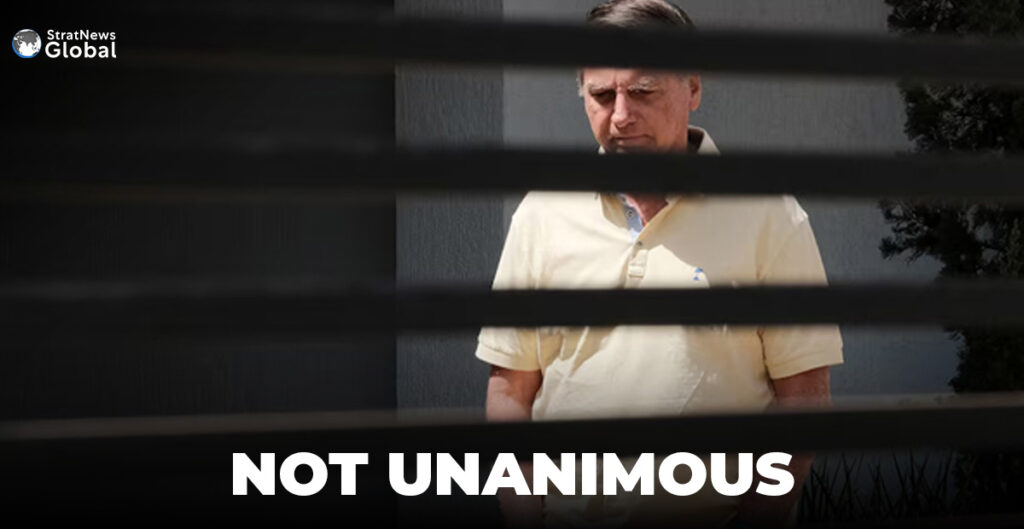
Former Brazilian president Jair Bolsonaro was convicted on Thursday by a Supreme Court majority for involvement in a criminal organisation, marking a major setback for the far-right leader in his trial linked to an alleged coup plot.
The presumptive ruling by a majority of a panel of five justices in Brazil’s Supreme Court makes Bolsonaro the first former president in the country’s history to be convicted for attacking democracy.
Three judges so far have voted to convict, one acquitted, and one remains to vote.
Not Unanimous
The conviction of Bolsonaro, a former Army captain who never hid his admiration for the military dictatorship that killed hundreds of Brazilians between 1964 and 1985, echoes legal condemnations this year for far-right leaders elsewhere, including France’s Marine Le Pen and the Philippines’ Rodrigo Duterte.
It is likely to further enrage Bolsonaro’s close ally US President Donald Trump, who has already called the case a “witch hunt” and slammed Brazil with tariff hikes, sanctions against the presiding judge, and the revocation of visas for most members of Brazil’s high court.
The verdict was not unanimous, with Justice Luiz Fux on Wednesday breaking with his peers by acquitting the former president of all charges.
That single vote could open a path to challenges to the ruling, potentially bringing the trial’s conclusion closer to the run-up of the 2026 presidential elections, in which Bolsonaro has repeatedly said he is a candidate despite being barred from running for office.
Fux’s vote also ignited a surge of righteous relief among the former president’s supporters, who hailed it as a vindication.
“When coherence and a sense of justice prevail over vengeance and lies, there is no room for cruel persecution or biased judgments,” Michelle Bolsonaro, the former president’s wife, posted after Fux’s vote.
From The Back Benches To The Presidency
Bolsonaro’s conviction marks the nadir in his trajectory from the back benches of Congress to forge a powerful conservative coalition that tested the limits of the country’s young democratic institutions.
His political journey began after a brief career as an army paratrooper, when he became a city lawmaker in Rio de Janeiro in the late 1980s. He went on to be elected as a congressman in Brasilia, where he quickly became known for his defense of authoritarian-era policies in the early years of Brazil’s democracy.
His reputation as a firebrand was fueled by interviews like one in which he argued that Brazil would only change “on the day that we break out in civil war here and do the job that the military regime didn’t do: killing 30,000.”
While long dismissed as a fringe player, he refined his message to play up anti-corruption and pro-family values themes. These found fertile ground as mass protests erupted across Brazil in 2014 amid the sprawling “car wash” bribery scandal that implicated hundreds of politicians – including President Luiz Inacio Lula da Silva, whose conviction was later annuled.
Burning anti-establishment anger helped lay the path for his successful 2018 presidential run, with dozens of far-right and conservative lawmakers elected on his coattails. They have reshaped Congress into an enduring obstacle to Lula’s progressive agenda.
Bolsonaro’s presidency was marked by intense skepticism about the pandemic and vaccines and his embrace of informal mining and land-clearing for cattle grazing, pushing deforestation rates in the Amazon rainforest to record highs.
As he faced a close reelection campaign against Lula in 2022 -an election that Lula went on to win – Bolsonaro’s comments took on an increasingly messianic quality, raising concerns about his willingness to accept the results.
“I have three alternatives for my future: being arrested, killed or victory,” he said, in remarks to a meeting of evangelical leaders in 2021. “No man on Earth will threaten me.”
In 2023, Brazil’s electoral court, which oversees elections, barred him from public office until 2030 for venting unfounded claims about Brazil’s electronic voting system.
Protecting Democracy
Bolsonaro’s conviction and its durability will now emerge as a powerful test for the strategy that Brazil’s highest-ranking judges have adopted to protect the country’s democracy against what they describe as dangerous attacks by the far-right.
Their targets included social media posts that they say spread disinformation about the electoral system, as well as politicians and activists. Sending a former president and his allies to jail for planning a coup amounts to its culmination.
The cases were largely led by the commanding figure of Justice Alexandre de Moraes, appointed to the court by a conservative president in 2017, whose stance against Bolsonaro and his allies was celebrated by the left and denounced by the right as political persecution.
“They want to get me out of the political game next year,” Bolsonaro told Reuters in June, referring to the 2026 election in which Lula is likely to seek a fourth term. “Without me in the race, Lula could beat anyone.”
Last week, as Moraes read his vote, he enumerated the evidence he believed showed Bolsonaro and his allies were guilty of plotting to not only stop Lula from taking office, but also to poison Lula and his running mate.
The charges are also tied to Bolsonaro’s alleged incitement of riots in January 2023, when thousands of his supporters stormed the Congress, presidential palace, and Supreme Court in Brasilia, the capital.
Bolsonaro’s lawyers have maintained his innocence on all counts.
Historic Ruling
The historic significance of the case goes way beyond the former president and his movement, said Carlos Fico, a historian who studies Brazil’s military at the Federal University of Rio de Janeiro.
Four other defendants found guilty come from a military background, including Bolsonaro’s running mate in the 2022 election, General Walter Braga Netto. The verdict marks the first time since Brazil became a republic almost 140 years ago that military officials have been punished for attempting to overthrow democracy.
“The trial is a wake-up call for the Armed Forces,” Fico said. “They must be realizing that something has changed, given that there was never any punishment before, and now there is.”
(With inputs from Reuters)
Musk’s Starlink Gets Green Light To Operate In Lebanon
Lebanon has granted a licence to Elon Musk’s satellite internet company Starlink to operate in the country, the state news agency NNA reported on Thursday.
Tony Saad, a spokesperson for Telecommunications Minister Charles Hage, said that Starlink had set up a company in Lebanon, which was awarded the licence after around six months of negotiations with the government.
He said access to the service would be limited to companies, with packages starting at $100 a month.
Internet access in Lebanon, which ranks among the countries with the slowest speeds, has until now been operated exclusively by state-owned providers and their affiliates, which have lobbied the government not to grant a licence to Starlink.
“The Lebanese cabinet approved granting a licence to Starlink Lebanon to provide internet distribution services across all Lebanese territory through satellites operated by SpaceX,” NNA said.
Musk expressed interest in Lebanon’s telecommunications and internet sectors in June during a phone call with President Joseph Aoun, according to a presidency statement.
Potential Sale To Ukraine
Meanwhile, the US State Department has approved the potential sale of Starlink services and related equipment and Patriot air defense sustainment and related equipment to Ukraine, the Pentagon said on August 29.
The transactions are worth $150 million and $179 million, respectively. On August 28, the Pentagon announced US approval for the sale of air-launched cruise missiles and related equipment to Ukraine for an estimated $825 million.
The Trump administration has agreed with European allies to step up military support for Kyiv as US President Donald Trump seeks to pressure Russia into agreeing a peace deal to end its war in Ukraine. Under the agreement, European governments will pay for US weapons on Ukraine’s behalf.
Starlink has been integral to Ukraine’s communications on the battlefield, including its control of drones, the backbone of its military’s strikes on Russian forces.
(With inputs from Reuters)
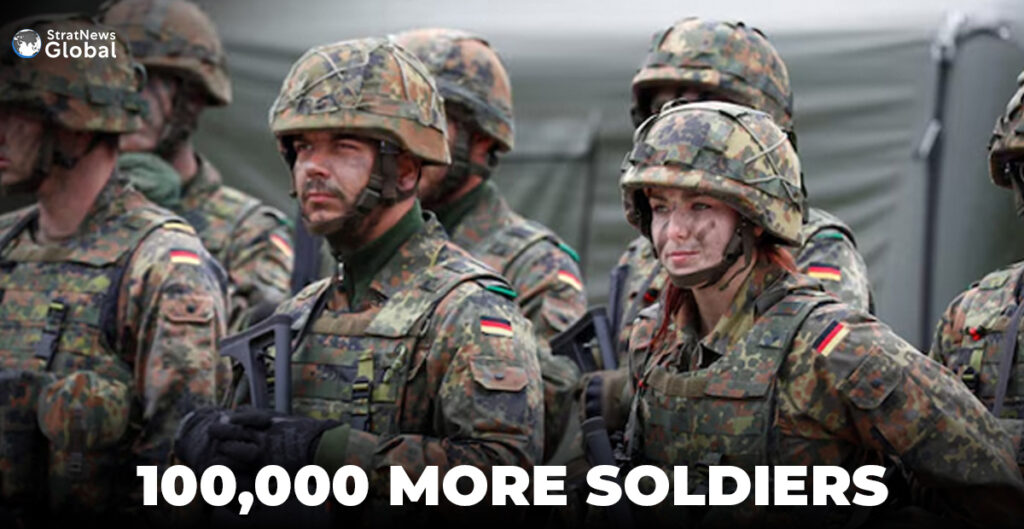
German Army Must More Than Double Its Size, Commander Warns
Germany’s army must recruit 100,000 more active troops on top of its current 62,000 to meet NATO’s new preparedness goals against rising Russian threats, its commander stated in a confidential paper reviewed by Reuters on Thursday.
“It is imperative for the army to become sufficiently ready for war by 2029 and provide the capabilities Germany pledged (to NATO) by 2035,” Army Chief Alfons Mais wrote in a letter dated September 2, addressed to the chief of the defence staff, Carsten Breuer.
He said achieving these objectives was impossible with the currently approved personnel levels, which also include 37,000 non-active troops.
Germany has already begun increasing its commitments to allies in eastern Europe, not least with the establishment of a German brigade in Lithuania, set to number some 5,000 troops, and a naval patrol deployment in the Baltic to counter undersea sabotage.
Mais called for an increase of roughly 45,000 active troops by 2029 – the year the U.S.-led alliance has said it expects Russia to be capable of a large-scale attack on Western allies.
Moscow has consistently denied any intention to wage war against NATO or its members.
NATO Goals
Additionally, to meet NATO targets agreed at a summit in June and build reserves for a war of attrition of the kind Russia is waging in Ukraine, Mais projected a requirement for another 45,000 active troops by 2035.
He also called for some 10,000 extra troops to bolster territorial defence.
A spokesperson for the Defence Ministry in Berlin declined to comment on the document, citing its confidential nature.
He said NATO had adjusted its capability targets in response to the significantly heightened threats following Russia’s full-scale invasion of Ukraine in 2022:
“According to a first rough estimate, a total of around 460,000 personnel (from Germany) will be necessary, divided into some 260,000 active troops and around 200,000 reservists.”
In June, Defence Minister Boris Pistorius announced that Germany would need up to 60,000 additional active personnel across all military branches to meet the new NATO targets, bringing the future strength of Germany’s armed forces, the Bundeswehr, to around 260,000.
However, they have yet to achieve the goal of 203,000 troops set in 2018, and remain understaffed by approximately 20,000 regular personnel, according to ministry figures.
(With inputs from Reuters)
Nepal’s Unrest Engulfs Parliament And Luxury Hotels Amid Backlash Against the Elite
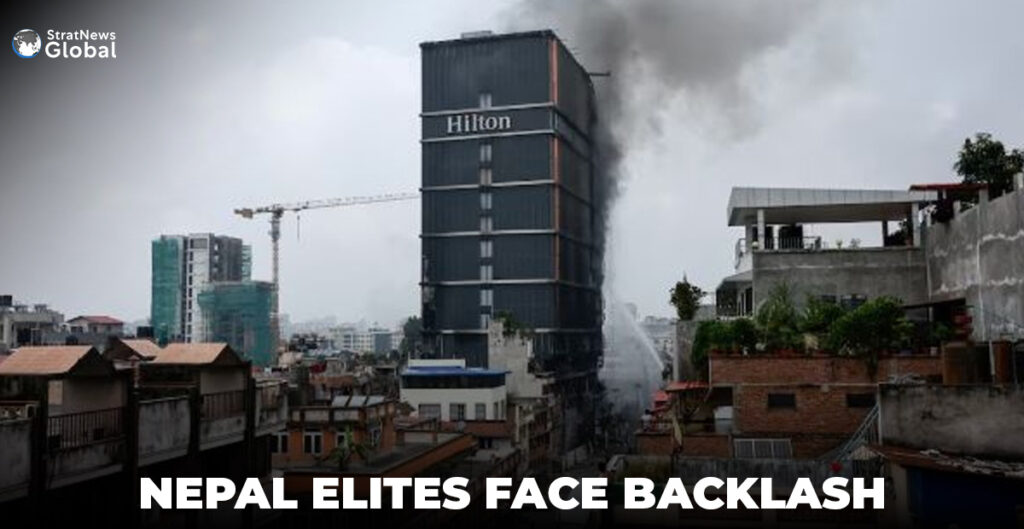
Protests in Nepal escalated this week as demonstrators stormed parliament, prompting the resignation of the prime minister. At the same time, arsonists set fire to luxury hotels and private residences, targeting the extravagant lifestyles of the country’s elites in stark contrast to the poverty faced by much of the population.
The demonstrations, popularly referred to as the “Gen Z” as most participants were in their teens or early 20s, have triggered Nepal’s worst upheaval in years, forcing unpopular leader K.P. Sharma Oli to resign on Tuesday, a day after 19 protesters were killed in violence.
The death toll has since risen to 34 and more than 1,300 were injured, Nepal’s health ministry said.
Leaders of the Gen Z protest movement distanced themselves from the arson attacks blaming infiltrators, but analysts point to mounting frustration at wealth inequality in Nepal and at perceived corruption within Nepal’s political leadership.
Assault On Five-Star Hotels
While the parliament, the prime minister’s office and the Supreme Court were still burning, arsonists also attacked five-star hotels, including the Hilton, the Hyatt Regency and Varnabas Museum Hotel.
The Hyatt Regency, a sprawling property near Boudhanath Stupa, among the most important Buddhist sites in Nepal and a draw for tourists, was damaged by protesters, Bhushan Rane, the hotel’s front office manager, said.
No guests or staff were injured, Rane added. Due to the political unrest, the hotel will remain closed until further notice.
Tourism is the lifeblood of Nepal’s economy.
The Hilton Hotel, a five-star glass tower, was also torched, sending black plumes of smoke into the sky. The Kathmandu Hilton was opened last year by Shahil Agrawal, the scion of a Nepalese steelmaking business-turned-conglomerate, the Shanker Group.
A Hilton spokesperson said the property had been closed following damage sustained during the protests and guests and staff were safely evacuated. A full assessment of the building would be undertaken, the statement said.
The homes of politicians including Oli were also attacked.
Inequality In Lifestyle
The Gen Z movement has gained traction in recent months rallying around posts on TikTok, Instagram and other social media sites that purportedly show the children of Nepal’s political leaders enjoying a lavish lifestyle, from designer clothes to pricey vacations.
Meanwhile, thousands of mainly young people leave Nepal every day, in search of economic opportunity in the Middle East, Malaysia, South Korea and elsewhere.
“That is the frustration of the common people,” said Balaram K.C., a retired justice of the Supreme Court and a constitutional expert.
“You people who are supposed to run the country in an honest way, you are taking care of yourself and your relatives and no one else,” he said.
Rajendra Bajgain, a Nepali Congress party lawmaker, said on Thursday that his luxury hotel, Varnabas Museum, had also been targeted in an arson attack and guests were safely evacuated.
After the deaths of demonstrators, Bajgain announced his intention to step down from parliament and said he was sympathetic to the Gen Z protesters.
“It has mounted for quite some time this kind of dissatisfaction in Nepal with the corruption,” he said.
(With inputs from Reuters)
Belarus Frees Hostages After Trump Intervention
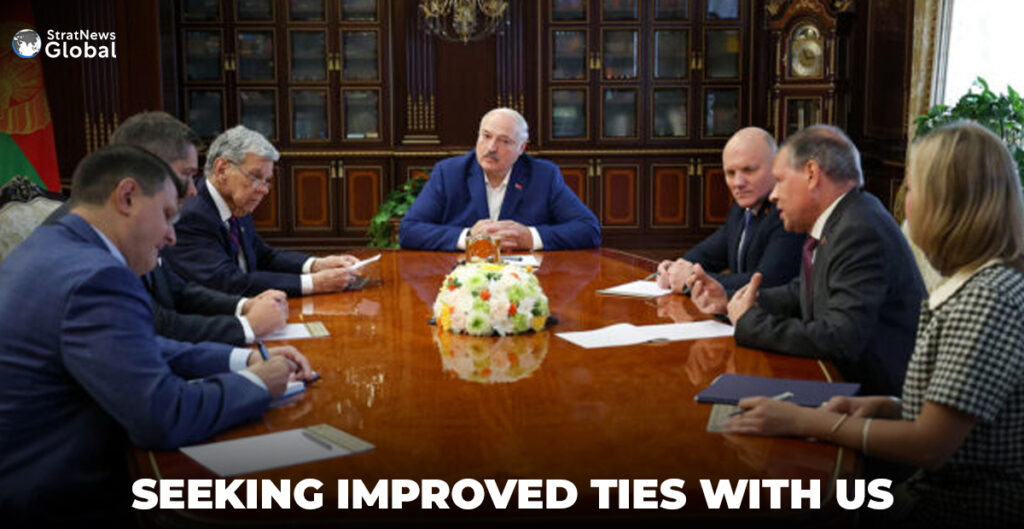
Belarus on Thursday released 52 prisoners of various nationalities, including an EU employee, following an appeal by US President Donald Trump, the US embassy in Vilnius said. The freed individuals travelled to Lithuania with the US delegation that secured their release.
Trump had urged Belarusian President Alexander Lukashenko, a close ally of Russian President Vladimir Putin, to release detainees whom the US leader has described as “hostages”. Belarus later confirmed their release.
In return for Lukashenko’s gesture, Washington will grant sanctions relief to Belarus’ national airline Belavia, allowing it to service and buy components for its aircraft, which includes Boeings, the US embassy said.
Belarus Seeks To Repair Ties With US
It was the biggest batch of prisoners pardoned by the authoritarian leader, who is seeking to repair relations with the United States after years of isolation and sanctions on his former Soviet state.
But it was far short of the 1,300 or 1,400 prisoners whose release Trump had called for in a conversation with Lukashenko last month and in subsequent social media posts.
Those released include Ihar Losik, 33, a journalist sentenced in 2021 to 15 years in a penal colony on charges of inciting hatred and organising riots, the Belarus affairs section of the US embassy in Vilnius said.
The embassy could not immediately confirm whether prominent critics of Lukashenko’s decades-old rule, such as human rights campaigner Ales Bialiatski, co-winner of the 2022 Nobel Peace Prize, or Maria Kalesnikava, a leader of the 2020 pro-democracy protests, were among those released.
One of the 52 ex-prisoners refused to cross with the others into Lithuania, a source familiar with the matter said. Webcam footage from the border showed a man sitting in the neutral zone between the two countries. The Belarusian rights group Viasna said it looked like Mikola Statkevich, an opposition politician.
It was not immediately clear why he had refused to cross but the exiled opposition argues that freed political prisoners should have the right to stay in Belarus rather than submit to what it says are in effect forced deportations.
‘Trade In Human Lives’
Sviatlana Tsikhanouskaya, leader of the exiled opposition whose husband Siarhei was freed from jail in June, said Thursday’s release covered only 4% of those designated as political prisoners.
“We welcome their release but, in essence, this is a trade in human lives – people who should never have been imprisoned in the first place,” Tsikhanouskaya said in a statement released to Reuters in which she urged the European Union to maintain sanctions on Belarus until democracy is established.
Belarus’ state news agency Belta said those released included 14 foreign nationals – from Lithuania, Latvia, Poland, France, Britain and Germany.
Trump’s ‘Act Of Personal Friendship’ Toward Lukashenko
Belta quoted John Coale, a lawyer who headed the US delegation to Belarus, as saying Trump had told Lukashenko that Washington wanted to reopen its embassy in Minsk.
Coale had earlier passed a letter from Trump in English to Lukashenko, signed “Donald”, according to footage from Belta. The fact that Trump had signed the letter simply Donald was “a rare act of personal friendship”, it quoted Coale as saying.
“If Donald insists that he is ready to take in all these released prisoners, God bless you, let’s try to work out a global deal, as Mr Trump likes to say, a big deal,” said Lukashenko, who praised the US leader for seeking a peace deal in Ukraine.
“Our main task is to stand with Trump and help him in his mission to establish peace,” Belta later quoted Lukashenko as saying, alluding to Trump’s assertion that he has resolved six or seven world conflicts.
Lukashenko has led Belarus for more than three decades. He said as recently as August 22 that he was not prepared to release “bandits” who might “wage war” against the state.
‘Strong Leader’
Trump has said he plans to meet Lukashenko, long treated as a pariah by the West, and described him as a “very respected man, strong person, strong leader”.
The prisoners were released a day after Poland shot down what it said were Russian drones over its territory, and on the eve of joint military exercises involving Russia and Belarus.
Belarus shares borders with three NATO countries and Ukraine. Lukashenko let Putin use Belarusian territory when invading Ukraine in 2022 but the Belarusian army has not directly participated in the war.
Lukashenko says there are no political prisoners in Belarus and that those behind bars are law-breakers who chose their own fate.
(With inputs from Reuters)
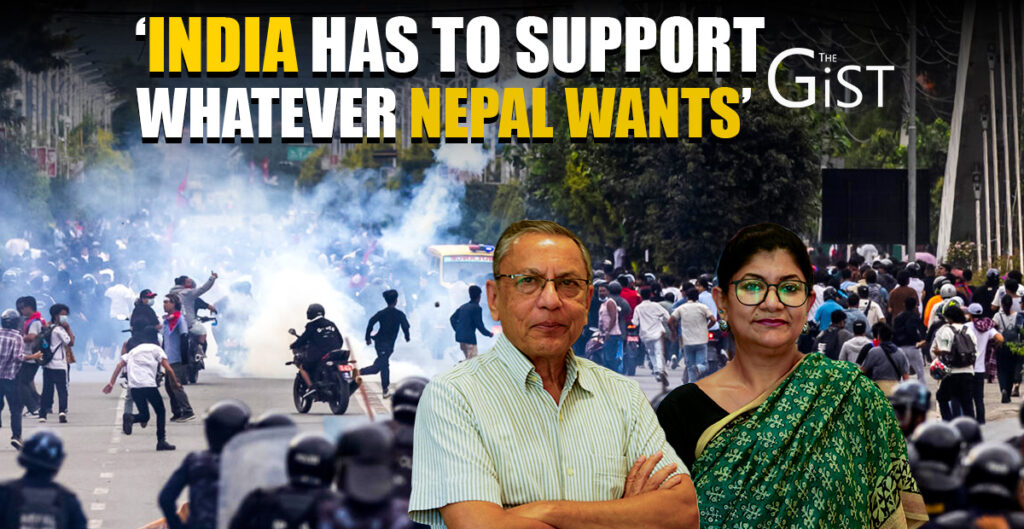
Nepal: As ‘Gen-Z’ Protestors Pick New Interim Face, India Backs Popular Will
There’s been relative calm in Nepal after the tumultuous events of the past few days. Latest reports say the ‘Gen-Z’ protestors have settled on Kul Man Ghising, credited with solving Nepal’s electricity crisis, as the person to lead the interim government.
Ghising turned around the functioning of the Nepal Electricity Authority which he had headed. He is regarded as honest, apolitical and pragmatic.
But the situation remains fluid given reports of dissensions among those involved in finding a solution to the current crisis.
India, apart from expressing concern and appealing for calm, has preferred to stay quiet, reflecting its need to be seen on the side of popular aspirations.
“India has always supported the will of the Nepalese people for multiparty democracy, for inclusion, for the kind of system they wanted,” Ranjit Rae, told StratNewsGlobal. “This has been India’s consistent policy over many, many decades. This is the same policy that has to continue and support whatever Nepal wants.”
“For India, the relationship has been very, very deep, and very strategically significant as well. We have open borders. So if Nepal is destabilized, it becomes vulnerable to, you know, external elements that may be inimical to Nepal’s interests and to India’s interests. It’s a very critical relationship. For India, our strategy has always been peace, stability and progress.”
Rae who penned a book titled Kathmandu Dilemma: Resetting India Nepal Ties, says the two countries are linked not only through the cultural, spiritual, religious and people to people linkages, but also in terms of infrastructure connectivity and joint projects.
“Our strategy has always been to work with whichever system is in power and to support what the people of Nepal want. That remains and that will continue,” he added.
Open Border An Asset
Having open borders with Nepal has proven to be “huge strategic asset” for India, according to Rae.
“Open borders and the people to people connect is the very fundamental basis of the relationship. And the open border is a huge strategic asset between our two countries,” he said.
“From time to time, the open borders were misused by certain elements. We know what has happened in the past when some infiltrators from Pakistan (came in) and so on. But to address that, we cannot close the border by erecting fences,” he said, adding, there has to be smart policing, good intelligence cooperation between the two countries, good border guarding and cooperation between border guarding forces.
He highlighted that the relationship between India and Nepal is “critical for both India and Nepal.”
“So whichever dispensation you have in either of the two countries has to work together – whether it’s the older generation, whether it’s Gen Z or any other system or framework. It is critical for both countries that you have to work together. That is a fundamental element,” he said.
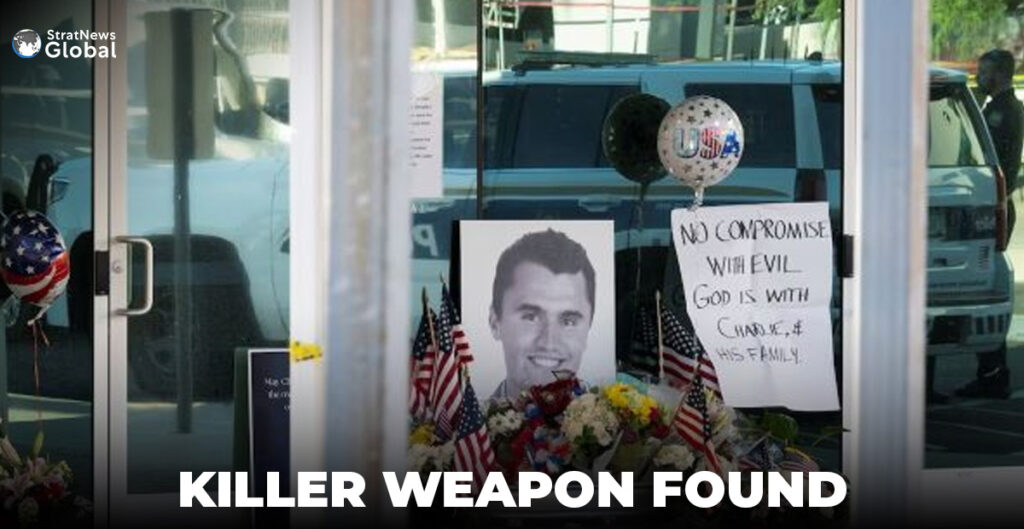
Rifle Recovered By Police In Hunt For Activist Charlie Kirk’s Killer In Utah
Investigators in the United States said on Thursday they had recovered a bolt-action rifle believed to have been used in the killing of conservative activist Charlie Kirk during a university talk in Utah. The search for the gunman, however, is still ongoing.
Kirk, a 31-year-old podcast-radio commentator and a close ally of U.S. President Donald Trump, is credited with helping build the Republican Party’s support among younger voters. He was killed on Wednesday by a single gunshot in what Trump called a “heinous assassination.”
The killing, captured in graphic detail in videos that rapidly spread around the internet, occurred as Kirk spoke onstage at an outdoor event called “Prove Me Wrong” in front of about 3,000 people at Utah Valley University in Orem, Utah, about 40 miles (65 km) south of Salt Lake City.
The killer arrived on campus a few minutes before the event began, and could be seen on security-camera video ascending stairwells to get onto a nearby roof before firing at Kirk, according to the FBI and state officials. Kirk, a staunch defender of gun rights, was answering an audience question about mass shootings when the bullet struck his neck; screaming audience members fled in panic.
The shooter jumped off the roof and fled into an adjoining neighbourhood, Robert Bohls, the FBI special agent in charge, told reporters. Investigators found a “high-powered, bolt-action” rifle in a nearby wooded area, and were examining that along with palm prints and footprints for clues.
Shooter Not Yet Identified
The shooter appears to be of college age and “blended in well” on the campus, Utah Public Safety Commissioner Beau Mason told reporters. The shooter has not been publicly identified, and while investigators said they had “good video footage,” they would not make that public for now.
Kirk, co-founder and president of the conservative student group Turning Point USA, was pronounced dead at a local hospital hours later. His killing stirred immediate expressions of outrage and denunciations of political violence from Democrats, Republicans and foreign governments.
Utah Governor Spencer Cox said Kirk’s events on college campuses were part of a tradition of open political debate that was “foundational to the formation of our country, to our most basic constitutional rights.”
“When someone takes the life of a person because of their ideas or their ideals, then that very constitutional foundation is threatened,” Cox said.
Trump said on Thursday he would award Kirk the Presidential Medal of Freedom, the nation’s highest civilian honor. Vice President JD Vance canceled his trip to New York to commemorate the attacks by al Qaeda on September 11, 2001, and instead will travel to Utah to visit Kirk’s family, a person familiar with the situation said.
Kirk began his career in conservative and right-wing politics as a teenager. A little more than a decade later, some of the friends he made along the way are now at the highest levels of U.S. government and media, with Vance recalling that he was in multiple group chats with Kirk.
“So much of the success we’ve had in this administration traces directly to Charlie’s ability to organize and convene,” Vance wrote in a lengthy tribute posted on social media. “He didn’t just help us win in 2024, he helped us staff the entire government.”
Era Of Political Violence
The shooting punctuated the most sustained period of U.S. political violence since the 1970s. More than 300 cases of politically motivated violent acts across the ideological spectrum have been documented since supporters of Trump attacked the U.S. Capitol on January 6, 2021.
Trump himself has survived two attempts on his life, one that left him with a grazed ear during a campaign event in July 2024 and another two months later foiled by federal agents.
Two people were detained, questioned and released on Wednesday evening, but neither were suspects, the FBI said on Thursday.
One of the two detainees, an older man seen in photos that circulated online shortly after the killing, was familiar to locals as a political “gadfly,” according to the Salt Lake Tribune. Officials said he had been charged with obstruction by university police and released.
Kirk, who was married and the father of two young children, published his most recent book last year calling for a “Right Wing Revolution” and had just returned to the U.S. from an overseas speaking tour in South Korea and Japan.
His appearance on Wednesday was part of a planned 15-event “American Comeback Tour” of U.S. college campuses. Known for his often-provocative discourse on race, gender, immigration and gun regulation, Kirk often used such events to invite members of the crowd to debate him live, and was frequently challenged by both people on the left and the far right.
“He would go into these hostile crowds and answer their questions,” Vance wrote in his tribute. “If it was a friendly crowd, and a progressive asked a question to jeers from the audience, he’d encourage his fans to calm down and let everyone speak.”
Trump Vows To Track Down Killer
In a video message taped in the Oval Office, Trump vowed that his administration would track down those responsible for Kirk’s killing, along with “each and every one of those who contributed to this atrocity and to other political violence, including the organizations that fund it and support it.”
Trump, who routinely describes political rivals, judges and others who stand in his way as “radical left lunatics” and warns that they pose an existential threat to the nation, also decried violent political rhetoric, while casting it as a phenomenon of the political left.
“For years, those on the radical left have compared wonderful Americans like Charlie to Nazis and the world’s worst mass murderers and criminals,” Trump said in the video. “This kind of rhetoric is directly responsible for the terrorism that we’re seeing in our country today, and it must stop right now.”
(With inputs from Reuters)