

Support us by contributing to StratNewsGlobal on the following UPI ID
ultramodern@hdfcbank

Strategic affairs is our game, South Asia and beyond our playground. Put together by an experienced team led by Nitin A. Gokhale. Our focus is on strategic affairs, foreign policy and international relations, with higher quality reportage, analysis and commentary with new tie-ups across the South Asian region.
You can support our endeavours. Visit us at www.stratnewsglobal.com and follow us on YouTube, Twitter, Facebook and Instagram.
र 500 per month
र 1000 per month
र 5000 per year
र 10000 per year
Donate an amount of your choice
र 500 per month
Donate र 500 per month

र 1000 per month
Donate र 1000 per month
र 5000 per year
Donate र 5,000 per year
र 10000 per year
Donate र 10,000 per year
Donate an amount of your choice
Donate an amount of your choice


At Least 19 Pakistani Soldiers Killed In Militant Attack, Officials Say
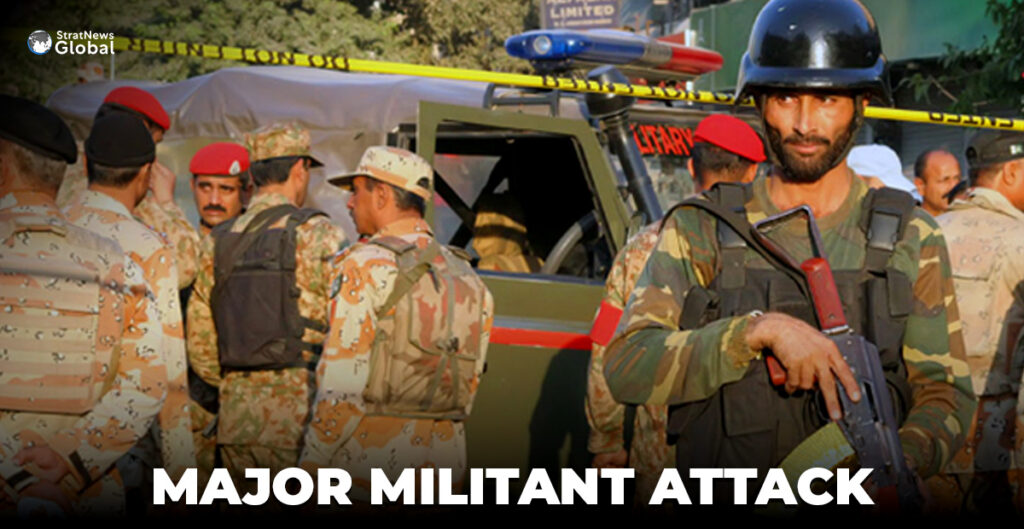
At least 19 Pakistani soldiers lost their lives and four more were wounded in an attack carried out by the Tehrik-e Taliban Pakistan (TTP) militant group in the Bar area of South Waziristan on Saturday, according to official statements from the Pakistani military.
Military authorities explained that troops were engaged in counter-militant operations when they were ambushed in a retaliatory strike.
The Inter-Services Public Relations (ISPR), the public affairs arm of the Pakistan Army, confirmed the incident in a formal statement, adding that at least 35 militants had been killed during the exchange.
A senior police officer in the region, speaking anonymously to Radio Mashaal due to restrictions on communication with the media, also verified reports of an attack on a military vehicle in the Badar Faqir Sarai locality.
TTP Claims Responsibility
The TTP, widely known as the Pakistani Taliban, later claimed responsibility for the assault. In a statement issued by its spokesman, Muhammad Khurasani, the group asserted that as many as 30 soldiers had been killed. However, Radio Mashaal emphasised that these claims could not be independently confirmed.
Although sharing ideological ties, the Pakistani Taliban remain a separate entity from the Afghan Taliban. Nevertheless, the two maintain a close alliance.
‘Since the Afghan Taliban’s takeover of Kabul in 2021, the TTP has grown increasingly emboldened, with many of its leaders and fighters believed to have found refuge across the border in Afghanistan.
Islamabad has consistently accused the Taliban administration in Kabul of providing sanctuary to these militants, a charge the Afghan government continues to deny.
The deadly South Waziristan ambush comes just a day after a similar September 12 attack in Lower Dir, Khyber Pakhtunkhwa, where militants killed seven Frontier Corps soldiers and wounded 13 others, according to both local police and intelligence sources.
Security forces have since stepped up operations in Khyber Pakhtunkhwa, where militant activity has surged. On September 11, the Pakistan Army announced the killing of 19 militants in coordinated operations across Momand, North Waziristan, and Bannu districts.
(With inputs from IBNS)
Afghanistan: US Officials Meet Taliban In Kabul Over Detained American Citizens
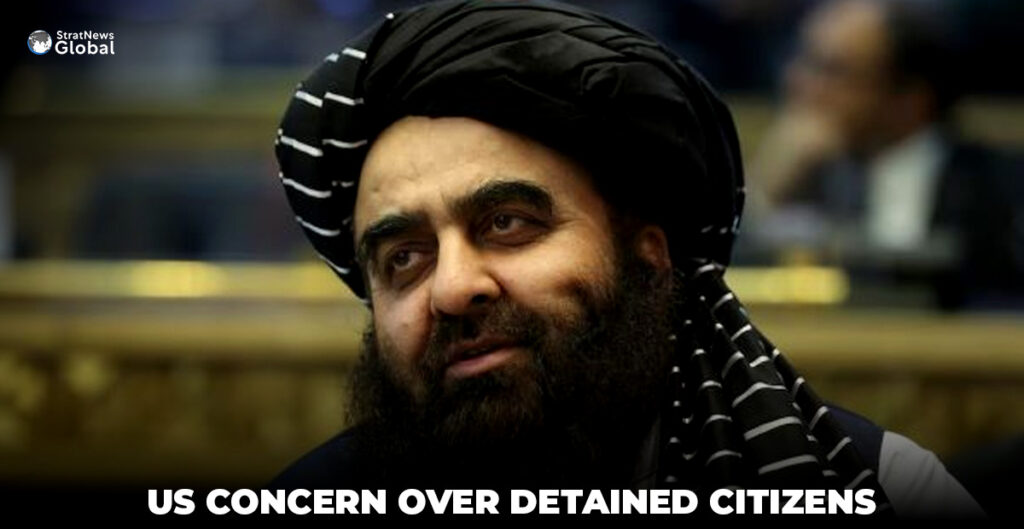
The Taliban administration said on Saturday that U.S. officials had discussions in Kabul regarding Americans being held in Afghanistan, as Washington continues efforts to secure the release of citizens it considers unjustly detained abroad.
Adam Boehler, the Trump administration’s special hostage envoy, and Zalmay Khalilzad, a former U.S. special envoy for Afghanistan, met the Taliban’s foreign minister, Amir Khan Muttaqi.
Both sides will continue talks in future, “particularly regarding citizens imprisoned in each other’s countries”, the Afghan foreign ministry said in a statement.
The U.S. State Department and the White House did not immediately respond to requests for comment. Khalilzad, who led peace negotiations with the Taliban before their 2021 takeover of Afghanistan, did not reply to a phone call seeking comment.
A source familiar with the Trump administration’s thinking said there was frustration in Washington over the Taliban’s slow process of living up to its international commitments on rights and hostages, which had dimmed prospects for a deal on critical minerals or improving broader relations.
Impediment To Improved Relations
Mahmood Habibi, a naturalized U.S. citizen, is the most high-profile American detainee, Washington says. But the case is particularly complex, as the Taliban denies holding him.
The State Department describes Habibi’s detention as a major impediment to exploring increased engagement with Afghanistan. The Taliban says they have no knowledge of his whereabouts, three years after he disappeared in Kabul.
The Taliban rejected an offer made last year to trade Habibi for alleged Osama bin Laden aide Mohammad Rahim al-Afghani, the last Afghan held in the Guantanamo Bay military prison.
The Taliban administration, which seized power after 20 years of U.S. military intervention in Afghanistan, is not recognised by Washington.
The visiting U.S. officials also met Abdul Ghani Baradar, Deputy Prime Minister for Economic Affairs, who led the Taliban side in the peace negotiations with Khalilzad.
Baradar’s office said he laid out investment opportunities in Afghanistan, including rare earth minerals, and complained about U.S. sanctions. He urged the U.S. delegation “to pursue engagement rather than confrontation in Afghanistan, to play its role in the reconstruction of Afghanistan,” it said.
Hostages A Trump Priority
U.S. President Donald Trump has made freeing Americans held abroad a top priority and has secured the release of dozens, including from Afghanistan, Russia and Venezuela.
Trump signed an executive order this month paving the way for Washington to designate countries a state sponsor of wrongful detention and impose punitive measures, including sanctions, on those it says are wrongfully holding Americans.
Boehler visited Kabul in March and took back with him George Glezmann, an American detained in 2022 while in Afghanistan as a tourist. In January, the U.S. freed an Afghan convicted by an American court on charges of drug smuggling and terrorism in exchange for two U.S. citizens held in Afghanistan.
(With inputs from Reuters)
US Court Finds Federal Firings Under Trump Illegal, No Reinstatement
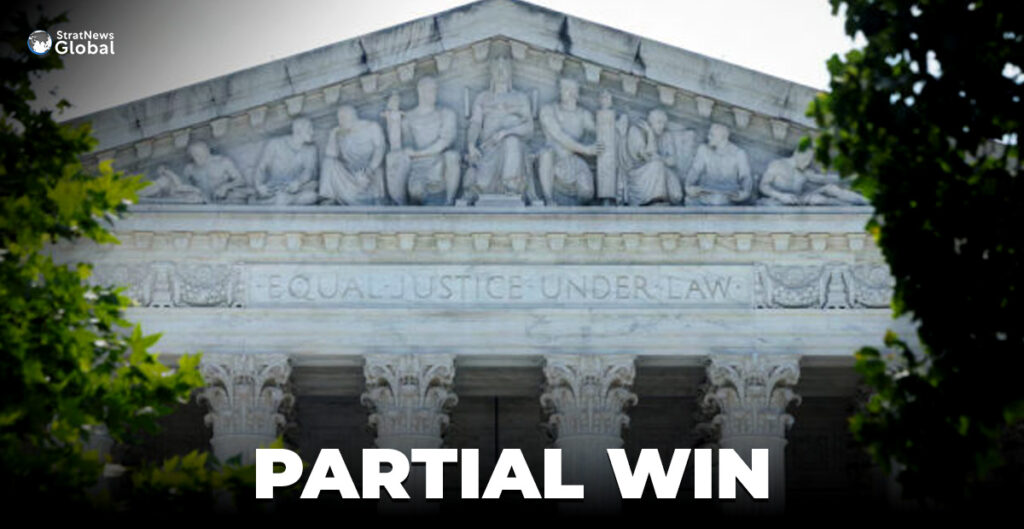
A federal judge on Friday held that the Trump administration acted unlawfully in directing the dismissal of thousands of federal employees, but declined to order their reinstatement, citing recent rulings by the US Supreme Court.
US District Judge William Alsup in San Francisco stuck by his preliminary conclusion in the case that the US Office of Personnel Management in February unlawfully ordered numerous agencies to fire probationary employees en masse.
Unions, nonprofits and Washington state had sued after Trump’s administration moved to fire roughly 25,000 probationary employees, who typically have less than a year of service, though some are longtime workers in new jobs.
Abiding By Supreme Court Order
Alsup said ordinarily he would “set aside OPM’s unlawful directive and unwind its consequences, returning the parties to the ex-ante status quo, and as a consequence, probationers to their posts”.
“But the Supreme Court has made clear enough by way of its emergency docket that it will overrule judicially granted relief respecting hirings and firings within the executive, not just in this case but in others,” Alsup wrote.
Too Much Had Happened Since SC Move
In April, the Supreme Court paused a preliminary injunction Alsup issued in the case requiring six agencies to reinstate 17,000 employees while the litigation moved forward.
Alsup said too much had happened since the Supreme Court’s April decision for him to order employees to be reinstated now, as many had gotten new jobs while the administration transformed the government.
But Alsup, an appointee of Democratic President Bill Clinton, said the workers “nevertheless continue to be harmed by OPM’s pretextual termination ‘for performance,’ and that harm can be redressed without reinstatement”.
He ordered 19 agencies, including the US Departments of Defence, Veterans Affairs, Agriculture, Energy, Interior and Treasury, to update the employees’ files by November 14 and barred them from following OPM directives to fire workers.
Representatives for the plaintiffs and the White House did not respond to requests for comment on Saturday.
(With inputs from Reuters)
US, China To Resume Talks As Tariff, TikTok Tensions Mount
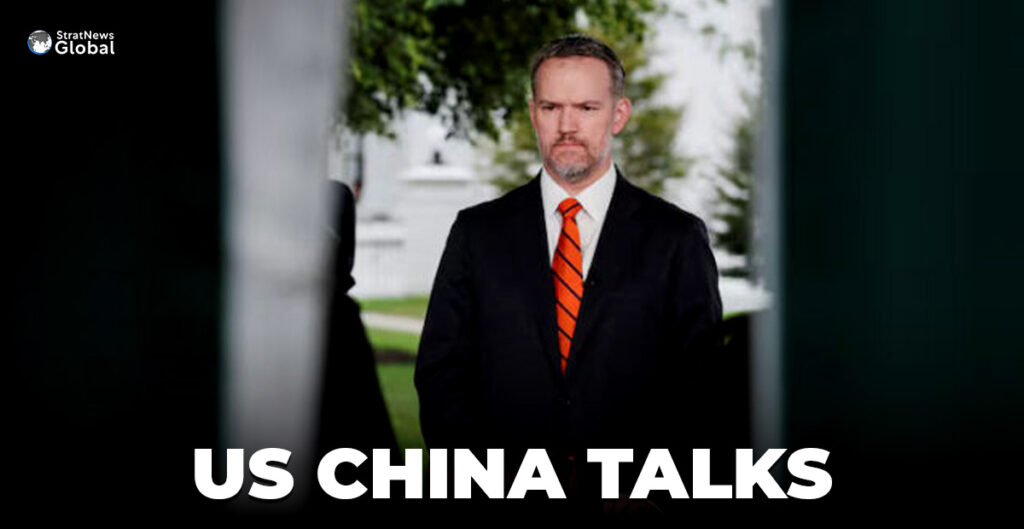
US Trade Representative Jamieson Greer is set to join fresh talks with Chinese officials in Madrid from Sunday, focusing on trade and key economic issues, including Wednesday’s deadline for TikTok to divest its US assets, a USTR official said on Saturday.
Greer will join US Treasury Secretary Scott Bessent for the talks in Spain with Chinese Vice Premier He Lifeng and other senior Chinese economic officials.
The three officials, along with China’s top trade negotiator, Li Chenggang, last met in Stockholm in July where they agreed in principle to extend for 90 days a trade truce that sharply reduced triple-digit retaliatory tariffs on both sides and restarted the flow of rare-earth minerals from China to the United States.
President Donald Trump has approved the extension of current US tariff rates on Chinese goods, totaling about 55%, until November 10.
Diverse Topics For Talks
The Treasury has said that the Madrid talks would cover a range of trade and economic issues, including national security concerns over TikTok and joint US-Chinese efforts to combat money laundering.
Bessent urged Group of Seven allies on Friday to impose “meaningful tariffs” on imports from China and India to pressure them to stop buying Russian oil, a move aimed at bringing Moscow into Ukraine peace negotiations by slowing its oil revenues.
The G7 finance ministers said on Friday they discussed such measures among a wide range of steps to increase pressure on Moscow, and agreed to speed up discussions to use frozen Russian assets to aid Ukraine’s defence.
Bessent and Greer said in a separate statement that G7 allies should join the United States in imposing tariffs on buyers of Russian oil.
“Only with a unified effort that cuts off the revenues funding Putin’s war machine at the source will we be able to apply sufficient economic pressure to end the senseless killing,” Bessent and Greer said.
US Double Standard
The United States has imposed an extra 25% tariff on Indian goods over the country’s purchases of Russian oil, but has so far refrained from imposing such punitive duties on Chinese goods.
China’s Ministry of Commerce has said that the Madrid talks will cover economic and trade issues such as US tariffs, the “abuse” of export controls and TikTok.
Separately, China launched on Saturday a new anti-discrimination investigation into US trade policy over semiconductors, and an investigation into dumping of US chips on the Chinese market in various devices.
(With inputs from Reuters)
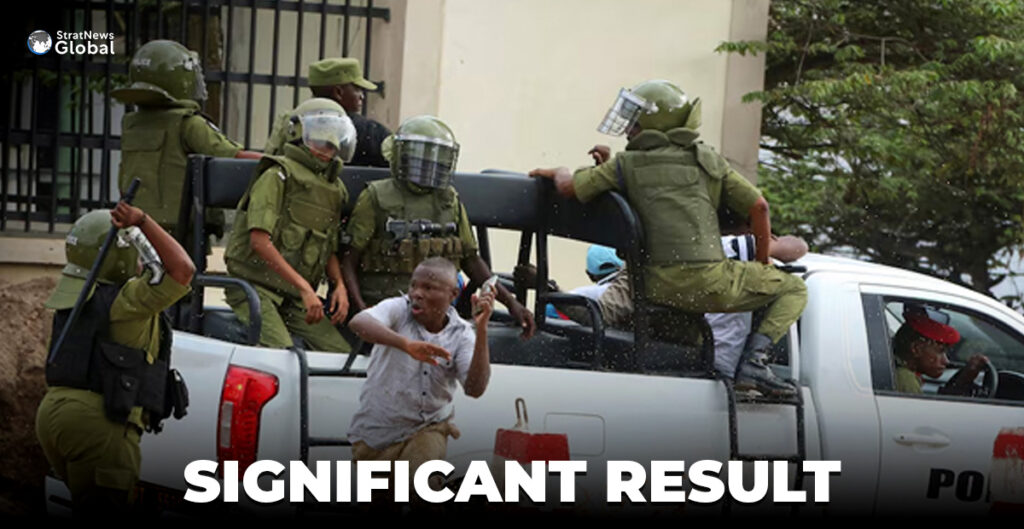
Tanzania Opposition Leader Mpina Cleared To Contest Presidential Election
On Saturday, Tanzania’s national electoral commission accepted the nomination papers of Luhaga Mpina, a senior leader from the country’s second largest opposition party, allowing him to contest next month’s presidential election following a court directive.
A high court ruling on Thursday overturned a previous decision by the Independent National Electoral Commission (INEC) that had prevented Mpina from lodging his electoral nomination papers after he was disqualified.
His disqualification meant incumbent President Samia Suluhu Hassan, who has been in office since March 2021, would potentially face opposition only from smaller parties in the October 29 election.
Decision Challenged Successfully
Mpina, who is the top candidate for the Alliance for Change and Transparency (ACT-Wazalendo) party, successfully challenged the decision to disqualify him by the Office of Registrar of Political Parties, citing complaints that his party had failed to comply with nomination procedures.
Addressing a media briefing after lodging his nomination papers, Mpina said political parties were constitutionally guaranteed to operate in the East African country.
“Opposition politicians and opposition parties are not treasonous and criminals. There is no need to use authorities to punish political parties,” Mpina said in the capital Dar es Salaam.
Uphill Battle
Earlier on Saturday, the chairperson of INEC accepted his nomination as presidential candidate for ACT-Wazalendo.
Opposition parties face an uphill battle trying to dislodge Hassan and her ruling Chama cha Mapinduzi (CCM) party, amid a government crackdown on rivals.
Leading opposition party CHADEMA was disqualified in April from contesting the election after failing to sign the electoral code of conduct as part of its call for reforms.
Party chairperson Tundu Lissu is in jail after being charged with treason amid criticism of Hassan’s human rights record. A series of high-profile arrests has highlighted the rights record of Hassan, who says the government is committed to respecting human rights.
(With inputs from Reuters)
Poles Surge Into Military Training Amid Russian Aggression Fears
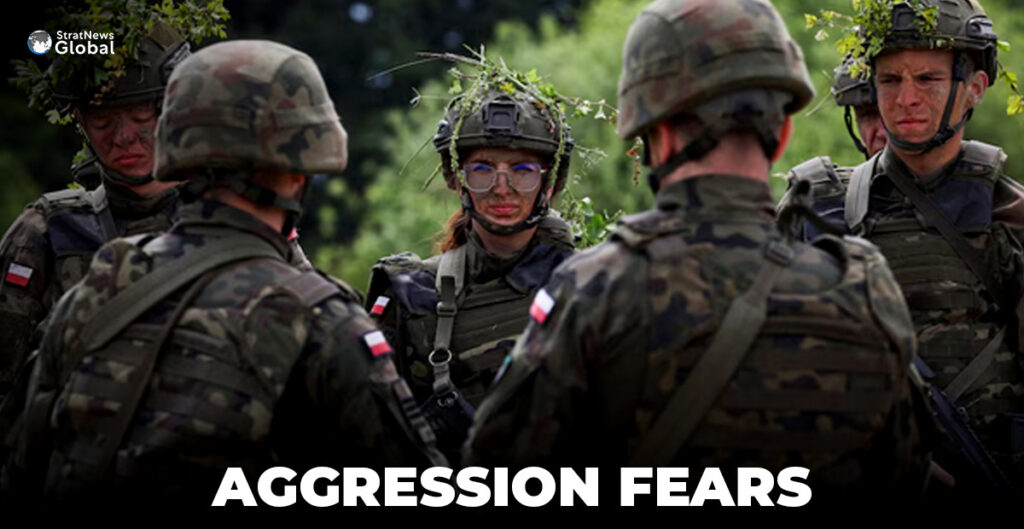
Just six kilometres from the Russian border in northern Poland, office administrator Agnieszka Jedruszak is digging a trench to protect her family, joining thousands of Poles signing up for voluntary military training as the country’s army seeks to bolster its ranks amid rising fears of Russian aggression.
“I’d do anything to keep my child safe. And I would definitely want to fight to protect him,” said Jedruszak, dressed in military fatigues, her face painted in camouflage colours.
For many in Poland – which endured decades of Moscow’s domination under the Soviet Union – the fear of Russian hostility looms large. Those concerns have only grown this week after Poland downed Russian drones in its airspace on Wednesday – the first time a member of the NATO military alliance is known to have fired shots during Russia’s war in Ukraine.
‘Emotional Overload’
The Kremlin this week accused Western countries of an ’emotional overload’ and hostility towards Russia, which it said posed no threat to them. It has declined to comment on the drone incident.
Jedruszak’s military instruction took place in Braniewo, at a training ground for South Korean K-2 tanks, after Poland ordered 180 of them in 2022 under a major military cooperation deal. Nestled among forests and sandy terrain, the site echoed with the roar of tank engines and barked orders.
While she tries to stay focused during her everyday life, Jedruszak says she wanted to prepare for “a new reality”.
“It’s always somewhere in the back of my mind: the thought that something could happen,” said the 36-year-old, who spoke to Reuters before this week’s drone incursion.
Thousands Sign Up
More than 20,000 Poles signed up for voluntary military training in the first seven months of 2025 – in line with record levels last year, according to Colonel Grzegorz Wawrzynkiewicz, the head of Poland’s Central Military Recruitment Centre.
He expects around 40,000 volunteers to complete military training by the end of this year, more than double the 16,000 in 2022, reflecting a surge in public engagement since Russia’s invasion of Ukraine.
Since the start of the war in 2022, Poland has more than doubled its defence spending from 2.2% of economic output to 4.7% this year – the highest ratio of military spending in the 32-nation NATO alliance, well ahead of more established European powers like Germany, France and Britain.
The return to the White House of Donald Trump – who has cast doubt on his willingness to defend NATO allies – has reignited European fears over the reliability of U.S. security commitments.
Polish Prime Minister Donald Tusk, who grew up under Communist rule, has been at the forefront of urging Europe’s leaders to take more responsibility for its defence.
“Countries that have no memory of a Russian occupation or Soviet occupation, for them it’s harder to imagine …what the thing is you’re fighting for,” said Gustav Gressel, an expert on Russia and defence policy, and researcher at the National Defence Academy in Vienna.
Changes Afoot
Fearful of the threat from the east, Poland launched in May last year a 400-mile-long “East Shield” fortification along its borders with Belarus and the Russian enclave of Kaliningrad – combining long stretches of anti-tank barriers known as “hedgehogs” with advanced surveillance and electronic warfare systems.
Tusk’s government is also relocating military units to the east to tap into stronger recruitment pools.
“People will be working and serving in places where they’ll be defending their own homes,” said Pawel Zalewski, a deputy defence minister.
The focus of Poland’s military restructuring is on mobility, armoured capabilities, air defence and logistics operations, officials say.
Wawrzynkiewicz, the head of recruitment, said the efforts aim to boost military readiness and presence near Poland’s border, while also creating local employment opportunities in a region with a historically high jobless rate.
Undergoing military training does not automatically commit people to serve in a war; the programme is designed to be flexible, officials said.
Volunteers can choose to continue into professional military service, to join the Territorial Defence Forces (WOT), or remain part of the active or passive reserve.
Those who join WOT typically serve part-time in their home regions and may be called upon in emergencies or during heightened threats, including natural disasters or border crises, such as when Belarus channelled tens of thousands of migrants toward Poland in 2021 during tensions with the European Union.
Volunteers train alongside professional soldiers but are not embedded in regular units unless they formally enlist. The structure allows for building a scalable force that can support Poland’s defence strategy in times of need – similar to systems used in Lithuania and Germany.
Deputy defence minister Cezary Tomczyk told Reuters that – even as battlefield technology advances – training sufficient personnel remains vital for Poland’s ability to defend itself.
“When there’s a war or some kind of near-war threat, it’s the most basic things that count: that’s fuel, ammunition and people,” he told Reuters.
(With inputs from Reuters)
London Sees Large Anti-Immigration March Amid Counter-Protests
Tens of thousands took to the streets of central London on Saturday, waving the flags of England and Britain, as they joined a protest led by anti-immigration and anti-Islam activist Tommy Robinson.
Police have said they will have a huge presence in the British capital. A “Stand Up to Racism” counter protest is also due to meet nearby, following a highly charged summer in Britain that has seen protests over immigration and free speech.
Anti-Starmer Slogans Raised
By midday tens of thousands of protesters were packed into streets south of the River Thames, before heading towards Westminster, seat of the UK parliament.
Demonstrators carried the Union flag of Britain and the red and white St George’s Cross of England, while others brought American and Israeli flags and wore the MAGA hats of US President Donald Trump. They chanted slogans critical of Prime Minister Keir Starmer and carried placards including some saying “send them home”. Some attendees brought children.
‘We Believe In Tommy’
Robinson has billed the Unite the Kingdom march as a celebration of free speech. It is also expected to mourn Charlie Kirk, the American conservative activist shot dead on Wednesday.
“Hundreds of thousands already pack the streets of central London as we Unite as one for our freedoms,” Robinson said on X.
Robinson, whose real name is Stephen Yaxley-Lennon, describes himself as a journalist exposing state wrongdoing and counts US billionaire Elon Musk among his supporters. Britain’s biggest anti-immigrant political party, Reform UK, which has topped opinion polls in recent months, has kept its distance from Robinson, who has several criminal convictions.
“We want our country back, we want our free speech back on track,” said Sandra Mitchell, a supporter attending the rally.
“They need to stop illegal migration into this country,” she said. “We believe in Tommy.”
‘Policing Without Fear Or Favour’
London’s Metropolitan Police has said it will have more than 1,600 officers deployed across London on Saturday, including 500 brought in from other forces. In addition to policing the two demonstrations, the force is stretched by high-profile soccer matches and concerts.
“We will approach them as we do any other protests, policing without fear or favour, ensuring people can exercise their lawful rights but being robust in dealing with incidents or offences should they occur,” said Commander Clair Haynes, who is leading the policing operation.
Haynes said police were aware of a record of “anti-Muslim rhetoric and incidents of offensive chanting by a minority” at previous protests, but said London’s communities should not feel like they have to stay at home.
Last Saturday, nearly 900 people were arrested at a London demonstration against a ban on protest group Palestine Action.
Immigration has become the dominant political issue in Britain, eclipsing concerns over a faltering economy, as the country faces a record number of asylum claims. More than 28,000 migrants have arrived in small boats across the Channel so far this year.
Red and white English flags have proliferated along streets and been painted on roads. Supporters call it a spontaneous campaign of national pride, but anti-racism campaigners see a message of hostility to foreigners.
(With inputs from Reuters)
Utah Suspect In Charlie Kirk Killing Jailed, Awaits Formal Charges
The Utah trade school student jailed for allegedly fatally shooting conservative activist Charlie Kirk is set to face formal charges next week, the governor said, in what many view as a pivotal moment in U.S. political violence.
Tyler Robinson, 22, was arrested on Thursday night after relatives and a family friend alerted authorities that he had implicated himself in the crime, Governor Spencer Cox said on Friday, opening a press conference with the words, “We got him.”
The arrest capped a 33-hour manhunt for the lone suspect in Wednesday’s killing, which President Donald Trump has called a “heinous assassination.”
Kirk, co-founder of the conservative student group Turning Point USA and a staunch Trump ally, was gunned down by a single rifle shot fired from a rooftop during an outdoor event attended by 3,000 people at Utah Valley University in Orem, about 40 miles south (65 km) of Salt Lake City.
The sniper made his getaway in the ensuing pandemonium, captured in graphic detail in video clips that circulated widely on the internet and television news reports.
A bolt-action rifle believed to be the murder weapon was found nearby, and police released images from surveillance cameras showing a “person of interest” wearing dark clothing and sunglasses.
A break in the case came when a relative and a family friend alerted the local sheriff’s office that he had “confessed to them or implied that he had committed” the murder, Cox said.
“I want to thank the family members of Tyler Robinson, who did the right thing in this case and were able to bring him into law enforcement,” the governor said.
Security camera footage and evidence gathered from the suspect’s profile on the chat and streaming platform Discord also helped investigators link him to the crime, Cox said.
Robinson, a third-year student in the electrical apprenticeship program at Dixie Technical College, part of Utah’s public university system, was taken into custody at his parents’ house, about 260 miles (420 km) southwest of the crime scene.
Investigators on Friday evening collected additional forensic evidence from Robinson’s apartment in St. George, about 5 miles (8 km) from his parents’ home near the Arizona border.
He was held on suspicion of aggravated murder and other charges that were expected to be formally filed in court early next week, the governor said.
‘Watershed In American History’
The killing has stirred outrage among Kirk’s supporters and condemnation of political violence from across the ideological spectrum.
“It is an attack on all of us,” Governor Cox said, calling Kirk’s murder a “watershed in American history” and comparing it to the rash of U.S. political assassinations of the 1960s.
Cox declined to discuss possible motives for the killing. But in describing inscriptions investigators found on ammunition recovered from the scene, he said one of the casings bore the message: “Here fascist! CATCH!”
“I think that speaks for itself,” he said in response to reporters’ questions.
State records show Robinson was a registered voter but not affiliated with any political party. But a relative told investigators that Robinson had grown more political in recent years and had once discussed with another family member their dislike for Kirk and his viewpoints, according to an arrest warrant affidavit.
Many Republicans, including Trump, have been quick to lash out at the political left, accusing liberals of fomenting anti-conservative vitriol that would encourage a kindred spirit to cross the line into violence.
Democrats, decrying political violence more generally while calling for stronger gun laws, have countered that Trump himself routinely uses inflammatory rhetoric to demonise his political foes, judges and the mainstream media.
Rachel Kleinfeld, a senior fellow at the Carnegie Endowment for International Peace, said the symbology found on the bullet casings suggests the shooter was part of the so-called Groyper movement, associated with far-right activist and commentator Nick Fuentes.
Right, Left Or Crazy?
“It’s an eclectic ideological movement marked by video game memes, anti-gay, Nick Fuentes white supremacy, irony,” she said. “It certainly leans right, but it is quite eclectic.”
“In a way, the ideological beliefs of the shooter don’t matter,” she said. “What matters is how they’re taken by society. And if our society chooses to keep pointing fingers, whether the person turns out to be right, left or just unstable, then the violence will grow from the pointing of fingers, regardless of the act itself.”
Kleinfeld said most perpetrators of political violence were not clearly on one ideological side or another, but typically driven by “a hodgepodge of conspiracy beliefs and mental illness.”
“So it wouldn’t be surprising at all if this person were a person of the far right, if this person was a person who held a variety of different beliefs and was sort of unclassifiable,” she added.
Kirk’s murder comes amid the most sustained period of U.S. political violence in decades. Reuters has documented more than 300 cases of politically motivated violent acts across the ideological spectrum since Trump supporters stormed the U.S. Capitol on January 6, 2021.
Trump himself has survived two attempts on his life, one that left him with a grazed ear during a campaign event in July 2024 and another two months later, foiled by federal agents.
Democrats have fallen victim, too. In April, an arsonist broke into Pennsylvania Governor Josh Shapiro’s residence and set it on fire while the family was inside.
Earlier this year, a gunman posing as a police officer in Minnesota murdered Democratic state lawmaker Melissa Hortman and her husband and shot Democratic state Senator John Hoffman and his wife.
In her first public comments since her spouse was slain, Erika Kirk vowed in a tearful but defiant video message on Friday evening that “the movement built by my husband will not die” but grow stronger.
Speaking from the studio of his radio-podcast show, she urged young people to join Turning Point, exalting her husband as a fallen political hero who “now and for all eternity will stand at his saviour’s side wearing the glorious crown of a martyr.”
(With inputs from Reuters)
Taiwan Minister In US Warns Of Global Domino Effect From Chinese Invasion
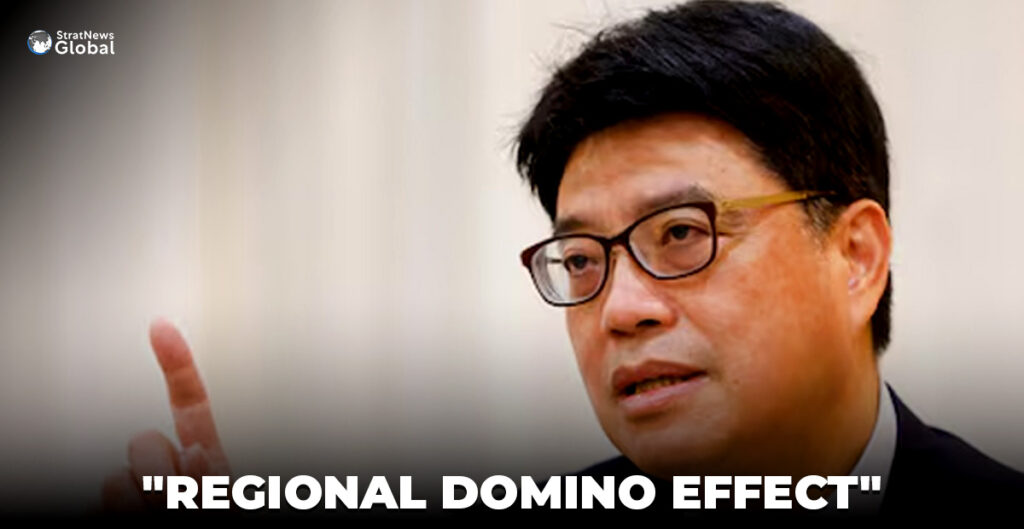
China is gearing up for war to seize Taiwan, the island’s top China policymaker warned in Washington on Friday, cautioning that its fall could trigger a regional “domino effect” endangering U.S. security.
Chiu Chui-cheng, the cabinet-ranked head of Taiwan’s Mainland Affairs Council, told the Washington-based Heritage Foundation that China’s ruling Communist Party had long refused to renounce the use of force against democratically governed Taiwan, which it considers part of its territory.
Chiu said that in seeking “unification with Taiwan,” China aimed to exclude U.S. influence from the Asia-Pacific and ultimately replace the United States as the global leader “in order to restore national glory and realise the so-called ‘China Dream.'”
He added that Beijing “has been actively preparing for war” and highlighted stepped-up Chinese military activity around the island.
“If Taiwan were to be taken over by China by force, it will trigger a domino effect, undermine the regional balance of power, and directly threaten the security and prosperity of the United States,” Chiu said.
China said earlier on Friday that its newest aircraft carrier, the Fujian, had sailed through the Taiwan Strait, a ship which, once it enters service, will enable the country to project power further out into the Western Pacific.
US’s Taiwan Support
The United States is Taiwan’s most important international backer and arms supplier, despite the lack of formal diplomatic ties, and Chiu said Taipei appreciated the reaffirmation of that commitment under President Donald Trump.
He highlighted that Taiwan, the world’s leading producer of cutting-edge computer chips, is the hub of the global high-tech industry.
“If Taiwan’s role in this were to be compromised, it would be a huge loss to the international community, especially the U.S. and its technology industry,” he said.
Taiwan’s government rejects Beijing’s sovereignty claims, saying only the island’s people can decide their future.
Visits by senior Taiwanese officials to the United States are rare compared with visits by major U.S. allies, and their trips are generally much lower profile.
China’s Washington embassy said Beijing stood ready “to work with the greatest sincerity and exert utmost efforts to achieve peaceful reunification” with Taiwan.
“Meanwhile, China will take all necessary measures to defend national sovereignty and territorial integrity, and firmly oppose ‘Taiwan independence’ separatism and external interference,” its spokesperson Liu Pengyu said in an emailed response when asked about Chiu’s remarks.
Shortly before Chiu’s speech, China’s military condemned the sailing of a U.S. and British warship through the Taiwan Strait.
The U.S. Navy and, on occasion, ships from allied countries including Canada, Britain and France transit the strait, which they consider an international waterway, around once a month.
China says the strategic waterway is part of its territorial waters.
(With inputs from Reuters)
US Pledges To Protect NATO Territory After Suspected Russian Drone Incursion In Poland
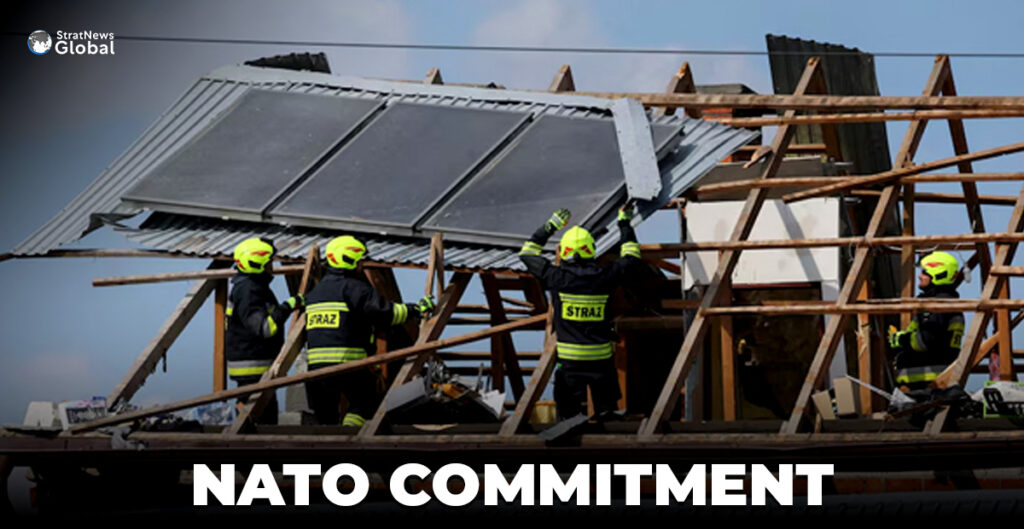
The United States told the UN Security Council on Friday that it would “defend every inch of NATO territory” following a suspected Russian drone incursion into Poland.
“The United States stands by our NATO allies in the face of these alarming airspace violations,” acting U.S. Ambassador to the U.N. Dorothy Shea told the 15-member body.
The remarks appear aimed at assuaging Washington’s NATO allies after U.S. President Donald Trump on Thursday said Russia’s alleged drone incursion into Poland could have been a mistake.
Shea also noted Russia has intensified its bombing campaign against Ukraine since Trump met with Russian President Vladimir Putin in Alaska as part of his bid to broker an end to Moscow’s more than three-year war in Ukraine.
“These actions, now with the addition of violating the airspace of a U.S. ally – intentionally or otherwise – show immense disrespect for good-faith U.S. efforts to bring an end to this conflict,” Shea said.
Poland shot down drones in its airspace on Wednesday with the backing of aircraft from its NATO allies, the first time a member of the Western military alliance is known to have fired shots during Russia’s war in Ukraine.
“We know, and I repeat, we know that it was not a mistake,” Poland’s Secretary of State Marcin Bosacki told the council. He showed photos of a downed drone, pointing out Russian lettering on parts of it.
“Poland will not be intimidated.”
‘Physically Impossible’
Slovenia’s U.N. Ambassador Samuel Zbogar also sought to dispel the suggestion that the drone incursion could have been a mistake, telling the council “it is hard to imagine that so many drones flew so deep over Polish territory, unintentionally.”
Russia has said its forces had been attacking Ukraine at the time of the drone incursions and that it had not intended to hit targets in Poland.
“There were no targets marked on Polish territory,” Russia’s U.N. Ambassador Vassily Nebenzia told the council. “The maximum range of the drones used in this strike did not exceed 700 kilometres, which makes it physically impossible for them to have reached Polish territory.”
He said Moscow was willing to speak with Poland “if the Polish side indeed is interested in reducing tensions rather than fomenting tensions.”
The U.S. also joined Western allies in a joint statement on Friday to express concern about Russia’s drone incursion and accuse Moscow of violating international law and the founding U.N. Charter.
The statement, read by Bosacki ahead of the Security Council meeting, also called on Russia to stop “its war of aggression against Ukraine” and desist from further provocations.
The joint statement was backed by 43 countries.
(With inputs from Reuters)