

Support us by contributing to StratNewsGlobal on the following UPI ID
ultramodern@hdfcbank

Strategic affairs is our game, South Asia and beyond our playground. Put together by an experienced team led by Nitin A. Gokhale. Our focus is on strategic affairs, foreign policy and international relations, with higher quality reportage, analysis and commentary with new tie-ups across the South Asian region.
You can support our endeavours. Visit us at www.stratnewsglobal.com and follow us on YouTube, Twitter, Facebook and Instagram.
र 500 per month
र 1000 per month
र 5000 per year
र 10000 per year
Donate an amount of your choice
र 500 per month
Donate र 500 per month

र 1000 per month
Donate र 1000 per month
र 5000 per year
Donate र 5,000 per year
र 10000 per year
Donate र 10,000 per year
Donate an amount of your choice
Donate an amount of your choice
Expect No Big Change In India-China Ties This Year. Here’s Why
NEW DELHI: The killing of Quds Force commander Gen. Qassem Soleimani by the U.S. has opened an interesting question. How long would it take China to muscle that kind of hard power to carry out an operation of a similar kind? Some would say at least a decade, others even longer.
The point is that kind of impunity takes time to manifest itself and the U.S. has been at it for the last 50 years at least. It draws from Washington’s superpower status, its hi-tech military and gargantuan economy that facilitate its contempt for international law.
There can be little doubt that China is working assiduously towards that end, drawing together diverse elements of its national power with the single purpose of beating the U.S. at its own game. It would prefer not to take on the U.S. directly but will have no compunction in threatening and intimidating smaller countries or buying their top leaders to get its way.
War is something Beijing would avoid. War is not good for business, more so for an export-oriented economy like China’s. Any decision to go to war will therefore be carefully weighed, the consequences thought through including the certainty of victory (or the risk of defeat).
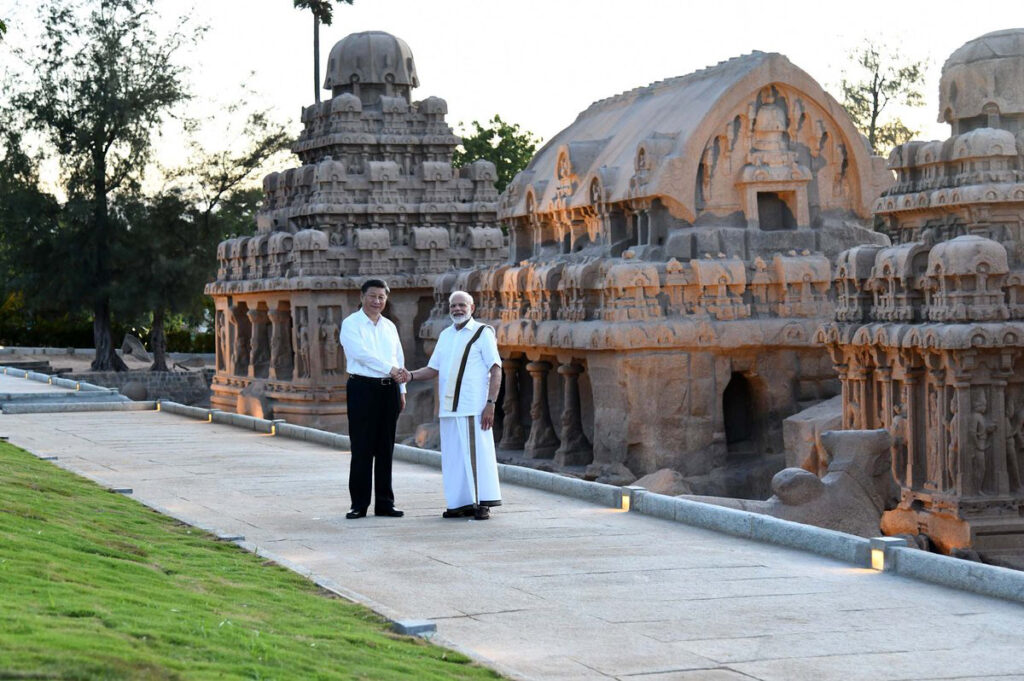
But one point is clear. China will use its power differential wherever it can, whenever it can. So for India-China relations, 2020 maybe no different from 2019 or 2018, which is what a section of the establishment in Delhi believes. There will be a lot of talk at various fora, pull-asides at multilateral events, even some tactical collaboration on climate change and the annual one-on-one optics between Narendra Modi and Xi Jinping will continue.
But it doesn’t change how the Mandarins see India. China will lose no opportunity to diplomatically attack and seek to undermine or isolate India. They see this country as economically weak and politically divided, yet it also has the potential to emerge a challenger to China in the years ahead.
Therefore, if they perceive a chink in the armour (perhaps Kashmir), they will try and exploit. They will try and use their economic clout to influence key domestic decisions such as on 5G and divert or put off discussion on India’s demand for greater access to the Chinese economy.
China watchers in Delhi say they expect no movement on settling the border dispute because India will not succumb to China exerting its power differential to secure a deal on its terms. Beijing has done this with each of its neighbours, including Russia.
At the regional level, China will continue to encourage and arm Pakistan as a rival to India and intensify their strategic inroads into this neighbourhood. Internationally, they will continue to block India’s entry into the Nuclear Suppliers Group and use the Belt & Road Initiative as a strategic tool to build economic influence and political power.
India has no pressure points it can apply against China—that is the frank admission in a section of the establishment in Delhi. India can pinprick, irritate and annoy but little beyond that.
Strictly speaking, India is not a priority for China (although the trade surplus is quite agreeable) but Delhi’s refusal to join the RCEP would have disappointed Beijing, maybe even confirmed hardline views of this country.
To repeat, India-China relations in 2020 may be little different from 2019. Hopefully, the two countries will not slide into another Doklam-like confrontation but given the opaque working of the Chinese leadership, there is no telling whether internal pulls and pressures in Beijing trigger something on the remote Himalayan frontiers with India.
PM’s Military Plainspeak
Prime Minister Narendra Modi surprised even the most cynical national security analyst by not just appointing a Chief of Defence Staff end of last year but going a step further by creating a Department of Military Affairs (DMA) under the Ministry of Defence to coordinate and integrate the three armed forces to improve their combat efficiency and optimise resources.
At a dinner he hosted for the military top brass on 31st December, the Prime Minister was blunt in his message to the uniformed leadership: Prepare the forces for future combat and reduce the obsession over ‘ceremonials, pomp and pageantry.’ According to multiple attendees at the dinner, the Prime Minister exhorted the brass to make sure that the military reduces wastage, avoids duplication in acquisitions and makes the forces technologically dependent rather than be manpower-intensive, wherever possible. The time has come, he told four- and three stars, to fully transform the military now that it has got an opportunity to largely control its decision-making, keeping the civilian bureaucracy at bay. The ball, the Prime Minister apparently said, is in the military’s court now.
‘It’s Not Possible To Predict When The Bushfires Will End’
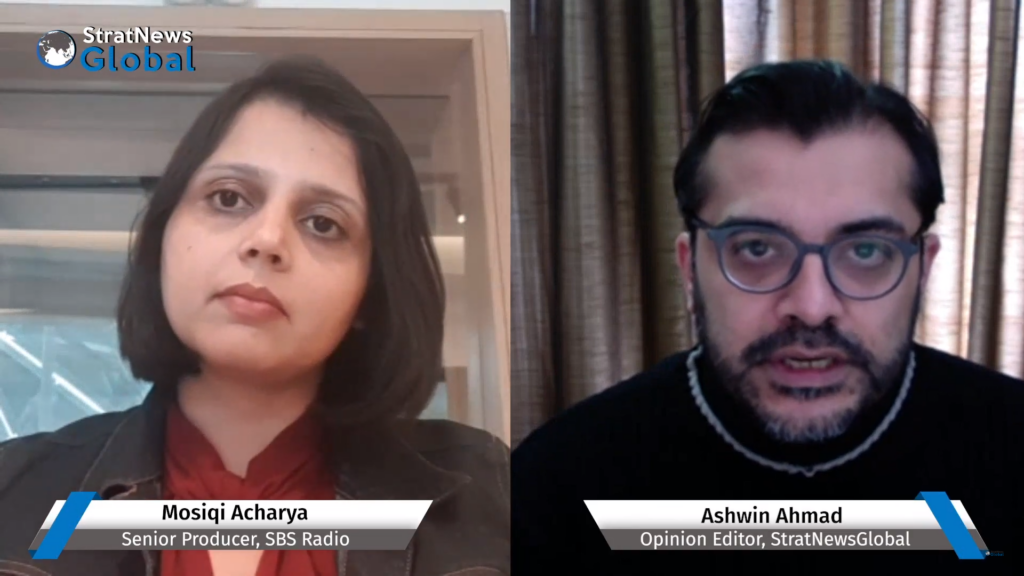
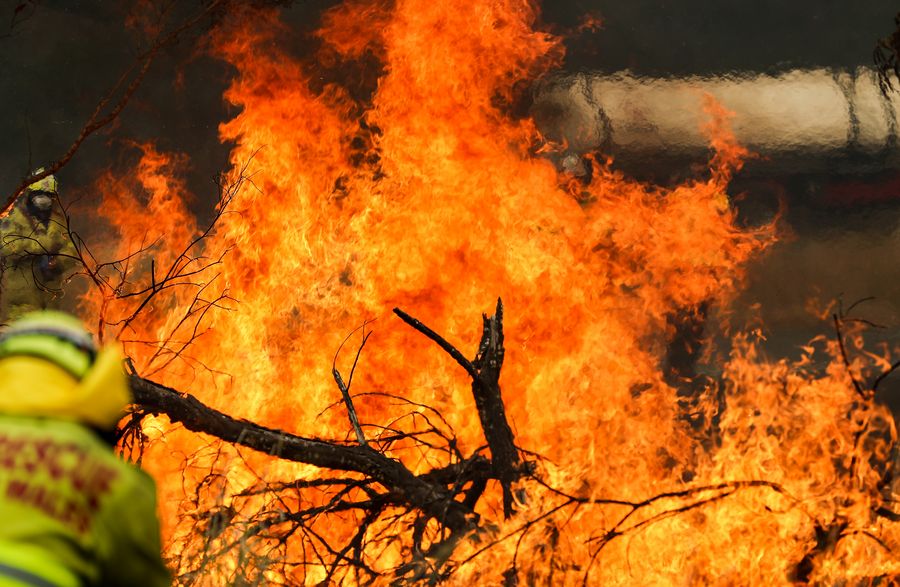
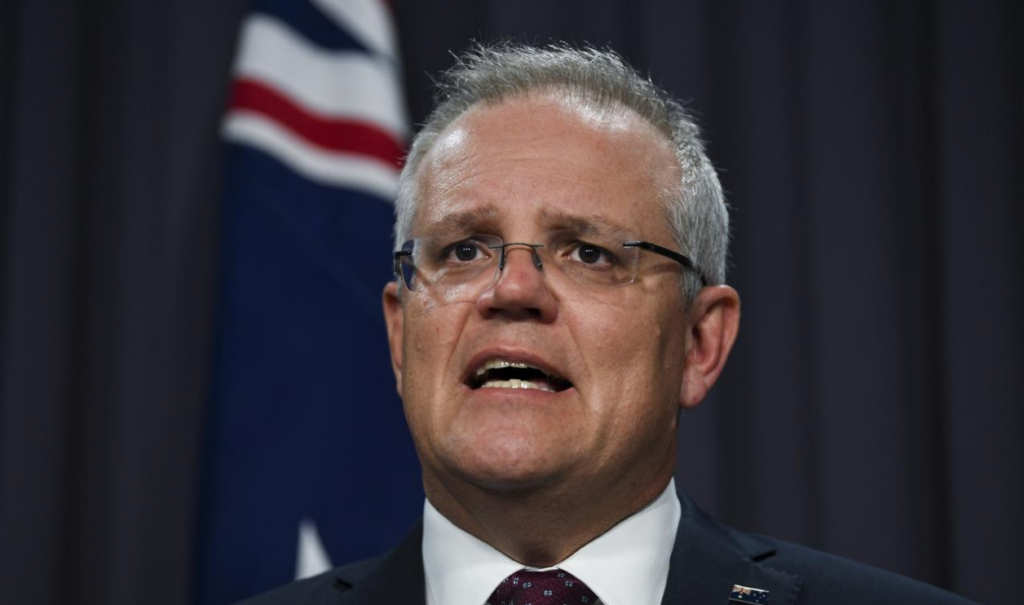
With a death toll of over 20 people and damage expected to exceed $4.4 billion according to Moody’s Analytics, Australia’s bushfires have not only been devastating but they are not likely to end anytime soon. Ashwin Ahmad, Opinion Editor of StratNews Global, speaks with Mosiqi Acharya, Senior Producer at SBS Radio in Australia to get a sense of when the bushfires can be contained, if not ended, what will be the political fallout for Australian Prime Minister Scott Morrison and what lessons can be drawn on from this tragic episode in the future.
U.S. Waiver For Chabahar: Will Gulf Tension Play Spoiler?
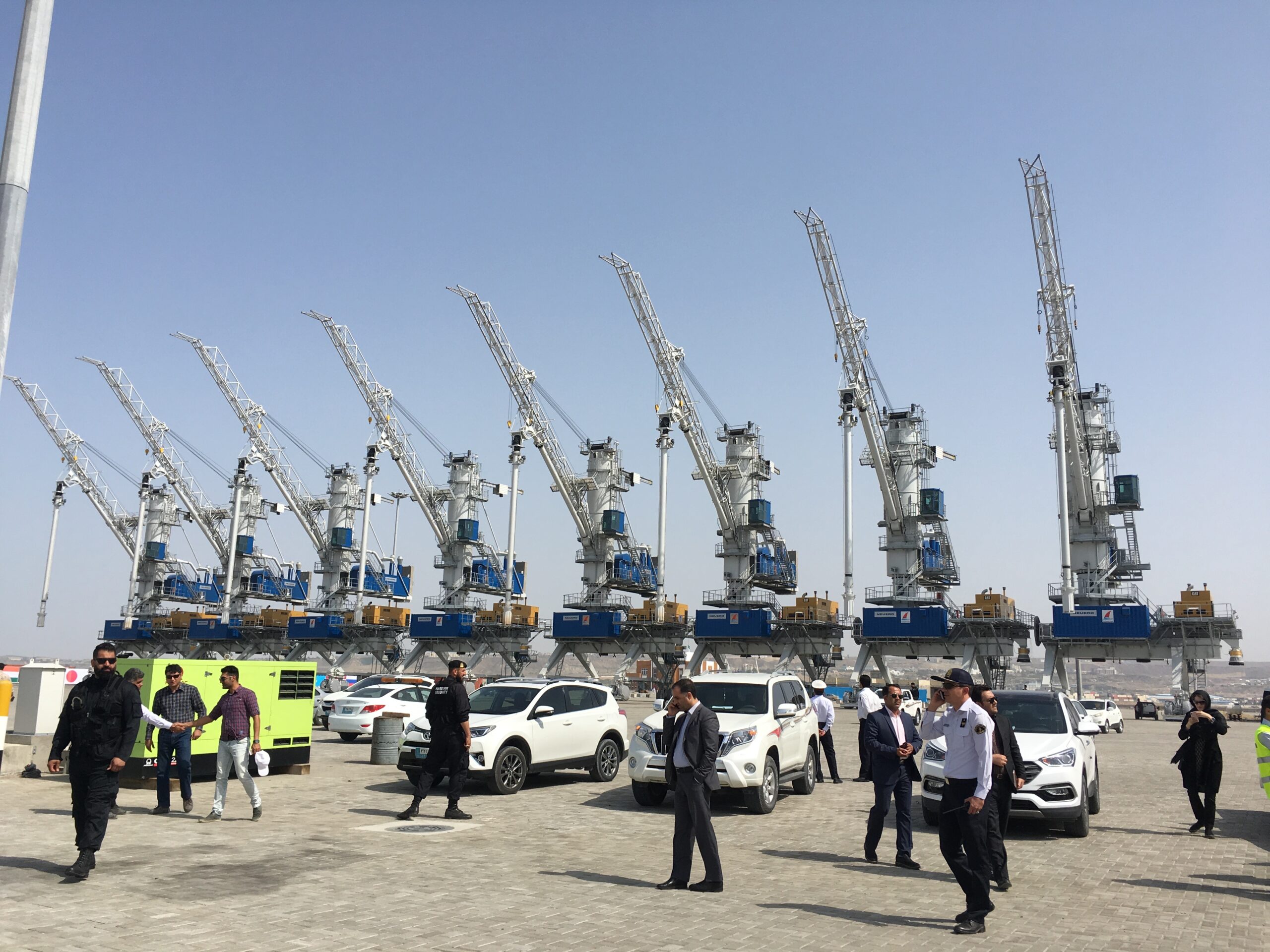
NEW DELHI: India is keeping its fingers crossed in the wake of heightened U.S.-Iran tensions, concerned it could impact its plans for the development of Chabahar port in Iran. The U.S. recently granted India a “narrow waiver” from sanctions for the port’s development. The waiver is significant as it’s been given in writing for the first time, an indication of the considerable diplomatic energy India expended in convincing the Trump administration.
“It is too early to say if the tensions will have any impact on the waiver,” said sources in South Block. The waiver also covers the 500-km railway line India is building from Chabahar to Zahedan on Iran’s border with Afghanistan. It is expected to persuade banks, businesses, contractors and hardware suppliers to bid for work in Chabahar.
But there is a caveat: the waiver does not apply to “secondary designated entities”, meaning the port’s development must not benefit Iran’s Islamic Revolutionary Guard Corps (IRGC). Major General Qassem Soleimani who led IRGC’s foreign arm, the Quds Force, was killed in an U.S. airstrike last week. So India has to tread carefully and hope the Iranians keep the IRGC out of the port.
Tehran too sees the port as a transit hub for the northern Indian Ocean and Central Asia and is impatient for results. Iranian media have described it as the Golden Gate of Iranian
Armed with the waiver, External Affairs Minister S. Jaishankar could credibly assure the Iranians, at the meeting of the joint commission last December, that Chabahar’s development could now be expedited. The discussions also covered economic and trade issues. For New Delhi too, Chabahar will provide access to land-locked Afghanistan by skirting Pakistan as well as access to resource rich Central Asia.
“We hope that with this waiver, port equipment manufacturers will have a level of comfort and be more ready to supply equipment,” sources told StratNews Global. The written waiver from the U.S. has now been shared with banks and equipment suppliers so that they shed their reluctance to do business with Chabahar, the sources added.
This correspondent learns that the Ministry of External Affairs has asked the Federation of Freight Forwarders’ Associations of India (FFFAI) to do a study on the challenges the freight industry could face while using the Iranian port. Sources acknowledged many obstacles including the absence of regular shipping lines to sanctions-hit Iran, steep costs, land transit issues between Afghanistan and Iran and so on. The study will come up with recommendations to tackle them.
India believes it’s made the best of a difficult situation. Nearly half a million tonnes of bulk cargo and over 4,000 containers have been handled at Chabahar since December 2018, sources said. Six consignments of dry and fresh fruits including grapes and other agricultural produce from Afghanistan have been shipped to India via Chabahar since February last year. But this is small change; the potential is far greater, a point which is understood in India and Tehran.
With Gulf On Knife Edge, India Waits For Zarif
NEW DELHI: The Persian Gulf teetered closer to war with Iran firing ballistic missiles at two U.S. bases in Iraq—Irbil in the north and Al Assad in the west. Iran’s state TV said 80 “American terrorists” were killed in the 15 missiles that were fired. But U.S. President Donald Trump tweeted “all is well” and that assessment of casualties and damage was on. The attacks were in retaliation for the killing of Quds Force commander Gen. Qassem Soleimani in a U.S. airstrike last week. Oil prices shot up over 4 per cent.
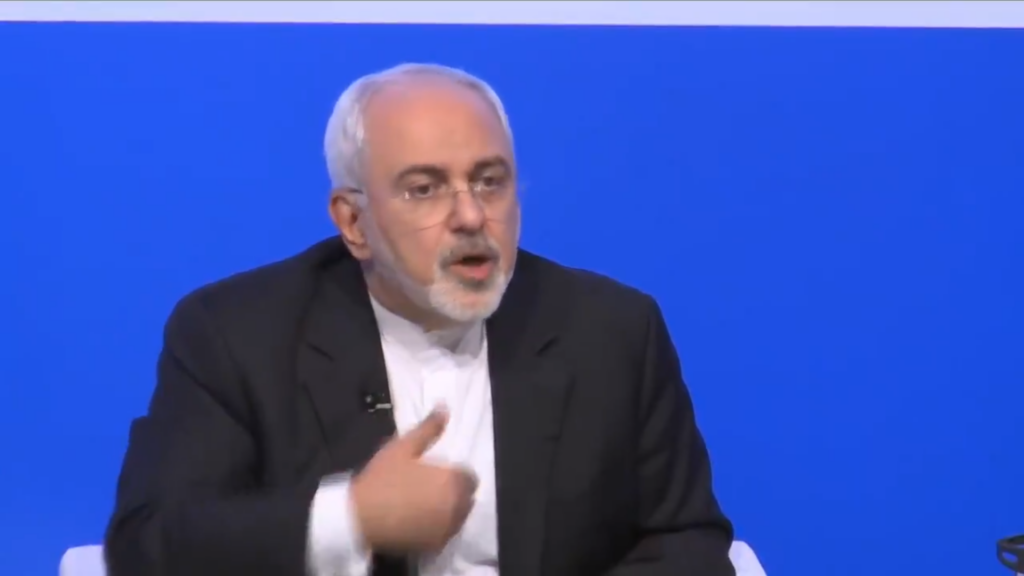
Some comfort could be drawn from Iranian Foreign Minister Javad Zarif’s tweet which said: “Iran took and concluded proportionate measures in self-defense under Article 51 of the UN Charter … we do not seek escalation or war but will defend ourselves against any aggression.”
India will get an opportunity to know Zarif’s mind when he is in Delhi next week for the annual Raisina Dialogue. Zarif, on his first overseas visit since the killing of Soleimani, is expected to use the conference and the platform it offers to share his country’s views on tensions with the U.S. There were concerns that Zarif could be a no-show. Earlier, keynote speaker and Australia’s Prime Minister Scott Morrison cried off owing to the bushfires ravaging his country.
Zarif’s presence in Delhi is expected to provide an opportunity for exchange of views with his Indian counterpart Dr S. Jaishankar. As a close friend of Iran, India is hoping it will be able to counsel Tehran on the need to reduce tensions and avoid a war that could have a debilitating impact on West Asia and beyond.
“We hope that the situation does not deteriorate. It is for this reason that the External Affairs Minister has been calling up leaders in the region. It is also good to exchange views on the region,” remarked an official.
Dr Jaishankar spoke to U.S. Secretary of State Mike Pompeo and Zarif on Sunday, two days after Soleimani’s assassination. He tweeted that “developments have taken a very serious turn. India remains deeply concerned about the levels of tension.” In his conversation with Pompeo, Jaishankar said he “highlighted India’s stakes and concerns.”
The External Affairs Minister has also been working the phone lines to speak to other leaders in Iran’s neighbourhood. On Monday, he spoke to Jordanian foreign minister Ayman Safadi who in a tweet said: “We stressed need to de-escalate and reduce tension through dialogue. We emphasised importance of supporting Iraq stability and security.”
Dr Jaishankar has also spoken to the foreign ministers of Qatar, Oman and the UAE in days following Soleimani’s killing. Delhi is concerned about the well being of roughly seven million Indians who live in the Gulf region and send home an estimated $40 billion every year. Bulk of India’s energy comes from this region, not Iran as it is under U.S. sanctions, with Saudi Arabia and the UAE being the major suppliers.
Delhi also has concerns about developing Chabahar port in southern Iran. The U.S. recently gave India a “narrow waiver” for the first time in writing, allowing work in Chabahar to go forward. But getting work done is proving an uphill task given the reluctance of private businesses to flout U.S. sanctions.
India, France Move Towards An Alliance In The Indian Ocean But Will It Work?
The competition for strategic space in the Indian Ocean could see China deploying an aircraft carrier with its complement of other vessels, in the coming years. That’s the assessment of the Indian Navy based on a close study of the pattern of China’s naval profile since 2008, when it first entered the Indian Ocean in force. Naval and maritime strategists believe that with the U.S.’s perceived retreat from the international arena, India will be increasingly called upon to shoulder the responsibility of countering or balancing China.
Reports last year suggest that Beijing has six to eight naval ships in the Indian Ocean – a figure that is more than likely to go up this year – along with submarines thereby ensuring a formidable footprint. It will enable Beijing to secure its sea lines of communication through which its energy supplies pass. It will also enhance Beijing’s profile on the strategic east African coast where there are large reserves of gold, coal, natural gas and uranium.
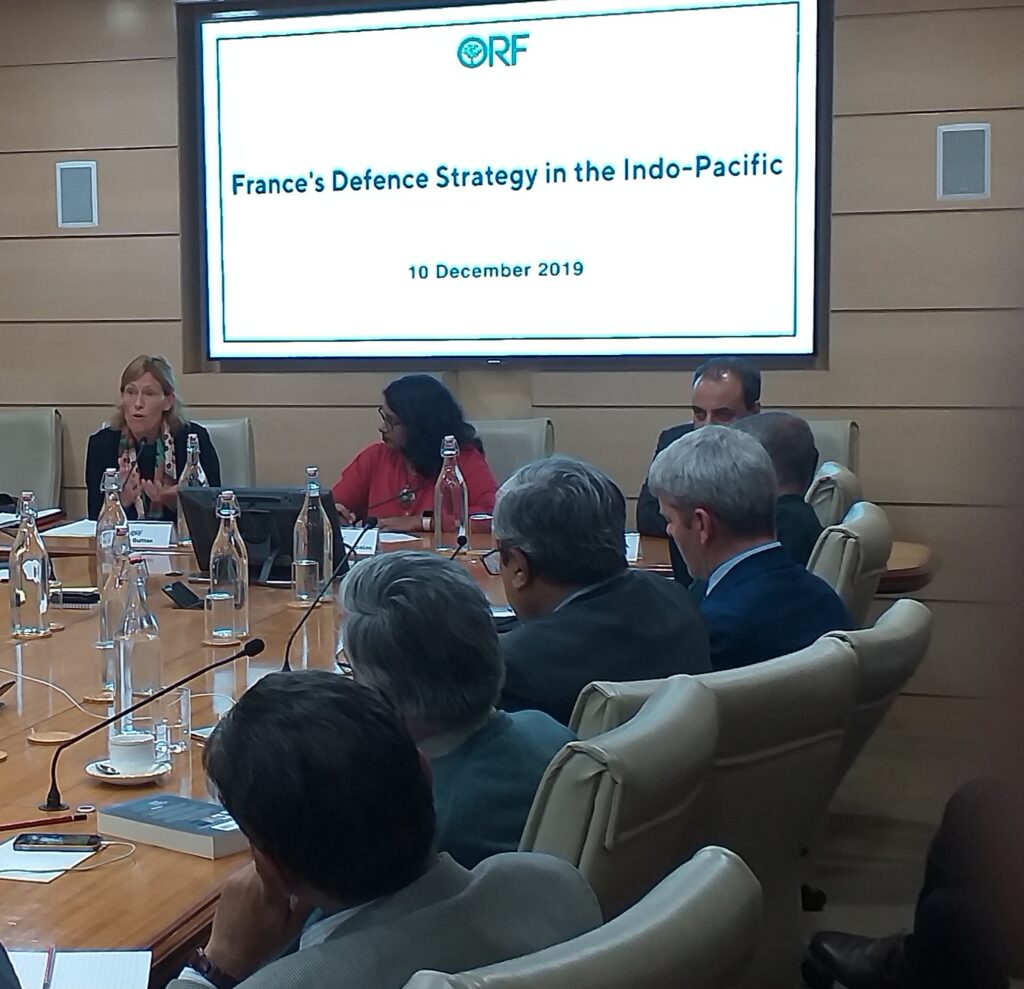
Delhi is accordingly stepping up its game in Africa but needs partners and France is seen as a potential candidate. But Paris has its own views on the Indian Ocean. Alice Guitton, Director-General for International Relations and Strategy, says her country’s vision for the Indian Ocean is not China-centric but is driven by concern over the “hardening of the military environment” in the region.
“We are not the first country to put forward a strategy and vision for the Indian Ocean. Many other countries have done so namely Japan, the United States and India,” she says, “but with the growing number of state actors in the region, there has been a hardening of the military environment which can lead to risks of miscalculation and misunderstanding. France wants to ensure that a rules-based order prevails.”
Guitton was speaking at a recent seminar at the ORF in the Capital.
As Guitton points out, France does have a vested interest in maintaining a presence in the Indian Ocean. “Geographically speaking, France’s strategic vision is the widest and most inclusive among all nations in the world as they stretch from the east of Africa to the Pacific Islands to Chile and of course up to the north,” she says.
According to French government figures, France has 9 million square km of exclusive economic zones in the Indo-Pacific area; 1.5 million citizens in five overseas territories, 200,000 expatriates, military forces permanently on station, and other vital economic interests in the region.
The problem though as Guitton admits is that Paris has been unable to substantially ‘interest its European partners’ to devote ships to patrol the area and hence Paris has been forced to look elsewhere. In 2018, President Macron called for the “creation of a new strategic alliance between France, India and Australia” to respond to challenges in the region.
Elaborating on Macron’s remarks, Guitton says that France and India have an ideal strategic partnership that will enable it to focus on common areas of concern. “Our defence relations have grown stronger and we are engaging with each other in strategic dialogue at many levels. Prime Minister Modi has also recently appointed chief of defence staff which I believe will further boost our defence relations.”
The French outreach is welcome and both countries have agreed on joint naval patrols beginning this year, with a French commitment to also monitor China’s activities in the Mozambique Channel. But both countries have different strategic objectives: France is primarily looking to safeguard its territory and citizens in the Indian Ocean region, while New Delhi is seeking to check China’s strategic inroads into its ocean backyard.
183 Arrested For Australian Bushfire ‘Arson’
CANBERRA: Hundreds of Australians have been arrested for allegedly deliberately lighting Australian bushfires in only a matter of months.
Australia is currently enduring one of the worst bushfire crises in the nation’s history, with at least 25 people having been killed since September.
‘The Australian’ reported on Tuesday that 183 people have been arrested for lighting bushfires in New South Wales (NSW), Queensland, Victoria, South Australia and Tasmania.
In NSW alone, 183 people have been charged or cautioned for bushfire-related offences since November, with 24 arrested for deliberately starting bushfires. While in Victoria 43 were charged in 2019.
In Queensland, where the fires were worst in November, 101 people have been arrested for deliberately starting fires, almost 70 per cent of whom were juveniles.
According to James Ogloff, the director of the Forensic Behavioural Science at Swinburne University, approximately 50 per cent of Australia’s bushfires are started by arsonists.
“They’re interested in seeing fire, interested in setting fire and quite often the information around how fires burn and accelerate excites them,” he told News Corp.
University of Melbourne’s associate professor Janet Stanley said that arsonists, or “firebugs”, were typically young males aged either 12 to 24 or 60 and older.
“There is no one profile but generally they seem to have a background of disadvantage, a traumatic upbringing and often have endured neglect and abuse as a child,” she said.
Brendon Sokaluk, a former volunteer firefighter, was sentenced to 17 years and nine months in jail for starting a 2009 bushfire in Victoria that killed 10 people on Black Saturday, one of Australia’s worst bushfire events.
Raisina Rumble
The flagship Raisina Dialogue of the Observer Research Foundation has run into turbulence. The keynote speaker, Australia’s Prime Minister Scott Morrison, had cancelled last month, citing the bushfires ravaging his country. Even as the organisers scrambled to find a substitute, another high level participant has cried off: Bhutan’s foreign minister Tandi Dorji has conveyed his regrets to South Block saying it would clash with the opening session of parliament in Thimphu. Now the speculation is whether Iran’s foreign minister Javad Zarif will be a no-show. With the event just a week away, the hosts are keeping their fingers crossed.
Can’t Keep Kicking The Can Down The Road: Jaishankar
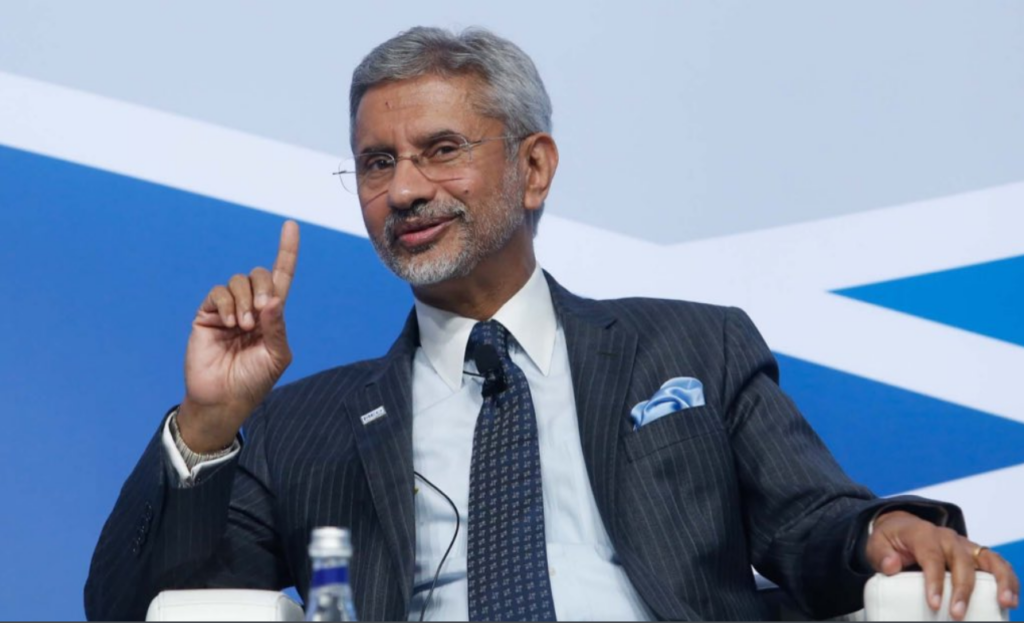
NEW DELHI: “When I was in Jawaharlal Nehru University, there was no ‘tukde-tukde’ gang.” With that External Affairs Minister S. Jaishankar dismissed questions about students and activists from the university being branded anti-national. As for the violence in the university on Monday night and the continuing protests over the Citizenship Amendment Act (CAA), Jaishankar used the launch of a book on China to send home a tough message: That this government was not backing off and would continue to take decisions on issues that it believes have been left to simmer for far too long.
“Look at the citizenship issue, it started 40-50 years ago. Rajiv Gandhi did an agreement in 1985. Article 370 was a temporary article. Ayodhya, show me where in the world you would have an unresolved problem for 150 years,” he said.
Society must have the mindset to resolve problems, he said, but India has preferred to “keep kicking the can down the road”, postponing a decision in the hope that the problem would go away. On the other hand, China’s leaders have built a nation and a narrative on problem solving. This is also the case with the U.S., Jaishankar noted.
On terrorism, he said “no country has been so battered by terrorism as we have. It is therefore vital that we not allow terrorism to be normalized. The perpetrators of terrorism will try and pass it off but we cannot be party to that,” he warned.
He said the 2009 India-Pakistan joint statement at the Egyptian resort of Sharm el-Sheikh was unacceptable precisely because it raised the perpetrator of terrorism Pakistan to the same level as India, the victim. The joint statement included a reference to Balochistan, implying an Indian hand in anti-Pakistan activities there.
He said his government’s decision allowing Pakistani investigators into the Pathankot airbase in July 2018 was carefully thought through. “Even the Pakistanis accepted they were at fault. Nawaz Sharif did not deny it and there was even an FIR filed in Pakistan to bring the ‘unknown persons’ to justice. So the investigation which happened was to pressurise the Pakistanis so they didn’t have an excuse to say ‘well we made an offer, you didn’t accept it.”
Where India’s Chief Of Defence Staff Fits In
NEW DELHI: After a long, long wait, India has finally got its first Chief Of Defence Staff (CDS). On January 1, former Army Chief General Bipin Rawat took charge of the post that has the rank of a Four Star General with the salary and perks admissible to that of a Service Chief. So what exactly does the post entail? In this chat, Nitin A. Gokhale, Editor-in-Chief of StratNewsGlobal, gives you the details.