

Support us by contributing to StratNewsGlobal on the following UPI ID
ultramodern@hdfcbank

Strategic affairs is our game, South Asia and beyond our playground. Put together by an experienced team led by Nitin A. Gokhale. Our focus is on strategic affairs, foreign policy and international relations, with higher quality reportage, analysis and commentary with new tie-ups across the South Asian region.
You can support our endeavours. Visit us at www.stratnewsglobal.com and follow us on YouTube, Twitter, Facebook and Instagram.
र 500 per month
र 1000 per month
र 5000 per year
र 10000 per year
Donate an amount of your choice
र 500 per month
Donate र 500 per month

र 1000 per month
Donate र 1000 per month
र 5000 per year
Donate र 5,000 per year
र 10000 per year
Donate र 10,000 per year
Donate an amount of your choice
Donate an amount of your choice


Rubio Visits Israel As U.S. Tensions Rise With Middle East Allies
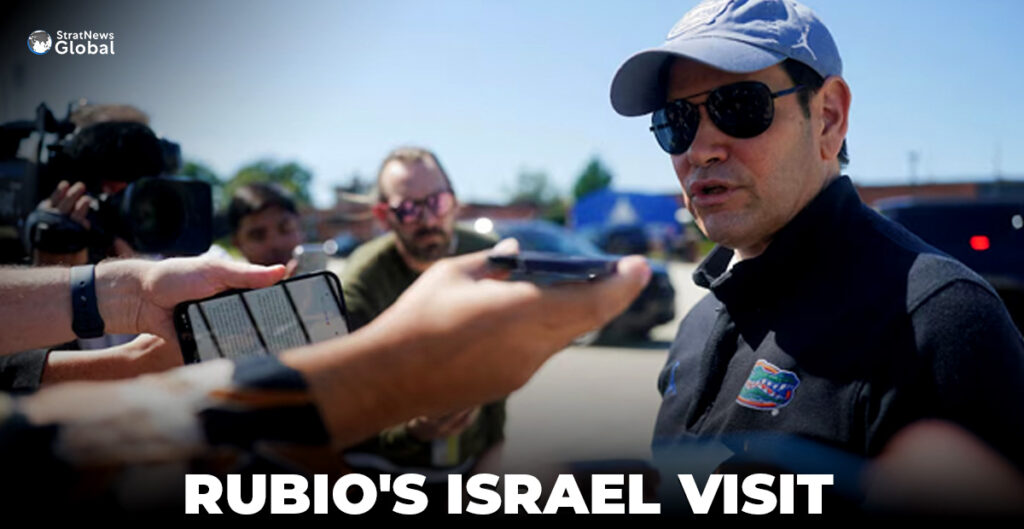
U.S. Secretary of State Marco Rubio visited Israel on Saturday amid friction with American allies in the Middle East over Israel’s strike on Hamas leaders in Qatar and its expansion of settlements in the occupied West Bank.
Speaking to reporters before departure, Rubio reiterated that the U.S. and President Donald Trump were not happy about the strikes.
“What’s Happened, Has happened”
Rubio said the U.S. relationship with Israel would not be affected, but that he would discuss with the Israelis how the strike would affect Trump’s desire to secure the return of all the hostages held by Hamas, get rid of the militants and end the Gaza war.
“What’s happened, has happened,” he said. “We’re gonna meet with them. We’re gonna talk about what the future holds,” he said.
“There are still 48 hostages that deserve to be released immediately, all at once. And there is still the hard work ahead once this ends of rebuilding Gaza in a way that provides people the quality of life that they all want.”
Rubio said it had yet to be determined who would do that, who would pay for it and who would be in charge of the process.
After Israel, Rubio is due to join Trump’s planned visit to Britain next week.
Israel’s nearly two-year-long campaign has killed more than 64,000 people in the Palestinian enclave, according to local authorities.
It has sparked a hunger crisis and led to allegations that Israel is committing genocide, including this month by the world’s biggest group of genocide scholars.
Israel launched its campaign after Hamas’s October 7, 2023, attacks on Israel that killed 1,200 people and resulted in the capture of 251 hostages, according to Israeli figures.
Hamas still holds 48 hostages, and Qatar has been one of the mediators, along with the U.S., trying to secure a ceasefire deal that would include the captives’ release.
On Tuesday, Israel attempted to kill the political leaders of Hamas with an airstrike on Doha.
U.S. officials described it as a unilateral escalation that did not serve American or Israeli interests.
The strike on the territory of a close U.S. ally sparked broad condemnation from other Arab states and derailed ceasefire and hostage talks brokered by Qatar.
Trump Met Qatari PM
On Friday, Rubio met with Qatar’s Prime Minister Mohammed bin Abdulrahman Al-Thani at the White House, underscoring competing interests in the region that Rubio will seek to balance on his trip.
Later that day, U.S. President Donald Trump held dinner with the prime minister in New York.
Rubio’s trip comes ahead of high-level meetings at the United Nations in New York later this month.
Countries including France and Britain are expected to recognise Palestinian statehood, a move opposed by Israel.
Washington says such recognition would bolster Hamas and Rubio has suggested the move could spur the annexation of the West Bank sought by hardline members of the Israeli government.
On Thursday, Israeli Prime Minister Benjamin Netanyahu signed an agreement to push ahead with a settlement expansion plan that would cut across West Bank land that the Palestinians seek for a state.
Last week, the United Arab Emirates warned that this would cross a red line and undermine the U.S.-brokered Abraham Accords that normalised UAE-Israel relations in 2020.
(With inputs from Reuters)
IMF To Weigh Pakistan’s Flood Spending In Upcoming Review
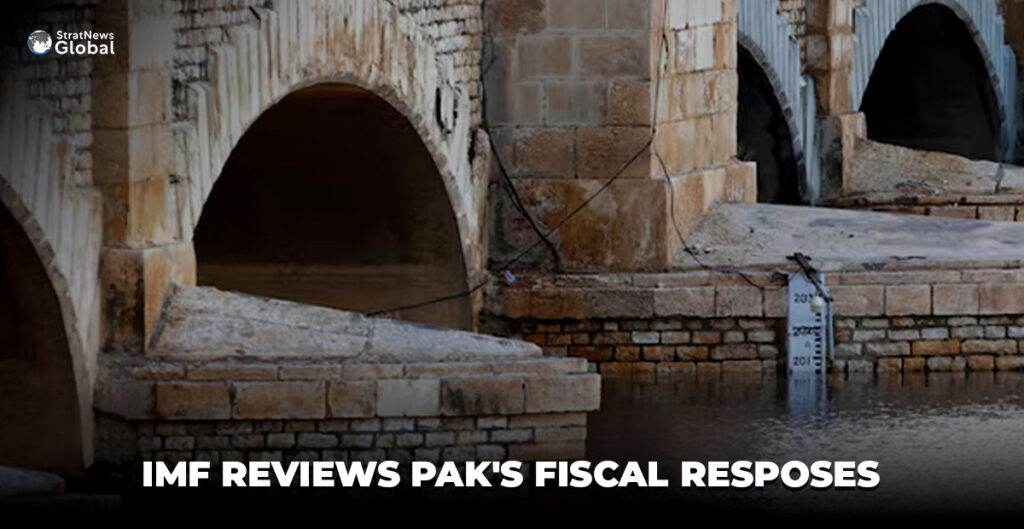
The International Monetary Fund (IMF) on Saturday offered condolences over the loss of life from Pakistan’s devastating floods.
A senior IMF official said its upcoming Extended Fund Facility review mission will assess whether the country’s fiscal policies and emergency spending can address the crisis.
“The mission will assess whether the FY26 budget, its spending allocations and emergency provisions remain sufficiently agile to address the spending needs necessitated by the floods,” said Mahir Binici, the IMF’s resident representative in Pakistan.
The flash floods have killed 972 people so far, according to Pakistan’s National Disaster Management Authority.
The floods have destroyed crops, livestock and homes across Punjab province and are now pushing into Sindh, threatening fresh food inflation and deeper hardship in the cash-strapped South Asian nation.
Pakistan’s central bank is expected to keep its key rate at 11% on Monday, a Reuters poll showed, as policymakers weigh inflation risks from crop losses against a slowing economy.
An analyst estimated agricultural damage could shave up to 0.2 percentage points off growth this year, with reconstruction-led demand offering only partial offset.
In May, the IMF approved a $1.4 billion loan to Pakistan under its Resilience and Sustainability Facility while also completing the first review of a $7 billion programme under its Extended Fund Facility.
The IMF released about $1 billion in fresh funds under the $7 billion programme, bringing total disbursements so far to around $2.1 billion.
These moves follow strong policy implementation by Pakistan, including reforms to stabilise the economy amid global uncertainties.
The disbursement of funds is contingent upon successful completion of reviews under the EFF, the official said.
The Global Climate Risk Index places Pakistan among the countries most vulnerable to climate change.
(With inputs from Reuters)
NASA Banned Chinese Nationals From Space Programs: Reports
NASA has banned Chinese nationals with valid U.S. visas from accessing its facilities and networks, according to media reports.
Chinese nationals, who until now could work at NASA as contractors or contribute to its research, were informed on September 5 that their access to the agency’s systems and facilities had been revoked, reported The Epoch Times.
NASA press secretary Bethany Stevens confirmed the decision, stating that the agency had taken “internal action pertaining to Chinese nationals—including restricting physical and cybersecurity access to our facilities, materials, and network to ensure the security of our work,” the newspaper reported.
The move has been taken amid a heightened number of cases where Chinese nationals were allegedly found spying for Beijing.
According to reports, Chinese astronauts have already been excluded from visiting the International Space Station (ISS) since the US has barred NASA from sharing data with China.
Chinese doctor accused of trying to smuggle cancer research from US to China
Last month, a Chinese medical researcher was charged with theft of trade secrets related to US-funded cancer research and attempting to take it to China, officials said.
The suspect has been identified as 35-year-old Yunhai Li.
According to reports, he was confronted at an airport by officers from U.S. Customs and Border Protection on July 9 when he was attempting to travel to China.
Speaking on the incident, the Harris County District Attorney’s Office wrote, X: “Former MD Anderson cancer researcher Yunhai Li charged with Theft of Trade Secrets (third-degree felony) and Tampering with a Government Record (class A misdemeanour).”
The X post further said, “Theft of trade secrets carries a penalty of two to ten years in prison and fines up to $10,000.
“Tampering with a government record is punishable with up to a year in jail and a $4,000 fine.”
Harris County District Attorney Sean Teare told Fox26 Houston: “We were able to detain him as he was trying to get on a flight to China.”
The official further said, “That intellectual property stays with us so we can save lives.”
(With inputs from IBNS)
Netanyahu Says Removing Hamas In Qatar Key To Gaza Deal
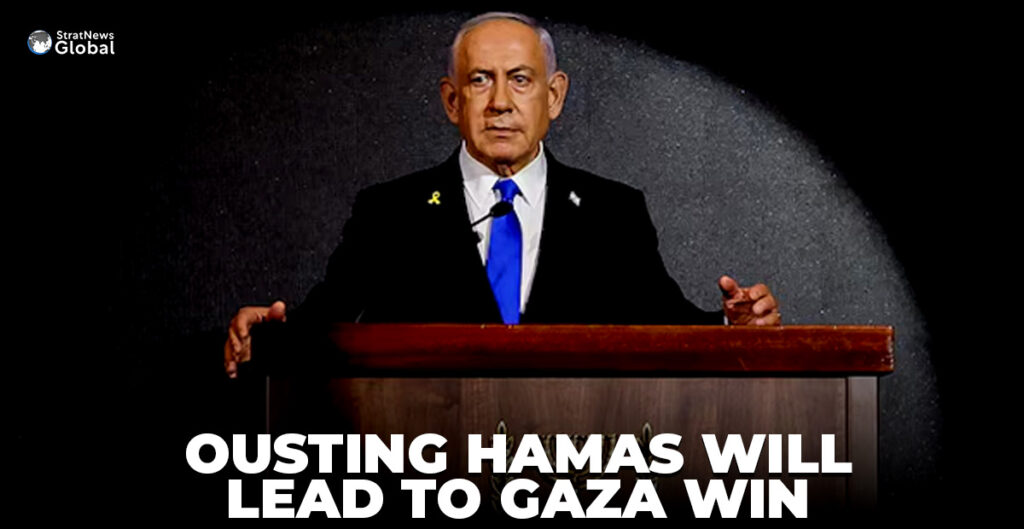
Israeli Prime Minister Benjamin Netanyahu said Saturday that removing Hamas leaders based in Qatar would clear the main obstacle to securing a hostage release and ending the war in Gaza.
Israel targeted the Hamas leadership in Doha in air strikes that were condemned by Qatar, which has served as one of the venues for ceasefire talks.
Hamas has said five of its members, including a son of its exiled Gaza chief Khalil al-Hayya, were killed in the attack, but its senior leaders and members of its negotiating team survived.
Qatar has said a member of its internal security forces was also killed.
“The Hamas terrorist chiefs living in Qatar don’t care about the people in Gaza. They blocked all ceasefire attempts in order to endlessly drag out the war,” Netanyahu said in a post on X.
Hamas has described the Doha attack as an attempt by Israel to derail the ceasefire negotiations and said it would not change the group’s terms for ending the war in Gaza.
Israel has demanded Hamas free all remaining hostages held in Gaza and disarm.
Hamas says it will not free all hostages without an agreement that would end the war and will not give up its weapons until Palestinians have an independent state.
“What’s Happened, Has Happened”
In a related development, U.S. President Donald Trump’s top diplomat, Marco Rubio, headed to Israel on Saturday, amid tensions with fellow U.S. allies in the Middle East over Israel’s strike on Hamas leaders in Qatar and the expansion of settlements in the occupied West Bank.
Speaking to reporters before departure, Rubio reiterated that the U.S. and President Donald Trump were not happy about the strikes.
Rubio said the U.S. relationship with Israel would not be affected, but that he would discuss with the Israelis how the strike would affect Trump’s desire to secure the return of all the hostages held by Hamas, get rid of the militants and end the Gaza war.
“What’s happened, has happened,” he said. “We’re gonna meet with them. We’re gonna talk about what the future holds,” he said.
(With inputs from Reuters)
Elon Musk Addresses London Far-Right Rally; 25 Arrested
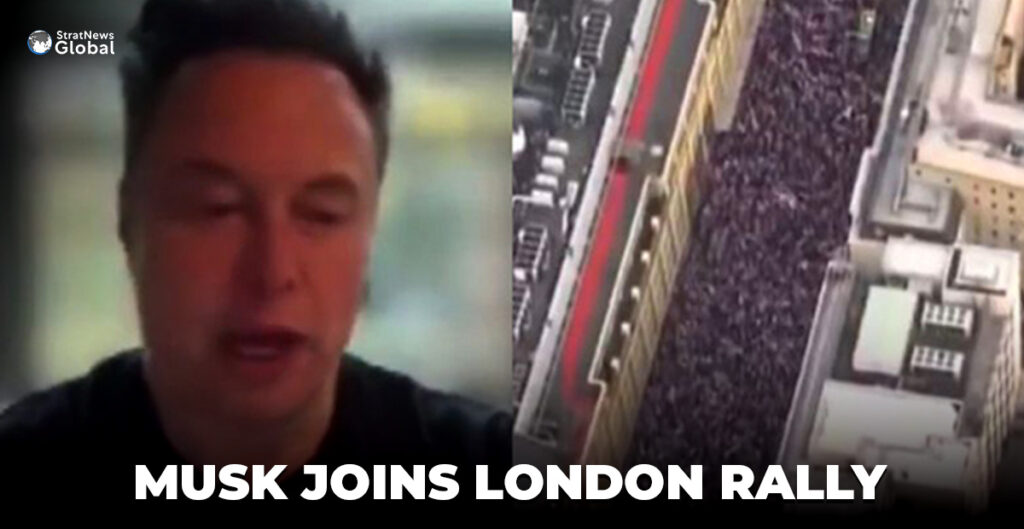
Tesla CEO Elon Musk addressed one of Britain’s largest far-right rallies by video link in central London on Saturday, as clashes between protesters and police left 26 officers injured and 25 people under arrest.
“Unite The Kingdom”
The event, branded “Unite the Kingdom” and organised by far-right activist Tommy Robinson, saw demonstrators march over Westminster Bridge before gathering near Downing Street for speeches from far-right figures across Europe and North America.
Robinson, whose real name is Stephen Yaxley-Lennon, is the founder of the English Defence League and one of the UK’s most prominent far-right figures.
Saturday’s rally, promoted as a demonstration for free speech, featured rhetoric targeting migration and multiculturalism
Musk’s Address
“You’re in a fundamental situation here,” said Musk, addressing the far-right rally and also claimed, “The left is the party of murder and celebrating murder. Whether you choose violence or not, violence is coming to you. You either fight back or you die.”
Other speakers included French politician Éric Zemmour and Petr Bystron of Germany’s anti-immigrant AfD, both of whom invoked nationalist themes and conspiracy theories such as the so-called “Great Replacement”.
The Metropolitan Police estimated between 110,000 and 150,000 people attended, far exceeding organisers’ expectations.
Clashes erupted on the fringes of the rally as some attendees tried to breach police cordons near a rival Stand Up to Racism march, which drew around 5,000 people.
Officers were punched, kicked, and struck with bottles, police said, with four sustaining serious injuries, including broken bones and concussions.
Around 1,000 officers were deployed, with reinforcements in riot gear called in to keep rival groups apart.
Liberal Democrat leader Ed Davey denounced both the violence and Musk’s intervention, writing on social media, “These far-right thugs do not speak for Britain.”
(With inputs from IBNS)
‘India Cannot Stay On the Sidelines’
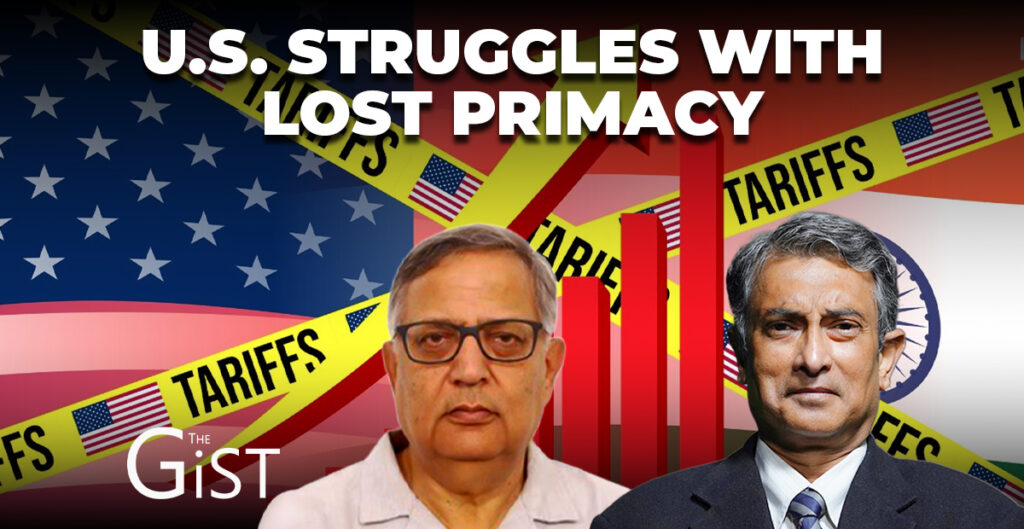
The post-Cold War unipolar moment is over, and the United States is struggling to adjust to a shifting global balance of power, says Brigadier Arun Sahgal (Retd), founder director of the Office of Net Assessment, Integrated Defence Staff.
“America’s strength lay in three areas—its unmatched military reach, its dominance over global economic levers, and its technological edge. In all three, it now finds itself on the back foot,” he notes. Washington’s military-industrial capacity is faltering—Ukraine exposed its shortages of basic ammunition, while China has outpaced it in shipbuilding. Even initiatives like AUKUS are constrained by manpower and technology-sharing limitations.
Economically, Sahgal argues, the U.S. model of importing cheap goods, adding value, and re-exporting has broken down in the face of Chinese manufacturing strength and yawning trade deficits. Former President Trump’s push for reindustrialization and punitive tariffs reflected a recognition that America cannot remain a global policeman while economically vulnerable. But U.S. allies—from Europe to Asia—remain hesitant to follow Washington beyond a point.
This strategic flux, Sahgal says, has opened space for other power centres. Russia has withstood sanctions thanks to Chinese and even Indian economic engagement, while new platforms such as the Shanghai Cooperation Organisation and BRICS expansion point to a parallel “Global Governance Initiative.” This emergent order, backed by China, Russia, India, and others, contrasts sharply with the West-led rules-based system.
Talk of a U.S.–China “G2” condominium, he insists, is misplaced. “China wants no part of becoming a junior partner. It is creating its own governance rules and influence networks, from the Global South to Africa.” Yet Beijing’s weaknesses—lack of cultural appeal and dependence on Western-controlled digital infrastructure—remain significant constraints.
For India, Sahgal argues, the stakes are clear. It cannot stay on the sidelines but must shape new rules of global governance with partners across the Global South. That requires hard power, economic heft, and vision. “We have power but don’t always know how to use it. What India needs is not just strength, but a strategy to leverage it.”
Awami Out, Jamaat Rising: India’s Bangladesh Dilemma
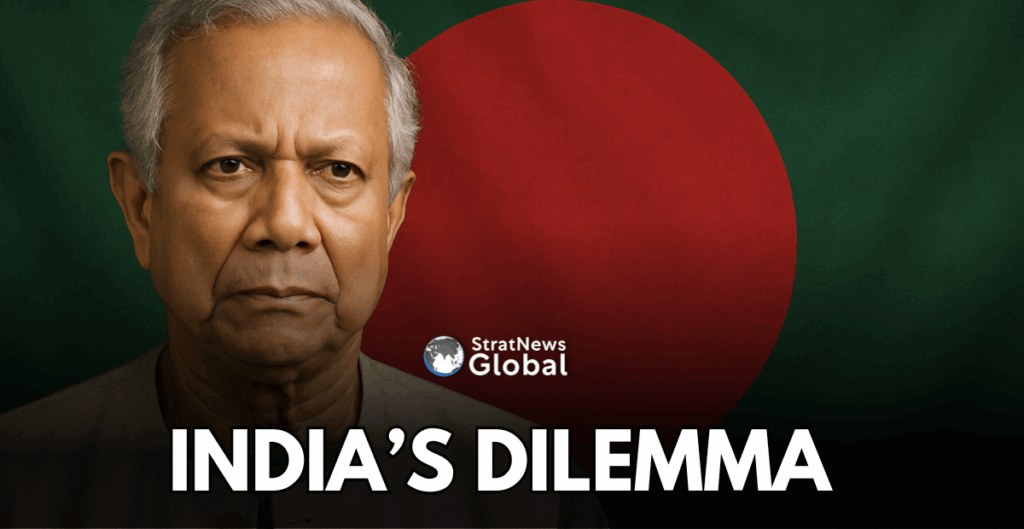
More than a year after Sheikh Hasina fled Bangladesh, stability in Dhaka remains elusive. With elections yet to be held, analysts in New Delhi stress that India’s only expectation is that the polls be “free, fair and inclusive,” a point the Ministry of External Affairs has repeated often.
Speaking at a discussion titled ‘Are we prepared for the Bangladesh Elections?’ at the India International Centre in New Delhi on September 11, Ambassador Harsh Shringla, former High Commissioner of India to Bangladesh, warned that banning the Awami League from contesting “goes against the spirit of the movement that brought about the change in August last year.”
“India will have to work with all neighbours in a constructive, cooperative manner so that the results are the best for the people of both countries,” he added.
But on the ground, the reality looks starkly different, said Sreeradha Datta, Professor at O.P. Jindal Global University. Returning from Dhaka, she observed that while Bangladesh’s youth are free from the old political baggage and “feel freer to speak than they did during Sheikh Hasina’s time,” the Awami League will likely remain banned. Datta also flagged Jamaat-e-Islami’s rising influence, predicting it could secure double-digit support in the upcoming polls.
On the BNP, she noted that while the party recently swept Dhaka University elections, its future remains uncertain without Tarique Rehman, the eldest son of former Bangladeshi president Ziaur Rahman and the first female prime minister of Bangladesh and BNP leader Khaleda Zia.. “So even if BNP does win the election, it is going to be a different BNP. It is going to be a BNP which will not be rightist; they will just be trying to capture the vacuum that the Awami League has left.”
For India, she suggested confidence-building measures: resolve the Teesta water issue, engage with student groups, and ease visas for Bangladeshis. But she warned that bilateral ties cannot revert to pre-2024 levels. “We have to reset completely. They themselves have to reset, for their own constancy,” she said. India, she added, “did a great injustice to ourselves by being so proximate with Awami and Sheikh Hasina. Not only did she come down, but she took us down with her.”
Shringla was categorical about Jamaat: “The Jamaat-e-Islami was an auxiliary force for the Pakistani army in 1971. The genocide that was committed in Bangladesh, mainly of Hindus, was primarily by them. They have blood on their hands.” He cautioned that despite their modern veneer, Jamaat remains dangerous at the grassroots, and India must also guard against Pakistan’s ISI presence in Bangladesh.
“The real danger,” Shringla said, “is of a collusion between countries that are intimate to our interests, facilitated by those who control the current system, which is primarily the Jamaat-e-Islami. So when it comes to our immediate neighbourhood, with countries with whom we have common borders, I think there is no such thing as internal affairs.”
Trump’s Dismissive Response To Poland Drone Incursion Stirs European Unease
The incursion of nearly 20 drones into Poland’s territory this week sparked serious concern among NATO members, who, for the first time since the Ukraine war began, engaged a Russian target that breached the alliance’s airspace.
Just as worrisome, said European diplomats, has been U.S. President Donald Trump’s refusal so far to publicly hold Moscow accountable for Wednesday’s incident, coupled with the lack of U.S. participation in fending it off.
Many alliance members already question Trump’s commitment to their defence in the event of an actual Russian attack.
Trump’s muted response was widely seen as another example of his “America First” push for European allies to take more responsibility for their own security and shoulder the cost of helping Ukraine defend itself against Russia.
But some analysts said Trump also could be wary of antagonising Russian President Vladimir Putin, who they say may be testing both NATO’s military capabilities and U.S. resolve more than three and a half years after Moscow invaded Ukraine.
“This episode underscores that Trump, in contrast to every president since Roosevelt, does not see Europe’s security as fundamental to American security,” said Ivo Daalder, the U.S. ambassador to NATO from 2009 to 2013, who is now a senior fellow at Harvard’s Belfer Centre.
The White House did not reply directly to questions about Trump’s response.
But a White House official said on condition of anonymity that the president “wants this war, which was brought on by Joe Biden’s incompetence, to end as quickly as possible” and that it is up to Russia and Ukraine to halt the conflict and for Europe to “do its part by putting economic pressure on countries that finance the war.”
Poland, backed by aircraft from other NATO members, shot down at least 19 drones that had entered its airspace on Wednesday, the first time a member of the Western military alliance is known to have fired during Russia’s war in Ukraine.
Russia said its forces had been attacking Ukraine at the time and that it had not intended to hit any targets in Poland.
In any other era since the dawn of the Cold War, such an incident likely would have set off alarms in Washington, triggering a swift response, diplomats and analysts say.
But Trump, who has a history of questioning the NATO alliance that Washington has led since its creation after World War II, answered with what some European officials privately said amounted to a public shrug.
“What’s with Russia violating Poland’s airspace with drones? Here we go!,” Trump posted cryptically on his Truth Social platform.
A day later, pressed by reporters about the Russian drone incursion, Trump said: “It could have been a mistake.”
But Polish Prime Minister Donald Tusk, in a rare contradiction of the U.S. president from one of Washington’s closest European allies, on Friday flatly rejected the notion that the drones could have entered Poland in error.
Later on Friday, the U.S. joined Western allies in a joint statement to express concern about the incursion and accuse Moscow of violating international law and the founding U.N. Charter.
Tepid Response
Trump’s initial response to the Russian drones contrasts with previous U.S. reactions to threats against the alliance.
When initial reports suggested that a stray Russian missile had struck a Polish village in November 2022, President Joe Biden quickly convened an emergency meeting of world leaders as he and his advisers shifted into crisis-management mode. Biden cautioned against jumping to conclusions, and it was later determined to have been a Ukrainian air-defence missile that had misfired during a Russian attack.
Trump’s language this week was also milder than the condemnation by several European leaders and even that of his ambassador to NATO, Matthew Whitaker, who in a post on X pledged the defence of “every inch of NATO territory.”
Trump spoke late on Wednesday with Polish President Karol Nawrocki, who said the U.S. leader reaffirmed solidarity with Warsaw. But Nawrocki’s post on X made no mention of any offer of new weapons or equipment. The White House provided no readout of the phone call.
On Friday in Brussels, NATO Secretary-General Mark Rutte, announcing plans to beef up the defence of the alliance’s eastern flank, said Trump had made “absolutely clear that we all stand together on this” and that he was satisfied with the U.S. response.
Despite that, the view in Europe of Trump’s handling of the incident has ranged from dismay to confusion and unease, according to multiple diplomatic sources who spoke on condition of anonymity.
A senior German official said the U.S. had been involved in drone discussions with NATO allies but appeared to be “hesitant.” “With this U.S. administration, we can’t rely on anything. But we have to pretend that we could,” the official said.
An Eastern European diplomat said, “No one in NATO has been particularly reassured by the U.S. at this point. Washington’s silence has been almost deafening.”
An Italian official, whose country’s AWACS surveillance planes helped detect the drones over Poland, said alliance members had a mostly negative impression of the U.S. response so far, but they were avoiding open criticism.
Wake-Up Call For Europe
At the same time, some European officials and analysts portrayed the drone incursion, which many saw as a Russian attempt to probe NATO defences, as a wake-up call for the continent.
“The drone attack showed that we are not ready for defence against drones,” the senior German official told Reuters. “We have to develop capabilities as soon as possible.”
Anders Fogh Rasmussen, NATO secretary general from 2009 to 2014, acknowledged that Europe is uneasy but said there is recognition that now is the moment for Europe to step up.
“That means deploying real assets, investing directly in Ukraine’s defence industry, and providing concrete security guarantees and a reassurance force inside Ukraine,” he said. Still, “the United States must remain engaged.”
Other issues have been competing for Trump’s attention this week.
On the same day as the Poland drone incursion, he and much of his staff were stunned by news of the killing of a leading conservative activist ally, Charlie Kirk. Trump delivered a video message from the Oval Office that night.
Russia was clearly back on Trump’s agenda on Friday, as he told Fox News that his patience with Putin was “running out fast” – though he stopped short of threatening new sanctions over the Ukraine war.
Trump has repeatedly set deadlines for Moscow to agree to a ceasefire with Ukraine or face new sanctions, only to row back. He warmly welcomed Putin at what was billed by the White House as a peace summit in Alaska in mid-August, but failed to secure major concessions.
U.S. warplanes played no role in shooting down the drones that violated Polish airspace, U.S. officials said. It was an absence that some European diplomats found worrisome, but which U.S. officials said was because the Dutch military was responsible for Polish airspace at the time under NATO’s air policing mission.
Trump’s apparent decision to let the Europeans take the lead in the ongoing response echoes his recent approach to Russia sanctions. He has pressured European countries to do more before the U.S. will further tighten the economic screws on Moscow.
While NATO says it is still assessing the intent behind the drone incident, Trump’s commitment to European security could be further tested if Putin does not heed the alliance’s warnings.
Poland said on Wednesday it had activated Article 4 of NATO’s treaty, under which alliance members can demand consultations with their allies when a member’s territorial integrity or security is threatened.
(With inputs from Reuters)
Ukraine And U.S. To Identify Investment Projects Under Minerals Deal
Ukraine’s economy minister said on Saturday that officials from Kyiv, together with representatives of the U.S. International Development Finance Corporation, will conduct site visits to explore potential investment projects under the minerals deal with Washington.
Ukraine and the U.S. signed the deal, which had been heavily promoted by President Donald Trump, in April, giving the United States preferential access to new Ukrainian minerals projects in exchange for investment.
The agreement is seen by Kyiv as a way of securing U.S. financial help to revive its economy and infrastructure – both battered by the war ignited by Russia’s 2022 full-scale invasion – while ensuring continued U.S. support for Ukraine’s defence.
Ukraine’s Economy Minister Oleksiy Sobolev said the government was committed to advancing quickly to carry out the agreement and wanted to identify three pilot investment projects within the next 18 months.
“Right now, there are site visits … from the U.S., and we are going to the regions tomorrow with them to look for an investment pipeline,” Sobolev told a conference attended by Ukrainian, U.S. and European officials in Kyiv.
Ukraine’s Largest Military Donor
The U.S. has been Ukraine’s single largest military donor as it battles Russian forces. But since his return to the White House this year, Trump has argued the U.S. should get something back for its aid to Kyiv.
Half the revenues the Ukrainian government earns from new mineral extraction under the deal would go to a joint investment fund with profits split between Kyiv and Washington.
Sobolev said that in addition to the minerals sector, where projects can be capital intensive with long implementation lead times, the U.S.-Ukraine fund would also invest in the energy sector and infrastructure.
Ukraine has deposits of 22 of the 34 minerals considered critical by the European Union for industries such as defence, high-tech appliances, and green energy. It also possesses ferro alloys needed by the steel industry, non-ferrous metals used in construction, and some precious metals and rare earth elements.
(With inputs from Reuters)
Turkiye Orders Arrest Of Istanbul District Mayor, Others In Corruption Probe
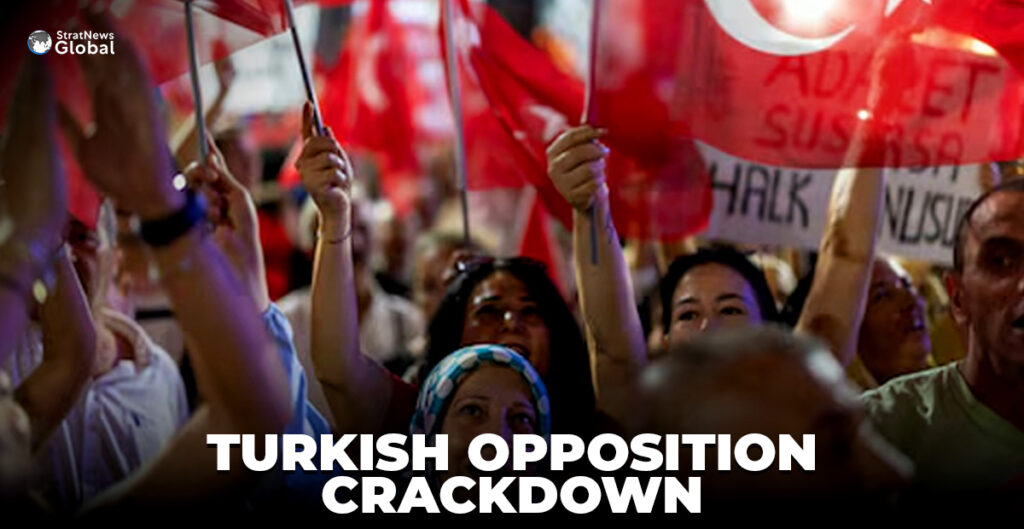
A prosecutor in Turkiye has ordered the detention of 48 individuals, including the opposition-run Bayrampasa district mayor in Istanbul, as part of a corruption probe, state broadcaster TRT Haber reported on Saturday.
The police carried out early morning raids at 72 locations to seize documents and detain suspects on charges including embezzlement, bribery, and tender rigging, according to TRT Haber.
In a post on X, Bayrampasa Mayor Hasan Mutlu, from the main opposition Republican People’s Party (CHP), said he had nothing to hide and called the investigation “a political operation based on unfounded slander”.
The detentions come amidst a nearly year-long crackdown on the CHP and CHP-run municipalities, in which hundreds of party members have been arrested and jailed.
A court ruling due on Monday could remove the leader of the CHP in a case widely seen as a test of the country’s fragile balance between democratic institutions and centralised power, increasing the legal pressure on the party.
Intensified Opposition Crackdown
Turkiye is witnessing a deepening political crisis after authorities intensified their crackdown on opposition leaders, arresting several high-profile figures under corruption charges.
The most significant development came with the detention of Istanbul’s mayor, Ekrem Imamoglu, a leading opposition voice and one of President Recep Tayyip Erdogan’s most prominent challengers.
Imamoglu’s arrest not only heightened political tensions but also triggered massive protests across the country, underscoring the growing discontent with the government’s tightening grip on dissent.
Thousands of demonstrators poured onto the streets of Istanbul, Ankara, and other major cities, waving flags and chanting slogans against what they described as politically motivated charges.
Police responded with water cannons, tear gas, and mass detentions, further inflaming public anger.
The scale of the protests highlighted Imamoglu’s symbolic importance as a figure who had defeated Erdogan’s party in local elections, breaking the ruling party’s decades-long dominance over Istanbul.
The government has defended the arrests, insisting that they are part of an anti-corruption drive.
However, critics argue that the move is a calculated attempt to weaken the opposition ahead of future elections. Human rights groups have also condemned the crackdown, warning that Turkiye’s democratic institutions are being systematically eroded under the guise of legal proceedings.
(With inputs from Reuters)