

Support us by contributing to StratNewsGlobal on the following UPI ID
ultramodern@hdfcbank

Strategic affairs is our game, South Asia and beyond our playground. Put together by an experienced team led by Nitin A. Gokhale. Our focus is on strategic affairs, foreign policy and international relations, with higher quality reportage, analysis and commentary with new tie-ups across the South Asian region.
You can support our endeavours. Visit us at www.stratnewsglobal.com and follow us on YouTube, Twitter, Facebook and Instagram.
र 500 per month
र 1000 per month
र 5000 per year
र 10000 per year
Donate an amount of your choice
र 500 per month
Donate र 500 per month

र 1000 per month
Donate र 1000 per month
र 5000 per year
Donate र 5,000 per year
र 10000 per year
Donate र 10,000 per year
Donate an amount of your choice
Donate an amount of your choice


Intel Tested Chip Tools From China-Linked Supplier
Intel tested chipmaking equipment this year from a supplier with strong ties to China and two overseas affiliates previously hit by U.S. sanctions, according to sources familiar with the matter.
The tools came from ACM Research, a Fremont, California-based manufacturer, as Intel faced pressure in August when President Donald Trump urged the resignation of its CEO over alleged links to China.
National Security Concerns
Two of ACM’s units, based in Shanghai and South Korea, were among a number of firms barred last year from receiving U.S. technology over claims they have supported the Chinese government’s efforts at harnessing commercial technology for military use and making advanced chips or chipmaking tools.
The two so-called wet etch tools, used for removing material from the silicon wafers that are transformed into semiconductors, were tested for possible use in Intel’s most advanced chipmaking process, known as 14A. That process is due for an initial launch in 2027.
ACM said it could not comment on “specific customer engagements,” but can confirm that “ACMR’s U.S. team has sold and delivered multiple tools from our Asian operations to domestic customers.” It also said it has disclosed the shipment of three tools to a “major U.S.-based semiconductor manufacturer,” which are being tested and some of which have met performance standards.
Intel’s use of tools from a firm with sanctioned units raises national security concerns, with critics warning of risks including technology transfer to China, displacement of Western suppliers, and potential sabotage.
Geopolitical and Industry Pushback
Faced with Beijing’s imposition of export controls on rare earth minerals, U.S. President Donald Trump has backed off most hard-line policies on chip exports to China and on Monday gave the green light for Nvidia to sell its second most advanced AI chips in China.
As Chinese toolmakers expand globally, U.S. lawmakers reintroduced a bill to bar subsidized chipmakers from using Chinese equipment.
Intel’s testing of ACM tools “highlights egregious gaps in U.S. technology protection policies and should not be permitted,” said Chris McGuire, a former White House National Security Council official under President Joe Biden and Senior Fellow with the Council on Foreign Relations, in response to Reuters’ findings.
ACM said it does not pose a national security threat, noting that its U.S. operations are “bifurcated and isolated” from the sanctioned Shanghai-based unit, and that U.S. customers are supported directly by U.S. personnel, with robust safeguards to protect customer trade secrets.
The Chinese embassy in Washington did not address the specific concerns cited by China hawks but said “Normal trade and economic cooperation between companies should not be politicized. We urge certain individuals in the U.S. to abandon ideological biases and stop generalizing the concept of national security.”
(With inputs from Reuters)
Reddit Challenges Australia’s Social Media Ban In High Court
Reddit, a message board website, on Friday filed a lawsuit in Australia’s highest court seeking to overturn the country’s social media ban for children, calling it an intrusion on free political discourse and setting the stage for a protracted legal battle.
Backlash Against the Ban
The San Francisco-based firm, which ranks Australia among its biggest markets, said in a High Court filing that the ban should be declared invalid because it interfered with free political communication implied by the country’s constitution.
Even if the court upheld the ban, Reddit should be exempt since it did not meet the definition of social media, added the filing, which named the Commonwealth of Australia and Communications Minister Anika Wells as defendants.
The lawsuit is the second such challenge after two teenagers representing an Australian libertarian group filed suit last month following the rollout of the world-first nationwide ban on people under 16 accessing social media.
But the action from a Silicon Valley major with a $44 billion market capitalisation dramatically increases the resources available to continue a drawn-out court battle. Success for Reddit could open the door for other platforms to mount similar challenges.
‘Privacy And Political Expression’
Australia went live with the world’s first legally enforced age minimum to access social media on December 10. Reddit and nine other platforms, including Meta’s Instagram, Alphabet’s YouTube and TikTok campaigned against the measure for more than a year before ultimately saying they would comply.
The platforms are required to bar underage users or face a fine of up to A$49.5 million ($33 million), while underage users and their caregivers do not face punishment.
The law “carries some serious privacy and political expression issues for everyone on the internet,” Reddit said in a statement published alongside its court filing. “So, we are filing an application to have the law reviewed.”
In the 12-page filing, the company said barring under-16s would impede political discourse.
(With inputs from Reuters)
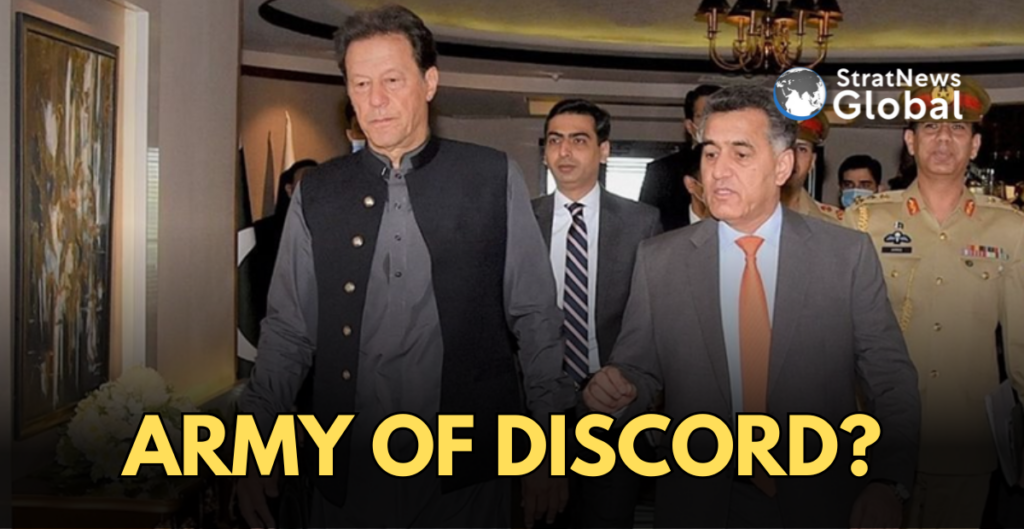
Ex-ISI Chief Hamid’s Sentence Underscores Pashtun-Punjabi Discord In Pak Army
The 14-year jail sentence pronounced by a military court on Pakistan’s former ISI chief Lt Gen Faiz Hamid shuts the door on a man seen as close to ousted former prime minister Imran Khan and therefore a potential challenger to current Chief of Defence Force Gen Asim Munir.
It marks the rare instance when the army has turned on its own. Recall the army stood by Gen Parvez Musharraf despite everything: the humiliation when he had to withdraw his forces from the Kargil heights, even the nationwide lawyers’ agitation from 2007 to 2009, that ultimately forced his resignation.
But as Pakistan scholar Suba Chandran notes, “Munir may have had no option; he had to send a message down the khaki line since the ouster of Imran Khan, an ethnic Pashtun, has generated fissures within the 600,000-man army. The Pashtun element in the Pakistan Army, estimated at over 15%, is seen to be pro-Imran and his removal remains an issue, although institutional discipline has ensured nobody has broken ranks.”
But there’s another issue. For decades, the Pakistan Army supported, trained and armed the Taliban. Army officers have made their careers in Afghanistan, and many believe the rupture with the Taliban is a blunder and must be corrected. Likewise, the incarceration of Imran, who was known for his pro-Taliban views (“Taliban Khan”), is not to their liking.
Munir, however, has gone on the opposite plank, and there is even talk in Islamabad of waging war against the Taliban. The jailing of Gen Hamid on charges of engaging in political activities, violating the Official Secrets Act, ‘detrimental to safety and state interest’ and misuse of authority and resources, is a warning.
The Pakistani newspaper Dawn reported that Faiz Hamid had been linked to unnamed politicians to engineer unrest. Without naming Imran Khan, the Inter-Services Public Relations said actions were taken “at the behest of and in collusion with political elements”.
Hamid also faces a separate investigation of his role in the May 2023 attacks in Pakistan by thousands of Khan’s supporters on scores of military installations and offices to protest against the arrest of the 72-year-old former cricket star.
Information Minister Attaullah Tarar said Hamid had crossed “red lines” and acted as an advisor to Khan’s party to try to create chaos in the country.
For now, Munir holds all the cards, but as has been seen in the past, whether army or civilian, nobody stays at the top in Pakistan for very long.
India Eases Business Visas For Chinese Experts In Bold Ties Boost
India has cut red tape to speed business visas for Chinese professionals, two officials said, a major step to boost ties between the Asian giants and end chronic delays that cost output worth billions of dollars because of scarce technicians.
As PM Narendra Modi cautiously rekindles ties with Beijing in the face of punishing U.S. tariffs, the officials said New Delhi dropped a layer of bureaucratic scrutiny and shortened visa approval times to less than a month.
India-China Relations
India had blocked virtually all Chinese visits after the nuclear-armed neighbours clashed on the Himalayan frontier in mid-2020, widening its vetting of business visas beyond the home and foreign ministries.
The issues around securing visas have now been completely resolved, said one of the officials with knowledge of the matter, who spoke on condition of anonymity.
“We have removed the layer of administrative vetting and are processing the business visas within four weeks,” the official added.
India’s ministries of external affairs, home and trade, as well as the prime minister’s office and the top think tank on policy, did not respond to e-mail requests for comment.
Following the news, China’s foreign ministry said it had noticed “positive action” from India to facilitate people-to-people exchanges in the common interest.
“China is willing to maintain communication and consultation with India to continuously enhance the level of facilitation of exchanges,” ministry spokesperson Guo Jiakun added.
Scrutiny On China
Think tank the Observer Research Foundation estimates the tougher scrutiny led to production losses of $15 billion over four years to Indian electronics makers, which import key machinery from China to make mobile telephones.
Major Chinese electronics companies, such as Xiaomi, struggled to get visas, Reuters reported last year.
Industry executives have said such curbs hit their plans to expand in India, while the solar industry was also hit by shortages of skilled labour.
The removal of red tape comes after Modi visited China this year for the first time in seven years, meeting Chinese President Xi Jinping and discussing ways to improve ties.
Subsequently, both countries resumed direct flights for the first time since 2020.
The easing of curbs was prompted by a high-level committee headed by a former cabinet secretary, Rajiv Gauba, now a member of the top government think tank, which also aims to ease investment curbs on China that hurt foreign investor sentiment.
“We welcome the government’s decision to expedite skilled-visa approvals for professionals from land-bordering countries,” said Pankaj Mohindroo, head of industry body the Indian Cellular and Electronics Association.
“This reflects a collaborative approach and the government’s acceptance of our recommendations.”
The changes come at a crucial time for India, which is scaling up production across categories from finished goods to components and sub-assemblies, he added.
After U.S. Tariffs
India’s warmer ties with China follow the surprise levy of a 50% tariff on Indian goods by U.S. President Donald Trump, including a penal tariff of 25% for buying Russian oil.
That prompted India to reshape its diplomatic calculus, reworking ties with China and strengthening ties with Russia, while continuing to negotiate a trade deal with Washington.
In this effort, Modi has doubled down on focusing measures to boost growth by improving the environment for foreign investment, including business with China.
India also recently cut consumption tax and eased labour laws to lure foreign investors.
“We are cautiously easing some rules around restrictions on China, which, we hope, will improve the overall business environment,” the second official said.
(with inputs from Reuters)
Australia, PNG Deepen Defence Pact With Digital Infrastructure Upgrade
Papua New Guinea announced on Friday that Alphabet’s Google will construct three subsea cables, financed by Australia through a mutual defence treaty, marking a major upgrade to the digital infrastructure of the Pacific’s largest island nation.
Strategic Importance
Australian and U.S. military strategists view resource-rich but largely under-developed Papua New Guinea (PNG) as having a prized location north of Australia at a time when China is boosting its influence in the region.
The $120-million effort will link northern and southern Papua New Guinea and the Bougainville autonomous region with high-capacity cables, said Peter Tsiamalili, PNG’s acting minister for information and communications technology.
“The entire investment (is) funded through Australia’s commitments under the Pukpuk Treaty,” he said in a statement, referring to the mutual defence pact signed in October.
The project reflected both nations’ shared commitment to advance digital security, regional stability, and national development, he added.
The subsea cables will be built by Google, the statement said, adding that Tsiamalili met Australian and U.S. diplomats to discuss the project at Google’s Australian office this week.
Boosting Digital Security
The three international-grade subsea cables will cut reliance on single points of failure, and position PNG to attract investment from hyper-scalers and global digital enterprises, Tsiamalili said.
The pact between Australia and PNG, known as the Pukpuk Treaty, gives Australian defence personnel access to PNG communications systems, including satellite stations and cables, its text shows.
Reuters previously reported Google planned to build a data hub on Australia’s Indian Ocean outpost of Christmas Island, another strategic defence location.
Two new cables are planned to link it eastwards with Australian cities hosting key defence bases also used by the U.S. military.
Google confirmed the Christmas Island data hub last month, saying two more cable systems would link its westwards with Africa and Asia, to “deepen the resilience” of internet infrastructure”.
The United States is also strengthening military ties with PNG, signing a defence cooperation pact in 2023.
(With inputs from Reuters)
China Hustles To Shape Global Frontiers
China’s recent strategic advances look less like isolated initiatives and more like components of a long-term effort to shape the foundations of global power.
That is the central argument of a Foreign Affairs January/February 2026 article by Elizabeth Economy, published December 9, 2025. She lays out how Beijing has been steadily positioning itself to shape the rules, tools, and institutions that will define emerging strategic domains.
Rather than reacting to momentary crises, China has long pursued influence over areas such as the deep ocean, the polar regions, outer space, cyberspace, and the international financial system.
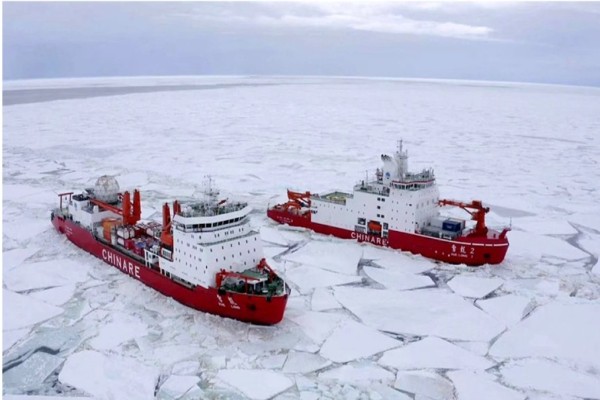
Economy begins with a symbolic example: a Chinese cargo ship arriving in the United Kingdom by traversing the Arctic. The route itself is not the story; it is the signal. For Beijing, this was evidence that new frontiers—from shipping lanes to resource zones—are becoming accessible, and China intends to be deeply involved as these spaces take shape.
She notes that Chinese leaders have been thinking in these terms for decades, treating places such as the deep sea, the poles, and space as the structural foundations of future strength. Under Xi Jinping, the approach has only sharpened: invest in capabilities, embed Chinese experts inside international institutions, create new institutions when the existing ones do not suffice, and adjust tactics continually to widen influence.
China’s deep-sea programme reflects this long-term pattern. While the United States pursued deep-seabed mining sporadically in earlier decades, China built a layered ecosystem of research institutions, specialised vessels, submersibles, and legal frameworks. It has been a consistent and active presence within the International Seabed Authority, submitting papers, shaping draft regulations, and placing officials in key positions.
Chinese companies hold more ISA mining exploration contracts than any other nation, and Beijing has cultivated partnerships with developing countries through training centres and joint research. Yet resistance remains: many ISA members want a moratorium on mining activity until environmental safeguards mature, and some BRICS partners have taken more cautious positions.
Even so, China continues to expand its technological capabilities, including systems that can support both commercial extraction and military operations.
The Arctic presents a similar mix of ambition, investment, and selective pushback. Though China is not an Arctic state, it has promoted the idea that the region’s future concerns all nations, not just those with territory there. It has built scientific programmes, joined the Arctic Council as an observer, and encouraged the development of what it calls a “Polar Silk Road”.
Many democratic Arctic governments, however, have blocked or unwound Chinese investments due to security concerns. But where doors have closed in the West, they have opened wider in Russia. Following Russia’s international isolation after the 2022 invasion of Ukraine, the two countries deepened cooperation in Arctic projects, from resource extraction to transportation infrastructure. They also conducted joint exercises in surrounding waters.
Yet despite this alignment, Moscow has not endorsed China’s larger claim to expanded Arctic decision-making, underscoring that even close partnerships have limits.
China’s space programme, decades in the making, is one of the clearest examples of how Beijing has converted long-term planning into tangible influence. From early satellite work to Xi’s declared goal of becoming a leading space power by 2045,
China has built a formidable scientific, commercial, and military presence. Its satellite constellation is large and increasingly sophisticated, and its space ambitions include a permanent lunar research station developed jointly with Russia. The initiative is designed as an alternative to the U.S.-led Artemis program and its associated accords.
But despite aggressive outreach, only a small number of countries have joined China’s lunar project, and several of them have also signed the Artemis Accords. Those accords have gained far broader traction because they rest on existing partnerships, clear norms, and opportunities for countries to advance their own space industries.
Beijing has also struggled to persuade the international community to embrace its approaches to space security, including treaty proposals that have attracted support mainly from diplomatically isolated countries.
Economy then turns to cyberspace, where China has used industrial power, infrastructure exports, and standards-setting bodies to influence the next generation of digital systems.
Huawei and ZTE have achieved major global market shares in telecommunications equipment, while the Beidou navigation system competes with GPS in accuracy across many regions. The larger ambition is to shape the architecture of future networks. China’s standards push—embodied in initiatives such as China Standards 2035—has flooded global technical organisations with proposals.
The most controversial has been the “New IP” concept, developed with state-owned firms and presented as an alternative to existing Internet protocols. Critics from the United States, Europe, and Japan viewed the proposal as enabling far greater central control over data routing.
Although opposition slowed its adoption, Beijing has continued promoting variants through different forums, a tactic Economy describes as persistent and adaptive.
The financial realm forms the fifth frontier. For China, reducing the dominance of the U.S. dollar is not merely a monetary ambition but a strategic one. The renminbi’s share of global payments remains small, yet Beijing has built a parallel architecture: renminbi-denominated trade settlement, extensive currency swap lines, and a cross-border payment system that offers an alternative to SWIFT.
Sanctions imposed by the United States and Europe have inadvertently created incentives for other countries, especially Russia and Iran, to reduce reliance on the dollar. BRICS members have also supported expanded use of local currencies, even if they do not directly advance the renminbi’s status.
Full internationalisation remains constrained by China’s own reluctance to liberalise its financial system, but partial de-dollarisation advances Beijing’s strategic goals without requiring sweeping reforms.
Economy concludes by describing a global landscape in which China’s gains are real but incomplete. Many countries remain wary of Beijing’s proposals, and in no frontier has China secured uncontested leadership. Yet the accumulation of capabilities, institutions, and influence across these domains gives China forward momentum.
The United States, she argues, must choose between retreat, compromise, or competition. Genuine compromise appears limited by fundamentally different visions for governance, leaving active competition as the only realistic path.
Washington has taken scattered steps like supporting mining prototypes, backing digital assets linked to the dollar, accelerating space initiatives, but these do not yet amount to sustained long-term strategies.
Economy’s argument is ultimately that China has not yet won the future, but it has charted a patient and deliberate course across the world’s emerging strategic spaces. Whether the United States can respond with equal coherence and conviction remains the unanswered question.
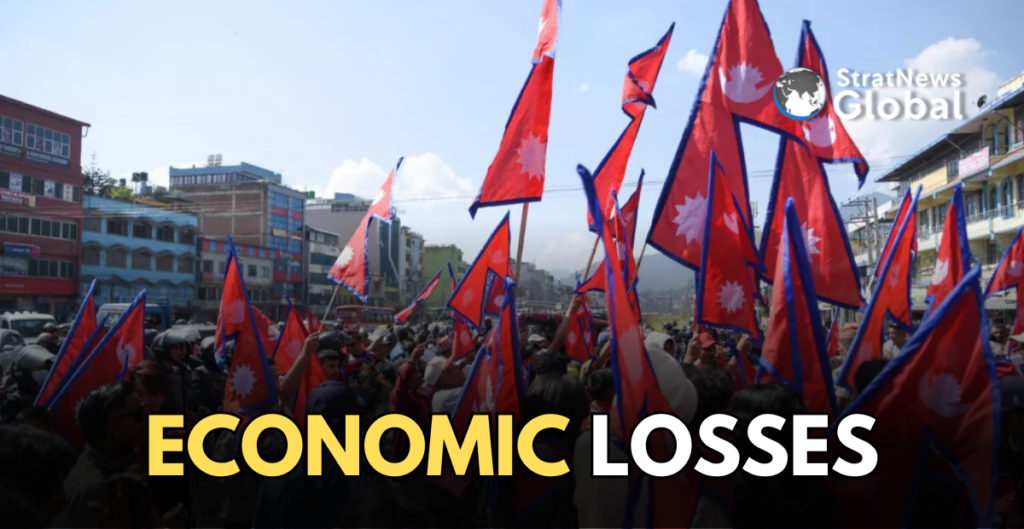
Nepal Economy Suffered $586 Mn Hit From ‘Gen Z’ Protests
The anti-graft protests in September that forced Prime Minister K.P. Sharma Oli to resign caused more than $586 million in losses to Nepal’s $42 billion economy, a government statement said on Friday.
The youth-led protests and the unrest that followed killed 77 people and injured more than 2,000 others three months ago.
Public and private infrastructure – including the sprawling Singha Durbar office complex, the Prime Minister’s office, the Supreme Court, Parliament House, the private residences of politicians, and business complexes owned by individuals close to some politicians – was set ablaze and destroyed.
Police had orders to use water cannons, batons and rubber bullets to control the crowd, and the army was deployed in the parliament area to bolster law enforcement officers, Muktiram Rijal, a spokesperson for the Kathmandu district office, told Reuters.
Reconstruction Of Nepal
A statement from the office of interim Prime Minister Sushila Karki, a former chief justice, who succeeded Oli, said an official committee set up to assess the losses estimated that the cost of rebuilding would top $252 million.
The interim government has set up an official fund to mobilise resources for the reconstruction and has so far collected less than $1 million from the public and different institutions, authorities said.
The government has not said how it plans to bridge the resource gap for the reconstruction.
Chakrabarti Kantha, a senior engineer at the Ministry of Urban Development in charge of rebuilding public infrastructure, said the reconstruction of the Singha Durbar, the president’s house, the Supreme Court and key ministries had already started.
Repairs of some partially damaged buildings have already been completed, and they are now back in use.
“The work for other buildings that were completely destroyed would begin once the required detailed reports and designs are ready,” Kantha told Reuters, without specifying timelines.
The interim government has scheduled new parliamentary elections for March 5, 2026.
(with inputs from Reuters)
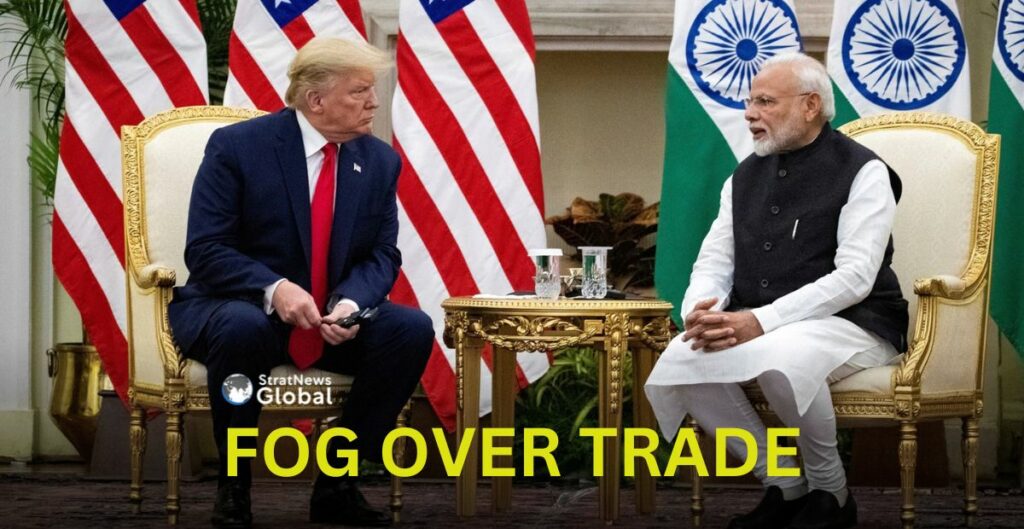
Modi-Trump Chat Over Phone: No Clarity On Trade Agreement
The Modi-Trump phone conversation late on Thursday is the first since they spoke on Diwali. Modi was circumspect about the conversation. His post on X read: “We reviewed the progress in our bilateral relations and discussed regional and international developments. India and the U.S. will continue to work together for global peace, stability and prosperity.”
U.S. Ambassador to India, Sergio Gor, in his X post said: “A GREAT call between two friends. Prime Minister Narendra Modi reiterated his support for the President’s efforts to bring peace to Ukraine.”
There was no reference to the trade agreement although a media report said that foreign office consultations this week in Delhi covered bilateral issues including trade and investment. US sources referred to “concrete progress that enhances US security, jobs, and competitiveness while supporting India’s long-term goals.”
The sense is the US is seeking more concessions from India on agriculture although other reports said no negotiations are ongoing. But US officials have gone on record as saying that India has been “forward leaning” and offered more than ever before.
There was speculation that the conversation, coming a week after India and Russia sealed the logistics supply agreement, was an effort by Modi to signal that India was not “drifting” towards Russia as some US commentators have claimed.
Last week’s Modi-Putin summit went viral in Western capitals and combined with the logistics supply agreement, may have given an impression to some that India was returning to the Russian embrace.
“The fact is India needs the US for technology and capital,” Brig Arun Sahgal, (Retd) Director of the Forum for Security Initiatives. “India cannot afford to be in the Russian camp although it needs Russia to balance China. It does not want Russia to be playing second fiddle to Beijing.”
Trump’s New Visa Waiver Rule Requires Travellers to Share Social Media Data
A new U.S. government proposal under President Donald Trump has sparked backlash from travel groups, lawmakers, and prospective visitors over plans to require travellers using the visa waiver programme to share their social media handles from the past five years.
The policy, announced in a notice from U.S. Customs and Border Protection (CBP) this week, is set to take effect on 8 February. It would extend the existing requirement for immigrant and non-immigrant visa applicants who have had to provide such details since 2019 to millions of additional travellers entering the United States without visas.
Expanded Data Collection for Visa Waiver Visitors
Under the new rule, visitors from 42 countries, mostly in Europe, who use the Electronic System for Travel Authorization (ESTA) will have to include their social media accounts when applying for entry. The proposed change also mandates the disclosure of all email addresses used over the past decade, as well as personal data on close relatives including parents, siblings, spouses, and children.
The notice, which is open for public comment for 60 days, cites an executive order signed by Trump on 20 January directing that all visitors be “vetted and screened to the maximum degree.” It marks another step in the administration’s broader effort to tighten entry requirements for foreign nationals.
Tourism Industry and Lawmakers Raise Concerns
Erik Hansen, head of government relations at the U.S. Travel Association, said the group was reviewing the proposed changes and engaging with officials. “If we fail to deliver an efficient, secure and modern vetting process, international visitors will choose other destinations,” he warned.
U.S. Senator Patty Murray, a leading Democrat from Washington state, sharply criticised the plan and the influence of White House aide Stephen Miller, known for shaping Trump’s hardline immigration policies. “It would be easier to just ban tourism,” she wrote on X, adding, “Who besides Stephen Miller is asking for this?”
Bethany Allen, an analyst at the Australian Strategic Policy Institute, commented that the new rules appeared even more restrictive than China’s border controls. “Wow even China doesn’t do this,” she said.
Balancing Security and Tourism Ahead of 2026 World Cup
Asked whether the policy might deter tourists, Trump told business leaders at the White House that the priority was national security. “We want to make sure we’re not letting the wrong people into our country,” he said.
The changes come as the U.S. prepares to co-host the 2026 FIFA World Cup with Canada and Mexico—a global event expected to draw millions of international visitors. Travel industry groups fear that stricter vetting could undermine recovery efforts after years of declining tourism.
CBP described the announcement as “the first step in starting a discussion” on improving safety while reviewing travel processes. Meanwhile, the administration also began accepting applications for a new “gold card,” offering U.S. permanent residency to those investing $1 million, with a $5 million “platinum card” programme reportedly in development.
(with inputs from Reuters)
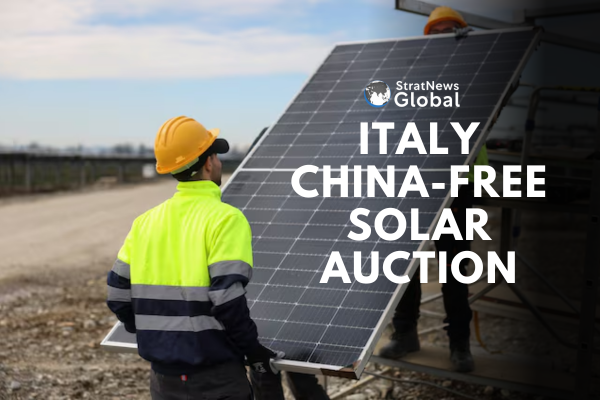
Italy’s China-Free Solar Auction Attracts Major Developers, €10 Billion Investment
Italy has awarded more than 1.1 gigawatts (GW) of capacity to 88 projects in its first solar auction restricted to installations using non-Chinese equipment. The auction set an average price of €66.38 per megawatt hour, reflecting growing interest in locally sourced renewable infrastructure.
According to Italy’s electricity services agency (GSE), the tariff is about 17% higher than the average achieved in an earlier renewable energy auction this year, which placed no limits on the origin of equipment. The new round marks a significant policy shift aligning with the European Union’s Net-Zero Industry Act, which seeks to reduce dependence on low-cost components from China.
EU Push for Energy Independence
The auction is one of the first in Europe to apply non-price criteria tied to the Net-Zero Industry Act, an EU initiative aimed at strengthening domestic manufacturing and securing energy supply chains. Currently, over 95% of solar modules installed across the bloc are imported, with China supplying roughly 94% of modules and cells in 2023, according to consultancy Green Horse Advisory.
This diversification drive is seen as crucial for Europe’s energy transition and industrial resilience. By incentivising solar projects using alternative sources, Italy hopes to encourage greater regional production and innovation within the renewable sector.
Major Developers Among Auction Winners
The list of successful bidders includes Enel Green Power (ENEI.MI), J.P. Morgan-backed Sonnedix, and KKR-supported ContourGlobal. “This is a strong result for the Italian system and for energy consumers,” said Mario Volpe, Representative Director for Italy at Sonnedix.
Volpe noted that Italy’s recent renewable and battery auctions are attracting around €10 billion in investment, with many projects now advancing to the construction phase. Under current regulations, developers must bring new plants online within 36 months.
Broader Renewable Expansion
Including the latest auction and another completed in early December for ordinary solar and wind plants, Italy has now allocated nearly 9 GW of renewable capacity.
“These schemes reduce curtailment risk, bring affordable and stable capacity into the system, and lower the cost of capital for new clean energy investments,” said Paola Agrati, Country Manager Italy at ContourGlobal.
The outcome reinforces Italy’s commitment to diversifying its energy portfolio and strengthening domestic clean-energy supply chains, a key step in the EU’s broader effort to secure strategic autonomy in renewables.
(with inputs from Reuters)