

Support us by contributing to StratNewsGlobal on the following UPI ID
ultramodern@hdfcbank

Strategic affairs is our game, South Asia and beyond our playground. Put together by an experienced team led by Nitin A. Gokhale. Our focus is on strategic affairs, foreign policy and international relations, with higher quality reportage, analysis and commentary with new tie-ups across the South Asian region.
You can support our endeavours. Visit us at www.stratnewsglobal.com and follow us on YouTube, Twitter, Facebook and Instagram.
र 500 per month
र 1000 per month
र 5000 per year
र 10000 per year
Donate an amount of your choice
र 500 per month
Donate र 500 per month

र 1000 per month
Donate र 1000 per month
र 5000 per year
Donate र 5,000 per year
र 10000 per year
Donate र 10,000 per year
Donate an amount of your choice
Donate an amount of your choice
‘It’s Not Possible To Predict When The Bushfires Will End’
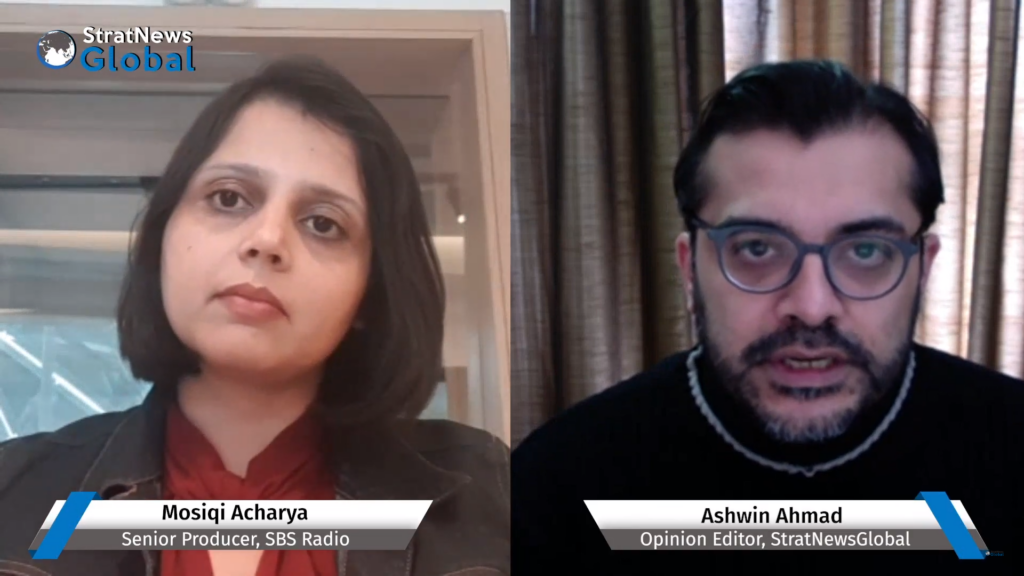
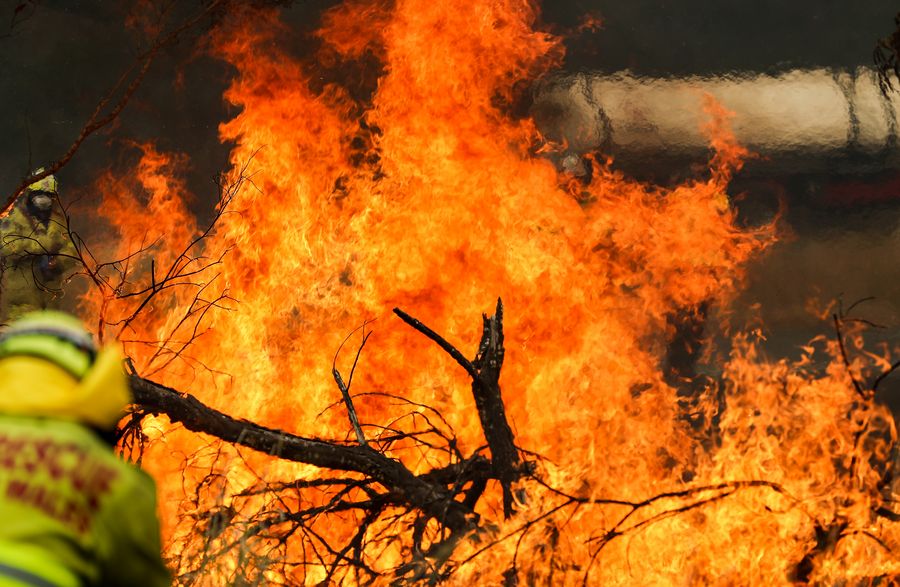
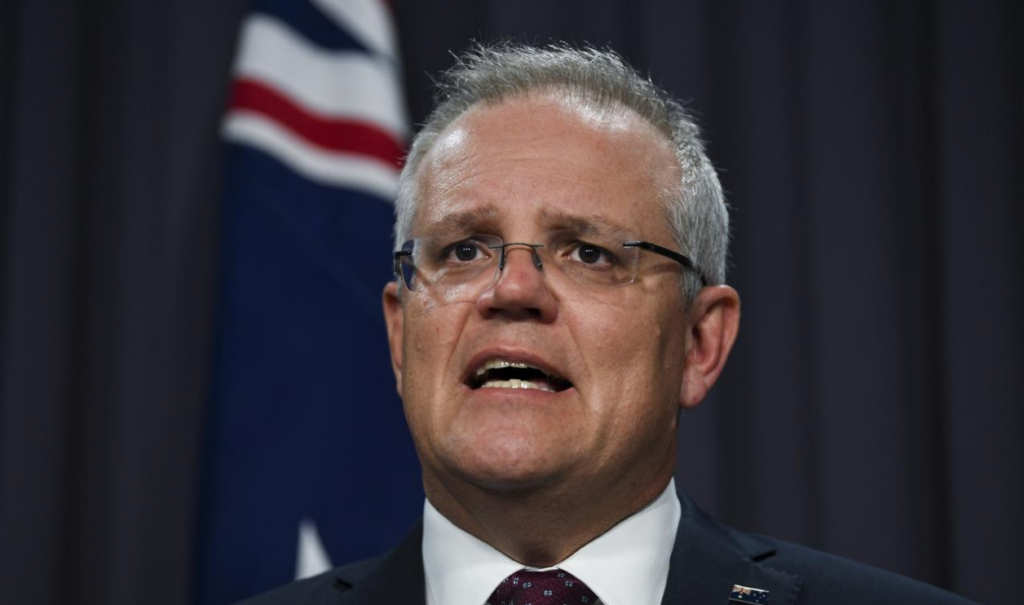
With a death toll of over 20 people and damage expected to exceed $4.4 billion according to Moody’s Analytics, Australia’s bushfires have not only been devastating but they are not likely to end anytime soon. Ashwin Ahmad, Opinion Editor of StratNews Global, speaks with Mosiqi Acharya, Senior Producer at SBS Radio in Australia to get a sense of when the bushfires can be contained, if not ended, what will be the political fallout for Australian Prime Minister Scott Morrison and what lessons can be drawn on from this tragic episode in the future.
U.S. Waiver For Chabahar: Will Gulf Tension Play Spoiler?
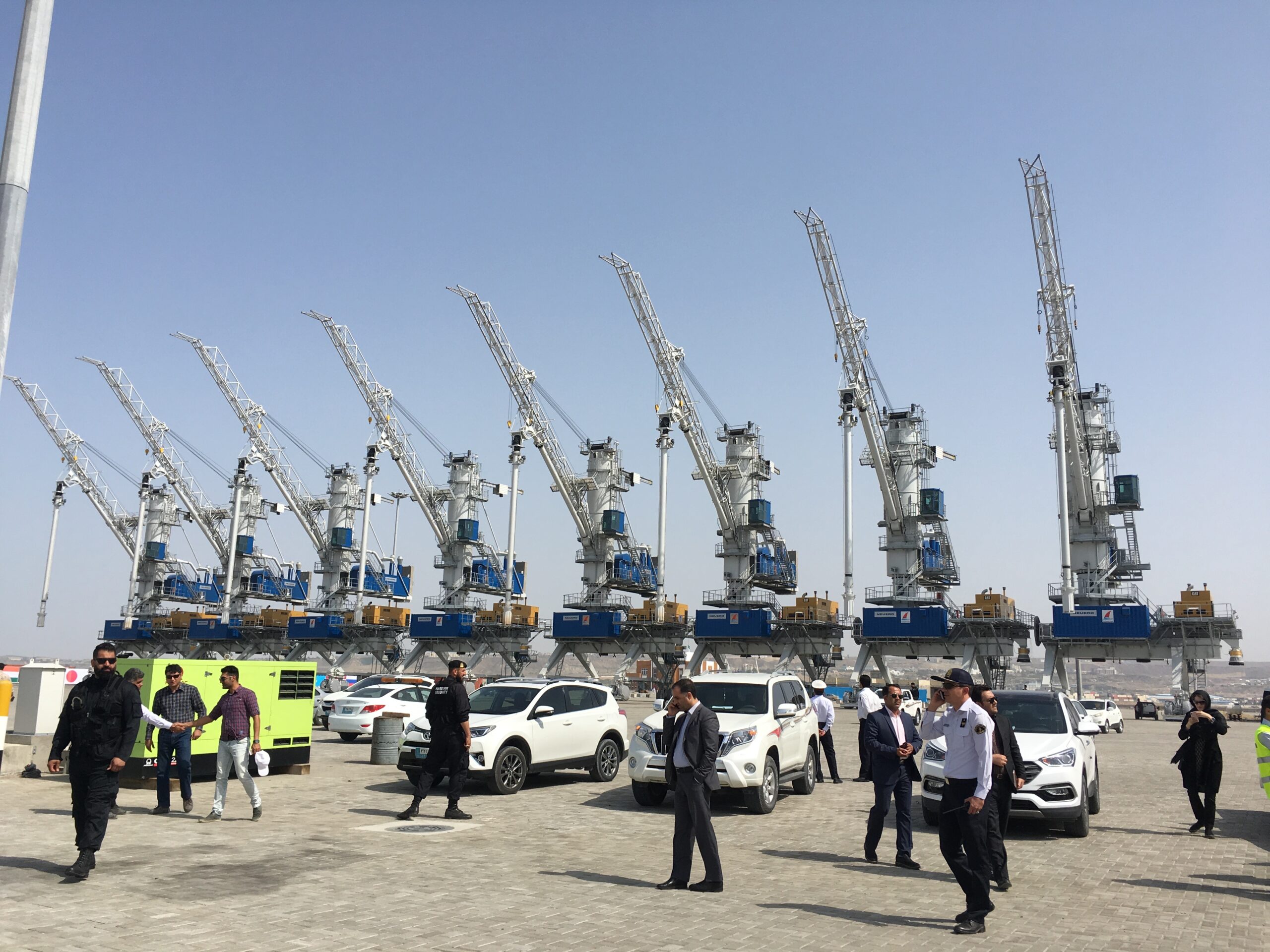
NEW DELHI: India is keeping its fingers crossed in the wake of heightened U.S.-Iran tensions, concerned it could impact its plans for the development of Chabahar port in Iran. The U.S. recently granted India a “narrow waiver” from sanctions for the port’s development. The waiver is significant as it’s been given in writing for the first time, an indication of the considerable diplomatic energy India expended in convincing the Trump administration.
“It is too early to say if the tensions will have any impact on the waiver,” said sources in South Block. The waiver also covers the 500-km railway line India is building from Chabahar to Zahedan on Iran’s border with Afghanistan. It is expected to persuade banks, businesses, contractors and hardware suppliers to bid for work in Chabahar.
But there is a caveat: the waiver does not apply to “secondary designated entities”, meaning the port’s development must not benefit Iran’s Islamic Revolutionary Guard Corps (IRGC). Major General Qassem Soleimani who led IRGC’s foreign arm, the Quds Force, was killed in an U.S. airstrike last week. So India has to tread carefully and hope the Iranians keep the IRGC out of the port.
Tehran too sees the port as a transit hub for the northern Indian Ocean and Central Asia and is impatient for results. Iranian media have described it as the Golden Gate of Iranian
Armed with the waiver, External Affairs Minister S. Jaishankar could credibly assure the Iranians, at the meeting of the joint commission last December, that Chabahar’s development could now be expedited. The discussions also covered economic and trade issues. For New Delhi too, Chabahar will provide access to land-locked Afghanistan by skirting Pakistan as well as access to resource rich Central Asia.
“We hope that with this waiver, port equipment manufacturers will have a level of comfort and be more ready to supply equipment,” sources told StratNews Global. The written waiver from the U.S. has now been shared with banks and equipment suppliers so that they shed their reluctance to do business with Chabahar, the sources added.
This correspondent learns that the Ministry of External Affairs has asked the Federation of Freight Forwarders’ Associations of India (FFFAI) to do a study on the challenges the freight industry could face while using the Iranian port. Sources acknowledged many obstacles including the absence of regular shipping lines to sanctions-hit Iran, steep costs, land transit issues between Afghanistan and Iran and so on. The study will come up with recommendations to tackle them.
India believes it’s made the best of a difficult situation. Nearly half a million tonnes of bulk cargo and over 4,000 containers have been handled at Chabahar since December 2018, sources said. Six consignments of dry and fresh fruits including grapes and other agricultural produce from Afghanistan have been shipped to India via Chabahar since February last year. But this is small change; the potential is far greater, a point which is understood in India and Tehran.
With Gulf On Knife Edge, India Waits For Zarif
NEW DELHI: The Persian Gulf teetered closer to war with Iran firing ballistic missiles at two U.S. bases in Iraq—Irbil in the north and Al Assad in the west. Iran’s state TV said 80 “American terrorists” were killed in the 15 missiles that were fired. But U.S. President Donald Trump tweeted “all is well” and that assessment of casualties and damage was on. The attacks were in retaliation for the killing of Quds Force commander Gen. Qassem Soleimani in a U.S. airstrike last week. Oil prices shot up over 4 per cent.
Some comfort could be drawn from Iranian Foreign Minister Javad Zarif’s tweet which said: “Iran took and concluded proportionate measures in self-defense under Article 51 of the UN Charter … we do not seek escalation or war but will defend ourselves against any aggression.”
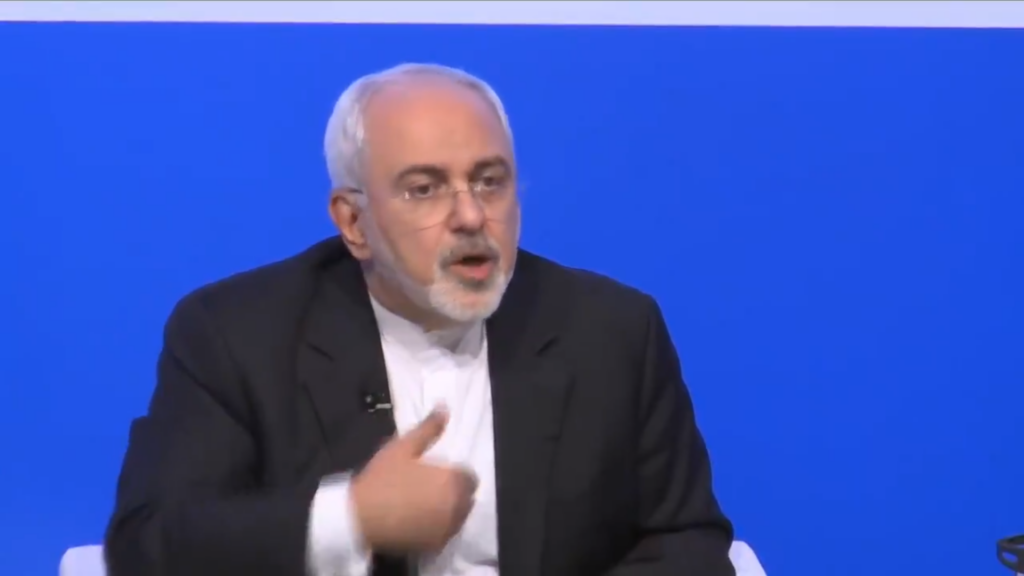
India will get an opportunity to know Zarif’s mind when he is in Delhi next week for the annual Raisina Dialogue. Zarif, on his first overseas visit since the killing of Soleimani, is expected to use the conference and the platform it offers to share his country’s views on tensions with the U.S. There were concerns that Zarif could be a no-show. Earlier, keynote speaker and Australia’s Prime Minister Scott Morrison cried off owing to the bushfires ravaging his country.
Zarif’s presence in Delhi is expected to provide an opportunity for exchange of views with his Indian counterpart Dr S. Jaishankar. As a close friend of Iran, India is hoping it will be able to counsel Tehran on the need to reduce tensions and avoid a war that could have a debilitating impact on West Asia and beyond.
“We hope that the situation does not deteriorate. It is for this reason that the External Affairs Minister has been calling up leaders in the region. It is also good to exchange views on the region,” remarked an official.
Dr Jaishankar spoke to U.S. Secretary of State Mike Pompeo and Zarif on Sunday, two days after Soleimani’s assassination. He tweeted that “developments have taken a very serious turn. India remains deeply concerned about the levels of tension.” In his conversation with Pompeo, Jaishankar said he “highlighted India’s stakes and concerns.”
The External Affairs Minister has also been working the phone lines to speak to other leaders in Iran’s neighbourhood. On Monday, he spoke to Jordanian foreign minister Ayman Safadi who in a tweet said: “We stressed need to de-escalate and reduce tension through dialogue. We emphasised importance of supporting Iraq stability and security.”
Dr Jaishankar has also spoken to the foreign ministers of Qatar, Oman and the UAE in days following Soleimani’s killing. Delhi is concerned about the well being of roughly seven million Indians who live in the Gulf region and send home an estimated $40 billion every year. Bulk of India’s energy comes from this region, not Iran as it is under U.S. sanctions, with Saudi Arabia and the UAE being the major suppliers.
Delhi also has concerns about developing Chabahar port in southern Iran. The U.S. recently gave India a “narrow waiver” for the first time in writing, allowing work in Chabahar to go forward. But getting work done is proving an uphill task given the reluctance of private businesses to flout U.S. sanctions.
India, France Move Towards An Alliance In The Indian Ocean But Will It Work?
The competition for strategic space in the Indian Ocean could see China deploying an aircraft carrier with its complement of other vessels, in the coming years. That’s the assessment of the Indian Navy based on a close study of the pattern of China’s naval profile since 2008, when it first entered the Indian Ocean in force. Naval and maritime strategists believe that with the U.S.’s perceived retreat from the international arena, India will be increasingly called upon to shoulder the responsibility of countering or balancing China.
Reports last year suggest that Beijing has six to eight naval ships in the Indian Ocean – a figure that is more than likely to go up this year – along with submarines thereby ensuring a formidable footprint. It will enable Beijing to secure its sea lines of communication through which its energy supplies pass. It will also enhance Beijing’s profile on the strategic east African coast where there are large reserves of gold, coal, natural gas and uranium.
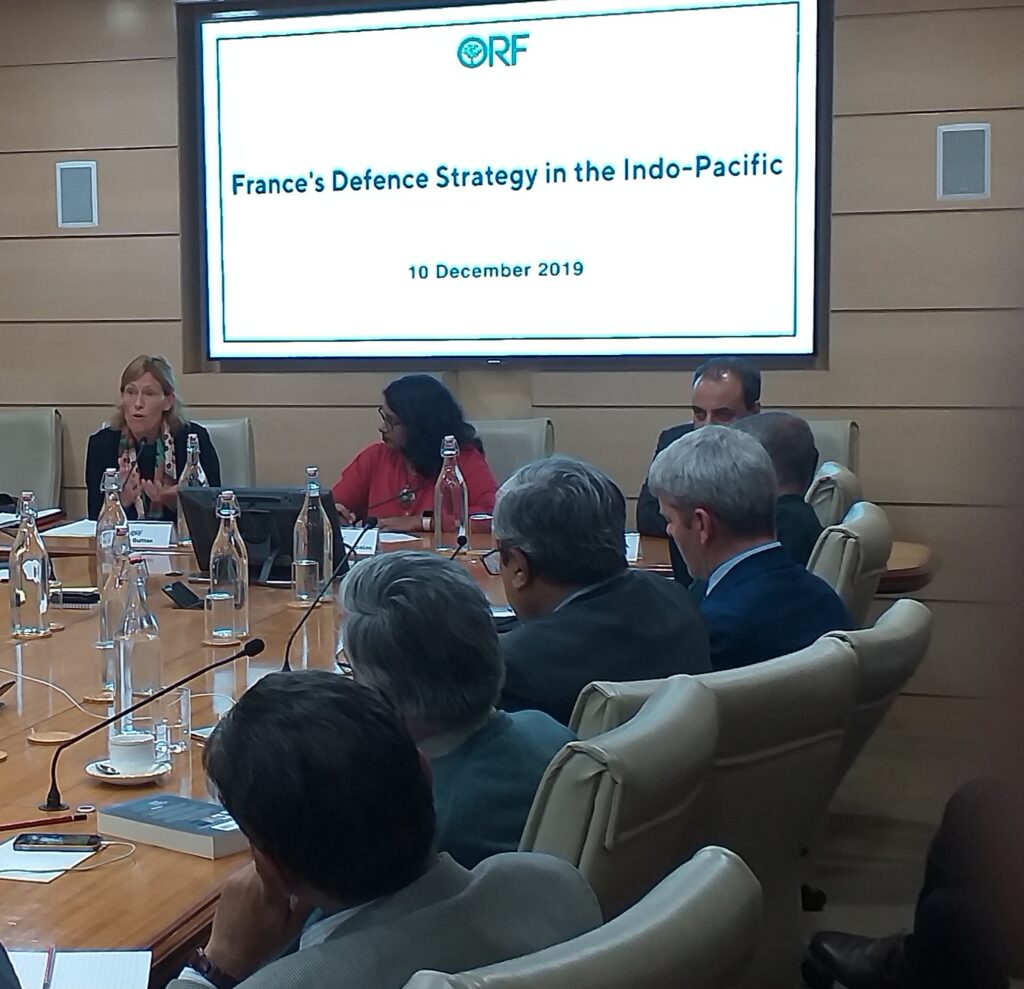
Delhi is accordingly stepping up its game in Africa but needs partners and France is seen as a potential candidate. But Paris has its own views on the Indian Ocean. Alice Guitton, Director-General for International Relations and Strategy, says her country’s vision for the Indian Ocean is not China-centric but is driven by concern over the “hardening of the military environment” in the region.
“We are not the first country to put forward a strategy and vision for the Indian Ocean. Many other countries have done so namely Japan, the United States and India,” she says, “but with the growing number of state actors in the region, there has been a hardening of the military environment which can lead to risks of miscalculation and misunderstanding. France wants to ensure that a rules-based order prevails.”
Guitton was speaking at a recent seminar at the ORF in the Capital.
As Guitton points out, France does have a vested interest in maintaining a presence in the Indian Ocean. “Geographically speaking, France’s strategic vision is the widest and most inclusive among all nations in the world as they stretch from the east of Africa to the Pacific Islands to Chile and of course up to the north,” she says.
According to French government figures, France has 9 million square km of exclusive economic zones in the Indo-Pacific area; 1.5 million citizens in five overseas territories, 200,000 expatriates, military forces permanently on station, and other vital economic interests in the region.
The problem though as Guitton admits is that Paris has been unable to substantially ‘interest its European partners’ to devote ships to patrol the area and hence Paris has been forced to look elsewhere. In 2018, President Macron called for the “creation of a new strategic alliance between France, India and Australia” to respond to challenges in the region.
Elaborating on Macron’s remarks, Guitton says that France and India have an ideal strategic partnership that will enable it to focus on common areas of concern. “Our defence relations have grown stronger and we are engaging with each other in strategic dialogue at many levels. Prime Minister Modi has also recently appointed chief of defence staff which I believe will further boost our defence relations.”
The French outreach is welcome and both countries have agreed on joint naval patrols beginning this year, with a French commitment to also monitor China’s activities in the Mozambique Channel. But both countries have different strategic objectives: France is primarily looking to safeguard its territory and citizens in the Indian Ocean region, while New Delhi is seeking to check China’s strategic inroads into its ocean backyard.
183 Arrested For Australian Bushfire ‘Arson’
CANBERRA: Hundreds of Australians have been arrested for allegedly deliberately lighting Australian bushfires in only a matter of months.
Australia is currently enduring one of the worst bushfire crises in the nation’s history, with at least 25 people having been killed since September.
‘The Australian’ reported on Tuesday that 183 people have been arrested for lighting bushfires in New South Wales (NSW), Queensland, Victoria, South Australia and Tasmania.
In NSW alone, 183 people have been charged or cautioned for bushfire-related offences since November, with 24 arrested for deliberately starting bushfires. While in Victoria 43 were charged in 2019.
In Queensland, where the fires were worst in November, 101 people have been arrested for deliberately starting fires, almost 70 per cent of whom were juveniles.
According to James Ogloff, the director of the Forensic Behavioural Science at Swinburne University, approximately 50 per cent of Australia’s bushfires are started by arsonists.
“They’re interested in seeing fire, interested in setting fire and quite often the information around how fires burn and accelerate excites them,” he told News Corp.
University of Melbourne’s associate professor Janet Stanley said that arsonists, or “firebugs”, were typically young males aged either 12 to 24 or 60 and older.
“There is no one profile but generally they seem to have a background of disadvantage, a traumatic upbringing and often have endured neglect and abuse as a child,” she said.
Brendon Sokaluk, a former volunteer firefighter, was sentenced to 17 years and nine months in jail for starting a 2009 bushfire in Victoria that killed 10 people on Black Saturday, one of Australia’s worst bushfire events.
Raisina Rumble
The flagship Raisina Dialogue of the Observer Research Foundation has run into turbulence. The keynote speaker, Australia’s Prime Minister Scott Morrison, had cancelled last month, citing the bushfires ravaging his country. Even as the organisers scrambled to find a substitute, another high level participant has cried off: Bhutan’s foreign minister Tandi Dorji has conveyed his regrets to South Block saying it would clash with the opening session of parliament in Thimphu. Now the speculation is whether Iran’s foreign minister Javad Zarif will be a no-show. With the event just a week away, the hosts are keeping their fingers crossed.
Can’t Keep Kicking The Can Down The Road: Jaishankar
NEW DELHI: “When I was in Jawaharlal Nehru University, there was no ‘tukde-tukde’ gang.” With that External Affairs Minister S. Jaishankar dismissed questions about students and activists from the university being branded anti-national. As for the violence in the university on Monday night and the continuing protests over the Citizenship Amendment Act (CAA), Jaishankar used the launch of a book on China to send home a tough message: That this government was not backing off and would continue to take decisions on issues that it believes have been left to simmer for far too long.
“Look at the citizenship issue, it started 40-50 years ago. Rajiv Gandhi did an agreement in 1985. Article 370 was a temporary article. Ayodhya, show me where in the world you would have an unresolved problem for 150 years,” he said.
Society must have the mindset to resolve problems, he said, but India has preferred to “keep kicking the can down the road”, postponing a decision in the hope that the problem would go away. On the other hand, China’s leaders have built a nation and a narrative on problem solving. This is also the case with the U.S., Jaishankar noted.
On terrorism, he said “no country has been so battered by terrorism as we have. It is therefore vital that we not allow terrorism to be normalized. The perpetrators of terrorism will try and pass it off but we cannot be party to that,” he warned.
He said the 2009 India-Pakistan joint statement at the Egyptian resort of Sharm el-Sheikh was unacceptable precisely because it raised the perpetrator of terrorism Pakistan to the same level as India, the victim. The joint statement included a reference to Balochistan, implying an Indian hand in anti-Pakistan activities there.
He said his government’s decision allowing Pakistani investigators into the Pathankot airbase in July 2018 was carefully thought through. “Even the Pakistanis accepted they were at fault. Nawaz Sharif did not deny it and there was even an FIR filed in Pakistan to bring the ‘unknown persons’ to justice. So the investigation which happened was to pressurise the Pakistanis so they didn’t have an excuse to say ‘well we made an offer, you didn’t accept it.”
Where India’s Chief Of Defence Staff Fits In
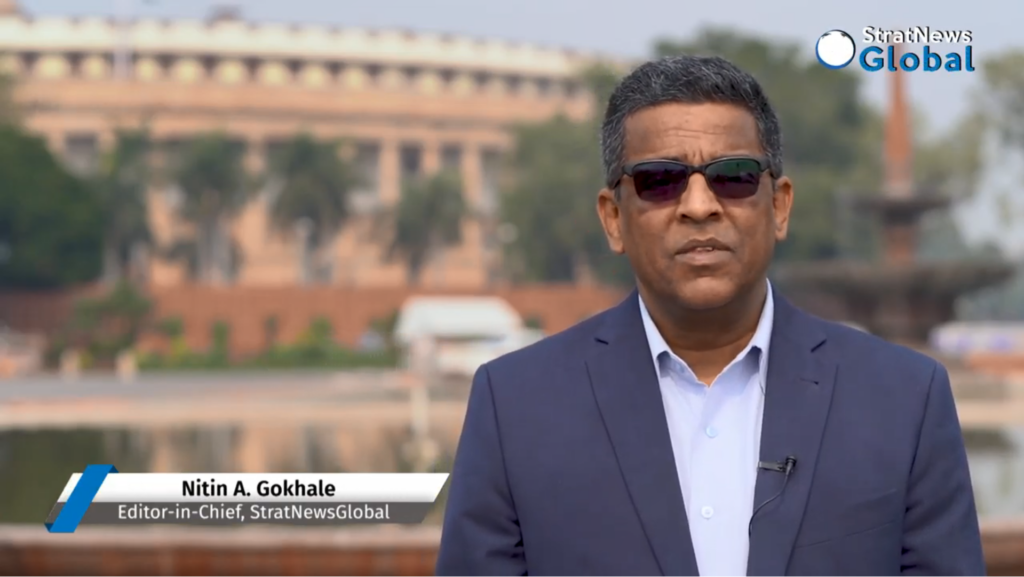
NEW DELHI: After a long, long wait, India has finally got its first Chief Of Defence Staff (CDS). On January 1, former Army Chief General Bipin Rawat took charge of the post that has the rank of a Four Star General with the salary and perks admissible to that of a Service Chief. So what exactly does the post entail? In this chat, Nitin A. Gokhale, Editor-in-Chief of StratNewsGlobal, gives you the details.
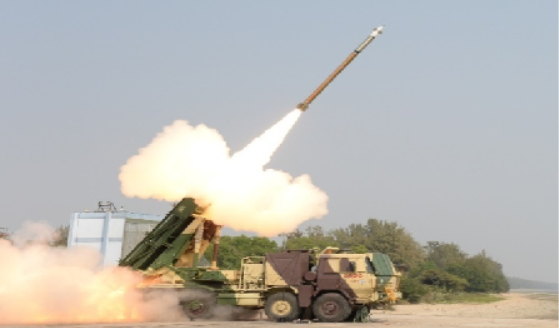
The Wider National Problem Beyond Pinaka
CHENNAI:
The Comment
“Long range artillery aided with precision can be a suitable complement for air-power and lack of fighter sqns of the IAF. The precision and low cost should be enough for us to procure the same. The precision element included in long range rockets will also moderate the myth of rockets being area weapon with limited use due to higher collateral damage, especially in times when collateral damage is frowned upon. Pinaka is a better system than Smerch rockets in its ability to be upgraded and having latest technologies, more importantly, indigenously developed. Thus, the need of hour is to go in for long range precise rocket artillery which can swing across the bandwidth of gun artillery at one end and complementary to airpower at another thus reducing need of guns for contact battle and freeing up airpower for air superiority”. This response to my article ‘Pinaka in Conventional Non-Contact Deterrence’ is from an officer who commanded a Smerch Regiment when I was GOC of the Artillery Division. I think it is brilliant, precise and crisp in its conception. I will take it forward from there to widen the picture since there is a bigger problem which needs to be addressed.
Row Your Boats On Your Own
Despite Pakistan’s economic tatters and a Chinese economic slowdown their militaries are expanding and modernising, unabated. While our relationship with both our nuclear neighbours is increasingly adversarial, there is increasing collusion between them. The latest being that China is going to give 236 of the latest 155mm Howitzers to Pakistan. On the domestic front, societal events and upheavals are forcing our so-called ‘strategic’ friends and neighbours into a rethink mode to recalibrate their relationships with us. We need to be prepared to face international headwinds. Welcome to the world of realpolitik and increased threats. Be prepared to row your own boats.
Non-Contact Warfare And Long-Range Precision
The Chinese White Paper on defence lays tremendous focus on surveillance, firepower, extending ranges and standoff engagements. The U.S. has very clearly stated that Long Range Precision Fires is the highest priority and have funded programmes accordingly. They talk of Multi Domain Operations, Non-Contact Warfare and Standoff. So does our newly appointed CDS. In recent times, he has been speaking of Non-Contact Warfare in every possible forum. Beyond a point, Non-Contact Warfare involving violence must be executed by Artillery and Air Force only. That point is where Infantry and Tank ranges end.
Shrinking Military Budgets
Military budgets will stagnate or shrink in a slowing economy. There is no option but to modernise with tight budgets. We are also in an era of disruption and multi domain operations. War is changing without doubt and we must change accordingly. That means we need to spend more on new technologies. Budgets for that must also come from the already shrinking budgets! The finale is that if one thinks that less will be available for traditional hardware of conflict, he is bang on target. The noose is tightening. If you cannot think out of the box, be prepared to die within it.
The Himalayan Requirements
Turn to the Himalayas—our main and future battlefield as evident from the first thoughts of the COAS. The core capability we need is well-equipped Infantry to hold ground and devastating firepower to inflict damage on a sustained basis. Firepower means a strong Air Force and Artillery—short, medium and long-range firepower with annihilative capability despite taking a hit. To make firepower count, we need to force-multiply it with accurate surveillance and target acquisition capability. This implies that the arrowhead of our forces whose capabilities must be strengthened and sharpened revolves around Infantry, Artillery and Air Force. Any imbalance in their synergistic capacities will be at a national cost.
State of Infantry, Air Force And Artillery
Let us examine the Infantry, Air Force and Artillery. Our top-heavy Infantry leadership has failed to modernise its own arm—The Infantry. Expecting them to modernise the rest of the Army is far too much. That is a proven fact now. Infantry Generalship apart, our Infantrymen are the salt of the earth. They will fight to the last man, last round if the enemy and his firepower is kept off their backs. To do that we need a strong Air Force and Artillery which are complimentary to each other to deter the Chinese as also take them on if needed. The potency of IAF is plummeting with reducing number of squadrons even after considering future induction of Rafales and Sukhois and production of Tejas. Any new Request For Proposal (RFP) for any kind of fighters will have a time loop of 15-20 years. That is our record which cannot be shortened. Things will not improve overnight. In the meantime, China is busy upgrading airfields and its Air Force to out match us. Our air power edge is eroding. Our artillery is getting to be potent with a plethora of guns and missiles set to enter the fray. It has the potential to plug the loopholes which are palpably appearing due to the slow pace of Infantry modernization and the decreasing air power edge.
Pragmatic Options Vs Limited Thinking
Artillery is the low-cost option which can substitute air power to meet our national requirements in these hard economic times. Is artillery being positioned and developed accordingly? NO. We are caught in a situation where the IAF is unable to think beyond fighters and the Indian Army is not able to think beyond the infantry. Individual service capabilities based on narrow views have taken precedence over overarching national perspectives. The requirement of the defence establishment to work for a national perspective has clearly eluded us. The CDS must bridge this divide. Otherwise, we will pay a heavy price.
Force Division Vs Force Multiplication
Increasing range of engagement, having non-contact deterrence capability, substituting depleting air power with relatively low-cost artillery demands that we have adequate numbers. In 2008 we visualised a set of numbers for the Pinaka. When the national scenario demands more numbers, the Indian Army has reduced them! I have written about this ‘reverse gear’ phenomenon earlier. Further, efficacy of long-range artillery is linked with an inherent capability to seek, locate and destroy targets in depth. There is an essential link between sensors and shooters. Unless you have UAVs and long-range guns and rockets intimately linked and functioning as one, they cannot substitute air force. Without UAVs, long-range artillery, beyond visual range is like the blind ‘Dhritarashtra’ from The Mahabharat. Till now those links were the UAVs which were integral to the artillery. Recently, they were hived off. All the UAVs are to be handed over to the Army Aviation. The thinking and emphasis is that UAVs are for surveillance and the Army Aviation is better suited for it. From dual tasking, we have reduced the UAVs to a single-task situation in one stroke. Not only have we reduced the numbers but also have divided our capability. This is the prime example not of force multiplication but of force division.
Sensor to Shooter Links—Snapped Like A Twig
Once upon a time, the aerial sensor-shooter umbilical was the erstwhile air OP. They used to carry out observation duties. They were very effective and so were the guns. Their success is borne out in all operations. There was elan about the Air OP boys who carried out daredevil flying to destroy enemy. They were in sync with the guns. Many times, they were from or had affiliation with the regiments with which they were firing. These were both personal and professional. Ever since Army Aviation has come into being, this link has snapped like a twig. The Army Aviation with its grandiose imagination of being part of air mobile forces drifted away from artillery. In the process, artillery lost its cutting-edge over the hill capability of observation, liaison and communication to direct fire effectively through aviation. Today, these are peripheral tasks of Army Aviation and not practised. The Army Aviation is still full of glorious plans while effectively being air taxis. The Indian Army, by denying observation to its artillery is force dividing itself. It has done it once before with helicopters and is doing it again with UAVs. That is a pity to put it mildly.
Leadership and Generalship
Why is this happening? I ascribe it to poor leadership and decaying Generalship. I have already written that Generalship is sorely wanting in our context. An overdose and overemphasis of counter insurgency operations has propelled a crop of less than competent infantry officers to the top. Some of them have risen due to majoritarianism rather than cerebral and visionary ability. Largely, the Indian Army follows a caste system of promotion in which “the best might never reach the top, the worst have a fair chance of becoming top Generals. That happens often due to regimental affiliations, lanyarded views, old boy grids and bandwagonism. In my opinion this phenomenon has dropped deeper roots over the past decade”. In turn, it has led to the marginalisation of the artillery and mechanised forces and ‘Infantrisation’ of Generals. The current system of ‘General Cadre’ is flawed and heavily biased. I have no problem with Infantry Generals at the top. The best of them are as good as any and I revere them. However, when the not-so-good are promoted to the top it is at the cost of marginalization of the best Artillery, Mech Forces and Sapper Officers. Further, if these lower merit Infantry Officers who have made the grade through other considerations are endowed with favorable astrology, date of birth and higher seniority on commissioning, they have become Army Commanders and Chiefs. The Indian Army leadership gets out of balance. Then, India must recognise that there is a problem. That is already showing up operationally in the way artillery is being viewed and handled. Look beyond to pay, perks and status erosion. Look at the break down in jointness and acrimonious inter-Service views which often surface. Look at the crawling pace of modernisation. Look at the politicisation of the Army leadership. Look at the Social Media and its views on Generals. Take peer and subordinate views. I will quote Bob Dylan as did the previous Air Chief: “the answer, my friend is blowing in the wind”.
A National Relook Is Mandated
If the Army leadership presides over force division either by default or design, how can synergy with IAF or IN develop to get a national doctrine or game plan going? In such conditions, no amount of budget allocation will suffice since a fool and his money are soon parted. In any case, too much of one thing is bad. The time has come to seriously take a relook at the promotion to higher ranks in the Army. Maybe, a pro-rata system is not a bad option. Choose the best from each arm and you will have a balanced composition of professional Generals. There will be many views on this issue and many hackles will be raised. That is fine. It’s time to call a spade a spade. When Infantry Generals aspire for a rifle with two barrels; which does not exist in the world, and want infantry to man and command strategic missile units instead of artillery which has developed and raised them from scratch, I think the nation needs to rethink very seriously on the Generalship ability of some of them. This is a national issue and not merely an internal issue of the Army, Air Force or Navy anymore. I also think that the time has now come to shed the counter-insurgency orientation of the Army. The boots-on-the-ground approach which has dominated our thinking needs a serious rethink. A subtle change is happening.
(Lt Gen. PR Shankar (retired) put Indian Artillery on a firm path of modernisation. He is presently a professor in Aerospace Department of IIT Madras. Views expressed in this article are personal.)
We Won’t Do Anything That Will Harm India’s Interests: Gotabaya
COLOMBO: Seeking to allay India’s apprehensions ahead of his first scheduled trip abroad as Sri Lankan President—to New Delhi this week—Gotabaya Rajapaksa has a reassurance to offer. We will work with India as a friendly country and won’t do anything that will harm India’s interests, he told Nitin A. Gokhale, Editor-in-Chief of BharatShakti.in and StratNewsGlobal, in his first interview after taking over the top political job in the island nation. He favours Sri Lanka to be neutral as “we don’t want to get in between the power struggles of superpowers. But we want to work with all countries”. Asserting that Sri Lanka’s involvement with China during the presidency of his elder brother Mahinda Rajapaksa (who was President till 2015) was “purely commercial”, Gotabaya feels giving away the Hambantota port to China on a 99-year lease was a mistake by the previous government (when Maithripala Sirisena was President and Ranil Wickremesinghe was Prime Minister). The deal has to be renegotiated, he says. And what does the ex-serviceman have to say about allegations of him being ‘authoritarian’ and ‘racist’? It’s a wrong perception, he counters, created during the conflict period (the Eelam war IV). “I am a disciplined person but that doesn’t mean I am racist”.