

Support us by contributing to StratNewsGlobal on the following UPI ID
ultramodern@hdfcbank

Strategic affairs is our game, South Asia and beyond our playground. Put together by an experienced team led by Nitin A. Gokhale. Our focus is on strategic affairs, foreign policy and international relations, with higher quality reportage, analysis and commentary with new tie-ups across the South Asian region.
You can support our endeavours. Visit us at www.stratnewsglobal.com and follow us on YouTube, Twitter, Facebook and Instagram.
र 500 per month
र 1000 per month
र 5000 per year
र 10000 per year
Donate an amount of your choice
र 500 per month
Donate र 500 per month

र 1000 per month
Donate र 1000 per month
र 5000 per year
Donate र 5,000 per year
र 10000 per year
Donate र 10,000 per year
Donate an amount of your choice
Donate an amount of your choice

Arab-Islamic Summit Draft Warns Israeli Strikes Could Derail Normalisation Of Ties
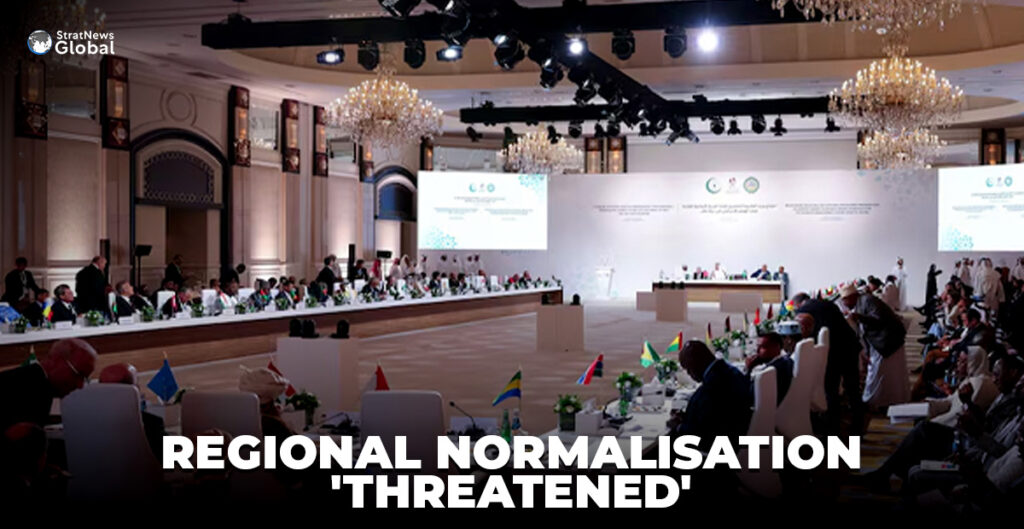
Leaders of Arab and Islamic nations plan to warn that Israeli strikes on Qatar and other “hostile acts” threaten coexistence and regional normalisation, a draft resolution for Monday’s summit shows.
The summit is being convened in Doha in a show of support for Qatar in the wake of the Israeli attack targeting leaders of the Palestinian militant group Hamas who reside in the Gulf state.
The September 9 attack, which Hamas says killed five of its members but not its leadership, has prompted U.S.-allied Gulf Arab states to close ranks, adding to strains in ties between the United Arab Emirates and Israel, which normalised relations in 2020.
An excerpt of the draft resolution seen by Reuters said “the brutal Israeli attack on Qatar and the continuation of Israel’s hostile acts, including genocide, ethnic cleansing, starvation, siege, and colonising activities and expansion policies, threatens prospects of peace and coexistence in the region.”
These actions threaten “everything that has been achieved on the path of normalising ties with Israel, including current agreements and future ones”, according to the draft, which was drawn up by foreign ministers meeting ahead of the summit.
Israel Rejects Genocide Accusation
Israel has been widely accused of committing genocide against Palestinians in Gaza, including by the world’s biggest group of genocide scholars, during its nearly two-year campaign in the Palestinian enclave that has killed more than 64,000 people, according to local authorities.
Israel rejects the accusation, citing its right to self-defence following the October 7, 2023, attack by Hamas militants that killed 1,200 people and resulted in the capture of 251 hostages, according to Israeli figures.
Hitting back at global condemnation of the attack, Israeli Prime Minister Benjamin Netanyahu has kept up pressure on Qatar over the presence of Hamas leaders on its soil, warning Doha on Wednesday to either expel Hamas officials or “bring them to justice, because if you don’t, we will”.
Netanyahu said on Saturday that getting rid of Hamas leaders living in Qatar would remove the main obstacle to releasing hostages still held by the group in Gaza and ending the war.
Qatar, a key mediator in the Gaza conflict, has accused Israel of sabotaging chances for peace and Netanyahu of practising “state terrorism”. A member of Qatar’s internal security forces was among those killed.
Qatari Prime Minister Sheikh Mohammed bin Abdulrahman al-Thani said on Sunday that Israel’s actions would not stop Doha’s mediation efforts with Egypt and the United States.
Trump Has Said Attack Won’t Be Repeated
U.S. President Donald Trump has signalled unhappiness over the Israeli attack, saying it did not advance Israeli or U.S. goals, calling Qatar a close ally working hard to broker peace.
He also said eliminating Hamas was “a worthy goal”. After the attack, he told Qatari Emir Sheikh Tamim bin Hamad Al-Thani that “such a thing will not happen again on their soil”.
The UAE was the most prominent of several Arab states to normalise ties with Israel in 2020 under the Abraham Accords, brokered with U.S. backing during Trump’s first term in office.
The deal normalising ties between the UAE and Israel marked the first time an Arab state had established relations with Israel since Jordan’s 1994 peace agreement.
Egypt was the first Arab state to normalise ties with Israel in 1979, after signing a peace treaty.
The UAE on Friday summoned the deputy Israeli ambassador over the attack and subsequent remarks by Netanyahu, which it described as hostile.
It has described Qatar’s stability as an “inseparable part of the security and stability of the states of the Gulf Cooperation Council”.
The council includes Saudi Arabia, which has said it will not establish ties with Israel without the creation of a Palestinian state.
(With inputs from Reuters)
From Mini to Mega: India, U.S. Reset Trade Talks
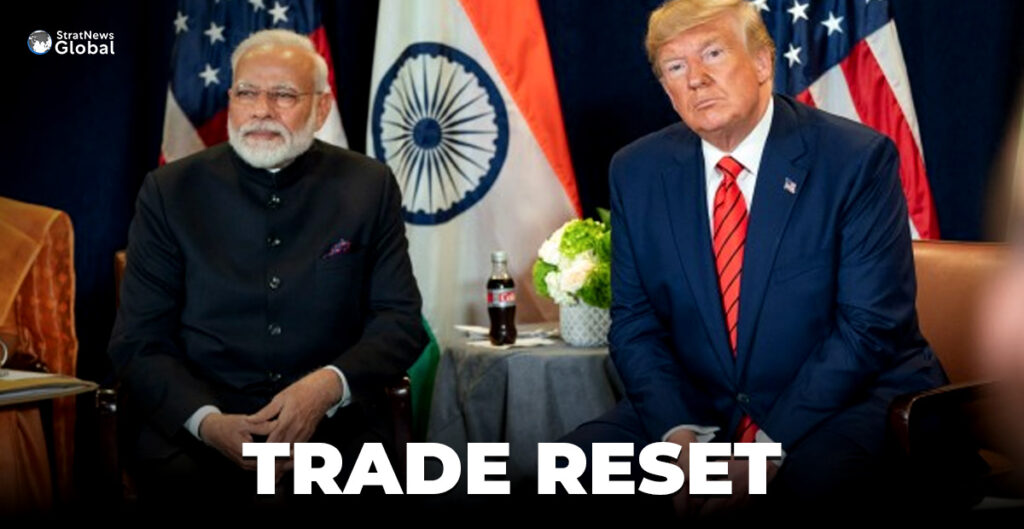
India and the United States have resumed negotiations for a comprehensive free trade agreement, setting aside earlier plans for a phased approach, multiple sources told StratNewsGlobal.
Talks were revived after tensions between U.S. President Donald Trump and Prime Minister Narendra Modi. Washington has advised New Delhi to “restart the talks from scratch” to finalise a single pact “in one go,” rather than through tranches.
Before Trump called India a “dead economy” and imposed 50 per cent tariffs, including sanctions over Russian oil purchases, both sides were “just a few inches away” from signing the first tranche of an agreement. Sources said negotiators have now “gone back to the drawing board.”
However, another source noted that India is still weighing the option of an “early harvest” deal, as it did with Australia, followed by a larger agreement. Negotiators from both countries are set for detailed discussions.
In a recent social media post, Trump said, “I am pleased to announce that India and the United States of America are continuing negotiations to address the Trade Barriers between our two nations. I look forward to speaking with my very good friend, Prime Minister Modi, in the upcoming weeks. I feel certain that there will be no difficulty in coming to a successful conclusion for both of our Great Countries!”
Modi responded: “India and the US are close friends and natural partners. I am confident our trade negotiations will pave the way for unblocking the limitless potential of the India-US partnership. Our teams are working to conclude these discussions at the earliest. I am also looking forward to speaking with President Trump. We will work together to secure a brighter, more prosperous future for both our people.”
Commerce and Industry Minister Piyush Goyal added, “In February 2025, Prime Minister Narendra Modi and President Trump together instructed us that the ministers of both sides should make a good agreement by November 2025. The first part of that agreement, the first tranche, should be finalised by November 2025, and since March, discussions have been going on very seriously in a good environment. Progress is being made, and with the progress, both sides are satisfied.”
The renewed trade talks come even as the U.S. pushed G-7 and EU allies to impose more tariffs on India and China for buying Russian oil.
Mark Linscott, Senior Trade Policy Adviser at the US-India Strategic Partnership Forum, said, “My sense is that it’s still very much a work in progress for the two governments to figure out how to climb out of the hole that’s been dug since July. Regardless of what the modality might be, I think there will be months of hard negotiations to nail down all the specifics.”
On agriculture and dairy, sources said Washington has taken a stance similar to Australia’s, aiming to access only the premium segment of products such as cheese.
Biswajit Dhar, international trade expert and former JNU professor, commented, “Lot of kite-flying is going on here. Americans are giving out mixed signals… From day one, an early harvest or a phase-I was not feasible because the Americans have a specific wish-list and that is agriculture.”
He added, “A Phase-1 was never feasible as far as the Americans were concerned. They were more for a EU-model, with one comprehensive trade pact rather than going for tranches. But Trump is in a hurry and so concluding a mega deal in a timely manner within the deadline of 2025-end, can be problematic. He has to show results in 2026 else he will have problems during the mid-term.”
On India’s side, Dhar flagged “lack of transparency” in the talks and said, “There is a strong farm lobby that is now making it difficult for the government to discuss agri-access and dairy products. The recent step taken by the government to reform GST will also prove to be problematic even as it will not help in integrating the Indian economy with the global economy.”
Climate Risks Mount In Australia Ahead Of New Emissions Pledge
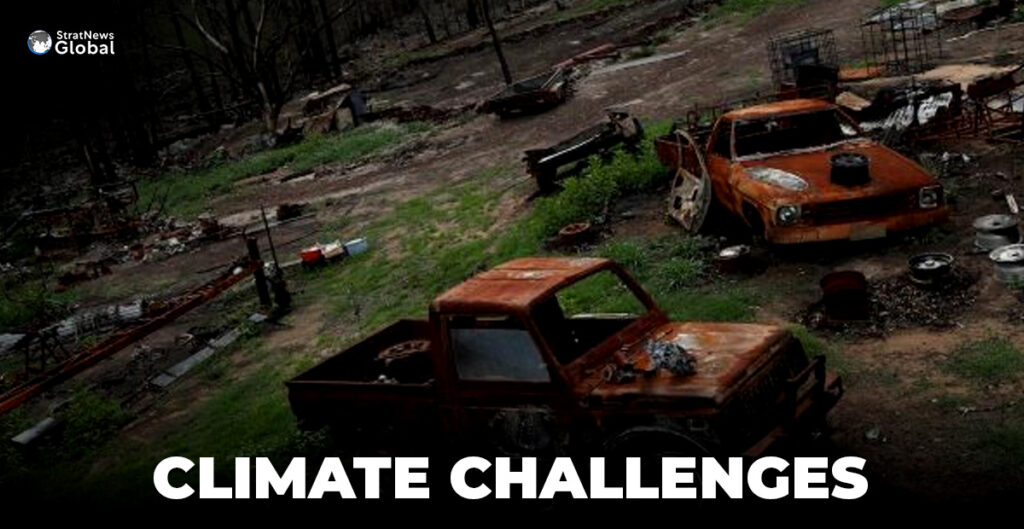
Australia is set to experience more frequent and severe climate disasters, many occurring at the same time, a government report warned on Monday. The assessment said such overlapping events would place heavy pressure on industries, public services, and national infrastructure, and comes just ahead of Canberra’s announcement of a new emissions target.
Among the conclusions of the most comprehensive assessment of risks to Australia posed by climate change were that heatwaves become more frequent and deadly, while rising sea levels will put millions at risk and plants and animals will have to move, adapt, or die.
Northern parts of the country, remote communities and outer suburbs of major cities will be particularly susceptible, Climate and Energy Minister Chris Bowen said in a statement.
“No Australian community will be immune from climate risks that will be cascading, compounding and concurrent,” he said.
“Australians are already living with the consequences of climate change today, but it’s clear every degree of warming we prevent now will help future generations avoid the worst impacts in years to come.”
Australia aims to cut carbon emissions by 43% by 2030 and reach net-zero emissions by 2050. Bowen said the government would soon announce an “ambitious and achievable” emissions reduction target for 2035.
The previous right-of-centre government was considered by clean energy advocates a global laggard for its emissions policies. Renewable energy projects have faced backlash from communities and conservative politicians and media.
Extreme Warm Conditions
Monday’s report said Australia was already 1.2 degrees Celsius warmer than historical levels. It said a 3-degree warming would raise the number of extreme heatwave days to 18 a year from four now and the duration of marine heatwaves to nearly 200 days from 18 now.
The number of deaths from heatwaves in Sydney could increase by 444% in that scenario, it said, while some forests and marine life may perish.
Three degrees of warming would raise sea levels by another 54 centimetres by 2090, allowing saltwater ingress to impact fresh water supply and putting more than 3 million people in coastal communities at high risk of flooding that could occur on more than 200 days each year, up from 15 days a year now.
Health and emergency services would face pressure, rebuilding costs would rise, property values would fall and hotter, drier weather would damage crop yields and stress livestock, the report said.
The government also on Monday released a national adaptation plan that Bowen said would guide Australia’s response to the report’s findings.
(With inputs from Reuters)
US Democrats Call For Trade Agreement To Tackle China’s Overproduction
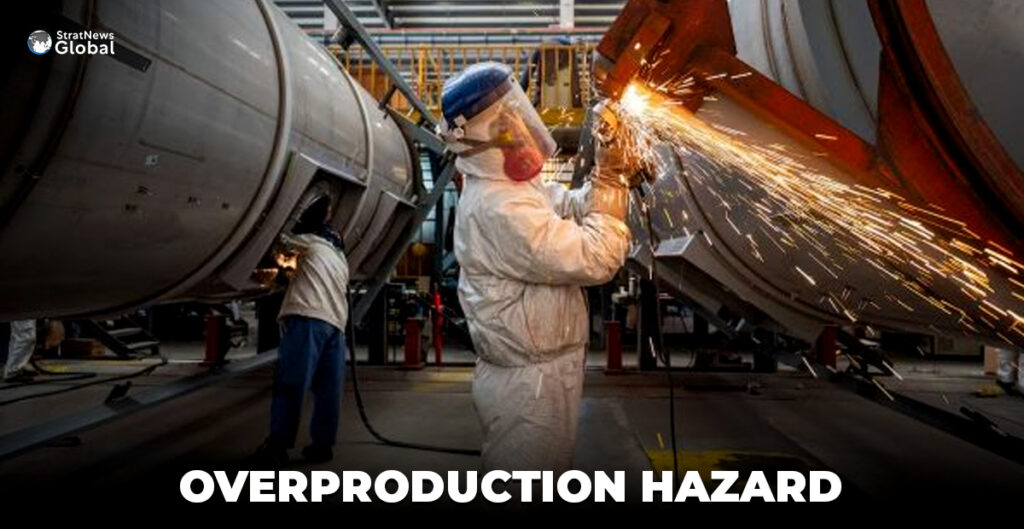
U.S. Democrats have called on the Trump administration to push Beijing into reducing what they describe as ‘structural overproduction’, a move that would require deep changes to China’s economic system. The demand comes as Treasury Secretary Scott Bessent meets Chinese officials for trade discussions in Spain.
Democratic members of a House of Representatives committee on China said any bilateral trade deal should include “binding requirements” on Beijing to reduce industrial overcapacity, according to a letter they sent to Bessent and other top trade officials on Friday.
China produces far more manufactured goods than can be consumed domestically, fuelling huge shipments abroad and price wars at home. While Chinese officials have repeatedly rejected U.S. assertions about overcapacity, Beijing has launched a campaign against deflation and price wars in some sectors.
Bessent and Trade Representative Jamieson Greer, addressed in the letter along with Commerce Secretary Howard Lutnick, began talks in Madrid on Sunday with a Chinese team led by Vice Premier He Lifeng.
The departments of the Treasury and Commerce did not respond to questions about the letter.
The letter from members of the House Select Committee on China, repeating arguments made by the Biden administration, especially former Treasury Secretary Janet Yellen, is unlikely to move Donald Trump’s Republican administration.
Overproduction
“The PRC’s historic and destructive use of structural overproduction to drive economic growth comes at an indisputable cost to U.S. industry, employment, and the stability of international markets,” says the letter, referring to China’s official name, the People’s Republic of China.
The world’s two largest economies have struggled to turn a truce on triple-digit tariffs, extended for 90 days last month, into a lasting trade deal to address complaints ranging from fentanyl and the U.S. trade deficit to TikTok’s ownership.
Overcapacity should be addressed in the talks, the letter says, citing China’s steel and solar panel industries as examples where a massive expansion of supply was followed by waves of exports that undercut jobs and industry in the U.S. and elsewhere.
The administration should also capitalise on the angst those exports cause for allies and partners, and work with them to construct an international response to China’s overcapacity, the letter says.
That requires a “more balanced” approach to tariffs, it adds, referring to the Trump administration’s favoured economic policy tool.
The Trump administration has imposed tariffs on close allies like South Korea and Japan, although some levies have subsequently been reduced in exchange for investment pledges or reciprocal tariff cuts.
(With inputs from Reuters)
Western German Elections See Threefold Rise In Far-Right Support, Forecasts Reveal
Initial projections on Sunday indicated a sharp rise in backing for Germany’s far-right in local elections in the nation’s most populous state, signalling trouble for conservative Chancellor Friedrich Merz’s four-month-old coalition with the Social Democrats.
Early forecasts from pollster infratest dimap for broadcaster ARD after voting ended for councils, districts and mayors in the western state of North Rhine-Westphalia showed support for the Alternative for Germany (AfD) party had more than tripled to 16.5% from 2020.
Merz’s conservatives remained the strongest party, scoring 34% of the vote, roughly the same level as five years ago. The Social Democrats (SPD) slipped to 22.5% from 24.3%, according to infratest dimap.
“I am looking at the AfD’s results with great concern. This should give us pause for thought because this is a path that is emerging, and we democrats must counter it,” Olaf Lies, SPD premier of the state of Lower Saxony told ARD television.
North Rhine-Westphalia is home to nearly a quarter of Germany’s population. It covers a wide area from the Ruhr, Germany’s declining industrial heartland which is seeking to shift away from coal mining and steel production, to cities such as Cologne and Duesseldorf and large rural regions.
Test For Merz’s Coalition
The vote is a first test for Merz’s uneasy coalition with the SPD which critics say is failing to tackle a sluggish economy and voter concerns about immigration.
Tackling migration is a priority for the nationalist AfD which wants to spread its appeal to western Germany from eastern strongholds.
A weekend INSA poll on Sunday put Merz’s conservatives down 1 point and level with the AfD on 25% nationally while the SPD trailed in third place at 14%.
“This is a great success for us,” said AfD co-leader Tino Chrupalla on social media platform X. “We are a people’s party and we all bear a great responsibility for Germany.”
The AfD became Germany’s second biggest party in February’s federal election and was endorsed by tech billionaire Elon Musk.
Germany’s domestic spy agency classified the AfD as a right-wing extremist organisation in May, although that decision is on ice pending a court appeal.
The initial forecasts in North Rhine-Westphalia showed heavy losses for the Greens and Free Democrats. Final results are not expected before Monday.
(With inputs from Reuters)
US Accuses China Of Distorting WWII Documents To Pressure Taiwan
China is deliberately misrepresenting World War Two-era documents to pressure and isolate Taiwan, the de facto US embassy in Taipei said, adding that those agreements never determined the island’s final political status.
The 80th anniversary of the war’s end has been marked by a bitter dispute between Taipei and Beijing on its broader historical meaning and relevance today.
Taking Help Of Cairo Declaration, Potsdam Proclamation
The Beijing government says documents like the Cairo Declaration and Potsdam Proclamation support its legal claims of sovereignty over the island, as the wording states Taiwan was to be “restored” to Chinese rule, Taiwan being a Japanese colony at the time.
The Chinese government at the time was the Republic of China, which then in 1949 fled to Taiwan after losing a subsequent civil war with Mao Zedong’s communists.
Republic of China remains Taiwan’s formal name, and its government says no World War Two agreements made any mention of Mao’s People’s Republic of China because it did not exist then, thus Beijing has no right to claim Taiwan now.
“China intentionally mischaracterises World War Two-era documents, including the Cairo Declaration, the Potsdam Proclamation, and the Treaty of San Francisco, to try to support its coercive campaign to subjugate Taiwan,” the American Institute in Taiwan said in an statement emailed to Reuters on Monday.
“Beijing’s narratives are simply false, and none of these documents determined Taiwan’s ultimate political status.”
US’ One China Policy
The San Francisco Peace Treaty was signed by Japan in 1951 renouncing its claims to Taiwan, though the island’s sovereignty is left unresolved in it. Beijing says the treaty is “illegal and invalid” given it was not a party to it.
The United States ended official ties with Taipei in 1979 when it recognised Beijing, but remains the island’s most important international backer.
Washington follows a “one China policy” under which it officially takes no position on Taiwan’s sovereignty and only acknowledges China’s position on the subject.
“False legal narratives are part of Beijing’s broader campaign to try to isolate Taiwan from the international community and constrain the sovereign choices of other countries regarding their interactions with Taiwan,” added the American Institute in Taiwan, the de facto US embassy.
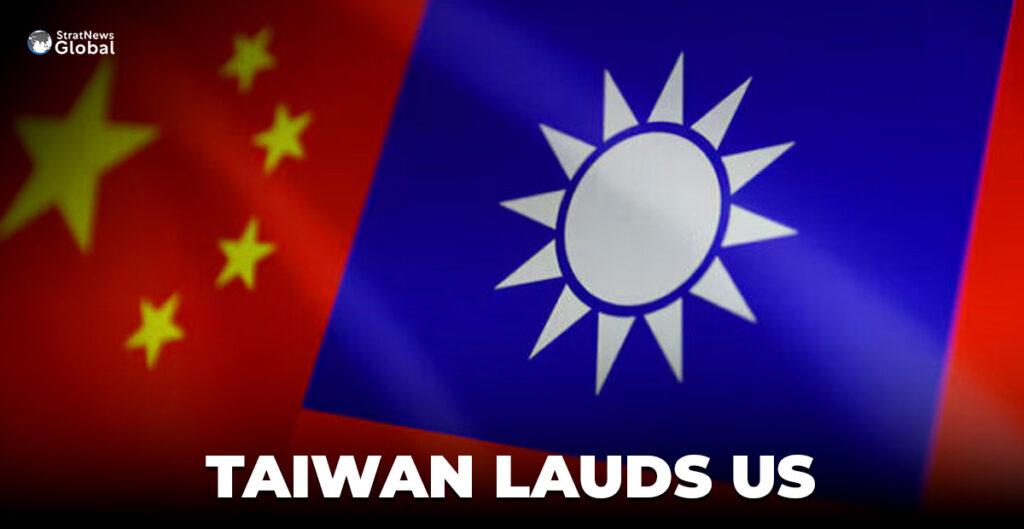
Taiwan Lauds US Statement
China’s foreign ministry did not immediately respond to a request for comment. Chinese President Xi Jinping on September 3 oversaw a massive military parade in Beijing to mark the war anniversary.
Taiwan Foreign Minister Lin Chia-lung expressed his thanks for the US mission’s statement.
“Our country and the People’s Republic of China are not subordinate to each other, and the People’s Republic of China has no right to represent Taiwan in the international community,” Lin said in a statement.
(With inputs from Reuters)
Trump Hints At Fourth TikTok Deadline Extension: Reports
The Trump administration is likely to once again extend the 17 September deadline for China’s ByteDance to either sell its US TikTok assets or shut down the app, a source familiar with the matter told Reuters.
It would be the fourth reprieve granted by President Donald Trump from federal enforcement of a law that originally gave ByteDance until January 2025 to sell or shut down the popular social media platform.
‘Up To China’
Last month, Trump said he had US buyers lined up for the app and could further extend the deadline. But he was equivocal on Sunday when asked about the app’s future.
“I may or may not, we’re negotiating TikTok right now. We may let it die, or we may, I don’t know, it depends, up to China,” Trump told reporters. “It doesn’t matter too much. I’d like to do it for the kids.”
The White House did not immediately respond to a request for comment on the expected extension, which, if granted, would suggest a reluctance to shut down an app used by 170 million Americans.
While China hawks in Washington have long feared Beijing could harness TikTok to spy on, blackmail or censor Americans, Trump has said he wants to save the app.
Progress on a deal has been slow, with any sharing of TikTok’s prized algorithm with a US buyer requiring approval from Beijing.
Deal In The Works
A deal had been in the works in the spring. It would have spun off TikTok’s US operations into a new US-based firm, majority-owned and operated by US investors, but was put on hold after China indicated it would not approve it following Trump’s announcements of steep tariffs on Chinese goods.
US-China Talks
US Treasury Secretary Scott Bessent and US Trade Representative Jamieson Greer began trade talks with Chinese Vice Premier He Lifeng and China’s top trade negotiator, Li Chenggang, in Spain on Sunday that will touch on TikTok, but a deal is not expected before September 17, the source said.
TikTok was not discussed in previous rounds of US-China trade talks in Geneva, London and Stockholm. The source said TikTok’s public inclusion as an agenda item when the Treasury announced the latest talks gives the Trump administration political cover for another extension, which may annoy both Republicans and Democrats in Congress who mandated TikTok’s sale.
Trump began his second term as president on January 20 and opted not to enforce the law requiring TikTok’s US asset sale or shut down. He first extended the deadline to early April, then from May to June, and a third time to September.
(With inputs from Reuters)
Marcos Vows Clean-Up As Graft Allegations Rock Philippines
Philippine President Ferdinand Marcos Jr. on Sunday said an independent probe into alleged irregularities in infrastructure projects would spare no one, as he pledged to restore public trust amid growing unease over corruption.
Marcos assured the graft-weary public that the probe would break from past efforts, calling it an “inflection point” in how the government operates and spends funds.
‘Only One Way To Do it’
He appointed a former Supreme Court justice to lead a newly formed commission and said it would tackle all wrongdoers no matter who they are, with congressional investigations already implicating several powerful political figures.
“There’s only one way to do it… they will not be spared,” Marcos told a televised press briefing on Monday.
The commission was to investigate alleged corruption in infrastructure projects, with a focus on flawed flood control facilities that have come under scrutiny after monsoon rains and storms inundated towns and cities in recent months.
Marcos flagged 545 billion pesos ($9.52 billion) in flood control spending since 2022 that was riddled with alleged irregularities, with some projects never actually built. Just 15 contractors bagged 20% of the budget, sparking outrage over “excessive corruption”.
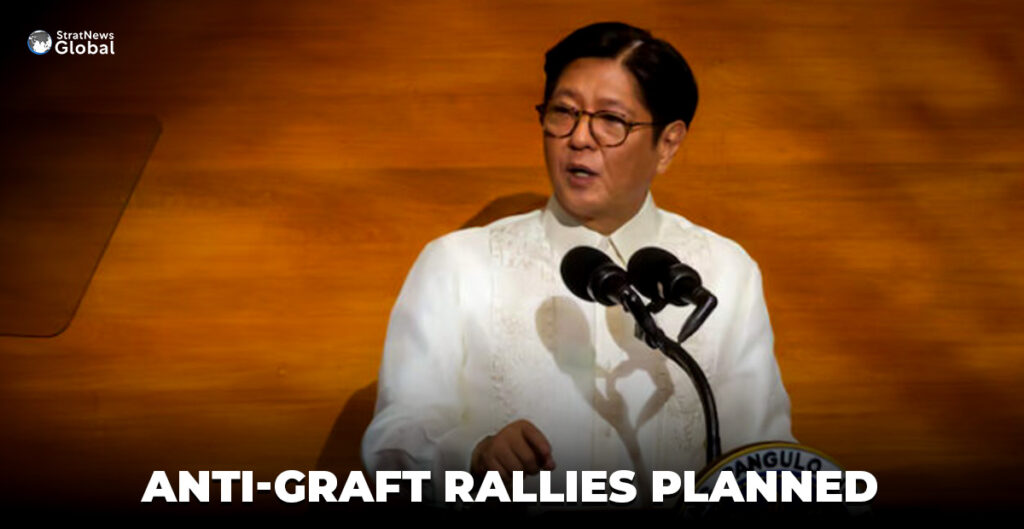
Anti-Corruption Rallies Planned
Civil society groups, including church leaders, are planning anti-corruption rallies on September 21 to coincide with the anniversary of late strongman Ferdinand Marcos Sr’s declaration of martial law, a period many remember as one of the darkest in the country’s history.
“If I weren’t president, I might be out in the streets with them,” said Marcos, who is Marcos Sr’s son.
He urged those planning to mount protests to do so peacefully amid violent demonstrations in Nepal and Indonesia.
“Express it,” he said. “You make your feelings known to these people and make them answerable for the wrongdoings that they have done.”
‘Matter Of Simple Numbers’
The president has scrapped all flood control projects for 2026, redirecting the savings to fund education, health, and agriculture.
Marcos warned against politicising the probe, saying the issue boils down to accountability and transparency.
“Let’s not politicize this. It’s a matter of simple numbers,” he said.
“We need to find out how much public money was stolen by these crooks. That’s what we need to uncover and fix.”
(With inputs from Reuters)
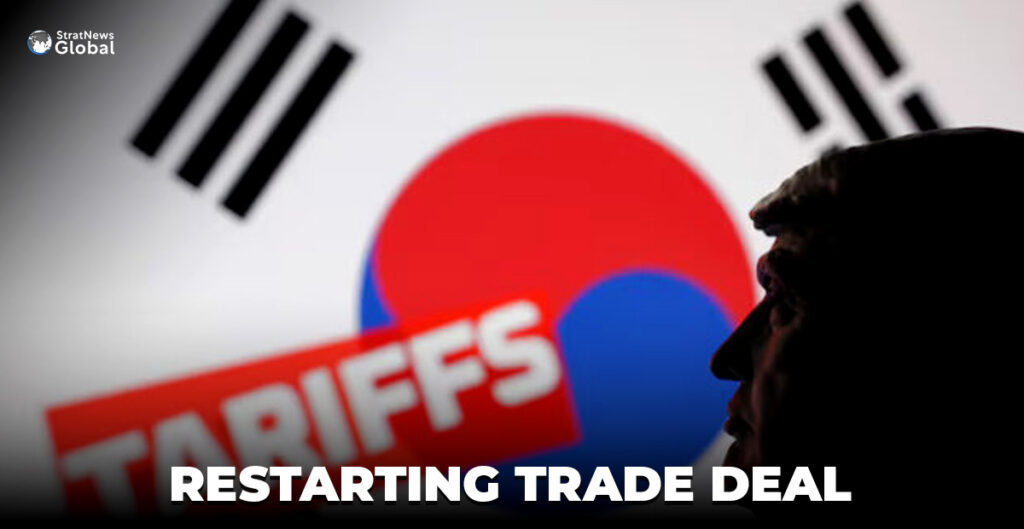
Seoul Sends Top Trade Official To US To Push Forward Stalled Deal
South Korea’s chief trade envoy, Yeo Han-koo, will travel to the US on Monday for follow-up talks on tariffs, the trade ministry said, as both sides work to resolve pending issues in a trade deal agreed in July.
Details of the broad trade agreement still need to be hammered out, especially around a $350 billion investment fund.
Officials in Seoul have said trade talks are being delayed because the terms outlined in a similar deal with Japan struck with the US are unacceptable for South Korea due to foreign exchange market implications.
Working Hard To Achieve ‘Reasonable’ Outcome
Yeo’s trip comes after Industry Minister Kim Jung-kwan recently returned from Washington after talks with US Commerce Secretary Howard Lutnick.
“We’re working hard to achieve an outcome that is reasonable and meets our national interests,” Yeo told reporters at the airport before leaving for the United States.
The apparently inability of Industry Minister Kim to make progress in trade talks during his US trip has raised concerns that negotiations have reached an impasse, local media reported.
Kim did not elaborate on the trade negotiations other than saying they were still underway, when asked by reporters about his latest trip to the United States.
The trade ministry could not immediately be reached for comment.
Safeguarding National Interests
President Lee Jae Myung said last week that he would not sign any agreement with the US if it put at risk South Korea’s national interests.
“If it doesn’t benefit us, there’s no point in signing it,” Lee told a press conference.
The finance ministry said on Sunday it was discussing various measures with the US to minimise any impact on the onshore currency market from the $350 billion investment package but declined to confirm if the measures included a foreign exchange swap line.
US Immigration Raid
The tariff negotiations are underway at a time when the countries are trying to repair strained ties after a recent US immigration raid that saw the arrest of hundreds of Korean workers at a Hyundai Motor battery plant in the state of Georgia, one of South Korea’s biggest US investment projects.
Images of the raid that saw workers taken into custody in handcuffs and shackles by US immigration authorities have left many shocked in South Korea, a key US ally.
US President Donald Trump said in a post on social media that he wanted foreign companies to bring their professionals to teach and train Americans to learn how to make complex products such as chips and ships.
“I want them (foreign companies) to bring their people of expertise for a period of time to teach and train our people how to make these very unique and complex products,” Trump said on his Truth Social platform.
“I don’t want to frighten off or disincentivize Investment into America by outside Countries or Companies,” he said.
(With inputs from Reuters)
Trump’s Upcoming UK Visit To Focus On Trade, Tech And Security Ties
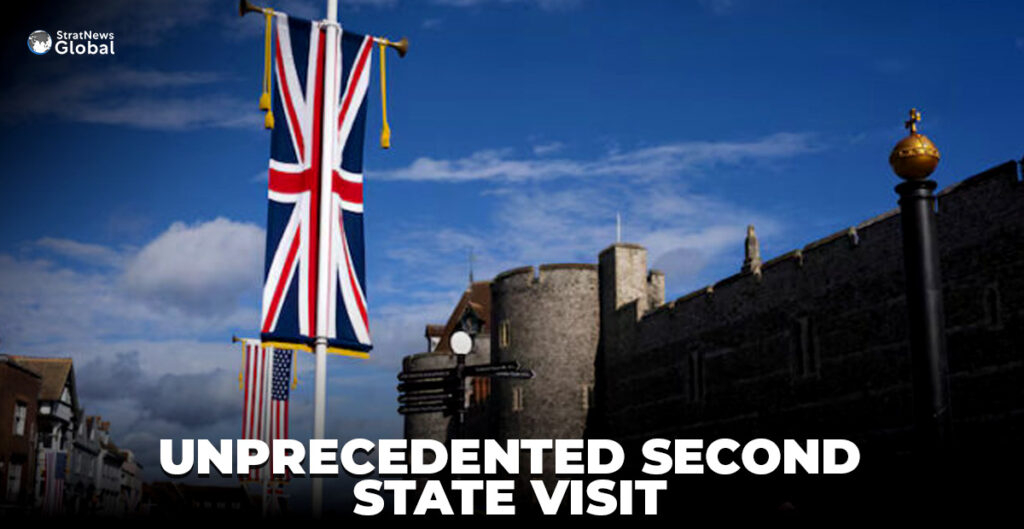
During US President Donald Trump’s unprecedented second state visit this week, the US and UK are set to announce key agreements on technology and civil nuclear energy, even as the UK looks to wrap up discussions on steel tariffs as part of a much-anticipated trade deal.
Trump and his wife, Melania, will be treated to a display of British royal pageantry during their visit on Wednesday, including a carriage tour, a state banquet, a flypast by military aircraft and a gun salute.
The British government hopes the soft power of the royals will appeal to Trump as it seeks tighter defence, security and energy ties with Washington, having already secured a favourable tariff deal.
Starmer Hopes To Seal Lower Tariff Rates
Prime Minister Keir Starmer will host Trump at his Chequers country residence on Thursday to discuss working more closely together, on issues like Ukraine, and with the aim of finalising promised lower tariffs for steel and aluminium.
A spokesperson for Starmer said the leaders would sign “a world-leading tech partnership” and “a major civil nuclear deal” during the trip.
“The UK-US relationship is the strongest in the world,” Starmer’s spokesperson told reporters. “This week we are delivering a step change in that relationship.”
The British leader, a technocrat and a self-proclaimed socialist, and Trump, a proudly unpredictable politician who has pushed the Republican Party further to the right, have overcome their differences to develop a good working relationship.
Starmer was the first world leader to agree an economic deal with Trump on reducing his global tariffs.
Under that agreement, the United States said it planned to reduce tariffs on imports of cars and aluminum and steel. While details on car tariffs were agreed in June, the deal for steel and aluminium is yet to be finalised.
“When it comes to steel, we will make sure that we have an announcement as soon as possible,” British business minister Peter Kyle told the BBC on Sunday.
Investments Flow
Before Trump’s arrival, Britain on Saturday announced over 1.25 billion pounds ($1.69 billion) of US investment from PayPal, Bank of America and others, while Nvidia and OpenAI are expected to announce investment deals as part of the technology agreement, according to sources, who asked not to be named.
CoreWeave, a US cloud computing provider, also said it would announce investments in Britain this week.
A delegation of British officials will be in the United States on Monday to finalise the details of Trump’s visit, Starmer’s spokesperson said.
Mandelson Scandal
Those talks will be complicated by Starmer’s decision last week to fire Peter Mandelson, his ambassador to the United States, over his ties with the late convicted US sex offender Jeffrey Epstein.
The sacking is deeply embarrassing for Starmer, who appointed him to Britain’s most desirable diplomatic post less than a year ago.
This will be Trump’s second visit to Britain in the last two months after he spent time in Scotland at his golf courses at the end of July.
During this week’s visit, Starmer’s spokesperson said there would also be announcements on deepening cultural ties, including promoting basketball in Britain and developing partnerships between heritage and art institutions.
(With inputs from Reuters)