

Support us by contributing to StratNewsGlobal on the following UPI ID
ultramodern@hdfcbank

Strategic affairs is our game, South Asia and beyond our playground. Put together by an experienced team led by Nitin A. Gokhale. Our focus is on strategic affairs, foreign policy and international relations, with higher quality reportage, analysis and commentary with new tie-ups across the South Asian region.
You can support our endeavours. Visit us at www.stratnewsglobal.com and follow us on YouTube, Twitter, Facebook and Instagram.
र 500 per month
र 1000 per month
र 5000 per year
र 10000 per year
Donate an amount of your choice
र 500 per month
Donate र 500 per month

र 1000 per month
Donate र 1000 per month
र 5000 per year
Donate र 5,000 per year
र 10000 per year
Donate र 10,000 per year
Donate an amount of your choice
Donate an amount of your choice
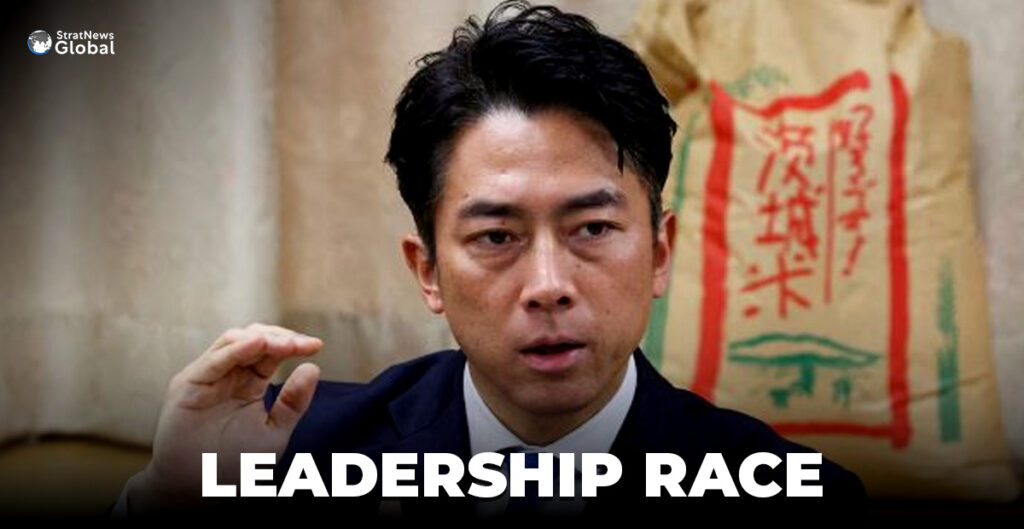

Japan: Koizumi And Hayashi Enter Race To Lead Ruling Party
Japan’s Farm Minister Shinjiro Koizumi and Chief Cabinet Secretary Yoshimasa Hayashi formally declared their bids on Tuesday to head the ruling party. The leadership vote, scheduled for early next month, will determine the successor to Prime Minister Shigeru Ishiba, who is stepping down.
Ishiba announced his resignation this month to take responsibility for a series of bruising election losses that have made harder the task of choosing a leader for his ruling Liberal Democratic Party (LDP).
Farm Minister Koizumi told a press conference he had informed supporters over the weekend of his intention to run for the role of LDP leader, with Finance Minister Katsunobu Kato set to spearhead his campaign operation.
The son of former Premier Junichiro Koizumi had some success this year in his task of curbing soaring prices of rice.
Kato, who secured the fewest votes in the LDP’s previous leadership contest in September last year, told a separate press conference he would back Koizumi this time, in the spirit of “unifying the party”.
Chief Cabinet Secretary Hayashi, who has served as the Ishiba government’s top spokesperson, declared his candidacy on X, with a formal press conference set for 12:30 p.m. (0330 GMT).
“I aim to lead a new administration that balances stability and growth,” Hayashi posted.
Other Candidates
Former Foreign Minister Toshimitsu Motegi was the first to throw his hat in the ring last week, followed by Former Economic Security Minister Takayuki Kobayashi.
Also expected to announce her candidacy this week is former Internal Affairs Minister Sanae Takaichi, a proponent of government stimulus and monetary easing who could become Japan’s first female leader.
The choice of Japan’s next leader is more complicated than before as the LDP, which has ruled for most of the post-war period, and its coalition partner Komeito, lost their majorities in both houses of parliament during Ishiba’s tenure.
(With inputs from Reuters)
Taiwan Unveils Crisis Handbook As China Threat Looms
In a bid to boost public preparedness without triggering panic, Taiwan’s defence ministry on Tuesday unveiled an updated civil defence handbook, aimed at equipping citizens for potential crises, including a possible attack by China, which claims the self-ruled island as its own.
Democratically-governed Taiwan has stepped up its resilience and defence preparations as China has increased its military activities around the island over the past five years, and has drawn lessons from Ukraine’s defence against Russia.
Possibilities Mentioned
Taiwan’s new handbook, which Reuters reviewed last week, gives a list of scenarios Taiwan might face, from natural disasters like a tsunami to an all-out invasion, and is the third edition after first being published in 2022.
Shen Wei-chih, director at the Taiwan military’s All-out Defence Mobilisation Agency, told a news conference at the defence ministry that 5,000 hard copies will be printed for distribution initially, while it can also be downloaded online. There is an English-language version too.
“Why are we releasing this handbook during a time of peace? It is not to create panic, but to tell people you need to make preparations while there is peace, so when crisis happens you won’t know what to do,” he said.
“The earlier you are prepared, the earlier you study (the booklet), the earlier you will be safe.”
Important Tips
Shen said the government wants people to put a copy of the handbook in grab bags containing emergency supplies stored in an easily accessible location.
It also includes instructions on how to listen to the radio in case the internet goes down, the use of landlines for dedicated government hotlines, and advice on going to police stations or neighbourhood government offices to get verified information if radio broadcasts are inaccessible.
In a section on possible disinformation, it warns that “adversaries may also disguise themselves as friendly forces”, showing a cartoon image of a soldier with a Chinese flag and people running away.
Taiwan’s government strongly objects to China’s sovereignty claims, saying only the island’s people can decide their future. China has rebuffed multiple offers of talks from Taiwan President Lai Ching-te, saying he is a “separatist”.
New Music Video
China’s military on Saturday released a new music video aimed at Taiwan called “Plant the flag of victory on Formosa”, showing missiles being fired, marines storming beaches and images of Taipei 101, once the world’s tallest building and still a major city landmark.
“We are the vanguard for reunification,” is one of the lyrics.
(With inputs from Reuters)
Trump Confirms Second Strike On Suspected Venezuelan Drug Vessel
US President Donald Trump on Monday announced that the US military had carried out a strike on an alleged Venezuelan drug cartel vessel en route to the United States — the second such operation targeting a suspected drug boat in recent weeks.
He said three men were killed in the strike, adding that it occurred in international waters. Trump provided no evidence for his assertion that the boat was carrying drugs.
‘Violent Drug Trafficking Cartels’
“This morning, on my Orders, US Military Forces conducted a SECOND Kinetic Strike against positively identified, extraordinarily violent drug trafficking cartels and narcoterrorists in the SOUTHCOM area of responsibility,” Trump said in a post on Truth Social.
“These extremely violent drug trafficking cartels POSE A THREAT to US National Security, Foreign Policy, and vital US Interests,” Trump said. US Southern Command (SOUTHCOM) is the military’s combatant command which encompasses 31 countries through South and Central America and the Caribbean.
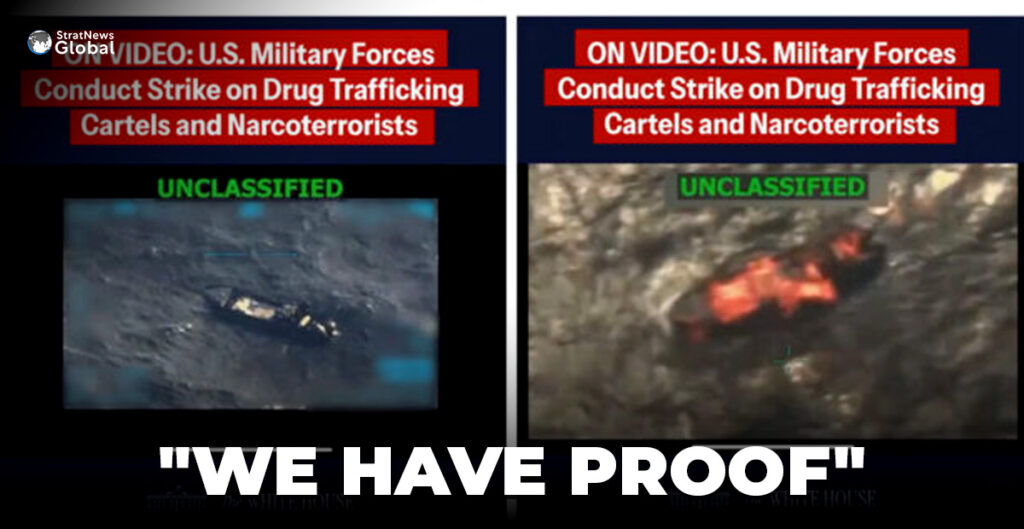
The post also included a nearly 30-second video, with markings of “Unclassified” on the top, which appeared to show a vessel in a body of water exploding and then on fire.
‘We Have Proof’
Later on Monday, Trump said that “we have proof, all you have to do is look at the cargo that was … spattered all over the ocean, big bags of cocaine and fentanyl.”
Reuters conducted initial checks on the video with an AI detection tool, but the video was partly blurred, making it impossible to confirm if there was any manipulation.
However, thorough verification is an ongoing process, and Reuters will continue to review the footage as more information becomes available.
The Venezuelan communications ministry did not immediately respond to a request for comment.
The latest strike comes amid a large US military buildup in the southern Caribbean. Five US F-35 aircraft were seen landing in Puerto Rico on Saturday after the Trump administration ordered 10 of the stealth fighters to join the buildup.
There are also at least seven US warships in the region, along with one nuclear-powered submarine.
Sustained Campaign?
Trump, speaking with reporters on Monday, suggested that operations could also be conducted on land against suspected drug smugglers.
“When they come by land, we’re going to be stopping them the same way we stopped the boats,” Trump said. “But maybe by talking about it a little bit, it won’t happen.”
Earlier this month, US Defence Secretary Pete Hegseth told sailors and Marines on a warship off Puerto Rico that they were not deployed to the Caribbean for training but instead sent to the “front lines” of a critical counter-narcotics mission.
On Monday, Hegseth, in a post on X, suggested an expansive mission for the US military against drug traffickers: “We will track them, kill them, and dismantle their networks throughout our hemisphere — at the times and places of our choosing.”
Trump has ordered the Department of Defence to rename itself the Department of War, a change that will require action by Congress. The new name would apply to Hegseth as well, altering his title to “Secretary of War”.
Act Of ‘Aggression’
Hours before Trump’s post, Venezuelan President Nicolas Maduro said that recent incidents between his country and the United States were an “aggression” by the US and that communications between the two governments had largely ended.
The Trump administration has provided scant information about the first strike on September 2, despite demands from US lawmakers that the government justify the action. It has alleged those onboard were members of Venezuelan gang Tren de Aragua and said 11 people were killed.
The Pentagon has not publicly said what type of drugs that boat was carrying or how much, or even what type of weapons were used to carry out the strike.
US officials, speaking on condition of anonymity, have told Reuters that the boat hit on September 2 appeared to be turning around when it was hit, a fact that has raised questions among some legal experts about the legality of the strike.
Trump shared a video at the time of that first strike that appeared to show a speedboat exploding at sea. A Venezuelan official later suggested that the video was created with artificial intelligence.
A Reuters review of that video’s visual elements using a manipulation detection tool did not show evidence of manipulation.
The Venezuelan government, which says it has deployed tens of thousands of troops to fight drug trafficking and defend the country, has said none of the people killed in the first strike belonged to Tren de Aragua.
Maduro has repeatedly alleged the US is hoping to drive him from power.
Unusual Move
Last month, the United States doubled its reward for information leading to the arrest of Maduro to $50 million, accusing him of links to drug trafficking and criminal groups.
The decision to blow up a suspected drug vessel instead of seizing it and apprehending the crew is highly unusual.
Under the Constitution, the power to declare war belongs to Congress, but the president is the commander-in-chief of the armed forces and presidents of both parties have conducted military strikes overseas without congressional approval.
Democratic Senator Adam Schiff of California said Monday evening that he was drafting a resolution that would force a vote under the War Powers Act on whether to block US Armed Forces from engaging in hostilities against non-state organizations until formally authorised by Congress.
(With inputs from Reuters)
China Claims Action Against Philippine Vessels At Scarborough Shoal
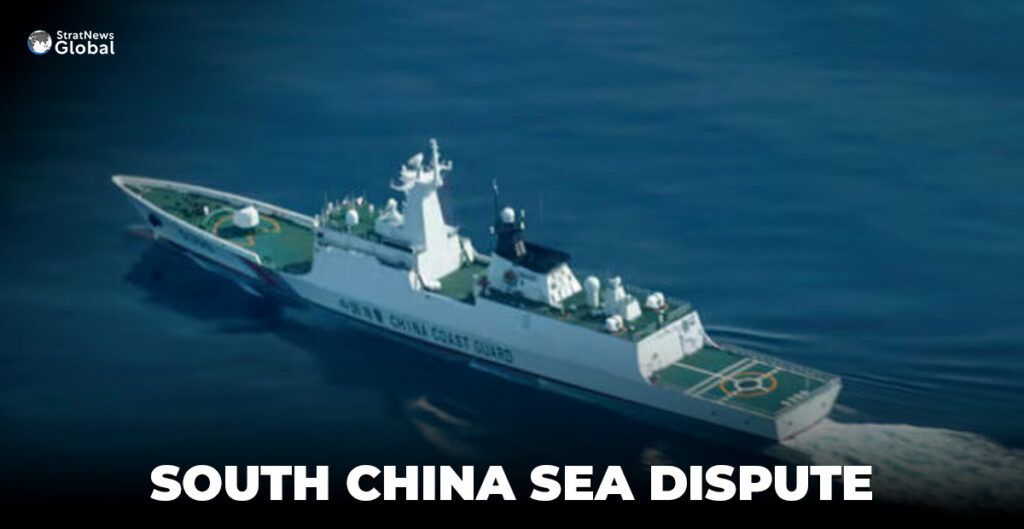
In a move to assert its territorial claims and maritime rights in the contested South China Sea, China’s coast guard on Tuesday said it had “taken control measures” against multiple Philippine vessels near the disputed Scarborough Shoal.
The Philippines and China have been engaged in a long-running maritime standoff in the strategic waterway that has included regular clashes between coast guard ships and massive naval exercises.
Taking The Moral High Ground
China approved plans to turn Scarborough Shoal – which Beijing calls Huangyan Island and which is known in the Philippines as the Panatag Shoal – into a national nature reserve last week, without announcing its specific boundaries.
Analysts said the move amounted to China trying to take the moral high ground in the dispute between Beijing and Manila over the atoll, part of a wider contest over sovereignty and fishing access in the South China Sea, a conduit for more than $3 trillion of annual ship-borne commerce.
The Philippines embassy in Beijing did not immediately respond to a request for comment.
“On September 16, the China Coast Guard took control measures against a number of Philippine officials vessels operating illegally in the territorial waters of the Scarborough Shoal in accordance with the law,” the coast guard said on its official WeChat, a social media platform.
South China Sea Disputes
China claims almost the entire South China Sea, overlapping the exclusive economic zones of Brunei, Indonesia, Malaysia, the Philippines and Vietnam. Unresolved disputes have festered for years over ownership of various islands and features.
In 2016, the Permanent Court of Arbitration in the Hague ruled that China’s sweeping claims in the region were not supported by international law, a decision that Beijing rejects.
Warning Against Provocations
On September 14, a spokesperson for the Chinese military’s Southern Theater Command said the Philippines must immediately stop provoking incidents and escalating tensions in the South China Sea.
“We sternly warn the Philippine side to immediately stop provoking incidents and escalating tensions in the South China Sea, as well as bringing in external forces for backing such efforts that are destined to be futile,” the spokesperson said.
“Any attempt to stir up trouble or disrupt the situation will not succeed.”
(With inputs from Reuters)
Rightwing Politics May Constrain French Development Spending In India
Remember how Donald Trump wound up the USAID (US Agency for International Development) last month, claiming American taxpayer money was being spent on projects in third world countries that could be better spent at home.
France, although not a big spender on development in third countries, is known to prioritise funding for certain projects, such as climate change, renewable energy, waste-water treatment, urban mobility, clean air and so on.
In India, French spending has largely focused on urban mobility solutions, such as metro networks. Funding is done through the French Development Agency (AFD), a bank wholly owned by the French government.
AFD’s budget for this year is nine billion euro ($10.5 billion), given mostly as loans that carry higher rates of interest compared to those lent by the World Bank or the Asian Development Bank. Nevertheless, it has many takers. Grants are also given.
But politics is casting a shadow over its lending. As parliament swings more to the right, the sentiment against spending money overseas is hardening.
France has a national debt totalling over 3.3 trillion Euro and bitter wrangling over how to resolve that has seen the departure of two prime ministers, Michel Barnier last December and Francois Bayrou a few days back.
“The fiscal situation in France is a challenge,” admitted Philippe Orliange, Executive Director of Operations at the AFD (French Development Agency).
He was briefing journalists from India, Bangladesh, Sri Lanka and some southeast Asian countries in Paris on Monday, on the challenges relating to development funding.
The debate on such funding “is harsh because of the fiscal situation,” he said.
There’s also growing pressure from France’s partners in the European Union (EU). The suggestion is that AFD fund projects that involve participation by French or European companies.
The argument is that since Indian and Chinese Exim banks tie their lending to projects involving firms from those countries, why not AFD do the same.
Add to that pressure from the EU to focus on projects closer to home, in Europe for instance. Ukraine is an obvious example. Moldova is another.
For now, AFD is holding its course. In fact, President Macron of France recently reopened three offices in the Indo-Pacific, including those in Fiji and Papua New Guinea.
It helps that the public at large does not appear to share the sentiment in parliament against overseas funding. But for how long that will remain is not clear.
“It is not that the far right is against it,” said Orliange, pointing to Italy. “The far-right government of Giorgia Meloni has increased overseas spending since becoming prime minister in 2022.”
But you can never tell with politics. If public opinion does turn against overseas spending, expect FDA budgets to go down. For that matter, the dice may have already been cast given the EU push for funding to be directed more within Europe.
Sectarian Unrest Threatens Syria Despite Sharaa’s Diplomatic Push
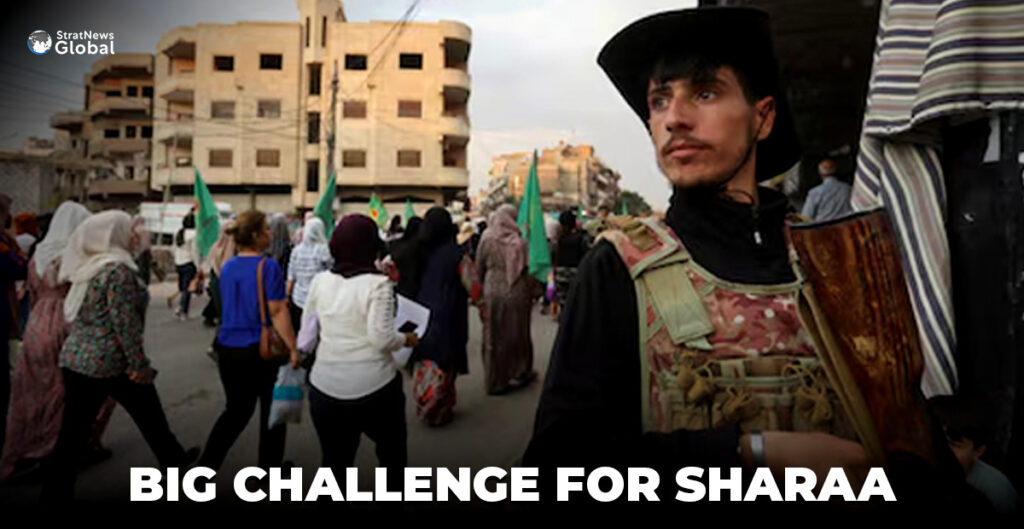
Since taking power nine months ago, Syria‘s President Ahmed al-Sharaa has scored major diplomatic wins, but faces the greater challenge of keeping his deeply divided country united.
In Syria’s northeast, Kurdish forces are resisting integration into the state after 14 years of civil war, and are demanding a new constitution to recognise their rights. In the southeast, members of the Druze community are openly calling for independence after violent clashes with government forces.
And, in Syria’s northwest, a leader of the Alawite community says Sharaa’s administration threatens its survival after Sunni militants affiliated with the government massacred hundreds of civilians there in March.
Reuters travelled through the heartlands of Syria’s Alawite, Christian and Druze minorities last month and spoke to dozens of residents and community leaders who voiced anger at Sharaa’s Islamist administration following outbreaks of sectarian violence since he ousted President Bashar al-Assad.
“How can we trust a state that turns its tanks against its own people?” asked Abu Bilal, a 45-year-old Druze father of three, referring to clashes between government forces and Druze militia in the southern region of Sweida in July. “They’re pushing us toward partition.”
Druze spiritual leader Sheikh Hikmat al-Hajari, late last month, called publicly for independence, accusing government-backed Bedouin forces of trying to “eliminate” the Druze. He thanked Israel for intervening after it attacked army convoys in Sweida in July and struck the defence ministry building in Damascus.
In parts of Sweida, Druze fighters now man checkpoints, patrol roads, and run local councils. A series of protests there last month saw people calling for independence and waving Israeli flags alongside the multi-coloured Druze banner.
Syrian officials have accused Israel – which seized swathes of territory across southern Syria after Assad’s ouster – of fanning sectarian divisions in an effort to destabilise Syria.
The Israeli prime minister’s office did not respond to Reuters’ questions for this story. Israel has said it’s committed to protecting the Druze and keeping its border regions free from militants.
Sharaa’s government has rejected calls for federalism or partitioning of the country, and said it wants to unite the country and rule for all Syrians. “If federalism or decentralisation means partition, then they are unacceptable,” he told Arabic newspaper editors last month.
Syria’s Information Ministry, Foreign Ministry and Presidency did not respond to requests for comment.
A senior Syrian official, who asked not to be identified, said reconciliation in Sweida must begin with allowing displaced Bedouins and Druze to return to their homes and an exchange of prisoners between Sunni Arab and Druze militants as a means to gradually rebuild trust: “The rifts are extremely deep. This will take years to fix.”
Sharaa has pledged to punish those responsible for the atrocities in Sweida and, in early September, Syrian authorities said they had detained members of the interior and defence ministries linked to the killings.
But one person involved in efforts to mediate between the Druze and Sharaa’s administration said very little progress had been made since July’s clashes, and a loose “alliance of minorities” was emerging in Syria with the backing of Israel.
Last month, 400 representatives of minority groups, including Kurds, Alawites and Druze, gathered to discuss a decentralised Syrian state at a meeting convened by Kurdish leaders in the northeastern city of Hassakeh. A statement from the talks called for a new constitution guaranteeing minorities’ rights.
Ghazal Ghazal, a spiritual leader of Syria’s 2 million Alawites, told the meeting that Sharaa’s government was imposing extremist ideology in the name of religion. “This threatens the survival of minorities,” he said.
Sharaa – a former al Qaeda leader who once had a $10 million bounty on his head – scored a major diplomatic victory in May when he won recognition from U.S. President Donald Trump at a meeting in Riyadh. The U.S. subsequently lifted most sanctions on Syria, and the Trump administration has voiced its support for Sharaa’s efforts to unify and stabilise the country.
Later this month, Sharaa is expected to address the U.N. General Assembly in New York – the first time a Syrian leader has done so in nearly 60 years and a milestone on his journey from warlord to statesman.
But Andrew Tabler, a senior fellow at the Washington Institute think-tank who focuses on Syria and the Levant, said Sharaa risked squandering that political capital if he could not reconcile Syria’s alienated minority groups.
“There’s a real risk Sharaa won’t be able to put the pieces of the country back together,” Tabler said. “It’s either reconciliation or he governs only part of Syria. That doesn’t mean he’ll be ousted — just that his authority will be limited to a part of the country.”
Turkiye Pressing For Kurdish Solution
In northeast Syria, the risk of a return to conflict looms if a Kurdish-led enclave there refuses to integrate into the central state under a deal brokered in March by Washington, according to two government sources and three foreign diplomats.
Implementation of March’s deal – which would hand the central government control over valuable oil, gas, and electricity assets in the northeast – has stalled, with Kurdish authorities saying an interim constitution approved by Sharaa does not adequately protect minority rights.
The senior Syrian official told Reuters that regional powerbroker Turkey – which has emerged as a strong backer of Sharaa’s government – was growing impatient and would support military action against the Kurds. Ankara strongly opposes Kurdish autonomy and regards the enclave in northern Syria as a threat to its own security.
Damascus has asked Ankara to delay any military offensive to allow negotiations to unfold, the official said. Turkiye has agreed to provide training and munitions to Syria’s military, which is being rebuilt by Sharaa.
“The deadline is essentially until the end of the year,” said the official. He said that Damascus believed U.S. President Donald Trump had given Turkiye a free hand to resolve the Kurdish security issue.
Turkiye’s Defence Ministry declined to comment on the possibility of any military action. The White House did not immediately respond to a request for comment.
A U.S. Department of State official said the United States wanted to see a stable, peaceful and prosperous Syria, which required unity, but it was up to the Syrian people to choose the type of government they want.
Sharaa has publicly said that progress is being made towards a deal, but it will take time.
The Kurdish-led Syrian Democratic forces – which Turkiye accuses of links to a domestic militant group, the PKK – enjoyed U.S. backing during Syria’s civil war, are well-equipped and have tens of thousands of fighters under their command. Turkish President Tayyip Erdogan has publicly warned Kurdish forces to lay down their arms or “be buried with them.”
Abdelwahab Khalil, a member of the SDF’s council, told Reuters its leadership supports integration with Syria’s central government “based on genuine partnership and constitutional recognition” of all Syrian components; military integration alone was not sufficient.
Tabler of the Washington Institute said Sharaa needed to make compromises with minorities, particularly the Kurds, for reconciliation to succeed.
“If he wants to control all of Syria, he must make real political concessions,” Tabler said.
Alawites ‘Condemned To Death’
Syria’s Sunni heartlands suffered disproportionately during the civil war, with cities like Homs and Aleppo reduced to rubble. After five decades of corrupt rule by the Assad family, many Syrians are pleased that power has returned to Sunni Arabs, who constitute two-thirds of Syria’s 24 million people. Their main concern is whether the new administration can revive Syria’s economy, still reeling from sanctions and the civil war.
Assad portrayed his secular Baath Party as a protector of minorities, which were largely spared the destruction wreaked on Sunni areas during the war. While Sharaa pledges to govern for all Syrians, the massacre of hundreds of Alawites in coastal regions in March sparked fears of a backlash against minorities.
In Qardaha, an Alawite village in the mountains overlooking Syria’s northwest coast, residents remember with bitterness March’s massacres. Many now talk openly of partition or international protection.
“We want a proper state: a rule of law – not a gang ruling us,” said Abu Hassan, in his 50s.
The government promised to punish those responsible. Its investigation into the killings, released in July, concluded that Syrian commanders did not order attacks on civilians – a finding dismissed by Alawite community leaders.
Some residents recounted cases of kidnappings of Alawite girls by armed men. Amnesty International has called on the government to investigate the abduction of Alawite women and bring the perpetrators to justice. Syria’s government has said that it found no cases of kidnapped Alawite girls or women in the coastal areas.
Some young men in Qardaha and the nearby village of Jableh said they skip university classes to avoid checkpoints manned by government and government-aligned forces, where harassment, abduction, and sectarian abuse are rampant.
“Young men and women don’t dare leave the village. Arrests and killings are rampant,” said Hassan Laham, who runs a grocery in the village. “The Alawite community is being condemned to death.”
The village is the ancestral home of Assad’s family. Several residents voiced grievances against the ousted leader, who fled into exile in Russia, for abandoning them to bear the cost of their association with him.
Assad’s departure also leaves a void in the domestic leadership of the Alawite community. Several Alawite associations overseas are lobbying foreign governments to protect the minority in Syria and to press for a decentralised or federal system of government.
Minority Groups Coordinating
Morhaf Ibrahim, a Florida-based doctor who left Syria in 2005 and founded the Alawites Association of the United States in January, said he is petitioning Congress and the U.S. State Department, while seeking to build bridges with other Western governments, including potentially Israel.
“Alawites paid a heavy price under Assad, forced to fight to defend his regime. Now they are paying the price again with killings, sexual violence and other violations,” said Ibrahim.
The association also has close cooperation with the Kurds, with Hajari’s associates in Sweida and with Christian groups and moderate Sunnis, Ibrahim said.
Christian communities have been spared the worst of the sectarian violence. In Wadi al-Nasara – the lush “Valley of the Christians” in western Syria – government patrols pass through but rarely interfere with daily life. The valley, considered a safe haven, maintains its Christian traditions, celebrating its Virgin Mary in mid-August with concerts.
But more than 20 residents told Reuters of their fear for the future under the new Syrian state and said that, without greater autonomy, they would have no choice but to emigrate.
“We’re protected here, but we can’t move freely,” said Michel, 27, who works at a shawarma restaurant and is supporting his sick parents. “I wish I could leave Syria, but I can’t afford it. The fear never leaves us.”
In Dweileh, a Christian neighbourhood in Damascus, a suicide bombing by an Islamist group at a church killed 25 people in June and deepened the fear gripping residents.
“This is a mixed area – Christian, Alawite, Sunni – but no-one feels safe anymore,” said shopkeeper Saeed Bassolo, a Christian.
(With inputs from Reuters)
Youth-Led Uprising In Nepal Shifts Focus To Picking New Interim Leaders
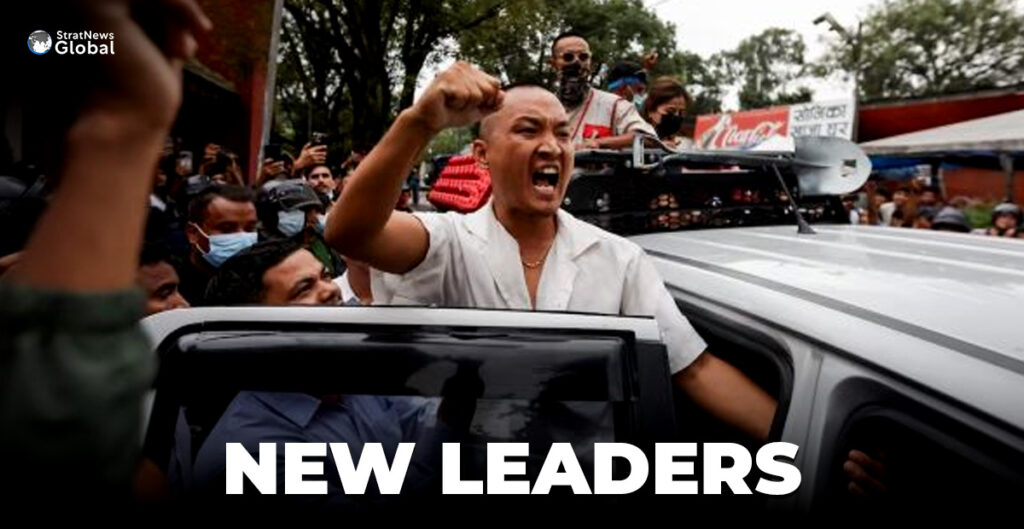
In Nepal, a youth-driven movement that forced the collapse of the government is now turning its attention to selecting new leaders. The campaign, spearheaded by a former DJ and a little-known non-profit, utilised a social media gaming app to mobilize mass protests and emerge as an unexpected political force.
Sudan Gurung, the 36-year-old founder of Hami Nepal (We are Nepal), used the Discord messaging app and Instagram to mobilise massive demonstrations that forced Prime Minister K.P. Sharma Oli to resign, in the deadliest political crisis to hit the Himalayan nation in decades, a dozen people involved in the demonstrations said.
The group used VPNs to access banned platforms and issued calls to action that reached tens of thousands of young people, they added. Representatives for Oli could not be contacted for comment.
“I was invited to join a group on Discord where there were about 400 members. It asked us to join the protest march a few kilometres from the parliament,” 18-year-old student Karan Kulung Rai, who is not part of the group, said.
‘Fake News’
Hami Nepal’s early social media posts on Discord became so influential that they were referenced on national television.
As protests grew violent, the group also identified messages it termed “fake news” and shared hospital phone numbers.
Hami Nepal members, who asked not to be identified as they had used proxy names online for security reasons, said Gurung and the group’s other leaders have since become central to high-stakes decisions, including the appointment of the new interim leadership till elections are held on March 5.
They have already convinced the country’s president and army chief to appoint former Chief Justice Sushila Karki, known for her tough stance against corruption, as Nepal’s first woman prime minister in an interim capacity, three members of the group said.
“I will make sure that the power lies with the people and bring every corrupt politician to justice,” Gurung said in his first press conference since the protest on Thursday.
On Sunday, Gurung and his team were in meetings to decide key cabinet positions and were proposing that some government officials appointed by the previous administration be removed, members of Hami Nepal said.
“Meetings are ongoing between Karki and members of the group. We will finalise the cabinet soon,” one of the members said. Gurung and Karki did not immediately respond to questions sent to their mobile phones.
The “process is being carefully carried out, so that it consists of skilled and capable youth,” Hami Nepal said on Instagram.
From DJ To Revolutionary
Monday’s protest by young adults loosely categorised as a “Gen Z” movement, as most participants were in their 20s, turned deadly within hours and rapidly brought down the government.
The protests were directed at perceived government corruption and took off following a ban on multiple social media platforms – a directive that was reversed. Protesters clashed with authorities on the streets, leaving at least 72 dead and over 1,300 injured.
Gurung, who is older than the Gen Z age bracket, and his team have vowed not to take up any cabinet positions but want to be part of the future decision-making.
“We don’t want to be politicians. Sudan Gurung was only helping the ‘Gen Z’ group and we are only the voice of the nation and not interested in taking leadership positions,” said Ronesh Pradhan, a 26-year-old volunteer for the group.
Gurung, who was a DJ before he founded Hami Nepal, organised civic relief when the worst earthquake in Nepal’s history killed over 9,000 people in 2015, and during the COVID-19 pandemic.
Team members running the Instagram account, whose followers have swelled to over 160,000, and Discord posts alongside Gurung include 24-year-old cafe owner Ojaswi Raj Thapa and law graduate Rehan Raj Dangal.
Thapa, who quickly emerged as a vocal protest movement leader in Nepal, said in an interview that the judiciary was not independent and ensuring its freedom was a key priority once the interim government was put in place.
“We may need some changes to the constitution but we don’t want to dissolve the constitution,” he said on Thursday.
(With inputs from Reuters)
Russia Showcases Hypersonic Missiles, Bombers In Military Drills
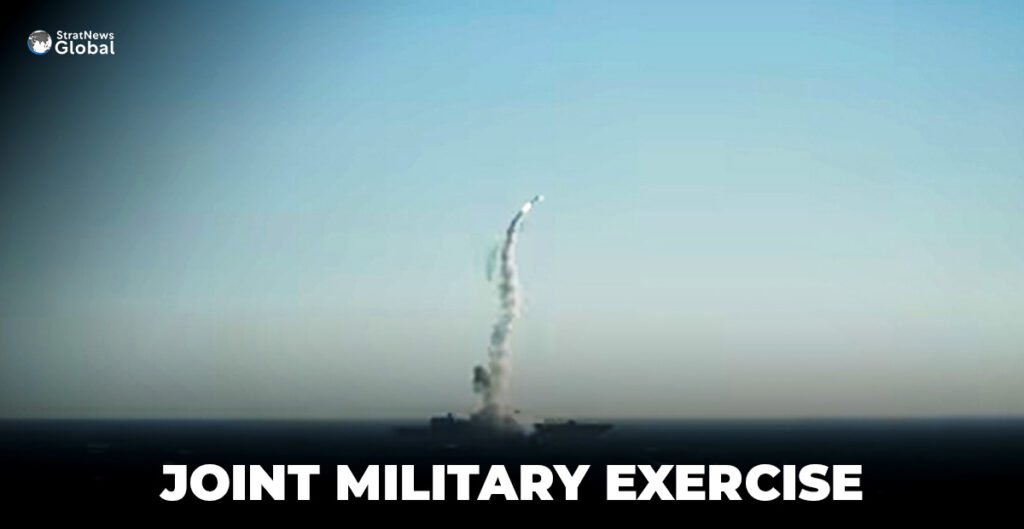
Russia announced on Sunday that it had launched a Zircon (Tsirkon) hypersonic cruise missile at a designated target in the Barents Sea, while Sukhoi Su-34 supersonic fighter-bombers conducted strikes as part of joint military exercises with Belarus.
Russia’s “Zapad”, or West, joint strategic exercise with Belarus began on September 12, aiming to improve military command and coordination in the event of an attack on either Russia or Belarus, the Russian defence ministry said.
‘Exclusively Defensive’ Exercises
Moscow and Minsk have said the exercises are exclusively defensive and that they do not intend to attack any member of NATO, though the United States-led military alliance announced an “Eastern Sentry” operation after the incursion of Russian drones into Poland on September 9-10.
Russia’s defence ministry released footage of the Northern Fleet’s Admiral Golovko frigate firing a Zircon hypersonic missile at a target in the Barents Sea.
Vertical Launch
The footage showed a missile being launched vertically from the frigate and then powering off at an angle into the horizon.
“According to objective monitoring data received in real time, the target was destroyed by a direct hit,” the ministry said.
The ministry said that long-range anti-submarine aircraft of the Northern Fleet’s mixed aviation corps were also involved in the exercise. It said Su-34 crews practised a bombing strike against ground targets.
Zircon Hypersonic Missile
Russian President Vladimir Putin said in 2019 that the Zircon can fly at nine times the speed of sound and hit targets at sea and on land at a range of more than 1,000 km (600 miles).
Russian media sources say the missile, known as the 3M22 Zircon in Russia and the SS-N-33 by NATO, has a range of 400 km to 1,000 km, and that its warhead mass is around 300 kg to 400 kg.
(With inputs from Reuters)
US Typhon Missile System In Japan Fuels Asia Arms Race
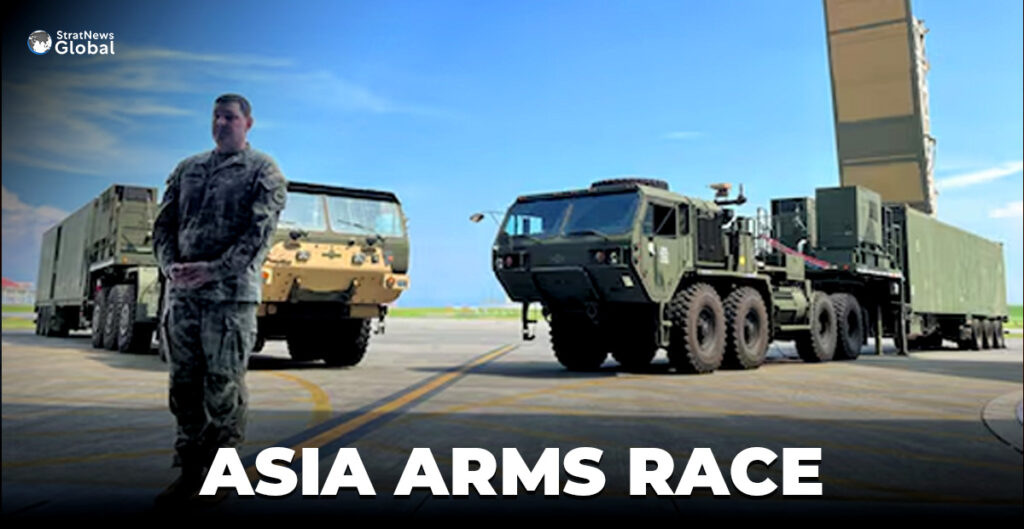
The United States on Monday displayed its Typhon intermediate-range missile system in Japan for the first time, highlighting Washington and Tokyo’s growing readiness to deploy weapons amid Beijing’s condemnation of the weapons as destabilising.
The land-based launcher, capable of firing Tomahawk cruise missiles with enough range to strike China’s eastern seaboard or parts of Russia from Japan, will feature in the annual Resolute Dragon exercise. The two-week drill involves 20,000 Japanese and U.S. troops, along with warships and missile batteries.
“Employing multiple systems and different types of munitions, it is able to create dilemmas for the enemy,” Colonel Wade Germann, commander of the task force that operates the missile system, said at Marine Corps Air Station Iwakuni in front of the launcher.
“The speed with which it can be deployed enables us to forward position it when required expeditiously,” he said, adding that Typhon will leave Japan after Resolute Dragon. He declined to say where the unit will go next or whether it will return to Japan.
The system’s unveiling in western Japan follows its deployment to the Philippines in April 2024, a move that drew sharp criticism from Beijing and Moscow, which accused the U.S. of fuelling an arms race.
Germann declined to say whether the unit in Japan was the same one that was deployed to the Philippines. Typhon was still in the Philippines when Reuters last checked with the military on August 28.
The U.S. also conducted live-fire exercises in Australia this year, but its presence in Japan, closer to China, could prompt a stronger reaction, military analysts say.
China’s foreign ministry did not immediately respond to a request for comment on Typhon’s latest deployment.
“In the past, these deployments would have been nixed by DC and Tokyo bureaucrats out of fear of the Chinese reaction. You can see that’s less of an issue than it was, say five years ago,” said Grant Newsham, a Japan Forum for Strategic Studies research fellow and retired U.S. Marine Corps colonel who worked alongside the Japanese military.
‘First Island Chain’
The U.S. describes Iwakuni as part of the ‘First Island Chain’, a string of territories and bases stretching from Japan through the Philippines that hems in Chinese sea and air power and complicates its military planning.
Typhon can also fire SM-6 missiles designed to strike ships or aircraft at ranges beyond 200 km (125 miles). Washington is seeking to mass such anti-ship weapons across Asia as it tries to counter China’s growing missile arsenal.
Unlike next-generation missile projects, Typhon draws on existing weapons that are easy to mass-produce. That, military planners say, will make it easier for the U.S. and its allies to catch up with China, which this year plans to increase its defence budget by 7.2%.
Japan is also stepping up military spending. It is buying Tomahawk missiles for its warships and developing its own intermediate-range missiles as part of its biggest military expansion since World War II.
Adding to the regional build-up, neighbouring Taiwan in 2026 plans to boost spending by a fifth to more than 3% of GDP.
“China, of course, complains whenever its intended victims stand up and start to get ready to look after themselves,” said Newsham.
(With inputs from Reuters)
Germany: Far-Right AfD Extends Influence Westward, Posing New Test For Governing Coalition
The far-right Alternative for Germany (AfD) gained significant ground in local elections in Germany’s most populous state on Sunday, advancing to mayoral run-offs for the first time. The results highlight the party’s growing traction outside its traditional eastern strongholds.
The conservative Christian Democrats (CDU) remained the strongest party overall but support for their national coalition partners the Social Democrats (SPD) declined in North Rhine-Westphalia (NRW), a western state of more than 18 million, while the AfD almost tripled its score from five years ago to 14.5%.
“There’s no avoiding the AfD in NRW any longer,” posted a jubilant party leader Alice Weidel.
First Test For The Coalition
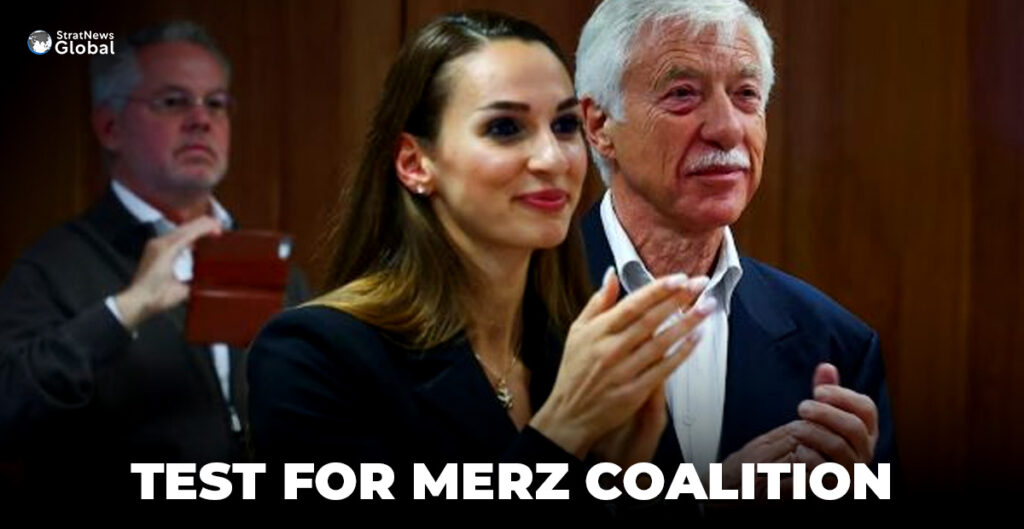
The vote was a first test for CDU Chancellor Friedrich Merz’s uneasy coalition with the SPD which critics say is failing to tackle a sluggish economy and voter concerns about immigration.
Tackling migration is a priority for the far-right AfD, which became Germany’s second biggest party in February’s federal election and was endorsed by tech billionaire Elon Musk.
Although the AfD’s share of the vote was slightly lower than in February, its mayoral candidates progressed to second-round run-offs for the first time in three cities of the densely-populated Ruhr Valley, a former industrial heartland – Gelsenkirchen, Duisburg and Hagen.
SPD Sees Support Slide
Home to almost a quarter of Germany’s 81 million inhabitants, the region’s ethnically diverse mix of former mining regions, creative student cities, high-tech metropolises and sloping vineyards makes it an electoral bellwether.
Merz’s conservatives polled 33.3% of the vote, down around one point compared to five years ago. The SPD slipped to 22.1% from 24.3%.
The losses are likely to heighten the pressure on Lars Klingbeil, Finance Minister and SPD leader, to boost the party’s profile and assert himself as junior partner in Merz’s coalition.
“We Can’t Sleep Easy”
Soeren Link, the SPD mayor of Duisburg, who will face an AfD challenger in run-offs two weeks from now, blamed the party leadership for the debacle.
“Something is wrong with the strategy,” he said, calling for the party to take a harder line on AfD signature themes like immigration. His town, once a steel-making powerhouse with a flourishing river port, is now one of Germany’s poorest.
“This result should give us pause,” said Hendrik Wuest, NRW’s conservative state premier. “We can’t sleep easy – not even my own party, which won the election so clearly.”
Despite rising unemployment and economic uncertainty in Germany, the CDU’s only slight decline in NRW could strengthen the case for the 50-year-old centrist Wuest to succeed Merz, 69, if he does not run again for chancellor in elections due in 2029.
(With inputs from Reuters)