

Support us by contributing to StratNewsGlobal on the following UPI ID
ultramodern@hdfcbank

Strategic affairs is our game, South Asia and beyond our playground. Put together by an experienced team led by Nitin A. Gokhale. Our focus is on strategic affairs, foreign policy and international relations, with higher quality reportage, analysis and commentary with new tie-ups across the South Asian region.
You can support our endeavours. Visit us at www.stratnewsglobal.com and follow us on YouTube, Twitter, Facebook and Instagram.
र 500 per month
र 1000 per month
र 5000 per year
र 10000 per year
Donate an amount of your choice
र 500 per month
Donate र 500 per month

र 1000 per month
Donate र 1000 per month
र 5000 per year
Donate र 5,000 per year
र 10000 per year
Donate र 10,000 per year
Donate an amount of your choice
Donate an amount of your choice
China Hosts Xiangshan Forum Amid PLA Turmoil
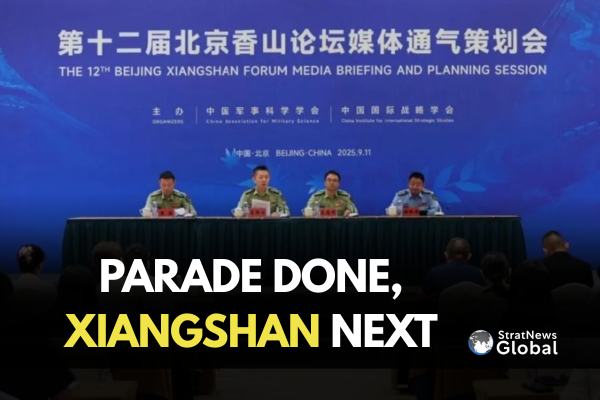
Beijing will host representatives from over 100 countries, including defence officials, military leaders, academics and policy experts, for the 12th Xiangshan Forum, China’s premier platform for international security and defence dialogue from September 17.
The three-day Forum is often described as Beijing’s answer to the Shangri-La Dialogue in Singapore, designed to project Chinese perspectives on global security and provide an alternative to Western-led platforms.
Launched in 2006, the Forum has grown into Beijing’s main security platform, presenting China as a responsible power and security guarantor in Asia. Analysts see it as both a tool of soft power projection and a test of how countries view China’s regional role amid growing tensions. This year’s theme is “Jointly Safeguarding the International Order, Promoting Peace and Development.”
Anushka Saxena, a China analyst who follows the PLA closely, told StratNewsGlobal that the theme continues the pattern of earlier editions “Common Security, Lasting Peace” and “Promoting Peace for a Shared Future.” Taken together, she said, they reflect Beijing’s insecurities in the global order and its push for sovereign equality, non-interference, shared futures, and resistance to Western economic pressures.
Saxena noted that the programme includes four plenary and eight parallel sessions on global governance, Asia-Pacific security, safeguarding the post-WWII order, and “new forms of warfare,” with lessons drawn from Ukraine and Gaza. China will also highlight its wartime victory over Japan, linking history to politics.
What is missing this year, Saxena observed, is “youth groups or international organisations. Instead, there’s more focus on representatives from small and medium-sized states, conflict zones, and former senior officials showing Beijing’s aim to widen its influence among receptive countries.”
The Forum follows the September 3rd military parade, which showcased China’s latest weapons before visiting leaders.
“Clearly, the latest purges in the PLA, targeting the Eastern Theater Command, the PLA Rocket Force, and the Joint Logistics Support Force, tell us that the armed forces are far from achieving the kind of discipline and cleanliness necessary for procurement processes and combat efficiency to be top-notch.” said Saxena. “The parade obviously did its job by setting the context for this Forum, by pulling out the big guns amid the presence of many heads of state, and making a case that China has the strength and the willpower to secure its interests. What we are likely to see at Xiangshan is a relatively softer effort by senior Chinese military and political officials to seek cooperation and interoperability with defence-related attendees, but not necessarily the show of force we saw at the parade.”
The Forum also serves CPC political goals by promoting Xi Jinping’s Global Initiatives on Development, Security and Governance. For China, it is a way to project confidence and court smaller states, though the strategy has limits. Some officials may leave with mixed perceptions or feel pressured to align publicly with Beijing, she added.
Whether Xiangshan builds trust or deepens divides remains uncertain. But its growing scale underlines China’s determination to institutionalise its own brand of defence diplomacy even as the PLA wrestles with internal upheaval.
Starmer Hopes Trump’s Royal Welcome Will Protect Against Political Pitfalls
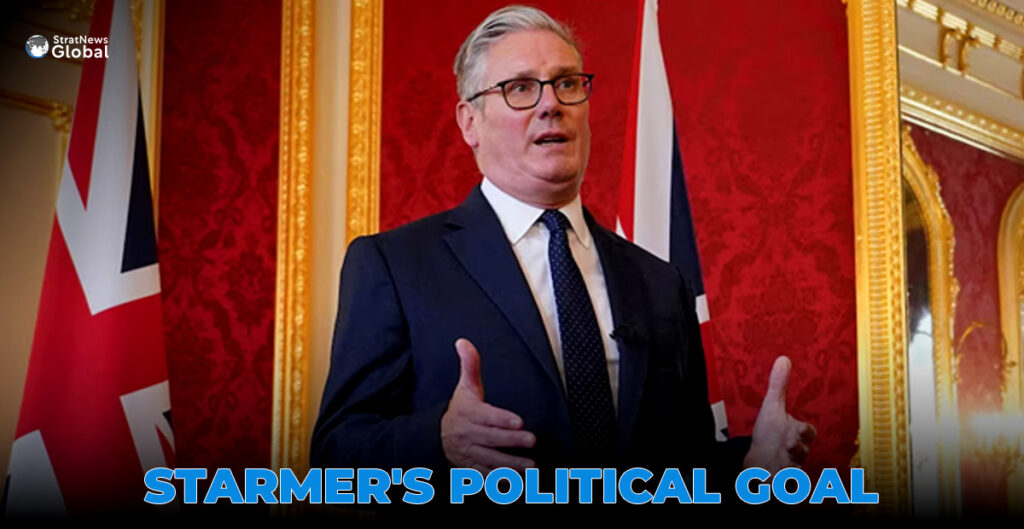
British Prime Minister Keir Starmer is hoping that the grandeur of a royal welcome for United States President Donald Trump during his state visit to the UK this week will provide him with protection from potential pitfalls, ranging from issues related to free speech to controversies surrounding Jeffrey Epstein.
Trump arrives in Britain late on Tuesday, to be greeted over the next two days by King Charles and then Starmer on a visit expected to be heavy on red carpet treatment and the promotion of investment deals to draw the two nations’ economies closer.
Starmer, under pressure after being forced to sack Peter Mandelson as his ambassador to the U.S. over Epstein, wants the visit to underline that his close ties to Trump can benefit Britain.
Transatlantic Taskforce To Be Announced
To that end, finance minister Rachel Reeves will also hold talks with U.S. Trade Secretary Scott Bessent, and they are expected to announce a ‘Transatlantic taskforce’ to deepen cooperation between two of the world’s largest financial centres.
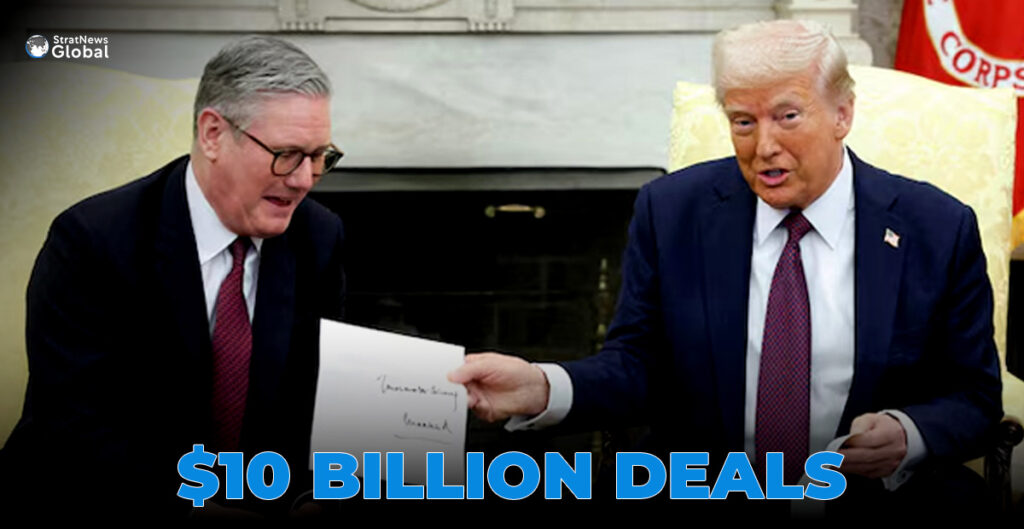
Senior U.S. officials said on Monday that deals worth more than $10 billion would be announced, covering energy and technology.
“This historic second state visit is set to highlight and renew the special relationship between the United States and the United Kingdom,” a senior U.S. official said on Monday.
A spokesperson for Starmer told reporters on Monday that the prime minister “sees this state visit squarely through the lens of delivering for working people,” listing U.S. investment pledged over the weekend to create 1,800 jobs in Britain and a civil nuclear partnership which could lower energy prices.
Starmer could well do with the distraction when he hosts Trump at his Chequers country residence on Thursday, and one of his main goals is to champion any wins secured during a visit, which is also expected to draw protests.
Several of his Labour lawmakers are angry over his handling of the departures of both his deputy, Angela Rayner, and Mandelson, questioning his full-throated support for both before being forced to let them go.
After missteps over welfare reform, accepting gifts and tax restrictions on child benefits, several lawmakers are increasingly questioning the British leader’s judgment and political nous, especially at a time when Nigel Farage’s populist Reform UK party is running well ahead in the polls.
Perhaps the biggest pitfall is the likelihood of questions about the late sex offender Epstein. Starmer has justified his abrupt sacking of Mandelson last week by saying he was not aware of the depth of the ex-ambassador’s ties to the financier.
Scrutiny Over Trump’s Relationship With Epstein
But Trump’s relationship with Epstein has also come under scrutiny after Democrats in the House of Representatives made public a birthday letter he allegedly wrote to him – something the U.S. leader has denied writing.
Trump could also raise the issue of free speech in Britain, after some of his allies said its new online safety laws censored online debate and imposed costs on U.S. tech companies.
But the visit should also give him a diversion less than a week after a close ally, conservative activist Charlie Kirk, was shot dead at an outdoor event in Utah, a killing that has appeared to affect the president deeply.
On Wednesday, Trump and his wife, Melania, will be treated to British royal pageantry, including a carriage tour, a state banquet, a flypast by military aircraft and a gun salute.
A day later, Starmer welcomes Trump to Chequers, a 16th-century manor house in the southern English countryside, to discuss investment, finalising promised lower tariffs for steel and aluminium, the so far frustrated efforts to end Russia’s full-scale invasion of Ukraine and the situation in Gaza.
Starmer hopes to build on the relationship they have cultivated, which won him an economic deal on reducing Trump’s global tariffs.
Both Want Investment Boost
Both nations will have sizeable delegations and will be largely protected from the planned protests. Trump will also be joined by U.S. Secretary of State Marco Rubio, who will hold talks with Britain’s newly appointed foreign minister, Yvette Cooper.
Business executives attending include Nvidia Corp CEO Jensen Huang and OpenAI’s Sam Altman.
Olivia O’Sullivan, a director at the Chatham House think tank, said Britain believed that by closely aligning with the U.S., it could stay “on the cutting edge of the kind of frontier technology,” which is dominated by the U.S. and China.
($1 = 0.7352 pounds)
(With inputs from Reuters)
Qatar, US Close To Defence Deal After Israel’s Doha Strike, Says Rubio
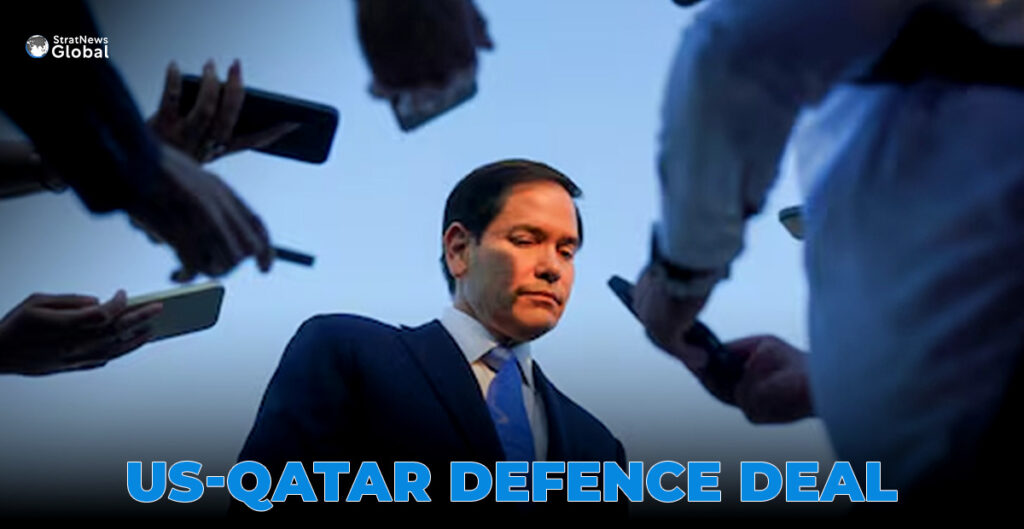
Top U.S. diplomat Marco Rubio said on Tuesday that Qatar and the United States are close to finalising an expanded defence cooperation deal, following last week’s Israeli strike on Hamas political leaders in Qatar that sparked widespread condemnation.
The attack in Doha was especially sensitive as Qatar is a close U.S. ally and home to the biggest U.S. military base in the Middle East. Qatar has been hosting and mediating ceasefire talks – alongside Egypt – since the Gaza war started nearly two years ago.
Rubio, who was on his way to Doha from Tel Aviv, called for Qatar to continue its role as a mediator between Israel and Hamas to reach a ceasefire in the Gaza war, saying there was “a very short window of time in which a deal could happen.”
“If any country in the world can help mediate it, Qatar is the one. They’re the ones that can do it,” Rubio said while departing Tel Aviv for Doha.
“We have a close partnership with the Qataris. In fact, we have an enhanced defence cooperation agreement, which we’ve been working on, we’re on the verge of finalising,” Rubio said, without elaborating.
‘Cowardly And Treacherous’
Qatar called the Israeli attack “cowardly and treacherous,” but said it wouldn’t deter it from its role as a mediator, alongside Egypt and the United States.
During a visit in May, Trump had assured gas-rich Qatar that Washington would protect it if it ever came under attack. He said he was not informed by Israeli Prime Minister Benjamin Netanyahu in advance about Israel’s attack.
Netanyahu threatened to attack Hamas leaders “wherever they are” during a press conference with Rubio on Monday, as the heads of Arab and Islamic states held a summit to back Qatar after Israel’s attack last week in the Gulf state.
Trump said he was unhappy with Israel’s strike, which he described as a unilateral action that did not advance U.S. or Israeli interests.
He sought to assure the Qataris that such attacks would not happen again during a meeting with the Qatari prime minister in New York on Friday.
(With inputs from Reuters)
UN Inquiry Accuses Senior Israeli Leaders Of Inciting Genocide In Gaza
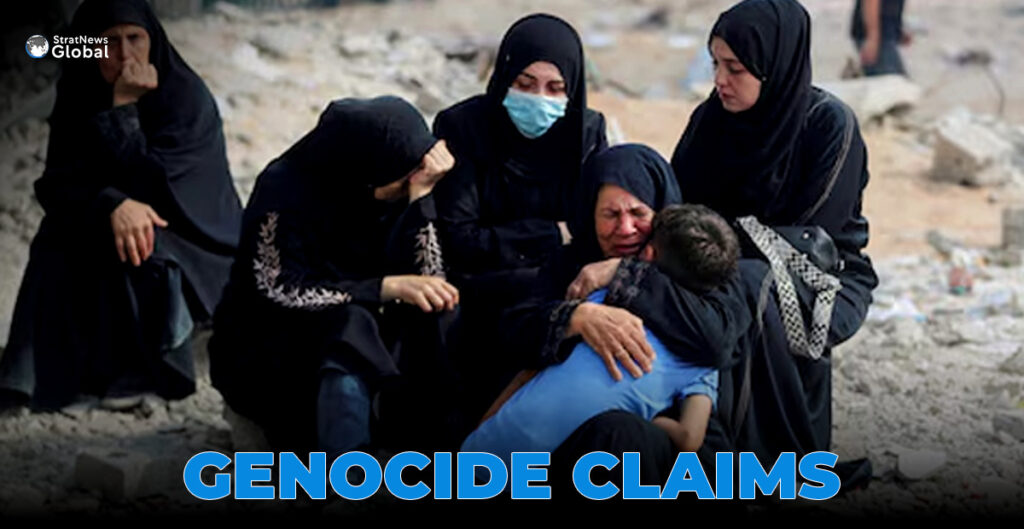
A United Nations Commission of Inquiry reported on Tuesday that Israel committed genocide in Gaza, alleging Prime Minister Benjamin Netanyahu and other senior officials incited such acts — claims Israel denounced as scandalous.
The U.N. report cites examples of the scale of the killings, aid blockages, forced displacement and the destruction of a fertility clinic to back up its genocide finding, adding its voice to rights groups and others who have reached the same conclusion.
“Genocide is occurring in Gaza,” said Navi Pillay, head of the Commission of Inquiry on the Occupied Palestinian Territory and a former International Criminal Court judge.
“The responsibility for these atrocity crimes lies with Israeli authorities at the highest echelons who have orchestrated a genocidal campaign for almost two years now with the specific intent to destroy the Palestinian group in Gaza.
Genocide Report ‘Scandalous’
Israel’s ambassador to the U.N. in Geneva, Daniel Meron, called the report “scandalous” and “fake”, saying it had been authored by “Hamas proxies”.
“Israel categorically rejects the libellous rant published today by this commission of inquiry,” Meron told journalists.
Israel, which accuses the commission of having a political agenda against Israel and diverging from its mandate, declined to cooperate with it.
The commission’s 72-page legal analysis is the strongest U.N. finding to date, but the body is independent and does not officially speak for the United Nations. The U.N. has not yet used the term genocide, but is under mounting pressure to do so.
Israel is fighting a genocide case at the International Court of Justice in The Hague. It has rejected such accusations, citing its right to self-defence following the deadly October 7, 2023, Hamas attack that killed 1,200 people and resulted in 251 hostages, according to Israeli figures.
The subsequent war in Gaza has killed more than 64,000 people, according to the Gaza Health Ministry, while a global hunger monitor says that part of the population is suffering from famine.
The 1948 U.N. Genocide Convention, adopted in the wake of the mass murder of Jews by Nazi Germany, defines genocide as crimes committed “with intent to destroy, in whole or in part, a national, ethnic, racial or religious group, as such”.
To count as genocide, at least one of the five acts must have occurred.
The U.N. commission found that Israel had committed four of them: killing; causing serious bodily or mental harm; deliberately inflicting conditions of life calculated to bring about the destruction of the Palestinians in whole or in part; and imposing measures intended to prevent births.
It cited as evidence interviews with victims, witnesses, doctors, verified open-source documents and satellite imagery analysis compiled since the war began.
Israel ‘Dehumanising’ Palestinian Population
The commission also concluded that statements by Netanyahu and other officials are “direct evidence of genocidal intent.” It cites a letter he wrote to Israeli soldiers in November 2023 comparing the Gaza operation to what the commission describes as a “holy war of total annihilation” in the Hebrew Bible.
The report also names Israeli President Isaac Herzog and former defence minister Yoav Gallant.
South Africa’s Pillay, who headed a U.N. tribunal for Rwanda where more than 1 million people were killed in 1994, said the situations were comparable. “When I look at the facts in the Rwandan genocide, it’s very, very similar to this. You dehumanise your victims. They’re animals, and so therefore, without conscience, you can kill them,” she said.
While the International Court of Justice referred to other Israeli statements in regard to Gaza and Palestinians in its 2024 emergency measures order, it did not name Netanyahu.
“I hope, as a result of our report, that the minds of states will also be opened,” said Pillay, who retires in November.
(With inputs from Reuters)
US, UK To Unveil $10 Billion Deals During Trump Visit: US Officials
Senior U.S. officials said on Monday that Washington and London plan to announce over $10 billion in economic deals this week during President Donald Trump’s state visit.
The two governments are expected to seal a trade agreement with three pillars: a new science and technology partnership to strengthen the tech sectors of both countries, cooperation in civil nuclear power, and advances in defence technology cooperation, the officials said in a telephone briefing.
Several U.S. tech business leaders are expected to be in attendance for the state visit, the officials said.
Trump and first lady Melania Trump are to arrive late on Tuesday for talks with King Charles and Queen Camilla on Wednesday at Windsor Castle and a state dinner that evening.
Trump will meet British Prime Minister Keir Starmer on Thursday, and they plan a joint news conference. Trump returns to Washington on Thursday night.
Trump is the first U.S. president to be invited to two state dinners by the British. His first was in 2019 during his first term.
Trump’s visit marks a significant moment in the ongoing efforts to reinforce the transatlantic partnership. The visit comes at a time when both Washington and London are seeking to deepen cooperation on trade, defence, and global security challenges.
The visit underscores Trump’s push to strengthen alliances with key partners while also showcasing Washington’s support for Britain’s post-Brexit role on the world stage.
‘Special Relationship’
For London, the visit provides an opportunity to reaffirm its “special relationship” with the United States and secure commitments that could bolster the UK’s economic and geopolitical standing.
The U.S. officials described agreements to come that would be heavy on economic cooperation between the two long-standing allies, with at least $10 billion in deals expected.
Energy cooperation, defence collaboration within NATO, and joint strategies on global hotspots will also feature prominently in the agenda.
“This visit gives the president the opportunity to strengthen ties with a particularly close partner and ally, while advancing mutual economic and foreign policy interests,” one of the U.S. officials said.
(With inputs from Reuters)
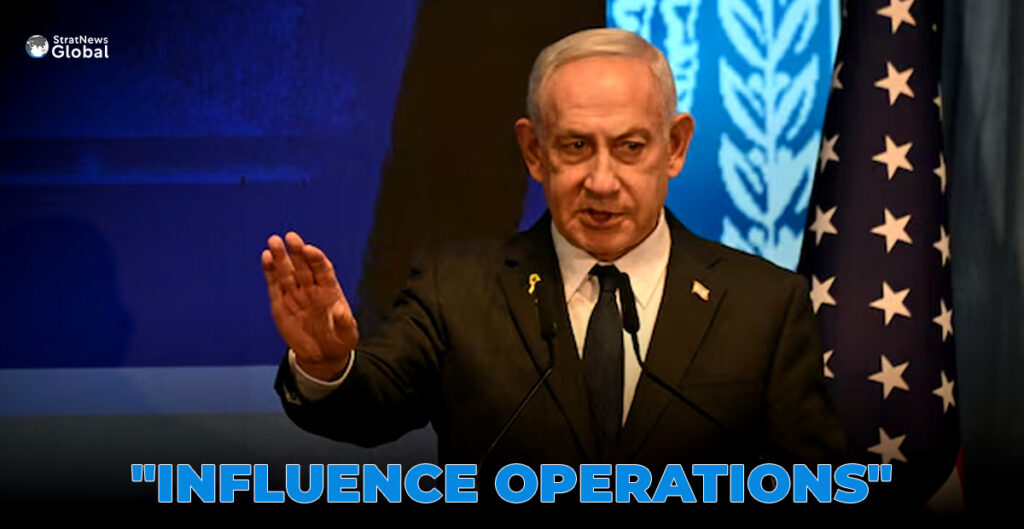
Netanyahu Urges Investment In Influence Campaigns To Counter Israel’s Isolation
Israeli Prime Minister Benjamin Netanyahu said on Monday that Israel must significantly invest in “influence operations” across traditional and social media to counter economic isolation fueled by negative publicity overseas.
Speaking at a Finance Ministry conference, Netanyahu said foreign investment into Israel had held up in the wake of a 12-day war against Iran in June, which he said removed an immediate threat of a nuclear-armed foe.
But in a rare acknowledgement of the isolation arising from international criticism of Israel’s war in Gaza, he said Israel faced an economic threat of sanctions and other measures.
He blamed isolation on minorities in Europe pushing “anti-Zionist and extreme Islamist ideology”, and on countries such as Qatar, a backer of Arabic broadcaster Al Jazeera, investing in shaping global discourse through social media.
“This leads to sanctions against Israel and alters Israel’s international standing … and this leads to a kind of isolation for Israel,” Netanyahu said. “We can break out of this isolation, but we must invest heavily in countermeasures — particularly in media and social media influence operations.”
Netanyahu said Israel should reduce the dependence of its industries on trade with other countries.
“We might find ourselves blocked not only in R&D but also in actual industrial production. We must start developing our capabilities to rely more on ourselves,” he said, adding that should also include arms and other defence products.
Opposition Criticises Netanyahu’s Policies
In a response, opposition leader Yair Lapid said international isolation was “the product of a wrong and failed policy by Netanyahu and his government.
“They are turning Israel into a third-world country and are not even trying to change the situation,” he wrote on X. “Israel can return to being successful, popular, with a thriving first-world economy.”
The war in Gaza was triggered by a rampage into southern Israel by Hamas militants who killed around 1,200 people and captured 251 hostages, according to Israeli tallies. Israel responded with an assault that has killed more than 64,000 people, according to Palestinian health authorities.
On Monday, a group of 80 former Bank of Israel, Finance Ministry and other economists said a cabinet decision to occupy Gaza would be harmful to both Gaza and Israel, citing economic damage from massive costs of maintaining a military presence and sanctions from Europe that would harm trade.
Meanwhile, during a testimony in court on Tuesday, PM Netanyahu said Israel has launched a “significant” operation in Gaza.
(With inputs from Reuters)
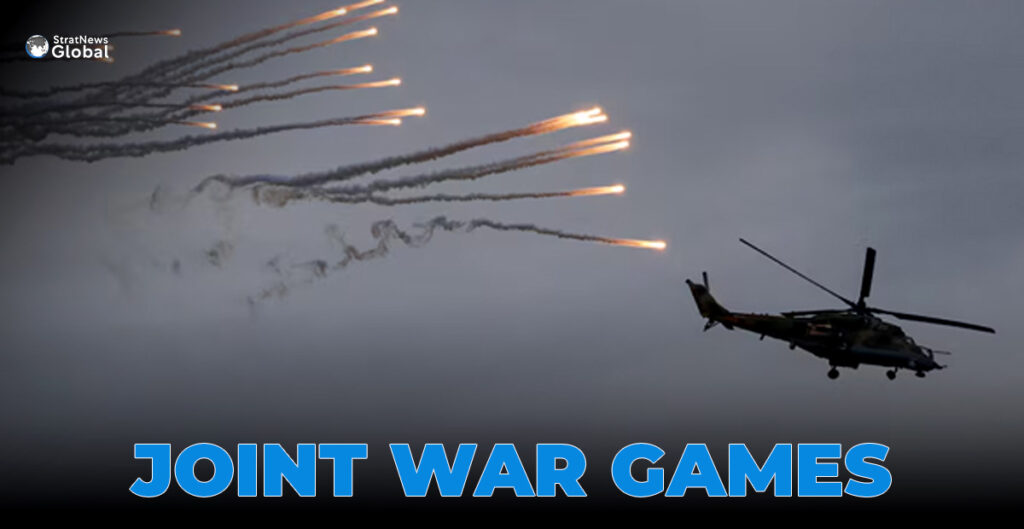
US Officers Observe Russia-Belarus War Games As Trump Strengthens Ties With Minsk
For the first time since Moscow launched its invasion of Ukraine from Belarus, U.S. military officers on Monday observed joint Russia-Belarus war games, even as President Donald Trump moves to strengthen ties with Moscow’s closest ally.
The presence of the U.S. officers, less than a week after neighbouring Poland shot down Russian drones that crossed into its airspace, is the latest sign that Washington is seeking to warm ties with Belarus.
Last week, Trump’s representative John Coale visited Minsk and said Trump wanted to reopen the U.S. embassy there soon, normalise ties and revive trade.
Trump May Be Seeking Diplomatic Gains
The U.S. military did not immediately respond to requests for comment.
Western foreign policy analysts speculate that Trump may be trying to peel Belarus away from Russia, a strategy widely viewed as unlikely to succeed, or to exploit its close ties with Moscow to promote a deal to end the war in Ukraine.
At least two U.S. military officers – Air Force Lt. Col. Bryan Shoupe and another unidentified officer – were in Belarus to observe the “Zapad-2025” war games, which were also being watched by Russian Deputy Defence Minister Yunus-Bek Yevkurov.
Fighter jets, attack drones and helicopters flew over a training ground hemmed in by trees as infantry practised firing automatic weapons, mortars and missile systems and riding into combat on motorcycles.
The exercise, being held at training grounds in both countries, is a show of force that Russia and Belarus say is designed to test combat readiness.
But it has unnerved some neighbouring countries after the drone incursion into Poland as Moscow’s war in Ukraine grinds towards its fourth year. Warsaw has temporarily closed its border with Belarus as a precaution.
Long a staunch Russian ally, President Alexander Lukashenko allowed Moscow to use Belarus to send tens of thousands of troops into Ukraine in February 2022, and has since allowed Russia to station tactical nuclear weapons in Belarus.
Trump Courts Belarus President
Trump, who has suggested that the drone incursion may have been the result of a mistake, last week lifted sanctions on Belarus’s national airline Belavia, allowing it to service and buy components for its fleet, which includes Boeing aircraft.
He did so after Lukashenko – who regularly talks to Russian President Vladimir Putin and was given a friendly hand-signed letter from Trump by Coale – agreed to free 52 prisoners, including journalists and political opponents.
Belarusian Defence Minister Viktor Khrenikov personally greeted the two U.S. officers, who shook his hand and, speaking in Russian, thanked him for inviting them.
“We will show whatever is of interest to you. Whatever you want. You can go there and see, talk to people,” the minister told the Americans, who declined to speak to reporters afterwards.
Their attendance was presented by the Belarusian defence ministry as a surprise.
“Who would have thought how the morning of another day of the Zapad-2025 exercise would begin?” it said in a statement, noting their presence among representatives from 23 countries, including fellow NATO member states Turkey and Hungary, as well as China, Ethiopia and Indonesia.
The last time the Zapad (“West”) drills were held, in 2021, a U.S. military official based in Ukraine travelled to Belarus to watch them.
(With inputs from Reuters)
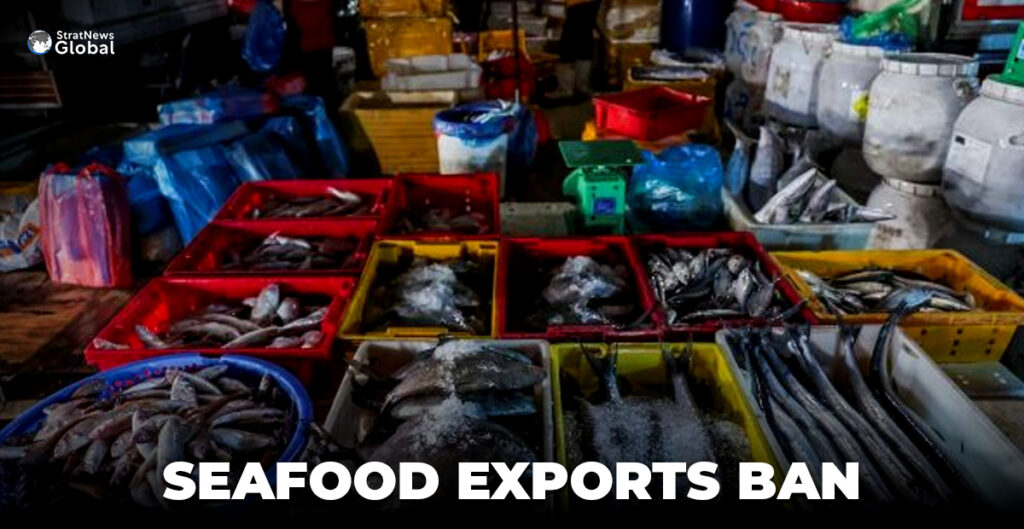
Vietnam Urges U.S. To Reconsider Ban On Seafood Exports
Vietnam has urged Washington to revisit its decision that may block certain seafood shipments from entering the U.S. market next year, warning the move would further strain an economy already pressured by American tariffs.
Vietnam‘s Minister of Industry and Trade Nguyen Hong Dien on Monday sent a letter to U.S. Commerce Secretary Howard Lutnick to ask for the “reconsideration” of an August decision by the U.S. National Oceanic and Atmospheric Administration, which determined that some of Vietnam’s fishing methods posed risks to marine mammals, the ministry said in a statement.
The United States is among Vietnam’s largest seafood markets, with January-August exports rising 6.9% from a year earlier to $1.24 billion, accounting for 17.3% of Vietnam’s total seafood shipments, according to Vietnam’s customs data.
NOAA last month notified Vietnam’s agriculture ministry that it had declined to grant a “comparability finding” under the Marine Mammal Protection Act for 12 Vietnamese fishing methods, according to the statement.
“Nations whose fisheries were denied comparability findings are prohibited from exporting fish and fish product from those fisheries into the U.S. beginning January 1, 2026,” NOAA had said earlier.
Key Seafood Exports To Face Crisis
The ministry statement said the ban would hurt Vietnam’s key seafood exports, including tuna, swordfish, grouper, mackerel, mullet, crab and squid.
Dien said in the letter that reversing the decision would help “avoid serious disruptions in bilateral trade and protect the livelihood of hundreds of thousands of Vietnamese fishermen and labourers,” according to the statement.
The United States, Vietnam’s largest export market, imposed a 20% tariff on Vietnamese exports starting August 7, while transshipments through Vietnam from third countries face a levy of 40%.
August exports from Vietnam to the U.S. fell 2% from July to $13.94 billion, according to Vietnamese customs data.
“Vietnam considers the United States an important trade partner … Vietnam is committed to continuing to work closely with the United States to resolve outstanding issues in a constructive and forward-looking spirit,” Dien said in the letter.
In 2017, the European Commission also issued a “yellow card” to Vietnam after accusing it of not doing enough to fight illegal, unreported and unregulated fishing, leading to a decline in exports of Vietnamese seafood to the EU.
(With inputs from Reuters)
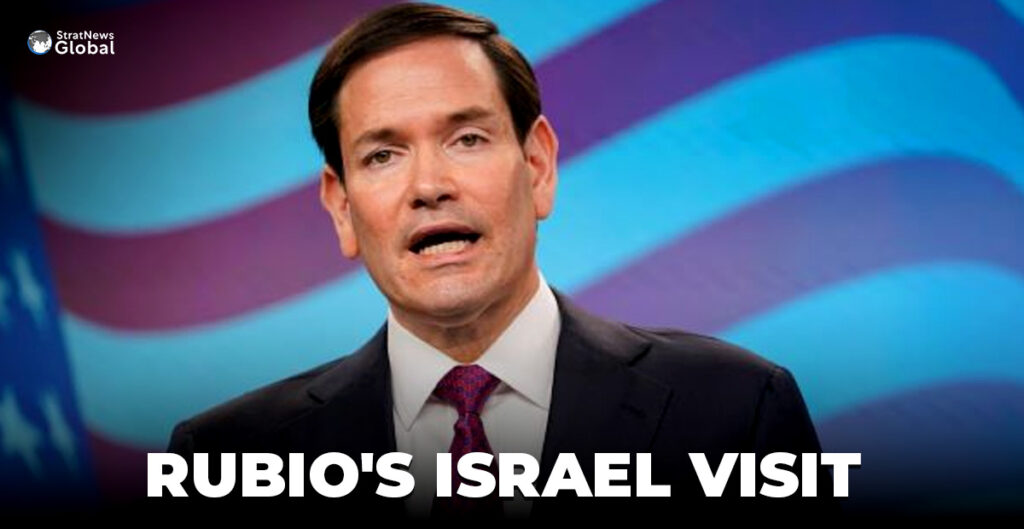
Rubio Visits Disputed Jerusalem Site Signaling U.S. Support For Israeli Claims
U.S. Secretary of State Marco Rubio on Monday toured an archaeological excavation site beneath Jerusalem, a site promoted by Jewish settler groups. His visit was widely interpreted as Washington’s support for Israel’s claim to the area, which Palestinian officials and critics argue further complicates prospects for a viable Palestinian state.
The visit, from which international and local media were barred, marked the latest endorsement by the Trump administration of initiatives that opponents say are aimed at cementing Israel’s claims to East Jerusalem, which Palestinians view as the capital of a future state.
The City of David archeological park sits in the shadow of the elevated compound known to Jews as the Temple Mount and to Muslims as Haram al-Sharif, or the Noble Sanctuary, a flashpoint that has triggered outbreaks of violence over the decades and remains at the heart of the Israeli-Palestinian conflict.
The global heritage body UNESCO opposed construction of the park in the Palestinian neighbourhood of Silwan, outside of what most of the world recognizes as Israel’s territory.
Rubio said he would be inaugurating a site attached to the park known as Pilgrim’s Road, believed to have been traversed by visitors to Judaism’s Second Temple around 2,000 years ago.
‘An Extraordinary Archaeological Site’
“It’s one of the most important archaeological sites in the world,” Rubio said before departing Washington on Saturday. “I understand people want to involve politics in it. I understand everything in this region is political to some extent. But at the end of the day, it’s an extraordinary archaeological site.”
The Trump administration’s 2017 recognition of Jerusalem as Israel’s capital and the subsequent move of the U.S. embassy to the city from Tel Aviv marked a departure from decades of American policy that Jerusalem’s status should be determined through Israeli-Palestinian negotiations.
The visit comes ahead of a meeting of world leaders at the United Nations in New York this month where Britain, France, Canada, Australia and Belgium are expected to formally recognize a Palestinian state, which Israel rejects.
Rubio has said that move will only encourage Israel to take its own actions to prevent the formation of a Palestinian state.
Residents and Israeli advocacy groups say the excavations under Silwan have been conducted beneath Palestinian homes without consulting residents and do not meet the standards of professional archaeology.
The office of Israeli Prime Minister Benjamin Netanyahu did not respond to a request for comment.
Ze’ev Orenstein, director of international affairs at the City of David, said: “All the archeological excavations are carried out by the Israel Antiquities Authority according to the highest standards.” He declined to answer further questions.
Fakhri Abu Diab, an activist from Silwan, said the excavations were conducted without transparency and contravened international law on occupied territories.
Rubio’s visit would embolden Israel and its settler movement, he said. “This act by the United States gives the green light for more settlement expansion, demolitions, ethnic cleansing, and all the practices carried out by Israel,” he said.
Park Run By Israeli Settler Group
The battle over Jerusalem’s archaeological and religious sites reflects the struggle over sovereignty since Israel’s founding in 1948. The city’s east and Old City, with its Jewish, Christian, Muslim, and Armenian quarters, fell under Jordanian control after the 1948 Arab-Israeli War, with Jews barred from its holy sites until 1967.
Since capturing the area, Israel has pursued policies aimed at maintaining a Jewish majority in Jerusalem while Palestinian residents face home demolitions, restrictive building permits, and what advocacy groups describe as systematic discrimination.
The City of David park has been operated since the early 2000s by Elad, a settler group that has appropriated land, acquired Palestinian homes and pushed for the eviction of Palestinian families in Silwan, according to a July report by the UN’s Independent International Commission of Inquiry on the Occupied Palestinian Territory.
“Despite its rich, heterogeneous history, the narrative presented at the City of David site focuses only on the site’s Jewish history (primarily the period of the Kingdom of Judea in the tenth century B.C.E. and the period of the Second Temple), disregarding all other periods and culture,” the panel’s report said.
Rubio’s visit to Jerusalem began on Sunday when Netanyahu led him and U.S. Ambassador Mike Huckabee on a tour of the Western Wall, Judaism’s holiest prayer site. They also visited the nearby Western Wall tunnels, another Israeli excavation that has been criticized by the UN.
A State Department spokesperson said Sunday’s visit reaffirmed “America’s recognition of Jerusalem as Israel’s eternal capital.”
(With inputs from Reuters)
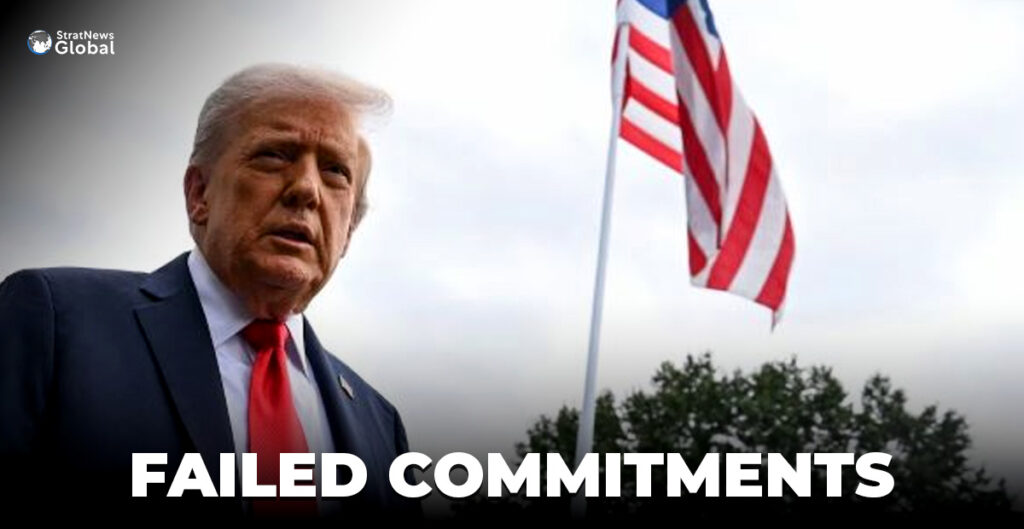
U.S. Says Colombia, Venezuela Did Not Meet Counternarcotics Commitments
The United States on Monday listed Colombia and Venezuela, along with Afghanistan, Bolivia, and Burma, as countries that it says fell short in honoring their international commitments to combat drug trafficking over the past year.
The decision, which could affect funding for the countries, came after President Donald Trump said the U.S. military had carried out a strike on an alleged Venezuelan drug vessel, its second such strike in recent weeks.
“I hereby designate Afghanistan, Bolivia, Burma, Colombia, and Venezuela as having failed demonstrably during the previous 12 months to … adhere to their obligations under international counternarcotics agreements,” Trump said.
The statement featured in a presidential determination he submitted to the U.S. Congress, which added that U.S. assistance to the countries was “vital” to its interests.
Coca cultivation and cocaine production in Colombia have “surged to all-time records under President Gustavo Petro, and his failed attempts to seek accommodations with narco-terrorist groups only exacerbated the crisis,” the declaration said.
Petro came to office in 2022 promising agreements with armed groups, but last year pivoted his strategy, pledging to tame coca-growing regions with massive social and military intervention. The strategy has brought little success.
Trump blamed Colombia’s political leadership for the failure to meet its drug control obligations, but thanked its security personnel for their courage.
Drug Containment Efforts
“I will consider changing this designation if Colombia’s government takes more aggressive action to eradicate coca and reduce cocaine production and trafficking.”
Trump had previously threatened to “decertify” Petro’s drug containment efforts as ineffective and Republican lawmakers have expressed support for sharp cuts to non-military aid for the country.
Petro lamented the decision, which he said came after dozens of deaths of Colombian police, soldiers and civilians fighting trafficking. “What we are doing does not really have to do with the Colombian people,” he said during a televised cabinet meeting.
“Rather, it is to stop American society from getting their noses dirty from the desire to work, work, work,” he added, in an apparent reference to the stimulant effects of cocaine.
Colombia’s ambassador to Washington, Daniel Garcia-Pena, told reporters last week that U.S. funding had already been hit by the dismantling of USAID and the U.S. could choose to cut about $100 million of programmes not focused on drug trafficking if Trump decided to decertify Colombia.
Venezuela’s President Nicolas Maduro “leads one of the largest cocaine trafficking networks in the world,” Trump said in his determination, adding that the United States would continue to try to bring him to justice.
The Trump administration has adamantly accused Maduro of running drug trafficking organizations, allegations always vehemently denied by Caracas, which has accused Trump of seeking regime change through a military build-up in the Caribbean.
The Venezuelan communications ministry did not immediately respond to a request for comment.
(With inputs from Reuters)