

Support us by contributing to StratNewsGlobal on the following UPI ID
ultramodern@hdfcbank

Strategic affairs is our game, South Asia and beyond our playground. Put together by an experienced team led by Nitin A. Gokhale. Our focus is on strategic affairs, foreign policy and international relations, with higher quality reportage, analysis and commentary with new tie-ups across the South Asian region.
You can support our endeavours. Visit us at www.stratnewsglobal.com and follow us on YouTube, Twitter, Facebook and Instagram.
र 500 per month
र 1000 per month
र 5000 per year
र 10000 per year
Donate an amount of your choice
र 500 per month
Donate र 500 per month

र 1000 per month
Donate र 1000 per month
र 5000 per year
Donate र 5,000 per year
र 10000 per year
Donate र 10,000 per year
Donate an amount of your choice
Donate an amount of your choice
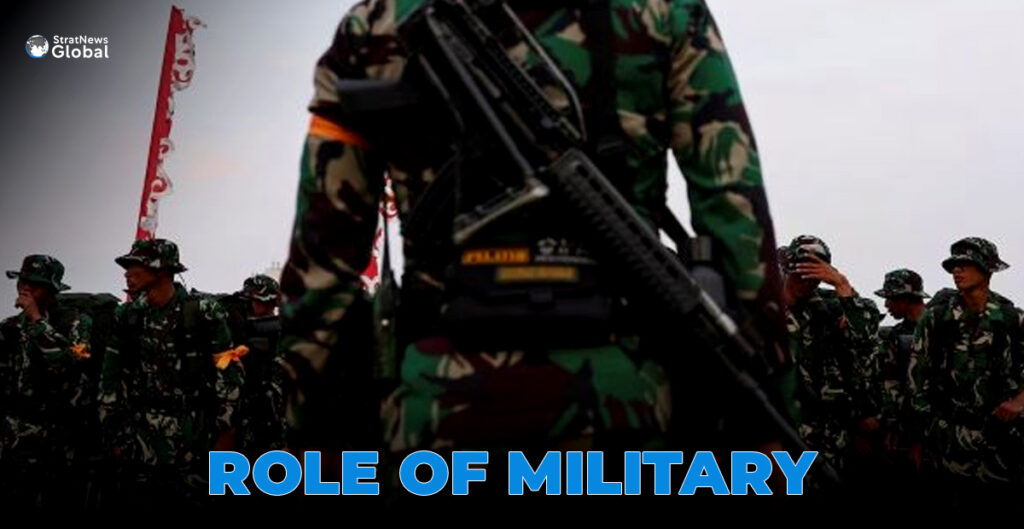

Indonesia Court To Decide On Challenges To Law Expanding Military’s Role In Civilian Matters
An Indonesian court was set to deliver a ruling on Wednesday on legal challenges to a revised defence law that grants the armed forces broader involvement in civilian matters. The legislation has been one of the triggers fuelling nationwide protests against the government.
The Constitutional Court was due to decide on five petitions against amendments that plaintiffs say were bulldozed through parliament in March without proper public consultation, amid concerns of an expansion of the military’s involvement in civilian life under President Prabowo Subianto.
Fears are growing in Indonesia that former special forces commander Prabowo is turning increasingly to the armed forces to help deliver his ambitious agenda after just 11 months in office, reviving memories of the military-dominated 1966-1998 New Order era of authoritarian rule.
Prabowo has appointed former generals to key posts and has deployed the military for various tasks, including handling street protests, implementing initiatives on free school meals and food security, manufacturing medicines and seizing palm oil plantations for a new state-owned firm.
Violent Demonstrations
The rulings come at a time of festering anger following two weeks of at times violent demonstrations over issues from lawmakers’ allowances and state budget priorities to police conduct and perceptions of creeping militarisation in Indonesia, presenting Prabowo with his first major test.
The petitions argue the amendments to Indonesia’s military law lacked transparency and public participation before being passed by a parliament overwhelmingly allied with the president, and have called for the changes to be annulled.
“We expect the court to repeal the military law because the process is not in accordance with another law regulating legislative process,” petitioner Ardi Manto Adiputra said, adding lawmakers had met in secret to discuss revisions to the law and had rushed its passage.
The petitioners include human rights and student groups and Inayah Wahid, the daughter of Indonesia’s former President Abdurrahman Wahid.
Indonesia law minister has said the legislative process was above board and public input had been sufficiently sought.
The court decision is not expected to address the revisions to the law, but the processes that took place before it was passed.
Ardi said his group planned to file another judicial review over the substance of the legislation at a later stage.
He also said the court decision would be delivered virtually, with neither plaintiffs nor the public permitted to attend the verdict in person.
(With inputs from Reuters)
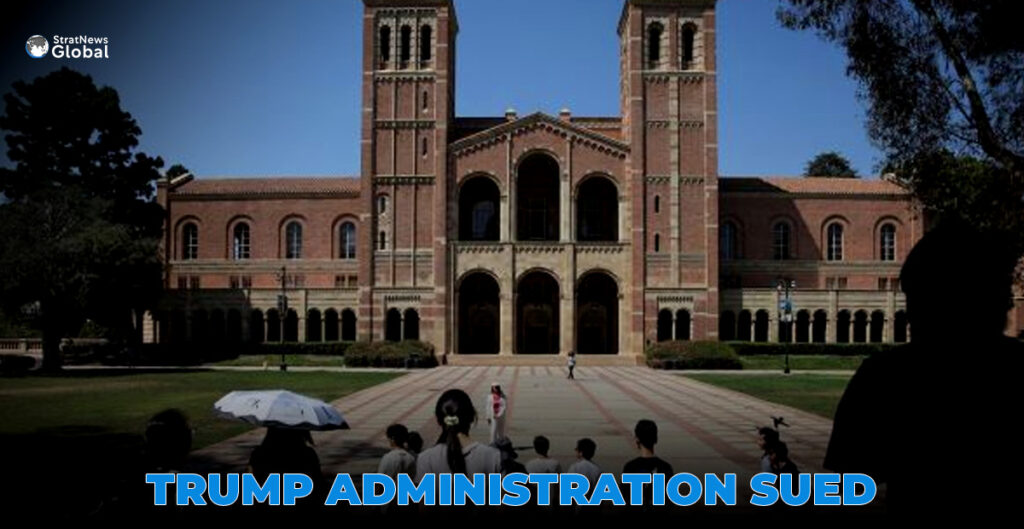
Trump Administration Faces Lawsuit From University Of California
The Trump administration was sued on Tuesday by students, faculty, and labor unions from the University of California, who allege that federal funds were deliberately frozen and other punitive measures imposed in an effort to undermine academic freedom.
The lawsuit filed in the U.S. District Court for the Northern District of California, seeks to forbid the government from using financial threats against the system that it said were harmful and unlawful. It also aims to restore funding already suspended.
“(The administration) has attempted to implement a playbook to threaten colleges and universities,” the coalition that filed the lawsuit said. It added that those threats were based on disdain for the institutions’ curriculum, expressive activity on campuses, and initiatives for diversity, equity and inclusion.
The University of California said it was not a party of the suit but was engaged in many legal and advocacy efforts to maintain and restore its funding.
A White House spokeswoman dismissed the suit as a legal effort from “victimhood-seeking professors”, saying the Trump administration opposed “unreasonable overhead fees” while advocating for responsible management of federal funds.
The government has launched probes into universities’ handling of alleged antisemitism during student protests against Israel’s assault on Gaza, and has frozen funds over that and other issues, including climate initiatives and DEI programmes.
Political Agenda
Civil rights advocates say the Trump administration is attempting to make universities more aligned with his political agenda, while critics also see such attempts as threatening free speech and academic freedom.
The University of California operates one of the largest higher-education systems in the country, with 10 main campuses and nearly 300,000 students, as well as 265,000 faculty and other staff.
The Trump administration had proposed to settle its probe into the University of California, Los Angeles – part of the university system – through a $1 billion payment from the institution. Democratic California Governor Gavin Newsom called that an extortion attempt.
UCLA said in August the government froze $584 million in funding before a judge ordered the Trump administration to restore some of that money. The University of California, Berkeley, another campus in the system, said on Friday it provided information on 160 faculty members and students to the government as part of an investigation.
University of California President James Milliken said on Monday the institution was facing one of the gravest threats in its history due to the federal government’s actions, noting that it receives more than $17 billion each year in federal support.
The Trump administration has faced some legal roadblocks in its funding freeze attempts. A federal judge ruled earlier this month that it had unlawfully terminated more than $2 billion in grants for Harvard University.
The government alleges universities allowed antisemitism during campus protests. Protesters, including some Jewish groups, have said the government is wrongly equating their criticism of Israel’s occupation of Palestinian territories with antisemitism, and their advocacy for Palestinian rights with support for extremism.
Human rights advocates have noted a rise in antisemitism, anti-Arab bias and Islamophobia due to conflict in the Middle East, although the Trump administration has not announced probes into Islamophobia.
The administration has settled its investigations with Columbia and Brown universities.
(With inputs from Reuters)
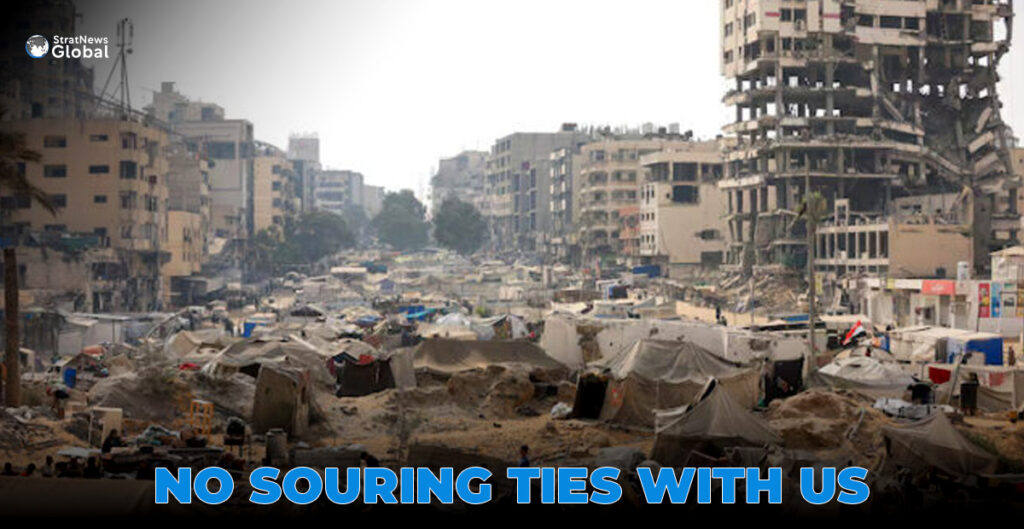
Japan To Hold Off On Recognising Palestinian State: Reports
In a calibrated diplomatic move, Japan has decided not to recognise a Palestinian state for now — a stance likely aimed at preserving its strategic ties with the United States and avoiding further deterioration in relations with Israel, the Asahi Shimbun reported on Wednesday, citing unnamed government sources.
Several governments, including those in Britain, France, Canada and Australia, have said they will recognise a Palestinian state at the UN General Assembly this month, adding international pressure on Israel over its actions in the territory.
The US had prompted Japan to forgo the recognition of a Palestinian state through several diplomatic channels, while French Foreign Minister Jean-Noel Barrot had strongly urged his Japanese counterpart to recognise it, Kyodo news agency reported last week.
Tokyo Conducting A ‘Comprehensive Assessment’
Japan has been conducting a “comprehensive assessment, including appropriate timing and modalities, of the issue of recognising Palestinian statehood,” Foreign Minister Takeshi Iwaya told a news briefing on Tuesday.
Chief Cabinet Secretary Yoshimasa Hayashi, the government’s top spokesperson, repeated the statement at a news conference on Wednesday when asked about the Asahi report.
‘Grave Sense Of Crisis’
But Hayashi expressed a “grave sense of crisis” over the Israeli ground assault on Gaza City, saying “the very foundations of a two-state solution could be collapsing”.
He urged Israel to “take substantive steps to end the severe humanitarian crisis, including famine, as soon as possible”.
‘Counterproductive’
At a UN meeting on Friday, Japan was among 142 nations that voted in favour of a declaration, outlining “tangible, timebound, and irreversible steps” towards a two-state solution between Israel and the Palestinians.
But Asahi said Japanese Prime Minister Shigeru Ishiba is set to skip a September 22 meeting on the subject during the UN gathering in New York.
Within the Group of Seven nations, German and Italian officials have called an immediate recognition of Palestine “counterproductive”.
(With inputs from Reuters)
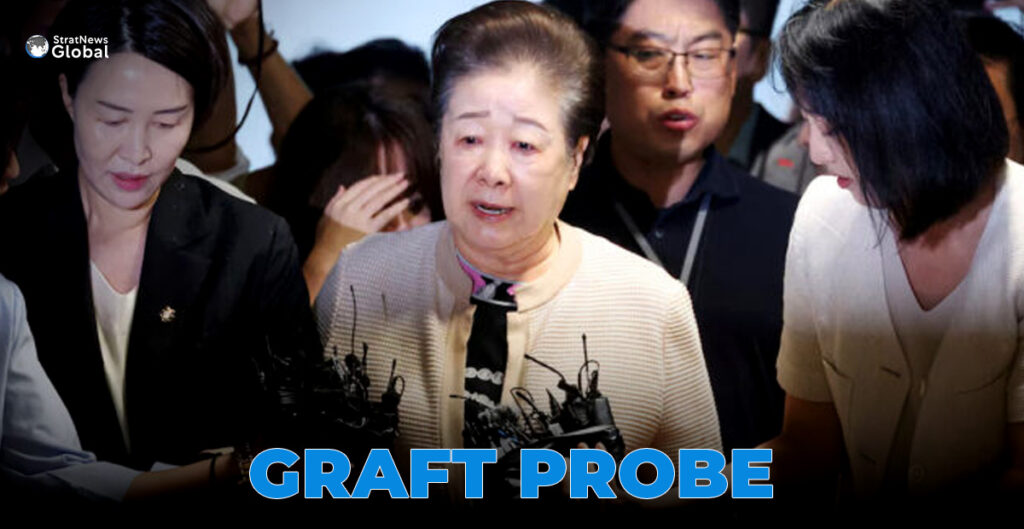
South Korea’s Corruption Probe Targets Unification Church Leader
As a widening criminal probe into South Korea’s former first couple gathers pace, Unification Church leader Han Hak-ja appeared before prosecutors on Wednesday over allegations of bribing the wife of ousted President Yoon Suk Yeol — a move that marks a significant escalation in the high-profile investigation.
Han declined to answer questions from reporters about the allegations as she arrived at the office of the special prosecutor.
‘Hang In There’
“I’ve been unwell,” she said, when asked why she had chosen to respond to questioning, after refusing earlier summons.
Han, who is called “True Mother” by followers, is the widow of Unification Church founder Moon Sun-myung, who died in 2012.
Han was assisted by aides as she stepped out of the car and walked slowly through a throng of reporters and security. A church official shouted “Mother, hang in there”, as Han made her way inside the prosecutors’ office.
Bribery Case
A special prosecutor has indicted former First Lady Kim Keon Hee for bribery and other charges in a widening probe into several charges of wrongdoing by her before and during Yoon’s presidency. Kim has been imprisoned as part of the probe.
Yoon, who is also in detention, is on trial over insurrection charges levelled against him by a separate special prosecutor related to his botched bid to declare martial law.
Kim is accused of receiving bribes worth 80 million won ($57,958) that include two Chanel bags and a diamond necklace from an official at the Unification Church in return for using her influence to help the church’s business interests.
Kim’s lawyers have denied the allegations against her, including over her receiving gifts.
‘Deeply Regrettable’
Han has also denied personal involvement in any illegal actions, calling allegations against her “false information.”
The official from the church that prosecutors say was behind the bribery has been arrested and indicted on charges including violating anti-graft laws.
The Unification Church, formally called the Family Federation for World Peace and Unification, said previously it was “deeply regrettable” that it failed to prevent the misconduct of a former senior official, but denied any involvement in the case.
(With inputs from Reuters)
US President Donald Trump Arrives In UK For Second State Visit
Marking a rare moment in diplomacy, US President Donald Trump landed in the UK late Tuesday for an unprecedented second state visit, as both nations prepare to finalise major investment deals and reaffirm the “special relationship” that Prime Minister Keir Starmer is keen to revitalise.
US Treasury Secretary Scott Bessent and British finance minister Rachel Reeves led events before Trump’s arrival, announcing a “Transatlantic taskforce” to deepen work between two of the world’s largest financial centres.
Trump will then be greeted by King Charles on Wednesday, for a day of pomp at Windsor Castle, a regal show of soft power that Starmer hopes will offer him protection from possible pitfalls during the trip.
Pomp-Laden Visit A Diversion For Both Leaders
The visit should provide Trump with a diversion less than a week after a close ally, conservative activist Charlie Kirk, was shot dead, a killing that has appeared to affect the president deeply.
Starmer is also looking to turn the focus onto geopolitics and investment after enduring a tough couple of weeks that have undermined his authority. First, he was forced to fire his deputy and then six days later his ambassador to the US, Peter Mandelson, over his ties to convicted sex offender Jeffrey Epstein.
Investments From US Companies
Starmer wants to pitch Britain as a destination for US investment, closely aligning its financial services, tech and energy sectors with larger US peers to try to drive much-needed economic growth at home.
To that end, business executives including Nvidia Corp CEO Jensen Huang and OpenAI’s Sam Altman are due to attend, while billions of dollars of business deals are expected to be announced.
Micosoft said it would invest over $30 billion in Britain over the next four years, while Google said it would invest 5 billion pounds ($6.8 billion), partly on a new data centre close to London that would help meet demand for AI services.
A spokesperson for Starmer described the state visit as “a historic opportunity” coming “at a crucial time for global stability and security”.
“The prime minister will discuss the challenges that both our countries face, and the opportunities, as we enter a new era of our deep and unparalleled relationship,” the spokesperson told reporters.
Starmer Will Host Trump On Thursday
Starmer will turn the focus to foreign affairs on Thursday when he hosts Trump at his Chequers country residence and will attempt to draw a line under his handling of the departures of his deputy, Angela Rayner, and Mandelson.
He gave both his full-throated support before being forced to let them go, prompting questions over his political judgment at a time when Nigel Farage’s populist Reform UK party holds a hefty lead the polls.
Mandelson’s ties to the late Epstein that led to his sacking could present Starmer with a tricky moment with Trump, whose administration had close ties to the former ambassador and whose own relationship with the financier has also come under scrutiny.
Starmer has justified his abrupt sacking of Mandelson last week by saying he was not aware of the depth of the ex-ambassador’s ties to Epstein and Trump has denied writing him a birthday letter which Democrats in the House of Representatives made public.
Trump To Be Treated To Royal Pageantry
On Wednesday, Trump and his wife, Melania, will be treated to British royal pageantry, including a carriage tour, a state banquet, a flypast by military aircraft and a gun salute.
A day later, Starmer welcomes Trump to Chequers, a 16th century manor house in the southern English countryside, to discuss investment, tariffs on steel and aluminium, ending Russia’s full-scale invasion of Ukraine and the situation in Gaza.
Both nations will have sizeable delegations and will be largely protected from planned anti-Trump protests. US Secretary of State Marco Rubio was greeted by Britain’s newly-appointed foreign minister, Yvette Cooper, when he arrived on Tuesday.
(With inputs from Reuters)
Australia, PNG Sign Defence Communique Amid Treaty Delay
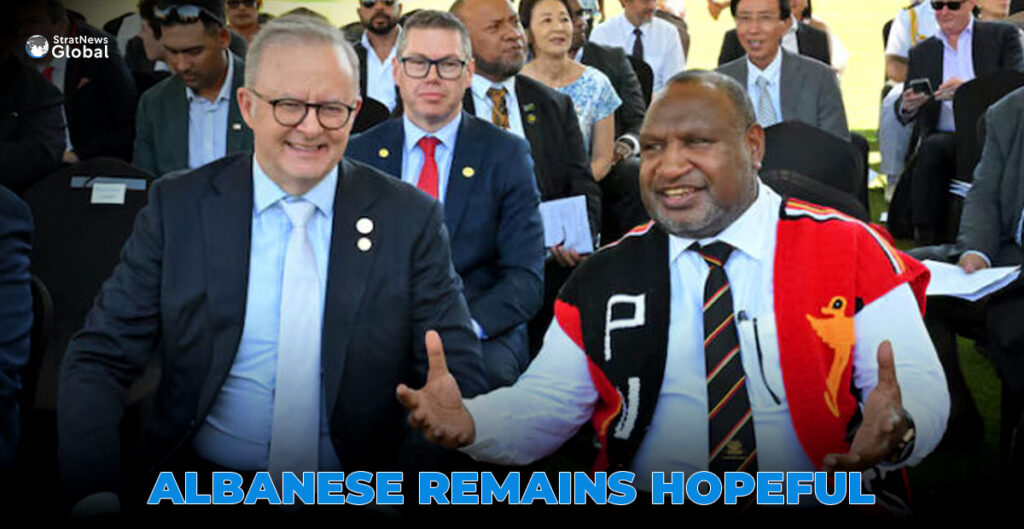
In a renewed push to strengthen regional security ties, Australian Prime Minister Anthony Albanese met Papua New Guinea’s Prime Minister James Marape in the capital on Wednesday for key defence talks, after a landmark mutual defence treaty between the two nations faced delays.
The two leaders instead signed a defence communique.
Marape told reporters it was in the two countries’ mutual interest to work side by side on defence.
‘Conscious Choice’
“I made a conscious choice that Australia remains our security partner of choice,” he said, adding Papua New Guinea could not defend its land and ocean space alone, and the deal was in the national interest.
The text of the communique, released by Albanese’s office, said Papua New Guinea and Australia had agreed on the text of a mutual defence treaty, which will be signed following cabinet processes in both countries. A meeting of the Papua New Guinea government’s cabinet of ministers on Sunday did not have enough members to reach a quorum to endorse the treaty, Albanese said earlier.
Second Setback
It is the second setback to defence ties for Australia in the Pacific Islands this month, after Albanese travelled to Vanuatu last week but was unable to sign a A$500 million ($326.5 million) security partnership because the Vanuatu government’s coalition partner wanted further scrutiny.
Australia has sought to use the security deals to block Chinese influence in the region. Marape told reporters China had no hand in stalling the deal.
Albanese Hopeful
Arriving in Papua New Guinea on Monday for 50th anniversary of independence celebrations, Albanese had said the mutual defence treaty with Australia’s closest Pacific neighbour would lift security ties to the equivalent of its alliance with the United States.
Australia has said that Pacific security needed to be “undertaken within the Pacific family”.
The Papua New Guinea treaty is a mutual defence alliance that recognises an armed attack on Australia or Papua New Guinea would be a danger to the peace and security of both countries, the statement from Albanese’s office said.
Albanese said he was confident the treaty would be signed in the future. “It will be Australia’s first new alliance in more than 70 years,” he said.
(With inputs from Reuters)
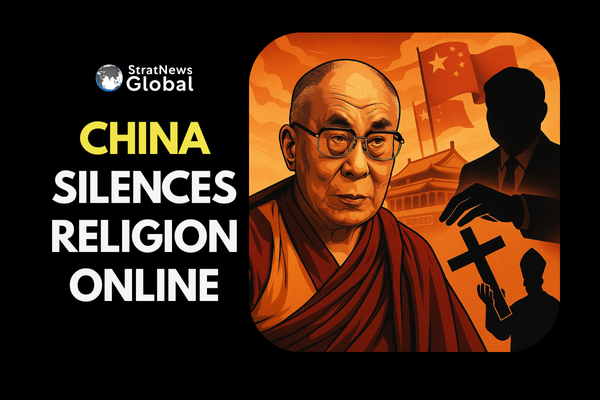
Dalai Lama Question Defies CCP’s Crackdown On Religion
Beijing has tightened its grip on religious life with sweeping new rules bringing priests, monks and imams firmly under Party oversight in the digital space.
Early on Tuesday, the National Religious Affairs Administration (NRAA) issued a sweeping notice reminding that every temple, church, mosque and cleric in China remains under the Party’s command. Though released on 7 September, state media only disclosed it on 16 September.
The NRAA, which works under the CCP’s United Front Work Department, said the regulation aims to control how religious figures use the internet, bringing sermons, teachings and even casual online activity under state scrutiny. Religious preaching or education can now only be conducted on licensed platforms run by officially recognised groups or institutions.
The rules explicitly prohibit clerics from engaging in online self-promotion, supporting overseas religious activities, spreading “extremist ideologies,” promoting “cults or heresies,” or profiting from religion.
“This law formalises the suppression of religious voices,” said Rinzin Namgyal, a young Tibetan scholar and Research Associate at the Foundation of Non-Violent Alternatives (FNVA) told StratNews Global. “Now even social media spaces are closed. While private practice may survive, public teaching is no longer an option. Nevertheless, it remains difficult to eradicate Buddhism from Tibetans entirely, they will find a way to keep it alive.”
Namgyal noted that popular monks were already punished for online teaching on WeChat before COVID. He pointed out that influential Buddhist clerics such as Khenpo Sodargye and Tsultrim Lodrö from Serta Larung Gar enjoy popularity across Tibet and mainland China, “which unsettles officials.”
He added: “Recently, NRAA director Chen Ruifeng was promoted to the National Ethnic Affairs Commission. Beijing ensures that no figure rises above the CCP’s authority.”
On the Dalai Lama succession, Rinzin issued a stark warning: “It remains an emotional, existential question for Tibetans, no matter what rules the Party makes.”
He further observed: “It is not, in fact, the United Front Work Department that is directly behind this. The NRAA itself has limited influence, but with this law, even social media spaces have been closed off.”
Apa Lhamo, Research Fellow at the Centre for China Analysis and Strategy (CCAS), echoed these concerns. “I think this latest regulation on the ‘Code of Conduct for Religious Clergy’s Online Behaviour’ demonstrates the Chinese party-state’s broad policy of sinicising religion, including Tibetan Buddhism. It also signals the CCP’s insecurity about the impact of religious teachings and the threat of religious leaders to the regime.”
She added: “This measure will have a great impact on Tibetan Buddhism in particular, because many Tibetans inside Tibet, despite intensive suppression, still listen to the Dalai Lama or their other root gurus in exile online. Articles such as 2, 7, 8 and 9 in the new ‘code of conduct’ appear to directly target the Dalai Lama and other Tibetan lamas, and their influence over Tibetans inside Tibet.”
The move follows Beijing’s April revision of rules on foreigners’ religious activities, effective 1 May, which standardised collective worship and exchanges but outlawed missionary work and “extremist activity.”
Together, the measures underscore one message: faith in China will remain firmly under the Party’s watchful eye.
EU Falls Billions Short On ‘Aid For Trade’ To Poorest Nations, Auditors Warn
The European Union is likely to fall short of its goal of allocating a quarter of trade-related aid to the least developed countries by 2030, according to a study released Tuesday by the EU’s auditors — a finding the bloc said it would review.
The “Aid for Trade” initiative, launched in 2005 by the World Trade Organisation to boost development in poor countries, stretches across a range of measures from building physical infrastructure like roads or ports to enhancing trade policy and regulation, or building capacity in sectors like agriculture.
The assistance is usually provided in the form of grants and low-priced credit and accounts for a fifth of overseas development assistance, according to the WTO website.
The EU set the target in 2017 after reviewing its strategy to address poor countries’ development needs more efficiently, but failed to draw up a concrete plan to ensure the goals were met, the European Court of Auditors said in a report.
Share Of Funding Declining
“The funding rate has actually fallen recently instead of rising,” the auditors said in a statement.
The EU allocated 17.2 billion euros ($20.2 billion) through the Aid for Trade programme to least developed countries in the half-decade to 2022, the study found, well under a quarter of the 106 billion euros sent to other developing countries.
The share of Aid for Trade funding to the poorest countries declined by 6 percentage points between 2015 and 2022, the auditors said.
“It is very unlikely that the EU will meet its 25% funding target by 2030,” said Bettina Jakobsen, the court member who oversaw the audit.
Jakobsen called for an assessment of the underlying reasons and more realistic targets.
The study, which examined nine projects in Malawi, Rwanda, Angola and Cambodia — all classed as least developed nations — between 2017 and 2024, also concluded there was a risk the countries “will be unable to capitalise on the results and thus ensure the economic sustainability of projects.”
The European Commission accepted the recommendations of the study and pledged to assess why the targets were not being met, in a response accompanying the auditors’ report.
Trade issues have been thrust into the fore this year after U.S. President Donald Trump imposed sweeping tariffs, putting pressure on poor economies like Lesotho, which relies heavily on textile exports to the world’s largest economy.
In Africa, where trade constraints range from poor infrastructure to expensive financing, officials are looking to foster trade integration and create new payment infrastructure to boost intra-continental trade.
Intra-Africa trade stood at 14.4% last year, with the rest being foreign export markets mainly in raw commodities, data from the continent’s biggest trade financier, Afreximbank, showed.
China, a key trading partner for many African economies, said in June it would open its market to more exports from all African countries but one by removing all import duties.
(With inputs from Reuters)
Chad Extends Presidential Term, Removes Term Limits
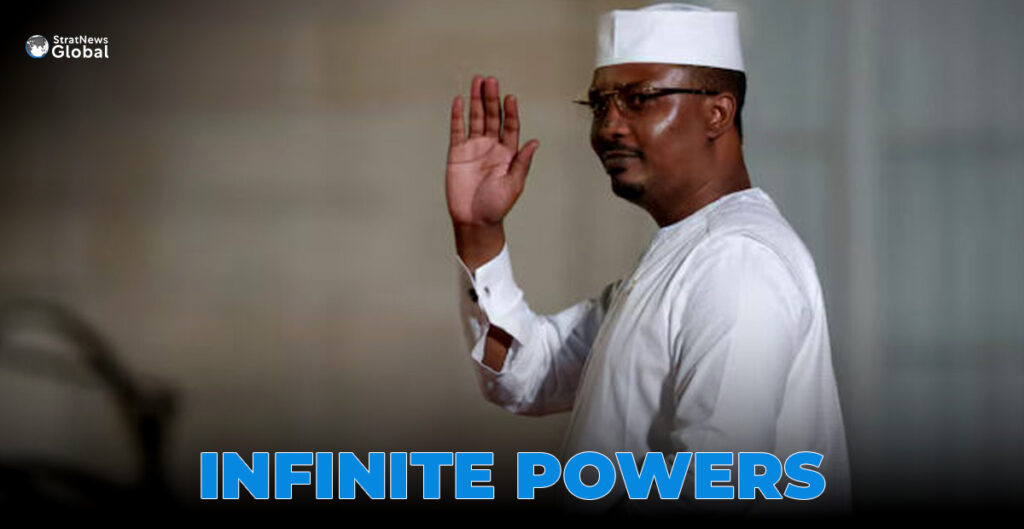
In a significant political shift, Chad’s national assembly on Tuesday approved constitutional changes extending presidential terms from five to seven years and removing limits on the number of terms a president can serve.
President Mahamat Idriss Deby seized power in Chad after his father, long-serving President Idriss Deby, was killed as he was visiting troops fighting militias in the north of the country in 2021.
He claimed victory following a disputed election held after three years of military rule in May 2024. Parliamentary elections followed in December, granting the vast majority of seats to the ruling party.
Final Hurdle Remains
Chad’s new constitution sailed through the National Assembly on Monday and is due for a final vote by the Senate on October 13.
The National Assembly approved the changes on Monday by a vote of 171 in support, one abstention and zero against, its President Ali Kolotou Tchaimi told reporters on Monday. The Senate will vote on October 13, and then the president will sign the constitution into law.
Remadji Hoinathy, a senior researcher at the Africa-focused Institute for Security Studies, said the text was virtually certain to pass the final vote next month and was the latest step by the ruling elite to cement its grip on power.
‘Fewer Dissenting Voices’
“There are fewer and fewer dissenting voices,” he said in an interview. “This clearly opens the possibility for the president and ruling party to establish a long-term stronghold on power.”
Chad was the first of the junta-led states in West and Central Africa to vote following a string of coups in recent years. The outcome was disputed after opposition leader and then-prime minister Succes Masra also claimed victory.
Masra, the most vocal figure in the opposition, stepped down after the vote and in August was sentenced to 20 years in jail for inciting violence.
(With inputs from Reuters)
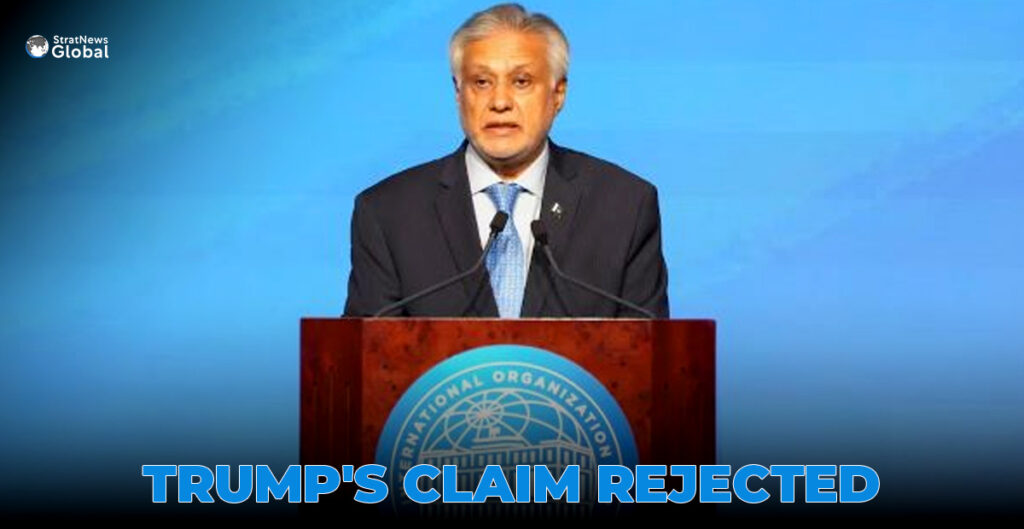
India Rejected Third-Party Mediation During Op Sindoor: Pakistan Dy-PM
Pakistan has stated that India declined any form of third-party mediation during the hostilities between the two South Asian neighbours in May, reaffirming Prime Minister Narendra Modi’s government’s consistent stand that United States President Donald Trump’s claims of having brokered a ceasefire amid Operation Sindoor were inaccurate.
Pakistan’s Deputy Prime Minister and Foreign Minister Mohammad Ishaq Dar, speaking in an interview with Al Jazeera on Tuesday, revealed that Islamabad had raised the issue of external mediation with U.S. Secretary of State Marco Rubio.
According to Dar, the American official made it clear that New Delhi did not endorse the involvement of outside actors in resolving disputes.
“Incidentally, when the ceasefire proposal was relayed through Secretary Rubio to me on the 10th of May… I was told that there would be dialogue between Pakistan and India at a neutral venue. When I met him again on the 25th of July during a bilateral meeting in Washington, I asked what had happened to those dialogues. He responded by saying, ‘India insists that this is a bilateral matter,’” Dar explained.
Trump’s Mediation Claims
Although Trump reiterated his claim of mediation more than two dozen times, India has consistently and categorically denied that the U.S. had played any role in achieving the ceasefire.
Analysts noted that India’s firm assertion of sovereignty on this issue was among the factors that influenced Trump’s aggressive tariff measures against New Delhi.
However, tensions on that front eventually eased, with Washington resuming discussions after Prime Minister Modi underscored ties with Russia through his “Act East” approach while simultaneously facilitating a cautious thaw with China.
Operation Sindoor
During Operation Sindoor, India conducted precision strikes targeting nine terrorist facilities located in Pakistan and in Pakistan-occupied Jammu and Kashmir (PoJK).
The operation was launched in retaliation for the deadly Pahalgam terror attack of April 22, which had resulted in the deaths of 26 civilians, all men and mostly tourists.
Trump, in subsequent remarks, insisted that his administration had leveraged trade to help avert what he claimed could have escalated into a nuclear conflict.
India, however, has maintained that the eventual ceasefire was the outcome of direct communication between the Directors General of Military Operations (DGMOs) of both countries, without any external role.
In his interview, Pakistan’s foreign minister further emphasised that his country would not “beg” for talks with India but remained prepared for “comprehensive dialogue” should New Delhi agree.
India, for its part, has repeatedly underscored that terrorism must cease before any meaningful talks can proceed.
“We do not object to mediation, but India has firmly stated it sees this as a bilateral matter. We are not opposed to bilateral talks either, but those discussions must be comprehensive—covering terrorism, trade, economic cooperation, and the question of Jammu and Kashmir. These are the core issues we have long been raising,” Dar said.
“…Yet, it clearly takes two to tango. Unless India is willing to engage, dialogue cannot be compelled. We certainly do not wish to force talks,” he added.
(With inputs from IBNS)