

Support us by contributing to StratNewsGlobal on the following UPI ID
ultramodern@hdfcbank

Strategic affairs is our game, South Asia and beyond our playground. Put together by an experienced team led by Nitin A. Gokhale. Our focus is on strategic affairs, foreign policy and international relations, with higher quality reportage, analysis and commentary with new tie-ups across the South Asian region.
You can support our endeavours. Visit us at www.stratnewsglobal.com and follow us on YouTube, Twitter, Facebook and Instagram.
र 500 per month
र 1000 per month
र 5000 per year
र 10000 per year
Donate an amount of your choice
र 500 per month
Donate र 500 per month

र 1000 per month
Donate र 1000 per month
र 5000 per year
Donate र 5,000 per year
र 10000 per year
Donate र 10,000 per year
Donate an amount of your choice
Donate an amount of your choice


IAEA Reports Shelling Near Ukraine’s Zaporizhzhia Nuclear Plant
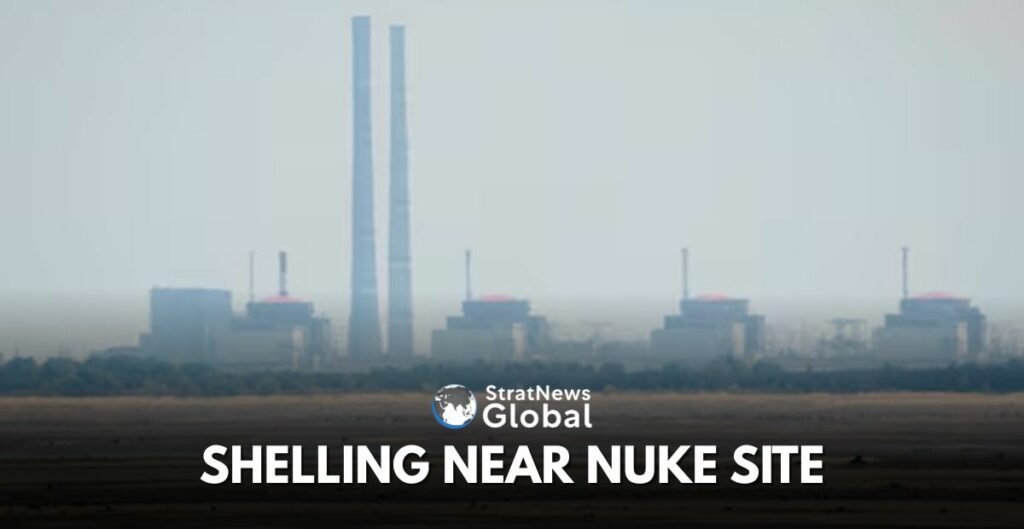
The International Atomic Energy Agency (IAEA) reported on Tuesday that its team at the Russian-controlled Zaporizhzhia nuclear plant in southeastern Ukraine detected nearby shelling and witnessed black smoke rising from three surrounding areas.
The team from the U.N.’s nuclear watchdog was informed that multiple artillery shells struck an area outside the plant’s perimeter, around 400 m (437 yards) from its off-site diesel fuel storage facility, the IAEA said in a statement.
“While there were no reports of casualties or equipment damage, the incident once again underlined the constant dangers to nuclear safety and security,” IAEA Director General Rafael Grossi said.
There were no statements on the incident from either Russian or Ukrainian officials.
Russian forces seized the Zaporizhzhia nuclear plant, Europe’s largest with six reactors, in the first weeks after Moscow’s February 2022 invasion of Ukraine.
Each side routinely accuses the other of undertaking actions that endanger nuclear safety at the plant.
Incidents of shelling occur frequently. The plant’s reactors are shut down, but the nuclear fuel inside them still needs to be cooled.
Last week, a Moscow-appointed governor of Ukraine’s Zaporizhzhia region said a Ukrainian drone detonated in the air by the plant. Staff had earlier reported two attacks over the previous week on a training centre near the plant’s reactors.
The IAEA, which urges both sides to avoid actions posing a threat to the facility, has monitors stationed permanently at the Zaporizhzhia plant and at Ukraine’s three other nuclear plants.
Russia Strikes Ukraine’s Kirovohrad
Officials said on Wednesday that an overnight Russian drone strike in Ukraine’s central Kirovohrad region disrupted railway services and partially knocked out power.
“As of now, the regional centre and 44 settlements in the Oleksandrivka territorial community have been partially cut off from the power supply,” Andriy Raykovych wrote on the Telegram messaging app.
Some private homes were also damaged, and railway travel has been disrupted, he said. Emergency services reported battling fires at three locations and said there were no casualties.
Ukrainian Deputy Prime Minister Oleksiy Kuleba said the Russian forces targeted railway infrastructure in the overnight attack, without specifying the location.
“Last night, the enemy launched a massive drone strike in an attempt to disable the substations that power the railway network,” he wrote on Telegram.
“Such strikes have a clear goal: to disrupt passenger and freight transport, disrupt the stable operation of transport, and put additional pressure on people and the economy.”
He said that the Ukrainian state railways Ukrzaliznytsia deployed over 20 reserve locomotives in the attack’s aftermath.
(With inputs from Reuters)
‘Time To Focus On Reliable Partners’: EU Unveils Strategic Vision For India
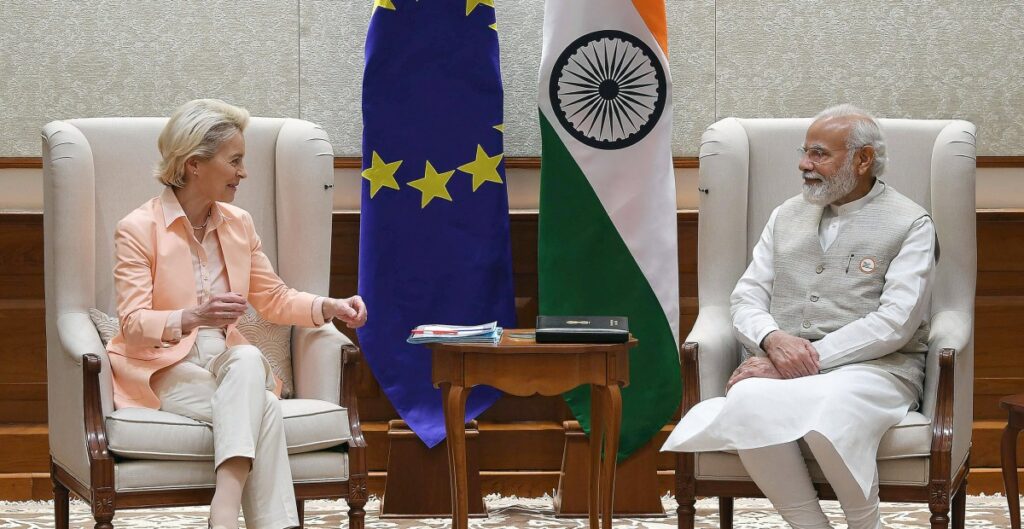
A significant milestone in EU-India ties. That what the European bloc called its strategic vision for enhancing cooperation with New Delhi. Coming against the backdrop of rising global tariff disputes and increasingly volatile supply chains, the EU’s new India strategy reflects a shift in Brussels’ posture.
The EU no longer views India as a marginal commercial player. Rather as a central axis for Europe’s future economic security, technological resilience and defence preparedness.
The timing is deliberate. Both sides are inching towards the final phase of the India-EU Free Trade Agreement (FTA) negotiations, with a deal expected by the year-end. Simultaneously, preparations are underway for the next India-EU Summit early next year. These developments are unfolding in a global environment where trade rules are being redefined, trust is fractured and alliances are being stress-tested.
Beyond the Tariff Battlefield
Europe’s recalibrated India strategy is not just a response to unresolved tariff battles, particularly over agriculture and industrial goods. Instead, it’s a move against growing exposure to China and supply chain disruptions. It reflects a deeper trend: derisking through diversification.
The newly released joint communication outlines a multi-pronged agenda spanning trade, digital regulation, defence, maritime cooperation, energy transition and multilateral coordination.
President Ursula von der Leyen framed it as a shift toward “partnerships rooted in shared interests and guided by common values,” highlighting India’s role in advancing joint priorities like clean energy, tech innovation and regional security.
Trade: Progress With Pressure Points
Tariff disputes on dairy, wine and industrial machinery continue to block final consensus. However, negotiators from both sides are under pressure to deliver. For the EU, securing access to India’s market is part of a larger push to break its overdependence on Chinese manufacturing. For India, an FTA with the EU is a way to expand export markets and attract investment in advanced industries.
The strategy stresses integration into digital and green value chains, offering India a more central role in the EU’s Trade and Technology Council (TTC) and supply chain resilience frameworks.
Defence, Indo-Pacific: From Talk to Coordination
What sets this vision apart is the elevation of defence cooperation. The EU is now actively seeking structured security frameworks with India, from maritime domain awareness in the Indo-Pacific to joint defence industrial initiatives. A potential Security of Information Agreement could allow for classified data sharing, a clear indicator that Europe sees India as a long-term strategic partner in a region increasingly defined by power contestation.
Joint action in cyber defence, counterterrorism, hybrid threats and crisis management is all part of the new chapter. The EU also expects closer Indian engagement on global hotspots, including the war in Ukraine and sanctions enforcement.
Technology, Innovation And Sustainability
With technology at the heart of global competition, the EU strategy seeks to pull India into deeper cooperation on emerging tech, digital governance and AI regulation. A proposed EU-India Startup Partnership and India’s possible association with the Horizon Europe R&D programme aim to unlock co-innovation potential.
In sustainability, the agenda prioritises green hydrogen, renewable capacity building and financing for India’s energy transition. These are not just climate goals; they are part of Europe’s broader strategy to develop alternate ecosystems outside of China.
This vision is part of a wider European playbook: derisk from China, hedge with India, anchor with the United States. With the U.S. shifting focus to its domestic agenda and China tightening its grip on strategic technologies and critical minerals, the EU is diversifying its dependencies. And India offers scale, stability and ambition.
India, too, is recalibrating. It seeks greater autonomy in global affairs. And closer ties with Europe give it economic and diplomatic options that aren’t entirely tethered to Washington or Beijing.
People, Mobility And Business
The EU wants to expand skilled migration and research exchange. A mobility framework and a proposed EU-India Business Forum aim to build more durable institutional and societal links, helping embed the partnership beyond government channels.
The Road Ahead
Adoption of EU Council Conclusions in October will be the next marker. But the real progress will be measured in the months that follow, on trade terms, defence alignment and joint initiatives that go beyond communiqués.
For now, the India-EU relationship is no longer just about trade preferences and diplomatic photo-ops. It’s being redefined by hard choices, global reordering and long-term strategic bets.
Russia Open To Expanding Talks With US On Sakhalin 1 Project, RIA Reports
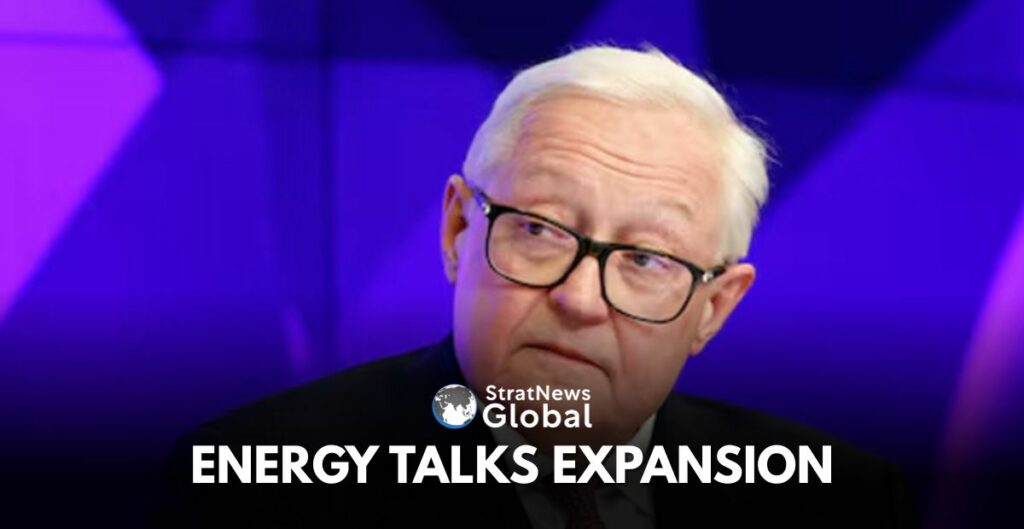
Russia‘s Deputy Foreign Minister Sergei Ryabkov said on Wednesday that Moscow is prepared to expand energy talks with the United States, including the Sakhalin 1 project, RIA reported.
Ryabkov also said that Russia was in contact with the U.S. on various issues and that dialogue continued.
“I can mention Sakhalin-1 as the most obvious example of the work that has begun in this area,” he was quoted as saying by RIA.
Russian president Vladimir Putin signed a decree last month that could allow foreign investors, including top U.S. oil major Exxon Mobil, to regain shares in the Sakhalin-1 oil and gas project.
The signing of the decree came on the day Putin met Donald Trump in Alaska for a summit where opportunities for investment and business collaboration were on the agenda, alongside talks to find peace in Ukraine.
Exxon previously held a 30% operator share in the lucrative project, and is the only non-Russian investor to have quit its stake. The U.S. major took an impairment charge of $4.6 billion to exit its Russian business after Moscow sent troops into Ukraine in February 2022.
Sakhalin 1 Project
The Sakhalin 1 project is one of Russia’s most significant oil and gas ventures, located off the northeastern coast of Sakhalin Island in the Russian Far East.
It is a large-scale offshore development comprising three main fields—Chayvo, Odoptu, and Arkutun-Dagi—spread across the Sea of Okhotsk.
Launched in the 1990s, Sakhalin 1 has been central to Russia’s strategy of harnessing its vast energy resources in the Far East to cater to both domestic and international markets.
The project is operated by Sakhalin-1 Consortium, which historically included ExxonMobil, Rosneft, India’s ONGC Videsh, and Japan’s SODECO.
ExxonMobil played a leading role until 2022, when Western sanctions over the Ukraine conflict prompted the U.S. major to exit the venture. Since then, Rosneft has taken a stronger lead in managing operations.
Sakhalin 1 is particularly noted for pioneering advanced drilling technologies, including some of the world’s longest extended-reach wells, allowing efficient extraction of oil and gas in challenging Arctic conditions.
The output contributes significantly to Russia’s crude oil exports, with much of the production shipped to Asia-Pacific markets such as Japan, South Korea, and China.
(With inputs from Reuters)
French Socialists Push Macron’s Govt For Significant Budget Concessions
France’s Socialists on Wednesday pressed new Prime Minister Sebastien Lecornu for major budget concessions, as he seeks cross-party backing to advance legislation in President Emmanuel Macron’s second-term twilight.
The Socialist Party has spent years on the political sidelines since Macron was elected president in 2017, but now holds leverage. Lecornu is meeting with party leaders across the political spectrum to try to get support from a fragmented parliament for his 2026 spending plans.
Socialist Party leader Olivier Faure said before meeting Lecornu that his party’s demands would include “an end to harsh budget cuts, fair contributions from the wealthiest, increased purchasing power”.
After the meeting, he said Lecornu had not given away anything about what he planned to do.
“We’ll see what he says in the coming days,” Faure told reporters. “If he’s not willing to listen to us, we’ll censure him.”
Socialists Want To Scrap Pension Changes
The Socialists want Lecornu to clearly commit to adopting key elements of their proposals for the budget, Socialist lawmaker Philippe Brun said. Lecornu’s predecessor, Francois Bayrou, was ousted over his own plan for a 44 billion euro budget squeeze.
France is under pressure to lower a budget deficit that stands at nearly double the European Union’s 3% ceiling, and a debt pile equivalent to 114% of GDP.
The Socialists’ demands include scrapping Macron’s unpopular changes to pensions, introducing a new wealth tax and halving the savings proposed by Bayrou for 2026.
An IFOP opinion poll published on Tuesday showed broad public support for the Socialists’ proposals, with 86% backing a new wealth tax and 66% supporting a suspension of the pension reform.
But the Socialists face a tough, delicate balancing act. If they push too hard, the political crisis could worsen and Macron could be left with no other choice but to call snap parliamentary elections – a scenario that opinion polls suggest would not favour the left.
Brun said the Socialists were open to compromises, since they, like others, don’t have a majority in parliament. He added that he reckoned startups like French artificial intelligence company Mistral AI should be exempted from the proposed wealth tax, to help them grow.
Lecornu has signalled openness to dialogue but faces major constraints, including preserving Macron’s legacy and keeping the conservative The Republicains (LR) on board.
Lecornu, a close ally of the president, was picked last week as Macron’s fifth prime minister in less than two years after parliament, deeply split between three opposing ideological camps, ousted Bayrou over his budget plans.
Meanwhile, unions and left-wing groups plan nationwide protests on Thursday, demanding action on the budget, but also on wages, pensions, and public services. An Interior Ministry source said that up to 800,000 people were expected to take part in the strikes and protests.
(With inputs from Reuters)
Why India Needs To Take Non-traditional Security Challenges More Seriously
National security has predominantly been looked through the prism of hard power. And military might has often been seen a barometer of it. That idea now seems outdated in a changing world order where economic might is used as a tool of coercion, technology can be weaponised and energy used as a chokehold.
We need to look at national security in a broader perspective, says former diplomat Arvind Gupta, who has also served as India’s Deputy National Security Advisor.
There’s long been a debate that climate change, food, water, etc. are development issues, having little to do with national security. The latter means defending a nation’s sovereignty and territorial integrity. “But there are also people living in a nation, so the human security aspect also comes in. And when people don’t feel safe, it has an immediate impact on national security,” Gupta told StratNews Global. It is necessary to look at India’s national security matrix and see how non-traditional security issues fit into that, he adds.
He and journalist Rajesh Singh have written a book titled ‘The Silent Enemy: Non-Traditional Challenges to National Security’.
Awareness about non-traditional challenges to national security is growing but this must also percolate down to the people, says Rajesh Singh. Each one of us is a stakeholder and needs to understand what is at stake, and what we can do at our level, he adds.
Demography
The importance of human capital is uncontested, says Arvind Gupta. Today’s youth have aspirations and are impatient, so there’s a need to cater to everybody’s needs. “If we do not catch up with those aspirations, I think we are in trouble. The line between demographic dividend and demographic liability is very thin.”
We have to look at demography as a driver of future geopolitical balances, he argues, pointing to decreased fertility rates in countries such as Germany, Russia and Japan.
Education and skilling are important aspects when it comes to the youth, says Rajesh Singh. Key questions here include: do we have the right education, is it inclusive and does it provide for adequate skill development? “I feel we have a lot of distance to cover in matters of skill; if you don’t have enough skilled people, demographic dividend become a liability.”
Technology
India needs to own some critical technologies if it has to maintain its strategic economy, says Arvind Gupta. If we remain just consumers of technology, we will be vulnerable to blackmail and even tech enslavement, he argues.
“Today, technology is not simply about making something and selling it but is connected with national security, national development. So we require a complete relook at technology”.
He also bats for synergising the various tech missions and advocates civil-military fusion.
Utah Prosecutors To Seek Death Penalty For Charlie Kirk’s Accused Killer
Utah prosecutors announced on Tuesday that they will pursue the death penalty against the accused killer of conservative activist Charlie Kirk, citing case details, including alleged confession texts.
“I had enough of his hatred,” Tyler Robinson, 22, told his roommate and romantic partner when asked why he had committed the murder, according to transcripts of messages attributed to the suspect in court documents filed by prosecutors.
He is accused of firing the single rifle shot from a rooftop that pierced Kirk’s neck last Wednesday on the campus of Utah Valley University in Orem, about 40 miles (65 km) south of Salt Lake City.
The office of Utah County District Attorney Jeffrey Gray charged Robinson with seven criminal counts on Tuesday, including aggravated murder, obstruction of justice for disposing of evidence and witness tampering for asking his roommate to delete incriminating texts.
Some politicians, including U.S. President Donald Trump, have called for capital punishment in the case.
At a press conference, Gray said he had made the decision to seek the death penalty “independently, based solely on the available evidence and circumstances and nature of the crime.”
Robinson made an initial court appearance on Tuesday afternoon via video feed from jail, unshaven and wearing a suicide prevention smock. He remained expressionless but appeared to listen attentively as the judge read the charges and informed him that he could face the death penalty.
The defendant spoke only once, when asked to state his name. Finding Robinson unable to afford legal counsel, Utah Fourth District Judge Tony Graf said he would appoint a defence attorney before the next court hearing, set for September 29.
In the meantime, he was ordered to remain held without bond in the Washington County Jail, where, according to a sheriff’s spokesperson, he has been placed under a “special watch protocol” that includes increased supervision.
Kirk’s killing, captured in graphic video clips that went viral online, sparked denunciations of political violence across the ideological spectrum but also unleashed a wave of partisan blame-casting and concerns that the murder might beget more bloodshed.
In court filings, prosecutors highlighted some of their evidence against Robinson, who was at large for more than 30 hours before eventually turning himself in.
Shortly after the shooting, prosecutors said, Robinson sent a text message telling his roommate to “drop what you’re doing, look under my keyboard.” The roommate, whom officials have also described as Robinson’s romantic partner and transitioning from male to female, then found a physical note from Robinson that read: “I had the opportunity to take out Charlie Kirk and I’m going to take it.”
The roommate then asked Robinson in a text reply, “you weren’t the one who did it right????” Robinson responded: “I am, I’m sorry,” according to a transcript of the alleged dialogue.
When the roommate asked why he had shot Kirk, Robinson wrote back: “I had enough of his hatred. Some hate can’t be negotiated out.” He also asserted he had planned the attack for more than a week, prosecutors said.
In later text messages, Robinson said he wished he had gone back and grabbed the rifle that he left in a bush immediately following the killing, noting it had belonged to his grandfather.
“I’m worried what my old man would do if I didn’t bring back grandpa’s rifle,” he wrote. “I might have to abandon it and hope they don’t find prints.”
DNA found on the trigger of the alleged murder weapon was linked to Robinson, prosecutors said.
Texts To Roommate
Robinson, a third-year trade college student, turned himself in the next day, after his parents saw images of the gunman and confronted him, according to the filings. Robinson implied that he wanted to take his own life, but his parents persuaded him to meet them at their home, where Robinson indicated he was the shooter.
Robinson ultimately decided to surrender to police after speaking at his parents’ urging with a family friend who is a retired deputy sheriff, prosecutors said.
“I’m much more worried about you,” he wrote to his roommate after revealing he would give himself up. He also urged the roommate to delete the messages and to refuse to speak with the police or the media.
The roommate, who was not identified in court papers, is cooperating with authorities, officials have said.
Robinson’s mother told police that over the past year her son had grown more left-leaning and more “pro-gay and trans-rights oriented,” the charging document said.
The relationship with his roommate also led to “discussions” with relatives, including his father, who holds “very different political views” from the suspect, according to the document.
Prosecutors added aggravating factors to the murder and firearm charges, alleging Robinson targeted Kirk based on political views and knew children would witness the killing. Under state law, only aggravated murder can carry the death penalty.
Kirk, 31, co-founder of the conservative student movement Turning Point USA and a key Trump ally, was speaking at an event attended by 3,000 people when he was gunned down.
Civil rights advocates have long criticised Kirk for rhetoric disparaging various marginalised groups, including Blacks, Muslims, immigrants, women and transgender people, and for embracing Trump’s unsubstantiated claims of a stolen election in 2020.
Kirk’s supporters describe him as a staunch defender of conservative values and a champion of public debate who galvanised young voters through Turning Point, shaping the MAGA movement’s appeal to Gen Z voters.
Top administration officials have threatened to go after left-wing organisations in the wake of the assassination, which Trump blamed almost immediately on the “radical left.” Critics have expressed concern that Trump may use the killing as a pretext to crack down on his political opponents.
Roughly two out of three Americans believe that harsh rhetoric common in politics is encouraging violence, according to a Reuters/Ipsos poll conducted in the days following Kirk’s murder.
(With inputs from Reuters)
European Firms Prepare For More Closures Over China’s Rare Earth Controls
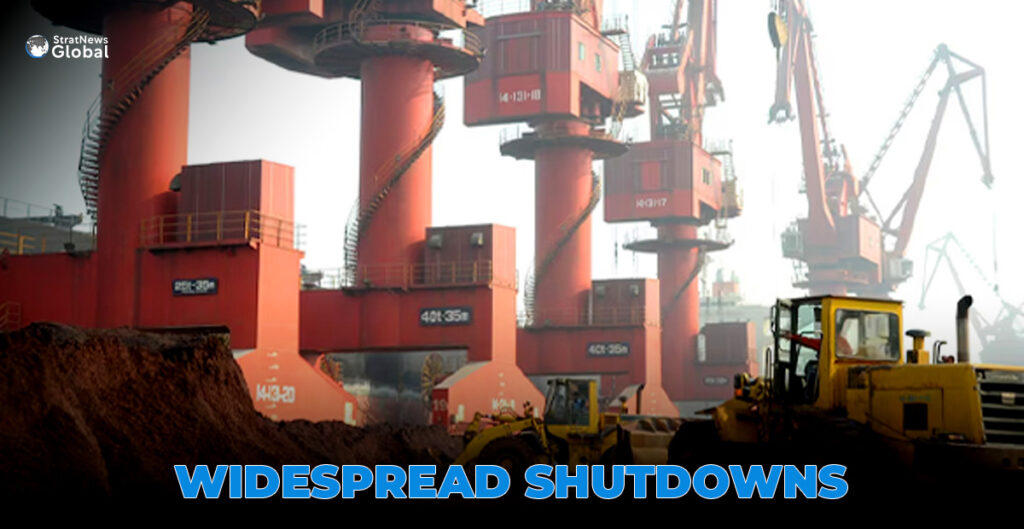
European firms anticipate further shutdowns and mounting losses as Beijing maintains strict rare earth export controls despite a July deal to expedite shipments, the EU Chamber of Commerce in China said on Tuesday.
“Irrespective of the agreements and commitments reached at the EU-China summit on the 24th of July, we continue to see significant bottlenecks for our members,” Jens Eskelund, the chamber’s president, told reporters.
Automakers in Europe and elsewhere faced production delays and widespread shutdowns after Beijing introduced export controls on some rare earths and related magnets following tariffs announced by U.S. President Donald Trump.
Chipmakers also petitioned Beijing for relief.
China’s Rare Earth Curbs
China refines and processes the vast majority of rare earths, which are in demand from automakers, the defence industry and others. China has defended its export curbs as “non-discriminatory” and not targeted at any specific country.
During a July summit between European Commission President Ursula von der Leyen and Chinese President Xi Jinping, China agreed to fast-track licences for critical raw materials for European companies, although it fell short of the EU’s wish for China to grant licences for a longer period or to scrap them for exports to the bloc.
Licence approvals have slowed just two months after the summit, and the chamber said it was starting to receive an increase in complaints and requests for help from its members.
“I think it’s fair to say we have not seen a material shift since the summit,” Eskelund said.
The chamber expects more companies to stop work as a result.
Chinese customs data show rare earth magnet exports, including to Europe, have soared since June following the deals agreed with the U.S. and the European Union.
Eskelund said less than a quarter of some 140 export licence applications that the chamber has been involved with had been approved by Chinese authorities. Some companies are preemptively submitting application forms in anticipation of shipment delays that could cause significant losses, he added.
“We have a number of members who are right now suffering losses because of these bottlenecks,” Eskelund said.
(With inputs from Reuters)
US Confirms Sending Observers To Monitor Russia-Belarus Military Drills
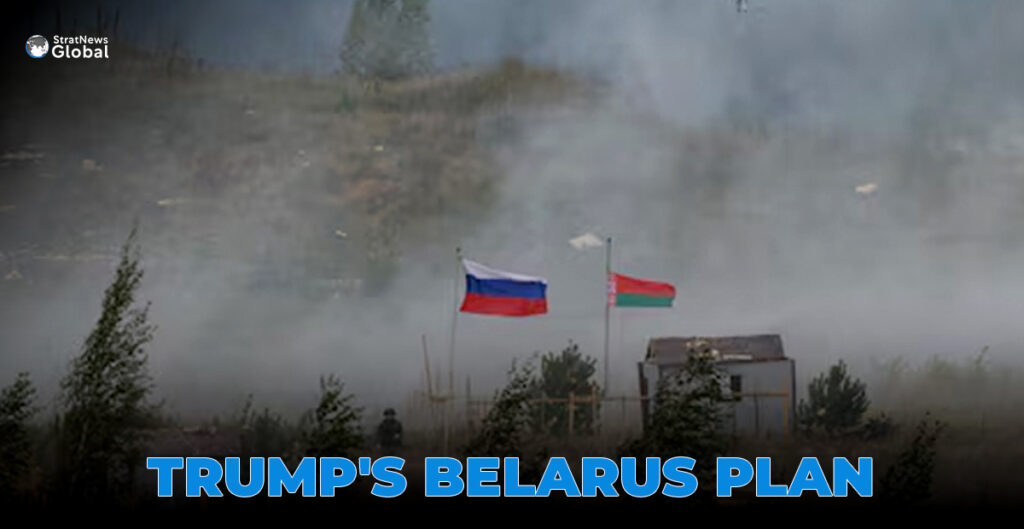
The Pentagon confirmed on Tuesday that U.S. military officials observed Russia-Belarus joint war games on Monday, marking the first such participation since Moscow’s 2022 invasion of Ukraine.
On Monday, Reuters and other news organisations photographed U.S. military officials in Belarus attending the “Zapad-2025” drills along with observers from other countries. Belarus is a staunch Russian ally and served as a staging ground for Moscow’s full-scale invasion of Ukraine.
Russian Deputy Defence Minister Yunus-Bek Yevkurov also attended the drills in Belarus.
“The U.S. Embassy in Minsk, Belarus, received an invitation for our Defence Attache to attend the ZAPAD-2025 military exercise in Belarus as part of the Distinguished Visitor (DV) Day, and we accepted the invitation in light of recent productive bilateral engagements between our countries,” said chief Pentagon spokesperson Sean Parnell.
“Attending exercise DV days is a common practice between militaries, and the U.S. Defence Attache is part of a larger group of international military attendees. Due to timing, the incoming Defence Attache was able to attend in conjunction with the outgoing Attache.”
The presence of the U.S. officers, less than a week after neighbouring Poland shot down Russian drones that crossed into its airspace, is the latest sign that Washington is seeking to warm ties with Belarus.
Trump’s Belarus Plan
Western foreign policy analysts speculate that Trump may be trying to peel Belarus away from Russia, a strategy widely viewed as unlikely to succeed, or to exploit its close ties with Moscow to promote a deal to end the war in Ukraine.
Trump, who has suggested that the drone incursion may have been the result of a mistake, last week lifted sanctions on the Belarus national airline Belavia, allowing it to service and buy components for its fleet, which includes Boeing aircraft.
He did so after Lukashenko – who regularly talks to Russian President Vladimir Putin and was given a friendly hand-signed letter from Trump by Coale – agreed to free 52 prisoners, including journalists and political opponents.
Belarusian Defence Minister Viktor Khrenikov personally greeted the two U.S. officers, who shook his hand and, speaking in Russian, thanked him for inviting them.
Parnell did not identify them in his statement to Reuters. But Reuters identified one of them as Air Force Lt. Col. Bryan Shoupe.
A U.S. defence official, speaking on condition of anonymity, said the last time the U.S. observed these Zapad drills was in 2021.
(With inputs from Reuters)
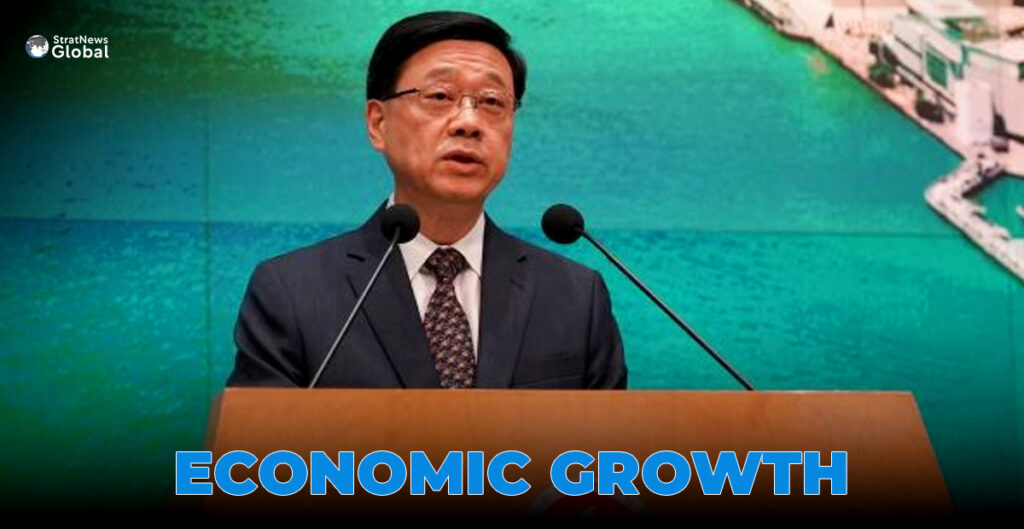
Hong Kong Leader John Lee Pledges Economic Growth And Better Livelihoods In Policy Address
In his fourth policy address on Wednesday, Hong Kong leader John Lee outlined plans to strengthen the city’s economy, improve living standards, and reinforce its position as an international hub. His proposals included launching a new gold trading market as part of the broader strategy.
A former deputy head of police, Lee reaffirmed the city’s economic growth forecast of 2% to 3% for 2025 and said authorities would strengthen platforms for mainland China enterprises looking to expand abroad.
Lee said his “ultimate objective” was to improve livelihoods, “with better housing for members of the public, higher income for workers, enhanced care for the elderly, and greater prospects for young people.”
Hong Kong’s small and open economy has felt the ripple effects of an economic slowdown in China and trade tensions between Beijing and Washington.
The policy address comes amid Beijing’s push to bolster flagging economic growth amid sluggish consumer demand and a years-long property crisis.
Lee said the government was “expediting the development of new growth areas” by building an international gold trading market, developing fintech and green and sustainable finance.
The city’s monetary authority, the HKMA, will encourage the banking sector, especially in mainland China, to establish regional headquarters in Hong Kong and expand into Southeast Asia and the Middle East, Lee said.
The government will also expand its aviation industry by providing recycling and trading services of high-value parts, as well as developing a sustainable aviation fuel industry chain.
The city will also attract more pharmaceutical companies to set up in Hong Kong to conduct clinical trials and medical treatments for rare disease drugs, high-end cancer drugs and advanced therapy products.
Greater Integration
Lee said the government would accelerate the development of the Northern Metropolis project, which aims to provide homes for around 2.5 million people and create a new business district near the border with the mainland.
Sandwiched between Shenzhen and Hong Kong, the Northern Metropolis was a focus of former leader Carrie Lam in 2021 when she announced plans to develop the area into an innovation and technology hub.
The development will be a stone’s throw from the Greater Bay Area, a Chinese government scheme to link Hong Kong, Macau and nine cities in the southern Chinese province of Guangdong.
Lee also said that as part of measures to build Hong Kong into a global education hub, the number of non-funded places for non-local students would be increased to 50% from 40% of local student places.
(With inputs from Reuters)
South Korea: Foreign Minister To Raise Xi’s APEC Attendance In Beijing Talks
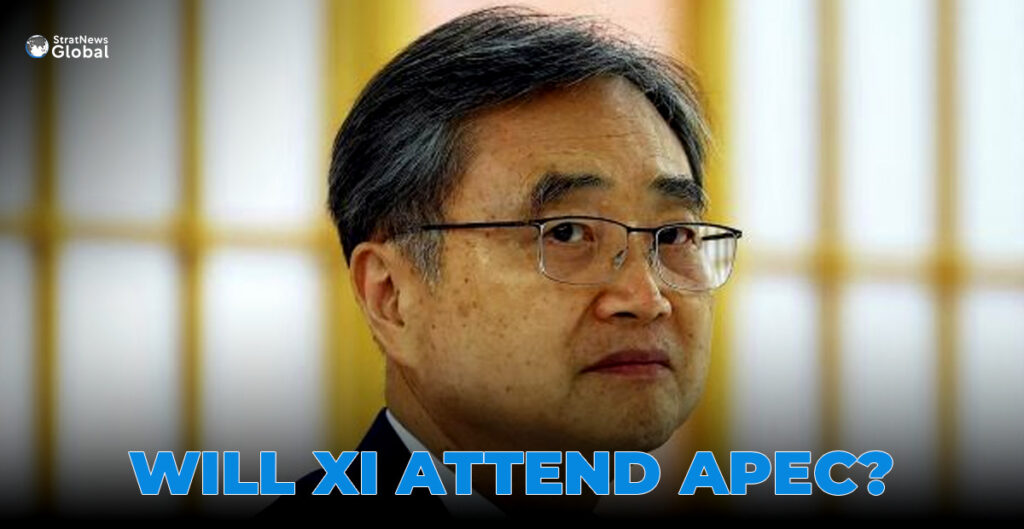
South Korean Foreign Minister Cho Hyun said on Wednesday that his upcoming trip to Beijing will include talks on whether Chinese President Xi Jinping will attend the Asia-Pacific Economic Cooperation (APEC) summit, which is scheduled to be held in South Korea late October.
Speaking ahead of his departure for a two-day trip to China, Cho said he would be hearing from Chinese officials about a recent visit to Beijing by North Korean leader Kim Jong Un to attend a World War Two anniversary event.
“China is an important neighbour of ours with the two countries being strategic partners,” Cho told reporters, adding he would be discussing developing cooperation further with Chinese Foreign Minister Wang Yi.
“I understand President Xi Jinping is going to visit South Korea for the APEC meeting,” Cho said. “We will also be discussing details about that.”
Cho said it was important as neighbours not to shy away from difficult conversations on “undesirable issues,” such as structures erected by China in an area of the ocean where the countries’ exclusive economic zones overlap.
China has said there was nothing illegal about the structures, describing them as fishing facilities.
Diplomatic Ties
South Korea has invited Xi and U.S. President Donald Trump to the APEC summit that starts on October 31 in the city of Gyeongju. President Lee Jae Myung suggested Trump try to meet with the North Korean leader Kim during his trip to the region.
Xi earlier this month stood side by side with Kim at a military parade in Beijing and held a separate bilateral meeting, their first in six years. Kim also held talks with Russian President Vladimir Putin in China.
South Korea’s National Security Adviser Wi Sung-lac ruled out the possibility that Kim would attend the APEC summit and said the prospect of a meeting between Trump and Kim at this time was “not high.”
“China is a very important country for regional peace and prosperity and for peace on the Korean Peninsula” and its role in South Korea’s long-term security goals requires Seoul to ensure its ties with Beijing are strong even though the two do not share identical values, he told reporters.
Wi said he was not able to confirm a media report published on Wednesday that said South Korea has obtained intelligence indicating Russia had provided reactor modules for nuclear-powered submarines to North Korea.
North Korea and Russia have dramatically heightened military cooperation in the past two years with Kim sending more than 10,000 troops to Russia to fight in the war with Ukraine. South Korean and Western officials have said Pyongyang was receiving help with critical military technology in return.
(With inputs from Reuters)