

Support us by contributing to StratNewsGlobal on the following UPI ID
ultramodern@hdfcbank

Strategic affairs is our game, South Asia and beyond our playground. Put together by an experienced team led by Nitin A. Gokhale. Our focus is on strategic affairs, foreign policy and international relations, with higher quality reportage, analysis and commentary with new tie-ups across the South Asian region.
You can support our endeavours. Visit us at www.stratnewsglobal.com and follow us on YouTube, Twitter, Facebook and Instagram.
र 500 per month
र 1000 per month
र 5000 per year
र 10000 per year
Donate an amount of your choice
र 500 per month
Donate र 500 per month

र 1000 per month
Donate र 1000 per month
र 5000 per year
Donate र 5,000 per year
र 10000 per year
Donate र 10,000 per year
Donate an amount of your choice
Donate an amount of your choice

UAE Could Downgrade Israel Ties If West Bank Annexation Proceeds: Sources
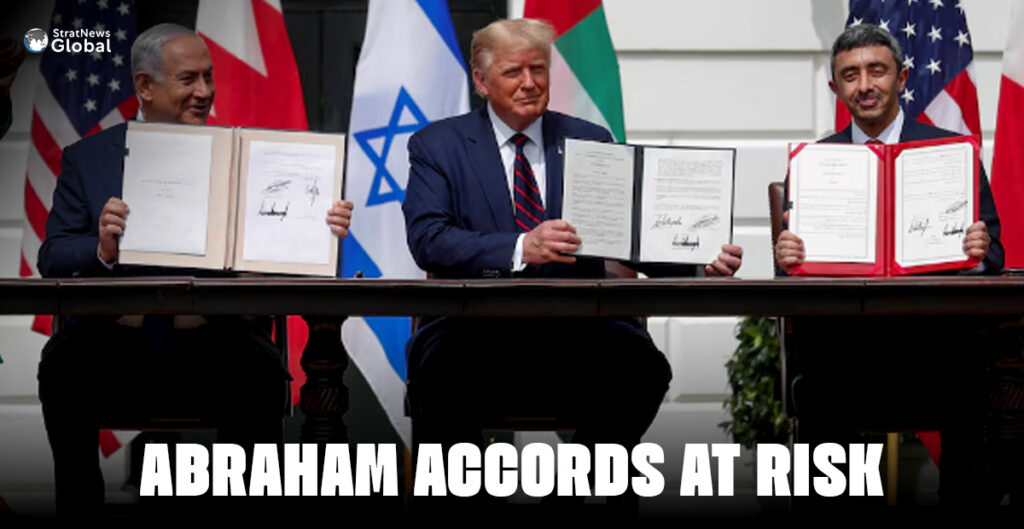
The United Arab Emirates (UAE) may downgrade diplomatic relations with Israel if Prime Minister Benjamin Netanyahu’s government proceeds with annexing parts or all of the Israeli-occupied West Bank, three sources familiar with the Gulf state’s deliberations said.
UAE is one of just a few Arab states with diplomatic relations with Israel, and downgrading ties would be a major setback for the Abraham Accords – a signature foreign policy achievement of U.S. President Donald Trump and Netanyahu.
Israel’s government has recently taken steps that could presage annexation of the West Bank, which was captured along with East Jerusalem in a war in 1967. The United Nations and most countries oppose such a move.
For Netanyahu, whose coalition relies on right-wing nationalist parties, annexation could be seen as a valuable vote-winner before an election expected next year.
Not All Ties Likely To Be Cut
Abu Dhabi warned Netanyahu’s right-wing coalition this month that any annexation of the West Bank would be a “red line” for the Gulf state, but did not say what measures could follow.
The UAE, which established ties with Israel in 2020 under the Abraham Accords, was considering withdrawing its ambassador in any response, the sources told Reuters.
The sources, who all spoke on condition of anonymity, said Abu Dhabi was not considering completely severing ties, although tensions have mounted during the almost two-year-old Gaza War.
A source in Israel said the government believed it could repair its strained ties with the UAE, a major commercial centre seen as the most significant of the Arab states to establish ties with Israel in 2020. The others were Bahrain and Morocco.
No other Arab state has since established formal ties with Israel, which also has diplomatic relations with Egypt and Jordan, and direct contacts with Qatar, though without full diplomatic recognition. Once-thriving business ties between the UAE and Israel have cooled due to the Gaza war, and Netanyahu has yet to visit the Gulf state five years after establishing ties.
Israeli Companies Barred From UAE Airshow
In a sign of growing tension with Israel, the Gulf state last week decided to bar Israeli defence companies from exhibiting at the Dubai Airshow in November, three of the sources said. Two other sources, an Israeli official and an Israeli defence industry executive, confirmed the decision.
Israel’s defence ministry said it had been made aware of the decision but did not elaborate. A spokesperson for the Israeli embassy in Abu Dhabi said discussions over Israel’s participation in the week-long trade show were continuing.
Israel’s media were the first to report the move to block the firms from the UAE’s flagship aerospace and defence event.
The UAE foreign ministry did not respond to questions on whether it was weighing downgrading diplomatic ties with Israel.
The spokesperson at the Israeli embassy in Abu Dhabi said that Israel was committed to the Abraham Accords and that it would continue to work towards strengthening ties with the UAE.
Emirati foreign ministry official Lana Nusseibeh had told Reuters and Israeli media on September 3 that any annexation of the West Bank would jeopardise the Abraham Accords and end the pursuit of regional integration.
That warning preceded Israel’s air strike on Qatar last week, which targeted Hamas leaders, an attack that Anwar Gargash, diplomatic adviser to UAE President Sheikh Mohamed bin Zayed Al Nahyan, condemned as treacherous.
At an emergency meeting of Muslim nations in Qatar, convened in response to the strike, a communique was issued urging countries to review diplomatic and economic ties with Israel.
As part of the Abraham Accords, Netanyahu promised to hold off on annexing the West Bank for four years. But that deadline has passed, and some Israeli ministers are now pressing for action.
Finance Minister Bezalel Smotrich this month said that maps were being drawn up to annex most of the West Bank, urging Netanyahu to accept the plan. Itamar Ben-Gvir, the national security minister, also backs annexing the territory.
Ties With Israel Deteriorated After 2023
After establishing ties, the UAE and Israel built a close relationship, focusing on economic, security and intelligence cooperation. This followed years of discreet contacts.
But differences began emerging after Netanyahu returned to power in 2023, leading to the most right-wing government in Israel’s history. Abu Dhabi has condemned repeated efforts by Ben-Gvir to alter the status quo of Jerusalem’s Al Aqsa compound to allow Jews to be able to pray there. The site is sacred to Muslims and Jews, and at present, non-Muslims can visit but cannot pray.
The UAE has also criticised Israel’s policies in the West Bank, including the expansion of settlements, and its military siege of Gaza, and said an independent Palestinian state alongside Israel was necessary for regional stability. Netanyahu this month declared there would never be a Palestinian state.
(With inputs from Reuters)
Women, Cash And The Future Of Welfare
Did you know that till 2018 there were zero social welfare cash transfers targeting women? Since then, there has been a sea change with respect to social welfare spending on women. Today there are an estimated 13 crore women beneficiaries of cash transfers.
Understandable, given the positive lessons from this fundamental pivot. Money in the hands of women are transforming families, empowering mothers, and even reshaping child development.
So far this information was anecdotal. A just published research paper based on a pilot project in Jharkhand now provides us empirical evidence about this causal connection between cash transfers and nutrition.
To unpack all this and more, StratNewsGlobal.Tech spoke to Karthik Muralidharan, Professor, University of California on Capital Calculus. In fact, Karthik believes the outstanding success of this cash transfer programme should inspire the government to replace other subsidies, including the one on fertilisers, with unconditional cash transfers.
Carney Moves To Strengthen Canada-Mexico Ties Amid US Tariff Threat
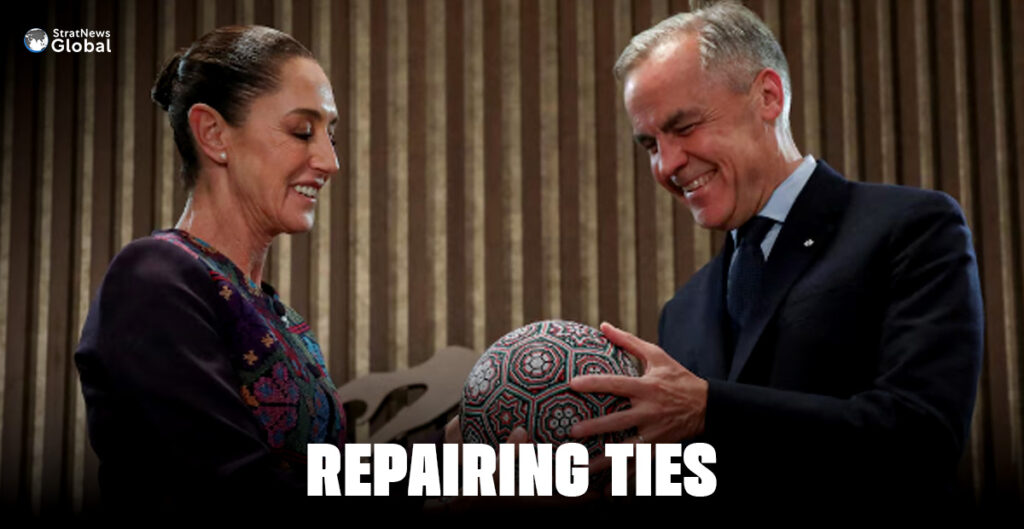
Canada’s Prime Minister Mark Carney arrived in Mexico City on Thursday for a two-day visit aimed at repairing strained ties and forging a common stance in key trade negotiations with the United States.
Carney is due to meet President Claudia Sheinbaum for what he said would be comprehensive talks on matters such as business ties, security and health.
“This is a very important relationship for Canada,” he told reporters in Ottawa on Tuesday.
Carney’s trip will be the first bilateral visit by a Canadian prime minister to Mexico in eight years.
Canadian officials briefing reporters on Wednesday described ties as excellent but conceded they could be closer.
“Highest level engagements have been few and far between, so this is an opportunity for us to reaffirm that leader-level engagement,” said one official.
Carney and Sheinbaum are due to hold a working lunch on Thursday and sign a comprehensive strategic partnership as well as boost security ties.
Canada, Mexico and the United States renewed a continental free trade treaty in 2018, but talk of solidarity frayed as U.S. President Donald Trump imposed tariffs.
Relations Strained Over Trade
Bilateral relations soured last year after senior Canadian politicians suggested they would be better off negotiating a solo trade deal with the Trump administration.
Brian Clow, a former senior aide who advised then Prime Minister Justin Trudeau on North American affairs, said both nations needed to have open, clear and trusting communications.
“It’s not in either country’s interest to be fighting each other when they have one single common goal, which is to hold off Donald Trump and his trade threats,” he said.
Canadian efforts to strike a new economic and defence relationship with Washington have stalled, underlining the need for closer ties with Mexico.
The U.S.-Mexico-Canada free trade deal is to be reviewed next year, and Carney says this is now Canada’s priority.
“That is the bigger trading relations(hip) and the focus for the larger trading relationship shifts to there,” he told reporters on September 5.
Sebastian Vallejo Vera, an assistant professor of political science at Western University in London, Ontario, said Canada and Mexico needed to craft a common approach to the review.
“So eventually, when they go out for trade talks again … they are not ganging up on the United States, but definitely not being pitted one against the other, so that they can negotiate from a better position,” he said.
Carney stresses the need for Canada to find new markets. Bilateral goods trade with Mexico in 2024 totalled just C$55.4 billion, compared to C$924.4 billion with the United States.
“Wherever there is untapped potential, in terms of trade diversification … we need to capitalise on it, and Mexico is just a prime example,” said a Canadian official.
(With inputs from Reuters)
Gaza Faces Telecom Blackout Amid Israeli Tank Advance
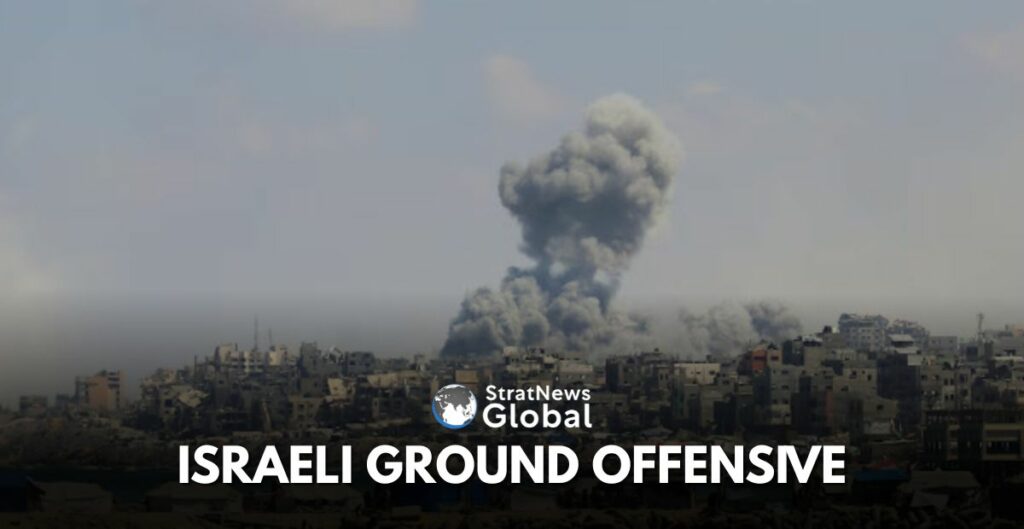
Residents reported Israeli tanks in two Gaza City areas leading to the city centre on Thursday, while internet and phone lines across the Gaza Strip were cut, signalling a likely escalation of ground operations.
Israeli forces control Gaza City’s eastern suburbs and, in recent days, have been pounding the Sheikh Radwan and Tel Al-Hawa areas, from where they would be positioned to advance on central and western areas where most of the population is sheltering.
“The disconnection of internet and phone services is a bad omen. It has always been a bad signal; something very brutal is going to happen,” said Ismail, who only gave one name. He was using an e-SIM to connect his phone, a dangerous method as it requires seeking higher ground to receive a signal.
At least 79 Palestinians have been killed by Israeli strikes or gunfire across the Gaza Strip in the past 24 hours, most in Gaza City, the territory’s health ministry said early afternoon on Thursday.
Main Network Routes ‘Targeted’
The Palestinian Telecommunications Company said in a statement that its services had been cut off “due to the ongoing aggression and the targeting of the main network routes”.
The Israeli army did not respond to a request for comment on the blackout.
In its latest statement to the media, it said troops were expanding their operations in Gaza City, dismantling what it called “terror infrastructure” and “eliminating terrorists”, and continuing to operate in Khan Younis and Rafah in the south.
Israel says it wants to smash the Palestinian militant group Hamas in its strongholds and free the last hostages still being held in Gaza, but its latest major offensive after two years of devastating war has drawn international condemnation.
Hundreds of thousands of Palestinians have fled Gaza City since Israel announced on August 10 it intended to take control, but a greater number are staying put, either in battered homes among the ruins or in makeshift tent encampments.
Gazans Scared Of Offensive
Bassam Al-Qanou, a displaced man sheltering with around 30 family members in a ragged, improvised tent camp on the beach, said they had no way to get out and nowhere to go.
“We are scared, but what can we do?” he said, adding that the children couldn’t sleep because of fear and the incessant boom of missile strikes from sea, air and ground.
The military has been dropping leaflets urging residents to flee towards a designated “humanitarian zone” in the south of the territory, but aid agencies say conditions there are dire, with insufficient food, medicine and space and inadequate shelter.
Four more Palestinians, including a child, have died of malnutrition and starvation in the past 24 hours, the health ministry said, raising deaths from such causes to at least 435 people, including 147 children, since the war started.
Israel says the extent of hunger in Gaza has been exaggerated.
The Hamas-run government’s media office said that a total of 3,542 people had been killed across the Gaza Strip from August 11, the day after Israeli Prime Minister Benjamin Netanyahu announced plans to seize control of the territory, to Wednesday.
It said 56% of them were killed in Gaza City and the northern part of the enclave, and 44% in the central and southern areas, which it said demonstrated that Israel was trying to depopulate the north, whilst not sparing the south.
Israel blames Hamas for the continuation of the war, saying the group could end it now if it surrendered, disarmed and disbanded.
Tanks Seen In Two Strategically Located Neighbourhoods
Along the coastal road, an unbroken column of every type of vehicle from carts and beaten-up cars to vans designed to carry goods was moving south, heavily laden with mattresses, gas cylinders and entire families perching on their belongings.
“We are heading to go sleep on the streets towards the beach, like this barefoot, we don’t know where to go,” said Yasser Saleh, speaking as he stood on the edge of a rickety trailer being pulled by a car.
In Sheikh Radwan, which is north of the city centre and has come under heavy bombardment in recent days, residents said they had seen tanks in the heart of their neighbourhood.
They also said Israeli forces had detonated four driverless vehicles full of explosives, and the blasts had destroyed many houses.
Similar explosions had rocked Tel Al-Hawa, which is located southeast of the city centre, and residents there also reported seeing tanks in the streets.
The Israeli army said it does not comment on the deployment of its forces.
Death Toll Crosses 65,000
The total Palestinian death toll from the two-year war between Israel and Hamas surpassed 65,000 on Wednesday, according to the Gaza health authorities.
The war was triggered by the Hamas-led attacks on southern Israel on October 7, 2023, in which about 1,200 people were killed and 251 taken hostage, according to Israeli tallies.
(With inputs from Reuters)
US Dismisses Syria Diplomats Amid Shift Toward Pro-Damascus Policy
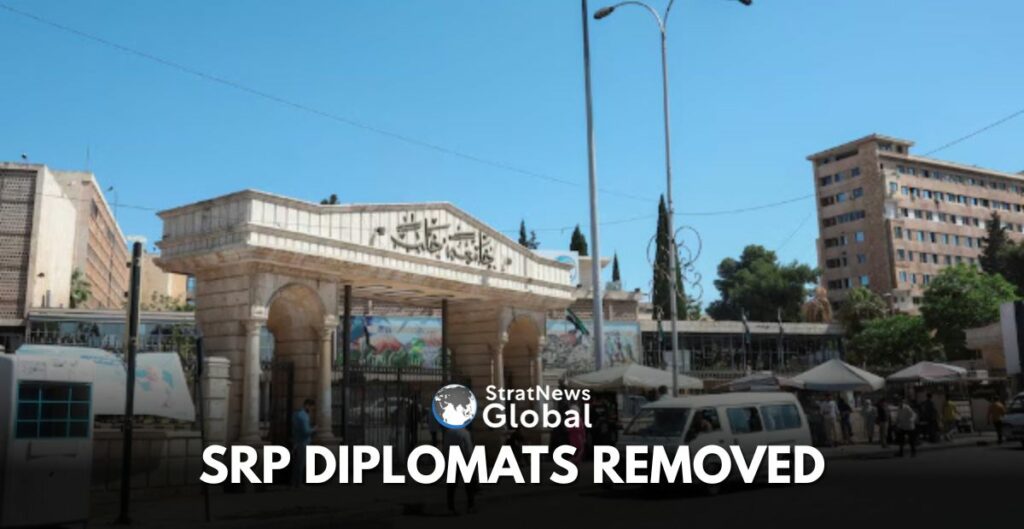
Several of the most senior U.S. diplomats working on Syria have been suddenly removed from their posts, according to five individuals familiar with the situation, a development that coincides with Washington’s efforts to bring its Syrian Kurdish allies into closer alignment with the central administration in Damascus.
The diplomats at the Syria Regional Platform (SRP) – the de facto U.S. mission to the country based remotely in Istanbul – all reported to Tom Barrack, the U.S. special envoy for Syria and a longtime adviser and friend of President Donald Trump.
Appointed in May, Barrack has spearheaded a regional policy shift that backs a unified Syrian state under President Ahmed al-Sharaa, the Islamist leader who swept to power in a lightning advance late last year.
One of the people who spoke to Reuters, a U.S. diplomatic source, said “a handful” of staff at the SRP were told their tours were ending as part of a reorganisation of the team.
The person said the departures would not affect U.S. policy in Syria, and the decision to remove them was not based on policy differences between the staff and Barrack or the White House.
The sources, who also included two Western diplomats and two U.S.-based sources, said the moves were sudden, involuntary and came toward the end of last week. Reuters was not able to ascertain the official reason given for the moves.
A State Department official said it did not comment on “personnel decisions or administrative reorganisations”, adding: “Core staff working on issues pertaining to Syria continue to operate from multiple locations.”
Barrack, the envoy, has urged the Kurdish-led, U.S.-backed Syrian Democratic Forces (SDF) to move more quickly to ratify a March deal with Sharaa to bring areas they run under state authority, and to integrate the SDF into national security forces.
SDF Reluctant To Submit To Greater Control
One Western diplomat said the ousting of the U.S. diplomats was in part driven by “a divergence” in views between staffers and Barrack on the issue of the SDF and Sharaa, without elaborating.
The State Department did not comment on this issue. Barrack, who is also the U.S. ambassador to NATO member Turkey, could not be reached directly for comment.
Some SDF leaders – having fought with the U.S. against Islamic State during former President Bashar al-Assad’s rule – have resisted the U.S. pressure to integrate into national security forces, especially given several flare-ups of violence across Syria this year.
The SDF, still engaged in sporadic skirmishes with Syrian and Turkish-backed forces in the country’s northeast, has continued to push for a less centralised government in the post-Assad era — one in which they would retain the autonomy they gained during Syria’s civil war.
Barrack was in Damascus on Tuesday, overseeing the foreign minister’s signing of a plan to address a standoff with the Druze minority in the south. Barrack later said on X that the plan would back “equal rights and shared obligations for all”.
Since Washington shuttered its embassy in Damascus in 2012, the SRP has served as the de facto mission to Syria. It is headquartered at the U.S. consulate in Istanbul and has offices elsewhere in the region.
(With inputs from Reuters)
Families Of Air India Crash Victims Sue Boeing, Honeywell
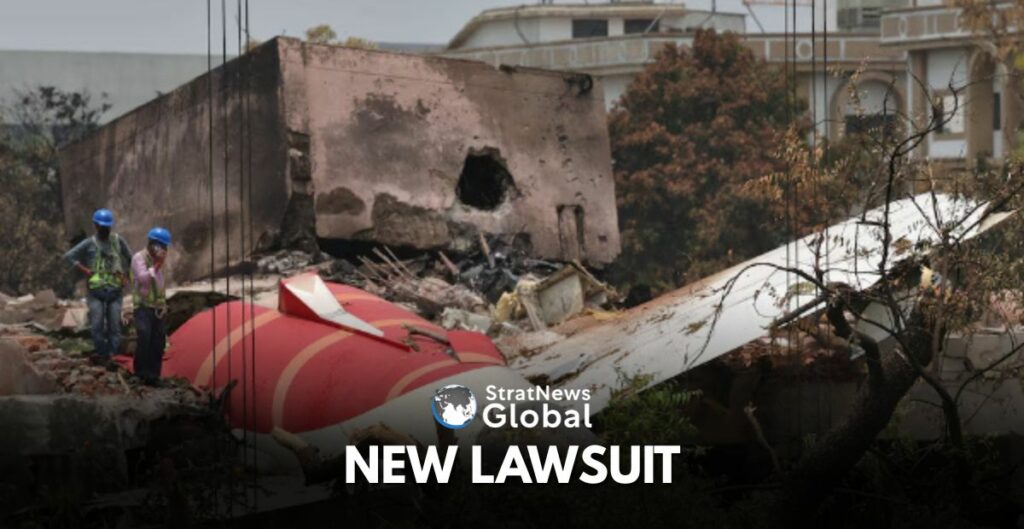
Families of four passengers killed in the June 12 Air India Boeing 787 crash filed a lawsuit alleging faulty fuel switches, though U.S. aviation regulators maintain the devices did not cause the accident that claimed 260 lives.
The lawsuit filed on Tuesday in Delaware Superior Court blames Boeing and Honeywell, which made the switches, for the crash seconds after Flight 171 took off for London from the Indian city of Ahmedabad.
The plaintiffs point to a 2018 FAA advisory that recommended, but did not mandate, operators of several Boeing models, including the 787, inspect the fuel cutoff switches’ locking mechanism to ensure it could not be accidentally moved.
India’s Aircraft Accident Investigation Bureau’s (AAIB) preliminary investigation report into the crash stated that Air India had not conducted the suggested inspections, and that maintenance records showed that the throttle control module, which includes the fuel switches, was replaced in 2019 and 2023 on the plane involved in the crash.
The report noted “all applicable airworthiness directives and alert service bulletins were complied with on the aircraft as well as engines.”
Boeing declined to comment, and Honeywell did not immediately respond to a request for comment.
Fuel Switches Under Probe
A cockpit recording of dialogue between the jet’s two pilots suggests that the captain cut the flow of fuel to the plane’s engines, as Reuters previously reported.
The lawsuit maintains that the switches are in a place in the cockpit where they were more likely to be inadvertently pushed, which “effectively guaranteed that normal cockpit activity could result in inadvertent fuel cutoff.”
However, aviation safety experts told Reuters that they could not be accidentally flipped based on their location and design.
The lawsuit appears to be the first in the United States over the crash.
It seeks unspecified damages for the deaths of Kantaben Dhirubhai Paghadal, Naavya Chirag Paghadal, Kuberbhai Patel and Babiben Patel, who were among the 229 passengers who died.
Twelve crew members and 19 people on the ground were also killed. One passenger survived. The plaintiffs are citizens of and live in either India or Britain.
Indian investigators’ preliminary report appeared to exonerate Boeing and engine maker GE Aerospace, but some family groups have criticised investigators and the press as too focused on the pilots’ actions.
Although most accidents are caused by a combination of factors, legal experts say lawyers representing victims’ families tend to target manufacturers because they do not face the same limits on liability enjoyed by airlines. Such strategies can also increase the prospect of using U.S. courts, which are widely seen as more generous to plaintiffs than many foreign courts.
(With inputs from Reuters)
Macron Faces Growing Pressure As French Unions Strike Against Austerity
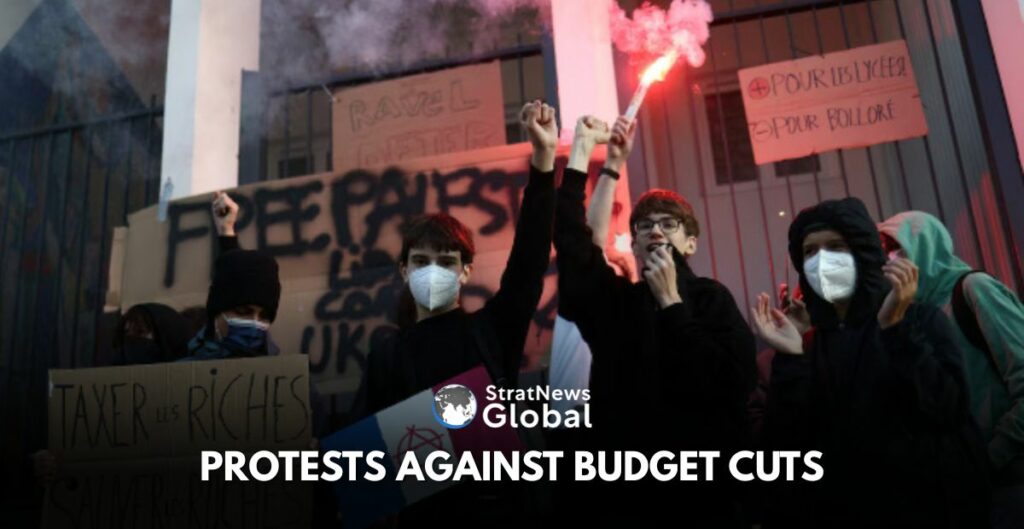
Teachers, train drivers, pharmacists, and hospital staff staged strikes, while students blocked schools across France on Thursday in nationwide protests against looming budget cuts.
Unions are calling for the previous government’s fiscal plans to be scrapped, for more spending on public services, higher taxes on the wealthy, and for the reversal of an unpopular change that makes people work longer to get a pension.
In Paris, many metro lines were set to be suspended for most of the day except for morning and afternoon rush hour. Pupils gathered to block the entrances to some schools.
“Block your high school against austerity,” read a placard raised by a student in front of the Lycee Maurice Ravel high school in the French capital, where the gathering included teachers and workers’ representatives.
“Workers are currently so despised by this government and by (President Emmanuel) Macron that, in fact, it can’t continue like this,” bus driver and CGT union representative Fred said at a rally in front of the high school.
“I am here to defend public services,” 33-year-old teacher Gaetan Legay said at the same rally, “in particular, to demand that public money goes back into public services … rather than to large companies or in tax gifts to the ultra-rich.”.
Macron and his newly appointed Prime Minister, Sebastien Lecornu, are under pressure from parliament over the likely budget cuts and from investors concerned about the deficit in the euro zone’s second-largest economy.
Workers Angry Over Fiscal Plans
An Interior Ministry source said that as many as 800,000 people were expected to take part in the strikes and protests.
“The workers we represent are angry,” the country’s main unions said in a joint statement in which they rejected the previous government’s “brutal” and “unfair” fiscal plans.
France’s budget deficit last year was close to double the EU’s 3% ceiling, but much as he wants to reduce that, Lecornu – reliant on other parties to push through legislation – will face a battle to gather parliamentary support for a budget for 2026.
Lecornu’s predecessor, Francois Bayrou, was ousted by parliament last week over his plan for a 44 billion euro budget squeeze. The new prime minister has not yet said what he will do with Bayrou’s plans, but he has signalled a willingness to compromise.
Protests Hit Schools, Trains
One in three primary school teachers was on strike nationwide, and nearly one in two walked off the job in Paris, the FSU-SNUipp union said.
Regional trains were heavily affected by the strike, while most of the country’s high-speed TGV train lines worked, officials said. Protesters gathered to slow down traffic on a highway near the southeastern city of Toulon.
Nuclear production at French utility EDF was slightly down, by 1.1 gigawatts early on Thursday, data from the company showed, as workers lowered power output at the Flamanville 1 reactor.
The farmers’ union Confederation Paysanne has also called for mobilisation. Pharmacists are angry over changes affecting their business, and the USPO pharmacists’ union said a survey it did among pharmacies showed 98% could close for the day.
Interior Minister Bruno Retailleau told reporters early on Thursday that police had already removed some blockades, including in front of bus depots in the Paris region. He warned that he expected as many as 8,000 troublemakers to try to “sow disorder” and clash with police.
Some 80,000 police and gendarmes will be deployed throughout the day. Riot units, drones and armoured vehicles will be on hand.
More than 20 people had already been arrested on various sites, police said.
Plans to move the 70-metre (76-yard) long Bayeux tapestry, a masterpiece whose stitching tells the story of the Norman invasion in 1066, were delayed because of the strike, the local prefecture said. The tapestry is set to be loaned to Britain.
(With inputs from Reuters)
Starmer, Trump Set For Talks On Foreign Policy, Investment After The Royal Pomp
U.S. President Donald Trump is set to meet British Prime Minister Keir Starmer on Thursday for talks aimed at centring his unprecedented second state visit on global affairs rather than domestic politics.
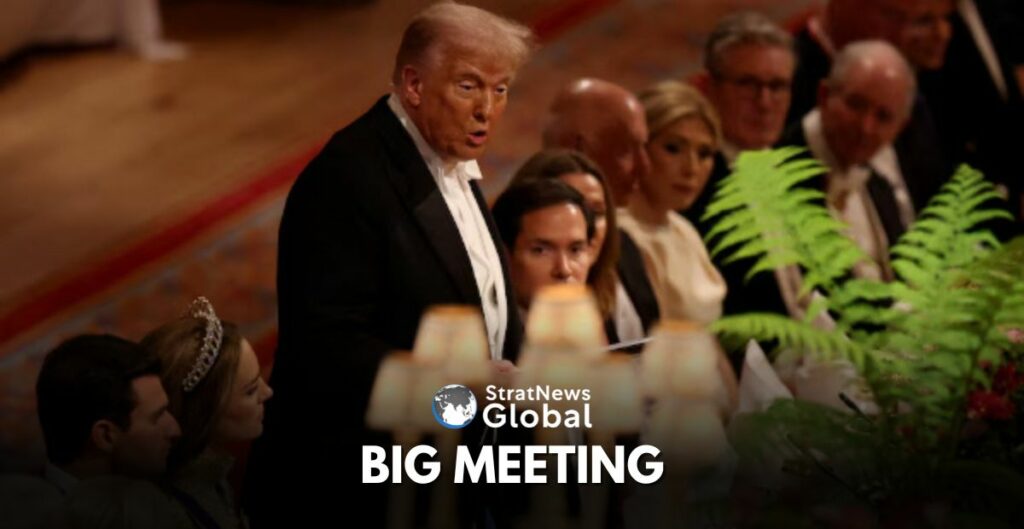
After a day of pomp and ceremony in which Trump rode in a carriage with King Charles and feasted at a state banquet, the U.S. president and Starmer will celebrate the unveiling of a 150 billion pound ($205 billion) package of U.S. investment into Britain.
The deals, covering areas such as technology, energy and life sciences, will offer a renewal of the so-called ‘special relationship’ between the two nations, something Starmer has worked hard to cultivate since Trump became leader in January.
Meeting Is Not Without Perils
But the meeting is not without perils. Later on Thursday, the two leaders will hold a press conference, when journalists could quiz both over the late sex offender Jeffrey Epstein.
Starmer was forced to sack Peter Mandelson as ambassador to the U.S. last week after his close ties with Epstein were documented, and Trump’s relationship with the late financier has also come under scrutiny.
“For Starmer, he is having a difficult domestic time, and he needs a positive international narrative and to bring Trump on board on key issues,” said Evie Aspinall, director of the British Foreign Policy Group think tank.
“For Trump … it is important to him to show there is value in having close relations with him. For both sides, they realise there is a lot to be gained.”
Trump, speaking alongside Charles at Windsor Castle, the oldest and largest inhabited castle in the world, described his visit as “truly one of the highest honours of my life”.
Starmer hopes this sentiment will continue into Thursday and deter the U.S. leader from straying into more sensitive areas, such as Britain’s online safety laws and position on Israel.
Instead, Starmer will want to champion the deals secured between the two countries, including a new technology pact with companies from Microsoft to Nvidia, Google and OpenAI pledging 31 billion pounds ($42 billion) in investments over the next few years, in AI, quantum computing and civil nuclear energy.
The British leader appears to have resigned himself to not getting any further reduction on steel and aluminium tariffs, according to comments from an official playing down the prospect. But Starmer can say Britain is increasingly a destination for U.S. investment, aligned to its financial services, tech and energy sectors.
Starmer To Turn Talk To Foreign Affairs
Starmer will also turn the focus to foreign affairs on Thursday when he hosts Trump at his Chequers country residence, hoping to persuade the U.S. leader to take stronger action against Russia over its full-scale invasion of Ukraine.
Trump pleased Europe by calling Russia “the aggressor” in the war last weekend, but he is also demanding that Europe stop all purchases of Russian oil before he will agree to impose heavier sanctions on Moscow.
On Israel, the British leader is under pressure to raise the assault on Gaza with Trump, who has expressed frustration over Israel’s air strikes against Hamas leaders in Qatar but overall has been supportive of Prime Minister Benjamin Netanyahu.
Trump has also criticised some European countries over their decision to recognise a Palestinian state as “rewarding Hamas”, although he told reporters he didn’t mind Starmer “taking a position”.
“Those two geopolitical areas are likely to be the friction points in the conversations,” said political analyst Aspinall. “There will be some awkward moments in those conversations.”
(With inputs from Reuters)
India Must Build Its Own China Lens, Say Experts
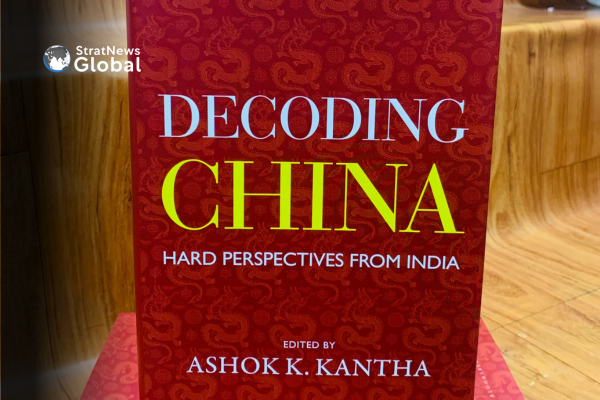
India must forge its own lens to understand China. This was the central message as experts, diplomats and military leaders came together for the launch of Decoding China: Hard Perspectives from India in New Delhi on Thursday.
From questions of trust in the India–China dialogue to concerns over military modernisation, economic dependence and neighbourhood sensitivities, the book and its contributors argued that India cannot rely on Western analyses but must build perspectives rooted in its own strategic realities.
Moderating the session, Dr Arvind Gupta former Deputy National Security Adviser and the Director of the Vivekananda International Foundation (VIF), which organised the event, said that while recent years have shown some signs of movement in the India–China dialogue, observers remain uncertain whether this reflects “short-term tactical manoeuvres or a deeper strategic shift.” He asked whether China could be trusted, whether it truly trusts India, and how New Delhi should respond to this ambiguity.
The book, divided into four sections, is designed to capture what Indians think of China, offering a distinctly Indian perspective on Beijing’s policies and ambitions.
Ashok Kantha, former Indian ambassador to China and the editor of the book, argued that Western scholarship has often misunderstood China by echoing Beijing’s own narratives and assuming its inevitable rise. He stressed that India must develop its own analytical lens, since its strategic concerns with China are very different from those of the West.
According to him, Western studies frequently repeat ideas such as China being the “Middle Kingdom,” its rise as merely a return to past glory, or its certain overtaking of the United States assumptions he described as misleading because they overlook present realities. “In fact,” he pointed out, “the gap between the US and Chinese economies is widening rather than narrowing.” He added that for India, it remains uncertain whether China will become a rival or a partner, making the relationship more complex.
Kantha said the book is distinctive for bringing together seasoned practitioners and scholars in a multidisciplinary approach, with policy-oriented chapters offering practical, real-world recommendations on dealing with China.
Lt Gen Rakesh Sharma Former GOC Ladakh Corps & Adjutant General of Indian Army , reflecting on India’s military experience, pointed to the BrahMos supersonic cruise missile, admired for its speed, precision and difficulty to intercept, as one of the clear success stories during Operation Sindoor, India’s response to the Pakistani terrorist strike in Pahalgam. However, he cautioned against complacency, noting that China is advancing rapidly.
Referring to China’s Victory Day Parade on September 3 to mark the 80th anniversary of the end of the Second Sino-Japanese War and the Second World War, he said that nearly 80 per cent of the equipment displayed was new, including systems unseen even by Western observers. Among them were the PL-15 missile, with far greater range than anticipated, and hypersonic cruise missile capabilities not yet publicly displayed even by the United States. Such developments, Sharma warned, cannot be ignored, especially with Pakistan showing interest in interceptors like the HQ-29, which signals shifting regional dynamics.
He also spoke about India’s neighbourhood, expressing concern over suggestions that New Delhi should impose red lines on its neighbours. India already faces sensitive challenges in the region, he said, and must move cautiously to rebuild ties. “Neighbours are aware of India’s sensitivities about China but also expect reciprocity. In this context, ultimatums could be seen as threats,” he warned, urging that trust-building, not confrontation, should shape India’s regional approach.
Santosh Pai, a lawyer, economist and honorary fellow at the Institute of Chinese Studies (ICS), New Delhi, who contributed to the book, focused on India’s economic challenges with China. “India is not unique in having a huge dependency on China. But where India stands apart now is that there is a feeling we have lost five years because of the border incursions,” he said. Unlike other countries that have been actively working to reduce their reliance on China, India has been constrained by the lack of economic engagement, which has limited policymakers’ options.
With Chinese investments blocked, India’s trade deficit with Beijing has nearly doubled in the past five years, a trend that coincided with the COVID period. In this context, Pai noted, even the prospect of a limited thaw in ties poses difficult questions on how India can create space to reduce dependency and close the trade gap.
“China is in every drawing room, every marketplace, and every strategic conversation in West Asia,” said Anil Trigunayat, former Indian Ambassador to Jordan, Libya and Malta, underlining Beijing’s sweeping rise in the region.
In the past ten years, China has become West Asia’s biggest trading partner, with trade crossing $500 billion, sent vaccines across the region during the COVID-19 pandemic, and built a stronger role in defence, he noted. Trigunayat recalled attending the China–Middle East Forum in 2019, where he was the only delegate who was not Chinese or Arab, and leaders from the region openly asked for more Chinese involvement. That call, he explained, has since taken shape through the Belt and Road Initiative and its different versions, from the Eastern Silk Road to the Health Silk Road, reaching from Tehran to Tel Aviv.
The book also features chapters by authors such as Jayadeva Ranade, a former Cabinet Secretariat officer and President of the Centre for China Analysis and Strategy who examines Chinese politics and security. Ananth Krishnan, The Hindu’s China correspondent, brings insights from years of on-the-ground reporting. Manoj Kewalramani of the Takshashila Institution analyses Chinese domestic politics and media narratives. Madhurima Nundy, a public health researcher at the Institute of Chinese Studies (ICS), focuses on China’s health policies. Debasish Chaudhuri, also affiliated with ICS, contributes his expertise on Chinese society and governance. Group Captain Chandan Sharda of the Indian Air Force writes on China’s military modernisation and air power. Together, their contributions cover China’s ties with Pakistan and Russia as well as its broader strategic ambitions.
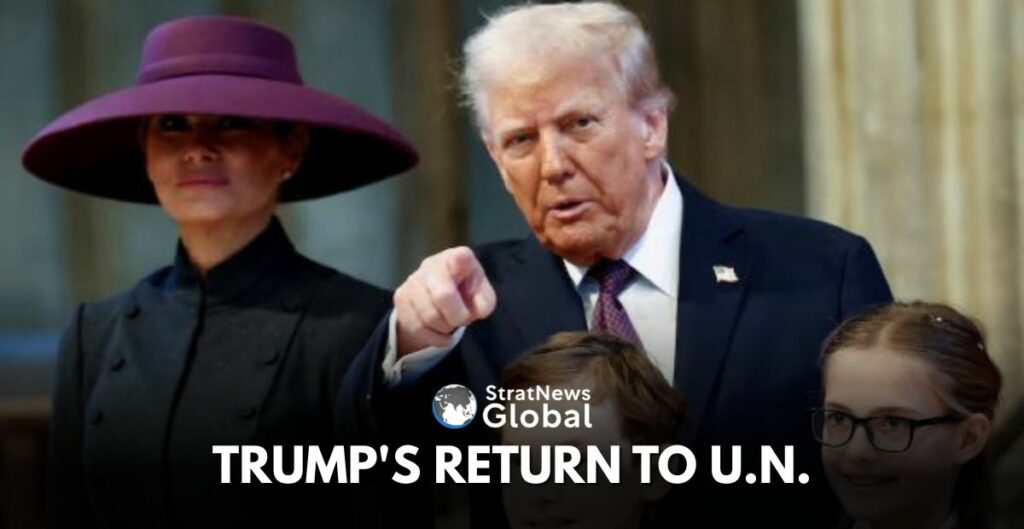
Trump Set For U.N. Comeback As Gaza And Ukraine Wars Dominate
World leaders will convene in New York next week for the U.N. General Assembly, where attention will focus on President Donald Trump’s return to the podium, the conflicts in Gaza and Ukraine, growing Western recognition of Palestinian statehood, and heightened nuclear tensions with Iran.
“We are gathering in turbulent – even uncharted – waters,” U.N. Secretary-General Antonio Guterres said a week before the 193-member world body hosts six days of speeches by nearly 150 heads of state or government along with dozens more ministers.
“Geopolitical divides widening. Conflicts raging. Impunity escalating. Our planet overheating,” he told reporters on Tuesday. “And international cooperation is straining under pressures unseen in our lifetimes.”
Headlining this year’s 80th General Assembly will be Trump, who calls for slashing U.S. funding for the U.N., stopped U.S. engagement with the U.N. Human Rights Council, extended a halt to funding for the Palestinian relief agency UNRWA and quit the U.N. cultural agency UNESCO. He has also announced plans to quit the Paris climate deal and the World Health Organization.
Trump To Address The General Assembly
Trump will speak on Tuesday, eight months into a second term marked by severe U.S. foreign aid cuts that have sparked global humanitarian chaos and raised questions about the U.N.’s future, prompting Guterres to try to cut costs and improve efficiency.
“He enjoys the General Assembly. He enjoys the attention of other leaders,” International Crisis Group U.N. director Richard Gowan said of Trump. “My suspicion is he is going to be using his appearance to boast about his many achievements and perhaps once again, make the case he deserves the Nobel Peace Prize.”
Trump describes the U.N. as having “great potential” but says it has to get its “act together.” He has maintained the same wary stance on multilateralism that was a hallmark of his first term from 2017 to 2021 and also accused the world body of failing to help him try to broker peace in various conflicts.
“The U.N. has very strong efforts in peace mediation … but we have no carrots and no sticks,” Guterres said. The U.N. Security Council is the only U.N. body that can impose sanctions, but it has been deadlocked on the conflicts in Gaza and Ukraine because the U.S. and Russia are veto powers.
“The United States has carrots and sticks. So in some situations, if you are able to combine the two, I think we can have a very effective way to make sure that some peace process at least can lead to a successful result,” Guterres said.
He and Trump are expected to meet formally for the first time next week since Trump returned to office in January – one of more than 150 bilateral meetings the U.N. chief said he has scheduled, dubbing the week “the World Cup of diplomacy.”
War And Famine
Leaders are gathering as the war between Israel and Hamas terrorists in the Gaza Strip approaches two years and a humanitarian crisis worsens in the Palestinian enclave, where a global hunger monitor has warned that famine has taken hold and is likely to spread by the end of the month.
Israeli Prime Minister Benjamin Netanyahu – wanted by the International Criminal Court over alleged war crimes and crimes against humanity in Gaza that Israel denies – is due to address the General Assembly on Friday. Israel unleashed a long-threatened ground assault on Gaza City on Tuesday.
Israel’s U.N. Ambassador Danny Danon said of the upcoming New York gathering: “We will remind the world once again that this war will not end with the hostages left behind in Gaza.”
Before the General Assembly speeches begin on Tuesday, leaders will gather on Monday for a summit – hosted by France and Saudi Arabia – that aims to build momentum toward a two-state solution between Israel and the Palestinians.
Palestinian Statehood
Australia, Belgium, Britain, Canada and France have pledged to formally recognize a Palestinian state, although some have set conditions.
Palestinian President Mahmoud Abbas will not be there in person. The U.S., a staunch Israeli ally, has said it will not give him a visa, drawing wide criticism at the U.N. He is expected to appear via video for both Monday’s summit and his General Assembly speech, scheduled for Thursday next week.
“Palestine is going to be the huge elephant in this session of the General Assembly,” said Palestinian U.N. envoy Riyad Mansour.
Another conflict topping the U.N. agenda, but on which little progress is expected to be made, is Russia’s more than three-year-old war in Ukraine.
Ukrainian President Volodymyr Zelenskyy and Russian Foreign Minister Sergei Lavrov will address the General Assembly. Russian President Vladimir Putin does not traditionally attend the annual U.N. gathering.
The 15-member U.N. Security Council, charged with maintaining international peace and security, is likely to hold meetings on Ukraine and Gaza during the high-level General Assembly session, diplomats said.
There will also be last-minute diplomacy in New York over Iran’s nuclear programme as Tehran seeks to avoid a return of all U.N. Security Council sanctions on the Islamic Republic on September 28. Iranian President Masoud Pezeshkian and Foreign Minister Abbas Araqchi are both expected to be at the United Nations.
(With inputs from Reuters)