

Support us by contributing to StratNewsGlobal on the following UPI ID
ultramodern@hdfcbank

Strategic affairs is our game, South Asia and beyond our playground. Put together by an experienced team led by Nitin A. Gokhale. Our focus is on strategic affairs, foreign policy and international relations, with higher quality reportage, analysis and commentary with new tie-ups across the South Asian region.
You can support our endeavours. Visit us at www.stratnewsglobal.com and follow us on YouTube, Twitter, Facebook and Instagram.
र 500 per month
र 1000 per month
र 5000 per year
र 10000 per year
Donate an amount of your choice
र 500 per month
Donate र 500 per month

र 1000 per month
Donate र 1000 per month
र 5000 per year
Donate र 5,000 per year
र 10000 per year
Donate र 10,000 per year
Donate an amount of your choice
Donate an amount of your choice
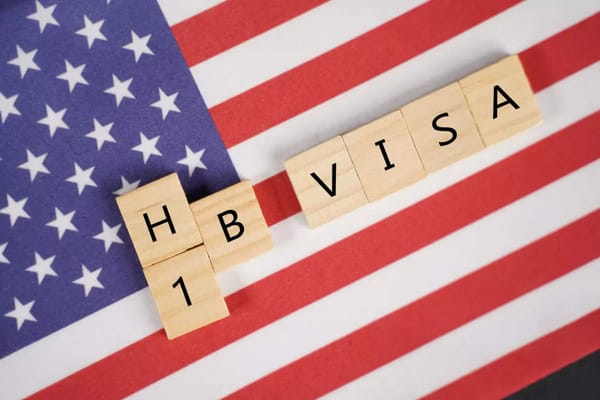
Nineteen US States To Challenge Trump’s H-1B Visa Fee Hike
Nineteen US states including California, New York and Illinois are going to court to challenge Donald Trump’s $100,000 H-1B visa fee hike.
In a post on X, California’s attorney general Rob Bonta wrote: “Trump’s unlawful new $100,000 fee hike could cause staffing shortages for teachers, physicians, researchers, nurses and other vital workers, endangering CA’s ability to provide critical services.”
A separate press release from his office said the new fee could “create a costly barrier for employers, especially public sector and government employers, trying to fill these positions.”
It said that the hike “is a clear violation of the law because it imposes a massive fee outside of the bounds of what is authorized by Congress and contrary to Congress’s intent in establishing the H-1B program, bypasses required rule making procedures, and exceeds the authority granted to the executive branch under the Administrative Procedure Act.”
The lawsuit is expected to be filed in the Massachusetts federal court, Reuters reported. This would at least be the third legal challenge to the Trump administration’s H-1B policy change. Earlier, the hiked fee was challenged by the US Chamber of Commerce and a coalition of unions, employers and religious groups.
The usual fee for employers filing an H-1B visa request ranges from $960 to $7,595 in regulatory and statutory fees. The new hiked fee far exceeds the actual cost of processing H-1B petitions.
Bonta said, “No president can destabilize our schools, our hospitals and universities on a whim, and no president can ignore the co-equal branch of government, of Congress, ignore the Constitution or ignore the law.”
Democratic Congresswoman Pramila Jayapal, during the House Foreign Affairs South and Central Asia Subcommittee hearing, said the tariffs announced by Trump “are…hurting American businesses and consumers”, PTI news agency reported.
Jayapal further spoke on the Trump administration’s crackdown on immigration, saying it has “threatened” people-to-people ties between India and US. Jayapal said these measures are “shutting down legal pathways to immigrate.”
Muslim Brotherhood Ideology Undermines Its Own Status
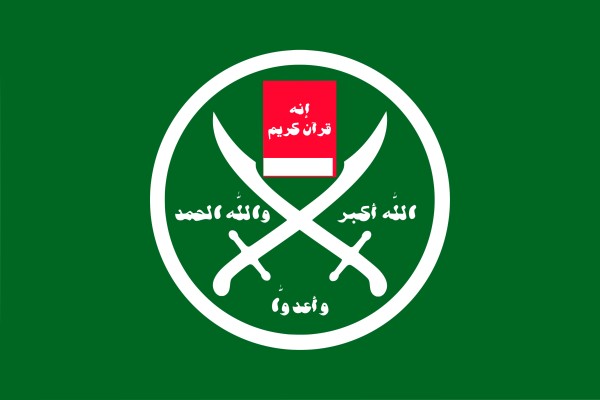
Drawing on extensive historical, ideological and behavioural evidence, a new research study by the Sawab Center examines how the Society of the Muslim Brothers, better known as the Muslim Brotherhood (MB), has shaped political Islam for nearly a century while repeatedly failing to deliver effective or inclusive governance.
The paper argues that the Brotherhood is not merely a political party or social movement but a revolutionary ideological project whose aims ultimately conflict with the structure of modern states.
Despite tactical adjustments across decades and geographies, the Brotherhood’s core commitments—to re-Islamising society, rejecting territorial states, and pursuing the long-term establishment of a caliphate—remain intact and consistently shape its governance outcomes, it says.
Founded in Egypt in 1928, the Brotherhood expanded across the Arab world and later into Europe and North America, building a transnational support structure influenced by key figures such as Hassan al-Banna, Sayyid Qutb, and Yusuf al-Qaradawi.
The paper notes that the Brotherhood’s appeal has fluctuated, with significant setbacks after the 2013 overthrow of Egypt’s FJP government and recent proscription in Jordan following allegations of involvement in regional weapons plots. Yet its institutional footprint in Europe remains resilient, providing the movement organisational refuge at a time when its popularity has waned in the Middle East.
The study highlights that the Brotherhood’s model of governance emerges from an ideological architecture that seeks to reshape society before seizing political authority. Al-Banna’s call for totalising re-Islamisation, coupled with opposition to the nation-state and adversarial politics, continues to define MB thinking.
Even in rare instances where the Brotherhood held direct power—such as Egypt from 2011 to 2013 or Hamas in Gaza—it failed to secure stability, deliver competent administration, or protect minorities and women. These failures, the paper argues, stem not from mismanagement alone but from an ideological rigidity fundamentally at odds with democratic pluralism and state institutions.
Central to this ideological rigidity is the Brotherhood’s longstanding rejection of the nation-state and territorial sovereignty. From al-Banna to Mahdi Akef, senior figures have explicitly denied the legitimacy of national identity, insisting that the only true political community is the transnational ummah governed under a restored caliphate.
Statements dismissing Egyptian, Syrian, or broader Arab identities illustrate a worldview in which state borders are temporary aberrations, foreign-imposed impositions to be replaced by Islamic rule. This ideological position recurs across MB’s writings and speeches, reinforcing the tension between its aspirations and the structure of contemporary political order.
The paper also underscores how this universalist project drives the Brotherhood’s conceptualisation of the caliphate, a revived transnational authority intended to supplant national governance. Al-Banna envisioned the MB’s Supreme Guide as the deputy of a future caliph, and the movement’s intellectual lineage drew from modernist Islamism, Sufism, nationalism, and European fascist thought.
This eclectic mix animated a revolutionary political agenda that informed subsequent Islamist movements across the Middle East, Africa, and South Asia, including groups that would later adopt more extreme or violent methods.
Authoritarian tendencies form another recurring theme. The paper argues that despite attempts to appear moderate in the early 2000s, the Brotherhood consistently rejects legal equality, human rights, and gender parity. While the FJP welcomed female political participation in 2011, it opposed gender equality in constitutional debates and international forums.
Similar patterns emerged in Tunisia, Yemen, Libya, and Syria, where MB-linked groups promoted restrictive interpretations of women’s roles and resisted pluralistic norms. The study links this to the movement’s conspiratorial worldview, which fosters internal cohesion but alienates reformists and fuels public mistrust.
One of the most striking findings concerns the Brotherhood’s sophisticated use of semantic ambiguity. The paper details how the MB deploys “fiqh al mafahim”, a strategic linguistic practice that enables leaders to signal different intentions to insiders and outsiders. Terms like “democracy”, “human rights”, and “civil state” are frequently repurposed, while classical concepts such as tawhid are reinterpreted to delegitimise political pluralism.
This intentional ambiguity, the study argues, has allowed the MB to obscure its illiberal objectives while engaging with electoral politics. Examples span Egypt’s 2007 platform, Libya’s post-2011 discourse, and Tunisia’s Nahda movement, which often presented divergent messages in Arabic and English.
The paper situates the Brotherhood’s ambivalence toward violence within a broader ideological tradition. Although MB leaders frequently describe the movement as peaceful, its strategic posture has long been contextual.
From al-Banna’s promotion of “the art of death” and the creation of paramilitary structures in the 1930s to the influence of Qutb’s writings on groups ranging from Al Jihad to Al Qaeda and Daesh, the MB’s ideological ecosystem has consistently incubated extremist actors.
The study lists numerous historical links between MB members and violent groups, as well as endorsements of figures such as bin Laden by senior Brotherhood leaders. It concludes that violence is not an aberration but a foreseeable outcome of an ideology that rejects political compromise and demands uncompromising religious authenticity.
The paper extends this analysis to the broader revolutionary nature of Islamism. Citing thinkers like Hannah Arendt and John Gray, it argues that such movements invariably yield instability and repression. The MB’s governance record, from Egypt to Gaza, reflects the destructive consequences of ideological absolutism in practice.
A significant portion of the research examines the MB’s entrenchment in Western democracies, where legalist Islamism—not violent jihad—poses a growing challenge. Through political parties, lobbying networks, financial levers, and demographic influence, the Brotherhood works to reshape social norms and contest the boundaries of liberal discourse.
This strategy, the paper argues, represents a subtle threat: while nonviolent, it seeks to erode democratic order from within by promoting norms incompatible with secular pluralism. Yet the study stresses that Europe’s Muslim populations overwhelmingly reject terrorism, and political Islam should not be conflated with Islam itself.
In its conclusion, the paper asserts that the Brotherhood remains committed to a revolutionary project aimed at establishing permanent Islamist rule, whether through gradual social infiltration or violent rupture.
The consistent pattern across contexts—mismanagement, repression, ideological rigidity, and proximity to violence—suggests a movement unable to adapt to the demands of modern governance. The study calls for stronger counter-extremism strategies, greater intelligence cooperation, and clearer exposure of semantic evasion to safeguard global political resilience.
China Is Expanding Cartographic Claims By Renaming Tibet, Arunachal
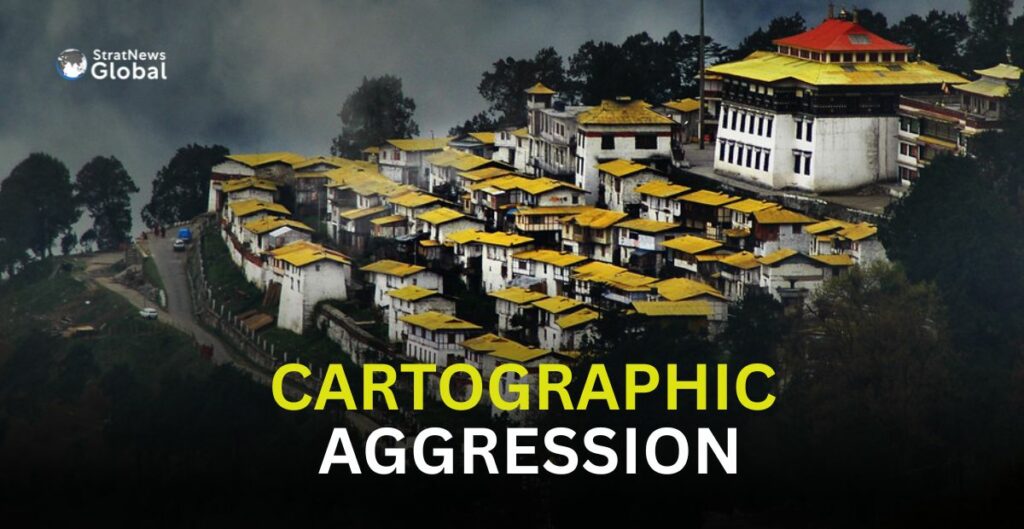
China’s renewed push to ‘standardise’ the names of places across Arunachal Pradesh has raised questions about Beijing’s territorial claims, and the narratives it hopes to cement. China recently released a fifth list this year covering 27 locations, mostly in Arunachal but also, for the first time, in Assam. What do these lists reveal, what does China hope to achieve? SNG’s Anukriti spoke to Tenzin Dhamdul, Senior Researcher at the Foundation For Non-Violent Alternatives who is among the few studying China’s expanding cartographic claims.
Q: What do you think is China’s main strategic objective behind renaming places in Arunachal Pradesh—and now even in Assam?
A: In my opinion what they are trying to do is create a narrative among their people. What is interesting here is like they have been able to cultivate an understanding in their own domestic sphere or domestic bubble. Most Chinese citizens rely on censored domestic platforms like WeChat, Weibo and Douyin, and many do not go out of their way to access outside information. By repeatedly showing these areas as part of ‘South Tibet,’ China builds internal psychological legitimacy.
So, if a future border escalation happens, the average Chinese citizen—who has never seen Arunachal—already believes the area is theirs. It’s narrative-building and psychological conditioning.
Q: Do you notice any pattern in the timing of China’s list releases? Could this be linked to a broader strategic calculation or diversion from domestic issues?
A: That is an interesting question and yes, there is a pattern. China has released five lists so far:
In April 2017, the first list was released by the Ministry of Civil Affairs. It came around the time when the Dalai Lama was travelling to Arunachal/Tawang. The first place on that list was the birthplace of the Sixth Dalai Lama—clearly symbolic.
The second list came out in December 2021, which kind of followed the Doklam and Galwan incidents. The third list came out in April 2023 when India was hosting the G20 presidency. The fourth list came out in April 2024 when India opened Sela Pass in Arunachal Pradesh.
And interestingly enough the fifth list came out in May 2025, when India was facing war with Pakistan, when Operation Sindoor was initiated after the Pahalgam terrorist attack.
So you could see how China is not just randomly coming out with these names but strategically targeting critical geopolitical moments India experiences.
Q: How does this fit into China’s broader pattern of territorial assertion (e.g., South China Sea, Southeast Asia)?
A: In my understanding, it fits perfectly. China expands influence by pushing into others’ sovereign territory and then using it as a negotiation leverage. For example, in the Senkaku/Diaoyu dispute with Japan, China links unrelated negotiations to territorial issues. I think professor Jabin Jacob says China is using ‘lawfare’ tactic, using law to conduct warfare and push their foot forward.
When China comes out with these lists of names, it doesn’t impact us internally. We know that Arunachal Pradesh is an integral part of India’s sovereign territory. But at the end of the day, what they are doing is gradually creating a framework of legitimacy within their own constitution and sphere of influence. Through these actions, they are attempting to claim that territory in a way that appears lawful from their perspective. That is the strategy they are pursuing in many ways.
We drew inspiration from how China has been expanding its influence in the Indian Ocean. American scholars have described this strategy with the term “string of pearls”, me and my colleagues call its parallel in the Himalayas as a “thread of beads.” There is already a popular understanding of Mao’s Five-Finger Theory, which envisions Tibet as the palm and the surrounding regions as its five fingers. Observing these developments, we recognized that something comparable is happening here as well.
Q: What basis or evidence does China present when renaming places?
A: Their lists include names in both Chinese and Tibetan. Beijing claims Arunachal Pradesh as ‘South Tibet.’ Historically, the northern part of present-day Arunachal Pradesh, had regions with strong Tibetan influence. They shared a very interesting relationship. Take the Tawang region, for instance, its monastery used to pay taxes to the then Tibetan government headed by the Dalai Lama. So there is some historical understanding that certain regions were considered part of Tibet at that time. But after the Shimla Convention and subsequent border agreements, these regions became part of India.
Today, the lived reality is clear—people vote, speak Hindi, follow Indian administration.
Q: Can China’s renaming influence international maps or global discourse in the future?
A: In my view, China’s approach to Tibet offers important clues. For instance, Beijing has recently begun referring to Tibet as ‘Xizang’ in English, particularly the so-called Tibet Autonomous Region (TAR)—which represents only half of what Tibetans consider the historical Tibetan region. The TAR itself was created in 1965 as an administrative unit to enable more efficient governance, which is understandable from a state perspective.
But what stands out is how China operates in the international information space. Today’s world is digital, and soon it will be shaped even more by AI. In such an environment, the actor that uploads and circulates the largest volume of data effectively shapes the global narrative. This is already visible: when one searches for Tibet online, the map of the TAR automatically appears. This has been China’s practice since 1965.
It can slowly shift public truth. This is evident in its treatment of Arunachal Pradesh, which it claims as ‘South Tibet,’ or ‘Zangnan.’ Even the name ‘Zangnan’ is linguistically linked to ‘Xizang,’ reinforcing the narrative that the region is an extension of Tibet as defined by Beijing. Over time, such terminology—Zangnan, South Tibet—starts appearing in maps, reports, and online platforms, gradually occupying global information space.
Q: How do Tibetans—inside Tibet and in exile—view this renaming?
A:Tibetans inside Tibet are trying to survive within Chinese governance, so it’s hard to know their views. Exiled Tibetans strongly recognise Arunachal Pradesh, especially Tawang, as part of India in today’s reality. Even His Holiness the Dalai Lama recently acknowledged receiving a delegation from “the Indian border,” reaffirming the region’s Indian identity.
Q: What can be done to counter China’s renaming strategy?
A: Number one, we should let our people know what China is doing. The fact is very clear: every Indian knows Arunachal Pradesh is part of Indian sovereign territory. But we must inform people about China’s actions and the transgressions happening there. The recent case of an Indian passport holder, Pema Thongdok, from Arunachal detained at a Chinese airport, show Beijing’s strategy in action.
We must empower the local people. China is building ‘Xiaokang villages’ and moving people in, but India already has communities living in these border regions—so why not empower them? When the incident of Pema Thongdok from West Kameng happened, the response from local Monpa and other communities was very strong. In Tawang, they even sang the Indian national anthem, and the Chief Minister, Shri Pema Khandu, was present there. So things are happening on the ground.
Another thing is people from North-east India should get more recognition. The situation today is much better than earlier. People are more aware and more accepting. Many individuals from the region are also getting national limelight—whether in government, like Union Minister Kiren Rijiju, or in popular shows like Bigg Boss. These things help show that even if they look different, they are part of India, and most importantly, they see themselves as Indians.
No matter how China tries to intensify its renaming campaign, the real answer lies far from Beijing’s maps—on the ground, with the people who have lived in these border regions for generations. Their identity, resilience and unwavering loyalty to India remain the strongest counter to China’s assertions.
‘Japan Cannot Militarily Defend Taiwan In The Event Of A Chinese Attack’
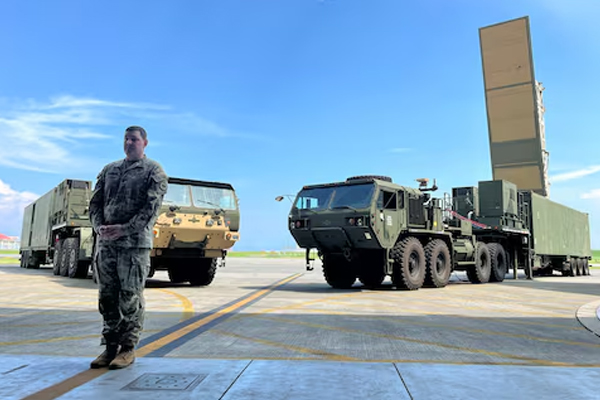
Taiwan emergency is a Japan emergency, said Shinzo Abe, late Japanese prime minister. So any potential Chinese attack on Taiwan is a “survival threatening situation” for Tokyo, which may get drawn into the conflict to defend Taiwan?
StratNewsGlobal learns that would not be the case. Media reports and scholarly writings across East Asia say what Japan does depends on how the US is involved in the situation.
If the US is involved in the defence of Taiwan, then Japan does nothing. Or it could be that Japan steps in to help the US. But if the US does not step in to defend Taiwan then Japan has no choice but stay away. The sense is China understands this but deliberately distorts or misinterprets for its own purposes.
Clearly, Japan needs to build up its capabilities and thereby reduce or limit the chances of China making a move on Taiwan. Tokyo has to build economic resilience first and reduce its dependence on the US. Tokyo also needs to build military muscle.
The economic and military dependence on the US is what compelled Tokyo to promise that it would invest $550 billion in that country. Japan does not have the luxury of distancing itself from the US.
Last year, Japan’s exports to the US were over $140 billion, much of it comprised automobiles and spare parts followed by electrical machinery including nuclear reactors and boilers, and of course electronics.
Japan also needs the US for its own security. Tokyo needs to keep the US in East Asia to balance the power of China. Japan also needs the US to help build its deterrence capabilities in the form of air and missile defence and and secure its seaward approaches.
In that sense, the National Security Strategy announced by the US has been slightly disconcerting with the focus on the southern hemisphere. It would seem the US would prefer its allies and partners in Asia to lead the challenge against China while it plays a supportive role from behind.
Galloping Horses Or Tanks of Tiananman? A Chinese Logo Triggers Controversy
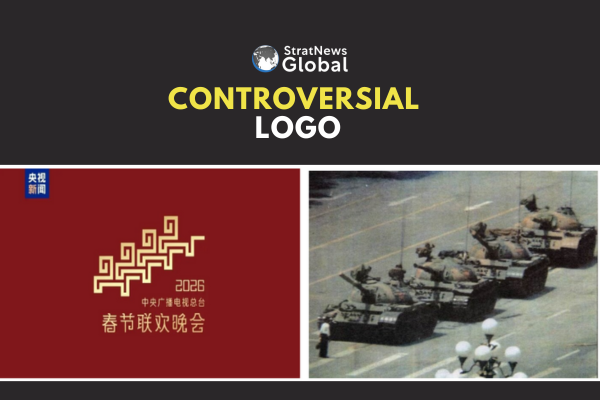
As China prepares to celebrate the annual lunar new year, that country’s most important holiday, a controversy has erupted over an emblem or a logo that CCTV got designed for its 2026 Spring Festival Gala television event.
The emblem on a red background shows four gold-coloured galloping horses (2026 being the Year of the Horse in the Chinese zodiac) rendered in a traditional decorative style.
The hitch is a US-based video and social media platform operated by Ganjingworld Corporation, says the logo resembles the four tanks in Beijing’s Tiananman Square during the horrific crackdown in 1989.
Controversial Comparisons Emerge
In a programme it runs called Old Beijing Teahouse, the anchors claimed the logo looked less like galloping horses and more like tanks moving forward. That the channel is US-based enabled it to touch on a part of history that is banned altogether in China.

Even to this day, Tiananman Square remains a tightly controlled and surveilled place and every year as the anniversary of the crackdown approaches, authorities ensure nobody is allowed inside the square.
The anchors said the logo also conveyed the Chinese Communist Party’s habit of covering up sensitive images with mosaics, much like the photos of individuals who suddenly and inexplicably, fall out of favour.
Others invited for comment said the logo feels “unfinished”, like the sense of incompleteness that mirrors the current style of China’s leadership.
To be sure, these comments are circulating only overseas among Chinese living abroad. There is nothing to suggest this it is making waves on China’s tightly controlled social media platforms.
The attempt to stoke a controversy also appears deliberate, as this is bound to find its way into China. For now, there’s no indication CCTV will throw out the logo or modify it.
But for the authorities always on the lookout for any potential mass movement that could get out of control, it will mean all hands on deck at least until the holiday season gets over.
Pakistan Moves Toward Imran Military Trial
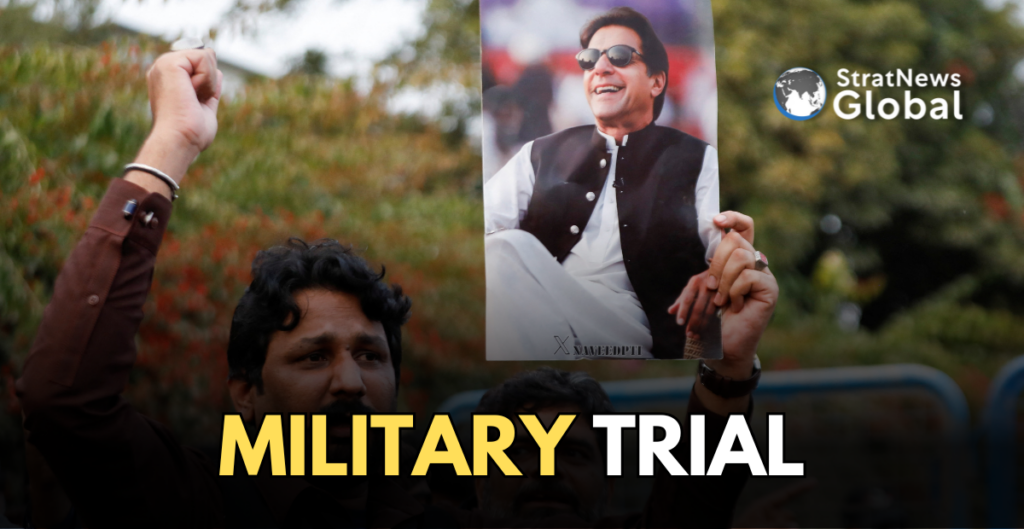
Pakistan’s move to prosecute former prime minister Imran Khan for a military trial is gaining momentum after the conviction of ex-ISI chief Lt Gen (retd) Faiz Hamid, according to a CNN-News18 report.
Hamid, once among the country’s most influential generals, was sentenced on Thursday to 14 years by a military court — a highly unusual punishment for a retired three-star officer and the first known court-martial of a former intelligence chief.
Sources cited by News18 say investigators have extracted evidence during Hamid’s trial that they believe provides the “grounds” to proceed against Khan under the Official Secrets Act and related military laws. The material is said to implicate Khan in attempts to undermine state stability and fuel political agitation, allegations that mirror the language used by the military’s public relations arm, the ISPR, in its statement following Hamid’s conviction. The ISPR noted that issues involving “cohorts with political elements” were being handled separately, a remark widely read as pointing toward Khan.
The rapid escalation of a military trial coincides with parallel political measures targeting Imran Khan and his Pakistan Tehreek-e-Insaf (PTI). This week, the Punjab Assembly passed a resolution demanding a ban on Khan and his party for allegedly acting against the state. Reports in Indian media, including The Shillong Times, indicate that a military-court process against Khan could clear the way for intelligence agencies to move formally against the PTI as an organisation. These developments come amid concerns voiced by Khan’s family over his isolation in custody, which briefly sparked fears for his safety.
Despite the mounting legal pressure, Khan’s support remains resilient. Writing in The Express Tribune, analyst and former air force officer Shahzad Chaudhry observed that Khan continues to be Pakistan’s most popular political figure, commanding a durable base in Khyber Pakhtunkhwa and significant backing in other provinces. Chaudhry warned that attempts to eliminate Khan from politics ignore the magnitude of his following and the risks of inflaming sentiment within regions and segments of the security establishment that remain sympathetic to him.
The emerging confrontation raises a central question for Pakistan’s civil-military order: whether pushing Khan into a military trial will stabilise the political landscape or deepen the unrest that authorities accuse him of stoking.
India Frets As Thai, Cambodian Forces Clash Near Temple Again
Border tensions between Thailand and Cambodia continued this week, with exchanges of fire reported in several locations along the frontier, including areas close to the Preah Vihear Temple, a UNESCO World Heritage Site.
Both sides have accused each other of violating territorial boundaries, and limited access to the region has made independent verification difficult. Local military sources from both countries confirmed that Thai troops moved into sections of disputed territory along the Dangrek mountain range, prompting Cambodian forces to reinforce positions around the Preah Vihear Temple.
A video showed a crane carrying Cambodian surveillance equipment collapsing near the site, with Thai soldiers heard in the background suggesting the equipment had been targeted. While neither government has provided detailed statements on operations around the temple, both have acknowledged ongoing military activity in the border zone.
Thai authorities reported conducting an air operation earlier in the week against what they described as a Cambodian military position located in an abandoned casino structure. Cambodian officials claimed the site was used only for observation and accused Thailand of escalating the situation. Cambodia responded with rocket fire aimed at Thai positions. Casualty figures remain unconfirmed, and both governments say assessments are ongoing.
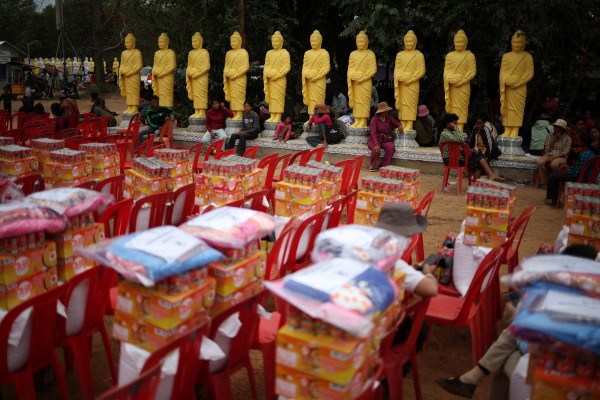
Local administrative units on both sides have reported continued movement of civilians away from border villages. Humanitarian organisations estimate that a significant number of people have relocated to temporary shelters in recent days due to the fighting, continuing a pattern of displacement seen since earlier clashes this year.
Amid concerns about the proximity of the fighting to the Preah Vihear Temple, India issued a statement noting the possibility of damage to conservation facilities in the area. Indian officials, who have been involved in cultural preservation work at the site, described such damage as “unfortunate” and stated that the temple represents “a shared cultural heritage of humanity.”
New Delhi has urged both governments to exercise restraint, halt hostilities, and return to dialogue. The statement aligns with similar appeals made by UNESCO and several ASEAN members who have expressed concern about the conflict’s impact on cultural sites and civilian areas. India has also advised its citizens to avoid travel to affected border provinces, citing uncertainty in security conditions.
Diplomatic discussions continue within ASEAN frameworks, though there has been limited progress toward a lasting ceasefire. Observers note that while both Thailand and Cambodia have publicly stated their willingness to negotiate, military movements and exchanges of fire have persisted.
At present, neither side has indicated that operations near the Preah Vihear area will be scaled back. International monitoring bodies remain focused on the safety of civilians and the status of cultural sites, while neighbouring countries, including India, highlight the importance of reducing tensions and re-establishing communication channels.
US Military, Economic Power In Decline: Former R&AW Chief Vikram Sood
Do you know that the CIA and even the Pentagon used Hollywood to propagate their line of thinking and influence public attitudes to various issues, domestic and international?
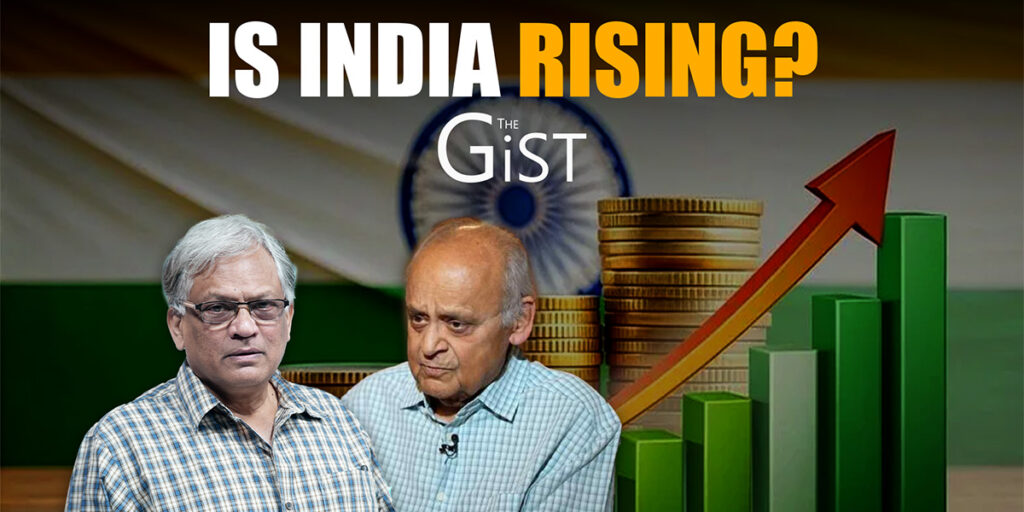
“The ultimate goal was control and dominance,” said Vikram Sood, former chief of R&AW, India’s external intelligence agency, who was a guest on The Gist speaking about his latest book Great Power Games: From Western Decline To Eastern Ascent.
Control and dominance was built through individuals, groups and cartels coming together to build a narrative and using their phenomenal money power to change the facts on the ground. It’s no secret, he notes, that the US Federal Reserve (counterpart to India’s government-owned Reserve Bank) is a private entity which manages the country’s monetary system.
Sood believes that US economic and military power has reached its zenith and decline has set in. While economic power enabled the US to exercise its hold over the world, the control exercised by private entities driven by profit, has seriously undercut the foundations of the economy.
“They’ve sold off everything. China was clever enough to take all the manufacturing from them. If you don’t have manufacturing, you are not strong and are dependent on others.”
The US military too, despite trillion dollar budgets and hi-tech equipment has singularly failed in the battlefield. He pointed to the Vietnam war, where after suffering 55,000 dead, the enduring image is of the last helicopter taking off from the US embassy in Saigon April 1975.
Cut to August 2021 when the US departed Afghanistan stealthily at night, handing over the country to the very people it had fought for 20 years: the Taliban.
Even their foreign policy was flawed. The US could have used the break-up of the Soviet Union to rebuild into a democratic pluralist Russia. Instead it sought to undermine it even further, supporting mafia groups that stole or destroyed key industries.
Tune in for more in this conversation with Vikram Sood, former chief of R&AW, on his book Great Power Games: From Western Decline To Eastern Ascent.
India And Russia Race To Recast Trade
India and Russia are actively seeking to broaden their longstanding commercial relationship so that it extends beyond the traditional focus on energy.
That is the basic argument of a December 8, 2025 publication by Sharmila Kantha in NatStrat (an independent strategic research centre). The piece underscores how the two countries, commemorating 25 years of a “special and privileged strategic partnership,” are pursuing policies to deepen and diversify bilateral trade in the face of shifting global economic and geopolitical pressures.
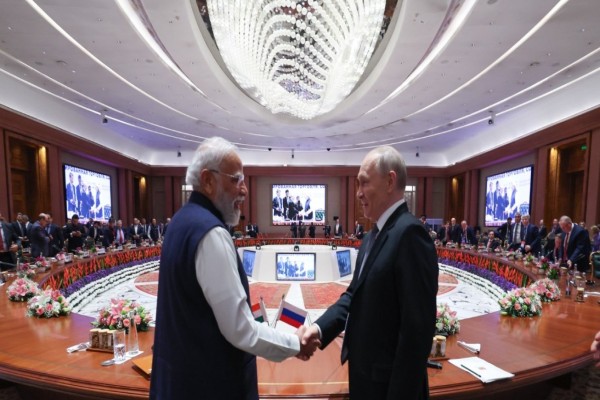
Kantha notes that during Russian President Vladimir Putin’s state visit to India on December 4–5, 2025, leaders reaffirmed their commitment to expanding economic cooperation, including advancing work on a free trade agreement with the Eurasian Economic Union, addressing tariff and non-tariff barriers, improving logistics, promoting connectivity, and enhancing financial and payment mechanisms.
These negotiations form part of a broader Programme for the Development of Strategic Areas of India-Russia Economic Cooperation till 2030, with both countries targeting $100 billion in bilateral trade by 2030.
The article highlights a diplomatic balancing act for New Delhi. Historically, India’s trade with Russia has been heavily concentrated in crude oil, which accounted for the bulk of bilateral commerce—surging from about $8.7 billion in 2021 to over $64 billion in 2024-25 due to energy imports.
But because of Western sanctions on Russian oil, including bans on refined products and additional U.S. tariffs aimed at deterring Russian oil purchases, India’s energy imports have declined sharply, prompting policymakers to rethink the structure of their economic ties.
Stripping out oil, bilateral trade remains modest: India’s trade with Russia outside of energy was only about $12 billion in 2024-25, meaning most of the economic relationship rests on energy and related commodities. Kantha argues that this residual figure reveals the need for concerted efforts to expand trade in non-energy sectors.
Doing so would better align India’s export strengths—such as machinery, pharmaceuticals, organic chemicals, electronics, apparel, and other manufactured goods—with Russian import needs, while also diversifying Russian exports to India beyond traditional fuels and basic commodities.
India already imports a range of products from Russia, including fertilisers, vegetable oils, diamonds, iron and steel, and newsprint, though these are relatively low-value items compared with crude oil.
On India’s side, exports to Russia include machinery and parts, pharmaceutical products, organic chemicals, and electronics, but total values remain small. With targeted market access efforts and efforts to dismantle non-tariff barriers, both countries see scope to build a more balanced and sustainable trade portfolio.
The report cites institutional mechanisms such as the Inter-governmental Commission on Trade, Economic, Scientific, Technological and Cultural Cooperation (IRIGC-TEC), which brings together multiple working groups focused on sectors like agriculture, banking, transport, and industrial cooperation.
Regular engagement through these groups, including efforts to harmonise certification and conformity testing, is intended to reduce regulatory hurdles that have hindered broader commerce to date.
Financial cooperation and payments infrastructure also figure prominently as areas needing attention. Sanctions and restrictions have complicated cross-border payments, leading to a large build-up of rupee balances with Russian banks. Both sides are exploring enhanced interbank cooperation, interoperability of payment systems, and even central bank digital currency linkages to facilitate smoother trade settlement and reduce currency risk.
The report points to services trade and tourism as additional frontiers for growth, noting that India’s substantial services exports—especially in IT, transport, and tourism—have yet to take root significantly in the Russian market. Proposals such as free e-visas for Russian tourists and greater collaboration in information and communications technology are seen as avenues to expand economic engagement beyond goods trade.
Kantha’s analysis also stresses the broader geopolitical context. India must balance its deepening economic cooperation with Russia against its growing commercial ties with Western markets and the strategic pressures that those relationships bring.
Achieving ambitious bilateral trade targets will require both governments to build confidence among private sector actors, mitigate sanctions-related risks, and equip businesses with the certainty and predictability necessary for deeper investment and engagement.
In sum, India-Russia Trade: Expanding Beyond Energy emphasises that the relationship is evolving from one dominated by energy into a multifaceted economic partnership with significant room to grow.
Success in this transition depends on tackling barriers to diversified commerce, strengthening institutional cooperation, and building resilient financial and logistical frameworks that support balanced and sustained trade growth.
Thai PM Dissolves Parliament, Calls Early Elections
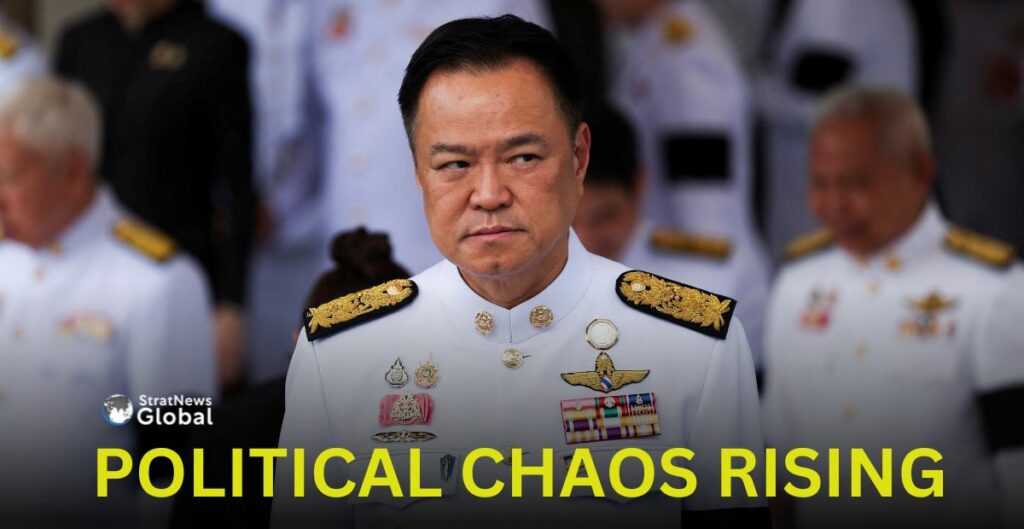
Thailand moved toward a possible snap election as early as February after Prime Minister Anutin Charnvirakul secured royal approval to dissolve parliament, averting a looming no-confidence vote amid escalating border tensions with Cambodia.
The election, due within 45 to 60 days, raises the spectre of even more turmoil in Thailand, where coups and court rulings over two decades have brought down elected governments in an intractable power struggle of elites and progressive forces.
Anutin’s move comes as the military conflict between Thailand and Cambodia entered its fifth day, with at least 20 killed, more than 260 wounded and hundreds of thousands displaced.
The Thai premier said he had a call scheduled late on Friday with U.S. President Donald Trump, who intervened in July to broker a fragile truce the last time fighting erupted.
Cycle Of Political Drama
On Thursday, Anutin said he was “returning power to the people” and King Maha Vajiralongkorn approved his petition for a general election within hours, the royal gazette showed, paving the way for a ballot as soon as February.
Less than 100 days after Anutin Charnvirakul took charge as head of a minority government, turmoil erupted with the opposition People’s Party poised to push a no-confidence vote.
Anutin rose to power through a deal with the People’s Party to support constitutional amendments and dissolve parliament in January. But Thursday’s joint sitting descended into chaos, as the opposition accused Anutin’s Bhumjaithai party of breaking that pact.
A government spokesperson said a no-confidence vote had been expected.
Electoral Challenge for Anutin
Thailand’s third prime minister in two years, Anutin faces an uphill struggle to be re-elected, with opinion polls consistently showing the liberal opposition to be the most popular party.
An astute political dealmaker who has negotiated key ministerial posts and a place for his party in numerous coalition governments, Anutin will need to drum up support in the countryside and among influential elites to forge new alliances and keep the People’s Party at bay.
A forerunner of the People’s Party won the 2023 election on an anti-establishment platform but was blocked from forming a government by lawmakers allied with the royalist military.
Anutin insisted he had honoured the pact with the opposition.
“We have to accept that we became a government thanks to the support from the People’s Party,” Anutin said.
“You voted for me to be the prime minister and are now saying you do not support me anymore, and ask me to dissolve parliament,” he added. “I just did what you asked.”
(With inputs from Reuters)