

Support us by contributing to StratNewsGlobal on the following UPI ID
ultramodern@hdfcbank

Strategic affairs is our game, South Asia and beyond our playground. Put together by an experienced team led by Nitin A. Gokhale. Our focus is on strategic affairs, foreign policy and international relations, with higher quality reportage, analysis and commentary with new tie-ups across the South Asian region.
You can support our endeavours. Visit us at www.stratnewsglobal.com and follow us on YouTube, Twitter, Facebook and Instagram.
र 500 per month
र 1000 per month
र 5000 per year
र 10000 per year
Donate an amount of your choice
र 500 per month
Donate र 500 per month

र 1000 per month
Donate र 1000 per month
र 5000 per year
Donate र 5,000 per year
र 10000 per year
Donate र 10,000 per year
Donate an amount of your choice
Donate an amount of your choice




Nepal’s Children Haunted by Gen Z Protests
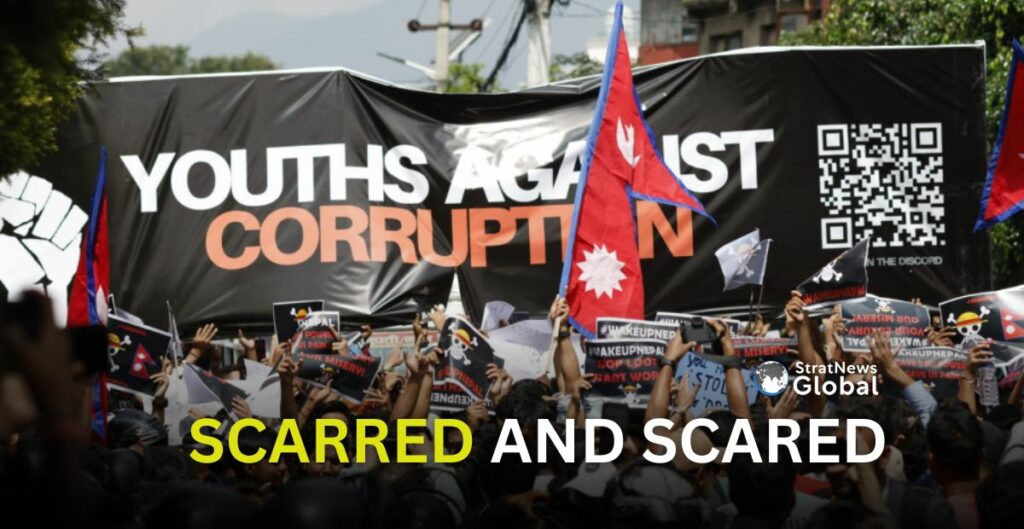
As Nepal grapples with the aftermath of deadly Gen Z protests, doctors are reporting a sharp increase in trauma-related cases among children and adolescents. Many are showing symptoms of severe stress and anxiety after witnessing or learning about the violence, which left at least 36 people dead and more than 1,700 injured, according to the Health Ministry.
The Kathmandu Post highlighted the psychological toll through the case of an eight-year-old girl who became terrified of being left alone, even when her parents went to the washroom. She also refused to attend school, fearing something terrible might happen.
Doctors say such cases are far from isolated. Hospitals across Kathmandu and other districts are seeing more children struggling with insomnia, nightmares, and extreme fear. Some have expressed suicidal thoughts after losing friends or relatives. “One of the patient’s friends died in the incident,” Dr Basudev Karki of Nepal Mental Hospital told the paper. “The patient had suicidal thoughts and complained that there is no point in living.”
The protests, fueled by anger over corruption and a government ban on social media platforms, spread rapidly across the country. Videos of the unrest circulated widely online, exposing even children far from protest sites to disturbing images and amplifying their psychological distress.
Community groups and NGOs have stepped in to provide support. Organisations like Happy Minds and TPO Nepal have launched free hotlines and counselling services. The Health Ministry has also met with UN agencies and pledged to roll out a mental health awareness campaign using social media — the same platforms at the heart of the Gen Z movement.
Doctors caution that while the protests have ended, the scars they left on Nepal’s children — both visible and invisible — will take far longer to heal.
Colombian Court Orders 12 Ex-Soldiers To Reparations Work For Extrajudicial Killings
A special Colombian tribunal established under the 2016 peace accord on Thursday sentenced 12 former soldiers to eight years of reparations work for their involvement in the extrajudicial killings of 135 individuals.
The sentences were the first given to former members of the military by the Special Jurisdiction for Peace, or JEP, which is trying leaders from both the Revolutionary Armed Forces of Colombia, or FARC, rebels and the military for war crimes and crimes against humanity.
Earlier this week, the same court sentenced seven former leaders of the FARC guerrillas to a maximum of eight years of reparations for the group’s policy of kidnapping for ransom.
“With this sentence imposed on members of the military, we recognise and insist on a truth that for years was denied, hidden and silenced,” JEP president Alejandro Ramelli said before the decision was read, thanking the victims who participated in the case.
“Those who will be sentenced today have had to face justice, and the country’s victims; they have faced the error that they committed,” Ramelli said. “In many cases, they revealed truths that their own families did not know.”
At least 6,402 people were killed in so-called “false positives” murders nationwide between 2002 and 2008, according to the JEP, though victim groups say the figure is higher.
Soldiers, eager to earn benefits like promotions and time off, lured civilians with promises of work, then killed them and reported them as rebels killed in combat, the court said. Some of the victims had intellectual disabilities.
Dozens of army officials have been detained and convicted for “false positives” under the regular justice system and some of the victims, whose remains have not been returned to their families, are considered disappeared.
The court said that those sentenced on Thursday committed 135 “false positives” murders and disappearances when they were members of the La Popa battalion, which operated on Colombia’s northern Caribbean coast, between January 2002 and July 2005.
Among the victims were members of the Wiwa and Kankuamo Indigenous communities, whose ancestral territory became a hub of drug trafficking activities by both right-wing paramilitaries and leftist guerrillas beginning in the 1990s.
Some of the men will only serve five years because they have already done prison time for the killings after convictions in normal courts, Magistrate Ana Manuela Ochoa said during her summary of the sentence, flanked by four other judges.
The 12 include retired majors and lieutenants, as well as lower-ranking soldiers. They are: Guillermo Gutierrez Riveros, Heber Hernan Gomez Naranjo, Efrain Andrade Perea, Manuel Valentin Padilla Espitia, Carlos Andres Lora Cabrales, Eduart Gustavo Alvarez Mejia, Jose de Jesus Rueda Quintero, Elkin Leonardo Burgos Suarez, Elkin Rojas, Juan Carlos Soto Sepulveda, Yeris Andres Gomez Coronel, and Alex Jose Mercado Sierra.
Recognition Of Responsibility
All have recognised their responsibility for the killings and provided a truthful and exhaustive account of their actions, the JEP said.
Six infrastructure projects, some specifically for Indigenous communities, are the reparations approved for those convicted.
Three other former officials from La Popa did not accept their responsibility for the crimes, the court said, and could face up to 20 years in prison if convicted.
A truth commission set up as part of the peace deal held repeated sessions about “false positives”.
In one event, former President Juan Manuel Santos asked forgiveness for the killings, which took place partly during his time as defence minister under ex-President Alvaro Uribe.
Uribe, unlike all of Colombia’s other living former leaders, never appeared at any commission event, instead holding a one-on-one meeting with the commission’s head.
Uribe is currently appealing a 12-year conviction in a long-running case about his connections to paramilitaries.
Some former soldiers have already begun to participate in reparations, working alongside former rebels, which will be counted toward whatever sentences they may face.
Reparations projects allowed by the JEP can include building roads, planting trees, assisting with the removal of landmines and the search for disappeared people.
Those convicted have limits on their freedom of movement and are monitored by the court.
The JEP is investigating war crimes through eleven cases, including ones focused on sexual violence and child recruitment.
The half-century conflict killed at least 450,000 people.
(With inputs from Reuters)
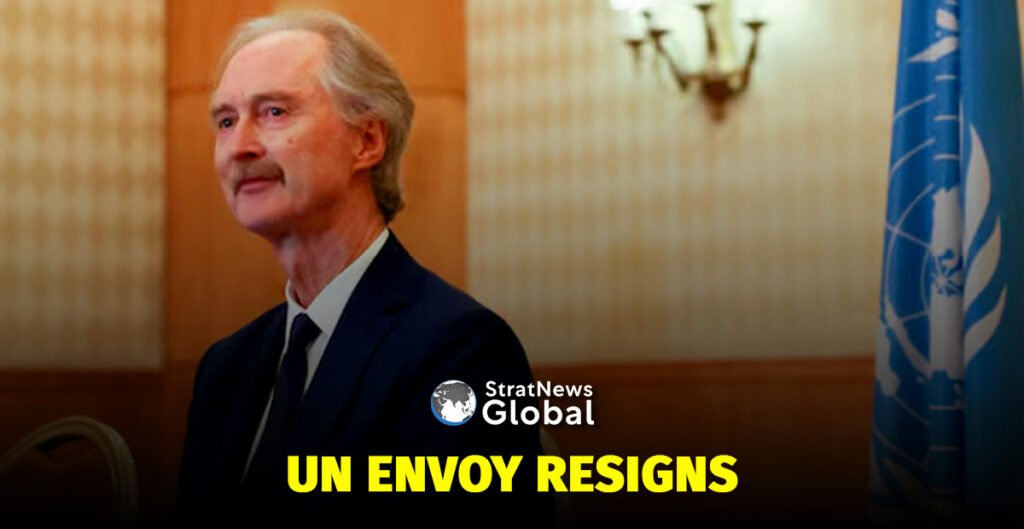
UN Syria Envoy Geir Pedersen To Resign After Six Years In Post
The United Nations (UN) Special Envoy for Syria, Geir Pedersen, declared on Thursday that he will resign “in the near future” after serving more than six years in the position, at a time when Syria is experiencing a historic transformation following the ouster of its former leader, Bashar al-Assad, last year.
He told the U.N. Security Council that Secretary-General Antonio Guterres had accepted his resignation.
“It has been my intention for quite some time to move on for personal reasons after a long period of service,” Pedersen told the 15-member council. “My experience in Syria has affirmed an enduring truth – that sometimes it’s darkest before the dawn. For so long, progress seemed absolutely impossible, until suddenly it came.”
Assad was ousted by a rebel offensive in December that ended 14 years of civil war that erupted with protests against him, and 50 years of family rule by him and his father, Hafez, before him.
‘New Dawn’
“Few have endured suffering as profound as the Syrians, and few have demonstrated such resilience and determination,” Pedersen said. “Today, Syria and the Syrian people have a new dawn, and we must ensure that this becomes a bright day. They deserve this so much.”
During the war, Pedersen was one of several U.N. envoys who led political missions aimed at negotiating a peaceful solution between the Assad regime and its opponents.
But the Islamist-led government that replaced Assad has kept the U.N. mission at arm’s length, with officials insisting that there was little need for an internationally negotiated political transition now that Assad had been toppled.
“Being a special envoy for any conflict, let alone one that we Syrians know, is no easy job,” Syria’s U.N. Ambassador Ibrahim Olabi told the Security Council, adding that Pedersen “departs on a note of hope, on a success story.”
He said Syria looks forward to “engaging with the Secretary-General and all of you in working with his successor in a way that preserves Syrian sovereignty and fulfils the aspiration of the Syrian people.”
(With inputs from Reuters)
Delhi Maps Impact Of Saudi–Pak Defence Pact
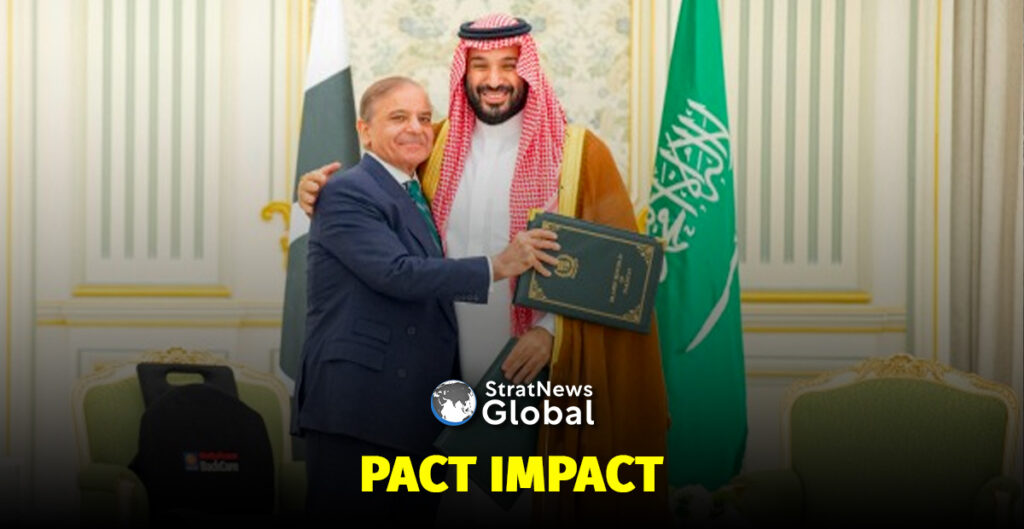
In the wake of Israeli attacks on Qatar last week, Saudi Arabia has revived its decades-old defence pact with Pakistan, adding a nuclear dimension this time—a move that has sparked concern across the region, including in India.
India is taking “calibrated steps,” with the Ministry of External Affairs on Thursday saying the government is studying the implications for national security as well as for regional and global stability, StratNewsGlobal has learnt.
The agreement’s immediate objective is to counter Israel’s military actions in the Gulf after the strikes on Doha. Its NATO-style wording—“any aggression against either country shall be considered an aggression against both”—has unsettled the region, raising concerns in India’s strategic circles, according to top-level sources.
Sources said India is closely watching the “Strategic Mutual Defence Agreement” signed Thursday between Riyadh and Islamabad, particularly since it leaves the door open for other countries to join—a prospect that could attract China.
India is therefore assessing how and under what circumstances the pact might be activated and what countermeasures may be needed. New Delhi maintains strong strategic ties with each of the six GCC nations: Saudi Arabia, the UAE, Bahrain, Oman, Qatar and Kuwait.
Ausaf Sayeed, India’s envoy to Riyadh from April 2019 to March 2022, said, “Israel has crossed a red line by attacking Qatar. Attacking a GCC country is a no-go zone. Therefore, this has created a panic. Traditionally, the security order in West Asia is typically anchored by the US and its alliances since the post-World War II era.
“But in recent times we are seeing there is continuous Israeli aggression, and it has exposed the vulnerability of the existing order and has also put a question mark on the US’ role as a security provider to the GCC. This has forced the regional players to look for other alternatives and towards multipolarity for deterrence and stability. This is the larger context of the pact,” he added.
Sayeed noted that Riyadh and Islamabad’s military alliance goes back decades, with Pakistan providing troops during times of regional conflict.
“This has now become a treaty-level understanding, thereby changing the dimension, as nuclear cooperation has now been added to the GCC security setup. This is where India’s security interests come into question,” he said.
While the pact speaks of “joint deterrence against any aggression”, a senior Saudi official stressed it was “not a response to specific countries or specific events.”
Sources also pointed out that India shares a strategic partnership with Saudi Arabia, and Riyadh would not allow Islamabad to use the defence pact against New Delhi.
“It will be incorrect on our part to think that if there is an Operation Sindoor-like incident tomorrow again between India and Pakistan, Riyadh will take Islamabad’s side. The Saudis will never let that happen,” said Sayeed.
Pakistan continues to keep nearly 20,000 troops in Saudi Arabia. In 2017, former Pakistan Army chief Raheel Sharif was appointed by Riyadh to head the Islamic Military Alliance to Fight Terrorism (IMAFT).
The military partnership dates back to the 1980s when Pakistan deployed 15,000 troops during the Iran-Iraq war to bolster Saudi security. Over the years, Saudi cadets have also trained at Pakistani military academies, further deepening the defence relationship.
During Prime Minister Narendra Modi’s visit to Riyadh in April this year, both sides pledged to deepen defence ties and hailed the creation of a Ministerial Committee on Defence Cooperation. India and Saudi Arabia held their first-ever land forces exercise, ‘Sada Tanseeq-I’, in Rajasthan in 2024. Earlier that year, the Saudi Naval Forces Chief of Staff visited India. Bilateral naval exercises ‘Al Mohed Al Hindi’ were held in 2021 and 2023.
“The larger concern for India will be if China or Turkey enters the agreement,” said veteran diplomat Talmiz Ahmad, India’s ambassador to Saudi Arabia from 2000–03 and again in 2010–11.
“This time Pakistan and Saudi Arabia have gone in for a deeper understanding that will have long-term strategic significance. Turkey and China both have shown interest in playing the role of a security player in the region, but not India, and that can become problematic for us. India needs to become more active in the politics of West Asia, else the space will get filled by China and others,” he said.
“India’s engagement with Saudi Arabia and the GCC at large had been overwhelmingly economical, whereas for Pakistan it has been overwhelmingly about defence. The Saudis regard Pakistan’s armed forces as a credible force. They now see Israel as a military hegemon, which has tacit support from its ally – the United States,” Ahmad added.
The timing of the defence pact, coming just months after India’s ‘Operation Sindoor’ against Pakistan, has raised eyebrows within the Indian security establishment, which believes New Delhi may need to devise a counterplan.
Iran’s position is also being closely watched.
According to Nitin Gokhale, Editor-in-Chief of StratNews Global, “Pakistan may have created an unwanted ‘neighbourhood problem’ for itself with Iran by signing the pact. Tehran would not be happy with Riyadh’s increased military and nuclear preparedness with Islamabad’s assistance.”
Also, “Iran’s long-term objective is to wean the Saudis away from the US. So, while the whole of Tehran may not be happy with the Pak-Saudi compact, some sections would be pleased with the Saudis displaying their lack of faith in Washington D.C.,” he added.
Major Shipping Companies Push For Overhaul Of UN Ship Fuel Emissions Deal
A coalition of major shipping firms, including prominent Greek operators, announced on Thursday their demand for revisions to a United Nations deal set for adoption in October aimed at reducing marine fuel emissions, further complicating the draft deal already facing U.S. resistance.
Global shipping accounts for nearly 3% of the world’s carbon emissions, and the proposed deal is crucial to speed up decarbonisation through a bigger regulatory framework.
The group – including some of the world’s biggest oil tanker companies such as Cyprus-based Frontline and Saudi Arabia’s Bahri – said they had “grave concerns” about the so-called Net-Zero Framework proposed for adoption next month at the U.N.’s International Maritime Organisation environmental committee.
“As it stands, we do not believe the IMO NZF will serve effectively in support of decarbonising the maritime industry … nor ensure a level-playing field as intended,” the companies told Reuters in a joint statement on Thursday.
“We believe that critical amendments to the IMO NZF are needed, including the consideration of realistic trajectories … before adoption can be considered.”
Maritime Emissions Agreement
In April, countries struck a draft agreement that would impose a fee on ships that breach global carbon emissions standards.
The United States has told countries to reject the deal or face tariffs, visa restrictions and port levies, sources told Reuters in September.
The joint statement said it was essential that any accord avoided “excessive financial burdens and inflationary pressure to the end-consumer”.
IMO Secretary-General Arsenio Dominguez said he was confident the deal would be adopted next month.
“I base that on the track record of the organisation, on the co-operation that we all have, the understanding that we still have some challenges and some concerns, particularly to address,” he told a Capital Link shipping conference in London on Tuesday.
Greek Shipping Minister Vassilis Kikilias told Dominguez during London International Shipping Week earlier this week that improvements were required.
“The minister underlined that he shares the shipping industry’s concerns,” the shipping ministry said in a statement.
Sources have told Reuters that it was unclear whether the deal could go through if opposition increased or if there were abstentions by IMO member countries.
About 90% of the world’s trade is conducted by sea, and emissions are set to soar without an agreed mechanism.
The statement was also co-signed by Capital Group, TMS Group, Centrofin, Marine Trust, Trust Bulkers, Common Progress, Dynacom, Dynagas, Emarat Maritime, Gaslog, Hanwha Shipping, Angelicoussis Group, Seapeak and Stolt-Nielsen.
(With inputs from Reuters)
China’s Defence Minister Calls For Unity, Vows ‘Strong’ Military As Peacekeeper
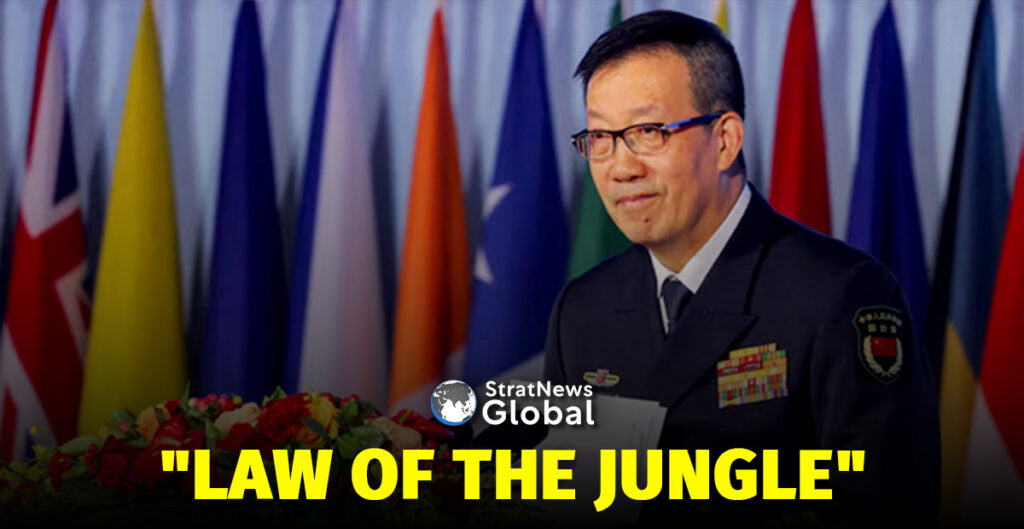
China’s defence minister highlighted Beijing’s push to reform global governance on Thursday, cautioning against a fragmented world “ruled by the jungle,” while asserting that the nation’s powerful military would serve as a guarantor of peace.
The remarks come amid simmering tension between China and the United States and its allies and partners over flashpoints across East Asia, including Taiwan and the South China Sea, as well as broader economic rivalries under President Donald Trump.
Formally opening the Beijing Xiangshan Forum on security, Dong Jun said the world was at a crossroads, overshadowed by Cold War thinking, hegemony and protectionism, and had to choose dialogue over confrontation.
“External military interference, seeking spheres of influence and coercing others to take sides, will bring the international community into chaos,” Dong added.
His remarks took veiled swipes at the United States and appeared more hawkish than his speech at last year’s forum, particularly on topics such as tension over democratically governed Taiwan.
“An obsession with absolute superiority in military strength and a ‘might is right’ approach will lead to a divided world defined by the rule of the jungle and disorder,” Dong said.
A strong Chinese military would be a force for peace, he added.
‘Hegemonism And Power Politics’
Dong’s remarks follow recent speeches by President Xi Jinping against “hegemonism and power politics” and this month’s large military parade in Beijing that showed off a host of new weapons.
Malaysia’s Defence Minister Mohamed Khaled Nordin cautioned that “uncertainties” over the disputed South China Sea could escalate to distrust and tensions between his country and China.
“Our shared security depends on keeping sea lanes free, open and secure,” Nordin said, calling for all parties to rely on international law to peacefully settle disputes.
“Rivalry must be managed responsibly so great power competition does not undermine regional peace.”
His counterpart from Singapore, Chan Chun Sing, echoed Dong’s warning of a divided world, saying “we again risk falling into a similar vicious cycle” of economic upheaval and radical politics that led to World War II.
While saying China was open to doing its part to uphold the international order, Dong added that the People’s Liberation Army would never allow any Taiwan “separatist” attempts to succeed.
“The return of Taiwan to China is an integral part of the postwar international order,” he said, adding that it was ready “to thwart external military interference at all times”.
China claims Taiwan as its territory and has never renounced the use of force to seize it.
Taiwan’s President Lai Ching-te and his government strongly object to China’s sovereignty claims, saying it is up to the island’s people to decide their own future.
The forum, of about 1,800 officials, military personnel and scholars from 100 countries, comes on the heels of a flurry of diplomacy between Washington and Beijing ahead of a possible summit of their leaders later in the year.
Dong spoke to U.S. Defence Secretary Pete Hegseth by telephone last week in their first direct exchange, while Xi and Trump are expected to speak by telephone on Friday.
In Madrid this week, American and Chinese officials agreed to switch social media app TikTok to U.S.-controlled ownership, for a breakthrough in months-long talks between the two biggest economies to defuse a trade war that unnerved global markets.
However, diplomats and analysts say there is no clear sign yet of deeper military-to-military engagement.
“I just don’t think that China understands the United States is no longer going to purchase a defence relationship by (being) accommodating,” security analyst and former Pentagon official Chad Sbragia said on the sidelines of the event ending on Friday.
Most Western nations, including the U.S., have sent relatively low-level diplomatic representatives, with some saying they seek to learn more about China’s military build-up and opaque military leadership.
(With inputs from Reuters)
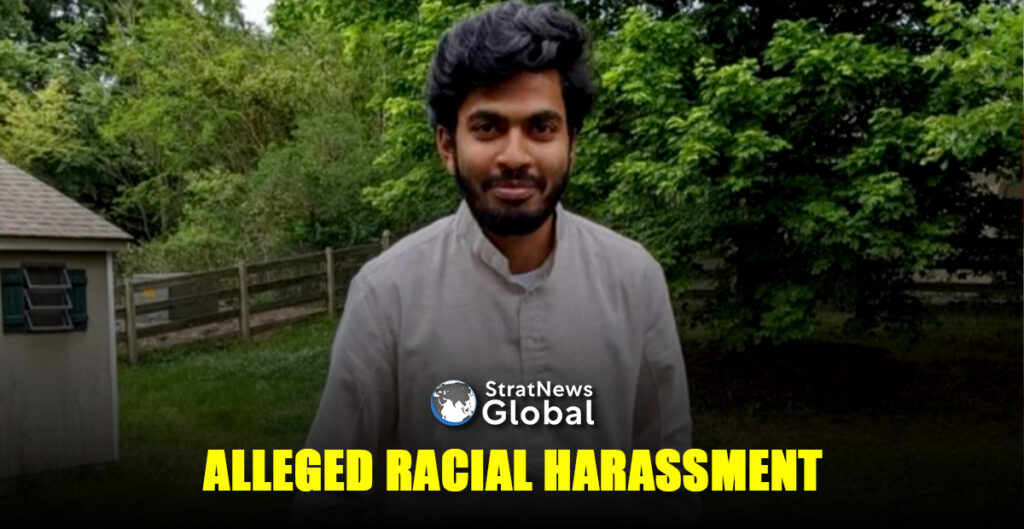
Indian Techie From Telangana Shot Dead By US Cops, Family Demands Probe
A 30-year-old Indian techie was shot dead by police in California after he allegedly attacked his roommate with a knife earlier this month, according to officials’ accounts.
However, his grieving family has accused authorities of racial bias and has demanded an impartial investigation into the circumstances surrounding his death.
Shot Inside Home
According to a police statement, the deceased, Mohammed Nizamuddin, a native of Mahabubnagar in Telangana, was shot inside his Santa Clara residence on September 3 after officers found him armed with a knife.
He was also discovered holding down his roommate, who had suffered multiple stab wounds.
Authorities stated that they had been dispatched following a 911 distress call reporting a stabbing inside the residence.
A quarrel between Nizamuddin and his roommate allegedly spiralled out of control, resulting in the violent incident.
Police Issue Statement
“Santa Clara Police Department officers responded, confronted the suspect, and became engaged in an Officer-Involved Shooting. The suspect was transported to a nearby hospital, where he was later declared dead. The victim was also taken to a local medical facility and is undergoing treatment for their injuries,” the official statement read.
“The Santa Clara County District Attorney’s Office, in coordination with the Santa Clara Police Department, has initiated a joint inquiry. The case remains ongoing and active. As the investigation develops, an update will be released tomorrow afternoon,” it added.
Contradicting the police account, Nizamuddin’s family asserted that it was he who initially called the police for assistance before being shot.
Nizamuddin had obtained his Master’s degree in Computer Science from a Florida-based institution and was employed with a technology company in Santa Clara at the time of the incident.
Family Alleges Racial Harassment
His family described him as a reserved, religious man who had previously complained publicly about racial harassment, wage exploitation, and unjust termination from his workplace.
They also pointed to a LinkedIn post authored by him in which he wrote: “I have been a victim of racial hatred, racial discrimination, racial harassment, torture, wage-fraud, wrongful termination, and obstruction of justice.”
In the same post, he added: “Enough is enough, white supremacy and the racist white American mindset must end.”
He also elaborated on allegations of discriminatory treatment, food poisoning, eviction threats, and what he described as continuous monitoring and harassment by an alleged detective.
Mortal Remains Still In US
The family has urged authorities to conduct a comprehensive probe into both the incident and the claims of racial victimisation, while also requesting assistance from the Ministry of External Affairs (MEA) to facilitate the transportation of his mortal remains.
The body is currently kept in a Santa Clara hospital pending necessary formalities.
Amjed Ullah Khan, spokesperson of the Majlis Bachao Tehreek, who met with Nizamuddin’s father, Mohammed Hasnuddin, stated that he has formally written to External Affairs Minister S. Jaishankar.
In his communication, he requested the intervention of the Indian Embassy in Washington, D.C., as well as the Consulate General in San Francisco, to provide a comprehensive report on the episode and extend help in completing repatriation and associated formalities.
(With inputs from IBNS)
British Intelligence Explores Dark Web To Enlist Russian Agents And Unlock Secrets
Britain’s foreign ministry announced on Thursday that its intelligence services will begin using the dark web to enlist new informants. The platform will also serve as a secure channel for agents in Russia and elsewhere to pass secret information.
The Secret Intelligence Service, Britain’s foreign spy agency known as MI6, is to use a dark web portal called Silent Courier, which will allow people to securely pass on details about illicit activities anywhere in the world, or offer their own services.
“Today we’re asking those with sensitive information on global instability, international terrorism or hostile state intelligence activity to contact MI6 securely online,” MI6 chief Richard Moore will say when he formally announces the plans in a speech in Istanbul on Friday.
“Our virtual door is open to you,” Moore, who has previously called on Russians to spy for Britain, will say.
MI6, which was established in 1909 but not officially acknowledged until the 1990s, usually operates in the shadows, and only its head – known as “C” – is a publicly named member of the service.
MI6 To Use Dark Web
In a promotional video to accompany the announcement, it said the bedrock of its operations had been face-to-face meetings, but it was now turning to the anonymity of the dark web, the murky part of the internet with hidden sites often used by the likes of drug dealers, terrorists and child sex abusers.
Instructions on how to use the portal will be put on MI6’s YouTube channel, the foreign ministry said.
“As the world changes, and the threats we’re facing multiply, we must ensure the UK is always one step ahead of our adversaries,” foreign minister Yvette Copper said.
“Now we’re bolstering their efforts with cutting-edge tech so MI6 can recruit new spies for the UK – in Russia and around the world.”
The news comes as Moore, tipped by some British media as a possible contender to be Britain’s next ambassador to Washington, prepares to step down this month after five years in the role. He will be replaced by MI6’s first female head, Blaise Metreweli.
(With inputs from Reuters)
Brazil’s Labour Minister Steps Into Probe Of JBS Over Alleged Slave-Like Practices
Brazilian Labour Minister Luiz Marinho has stepped in to give a final review of an investigation into meatpacker JBS SA. According to official documents, the probe could result in one of its poultry plants being blacklisted for subjecting employees to conditions described as “slavery-like”.
That interruption of the usual process has stoked concerns among labour inspectors and legal experts who called it an unprecedented move that could introduce political influence into Brazil‘s decades-long effort to combat modern slavery.
The Labour Ministry did not respond to a detailed set of questions, but said the proceeding is ongoing and appeals by JBS are still under analysis.
Slavery-Like Conditions
The case stems from a federal raid last year that found ten people working in slavery-like conditions for a contractor hired to load and unload cargo for a JBS poultry unit called JBS Aves, in the state of Rio Grande do Sul.
Inspectors found that workers were subjected to illegally long shifts for as long as 16 hours and housed without access to clean drinking water, according to reports. The contractor had also made unlawful deductions from workers’ wages, making it harder for them to quit, the report found.
In a statement, JBS said on Thursday it immediately suspended the contractor, terminated the contract and blocked the company upon learning of the allegations. “The company has zero tolerance for labour and human rights violations,” the statement added.
Labour inspectors ruled on August 6 that JBS was responsible for the working conditions of the ten employees, as it failed to conduct due diligence ensuring the contractor was treating them lawfully.
Typically, such a ruling would result in the inclusion of the company in a list of employers responsible for submitting workers to slavery-like conditions, known as “the dirty list,” which is scheduled to be updated in October.
Once a company is included in the list, it stays there for two years. Beyond the reputational risks associated with the listing, companies are also barred from obtaining certain types of loans from Brazilian banks, which could mean serious financial consequences for a company linked to one of Brazil’s largest firms.
Wide Repercussions
After the inspectors’ ruling in August, a legal opinion by Brazil’s solicitor general’s office (AGU), found that the minister could pull the proceedings for his own review, citing the stature of JBS in the Brazilian economy.
JBS is one of Brazil’s largest employers, with some 158,000 workers in the country, according to the company. Its Seara division, which runs JBS Aves, reported net revenue of $2.2 billion from April to June, about a tenth of the firm’s total.
Adding JBS Aves to the slave labour list would have “repercussions of wide magnitude, with direct repercussions on the company’s assets, its commercial relations, its image in the market and, ultimately, could generate a significant impact on the economic sector itself at the national level,” AGU wrote.
AGU did not immediately reply to a request for comment.
On Monday, Marinho pulled the proceeding for his review, according to a document.
Such a move is unprecedented in over two decades that a dedicated task force has been managing Brazil’s slave labour blacklist, labour inspectors and legal experts said.
The minister’s move has caused “deep bewilderment and concern” among those who work directly on slave labour cases, said Renato Barbedo Futuro, the president of the association of federal labour inspectors in Rio Grande do Sul, in a public statement.
The ministry’s decision could have consequences beyond the JBS case, as it sets precedent for other firms to petition the minister to intervene in their cases, said Livia Miraglia, a labour law professor at the Federal University of Minas Gerais who specializes in slave labour cases for over 20 years.
“I have never seen anything like it,” she said.
(With inputs from Reuters)
Three Pennsylvania Police Officers Killed, Two Wounded In Ambush By Alleged Stalker
A suspected stalker opened fire with an assault-style rifle on police officers in rural Pennsylvania as they tried to serve him with an arrest warrant, a local prosecutor said on Thursday. Five officers were hit in the attack, three of them fatally.
The suspect, Matthew Ruth, 24, was himself killed in the ensuing gunfight on Wednesday with officers from the North York County Regional Police Department and York County Sheriff’s Office, according to county District Attorney Tim Barker.
The shooting unfolded at a farmhouse in North Codorus Township, about 100 miles west of Philadelphia, when five police detectives and a deputy sheriff sought to arrest Ruth on suspicion of stalking, prowling and trespassing, Barker said.
According to the DA, the house belonged to the suspect’s ex-girlfriend and her mother, who had reported to police the night before that Ruth was lurking outside the home in camouflage clothing and peering into the dwelling through a window with binoculars.
The ex-girlfriend also told police she believed that Ruth had set fire to her pickup truck back in August.
Fatal Shooting
After a fruitless search for Ruth on Tuesday night, police returned on Wednesday afternoon with an arrest warrant to the suspect’s home, but he was gone.
Officers then drove to the farmhouse of the ex-girlfriend and mother, who had left the residence for their own safety. Finding the door unlocked, police began to make entry, Barker said.
As the door swung open, according to Barker, Ruth immediately blasted away at the officers with his AR-15-type rifle. The four closest detectives were struck by gunfire, and two staggered for cover as they returned fire.
The gunman then turned his attention to the fifth detective and the sheriff’s deputy as they joined in the gunfight, which ended in the deaths of three police detectives and the suspect, authorities said. The fourth detective and the sheriff’s deputy were critically wounded.
The ambush slaying of three police officers in the normally quiet farm country of southeastern Pennsylvania made national headlines and prompted a visit by Governor Josh Shapiro, who spoke about gun violence at a conference in Pittsburgh on Tuesday.
York County was the scene of another fatal shooting seven months earlier of a police officer who responded to a hostage siege at the intensive care ward of a local hospital.
(With inputs from Reuters)