

Support us by contributing to StratNewsGlobal on the following UPI ID
ultramodern@hdfcbank

Strategic affairs is our game, South Asia and beyond our playground. Put together by an experienced team led by Nitin A. Gokhale. Our focus is on strategic affairs, foreign policy and international relations, with higher quality reportage, analysis and commentary with new tie-ups across the South Asian region.
You can support our endeavours. Visit us at www.stratnewsglobal.com and follow us on YouTube, Twitter, Facebook and Instagram.
र 500 per month
र 1000 per month
र 5000 per year
र 10000 per year
Donate an amount of your choice
र 500 per month
Donate र 500 per month

र 1000 per month
Donate र 1000 per month
र 5000 per year
Donate र 5,000 per year
र 10000 per year
Donate र 10,000 per year
Donate an amount of your choice
Donate an amount of your choice
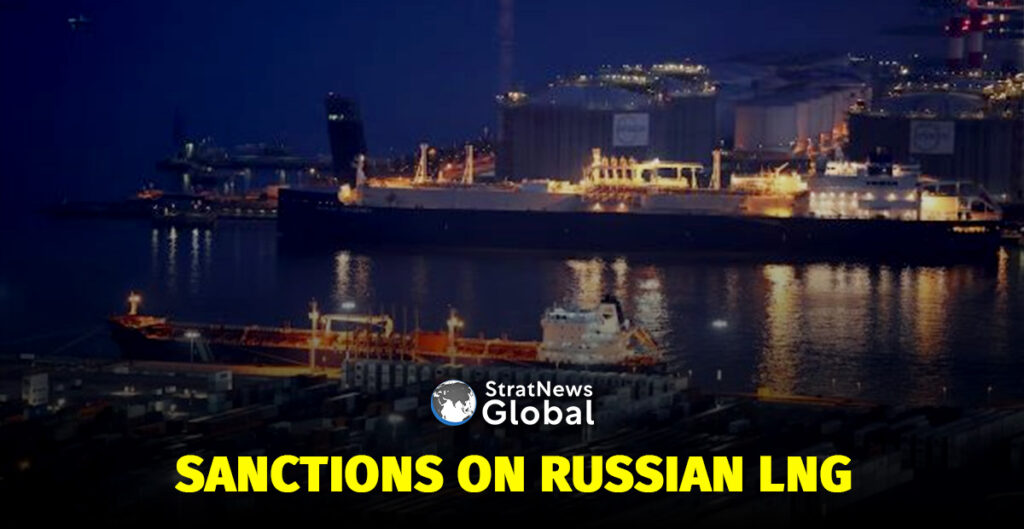


EU Moves To Accelerate Russian LNG Ban Following Trump Pressure
European Union officials said on Friday that the bloc intends to advance its ban on Russian LNG imports by one year, making it part of the 19th sanctions package against Moscow. The decision comes in response to pressure from U.S. President Donald Trump.
“The revenues from fossil fuels sustain Russia’s war economy. We want to cut these revenues,” said European Commission President Ursula von der Leyen, as she announced the proposal, which requires unanimous approval from EU governments.
“So we are banning imports of Russian LNG into European markets. It is time to turn off the tap,” von der Leyen said.
An EU sanctions proposal kicks off intense discussions among the 27-member countries to reach an agreement. Russia-friendly governments in Hungary and Slovakia have held up previous packages before a compromise was finally reached.
Kaja Kallas, the EU’s foreign policy chief, said on X that the new proposal aimedn “to speed up the phase-out of Russian liquefied natural gas (to be complete) by 1 Jan 2027”.
The EU had previously planned a phase-out by January 1, 2028, but Trump has repeatedly urged the bloc to end Russian energy purchases faster before he does anything further to pressure Moscow.
Package Also Targets ‘Shadow Fleet’ And Crypto
Beyond LNG, or liquefied natural gas, the proposed sanctions would also target more of Russia’s shadow tanker fleet and cryptocurrency.
Von der Leyen and Kallas did not give full details of the new package, but officials said it would also target Russian and central Asian banks, Chinese refineries and special economic zones, a customs loophole used by Moscow to import dual-use goods for its military.
“We are now going after these who fuel Russia’s war, who purchase oil in breach of sanctions,” von der Leyen said. “We target refineries, oil traders, petrochemical companies in third countries including China.”
Kremlin spokesperson Dmitry Peskov said on Wednesday that any EU proposal to phase out Russian energy more quickly would not affect Russia and would not force it to change its position.
Trump is pressing Europe to play a more robust role in helping end Russia’s war in Ukraine, demanding it shoulder a greater burden of the cost of shoring up Ukraine’s military and do more to deprive Moscow of the energy revenues bankrolling its war economy.
The proposal risks compelling EU countries to cover any shortfalls in LNG supplies through purchases from the United States, increasing their energy dependency on the U.S. in an era when Washington is using trade tariffs as a policy tool.
“Trump’s pressure on Europe to move faster on banning Russian energy imports seems to have worked,” said Simone Tagliapietra, a senior fellow at think tank Bruegel.
“Anticipating the ban on Russian LNG imports to Jan 2027 means Europe will now quickly need to prepare alternatives – and U.S. supplies are of course at the top of the list.”
A European official said advancing the ban on Russian LNG became a “priority” after von der Leyen spoke with Trump this week.
Russia’s share in EU imports of LNG decreased to 14% in the second quarter of 2025 from 22% in the first quarter of 2021, according to Eurostat. Spain, Belgium, the Netherlands and France import Russian LNG. Gas piped via TurkStream goes to Slovakia, Hungary and Bulgaria.
Totalenergies CEO Patrick Pouyanne said last week that Russian gas was needed until the end of 2027, “then we can exit from that because we can source it from other places without impact on the price”.
(With inputs from Reuters)
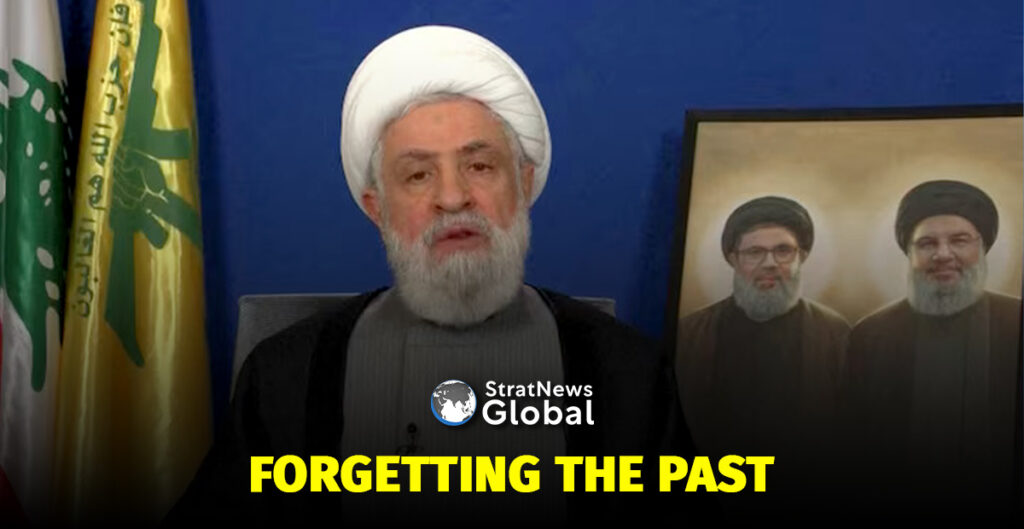
Hezbollah Calls For New Chapter With Saudi Arabia
Hezbollah leader Naim Qassem on Friday called on Saudi Arabia to move past old differences and open a new chapter with the Iran-backed group, urging unity against Israel after years of strained ties that impacted Riyadh’s relationship with Lebanon.
Saudi Arabia and other Gulf states designated Shi’ite Hezbollah a terrorist organisation in 2016. In recent months, Riyadh has joined Washington and Hezbollah’s rivals within Lebanon in pressuring the Lebanese government to disarm the group, which was badly weakened by last year’s war with Israel.
Arms Pointed At Israel
In a televised address on Friday, Qassem said that regional powers should see Israel, not Hezbollah, as the main threat to the Middle East and proposed “mending relations” with Riyadh.
“We assure you that the arms of the resistance (Hezbollah) are pointed at the Israeli enemy, not Lebanon, Saudi Arabia, or any other place or entity in the world,” Qassem said.
He said dialogue would “freeze the disagreements of the past, at least in this exceptional phase, so that we can confront Israel and curb it”, and said that pressuring Hezbollah “is a net gain for Israel”.
Shift In Dynamics
Saudi Arabia once spent billions in Lebanon, depositing funds in the central bank and helping rebuild the south after a 2006 war between Hezbollah and Israel – only to see the group grow more powerful in Lebanon and the region with Iran’s help.
Relations soured sharply in 2021 when Sunni Saudi Arabia expelled the Lebanese ambassador, recalled its own envoy and banned Lebanese imports. A statement in Saudi state media at the time said Hezbollah controlled the Lebanese state’s decision-making processes.
Hezbollah’s then-secretary general Hassan Nasrallah called Saudi Arabia’s crown prince Mohammad bin Salman a “terrorist” and repeatedly criticised Saudi’s role in Yemen.
But recent months have seen seismic political shifts in the region, with Israel pummelling Hezbollah last year and killing Nasrallah, and rebels toppling the group’s Syrian ally Bashar al-Assad in December.
(With inputs from Reuters)
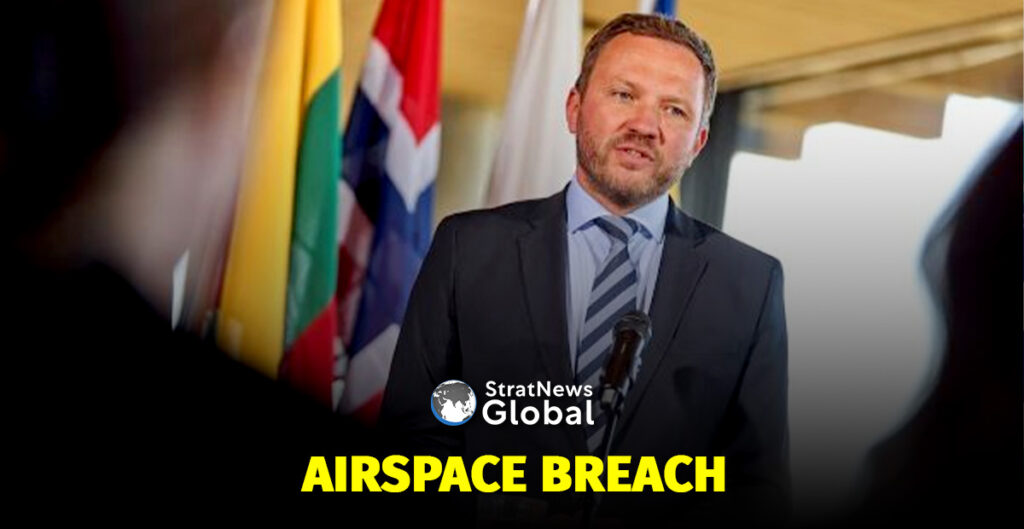
Estonia Accuses Russian Jets Of 12-Minute Airspace Breach
The government of Estonia said that three Russian warplanes crossed into the airspace of the NATO member nation on Friday and remained there for 12 minutes, calling the incident as “unprecedentedly brazen.”
The incident comes just over a week after more than 20 Russian drones entered Polish airspace on the night of September 9-10, prompting NATO jets to down some of them and Western officials to say Russia was testing the alliance’s readiness and resolve.
The airspace violation comes three days after Russian and Belarusian military forces ended joint military exercises, called Zapad 2025.
Tallinn said on Friday the three MiG-31 fighter jets entered Estonian airspace without permission and stayed there for a total of 12 minutes.
“Russia has violated Estonian airspace four times already this year, which is unacceptable in itself, but today’s violation, during which three fighter jets entered our airspace, is unprecedentedly brazen,” said Foreign Minister Margus Tsahkna.
“Russia’s ever-increasing testing of borders and aggressiveness must be responded to by rapidly strengthening political and economic pressure.”
The Russian Defence Ministry did not immediately respond to a request for comment.
Estonia said it had summoned the top Russian diplomat in the country to lodge a protest and deliver a note.
Airspace Violation
Estonian Defence Forces said the airspace violation occurred on Friday morning in the area of Vaindloo Island, around 100 kilometres (124 miles) from the capital Tallinn.
The aircraft did not have flight plans, their transponders were not switched on and they were not in contact with air traffic control, Estonia said.
While incursions over Vaindloo Island by Russian aircraft are fairly common, they do not usually last as long as Friday’s incident.
“This could be a test by Russia to see how NATO responds to this type of challenge, but it could also be purely coincidental,” Jakub M. Godzimirski, a research professor in Russian security policy at the Norwegian Institute of International Affairs, said.
“Still, this happens in a given context, having in mind what happened with the drone incursion in Poland a few days ago.”
A staunch supporter of Ukraine, Tallinn said in May that Moscow had briefly sent a fighter jet into NATO airspace over the Baltic Sea during an attempt to stop a Russian-bound oil tanker thought to be part of a “shadow fleet” defying Western sanctions on Moscow.
(With inputs from Reuters)
EU Finance Ministers Back Roadmap To Launch Digital Euro
European Union finance ministers on Friday backed a roadmap to introduce the digital euro, aiming to offer a home-grown alternative to the US-dominated Visa and Mastercard payment systems.
Discussions on a digital euro, essentially an electronic wallet backed by the European Central Bank, heated up this year because the EU is now keen to reduce its dependence on other countries in key areas like energy, finance and defence.
The ECB has pitched the digital euro as a way to cut Europe’s reliance on US credit cards and as a response to US President Donald Trump’s global push for stablecoins pegged to the US dollar.
But the ECB, the main sponsor of the project, has failed so far to secure legislative approval for it, with lawmakers and bankers complaining it may hollow out banks’ coffers, cost too much or curtail privacy.
Sign Of Progress
In a sign of progress, EU finance ministers gathering with ECB President Christine Lagarde and European Commissioner Valdis Dombrovskis in Copenhagen on Friday reached an agreement on the next steps.
This will give EU finance ministers a say on whether a digital currency is issued and how many such euros each resident will be able to hold, which is seen as crucial for assuaging fears of a run on bank deposits.
“The compromise that we reached is that before the ECB makes a final decision in relation to issuance…there would be an opportunity for a discussion in the Council of Ministers,” Paschal Donohoe, who chairs meetings of finance ministers, told a joint press conference.
Donohoe, Lagarde and Dombrovskis also celebrated a compromise on the procedure for setting the holding limit although they didn’t give details.
A participant at the meeting told Reuters the ECB will also submit a proposed holding limit for approval by the European Council of Finance Ministers.
Delays To Legislation
Though the European Commission proposed digital euro legislation in June 2023, the other two institutions that have to sign off on it, the European Parliament and the European Council, have yet to do so.
The European Council aims to wrap up its side of the work by the end of the year.
The ECB hopes to have the legislation in place by June, after which it will need around two-and-a-half to three years to actually launch the digital euro.
Some EU countries have their own national digital payments systems, but none that would be accepted across the 27-nation bloc.
“The digital Europe is not just a means of payment, it is also a political statement concerning the sovereignty of Europe and its capacity to handle payment, including on a cross-border basis, with a European infrastructure and solution,” Lagarde said at the press conference.
(With inputs from Reuters)
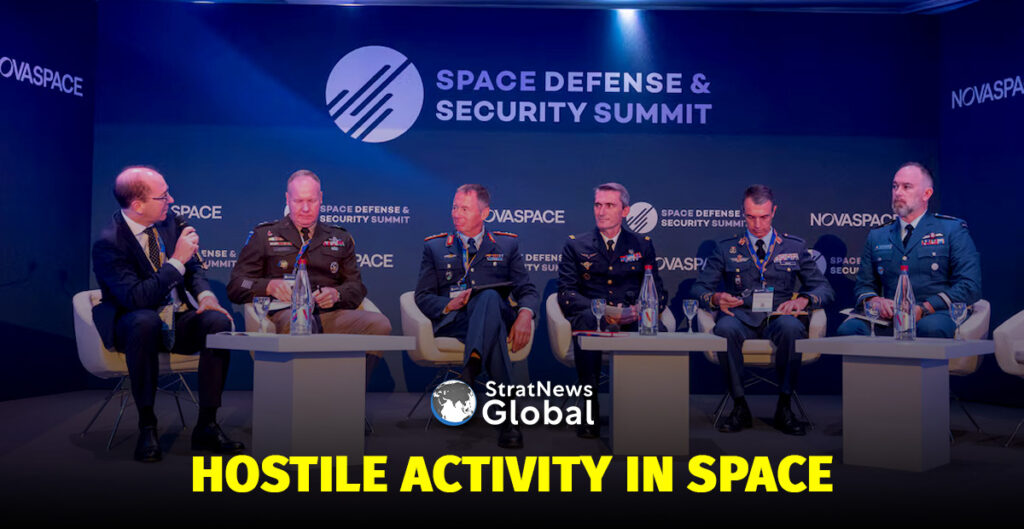
France Highlights Space Security Threats Amid Ukraine Conflict
France’s senior-most military space official has sounded the alarm over increasing “hostile or unfriendly” actions in space — particularly by Russia — echoing mounting concerns among Western nations about the rapidly evolving security challenges in outer space.
There has been a significant spike in hostile activity since Russia’s full-scale invasion of Ukraine in 2022, Major General Vincent Chusseau told Reuters.
In his first interview with international media since taking the helm of French Space Command last month, he said adversaries, especially Russia, have diversified methods of disrupting satellites, with activity such as jamming, lasers and cyberattacks having become commonplace.
Ukraine Conflict Highlights Space Risks
The Ukraine conflict shows “space is now a fully-fledged operational domain,” Chusseau said.
France, Europe’s largest government spender in space, publicly accused Moscow in 2018 of attempting to spy on its secret communications by sneaking up on a Franco-Italian military satellite with a prowling spacecraft a year earlier, but has not detailed suspect manoeuvres since then.
The Russian defence ministry and Russian space agency Roscosmos did not immediately reply to requests for comment.
The Kremlin says Western powers have unfurled a massive hybrid war against Russia, including propaganda, cyberattacks and intelligence operations. Moscow says it opposes any weapons in space and has denied assertions by the United States that Russia has launched weapons into Earth’s orbit that are capable of inspecting and attacking other satellites.
China, the world’s second-largest government spender on space behind America, is rapidly developing its space capabilities.
“Each day shows dizzying progress – launching ever more satellites for new constellations, developing modes of action that go beyond what we had seen before,” Chusseau said.
Western Nations Warn Of Threats To Satellites
The United States, Canada and the UK are among other Western countries publicly warning about increased threats to satellites, which are essential for militaries and economies, from banking to energy management.
“This economic and military dependence on space is increasingly being held at risk,” the head of UK Space Command Major General Paul Tedman said in a speech last week in London. The threat is growing “in scale, in sophistication, and in speed”.
Canada’s military space chief, speaking alongside Chusseau at a conference in Paris on Tuesday, said there are now more than 200 anti-satellite weapons in orbit.
“That is a shocking number,” said Canada’s Brigadier General Christopher Horner. He added that those pose a risk to everything from satellite communications to Earth observation to space-domain awareness, or the ability to monitor what is happening in space.
Western countries are responding by bolstering their own space-based capabilities.
Germany Is Enhancing Space Defences
The German government is “absolutely determined to quickly enhance our capabilities and defend our national systems,” Major General Michael Traut, head of German Space Command, told the conference hosted by French consulting firm Novaspace.
He said the German military is designing space defences including a multi-orbit satellite constellation to be built in stages with the first one completed in 2029.
Chusseau said one of France’s priorities is increasing resilience of space assets including in the rapidly-evolving area of low-orbit constellations, driven by dramatic growth in Elon Musk’s Starlink network. France recently announced plans to increase its stake in Paris-based satellite operator Eutelsat, whose OneWeb low-Earth orbit network competes with Musk’s Starlink.
Although France and its allies rarely openly discuss offensive capabilities, Chusseau told the conference another of his priorities is to accelerate the ability to carry out “a wide spectrum of effects in space…not only to see and understand, but also to act”.
France has announced a series of demonstrator satellites to help patrol in orbit and monitor adversaries. The aim is also to acquire surface-to-space capabilities “to deny, prohibit and disrupt” adversaries, French Space Command told Reuters.
(With inputs from Reuters)
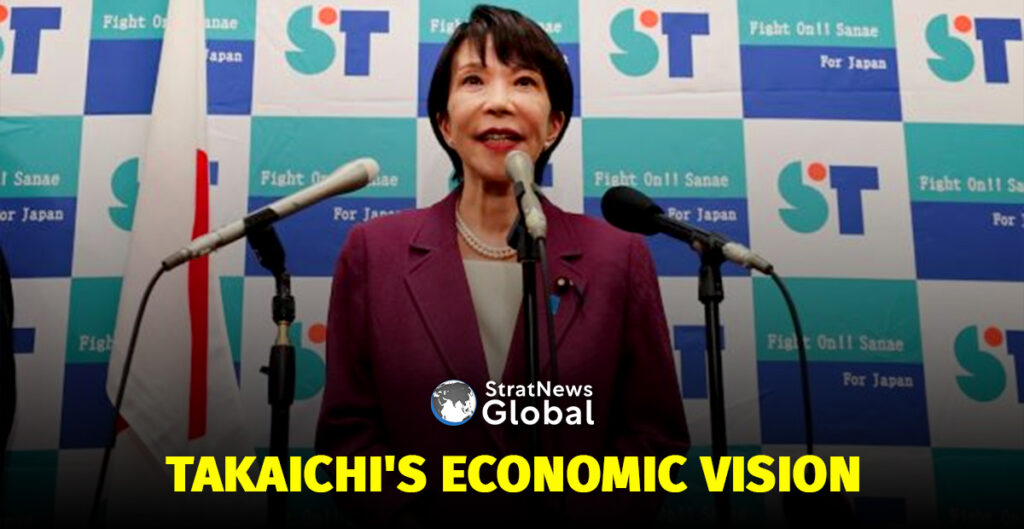
Takaichi Pledges Economic Boost To Restore Japan’s Glory As PM Contender
Sanae Takaichi formally entered Japan’s leadership race on Friday, seeking to become the country’s first female prime minister. She outlined an ambitious economic plan centered on major public spending and selective tax cuts, saying her strategy is designed to double the size of Japan’s economy within the next decade.
She and Agriculture Minister Shinjiro Koizumi are seen as frontrunners in the race to lead the Liberal Democratic Party (LDP) after Prime Minister Shigeru Ishiba said he would step down following a bruising upper house election defeat in July.
“I have never denied the need for fiscal consolidation, which of course is important,” Takaichi, who hails from the right flank of the LDP, said at the launch event.
“But the important thing is growth. I will make Japan once again a vigorous land of the rising sun.”
She pledged funding for government-led initiatives in areas such as artificial intelligence, semiconductors and battery technology.
In addition, she promised tax credits to bolster take-home pay, deductions for household services and corporate breaks for firms that provide in-house childcare.
A Candidate Of Change
Takaichi pitches herself as a candidate of change while also defending traditional values, and her plan represents a sharp turn away from Japan’s customary caution over deficits and a gamble that could strain bond markets.
“There will be a lot of resistance even from her own party over what they would consider fiscal irresponsibility,” said Jeffrey Hall, a lecturer at Kanda University of International Studies focused on political and social issues in Japan.
“It could have immediate impacts on Japan’s economy if she tries it. So it is a risky thing.”
In a speech on topics ranging from nuclear fusion to women’s health and farming, Takaichi also promised to restart nuclear plants and set up a national intelligence agency.
She promised to establish a new panel to screen foreign investment in sensitive industries, and called for a review of rules on land purchases by foreigners.
Takaichi, who has served as economic security and interior minister, said she wanted to strengthen Japan’s military, but declined to say what share of GDP she wanted spent on defence.
She also declined to say if she would continue visiting the contentious Yasukuni war shrine in Tokyo if she won the leadership contest and was confirmed as prime minister by parliament.
No Japanese incumbent prime minister has visited the shrine for almost two decades to avoid upsetting China, South Korea and other Asian neighbours that view it as a symbol of Japan’s wartime aggression.
If chosen as prime minister, Takaichi said she would travel abroad at least once a month to raise Japan’s profile.
(With inputs from Reuters)
UK Couple Released After 8 Months In Taliban Custody
An elderly couple from the UK, who had been held by the Taliban in Afghanistan since February, have been released following diplomatic intervention by Qatar. According to an official familiar with the development, the couple were on their way to Doha on Friday after the successful mediation effort.
Barbie and Peter Reynolds’ family had been concerned for their health and their ability to survive Taliban custody.
Before boarding the plane, Barbie Reynolds, 76, said she and her husband, 80, would return “if we can”, adding that they were Afghan citizens. For now, she said she was looking forward to “seeing our children, our family again”.
Qatar Negotiated With Taliban For Months
Qatar negotiated with Taliban authorities for several months, in coordination with Britain and the couple’s family, the official said.
“Throughout their eight months in detention – during which they were largely held separately – the Qatari embassy in Kabul provided them with critical support including access to their doctor, delivery of medication and regular communication with their family,” the official added.
Qatar has worked for the release of foreigners detained in Afghanistan since the Taliban came to power in 2021, and has helped to free at least three Americans this year.
Afghanistan’s foreign ministry posted on X that the couple had violated Afghan laws, without giving details. It said Afghanistan “does not view issues related to citizens from a political or transactional perspective”.
Richard Lindsay, Britain’s special envoy to Afghanistan, said it was “obviously up to the authorities here to determine why they were detained, but we are very grateful that at least, today is a very great humanitarian day, that they will be reunited with their family”.
Britons Lived In Afghanistan For 18 Years
The BBC has cited one official as saying the couple were arrested after using a plane without informing authorities.
It says they have lived in Afghanistan for 18 years, running a charity programme that was approved by the Taliban when they took power in 2021. Britain’s Sunday Times said they had run projects in schools.
The couple were arrested alongside a Chinese-American friend, Faye Hall, and a translator from their training business, Britain’s PA news agency reported.
Hall was released in March, also after Qatari mediation. No information was immediately available about the translator.
Western countries including Britain and the United States shut their embassies and withdrew their diplomats as the Taliban took over.
Britain now advises its nationals against travelling to Afghanistan because of the risk of detention.
(With inputs from Reuters)
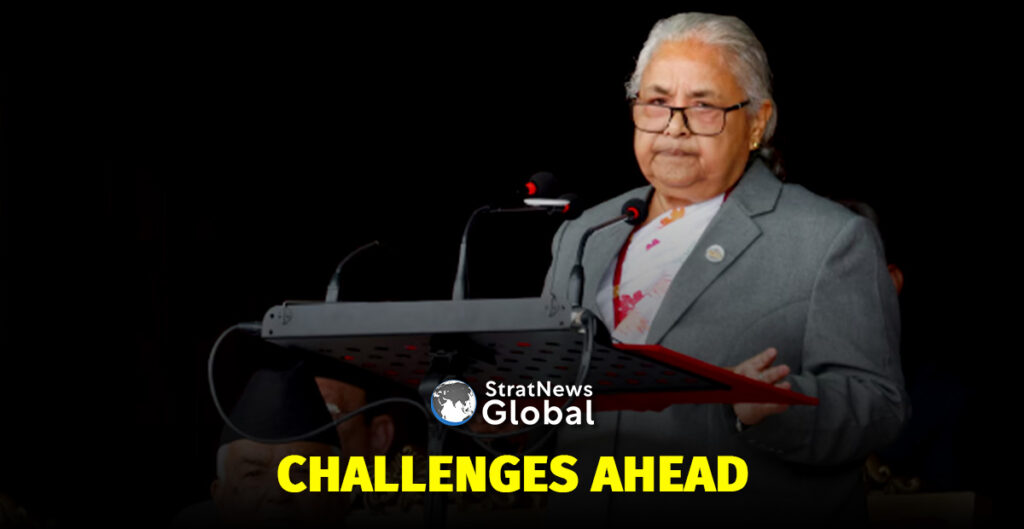
Nepal’s Interim PM Pledges To Address ‘Failures’ That Led To Gen Z Protests
Karki said the protests – that left at least 72 people dead and forced her predecessor K.P. Sharma Oli to quit – had been triggered by frustration over growing corruption and other failings.
Authorities have said more than 2,100 people were injured in the unrest that raged for two days last week. Arson and vandalism caused extensive damage to private and public property, including the complex housing the prime minister’s office, the Supreme Court and the parliament.
“We must accept the fact that the protests took place because of the failure to fulfil the spirit and objectives of providing good governance and prosperity enshrined in the constitution,” Karki said.
She spoke on Nepal’s national day, marking the 10th anniversary of the proclamation of the constitution.
Nepal’s First Woman PM
The former Supreme Court chief justice was appointed to the post last week following talks between representatives of the protesters, the president and the army chief.
Karki – the first woman to lead Nepal – was tasked with holding parliamentary elections on March 5.
She said the government was committed to creating employment, raising the quality of life and increasing transparency in its work.
Losses from the damage could reach $1 billion to $1.5 billion, Kulman Ghising, minister for energy, physical infrastructure, transport and urban development, said.
Ghising visited some public buildings set ablaze in the capital Kathmandu and appealed to Nepalis at home and abroad to contribute to the reconstruction.
A Supreme Court official said some hearings were taking place in tents as most court structures, documents and IT systems were destroyed during the unrest.
Police spokesperson Binod Ghimire said officers had received more than 30,000 emails after asking the public to send in videos, photographs and other documents to help them investigate the violence.
The unrest has heightened risks to Nepal’s economic and fiscal outlook and may pressure its credit metrics, rating firm Fitch said on Friday.
(With inputs from Reuters)
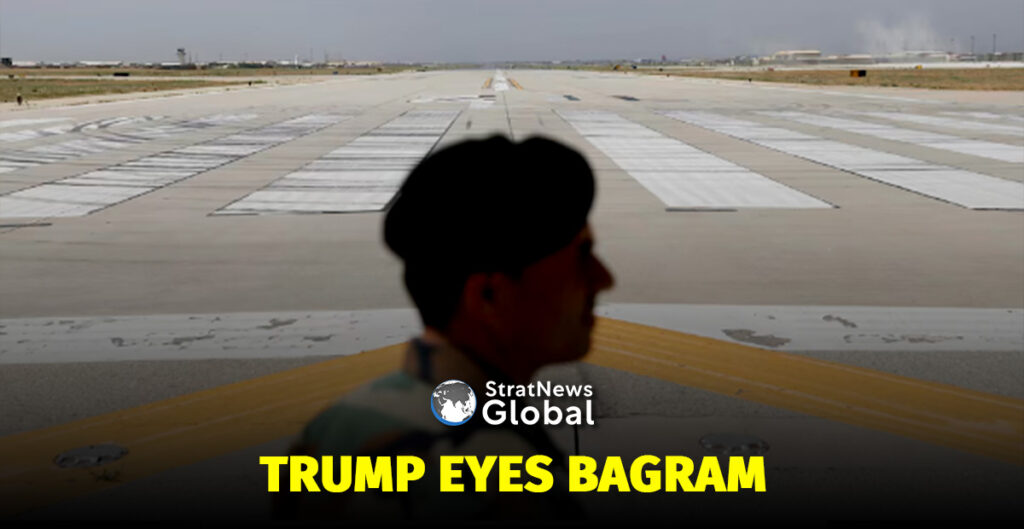
US Seeking To Regain Control Of Afghanistan’s Bagram Airbase: Trump
During a press conference with British Prime Minister Keir Starmer on Thursday, President Donald Trump stated that the United States aims to regain control of Afghanistan’s Bagram airbase, though an Afghan official dismissed the necessity of any U.S. presence.
The historic Soviet-built airstrip was the main base for American forces in the mountainous South Asian nation following the attacks of September 11, 2001, until their 2021 withdrawal led to a takeover by the Islamist Taliban movement.
“We’re trying to get it back,” Trump said of Bagram, citing what he called its strategic location near China. “We want that base back.”
Kabul said it was not open to any such deal, however.
“Afghanistan and the United States need to engage with one another … without the United States maintaining any military presence in any part of Afghanistan,” Zakir Jalal, an Afghan foreign ministry official, posted on X.
The two nations could establish economic and political ties on the basis of mutual respect and shared interests, he added.
China’s Support
China respects Afghanistan’s independence, sovereignty and territorial integrity, a spokesperson of its foreign ministry said, urging all parties to play a constructive role for regional peace and stability.
“The future and destiny of Afghanistan should be held in the hands of the Afghan people,” Lin Jian told a regular press conference on Friday, when asked about Trump’s comments.
“I want to stress that stoking tensions and creating confrontation in the region wins no popular support.”
Engaging with Kabul to free citizens wrongly detained abroad, U.S. officials held talks on Saturday with Afghan authorities regarding Americans held in Afghanistan.
Adam Boehler, the Trump administration’s special hostage envoy, and Zalmay Khalilzad, a former U.S. special envoy for Afghanistan, met the Taliban’s foreign minister, Amir Khan Muttaqi.
Washington does not recognise the Taliban administration, which seized power in 2021 after 20 years of U.S. military intervention in Afghanistan.
(With inputs from Reuters)
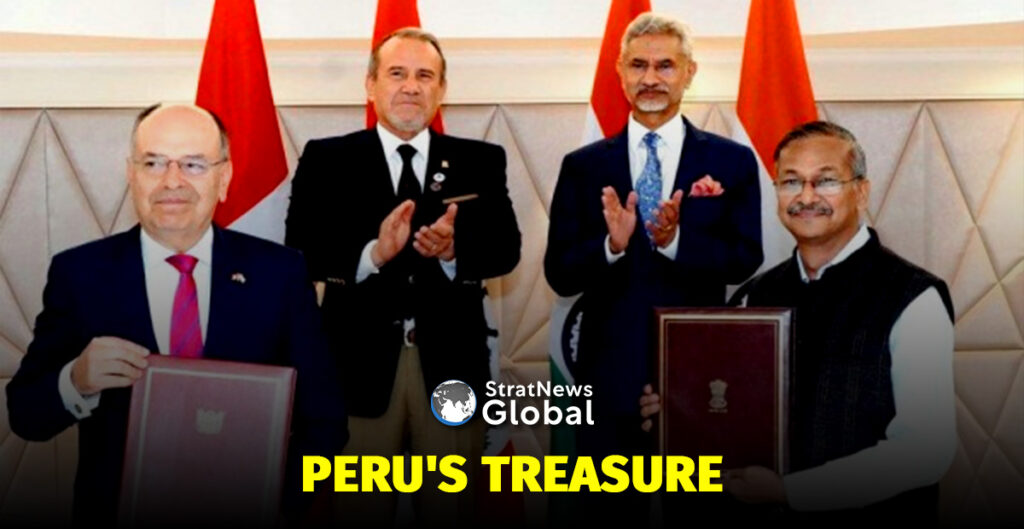
India Moves To Lock Peru’s Critical Minerals
India is sharpening its focus on Peru as a senior delegation prepares to attend PERUMIN 37, Latin America’s leading mining convention, from September 22 to 25 in Arequipa.
The visit reflects New Delhi’s effort to secure diversified mineral supply chains and expand economic and technological cooperation with resource-rich partners.
The Indian delegation will be led by Vivek Kumar Bajpai, Joint Secretary in the Ministry of Mines, and will include senior officials from the Ministries of External Affairs and Steel, the Indian Bureau of Mines, and the Geological Survey of India. Representatives from major Indian companies—SAIL, NMDC, MOIL, Coal India, HCL, GAIL, and Jindal Steel & Power—are also part of the mission, underscoring industry interest in Peru’s mining sector.
“This is more than an industry convention. It’s a bridge connecting Peru’s mineral wealth with India’s development goals,” said Javier Manuel Paulinich Velarde, Ambassador of Peru to India. “This engagement can turn shared opportunities into enduring partnerships that promote clean energy, innovation, and inclusive progress.”
Peru has become a key partner in India’s pursuit of critical and strategic minerals. While gold has dominated bilateral trade—over 357 tons exported to India between 2014 and 2023—the focus is now shifting to lithium, copper, and rare earths.
At the centre is the Falchani lithium deposit, one of the world’s largest hard-rock reserves. With 9.5 million tonnes of lithium carbonate resources, Peru is building South America’s biggest lithium refinery, expected to start production in 2027. Once operational, it will supply up to 100,000 tonnes of battery-grade lithium carbonate annually.
The project aligns with India’s ambitions in electric mobility and renewable energy, sectors that depend heavily on lithium-ion technology. Beyond lithium, Peru’s copper, silver, zinc, and iron reserves, along with new finds of rare earths, add to its strategic significance.
India and Peru are negotiating a Free Trade Agreement (FTA), expected to conclude in 2025. For the first time, India has proposed a dedicated chapter on critical minerals to secure preferential access, encourage joint exploration, and stabilise pricing for long-term supply chains.
According to sources familiar with the talks, India is also seeking frameworks for investments in mineral extraction and refining, particularly in lithium and copper, where global competition is intensifying. Peru, meanwhile, aims to diversify exports and views India as a reliable partner with strong growth prospects.
Despite robust gold trade, Indian investment in Peru’s mining sector has been limited. In a recent conversation with StratNews Global, Peru’s Foreign Minister Elmer Schialer noted this gap and invited Indian firms to explore opportunities in mining and energy.
One promising but complex area is Peru’s lithium-uranium overlap, which requires specialised extraction capabilities. Indian companies are showing interest, viewing Peru not only as a supplier but also as a partner in value-added mineral processing.
Peru’s participation in the Voice of Global South Summit earlier this year signalled closer alignment with India’s positions on climate change, sustainable growth, and trade equity.
PERUMIN 37 comes at a critical moment for Peru, as it prepares for national elections in 2026 amid political and economic challenges. The mining sector, vital to Peru’s economy, is being called to lead reforms against illegal activity, cut red tape, and attract foreign capital.
For India, taking part in this year’s convention is both symbolic and strategic. It reflects a long-term approach to securing critical resources, strengthening ties with Latin America, and advancing its role as a global manufacturing and energy hub.
With bilateral trade already crossing $4 billion and new areas of cooperation opening, India and Peru appear set to take their partnership to the next level—anchored in shared interests, sustainable growth, and mutual trust.