

Support us by contributing to StratNewsGlobal on the following UPI ID
ultramodern@hdfcbank

Strategic affairs is our game, South Asia and beyond our playground. Put together by an experienced team led by Nitin A. Gokhale. Our focus is on strategic affairs, foreign policy and international relations, with higher quality reportage, analysis and commentary with new tie-ups across the South Asian region.
You can support our endeavours. Visit us at www.stratnewsglobal.com and follow us on YouTube, Twitter, Facebook and Instagram.
र 500 per month
र 1000 per month
र 5000 per year
र 10000 per year
Donate an amount of your choice
र 500 per month
Donate र 500 per month

र 1000 per month
Donate र 1000 per month
र 5000 per year
Donate र 5,000 per year
र 10000 per year
Donate र 10,000 per year
Donate an amount of your choice
Donate an amount of your choice
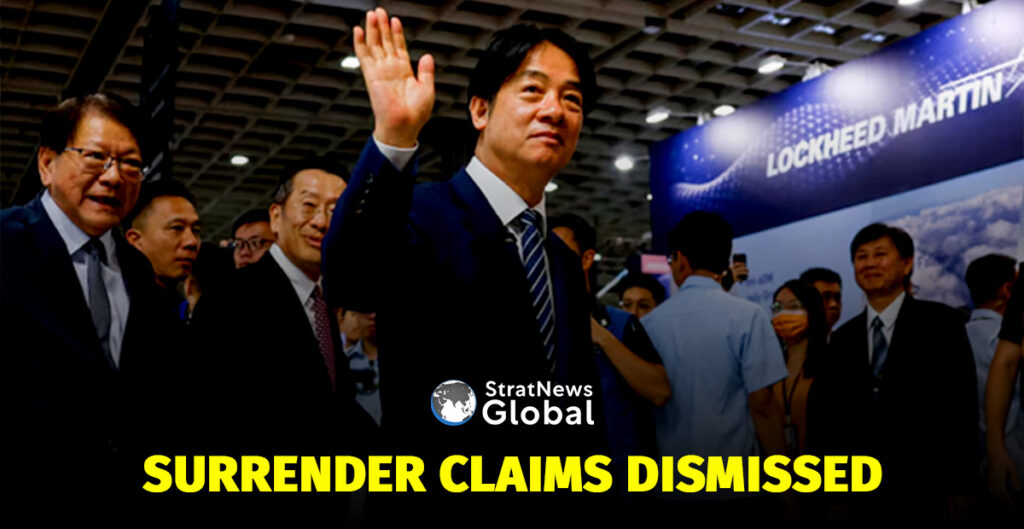

Taiwan Vows Self-Defence As President Concludes Week Of Defence Events
Taiwanese President Lai Ching-te said on Saturday, concluding a week of defence events, that Taiwan is resolute in defending itself and urged the world not to believe any claims that it would surrender in the event of an invasion.
Democratically-governed Taiwan has faced stepped-up military pressure from China, which views the island as its own territory. Taiwan’s government rejects those claims, saying only the island’s people can decide their future.
Addressing a forum on Taiwan’s efforts to boost its preparations for natural disasters or war, Lai referenced the government’s new civil defence handbook, which was launched on Tuesday as part of efforts to get people ready for a possible Chinese attack.
The handbook gives vital information on how to stay safe, he said to an audience that included Western envoys to Taipei.
Surrender Claims Are ‘False’
“More importantly, we tell everyone, ‘In the event of a military invasion of Taiwan, any claim that the government has surrendered or that the nation has been defeated is false,'” Lai said, quoting one of the key messages in the handbook.
“As commander-in-chief of the armed forces of the Republic of China, I want to tell my fellow citizens and the international community that this is Taiwan’s position,” he said, using Taiwan’s formal name.
“We are determined to defend freedom and democracy and a sustainable Taiwan.”
China’s Taiwan Affairs Office did not respond to a request for comment. China has never renounced the use of force to bring Taiwan under its control.
Taiwan’s Largest-Ever Arms Show
Taiwan this week hosted its largest-ever arms show, drawing a host of international companies looking to win a share of the island’s rapidly increasing defence spending.
Taiwan is also actively courting global defence companies for closer collaboration, such as joint production of weapons.
Speaking separately on Saturday at the opening of a branch office in Taipei, Brandon Tseng, president of the U.S. company Shield AI, said his company could have hundreds of employees in Taiwan over the next three to five years.
“It’s a region that Shield AI is deeply investing in and deeply committed to,” said Tseng, who chatted with Lai on Friday as he visited the arms show, where the company was showcasing its V-BAT drones that have been combat-tested in Ukraine.
Shield AI, this month, signed a “teaming agreement” with the Taiwan government defence contractor Aerospace Industrial Development Corporation, although Tseng declined to give details on possible sales to the island.
(With inputs from Reuters)
Japan PM Hopeful Koizumi Pledges Wage Hikes To Tackle Inflation
Shinjiro Koizumi, in his bid for Japan’s premiership, vowed on Saturday to revive the economy by raising wages and productivity to combat rising prices.
Koizumi, seen as a frontrunner in the ruling party’s leadership race, said Japan must shift the focus of economic policy from beating deflation to one better suited to an era of inflation.
“Japan’s economy is in a transition phase from deflation to inflation,” Koizumi told a news conference announcing his bid for president of the Liberal Democratic Party.
“We must have wage growth accelerate at a pace exceeding inflation, so consumption becomes a driver of growth,” Koizumi said, adding that the economy would be his policy priority.
On monetary policy, Koizumi said he hoped the Bank of Japan would work in lock step with the government to achieve stable prices and solid economic growth.
Election Frontrunners
Koizumi and veteran fiscal dove Sanae Takaichi are seen as the top contenders in the October 4 party race after Prime Minister Shigeru Ishiba’s decision this month to step down.
The next LDP leader is likely to become prime minister as the party is by far the largest in the lower house of parliament, although the LDP lost its majorities in both houses under Ishiba, so the path is not guaranteed.
Koizumi said if he were to become prime minister, his government would immediately compile a package of measures to cushion the economic blow from rising prices and submit a supplementary budget to an extraordinary parliament session.
“While being mindful of the need for fiscal discipline, we can use increased tax revenues from inflation to fund policies for achieving economic growth,” he said.
The LDP race has drawn strong attention from market players and led to a rise in super-long government bond yields on the view that the next leader could boost fiscal spending.
Investors have also focused on the candidates’ views on monetary policy, as the BOJ eyes further hikes in still-low interest rates.
Takaichi had criticised the BOJ’s rate hikes in the past but made no comment on monetary policy at a news conference on Friday.
Koizumi said that if chosen as prime minister, his government would slash tax on gasoline, increase tax exemptions for households and take steps to raise average wages by 1 million yen ($6,800) by fiscal 2030, Koizumi said.
He also pledged to increase government support for corporate capital expenditure to boost Japan’s manufacturing capacity. “We need to build a strong economy backed by growth in both demand and supply,” Koizumi said.
(With inputs from Reuters)
Israel’s Gaza Demolitions Spark Fears Of Permanent Palestinian Displacement
After spending a decade paying off a $93,000 mortgage on his Gaza City apartment, Palestinian banker Shady Salama Al-Rayyes now finds his family destitute after an Israeli strike reduced the building to rubble.
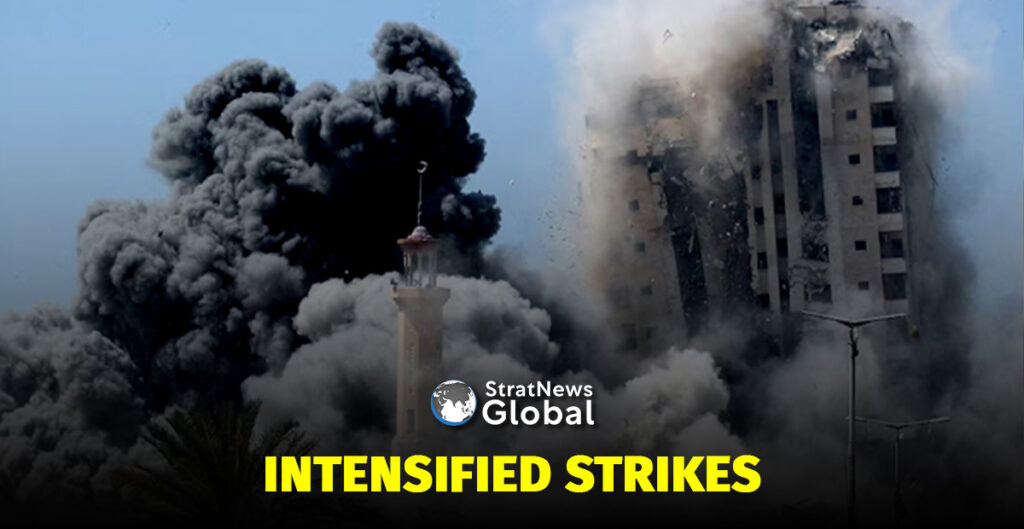
The September 5 attack on the 15-storey Mushtaha Tower marked the start of an intensified Israeli military demolition campaign targeting high-rise buildings ahead of a ground assault towards the heart of the densely populated city, which started this week.
Over the past two weeks, Israel’s armed forces say they have demolished up to 20 Gaza City tower blocks they say are used by Hamas. Prime Minister Benjamin Netanyahu said 50 “terrorist towers” had been demolished.
Destructions And Displacements
The campaign has made hundreds of people homeless. In a similar time frame, Israeli forces have flattened areas in the city’s Zeitoun, Tuffah, Shejaia and Sheikh al-Radwan neighbourhoods, among others, ten residents told Reuters. The damage since August to scores of buildings in Sheikh al-Radwan is visible in satellite imagery reviewed by the news agency.
Al-Rayyes said he feared the destruction was aimed at permanently clearing the population from Gaza City, a view shared by the U.N. Human Rights Office (OHCHR). Its spokesperson, Thameen Al-Kheetan, said in a statement that such a deliberate effort to relocate the population would be tantamount to ethnic cleansing.
“I never thought I would leave Gaza City, but the explosions are non-stop,” Al-Rayyes said on Wednesday. “I can’t risk the safety of my children, so I am packing up and will leave for the south.”
Al-Rayyes vowed, however, never to leave Gaza entirely.
Israel’s finance minister, Bezalel Smotrich, said in May that most of Gaza would soon be “totally destroyed” and the population confined to a narrow strip of land near the border with Egypt.
Israel, which has called for all of Gaza City’s civilian residents to leave during the offensive, last week closed a crossing into northern Gaza, further limiting scarce food supplies.
In response to questions for this story, Israel’s military spokesperson, Lieutenant-Colonel Nadav Shoshani, said “there’s no strategy to flatten Gaza.” He said the military’s aim was to destroy Hamas and bring hostages home.
Tall buildings were used by Hamas to observe and attack Israeli forces, he said, adding that the Islamist militant group used civilians as human shields and also put booby-traps in buildings. Israeli soldiers are regularly killed by IEDs in Gaza.
Hamas has denied using residential towers to attack Israeli forces.
The goals of Israel’s military and its politicians are not always aligned, two Israeli security sources told Reuters, with one citing ideas such as clearing Palestinians from areas of Gaza for future redevelopment as diverging from military goals. Israel’s Prime Minister’s Office did not immediately respond to a request for comment.
The offensive is the latest phase in Israel’s war in Gaza, which has killed more than 65,000 Palestinians, spread famine and displaced most of the population, in many cases multiple times, since Hamas-led attacks in Israel on October 7 2023, killing 1,200 and taking 251 hostages. A total of 48 of the hostages remain in Gaza, and around 20 are thought to be alive.
Last week, a U.N. inquiry found Israel had committed genocide in Gaza. Israel called the finding biased and “scandalous.” U.N. experts say destruction of civilian housing and infrastructure can amount to a war crime.
Israeli spokesperson Shoshani said the buildings were legitimate military targets approved by an intelligence officer and a legal officer.
‘Panic, Fear’ After Evacuation Order
Before the war, Mushtaha Tower was popular with Gaza City’s professional class and students drawn to its ocean views and convenient location near a public park and two universities.
It originally housed about 50 families, but that number had tripled in recent months as people took in relatives displaced from other parts of Gaza, said Al-Rayyes.
Scores of tents housing more displaced families had spread around the tower’s base. The upper floors of the building had been damaged by previous strikes.
On the morning of September 5, a neighbour got a call from an Israeli army officer instructing him to spread the word to evacuate the building within minutes or they were “going to bring it down on our heads,” Al-Rayyes said.
Reuters could not independently verify his account of the evacuation order. It is consistent with accounts of residents of other buildings ahead of Israeli strikes. Shoshani said the military gave residents time to evacuate and ensured civilians had left before hitting the buildings.
“Panic, fear, confusion, loss, despair, and pain overwhelmed all of us. I saw people running on our bare feet; some didn’t even take their mobile phones or documents. I didn’t take passports or identity cards,” said Al-Rayyes, who had once hoped to pay off his mortgage by this year.
“We carried nothing with us, my wife and my two children, Adam, 9, and Shahd, 11, climbed down the stairs and ran away.”
Video filmed by Reuters shows what happened next. From the air, two projectiles exploded almost simultaneously into the base of the tower, demolishing it in around six seconds. Dust, smoke and debris billowed over the streets and tents of displaced people, who scattered, running and screaming.
In response to a question from Reuters, the Israeli military said Hamas had “underground infrastructure” beneath Mushtaha Tower that it used to attack Israeli troops. The military declined a request to provide evidence.
In a response to Reuters on Wednesday, the U.N.’s OHCHR said the Israeli military had also not provided evidence to demonstrate that other buildings described as terrorist infrastructure were valid military targets.
Al-Rayyes, who headed the building’s residents’ association, said the tactic of demolition “makes no sense,” even if there was a Hamas presence, which he denied.
“They could have dealt with it in a way that doesn’t even scratch people, not to destroy a 16-floor building,” he said, using a different count of its height.
After a couple of weeks with family in the city’s Sabra district, Al-Rayyes has left, like hundreds of thousands of other residents of the city since August, and was setting up a tent in central Gaza’s Deir Al-Balah on Thursday.
Military Demolishes Homes In Gaza City Outskirts
In preparation for the ground assault, in recent weeks, up to a dozen homes have been destroyed daily in Zeitoun, Tuffah, and Shejaia, the residents Reuters spoke to said.
Amjad Al-Shawa, head of the Palestinian Local NGOs Network, estimated that over 65% of buildings and homes in Gaza City had been destroyed or heavily damaged during the war. Extensive damage to suburban areas in recent weeks is visible in satellite images of several neighbourhoods.
The Conflict Location and Event Data (ACLED), a non-profit organisation that gathers data on conflicts around the world, documented over 170 demolition incidents carried out by Israel’s armed forces in Gaza City since early August, mainly through controlled explosions in eastern areas as well as Zeitoun and Sabra.
“The pace and extent of demolitions appear more extensive than in previous periods,” ACLED’s Senior Middle East analyst Ameneh Mehvar told Reuters. By comparison, she said fewer than 160 such demolitions were recorded in Gaza City during the first 15 months of the war.
The residents who spoke to Reuters also reported Israeli forces had blown up remotely driven vehicles laden with explosives in the Sheikh Radwan and Tel Al-Hawa neighbourhoods, destroying many houses in the past two weeks.
Shoshani, the military spokesperson, confirmed the use of ground-based explosives against buildings identified as military targets. He said he did not have information about explosive-laden vehicles specifically.
The U.N.’s OHCHR said it had documented controlled demolition of residential infrastructure, saying some entire neighbourhoods were destroyed.
Even before the current offensive on Gaza City, almost 80% of buildings in Gaza – roughly 247,195 structures – had been damaged or destroyed since the war started, according to the latest data from the United Nations Satellite Centre, gathered in July. This included 213 hospitals and 1,029 schools.
Bushra Khalidi, who leads policy on Gaza at Oxfam, said tower blocks were one of the last forms of shelter, and warned that pushing people out would “exponentially” worsen overcrowding in the south.
Tareq Abdel-Al, a 23-year-old student of finance from Sabra, was hesitant to leave his home with his extended family despite weeks of bombardment in the area, exhausted from being ordered to evacuate so many times in the war, he said. They left on the morning of August 19, only after houses neighbouring their 3-storey home were demolished.
Just 12 hours later, an Israeli strike destroyed the family home, he said.
“Should we have stayed, we might have been killed that night,” Abdel-Al told Reuters by phone from Nuseirat camp in central Gaza, describing extensive damage to the whole street.
“They destroyed our hope of returning,” he said.
(With inputs from Reuters)
Brazil To Become First Investor In Proposed Global Forests Fund: Sources
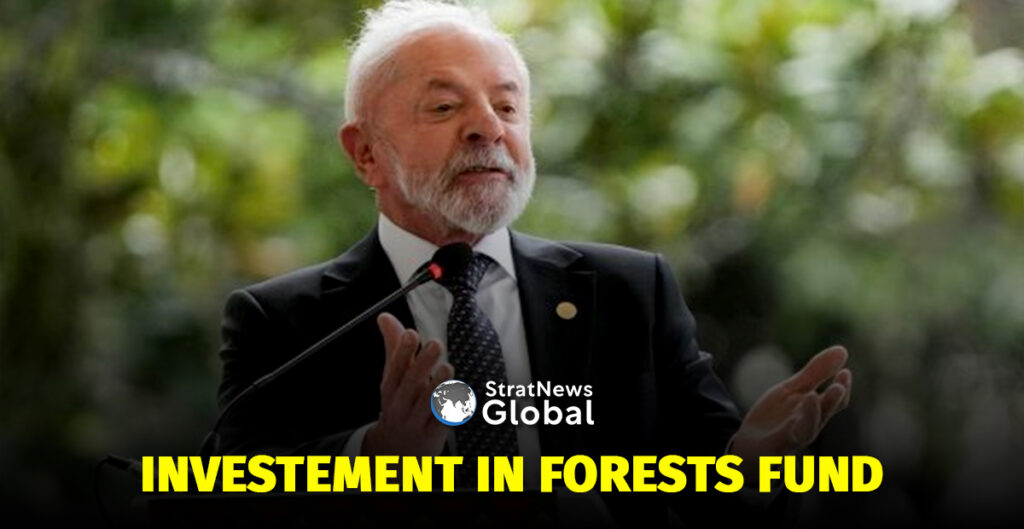
Brazil is preparing to be the first nation to invest money to the Tropical Forests Forever Facility, a multilateral fund it proposed to help safeguard the world’s endangered forests, according to three sources familiar with the plan.
President Luiz Inacio Lula da Silva plans to announce the investment on Tuesday at the U.N. in New York, in a move that aims to unlock more contributions from both wealthy and developing economies, which have been at odds about funding global climate policy.
The Brazilian government sees potential for the TFFF to be its main deliverable at the U.N. climate summit known as COP30 that it will host in the Amazonian city of Belem in November.
Chinese Finance Minister Lan Foan told his Brazilian peer Fernando Haddad in July that China would make one of the initial contributions to the fund, without disclosing how much, according to reports.
An investment by China would signal an important shift in climate finance, which has long relied on funding from wealthy nations most responsible for global warming to date. The TFFF has also received initial signs of support from nations such as the United Kingdom, France, Germany, Norway, Singapore and the United Arab Emirates, according to people involved in the negotiations.
‘Money Where Your Mouth Is’
Policymakers envision the TFFF as a $125 billion fund combining sovereign and private-sector contributions managed like an endowment that pays countries annual stipends based on how much of their tropical forests remain standing.
To achieve that lofty target, Brazil needs governments and major philanthropies to contribute the first $25 billion, which could then attract another $100 billion from private investors, under preliminary estimates.
Diplomats from countries showing an interest in investing told Brazil in recent months that its initial contribution would help to line up their own announcements, the three sources said.
Brazil’s intention with Tuesday’s planned announcement is to show that the country, which would be set to receive the largest payouts from the fund because it is home to the biggest tropical forest in the world, trusts its proposal enough to “put your money where your mouth is,” as one source described it.
Details about the value and timing of Brazil’s investment are still under final discussions involving the Finance Ministry and Lula, who will travel to New York on Sunday. The decision to invest in the fund has already been made, the sources said.
(With inputs from Reuters)
Irish Rap Trio Kneecap Denied Entry Into Canada For Alleged Links To Terrorists
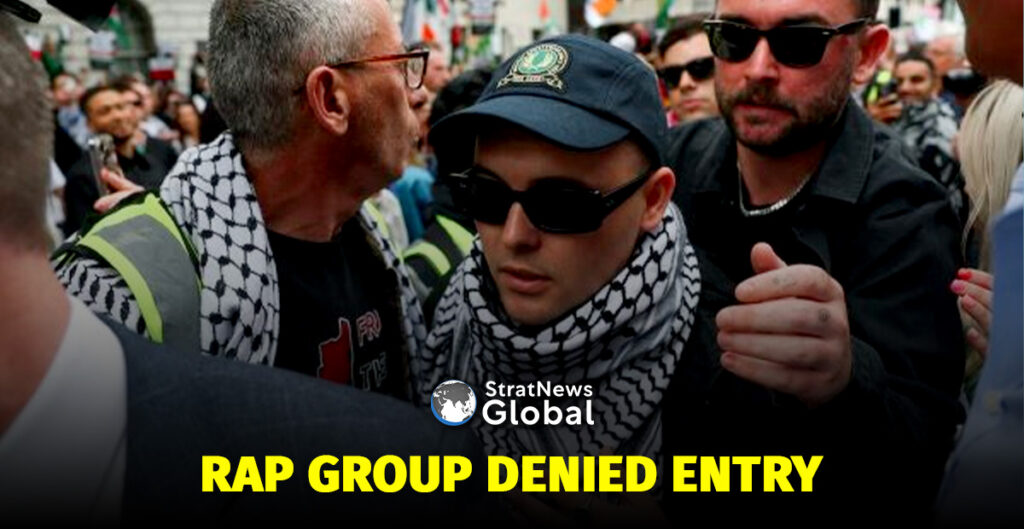
Canada has denied entry to the Irish rap trio Kneecap, blocking their planned concerts next month. A government official said on Friday that the group was accused of spreading hate and expressing support for terrorist organizations, including Hamas in Gaza.
But the Belfast-based group rejected the accusations as an attempt to silence them, arguing their support for Palestinians under Israeli attack in Gaza is being wrongly portrayed as antisemitic hate.
Vince Gasparro, a member of parliament and parliamentary secretary for combatting crime, said in a video on X that Kneecap members were deemed ineligible for entry because of actions and statements that violate Canadian law.
He said the group has amplified political violence and has publicly displayed support for terrorist organizations, including Iran-backed Lebanese terrorist group Hezbollah and the Palestinian group Hamas.
“Advocating for political violence, glorifying terrorist organizations and displaying hate symbols that directly target the Jewish community are not protected forms of expression and will not be tolerated by our government,” Gasparro said.
Kneecap Denies Allegations
Kneecap responded by denying Gasparro’s allegations as “wholly untrue and deeply malicious,” adding that no member of the group had ever been convicted of a crime in any country.
The group also threatened to take legal action against him.
“We will be relentless in defending ourselves against baseless accusations to silence our opposition to a genocide being conducted by Israel,” the group said in a statement posted on X.
Canada’s immigration ministry declined to comment, citing privacy reasons.
The dispute reflects growing criticism by artists and actors of Israel’s war in Gaza, which according to health officials has killed more than 65,000 Palestinians and laid much of the enclave to waste. This month, over 1,800 actors, entertainers and producers signed a pledge not to work with Israeli film institutions.
Israel says its actions in Gaza amount to self-defence after the October 2023 Hamas attack in which 1,200 people were killed and over 250 taken hostage, Israeli tallies show.
Charges In Britain
Kneecap, who rap about Irish identity and support the republican cause of uniting Northern Ireland, part of the United Kingdom, with the Republic of Ireland, regularly display pro-Palestinian messages during their shows.
At the Glastonbury Festival in southwest England in June, frontman Liam Óg Ó hAnnaidh – known by the stage name Mo Chara – accused Israel of committing war crimes, charges Israel disputes.
In May, Ó hAnnaidh was charged with a terrorism offence in Britain for allegedly displaying a flag in support of Hezbollah during a performance in London in November 2024. He denies the offence, saying the flag was thrown on stage during its performance.
The band has said that the charge represents an attempt to prosecute artists who speak out, that its members do not support Hamas or Hezbollah, and that it condemns “all attacks on civilians, always.”
In August, Kneecap canceled its 15-date U.S. tour scheduled for October, citing the proximity of Ó hAnnaidh’s London court hearing.
Kneecap had four Canadian concerts scheduled in October, two in Toronto and two in Vancouver, according to its website.
Jewish Group Praises Ban
In a message to its Canadian fans, Kneecap said its members had already been issued valid electronic travel authorizations, an entry requirement for visa-exempt foreigners traveling to Canada by air.
The Irish rap group said it was the target of a “misinformation” campaign by pro-Israel lobby groups.
Jewish advocacy organization B’nai Brith Canada, which had advocated for the ban, praised the government and said its actions should serve as a precedent.
“Groups such as Kneecap cannot be permitted to come to our country and foment discord, incite hate and glorify violence,” B’nai Brith advocacy director Richard Robertson said in a statement.
(With inputs from Reuters)
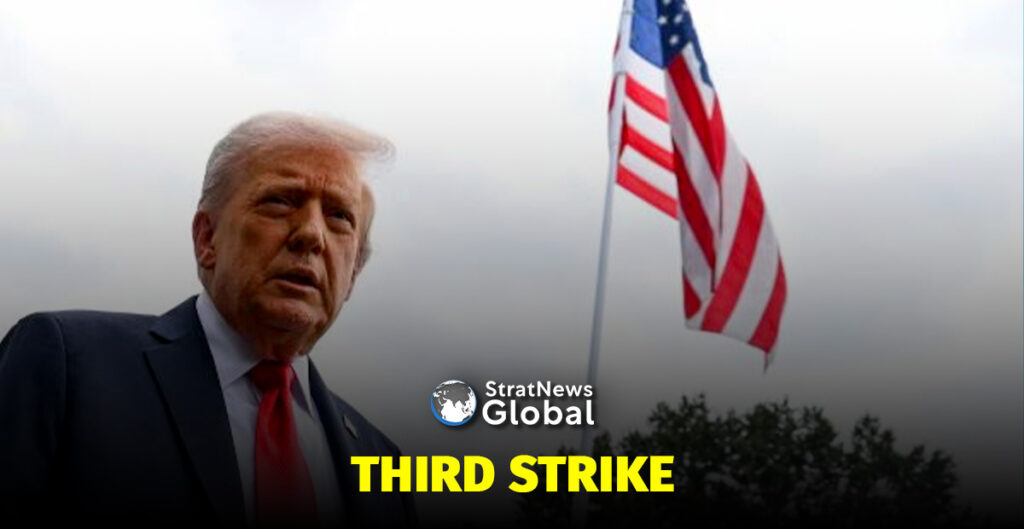
Trump Says US Forces Hit Suspected Drug Boat In Caribbean, 3 Killed
US President Donald Trump on Friday announced that American forces had targeted a boat suspected of carrying drugs in the Southern Command’s area of responsibility, marking the latest strike in the region.
The latest strike – at least the third against alleged drug vessels – comes amid a large US military buildup in the southern Caribbean. Five F-35 aircraft were seen landing in Puerto Rico on Saturday after the Trump administration ordered 10 of the stealth fighters to join the buildup.
‘Enroute To Poison Americans’
In a post on Truth Social on Friday, Trump said the Pentagon carried out the strike on his orders, killing “3 male narcoterrorists aboard the vessel”.
“Intelligence confirmed the vessel was trafficking illicit narcotics, and was transiting along a known narcotrafficking passage enroute to poison Americans.”
US Southern Command (SOUTHCOM) is the US military’s combatant command that encompasses 31 countries through South and Central America and the Caribbean.
No Evidence Provided
Trump did not provide evidence but did post a minute-long aerial video that showed two side-by-side videos of a vessel, one in color and one in black and white, as it moved through the water. About halfway through, the vessel appears to be struck by at least one projectile and then explodes. The video ends with a single aerial angle of the vessel on fire in the water.
Trump did not say where the vessel departed from or where specifically the strike took place.
In addition to the F-35s, there are at least seven US warships in the region, as well as one nuclear-powered submarine.
The US military carried out a strike earlier this week in the Southern Caribbean that targeted an alleged Venezuelan drug cartel vessel heading to the United States.
“Unlawful, Extrajudicial Killings”?
The Trump administration has provided scant information about the first two strikes, despite demands from US lawmakers that the government justify the action. Trump said the first strike, on September 2, struck a vessel allegedly carrying members of Venezuelan gang Tren de Aragua.
The Venezuelan government, which says it has deployed tens of thousands of troops to fight drug trafficking and defend the country, has said none of the people killed in the first strike belonged to Tren de Aragua.
Venezuelan President Nicolas Maduro has repeatedly alleged the US is hoping to drive him from power. Washington last month doubled its reward for information leading to Maduro’s arrest to $50 million, accusing him of links to drug trafficking and criminal groups, which Maduro denies.
Earlier this month, US Defense Secretary Pete Hegseth told sailors and Marines on a warship off Puerto Rico that they were not deployed to the Caribbean for training, but instead had been sent to the “front lines” of a critical counter-narcotics mission.
The decision to blow up a suspected drug vessel instead of seizing it and apprehending the crew is highly unusual.
Under the US Constitution, the power to declare war belongs to Congress, but the president is the commander-in-chief of the armed forces and presidents of both parties have conducted military strikes overseas without congressional approval.
Experts and human rights advocates have questioned the legality of the strikes.
Earlier this week, Human Rights Watch said the strikes against the alleged drug boats were “unlawful extrajudicial killings.”
“US officials cannot summarily kill people they accuse of smuggling drugs,” Sarah Yager, Washington director at Human Rights Watch, said in a statement.
“The problem of narcotics entering the United States is not an armed conflict, and US officials cannot circumvent their human rights obligations by pretending otherwise,” Yager said.
(With inputs from Reuters)
Trump Admin Proposes $100,000 Annual Fee For H-1B Visas
The Trump administration on Friday announced plans to charge companies $100,000 annually for each H-1B visa, a move that could significantly impact the tech industry, which depends heavily on skilled professionals from India and China.
Since taking office in January, Trump has kicked off a wide-ranging immigration crackdown, including moves to limit some forms of legal immigration. The step to reshape the H-1B visa program represents his administration’s most high-profile effort yet to rework temporary employment visas.
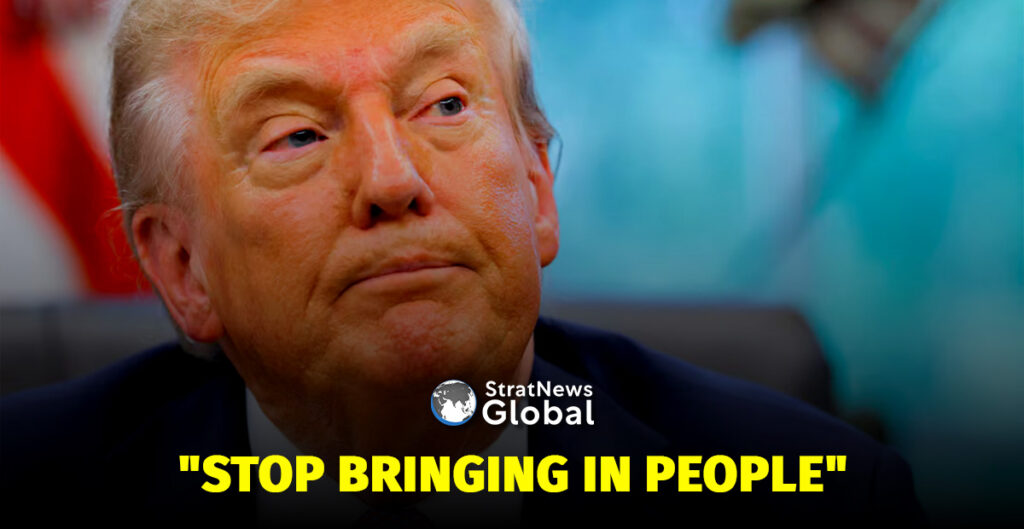
‘Stop Bringing In People’
“If you’re going to train somebody, you’re going to train one of the recent graduates from one of the great universities across our land. Train Americans. Stop bringing in people to take our jobs,” US Commerce Secretary Howard Lutnick said.
Trump’s threat to crack down on H-1B visas has become a major flashpoint with the tech industry, which contributed millions of dollars to his presidential campaign.
Critics of the program, including many US technology workers, argue that it allows firms to suppress wages and sideline Americans who could do the jobs. Supporters, including Tesla CEO and former Trump ally Elon Musk, say it brings in highly skilled workers essential to filling talent gaps and keeping firms competitive. Musk, himself a naturalized US citizen born in South Africa, has held an H-1B visa.
Some employers have exploited the program to hold down wages, disadvantaging US workers, according to the executive order Trump signed on Friday.
The number of foreign science, technology, engineering and mathematics (STEM) workers in the US more than doubled between 2000 and 2019 to nearly 2.5 million, even as overall STEM employment only increased 44.5% during that time, it said.
Move Could Deter Global Talent
Adding new fees “creates disincentive to attract the world’s smartest talent to the US,” said Deedy Das, partner at venture capital firm Menlo Ventures, on X. “If the US ceases to attract the best talent, it drastically reduces its ability to innovate and grow the economy.”
The move could add millions of dollars in costs for companies, which could hit smaller tech firms and start-ups particularly hard.
Reuters was not immediately able to establish how the fee would be administered. Lutnick said the visa would cost $100,000 a year for each of the three years of its duration but that the details were “still being considered”.
Some analysts suggested the fee may force companies to move some high-value work overseas, hampering America’s position in the high-stakes artificial intelligence race with China.
“In the short term, Washington may collect a windfall; in the long term, the US risks taxing away its innovation edge, trading dynamism for short-sighted protectionism,” said eMarketer analyst Jeremy Goldman.
India Accounts For Most H-1B Visas
India was the largest beneficiary of H-1B visas last year, accounting for 71% of approved beneficiaries, while China was a distant second at 11.7%, according to government data.
In the first half of 2025, Amazon.com and its cloud-computing unit, AWS, had received approval for more than 12,000 H-1B visas, while Microsoft and Meta Platforms had over 5,000 H-1B visa approvals each.
Lutnick said on Friday that “all the big companies are on board” with $100,000 a year for H-1B visas.
“We’ve spoken to them,” he said.
Many large US tech, banking and consulting companies declined to comment or did not immediately respond to requests for comment. The Indian embassy in Washington and the Chinese Consulate General in New York also did not immediately respond to requests for comment.
Shares of Cognizant Technology Solutions, an IT services company that relies extensively on H-1B visa holders, closed down nearly 5%. US-listed shares of Indian tech firms Infosys and Wipro closed between 2% and 5% lower.
Immigration Crackdown
Aaron Reichlin-Melnick, policy director of the American Immigration Council, questioned the legality of the new fees. “Congress has only authorized the government to set fees to recover the cost of adjudicating an application,” he said on Bluesky.
The H-1B program offers 65,000 visas annually to employers bringing in temporary foreign workers in specialized fields, with another 20,000 visas for workers with advanced degrees.
Under the current system, entering the lottery for the visa requires a small fee and, if approved, subsequent fees could amount to several thousand dollars.
Nearly all the visa fees have to be paid by the employers. The H-1B visas are approved for a period of three to six years.
Trump also signed an executive order on Friday to create a “gold card” for individuals who can afford to pay $1 million for US permanent residency.
(With inputs from Reuters)
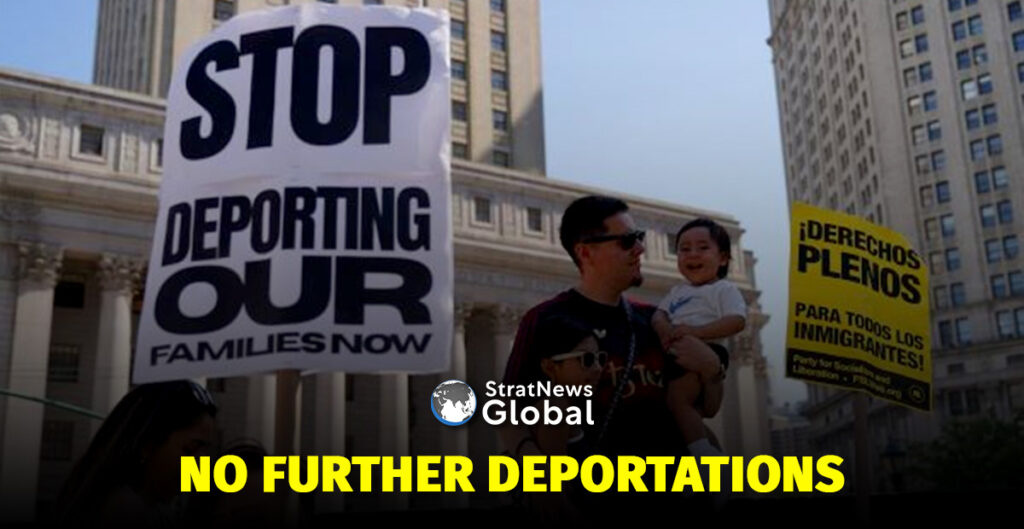
Deportees At Risk Of Torture, Says Lawyer In Suit Against Ghana
A lawyer representing 11 West Africans deported from the United States has approached a court in Accra, Ghana, seeking to stop any attempts to further deport them to their home countries, citing fears of torture and persecution.
Ghana President John Dramani Mahama told reporters this month his government had agreed to take in nationals from other West African countries who were being deported from the United States under President Donald Trump’s immigration crackdown.
He said authorities would help the deportees return to their home countries and some had already made the journey.
The lawsuit, filed in Ghana this week by lawyer Oliver Barker-Vormawor, said 11 people deported under that scheme included nationals of Nigeria, Liberia, Togo, Gambia and Mali.
His application, seen by Reuters on Friday, said US immigration judges had previously granted at least eight of the deportees protection from removal to their home countries “due to the risk of torture, persecution or inhumane treatment”.
It asked the High Court in Accra to block any attempts to move them on.
A Ghanaian government spokesperson did not respond to questions this week about the status of the deportees and how many remain in Ghana.
Kept In Separate facilities
As of Thursday evening, five of them were held in what is believed to be a military facility in Ghana, according to Meredyth Yoon, litigation director from the campaign group Asian Americans Advancing Justice, which filed a separate lawsuit on behalf of the deportees in the United States.
Six others were also in Ghana but had been taken to a different facility, Barker-Vormawor said.
US Judge Criticises Deportations
A US federal judge sharply criticised the deportations on Monday, saying they appeared to be an attempt to skirt US immigration courts by quickly sending them to another nation. But she said she lacked jurisdiction to take up the case.
Ghana Foreign Minister Samuel Okudzeto Ablakwa said on Monday that Ghana agreed to accept the deportees for humanitarian reasons as they risked being sent to unsafe countries. He said the decision was not an endorsement of Trump’s immigration policies.
Ablakwa told a local television station on Wednesday that another 40 deportees could arrive “in the next few days”.
(With inputs from Reuters)
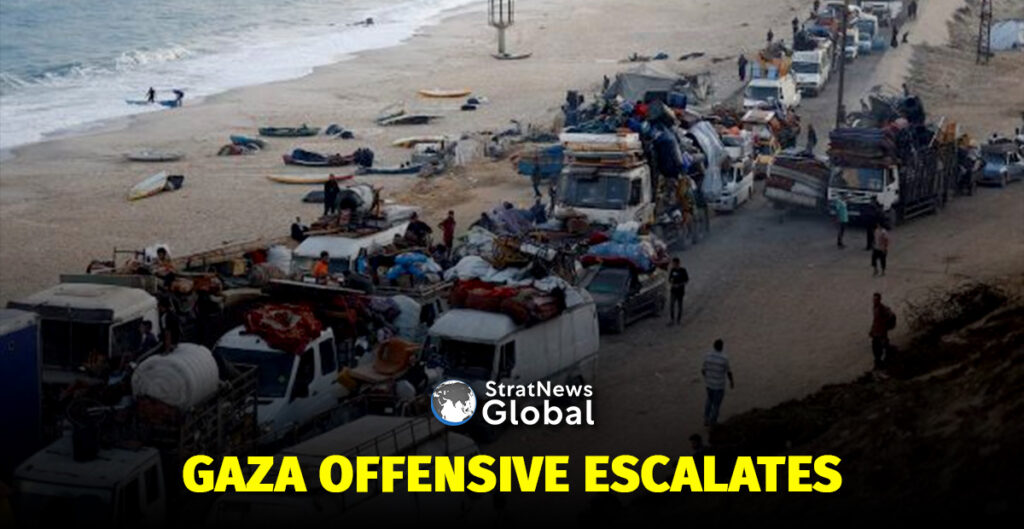
Israel Expands Gaza City Offensive As Displaced Palestinians Struggle In Fear
Israel’s military announced on Friday that it had escalated its assault on Gaza City, striking Hamas positions and infrastructure. Meanwhile, Palestinians already forced from their homes described growing panic and despair, saying they had no way to escape the advancing offensive.
“The situation is really bad. All night long, the tank was firing shells,” said Palestinian Toufic Abu Mouawad, who left a camp for the displaced with nowhere else to go.
“I want to flee with the boys, the girls, the children. This is the situation that we are living in. It is a very tragic situation. We call on all the Arab countries and the people who have a good conscience to stand with us.”
Israeli Forces Advance On Central Gaza City
Israeli forces control Gaza City’s eastern suburbs and in recent days have been pounding the Sheikh Radwan and Tel Al-Hawa areas, from where they would be positioned to advance on central and western areas, where most of the population is sheltering.
The Gaza health authorities said 33 Palestinians had been killed in the last 24 hours.
On Thursday, the Israel Defence Forces (IDF) said it believed 350,000 people had left Gaza City since the start of September and that about 600,000 remained.
Satellite imagery from September 18, shows new tents appearing in the areas south of Gaza City after September 5. It also shows crowds of people on the Al Rashid road and what appear to be vehicles on the Salah al Din road.
In leaflets dropped over Gaza City, the military had told Palestinians they could use the newly reopened Salah al Din road to escape to the south.
The IDF said an airstrike had killed Mahmoud Yusuf Abu Alkhir, whom it identified as deputy head of military intelligence in Hamas’ Bureij Battalion. It said he had taken part in “terrorist attacks against Israeli troops and the state”.
Hamas, the terrorist group administering Gaza, triggered the war when it attacked Israel on Oct. 7, 2023, killing 1,200 people and taking 251 back to Gaza as hostages, according to Israeli figures.
Families of the remaining 20 or so surviving hostages have been imploring Netanyahu to stop the offensive and instead negotiate a ceasefire with Hamas to free their loved ones.
Israeli Protesters Call For Hostages’ Release
Dozens of protesters gathered on the Israeli side of the border, calling for an end to the war. They held banners or placards with slogans that included “Stop the genocide in Gaza” and “Free Gaza, isolate Israel”.
The armed wing of Hamas said on Thursday that the hostages were distributed throughout the neighbourhoods of Gaza City.
“The start of this criminal operation and its expansion means you will not receive any captive, alive or dead,” it said in a written statement.
Israel Katz, Israel’s defence minister, said on X: “If Hamas does not release the hostages and disarm, Gaza will be destroyed and turned into a monument to the rapists and murderers of Hamas.”
In almost two years of fighting, Israel’s fierce offensive has killed more than 65,000 Palestinians, according to Gaza health authorities, and demolished most of the structures in the tiny enclave, which is now gripped by hunger and even famine.
Israel says the extent of hunger has been exaggerated and that Hamas could end the war at once if it surrendered, freed the hostages, disarmed and disbanded.
Hamas says it will not disarm until a Palestinian state is established. Numerous attempts to mediate an end to the conflict have failed.
Displaced Palestinian Osama Awad said the Israeli shelling, bombing, airstrikes and naval bombardment were coming closer: “For one week, we have been living nights of horror.”
It is a horror that most of Gaza’s 2 million Palestinians have experienced over and over again in repeated Israeli onslaughts and multiple displacements.
All around Awad, children sat on top of piles of their families’ meagre belongings while others moved a few possessions on carts.
(With inputs from Reuters)
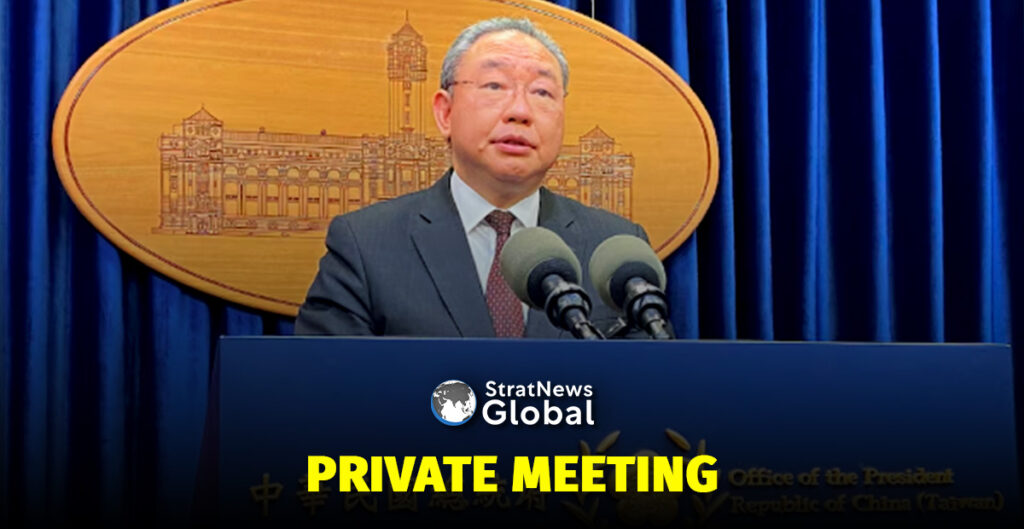
Taiwan Envoy Holds Private Meeting With Key Trump Intelligence Advisers
Taiwan’s chief envoy to the United States held a private meeting in Washington this month with a little-known circle of intelligence advisers that officials describe as an influential power centre within United States President Donald Trump’s White House.
The meeting with Alexander Yui, Taiwan’s de facto U.S. ambassador, was described by two sources with knowledge of the matter and amounted to one of the higher-level Taiwan-U.S. contacts to date during Trump’s second term.
It was also an unusually sensitive meeting for the previously obscure group, the President’s Intelligence Advisory Board, which includes members who have jobs outside of the federal government and has historically played a low-key role in policymaking.
A White House official downplayed the encounter, saying it was not an official, sanctioned PIAB gathering but rather an informal conversation between some PIAB members and a foreign diplomat that was put together by a mutual contact.
Still, several national security officials told Reuters they see the body, which is nominally tasked with advising the president on the intelligence community’s effectiveness, as an emerging source of influence in Trump’s White House, particularly as national security officials throughout the government have been otherwise sidelined by mass firings.
The meeting with Yui, which has not been previously reported, appears to be one sign of this. Taiwan, a self-governed island that China claims as its own, does not maintain formal ties with the United States, and meetings between U.S. and Taiwanese officials are a sensitive diplomatic issue.
Trump and Chinese President Xi Jinping are due to speak on the phone on Friday. On the agenda for that call is an agreement to switch short-video app TikTok to U.S.-controlled ownership.
Several of the PIAB members are influential in Trump’s orbit and speak directly to the president.
PIAB board chair Devin Nunes is particularly close to Trump, said three sources familiar with their relationship. Nunes is a former member of Congress and the current chief executive of the Trump Media & Technology Group. Trump Media operates Truth Social, Trump’s preferred social media platform.
Other PIAB members include Robert O’Brien, who served as Trump’s national security adviser during his first term, and Amaryllis Fox, currently a deputy director of national intelligence.
Michael Desch, a Notre Dame political science professor who co-authored the book “Privileged and Confidential: The Secret History of the President’s Intelligence Advisory Board,” said the PIAB appeared to be a more credible and active body than during Trump’s first presidency, when it lacked a chairman until well into Trump’s second year in office.
“There were a lot more pros, candidly, than I had anticipated,” Desch said of the current list of PIAB members. “There are some serious people on it.”
Reuters could not determine what was discussed in the meeting with Yui or the list of the PIAB members who were present. O’Brien and Nunes were among those who attended the meeting, said one of the sources, who requested anonymity as the PIAB activities are secret.
Taiwanese defence minister Wellington Koo had planned to visit the Washington area earlier in the summer to meet Elbridge Colby, the U.S. undersecretary of defence for policy, but that trip was cancelled.
Taiwan’s representative office in Washington and O’Brien declined to comment. Trump Media, the company headed by Nunes, did not respond to a request for comment, nor did a PIAB administrative officer.
Once-Sleepy Board Acquires Influence
In recent months, the National Security Council, a much larger and better-known White House component that advises the president on foreign policy, has been hit with multiple setbacks that have left the once-powerful group a shell of its former self.
The chiefs of the National Security Agency and the Defence Intelligence Agency have been abruptly fired, while other parts of the intelligence community, like the Office of the Director of National Intelligence, face radical downsizing.
The fate of the PIAB stands in contrast.
In recent months, the board has begun to meet regularly, said one person with knowledge of its operations. Three other people, including a U.S. intelligence official, said the PIAB members had become a more visible presence at the White House.
While it is unclear what precisely members have discussed with the president, Trump is known to speak highly of several members. Fox, the deputy director of national intelligence, was in the running to be deputy CIA chief, and she also holds a high-ranking position at the Office of Management and Budget.
Some NSC staffers who have been let go in recent months have been approached about taking a PIAB staff position, said a separate source with direct knowledge of the matter. Some foreign diplomats have taken to calling PIAB members for information on administration positions on national security matters, two diplomatic sources said.
Other national security officials warned against drawing any causal link between the PIAB gaining influence and firings elsewhere in the government. Ultimately, they say, a board of volunteers, many of whom live outside Washington, is unlikely to engage routinely in granular and complex national security decisions.
The PIAB members are appointed by the president. While they are unpaid, they have security clearances, and the PIAB is considered an official White House component.
The board’s influence has varied across administrations. While Trump waited until almost halfway through his first term to name a PIAB chair, this time around, he named a chairman a month before the inauguration. In February, he announced an additional 11 members.
(With inputs from Reuters)