

Support us by contributing to StratNewsGlobal on the following UPI ID
ultramodern@hdfcbank

Strategic affairs is our game, South Asia and beyond our playground. Put together by an experienced team led by Nitin A. Gokhale. Our focus is on strategic affairs, foreign policy and international relations, with higher quality reportage, analysis and commentary with new tie-ups across the South Asian region.
You can support our endeavours. Visit us at www.stratnewsglobal.com and follow us on YouTube, Twitter, Facebook and Instagram.
र 500 per month
र 1000 per month
र 5000 per year
र 10000 per year
Donate an amount of your choice
र 500 per month
Donate र 500 per month

र 1000 per month
Donate र 1000 per month
र 5000 per year
Donate र 5,000 per year
र 10000 per year
Donate र 10,000 per year
Donate an amount of your choice
Donate an amount of your choice


Chinese COVID Whistleblower Gets Additional Four-Year Jail Sentence, Watchdog Says
A Chinese whistleblower who reported from Wuhan during the early days of the COVID-19 outbreak has been sentenced to four more years in prison, according to Reporters Without Borders.
Zhang Zhan, 42, a Chinese journalist, had already served a four-year term for documenting the pandemic’s initial spread.
She was sentenced on a charge of “picking quarrels and provoking trouble” in China, the same charge that led to her December 2020 imprisonment after she posted first-hand accounts from the central city of Wuhan on the early spread of coronavirus, the international press freedom group, known by its French initials RSF, said on Saturday.
China’s Foreign Ministry could not be immediately reached on Sunday for comment. Reuters could not determine whether the citizen-journalist had legal representation.
“Information Hero”
“She should be celebrated globally as an ‘information hero’, not trapped in brutal prison conditions,” RSF Asia-Pacific advocacy manager Aleksandra Bielakowska said in a statement.
“Her ordeal and persecution must end. It is more urgent than ever for the international diplomatic community to pressure Beijing for her immediate release.”
Zhang was initially arrested after months of posting accounts, including videos, from crowded hospitals and empty streets that painted a more dire early picture of the disease than the official narrative.
Her lawyer at the time, Ren Quanniu, said Zhang believed she was “being persecuted for exercising her freedom of speech”.
She went on hunger strike the month after that arrest, according to court documents seen by Reuters, prompting police to strap her hands and force-feed her with a tube, her lawyers said at the time.
Zhang was released in May 2024 and detained again three months later, eventually being formally arrested and placed in Shanghai’s Pudong Detention Center, RSF said.
Friday’s sentencing followed Zhang’s reporting on China’s human rights abuses, RSF said. Her former lawyer, Ren, posted on X that the new charges were based on Zhang’s comment on overseas websites and she should not be deemed guilty.
China’s authorities have never publicly specified what activities Zhang was charged for.
“This is the second time Zhang Zhan has faced trial on baseless charges that amount to nothing more than a blatant act of persecution for her journalism work,” said Beh Lih Yi, Asia-Pacific director for the New York-based Committee to Protect Journalists.
“Chinese authorities must put an end to the arbitrary detention of Zhang, drop all charges, and free her immediately.”
China Press Freedom
China has the world’s largest prison for journalists, with at least 124 media workers behind bars, RSF said.
The nation ranked 178th out of 180 countries and territories in the 2025 RSF World Press Freedom Index.
A week before Zhang’s latest sentencing, China’s top lawmakers passed a bill to accelerate public health emergency responses by allowing people to report emergencies, bypassing the government’s usual hierarchical structure.
(With inputs from Reuters)
TikTok Deal: ByteDance To Get 1 Seat, Americans To Hold 6
A senior White House official on Saturday said the US-China agreement on TikTok’s American operations allows China’s ByteDance to appoint one of seven board members to the newly formed entity, while the remaining six seats will be held by American citizens.
President Donald Trump is trying to keep the short video app with 170 million US users from being banned after Congress passed a law in 2024 that ordered it shut down by January 2025 if its US assets were not sold by owner ByteDance.
Trump has delayed enforcement of the law through mid-December amid efforts to extract TikTok’s US assets from the global platform, line up American investors and ensure the new ownership qualifies as a full divestiture needed under the 2024 law.
Rare Breakthrough
This week’s progress toward a deal marked a rare breakthrough in months-long talks between the world’s two biggest economies that have sought to defuse a wide-ranging trade war that has unnerved global markets.
Trump said on Friday that he and Chinese President Xi Jinping had made progress on a TikTok agreement in a phone call and would meet face-to-face in six weeks. But Beijing’s statements have not clarified how advanced the progress has been.
Details of the agreement, as laid out by the senior White House official, largely align with reporting from Reuters and other news outlets in recent days. The official said Trump would extend the latest pause in enforcement of the 2024 law for an additional 120 days, suggesting the next deadline for an agreement to be finalized would be in April.
TikTok did not immediately respond to a request for comment.
‘Devil Will Be In The Details’
Still, lawmakers will want an explanation about how the deal will work.
“The devil will be in the details,” said Representative Frank Pallone, a Democrat. “We cannot allow China continued access to massive amounts of Americans’ personal data, and we cannot allow Trump to hand TikTok over to his tech bro buddies and turn it into a MAGA mouthpiece. Period.”
It is not clear if the deal in its current state will qualify as a full divestiture as required by Congress under the 2024 law.
Trump has credited TikTok with helping him win re-election last year and has 15 million followers on his personal account. The White House also launched an official TikTok account last month.
Operated In The US
The agreement described by the official, as expected, will require that all data on American users will be stored on US cloud computing infrastructure run by US software firm Oracle.
The official also said the TikTok algorithm “will be secured, retrained and operated in the United States outside of ByteDance’s control”.
“TikTok’s content-recommendation algorithm will be retrained from the ground up – reviewed and analysed under US supervision with US data that will not be shared outside of the United States,” the official said.
This is an important point because US officials had warned in recent years that the algorithm could be used by China to manipulate what Americans see on social media. Reuters and others reported this week that the algorithm could be licensed from ByteDance.
The official said US users would still be able to use TikTok to interact with content from around the world.
TikTok’s US assets would be majority-owned by American investors and operated in the United States by a board of directors with national security and cybersecurity credentials, the official added.
ByteDance’s current shareholders include Susquehanna International Group, General Atlantic, and KKR. ByteDance would hold less than 20% of the stock of a joint venture controlling TikTok’s US operations, the official said.
(With inputs from Reuters)
‘The Treaty’s Been Washed Down To The Arabian Sea’
“Water, in the case of India and Pakistan, has been both a connector and a divider since Partition,” Sinha said in an interview. “The Indus basin is not just geography—it is unique hydrology, an intriguing history, and a compelling story of statecraft and diplomacy.”
At the heart of his study is the Indus Waters Treaty (IWT), signed in 1960 after eight years of negotiations involving India, Pakistan, and external powers like the United States and the World Bank. Sinha calls the treaty a paradox: “It is both a symbol of cooperation and a reminder of unresolved conflict.” Despite wars, Kargil, and repeated terror attacks, the treaty has endured for 65 years—making it the rarest continuity in India-Pakistan relations.
The book highlights how engineers, rather than diplomats, drove the treaty negotiations, ensuring India secured exclusive rights over the eastern rivers crucial for Punjab and Rajasthan’s irrigation, while Pakistan received rights over the western rivers. India retained limited rights on the western rivers, including storage and hydroelectric projects, though Sinha notes these remain underutilized even today.
The narrative also explores how Pakistan sought to link water and Kashmir, with leaders like Ayub Khan framing the western rivers’ allocation as justification for territorial claims. Nehru, Sinha argues, was magnanimous on water but uncompromising on Kashmir, even as he faced criticism at home for conceding too much.
Six and a half decades later, the treaty stands technically non-revocable, but with its utility questioned. “The treaty has lived beyond its purpose,” Sinha observes, pointing to the need for a new framework amid climate stress, ecological fragility, and shifting political realities.
Ultimately, Trial by Water suggests that to understand India-Pakistan relations, one must begin with the rivers—sources of both survival and strife.
Democrats Blame GOP For Impasse As September 30 Funding Deadline Nears
US Senate Democratic Leader Chuck Schumer and House Democratic Leader Hakeem Jeffries on Saturday urged a meeting with President Donald Trump to discuss urgent measures to prevent a government shutdown, as federal funding is set to expire on September 30.
In a letter addressed to Trump, Schumer and Jeffries said Republican congressional leaders had repeatedly and publicly refused to engage in bipartisan negotiations to keep the government open at the direction of the president.
Healthcare is at the center of the fight over funding, with Democrats seeking more money for subsidies under the Affordable Care Act and the restoration of funding cut from the Medicaid healthcare programme for lower-income Americans.
‘Will Not Support A Dirty Spending Bill’
“Democrats have been clear and consistent in our position. We are ready to work toward a bipartisan spending agreement that improves the lives of American families and addresses the Republican healthcare crisis,” Schumer and Jeffries wrote.
“However, we will not support a dirty spending bill that continues the Republican assault on healthcare.”
Short-Term Funding Bill Rejected
The Senate on Friday rejected a short-term funding bill and then left town for a week-long break, increasing the odds of a shutdown.
In recent years, Congress has found it increasingly difficult to pass spending bills on time due to deepening partisan divisions, repeatedly bringing the US government to the brink of shutdowns — risking unpaid salaries for federal employees and disruption of essential public services across sectors.
“With the September 30th deadline fast approaching, Republicans will bear responsibility for another painful government shutdown because of the refusal of GOP congressional leadership to even talk with Democrats,” the two leaders wrote.
“As a result, it is now your obligation to meet with us directly to reach an agreement to keep the government open and address the Republican healthcare crisis.”
(With inputs from Reuters)
Trump Takes Backseat After Active Diplomacy On Ukraine, Gaza
In late August, Pentagon officials met with European diplomats and delivered a stern warning that the U.S. planned to cut certain security assistance to Latvia, Lithuania, and Estonia, all NATO members bordering Russia.
More broadly, Pentagon official David Baker told the group, according to an official with direct knowledge of the comments, Europe needed to be less dependent on the U.S. Under President Donald Trump, the U.S. military would be shifting its attention to other priorities, like defence of the homeland.
Some European diplomats fretted that the move could embolden Russian President Vladimir Putin.
On Friday, they may have been proven right.
Russian MiG-31 jets entered Estonian airspace for roughly 10 minutes, Estonia said, before being chased away by Italian F-35s. Russia denied violating Estonian airspace, saying its jets flew over neutral waters.
Hours later, Russian jets buzzed a Polish oil platform, Warsaw said. Last week, Russian drones were downed in Poland.
The U.S. response to those incidents has so far been muted. Trump did not address the latest incursion for several hours before saying it could be “big trouble.” After last week’s Polish incident, he posted cryptically on his Truth Social app: “Here we go!”
His responses appear to fit an emerging pattern.
After months of proposing both ideas to solve or intermediate some of the world’s most intractable conflicts, Trump has largely withdrawn from diplomacy in recent weeks. Instead, he has allowed and in some cases pressed allies to take the lead, with only distant promises of U.S. help.
He has increasingly turned his attention to domestic issues, like tackling crime, confronting what he calls violent left-wing extremism and overhauling a major visa program.
Returning To Form
After an intense summer of diplomacy, including hosting Putin in Alaska, Trump has told Europeans they must impose punishing sanctions on buyers of Russian oil if they expect Washington to tighten the financial screws on Moscow over its war in Ukraine.
After the U.S. president spent the first several months of his term trying to secure a ceasefire between Israel and the Palestinian militant group Hamas, he has lately shrugged off moves by Israel that would seem to undermine the possibility of a deal to end the war in Gaza.
White House officials protested when Israel bombed a Hamas office located in the territory of U.S. ally Qatar but took no action. When Israel launched a controversial military advance on Gaza City, Trump did not object, even as European and Arab allies condemned the move, which seemed likely to doom peace talks.
That Trump would be wary of U.S. involvement in major conflicts is, in some ways, unsurprising. He spent two years on the campaign trail arguing the nation was militarily overstretched. Political opponents called him an isolationist.
But over the summer, a different Trump emerged. To the chagrin of some conservative political allies, he bombed Iran’s key nuclear sites in support of Israel’s air war in June. At a NATO conference in the Netherlands later that month, he indicated he would send fresh Patriot defence systems to Ukraine. In July, he intensified his threats of sanctions and tariffs targeting Moscow.
Now, analysts say, Trump is returning to form.
Aaron David Miller, a veteran U.S. diplomat and senior fellow at the Carnegie Endowment for International Peace, said Trump may have simply realised the conflicts are far more intractable than he had imagined.
“He’s not interested in doing anything unless he sees that the expenditure of effort and political capital will be worth the return,” Miller said.
The White House did not immediately respond to a request for comment.
Mercurial President, Exhausted Diplomats
The president’s latest zig could easily be followed by a zag. In April and May, he publicly floated walking away from the war in Ukraine, only to re-engage heavily on the issue.
Moreover, the White House’s disengagement has not been absolute. In recent weeks, some U.S. weapons have begun flowing into Ukraine as part of a U.S.-NATO security assistance initiative called the PURL program.
Still, analysts expressed concern that the mild U.S. reaction to Russia’s latest provocations will only encourage more aggressive steps by Putin.
Further U.S. disengagement “would lead us to more provocative actions from Putin as he sees Europe as weaker because it can be divided – especially without the U.S. there to back it up,” said Alex Plitsas, senior fellow at the Atlantic Council.
Several European diplomats in Washington privately expressed exhaustion at Trump’s changeable attitude on Russia – and suggested another hardening of his stance toward Moscow could lack credibility.
Over the summer, those diplomats said, the mood was notably different.
At a NATO summit in June, Trump heaped praise on European leaders and the next month repeatedly threatened Russia with direct and secondary sanctions and agreed to set up PURL.
But the anti-climactic summit with Putin produced no breakthroughs and a major setback for Kyiv: Trump left the meeting saying a ceasefire in Ukraine was not a precondition of lasting peace – a position held by Putin, but not European allies.
In a testy September 4 call with European partners, Trump argued that European nations were expecting the U.S. to bail them out when Europeans were still themselves supporting Russia’s war machine by purchasing Russian oil, according to two officials briefed on the call.
The next week, Trump told European Union officials they should hit China and India with 100% tariffs to punish them for their purchases of Russian oil. He portrayed such a move as a precondition for U.S. action, one official said.
Trump’s supporters say he is only demanding that Europe stand up for its own security.
But some diplomats sense a trap. Such measures would be hard to get through the EU’s bureaucracy promptly, particularly as the bloc prefers sanctions to tariffs. Two senior European diplomats in Washington also noted that Trump has recently spoken of lowering trade barriers with India.
It is unclear if Friday’s Estonia incursion will alter Trump’s calculus toward Russia.
His government appeared unmoved by a letter from lawmakers in Estonia, Lithuania and Latvia last week calling for reconsideration of Trump’s plan to eliminate some security assistance.
“Many of our European allies are among the world’s wealthiest countries,” a White House official said. “They are fully capable of funding these programs if they choose.”
(With inputs from Reuters)
US H-1B Visa Fee Hike To $100,000 May Have Humanitarian Consequences: India
India has expressed concerns over U.S. President Donald Trump’s decision to hike H-1B visa fees to $100,000 per year, citing potential humanitarian consequences and disruptions to families.
India was the largest beneficiary of the U.S. H-1B skilled worker visas last year, accounting for 71% of approved applications. Companies will now have to pay the new $100,000 per year fee, which is set to take effect from Saturday midnight. (0400 GMT on Sunday).
The move, announced on Friday, could further strain ties between India and the U.S., which hit their lowest point in decades after President Donald Trump last month doubled tariffs on imports from India to as much as 50%, partly due to New Delhi’s purchases of Russian oil.
“This measure is likely to have humanitarian consequences by way of the disruption caused for families. Government hopes that these disruptions can be addressed suitably by the U.S. authorities,” Randhir Jaiswal, spokesperson for India’s Foreign Ministry, said in a statement.
Under the current system, entering the lottery for the visa requires a small fee and, if approved, subsequent fees can amount to several thousand dollars – just a fraction of the new price.
Trump’s Immigration Crackdown
Trump has embarked on a wide-ranging immigration crackdown since taking office, including moves to limit some forms of legal immigration. The step to reshape the H-1B visa programme, used heavily by the tech sector, represents his administration’s effort to rework temporary employment visas.
Jaiswal said the full implications of the fee increase were being studied by “all concerned”. He said both United States and India benefited from skilled worker mobility and their contribution to innovation, wealth creation and economic growth.
“Policy makers will therefore assess recent steps taking into account mutual benefits, which include strong people-to-people ties between the two countries,” he said.
The significant hike in visa application fee could disrupt the global operations of Indian technology services companies that deploy skilled professionals to the United States, India’s IT industry body Nasscom said earlier in the day.
U.S. companies such as Amazon and Microsoft have responded to the new fee structure announcement by advising employees holding H-1B visas to remain in the U.S.
(With inputs from Reuters)
New York Gears Up For Landmark Climate Week Despite Trump Chill Factor
As Climate Week begins on Sunday in New York City, organisers say it will be the largest edition yet, with a record number of participating companies and unprecedented events to attend.
Almost no one had expected this response in a year that has seen the event’s host country – and the world’s wealthiest – set to a climate-denying agenda of boosting fossil fuels, rolling back pollution regulation and defunding U.S. science and climate action.
Organisers of Climate Week even wondered, “Would people show up?” said Climate Group Chief Executive Officer Helen Clarkson.
“Actually, there’s huge enthusiasm for it,” Clarkson said.
Held alongside the U.N. General Assembly since 2009, this year’s Climate Week showcases more than 1,000 events – including presentations, panel discussions and swanky cocktail parties – hosted by environmental nonprofits, companies and philanthropists hoping to generate deals and discussion around protecting the planet.
Last year’s Climate Week, by comparison, saw about 900 events.
The boost in engagement has come “precisely as an antidote to the current U.S. administration’s attitude toward climate change,” former U.N. climate chief Christiana Figueres told Reuters in an interview.
Ten years ago, Figueres helped to craft the 2015 Paris Treaty under which countries agreed to hold the global temperatures to within 2 degrees Celsius of the preindustrial average while aiming for a more ambitious target of 1.5 degrees Celsius.
But while national governments were pushing the climate agenda 10 years ago, Figueres said, the situation has since drastically changed.
“The pull now is coming from stakeholders, from the real economy, from market forces that are pulling forward,” Figueres said.
The Swiss carbon capture firm Climeworks has booked itself for nearly four times the number of events this year compared with last year, after the company in February raised $162 million toward improving its technology and growing the company, Co-Chief Executive Christoph Gebald said.
“We’re continuing to see demand increase for carbon removals,” Gebald said. For Climate Week, “the level of interest from the most senior levels of companies is higher than ever.”
Many major fossil fuel companies and some oil-dependent governments, however, have made moves toward reversing previous climate commitments.
A Different World
With the U.N. General Assembly meeting at the same time, Climate Week has developed into a major networking opportunity for CEOs and investors to rub elbows with visiting world leaders.
The Assembly will take up the climate change issue on Wednesday, when Secretary-General Antonio Guterrez hosts a special “climate summit.” Many leaders are expected to announce new climate targets, or Nationally Determined Contributions.
Neither the U.S. nor the European Union will be among them, despite having acted as leaders of the global climate agenda in the past. Instead, China, COP30 host Brazil, and other fast-developing nations have taken a more active role in setting the agenda.
China’s emissions-reduction plan could also be announced any day but may underwhelm on ambition, climate sources said.
Meanwhile, the European Union is still struggling to reach an agreement about how ambitious those targets should be – raising tensions about whether Brazil’s COP30 summit, starting in only seven weeks, will succeed.
“Historically, Europe has been in the front, both when it comes to taking ambitious targets … also on the financial side of the international agreements,” Danish climate minister Lars Aagaard said. But “Europe’s role in the world has changed. We are 6% of global emissions. So therefore, there is also a call from our side that all parties to the Paris Agreement should also lift their responsibility.”
The region is nevertheless seeing fast progress in its energy transition, with the EU projecting a 54% reduction in its greenhouse gas emissions by 2030 from 1990 levels – meaning member countries are nearly on track for the EU’s previous 55% target for 2030.
With leaders at November’s COP30 set to focus on boosting implementation of promises made in the past, experts say companies need to be in the conversation now.
More than half of the world’s biggest companies have pledged to reach net-zero emissions by mid-century, in line with the world’s climate goal, according to data from the non-profit Net-Zero Tracker.
But according to an analysis by the TPI Global Climate Transition Centre at the London School of Economics and Political Science, a whopping 98% of companies have shared no plans for aligning their spending with those commitments.
“The challenge for New York Climate Week and beyond is to ensure that individuals and institutions come together in new ways to reimagine how we can cooperate against common threats,” said Rajiv Shah, president of The Rockefeller Foundation.
A survey released on Thursday by the foundation that questioned 36,348 people worldwide estimated that most of the world’s population – a full 86% – believed international cooperation was crucial for climate action.
(With inputs from Reuters)
Trump, Xi Agree To Further Talks On Trade, TikTok And Ukraine War
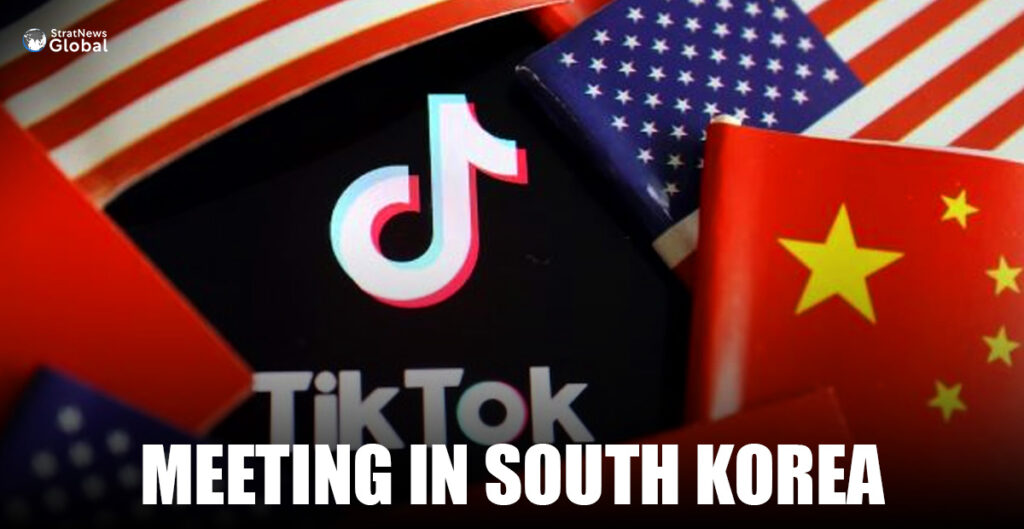
US President Donald Trump on Friday said he and Chinese President Xi Jinping had made headway on a potential TikTok deal, and would meet in person in South Korea in six weeks to hold wider talks on trade, the drug crisis, and the ongoing war in Ukraine.
The two sides appeared to lower tensions during the first call in three months between the leaders of the two superpowers, but it was not immediately clear that the call had yielded the firm agreement that had been expected over the fate of the popular short-video app.
The leaders did agree to further talks on the sidelines of the Asia-Pacific Economic Cooperation forum that starts on October 31 in Gyeongju, South Korea.
‘TikTok Deal Well On Its Way’
Trump also said he would visit China early next year and that Xi would come to the US at a later date. Reuters previously reported that the two sides were planning such a meeting.
“He approved the TikTok deal,” Trump told reporters in the Oval Office, adding that there could remain a formal signing of the agreement. “The TikTok deal is well on its way.”
Trump also suggested positive movement on trade, fentanyl and the Russia-Ukraine war during the call, which he said lasted about two hours.
“I believe he would like to see it ended,” Trump said of Xi’s view of the Russia-Ukraine war.
No Reference Yet
Beijing’s final approval of a framework deal reached by the two sides this week is one of the hurdles Trump needed to clear to keep TikTok open. Congress had ordered the app shut down for US users by January 2025 if its US assets were not sold by Chinese owner ByteDance.
China’s statement made no reference to a formal agreement on TikTok. Trump had signaled multiple times this week that a deal might be forthcoming.
“China’s position on the TikTok issue is clear: The Chinese government respects the wishes of the company in question,” the government said in a statement that called for non-discriminatory treatment of its companies.
“The US will work with China on the economy and trade, and support their teams in reaching a proper deal on TikTok through consultation.”
The White House and the Chinese government did not immediately respond to requests for further comment.
“Beijing is banking on optics and time, while Washington is chasing a TikTok headline and a summit, and hopes, I think, for more wins later,” said Craig Singleton, a senior fellow at the Foundation for Defence of Democracies, a think tank. “I think the Chinese are very happy with the current dynamic.”
Early on Saturday, ByteDance issued a statement thanking Trump and Xi “for their concern for TikTok”, adding that it would work towards a way of continuing to serve US users that satisfied Chinese legal requirements.
In Shanghai some residents expressed scepticism about the Trump administration’s sincerity in improving relations between the two countries.
“I don’t really believe the US wants a ‘win-win’ situation,” said Lin Jinqi, 22. “It seems like (the US) just wants to be the boss.
“So in many areas, they deliberately set up obstacles for China,” he said. “We don’t go looking for trouble, but we’re not afraid of it either.”
National Security Concerns
Trump has declined to enforce the TikTok law while his administration looks for a new owner, but also because he worries a ban on the app would anger TikTok’s huge user base and disrupt political communications.
Key questions about the deal remain. They include the precise ownership structure of the company, how much control China will retain over the app’s inner workings, what concessions Trump will demand from the parties involved or whether Congress will approve.
“It’s all being worked out,” Trump told reporters, responding to a question over whether the United States or China would have control over the app’s algorithm. “We’re going to have very tight control.”
Asked whether the US government would control a board seat, Trump said, “We’re going to announce it.”
He also floated the possibility that the US government might take a fee for helping broker a deal to keep TikTok online, but added that such a provision “hasn’t been fully negotiated.” The Wall Street Journal has reported it would be a multibillion-dollar fee.
The deal would transfer TikTok’s US assets to US owners from ByteDance, Reuters has reported. Sources familiar with the deal said US TikTok would still make use of ByteDance’s algorithm.
The arrangement worries lawmakers who think Beijing could spy on Americans or conduct influence operations through the app. China has said there is no evidence of a threat posed by the app.
Trump Tariffs Target China’s Export Economy
Since retaking office in January, Trump has sharply hiked tariffs across the board and singled out China’s export-oriented economy with especially punitive rates. That prompted China to respond in kind. Tariff rates on both sides of the Pacific rose to triple-digit percentages in April.
A succession of limited agreements since May paused the tit-for-tat tariff war between the countries.
Taxes on US importers have been a key plank of Trump’s economic policy. He’s raised them to the highest levels in nearly a century while positioning his foreign policy approach as one of peace-seeking and deal-making.
The Republican has portrayed tariffs as a way to recoup lost manufacturing jobs, cut chronic federal government deficits, correct perceived trade imbalances and bend foreign countries to Washington’s will. Many economists regard across-the-board tariffs as inefficient, raising consumer prices and limiting their choices.
Despite the tariffs, China remains America’s third-largest trading partner and the source of its largest bilateral trade deficit in goods. Recent data point to slowing economies in both China and the United States.
Trump has threatened but so far withheld punitive tariffs against Chinese exports related to the country’s purchases of Russian oil.
At the same time, regional worries are multiplying over Taiwan and the South China Sea, risky flashpoints that struggle to command as much attention in Washington as the Russia-Ukraine and Gaza wars.
Neither country’s statements following the call mentioned Taiwan.
Other key issues include US demands that China crack down on the export of fentanyl-related chemicals, a cause of US overdose deaths. Beijing has accused Washington of distorting the issue.
(With inputs from Reuters)
UN Reports Surge In Ethnically-Driven Killings In Sudan This Year
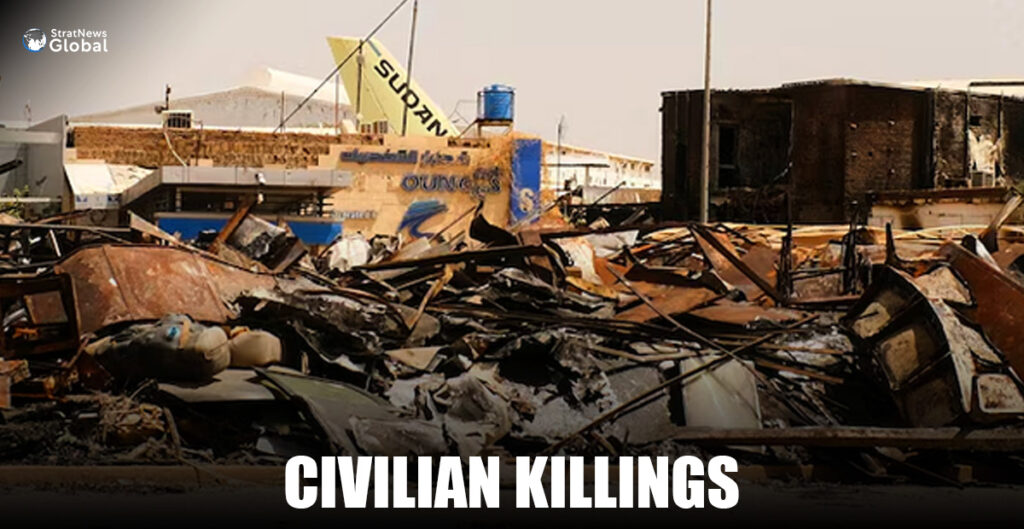
The UN human rights office said on Friday that Sudan has experienced a sharp increase in civilian killings during the first half of the year, driven by escalating ethnic violence, particularly in western Darfur.
The conflict that erupted in Sudan in April 2023 between the Sudanese Armed Forces (SAF) and the paramilitary Rapid Support Forces (RSF) has unleashed waves of ethnically-driven killings, caused mass displacement and created what the U.N. has called the world’s worst humanitarian crisis.
At least 3,384 civilians were killed between January and June, mostly in Darfur, according to a new report by the Office for the High Commissioner of Human Rights.
The figure is equivalent to nearly 80% of the civilian casualties in Sudan documented last year. Throughout the war, casualty numbers have been hard to track because of the collapse of local health services, fighting, and communications breakdowns, among other reasons.
Ethnicity As Motivation For Violence
“Every day we are receiving more reports of horrors on the ground,” OHCHR Sudan representative Li Fung told reporters in Geneva.
The majority of killings resulted from artillery shelling as well as air and drone strikes in densely populated areas, the report said.
It noted many deaths occurred during the RSF’s offensive on the city of al-Fashir, the last holdout of its rivals in Darfur, as well as on the ZamZam and Abu Shouk camps for displaced people in April.
At least 990 civilians were killed in summary executions in the first half of the year, the report found, with the number between February and April tripling.
That was driven mainly by a surge in Khartoum after the army and allied fighters in late March recaptured the city previously controlled by the RSF, the OHCHR said.
“One witness who observed SAF search operations in civilian neighbourhoods in East Nile, Khartoum, between March and April, said that he saw children as young as 14 or 15 years of age, accused of being RSF members, summarily killed,” OHCHR spokesperson Jeremy Laurence said.
Fung said ethnicity was a motivating factor for violence, which she described as very concerning.
She explained that certain ethnic communities were being targeted because they are associated with the leadership of the SAF and RSF, building upon decades of discrimination and division between different groups and identities in the diverse nation.
Both sides in Sudan’s war have repeatedly denied deliberately attacking civilians.
The humanitarian situation in Sudan was dire and worsening, said Patrick Youssef, Africa Regional Director for the International Committee of the Red Cross and Red Crescent.
Sudan faces its worst cholera outbreak in four years across the country, with 2,500 cases reported in Khartoum since June, he said.
“We really pray that it’s contained within days or weeks … My worst nightmare would be a bigger spread in Khartoum, if the populations want to return to Khartoum,” he said.
(With inputs from Reuters)
34 Palestinians Killed As Israel Intensifies Gaza City Attacks
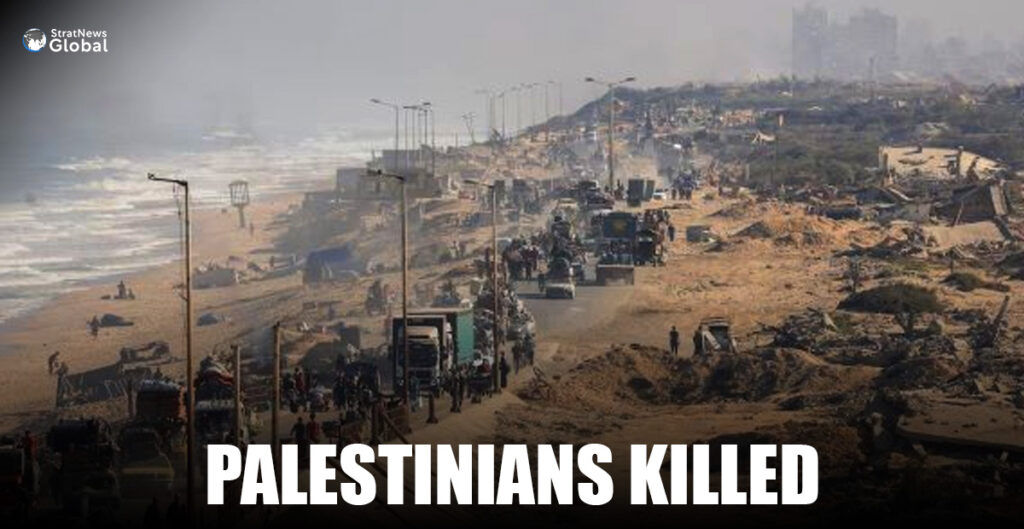
Israel’s military persisted in its assault on Gaza City and the surrounding areas on Saturday, targeting underground infrastructure and booby-trapped buildings, resulting in 34 Palestinian fatalities, as reported by Gazan health authorities.
The assault came as 10 countries including Australia, Belgium, Britain and Canada are scheduled to formally recognise an independent Palestinian state on Monday, ahead of the annual leaders’ gathering at the U.N. General Assembly.
Israel’s intensified military demolition campaign targeting high-rise buildings in Gaza City began this week alongside a ground assault.
Its forces, which control Gaza City’s eastern suburbs, have in recent days been pounding the Sheikh Radwan and Tel Al-Hawa areas from where they would be positioned to advance on central and western parts of the city, where most of the population is sheltering.
Killings And Demolitions
The military estimates it has demolished up to 20 Gaza City tower blocks over the past two weeks and believes some 350,000 people have left Gaza City since the start of September. Another 600,000 or so remain, however.
Included in that tally are some of the Israeli hostages being held by the terrorist group Hamas.
Hamas’ military wing released an image of the hostages on messaging site Telegram earlier on Saturday, warning that their lives were at risk due to Israel’s military operation in Gaza City.
In almost two years of fighting, Israel’s offensive has killed more than 65,000 Palestinians, according to Gaza health authorities, spread famine, demolished most structures and displaced most of the population, in many cases multiple times.
Israel says the hunger crisis in Gaza has been exaggerated and that Hamas could end the war if it surrendered, freed Israeli hostages, disarmed and disbanded. Hamas says it will not disarm until a Palestinian state is established.
The war began after Hamas, which runs the Gaza Strip, led attacks in Israel on October 7, 2023, killing 1,200 people and taking 251 hostages. A total of 48 of the hostages remain in Gaza, and around 20 are thought to be alive.
(With inputs from Reuters)