

Support us by contributing to StratNewsGlobal on the following UPI ID
ultramodern@hdfcbank

Strategic affairs is our game, South Asia and beyond our playground. Put together by an experienced team led by Nitin A. Gokhale. Our focus is on strategic affairs, foreign policy and international relations, with higher quality reportage, analysis and commentary with new tie-ups across the South Asian region.
You can support our endeavours. Visit us at www.stratnewsglobal.com and follow us on YouTube, Twitter, Facebook and Instagram.
र 500 per month
र 1000 per month
र 5000 per year
र 10000 per year
Donate an amount of your choice
र 500 per month
Donate र 500 per month

र 1000 per month
Donate र 1000 per month
र 5000 per year
Donate र 5,000 per year
र 10000 per year
Donate र 10,000 per year
Donate an amount of your choice
Donate an amount of your choice
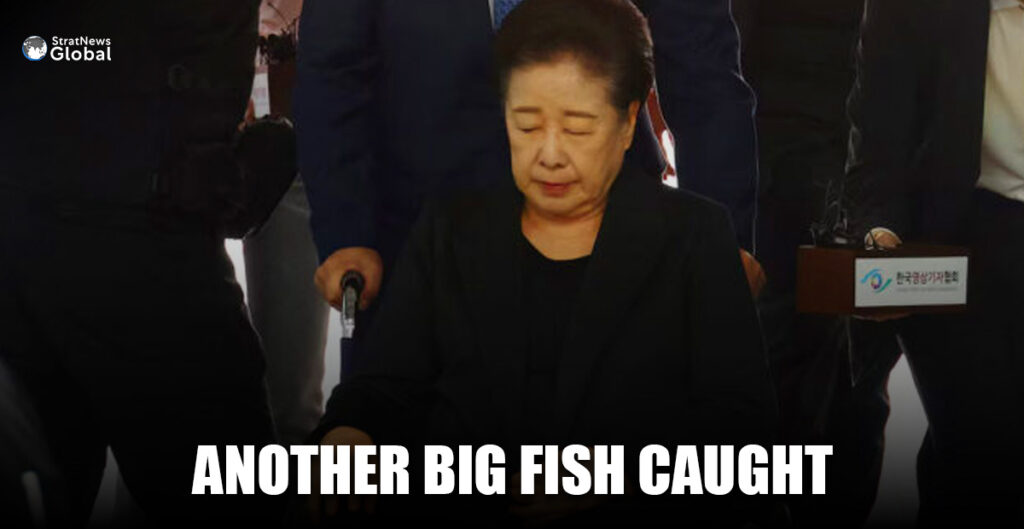

Unification Church Leader Han Hak-Ja Arrested In South Korea Graft Probe
The head of the Unification Church, Han Hak-ja, was taken into custody on Tuesday after a South Korean court issued a warrant in connection with corruption allegations involving the wife of ousted President Yoon Suk Yeol, a prosecutor confirmed.
Han has been accused of directing the church to bribe former First Lady Kim Keon Hee — worth 80 million won ($57,631) that include two Chanel bags and a diamond necklace from an official at the Unification Church — for favours for the church’s business interests. She has denied the allegations, calling them “false information”.
After Yoon was removed from office over a political crisis sparked by his short-lived martial law imposition last year, special prosecutors launched a sprawling criminal investigation into the former first couple, focused on the former first lady’s bribery allegations.
Kweon Seong-dong, a veteran politician close to former President Yoon, has been investigated over allegations that he received illicit political funds from the church official. Kweon has denied the allegations.
Kim On Trial
Kim is on trial this week over charges including bribery. She is suspected of receiving bribes from the church among the charges, according to the prosecutors. Yoon, who is also in detention, is on trial separately for insurrection.
The court issued the warrant for Han’s detention in order to protect evidence, the special prosecutor’s team said in a message to reporters.
‘Faithfully Cooperate’
The church, formally called the Family Federation for World Peace and Unification, has followers around the world and controls entities in construction, health care and media among others.
Founded in South Korea in the 1950s by self-declared messiah Moon and known for its mass weddings, the group has faced criticism for its fundraising and other issues, most recently a political scandal in Japan in the wake of former Prime Minister Shinzo Abe’s assassination.
“We will faithfully cooperate with the upcoming investigation and trial procedures to verify the truth, and do our utmost to use this as an opportunity to restore trust in our church,” the religious group said in a statement.
(With inputs from Reuters)
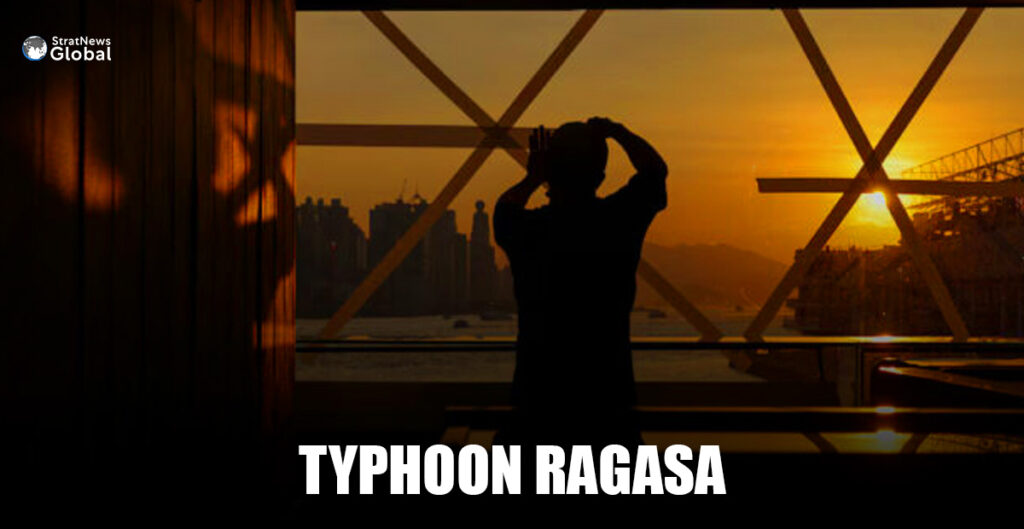
Super Typhoon Ragasa Nears Hong Kong; Flights, Businesses Disrupted
Hong Kong geared up on Tuesday for Super Typhoon Ragasa — the strongest tropical cyclone in the world this year. With the powerful storm drawing closer, authorities ordered the closure of schools and certain businesses as a precautionary measure. Most passenger flights were also set to be suspended from later in the day until early Thursday.
Ragasa, packing hurricane-force winds of up to 220km/h (137 mph), is edging closer to the coast of neighbouring southern Guangdong province in China, the Hong Kong Observatory said.
700 Flights, Businesses Disrupted
Authorities in the financial hub are set to raise the typhoon signal to 8, its third highest, by 2.20 p.m. (0620 GMT), which will prompt most businesses and transport services to shut down. About 700 flights have been disrupted.
The observatory said it will assess if it needs to issue a higher warning late on Tuesday or early Wednesday.
Ragasa swept through the northern Philippines on Monday, prompting President Ferdinand Marcos Jr to order the country’s disaster response agency to go on full alert and mobilise all government agencies.
Severe Damage Expected
The Hong Kong Observatory said hurricane-force winds offshore and on high ground were likely in Hong Kong on Wednesday, with heavy rain expected to lead to a significant storm and sea surge in the densely packed city.
It warned of rising sea levels, which it said would be similar to those seen during Typhoon Hato in 2017 and Typhoon Mangkhut in 2018, both of which caused billions of dollars in damage.
Water levels will rise about two metres (six feet) along Hong Kong’s coastal areas and maximum water levels could reach up to 4-5 metres (12-15 feet) in some areas, the observatory said, urging residents to take appropriate precautions.
Local authorities handed out sandbags on Monday for residents to bolster their homes in low-lying areas, while many people stockpiled daily necessities.
Tripling Prices
Long queues formed at supermarkets; milk and meat sold out and vegetable prices at fresh-produce markets tripled, according to Reuters witnesses on Monday.
Hong Kong’s Stock Exchange will remain open. It changed its policy late last year to continue trading whatever the weather. Chinese authorities have activated flood control measures in several southern provinces, warning of heavy rain from late on Tuesday.
Residents in the world’s largest gambling hub of Macau are also bracing for significant impact, with school closures and evacuation plans under way.
In China’s technology hub Shenzhen, authorities said they have prepared more than 800 emergency shelters.
Taiwanese authorities said they have evacuated more than 6,000 people from the self-governed island’s southern and eastern areas.
(With inputs from Reuters)
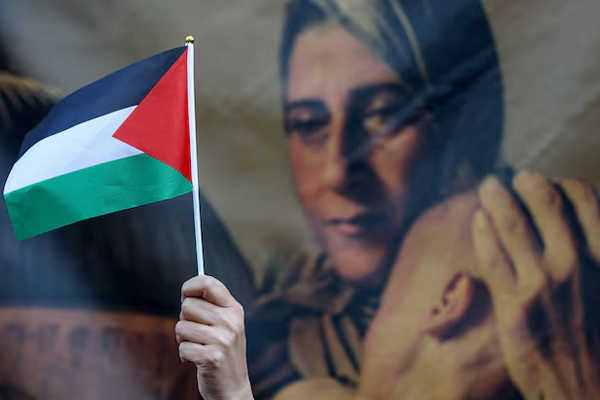
World Leaders Poised To Recognise Palestinian State At New York Summit
Several world leaders are expected to formally recognise a Palestinian state on Monday during a summit in New York hosted by France and Saudi Arabia, a step Israel warned would undermine prospects for a peaceful resolution to the Gaza war.
Here are some reactions:
French Foreign Minister Jean-Noel Barrot:
“The recognition of Palestine is a categorical rejection of Hamas and its definitive isolation.
It vindicates those Palestinians who have chosen to renounce violence and terrorism.”
“The decision that the President of the Republic will present this afternoon to the United Nations General Assembly is a symbolic, immediate, political decision that demonstrates France’s commitment to the two-state solution,” Barrot told TV1.
Norwegian Foreign Minister Espen Barth Eide:
“Palestine is at a turning point, and we are at a crossroads.
While international political support for a two-state solution has rarely been stronger, the situation on the ground is worse than ever.
The situation is worst in Gaza, but also in the West Bank, where extreme settlers are asserting themselves through violence, killings, and new settlements, while the Palestinian authorities are being squeezed by Israel.
This week, we will continue working with an ever-growing group of countries to strengthen the Palestinian state.
International engagement is critically important to keep the hope of a Palestinian state alive.
Together with European and Arab countries, we will also use the week to put pressure on (Israeli Prime Minister Benjamin) Netanyahu’s government to end the atrocities in Gaza.
Atrocities that are clear violations of international law must be stopped immediately, while humanitarian aid must be allowed in and distributed through established channels.”
Envoy Of Ministry Of Foreign Affairs, UAE, Lana Nusseibeh
“An expansion of President Trump’s Abraham Accords is what we are working for today, not the annihilation of the vision of the two-state solution, not continued human suffering on both sides, which has been absolutely devastating, but particularly for the Palestinians in Gaza, where tens of thousands have lost their lives and several hostages – over 20 – have not come home; this war must end. We have continuously called for a ceasefire and we have called for a pathway to a two-state solution because that is our policy position.”
Kremlin Spokesperson Dmitry Peskov
Peskov said of a two-state solution, “We believe that it is the only possible way to find a solution to this extremely complex, long-standing conflict, which is now perhaps at its most acute and tragic stage in its entire history.”
Foreign Minister Of Singapore Vivian Balakrishnan
“We call on the Israeli government to cease settlement construction and expansion… We oppose ongoing attempts to create new facts on the ground which undermine the prospects for a two-state solution…. Ultimately, to resolve this long-standing conflict in a comprehensive, just and durable manner, there needs to be a negotiated settlement which results in two states, one Israeli and one Palestinian, with their peoples living alongside each other in peace, security and dignity.”
Israeli Prime Minister Benjamin Netanyahu
“I have a clear message to those leaders who recognise a Palestinian state after the horrific massacre of October 7: You are giving a huge reward to terrorism. And I have another message for you: It will not happen. A Palestinian state will not be established west of the Jordan River.”
Palestinian President Mahmoud Abbas
Abbas welcomed Britain’s, Canada and Australia’s recognition of a Palestinian state on Sunday, saying it would allow the “State of Palestine to live side by side with the State of Israel in security, peace, and good neighbourliness”.
Israel’s U.N. Ambassador Danny Danon
“Empty declarations that ignore the reality and the sinister forces of our region do not advance anything. No declaration of any country will change the simple fact that before everything, the hostages must be returned and that Hamas must be defeated. The defeat of Hamas and the end of the war will not be achieved by performative speeches at the UN but by the sustained pressure and activities on the ground by the State of Israel.”
(With inputs from Reuters)
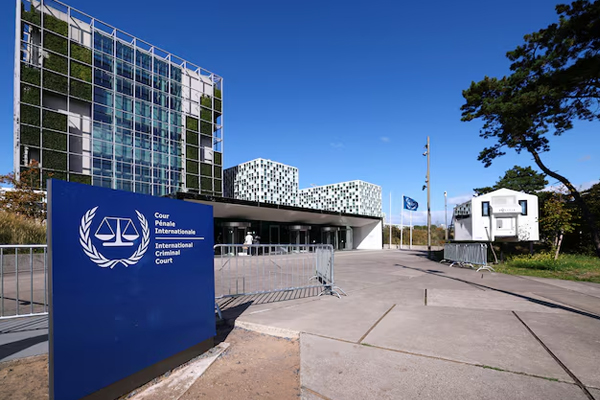
U.S. May Sanction Entire ICC Over Israel War Crimes Probe
The U.S. may sanction the International Criminal Court (ICC) as soon as this week, a move that could disrupt the tribunal’s operations in response to investigations into alleged Israeli war crimes.
U.S. Sanctions
Washington has already imposed targeted sanctions on several prosecutors and judges at the court, but naming the court itself in the sanctions list would be a major escalation.
Six sources with knowledge of the matter, all speaking on condition of anonymity to discuss a sensitive diplomatic issue that has not been publicly announced, said a decision on such “entity sanctions” was expected soon.
A source said court officials had already held emergency internal meetings to discuss the impact of potential blanket sanctions. Two other sources said meetings had also been held of court member state diplomats.
One U.S. official, speaking on the condition of anonymity to discuss sensitive matters, confirmed that entity-wide sanctions were being weighed but did not elaborate on the timing of the possible move.
A State Department spokesperson accused the court of asserting what it said was its “purported jurisdiction” over U.S. and Israeli personnel and said that Washington was going to take further steps, although the spokesperson did not say exactly what.
“It (the ICC) has the opportunity to change course by making critical and appropriate structural changes. The U.S. will take additional steps to protect our brave service members and others as long as the ICC continues to present a threat to our national interests,” the spokesperson said.
Salaries Paid In Advance
Sanctions applied to the court as an entity could affect its basic day-to-day operations, from its ability to pay its staff to its access to bank accounts and routine office software on its computers.
To mitigate the potential damage, ICC staff received salaries this month in advance for the rest of 2025, three sources said, though this is not the first time the court has paid wages in advance as a precaution in case of sanctions.
The court is also seeking alternative suppliers for banking services and software, three sources said.
The ICC, based in The Hague, has indicted Israel’s Prime Minister Benjamin Netanyahu and former Defence Minister Yoav Gallant, as well as figures from the Hamas militant group, for alleged crimes committed during the Gaza war.
Washington has previously targeted court officials with sanctions for their roles in those cases and in a separate investigation into suspected crimes in Afghanistan, which initially had looked at actions by U.S. troops.
ICC States Push Back At UN
Three diplomatic sources said some of the ICC’s 125 member countries would try to push back against additional U.S. sanctions during a U.N. General Assembly in New York this week.
But all indications are that Washington will scale up its attack on the ICC, four diplomatic sources in The Hague and New York said.
“The road of individual sanctions has been exhausted. It is now more about when, rather than if, they will take the next step,” a senior diplomat said.
U.S. Secretary of State Marco Rubio has called the court “a national security threat that has been an instrument for lawfare” against the United States and its ally Israel.
The court was founded in 2002 under a treaty giving it jurisdiction to prosecute genocide, crimes against humanity and war crimes that were either committed by a citizen of a member state or had taken place on a member’s territory.
Israel and the United States are not members. The court recognises the state of Palestine as a member and has ruled that this gives it jurisdiction over actions on Palestinian territory. Israel and the United States reject this.
In February, the White House imposed sanctions on the court’s lead prosecutor, Karim Khan, who had requested the warrants against Netanyahu and Gallant. Khan is on leave amid an ongoing investigation into sexual misconduct allegations, which he denies.
(With inputs from Reuters)
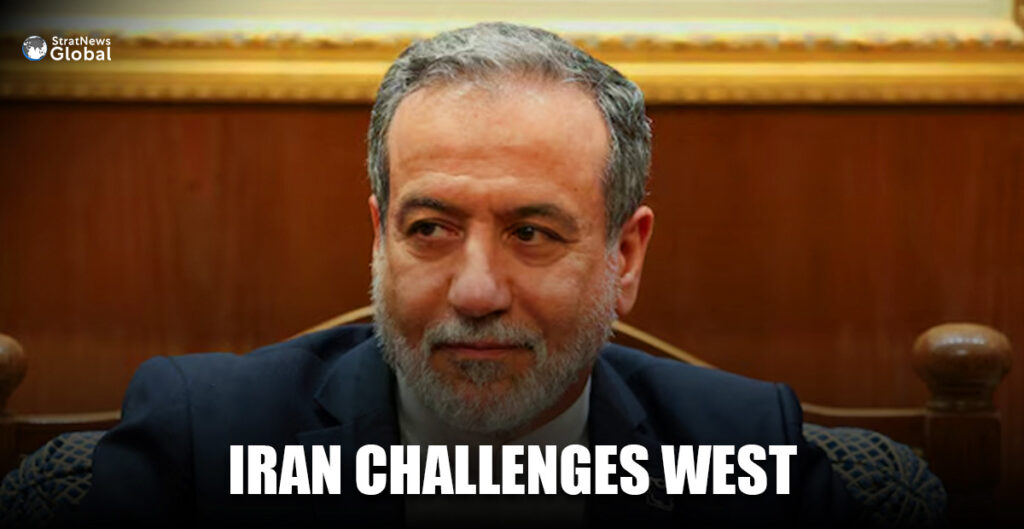
Iran Warns West Against ‘Pressure Tactics’ In Nuclear Dispute
Iran will not yield to threats or sanctions in the long-running nuclear standoff with the West, Foreign Minister Abbas Araqchi said on Monday.
Speaking to state television, he stressed that diplomacy remains the only viable solution, urging Britain, France, and Germany to choose “cooperation or confrontation” as they move to reimpose U.N. sanctions.
Britain, France and Germany, known as the E3, launched a 30-day process on August 28 to reimpose U.N. sanctions, accusing Tehran of failing to abide by a 2015 deal with world powers aimed at preventing it from developing a nuclear weapon.
Araqchi said he will meet with his European counterparts and the head of the U.N. nuclear watchdog chief Rafael Grossi in New York this week on the sidelines of the U.N. General Assembly to discuss Iran’s nuclear program.
Two European diplomats told Reuters the meeting will be on Tuesday.
“They have tested Iran repeatedly and know we do not respond to the language of pressure and threat,” Araqchi said. “I hope we can find a diplomatic solution in the coming days, otherwise Tehran will take appropriate measures.”
The European powers have offered to delay reinstating sanctions for up to six months – to give diplomacy a chance – if Iran restores access for U.N. nuclear inspectors to its nuclear sites, addresses concerns about its stock of enriched uranium and resumes talks with the United States.
But amid the looming threat of sanctions, two European diplomats said Iran’s clerical rulers have so far failed to meet the conditions set by the E3.
“The ball is in Iran’s camp. It is up to it to quickly take the concrete steps in the coming days to avert snapback. If not then sanctions will be reimposed,” said one of the diplomats.
If Tehran and the E3 fail to reach a deal on an extension by the end of September 27, then all U.N. sanctions will be reimposed on Iran where the economy already struggles with crippling sanctions reimposed since 2018 after President Donald Trump ditched the pact during his first term.
Iranian President Masoud Pezeshkian said on Saturday that Iran would overcome any reimposition of U.N. sanctions, but one insider said mounting discontent among many Iranians at the state of the economy was rattling the Islamic Republic, with little sign that its leaders have the answers.
Soon after the U.S. and Israeli attacks on Iranian nuclear sites in June, Iran’s parliament passed a law suspending cooperation with the International Atomic Energy Agency and stipulating that any inspections must be approved by Iran’s Supreme National Security Council.
On September 9, the IAEA and Tehran reached a deal to resume inspections at nuclear sites.
“I am in New York to use these remaining days for diplomatic consultations that might lead to a solution … if it is not found, we will continue our path,” Araqchi said.
(With inputs from Reuters)
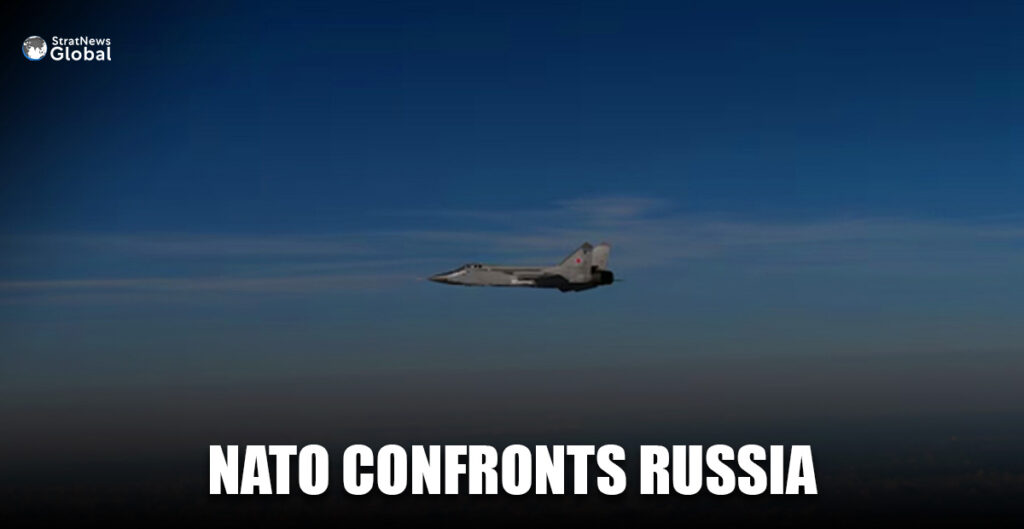
NATO Confronts Russia At UN Over Airspace Violations
NATO allies clashed with Russia at the United Nations on Monday, accusing Moscow of breaching alliance airspace over Estonia and Poland in recent days.
Britain warned that such “reckless actions” risk escalating into direct armed conflict, as Foreign Secretary Yvette Cooper told the Security Council that NATO “stands ready to defend its skies and territory.”
“If we need to confront planes operating in NATO space without permission then we will do so,” she said.
Estonia said on Friday that three Russian MiG-31 fighter jets had entered Estonian airspace without permission and stayed for a total of 12 minutes before they were forced to withdraw in an episode that Western officials said was designed to test NATO’s readiness and resolve.
The Security Council convened on Monday to discuss the issue. NATO consultations were due to take place on Tuesday. The incident occurred just over a week after more than 20 Russian drones entered Polish airspace, prompting NATO jets to shoot some of them down.
Cooper’s comments were echoed by other Western ministers in the Security Council, including EU foreign policy chief Kaja Kallas, who suggested the multiple incidents could not be considered an accident.
Ukraine’s foreign minister said such actions by Moscow should be met robustly and renewed an offer by Kyiv to integrate its air defenses into those of neighbouring Western countries to counter the Russian front.
“A strong response means that a threat should not be escorted, neither for 12 minutes, nor for one minute. It should be neutralized,” said the minister, Andrii Sybiha.
The United States’ new envoy to the U.N., Michael Waltz, making his first appearance since taking his post, said Moscow needed to defuse tensions, not exacerbate them.
“I want to take this first opportunity to repeat and to emphasize the United States and our allies will defend every inch of NATO territory,” Waltz said.
Russia’s deputy ambassador to the UN, Dmytry Polyanskiy, said there was no evidence backing their claims and accused European powers of levying baseless accusations.
“We won’t be partaking in this theater of the absurd,” he said. “When you decide that you want to engage in a serious discussion about European security, about the fate of our common continent, about how to make this continent prosperous and secure for everybody, we’ll be ready.”
(With inputs from Reuters)
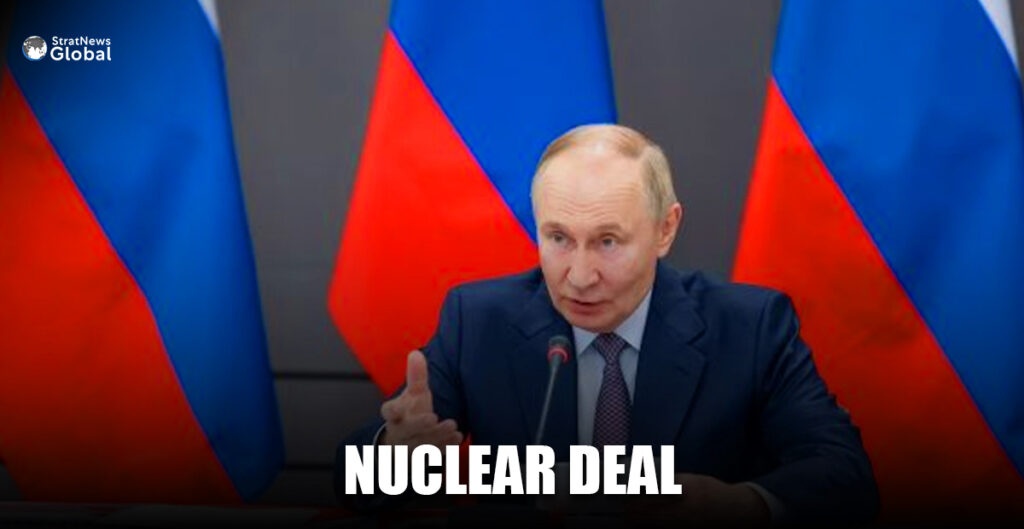
Putin Seeks One-Year Extension Of Nuclear Weapons Deal With Trump
Russian President Vladimir Putin has proposed a one-year continuation of the final treaty limiting nuclear weapons between Russia and the United States, offering it to President Donald Trump as both leaders consider the agreement’s next steps.
Russia and the United States have by far the biggest nuclear arsenals in the world. The New START treaty limiting the numbers of strategic nuclear weapons – those designed to hit centres of military, economic and political power – expires on February 5.
The treaty caps the number of deployed warheads at 1,550 on each side. Both are likely to breach that if the treaty is not extended or replaced.
Putin Under Pressure To End Ukraine War
Putin said his proposal was in the interests of global non-proliferation and could help spur dialogue with Washington about arms control.
He has been under pressure from Trump to agree to end the war in Ukraine, something Moscow says is part of a slew of security issues that have raised East-West tensions to their most dangerous level since the Cold War.
The offer, made as Ukraine tries to convince Trump to impose harsher sanctions on Russia, was made public by Putin at a meeting of his Security Council.
“Russia is prepared to continue adhering to the central numerical limits under the New START Treaty for one year after February 5, 2026,” he said.
“Subsequently, based on an analysis of the situation, we will make a decision on whether to maintain these voluntary, self-imposed restrictions.
“This measure will only be viable if the United States acts in a similar manner, and does not take steps that undermine or violate the existing balance of deterrence capabilities.”
The proposal appears to be a unilateral change of policy by Moscow, which has until now insisted it would only engage with Washington on such matters if overall ties – hampered by stark differences over the war in Ukraine – improved.
There was no immediate response from Washington.
Talks On Overhauling Treaty Yet To Start
Differences over Ukraine mean the two superpowers have not started talks on renewing or overhauling the treaty, though Trump has spoken of his desire to do a new nuclear arms control deal, albeit with China as well.
Beijing has rejected the idea that it should be included.
Daryl Kimball, executive director of the Arms Control Association advocacy group, said Putin’s offer was “a positive and welcome move”.
Urging Washington to reciprocate, Kimball said Trump and Putin could “help reduce the most immediate existential security threat facing the world”.
Putin said Russia would be monitoring U.S. nuclear arms and defence activity, paying particular attention to plans to beef up missile defences and proposals to deploy missile interceptors in space.
“The practical implementation of such destabilising actions could nullify our efforts to maintain the status quo in the field of START,” said Putin. “We will respond accordingly.”
Konstantin Kosachyov, a senior Russian senator, said Putin was sending a message to the U.S. that he was ready to enter talks on a new arms control treaty.
“I hope that this signal will be heard and correctly interpreted,” Kosachyov said on Telegram.
(With inputs from Reuters)
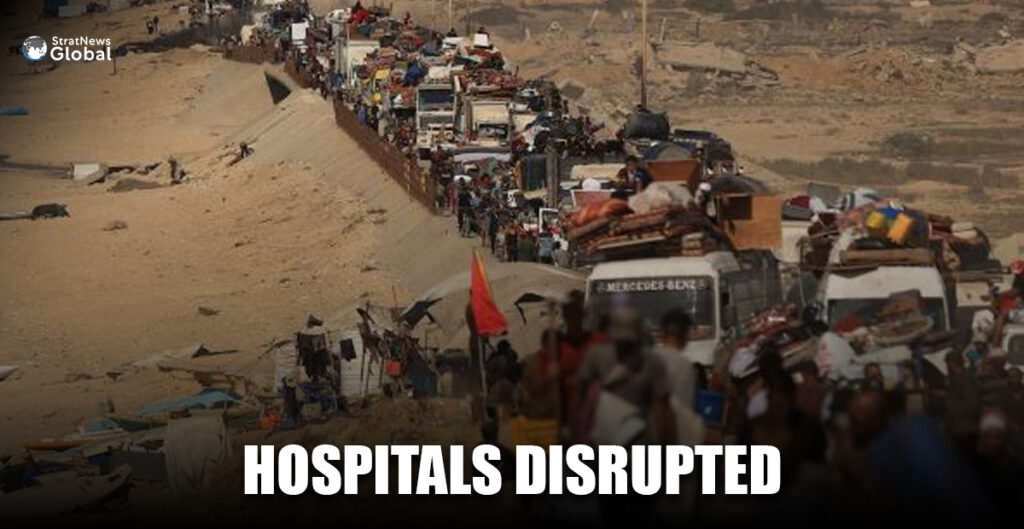
Two Gaza Hospitals Shut Down Amid Intensifying Israeli Offensive: Health Ministry
According to the Gaza health ministry, two hospitals in Gaza City have ceased operations following Israel’s intensified ground assault and damage from ongoing airstrikes, as Israeli tanks pushed further into the territory.
The ministry said in its statement that Al-Rantissi Children’s Hospital was badly damaged a few days ago by an Israeli bombardment. At the same time, it reported Israeli attacks in the vicinity of the nearby Eye Hospital, which forced the suspension of services there, too.
“The occupation deliberately and systematically targets the healthcare system in the Gaza governorate as part of its genocidal policy against the Strip,” it said.
“None of the facilities or hospitals have safe access routes that allow patients and the wounded to reach them,” the ministry added.
There was no immediate Israeli comment.
Nearly two years into the war, Israel describes Gaza City as the last bastion of Hamas. The Israeli military has been demolishing housing blocks it says were being used by the terrorist group since Israel launched its ground assault on the city this month.
Israeli Tanks Dig Deeper Into The City
On Monday, residents said Israeli tanks had advanced deeper into the Sheikh Radwan area and Jala Street in northern Gaza City, where the two hospitals are located, while in Tel Al-Hawa in the southeast tanks have pushed deeper in the direction of the western parts of the city.
They said Israeli forces had used explosive-laden vehicles, detonated remotely, to blow up dozens of houses in the two areas.
In a meeting on Monday at the military headquarters in Tel Aviv with Defence Minister Israel Katz and Chief of Staff Eyal Zamir, Prime Minister Benjamin Netanyahu reaffirmed his determination to eliminate Hamas, secure the release of the remaining hostages and ensure that Gaza no longer poses a threat to Israel, his office said.
The offensive has alarmed the families of Israeli hostages still held by Hamas in Gaza. Twenty of those 48 captives are thought to still be alive.
Meanwhile, local health authorities said at least 25 people had been killed by Israeli fire on Monday across the enclave, most of them in Gaza City.
Hamas’ October 7, 2023, attacks on Israel killed 1,200 people, and 251 others were taken hostage, according to Israeli tallies.
Israel’s two-year-long campaign has killed more than 65,000 Palestinians, most of them civilians, according to Gazan health authorities, and has spread famine, demolished most buildings, and displaced most of the territory’s population, in many cases multiple times.
(With inputs from Reuters)
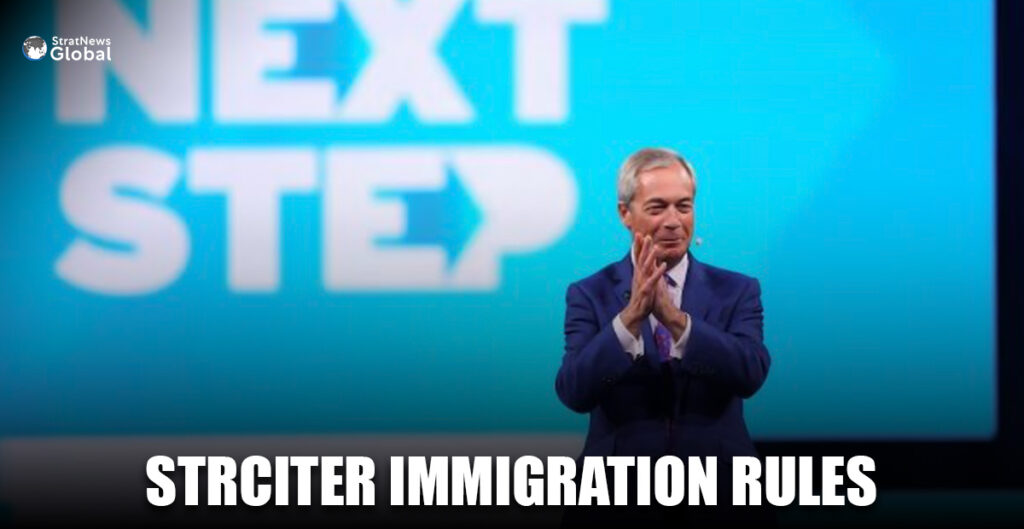
Reform UK Party Vows Stricter Residency Regulations
Populist Reform UK party, led by Nigel Farage, proposes to overhaul Britain’s immigration system if it wins the next election, by prioritizing higher earners who are proficient in English to cut down on number of foreign nationals coming to the country.
Under the plans, Reform would scrap the current “Indefinite Leave to Remain” status which migrants can claim after five years, and replace it with a five-year renewable work visa, which would prevent holders from accessing welfare benefits.
“There will be a route to citizenship, but a much tougher route to citizenship than we currently have,” Farage told a press conference on Monday.
Reform UK has just five lawmakers in the 650-strong British parliament but leads opinion polls, with 28% of people saying they would vote for the party, a lead of eight points over the governing Labour party. The next election is expected in 2029.
Immigration A Hot Button Issue
Immigration has become a major political issue in Britain, eclipsing concerns over a faltering economy, following a jump in arrivals after the COVID pandemic and as the country faces a record number of asylum claims.
Responding to the Reform threat, the government is already trying to make it harder for migrants to stay in the country, and has said it will launch a consultation on making people wait 10 years to apply for ILR, instead of the current five years.
Reform’s policy would require anyone wanting to start the citizenship process to live in the UK for seven years, rather than the current five. Under current rules, migrants first apply for ILR and then citizenship.
Reform Would Rescind Leave To Remain
Farage said his policy would rescind ILR for those who already hold the status and would force them to reapply for the new working visa.
Those already earning over a certain salary threshold – which was not set out – would be able to stay, with a path to citizenship. As well as salary requirements, the visa would also require applicants to meet a higher standard of English. The number of dependents they could bring would be linked to their income.
Farage said the changes aimed to target the 800,000 new migrants expected to be granted ILR status between 2026-2030 – and would prevent them from accessing welfare payments.
“Reform will ensure that welfare is for UK citizens only,” he said.
In the year to March 2025, Britain granted leave to remain to 173,000 people, a 33% rise on the previous year.
The citizenship rules would make Britain stricter than some other European countries.
France, Germany and the Netherlands, for instance, permit those who have lived in the country for five years to apply for citizenship, while depending on a person’s original nationality, Italy and Spain can require 10 years of residency before citizenship can be sought.
(With inputs from Reuters)
Euro’s ‘Global Moment’ At Risk Amid Political Divisions
Amid concerns that Donald Trump’s trade policies were driving the dollar toward multi-year lows, European Central Bank (ECB) chief Christine Lagarde urged Europe’s leaders in late May to back their words with action—or, more precisely, with their currency.
Her argument, outlined in a speech in Berlin, was simple: alarm over Trump’s assault on the economic status quo was a chance for Europe to advance its goal of boosting the influence of its single currency.
Building on proposals last year by her predecessor Mario Draghi for sweeping reforms to Europe’s financial system, Lagarde coined a phrase to define the opportunity: the “global euro moment”.
Her rationale was simple, a source familiar with her thinking told Reuters. Convinced this could be a defining moment for Europe, Lagarde – a former French finance minister – was disappointed by the lack of political leadership. She thought at least one voice should fill the void.
Four months on – and a year since Draghi’s report – Lagarde’s calls to bolster the foundations of the single currency are being drowned out by national divisions and other priorities such as the Ukraine war, dealing with Trump, and coping with home-grown political turmoil.
A sense of policy inertia is the main takeaway from Reuters’ interviews with more than a dozen euro zone officials and central bankers, senior private bankers and veteran Brussels-watchers with a close view – often in the room – of discussions. Lagarde herself declined to comment.
Measures that would have strengthened the euro’s appeal for investors have fallen by the wayside, the sources said.
Proposals to jointly issue debt in euros to fund Europe’s defence encountered resistance from Berlin and Paris. Smaller nations with big financial sectors opposed centralising supervisory powers in EU bodies. And plans to create a digital version of the euro have yet to take on a clear shape.
“Fundamentally, the EU struggles to concentrate on many crises at the same time,” Enrico Letta, the Italian ex-prime minister who last year presented his own report on reforms needed for the region’s single market, told Reuters.
“I see a Europe divided”.
“Dollar Is King”
The euro in the pockets of 350 million Europeans from Dublin to Nicosia is among the EU’s most tangible achievements. Nearly wrecked by a sovereign debt crisis 15 years ago, it’s the fruit of a three-decade process of banking and monetary reforms that remains a work in progress.
But the dollar remains dominant globally. It accounts for three-fifths of central bank reserves and is the main transaction currency for commodities such as oil. Its status gives the U.S. government access to a ready pool of lenders and helps it wield outsized financial clout.
As Trump said in July: “Dollar is king and we’re going to keep it that way.”
Yet the euro can claim to be the world’s second-most-favoured currency. It accounts for some 20% of global central bank reserves and a similar amount of trade invoicing. Aside from the 20 eurozone countries, 60 nations or territories have directly or indirectly pegged their currencies to it.
The euro has risen around 13% against the dollar this year, taking it to a four-year high, with the investor consensus that further gains are likely as the U.S. Federal Reserve embarks on a cycle of cutting its benchmark rate.
With the free trade era giving way to protectionism and growing economic tensions under Trump, European leaders acknowledge that bolstering the euro’s global status would help shield their export-driven economies.
The argument is that a greater presence of the euro in trade and global reserves would help insulate the area from swings in exchange rates and capital flows – even economic sanctions, if tensions worsen.
But European capitals are baulking at three steps that would underpin that goal: creating a big enough stock of safe euro assets for investors; making institutional changes to complete Europe’s economic and monetary union; and responding to the rising challenge of digital currencies.
(With inputs from Reuters)