

Support us by contributing to StratNewsGlobal on the following UPI ID
ultramodern@hdfcbank

Strategic affairs is our game, South Asia and beyond our playground. Put together by an experienced team led by Nitin A. Gokhale. Our focus is on strategic affairs, foreign policy and international relations, with higher quality reportage, analysis and commentary with new tie-ups across the South Asian region.
You can support our endeavours. Visit us at www.stratnewsglobal.com and follow us on YouTube, Twitter, Facebook and Instagram.
र 500 per month
र 1000 per month
र 5000 per year
र 10000 per year
Donate an amount of your choice
र 500 per month
Donate र 500 per month

र 1000 per month
Donate र 1000 per month
र 5000 per year
Donate र 5,000 per year
र 10000 per year
Donate र 10,000 per year
Donate an amount of your choice
Donate an amount of your choice
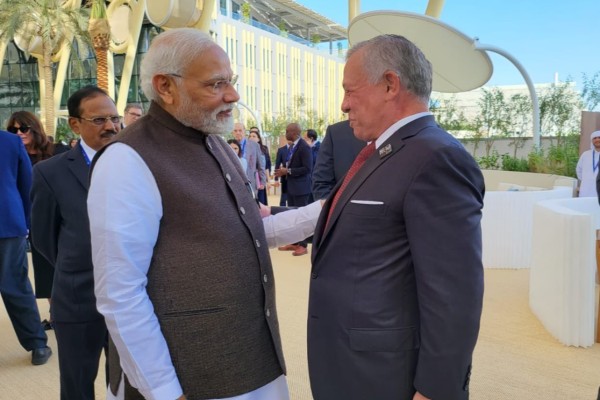
Modi’s Jordan Visit Stresses Ties With A Moderate State In A Volatile Region
As Prime Minister Modi jets off to Amman, Jordan on Monday for his first official visit, a question lingers: why Jordan when King Abdullah II was in Pakistan only a month ago? Not to mention the half-century old ties between the Jordanian and Pakistani armed forces.
Would not a visit to Iraq have been more appropriate given that trade flows between Baghdad and New Delhi was around $37 bn last year, compared to less than $3 billion between India and Jordan.
Even in terms of diaspora, there are an estimated 33,000 Indians in Iraq working in the oil, construction and health sectors, as against 17,000 in Jordan.
But Jordan under King Abdullah has been politically moderate in a volatile region. It is a front line state bordering Israel, maintains diplomatic ties and keeps the conversation going despite being under pressure from other Arab states and the Palestinians who make up 70% of its population.
It has carefully stayed out of the Gaza war while fulfilling its duties as the custodian of the Muslim holy sites in Jerusalem.
In that sense, the perspective that the king is able to offer Modi on the situation in Gaza and the West Bank, would be valuable. The king will also have his ideas on the prospects for the Trump peace plan, Hamas, Hezbollah and all the other characters, making for useful inputs for India.
On peace in Gaza hinges the India Middle East Europe Economic Corridor. First proposed by former US President Joe Biden in 2023, the proposal has remained in limbo waiting for the war in Gaza to end. Jordan will be a key link in this corridor.
For Jordan, which may not draw too many visitors from outside the region, the Modi visit is an opportunity to underscore civilisational links: Petra in southern Jordan was once the gateway for Indian goods being moved to the Levant and Egypt.
In commercial terms, Jordan would like to export more phosphate to this country. A readout by the Ministry of External Affairs noted that “Jordan is also a leading supplier of fertilizers … particularly phosphates and potash. There is a joint venture named Jordan India Fertilizer Company with an investment of $860 million between IFFCO of India and Jordan Phosphates Mines Company.”
Fifteen Indian garment companies with an investment of 500 million dollars, are operating in the industrial zones of Jordan, taking advantage of duty free access to the US market. They produce for a swathe of global brands.
‘India Will Be Forced To Abandon Strategic Ambiguity’
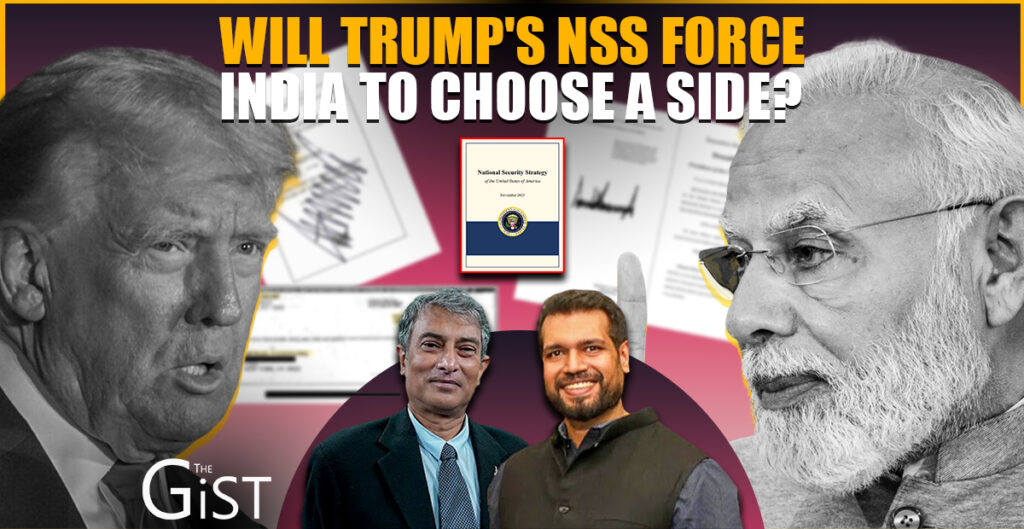
Donald Trump’s late-November National Security Strategy marks a sharp ideological and geopolitical shift, one that Colombo-based security analyst Nilanthan Niruthan says places unprecedented pressure on India to abandon strategic ambiguity.
In an interview to the Gist, the executive director of the Centre for Law and Security Studies argued that the document is “as much a cultural manifesto as it is a geopolitical roadmap,” foregrounding civilizational identity, patriotism, and a repudiation of post-Cold War elite-driven foreign policy.
Beyond its tone, the document outlines several strategic departures. It elevates the Western Hemisphere as Washington’s core priority, downscales U.S. involvement in the Middle East in light of reduced energy dependence, and pointedly critiques NATO’s “expansionism,” a framing that will rile European partners. Yet the centre of gravity, Niruthan notes, is unmistakably the Indo-Pacific, where Washington seeks overwhelming military advantage to deter “unilateral changes to the status quo”—code, he says, for preventing a Chinese attack on Taiwan.
This Indo-Pacific vision hinges on allies, especially Japan, South Korea and India, taking the Chinese threat far more seriously. That expectation, Niruthan argues, directly collides with New Delhi’s cherished strategic autonomy. “India will have to pick a side,” he says, warning that autonomy becomes untenable when great-power competition intensifies. He adds that India cannot demand solidarity from partners in crises if it withholds alignment on issues central to U.S. interests
The strategy, he says, also carries major economic consequences for South Asia. By openly privileging fossil fuels—particularly U.S. natural gas—the document signals the fading viability of renewable-centric development pathways long embraced across the Global South. It also underscores future battles over AI, biotech, and critical minerals, sectors in which South Asia risks being left behind unless it rapidly positions itself within emerging global supply chains.
For smaller states like Sri Lanka, the implications are more existential. If U.S. efforts succeed in pulling India firmly into a China-balancing coalition, Colombo will face hard choices, particularly given its current posture of neutrality even in a Taiwan-crisis scenario. “Washington is asking India to take a stand. What happens when they ask the rest of us?” Niruthan asks.
Ultimately, he views the strategy not as a blueprint for future action but a codification of shifts already underway over the past year—a formal declaration of a world entering a sharper era of rivalry.
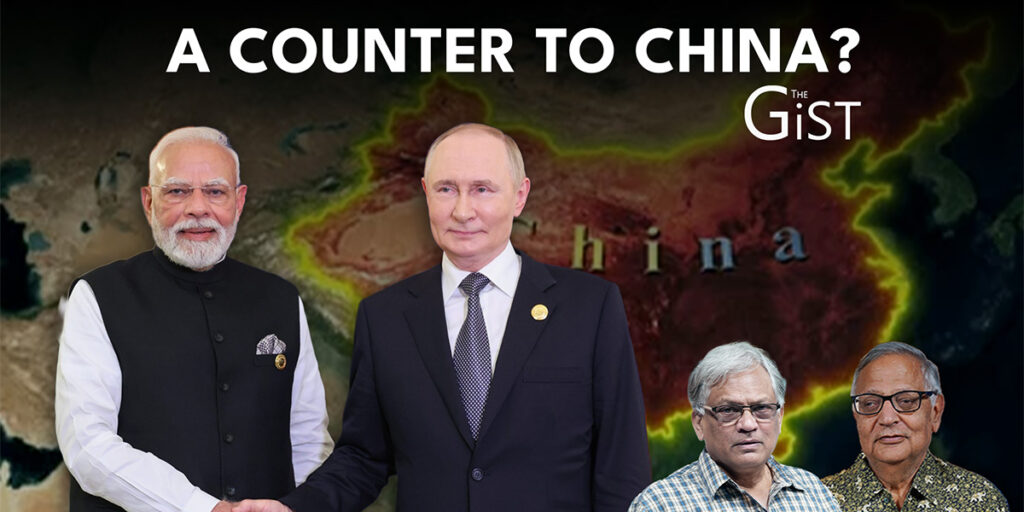
‘Logistics Deal With Russia Will Help India Counter China In Indian Ocean’
Reciprocal Exchange of Logistical Support is the agreement India sealed with Russia during the visit of Vladimir Putin last week. It looks similar to the agreements India has signed with a host of other countries including the US, France and Japan, and that is to an extent true.
Brig Arun Sahgal of the Forum for Security Initiatives, a Delhi-based think tank, told StratNews Global on The Gist is that “All those agreements we have signed are by and large with Western players or they are all the allies of the West … Russia is not really a part of the Indo-Pacific system.
“Russia which never had the sea legs necessary to enter the Indian Ocean, will now, courtesy India, get access to this region. It will get access to our bases. It’s close to our ports. It will help both navies in terms of maintenance, repair and so on since both rely on platforms that are roughly compatible.”
Bringing Arctic And IOR Closer | India-Russia Logistics Pact
Add to that, India new gets a level of backing given that it is a “standalone” power in the Indian Ocean. The Quad is largely directed towards China and the Indo-Pacific. Exercises with the US Navy does not imply any support to counter the Chinese navy’s growing profile in the Indian Ocean, Brig Sahgal said.
“From the Indian perspective, the Russian presence creates a larger degree of strategic balance in the (Indian Ocean) region. I also might add, that Russia’s maritime security puts Indian Ocean region as one of the places with India as at the at the center.”
The Russians do have concerns in the Red Sea and Sudan, and this deal with India will give them the sea legs to address those concerns. Iran is another country the Russians have a deep interest in and now they have the capability to address those .
Tune in for more in this conversation with Brig Arun Sahgal of the Forum for Security Initiatives.
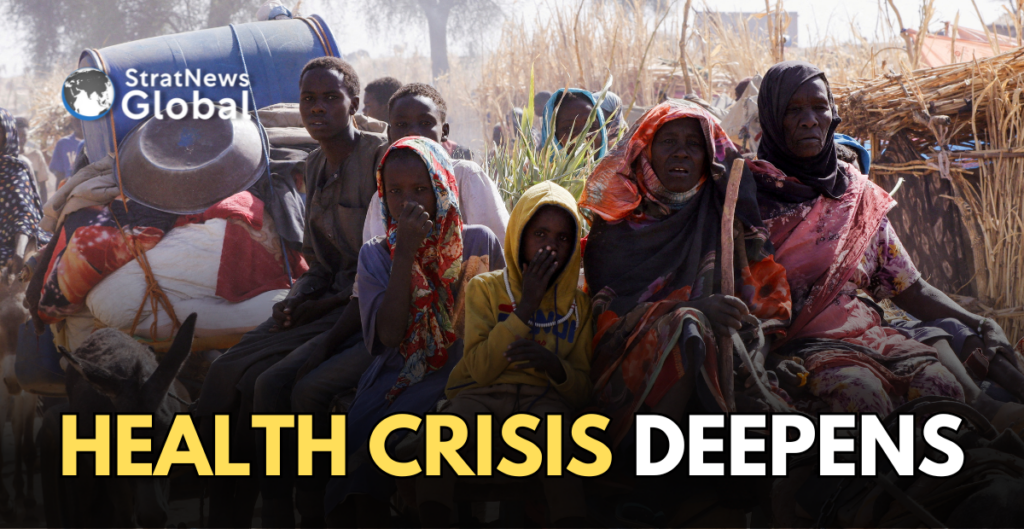
South Sudan Crisis Deepens Amid Violence
South Sudan is facing its most severe security and humanitarian deterioration since the 2018 peace agreement, with rising violence and declining funding crippling already fragile healthcare services, according to a new report by Médecins Sans Frontières (MSF).
In its report, Left Behind in Crisis: Escalating Violence and Healthcare Collapse in South Sudan, MSF documents a sharp increase in attacks on health facilities, widespread shortages of medicines, and a growing lack of medical staff, warning that the humanitarian response is weakening as international attention shifts elsewhere.
United Nations figures cited in the report indicate that more than 320,000 people have been displaced and at least 2,000 killed since January. MSF says it has recorded eight attacks this year on its own facilities and staff in Central Equatoria, Jonglei, and Upper Nile states.
On December 3, an airstrike hit an MSF facility in Pieri, followed by additional strikes in Lankien later the same day. Dr Sigrid Lamberg, MSF’s head of field operations in South Sudan, said the collapse of essential services is costing lives daily, noting that many health facilities are either non-functional or severely under-resourced and that patients are dying from preventable and treatable diseases.
Healthcare workers report worsening conditions on the ground, with some clinics forced to direct patients to local markets to purchase medicines that are often unavailable. Malaria remains the leading cause of illness and death, particularly among children. For the second consecutive year, South Sudan has experienced nationwide stockouts of malaria medicines during the peak transmission season. Between January and September, MSF treated 6,680 patients with severe malaria requiring hospitalisation.
The crisis has been compounded by flooding and disease outbreaks, including cholera, even as humanitarian funding continues to decline. The Health Sector Transformation Project, launched in 2024 as the government’s primary healthcare delivery programme, was intended to support 1,158 facilities across ten states. According to MSF, only 816 facilities currently receive support, with many operating without sufficient medicines or regular salary payments for staff.
MSF has called for the timely delivery of essential medicines, medical supplies, and health worker salaries, and urged the South Sudanese government to increase health spending in line with its Abuja Declaration commitment of allocating 15% of the national budget to healthcare, compared with the current level of 1.3%.
The report also highlights declining international support and urges global partners to renew commitments. It calls for coordinated action involving the South Sudanese government, the World Health Organisation, UNICEF, and donor governments to restore medicine supplies, ensure safe humanitarian access, and protect health facilities from attack, warning that without renewed domestic and international backing, civilian suffering will continue.
Can America Still Reverse Democratic Decline?
America has crossed a line many once thought unimaginable.
As political scientists Steven Levitsky, Lucan Way, and Daniel Ziblatt write in Foreign Affairs, the United States is no longer a full democracy. Under Trump’s second term, it has shifted into competitive authoritarianism—a system where elections still occur, but incumbents systematically use state power to hobble opponents.
Yet the authors argue that this slide, alarming as it is, remains reversible. The most important factor in determining the future is not Trump’s strength but how Americans respond.
The shift they describe did not happen subtly. Over 2025, the administration purged institutions such as the Justice Department and the FBI, replacing career civil servants with personal loyalists willing to target critics. Investigations were launched into Democratic officials, civil society leaders, journalists, watchdog groups, and even former Trump appointees who broke ranks.
Many charges were trivial, but that was the point: selective enforcement creates fear and drains resources, even without convictions. Meanwhile, allies received protection, including sweeping pardons for participants in the January 6 attack.
The assault extended beyond law enforcement. University budgets were frozen, philanthropies and fundraising platforms were investigated, independent media outlets faced lawsuits or regulatory pressure, and many institutions quietly withdrew from political engagement to avoid retaliation.
Powerful law firms stopped taking cases challenging the administration. Major donors backed away from Democratic causes. Newsrooms softened coverage or cancelled programming. In the authors’ view, this spread of self-censorship—far harder to measure than explicit coercion—is a defining feature of competitive authoritarian rule.
Even the security services were not spared. Immigration and Customs Enforcement expanded into something resembling a paramilitary arm of the executive. National Guard deployments in cities raised concerns about intimidation. Trump encouraged crowds of uniformed soldiers to jeer at elected Democrats and urged the military to prepare for a fight against an “enemy from within”.
These actions, the authors argue, are unlike anything seen in the United States since the post-Watergate era.
Yet the essay’s core message is not despair but resistance. Competitive authoritarian systems still contain openings. Elections remain meaningful; courts still function; federalism preserves independent centres of authority; the media landscape, though pressured, still includes diverse voices; and civil society retains unmatched resources. The 2025 off-year elections showed that opposition victories are possible even on an uneven playing field.
The biggest threat to American democracy, the authors warn, is not repression alone but demobilisation—the fear-driven withdrawal of citizens, donors, lawyers, journalists, and institutions. When people assume the game is rigged beyond repair, they stop playing it, and authoritarianism deepens.
The authors foresee years of instability rather than a quick return to democratic normalcy or a smooth slide into dictatorship. But they insist the outcome is not predetermined. Avoiding complacency and rejecting fatalism are equally essential. Democracy’s survival depends on citizens continuing to act as though their engagement still matters—because, they argue, it does.
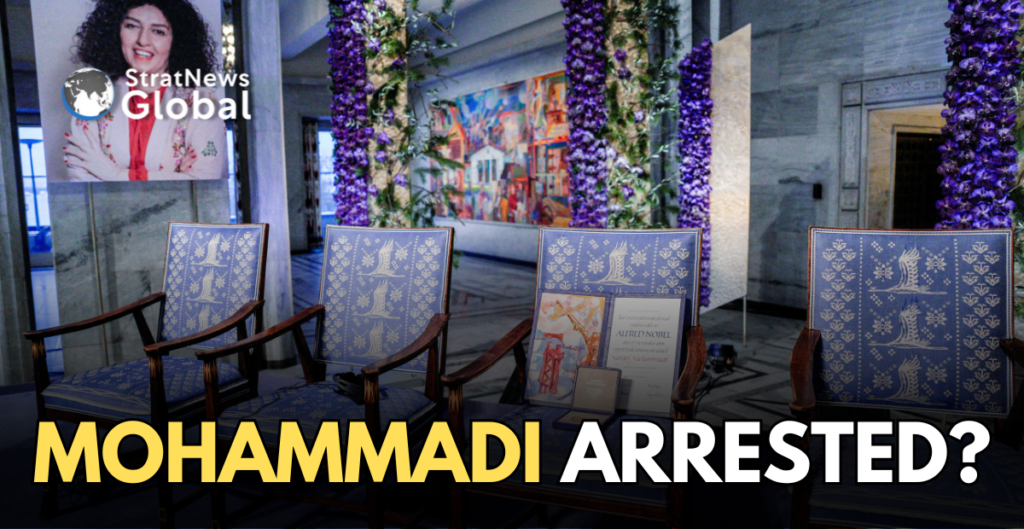
Iran: Rights Groups Condemn ‘Re-Arrest’ Of Nobel Laureate Mohammadi
International human rights groups on Saturday condemned the reported re-arrest of Nobel Peace Prize laureate Narges Mohammadi in Iran, with the Nobel committee calling on the Iranian authorities to immediately clarify her whereabouts.
Mohammadi’s French lawyer, Chirine Ardakani, said on X that the human rights activist was arrested on Friday after denouncing the suspicious death of lawyer Khosrow Alikordi at his memorial ceremony in the northeastern city of Mashhad.
Authorities in Iran have not yet confirmed the arrest of Mohammadi. Mashhad’s city governor, Hasan Hosseini, told Iranian state television on Friday that prosecutors had ordered the temporary detention of several participants at Alikordi’s ceremony, but did not name Mohammadi.
Unknown Whereabouts
The Norwegian Nobel Committee called on Iranian authorities “to immediately clarify Mohammadi’s whereabouts, ensure her safety and integrity, and to release her without conditions”.
A video purportedly showing Mohammadi, 53, without the mandatory veil, standing on a car with a microphone and chanting “Long Live Iran” in front of a crowd, has gone viral on social media.
Ardakani said Mohammadi was beaten before her arrest, and social media reports say her whereabouts are unknown.
Reporters Without Borders said four journalists and other participants were also arrested at the memorial for human rights lawyer Alikordi, who was found dead in his office on December 5.
Investigation For Mohammadi
Authorities gave the cause of his death as a heart attack, but rights groups have called for an investigation into his death.
Hasan Hosseini said in the interview with state TV that prosecutors had ordered detentions at his ceremony after what authorities have described as “norm‑breaking” slogans.
The U.S.-based Human Rights Activists News Agency said the crowd also chanted “death to the dictator”, a reference to Supreme Leader Ayatollah Ali Khamenei, as well as “We fight, we die, we accept no humiliation”.
Mohammadi, who received the 2023 Nobel Peace Prize, has spent more than 10 years of her life in prison, most recently from November 2021 when she was charged with “propaganda against the state”, “acting against national security”, and membership in “illegal organisations”.
She has been on furlough since December last year for health reasons.
(with inputs from Reuters)
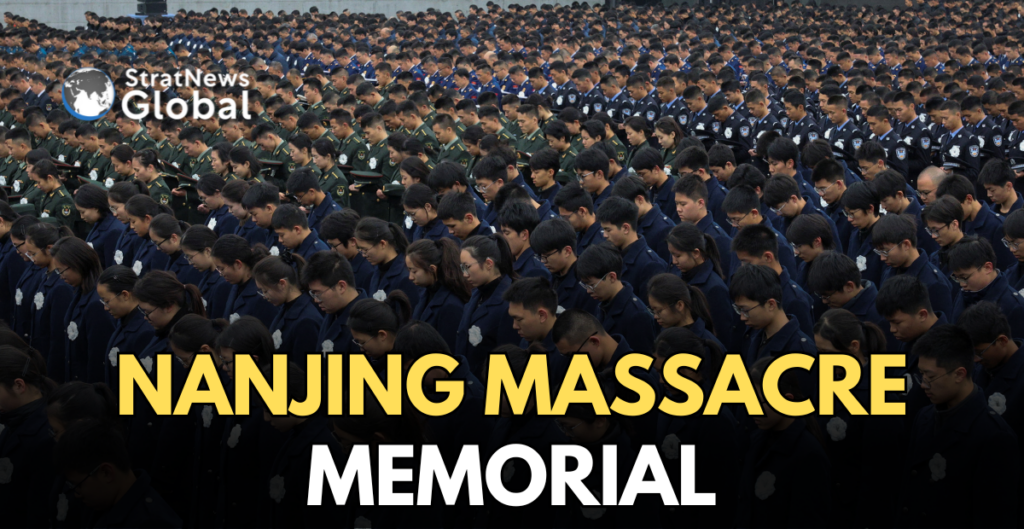
Amid Japan Tensions, China Holds Nanjing Massacre Memorial
China held a low-key memorial ceremony on Saturday for the 1937 Nanjing Massacre, with President Xi Jinping not attending, despite a diplomatic crisis between Beijing and Tokyo over Taiwan.
Beijing has raged at Tokyo since Prime Minister Sanae Takaichi said last month that a hypothetical Chinese attack on Chinese-claimed Taiwan could trigger a military response from Japan.
China and Japan have long sparred over their painful history. China consistently reminds its people of the 1937 Nanjing Massacre, in which it says Japanese troops killed 300,000 people in what was then its capital.
A post-World War Two Allied tribunal put the death toll in the eastern city of Nanjing at 142,000, but some conservative Japanese politicians and scholars have denied that a massacre took place at all.
Memorial Ceremony
At Saturday’s ceremony being held at the national memorial centre in Nanjing, Shi Taifeng, head of the ruling Communist Party’s powerful organisation department, referenced Xi’s speech at a military parade in Beijing in September marking 80 years since the end of World War Two.
But Shi’s remarks were far less combative than recent rhetoric from Chinese government officials.
“History has fully demonstrated that the Chinese nation is a great nation that fears no power and stands on its own feet,” he said.
He did not mention Takaichi but alluded to China’s previous claims that she seeks to revive Japan’s history of militarism.
“History has proven and will continue to prove that any attempt to revive militarism, challenge the postwar international order, or undermine world peace and stability will never be tolerated by all peace-loving and justice-seeking peoples around the world and is doomed to fail.”
Doves flew over the site after the ceremony, which was completed in less than half an hour, in front of an audience that included police officers and school children.
Xi’s Attendance
China marked its first national memorial day for the massacre in 2014, where Xi spoke and called on China and Japan to set aside hatred and not allow the minority who led Japan to war to affect relations now.
Xi last attended the event in person in 2017 but did not deliver public remarks.
China’s State Council Information Office, which handles questions from foreign media to the central government, did not immediately respond to a request for comment on Xi’s absence.
Still, on Saturday, the Eastern Theatre Command of China’s People’s Liberation Army put out a picture on its social media accounts of a large bloody sword, of the type used by many Chinese soldiers during the war, chopping off the head of a skeleton wearing a Japanese army cap.
“For nearly 1,000 years, the eastern dwarves have brought calamity; the sea of blood and deep hatred are still before our very eyes,” it said, using an old expression for Japan.
(with inputs from Reuters)
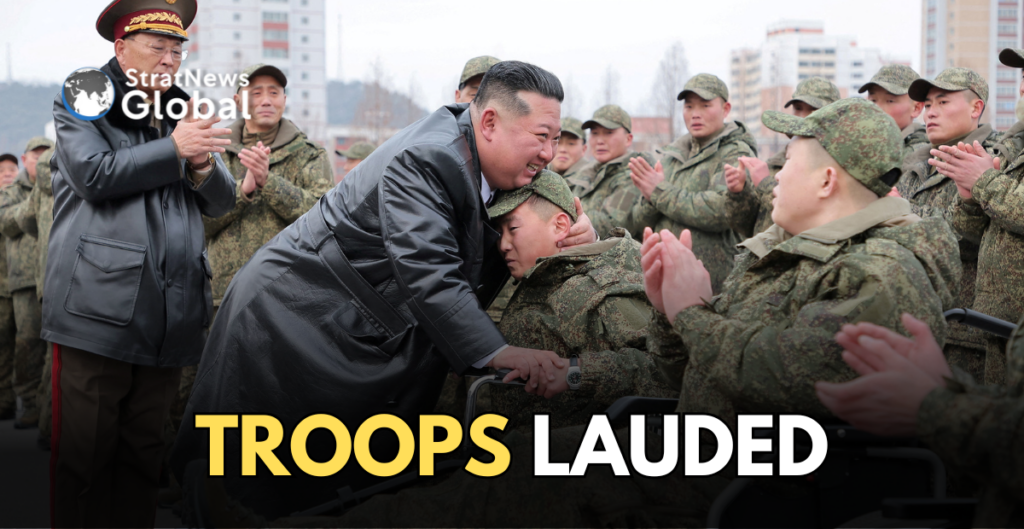
North Korea: Kim Jong Un Hails Troops Returning From Russia
North Korea leader Kim Jong Un attended a welcoming ceremony for the troops of an army engineering unit that had returned home after carrying out duties in Russia, the North’s KCNA news agency reported on Saturday.
In a speech carried by KCNA, Kim praised officers and soldiers of the 528th Regiment of Engineers of the Korean People’s Army (KPA) for “heroic” conduct and “mass heroism” in fulfilling orders issued by the ruling Workers’ Party of Korea during a 120-day overseas deployment.
Video footage released by North Korea showed uniformed soldiers disembarking from an aircraft, Kim hugging a soldier seated in a wheelchair, and soldiers and officials gathered to welcome the troops.
Korean Troops In Kursk
KCNA said the unit had been dispatched in early August and carried out combat and engineering tasks in the Kursk region of Russia during Moscow’s war with Ukraine.
Last month, Russia’s Defence Ministry said North Korean troops who helped Russia repel a major Ukrainian incursion into its western Kursk region are now playing an important role in clearing the area of mines.
Under a mutual defence pact between the two countries, North Korea last year sent some 14,000 soldiers to fight alongside Russia in Kursk, and more than 6,000 were killed, according to South Korean, Ukrainian and Western sources.
Kim said nine soldiers were killed during the mission, describing their deaths as a “heartrending loss,” and announced that the regiment would be awarded the Order of Freedom and Independence. The nine fallen soldiers were awarded the title of Hero of the Democratic People’s Republic of Korea, along with other state honours, KCNA said.
Welcoming Ceremony
The welcoming ceremony was held on Friday in Pyongyang and was attended by senior military officials, ruling party leaders, families of the soldiers and large crowds, according to the report.
In his speech, Kim said the regiment had cleared dangerous areas under combat conditions and demonstrated “absolute loyalty” to the party and the state. He also praised the political indoctrination, discipline and unity among the troops, calling their performance a model for the armed forces.
North Korea has been publicly honouring its troops who fought for Russia in the war in Ukraine. In August, Kim praised them in a meeting with officers involved in overseas operations, while state media earlier showed him draping coffins with the national flag in what appeared to be the repatriation of soldiers killed alongside Russian forces.
(with inputs from Reuters)
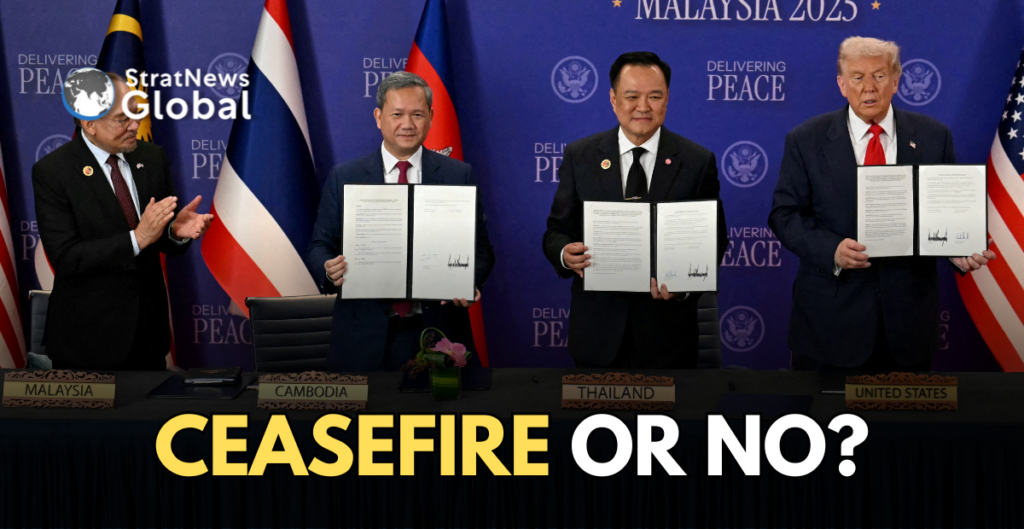
After Trump Claims Ceasefire, Thailand Vows To ‘Continue Fighting’ With Cambodia
Thailand PM vowed to keep fighting on the disputed border with Cambodia as fighter jets struck targets on Saturday, hours after United States President Donald Trump said he had brokered a ceasefire.
Prime Minister Anutin Charnvirakul posted on Facebook that the Southeast Asian nation would “continue to perform military actions until we feel no more harm and threats to our land and people.”
Trump, who brokered a ceasefire in the long-running border dispute in October, spoke to Thailand ‘s leader Anutin and Cambodian premier Hun Manet on Friday, and said they had agreed to “cease all shooting”.
Neither of them mentioned any agreement in statements after their calls with Trump, and Anutin said there was no ceasefire.
“I want to make it clear. Our actions this morning already spoke,” Anutin said.
The White House did not immediately respond to a request for comment on the continued fighting.
Hun Manet, in a statement on Saturday on Facebook, said Cambodia continues to seek a peaceful resolution of disputes in line with the October agreement.
Thailand-Cambodia Conflict
Since Monday, Cambodia and Thailand have been exchanging heavy-weapons fire at multiple points along the 817-km (508-mile) border, in some of the heaviest fighting since the five-day clash in July. Trump halted that fighting, the worst in recent memory, with calls to both leaders.
Trump, who has repeatedly said he deserves the Nobel Peace Prize, has been keen to intervene between Thailand and Cambodia again to rescue the truce. Thailand suspended it last month after a Thai soldier was maimed by a landmine, one of many that Bangkok says were newly laid by Cambodia.
Cambodia, which nominated Trump for the peace prize in August, rejects the landmine allegations.
‘Not An Accident’
On Saturday, a Thai Defence Ministry spokesman, Rear Admiral Surasant Kongsiri, told a press conference that clashes had taken place across seven border provinces, and Cambodia had fired heavy weapons, “making it necessary for Thailand to retaliate”.
Cambodia’s Information Ministry said Thai forces had struck bridges and buildings overnight and fired artillery from a naval vessel.
Thai leader Anutin dismissed comments by Trump that a “roadside bomb” that wounded Thai soldiers was accidental, saying the incident was “definitely not a roadside accident”.
Cambodia’s Hun Manet said he had asked the U.S. and Malaysia, which has been a mediator in peace talks, to use their intelligence gathering capabilities to “verify which side fired first” in the latest round of fighting.
(with inputs from Reuters)
Philippines Says China Damaged Its Boats, Hurt Fishermen In South China Sea
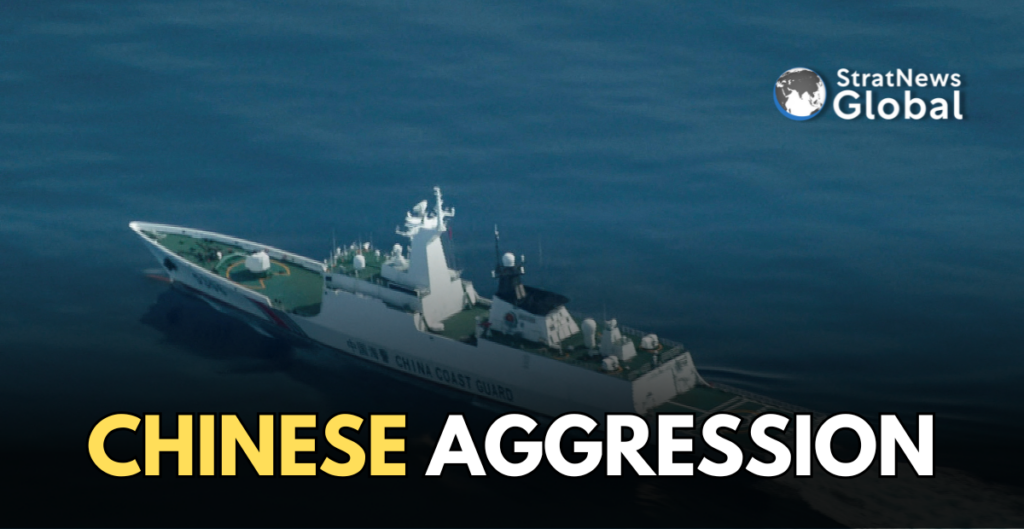
The Philippine coast guard said on Saturday that three Filipino fishermen had been wounded and two fishing vessels suffered “significant damage” when Chinese coast guard ships fired water cannon in a disputed South China Sea shoal.
Manila’s coast guard said nearly two dozen Filipino fishing boats near Sabina Shoal were targeted with water cannon and blocking manoeuvres on Friday. A small Chinese coast guard boat also cut the anchor lines of several Filipino boats, endangering their crews, it said.
“The PCG calls on the Chinese Coast Guard to adhere to internationally recognised standards of conduct, prioritising the preservation of life at sea over pretensions of law enforcement that jeopardise the lives of innocent fishermen,” Manila’s coast guard said in a statement.
No Response From China
China’s embassy in Manila did not immediately respond to a request for comment outside office hours. On Friday, China’s coast guard said it had driven away multiple Philippine vessels and taken “control measures”.
That statement, Philippine coast guard spokesperson Jay Tarriela said on Saturday, was an admission of wrongdoing.
“They admitted this evil wrongdoing to ordinary Filipino fishermen,” Tarriela said by phone.
The Philippine coast guard vessels that it deployed to aid the injured fishermen were also repeatedly blocked from reaching Sabina Shoal.
“Despite these unprofessional and unlawful interferences, the PCG successfully reached the fishermen this morning and provided immediate medical attention to the injured, along with essential supplies,” the statement said.
China’s Aggression
Sabina Shoal, which China refers to as Xianbin Reef and the Philippines as the Escoda Shoal, lies in the Philippine exclusive economic zone 150 km (95 miles) west of Palawan province.
China claims almost the entire South China Sea, a waterway carrying more than $3 trillion of annual commerce and the areas it claims cut into the exclusive economic zones of Brunei, Indonesia, Malaysia, the Philippines and Vietnam.
An international arbitral tribunal ruled in 2016 that Beijing’s sweeping claims had no basis under international law, a decision China rejects.
(with inputs from Reuters)