

Support us by contributing to StratNewsGlobal on the following UPI ID
ultramodern@hdfcbank

Strategic affairs is our game, South Asia and beyond our playground. Put together by an experienced team led by Nitin A. Gokhale. Our focus is on strategic affairs, foreign policy and international relations, with higher quality reportage, analysis and commentary with new tie-ups across the South Asian region.
You can support our endeavours. Visit us at www.stratnewsglobal.com and follow us on YouTube, Twitter, Facebook and Instagram.
र 500 per month
र 1000 per month
र 5000 per year
र 10000 per year
Donate an amount of your choice
र 500 per month
Donate र 500 per month

र 1000 per month
Donate र 1000 per month
र 5000 per year
Donate र 5,000 per year
र 10000 per year
Donate र 10,000 per year
Donate an amount of your choice
Donate an amount of your choice



Canadian Prime Minister Foresees Deeper Trade Dialogue With China After ‘Constructive’ Talks
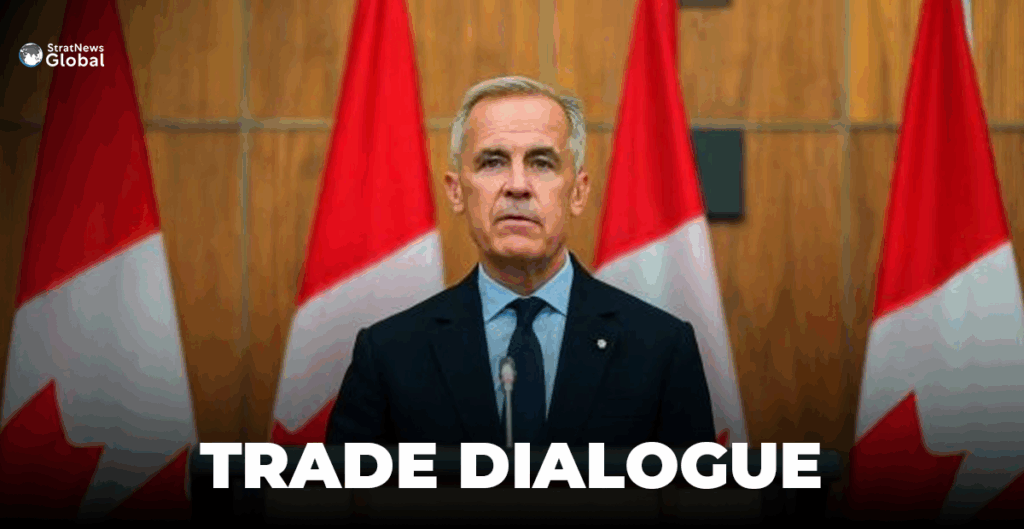
Canadian Prime Minister Mark Carney said that his meeting with Chinese Premier Li Qiang on trade was “constructive” and that he expects the discussions to expand over time as the two sides work to ease their tariff dispute.
Ties deteriorated after Canada imposed tariffs on imports of China-made electric vehicles, as well as Chinese steel and aluminium last year. Beijing fought back by levying hefty taxes on Canadian canola imports, but said the tariffs were preliminary, keeping the door open for further dialogue.
Both countries have made efforts to repair ties after U.S. President Donald Trump returned to the Oval Office in January and slapped tariffs on their respective imports.
In June, the Chinese premier told Carney in a phone call that there were no deep-seated conflicts of interest between the two countries.
“There is some alignment of tariffs with the United States, and I will highlight particularly in the steel sector, where we’ve been very clear in the approach that we have taken, and we had an open discussion with the Premier and our Chinese colleagues about that and the reasons for that,” Carney told reporters on Tuesday, after meeting with Li on the sidelines of a U.N. assembly in New York.
Discussion On Agriculture
Carney and Li also discussed “agriculture and agri-food products, such as canola, as well as seafood and electric vehicles,” according to a readout of the conversation released by Carney’s office.
Following the release, China’s most active Zhengzhou rapeseed meal futures fell 3.1% as of 0346 GMT on Wednesday.
“Rapeseed meal prices fell today following the China-Canada talks, with the market expecting positive signals to help restore China-Canada canola trade and thereby boost future supply,” said Zhang Deqiang, an analyst at Shandong-based Sublime China Information.
Carney said there was a “very constructive set of discussions” with Chinese officials.
“Those discussions will deepen. I will expect, at the appropriate time, to be meeting with President Xi Jinping but continuing this dialogue with the premier,” he said.
Li told Carney that he hoped Canada would establish a “correct” understanding of China, respect each other’s core interests and major concerns, and lay a solid political foundation for bilateral relations and cooperation, according to China’s official Xinhua news agency.
Trade with Canada has grown rapidly since the start of the year, and Beijing is willing to work with Ottawa to maintain and develop this “positive” momentum, resolve mutual economic and trade concerns, and deepen cooperation, Li said.
(With inputs from Reuters)
Trump Could Persuade Xi To Shift Stance On Ukraine War: Zelenskyy
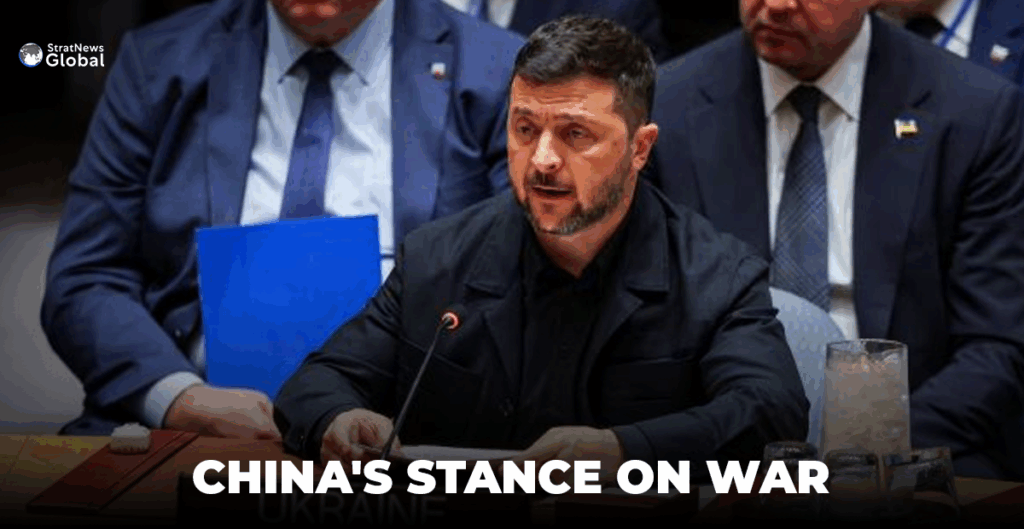
Speaking on Tuesday, Ukrainian President Volodymyr Zelenskyy expressed confidence that U.S. President Donald Trump could play a role in changing Chinese President Xi Jinping’s position on Russia’s war in Ukraine.
“I think that President Trump can change the attitude of Xi Jinping to this war, because China, we don’t feel that China wants to finish this war,” Zelenskyy told Fox News’ “Special Report” after meeting Trump on the sidelines of the United Nations General Assembly in New York.
The U.S. has highlighted China and India as contributors to the Russia-Ukraine war due to their ongoing purchases of oil from Moscow. Sources said last week that Trump urged European Union officials to impose 100% tariffs on China as a deterrent to purchasing Russian oil. He called for similarly expansive tariffs on India.
The U.S. request, if heeded, would result in a change of strategy for the EU, which has preferred to isolate Russia with sanctions rather than tariffs.
Despite U.S. frustration with New Delhi’s and Beijing’s contribution to the conflict through energy purchases, Zelenskyy on Tuesday said he believes that India is “mostly” with Ukraine.
Relations With India And China
Acknowledging concern about Russian energy supplies, he said he believes Trump and European allies would work to ensure a closer, stronger relationship with India.
“I think we have to do everything not to withdraw Indians and they will change their attitude to Russian energy sector,” Zelenskyy said. “With China, it’s more difficult because…for today, it’s not in their interests not to support Russia.”
A Chinese embassy spokesperson denied on Tuesday that Beijing was a party to the ongoing conflict, stating that China had not “exploited the situation for gain.”
“Since the first day of the crisis, China has maintained an objective and just stance, and has been promoting peace and talks,” spokesperson Liu Pengyu said in a statement. “We call on all relevant parties to adhere to the three principles — no expansion of the battlefield, no escalation of fighting, and no fanning of the flames — so as to de-escalate the situation and create conditions for a political settlement.”
The Indian Embassy in Washington did not immediately respond to a request for comment.
Trump has been frustrated at his inability to convince Russia and Ukraine to reach an end to their war, more than three years after Russian forces invaded Ukraine.
That frustration with Russian President Vladimir Putin was made clear on Tuesday when Trump said he believes that Kyiv -with European support – could win all of its territory back from Moscow.
“Russia has been fighting aimlessly for three and a half years a War that should have taken a Real Military Power less than a week to win. This is not distinguishing Russia,” Trump said on Truth Social, adding that Putin and Russia were in “big economic trouble.”
Zelenskyy called the comments surprising and said it was a positive signal of U.S. support until the end of the conflict.
(With inputs from Reuters)
Government Shutdown Threat Looms After Trump Cancels Talks With Democrats
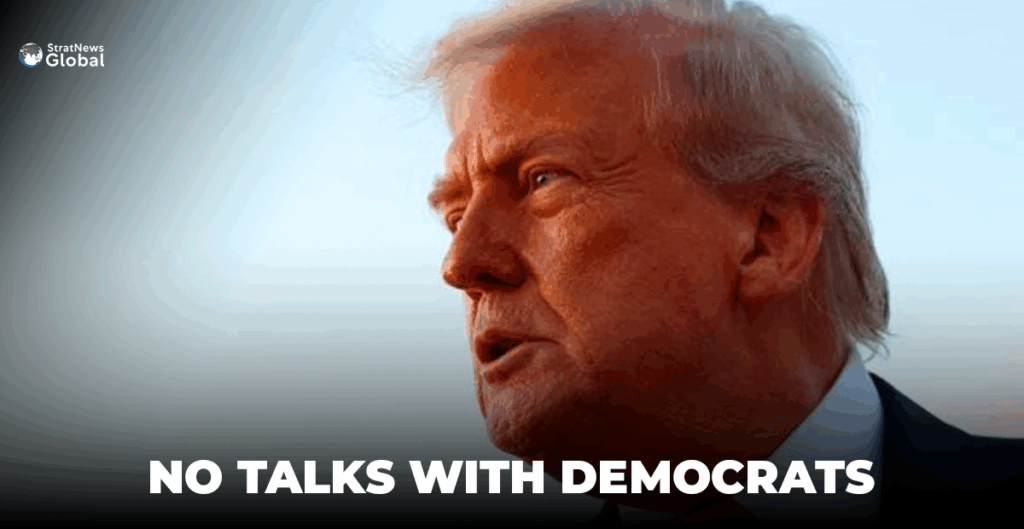
U.S. President Donald Trump on Tuesday withdrew from a scheduled discussion with congressional Democrats on government funding, a decision that added to concerns over a possible partial shutdown of government next week.
Democrats and the Republican president postured to try to pin blame on each other for a potential shutdown, which would interfere with a range of federal services and likely furlough hundreds of thousands of federal workers.
“I have decided that no meeting with their congressional leaders could possibly be productive,” Trump wrote in a post on his Truth Social media site.
Senate Democratic Leader Chuck Schumer and House of Representatives Democratic Leader Hakeem Jeffries earlier on Tuesday said Trump had agreed to meet this week at the White House, before government funding expires on September 30.
Potential Shutdown
Lawmakers are at odds over so-called discretionary funding, which accounts for about one-quarter of the roughly $7 trillion federal budget.
“Democrats are ready to work to avoid a shutdown,” Schumer said in a statement responding to Trump’s message. “Trump and Republicans are holding America hostage.”
At issue is how to win enough votes in the deeply divided Congress to pass a stopgap funding bill to keep the government operating into the new fiscal year starting October 1.
Schumer said it is also urgent for Congress to extend an enhanced tax credit for federally backed health insurance premiums, which is due to expire on December 31. Healthcare policy nonprofit KFF estimates out-of-pocket premium payments rising over 75% for the Affordable Care Act plan year beginning on October 1.
“It’s the difference between a family trying to make the mortgage payment and having healthcare,” Schumer told reporters at a press conference in New York’s Brooklyn borough.
Republican leaders say they have not slammed the door on extending the tax credit, but have argued that a stopgap funding bill was not the place to accomplish that.
The Republican-led House passed a bill last week to extend government funding through November 21, but it failed in the Senate where Republicans hold 53 of the 100 seats.
Republican House Speaker Mike Johnson has said he does not intend to call House members back to Washington before October 1 – by which point the government will have shut down absent Senate action.
Johnson says his chamber completed its work when it passed its stopgap funding bill on Friday, a move that also presents the Senate – where bills require bipartisan support to pass – no chance to modify the House bill.
Jeffries told House Democrats to return to Washington from a week-long break on Monday.
Unusual Position For Democrats
In a long posting on Truth Social, Trump attacked Democrats, but said he would meet with the parties’ Leaders “if they get serious about the future of our Nation.”
Without specifically laying out his conditions, Trump said, “All Congressional Democrats want to do is enact Radical Left Policies that nobody voted for — High Taxes, Open Borders, No Consequences for Violent Criminals, Men in Women’s Sports, Taxpayer funded ‘TRANSGENDER’ surgery, and much more.”
Democrats have largely embraced efforts to secure the U.S. border with Mexico, but have criticized Trump’s unilateral tactics of targeting immigrants for deportation without due process. They also have criticized Trump’s use of some states’ National Guard troops in Democratic-controlled cities, ostensibly to reduce crime rates.
Voting against bills to keep the government operating puts Democrats in an unusual position, as Schumer over the years has chastised Republicans for voting against the sort of funding extensions known as continuing resolutions that the House passed last week.
The federal government has partially shut down 14 times since 1981, but it is unclear what operations would continue and what would close on October 1 if government funding runs out since the Office of Management and Budget has not made public agencies’ contingency plans.
Mandatory spending, such as on the Social Security and Medicare benefits would continue, as would interest payments on the federal government’s $37.5 trillion in debt.
(With inputs from Reuters)
Europe: Flights Disrupted As Drone, Cyber Threats Hit Airports
A wave of cyberattacks targeting major airports across Europe, followed by drone intrusions in Copenhagen and Oslo, is exposing vulnerabilities in the region’s aviation infrastructure and fuelling concerns over potential coordinated threats that could trigger wider disruptions.
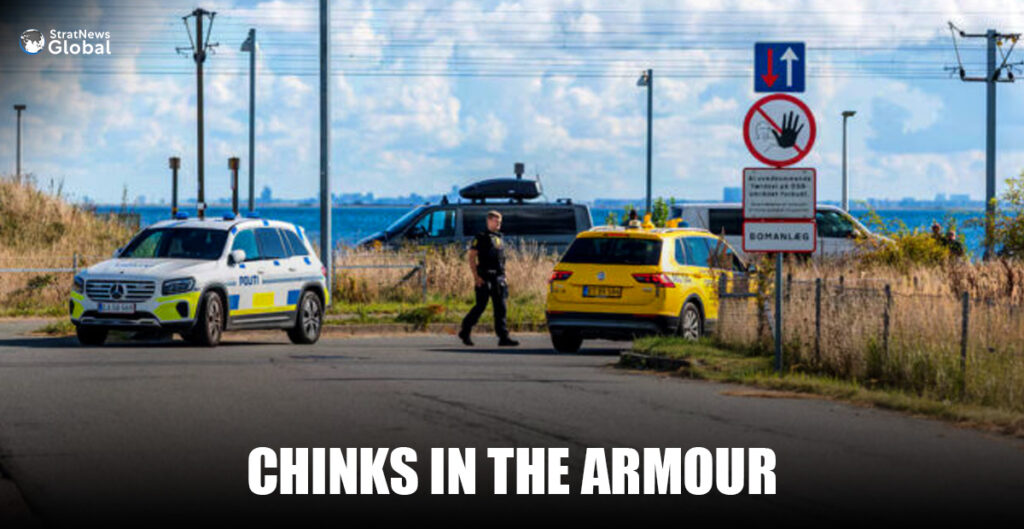
In Denmark, drones halted flights at Copenhagen’s main airport on Monday for several hours, with Danish Prime Minister Mette Frederiksen linking the incident to a series of suspected Russian drone incursions and other disruptions across Europe.
That came alongside a separate drone incident in Norwegian capital Oslo and days after hackers hit check-in systems with a ransomware attack at airports including London’s Heathrow, Europe’s busiest, as well as in Berlin and Brussels.
‘Hybrid Threat’
Investigators are yet to determine who was behind the disruption, but experts see them as part of a spate of recent “hybrid threat” incidents in the region to test how countries manage their critical infrastructure.
“First is to test how the method works. In this case, it leads to closing down airports,” said Jukka Savolainen, network director at the European Centre of Excellence for Countering Hybrid Threats. “The second testing point is our reaction.”
Russia’s ambassador to Denmark, Vladimir Barbin, said in a statement sent to Reuters that allegations of Russian involvement were ungrounded. Reuters could not independently confirm who was behind the drone disruption or the weekend hack.
Attacks Show Vulnerability Of Sectors Such As Aviation
The disruptions, though, lay bare how vulnerable the civil aviation sector’s operations can be, with outages down the supply chain rippling across airports and airline operations, leading to hundreds of delayed and cancelled flights.
As so-called “hybrid war” threats grow, including drones, GPS interference and hacks, experts say aviation regulators need to take more proactive steps to mitigate against risks to cybersecurity, navigation systems and overall safety.
“This attack shows just how vulnerable highly connected industries like aviation can be,” said Bart Salaets at US cybersecurity firm F5, speaking about the weekend hack of Collins Aerospace check-in software.
Analysts and experts Reuters spoke to pointed to an increase in activity by possible Russian actors across Europe in recent weeks as an impetus for regulators to offer clearer guidelines and encourage more action to defend critical infrastructure.
“(Drone activity) is getting worse and in my opinion it won’t stop,” said Eric Schouten, director of security intelligence and aviation advisory firm Dyami.
“Airlines are looking at governments and authorities in this, airports the same.”
Moscow has consistently denied responsibility for any hybrid attack in Europe.
Europe’s air traffic control body Eurocontrol said it was providing support to local air traffic control and national authorities to manage the impact of such incidents.
“Operators need to be able to dynamically risk assess their operations, have plans in place for diverts and risk mitigation measures,” aviation security consultancy Osprey’s intelligence officer Matthew Borie told Reuters.
Regulators Need To Tighten Standards
The cost and burden of upgrading infrastructure could prevent airports from moving fast to react, even as security concerns in civil airspace gain prominence with a war at Europe’s eastern edge after Russia’s 2022 full-scale invasion of Ukraine.
Upgrading technology at airports, such as jamming tools, lasers and trackers, to mitigate risks from hacks and drones can cost millions of dollars and be a cumbersome process – one that not all infrastructure operators are willing to undertake imminently.
Airline trade body IATA also said that anti-drone technology was still developing and was often beyond an airport’s budget. In the United States, the FAA says that it receives more than 100 reports of drone sightings near airports each month.
Jake Moore, an advisor at ESET, a Slovakian cybersecurity firm, said that when aviation supply chains were attacked it created disruption on a global scale.
“Regulators need to tighten standards even more for critical aviation IT suppliers,” he said.
“Whether this was a deliberate disruption attack, a financially motivated ransom or a major technical failure, the impact demonstrates how fragile such systems can be in a digitally focused world.”
(With inputs from Reuters)
Typhoon Ragasa Batters Hong Kong; Torrential Rains In Taiwan Kill 14
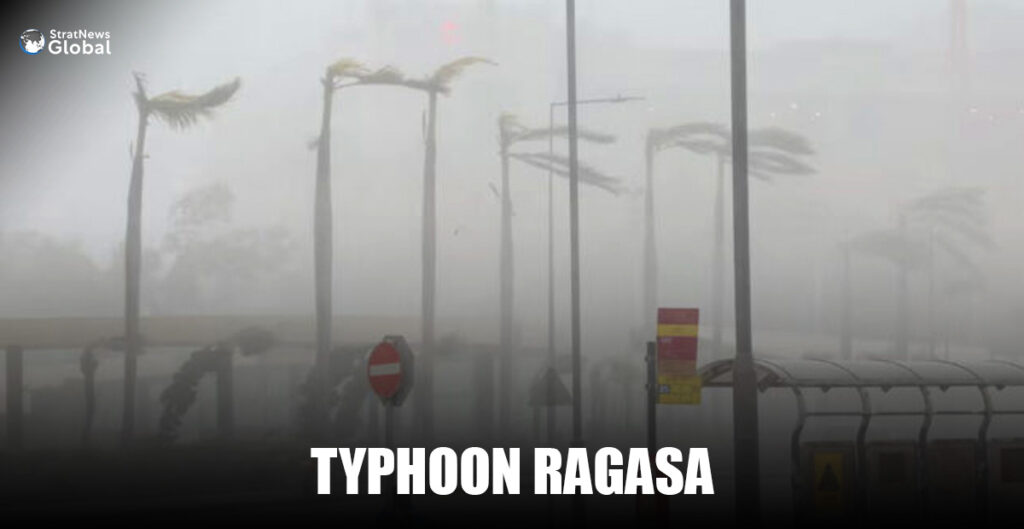
Super Typhoon Ragasa, the strongest tropical cyclone of the year, battered Hong Kong on Wednesday with hurricane-force winds and relentless rain, even as severe downpours in Taiwan claimed at least 14 lives.
A barrier lake in Taiwan’s eastern Hualien county overflowed and sent a wall of water into a town, as heavy rains from Ragasa battered the island, the Taiwan fire department said on Wednesday.
Taiwan has been hit since Monday by the outer rim of Ragasa, which has brought torrential rains to the island.
In Hong Kong, huge waves crashed over areas of the Asian financial hub’s eastern and southern shoreline, submerging some roads alongside residential properties.
At the Fullerton hotel on the island’s south, videos on social media showed a torrent of seawater surged through its glass doors before flooding the floor area. Calls to the property remained unanswered on Wednesday.
In teeming Tseung Kwan O, built largely on reclaimed land, huge waves submersed swathes of waterfront promenade adjacent to towering residential towers.
At outlying islands including Lantau, home to the city’s international airport, widespread flooding was seen, swamping beaches and vegetation.
“Areas which were previously sheltered may become exposed…seas will be phenomenal with swells,” the observatory said.
Ragasa, packing winds of up to 200 kph (124 mph), will be closest to the city in the next few hours, around 100 km (60 miles) south of the densely populated territory.
Ragasa Expected To Maintain Super Typhoon Status
It is expected to maintain super typhoon intensity as it moves toward the coast of China’s Guangdong province, home to more than 125 million people, where it is expected to make landfall from midday (0400 GMT).
Ragasa swept through the northern Philippines on Monday and Taiwan on Tuesday.
The typhoon sparked panic buying this week in Hong Kong, with people crowding into supermarkets, leaving little on the shelves and in some cases queuing for hours to purchase goods amid fears that shops could be closed for two days.
As the typhoon approached, residents taped their windows in the hope of reducing the risk of injury from shattered glass.
Highest Alert Issued
Hong Kong issued the typhoon signal 10, its highest warning, early on Wednesday, which urges businesses and transport services to shut down.
Authorities also issued the Amber rainstorm signal, as heavy rain was expected to continue, with some streets already partially flooded, according to the South China Morning Post.
Authorities have warned of rising sea levels, saying they could be similar to those seen during Typhoon Hato in 2017 and Typhoon Mangkhut in 2018, both of which caused billions of dollars in damage.
“The water level will reach the maximum around noon (0400 GMT),” generally to around four metres (13 feet),” the observatory said.
A woman and her five-year-old son were swept into the ocean on Tuesday after watching the typhoon from the waterfront, according to the SCMP, which said they were now in intensive care after being rescued.
The government said it had opened 49 temporary shelters in various districts, and 727 people have sought refuge at the shelters.
Hong Kong’s Stock Exchange will remain open. It changed its policy late last year to continue trading whatever the weather.
Broader Impact
In the gambling hub of Macau next to Hong Kong, authorities also issued the No. 10 warning signal early on Wednesday. Casinos have been forced to shutter their gambling areas since Tuesday evening and are likely to remain closed on Wednesday. Guests are not able to leave their property if they are staying there.
One user on China’s Xiaohongshu app showed videos of doors being sealed at a casino resort to protect against the typhoon.
In Guangdong, authorities have evacuated over 770,000 people, state broadcaster CCTV said.
Schools and transport services including the high-speed rail have been shuttered, while flights have been cancelled at the region’s busiest airports in Guangzhou and Shenzhen.
China’s marine authority issued its highest ‘red’ wave warning for the first time this year, forecasting storm surges of up to 2.8 metres (9 feet)in parts of Guangdong province.
Guangzhou, Shenzhen, Foshan and Dongguan, the largest cities in Ragasa’s path, are home to around 50 million people.
The emergency management ministry dispatched tens of thousands of tents, folding beds, emergency lighting equipment and other rescue supplies on Tuesday, Chinese state media reported.
(With inputs from Reuters)
Syria, Israel Inch Towards Security Deal As Talks Progress In New York
In a possible breakthrough, Syria and Israel are close to finalising a “de-escalation” deal that would see Israel cease its attacks in exchange for Syria agreeing not to move heavy equipment or machinery near the Israeli border, a senior US envoy said on Tuesday.
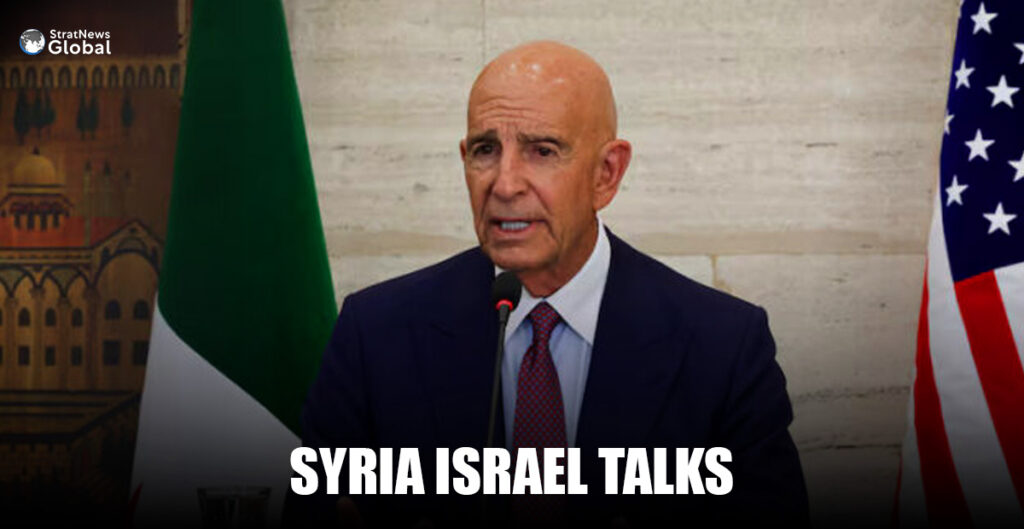
Speaking to reporters on the sidelines of UN General Assembly meetings in New York, US Special Envoy for Syria Tom Barrack said the agreement would serve as the first step towards the security deal that the two countries have been negotiating.
Syria and Israel are in talks to reach an agreement that Damascus hopes will secure a halt to Israeli airstrikes and the withdrawal of Israeli troops who have pushed into southern Syria.
Approaching In Good Faith
US President Donald Trump has sought to strike an agreement between the two sides that would be announced this week but not enough progress has been made so far and the Rosh Hashana holiday, the Jewish New Year this week, has slowed down the process, Barrack said.
“I think everybody is approaching it in good faith,” Barrack said.
‘Scared Of Israel’
Israel and Syria have been Middle East adversaries for decades. Despite the overthrow of Syria’s longtime President Bashar al-Assad last December, territorial disputes and deep-seated political mistrust between the two countries remain.
Israel has voiced hostility to Syria’s Islamist-led government, pointing to President Ahmed al-Sharaa’s former jihadist links, and has lobbied Washington to keep the country weak and decentralised.
After months of encroaching into the demilitarized zone, Israel abandoned the 1974 truce on December 8, the day a rebel offensive ousted Assad. It struck Syrian military assets and sent troops to within 20 km (12 miles) of Damascus.
Since then, Israel has carried out more than 1,000 strikes on Syria and conducted more than 400 ground incursions, Sharaa said last week.
Speaking shortly before Barrack at an event in New York, Sharaa, a former al Qaeda leader who led rebel forces that overthrew Assad’s government last year, expressed concern that Israel may be stalling the talks.
“We are scared of Israel. We are worried about Israel. It’s not the other way around,” he said.
(With inputs from Reuters)
Taliban Internet Ban Cuts Afghan Women’s Digital Lifeline
In Afghanistan, women who rely on fibre-optic internet to sell their intricate embroidery now face a ban in five northern provinces, cut off by Taliban authorities citing the prevention of “immoral activities.”
Residents in other provinces, including Kandahar, Herat and Parwan, have reported disruptions, though these have not been formally acknowledged by authorities.
The loss of access to the fibre-optic network has stranded thousands of homes, businesses and schools and left them reliant on costly, patchy mobile phone connections.
The measure is the first large-scale internet shutdown since the Islamist group seized power in 2021, though it is not nationwide.
For Sabrinna Hayat, who runs Hayat Handicrafts with nine women breadwinners stitching firaq partug, the long embroidered dresses commonly worn by Afghan women, along with other handmade items, the outage has tripled internet costs.
She said her group used to receive orders from Afghanistan and abroad, but now must repeatedly activate mobile internet packages that cost three times as much as fibre, just to keep up with customers.
“A complete ban has been imposed on fibre-optic cable … This action has been taken to prevent immoral activities, and an alternative solution will be developed within the country to meet necessary needs,” Haji Zaid, a spokesman for the governor of the Balkh province, said last week.
The Kunduz provincial media office issued a similar statement. The Ministry of Communications in Kabul did not immediately respond to a request for comment.
Across town, a tailor who asked to be identified only by her family name, Dawrani, said her workshop employing widows and women in need has been gutted, given that sales and orders depend on connectivity.
“If I cannot even earn this small piece of bread, I will be forced to leave this country,” she said.
Cut Off From The World
The internet has been a lifeline for students, especially girls barred from secondary schools and universities, but the shutdown has cut off even that option in northern Afghanistan.
Dawrani said her daughters were no longer able to take their online English classes.
Digital rights advocates say the Taliban’s reasoning is less about morality than about control.
Obaidullah Baheer, a Kabul-based academic, said the ban echoed earlier Taliban moves that used immorality as justification for restrictions, including on women’s education, and were followed by promises of reform that never materialised.
“It shows a very anti-modern version of the Taliban. Seems like their fight is against modernity and they’re fitting the bill of people who used to call them draconian.”
For some women, the debate is distant.
“Through this tailoring work, I managed to put food on the table. Without the internet, even that may disappear,” said Dawrani.
(With inputs from Reuters)
Palestinian State Recognition Fails To Ease Gaza’s Struggles
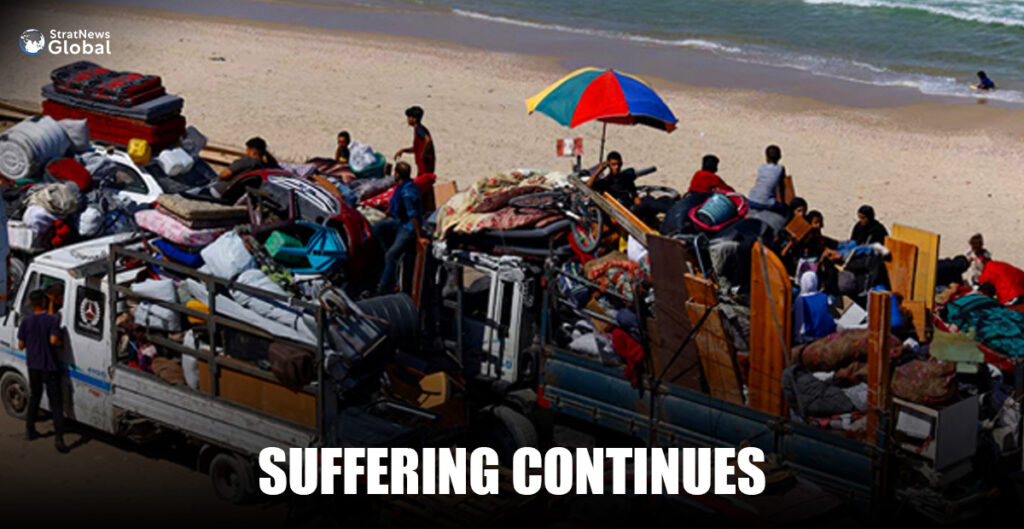
Israel’s military on Tuesday advanced further into the densely populated areas of Gaza City, underscoring for residents that Western recognition of a Palestinian state has not halted the ongoing conflict as tanks draw closer.
Israel pressed on with its Gaza offensive a day after dozens of world leaders gathered at the United Nations to embrace a Palestinian state, a landmark diplomatic shift after nearly two years of war that faces resistance from Israel and its close ally, the United States.
Local health authorities said Israeli fire on Tuesday killed at least 22 people across the Gaza Strip, 18 of them in Gaza City, and the Gaza health ministry said hospitals in the enclave would run out of fuel in the coming few days, endangering lives.
Explosions Destroy Gaza Homes, Roads
“We are not steadfast, we are helpless. We don’t have money to leave to the south, and we don’t have guarantees that if we do, the Israelis will not bomb us, so we are staying,” Huda, a mother of two from Gaza City, told Reuters via a chat app.
“The children tremble all the time from the sounds of explosions, we do too, they are wiping out a city that is thousands of years old, and the world is celebrating a symbolic recognition of a state that won’t stop our killing.”
Israeli forces detonated explosive-laden vehicles in the suburbs of Sabra and Tel Al-Hawa as tanks made a big push towards the western side of Gaza City. Residents said the explosions destroyed dozens of homes and roads.
Three hospitals were taken out of operation on Monday as Israeli forces advanced, further weakening the health system and depriving residents of medical care, local authorities said.
President Emmanuel Macron announced that France recognised Palestinian statehood at a meeting he convened with Saudi Arabia on Monday – a milestone that appeared unlikely to change much on the ground. Israel has said such moves will undermine prospects for a peaceful end to the conflict.
Two-State Solution
The two-state solution was the bedrock of the U.S.-backed peace process ushered in by the 1993 Oslo Accords, but the process has all but died.
The Israeli government has declared there will be no Palestinian state as it fights the militant group Hamas in Gaza following the October 7, 2023, attack on Israel that killed about 1,200 people.
Israel has drawn global condemnation over its military conduct in Gaza, where more than 65,000 Palestinians have been killed, according to local health authorities.
Despite this, Israel has begun a ground assault on Gaza City with few prospects for a ceasefire, and wants Hamas to hand over the last hostages it seized in the 2023 attack on Israel.
Gaza City is the capital of the Gaza Strip and used to house Hamas’ most powerful battalions before the war.
“Are we now being killed as the citizens of the state of Palestine? Is that what happened?” said Abu Mustafa, hours after he fled his Gaza City home because Israeli tanks were close.
“Those countries that suddenly remembered Palestine was occupied forgot that Gaza is being wiped out. We want the war to end, we want our slaughter to end, that’s what we need now, not declarations.”
Israeli Prime Minister Benjamin Netanyahu has dismissed the criticism of the military campaign and said the war will not stop until Hamas is eliminated. But he has not produced a plan for Gaza, much of which has been reduced to rubble, after the war ends.
Trump’s Combative UN Speech
U.S. President Donald Trump warned Russia he is prepared to impose strong economic measures over the war in Ukraine and rejected a global move toward recognition of a Palestinian state, in a combative speech to the U.N. General Assembly.
In his first U.N. address since regaining power in January, Trump spoke to dozens of world leaders, many of whom have been alarmed to see the United States turn away from traditional alliances in favour of an isolationist “America First” policy.
Trump rejected statehood for Palestinians, adopting the stance of Israeli Prime Minister Benjamin Netanyahu.
“The rewards would be too great for Hamas terrorists, for their atrocities,” he said, repeating his call for the return of hostages taken by the Palestinian militant group.
Trump said the United States wants a ceasefire-for-hostages deal that would see the return of all remaining hostages, alive and dead.
“We have to stop the war in Gaza immediately. We have to immediately negotiate peace,” he said.
(With inputs from Reuters)
Syria Plans To Form New Parliament To Test Inclusivity Promise
Syria is set to form its first parliament since Bashar al-Assad’s ouster, marking a key step in the country’s transition while raising questions about political inclusivity under President Ahmed al-Sharaa.
Regional committees have selected electoral colleges that will elect two-thirds of the 210-member People’s Assembly on October 5. Sharaa appoints the remaining third.
The authorities say they resorted to this system rather than universal suffrage due to a lack of reliable population data and displacement after years of war.
The process is unfolding as Sharaa tries to consolidate his hold over a fractured nation, with suspicion of his Sunni Islamist-led administration running deep among minority Kurds, Druze and Alawites.
How Will The Election Take Place?
The process is run by an 11-member body appointed by Sharaa in June. This body, in turn, appointed regional subcommittees that selected members of regional electoral colleges, after local consultations. A preliminary list of some 6,000 electors has been announced. To run for parliament, you must first be selected as a member of an electoral college.
The criteria rule out supporters of the former regime, and advocates of “secession, division or seeking foreign intervention”.
The 140 seats are distributed among 60 districts.
Will It Take Place Across Syria?
No. Citing security and political reasons, the authorities have postponed the process in areas controlled by a Kurdish-led administration in the northeast, which differs sharply with Sharaa over how Syria should be governed.
It was also delayed in predominantly Druze Sweida in the south, where tensions remain high following violence that pitted government forces against Druze fighters.
This means that around a dozen seats reserved for these areas will not be filled for now.
What Do Critics Say?
Critics say the process is centralised and the eligibility criteria vaguely defined, among other concerns.
A statement from 15 civil society groups said it opens the way for “the executive authority to dominate an institution that should be independent of it and reflect the popular will”.
The Supreme Committee says an appeals process allows people to challenge the selections of electors.
Though the rules stipulate that at least a fifth of electors should be women, there is no minimum requirement for their parliamentary representation. Likewise, there are no quotas for ethnic and sectarian minorities.
Combined with a winner-takes-all voting system, the election could produce a result dominated by men from Syria’s Sunni Muslim majority, analysts say. This may put the onus on Sharaa, who has repeatedly promised inclusivity, to use his third to appoint female lawmakers and members of minority groups.
Political scientist Radwan Ziadeh described it as a selection process that risked adding to a “crisis of legitimacy” by not providing “true representation”. “Critics … will say this is not democratic, it’s not free, even though the state never claimed it was a democratic process,” he said.
The dominant Kurdish groups see the process as further evidence that Damascus wants to monopolise power. Sharaa has rejected their demand for decentralised government.
Thouraya Mustafa of the Kurdish Democratic Union Party (PYD) said it showed the new administration had the same mentality “as the previous authoritarian mentality”.
Under Assad, parliament acted as a rubber stamp for his decisions.
What Has Sharaa Said?
Sharaa has said the assembly was being formed in “an acceptable way” for a transition, and was “not a permanent state”. He said it was impossible to hold a national election due to “the loss of documents”, noting many Syrians are outside the country, also without documents.
Sharaa has previously indicated support for democratic governance, telling the Economist in January that “if democracy means that the people decide who will rule them and who represents them in the parliament, then yes, Syria is going in this direction”.
What Powers Will The Parliament Have?
A temporary constitution introduced in March granted parliament limited authorities. There is no requirement for the government to win a parliamentary vote of confidence.
The Assembly can propose and approve laws. Its term is 30 months, renewable. It assumes legislative authority until a permanent constitution is adopted and elections are organised.
(With inputs from Reuters)
Denmark Ties Copenhagen Airport’s Drone Activity To Europe-Wide Hybrid Attacks
Denmark said Monday’s drone disruption at its main airport marked the most serious strike on its critical infrastructure to date, linking the incident to suspected Russian incursions and other disruptions across Europe.
Danish Prime Minister Mette Frederiksen said the drone activity seemed designed “to disrupt and create unrest”, though authorities refrained from naming suspects.
Sightings of two or three large drones near Copenhagen airport late on Monday halted all take-offs and landings for nearly four hours. Authorities in Norway also shut the airspace at Oslo airport for three hours after a drone was seen.
The shutdowns at the Nordic region’s busiest airports left tens of thousands of passengers stranded.
Denmar Not Ruling Out Anything
“What we saw last night is the most serious attack on Danish critical infrastructure to date,” Frederiksen said in a statement sent to the media on Tuesday.
“We are obviously not ruling out any options in relation to who is behind it. And it is clear that this fits in with the developments we have observed recently with other drone attacks, violations of airspace, and hacker attacks on European airports,” she said.
In comments to public broadcaster DR, Frederiksen noted recent suspected Russian drone incursions into Polish and Romanian airspace, as well as Estonia reporting that Russian fighter jets had entered its airspace on Friday.
“I certainly cannot deny in any way that it is Russia,” she said.
Danish police declined to comment on a post on X by Ukraine’s President Volodymyr Zelenskyy, without providing evidence, that Russia was behind the Copenhagen airspace violation.
Suspicions of Russian involvement were ungrounded, Russia’s ambassador to Denmark, Vladimir Barbin, said in a statement sent to Reuters. “The incident in the sky above Copenhagen Airport reveals a clear desire to provoke NATO countries into a direct military confrontation with Russia,” he said.
Western security agencies have in recent years said hybrid threats, particularly from Russia, were becoming increasingly aggressive.
Such threats include everything from physical sabotage of critical infrastructure to disinformation campaigns, suspected espionage, and cyberattacks.
Moscow has consistently denied responsibility for any hybrid attack in Europe.
Drones Came From Different Directions, THen Disappeared
Danish police said the drones in Denmark came from different directions, turning their lights on and off, before eventually disappearing after several hours.
Danish police Chief Superintendent Jens Jespersen told reporters on Tuesday that authorities were investigating several hypotheses, including the possibility that the drones were launched from ships.
Denmark’s main airport is located close to a busy shipping lane where vessels enter and exit the Baltic Sea. A Royal Danish Navy ship was patrolling the waters next to Copenhagen for several hours on Tuesday morning, data from Marinetraffic.com showed.
“It’s an actor who has the capabilities, the will, and the tools to show off in this way,” Jespersen said. It was too early to say if the incidents in Denmark and Norway were linked, he said.
The Norwegian security police, PST, told Reuters the situation was “still unclear” and that it was in “routine contact with actors both nationally and internationally.”
(With inputs from Reuters)