

Support us by contributing to StratNewsGlobal on the following UPI ID
ultramodern@hdfcbank

Strategic affairs is our game, South Asia and beyond our playground. Put together by an experienced team led by Nitin A. Gokhale. Our focus is on strategic affairs, foreign policy and international relations, with higher quality reportage, analysis and commentary with new tie-ups across the South Asian region.
You can support our endeavours. Visit us at www.stratnewsglobal.com and follow us on YouTube, Twitter, Facebook and Instagram.
र 500 per month
र 1000 per month
र 5000 per year
र 10000 per year
Donate an amount of your choice
र 500 per month
Donate र 500 per month

र 1000 per month
Donate र 1000 per month
र 5000 per year
Donate र 5,000 per year
र 10000 per year
Donate र 10,000 per year
Donate an amount of your choice
Donate an amount of your choice
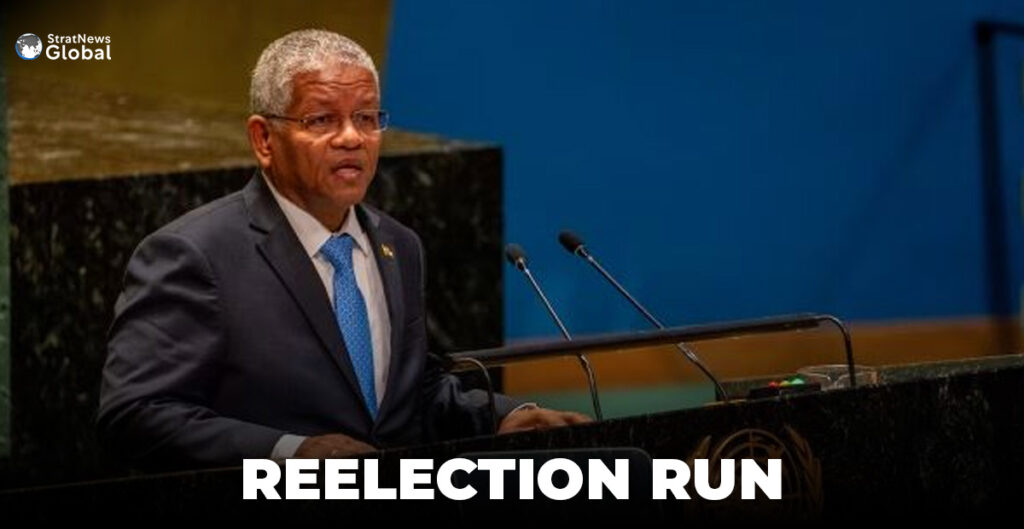
Seychelles President Runs For Reelection Amid Signs Of Economic Recovery
Seychelles is set to hold general elections on Thursday, with incumbent President Wavel Ramkalawan and his allied lawmakers campaigning to maintain control and prevent the return of the party that ruled the island nation for four decades.
The idyllic beach destination is Africa‘s wealthiest country per capita, with a location in the western Indian Ocean that makes it a target for investment and security cooperation from India, China and Gulf States.
Ramkalawan, a former Anglican priest, says he is seeking a second five-year term to build social protections and infrastructure while defending the country’s neutrality to draw investment.
His main rival, United Seychelles’ candidate Patrick Herminie, has said the population of 120,000 is suffering from soaring living costs, declining standards in schools, corruption, and drug abuse, problems he has promised to tackle.
Economic Rebound
Over three days, some 73,000 voters will choose from eight presidential candidates and 125 challengers for the 35-seat National Assembly, where Ramkalawan hopes to maintain a majority for his Linyon Demokratik Seselwa coalition.
Results are due on Sunday.
Long one of Africa’s top economic performers thanks to tourism earnings and governance reforms, Seychelles has bounced back strongly from the COVID-19 pandemic. Last year it was removed from the EU’s tax blacklist.
Inflation is under 2% and public debt on course to drop below the government’s target of 50% of gross domestic product before 2030, according to the International Monetary Fund.
“We’ve embarked on an ambitious programme of taking care of our people,” Ramkalawan said, pointing to an increased minimum wage, infrastructure projects and free school meals.
He hopes to build a new hospital and airport and a modern port, while using neutrality to maximise investment.
“We say keep your geopolitics to yourselves. A French warship, an American, British, Chinese, or Indian vessel, all are welcome. If India and China have problems, that is not ours,” Ramkalawan said.
Witchcraft Allegations
Herminie, a doctor and former National Assembly speaker, has overcome unusual legal challenges, including his arrest in 2023 for trying to stage a coup using witchcraft. He denied the charges, which were later dropped.
Herminie says the government has presided over spreading corruption, citing the leasing of two islands to companies from Qatar and the United Arab Emirates.
He said his party had learned from its 43 years in power, when it faced corruption allegations of its own.
“The party had been in power too long, empires were built inside, and divisions weakened us,” he said.
“We remain a progressive, left-of-centre party, convinced that people should be at the centre of development.”
Other presidential candidates include gospel singer Robert Moumou, entrepreneur Marco Francis, and former tourism minister Alain St Ange.
(With inputs from Reuters)
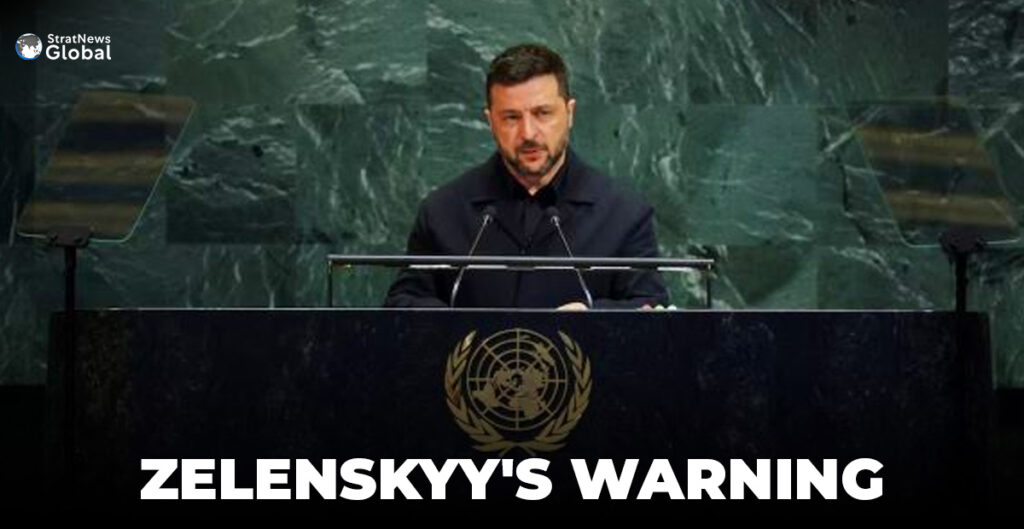
Zelenskyy Urges UN To Halt Russia’s Aggression, Warns Of Escalating Arms Race
In a speech to the United Nations on Wednesday, Ukrainian President Volodymyr Zelenskyy called on global leaders to intervene and end Russia’s invasion in Ukraine, cautioning that the ongoing conflict is fuelling a perilous arms race.
He called for international rules to curb the use of artificial intelligence in arms and weapons while describing breakneck innovation in drones used in Ukraine. He also accused Russian President Vladimir Putin of seeking to expand his war beyond Ukraine.
“Stopping Russia now is cheaper than wondering who will be the first to create a simple drone carrying a nuclear warhead,” he told the 193-member United Nations General Assembly.
His comments came a day after he met U.S. President Donald Trump at the United Nations, where Trump appeared to take a much tougher stance toward the Kremlin.
Trump said on Tuesday that Kyiv could retake all its occupied land from Russia in what would be an extraordinary battlefield reversal. He also endorsed the idea of shooting down Russian fighter jets that violate NATO airspace.
Zelenskyy said the advent of artificial intelligence meant the arms race under way was the “most destructive” in human history and voiced disappointment in what he said was the weakness of international law and cooperation.
Ukraine has been locked in fighting for more than three and a half years since Russia’s full-scale invasion triggered the biggest conflict in Europe since World War Two.
Western support has been vital for Kyiv, but the future of that assistance has been uncertain as Trump has declined to impose powerful sanctions on Russia or provide fresh military assistance beyond selling arms.
Trump has talked up the need for Europe to take on more of the burden of supporting Kyiv and, despite his sudden shift in language this week, there is no sign for now that the U.S. president has stepped up actual support.
U.S. Secretary of State Marco Rubio met Russian Foreign Minister Sergei Lavrov in New York on Wednesday for talks that lasted around 50 minutes.
Separately, Vice President JD Vance told reporters that Trump was growing “incredibly impatient” with Russia because they were not “putting enough on the table to end the war.”
“If the Russians refuse to negotiate in good faith, I think it’s going to be very, very bad for their country. That’s what the president made clear. It’s not a shift in position. It’s an acknowledgement of the reality on the ground,” Vance said.
Ukraine Pitches Its Arms Technology At Allies
In a sign of how Kyiv is pitching its technology and experience from the war to shore up fragile relations with its foreign partners, Zelenskyy said Ukraine had decided to begin exporting its weapons to allies.
Zelenskyy said the modern era meant that having powerful friends was essential, but that, “If a nation wants peace, it still has to work on weapons. It’s sick – but that’s the reality.”
Ukraine has had tough restrictions on the export of its military products to prevent technology falling into the hands of its enemies, but it is now moving to relax them, in cases where its own stocks are covered.
“You don’t need to start this race from scratch. We’re ready to share what has already proven itself,” Zelenskyy told the United Nations, referring to Ukrainian defence production.
“We are ready to make our modern weapons become your modern security. We have decided to open up arms export. And these are powerful systems tested in a real war when every international institution failed,” he said.
He pointed to alleged airspace violations by Russian drones and fighter jets in NATO members Poland and Estonia as evidence that Putin was testing new boundaries in the war in Ukraine.
“Now Russian drones are already flying across Europe, and Russian operations are already spreading across countries,” he said. “Putin wants to continue this war by expanding it, and no one can feel safe right now.”
(With inputs from Reuters)
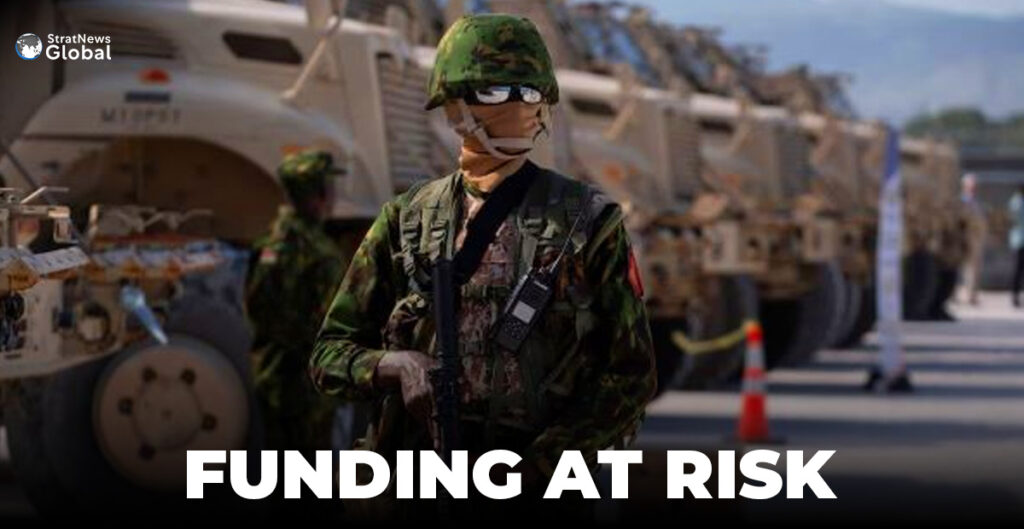
Haiti Mission Funding At Risk Without UN Approval, US Official Warns
A senior U.S. official said on Wednesday that America’s financial support for the United Nations–backed security mission in Haiti could be withdrawn if the Security Council refuses Washington’s proposal to expand and reorganize the operation.
“The U.S. provision of support for the MSS (Multinational Security Support mission) and what we have been providing will expire at the end of December,” U.S. charge d’affaires in Haiti Henry Wooster told reporters, when asked if Washington will continue to provide support if the plan is rejected.
Wooster said, however, that he was cautious of speculating on future funding decisions.
The Kenya-led MSS deployed in Haiti in June last year but has struggled to make headway in curbing violent armed gangs – some of which Washington has designated as terrorist organizations – in and beyond the capital of Port-au-Prince.
The mission, built by voluntary contributions from member states, has struggled with a lack of funds, troops and equipment such as armored vehicles. Around 1,000 troops have deployed, short of a target of some 2,500.
New U.S. Model
The new model proposed by the U.S., which would rename the MSS as the Gang Suppression Force and restructure its leadership, aims to deploy some 5,500 troops, although this is also set to be provided by voluntary contributions.
“We need more numbers,” Kenya President William Ruto said on Wednesday. “We need more logistics, we need more equipment, and we need more financial support to be able to carry this through.”
Ruto told the United Nations General Assembly in New York that Kenya had stepped up in the belief that the mission would be a genuinely multinational effort, but the world had not shown up for Haiti and the mission lacked the logistical support that would accompany other U.N.-sanctioned missions.
U.N. data on Wednesday showed that a trust fund set up for the original mission had received $113 million, more than half from Canada, with the U.S. in second place at $15 million. It was estimated to cost hundreds of millions to run each year.
The mission’s current mandate will expire on October 2.
(With inputs from Reuters)
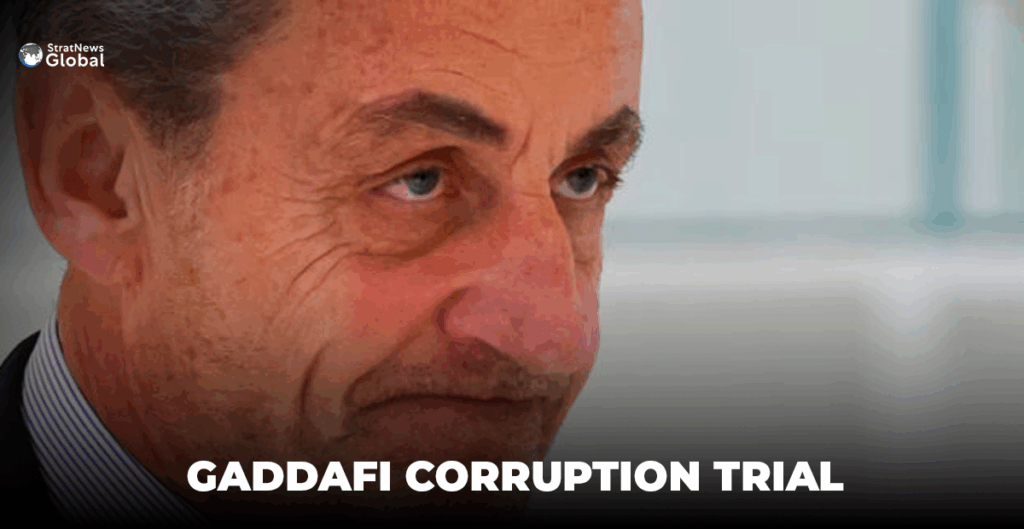
Ex-French President Nicolas Sarkozy To Learn Verdict In Corruption Trial
Former French President Nicolas Sarkozy is set to learn his fate on Thursday, as a high-profile corruption trial draws to a close. He stands accused of accepting millions of euros from the late Libyan dictator Muammar Gaddafi to fund his 2007 presidential campaign.
French prosecutors have requested a seven-year jail sentence for Sarkozy, who was president from 2007 to 2012. He can appeal if found guilty, which would likely suspend his sentence.
9 Month Long Trial
The 70-year-old has been on trial since January on charges of “concealing the embezzlement of public funds, passive corruption, illegal campaign financing and criminal conspiracy with a view to committing a crime”.
Investigators allege he made a corrupt pact with the Libyan government. At issue is a murky affair alleged to involve Libyan spies, a convicted terrorist, arms dealers and allegations that Gaddafi provided Sarkozy’s campaign with millions of euros shipped to Paris in suitcases.
Politically Motivated Case?
Sarkozy has repeatedly denied any guilt, and said the case is politically motivated.
Despite lingering legal headaches, and having his Legion of Honour, France’s highest distinction, stripped in June, Sarkozy remains an influential figure on the French political stage.
He recently met with his former protege, Prime Minister Sebastien Lecornu, and has also lent credibility to the National Rally (RN), led by Marine Le Pen, saying the far-right, anti-immigrant party now forms part of the “republican arc.”
Prolonged Legal Battles
Sarkozy has faced legal battles since leaving office.
Last year, France’s highest court upheld his conviction for corruption and influence peddling, ordering him to wear an electronic tag for a year, a first for a former French head of state. The tag has now been removed.
Also last year, an appeals court confirmed a separate conviction for illegal campaign financing over his failed re-election bid in 2012.
(With inputs from Reuters)
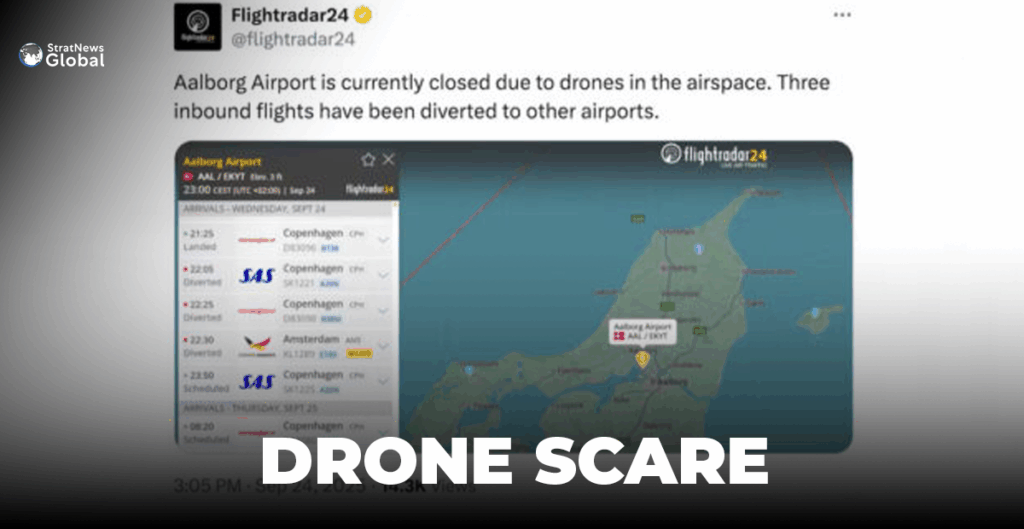
Fresh Drone Scare Hits Denmark’s Aalborg Airport
Denmark’s Aalborg airport, serving both civilian and military flights, was shut on Thursday after drone sightings, just two days after similar incidents disrupted operations at Copenhagen airport, heightening security concerns across Europe.
Danish national police said the drones followed a similar pattern to the ones that had halted flights at Copenhagen airport for four hours a few days earlier. Local police later said the drones had left the Aalborg area after about three hours.
Denmark said on Tuesday the incident at Copenhagen airport was the most serious attack yet on its critical infrastructure and linked it to a series of suspected Russian drone incursions and other disruptions across Europe.
The closure of Aalborg airport also affected Denmark’s armed forces because it is used as a military base, police added. The Danish armed forces said they were assisting local and national police with the investigation, but declined to comment further.
Authorities in Norway also shut the airspace at Oslo airport for three hours on Monday evening after a drone was seen.
‘Pattern Of Persistent Contestation’
European Commission President Ursula von der Leyen said on Tuesday that the drones that halted flights at Copenhagen airport were part of a “pattern of persistent contestation at our borders.”
Suspicions of Russian involvement in the Copenhagen airport incident were ungrounded, Russia’s ambassador to Denmark said on Tuesday.
Norwegian and Danish authorities are in close contact over the Copenhagen and Oslo incidents on Monday but their investigation has not yet established a connection, Norway’s foreign minister said on Wednesday.
More Than One Drone
Northern Jutland police told reporters “more than one drone” had been sighted near Aalborg airport and they were flying with lights on.
The drones were first seen at about 9:44 p.m. (1944 GMT) on Wednesday, according to police, and remained in the airspace until 12:54 a.m. on Thursday.
Eurocontrol, which oversees European air traffic control, had earlier said arrivals and departures at Aalborg airport would be at a “zero rate” until 0400 GMT on Thursday due to drone activity in the vicinity.
The first flight from Aalborg on Thursday is scheduled at 0420 GMT, the airport’s website showed.
Northern Jutland police said they could not specify the type of drones or whether they were the same as the ones flying over Copenhagen airport on Monday.
“It is too early to say what the goal of the drones is and who is the actor behind,” a police official said.
Unsuccessful Effort To Intercept
Northern Jutland police later said that efforts to take down the drones had been unsuccessful and the drone operators had yet to be apprehended.
Southern Jutland police said in a post on X that drones had also been observed near the airports in the Danish towns of Esbjerg, Sonderborg and Skrydstrup.
Fighter Wing Skrydstrup in Southern Jutland is the base for Denmark’s F-16 and F-35 fighter jets.
National police commissioner Thorkild Fogde said many people around the country had reported drone sightings to the police since Monday.
“Of course many of these reports do not cover activities that are of interest to the police or the military, but some of them do, and I think the one in Aalborg does,” he said.
Police said they were investigating further on site and cooperating with the national intelligence service and the armed forces, as well as authorities in other countries.
There is no danger to passengers at Aalborg airport or residents in the area, police said.
They added that three flights had been diverted to other airports.
(With inputs from Reuters)
Trump To Meet Sharif Amid Strengthening US-Pakistan Ties: Reports
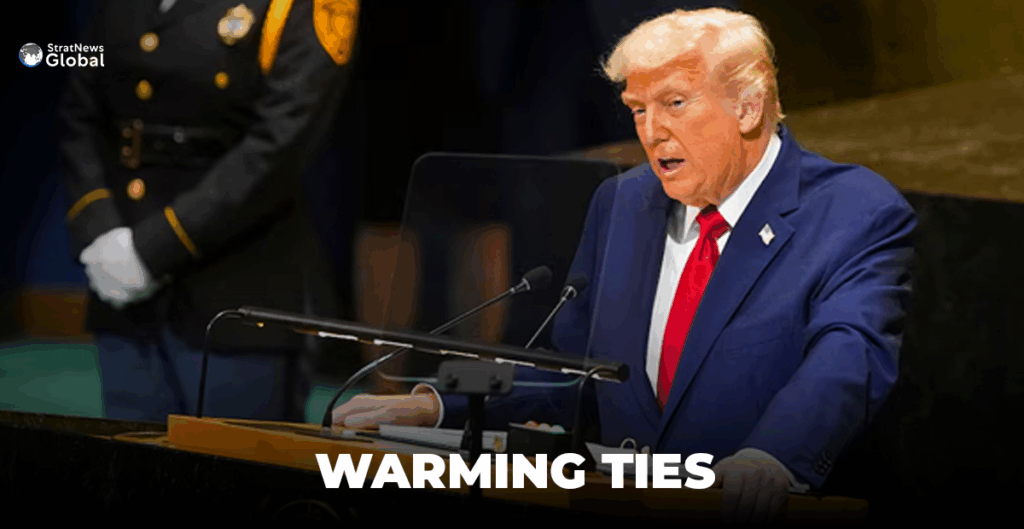
US President Donald Trump is scheduled to meet Pakistani Prime Minister Shehbaz Sharif at the White House on Thursday, marking a key diplomatic engagement weeks after the two countries agreed to a trade deal.
US-Pakistan ties have warmed in recent months under Trump after Washington had for years viewed Pakistan’s rival India as a counter to China’s influence in Asia.
Washington’s relations with New Delhi have been tested under the Republican leader over issues such as visa hurdles for Indians, high tariff rates imposed by Trump on goods from India and Trump’s repeated claims that he brokered an India-Pakistan ceasefire in May after the South Asian neighbors engaged in their latest hostilities.
Lower Tariffs For Pakistan
The United States and Pakistan announced a trade deal on July 31 with a 19% tariff rate imposed by Washington. Trump is yet to reach a trade deal with India.
Officials and analysts have noted that after tensions with Washington, New Delhi is recalibrating relations with China as a hedge.
Trump welcomed Pakistani army chief Field Marshal Asim Munir earlier this year, the first time a US president hosted the head of Pakistan’s army – widely regarded as the most powerful figure in the country – at the White House, unaccompanied by senior Pakistani civilian officials.
Advancing US Interests In Subcontinent
“We’re working through a number of issues when it comes to counter-terrorism, when it comes to economic and trade ties,” a senior State Department official told reporters in a briefing on Tuesday when asked about Pakistan.
“And so the president remains focused on advancing US interests in the region, that includes through engaging with Pakistan and their government leaders,” the official said.
When asked about frictions with India, the official said Trump believed in being frank about frustrations in ties but the relationship was strong. Washington viewed New Delhi as a good friend and partner and believed their relationship would define the 21st century, the official said.
They added that Washington had been working on planning for a summit of the Quad grouping of India, Australia, Japan and the United States that India had been expected to hold in November. That would happen, “if not this year, early next year,” the official said.
Nobel Prize Backing
Pakistan has backed Trump for the Nobel Peace Prize for his efforts in de-escalating tensions between India and Pakistan, although Islamabad has condemned US ally Israel’s bombardments in Gaza, Qatar and Iran.
Sharif was part of a meeting Trump had on Tuesday with leaders of many Muslim-majority countries where the US president discussed Israel’s assault on Gaza.
Washington says the US shared peace proposals with leaders from those countries in the meeting held on the sidelines of the annual UN General Assembly.
(With inputs from Reuters)
China, Trump & The Indo-Pacific: Why France Looks At India
“The big question of our time is how the US sees the Indo-Pacific,” said a European diplomat recently.
It’s a question being asked in a swathe of capitals ranging from those in the Indo-Pacific to Southern Asia and of course Europe. It flows from what are seen as the contradictory postures of the Trump administration towards the region.
Thus, there are demands from Washington that the states of the Indo-Pacific including long-standing allies and partners like Japan, South Korea and the Philippines, spend more on defence to counter China.
At the same time, USAID has been dismantled and there’s no commitment on advancing the Indo-Pacific Economic Framework. Worse still, is the tariffs and penalties being slapped on Tokyo, Seoul and others.
What Trump intends to do with AUKUS (now under review) or the Quad is not clear. Add to that, his assault on the India relationship threatens to undo two decades of diplomatic blood and treasure.
For France, Trump’s trajectory suggests a power vacuum could be shaping up in the Indo-Pacific, which is not a prospect it looks forward to. It is often forgotten that France is an Indo-Pacific power with 1.6 million citizens in that region.
More than that, French territories include the second largest exclusive economic zone in the world garrisoned by an estimated 7000 military personnel. Paris cannot do more given its own constraints, which is why the US military and naval presence in the Indo-Pacific provided some insurance. Not any more and the horizon is looking crowded.
“China is a huge actor,” said a European diplomat, “and it is entering the Indo-Pacific. With its massive GDP it represents a challenge.”
Witness China’s power play in the Solomon Islands where elements of its oppressive surveillance state are being transplanted. Add to that the activities of its infamous fishing fleets bottom trawling in Pacific seas.
But there is something else adding to the growing unease in Paris.
“France has not only economic interests in the region (Indo-Pacific), it also has some security interests given the presence of North Korean troops in Ukraine,” was how it was described.
The argument is that if North Korean troops and equipment could be deployed in the battlefields of Ukraine courtesy Russia, why not the Indo-Pacific which is so much closer. But at whose behest, China’s? The idea may appear fantastic, but nobody reckoned with the North Koreans in Ukraine.
Looked at from Paris, two factors stand out: China’s steady strategic expansion into the French sphere in the Indo-Pacific, at a time when Donald Trump shows every sign of not wanting to get involved in any significant manner to counter it.
The thinking in Paris is that building partnerships in the region maybe the best way to secure its interests. Such partnerships, it is argued, would help reinforce sovereignty over its own territories, something which would also work for its partners. This is where the India relationship comes in.
“There is a lot of trust between India and France,” said a diplomat pointing to the steadily expanding relationship between the two capitals. The political understanding is being shored up at the military level with a clutch of recent defence contracts including for the Rafale fighter and jet engines.
This also extends to cooperation in trade and infrastructure where there is potential for de-risking from China. Some of these discussions also involve Europe, for example in maritime corridors and in reinforcing port safety. Incidentally, France has opened a Centre for Maritime Studies in Rajasthan.
“We must do things together,” is the word from both Paris and Brussels, the seat of the European Union. “We don’t want to get involved with blocs that only divide, let’s do things together.”
Maldives: New Media Law Deepens Suspicions About Government Intent
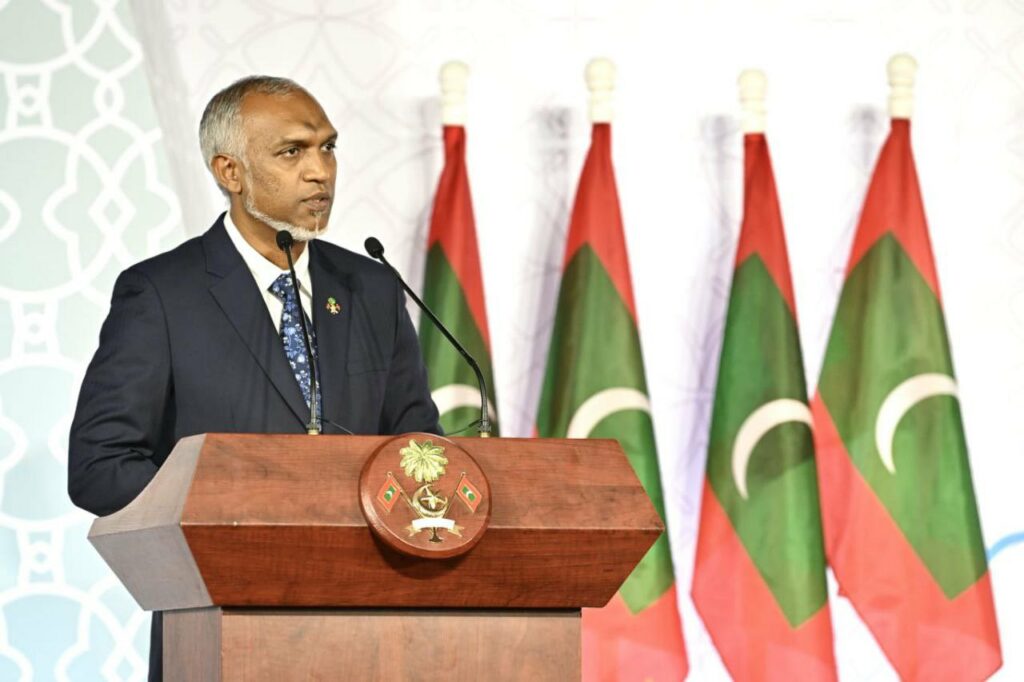
A controversial media bill that was passed by the Maldivian Parliament, has been ratified by President Mohamed Muizzu, and a senior diplomat from Male told journalists in Delhi that “By unifying oversight under one independent body, the law creates clarity, consistency and stronger protections for journalists and the public.”
Ahmed Shiaan, who is Secretary (Multilateral) in the Maldivian Foreign Ministry, claimed the new media body replaces an “outdated and fragmented system where two separate institutions (the Maldives Media Council and the Broadcasting Commission) often overlapped or conflicted in their roles.”
The bill – Maldives Media and Broadcasting Regulation Bill – was passed by the People’s Majlis on September 16 even as journalists there voiced their concern, saying that the law would muzzle them.
The new law, according to various reports, gives sweeping powers to the media commission, allowing fines against reporters and outlets and permits the authorities to suspend or even shut down media organisations.
Shiaan denies that is the case, claiming that “The commission is independent of the executive. A majority of its members (four out of seven) are elected directly by the media sector, with the remaining three appointed by parliament,” he said, adding that the President and Government will have no role in appointments or removals.
But reports from Male quoted Maldivian journalists as saying that parliament has the power to remove the members of the commission and the clauses on protecting “social values” and “personal honour” could be used to silence the media.
Former foreign minister Abdulla Shahid added his voice to the clamour against the bill. In a post on X, he wrote that “The ratification of the Media Control Bill by President Muizzu is a blatant attempt to stifle free speech and muzzle the media. However, the people’s voices will not be silenced. The will of the people always prevails, and dictatorial regimes ultimately fail to suppress dissent.”
Shiaan insists that the act provides “A modern framework that both enhances press freedom and strengthens public confidence in journalism. It protects media independence, reinforces professional standards, and ensures the public’s right to accurate, reliable information, making the Maldives’ media landscape stronger, more independent and more accountable.”
The international outcry against the act is growing. The International Federation of Journalists described the media law as “draconian”, and accused the Muizzu government of seeking to muzzle the press.
Reporters Without Borders said Maldives had fallen two places in the 2025 World Press Freedom Index rankings, now figuring at 104th out of 180 countries. It warned that the media environment on the island was worsening.
Gotland: Sweden, Poland Fortify Island Against Russian Threat
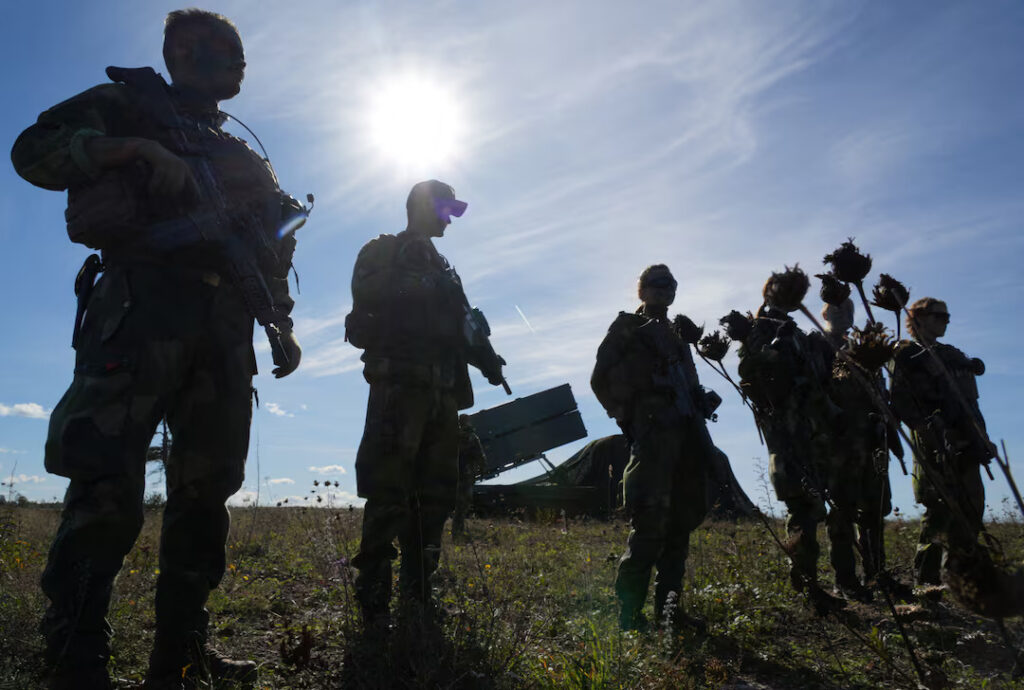
The Swedish island of Gotland is fast gaining prominence as a critical point of control in the Baltic Sea, according to Swedish and Polish military officers. This comes as both nations take part in joint military exercises this week, designed to deter any potential aggression from Russia, against the backdrop of rising tensions between NATO and Moscow.
“It’s basically like a huge aircraft carrier in the middle of the Baltic,” Quartermaster Oscar Hannus of the Swedish Navy said, framed by one of Sweden’s RBS-15 missile systems that would be used against any seaborne threat to the island.
Hannus’ unit, along with paratroopers and coastal missile forces from Poland, is one of several taking part in Operation Gotland Sentry, testing Sweden’s and NATO’s plans to deploy land, sea, and air forces in any rapid defence of Gotland.
From Tourist Destination To Area With Strategic Significance
“We’re here on Gotland with our Polish allies … in order to deter potential enemies from the East in case they want to subject us to any kind of threat here on Gotland or in the Baltic Sea,” said Hannus.
Gotland, popular with Swedish tourists for its sandy beaches, has acquired a growing strategic significance as tensions with Russia have ratcheted up since President Vladimir Putin ordered a full-scale invasion of Ukraine in February 2022.
Deterrence Power
Just 300 km (186 miles) from the home of Russia’s Baltic Fleet in the exclave of Kaliningrad, Gotland dominates vital sea lanes and the island would be crucial if NATO had to send troops and supplies to reinforce the nearby Baltic states of Lithuania, Latvia and Estonia, most likely from Sweden.
“From the island, various long-range missile systems can be used to defend allies while simultaneously deterring Russia,” said Ewa Skoog Haslum, Chief of Joint Operations in Sweden’s navy at the military’s Tofta shooting range on Gotland.
“The island also plays a crucial role in maintaining free supply routes for NATO forces as well as sustaining civilian maritime traffic, which is vital for the supply of several countries in the region.”
On Alert
Demilitarized after the Cold War, Sweden has been rebuilding its strength on the island, which is a 170 km (105 mile)-long rocky outcrop to the south of the capital Stockholm, in the face of an increasingly assertive Russia.
In 2018 Sweden reactivated the army’s Gotland Regiment and has placed ground-to-air missile batteries on the island as well as beefing up other military infrastructure.
After decades of commitment to non-aligned status, Sweden joined NATO in March 2024, meaning it can now count on members of the alliance to come to its defence – and that of Gotland.
“When you put a missile unit on Gotland… you can secure almost the whole Baltic,” said Vice Admiral Krzysztof Jaworski of the Polish Navy. “I would say it’s important for every country in the Baltic Sea.”
(With inputs from Reuters)
US Allies’ Support For Palestinian Statehood Challenges Trump’s Israel Stance
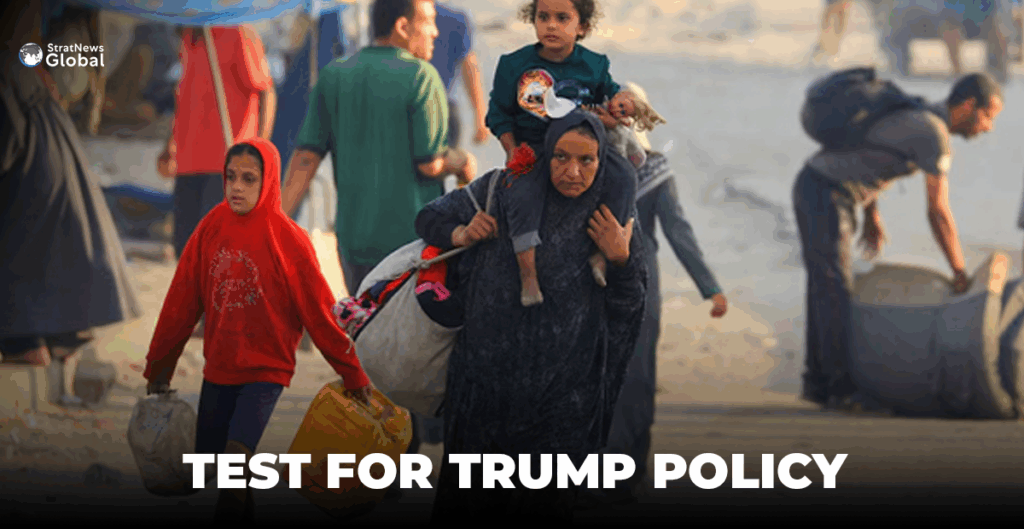
Rising international frustration with the United States over the Gaza conflict surfaced at this week’s United Nations General Assembly, as Washington allies recognised Palestine as a state, posing a major test for President Donald Trump’s Middle East policy.
After promising at the start of his second term to quickly end the war between Israel and Hamas, Trump now looks increasingly like a bystander as Israeli forces escalate their onslaught in the Palestinian enclave and he remains reluctant to rein in Washington’s closest regional ally.
Israeli Prime Minister Benjamin Netanyahu blindsided Trump with a strike on Hamas leaders in Qatar earlier this month that all but doomed the Trump administration’s latest effort to secure a Gaza ceasefire and hostage-release deal.
Israel, since then, has launched a ground assault in Gaza City that the U.S. accepted without objection, amid global condemnation of a widening humanitarian crisis in the coastal strip.
And defying Trump’s warnings against what he called a gift to Hamas, a group of U.S. allies, including Britain, France, Canada and Australia, announced just before and during the U.N. gathering their recognition of the state of Palestine in a dramatic diplomatic shift.
“Trump has not been able to achieve any major progress or gains in the region, particularly on the Israeli-Palestinian top front,” said Brian Katulis, a senior fellow at the Middle East Institute think-tank in Washington. “In fact, things are worse than when he entered office.”
With an end to the nearly two-year-old conflict seeming more remote than ever, the apparent sidelining of Trump has added to scepticism over his repeated claims since his return to office in January that he is a masterful peacemaker who deserves the Nobel Peace Prize.
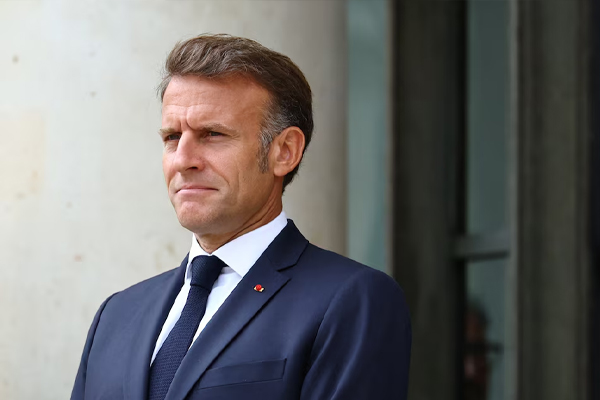
French President Emmanuel Macron said on Tuesday that if Trump really wants to win the coveted Nobel, he needs to stop the war in Gaza.
“There is one person who can do something about it, and that is the U.S. president. And the reason he can do more than us is because we do not supply weapons that allow the war in Gaza to be waged,” Macron told France’s BFM TV from New York.
Some analysts see Trump’s unwillingness to apply Washington’s leverage with Netanyahu as a realisation that the conflict – like Russia’s war in Ukraine – is much more complex and intractable than he has acknowledged.
Others see it as tacit acceptance that Netanyahu will act in what he considers his own and Israel’s interests and that there is little the U.S. president can do to change that.
Still others speculate that Trump may have been distracted from the Middle East by domestic issues such as the recent murder of conservative activist ally Charlie Kirk, continuing fallout from the Jeffrey Epstein scandal and the president’s deployment of National Guard troops to Democratic-led cities for what he says are crime-fighting missions.
The White House did not immediately respond to a request for comment.
Trump Won’t Be Swayed
Despite appearing less engaged on Gaza recently, Trump met on the U.N. sidelines on Tuesday with Saudi Arabia, the United Arab Emirates, Qatar, Egypt, Jordan, Turkey, Indonesia and Pakistan.
He was expected to lay out U.S. proposals for post-war governance in Gaza, without Hamas involvement, and push for Arab and Muslim countries to agree to contribute military forces to help provide security, Axios reported.
Although Trump has at times expressed impatience with Netanyahu’s handling of the war, he made clear in his U.N. speech on Tuesday that he is not ready to back away from strong support for Israel, or be swayed by other countries’ endorsement of Palestinian statehood.
Such announcements only serve to “encourage continued conflict” by giving Hamas a “reward for these horrible atrocities,” Trump said.
France, Britain, Canada, Australia and others have insisted that recognising a Palestinian state would help to preserve the prospects of a “two-state solution” to the long-running conflict between Israel and the Palestinians and help to end the Gaza war.
While leaders taking the podium at the U.N. gathering did not directly chastise Trump for his stance, some analysts saw a clear message to the U.S. president.
“It all depends on Trump, who could end this war with one choice word to Israel’s prime minister,” said Laura Blumenfeld, a Middle East expert at the Johns Hopkins School for Advanced International Studies in Washington. That word, she said, is “enough.”
The U.S. is Israel’s chief arms supplier and historically acts as its diplomatic shield at the U.N. and other world bodies. Last week, the U.S. vetoed a draft Security Council resolution that would have demanded an immediate, unconditional and permanent ceasefire in Gaza.
Trump, however, has given no sign he will use those pressure points.
Even after Israel bombed a Hamas office in the territory of U.S. ally Qatar, he held a tense phone call with Netanyahu but took no action.
No matter how many countries recognise Palestinian independence, full U.N. membership would require approval by the Security Council, where the United States has a veto.
(With inputs from Reuters)