

Support us by contributing to StratNewsGlobal on the following UPI ID
ultramodern@hdfcbank

Strategic affairs is our game, South Asia and beyond our playground. Put together by an experienced team led by Nitin A. Gokhale. Our focus is on strategic affairs, foreign policy and international relations, with higher quality reportage, analysis and commentary with new tie-ups across the South Asian region.
You can support our endeavours. Visit us at www.stratnewsglobal.com and follow us on YouTube, Twitter, Facebook and Instagram.
र 500 per month
र 1000 per month
र 5000 per year
र 10000 per year
Donate an amount of your choice
र 500 per month
Donate र 500 per month

र 1000 per month
Donate र 1000 per month
र 5000 per year
Donate र 5,000 per year
र 10000 per year
Donate र 10,000 per year
Donate an amount of your choice
Donate an amount of your choice
Turkiye Sends Warning Aircraft To Lithuania Following Russian Airspace Breaches
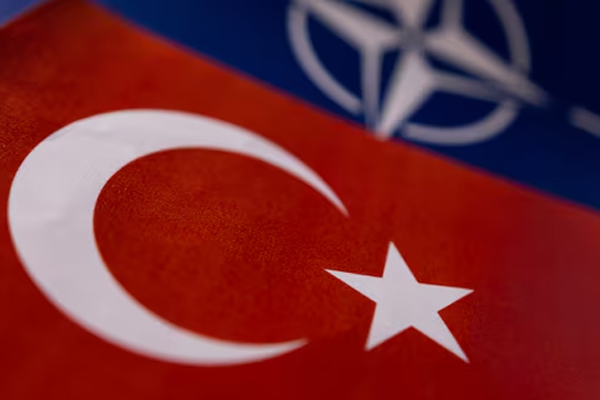
Turkiye temporarily deployed a warning and control aircraft to Lithuania on Thursday under NATO security measures, the defence ministry said, in response to repeated Russian drone airspace violations.
Lithuania, Estonia, Denmark and Poland have all said Russian drones or fighter jets have violated their airspace in recent weeks, prompting the NATO alliance to beef up defence around Europe’s eastern flank.
“Within the scope of NATO Assurance Measures, our Airborne Warning and Control System (AWACS) aircraft is carrying out missions in Lithuanian airspace between September 22 and 25,” the ministry said in its weekly press statement.
AWACS are capable of detecting low-flying drones and other objects that ground radars miss.
The ministry provided no further information.
Poland has shot down some of the drones, and Lithuania’s parliament on Tuesday granted the armed forces powers to shoot down any unmanned drone violating its airspace.
Western officials say Russia is carrying out the airspace violations to test NATO’s readiness and resolve. Estonia and Poland have asked the alliance to open consultations under Article 4 of the NATO treaty.
Article 4 says members of the North Atlantic Treaty Organisation will consult together whenever, in the opinion of any of them, the territory, political independence or security of any of them is threatened.
Turkiye, NATO’s second-largest army, has strong ties with Russia in areas including energy and tourism. It has condemned Moscow’s full-scale invasion of Ukraine and provided Kyiv with military support, but refrained from joining Western sanctions against Russia as part of a balancing act that it says helps it talk to both sides.
(With inputs from Reuters)
At White House, Turkiye’s President Erdogan To Negotiate F-35 Deal With Trump
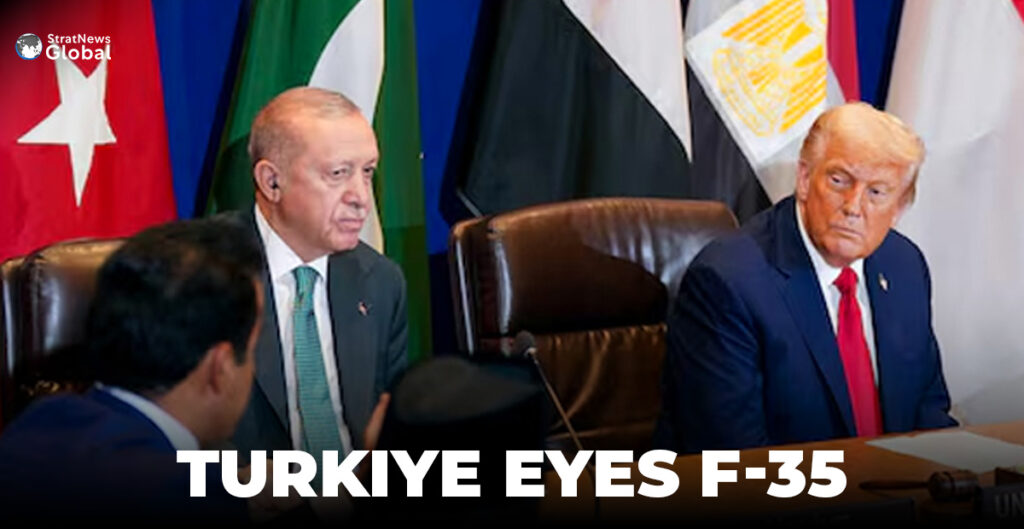
U.S. President Donald Trump will host President Tayyip Erdogan at the White House on Thursday, where Erdogan aims to use the strongest U.S.-Turkiye ties in years to persuade Washington to lift sanctions and approve F-35 fighter jet sales.
Erdogan’s first visit to the White House in about six years comes at a time when Ankara is keen to take advantage of a U.S. administration eager to make deals in return for big-ticket arms and trade agreements.
The administration of former President Joe Biden kept Turkiye at arm’s length partly over what it saw as the fellow NATO member’s close ties with Russia. Under Trump, who views Moscow more favourably and has closer personal ties with Erdogan, Ankara is hoping for a better relationship.
Trump and Erdogan – both seen as increasingly autocratic by their critics at home – had a checkered relationship during the Republican president’s first term. But since his return to the White House, their interests have aligned on Syria – source of the biggest bilateral strain in the past – where the U.S. and Turkiye now both strongly back the central government.
They remain sharply at odds over U.S. ally Israel’s attacks on Gaza, which Ankara calls a genocide – a potential wild card in what are otherwise expected to be friendly and transactional talks in the Oval Office.
In his UN address on Tuesday, Erdogan, who has led Turkiye for 22 years, said that “anyone who fails to speak out and take a stand against the barbarity in Gaza shares responsibility for this atrocity”.
U.S. Secretary of State Marco Rubio later told Fox News that world leaders, including Erdogan, could “say what they want to say, but at the end of the day, when they want something done, they want to come to the White House”.
US Sanctions Block F-35 Sales
The mood shift has renewed Turkish hopes that Trump and Erdogan, who have exchanged mutual praise, can find a way around U.S. sanctions imposed by Trump himself in 2020 over Turkiye’s acquisition of Russian S-400 missile defences.
That, in turn, could pave the way for Ankara to buy Lockheed Martin’s advanced F-35 fighter jets, for which it was both a buyer and manufacturer until it was barred over the S-400s.
“Despite expected resistance from the U.S. Congress, a green light for Turkish acquisition of F-35s is not inconceivable, provided the political will is there on both sides and diplomats are allowed to hammer out a framework that addresses all the known issues,” said Timur Soylemez, a former Turkish ambassador with experience in Turkiye-U.S. relations.
Trump said ahead of the meeting he expected F-35 talks “to conclude positively”.
Erdogan has said the defence industry, including the topic of F-35s and ongoing negotiations over 40 F-16 jets Ankara also wants, would be a focus of the meeting, along with regional wars, energy and trade.
A U.S. official said Washington had in recent days drafted a statement of intent – a document used to facilitate talks – for several sales to Turkiye, including the new F-16s that would bolster its existing fleet.
Turkiye asked for advanced equipment and modifications on the F-16s in their order, making the jets cost more than a standard F-35, the official said. But F-35s were omitted from the draft statement because the U.S. cannot legally sell them while Turkiye has the S-400s, the person added.
Turkish government officials did not immediately comment on the F-16 costs.
Deal On Boeing Planes Also On Agenda
Turkiye, NATO’s second-largest army, wants to ramp up air power to counter what it sees as growing threats in the Middle East, Eastern Mediterranean and the Black Sea, where it neighbours Russia and Ukraine.
In addition to the F-16s and F-35s, it also wants to procure 40 Eurofighter Typhoons – irking regional U.S. allies Israel and Greece.
At the meeting, Trump is expected to highlight a Turkish agreement to buy more than 200 Boeing Co. aircraft, for which Turkish Airlines is negotiating. The U.S. official told Reuters the talks included 787 and 737 jetliners, and about $10 billion in GE aircraft engines.
(With inputs from Reuters)
Ex-French President Sarkozy Sentenced to Five Years in Prison In Major Legal Blow
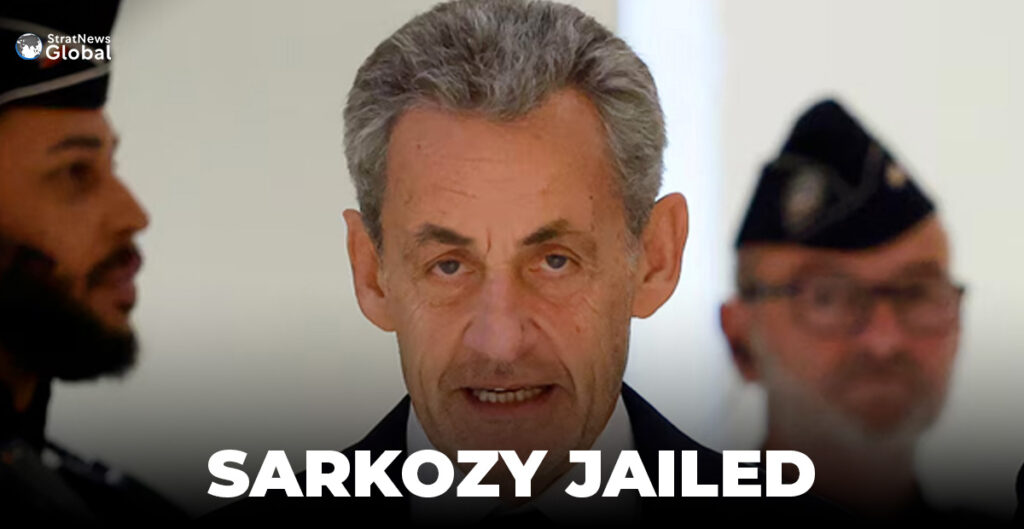
Former French President Nicolas Sarkozy is set to begin a prison term after a court on Thursday sentenced him to five years for criminal conspiracy related to Libya, marking an unprecedented punishment for a prominent French political figure.
The sentence was harsher than many expected, and a first in modern French political history. Sarkozy, who was president between 2007 and 2012, will spend time in jail even if he appeals the ruling.
As he exited the courtroom, Sarkozy expressed his anger at the ruling. “What happened today … is of extreme gravity in regard to the rule of law, and for the trust one can have in the justice system,” he told reporters.
“If they absolutely want me to sleep in jail, I will sleep in jail, but with my head held high,” he said, adding that he was innocent and that the ruling was scandalous.
Sarkozy was found guilty of criminal conspiracy over efforts by close aides to procure funds for his 2007 presidential bid from Libya during the rule of late dictator Muammar Gaddafi.
He was acquitted by the Paris court of all other charges, including corruption and receiving illegal campaign financing.
Sarkozy Will Go To Jail
However, the jail sentence is enforceable immediately, with the judge saying Sarkozy would have just a short period to put his affairs in order before prosecutors call on him to head to jail. That should happen within a month.
Sarkozy, who has always denied the charges, was accused of making a deal with Gaddafi in 2005, when he was France’s interior minister, to obtain campaign financing in exchange for supporting the then-isolated Libyan government on the international stage.
The judge said there was no proof that Sarkozy made such a deal with Gaddafi, nor that money that was sent from Libya reached Sarkozy’s campaign coffers, even if the timing was “compatible” and the paths the money went through were “very opaque”.
But she said Sarkozy was guilty of criminal conspiracy for having let close aides get in touch with people in Libya to try and obtain campaign financing.
The 70-year-old has been on trial since January, in a case he said was politically motivated.
The court found him guilty of criminal conspiracy between 2005 and 2007. After that he was president and covered by presidential immunity, the court added.
That was the second time this year that a court handed down a ruling with immediate effect on a major political figure.
A court convicted far-right leader Marine Le Pen in March of embezzling EU funds, handing her an immediate five-year ban on running for office.
Sarkozy’s Legal Woes
Despite his legal battles and having his Legion of Honour, France’s highest distinction, stripped in June, Sarkozy remains an influential figure on the French political stage.
He recently met with his former protege, Prime Minister Sebastien Lecornu, and has also lent credibility to Le Pen’s National Rally (RN), saying the far-right, anti-immigrant party now forms part of the “republican arc.”
Sarkozy has faced several legal battles since leaving office.
Last year, France’s highest court upheld his conviction for corruption and influence peddling, ordering him to wear an electronic tag for a year, a first for a former French head of state. The tag has now been removed.
Also, last year, an appeals court confirmed a separate conviction for illegal campaign financing over his failed re-election bid in 2012. A final ruling from France’s highest court is expected on that case next month.
(With inputs from Reuters)
India’s Choice: Tariff King or Competitiveness Champion
President Donald Trump calls India the ‘Tariff King,’ pointing to the steep duties we impose on farm imports.
The United States wants greater access for its apples, chicken, dairy, even genetically modified crops. India, on the other hand, argues it cannot compromise the livelihoods of millions of small farmers.
Have both sides created an impasse in their ongoing trade negotiations?
Is India missing the woods for the trees? Focusing on protection, instead of making Indian farming competitive.
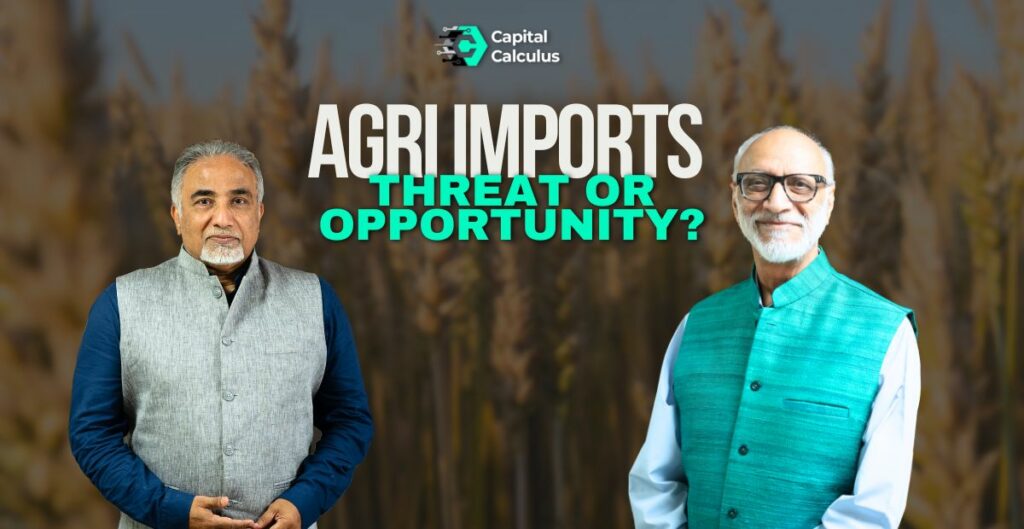
To answer all these vexing questions and more StratNewsGlobal.Tech spoke to Ashok Gulati on Capital Calculus. He is an agricultural economist, former chairman of Commission on Agricultural Costs and Prices and Professor at Icrier, a Delhi-based think tank.
Israel Intensifies Gaza City Offensive Amid Netanyahu’s US Visit
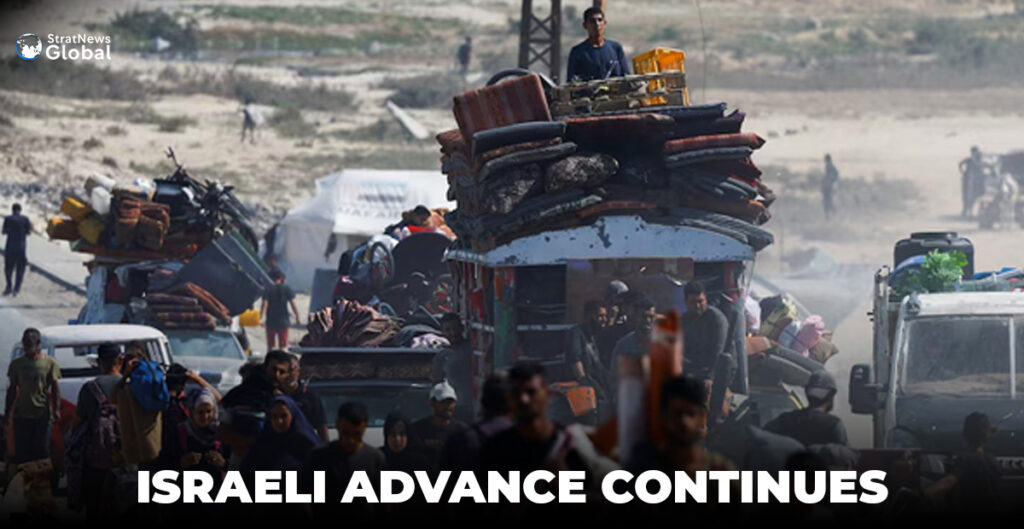
Israeli forces pushed further into Gaza City on Thursday as Prime Minister Benjamin Netanyahu travelled to New York for a U.N. General Assembly address, while U.S. President Donald Trump sought a deal to end the Gaza conflict.
Israeli strikes killed at least 19 people across the Palestinian enclave on Thursday, local health authorities said. They included 11 people from two families in Zawayda town in the central Gaza Strip, where planes hit a residential building.
Israel’s military did not comment on the incident but said it had struck 170 targets across Gaza in the past 24 hours and attacked “terror infrastructure” used by militant groups to attack soldiers. Its forces were deep in Gaza City, it said.
US Envoy Hopes For A Breakthrough
Tanks have entered Gaza City as part of an offensive that Israel says is intended to eliminate Hamas following its deadly attack on Israel in October 2023, but which has caused extensive destruction, a humanitarian catastrophe and widespread hunger.
Netanyahu says Gaza City is the Palestinian militant group’s last bastion, but hundreds of thousands of civilians remain there, fearing there is nowhere safe for them to go.
U.S. envoy Steve Witkoff said on Wednesday that Washington was confident of securing a breakthrough on Gaza in the coming days after Trump shared a 21-point Middle East peace plan with leaders of Muslim-majority countries in New York.
Trump also promised Arab leaders he would not allow Israel to annex the Israeli-occupied West Bank, Politico reported. Palestinians want the West Bank for an independent Palestinian state, with Gaza and East Jerusalem.
Netanyahu has declared there will never be a Palestinian state, although Britain, France, Canada and other nations this week formally recognised Palestinian statehood. Some of Netanyahu’s coalition allies want Israel to annex the West Bank.
Netanyahu Set To Address UN, Meet Trump
Israel has become diplomatically isolated over its military siege of Gaza, with European nations and others increasingly critical of its conduct.
The International Criminal Court has issued a warrant for Netanyahu for alleged war crimes in the Gaza war. Israel rejects the court’s jurisdiction and denies committing war crimes in Gaza.
Netanyahu has retained the backing of the U.S., Israel’s most important ally, and Trump told the U.N. this week that moves to recognise a Palestinian state risked rewarding what he called Hamas atrocities and could encourage continued conflict.
Netanyahu is expected to address the General Assembly on Friday and meet Trump next week. Leaving Israel on Thursday, Netanyahu said he would denounce leaders who had recognised a Palestinian state.
He said he would discuss the war in Gaza with Trump, including defeating Hamas and freeing hostages held in Gaza since the Hamas attack on October 7, 2023. He said he also intended to discuss efforts to expand diplomatic relations with countries that do not officially recognise Israel.
About 20 Hostages Believed To Be Alive
About 1,200 people were killed and 251 were taken hostage in the Hamas-led attack on Israel. About 48 hostages remain in captivity, with 20 of them believed to be alive.
Israel’s military campaign in Gaza has killed more than 65,000 Palestinians, according to local health authorities.
Hamas’ armed wing has warned the Israeli military that an expansion of its operation in Gaza City would put Israeli hostages at risk, while Israel’s military has called on Gazan residents to “rise and break away from Hamas” to end the war.
In Jordan, mother-of-five Afkar Alwan told Reuters her young son Yaman Alwan had been evacuated from Gaza last month for urgent medical care after severe malnutrition worsened his congenital kidney condition, and medical shortages were growing.
“By God, the situation in Gaza is very tragic,” she said. “There are no laboratories and the hospitals, of course…the situation there is deplorable.”
(With inputs from Reuters)
Taiwan Searches For Missing After Typhoon Ragasa Floods Remote East Coast Town
Taiwan on Thursday conducted searches for 22 people missing after Super Typhoon Ragasa caused a lake to flood a small town on its remote east coast, with many victims too elderly to follow evacuation instructions to move upstairs.
The deaths, their tally revised down to 14 from 17, followed heavy rains brought by the outer bands of Super Typhoon Ragasa to Hualien County, causing a barrier lake in the mountains to overflow and release a wall of water on the town of Guangfu.
Sub-tropical Taiwan normally has a well-honed drill for evacuations ahead of typhoons, especially in the mountainous and sparsely populated east coast, which limits casualties.
But the number of dead this time has prompted questions about whether an order to head upstairs from the ground floor was appropriate, and what could have been done differently.
“Beyond mourning the victims, we must investigate the causes of death, which predominantly occurred on the first floors,” Premier Cho Jung-tai told a cabinet meeting on Thursday.
“Clarifying these factors is essential for refining future evacuation protocols.”
The government also revised down to 22 from 33 the tally of those missing, as more people were traced.
Eledrly Population
Many rural parts of Taiwan, especially in the east, have large elderly populations as the young move to cities to seek better job opportunities.
The elderly with disabilities made up the majority of the dead, many found on the first floors of homes, Hualien official Lin Jung-lu told Reuters.
“They had difficulty walking,” he added.
Chang Chih-hsiung, a youth representative of the Fata’an tribe of the Amis indigenous group, which calls Hualien home, said the digital gap and ineffective communication were among the reasons why some older people did not evacuate.
“Some of them are not familiar with using cellphones,” he told Reuters. “The village chief had held briefings, but people didn’t think it was that serious until it happened.”
Another problem was the sheer scale of flooding and the difficulty of predicting where it could hit.
Parts of the village were entirely evacuated with people moved to shelters, but that area escaped the flood, Chang added, while other spots where many opted to move to higher floors, however, were hit far worse than expected.
Cut Bridge
Wang Tse-an, head of the village of Dama in the Guangfu region, said a mandatory evacuation order meant the hamlet suffered no deaths.
“Dama was the first to be hit, but the damage is the smallest,” he said.
“That’s because we designated houses for mandatory evacuation. But when the flood came to other villages, people there thought they could just do ‘vertical evacuation.’ They did not expect the flood to reach that high.”
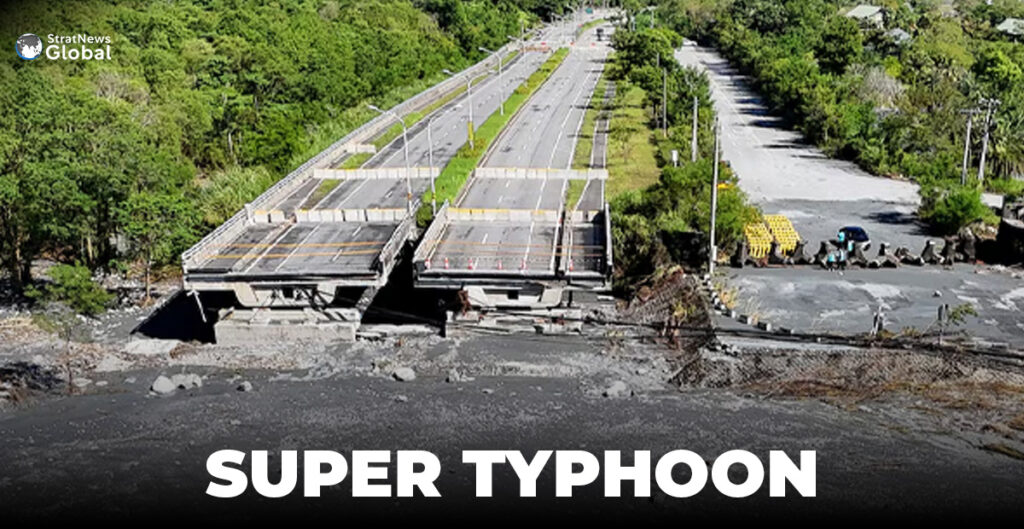
While Guangfu’s train station has resumed services, the main highway has been cut off after flood waters swept away a bridge.
Drone imagery from Reuters showed only the bridge supports left in the river bed after the road links snapped at both ends. In other images, homes were marooned in mud that blocked entrances.
Wang said many meetings had been held since the lake was discovered in July, with several briefings delivered to villagers about the coming dangers and evacuation plans, some in the Amis language, as not all residents spoke Chinese.
The rain has stopped, but the government maintains warnings on the barrier dam in a remote mountain area behind Guangfu.
The tricky issues of how to tackle the lake, though much smaller than before, and prevent another disaster, remain.
Agriculture Minister Chen Junne-jih said using explosives to blow up the bank holding back the lake was too dangerous, as it could set off more landslides.
“While the red warning is still in place, please do not go near the river,” he told reporters in Taipei.
(With inputs from Reuters)
U.S. Sanctions Indian Traffickers, Pharmacy in Fentanyl Crackdown
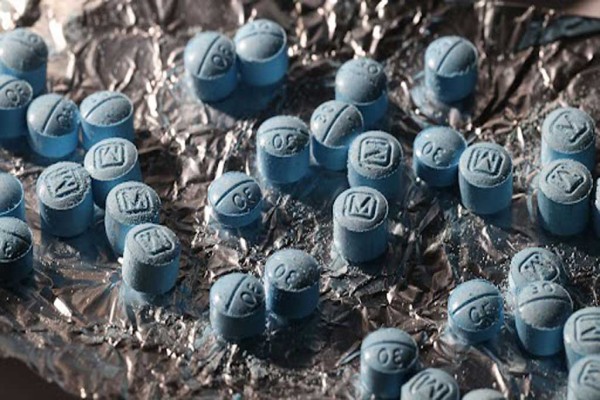
The U.S. Treasury has sanctioned two Indian nationals and an online pharmacy for supplying counterfeit fentanyl-laced pills that fuelled America’s opioid crisis.
The U.S. Department of the Treasury’s Office of Foreign Assets Control (OFAC) on September 24 announced sanctions on Sadiq Abbas Habib Sayyed, born December 8, 1985, and Khizar Mohammad Iqbal Shaikh, born July 7, 1991, both Indian citizens, along with Shaikh’s company KS International Traders, also known as KS Pharmacy. OFAC accused them of working with Dominican Republic- and U.S.-based narcotics traffickers to distribute counterfeit pills laced with fentanyl, fentanyl analogues, and methamphetamine.
“Too many families have been torn apart by fentanyl. Today, we are acting to hold accountable those who profit from this poison,” said Under Secretary for Terrorism and Financial Intelligence John K. Hurley, adding that the Treasury will continue to advance President Trump’s commitment to Make America Fentanyl Free by targeting traffickers.
The Treasury highlighted the growing role of illegal online pharmacies, including those based in India, in fuelling the fentanyl crisis. Such operations lure buyers by posing as legitimate sellers of brand-name or generic medications but instead deliver counterfeit products laced with dangerous synthetic drugs. The problem is global: Mexican cartels source precursor chemicals from Indian suppliers and Chinese manufacturers for use in clandestine laboratories before pushing the drugs into the United States.
Sayyed and Shaikh marketed their products as discounted pharmaceuticals but instead sold counterfeit pills made with fentanyl, methamphetamine, and related substances. Both men used encrypted messaging platforms to coordinate orders, advertise supplies, and reassure buyers of the supposed authenticity of their products. Sayyed often concealed his identity with aliases such as Jonathan Acosta and Rakesh Sharma, while Shaikh operated openly through KS International Traders, portraying it as a legitimate pharmacy even as it continued functioning after he faced federal indictment.
The U.S. Drug Enforcement Administration had already warned in October 2024 about the surge of illegal online pharmacies selling counterfeit Oxycodone, Adderall, Xanax, and other drugs laced with fentanyl and methamphetamine to unsuspecting American customers. Screenshots of KS International Traders’ website months after the Department of Justice unsealed its 2024 indictment against Shaikh showed the company still advertising a wide range of pharmaceutical products.
Despite being indicted in September 2024 by a federal grand jury in the Southern District of New York on narcotics-related charges, Sayyed and Shaikh kept operating their network. They relied on digital payment systems, encrypted chats, and international shipping routes designed to disguise the true origin and contents of their packages. These methods enabled them to push hundreds of thousands of counterfeit pills into the United States.
The focus on individual traffickers is mirrored by broader enforcement against Indian chemical companies supplying the raw materials for fentanyl. In January 2025, the Department of Justice indicted two Gujarat-based firms, Athos Chemicals and Raxuter Chemicals, for allegedly importing fentanyl ingredients into the United States and Mexico.
Both companies were charged with distributing the chemicals and conspiring to distribute them, while Raxuter and senior executive Bhavesh Lathiya, 36, faced additional charges of smuggling and introducing misbranded drugs into interstate commerce. These cases underscore that the fentanyl problem is not limited to finished pills or online pharmacies, but stretches all the way to the chemical supply chain in India, connecting directly to Mexico-based cartels and the U.S. opioid epidemic.
The sanctions against the Indian traffickers and chemical companies are part of a wider U.S. strategy to disrupt global synthetic opioid supply chains—a fight that increasingly overlaps with geopolitics. Earlier this year, the White House doubled tariffs on certain imports from China, citing Beijing’s failure to stop the export of chemicals used in fentanyl production. Washington framed the move as not just a trade measure but a matter of national security, highlighting how the opioid crisis is tied to global supply chains that involve China, India, and Mexico.
In this context, targeting Sayyed and Shaikh, alongside actions against Indian chemical companies, demonstrates that Washington is now going after the entire network of suppliers and traffickers. The fentanyl crisis is being treated less as a domestic law-and-order issue and more as a transnational challenge that intersects with U.S. foreign policy, trade policy, and public health strategy.
OFAC said both men were sanctioned under Executive Order 14059 for contributing to the spread of illicit drugs, while KS International Traders was blacklisted for being owned and controlled by Shaikh and used in his trafficking business.
As a result, all property and assets of the sanctioned individuals and the company in the United States are frozen, and U.S. persons are banned from doing business with them. Any company owned 50 per cent or more by the sanctioned parties is also automatically blocked. Those who violate the sanctions could face civil or criminal penalties, and financial institutions worldwide risk penalties if they deal with designated persons.
OFAC stressed that its sanctions are not only meant to punish but also to encourage changes in behaviour, noting that people and entities can apply to be removed from the sanctions list if they meet the requirements.
On the same day, OFAC issued a final rule amending the Syria-Related Sanctions Regulations, renaming them the Promoting Accountability for Assad and Regional Stabilization Sanctions Regulations, and incorporating provisions from Executive Orders 14142 and 14312. The changes will take effect when published in the Federal Register on September 25.
OFAC also updated its Specially Designated Nationals and Blocked Persons List to include Sayyed, who used aliases such as Jonathan Acosta and Rakesh Sharma, and Shaikh, both listed with their personal details, as well as KS International Traders, based in Mumbai, Maharashtra, with its tax ID and website identified.
The designations were coordinated with the Department of Justice, Drug Enforcement Administration, Homeland Security Investigations, Internal Revenue Service–Criminal Investigations, and the U.S. Postal Inspection Service. Together with parallel measures on Syria and regional stabilisation, the sanctions reflect Washington’s broader strategy of targeting both individuals and state-linked networks involved in the international fentanyl trade.
Italy Deploys Second Naval Vessel To Protect Gaza Aid Flotilla
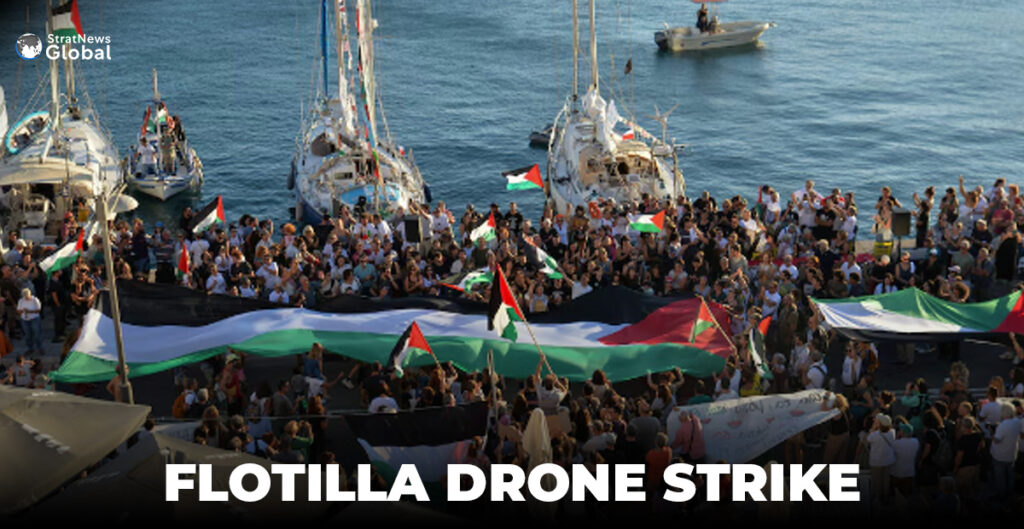
Italy has deployed a second naval vessel to support the international aid flotilla to Gaza, which came under drone attack, Defence Minister Guido Crosetto announced on Thursday.
The Global Sumud Flotilla is using about 50 civilian boats to try and break Israel’s naval blockade of Gaza. Many lawyers and activists, including Swedish climate campaigner Greta Thunberg, are on board.
“We have sent one ship and another is on its way, ready for any eventuality,” Crosetto said in a speech to the lower house of parliament.
Stun Grenades
Italy sent a first frigate on Wednesday, hours after the GSF said it was targeted by drones that dropped stun grenades and itching powder, in international waters 30 nautical miles (56 km) off the Greek island of Gavdos.
Benedetta Scuderi, an Italian member of the European Parliament for the leftist Greens-European Free Alliance group who has joined the flotilla, told Italian public radio RAI that drones had dropped stun grenades.
One of them hit the mast of the sailing boat on which she is travelling, “completely damaging” the main sail, she said.
“We are in international waters south of Crete, and we were attacked for three hours without anyone intervening,” the parliamentarian said.
Israel Blamed
The GSF blamed Israel for the attack.
The Israeli foreign ministry did not respond directly to the accusation, but repeated an invitation for the flotilla to drop humanitarian aid in an Israeli port, leaving it to Israeli authorities to take it to Gaza, or else face consequences.
Spain has also decided to send a military warship to protect the flotilla.
Crosetto warned the activists against insisting on trying to break the Israeli blockade, and urged them to accept an Italian proposal to hand over their aid supplies and allow them to be distributed in Gaza by the local Catholic Church.
“We cannot guarantee the safety of our fellow citizens if they enter the territorial waters of other countries,” Crosetto said.
The GSF said early on Thursday that its vessels were sailing at slow speed in Greek territorial waters, had been subjected to “moderate drone activity” during the night, and were heading towards international waters “later today”.
(With inputs from Reuters)
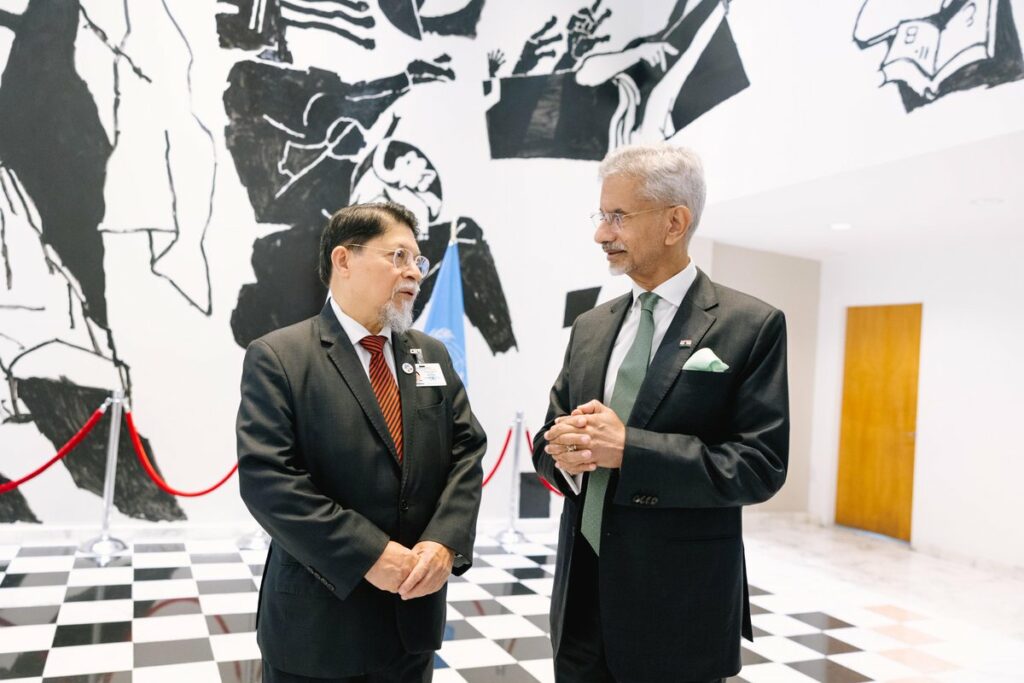
Nicaragua Cuts Ribbon On India-Funded Electric Substation, Transmission Lines
India’s development partnership with Nicaragua reached another milestone with the inauguration of a new electric substation and transmission lines in La Esperanza, 250 km south east of the capital Managua. The project, supported through an Indian government Line of Credit (LoC), will help improve electricity access for over 30,000 people.
A virtual message was delivered by India’s Minister of State for External Affairs, Pabitra Margherita, who described the project as a reflection of the growing cooperation between India and Nicaragua in infrastructure, energy, health, and social development.
Margherita stressed the broader context of India’s development partnership with Nicaragua, noting “The La Esperanza substation is part of a series of power sector projects funded by India to help strengthen Nicaragua’s electricity network. India remains committed to inclusive development partnerships in Latin America and the Caribbean, aligned with the needs and priorities of partner countries.”
India has extended a total of five LoCs to Nicaragua, amounting to $ 94.98 million, covering both energy and health sectors.
- $10 million (2013): For supply of Indian equipment to build two electric substations
- $26.24 million (2014): For Carlos Fonseca Substation, 95 km of transmission lines, and expansion of three existing substations
- $31.29 million (2015/16): For additional substations and transmission infrastructure, including the recently inaugurated La Esperanza substation
Health Sector
- $20.10 million (2020): For the reconstruction of Aldo Chavarria Hospital
- $7.35 million (2021): For upgrading medical equipment at the Antonio Lenin Fonseca Hospital’s High Technology Centre
All LoCs are facilitated through the Export-Import Bank of India.
The minister highlighted India’s “India for Humanity” initiative, under which the Jaipur Foot Camp is currently being conducted in Nicaragua, providing 500 artificial limbs to patients at no cost. He recalled his visit to Nicaragua in March 2025, and described it as a valuable opportunity to advance cooperation across energy, health, trade, and investment.
In his address he also mentioned India’s support for Quick Impact Projects (QIPs) in Nicaragua, which are small-scale, fast-delivery initiatives that address immediate community needs.
India expressed interest in contributing to Nicaragua’s development through long-term partnerships, while Nicaraguan leaders welcomed Indian investment and technology transfer.
Connecting With Latin America
Nicaragua is a member of SICA (Central American Integration System) and CELAC (Community of Latin American and Caribbean States), two key multilateral groupings in the region.
India has engaged with both bodies in recent years as part of its goal to strengthen ties with Latin America and the Caribbean. The Indian government sees cooperation with Nicaragua as part of its larger outreach to multilateral platforms in the Global South, where India advocates for inclusive development, renewable energy partnerships, and South-South cooperation.
By working with SICA members like Nicaragua, India aims to build bridges with Central America, a region that has traditionally had limited engagement with South Asia.
India’s involvement in Nicaragua’s energy and health sectors reflects a practical and long-term approach to bilateral cooperation. With completed and ongoing projects in infrastructure and humanitarian outreach, both countries are building a framework that could support more structured cooperation in the years ahead.
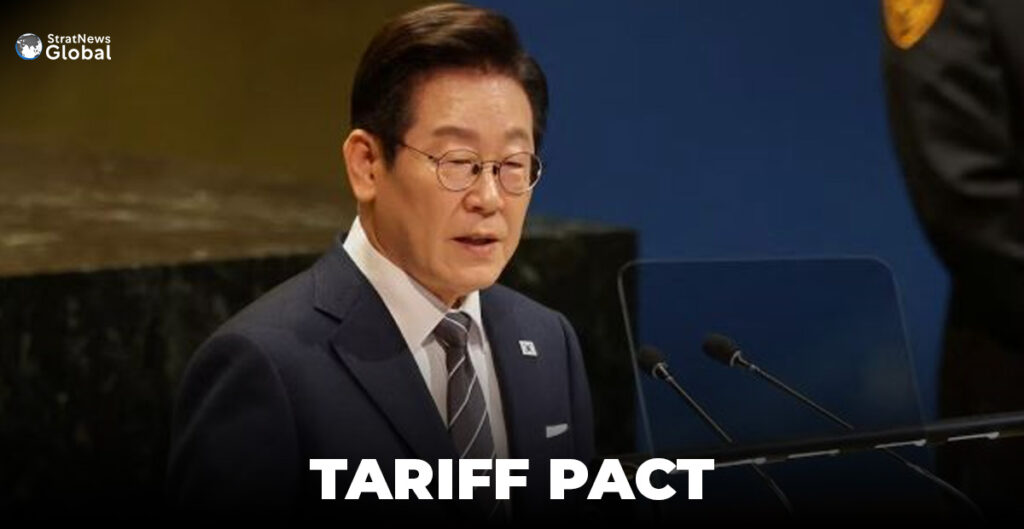
U.S.-South Korea Tariff Negotiations: Lee And Bessent Discuss Key Conditions
South Korean President Lee Jae Myung and U.S. Treasury Secretary Scott Bessent discussed trade talks on Thursday, with Lee underscoring the need for commercially rational agreements that advance the interests of both nations, the president’s office reported.
Lee spoke to Bessent at the United Nations on the sidelines of the General Assembly on Wednesday, his chief secretary for policy, Kim Yong-beom, told a briefing in New York.
The meeting focused on the $350 billion package of investment from South Korea agreed in principle between Lee and U.S. President Donald Trump at a summit in July as part of a deal to lower tariffs against South Korean goods, Kim said.
“With regard to the investment package with the U.S., (Lee) expressed hope that the discussions would progress based on commercial rationality and in a direction that serves the interests of both countries,” Kim said.
He said South Korea’s economy and its foreign exchange market — which differ significantly from Japan’s — should be key factors in the ongoing talks on a final agreement.
U.S. Investment Package
Finance Minister Koo Yun-cheol, who was also with Lee, separately held discussions with Bessent to discuss the U.S. investment package and a currency swap but the ministry declined to elaborate on details.
“It would be wise to interpret it (request of a currency swap) as a strategy to avoid a direct investment of a large scale, because Korea doesn’t have the money,” Kim Yong-jin, management professor at Sogang University in Seoul, said. “Unless there is some unlimited dollar liquidity guarantee in place, $350 billion sounds like an impossible number.”
Japan formalised a trade deal with the U.S. earlier in September to lower tariffs on its exports. The agreement includes Japan investing $550 billion in U.S. projects.
South Korea’s Lee has said that a similar arrangement involving large capital outflow to the United States could destabilise the currency market and drain South Korea’s foreign reserves.
The won broke the psychologically important level of 1,400 per dollar overnight and closed at 1,403.8 early on Thursday, the weakest level since mid-May.
South Korea is seeking a foreign exchange swap with an unlimited credit line from the U.S. to support any final trade agreement, Kim said. South Korean officials have said Washington is reviewing the FX swap proposal.
(With inputs from Reuters)